Jennifer Foote Sweeney

Her odd, amazing gift to me

What my client left for me sounds bizarre, but it was a priceless reminder that her body was recovering from cancer

According to family lore, my grandfather, a brilliant surgeon, was given the home he lived in for most of his married life by a grateful patient. A Navy man decorated for his service during the battle of Midway, Pappy, as my grandpa was called, immediately installed portholes next to the traditional wood windows facing the marina. As a kid, peering at the Golden Gate Bridge from an upstairs bedroom, I often thought that the house-for-a-life swap was a fair trade.

None of us followed in my Pappy’s footsteps, though a few stumbled along at a distance. My father, a devoted veterinarian, came close. His specialty was orthopedic reconstruction, but he gathered strays like Brigitte Bardot. Not the resolute white coat his daddy was. I’m a massage therapist working in clinics and hospitals, most of the time with people struggling with illness or chronic pain. But I deliver comfort, not cures, and the gifts I’ve received in the line of duty have been totems of memorable kinship, like the tiny paper cup holding two Vicodin a hospital patient rejected as unnecessary after our session. (I had to refuse that particular gesture.) Others demonstrate satisfaction by going to sleep — finally, for the first time in days — or they tell me I am wonderful. Recently a woman reached way down into the crotch of the black leggings she was wearing under her hospital gown to fetch me a dollar bill.

In the clinic, an appointment might end with a hug or the silent offering of a tea bag or a square of chocolate. These rewards feel extravagant, even when I think of them as acts of reciprocity rather than gestures of gratitude. So I was surprised to find, when I checked in at the reception desk between sessions the other day, that a patient had left me a small box — the kind that inevitably contains jewelry.

“I’m not supposed to tell you who it is from,” said the office manager, handing over the tiny package, “but they said you would know when you opened it.”

My role in the lives of the people who come to see me is not without its triumphs, but you won’t see an episode of “House” built around my uncanny success. I solve a mystery now and then, but the solution usually comes from the “hip bone’s connected to the thigh bone” type of knowledge. I prescribe no medication; I can’t remove an offending mass; I offer no second opinion. Instead, I provide customized healthcare with meticulous intimacy. I absorb detailed descriptions of pain, weariness, disappointment and fear; and I am granted exceptional proximity to use my hands and my instincts to treat bodies, sometimes one muscle at a time, exhausted by the collateral damage of illness, trauma and unrelenting tension. I do the work selfishly, still amazed that people grappling with pain and disappointment allow me to help.

The blunt instruments used to fight cancer are especially punishing. Dr. Mehmet Oz, usually a very gentle guy, once demonstrated the brutality of conventional cancer treatment using a dollhouse with a light on in one room to represent a body with cancer. He smashed the house (the body) with a sledgehammer until the light (the cancer) finally went out. I didn’t get a chance to see the performance, but one of my regular patients, an actress with breast cancer and a gift for exquisite profanity, said that Oz came close to accurately describing the beating delivered by surgery, chemotherapy and radiation. I thought she came closer, nailing the experience with scrupulous honesty each week as she sipped green tea from a stainless steel to-go cup and whipped off a wig — sometimes a bright red bob, other times a platinum pageboy — that she’d gotten from friends in the costume department.

Just before starting chemo, and before her first appointment with me, the salty actress had undergone surgery unrelated to her cancer, and she had a small incision beneath the toes on her left foot. The failure of this wound to heal was evidence, to her, of chemo’s inexorable toll. The cancer killing drugs were beating the crap out of her immune system, which she imagined to be in acute distress, unable to muster the strength necessary to attend to other important business.

I’m not sure why, but the incision became a symbol for me, too. It became a measure of my worth. Yes, I’ve been doing this work for years, and I know that it is effective. (A recent study from Cedars-Sinai Hospital in L.A. found that a single session of massage boosts white blood cell production, among other nifty biologic changes.) But with each person, I begin again. And in this case, I had an angry little barometer, red and raw, to chart my progress.

Each week, toward the end of our session, I would arrive at the actress’s foot for a closer look. She found the wound annoying most of the time, depressing now and then. She had to double bag it to take baths, and endure, occasionally with sardonic pleasure, the squabbling between doctors about what to do to make it better. And then, slowly, it started to heal. When a healthy scab began to pull itself together, I crowed. It was a pea-sized beauty, a wrinkly brown badge of honor. I suggested that, when it finally fell off, she could preserve it, Victorian-style, in a locket, or press it, like a flower, between the pages of her journal. She said I was disgusting, but I could tell she was as gratified as I was to see her body kicking ass as it should, despite the bombardment with chemicals she likened to Drano.

On the day I was handed the elegant box, the actress had been unable to get to her appointment. She was cancer-free now, busy with several Shakespeare productions, caught in traffic. But I realized, as I burrowed into the nicely folded tissue, that she must have stopped by. And I knew what this gift would be: a tiny beige gem, still festooned with a tiny suture, suitable for framing. You shouldn’t have, I told her later. But I was dizzy with pleasure for days. It was more than a fair trade. It was an indulgence.

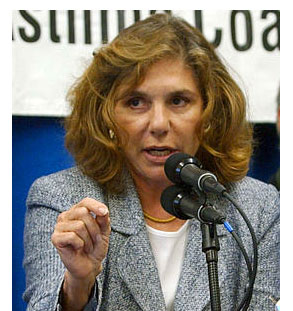
Who’s afraid of Teresa Heinz?

The wife of presidential hopeful John Kerry is a rare political figure -- refreshingly honest and undeniably smart. So why are her own handlers hell-bent on shutting her up?

She is wealthy and exotic, a veteran of punishing loss and the beneficiary of extraordinary luck. She eschews fashion for convenience, admits readily to the use of Botox and a willingness to undergo plastic surgery. Her loyalty to her dead husband is as fierce as her feelings for her second; her attachment to the proprietary rules — of feminism, party politics, polite society — are easily trumped by her own sense of morality. She is married to the front-runner for the Democratic presidential nomination — a dashing Vietnam vet known for his macho stoicism.

If she weren’t a real person, one who really said “I don’t give a shit,” among other things, in a recent interview in Elle magazine, Teresa Heinz Kerry might be a figment of Aaron Sorkin’s imagination — a beloved political wife fluent in five languages, with brains, a hint of exposed cleavage, and no time for hand-wringing campaign operatives. If she were a “West Wing” regular, we would watch her character with delight, but also with a sense of doom, knowing that in the real world, the press and political consultants would crush her like a bug.

And we would be right.

As soon as columnists caught wind of Heinz’s utterances in Elle, the snarky cackling began. “The Ungaggable Teresa Heinz” was the headline of an item in the Washington Post; “Salty Tongue” was the slug of the New York Post tidbit that began, “Sen. John Kerry might want to tell his wife to clean up her language now that he’s running for president.”

The cattiness turned to high snoot on Tuesday, when the New York Times weighed in, managing, in the first paragraphs of its piece, to accuse Heinz of “casually insulting a dead president and first lady.” She accomplished this, according to reporter John Tierney, by saying of Richard Nixon, ostensibly in the context of his marriage to Pat: “Well, we know Richard Nixon wasn’t too much in contact with how women should be.”

That this delicate observation might be classified as a casual insult is remarkable. Textbook descriptions of the besmirched leader are more wounding. Whether this prim backhand was an attempt by the Times to conjure its own kooky Teresa quote, or was one more example of how desperately stuck in the past the paper happens to be, it is hard to say. Reading on, one has to conclude that it is both: a not-so stealthy grab for the reins of the Teresa bandwagon and a clunky display of crustiness by reporters and editors who take the “lady” in “first lady” very much to heart.

Consider the paragraph composed entirely of questions — queries that evoke more judgment than wonderment: “Is she refreshingly candid or hopelessly impolitic? Will the fortune she inherited from her first husband, Senator H. John Heinz III, be used to pay for a winning campaign? Will middle-class voters be alienated by the ‘ketchup heiress’ with five houses and a Gulfstream jet?” Talk about casual insults.

To be fair, Tierney expands his inquiry to include the comments of campaign veterans and former aides to first ladies, but, other than the comments of Heinz herself and a Kerry staffer who bizarrely promises that Heinz will be “the John McCain of first ladies,” there is little in the piece to commend Heinz’s public displays of authenticity. The real-person shtick might work with suburban women who will consider it a strength, advised Paul Costello, former White House aide to Rosalynn Carter, and press secretary for Kitty Dukakis during her husband’s presidential campaign. “But talking about botox treatments is not particularly on message unless you’re at a fund-raiser on Rodeo Drive and Joan Rivers is the host.”

It is hard to imagine that there are many voters left who don’t recoil at the words “on message.” If Costello means to suggest that Heinz doesn’t work hard enough at telling people what they want to hear instead of what she really thinks, then he has delivered the Kerry campaign a glittering sound bite free of charge. Real people, as human nature and TV schedules demonstrate, are appreciated, even celebrated, by other real people — not just suburban women. In fact, many voters have sadly concluded that they may never encounter another real person in politics, and this belief, compounded daily, isn’t good for politicians. Demeaned by the assumption that they will believe anything, many Americans have responded with a complete lack of trust.

Which brings us to Costello’s comment that Heinz’s “mistakes” aren’t so important now, “but once the campaign is in full throttle she has to learn, as every spouse learns sooner or later, that her primary job is to sell the candidate, not herself. And that’s not easy for a strong, independent woman.” Since Costello is a man, it is hard to know where his expertise for that last statement comes from. But it is the first bit, about what every spouse learns sooner or later, that is most confounding, especially in light of Costello’s profession. What better person to sell a candidate than a strong, independent woman? What better way to sell the candidate than by selling oneself?

Of course, Teresa Heinz already has a primary job. With the $550 million fortune left to her by her first husband, Sen. H. John Heinz III, she runs the Heinz Endowments and the Heinz Family Philanthropies; she created the Women’s Institute for a Secure Retirement, the H. John Heinz III Center for Science, Economics and the Environment, and the Heinz Plan to Overcome Prescription Drug Expenses. She has endowed two environmental chairs at Harvard, sponsors scholarship programs for graduate and minority undergraduate students who study science, and oversees the annual Conference on Women’s Health and the Environment in Boston. She also serves on numerous boards, and is a trustee at various political institutions.

For some, Heinz’s résumé is enough to make the sale. A woman with those credentials, some voters might say, isn’t going to marry an idiot — instead she is a jewel in his crown. And the fact that she has rejected the job as Kerry sales rep is enough to close a few more deals. But it is Heinz’s habit of telling the truth — of not selling anything — that may be her husband’s greatest advantage. Teresa Heinz is nothing if not honest. Even her most avid hecklers admit to that. A woman who is willing to divulge the extent of her depression after her first husband’s death (she needed Prozac to pull her out of it), admit the difficulties of blending her family with Kerry’s, reveal her contemplation of an abortion, and, yes, her regular use of Botox, is not a bullshit artist. When Heinz says that she believes her husband should be president, we know she is telling the truth.

To her credit, Heinz has remained calm — and distinctly herself — in the face of all the scolding and giggling and meanness. The fact is, she has endured worse and has, in her words, “more important things to think about.” Heinz’s mother battled disfiguring face cancer for 40 years, beginning in Teresa’s youth, and died five years ago. When she was 24, Heinz lost her sister in a car accident; her first husband’s death came after 25 years of marriage. “He taught me about life,” she told Elle, adding that she “will always love him.” To be vilified in the press as “a real person” is not likely to hurt her feelings.

Asked to respond to media scrutiny, and the unflattering accounts that result, Heinz is often described as sighing or laughing. To the Times she said, “If you talk about being frank with exuberance, or passion, that’s one thing. Being frank and being offensive and indiscreet — that’s something else, and that I’ve not been accused of yet.” In another comment to Tierney, she added: “Some people just don’t understand that someone can be genuinely a person.”

Indeed. If Teresa Heinz has a handicap in this race, it is the growing reluctance of Americans to believe that such a woman, at least in the realm of politics, might truly exist. The fact that some in the Kerry camp worry that such a political wife should exist is another problem. Could they be frightened by barbs like the one from Republican political consultant Nelson Warfield in the Times, who said of Heinz, “She’s likely to be the Sharon Osbourne of first ladies”? Well, first, it should be noted that for some people, this would be a selling point. More important, though, the comment came in the same breath as a snotty reference to Heinz’s wealth and the claim — which she denies — that she will fund Kerry’s campaign. By Heinz’s own measure, that would be frankness tainted by offensiveness and indiscretion, a transgression that warrants scorn, not defensive posturing.

Rather than worry about Heinz’s tendency to be exuberant and wear the same Chanel jacket all the time (as was reported in Elle), Kerry staffers should be concerned about comments like the one Heinz handler Chris Black made in front of an Elle reporter during a meandering Heinz speech where she talked about green tea and prostate cancer, among other things. According to the story, Black — hired in a panic last year after Heinz displayed a bit too much spontaneity in a Washington Post profile — mused about the difficulty of keeping Teresa on message, calling the effort “an ongoing project.”

So far, the project appears to have had only limited success. One apparent victory — convincing Heinz to use the name Heinz Kerry during the campaign — was more or less nullified by Heinz’s comment about the change in Elle. “Now, politically, it’s going to be Teresa Heinz Kerry, but I don’t give a shit, you know? There are other things to worry about.”

With any luck, Black et al. will throw in the towel before Heinz is whipped into Stepford submission, capable of little more than the vacant stare of wifely adoration. Remember: Hillary Clinton was what Costello would call “a strong, independent woman,” who, until she was saddled with reinventing healthcare, was more of an asset than a curse to her (twice-elected) husband’s cause, in spite of the squealing that accompanied her every move.

Honestly, at a time when political paragons of rectitude crumble like Baghdad statues, the unabashed candor of Teresa Heinz isn’t just refreshing, it is a rare virtue — and potential political gold. Stodgy purveyors of Beltway mythology are welcome to fret and fume about what sort of political wife can win, but they are wasting their time. We have discovered one that we deserve.

Continue Reading Close

No children allowed

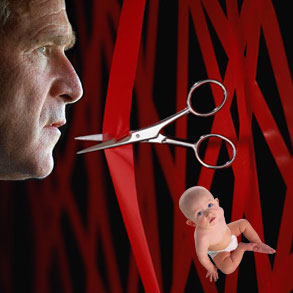
President Bush wants welfare recipients to marry -- but not have kids.

I am one of those people who believe that President Bush’s war on terrorism constitutes, among other things, a very impressive distraction for Americans who might otherwise pay attention to scary federal policy changes. So successful is this adrenaline-packed diversion that we have missed not only significant political maneuvers, but also a flurry of environmental rollbacks that rush us, unceremoniously, down the path to extinction.

In at least one case, however, it isn’t distraction as much as confusion that paralyzes us as a new policy is ushered in and another is quietly abolished. Specifically, I refer to the repeal, announced Tuesday, of the Birth and Adoption Unemployment Compensation Rule, a measure that allows states to use unemployment benefits to pay workers who take unpaid leave to care for a new baby.

I tried to get my head around this one; but the sly contradictions and double double-crosses inherent in the announcement make it difficult. Basically, we have reached that point in the movie where the gullible patsy sits down, eyebrows knit, and says to the smirking psychopath: “Now let me get this straight … ” I will, in the role of spokesperson for gullible patsies nationwide, say it to President Bush (without implying, of course, that he is a smirking psychopath):

Now let me get this straight.

This administration, in relentless pursuit of a religion-based conservative agenda, has used every means possible to undermine a woman’s constitutional right to abortion, ban sex education that acknowledges the existence of sex, and promote marriage. Bush has used federal health policy, high-ranking committee appointments, as well as hundreds of millions of dollars in funding for abstinence-only and marriage-promotion programs to accomplish these goals. And now, in a move advertised as a way to keep the jobless happy, the president has eliminated a way for struggling families with employed parents to have children without descending into poverty.

There is much to be confused about here. Does this mean that poor Americans ensconced in the welfare-to-work program, who are being offered government money to get married, are not supposed to have children? What if they get pregnant? Does it mean that by having children they forfeit their right to care for them for the first few months of their lives?

Sadly, the Birth and Adoption Unemployment Compensation Rule has never been used by states to compensate workers who take family leave. Only California offers paid leave, and the compensation doesn’t come from unemployment insurance reserves. But efforts to use the rule were under consideration in as many as 16 states when its repeal was announced, and its very existence fostered hope that the consideration of family values initiated by the 1993 Family and Medical Leave Act, which allows unpaid leave for new parents, would be extended to struggling mothers and fathers. As humane as the offer of unpaid leave may be, it is still only viable for couples with financial reserves.

Given that state unemployment insurance reserves were not in fact being tapped to pay for family leave, it becomes a symbolic act to eliminate the rule. As to what is being symbolized — it depends on whom you ask. According to Emily Stover DeRocco, assistant labor secretary for employment and training, getting rid of the rule “removes the impetus for individuals, be they members of the public or legislators, to encourage the use of the trust fund specifically for this purpose.” In other words, the idea of states’ rights has its appeal, but in reality, the states simply can’t be trusted to do the right thing with unemployment insurance funding. And the public, apparently, becomes a looting horde of greedy prospective parents when it comes to money for the jobless.

For American business groups, the repeal is an early Christmas present, one more gesture that solidifies the warm bond between Bush and the United States Chamber of Commerce. Business folks hated the rule, believing it to be an unfair addition to their tax burden, and had fought it for three years. Here, of course, there is no room for confusion in interpreting the move: These dismal days, corporate desire trumps public need with pathetic consistency where federal funding is concerned.

Finally, there is symbolism in the repeal for American workers, and, in particular, working parents. The symbol, according to unions, family rights advocates, and women’s and fathers’ groups, is both familiar and profane: middle finger stiffly extended. And it is a strange and insulting message: We must protect funds for the unemployed by withdrawing the means for struggling working parents to stay in the workplace while raising a family. Best to lose your job and run a tab at the local clinic, it seems.

But where are the pro-lifers on this one? After all, it would not be hard to interpret this move as a pro-abortion policy. Pro-choice activists, as murderous as they are alleged to be by their opponents, are in favor of choice, not the economic strong-arming of individuals into not having children. The National Abortion and Reproductive Rights Action League has not yet proposed a national statute that would mandate financial hardship for those who do not choose to be childless. Strangely, pro-life Republicans have been silent on the move, and so have ardent defenders of states’ rights.

This development, like so many in the past months, will likely slip under the radar, never to elicit the outrage, much less debate, of the Americans directly affected by it — or anyone else. News stories about it were tiny; none suggested that the repeal of the Birth and Adoption Unemployment Compensation Rule is another blow in a beating that may snuff out any chance of progressive, or even humane, measures to promote family, women’s, parents’, children’s or workers’ rights. Heck, it doesn’t even do much for the “rights of the unborn,” a debatable concept at the heart of some of Bush’s new federal health policies.

For those who care — for anyone who grew fond of the Birth and Adoption Unemployment Compensation Rule and what it might have promised — I hereby mark its passing. Born in June 2000, executed this week, it was a missed opportunity for compassion — and family values — to be enshrined in law. It was a lost chance for parents who struggled out of the welfare system to have families, bonding time, and income.

But I hesitate to suggest that the rule rest in peace. Instead, it is my fervent hope that it will be revived. And in this regard, I am not unlike George Bush, a man with fundamental religious tendencies. I believe in miracles.

Continue Reading Close

(Broken) Vows

Darcy Sowecki and Barton Winston Biggs II.

When she first began to contemplate divorce, Darcy Sowecki kept her plans to herself, much as she did three years ago when she boldly set her sights on diminutive cough-drop heir Barton Winston Biggs II. It took the plucky cocktail waitress several months to plot the fender bender that would land her in Biggs’ arms, recalled her friends. “Not to mention $1,500 in cashmere camisoles to lock in a ring without a prenup,” remembered Candy Buntz, a former roommate. But the green-eyed dynamo’s penchant for heartless conniving — and take-no-prisoners lingerie — brought untold riches. And Darcy’s split — a classic ambush executed with military precision — would be no different.

“We knew the instant we met her that Darcy was going to crush him like a bug,” said trust funder Cal Rumpmead, Barton’s childhood nemesis. “We took bets on when it would happen.” Added Rumpmead’s wife, Tracie, a stay-at-home fashion muse, “The whole thing renewed my faith in juicy, mean-spirited gossip.”

In the weeks before the bust-up, Mrs. Biggs, as she liked to be called, carried on as she always had, shopping, entertaining and surreptitiously playing the horses. “My son thought she was volunteering at Harlem Hospital,” reported bemused mother-in-law Dorothea Biggs. “He was so proud of her work on the neonatal ward, I didn’t have the heart to tell him the truth.” The young Mrs. Biggs also found the time to clean out the couple’s bank accounts and acquire a new set of credit cards — never losing sight of her dream dissolution. “My daughter is a dervish when she wants something,” said her mother, Shelly Sowecki, a psychic in Queens. “She was the same way with shoplifting.”

Barton, a judgmental fussbudget with a fondness for bathroom humor, traveled quite a bit, often on Indonesian sex tours. At home, the balding Yahtzee addict could be found rolling dice with indulgent house staff, or upgrading his stereo. A passion for Handel consumed Barton, who spent hours in earphones with Brett, his King Charles spaniel, by his side. “He was happy as long as he had the dog, lots of iced Pepsi and handmade shirts,” said best friend Randall Tweedish. “I don’t think he saw it coming. Either that, or the old chap was looking forward to it.”

Ironically, it was Tweedish who introduced Darcy to the man who would become her divorce attorney. The financially ailing barrister had given up hope of finding a rich client when the buxom Biggs wobbled into his life on four-inch heels. “She giggled and dragged me into the library at a dinner party,” recalled Milton Brinks. “When she asked if I could get her the Aspen house and $12,000 a month for fresh flowers, I nearly swooned.”

Secret court filings and enormous fund transfers proceeded apace despite the odd close call in the final days: The soon-to-be exes bumped into each other one sparkling fall day in the lobby of the San Remo Towers, each in the company of real estate agents. Barton wanted a flat near the park to surprise his spaniel. Darcy was lining up post-divorce digs. Later the same day, the pair made bids on the same apartment. “Talk about star-crossed!” gushed Rick Spatz, Barton’s still-breathless broker.

On the big day, when Barton was finally served the papers, every detail had been attended to. For Darcy, an aspiring actress with a gift for casual cruelty, it was a chance not just to act, but to direct. Earlier in the week, she arranged for her husband to receive the dissolution documents from an usher at the symphony. At intermission that evening, Barton perused what he thought was the program, while gorging on Junior Mints.

Darcy, ensconced in a gauze graffiti backless pantsuit by Versace, watched from the bar with several raucous friends from her barmaid days. “I didn’t know whether to laugh or cry,” said one onlooker. “It was like watching a car accident, only bizarrely poignant. Believe me, Scorsese’s got nothing on this girl.”

As expected, Mr. Biggs looked up to spy the divorce party lifting champagne glasses in a piteous toast. At that exact moment, the lights blinked on and off. Even in the darkness, recalled guests and witnesses deposed by the couple’s lawyers, it was impossible to miss the emotion in the faces of both blubbering Biggs: Unmitigated relief.

“Everybody got lucky that night,” said Lincoln Center bartender Woody Reardon, a 19-year-old student currently dating the former Mrs. Biggs. “I thought stuff like this only happened on TV.”

Continue Reading Close

Mr. Green Genes Plant Co., Spring 2002 catalog

"Breeding seed since 1997!"

It’s planting season and time again for the Green Genes lab to roll out the very latest breakthroughs in genetic engineering, each one guaranteed to bring your vegetable patch up to date.

Our seeds are tiny, manmade miracles promising more than just high yields, disease resistance and aesthetic perfection. We reconfigure the DNA of classic edibles to satisfy the whole gardener — at the table and between meals.

Fresh this year!

Tomatoes:

Beefsteak favorites “Big Boy” and “Best Boy” are joined by “Rent Boy” and “Boy Toy,” two new fellas of the beefcake variety. Red, firm and juicy, these perfect orbs are packed with potent pheromones (his or hers) and long-lasting breath-freshening agents. (Men: Try our “Old Boy” or “Growing Boy” varieties to meet special challenges. Ladies: Plant the “Lawn Boy” depilatory cherry tomato for early summer harvest.)

Melon:

Sweet and seedless “Miss Manners” cantaloupe is infused with prosciutto essence and synthetic endorphins to get your dinner party off the ground. Serve with alcoholic “Blotto” asparagus for lively conversation and forgiving taste buds. (Available in 99 proof for practical jokers.)

Beans:

“Brainstorm” pole variety yields clusters of screenplay ideas — high concept or your money back. “Epiphany” bush beans restore faith in humanity.

Peas:

“Naughty Girl” sugar snap peas boost fertility at any age; this year, edible pods shape eyebrows and whiten teeth. Self-supporting “Sir Suave” snow peas (with jumbo tendrils) prevent baldness and improve vocabulary — eight-letter adjectives and a smattering of romantic French guaranteed.

Lettuce:

“Switch” baby lettuce mix delivers complete sex change in a dozen servings — without expensive surgery. (Must provide proof of psychotherapy.) Milder (and burpless!) “Pink Slip” escarole facilitates successful career change.

Flavored Basil:

Make way for newcomers like Ahi tuna, cookie dough and peach daiquiri. (Each variety can now be customized with antidepressant of the gardener’s choice. See Paxil Pesto recipe, page 48.)

Especially for kids:

“Stealth” veggies come in fun shapes (Mickey, Minnie, handgun, lip gloss) and scrumptious flavors (cheese pizza, blue, sour apple). Customize seeds with human growth hormone, acne-fighting antibiotics or a cocktail of popular psychotropics. (We won’t tell!) For parents of teens we offer “Busted”, our new breath-test baby carrots. “Off the Bench” steroid celery works for all ages, as does perennial favorite “Night-Night” codeine cucumber.

Note: Mr. Green Genes cannot be held responsible for plants after cultivation. Bad trips, flatulence, disfigurement, gender confusion, weeping sores and/or incontinence may result if products are stir-fried. “A Thousand Clones” butternut squash and “Block Choy” memory repressing greens are not available until further notice.

Next season: Seeing-eye potatoes, wearable kale, antipsychotic leeks … and more!

Continue Reading Close

Segregate to educate!

The Bush administration is clearing the way for single-sex schools. Why stop there?

Education Secretary Rod Paige said he wants to revise federal regulations on single-sex education, giving the public 60 days to comment on what sorts of programs should be allowed. Paige’s move could pave the way for more single-sex schools and classes, while removing the legal cloud that hands over existing ones.

– Associated Press, Thursday, May 9, 2002

To: Rod Paige

From: The Public

Re: Sorts of Programs That Should Be Allowed

Dear Rod,

Those single-sex schools are a great idea for the young kids — it’s about time we stopped with the gender-role shenanigans. But come middle school and high school, Rod, you’re going to want to wake up and smell the hormones. At that point, your segregation is going to need some fine-tuning. At that point, Rod, America’s teenagers need to attend single-clique schools.

To wit:

Stoner High
No facilities needed beyond a parking lot, plywood skateboad ramps and a vending machine. Field trips redundant. Academic emphasis on political science, cartooning and fashion design. Phowl, the school jam band, is open to all students prepared for heavy tour schedule. Footbag and hacky-sack tutors available at no extra cost.

Goofy Immature Guys With Great Jokes Prep
Dress code probably necessary, hygiene checks a must. No formal P.E. — credit given instead for sporadic exercise in the form of poking, slapping, exaggerated facial expression and falling down. Standard curriculum to be supplemented with classes in table manners, daily sessions of occupational therapy and frank discussions about sex. All male faculty must have material funnier than students, on-air credits a plus.

Thespi Hall
Only campus with full-time analyst. No audition necessary, but students must be tested for complete lack of self-consciousness and limited sense of personal space. Classes to be held in windowless rooms with brushed-denim couches, each designed to accommodate a puppy pile of a dozen students. Spontaneous hugging, crying, chasing, singing or leaving in a huff will be tolerated in both students and teachers, though the latter should be more pretentious and needy than the former. Celebrity anecdotes, real or imagined, a plus.

Wannabe Tech
Students here are matched with image mentors (girls from the Popular School earning extra credit) and apprentice in chosen envy sectors. Mornings are devoted to mentor service — errands, phone calls, active listening. Afternoons are filled with grooming, apologizing, lip sync and self-loathing. School libary carries all the baby slicks — ELLEgirl, Teen Vogue, CosmoGIRL! — as well as all fanzines currently in print. Students leave school assigned to a painfully remote role model of their choosing. School not responsible for stalking done off-campus.

Really Smart and Witty, Quiet Girls Academy
Student-teacher ratio is 4-1 on these unmarked campuses, each a warren of homey study carrels designed to accommodate shyness, reading jags and compulsive journaling. Bilingual literary journal (English and French) is published daily and burned by student authors each week in a sarcastic ritual that culminates with cathartic dancing and wine coolers. Students graduate in pairs; admission to certain Ivy League colleges guaranteed with proof of mood disorder. Teachers should be distracted male writers with the skills to handle multiple student crushes with a minimal loss of life.

The Popular School

For girls
Strict background checks precede tryouts, in which current students select new students from a crowd of panicked hopefuls. The chosen must laugh at the rejects to ace the entrance exam. School day consists of artifice refinement, with a focus on icy perk, controlled hysteria, frightening chumminess. Students also are expected to hone — at school and at home — their behind-the-scenes skill set: Psychic bullying, complex back-stabbing and exquisitely timed rejection will be practiced constantly with an eye to increasing stamina and eliminating the last traces of empathy before graduation. New shoes required for each day of school, early morning hair blowouts provided on days with humidity above 25 percent.

For boys
Admission is a process of picking teams; rejects are pushed down or socked in the arm. Classes are confined to field and locker room, with breaks spent driving around. “Stunt students” will be hired (mostly from Goofy Guy Prep) with state learning disability funds to do all academic work and testing. A closed-circuit TV system will allow the Popular boys to watch the Popular girls before a daily vote on hottest, ugliest and easiest. Results are broadcast (at both schools) during lunch. (Menu for boys: pizza and steroids; for girls: laxatives and baby carrots.)

NOTE: Students who do not wish to attend a single-clique school will be encouraged to skip middle school entirely and move on to small, clique-free facilities, providing there are enough students to justify their existence. Those in geographically underrepresented cliques (Goths, Hackers, Hippies), who fail to thrive on a campus devoid of social strata, paranoia and fiendishly nuanced persecution, can apply for charter status and federal support, which will include funding for scholarships and clothing allowances.

Continue Reading Close

Page 1 of 8 in Jennifer Foote Sweeney