Noga Tarnopolsky

For Israel, Iran attack back on table

Prime Minister Benjamin Netanyahu's political maneuvering over the past week strengthens his position on an attack

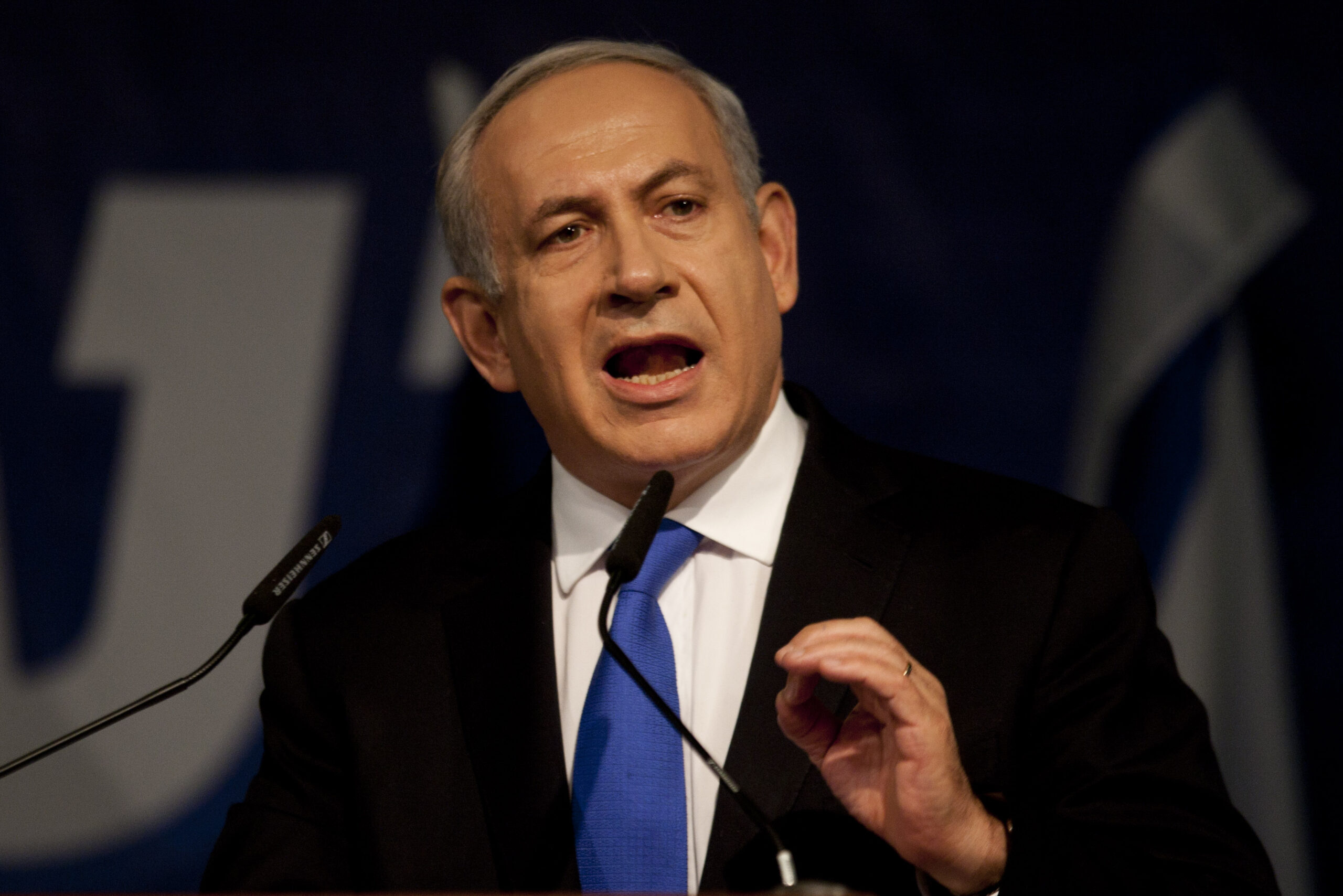
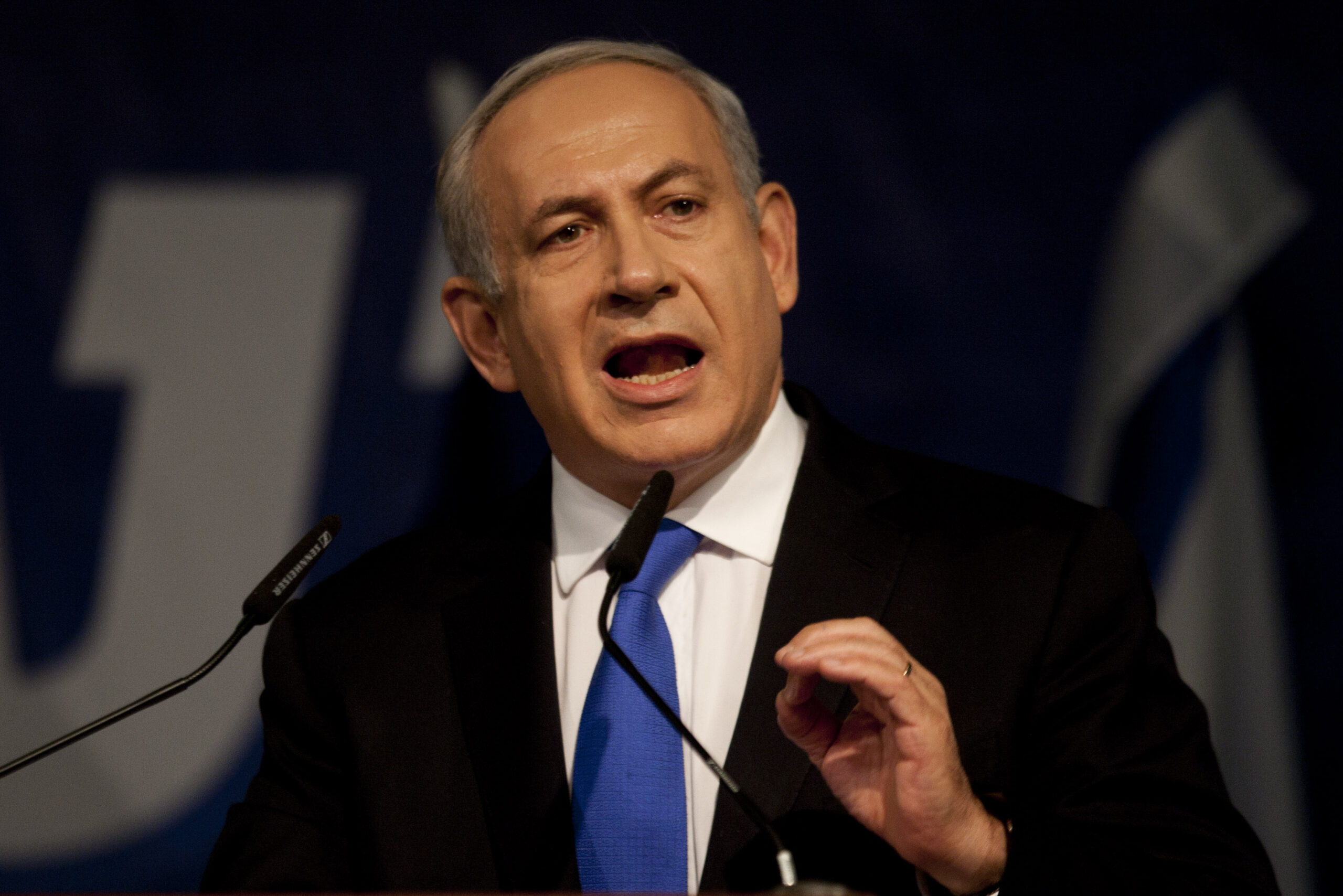
Israel's Prime Minister Benjamin Netanyahu delivers a speech to his Likud party members during the party convention in Tel Aviv, Israel, Sunday, May 6, 2012. (AP Photo/Ariel Schalit) (Credit: AP)
This article originally appeared on GlobalPost.

JERUSALEM — Israeli Prime Minister Benjamin Netanyahu’s frenetic politicking over the last week appears aimed at one thing: strengthening his ability to take on Iran.

Only days after announcing the surprise dissolution of his government and early elections, on Tuesday Netanyahu presented his compatriots with a second shocker: He cancelled elections and announced a strengthened parliamentary coalition, bolstered by unification with the opposition Kadima party.

Global PostThis new union means Netanyahu will control more than 90 seats in Israel’s 120-seat parliament, known as the Knesset. The new majority is unprecedented in modern times. Former army chief of staff and Kadima’s newly-elected leader, Shaul Mofaz, will join as deputy prime minister. The center-right Kadima party adds heft to Netanyahu’s mandate at a time of urgently polemical debate in Israel over Iran’s nuclear program.

Netanyahu’s political jockeying provoked an immediate and strong reaction in Israel.

Labor Party leader Shelly Yachimovitch, who will benefit politically if, as expected, she is now named opposition leader, said: “This ugly maneuver is going to be taught in universities for a long, long time.”

Israel’s Occupy-style protest movement, meanwhile, announced a series of demonstrations to call for political reform this coming weekend. The main question occupying Israel’s punditry even after this second twist remains the same: Is Netanyahu acting to strengthen his hand if he decides to strike Iran before the American elections in November?

Ari Shavit, a top political analyst at the Israeli daily Ha’aretz, who is known for his contacts in circles close to Netanyahu, told GlobalPost that the prime minister has been intent on early elections for at least a few months, for one principal reason that will not please Washington.

“Netanyahu designed to have early elections in Israel so they preempt the American elections in November and give him time to bring the Iranian nuclear crisis to a climax in autumn, in the two months between the Israeli elections and the Americans’,” he said.

Netanyahu’s decision to then abandon early elections in favor of a broader coalition appears aimed at that same result. “Netanyahu suddenly understood that the Likud” — Netanyahu’s party — “could easily split to the right, in which case, even if re-elected, he would not have the mandate he needs,” Shavit said. “Instead of an election preparing the ground for a confrontation, now he has unity preparing the ground for confrontation.”

The Israeli leader has long argued that a pre-emptive strike on Iranian facilities may be the only way to prevent Iran from developing nuclear-weapons capability.

But opposition from European leaders and US President Barack Obama, who supports a diplomatic approach, and from a growing chorus of former Israeli military commanders who argue that a unilateral strike would only delay, not halt, Iranian ambitions, have weakened the prime minister’s position.

Netanyahu’s logic seems to hold that if Obama is re-elected in November, he will no longer have to worry about domestic politics and will be able to press Netanyahu on Iran and the question of peace talks with the Palestinians — an area Netanyahu is eager to keep out of the international spotlight.

“The Iranian reason remains Netanyahu’s motivation,” Shavit said. “The difference is that now the season is shortened. He does not have to wait until the election on Sept. 4 before bringing the Iranian issue to a head. He can act now.”

Chanan Kristal, a political analyst for Israel Radio, had a somewhat different take. He said that two possibilities exist that can explain Netanyahu’s actions — but agreed that the move was driven by Iran.

“Either [Netanyahu] needs [new Deputy Prime Minister] Mofaz in his government in order to justify postponing any action against Iran, or he needs Mofaz inside so as to provide legitimacy for when he does attack Iran. Mofaz has so far come out against an attack, but it remains clear that those making the decision will be Netanyahu and Defense Minister [Ehud] Barak. For now, all bets are off.”

Shavit warned that anyone interested in preventing a conflict with Iran, such as the United States, will need to act swiftly to find a political solution.

“Otherwise there is a risk by the end of summer, we’ll find ourselves in a dire situation,” he said.

At the joint press conference announcing his union with Kadima and Mofaz, Netanyahu appeared to be peeved at much of the sniping he has recently faced by a growing list of former military and intelligence leaders expressing doubts about his Iran policy. He seemed especially put off by Yuval Diskin, the former head of Israel’s internal security agency and an apolitical figure respected across the board, who last week took the criticism farther than most.

“My major problem is that I have no faith in the current leadership, which must lead us in an event on the scale of war with Iran or a regional war,” he said. “I don’t believe in either the prime minister or the defense minister. I don’t believe in a leadership that makes decisions based on messianic feelings.”

The implication that Netanyahu and Barak are not competent to make decisions on matters of national security, specifically regarding Iran, ricocheted loudly across the political universe and clearly remained on Netanyahu’s mind today as he repeatedly stressed the “sanity” of his government and said: “I have even been referred to as messianic. Yes, messianic.”

Iran’s gift to Netanyahu

The Israeli prime minister's hawkish position on the Islamic republic is the ideal way to shore up his base

Israeli Prime Minister Benjamin Netanyahu (Credit: AP Photo/Uriel Sinai, Pool)
This article originally appeared on GlobalPost.

JERUSALEM, Israel — As negotiations proceed in Istanbul over Iran’s nuclear program, Israeli Prime Minister Benjamin Netanyahu can’t seem to stop harping about the threat posed by the Islamic republic.

Global PostFollowing the conclusion of last week’s talks between Iran and Western powers, for instance, Netanyahu publicly complained that the five-week gap between each summit amounted to no more than “a freebie” for Iran to continue developing its nuclear capacity unimpeded.

A growing cadre of Israeli political analysts view Netanyahu’s posturing on Iran as part of a long-term pre-electoral strategy — he faces mounting threats against the stability of his coalition.

Alon Liel, a 30-year veteran of the country’s foreign ministry, where he once served as director general, told GlobalPost he believes the Iranian issue is expedient for Netanyahu both internationally and domestically. Abroad, he is vulnerable to accusations that he is not moving toward peace talks with the Palestinians. Internally, he needs to shore up his right flank ahead of elections.

“In Netanyahu’s political circles, and even beyond that, it is very comfortable for him to lift the issue of Iran to high decibels. He needs to address internal political realities and consolidate an Israeli consensus, and also, internally and externally, to postpone the Palestinian issue,” he said. “He is much more comfortable talking about the Iranian danger than he is addressing the crisis with the Palestinians.”

Leil said that Netanyahu is “earnestly” concerned by the possibility of Iran developing into an existential threat to Israel, but thinks most of the rhetoric is aimed to serve his re-election campaign.

“I personally am much more frightened by the silence of the Palestinians than by the verbal back and forth between Obama and Netanyahu,” he said.

U.S. President Barack Obama responded swiftly to Netanyahu’s outburst over the five-week gaps.

“Now, the clock is ticking. And I’ve been very clear to Iran and to our negotiating partners that we’re not going to have these talks just drag out in a stalling process. But so far, at least, we haven’t given away anything — other than the opportunity for us to negotiate and see if Iran comes to the table in good faith,” Obama said. ”And the notion that somehow we’ve given something away — or a ‘freebie’ — would indicate that Iran has gotten something. In fact, they’ve got some of the toughest sanctions that they’re going to be facing coming up in just a few months if they don’t take advantage of these talks.”

Alon Pinkas, a former Israeli consul general in New York and chief of staff to four foreign ministers, told GlobalPost that Netanyahu’s outburst was irresponsible.

“The promptness and resoluteness of the U.S. response suggests that [if] Israel had reservations, [they] should have been conveyed through quieter channels. Mr. Netanyahu’s reaction gave the impression of a major divergence in U.S. and Israeli positions where one may not really exist,” he said.

American officials went out of their way to assure the Israeli public that their prime minister had been informed of every facet of the Istanbul talks ahead of time, while they were under way, and after their conclusion.

Netanyahu is juggling a number of challenges ahead of elections next year. Like many in the international Occupy movement, the organizers of last summer’s massive wave of social protests in Israel are gearing up for a renewed effort this season.

Also, senior political allies such as Deputy Prime Minister and former Chief of Staff Moshe Ya’alon are growling at Netanyahu from the right, threatening to bolt from his government if he complies with a Supreme Court order to evacuate illegal Jewish settlements in the West Bank.

Many Israeli ministers say they are resigned to the government’s collapse well before the scheduled date for elections, in late 2013.

Amos Yadlin, a former chief of military intelligence, took the unusual step last week to calm any talk of a possible Israeli strike against Iran, telling Israel Army Radio that “even if Iran achieves the capacity to make a bomb, I don’t think the first thing they’ll do is launch a bomb against Tel Aviv.”

Many Israeli analysts dismiss the squabble on Iran as mere posturing for the benefit of the media, positing that, behind the scenes, Netanyahu and Obama are coordinating a united front — or that Netanyahu is simply playing for local votes.

“Five weeks is not the end of the world,” Iran expert Meir Javedanfahr told the Israeli website Times of Israel, dismissing Netanyahu’s complaint about the time between negotiations.

Liel said Netanyahu “is a spin master with a genius for PR, a real master. The last thing he wants, for example, is for the UN to take up Palestinian demands, or the ticking time bomb of the settlements. He wants quiet on that front. And the best way to get that silence is to raise the tone of the Iranian issue.”

The Israeli blogger Anshell Pfeffer said naked electoral calculations explain Netanyahu’s impertinence.

“He needs to present the Israeli public with an achievement on the Iranian issue and he needs it soon. The prime minister hears not only the ticking of the Iranian atomic clock; last summer’s clamor from Tel-Aviv’s Rothschild Boulevard also echoes in his ears. It was the lowest point of his second term, with his ratings plummeting and Likud ministers talking openly about losing the next elections.”

Continue Reading Close

A surprising check on Israel’s radical right

By upholding an order to evacuate a West Bank settlement, Israel's new chief justice stands up to Netanyahu

Israeli Prime Minister Benjamin Netanyahu (Credit: AP Photo/Bernat Armangue)
This article originally appeared on GlobalPost.

JERUSALEM, Israel — The right wing in Israel is accustomed to getting its way. Just consider the vast and controversial settlements on the West Bank.

Global PostThis powerful faction thought it had boosted its power even further when Asher Dan Grunis was appointed chief justice of the Supreme Court.

But so far, that hasn’t been the case. The court, breaking from the will of the right, ruled late last month that a small group of Jewish settlers must abandon their remote West Bank outpost.

The decision to evacuate the indisputably illegal Migron settlement, where about 50 families have installed caravans on Palestinian-owned land outside of Ramallah, did not initially seem significant. It was essentially a restatement of an order issued by the same Supreme Court last August, which demanded that Israelis leave Migron by March.

But instead of complying with the renewed demand, several weeks ago the government of Prime Minister Benjamin Netanyahu proposed a deal — known as the Begin Compromise. It stated that in three-and-a-half years, the settlers of Migron would relocate to a nearby hilltop.

In a move characteristic of the wink-wink style right-wing politicians and pro-settlement activists have adopted, the Israeli cabinet — knowing the deal flouted a Supreme Court decision — approved it.

The court itself wasted little time slapping the compromise down.

“It was an obligation, not an option,” wrote Grunis, in one of his first decisions as chief justice, about the ruling.

Instead of rubber-stamping illegal settler actions as many thought he might, the chief justice coolly upheld the letter of the law, placing Netanyahu in an uncomfortable political position.

Yariv Oppenheimer, the director of Peace Now, a left-leaning Israeli nongovernmental organization, said that if Netanyahu hoped to delay a political reckoning with his right-wing supporters by postponing the question of Migron’s future until 2015 — that is no longer a possibility.

“Of course, in an ideal world, the fact that the government follows the law should not make any waves. Even the prime minister has to obey the law, and obeying the law is not a political matter. But I think that in our political system, the settlers may try to use the evacuation of Migron to gain points with the public.”

Depending on the outcome of the evacuation, Oppenheimer said, the decision could have severe repercussions for Netanyahu’s administration.

“It will have a political effect. If the evacuation is peaceful, the effect will be fairly minor. But if there will be violence, it could even lead to early elections,” he said.

Settlement activities, and in particular the case of Migron, have become one of the most fraught and unruly areas of Israeli jurisprudence. Israelis established Migron more than a decade ago on land privately owned by Palestinians who at one juncture considered selling it to them. Then, possibly under threats by Palestinian hard-liners, they retreated from the sale.

The Israeli settlers claimed the land is theirs by deed. The Palestinians countered successfully that the deal was never closed. Even former Prime Minister Ariel Sharon, a hard-liner in his own right, had planned on evicting the Israeli settlers. In Sharon’s view, the blatant illegality of Migron put at risk other settlements that might skirt the edge of the law.

But Netanyahu, wanting to avoid a confrontation with his conservative supporters before elections slated for next year, used the Begin Compromise to sidestep the court’s ruling. With no other apparent option, the prime minister said this week that he would respect the decision.

The whole affair has been something of a political earthquake in part because conservative circles assumed the political sympathies of Grunis, who has been a member of the Supreme Court since 2003, lay with them.

“I have no idea where that came from. Nobody who has followed Grunis could really think that,” said Israel Radio legal affairs analyst Moshe Negbi, a professor at the Hebrew University of Jerusalem. “In my view, the assumption came out of the ignorance and primitivity of some right-wingers, who supposed that he shared their points of view, and who don’t understand that being a judge is not like being a politician.”

“There really is no question of right or left here,” Negbi added. “Five years ago the Supreme Court issued an order, and for five years the government has flouted it. And after these five years, the government asked for a delay of another three and a half years. No judge would ever agree to such a thing.”

A wide range of issues, from paved roads to water pipes, bring together the Israeli government and West Bank settlements in what has become a gray area of legal practice, in which political necessities relating to settlements are often reframed as legal necessities.

Negbi described as “disgraceful and shocking” the fact that the attorney general’s office acceded to the government’s request to present the Begin-negotiated deal to the Supreme Court.

“They are all lawyers, and they know better,” he said.

Oppenheimer said the decision is a step away from lawlessness.

“This makes it very clear to the settlers and to the government that political and ideological aspirations cannot replace the rule of law, period. Even if ideologically they believe Migron should remain there — and if they do, I believe they are mistaken — in terms of the law, it cannot stay.”

“In addition, this decision says to the government and to the settler movement, you cannot close a deal between yourselves without even consulting the Palestinians who own the land if they are willing to accept three and a half years of additional settlement on their own property.”

Continue Reading Close

The growing U.S.-Israel divide over Iran

A flurry of meetings between the two countries reveal disagreements about when and whether to resort to force

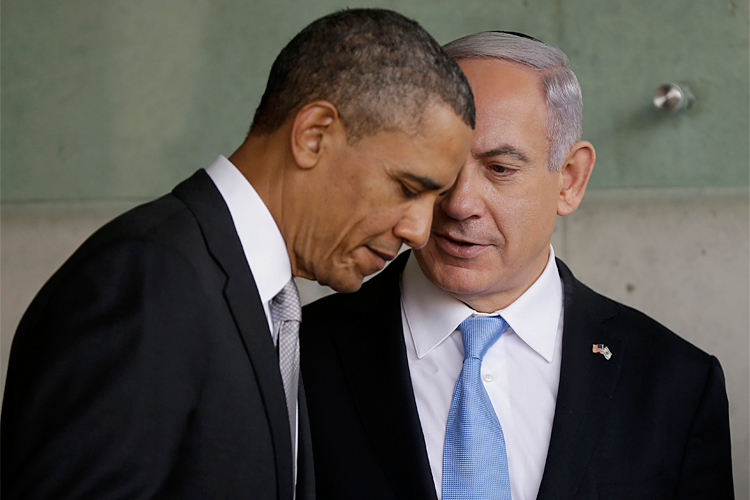
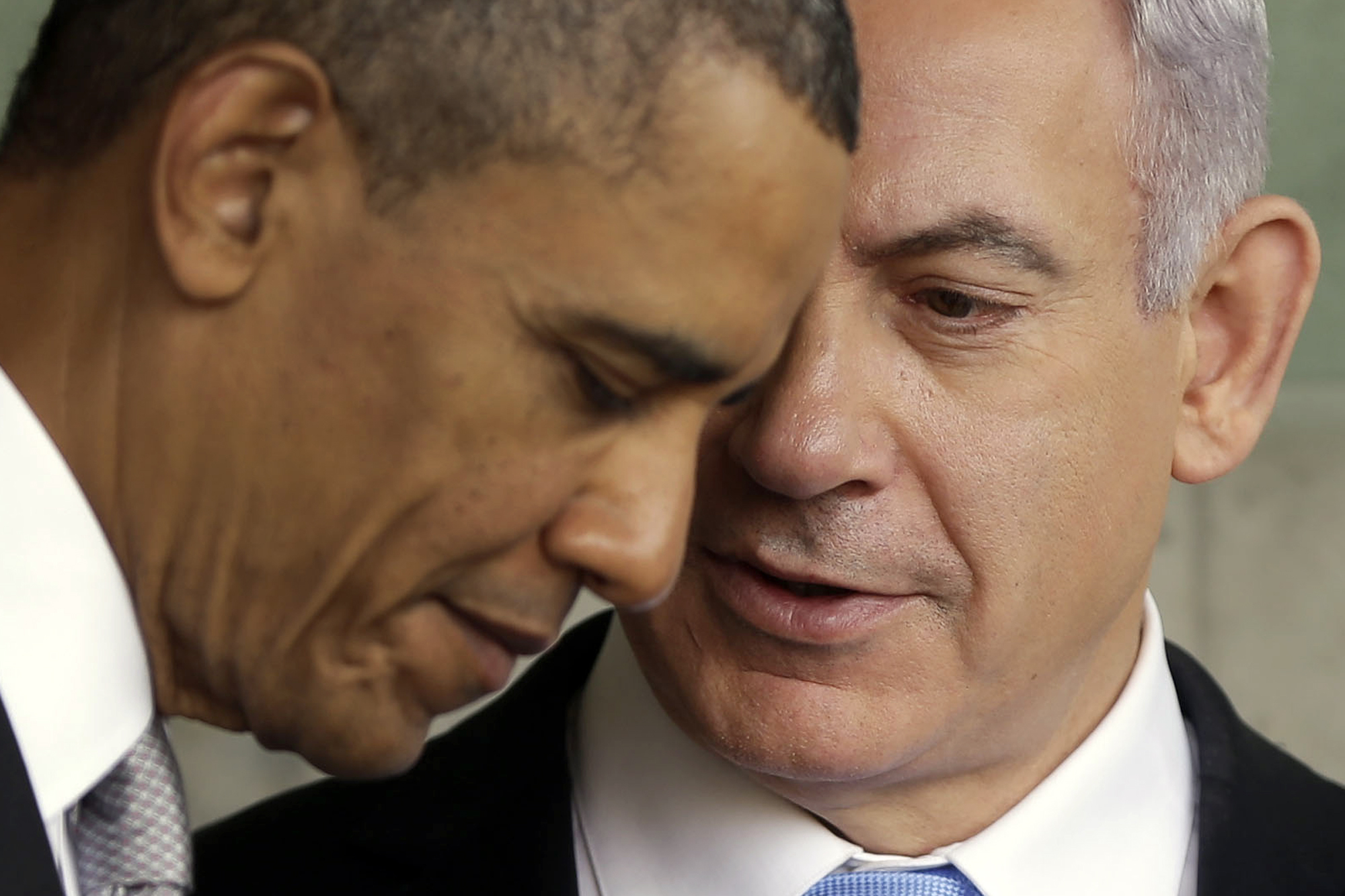
Israeli Prime Minister Benjamin Netanyahu and President Barack Obama
This article originally appeared on GlobalPost.

JERUSALEM — On Monday, both Israeli President Shimon Peres and Defense Minister Ehud Barak head to Washington for separate but urgent meetings, a day after Iran beat Israel at an indisputably benign competition, the Oscars in which the Iranian film, “A Separation,” beat Israel’s “Footnote” for best Foreign Film.

Global PostThe matter was at the root of wry commentary accompanying a flurry of visits not seen in years.

In the past few weeks, U.S. Defense Secretary Leon Panetta, Chairman of the Joint Chiefs of Staff General Martin Dempsey and National Security Advisor Tom Donilon have all held high level meetings in Jerusalem. Barak is scheduled to meet with Panetta and with Vice President Joe Biden. Peres will meet with President Barack Obama, as will Israeli Prime Minister Benjamin Netanyahu, who will fly to Washington for a much anticipated meeting on March 5.

The subject at hand is nuclear Iran — not the movie version, and not even the proxy war version, which has seen the assassination of Iranian nuclear scientists, the attempted assassinations of Israeli diplomats, and genial computer viruses attack Iranian nuclear installations, making centrifuges spiral out of control, as in Hollywood’s imagination.

On the eve of the Israelis’ Washington visits, there is a divergence of opinion between the United States and Israel regarding the utility of the recently hardened sanctions on Iran, and a growing apprehension on both sides about what the other may be prepared to accept from the Islamic Republic’s leadership.

Eytan Gilboa, an expert on U.S.-Israel bilateral relations who holds posts at Bar Ilan University and at the University of Southern California, said the situation is stark and in some ways unprecedented.

“The Obama administration has little trust in Netanyahu and vice versa. The new sanctions that have been imposed have produced economic hardship in Tehran, but this does not mean they are working. To work, they have to change the Iranian government’s policy toward nuclear development, and this has not yet happened.”

“The UN Atomic Energy Agency (IAEA) has just announced that Iran has substantially increased enrichment, which seems to contradict American statements that have appeared in all the media suggesting that Iran has not yet made the decision whether to develop nuclear weapons.”

Two points of dispute stand out in creating what Sen. John McCain, also on a visit to Israel last week, called the “daylight” between the two countries regarding Iran’s nuclear plan.

The first is the question of what constitutes unacceptable progress toward the manufacture of an armed nuclear device, or, in Barak’s words, Iran’s entry into a “zone of immunity.” The other is the extent of uranium enrichment at a nuclear site near the holy city of Qum, which was highlighted by the IAEA report.

The United States and Israel agree that the secret underground structure is better protected from a possible military strike than other known Iranian facilities. But from that point of agreement, different conclusions are drawn.

Israeli analysts believe Iran is moving fast toward a nuclear military option, and taking advantage of the pressure of sanctions and the time granted by European offers to negotiate in order to assemble all the parts necessary to build a bomb. The United States, which is in the midst of an election year, meanwhile, thinks sanctions may yet bring Iran — “if it is behaving as a rational actor,” in Gilboa’s words — to negotiate.

“The process is preparing everything for the building of bombs, with the aim of creating all the parts and then needing only a very short period of time to assemble a weapon. So it is just playing with words if we say that we don’t know whether they have made a decision. If you produce all the parts, it is obvious that means you intend to produce a bomb,” Gilboa said.

“I think that what Obama wants from Netanyahu next week is a commitment not to strike Iran at least until the American election, to give heavier sanctions a chance and not to surprise the United States.”

Gilboa does not believe Israel would attack Iranian nuclear installations without notifying the Americans beforehand.

Still, he points out, “The current situation is unprecedented. The U.S. has never before asked Israel to refrain from military action, and Israel has never before asked the U.S. for permission. This is all new ground.”

The 1981 Israel Air Force attack on Osirak, Saddam Hussein’s French-built nuclear reactor is now ancient history. In that campaign however, only eight jets were involved.

The New York Times estimated that at least 100 Israeli fighter planes would be needed today for a crippling attack on Iran. At the time of the Osirak strike, the United States angrily condemned Israel. But in 2005, former President Bill Clinton said, “Everybody talks about what the Israelis did at Osirak in 1981, which I think, in retrospect, was a really good thing.”

The current disagreement between Israel and the United States seem not to be on the substance of Iran’s nuclear program, or even on the possibility of a necessary, last-resort, military strike, but on the timetable and method of response to the threat.

Many Israeli analysts believe the Obama administration and Europe are not convinced that the full effect of sanctions has yet been felt. Israelis are concerned that by the time they are felt, possibly by next summer, when Europe’s oil embargo on Iran is scheduled to go into effect, it might be too late.

“What Obama would like is to put the crippling sanctions to the test. He thinks that the sanctions being used this time, alongside the oil embargo, will actually have an impact,” said Tel Aviv University professor Uzi Rabi, the director of the Moshe Dayan Center for Middle Eastern and African Studies.

“He is in effect saying to Israel, don’t surprise us. We want to be updated from A to Z. The second thing, I think Israel is being asked is to play down the shadow war and really just let sanctions work. If the sanctions are going to be fully implemented it could inflict a lethal blow on the Iranian regime, and since what we are talking about is the survival of the regime itself, this could be very effective.”

As to Israel, Rabi says, “It would like to make sure everybody knows that from its point of view, a nuclear Iran is unbearable. This combination of ayatollahs and power is something that poses an existential threat to Israel, and it is something Israel is really afraid of. What Israel thinks is the right thing to do is to make sure the military option is not only on the table, but actually feasible.”

Not many in Israel think that Iran, even with a nuclear weapon in hand, would attack Tel Aviv.

“Based on rational thinking, which is not one of the strongest characteristics of the Middle East, if Iran acquires nuclear weapons, it would be tantamount to suicide were they to use them. Iran would be wiped out by Israel’s second strike capability and by American nukes,” Gilboa said.

“I think they want them in order to acquire hegemony in the Middle East. By becoming a nuclear power they can threaten anybody. The power of threat is much more than the power of destruction.”

Gilboa predicts that next week Netanyahu will ask Obama how he plans to ensure Iran’s non-nuclear status in the event sanctions fail to cripple the nuclear program, and that Obama “will evade the answers.”

Rabi says “Israel is afraid to be left alone. I don’t think Iran would attack Israel. But their actions provide a source of inspiration for lunatic radical movements like Hamas and Hezbollah, and the fact that they are attacking Israelis in Baku, Delhi and Tbilisi, though ineffective for now, show that this is a state that could act in accordance with the modus operandi of a terrorist group. This has very negative implications for the stability of the Middle East.”

Not all Israeli experts see in the commotion of transatlantic visits and consultations evidence of tension between the United States and Israel. Shlomo Shpiro, vice chair of the Department of Politics at Bar Ilan University, believes those claims to be overstated.

“I think there anxiety among some in the U.S. administration who fear that a powerful Israeli military action against Iran could have an impact on the election in November. I don’t think there is tension. A whole range of senior American officials have been visiting Israel almost on a weekly basis.”

“I think the threat assessment is very similar in Washington and in Jerusalem,” he adds. “I think Obama is very concerned about the possibility of Iran getting nuclear weapons. Both are very worried, and both countries agree the process is moving quickly. The disagreement is only about how to prevent or delay it.”

Any Israeli military option, Shpiro says, would be a “last resort.”

“But if it comes to a last resort, I think Israel’s leadership will not hesitate. It all depends on the progress of Iran’s nuclear program and on information that the U.S. and Israel obtain about that program.”

For now, the war of nerves will play on, with Israel pressuring the U.S. and Europe to fully implement severe sanctions as soon as possible, and demanding assurances, perhaps impossible to give, about what the West will do if sanctions do not deter Iran.

The psychological warfare, many say, may lead Iran to believe it can “safely assume it can continue with its plan to build nuclear weapons without much interference,” Gilboa said. “There is a possibility the Iranians are laughing at everybody. For example, why announce sanctions and then say you’ll impose them only in six months?”

“The Iranians are the only ones producing consistent statements, and this is our problem. Too many of the statements coming from the West are confusing and could be interpreted in any number of ways.”

Continue Reading Close

Adelson’s other pet project: The Israeli right

Newt's billionaire backer poured tens of millions into a media campaign to get Netanyahu elected prime minister

Sheldon Adelson (Credit: AP Photo/Vincent Yu)
This article originally appeared on GlobalPost.

JERUSALEM — As more and more people wonder how long Newt Gingrich will persevere against the growing inevitability of a Mitt Romney victory, one man appears to be holding firm: Sheldon Adelson, the Las Vegas casino mogul who just poured another $5 million into Gingrich’s coffers.

Global PostSuperficially, the two men appear to have little in common. Gingrich, 69, is a lifelong politician and consummate Washington insider whose trajectory has famously taken him through three wives and three religious renderings: the Lutheranism of his birth, the adaptable Southern Baptism of most of his adult life, and now, a Bible-thumping new Catholicism.

Adelson, 78, born to Jewish Ukrainian immigrants in Dorchester, Mass., crawled his way out of the New England working class and, in addition to his vast wealth, is known for a stable and enduring second marriage to Miriam Ochshorn Adelson, with whom he has two children.

She is apparently the key to the one subject that links the two men, the country of her birth, Israel.

According to most reports, Adelson got to his mid-50s before ever really thinking about Israel. Then, a single trip to the Jewish homeland changed his life. When he got back to the United States, the divorced Adelson started telling friends he was interested in meeting an Israeli wife. A mutual friend set him up with Miriam, a physician and expert on addictions. Together they have developed two principal enduring passions and philanthropic commitments: centers for the treatment of drug addicts, and Israel.

The Adelsons have always maintained a mainstream but clearly right-wing line regarding Israel. They are major supporters of the American Israel Political Action Committee, of Birthright, an organization that brings Jewish youth on “roots” trip to Israel, and they love Benjamin Netanyahu, Israel’s conservative prime minister, as well as Gingrich, who has long been a fervent defender of Israel.

Not much is known about Gingrich in Israel, but it is thanks to support from Adelson that, in Israeli media reports, he is almost universally referred to as “Netanyahu’s friend.” There is no public information confirming an actual bond between the prime minister and the former speaker of the House, but Netanyahu is, coincidentally, a thrice-married politician known for a messy personal life and for playing to his religious and conservative base.

And both men benefit greatly from Adelson’s support.

It was in order to help a future Netanyahu candidacy that Adelson, in 2007, established Israel Hayom (Israel Today) a daily tabloid newspaper that quickly rose to have the widest circulation in the country. The newspaper was founded on the conviction, widespread among the Israeli right-wing since Netanyahu’s first term in office in the mid-90s, that the media held a deep-seated antipathy to Netanyahu.

A much-repeated rumor, impossible to verify, has it that Adelson has told Israeli friends he is happy to lose even $150 or $200 million dollars on the venture.

Conservative estimates hold that for now, he has lost at least several tens of millions of dollars. The paper boasts an extensive and expensive list of journalists and analysts, it is printed in massive quantities and distributed widely and for free, yet it does not display advertising in sufficient quantities to offset significant costs. It is a rich man’s luxury.

Israelis uncomfortable with the paper’s big shadow have bestowed it with a jokey moniker, Bibiton, a play on Netanyahu’s nickname, Bibi, and on the Hebrew word for newspaper, Iton.

On Thursday, new revelations about just how deeply Netanyahu is entwined with the Adelson’s newspaper came to light, and now threaten to blow open an unsavory, and perhaps illegal, link between the American billionaire and the prime minister.

Israel’s Channel 10 revealed Wednesday night that Dror Eydar, a media columnist for the Adelson-owned daily, who frequently pens irate articles accusing the Israeli media of an anti-Netanyahu bias, is simultaneously on the prime minister’s payroll, as a speechwriter and adviser.

This is the first indication that a direct connection may exist between the prime minister’s staff and the paper, which while right-wing and pro-Netanyahu, has always maintained a line of neutrality.

It remains unclear just how much the scandal will affect one of the largest media outlets in the country, but some expect there will be resignations from within the prime minister’s office.

To entertain the notion of how big a player the Israel Hayom is in the diminutive and struggling Israeli media market, the mere question of where Israel Hayom is printed is a matter of life or death for several other daily newspapers. Israel HaYom is now printed at the presses owned by the liberal, intellectual and highly regarded Ha’aretz, ideologically Israel Hayom’s antagonist.

The owner of a rival paper, the popular, mass distribution daily Ma’ariv, is known to be vying for the printing contract, which is worth about 100 million shekels, or about $27 million. Whatever Adelson decides could determine, at the twitch of his wrist, the fate of either of these established, traditional national papers.

Not the least of the issues that create unease among wide swathes of Israelis is the fact that Adelson, a controversial and enigmatic whale that has taken virtual residence in the local media pond, is a foreigner residing abroad. He has never pretended to be an Israeli. But whatever decision he makes, in the words of Ma’ariv columnist and Channel 10 analyst Ofer Shelah, “is not a decision for which he will pay any price. We will. Yet the future of pluralism in the Israeli media market may reside in his hands.”

Mordechai Kremnitzer, a professor of law at the Hebrew University of Jerusalem and an expert on the media, points out two positive aspects of Adelson’s emergence on the Israeli scene.

“After many years in which the Israeli right wing claimed it was discriminated against by what was perceived as a generally left-wing media, and after many years in which this was a real perception held by many Israelis, now it is very difficult to make that case. Israel Hayom has the largest readership in the nation, and it is without question a right-wing operation.”

Secondly, in Israel’s very small and concentrated media market, with very few published papers, “the simple addition of another one is a positive thing.”

“The problem,” he said, however, “is that because the paper is distributed for free, the pressure this puts on other papers — that are already struggling to survive — is huge. This could even cause the collapse of another newspaper or papers, and if that happens, it should be viewed with real concern. It would be very negative, principally because it would not be the result of free competition among outlets, but it would simply be a consequence of the huge amount of money Adelson has at his disposal.”

An additional and related concern, Kremnitzer said, is the influence a foreign citizen can acquire on the free market of opinions in Israel.

“And even more worrisome than that is the question of the independence of the prime minister’s judgment when he becomes dependent on a person who is not an Israeli citizen and on a source of funds that is foreign,” he said.

No Israeli law restricts foreign ownership of media outlets, and Adelson’s activities are not challenged even when they are called into question for influencing Israel’s democracy.

“In my opinion, everything Sheldon Adelson has done is completely legal and legitimate,” said Moshe Negbi, a legal analyst for the Voice of Israel radio and a professor of communications at Hebrew University. “I’m sure Sheldon Adelson is not operating for any personal advantage. He does not personally need Netanyahu. He’s not advancing his own interests. I think he believes with his whole heart that Netanyahu is the best medicine for all of Israel’s problems. He has very right-wing views in many areas, and it is his right. In addition, he is willing to spend his own money to advance his ideas and his ideology.”

“It is part of his freedom of expression to use his money to advance his opinions. It’s the same as Amos Shocken, [the owner of Ha’aretz] who I admire greatly, who is willing to lose a lot of money to advance his point of view,” Negbi added.

Negbi’s concern lies with the “inability of the capitalist, democratic system to find the tools to regulate censorship that is brought on by business people who deal in media. There is no legal way to say to a person with money how he can manage his own property.”

“A generation ago, the concern was with governments’ attempts to control opinion. Now, the person who controls such a popular paper has tremendous power over what the public hears and does not hear, and therefore over the public’s political opinions.”

The issue is worldwide, but Israel’s case, according to Negbi, is particularly extreme due to its size. Israel’s total population is 7.5 million people, about the population of northern California’s Bay Area.

Despite the legal propriety of his actions, Adelson, who is accustomed to operating with a very wide berth, occasionally skirts the customs and ethics of Israel’s media world in a manner that raises eyebrows, or sometimes, causes fury.

The latest revelations made by Channel 10, a struggling commercial network known for a bold and authoritative investigative style, are only the latest in a series of skirmishes that threaten his reputation in Israel.

Last September its news division broadcast a critical but unchallenged profile of Adelson’s global casino operations. In reaction, Adelson threatened to sue. Both Channel 10’s news director and its legal counsel examined the claim and determined that no apology was due. But Channel 10 shareholder Ronald Lauder, another conservative American Republican and a friend of Adelson, thought otherwise and ordered that an apology be extended.

When the apology was issued on the main news broadcast last week, outrage ensued, including the resignation of two senior Channel 10 executives.

“This is exactly the crux of the matter,” Shelah, the columnist, said. “The media is at its knees and apologizing for something its professional authorities determined required no apology because they depend on the ongoing financial stream from someone who is a non-resident of the state. In this case, two of them.”

“That two people live in the US and have a relationship does not bother me. And Adelson was just normal in demanding an apology he did not deserve. But the problem was Lauder, who forced this behavior on Channel 10,” he added.

Lauder, of the Lauder cosmetics fortune and a former ambassador to Austria, is also president of the World Jewish Congress and is, like Adelson, close to Netanyahu. In 2011 alone, he pumped an estimated $16 million into Channel 10 to keep it operational.

The realization that in a moment of pique Adelson was able to rock Israel’s entire media world and possibly impact upon a government decision regarding debt relief for Channel 10 caused a nationwide shudder and reconsideration of his influence.

The latest revelations are sure to underscore the concern, expressed by Kremnitzer, the law professor, that Adelson may influence day to day decisions in the prime minister’s office.

“If Channel 10 were obliged to apologize for a broadcast not due to proper procedure like the correction of a mistaken pronouncement, this is clearly a grave abuse of the power of influence. This is what I mean when I say ‘negative and dangerous,’” he said.

The scandals have caused much worried flippancy in Israel about the political Kabuki theater Adeslon may have been dreaming up this winter, in which Gingrich and Netanyahu, both his protégés, could have a run at running a new US-Israel relationship.

“We are a very little country. And into this crucible Sheldon Adelson arrives, with a legitimate motivation. He sees a leftist liberal media and says, ‘I will establish a right-wing conservative balance,’ you know — fair and balanced — and balance out the media market. It’s all well, except for the problem that invariably arises when someone who literally has no budget limits is willing to invest his unending amount of money in Israel,” Shelah said. “What do you do then?”

Continue Reading Close

The assault on Israeli women’s rights

Ultra-Orthodox groups have grown more aggressive than ever in their efforts to keep women out of the public sphere

A woman walks past an Israeli flags hanging on a balcony before a ribbon-cutting ceremony at a recently built Jewish settlement in the East Jerusalem neighbourhood of Ras al-Amud May 25, 2011. (Credit: Reuters)
This article originally appeared on GlobalPost.

JERUSALEM — The subject of a women’s place in public dominated Israel’s headlines this week after a series of incidents highlighted what some say is the growing repression of Israeli women.

Global Post

The Israeli army, in which women have served since the establishment of the state, has been the focal point of the concern, as it came to light that religiously observant male recruits have walked out of ceremonies in which female singers have performed, claiming it offended their understanding of modesty.

There is a universal draft of 18-year-old men and women in Israel, though a strongly guarded practice allows religious men studying in seminaries an exemption. The current clash is between the army’s tradition of gender equality and new, religious recruits who are asserting their values.

In addition, an incident involving Chany Ma’ayan, a professor of pediatric medicine at Hadassah University Hospital, made headlines when it was revealed that last September she was awarded a prize by the Ministry of Health but, following the directives of Deputy Minister of Health Ya’akov Litzman, an ultra-Orthodox Jew, and unlike the male winners of the same prize, was not invited to the stage to receive the award.

The episode caused Orthodox women, in particular, to express indignation at the growing extremism of religious men in public life.

“This was a public event involving a deputy minister of state,” said Dr. Hanna Kehat, the director of Kolekh, an organization of professional religious women, in an interview with Israel Radio. “This is an incidence of gross discrimination, which is prohibited by law and it is difficult to believe actually took place. We are advancing at a rapid pace toward Iran.”

In part, these events reflect a growing boldness on the part of religious figures in Israel. On the other hand, said Molly Malekar, the director of the Counseling Center for Women, in an interview with GlobalPost, “This is a backlash against the growing role of women in Israeli public life and recognition for women’s causes.”

“Two women now head major political parties [Tsipi Livni, head of center-right party Kadima, and Labor Party leader Shelly Yachimovich], and a third woman is poised to lead Meretz [a small left-wing party.] A woman is president of the Supreme Court and is specifically targeted by these elements. Women’s issues have advanced significantly in society, even to the point where a former president is going to jail for sexual assault. So part of what we are seeing is an inevitable backlash to women’s advancement. The backlash is not coincidental.”

The controversy acquired special resonance after the discovery, several months ago, that posters advancing a national drive for organ donation contained female figures in Tel Aviv, and only male figures in Jerusalem.

The variance caused an outrage, and the National Transplant Center, which had acquiesced to pressure by religious leaders, was forced to apologize and now, at significant expense, is reposting its ads in the capital, with women included.

“The ultra-Orthodox — though it’s important to emphasize that not all of them — are coming at this from a mistaken point of view, in which they see the conflict about women’s role in public life as a clash between faith and lack of faith, between ideology and a way of life. The truth, of course, is that the conflict is between two faiths,” author, television personality and social commentator Yair Lapid told GlobalPost.

Referring to a fiery front-page editorial he published in the daily Yedioth Acharonoth, Lapid said, “I chose the word “sacred” to underscore the fact that women’s equality is part of the faith of every liberal human being. Like any religious faith (and it is easy to forget that even Judaism is not a faith but, like every other religion, simply a certain practice of faith), for us too, there are certain issues that are more or less important, and the ultra-Orthodox have to understand that they are treading here upon one of the absolute red lines of any free person.”

GlobalPost attempted to get a response from each of the ultra-Orthodox members of the Jerusalem City Council, but they all refused to respond to any question on the subject of women in the public sphere. One spokesman, who requested anonymity, said the issue was “quicksand” for any ultra-Orthodox politician.

How has Israel reached this point? Among other things, ultra-Orthodox society, a minority within the Israeli population, has outsized influence in the nation’s political and partisan sphere due to the fragile coalitions that form Israeli governments, which often require kingmakers from minority parties. In addition, unsettling changes within ultra-Orthodox society are causing some to retrench.

The emergence of Kehat’s organization of professional Orthodox Jewish women is but one symptom of this phenomenon. And as Orthodox women demand greater freedoms, some young men too are choosing lives of interaction with the secular world, either through army service or through the labor force in the place of life-long religious studies.

Parallel to these shifts, the majority secular population, inspired by last summer’s social protest movement, is increasingly impatient with traditional military and tax exemptions guaranteed to only the ultra-Orthodox, made possible by their political parties’ ultimatums.

“The burden is unfairly shared,” became one of the demonstrators’ mantras.

Then, of course, there is good old social passivity.

“It’s come to this because we forgot that every religion is by its nature imperialistic,” said the secular Tel Avivi Lapid.

“We erred in thinking that there is a point at which even the extreme ultra-Orthodox will realize that we have given enough up, that there is no need to continue attacking the status quo, that this conflict can be de-escalated. But it just doesn’t work this way when facing the kind of religiosity that has developed in certain ultra-Orthodox quarters. From their point of view, each and every secular person is an infant, and their dialogue with us is not earnest but purely tactical. They stop only when they have no choice, and always march toward their ultimate goal: that everyone will be like them.”

Continue Reading Close

Page 1 of 2 in Noga Tarnopolsky

www.salon.com/writer/noga_tarnopolsky/index.html