Ryan Brown

Africa brought out the meat-eater in me

After a lifetime of strict vegetarianism, four months in Senegal taught me the value of all food

  • more
    • All Share Services

Africa brought out the meat-eater in me

The butcher took a long blade and thwap, sunk it deep into the sheep’s ribcage. Thwap. The next cut cracked bone. Soon the man was wrapping a large piece of flesh in newsprint. My Senegalese host mother — maman as I called her — handed him a bill and he passed me the heavy, warm package, which was already beginning to bleed through onto my hands. Dinner.

I don’t know what I expected when maman demanded earlier that morning, “Come with me to buy some meat,” but it definitely wasn’t this. In fact, if I were to write a memoir of the four months I spent as a student in Senegal, I would probably call it, “I Don’t Know What I Was Expecting, but It Wasn’t This: The Ryan Brown Story.” Every moment, especially in the early days, was rife with opportunities for bewilderment. I would get into a taxi, only to have the driver stop along the way to pick up his friend — and then drive him home first. Or I would respond to a man’s “hello” on the street and he would shoot back, “Je pense que je t’aime.” I think I love you. Apparently the concept of “Africa time” doesn’t apply to matters of the heart.

But it was the inconspicuous act of eating that took the cake in the unexpected events category. And by “cake” I mean “bleeding hunk of sheep.” Because I sure ate a lot more of the latter than the former. Which is weird because as far as the world outside of Senegal is concerned, I am a vegetarian.

For the 10 years prior to my touching down in West Africa, I hadn’t eaten any meat. It was a choice rooted in my 11-year-old self’s proud sense of morality and justice. At the time, it felt like the most serious and autonomous choice I had ever made, the first thing in my life I can remember really taking control of. I kept it around throughout my teenage years out of a combination of belief and habit. It always seemed like a straightforward — albeit incomplete — way to demonstrate that I cared about where my food came from. And what the hell, I just got used to doing it.

But here’s the problem with believing in something unconditionally: It gets in your head, it rattles around a bit, and often, if you’re not careful, it starts to come loose. By the time I was 20, I had reached a point where I wasn’t completely sure why I was vegetarian anymore. The morality behind the original choice felt distant, and I realized there was another ethic of eating that I was ignoring, one that said, “When people open their house and table and prepare food for you, you eat it. No quibbles.” How many times as a vegetarian, I thought, had I refused the food that was offered to me, out of generosity and hospitality, because I didn’t eat meat? I was suddenly and powerfully ashamed of this fact.

So when I got to Senegal, I decided to try life on the Planet Carnivore again, to put the pause on my vegetarianism so that I could live – -and eat — like the Senegalese. I wish I could say the journey was dramatic, but it turns out eating meat is a lot like eating anything else. Bite. Chew. Swallow. Repeat. And whatever qualms I had about where my food was coming from were absolved the day I came home from school to find a blasé-looking sheep munching a mound of grass outside my house. Four hours later, he was dinner. The abrupt nearness of the process was oddly comforting.

In Senegal, entire days were set into orbit around a meal: the hours spent preparing it, the long, rambling affair of eating itself, and the lethargic process of cleaning it all up and beginning again. And for me, meals were the one time I felt truly at ease in West Africa. Most of the time, I was a glaringly obvious specimen of foreigner — a white, non-Muslim American woman with a series of bizarre social tics like wanting to tip waiters and constantly arriving on time to meetings. I’d taken a few semesters of French before I came, but I was a train wreck of a student, and the French I heard in Senegal sounded suspiciously to me like a cross between the smooth, well-enunciated words of my language teachers and someone gargling salt water. Conversations became fill-in-the-blank word puzzles: I think asdkkla bklqk krjty orange adskv yoowe if you like asvk ek weowoc President Obama?

But when we were eating, things were much simpler. My appetite could convey what my mouth constantly stumbled over: how grateful I was for the people who had welcomed me, for the kindness with which they had treated me and the magnanimous generosity they were endlessly displaying. And so I ate. And ate. And ate. Grilled fish and red rice. Beef with thick peanut sauce. Lamb and spiced couscous. Until it all started to taste comfortable, even familiar.

One night, I went out with some American friends to Dakar’s lone Thai restaurant. We scoured the menu and then I flagged down the man I assumed to be the waiter. But just as I was opening my mouth to request a plate of pad thai, he cut me off. “You can’t order from me,” he said.

“Why not?”

“I am the barman.”

“Oh,” I said, “well, can I talk to a waiter?”

He shook his head. “Not now.”

“Why?”

“He’s eating his dinner,” he said flatly. And then, before I could object, he turned and walked away from the table.

By then I had been in Senegal long enough that I should have known this rule already; nothing, least of all a customer in your restaurant, interrupts a good meal. Food is something you pause for, and something for which you should always be willing to wait.

On the surface that has nothing to do with being vegetarian, except that for me it had everything to do with it. In the U.S. I was vegetarian because I could be, because food was an on-demand commodity in my life and I lived with the knowledge that for the most part I could eat what I wanted when I wanted — and stop eating whatever I decided I didn’t want. But in that gaudy and out-of-place Thai restaurant in Dakar, I remembered that for most people, that particular luxury does not exist.

The last week I was in Senegal, maman unexpectedly offered to drive me to school one morning, something she had never done before. But as soon as we were in the car, she turned to me and asked, “Est-ce que tu es pressée?” Are you in a hurry? I shook my head. “Bon,” she said and kept driving. I don’t know where we were when suddenly she pulled over, reached across me, and opened the passenger side window. And then she was calling out to a man on the street in Wolof, and before I could figure out what was going on, he’d lunged his hand through the open window, with two live chickens dangling from it.

The little guys wiggled around wildly, shedding tiny feathers in my lap and staring at me with serious, beady eyes. They keep hanging there as maman and the vendor launch into an animated bartering session. After a few minutes of this, the chicken man withdrew his hand suddenly and maman passed him a crisp bill. In turn, he handed her one of the chickens, which she accepted calmly and deposited in the back seat. Without a glance back, she turned the ignition and began to drive again.

Meanwhile, on the seat behind me, the chicken stayed totally still. I don’t know if it was how they had his feet and wings tied or if he was just terrified, but the thing literally didn’t struggle at all. It just pivoted its tiny head back and forth, surveying the beige leather of the car.

I was wondering how my host mom was going to kill our new companion and what she’d cook him with when she stopped the car again and honked to a homeless man begging across the street. As he hobbled over, she rolled down her window and, without saying anything, reached into the back seat and handed him the chicken. He mumbled some kind of thanks and she pulled the window shut again.

“Maman,” I asked as we began to drive away. “What just happened?”

“I’m giving alms,” she said simply. It’s a Muslim way of saying thank you, she explained, for the blessings life has brought to you. Thank you for the money I have, my family, the food I can eat. And thank you for the good fortune to be able to give someone else a meal.

A few days later, I was back in the U.S., and I had once again flipped off the meat-eating switch. But being vegetarian felt less ridiculous when it came weighted with the knowledge of exactly what it was: a choice. Vegetarianism wasn’t a matter of absolutely or an absolutely not. It is just the way I preferred to eat, a preference for which I tried to remember to say, not to Allah or anyone else in particular, but just the universe around me, thank you, thank you, thank you.

“The Pain Chronicles”: The science of pain

Why are some people impervious to physical suffering while others can't seem to escape it? An author explains

  • more
    • All Share Services

Melanie Thernstrom’s pain began inconspicuously, as a burning ache in her limbs after a long swim. But instead of drifting away over the next few days, the feeling dug in, traversing her neck and shoulder and eventually smothering her entire right arm. She popped aspirin, applied hot compresses, and simply tried to ignore it, but slowly the reality became clear — this pain wasn’t going anywhere. For the next several years, she bounced from doctor to doctor searching for an effective treatment for her mysterious ailment. Despite being young, active and seemingly healthy, Thernstrom had joined the ranks of the more than 70 million Americans who suffer from debilitating chronic pain.

In her new book, “The Pain Chronicles: Cures, Myths, Mysteries, Prayers, Diaries, Brain Scans, Healing, and the Science of Suffering,” Thernstrom, a writer for the New York Times Magazine, shadowed doctors and talked with patients about the science and experience of pain. Despite its being so common, she discovered, chronic pain remains a massive medical enigma, hard to treat or even isolate. She met amputees who complained of a constant ache in their missing limbs, women who felt like their entire bodies were bruised when there was not a scratch on them, and hundreds of others haunted by the invisible and devastating burden of constant pain — all the while pursuing a cure for her own suffering (which turned out to be caused by a degenerative arthritic condition in her spine). Her book examines the human experience of pain through the lenses of science, history, philosophy and memoir, creating a comprehensive and thoroughly engaging portrait of a force that all of us have experienced, but few of us truly understand.

Salon spoke to Thernstrom over the phone about the science behind our suffering, how some people can control pain, and why others are more sensitive than most.

Pain is a very bizarre phenomenon because everyone has felt it, so we all know what it’s like on some level, but at the same time it’s very hard to accurately remember and describe. 

Yes, I find that very interesting. Pain is a non-verbal experience and yet we have only our words to describe it and try to get help. But the fundamental way in which it’s not verbal makes it much more difficult to seek attention and relief — you have to first persuade your physician that you’re in pain and need treatment, and that can be extremely difficult. 

The amount of pain someone is in isn’t directly related to the severity of their injury. Why is that? 

Pain is a very mysterious phenomenon. We think of it as a very accurate measure of tissue damage, the way certain instruments measure the size of an earthquake and tell you if it is going to be big or small. But pain is not like that at all. It’s more like love, a subjective perception in the brain. Sometimes it can tell accurately how severe the injury is, but often it cannot. 

One of the mysteries of chronic pain has always been, why does it worsen over time? If it was actually an accurate reflection of tissue damage, it should get better over time as the tissue heals. But in fact very often patients’ experience belies that. The chronic pain gets worse as the original injury heals and takes on a life of its own. It causes changes in the brain and the nervous system that lead to more pain. A doctor I talked to compared it to water damage to a house. The longer it continues to leak, the more damage will be incurred, and eventually the house will just collapse. 

But despite the severity of chronic pain, often you have almost nothing to show for it physically. And that makes treating pain really subjective. 

A pain specialist once said to me, you have to value a person to value their pain. So it’s no surprise that poor people and minorities are the least likely to have their pain believed and treated. They also often have the fewest resources to pursue pain treatment. And it used to be in earlier eras — peaking in the 19th century — there were all these racist theories about how Africans couldn’t suffer from pain, that they were literally less pain sensitive than white people. The Victorians believed in a hierarchy of pain sensitivity with savages and slaves at the bottom just above animals and then rising up from there. Poor people were less sensitive than members of the upper class and most sensitive of all were white upper-class women. 

However, in contrast to these theories about Africans being less pain sensitive, there is very interesting contemporary research that shows that African-Americans are actually more pain sensitive on average and suffer from greater levels of chronic daily pain. 

Women also suffer from chronic pain at a higher rate. Why? 

All kinds of pain syndromes are more prevalent in women, and women are also more sensitive to pain than men. But there are other issues as well. Women go to the doctor at a higher rate than men, so they are more likely to seek medical attention for pain, but they are less likely to successfully get treatment. There have been studies showing that women are more likely to be referred for counseling or given psychotropic medication, while men are more likely to be prescribed physical therapy or referred for surgery. It seems that men’s reports of pain are often seen as more credible. Also, most pain specialists are male and most pain patients are female, so that is an additional element in play. For women in particular, a great deal of energy often goes into successfully playing the part of someone suffering pain in order to get treatment. 

In your book you describe witnessing a religious ceremony in Malaysia in which pilgrims hung weighted hooks from their chests and performed other rituals that should have been extremely painful–all the while showing no signs at all that they were suffering. How do you explain the fact that some people can undergo experiences like that and feel no pain? 

I was very puzzled by these mystical reports of transcending pain in a religious context. I had read about pilgrims in Hindu festivals mutilating themselves and claiming that they were in no pain or Filipinos enacting these crucifixion rituals at Easter. Honestly, I just didn’t believe it. I knew theoretically that pain is a perception and that the brain can turn it on and off, and in certain states of mind the brain will turn off pain, but it’s very hard to believe unless you see it. 

So I went and witnessed the Hindi festival of Thaipusam in Kuala Lumpur and I saw for myself that they were having fishhooks threaded into their backs and skewered through their cheeks and needles stabbed through their tongues — and they really weren’t in pain. They didn’t even have any of the involuntary signs of pain. They weren’t blinking, they weren’t tearing up, they weren’t gasping. 

We in the West are familiar with this when there is a threat to survival. A flight-or-fight instinct can turn off pain. This is why, when you read an account of a shark victim, often they’ll say that they didn’t feel that their hand was bitten off, they just noticed the water was filled with blood. 

So is that what happens to these people who are skewering themselves? 

Yes, exactly. But instead of a threat to survival they’re being preoccupied with thoughts of God. But it’s the same thing in a trance. All of their attention is directed toward the thing that they want it to be directed towards, and the pain information is not admitted in. It’s thought to be stopped at the level of the spinal cord. They’re actually not feeling any pain. 

Is knowing that people can choose to reject pain like that useful to doctors who study pain, or to you personally as a pain patient? 

It’s very easy for us all to be able to do it in the case of a threat to survival. But to be able to do it in a voluntary sense, that is much more difficult. These pilgrims have a lifetime of training. They have to really and truly believe that God will take away their pain. It is essentially a very strong placebo effect. When you believe that you have pain relief your brain will make that true by not generating a perception of pain. 

It seems like many treatments for chronic pain do involve a placebo effect. Why is that? 

You need your brain to cooperate with the pain treatment and kick in some of its own ability to modulate pain. Even morphine, the gold standard of pain treatment, relies on placebo for part of its effect. If you give someone morphine covertly, without them being aware of it, it’s one-third less effective than if you say, “We’re putting morphine in your IV now. This is a powerful painkiller and you will feel much better soon.” Morphine mimics the brain’s own pain modulation and you want the brain to give you some of its own endorphins and other pain-modulating neurotransmitters. 

But I imagine it must be incredibly difficult if you’ve had chronic pain for a long time to ever convince yourself that something is going to work. 

That is the problem! Chronic pain patients are very poor placebo responders because they expect to be in pain. And one of the big reasons that treatment works much less well for them is because they’re not getting placebo benefits. 

The brain doesn’t just provide positive side effects. The placebo effect also has a sinister evil twin — the nocebo effect. 

Yes. Nocebo is the other side of the coin. We know placebo generates positive effects like painlessness or other kinds of healing based on belief, but the brain can also create negative effects of the same kind. The ultimate nocebo is death by curse, when people who believe that they’ve been cursed really do die after a few days. That is an actual documented phenomenon. 

That brings up an interesting point, which is that being religious can impact how we interact with pain. What exactly does faith do to pain? 

It’s complex and some of the evidence is contradictory, but basically there are negative forms of religious faith and positive forms. Positive forms of faith, such as believing that pain strengthens your faith or brings you closer to God, actually do help people feel better. But negative religiosity, the idea that illness means God has abandoned me or perhaps doesn’t exist, has the power to dramatically harm the health of pain patients. 

Having studied all of these different ways of dealing and interacting with pain in writing this book, what have you found most helpful for treating your own chronic pain? 

In some ways I feel like I’m still waiting for my treatment to be invented. I guess physical therapy has helped me, and understanding pain has helped because it’s given me a framework to evaluate the success of my treatments. Making the psychological shift that I don’t have to be pain-free in order to be happy was huge as well. I thought at the beginning that I have to have my pain cured in order to be happy and now I feel like as long as it’s modulated and moderated, that that is OK. 

In the West in modern times we don’t expect to be in any physical pain. It’s not part of our sense of life, although it has been for most of history, and so therefore to have pain feels wrong, it feels outrageous, it feels upsetting because it seems like a violation of what we think of as a normal life. So I think changing that sense itself helped me. 

All that said, I would still love to be cured.

Continue Reading Close

Summer’s extreme weather

Slide show: The globe's wild recent weather. Plus: An expert on whether it's global warming's wrath

  • more
    • All Share Services

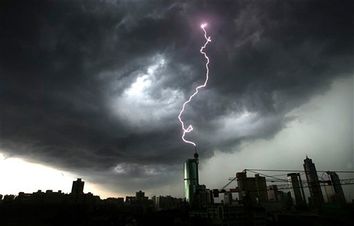
Summer's extreme weatherLightning strikes the top of a building in Foshan in south China's Guangdong province in June. Torrential rains brought down a dike in southern China, forcing 68,000 people to flee their homes.

View the slide show

Skin-crisping heat waves. Massive floods. Runaway glaciers. It feels like everywhere you turn this summer, there are stories and images of dangerous and extreme weather. Just since the beginning of July, Russia has posted its highest recorded temperature ever, 2 million Pakistanis have lost homes to flooding, mudslides have killed more than 1000 Chinese, and one day in rural South Dakota, apocalyptic 2-pound hailstones rained from the sky.

We’ve assembled a slide show of some of the most extraordinary photos of floods, fires and other weather disturbances. We also spoke with Heidi Cullen, scientist and author of the newly released book, “The Weather of the Future: Heat Waves, Extreme Storms, and Other Scenes from a Climate-Changed Planet” to find out what they mean.

We’ve obviously had a couple crazy months of weather globally. But are all those events just normal weather variations, or does this signal something broader about the health of the planet?

With these kind of extreme weather events, we can certainly say that it’s completely consistent with what we expect to happen due to global warming. But it’s hard to unravel it and say exactly what amount of the weather is caused by climate change and what amount is driven by other things.

There’s been bizarre weather all over the world, but it’s been really varied–an especially cold winter in South America, extreme heat in Russia, floods in Asia. How, if at all, are these disparate weather events linked?

Right now we look at the weather and we say, this is consistent with what we expect given the patterns of global warming. But it takes time for climate scientists to really do a weather autopsy, so to speak. That means running climate models that show how the weather would have likely looked with no human influence–no elevated CO2 levels or things of that nature–and then models that have us in the mix. When they did this for the 2003 heat wave in Europe [which killed 50,000 people], they found that humans doubled the chance of that event happening. So what I suspect will happen is that we will figure out that human driven climate change stacked the deck for this extreme weather that we’re seeing this summer.

What have you been able to figure out so far?

Well, we’ve already found several factors that are contributing to this summer’s extreme weather, some natural and some related to global warming. The first thing is that there is a huge ridge of high pressure parked over Russia, which is consistent with a major heat wave. And when there’s a ridge like that, you’ve also got a trough somewhere, and right now that somewhere is Pakistan, where all of that intense flooding is taking place. Added to that is a La Niña happening right now, which is typically associated with a stronger monsoon season. So just right there you’ve got the crime–bad weather–and a couple of accomplices.

But global warming has been raised as a concern as well. The surface temperatures in the Indian Ocean right now are about 1 ½ to 2 degrees above normal, which is very, very warm. That water has got storms going across it, and they can pick up additional moisture from the warmer ocean because more water is evaporating into the air. So that causes bigger storms.

The people most impacted by extreme weather are often the poor. But the people most concerned with climate change tend to be very wealthy. Does this disconnect mean anything for the way global climate change is addressed?

Yes, it does, and I think from a risk communications standpoint it’s been valuable to see the way extreme weather has impacted places like New York or D.C. or Russia and made them feel vulnerable, because it makes clear that any community can be impacted by extreme weather. Russian president Medvedev, who is a staunch skeptic of climate change, went on record recently saying that the climate issues that his country is facing right now should be a wake up call. So I think the vulnerability is extending to places where we don’t normally find it, and that can be important for making people act.

View the slide show

Continue Reading Close

“Off the Grid”: The growing appeal of going off the grid

A rising number of Americans -- political extremists and normal folks -- are living without gas, phones or power

  • more
    • All Share Services

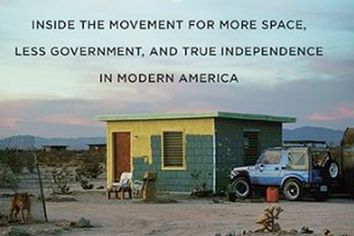
For most Americans, tap water, electricity and heating are not only staples of modern convenience — they’re absolute necessities. A small but growing number of Americans, however, have ditched the comfort and convenience of their utilities and chosen instead to live off the grid — unconnected to gas, water, phone and power networks, and, in some cases, making their life from whatever they can grow or hunt on the land. In 2009, British journalist and documentary filmmaker Nick Rosen traveled around the United States visiting these unplugged Americans to find out what it means to live an off-the-grid life.

He discovered something unexpected: Living off the grid may be a fringe activity, but it’s not restricted to any one fringe. America’s off-gridders are pot farmers and 9/11 truthers, committed environmentalists who grow their own food and libertarians living out of their cars, old school horse-and-buggy Mennonites and hypermodern owners of “earthships” (eco-conscious houses made of dirt-filled tires). They live in towns, on farms, 100 miles from the reach of another human being. They work — or don’t. Pay taxes — or not. But all of them are committed to a simple goal, living without dependence on utility providers.

Rosen chronicles his trip — and the quirky cast of characters he met along the way — in a new book, “Off the Grid: Inside the Movement for More Space, Less Government, and True Independence in Modern America.” Although the book tends toward heavy-handed commentary, it also provides a detailed look at a population and a lifestyle we rarely hear much about (though that, of course, is generally the way they prefer it).

Salon talked to Rosen about where the grid came from, off-the-grid living’s bipartisan appeal and why it’s becoming more and more popular.

What exactly does living off the grid entail?

Largely it means moving away from the fixed utility grid — electricity, gas, water, cable, land-line phones. But the thing is, living off the grid is not some sort of a game where you have to be completely pure in the way you do it or else it doesn’t count. It’s a lifestyle choice, and one that also has a metaphorical significance: You’re living outside corporate America, whether that means credit cards or supermarkets or gas stations or whatever. It’s about moving away from that system, physically and mentally.

You’re British. So why write about off-gridders in the U.S. instead of in the U.K.?

Well, I’ve written about off-grid life in England, where I live, but there it is really a fringe minority doing it. But the idea of off-the-grid living actually seems really integral to American society, because of the size of the country and the pioneering spirit that’s so much a part of your national culture. It just felt to me like America, of all the places in the developed world, is the place where off-the-grid life could, and to some degree already has, taken off. I myself want to live in an off-grid community eventually and so I decided I would travel across America to see how it was done.

How did we get so attached to the grid to begin with?

That’s a good question, and the first thing I should say is that the grid is an amazing technological achievement, but it’s organized entirely for the benefit of the corporations that run it. That mentality started with Thomas Edison. When he began marketing electricity for the first time, he started out charging by the number of lights people used, instead of the electricity itself. But very quickly he changed his business model and began metering the electricity because he saw that was the best way to make money. Of course, the moment that the companies starting selling electricity rather than light, they had every incentive to encourage their customers to be as energy inefficient as possible because the more power they squandered, the more power was made for the utility companies. That really has been the model ever since.

G.E. and other corporations like it also pioneered the early model of centralizing electrical power. In order to organize it most simply for themselves, they had a very small number of locations where power was produced, and then it was transported very long distances, very inefficiently, in order to be sold to the customers. And very few people have thought to question that system until quite recently.

So what is the solution to the problem of the grid?

Actually, I don’t have a solution. All I really want to do is remind people that they have the option to go off the grid. I’m not saying they ought to do it, I’m just saying that they should be aware that they can. The technology is there, the knowledge is there. It’s a very comfortable choice. You don’t have to go back to the Stone Age to do it, and it could solve a lot of problems for a lot of people. It can be simpler, more ecological and cost much, much less than traditional living.

And, of course, it’s a way of sticking your finger up at the establishment, and a lot of people get satisfaction just for that reason. I think it’s very good for society at large to have a lot of people living off the grid, because it increases the resilience of the people as a whole when you have this large subset not dependent on centralized power of various kinds.

Something that’s strange about off-grid living is the way it crosses the political spectrum. You have incredibly liberal people doing it for environmental reasons and incredibly conservative people doing it to escape the clutches of government, and lots of people who fall in between those extremes. What is it about this lifestyle that brings together these groups of people who we tend to think of as incredibly different?

It’s about freedom. It’s a desire to get out from under the thumb of corporate America. You look around for things that you can do to make your world a better place and as an environmentalist, everything that’s green is likely to be greenwashed. Every corporation seems to be telling us that we can be green if we use their product and deep down we know it’s nonsense. But living off the grid has not yet been colonized by the corporations, which is something that makes it very attractive to a wide spectrum of people.

But it’s also true that most people who live off the grid in the U.S. are white.

Yes. It’s because it’s largely a rural phenomenon. It needn’t be, but it still is largely. And large parts of rural America are still very white, because when non-white people turn up they get frozen back out again. There are some notable exceptions, like a Hispanic off-grid community I met outside Albuquerque, but for the most part it remains a rural and white movement.

You talked to one family living off the grid who had decided to live with as little money as possible, and one of the things that meant is that they wouldn’t send their children to college. So off-the-grid life can come with some pretty significant costs.

Yes, of course there are trade-offs; to some extent by going off the grid you’re pulling away from the system, and that includes education and medicine and entertainment, to take just three examples. But a lot of people would say that they’re better off that way, they’d say that the amount of money that they could spend on their medical bills they could spend instead on preventative medicine and a good diet and exercise and natural remedies. So there are ways to turn it around and say that you’re gaining more than you give up, and that you give up a lot to live on the grid as well.

A lot of people who live off the grid are very apocalyptic about the directions they see the world going in. Did you get the sense that any of them wanted things to fall apart just to be proven right?

Yeah. There are a lot of people who feel that way, although it goes far beyond people who live off the grid. The two main groups who want to see some kind of cataclysmic event are, I think, the environmentalists and the conspiracy theorists. The green people feel that society will just go on destroying the earth until there’s a bad disaster. Until then, other things will take priority. When the economy is bad, people worry more about money or about Grannie’s heart operation — quite understandably — than they worry about the state of the planet. Only a huge disaster can really change that. And then the other people, the 9/11 truthers and others like them, they tell me that they want to see a sort of economic implosion because then they’ll be proved right in their theories. But as I said, that’s not just an off-grid phenomenon.

Living off the grid seems like it’s a good idea environmentally. But it’s not as though simply going off the grid automatically makes you green. Even if you’re providing gas and electricity yourself, it’s possible to be very wasteful with those resources.

I think you can live in the city on the grid and try and minimize your ecological footprint, and clearly you’ll have a smaller footprint than someone who’s living off-grid and not trying to minimize their footprint. But if you compare someone who’s living on the grid and trying to minimize their footprint and someone who’s living off-grid and trying for the same thing, off-grid person will always do better.

But even if you’re living off the grid for other reasons, you’ll still have a relatively small footprint simply because you’re just far more aware of nature. You’re working out in the sun, you’re dealing with your own waste. It makes you responsible. The American poet Gary Snyder once said something to the effect of, “find your place on the earth, dig in and take responsibility from there.” Living off the grid is like that. It’s very much about being in charge of your own life, empowered, responsible for your own existence, your own waste, and your own energy — all at a time when the American state seems less and less capable of providing those basic needs that people have traditionally looked to the state to provide.

Do you think off-the-grid living is really on the rise, or are we just starting to notice it more now?

It’s definitely on the rise. It’s happening mainly for two reasons. One is the fact that Americans are falling out of trust with their system, that they’re realizing it can no longer look after them. And the second is that the technology that has risen up has made it possible to live very comfortably off the grid. You can have absolutely everything off the grid that you would want on the grid. The only difference is that you couldn’t run it all at once. So you can have your fridge and your shower and your TV and your stereo and your Internet, but maybe if you want to run the washing machine you’d better turn off the stereo for a couple of hours to conserve your solar or wind energy.

So basically it asks people to think about the way they’re using the energy.

Exactly. You have to have priorities.

Continue Reading Close

The plagiarism generation

The N.Y. Times claims students are cheating more than their parents. An expert explains why that may not be true

  • more
    • All Share Services

The plagiarism generation

Earlier this week, the New York Times ran a juicy story on college plagiarism that shot to the top of the most-e-mailed list. The piece was yet another in the paper’s long history of “the kids are not all right” pieces (other greatest hits include rainbow parties and the epidemic of hugging), which featured students who shamelessly crib from Wikipedia and copy-and-paste whole paragraphs into their essays after a simple Google search. But the real hand-wringer in this digital-era cautionary tale wasn’t that the Internet had made it easier to cheat; it’s the suggestion that young people no longer realize this content free-for-all is morally wrong.

As a college student myself, I found the Times interviewees less representative of my generation than simply lazy (a quality found in every age group), doing things like forgetting to remove the hyperlinks from the articles they copy. But this decline-of-the-youth narrative has been zipping around since the Internet first opened its pop-up tiled doors: Will online culture warp our children’s brains? Most recently it came up in the discussion of 17-year-old German author Helene Hegemann. When confronted with evidence that she had swiped entire pages of her novel “Axolotl Roadkill” from another blogger, she responded by saying, so what? “There’s no such thing as originality,” she told reporters, “only authenticity.”

But eye-catching postmodern teen novelists and university dunces aside, the Internet has introduced a new and murky territory to the realm of plagiarism. For instance, how do we confront the vast troves of anonymous group-authored Web sources (like Wikipedia articles)? And how do we negotiate ownership when so many ideas are floating out there, effortlessly available to anyone with a keyboard?

To find out, we called Caroline Eisner, co-editor of the book “Originality, Imitation, and Plagiarism: Teaching Writing in the Age of the Internet” and a longtime writing instructor. Salon talked to her about who’s to blame for digital-age plagiarism, why Asian students are frequently the ones getting caught, and why so many people still think they can get away with it.

Seeing a piece like this about the widespread practice of plagiarism among college students makes me wonder: Is this practice actually on the rise, or is it just that in the Internet age it’s not only easier to cheat, but also easier to get caught?

I think people are just getting caught more. People have been going to libraries and using books and then not citing them forever. I don’t think there’s anyone who hasn’t plagiarized. When I was in elementary school, for instance, we’d go to the library with index cards and open up the encyclopedia and write down exactly what it said. The difference is that now we can type the things we think are plagiarized into Google and see what comes up. But in a sense more students getting caught is a positive thing, because it creates a real teachable moment for us, when we can explain very thoroughly why it’s not OK to write like that.

What’s interesting to me is that in many non-academic contexts, we are totally OK with people who blatantly plagiarize ideas. There’s always that guy at the party regurgitating the latest Times Op-Ed and passing it off as his own original thoughts, and it’s annoying but no one is saying those people are unethical hacks like they are about college students who copy from the Web.

Yes, that’s true, and there’s also this postmodern idea floating around in our society that there’s no such thing as plagiarism anymore because there’s nothing left that’s truly original. That’s a very common argument in our culture and something that a lot of people hold to, whether they voice it or not. But it simply doesn’t apply when it comes to academic writing, which has exacting standards that still need to be followed.

But it is true that writing in the digital age poses a lot of new questions. For instance, how do we use sources like Wikipedia that have no single author and can’t truly be cited because their content could change at any minute, but that are generally extensive, accurate and provide a quick source of information?

In the past the rule was, if you can find the information in more than three places you don’t need to cite your source. The Web has changed that, because anyone can just grab information at any time and repost it somewhere else. Places like Wikipedia call for new rules. What I always do is go to the Wikipedia page, find the sources they cite, and then use those. But I also always tell my students that we cannot trust the Web. The minute you put information online, you lose control over where it goes and how it’s used.

There can also be a multicultural component to plagiarism.

Yes, for instance in many Asian countries if something is common knowledge because everyone has read the same books or worship the same dictator, then if you were to cite that person’s writing, it would actually be an insult to the intelligence of your peers. Because everyone should already know who wrote that. So when those Asian kids come to the U.S. they often get caught for plagiarizing because no one has explained to them that things are different here.

What I see as the problem in my own academic experience is not so much people plagiarizing as it is grade inflation and low standards. If students know that they can just turn in a mishmash of sources from the Internet without a lot of original thinking, of course they’ll do it because lots of us want to be lazy. And if we know we’ll get a decent grade anyway, why bother?

I think that’s right, and I think that students test their faculty members to see what they’ll get away with. I know that when I was teaching I knew what propensities students had and I would make rules, like you can only use one Internet source. I didn’t want them to forget how to be in a library, and I didn’t want them to just be able to sit down at the computer and write in an hour or just grab it from the Web.

But I also taught them about how to judge if a book was good in the same way that I taught them how to see if a website was good, because it’s not just Internet sources that can be misleading or incorrect. Plagiarism and sloppy writing are a problem, but it’s only a problem if we don’t teach well, and teach ethics and morals, which schools are supposed to be doing anyway. Colleges claim they want to make good citizens after all.

I appreciate that perspective because I am a college student, and when I look at pieces like the one that ran in the Times, I tend to feel attacked, like I am being told that my generation has no moral compass, and we just don’t understand that what we’re doing is wrong. But I don’t buy that at all. I think college students plagiarize for the reasons they always have — because they don’t feel like doing work — and they play clueless about the morals because that’s how they get away with it.

I agree. And I wish that the skill of good writing was taught better and given more weight so that students would see it as necessary. Because right now you’re right; many students know that they can get away with not writing well or originally, and so they choose to do that.

It comes down to the professors and the responsibility they choose to take. A well-constructed assignment will prevent plagiarism most of the time. A good professor will ask you to synthesize, use higher-order critical thinking skills in ways where you can’t just go online and find the answer. If you’re a good teacher, you also know how your students write, and you can tell when there’s a change in style. And all you have to do is stick that sentence into Google and it’ll pop up. But if you tell your students something like “write an essay about ‘The Bluest Eye,’” that’s setting yourself up for plagiarized papers.

So it’s not that we’re a dumber generation.

No. People also talk about how our grammar is not as good as our parents’, but it turns out that they made just as many mistakes as we do, but they just made different ones. Students today are the same. The only thing that’s different now is that ideas are coming from all directions, and students need their professors and librarians to teach them how to deal with all of that.

Continue Reading Close

Playboy redefines “safe for work”

In a ploy to stay afloat, the brand launches a supposedly office-friendly website with nearly naked chicks

  • more
    • All Share Services

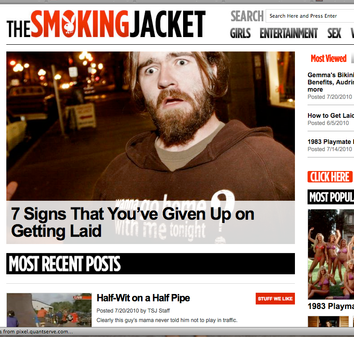
Playboy redefines A screenshot from TheSmokingJacket.com

If you spend your days wondering a) how get laid at work, b) what strippers look like when they’re cage fighting or c) whether the words “tit” and “piñata” can successfully form a descriptive phrase, fear not, Playboy has a new website just for you. From the folks who have been bringing you their luscious mix of nipples and long-form journalism since time immemorial (er, 1953), comes The Smoking Jacket, a new venture that contains neither of those things.

Instead, the site — which is meant to serve as the “safe for work” cousin of Playboy.com — reads like College Humor met Maxim at a frat party and then the two of them ran straight out and iced a couple bros. With features like an advice column on “how to hang out with porn chicks” and a video on the memoir-worthy topic “a day in the life of my boobs,” The Smoking Jacket is a Playboy alternative you can page through in your cubicle without accidentally stumbling across a naked photo of Kim Kardashian or an interview with public intellectual Cornel West. Because what’s more awkward than your boss discovering your interest in the racial undertones of American politics?

By flaunting a site that features links to “Audrina’s bongos” and photo galleries of scantily clad playmates as “safe for work,” however, the creators of TSJ raise a simple question: What exactly does Playboy think renders something fit for office consumption? I don’t know about you, but my boss might not appreciate it if she came up behind my desk and saw that the page open on my computer commanded in large, bold font, “DON’T REFER TO YOUR PENIS BY ITS NICKNAME.” About the only way I can imagine this content being appropriate to browse at work is if you work at the Playboy HQ.

“Safe,” on the other hand: Now that’s a flavored condom of a whole different color. Because what “safe for work” really seems to mean to Playboy is simply, “Your company’s Internet filters won’t block this site!” And let’s be honest, for guys off in search of the mildly smutty during their 9 to 5, that’s probably all they ask for.

And for Playboy, which lost more than $1 million in the first quarter of this year and has long teetered on the edge of financial disaster, it offers a chance to keep their brand afloat by broadening their audience from “dudes who want to look at naked ladies after work” to also include “dudes who want to look at mostly naked ladies during work.” As Hef himself promises in an introductory video (in which he wears — wait for it, wait for it — a smoking jacket), “next to the mansion, [The Smoking Jacket] is the best hangout on the planet.” But if your job is so terrible it sends you running to this particular man cave, maybe it’s time to stop considering what’s “safe for work” and just find a new job.

Continue Reading Close

Page 1 of 4 in Ryan Brown