



Sandy Tolan

Palestine’s losing battle for land

The U.N. could soon recognize it as a state, but Israel is swallowing more and more of its territory

  • more
    • All Share Services

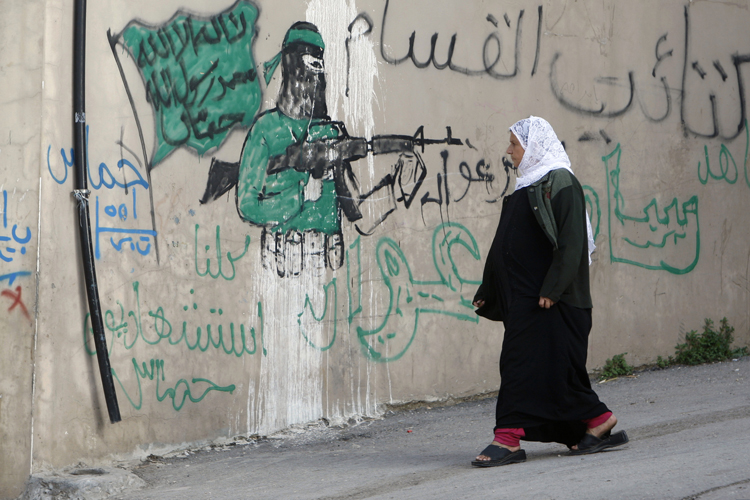
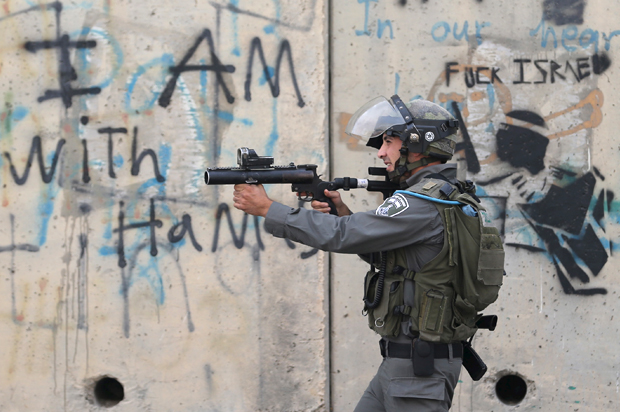
Palestine's losing battle for landA Palestinian woman walks past a wall with graffiti depicting a gunman

It’s the show that time and the world forgot. It’s called the Occupation and it’s now in its 45th year. Playing on a landscape about the size of Delaware, it remains largely hidden from view, while Middle Eastern headlines from elsewhere seize the day. Diplomats shuttle back and forth from Washington and Brussels to Middle Eastern capitals; the Israeli-Turkish alliance ruptures amid bold declarations from the Turkish prime minister; crowds storm the Israeli Embassy in Cairo, while Israeli ambassadors flee the Egyptian capital and Amman, the Jordanian one; and of course, there’s the headliner, the show-stopper of the moment, the Palestinian Authority’s campaign for statehood in the United Nations, which will prompt an Obama administration veto in the Security Council.

But whatever the Turks, Egyptians or Americans do, whatever symbolic satisfaction the Palestinian Authority may get at the U.N., there’s always the Occupation and there — take it from someone just back from a summer living in the West Bank — Israel isn’t losing. It’s winning the battle, at least the one that means the most to Palestinians and Israelis, the one for control over every square foot of ground. Inch by inch, meter by meter, Israel’s expansion project in the West Bank and Jerusalem is, in fact, gaining momentum, ensuring that the “nation” that the U.N. might grant membership will be each day a little smaller, a little less viable, a little less there.

How to Disappear a Land

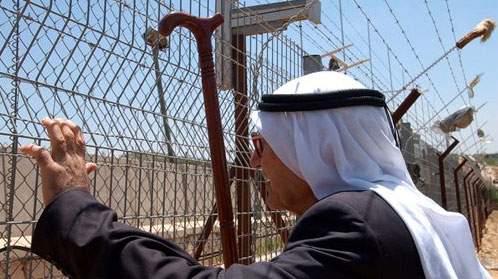
On my many drives from West Bank city to West Bank city, from Ramallah to Jenin, Abu Dis to Jericho, Bethlehem to Hebron, I’d play a little game: Could I travel for an entire minute without seeing physical evidence of the occupation? Occasionally — say, when riding through a narrow passage between hills — it was possible. But not often. Nearly every panoramic vista, every turn in the highway revealed a Jewish settlement, an Israeli army checkpoint, a military watchtower, a looming concrete wall, a barbed-wire fence with signs announcing another restricted area, or a cluster of army jeeps stopping cars and inspecting young men for their documents.

The ill-fated Oslo “peace process” that emerged from the Oslo Accords of 1993 not only failed to prevent such expansion, it effectively sanctioned it. Since then, the number of Israeli settlers on the West Bank has nearly tripled to more than 300,000 — and that figure doesn’t include the more than 200,000 Jewish settlers in East Jerusalem.

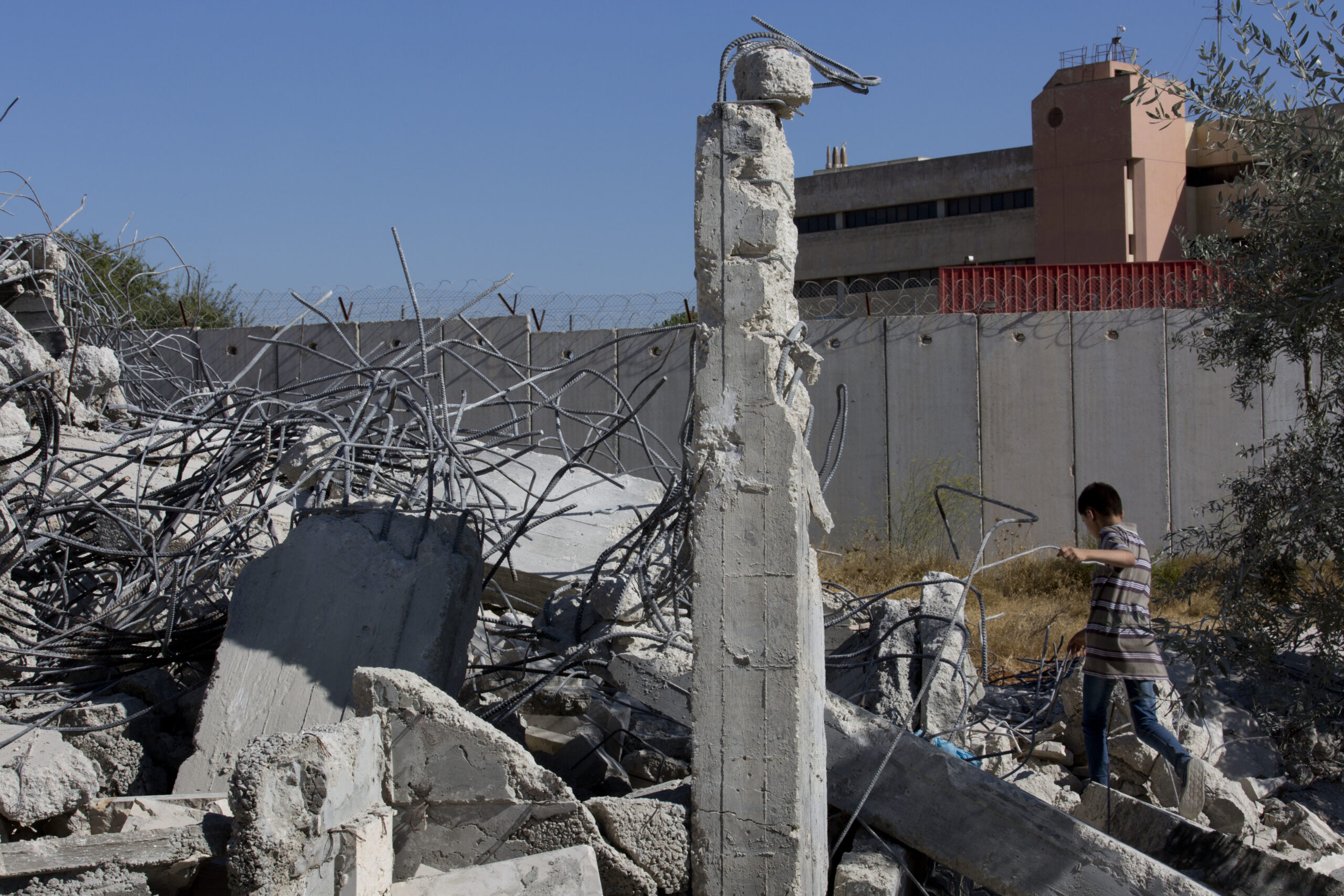
The Oslo Accords, ratified by both the Palestinians and the Israelis, divided the West Bank into three zones — A, B, and C. At the time, they were imagined by the Palestinian Authority as a temporary way station on the road to an independent state. They are, however, still in effect today. The de facto Israeli strategy has been and remains to give Palestinians relative freedom in Area A, around the West Bank’s cities, while locking down “Area C” — 60 percent of the West Bank — for the use of the Jewish settlements and for what are called “restricted military areas.” (Area B is essentially a kind of grey zone between the other two.) From this strategy come the thousands of demolitions of “illegal” housing and the regular arrests of villagers who simply try to build improvements to their homes. Restrictions are strictly enforced and violations dealt with harshly.

When I visited the South Hebron Hills in late 2009, for example, villagers were not even allowed to smooth out a virtually impassable dirt road so that their children wouldn’t have to walk two to three miles to school every day. Na’im al-Adarah, from the village of At-Tuwani, paid the price for transporting those kids to the school “illegally.” A few weeks after my visit, he was arrested and his red Toyota pickup seized and destroyed by Israeli soldiers. He didn’t bother complaining to the Palestinian Authority — the same people now going to the U.N. to declare a Palestinian state — because they have no control over what happens in Area C.

The only time he’d seen a Palestinian official, al-Adarah told me, was when he and other villagers drove to Ramallah to bring one to the area. (The man from the Palestinian Authority refused to come on his own.) “He said this is the first time he knew that this land [in Area C] is ours. A minister like him is surprised that we have these areas? I told him, ‘How can a minister like you not know this? You’re the minister of local government!’

“It was like he didn’t know what was happening in his own country,” added al-Adarah. “We’re forgotten, unfortunately.”

The Israeli strategy of control also explains, strategically speaking, the “need” for the network of checkpoints; the looming separation barrier (known to Israelis as the “security fence” and to Palestinians as the “apartheid wall”) that divides Israel from the West Bank (and sometimes West Bankers from each other); the repeated evictions of Palestinians from residential areas like Sheikh Jarrah in East Jerusalem; the systematic revoking of Jerusalem IDs once held by thousands of Palestinians who were born in the Holy City; and the labyrinthine travel restrictions which keep so many Palestinians locked in their West Bank enclaves.

While Israel justifies most of these measures in terms of national security, it’s clear enough that the larger goal behind them is to incrementally take and hold ever more of the land. The separation barrier, for example, has put 10 percent of the West Bank’s land on the Israeli side — a case of “annexation in the guise of security,” according to the respected Israeli human rights group, B’tselem.

Taken together, these measures amount to the solution that the Israeli government seeks, one revealed in a series of maps drawn up by Israeli politicians, cartographers, and military men over recent years that show Palestine broken into isolated islands (often compared to South African apartheid-era “bantustans”) on only about 40 percent of the West Bank. At the outset of Oslo, Palestinians believed they had made a historic compromise, agreeing to a state on 22% of historic Palestine — that is, the West Bank and Gaza. The reality now is a kind of “ten percent solution,” a rump statelet without sovereignty, freedom of movement, or control of its own land, air, or water. Palestinians cannot even drill a well to tap into the vast aquifer beneath their feet.

Living Amid Checkpoints, Roadblocks, and Night Raids

Almost always overlooked in assessments of this ruinous “no-state solution” is the human toll it takes on the occupied. More than on any of my dozen previous journeys there, I came away from this trip to Palestine with a sense of the psychic damage the military occupation has inflicted on every Palestinian. None, no matter how warm-hearted or resilient, escape its effects.

“The soldier pointed to my violin case. He said, ‘What’s that?’” 13-year-old Alá Shelaldeh, who lives in old Ramallah, told me. She is a student at Al Kamandjati (Arabic for “the violinist”), a music school in her neighborhood (which will be a focus of my next book). She was recalling a time three years earlier when a van she was in, full of young musicians, was stopped at an Israeli checkpoint near Nablus. They were coming back from a concert. “I told him, ‘It’s a violin.’ He told me to get out of the van and show him.” Alá stepped onto the roadside, unzipped her case, and displayed the instrument for the soldier. “Play something,” he insisted. Alá played “Hilwadeen” (Beautiful Girl), the song made famous by the Lebanese star Fayrouz. It was a typical moment in Palestine, and one she has yet to, and may never, forget.

It is impossible, of course, to calculate the long-term emotional damage of such encounters on children and adults alike, including on the Israeli soldiers, who are not immune to their own actions.

Humiliation at checkpoints is a basic fact of West Bank Palestinian life. Everyone, even children, has his or her story to tell of helplessness, fear, and rage while waiting for a teenaged soldier to decide whether or not they can pass. It has become so normal that some kids have no idea the rest of the world doesn’t live like this. “I thought the whole world was like us — they are occupied, they have soldiers,” remembered Alá’s older brother, Shehade, now 20.

At 15, he was invited to Italy. “It was a shock for me to see this life. You can go very, very far, and no checkpoint. You see the land very, very far, and no wall. I was so happy, and at the same time sad, you know? Because we don’t have this freedom in my country.”

At age 12, Shehade had seen his cousin shot dead by soldiers during the second intifada, which erupted in late 2001 after Israel’s then-opposition leader Ariel Sharon paid a provocative visit to holy sites in the Old City of Jerusalem. Clashes erupted as youths hurled stones at soldiers. Israeli troops responded with live fire, killing some 250 Palestinians (compared to 29 Israeli deaths) in the first two months of the intifada. The next year, Palestinian factions launched waves of suicide bombings in Israel.

One day in 2002, Shehade recalled, with Ramallah again fully occupied by the Israeli army, the young cousins broke a military curfew in order to buy bread. A shot rang out near a corner market; Shehade watched his cousin fall. This summer Shehada showed me the gruesome pictures — blood flowing from a 12-year-old’s mouth and ears — taken moments after the shooting in 2002.

Nine years later, Ramallah, a supposedly sovereign enclave, is often considered an oasis in a desert of occupation. Its streets and markets are choked with shoppers, and its many trendy restaurants rival fine European eateries. The vibrancy and upscale feel of many parts of the city give you a sense that — much as Palestinians are loathe to admit it – this, and not East Jerusalem, is the emerging Palestinian capital.

Many Ramallah streets are indeed lined with government ministries and foreign consulates. (Just don’t call them embassies!) But much of this apparent freedom and quasi-sovereignty is illusory. In the West Bank, travel without hard-to-get permits is often limited to narrow corridors of land, like the one between Ramallah and Nablus, where the Israeli military has, for now, abandoned its checkpoints and roadblocks. Even in Ramallah — part of the theoretically sovereign Area A — night incursions by Israeli soldiers are common.

“It was December 2009, the 16th I think, at 2:15, 2:30 in the morning,” recalled Celine Dagher, a French citizen of Lebanese descent. Her Palestinian husband, Ramzi Aburedwan, founder of Al Kamandjati, where both of them work, was then abroad. “I was awakened by a sound,” she told me. She emerged to find the front door of their flat jammed partway open and kept that way by a small security bar of the sort you find in hotel rooms.

Celine thought burglars were trying to break in and so yelled at them in Arabic to go away. Then she peered through the six-inch opening and spotted 10 Israeli soldiers in the hallway. They told her to stand back, and within seconds had blown the door off its hinges. Entering the apartment, they pointed their automatic rifles at her. A Palestinian informant stood near them silently, a black woolen mask pulled over his face to ensure his anonymity.

The commander began to interrogate her. “My name, with whom I live, starting to ask me about the neighbors.” Celine flashed her French passport and pleaded with them not to wake up her six-month-old, Hussein, sleeping in the next room. “I was praying that he would just stay asleep.” She told the commander, “I just go from my house to my work, from work to my house.” She didn’t really know her neighbors, she said.

As it happened, the soldiers had blown off the door of the wrong flat. They would remove four more doors in the building that night, Celine recalled, before finding their suspect: her 17-year-old next door neighbor. “They stood questioning him for maybe 20 minutes, and then they took him. And I think he’s still in jail. His father is already in jail.”

According to Israeli Prison Services statistics cited by B’tselem, more than 5,300 Palestinians were in Israeli prisons in July 2011. Since the beginning of the occupation in 1967, an estimated 650,000 to 700,000 Palestinians have reportedly been jailed by Israel. By one calculation, that represents 40 percent of the adult-male Palestinian population. Almost no family has been untouched by the Israeli prison system.

Celine stared through the blinds at the street below, where some 15 jeeps and other military vehicles were parked. Finally, they left with their lights out and so quietly that she couldn’t even hear their engines. When the flat was silent again, she couldn’t sleep. “I was very afraid.” A neighbor came upstairs to sit with her until the morning.

Stories like these — and they are legion — accumulate, creating the outlines of what could be called a culture of occupation. They give context to a remark by Saleh Abdel-Jawad, dean of the law school at Birzeit University near Ramallah: “I don’t remember a happy day since 1967,” he told me. Stunned, I asked him why specifically that was so. “Because,” he replied, “you can’t go to Jerusalem to pray. And it’s only 15 kilometers away. And you have your memories there.”

He added, “Since 17 years I was unable to go to the sea. We are not allowed to go. And my daughter married five years ago and we were unable to do a marriage ceremony for her.” Israel would not grant a visa to Saleh’s Egyptian son-in-law so that he could enter the West Bank. “How to do a marriage without the groom?”

A Musical Intifada

An old schoolmate of mine and now a Middle East scholar living in Paris points out that Palestinians are not just victims, but actors in their own narrative. In other words, he insists, they, too, bear responsibility for their circumstances — not all of this rests on the shoulders of the occupiers. True enough.

As an apt example, consider the morally and strategically bankrupt tactic of suicide bombings, carried out from 2001 to 2004 by several Palestinian factions as a response to Israeli attacks during the second intifada. That disastrous strategy gave cover to all manner of Israeli retaliation, including the building of the separation barrier. (The near disappearance of the suicide attacks has been due far less to the wall — after all, it isn’t even finished yet — than to a decision on the part of all the Palestinian factions to reject the tactic itself.)

So, yes, Palestinians are also “actors” in creating their own circumstances, but Israel remains the sole regional nuclear power, the state with one of the strongest armies in the world, and the occupying force — and that is the determining fact in the West Bank. Today, for some Palestinians living under the 44-year occupation simply remaining on the land is a kind of moral victory. This summer, I started hearing a new slogan: “Existence is resistance.” If you remain on the land, then the game isn’t over. And if you can bring attention to the occupation, while you remain in place, so much the better.

In June, Alá Shelaldeh, the 13-year-old violinist, brought her instrument to the wall at Qalandia, once a mere checkpoint separating Ramallah and Jerusalem, and now essentially an international border crossing with its mass of concrete, steel bars, and gun turrets. The transformation of Qalandia — and its long, cage-like corridors and multiple seven-foot-high turnstiles through which only the lucky few with permits may cross to Jerusalem — is perhaps the most powerful symbol of Israel’s determination not to share the Holy City.

Alá and her fellow musicians in the Al Kamandjati Youth Orchestra came to play Mozart and Bizet in front of the Israeli soldiers, on the other side of Qalandia’s steel bars. Their purpose was to confront the occupation through music, essentially to assert: we’re here. The children and their teachers emerged from their bus, quickly set up their music stands, and began to play. Within moments, the sound of Mozart’s Symphony No. 6 in F Major filled the terminal.

Palestinians stopped and stared. Smiles broke out. People came closer, pulling out cell phones and snapping photos, or just stood there, surrounding the youth orchestra, transfixed by this musical intifada. The musicians and soldiers were separated by a long row of blue horizontal bars. As the music played on, a grim barrier of confinement was momentarily transformed into a space of assertive joy. “It was,” Alá would say later, “the greatest concert of my life.”

As the Mozart symphony built — Allegro, Andante, Minuet and the Allegro last movement — some of the soldiers started to take notice. By the time the orchestra launched into Georges Bizet’s Dance Boheme from Carmen #2, several soldiers appeared, looking out through the bars. For the briefest of moments, it was hard to tell who was on the inside, looking out, and who was on the outside, looking in.

If existence is resistance, if children can confront their occupiers with a musical intifada, then there’s still space, in the year of the Arab Spring, for something unexpected and transformative to happen. After all, South African apartheid collapsed, and without a bloody revolution. The Berlin Wall fell quickly, completely, unexpectedly. And with China, India, Turkey and Brazil on the rise, the United States, its power waning, will not be able to remain Israel’s protector forever. Eventually, perhaps, the world will assert the obvious: the status quo is unacceptable.

For the moment, whatever happens in the coming weeks at the U.N., and in the West Bank in the aftermath, isn’t it time for the world’s focus to shift to what is actually happening on the ground? After all, it’s the occupation, stupid.

To stay on top of important articles like these, sign up to receive the latest updates from TomDispatch.com here

The Palestine Papers: A fact-based play in one act

"For six decades I've been pretending to be the honest broker -- but I'm here to tell you: It's all lies!"

  • more
    • All Share Services

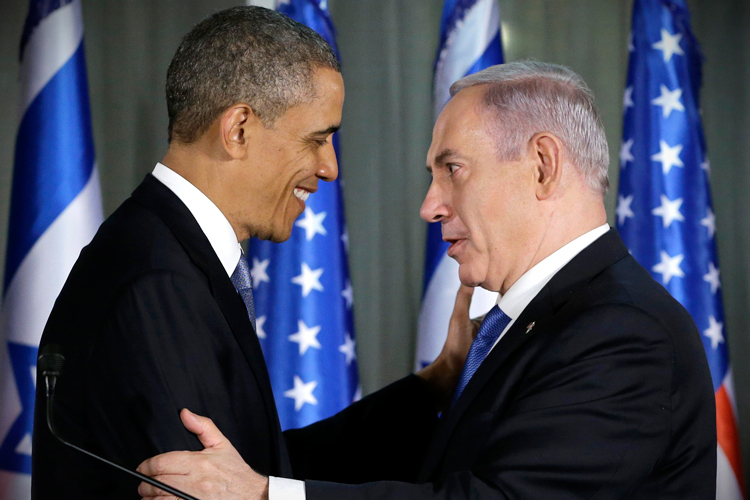
The Palestine Papers: A fact-based play in one actBenjamin Netanyahu and Barack Obama

Earlier this week, Al-Jazeera released a decade’s worth of memos, emails, maps and minutes from high-level negotiations between the United States, Israel and the Palestinian Authority. The documents revealed that the Palestinians had offered far more significant concessions than previously reported. In the wake of these revelations, Palestinians expressed anger at their increasingly weak leadership, accusing them of capitulating, while some Israeli commentators accused the government of missing its chance for peace. The Americans, meanwhile, came across as intent on not offending the Israelis, even if it meant contradicting established U.S. policy. It was against this backdrop that Uncle Sam decided to spend some time on the couch this week…

Scene: A psychiatrist’s office in a nondescript strip mall in suburban Virginia. Dr. Weller, a clean-shaven, balding man in his sixties, wearing horn-rimmed glasses, khaki pants and a loose knit sweater with suede elbow patches, moves across the carpeted floor to greet his new client. At the doorway stands a tall, rangy senior citizen with a pointed white beard and top hat with red and white stripes and a white star on a blue background. Dr. Weller extends his hand.

Dr. Weller: Welcome. Do you prefer Uncle? Or Mr. Sam?

Uncle Sam (not meeting the doctor’s eyes): Doesn’t matter. I just have to get a load off my chest. (Looks nervously over his shoulder toward the office door.) By the way, I parked my car in your underground lot. I hope nobody followed me.

Dr. Weller: I’m sure you’re safe.

The two men settle into their comfortable armchairs.

Dr. Weller: Tell me what’s going on.

Sam: It’s about the Middle East. Specifically, the Palestinians. I just feel so guilty. For six decades I’ve been pretending to be the honest broker — but I’m here to tell you: It’s all lies! I mean, I send my people to give lip service to a so-called Palestinian State, but all I do is represent the powerful party, Israel — I mean, they’re a nuclear power, with one of the strongest armies in the world! And I end up supporting just about whatever they want! Even when I insist on something — like this settlement freeze — they just ignore me and do what they please!

Dr. Weller watches impassively as tears well up in Uncle Sam’s eyes. Sam begins to reach for the box of tissues, but instead clears his throat violently and balls his fists in his lap.

Sam (groaning at first, then turning angry): And now, all these documents, the so-called Palestine Papers, have come out showing that I couldn’t care less about the Palestinians, their wishes to be free, all those millions of refugees — why, I even had Condi Rice tell those compliant Palestinian negotiators that they should send the refugees to South America! And now that the truth has come out on this Al-Jazeera network, it’s all in plain sight. And at last I realize how awful I’ve been all this time. I mean, it’s just –

Dr. Weller (leaning forward, speaking gently): Hold on a second, Mr. Sam. I don’t really know all these details — fill me in, please. I need to get up to speed if I’m going to help you. I need some context, Mr. Sam.

Uncle Sam looks down at his hands. He still won’t look Dr. Weller in the eye.

Sam (barely audible): Call me Uncle.

Dr. Weller: OK. Uncle.

Sam: See, there was a time, 60 years ago or more, when there could have been two states, one for the Arabs and one for the Jews. Or so we thought. A lot of people back then, even some Jews, wanted a single state, or a binational state in old Palestine. But it wasn’t in the cards. Then came the war in ’67, and after that Israel started building all these settlements — illegal under international law, and our official policy all along was in accord with that, so that eventually we could have a “two state solution” –

Dr. Weller: OK, Uncle — but what does that have to do –

Sam (sharply): It’s important for you to understand the background. See, after 1993, when the Oslo “peace process” — what a joke of a name! — when that started, Israel kept building settlements and roads for Jews and VIPs only, and after a while the Palestinians were surrounded by Israelis in their rooftop houses — half a million of them in the West Bank and East Jerusalem. Barely 100 thousand settlers in the West Bank at the beginning of Oslo, and more than three times that today! And how were we going to get them out? Answer: We wouldn’t! Eighty percent of them would stay! I kept telling my negotiators, it’s OK, we support Israel with the idea of swapping lands. We’ll just let them get rid of some Arabs in Israel and make them part of the Palestinian state, and give them some other useless lands, while Israel keeps nearly all these settlers in their places — they call them suburbs — in the middle of East Jerusalem and the West Bank. One of them, Ariel, has nearly 20,000 people, and it’s nearly halfway to Jordan from Tel Aviv! That, and the other settlements and “security zones,” were going to carve a future Palestine into pieces! Some Palestinians started shouting about Bantustans. We laughed, but you know what? They were right! For them, it’s like a horror movie: the Incredible Shrinking Palestine! I mean, just look at a map of how their lands have been carved up. Even now, the West Bank is only 22 percent of the original Palestine, and 60 percent of that is under military occupation!

Dr. Weller: I understand that these are important facts. But let’s get back to your feelings. You’re experiencing feelings of guilt. Why?

Sam (grimacing, pressing his fists into his temples): We kept signing off on the Israeli idea that the Palestinians never had a “partner for peace.” But if you look at how the Palestinian negotiators — I mean, if you can even call them that, they only represent the West Bank and have lost nearly all credibility with their own people even there. Anyway, these guys agreed to give up almost all the settlements in East Jerusalem to Israel.

Dr. Weller: Why would they do that?

Sam (looking up, meeting the psychiatrist’s gaze for the first time): Because they’re weak, and Israel is strong, and we’re strong, and we side with Israel. “Honest broker,” my foot! Sometimes I hate myself!

Dr. Weller: I understand. We’ll get to that. Tell me, Uncle, when was this meeting?

Sam: June 2008. And my people just sat by, like Israel’s codependent arm-twister, while the Palestinians agreed to this. But even that wasn’t enough. And you know what the Israeli foreign minister said? I want more! They want these two big settlements, Maale Adumim and Ariel. And when the Palestinians finally said no to that — they did have a little backbone, I’ve gotta admit — do you know what we told Condi to say?

Dr. Weller: I don’t.

Sam (face reddening): About Maale Adumim, she said, “Then you won’t have a state!” I mean, after all they’ve given up — down to a tiny fraction of their original dreams — and we won’t even lean on Israel to give up those two big settlements.

Beat.

Sam (sounding despondent): What is wrong with me?

Another beat. Dr. Weller leans back, squinting through his glasses at Uncle Sam, his hands resting on the arms of his overstuffed chair.

Dr. Weller: Uncle, you sound remorseful. And that can be the first step toward understanding and rebuilding your sense of self. But tell me, why do you think you have sided with Israel all these years?

Sam (a bit defensively): Well for one thing, in the early days, right after the tragedy in Europe, she needed our support! And I’m proud that we were there. Though it’s true I could have opened our American doors to all those poor Holocaust survivors, and I didn’t. I guess I feel guilty about that too. But that’s another story. Today, Israel is so powerful, it seems even my hands are tied. Do you have any idea how much the Lobby has locked up the Congress?

Dr. Weller: The Lobby? Do you mean what some people call the Jewish Lobby?

Sam (indignantly): No! The Israel Lobby — there are many Christians in that lobby, including some who think Jesus is coming back and Israel needs to be in control of the whole Holy Land.

Dr. Weller: I heard about that.

Sam: And many Jews are not part of the Israel lobby at all — they’re very critical. But the Lobby is so strong that Israel doesn’t seem to care at all what we say — no matter who’s president. It’s gotten so bad, it’s like the tail wagging the dog. You know what happened when they wouldn’t agree to extend the settlement freeze? We offered them $3 billion — three billion dollars! — in F-35 fighter jets and other military hardware.

Dr. Weller: When was this?

Sam: Back in November. And still they snubbed us! And yet, did you hear a peep out of me? No!

Silence. The ticking of a clock on the wall. Dr. Weller studies his patient.

Dr. Weller: Mr. Sam — Uncle — we’re running out of time, but I do have a few thoughts. First, you have every reason to feel remorse. That may sound harsh coming from a therapist, but there’s a bright side, too: You are recognizing a complex pattern that with time and effort can be undone. But you need to get to the roots of this. From all the things I’m hearing, it sounds like your relationship with Israel is at the heart of the problem. Do you think that’s fair to say?

Sam: (quietly, looking down at his hands again): Yes.

Dr. Weller: Then maybe one constructive step in redefining that relationship would be to acknowledge the truth about the “peace process” and the “two state solution”: that they just aren’t working. Do you think you can do that?

Sam: (alarmed): Abandon the two state solution? Are you kidding? Do you know how much time we’ve spent on this? How many decades? How many thousands of hours, maps, plans, resolutions? Are you crazy? I mean, what kind of therapist are you? For crissake! Have you completely lost your senses?

Sam continues his rant, then begins hyperventilating. Dr. Weller leans forward, appearing on the brink of coming to his aid. But Sam’s apparent panic attack subsides, and he begins to breathe normally again.

Sam: I’m sorry. It’s just that … I mean … what you suggest is so …

Sam (now brightening): Wait! Do you think I could get a prescription? Something to make me at least feel a little better? Maybe it could help me just put this issue on hold — I could always deal with it down the road. After Afghanistan, for example. And the 2012 elections.

Dr. Weller: I’m sorry, Uncle. What you’re dealing with is not just depression — it’s confronting delusion. You need to be mindful of what the Buddhists say: End your attachment to what is not real. Accept the truth as it is, and let go. Prozac won’t help you do that.

Sam: Then what should I do?

Dr. Weller: I’m sorry. I’m afraid our time is up for this week. Can you come back next week? We can explore all of this.

Frankly, Uncle, it’s a much deeper problem than you realize.

Continue Reading Close

Israel and the psychology of “never again”

The wounds of its people's tragic history have trapped Israel in a cycle of violence

  • more
    • All Share Services

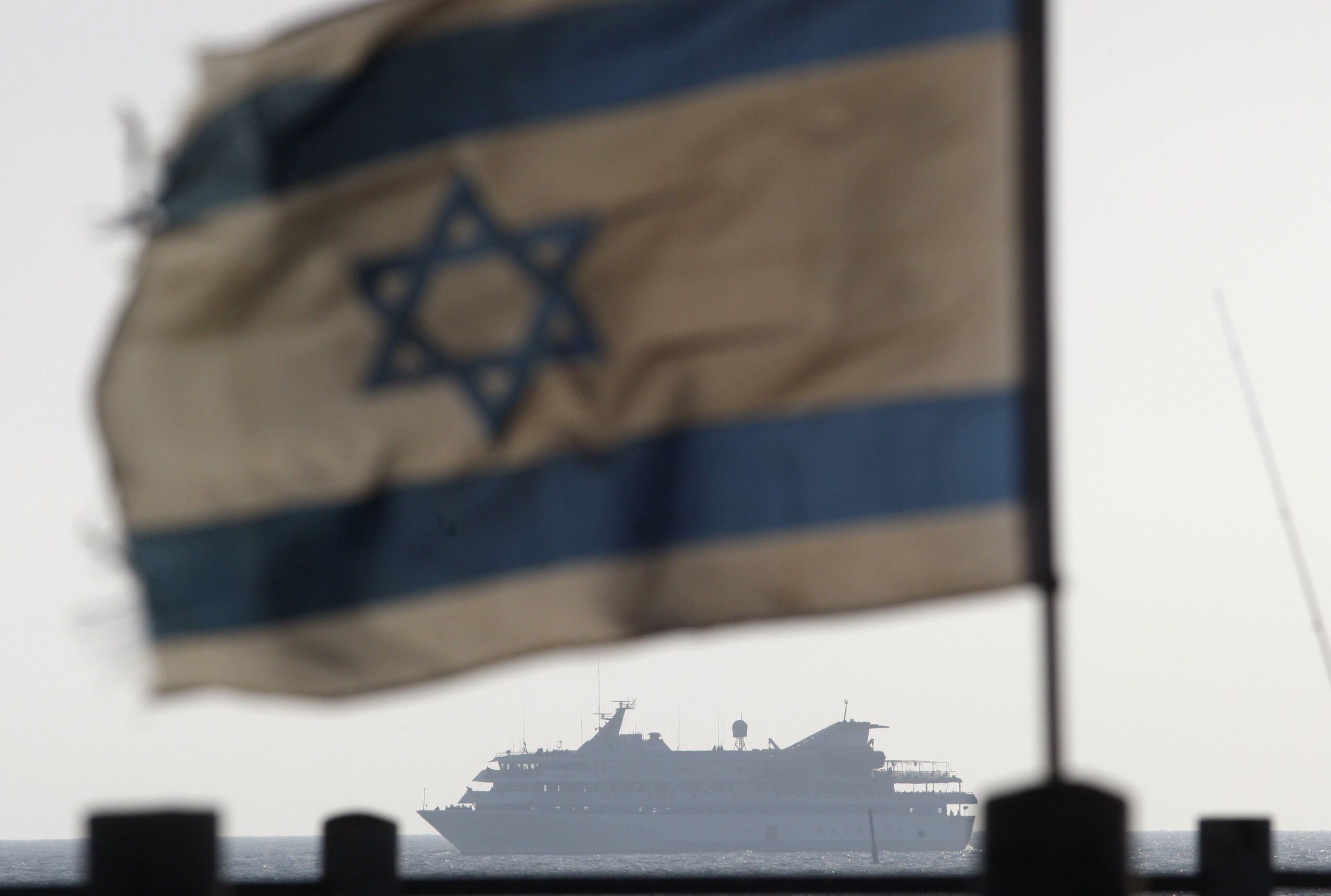
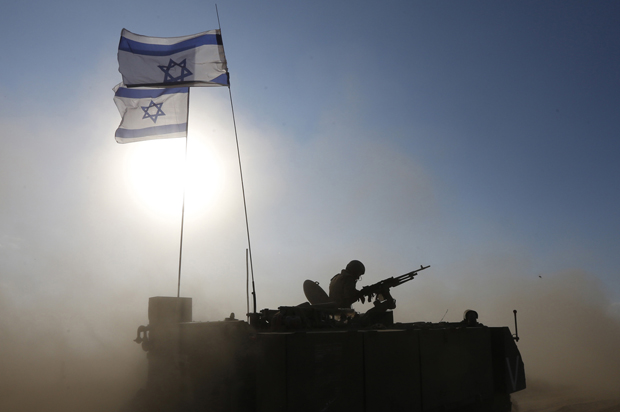
Israel and the psychology of An Israeli flag flutters in the wind as a naval vessel (not seen) escorts the Mavi Marmara, a Gaza-bound ship that was raided by Israeli marines, to the Ashdod port May 31, 2010. Israeli marines stormed the Turkish aid ship bound for Gaza on Monday and 10 pro-Palestinian activists were killed, triggering a profound diplomatic crisis. REUTERS/Amir Cohen (ISRAEL - Tags: POLITICS CIVIL UNREST IMAGES OF THE DAY)(Credit: Reuters)

Why does Israel continue to act against its own interests?

Over the years, and especially since 2006, the Jewish state’s deadly, over-the-top military actions in response to provocations from Hamas and Hezbollah — and now from a flotilla ferrying humanitarian aid to Gaza — have backfired. And in each case, the Jewish state has grown less secure by increasing its international isolation and fueling fury much closer to home.

Four summers ago, Israel’s war in Lebanon displaced a million people in an attempt to crush Hezbollah, which grew from the settling dust and resentment of an Israeli invasion a generation earlier. But the 2006 war only made Hezbollah stronger.

Israel could have predicted such consequences. In 1988, it tried to weaken Yasser Arafat and his secular PLO by encouraging the growth of Hamas and its Islamic adherents. This “enemy of my enemy is my friend” strategy didn’t work either, leading to years of attacks and reprisals and, eventually, to the 2009 war in Gaza. Fourteen hundred Palestinians died, compared to 13 Israelis from rockets fired from Gaza. Yet this invasion, too, missed its targets: Hamas remains firmly in power, and a kidnapped Israeli soldier, Gilad Shalit, has still not been liberated from his Gazan captors.

Then came another kind of confrontation, from a civilian flotilla armed with food, toys, books, medical supplies and a mission to break the blockade of Gaza. Despite claims to the contrary, Israel’s blockade has “deepened the ongoing humanitarian crisis,” pushing it to “catastrophic levels,” according to Amnesty International. “Mass unemployment, extreme poverty, food insecurity and food price rises caused by shortages left four in five Gazans dependent on humanitarian aid.” Yet this “flagrant violation of international law” has been met largely with silence and complicity by the international community, “led” by the United States.

The unwillingness of the United States and the EU to break the stranglehold led directly to this week’s calamity. Flotilla organizers indeed welcomed the prospect of provoking Israel into a high-seas raid in order to splash light on the Gaza crisis. But the Israelis didn’t just take the bait. By boarding the ship outside its territorial waters, and killing at least nine of the civilians on board, Israel once again weakened its moral position, such as it is. This provoked new calls to break the Gaza siege, lent fresh support for boycotts of Israeli goods, and shattered the country’s already-fragile relationship with Turkey.

Turkish prime minister Tayyip Erdogan, already furious over the Gaza war, the blockade and Israel’s deliberate diplomatic humiliation of the Turkish ambassador, is changing the game. No longer, it seems, will there be joint military exercises and Israeli support for Turkey’s defense modernization. Turkey appears poised to make a clean break with Israel while becoming the Palestinians’ main champion — and it grows closer to Iran.

None of this is in Israel’s interest, of course. So why does Israel persist in such behavior?

One answer: The country is stuck in the political psychology of “never again.” The Jewish state appears so trapped by the wounds of its own terrible history that it keeps repeating its past mistakes of excessive force, even though it knows these will only isolate it and therefore weaken it further. In this way, the politics of trauma drive the nation ever further from the safe harbor that ordinary Israelis have so long craved and never enjoyed.

The presence of the Holocaust (Shoah in Hebrew) so permeates culture and politics in Israel that military leaders describe security policy as “Shoah-proof,” according to Avraham Burg, the Israeli author of “The Holocaust Is Over; We Must Rise From Its Ashes.”

“This national tragedy became a de facto national strategy,” Burg wrote recently in the Huffington Post.

This psychology is not lost on Palestinians, who experience its impact. “I understand Israel’s reflexive use of force against civilians as a symptom of a structural pathology,” wrote the Palestinian psychologist Eyad Sarraj, president of the Gaza Mental Health Programme and founder of the International Campaign to End the Siege of Gaza, in the wake of the flotilla tragedy. “Israel resorts to the use of maximum force as a form of intimidation …It is quite possible,” Sarraj wrote in the National (Abu Dhabi), “that through Israel’s actions, it is tightening its own noose.” Indeed Israel, stuck in its own psychic maze, continues to victimize itself. Now others should insist this destructive behavior stop.

U.S. officials, who have begun to recognize that blind support of Israel is not in our strategic interests, must stop sanctioning Israeli impunity. They need to insist on an end to the blockade and on a restoration of sufficient levels of food — not to mention rebuilt homes and lives — for the people of Gaza.

Sandy Tolan is the author of “The Lemon Tree: An Arab, a Jew, and the Heart of the Middle East.” He is an associate professor at the Annenberg School for Communication and Journalism at the University of Southern California.

Continue Reading Close

Iran: “The guest is God’s friend”

The detention of journalist Iason Athanasiadis is a legal abomination -- and a breach of Iranian hospitality

  • more
    • All Share Services

Iran: A child watches U.S. television in Bandar Abbas, Iran.

Journalism’s deepest, most honest contributions inevitably spring from on-the-ground reporting, unencumbered by policy agendas in Washington, London or other foreign capitals. That’s what epitomizes the work of my friend and colleague Iason Athanasiadis, and it’s why his detention by Iranian authorities, on June 17 when trying to board a flight out of Iran, is so troubling.

Iason, who has written for the Christian Science Monitor, Los Angeles Times and publications across Europe and the Middle East, comes from that breed of journalist in pursuit of something beyond just “the story.” To work in Iran, he learned Farsi; to understand its people, he lived with them for three years. His work, as a writer and photojournalist, reflects deep empathy with the Iranian people, an understanding of their historical legacy, and an analysis of the changes swirling around them. Those values lend an independence and credibility to Iason’s work that allow him, on the one hand, to produce the revealing photo essay “Children of the Revolution,” which captures the hopes of a new generation of Iranians; and on the other, to invoke, in his writing on the nation’s history, “Britain’s imperialist past and expert meddling in Iran’s internal affairs,” which “has left most ordinary Iranians nursing a distrust that endures.”

Iason is not being held by the Iranians because of his critique of the history of Western interference in Iran. Rather, his detention is part of a pattern of arrests and detentions of foreign reporters and Iranians working for Western news agencies — journalists who were invited to document historic elections, and whose work in reporting the troubling aftermath was suddenly unwelcome. On June 19, a week after the elections, Ayatollah Ali Khamenei, Iran’s supreme leader, accused the “evil” foreign media of agitation and helping foment unrest.

The Committee to Protect Journalists, which has taken up Iason’s case, along with Harvard’s Nieman Foundation for Journalism (where Iason was a fellow last year), Reporters Without Borders and Amnesty International, have expressed repeated concerns about what Amnesty calls “prisoners of conscience.” Since the elections, dozens of Iranian and foreign journalists have been arrested. Others remain in custody, are prohibited from leaving their offices, or have been expelled. Iranian state media went so far as to accuse one of those expelled, BBC journalist Jon Leyne, of hiring “thugs” to kill Neda Agha Soltan, the young musician and philosophy student whose killing galvanized protests against the Iranian regime. The supposed motive? So that Leyne could make a documentary film about Soltan’s tragic death.

Iason’s detention is especially ironic, given his love of Iran and his understanding of its people and culture. His on-the-ground reporting in the aftermath of the elections, for the Washington Times, GlobalPost and the Pulitzer Center for Crisis Reporting, was built on his earlier documentation of Iranian society for Der Spiegel, the South China Morning Post, Athens News, the National of Abu Dhabi, and numerous other publications in the U.S. and Europe.

His images concentrate on Iran as a “land of paradox,” where respect for tradition both contrasts and overlaps with contemporary yearnings. It is here, as much as anywhere in his work, that Iason’s appreciation of Iranian society comes through. In museum and gallery exhibitions, including at Harvard, Stanford and the Craft and Folk Art Museum in Los Angeles, the narrative of youth is depicted alongside images of religious rites, village and nomadic life, traditional fishing communities, women snowboarders, men on horseback, soccer matches, religious theater, and gridlock in contemporary Tehran.

Nowhere is Iason’s witness more penetrating than in his images of what he called the “clandestine life of the next generation.” Yet in documenting their aspirations, Iason also underscores that the young people of Iran seek change within Iran, not outside intervention; clear in their hearts is a wish to avoid the bloodshed that has plagued their nation for generations.

Iason has done as much as any foreign journalist to depict the nuances of contemporary Iran, and thus to humanize its people at a time when foreign powers were threatening another war. Indeed, we all could have used more of Iason’s brand of incisive and empathetic journalism in the days leading up to the Iraq war.

The detention of Iason Athanasiadis fits into the larger context of the ongoing crackdown, including the arrest of 25 staff members of opposition leader Mir Hossein Mousavi’s newspaper, and eight Iranian employees of the British Embassy in Tehran. Mixed signals from these and other arrests reflect larger divisions between Iran’s ruling clerics: On the one hand, the release of 22 of the Mousavi newspaper staffers suggests an easing of the hard line; on the other, the arrests of the embassy employees underscores an increase in tensions with Britain — a potentially bad sign for Iason, who holds joint British and Greek citizenship.

Yesterday came another disturbing sign: the 11-page “confession” by Newsweek’s Maziar Bahari, posted by Iran’s Fars News Agency. In it, Bahari allegedly said, “The activities of Western journalists in news gathering and spying and gathering intelligence are undeniable … I, too, as a journalist and a member of this great Western capitalism machine, either blindly or on purpose, participated in projecting doubts and promoting a color revolution.” On Wednesday, Newsweek disputed that charge, defending Bahari as “a veteran journalist whose long career, both in print and in documentary filmmaking, has been accurate, even-handed, and widely respected.”

Iason was traveling on a valid journalist’s visa in his Greek passport when he was detained, and Greek diplomats, and the patriarch of the Greek Orthodox Church, have joined with human rights and journalism organizations to implore the Iranians to send their native son home. The Greeks would do well to point to Iason’s analysis of the history of foreign meddling in Iran, including, most recently, an exposé of Bush administration attempts, through the CIA, to destabilize the regime in Iran.

But the heart of the Greeks’ case to Iranian authorities is Iason’s love for Iran, and his invaluable contribution, in Iran’s recent history, of humanizing its people when talk of war was swirling all around. Iason epitomizes the honest witness; or, in the Persian context, the respectful guest within your midst. The ill treatment of a guest of Iason’s caliber represents the antithesis of the nation’s famed hospitality. It is as if the Iranian leaders have suddenly forgotten one of the most time-honored sayings from the depths of Persian culture: Mihman Habib-e-Khodast — the guest is God’s friend.

The Iranians must know that such treatment of foreigners can only further damage the image of the Islamic Republic of Iran. Now, authorities have a chance to show goodwill, by releasing Iason Athanasiadis and other journalists being held against their will.

Continue Reading Close

When Barry passes Hank

Baseball commissioner Bud Selig needs to be there when Barry Bonds makes home run history -- and rise above the race issues that color Bonds in the public eye.

  • more
    • All Share Services

When Barry passes Hank

On April 8, 1974, when Hank Aaron broke Babe Ruth’s all-time career home run record with his 715th homer, one important person was not in Atlanta’s Fulton County Stadium: baseball commissioner Bowie Kuhn. Aaron had endured literally tons of hate mail and numerous death threats in gracefully ascending to the record of a white American icon. The commissioner had declined to witness the shattering of the greatest record in sports, in which a black American hero risked his life every time he came to bat, in favor of honoring a previous commitment to address the Wahoo Club, the Indians’ fan club in Cleveland.

Thirty-three years later, another commissioner faces a choice: to be a witness to history, when Barry Bonds breaks Aaron’s record, or to stay away. Although Bonds’ journey to the home run record can scarcely be compared with Aaron’s, baseball commissioner Bud Selig should not make the same mistake as his predecessor. Selig should be in the house when Bonds clubs home run No. 756. Maybe Bonds will make it easy on you, commissioner: If he hits three homers this weekend, you can watch the record fall at home in Milwaukee.

Selig seems torn between his decades-long friendship with Aaron — who has said he will not attend — and his duties as a commissioner in 2007. Selig knows what Aaron endured, especially in 1972 and 1973, when he received 929,000 letters, mostly opposing his assault on Ruth’s record, and many in the ugliest terms. “You can hit dem home runs over dem short fences,” declared one of the milder screeds, “but you caint take that black off yo face. Rite on, rite on.” Other letters threatened death if Aaron didn’t retire. “Will I sneak a rifle into the upper deck or a .45 into the bleachers?” one anonymous writer mused. “I don’t know yet.” Aaron had a 24-hour bodyguard, slept in a separate hotel from his team, and his daughter, a victim of kidnapping threats, attended college under FBI protection. Aaron’s quiet dignity in approaching 715 therefore became an extension of the civil rights movement, embraced at the time by Jesse Jackson, Andrew Young and other black leaders.

“That was a time when Martin Luther King was saying, if you haven’t found something you’re willing to die for, you probably aren’t fit to live,” Young told me in 1999, as I researched a book on Aaron. “I think Hank had decided that his life was vulnerable, and if it meant dying in the course of doing his best, I don’t think he actually worried about it.”

Against that legacy, Barry Bonds has virtually no claim. But then, neither does any ballplayer in the last three decades. If Aaron played in the era where African-Americans taught the whole country about grace and excellence in the face of adversity, Bonds plays in the equal opportunity era of cheating and steroids. But it is hardly fair to lay all the blame on Bonds, and that is why Bud Selig should come to the ballpark, unlike Kuhn and his bungling no-show in 1974. Indeed, a case can be made that Barry Bonds is being unfairly singled out.

Despite the apparent evidence of Bonds’ cheating, the commissioner should consider: How many other players have taken steroids? Why did Major League Baseball, and the commissioner himself, do little during the decade of unscrutinized Paul Bunyan-size players and their towering homers? How many great pitchers who today throw hard past the age of 40 can themselves be beyond suspicion? And, if Bonds’ accomplishments are in question, shouldn’t we look at our attitude toward all potential records? If Selig won’t go see Bonds break Aaron’s record, then he shouldn’t attend any games where the whiff of steroids is in the air.

Beyond steroids, there’s something else that feeds the perceptions of Bonds. The slugger is portrayed as brooding and angry. “Anger from black men is one of the things white America fears,” Dr. Alvin Poussaint, the Harvard psychiatrist, told me. He was talking about the 1998 race between Sammy Sosa and Mark McGwire for Roger Maris’ single-season homer record, when Sosa was portrayed as the “best man” who “understood that if he was in any way threatening or boasting about how he was going to ‘get’ this guy, he would have been rejected by the American public.” Sosa, smiling and blowing kisses, “played the American psyche so well.”

Bonds, by contrast, doesn’t play Sosa’s game, and doesn’t seem to care. So the guy’s a jerk; who cares? Roger Clemens isn’t cuddly, and if you want mean, how about Enos Slaughter going after Jackie Robinson? Ty Cobb, anyone? Bonds, like the others, deserves to be in the Hall of Fame. But his image as sullen and unfriendly helps generate a negative public attitude toward him; for those same traits, many white players would get a pass. It’s uncomfortable, but it’s true: Race issues may be more subtle now than they were in Aaron’s day, but they have hardly disappeared, and they’re playing now in the attitudes toward Bonds. In an ABC/ESPN survey, nearly twice as many blacks thought Bonds was being unfairly treated, compared to whites. A commissioner’s refusal to witness home run history will only fuel that perception.

As Selig mulls his decision, I well imagine what he’s thinking. On his mind is Henry Aaron, and a deeper record from a purer hero. “He was phenomenal,” the commissioner told me. “He was magnificent. He was quiet. He was dignified. I never saw anything like it.” I couldn’t agree more, Mr. Commissioner. Like me, you long for a cleaner time, when heroes stood for something bigger. Bonds doesn’t fit that picture. But he remains one of the greatest to ever put on a uniform. And like it or not, he is the product of our culture and our sport in the early 21st century.

Years ago Selig told me something else — something he would do well to keep in mind: “Baseball is a mirror of society.” So it is. We can’t blame Barry Bonds for all that’s changed in the last 33 years.

So go to the ballpark, Mr. Commissioner. Watch Hank’s record fall. Witness the history, even though it won’t be the same.

Continue Reading Close

Rethinking Israel’s David-and-Goliath past

Little-noticed details in declassified U.S. documents indicate that Israel's Six-Day War may not have been a war of necessity.

  • more
    • All Share Services

Rethinking Israel's David-and-Goliath past

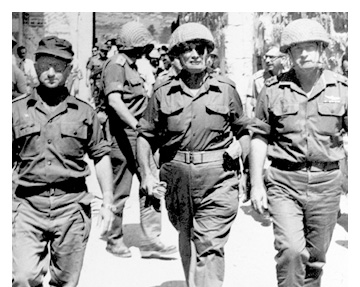
At a little after 7 on the morning of June 5, 1967, as Egyptian President Gamal Abdel Nasser’s commanders were finishing their breakfasts and driving to work, French-built Israeli fighter jets roared out of their bases and flew low, below radar, into Egyptian airspace. Within three hours, 500 Israeli sorties had destroyed Nasser’s entire air force. Just after midday, the air forces of Jordan and Syria also lay in smoking ruins, and Israel had essentially won the Six-Day War — in six hours.

Israeli and U.S. historians and commentators describe the surprise attack as necessary, and the war as inevitable, the result of Nasser’s fearsome war machine that had closed the Straits of Tiran, evicted United Nations peacekeeping troops, taunted the traumatized Israeli public, and churned toward the Jewish state’s border with 100,000 troops. “The morning of 5 June 1967,” wrote Israel’s warrior-turned-historian, Chaim Herzog, “found Israel’s armed forces facing the massed Arab armies around her frontiers.” Attack or be annihilated: The choice was clear.

Or was it? Little-noticed details in declassified documents from the LBJ Presidential Library in Austin, Texas, indicate that top officials in the Johnson administration — including Johnson’s most pro-Israeli Cabinet members — did not believe war between Israel and its neighbors was necessary or inevitable, at least until the final hour. In these documents, Israel emerges as a vastly superior military power, its opponents far weaker than the menacing threat Israel portrayed, and war itself something that Nasser, for all his saber-rattling, tried to avoid until the moment his air force went up in smoke. In particular, the diplomatic role of Nasser’s vice president, who was poised to travel to Washington in an effort to resolve the crisis, has received little attention from historians. The documents sharpen a recurring theme in the history of the Israeli-Arab wars, and especially of their telling in the West: From the war of 1948 to the 2007 conflict in Gaza, Israel is often miscast as the vulnerable David in a hostile sea of Arab Goliaths.

“You will whip the hell out of them,” Lyndon Johnson told Israeli Foreign Minister Abba Eban during a visit to the White House on May 26, 1967. The president’s conclusions were based on multiple intelligence reports, including a CIA assessment that Israel “can maintain internal security, defend successfully against simultaneous Arab attacks on all fronts, launch limited attacks simultaneously on all fronts, or hold any of three fronts while mounting successfully a major offensive on the fourth.” As Nicholas Katzenbach, U.S. undersecretary of state at the time, recalled: “The intelligence was absolutely flat on the fact that the Israelis … could wipe out the Arabs in no time at all.”

A key discrepancy lay between U.S. and British intelligence reports and those conveyed to the administration by the Israelis. On May 26, the same day Eban met with Johnson and Defense Secretary Robert McNamara, Dean Rusk, the secretary of state, relayed a message from Israel indicating “that an Egyptian and Syrian attack is imminent.” In a memo to the president, Rusk wrote: “Our intelligence does not confirm this Israeli estimate.” Indeed, this contradicted all U.S. intelligence, which had characterized Nasser’s troops in the Sinai as “defensive in nature” and only half (50,000) of the Israeli estimates. Walt Rostow, the national security advisor, called Israeli estimates of 100,000 Egyptian troops “highly disturbing,” and the CIA labeled them “a political gambit” for the United States to stand firm with Israelis, sell them more military hardware, and “put more pressure on Nasser.”

As for the Egyptian president, there was a huge difference between his public and private signals. He had threatened Israelis with “annihilation,” causing fear bordering on paralysis for a population devastated by the Holocaust. He had closed the Straits of Tiran, a source of less than 10 percent of Israel’s shipping, but nevertheless a casus belli as far as Israel was concerned. He had expelled the U.N. peacekeepers from Sinai, further raising fears of war. (Israel, however, refused to accept those same peacekeepers — a move that would have diminished the chance of war.) And, as the leader of the “Arab nation,” Nasser was under great pressure from other Arabs to cut short Israel’s nuclear ambitions and deliver the Palestinians back to the homes they had fled and been driven out of in the war of 1948.

But privately Nasser was sending strong signals he would not go to war. On May 31, he met with an American emissary, former Treasury Secretary Robert Anderson, assuring him that Egypt would not “begin any fight.” Two days later, Nasser told a British M.P., Christopher Mayhew, that Egypt had “no intention of attacking Israel.” The same day he met again with Anderson, agreeing to dispatch his vice president, Zakariya Mohieddin, to Washington, in an apparent last-ditch attempt to avoid war. (Anderson and Johnson had also spoken of a visit to Cairo by Vice President Hubert Humphrey.)

Rostow decided that Israel should know about the secret visit. In a June 2 note to the president, the national security advisor urged that the United States inform Israel of Mohieddin’s impending trip to the White House: “My guess is that their intelligence will pick it up.” The same day, Nasser sent a telegram to the American president indicating that Egypt would not attack Israel, but that “we shall resist any aggression launched against us or against any Arab state.”

The archives for the 1967 war, as with the documentary evidence from other Arab-Israeli wars, thus reveal a history far more complex, and far more interesting, than the inflated portrayal of Arabs poised to crush Israel. “One against 40,” declared David Ben-Gurion in describing the odds facing Israel in the war of 1948, ignoring the fact that comparisons of total populations meant little. The records show that the key Arab and Jewish forces — a much more crucial benchmark — were about the same, and that after a June 1948 cease-fire, a rearmed Israel had a decided advantage, which it parlayed into victory. Fifty-nine years later, in today’s conflict in Gaza, the tragic, well-publicized deaths of Israelis in Sderot from crudely built Qassam missiles — nine in the last six years — are dwarfed by the deaths of 650 Palestinians last year (more than half unarmed civilians, according to Amnesty International) from attacks by Israel, one of the most potent and sophisticated military powers in the world, armed with nuclear weapons.

Yet the David vs. Goliath narrative persists, obscuring a more nuanced view of the balance of power in the region. Much of this has to do with Americans’ familiarity with the story of Israel as a safe haven for Jews ravaged by the Holocaust. By contrast, Arabs, especially Palestinians, have long been seen as a vaguely menacing Other, as depicted in Leon Uris’ hugely influential best-seller, “Exodus.” The “Exodus” history, in which Arabs are alternately pathetic or malicious, holds no room for a more layered narrative of the struggle between Arabs and Jews, in which someone like Gamal Abdel Nasser, blustering for the Arab street, may have been privately seeking a way out of war.

Did Nasser truly want peace? We may never know. On June 3, 1967, after Secretary of State Rusk had informed Israel of the pending visit from Egyptian Vice President Mohieddin, Rusk relayed a message from the president to Nasser. “In view of the urgency of the situation,” Rusk wrote, “we hope it will be possible for him to come without delay.” That same day, however, at a Pentagon meeting between Mossad director Meir Amit and McNamara, the prospects for war seemed closer than ever. Amit told McNamara bluntly that he was “going to recommend that our government strike.” This time, the Americans did not object; indeed, the CIA had grown sympathetic to Israel’s war aims, in which Nasser, seen as too close to the Soviets, would be defanged. When McNamara asked Amit how long a war would last, the Mossad director replied: “Seven days.” And so the meeting between the White House and Mohieddin, scheduled for June 7, never took place. By that time, it was already Day 3 of the Six-Day War, and Israel was already in control of Sinai, the West Bank, Gaza and the skies over much of the Middle East.

Continue Reading Close

Page 1 of 2 in Sandy Tolan