Thomas Rogers

A very pornographic Rick Santorum

A couple creates a portrait of the GOP candidate using images likely to make him see red

  • more
    • All Share Services

A very pornographic Rick Santorum (Credit: Stephen and Vanessa/Unicorn Booty)

Over the course of the GOP primary, observers have seen a lot of sides to Rick Santorum, many of them shocking to even those accustomed to his views on gays, women and religion. But nothing has been as distinctly memorable as the one making the Twitter rounds today: a composite image of the anti-gay candidate created entirely out of gay porn — hundreds of penises, muscular torsos and close-ups of anal sex. There are even tiny people having tiny intercourse in the middle of Rick Santorum’s eyeballs.

Where does it come from? As it turns out, it wasn’t even created by a gay person. A straight couple, Stephen and Vanessa, sent the image to the gay blog Unicorn Booty out of the goodness of their heart. Kevin Farrell, an editor at the site, tells Salon that the couple has “been getting a real kick out of the image garnering so much attention.”

Click below to see the image at full size:
Click to see the full image

38 years of self-love

We talk to the author of 1974's groundbreaking "Sex for One" about our changing attitudes towards self-pleasure

  • more
    • All Share Services

38 years of self-love Betty Dodson

Without Betty Dodson, America would be a lot less good at masturbating. Almost four decades ago, the sex educator, artist and feminist activist self-published her book “Sex for One” under the name “Liberating Masturbation” and began selling it at small feminist bookstores around the country. The book, a guide to pleasuring oneself, caught on like wildfire, teaching a generation of women and men about an act that was still considered shameful to a large cross section of Americans  – and utterly mysterious to a huge number of others. It has remained a touchstone.

83-year-old Dodson still dispenses sex advice on her website, dodsonandross.com, and now Three Rivers Press is issuing “Sex for One” as an e-book for the first time ever. To mark the occasion we called Dodson to talk about how our attitudes toward masturbation have changed since 1974, when her book first appeared.

Your book has been out for 38 years, and people are still using it as a resource. That’s kind of incredible. 

The book has a very long history. Originally, I had written an article for Ms. magazine [about masturbation].  They held it for a couple of years, and during that time I did a little self-publishing. I had a logo, which I called “Goddess Books.” It was so cornball, I can’t tell you, but I was thrilled by it. It was like a mimeograph. I sent it out everywhere, selling it for $2 and $3. The little checks were coming in from all over the world. I couldn’t get over it. I thought I’d get a couple of hundred checks. I got something like 4- to 5,000. So lo and behold I had enough money to go publish my own book in 1974, because publishers would laugh at me when I said I want to publish a book called “Liberating Masturbation.” They would laugh me out of their office.

And now it’s coming out in Kindle. 

It’s amazing to me. It went all over via the women’s movement and coffee shops. I didn’t sell it to Crown until 1986. I couldn’t let it go, I couldn’t turn it over to anyone. I didn’t want anyone to touch my baby. And I knew they’d screw it up and, sure enough, the first version that came out, I hated it. The cover, the style, everything about it was nasty. When they decided to put it in paperback I became a bitch and I drove the art department crazy to make a cover that I could love, and I’ve got to say that cover is dynamite. The first time they had “Self Loving” in this stupid script, in faded pink, ugh, barf. It was so nasty. Once I got the cover that I liked, the book just went out and did what it did. I was getting letters and responses that said, “Oh thank you, thank you, I felt so guilty about this all my life.” I think the value of the book is that it broke through a lot of people’s guilt.

Obviously, the sexual climate was very different in 1974. How did people think about masturbation back then?

Who needed it? There was so much sexual freedom and there were so many groups and threesomes and couples getting together. It was very fluid in New York, L.A., San Francisco. I went to sex parties in the U.K., London, Amsterdam. I was one of the darlings of the jet set, so they’d invite me everywhere. I couldn’t have been happier. Then all of the sudden AIDS happened and the bottom crashed out of casual sex. That’s why the publisher in 1986 figured that they could finally deal with masturbation as the safest sex.

Do you think there’s less guilt associated with masturbation now?

I don’t think we’ve made any progress. If anything we’ve gone backwards.

What?! Really?

Well, you can at least say the word now. In certain circumstances you couldn’t say it at all, when I first started off. The response I got to using the word was people rolling on the floor laughing, and when I talked about teaching women how to masturbate, they was even funnier. What would you do to teach someone to masturbate?  But it’s a physical activity that has an art to it. You don’t just grab it and whack it. It’s everyone’s favorite thing to do if you can’t get laid or you don’t have a delicious romantic relationship, but if we don’t incorporate masturbation into our relationships, we are going to lose sex anyway.

Why do you think it’s important to incorporate masturbation into a relationship?

You are only 20, wait until you are having sex …

I’m 28.

Oh, you’re an old man, I thought I heard you say 20.

No, I’m not quite that young and beautiful.

Oh now you really are too old. I was thinking of making a date with you but now you’ve got too much age on you.

I’m also a flaming homosexual, so that doesn’t really help us either. But in terms of the evolution of masturbation, in the last few decades, we’ve seen the rise of all these new sex stores, like Babeland and the Pleasure Chest, that try to make sex fun and not shameful.

They are little safe havens of sexual sanity. And they functioned the same way back in the ’70s for the women’s movement. There were feminist bookstores then because we were the only ones who were dealing with sex.

Porn is also much more accessible these days than it’s been in the past.

On the one hand it’s fabulous and on the other hand it’s a tragedy. Porn doesn’t factor female sexuality into it. All of these young guys are getting their sex information from porn and they have no other resource. And because young women don’t want to upset their boyfriend or make him feel insecure, just keep their mouth shut, suffer through it.

So you think porn has made young women less focused on their own pleasure?

Women have never been interested in their own pleasure. We can’t get there until we have women who make their own money. As long as women are going to be dependent upon men financially, we are going to make men happy. Or do our best because we need you to pick up the tab. Women go on the porn sites and what they come away with is, I don’t look like those girls so now I’m going to have to get my inner lips cut off and my asshole dyed and bleached and dyed pink.

I was talking to somebody recently who said that when she first learned to masturbate, it was the first time she realized that she didn’t need a man. How closely is masturbation tied to women’s rights?

I don’t think a woman can be fully sexual unless she does masturbate. What’s happening now is that these young girls don’t get around to it as teenagers. They give boys blow jobs to be popular and then when it comes to their turn, they have no idea what they want or what feels good. Can you imagine a young man not masturbating? I mean, I’ve had women in their 40s and 50s that have never even looked at their genitals, have never masturbated and they don’t know what a clitoris is.

But shows like “Sex and the City,” in which characters were always speaking openly about masturbation and sex toys,  did get a lot more people to talk about female masturbation, right?

So they talked about vibrators and stuff but now look at all the young women wearing those stupid high-heeled shoes. That means they are going to have back problems later on, kiddo, and they are going to break their fifth metatarsal. No, “Sex and the City” didn’t do us any good.

What about “American Pie”?

Oh, please. No, that was not helpful. That just made it seem like masturbation is always a joke, and that’s why guys continue to laugh at it. If everyone were honest — that it’s the sex most of us are doing most of the time — we would treat it with dignity.

So what do you think is necessary in order to make people more comfortable with the idea of masturbation?

Bottom line, parents and caregivers must not interfere with a child’s natural investigation of their genitals. The first line of sexual repression is non-verbal. It’s the way your mother or caregiver diapers you and cleans and washes and handles your genitals as a baby. It’s whether she’s doing that with some love in her heart and she’s going “look at that cute little thing, oh that is so sweet,” or she is going “eww nasty, I’ll cut it off.” Those feelings have power. If a kid is caught masturbating, often the first message is, “That’s disgusting” or “Honey, that’s not a good idea. I don’t want you to do that too much.” Of course their kids will still do it, because it feels good.

Why do you think that it’s taken so long for a male sex toy, like the Fleshlight, to catch on.

Because a man who masturbates is a loser. He should be fucking. And part of men’s animalistic procreative drive is that they want to stick their penis in something. That is very primal. And now you don’t need to go into a store to buy it. You can do it online.

Why do you think that jerking off is still funny to people?

We make things funny when we are embarrassed. When we are embarrassed about something, we laugh. And if you laugh at something people are embarrassed about, you’re hip. We are ashamed of our bodies. We are ashamed of sex. We are ashamed of pleasure. The reason masturbation is so political is because if we take control of our sexuality, the church loses its power over us. The government loses power over us. We become free-formed thinkers.

Continue Reading Close

Can’t see the forest for the wood

Porn star Colby Keller blogs about Marxism, Foucault and the delightful world of unexpected phallic imagery SLIDE SHOW

  • more
    • All Share Services

Can't see the forest for the woodColby Keller (Credit: Greg Endries/Salon)

View the slide show

Colby Keller isn’t your regular gay porn star. The tall and scruffy former art student has distinguished himself from the rest of the industry not only by his unconventionally hipster aesthetic, but by his unconventional interests. In his well-read blog, the Big Shoe Diaries, Keller writes about everything from Marxism to Foucault to his and his friends’ art projects. Keller’s blog is a testament to the way porn celebrity is changing in the 21st century, as performers face the increasingly difficult task of distinguishing themselves in a sea of free or pirated content. It’s also incredibly charming.

One of Keller’s most memorable obsessions is his search for images of penises in unexpected places. In a playful feature called “I See Penis,” he collects images of phallic objects from around the world, sent to him by readers. We collected some of the most memorable entries, and spoke to Colby about penises, the generational divide in gay culture and what it’s like to be a 21st-century porn celebrity.

So how did this series get started?

We started off doing “I See Asshole” and “I See Vagina,” and then came “I see Penis.” For whatever reason the joke never wears off. There’s always something a little funny about these penises because sex is something everybody thinks about and it’s ever-present and finds itself replicated consciously and unconsciously all around us and yet we’re supposed to ignore it. There’s something magical about sexuality, that it can do that. And penises are just these weird things you’ve got on your bodies. They change. They get hard. And they’re visual, which is partly why when you get into a bathroom stall, you want to draw a giant penis on the wall.

So you put out a call to action on the blog? And people started sending in photos?

Occasionally I’ll ask people to submit things, but mostly people just do it on their own, and “I See Penis” is the No. 1 submission I get. I get so many of them, I can’t post them. I feel kind of bad because I had a whole file of photos people have sent me and it’s hard to get to them all.

Your blog has a much more diverse and unconventional following than most porn performers’ blogs. Why do you think that is?

I don’t want to say anything negative about my fellow performers, but some of their sites can be porn-heavy and about their relationships to other porn stars. Unless you’re really engaged by gay porn culture, it’s probably not that interesting to a wider audience. and a lot of it is self-promotional. I do a lot of that on my blog, but it’s kind of ridiculous because I’m not a big giant porn star. I joke that I’m the supporting cast. And I think that kind of self-deprecating humor in general is attractive to people.

Right. Your persona on the blog isn’t really that of the conventional porn star. You’re much more of a normal guy, who’s interested in art and other more highbrow things, the kind of gay guy a lot of people would want to be friends with.

I once had a really offensive conversation with a former friend in a car and he was interrogating me, asking, “Who is Colby Keller?” He wanted Colby to be this Midwestern yokel who’s not very smart and going on and on. It was this really horrible vision he had of me as a performer. I decided that it’s actually more interesting if Colby Keller is just a part of myself. It was kind of an experiment, that maybe people would find that interesting and maybe they wouldn’t.

There seems to be increasing pressure on porn performers to create personal brands for themselves, by tweeting and blogging all the time. Do you think it’s a reflection of how the industry is changing?

A lot of studios have less invested in promoting models and it’s a lot harder because there’s a lot of free porn out there. But I think what people find appealing about porn stars on Facebook and Twitter is they want a real person. They don’t necessarily want someone who’s always performing as a sex worker, and I think that may be a kind of a mistake a lot of people go down. I think people who have more successful porn personas are ones that are closer to themselves as human beings. Going back to when I was younger, there was a porn performer I really liked, and I would envision him as my boyfriend. But I also didn’t want my boyfriend to be a sex worker all the time, I wanted him to be a real person. I think that helps a porn performer if he makes himself real to people rather than just writing, “I’m on set today with so-and-so and he has a big dick!” I blog about work on occasion, but I think on Facebook and Twitter people want something honest and real.

I was shooting with someone recently who asked me if I identified as gay or straight and I asked him what he was, and he said, “I’m uncomfortable identifying as gay.” But I could tell from the way he was telling it to me that it wasn’t because he was insecure with his sexuality, it was that he didn’t identify with gay culture and that’s kind of where I’m at. I feel very out of place when I go to Chelsea or West Hollywood. I think there are a lot of younger kids for whom that kind of gay ghetto culture no longer makes sense, and as they’re more accepted by broader society that culture will disappear. It’s about redefining ourselves and who we are and what kind of role our sexuality plays in our everyday lives.

View the slide show

Continue Reading Close

Is gay literature over?

In an era of same-sex marriage and "Modern Family," the role of gay writers is changing. An expert explains how

  • more
    • All Share Services

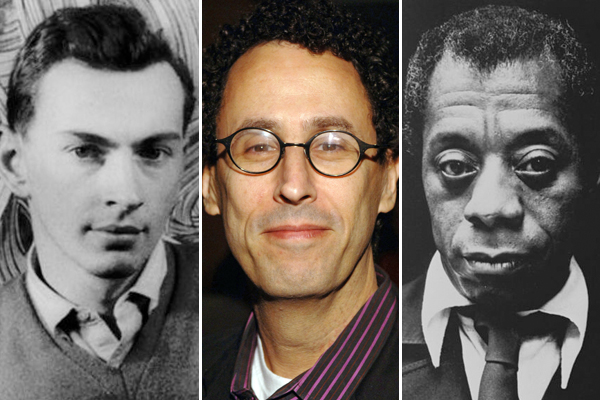
Is gay literature over?Gore Vidal, Tony Kushner and James Baldwin (Credit: Library of Congress/Carl Van Vechten/Reuters/Phil McCarten/Miami Dade College)

Gay life in America has utterly transformed itself since World War II. In the 1950s, homosexuality was a crime. Now, openly gay people are everywhere in popular culture, gay kids are coming out as early as elementary school and we can get even get married in a half-dozen states (including, soon, Washington). One of the most crucial, but least-talked about, reasons for this change is gay literature. Starting in the 1940s, a coterie of bold writers — Gore Vidal, James Baldwin, Armistead Maupin and Tony Kushner, among many others — played a central role in creating what we now think of as gay life. Their words gave voice to a segment of the American population that, for much of its history, was hidden away.

In his new book, “Eminent Outlaws,” novelist Christopher Bram uses a series of complex portraits of America’s most influential gay literary lions to argue for their position in the pantheon of American culture. The book covers expansive territory, charting the tumultuous relationship between Gore Vidal and Truman Capote, whose passionate hatred for one another lasted until the latter’s death (Vidal called it a “good career move”). It describes Tennessee Williams’ tortured relationship with his sexuality and gradual descent into alcoholic misery, James Baldwin’s struggles against racism and Edmund White’s eloquent reactions to the terror of AIDS. For anybody interested in gay culture, “Eminent Outlaws” offers a crucial and fascinating overview of  decades of American literary history. It also raises the question: In an era when being gay is considered mainstream, does gay writing still matter?

Salon spoke to Bram (who is also the author of “The Father of Frankenstein,” which was later turned into the film “Gods and Monsters”) over the phone about Gore Vidal’s importance, the death of the gay bookstore and the problem with gay men today.

As you point out in the book, literature has had an outsize role in the evolution of gay culture. Why do you think that is?

For the longest time, there were no gay characters or story lines in television or in the movies, so people had nowhere else to go but books for stories of gay life. After WWII there was suddenly a slew of them. It was surprising how many came so quickly. People could and wanted to write about it and the publishers would publish it. In my book I emphasize Capote’s “Other Voices, Other Rooms” and Gore Vidal’s “The City and the Pillar,” but there were others. The mainstream houses backed away from gay material in the ’50s but it was picked up by smaller presses, like Greenberg and Guild. Once it started it couldn’t stop.

Why do you think the gay literary explosion happened right after World War II?

It was partly WWII itself. Gay boys who had grown up in the middle of nowhere entered the service, and found out they weren’t alone. Alan Berube, in his book “Coming Out Under Fire,” does a great job of painting this sudden awareness and huge change. Gay people also wanted to read about each other, and after WWII censorship for books loosened. Before, cities would ban any book with sexual content, and after WWII people could write about sex, even gay sex.

Gore Vidal is the major thread connecting the book. Do you think he’s the most important figure in gay literature of the last 50 years?

Yes, but almost by accident. It’s not a role he wanted. “The City and the Pillar” is a very gay book published early on in 1948. It sold very well but he got kicked in the teeth for writing it, and after that he played a little more coy. He adopted the strategy that there’s no such thing as a homosexual, there’s only a homosexual act; homosexual is an adjective and not a noun. He wrote “Myra Breckinridge” in the ’60s, which is this wonderfully polymorphously perverse novel about a transsexual who rapes a straight man at one point. It’s over the top and out there and was a huge bestseller. Then he started writing historical novels, which hardly dealt with homosexuality. But one of the most amazing things he wrote from a gay political point of view is the essay “Pink Triangle, Yellow Star,” which was sparked by a very foolish bizarre essay by Midge Decter about gay men and their identity. He tore her essay to shreds, but he also argued that  Jews and homosexuals had a lot in common, that they were both minorities that are in the same boat.

In the last few years we’ve seen the disappearance of a lot of gay bookstores around the country. What do you think this says about the state of gay literature?

That is a major change and it’s an important and worrisome one. There are a couple of factors causing it. Independent bookstores have been in trouble for a while, struggling to compete first with super-chains and then Amazon and the Internet. Now the whole book business is going to transition, and even the super-chains are in trouble. Gay bookstores were always just keeping their heads above water. But I don’t think it says so much about gay books in particular as it does about the book business.

Edmund White once wrote that “‘Will & Grace’ killed gay literature.” Do you think he’s right — that the rise of gay TV and movies has made gay writing less appealing?

I think it’s reduced the gay readership by 10 or 15 percent — not a huge amount. And those were the people who didn’t really enjoy reading anyway. For them, it was their only way to get gay stories. Now they don’t have to. Independent film has dried up the same way indie bookstores have, so there’s not as much gay film as there used to be just 4-5 years ago, but the change in TV is phenomenal. These shows matter-of-factly include gay story lines and characters and do really good jobs with them. They’re not just here as comic relief, they’re really fully fleshed out, well-drawn characters. These TV shows are following in the footsteps of Armistead Maupin’s “Tales of the City” by including gay characters in this larger world.

Larry Kramer has very forcefully argued that young gay people these days don’t respect their elders or their history. Do you get the sense that young gay men today are less interested in gay culture and literature than they were in the past?

Not really. I don’t think the current younger generation is different from mine or even Larry’s. In my generation, we hated our elders. We might like Christopher Isherwood, but there was a dislike of the older generation: “They got it all wrong, we’re going to get it right.” I think that’s a natural generational dynamic; as time goes on you learn to keep what was good from the older generations and drop what was bad. I like the generations being different. Every generation wants to carve out their own space and to some extent it’s going to mean rejecting the older generation.

But Larry Kramer isn’t alone in feeling hurt by this. What do you think spurs this particular kind of anger among older gay men?

You’re getting older and you know you’re going to die, and you’re not happy about that, so you take out your anger on the generation coming behind you. I teach at NYU, so I work with people in their early 20s and I expect us to have nothing in common but I’m always surprised by the books they like, the movies they like, the things we do have in common.

I also think older gay men are pissed off that young gay men seem entitled and don’t seem to know what gay life was like in the ’50s, ’60s, ’70s, and especially the ’80s, during the first wave of the AIDS crisis.

Why should they know it? When they are aware of it, I’m pleased but I don’t expect them to. They’re lucky they didn’t grow up with the hardships Larry’s generation grew up with. My generation didn’t have it as harsh as Larry’s did, but I had it a little harsher than yours. It’s only natural. You just kind of have to accept that.

In his famous essay in the Atlantic, Andrew Sullivan argued that we’re witnessing the “end of gay culture,” that it’s splintering and dissolving as a result of mainstream acceptance.

Old gay culture wasn’t that solid to begin with, and [literary gay men] were always a minority within a minority. Even when gay books were the only game in town, there were plenty of gay people who didn’t read. For them being gay was about sex and going to bars and dancing. There’s still gay culture around and it takes different shapes and forms. Gay bars don’t play the same role in gay life they once did 10-15 years ago. The Internet has changed that too. I miss the gay bookstores, but I like the difference and the variety.

Do you think there’s such a thing as a gay sensibility in literature?

When Jeff Weinstein, the New York culture critic, was asked if there was a gay sensibility and if it affected culture, he said, “No, there’s no such thing as a gay sensibility and yes, it does affect culture.” I feel that way. The only thing holding these men together is that these were men who were sexually attracted to men who would write about it and about how that mixed with the rest of their lives. For some writers, [their gayness] was just one more ingredient in the stew, like Armistead Maupin. For some, sex and love with other men was everything, like Edmund White. But even he mixed things up. His new book is about the friendship between a gay man and a straight man (though I think his best writing is his sexual writing).

Speaking of Edmund White, he has very strong feelings about writers, like Susan Sontag, who were famous but did not come out of the closet.

I think if she had actually written as a lesbian about lesbian life it would have given a whole other dimension to her work and she would have been a much more interesting and exciting writer than she was. But I just think of her as a writer [not a gay writer]. The other writer he talks about is Harold Brodky. Being unable to write directly about gay life made his prose weird and baroque and really blocked him as a writer. For me, their being in the closet becomes its own punishment.

A friend of mine recently told me that he thought we just don’t have the kinds of great gay literary writers that we used to. I think we do, they’re just not known as primarily gay writers. Do you think that’s true?

There’s good stuff being done by younger writers than the old war horses. It just hasn’t gotten the attention it deserves. Paul Russell just did an amazing book last year called “The Unreal life of Sergei Nabokov,” following Vladimir Nabokov’s gay brother from pre-revolutionary Russia to Paris in the time of Cocteau to Nazi Germany. Peter Cameron’s last book, “Someday This Pain Will Be Useful to You,” was very smart and beautifully written. Bob Smith, a comedian, did a wonderful novel called “Remembrance of Things I Forgot,” about a gay man who travels through time to help his family and discovers he’s been pursued by that arch-villain Dick Cheney. And then there’s Rakesh Satyal, and the novel he published two years ago, “Blue Boy,” about a gay 12-year-old boy in an Indian family in Cincinnati.

What gay books would you recommend as must-reads to a gay kid coming of age right now.

You could do far worse than Armistead’s Maupin’s “Tales of the City”; the entire series would be a great education in itself. Maupin imagines and records this world in San Francisco where gay people are just one more piece of the puzzle and accepted as such. And there’s “Giovanni’s Room” by James Baldwin. It’s set in Paris in the 1950s, about a gay man who almost comes out but doesn’t. It’s very painful, beautifully written and it would show him what we’ve come away from. I’ll be selfish and recommend one of mine, “Surprising Myself.” It was my first novel, published in like 1987, and it’s set in New York in the ’70s — the sexual golden age.

Continue Reading Close

The invention of the heterosexual

The history of straightness is much shorter than you'd think. An expert explains its origins

  • more
    • All Share Services

The invention of the heterosexualA detail from the cover of "Straight"

If you met Hanne Blank and her partner on the street, you might have a lot of trouble classifying them. While Blank looks like a feminine woman, her partner is extremely androgynous, with little to no facial hair and a fine smooth complexion. Hanne’s partner is neither fully male, nor fully female; he was born with an unconventional set of chromosomes, XXY, that provide him with both male genitalia and feminine characteristics. As a result, Blank’s partner has been mistaken for a gay woman, a straight man, a transman — and their relationship has been classified as gay, straight and everything in between.

Blank mentions her personal story at the beginning of her provocative new history of heterosexuality, “Straight,” as a way of illustrating just how artificial our notions of “straightness” really are. In her book, Blank, a writer and historian who has written extensively about sexuality and culture, looks at the ways in which social trends and the rise of psychiatry conspired to create this new category in the late 19th and early 20th century. Along the way, she examines the changing definition of marriage, which evolved from a businesslike agreement into a romantic union centered around love, and how social Darwinist ideas shaped the divisions between gay and straight. With her eye-opening book, Blank tactfully deconstructs a facet of modern sexuality that most of us take for granted.

Salon spoke to Blank over the phone about the origins of heterosexuality, the evolution of marriage and why the rise of the “bromance” is a very good thing.

Men and woman have been having sex for as long as there have been humans. So how can we talk about there being a “history” of heterosexuality?

We can talk about there being a history of heterosexuality in the same way that we can talk about there being a history of religions. People have been praying to God for a really long time too, and yet the ways people relate to the divine have specific histories. They come from particular places, they take particular trajectories, there are particular texts, and individuals that are important in them. There are events, names, places, dates. It’s really very similar.

So where does the term “heterosexual” come from?

“Heterosexual” was actually coined in a letter at the same time as the word “homosexual,” [in the mid-19thcentury], by an Austro-Hungarian journalist named Károly Mária Kertbeny. He created these words as part of his response to a piece of Prussian legislation that made same-sex erotic behavior illegal, even in cases where the identical act performed by a man and a woman would be considered legal. And he was one of a couple of people who did a lot of writing and campaigning and pamphleteering to try to change legal opinion on that matter. He coined the words “heterosexual” and “homosexual” in a really very clever bid to try to equalize same-sex and different-sex. His intent was to suggest that there are these two categories in which human beings could be sexual, that they were not part of a hierarchy, that they were just two different flavors of the same thing.

But the term took quite a while to catch on. How did it spread?

Thanks to psychiatrists in the 1880s and 1890s — a part of the medical profession that was deeply unscientific at that time. It meant that somebody with a medical degree and all of the authority it brings could stand up and start making value judgments using specialized medical vocabulary and pass it off as authoritative, and basically unquestionable.

Psychiatry is responsible for creating the heterosexual in largely the same way that it is responsible for creating the various categories of sexual deviance that we are familiar with and recognize and define ourselves in opposition to. The period lasting from the late Victorian era to the first 20 or 30 years of the 20th century was a time of tremendous socioeconomic change, and people desperately wanted to give themselves a valid identity in this new world order. One of the ways people did that was establish themselves as sexually normative. And it wasn’t the people who were running around thinking, “Oh, I’m a man and I like to sleep with other men, that makes me different,” who were creating this groundswell of change; it was the other people, the men who were running around going, “I’m not a degenerate, I don’t want to sleep with other men, I am this thing over here that is normative and acceptable and good and not pathological and right, that’s what I am. That’s what I need people to understand about me, because I need people to understand that I am a valid person and I need to be taken seriously.”

This also has to do with the popularity of social Darwinism at the time.

Social Darwinism comes into play in a big way. It became important to prove that you were part of the solution and not part of the problem in this pell-mell, hurly-burly, crazy new social order [of the late 1800s and early 20th century].

So how did this change in terminology play itself out in the real world?

I actually talked to my grandmother about this. My grandmother is 88 and she came to consciousness in a world that didn’t have heterosexuals in it, where nobody knew that word, and certainly nobody used it to refer to themselves. And she associates this change with Freud, whom she’s never read but whom she’s heard a lot about. So there was this sort of culture-wide game of telephone, if you will, in which these authoritative medicalized ideas coming from very rarefied circles trickled down into the larger culture. I think that for people of my grandmother’s generation particularly, heterosexual simply became a synecdoche for normal. And that’s certainly the way Freud talks about it, that you know, you attain heterosexuality. There’s this process of attaining normality. When you manage to develop yourself, or to become developed, in the proper way, in an appropriate way, in the way that Freud says you’re supposed to, what you end up with is a heterosexual.

In his book “Gay New York,” George Chauncey writes about the flip side of this, how previous to the invention of “homosexuality,” men’s sexualities were much more fluid. Do you think that’s the case?

Oh, absolutely. When you start operating on the principle that you indeed can divide people into sheep and goats, then there’s also the idea that you must divide people into sheep and goats and there are certain boundaries that cannot be crossed without reclassifying.

As you point out in the book, for much of human history, marriage had absolutely nothing to do with sexuality or sex.

It’s more that marriage didn’t have a lot to do with desire. Marriage has always had to do with sex, and the ability to have marital sex and preferably procreate has always been central to marriage. But what was not so important was whether or not you necessarily wanted to have sex with that person. It was your duty, it was paying the marriage debt, and you were gonna do it, by golly, but  this was a co-worker, this a partner in business enterprise — not a person you chose to satisfy your own personal whims and desires with. If you happen to also like them and think that they were swell or pretty or handsome then that’s great. But that’s not what you were in it for.

And now everything has changed, because we now prioritize attraction, desire, love, romance, over the strictly economic and community-building aspects of marriage. We live in a culture now where we find it very odd when women don’t support themselves, if somebody chooses to be a stay-at-home mother. That is a huge change, and that’s a huge change just in my lifetime. I’m in my early 40s and I know that when I was a very small child those discussions were not happening in the same way. The economic and legal enfranchisement of women has gone hand-in-hand with both women’s and men’s ability to choose marriage partners based on their own desire, desires for sex, love, companionship, all of those things, and to put that first.

How do the successes of the women’s movement impact our concept of heterosexuality?

I think that referring to it as the success of the women’s movement is a little bit of a misnomer because there’ve been multiple women’s movements, and also because it’s not entirely to be credited to or blamed on organized feminism. There’s been a lot of other enfranchisement of women that’s gone on as well that has actually been not identifiably feminist, but definitely comes out of a very 18thcentury spirit of egalitarianism. But in general I think that equal rights egalitarianism has had an enormous amount to do with changing heterosexuality. Simply because once you give women and men equal or nearly equal rights to their own economic autonomy, political autonomy, social autonomy, you change the playing field, you change the dependency relationship.

Over the last decade, there’s been a lot of science arguing that there are physical differences between gay people and straight people, in their brains and even the direction of their hair whirls. You’re skeptical of this research. Why?

I question their validity primarily because nobody has established or in fact attempted to establish that there is a canonical straight body. And if you don’t have characterized control, you can bet your bottom dollar I am not going to believe your hypothesis. It’s really that simple.

All of this research that is purporting to look for physiological material differences between gay bodies and straight bodies: What are they comparing it to?  Their assumption that they know magically what a heterosexual body is?  When no one has actually established what that is.  That’s bad science.

OK. Then do you think it’s possible to establish what a heterosexual body looks like?

Well, you know, if you’re going to stipulate that it’s possible to establish what a non-heterosexual body is, it better damn well be possible to find out what a heterosexual body is.  And if one of those things is not possible, then, chances are, the other is not either.

I’m quite attached to my identity as a gay man — and, to be honest, I would feel a little troubled having my category taken away from me.

See, that’s the thing, no one is going to take that away from you.  No one can take that away from you. The only thing they can take away from you is the illusion that this is not something that is constructed.  And that’s very, very different.  Just because something is constructed as a social category, doesn’t mean that it’s not enormously meaningful.  It doesn’t mean that we haven’t built a whole damn civilization on it. Doesn’t mean that we don’t live our daily lives on it, doesn’t mean that we don’t use it all the time every time we’re walking down the street.  This is real.  It’s stuff that has physical manifestations in the real world. But that does not mean that it is organic. 

Or innate. 

Or inevitable. 

But these categories have also been very practical. Gay rights wouldn’t be imaginable without them.

Well, you know, minority politics has been a lot easier to sell than to just say, “Being human ought to get you human dignity,” full stop. If you can pin down the difference, if you can make the difference the salient issue, it somehow makes it easier for people to stomach the fact that they can’t go out and just beat people over the head.  I don’t know why that is.  I find it intensely frustrating.

Do you think the success of the gay rights movement is helping broaden our ideas of sexuality?

I think that it is having an interesting effect of making the boundaries of the categories more permeable.  Simply because we now have this doxa [omnipresent acknowledgement] of gayness in our culture where we believe that gayness is a thing, we believe that it exists, we believe that we know what it looks like, we believe that we know what it acts like, and therefore, when we see it, we’re actually very likely to say, “Hey, that over there, that looks really gay,” regardless of whether or not that person may be, in fact, gay.

Those boundaries are becoming more porous. The term “bromance” cracks me up, but it is also promising. For the past hundred years or so, a lot of men have found it very difficult to express affection and love for other men without having it assumed that that love is necessarily sexual.  And now we’re actually coming around to a place where at least some people, some of the time, are able to avail themselves of a category in which they can say, “Oh, OK, here’s a way that men can be affectionate toward each other and one another and love one another and we don’t have to assume that we know more about it than that.”  I think that that adds something to the conversation.

Women, in particular, seem to be eschewing the traditional between binaries of gay and straight these days, at least in pop culture. The same thing doesn’t seem to be true of men.

There’s a reason for that. Every queer woman I know — and I’m a queer woman — understands intuitively that a lot of people don’t consider what two women do together sexually as sex.  It’s a whole lot easier to fly under the radar when what you’re doing is not something that a lot of people are even going to consider as sex.

But men, for various other cultural reasons also seem to be more attached to categories. It functions partly as a sort of safety mechanism. 

I think there is a lot of safety in categories.  And there’s a hell of a lot of safety in a binary. When you can just say, you know, anything that is not this is automatically that.  You know, it frees up a lot of spare time.  

I have a number of friends who are negotiating the reverse of this, in that they for a long time identified as lesbians and have now started dating transmen and now have to negotiate the awkwardness of being in what ostensibly looks like a heterosexual relationship. I’ve been around several friends who, when they mention their boyfriend in a queer setting, reflexively say, “Oh, but he’s trans.”

And I think that really points as well to the fact that these are constructed categories.  This is about your subjectivity, it’s about your allegiance, it’s about where your social networks are, it’s about the kinds of cultural priorities that you embrace and that you endorse. This is not just what gets you hard or what gets you wet. This is not just about what kinds of sex you have, or the congenital configurations of the people you have sex with.  It’s very much about what cultures you participate in.  What cultures you ally yourself with, you know, whose flag you fly.

It’s interesting that transgender men and women could marry their partners long before gay people could get married, even though they are probably far more despised by conservatives in this country, simply because they fit into this heterosexual idea of marriage.

Although, that’s not uniformly true and there have been cases, like Littleton v. Prange in Texas — which still to this day breaks my heart — where jurisdictions refused to uphold the legality of marriage or partnerships involving a trans person, because they basically take the stance that you can’t change genetics and this is person was never a whatever.  And therefore the marriage is not valid.  So it does cut both ways.  I do think that the issue of gay marriage is a very interesting one to look at in the context of the history of sexuality, because what I think it testifies to is not so much the tendency that non-heterosexuality has to destabilize heterosexual culture, but the incredible depth of the investment that our culture and our government have in regulating the kinds of relationships that people have in their lives.

Continue Reading Close

How sex, bombs and burgers shaped our world

From Skype to robotics, our basest instincts have given us our greatest innovations. An expert explains why

  • more
    • All Share Services

How sex, bombs and burgers shaped our world (Credit: Olinchuck and Anetlanda via Shutterstock/Wikipedia)

Our lives today are more defined by technology than ever before. Thanks to Skype and Google, we can video chat with our family from across the planet. We have robots to clean our floors and satellite TV that allows us to watch anything we want, whenever we want it. We can reheat food at the touch of a button. But without our basest instincts — our most violent and libidinous tendencies — none of this would be possible. Indeed, if Canadian tech journalist Peter Nowak is to be believed, the key drivers of 20th-century progress were bloodlust, gluttony and our desire to get laid.

In his new book, “Sex, Bombs and Burgers,” Nowak argues that porn, fast food and the military have completely reshaped modern technology and our relationship to it. He points to inventions like powderized food, which emerged out of the Second World War effort and made restaurant chains like McDonald’s and Dairy Queen possible. He shows how outsourced phone sex lines have helped bring wealth to poor countries, like Guyana. And he explains how pornography helped drive both the home entertainment industry and modern Web technology, like video chat. An entertaining and well-research read, filled with surprising facts, “Sex, Bombs and Burgers” offers a provocative alternate history of 20th-century progress.

Salon spoke with Nowak over the phone from Toronto about the importance of the Second World War, the military roots of the Barbie Doll and why the Roomba is our future.

How would you summarize the broader argument behind the book?

It’s a look at some of the darker instincts that we as a race have: the need to fight, the need to engorge ourselves and the need to reproduce. Despite thousands of years of conscious evolution, we haven’t been able to escape those things. It’s the story of how our negative side has resulted in some of our most positive accomplishments.

So much of the technology you talk about came out of the Second World War. Why was that period so important for innovation?

It was when the military really started spending a lot of money on research. At one point during the war, the U.S. was devoting something like 85 percent of its entire income to military spending. So when you take that kind of effort and those resources and that brainpower and you devote them to one particular thing, the effects are going to be huge and long-lasting, which is why World War II was probably the most important technological event in human history. And the sequel, at least technologically speaking, to that period was the Space Race. I’m of the belief that cancer could be cured if somebody in the United States would dedicate the same kinds of resources in the same amount of time as it did to developing the atom bomb and putting someone on the moon.

What kinds of things came out of the war?

The food innovations that happened during the war paved the way for the rest of the 20th century. The U.S. military had to move large numbers of troops over to other parts of the world and then feed them, so a lot of techniques were created and perfected, from packaging to dehydrating and powderizing foods. Powdered coffee and powdered milk came of age during World War II. These advancements in food processing techniques created the foundation of the food plentifulness in the U.S. and created the opportunity for countries to become global food exporting powers.

Plastics are interesting because they — 60 years later it’s hard for us to think about this — but they really revolutionized the way everything was done because materials were running short in every sense during the war. During the war, there was a lot of emphasis put on creating synthetic materials and chemicals. These plastics were used during the war for things like insulating cables or lining drums or coating bullets. Then, after the war, chemical-makers like Dow started to come up with new uses for these things, which translated into everything from Tupperware to Saran wrap to Teflon to Silly Putty to Barbie dolls.

I was surprised to find out that many of our favorite toys, like Silly Putty and Barbie, had their origins in the military.

Silly Putty was developed as a replacement for rubber because one of the biggest suppliers of rubber before the war was the Pacific Islands, which the Japanese army was busy conquering during the war. Most people believe it was invented by someone working for General Electric named James Wright. He came up with this substance that was rubberlike, but the Army eventually decided not to use it because, if you’re familiar with Silly Putty, it’s not the greatest substance for making tires. After the war, he ended up at this toy store in Connecticut, and they packaged it in plastic eggs and kids ended up loving it. It was capable of doing all sorts of things: You could stretch it and plop it down on a newspaper comic and it would take the ink of the comic. It seems like a silly toy now, no pun intended, but back then it was pretty cool.

And Barbie obviously was a product of Mattel, whose founder was very into space-age stuff. He liked all these new plastics and he liked miniaturizing [things], so he went looking for people who could create toys based on this new technology. He found this guy named Jack Ryan who was an engineer for Raytheon, the missile builder. He worked on missiles for them, but Mattel lured him over with promise of royalties on anything he invented. They found this doll in Germany or Switzerland based on a newspaper cartoon similar to Blondie, except the main character was apparently a bit of a gold digger so there was a lot of sexual innuendo in the cartoon. Jack Ryan basically redesigned the new doll, and used his miniaturization knowledge to create the joints. He created a new plastic molding process for it so it was softer. And it became the bestselling toy in history. He also helped create the Chatty Kathy doll, which was like a Cabbage Patch doll but they had miniature record players inside them that say pull the string and she said stuff like “I love you,” and he also helped design Hot Wheels.

There’s the widespread belief that porn is responsible for the Internet becoming so successful. How true is that?

It’s true to some extent with most communication technologies. The military is the big creator of new technologies, but we also need early adopters. If you create new technology and nobody uses it or uses money to further develop it, it’s not going to go anywhere. That’s the role the porn industry has historically played, as far back as the film cameras that came out of WWII. Those cameras existed before the war, but nobody really used them. When the war happened, all these troops were trained as semi-professional filmmakers. Their job was to film stuff for training videos and newsreels and propaganda. They standardized all these 8 mm and 16 mm cameras so they were small and their parts were interchangeable and they were easy to use. After the war, you had thousands of troops go into civilian life and some decided to get into moviemaking. A few of them made Oscar nominated movies, like Stanley Kramer, while others such as Russ Meyer, who was a cinematographer for George Patton, basically kick-started the porn industry with his soft-core movies. Once this market was established, a lot of competition started to pour into this genre. You got things like film loop booths in peep show outlets, which evolved into VCRs and camcorders and from there to DVDs and of course the Internet.

Porn companies jump on new technologies for a number of reasons: One is to expand their distribution, the other is to get their products to people as easily as possible because they’ve historically been at odds with courts and regulators and that sort of thing, but I think the most interesting reason why porn companies jump on new technologies is that governments and regulators are often hesitant to rule on new technologies because they don’t want to discourage people from investing. So what happens is that porn companies jump on them while they’re enjoying their regulatory holidays.

I had never made the connection between Google video chat and Skype and Internet porn. As you point out, Internet porn pioneered this idea of video chatting.

A lot of people, no matter what you tell them, consider porn’s contribution to technology a myth, and that’s largely because it’s a very private, secretive industry so it’s hard to prove the numbers. I wrote a blog post today trying to assess the financial state of the industry, and it’s impossible to do because of the secrecy, and not just with the porn producers. A lot of mainstream businesses are also in on it — hotel chains, ISPs, search engines, phone providers. They’re all getting a cut of people looking for and watching pornography, but none of these companies disclose that.

Why is technological progress so tied to the military? You write quite a lot about the Defense Advanced Research Projects Agency [DARPA], a military program that created a lot of new technology. 

The best way to answer that is to paraphrase Vint Cerf, who is one of the fathers of the Internet. He told me that, for most of its existence, DARPA was an agency that was interested in long-term projects and they invested in a lot of far-out ideas. For example, I saw something today that says they’re working on how to control time warp. These are the kinds of ideas DARPA is willing to fund because they know that sometimes there’s a long-term payoff. The corporate world is increasingly the complete opposite because over the last decade companies have been becoming more and more interested in short-term results.

But DARPA has shrunk significantly from what it used to be, and Obama just cut the Pentagon’s budget. Do you think the source of innovation has shifted away from the military towards the private sphere?

It’s funny because people associate the military-industrial complex subconsciously with the Cold War. In fact, the industry and military have never been closer, and I think it’s been a psychological shift in the way things work in the U.S. Since 9/11, it’s almost become patriotic for companies to work hand-in-hand with the military. So many of Google’s products, for example, come from the military or have been developed on military dollars, like Google Maps, Google Earth, Google Translate. Siri came out of a DARPA program called the Personalized Assistant That Learns. But in some ways, the military is looking to the consumer world a lot more than it used to. You read reports of the military buying a ton of of Android phones and developing a bunch of apps to use for them. There is a lot more borrowing from the consumer world; it’s not as one-directional as it used to be.

That seems like a good thing, that our technology is less dependent on the death of other human beings.

You can actually see the same trend in business. It used to be that the corporate IT department would buy early technology and then it would filter onto the consumer world. Now it’s the reverse. When the iPhone came out, a lot of people who worked for companies said, “I don’t want this jinky monochrome BlackBerry, I want an iPhone.”

You talk about robotics in the book as well. Toyota has tried for a long time to create marketable robots, particularly in the healthcare field, but as you argue in the book, it seems like military robots are the ones most likely to dominate the consumer robotics market.

These Japanese carmakers make really amazing robots, but a lot of it is about show as opposed to function, whereas military robots are the exact opposite. Toyota has really cool robots that can play violins and soccer, but these things cost millions of dollars, and do you really want a robot to play soccer with? I’d rather have a robot that cleans my toilet. That’s where the American-style robots are coming from. One of the bestselling home robots is the Roomba from iRobot, and they’re a company that cut its teeth building explosives disposal robots. The thing is, when you say robot, people think C-3PO or Commander Data from “Star Trek,” but humanoid robots are such a small sliver of overall robotics. Robotic technology is bleeding into everything we see around us so that we don’t even notice. There are cameras now that, if you point them at someone, won’t take a picture until the person smiles. Our houses are also becoming robots — some can adjust their power consumption based on if anybody’s home or not.

As military budgets shrink and the center of global power shifts away from U.S., do you think the importance of military innovation will decrease?

I think the appeal of sex, bombs and burgers are universal. I think they’re going to drive innovation regardless of where you are. It’s happening. China is already the world’s second biggest spender on its military, and it’s going to start reaping the same benefits consumer-wise that the U.S. did. Pornography is technically banned in China and yet, according to the estimates I’ve seen, it’s already the world’s biggest consumer of it. India is the world’s biggest growing market for fast food restaurants. Over a long enough timeline, such places are going to see the same benefits from these negative needs, but, then again, there may be an element of American exceptionalism that nobody else can match.

Continue Reading Close

Page 2 of 36 in Thomas Rogers