Spring Offer: Get 1 Year, Save 58%

Samuel Alito may not love his wife’s Jan. 6 flags, but he sure agrees with their message

Credit where it's due. There's one thing Samuel Alito isn't lying about: His wife really is fixated with flags.

Most political observers were understandably skeptical of the Supreme Court justice's "take my wife, please" excuses for two separate Jan. 6-boosting flags flown above their home in northern Virginia and beach house in New Jersey. In the face of growing outrage over flags signaling alignment with the insurrectionists and their Christian nationalist views, Alito grumpily insisted, "My wife is fond of flying flags. I am not." But this is the same guy who claims he had nothing to do with the leaking of the Dobbs decision, which ended the federal right to abortion so folks can be forgiven for not believing him this time. 

The Supreme Court's six Republican-appointed justices are in thrall to a nonsense ideology that redefines "religious liberty" as the "right" of Christians to foist their faith on others.

Now new audio of Lady Alito suggests she is very much into flags. In secret recordings by activist Lauren Windsor — vetted and first published by Rolling Stone Martha-Ann Alito comes across every inch the petty right-wing Karen described by neighbors in a police report. With very little prompting from Windsor, who was pretending to be a religious right activist at a cocktail party, Mrs. Alito ranted about how much she hates having "to look across the lagoon at the Pride flag." She wants to hang a flag that literally says "shame," she told Windsor, but will wait until her husband is "free of this nonsense," i.e. criticism he's been getting over far-right flags.

Okay, so maybe Sam Alito isn't a flag guy. But Windsor's recordings show why his refusals to recuse from Jan. 6 cases are still very much made in bad faith. On the very same batch of tapes, we can hear Alito agreeing with the anti-American sentiments symbolized by the insurrectionist flags. When asked about political polarization, Alito told Windsor, "One side or the other is going to win." For a brief moment, he considers the possibility "of living together peacefully" but ultimately concludes that "there are differences on fundamental things that really can’t be compromised." So, the Supreme Court justice quips, "it’s not like you are going to split the difference."


Want more Amanda Marcotte on politics? Subscribe to her newsletter Standing Room Only.


No doubt Alito will continue to deny that he should recuse from cases involving the Jan. 6 insurrection or Donald Trump's efforts to overthrow democracy. But these comments are further proof that Alito should resign his position altogether. Despite Alito's claims to believe in "originalism" and insistence on interpreting the Constitution as "people would have understood it to mean at the time it was written," his comments show he rejects the basic tenets of our founding document. As imperfect as the Constitution is, its drafters did come up with an elegant pathway to the compromise Alito denies is possible. Alito only needs to reread the First Amendment, which offers the solution, even if he doesn't like it. 

As a refresher, since it seems it's been a while since Alito read it, the First Amendment forbids the government from "establishment of religion" or "prohibiting the free exercise thereof." Or, in modern parlance, when it comes to religion, you do you. If you, like the Alitos, have religious beliefs prohibiting homosexuality or abortion, well, lucky you! The government will not force you to be gay or abort a pregnancy. By the same token, if my belief system is more liberal and tolerant, then I'm also free to do gay stuff or have an abortion. Everyone can even hang flags declaring their views, and no, you aren't being "canceled" if someone doesn't like your particular flag. 

Obviously, the First Amendment has not been a cure-all for conflicts arising from the disagreements between religious conservatives like the Alitos and their more liberal or non-believing neighbors. But history also shows that the ugliness tends only to manifest when the right rejects the wisdom of the secular system laid out by the founders. There have never been roving gangs of atheists trying to use government power to stop people from going to church or praying at home. The fights erupt when conservative Christians try to force their beliefs on others or use taxpayer money to fund discrimination or proselytization.

Unfortunately, the Supreme Court's six Republican-appointed justices are in thrall to nonsense ideology that redefines "religious liberty" as the "right" of Christians to foist their faith on others. They've been flouting the First Amendment repeatedly, from allowing a high school football coach to bully students into public prayer to ruling that employers can deny insurance benefits to employees based on religious difference. As liberal Justice Sonia Sotomayor pointed out during oral arguments on the Dobbs case, abortion bans are based on nothing "but a religious view," laying waste to women's lives and health to satisfy the whims of a Republican god. 

Both the current presidential campaign of Donald Trump and the Capitol insurrection he inspired on January 6, 2021, are rooted in this Christian nationalist rejection of the First Amendment. As Kathryn Joyce documented at Salon, the insurrection's leaders explicitly called for "dissolving the country" so it can be "reborn" as a Christian theocracy. Russ Vought, Trump's top policy advisor and a contender to be his chief of staff, has also explicitly declared that this is a "post-Constitutional time," which he uses as cover to argue for theocratic laws to force Americans to live by his definition of Christian morality. Last week, Trump announced a speech in front of the Danbury Institute, which sneeringly dismisses the concept of "women's rights" and calls for a total ban on abortion in the name of an American government "which is rooted in the Bible." 

Alito's wife's flags are about declaring her fidelity to this Christian nationalist worldview. His comments to Windsor show he fully agrees with his wife. When Windsor said, "People in this country who believe in God have got to keep fighting for that — to return our country to a place of godliness," Alito replied, "I agree with you." This shows that he's not only ignorant of the Constitution he claims to uphold but of the history of the nation he claims to love. There's no "place of godliness" to return to. The U.S. was founded as a secular nation. It has survived, in large part, because of the First Amendment's demands of plurality and tolerance, which have been a check on religious conflict. We only have problems now because so many people, including Alito, have talked themselves into an ahistorical claim that they should be allowed to impose their beliefs on others. Someone who so profoundly rejects a founding principle of the nation has no right to be sitting in judgment of its laws. 

Will the La Niña cycle cool down Earth’s record-breaking heat streak? Not so fast, experts caution

The last twelve months have been the hottest in recorded human history. This relentess pattern is being driven by human-caused climate change, but also El Niño, a natural part of our global weather cycle that results in hotter temperatures. Though we are now entering the colder La Niña phase of the El Niño–Southern Oscillation (ENSO), which should bring some cooler temperatures over several years, some experts say that our heating planet is so out of balance, the cooling could make little difference.

Even though our species' greenhouse gas emissions are raising Earth's temperatures to perilous levels, the La Niña phase is known to cool both ocean and land temperatures, potentially ameliorating extreme weather like heatwaves, wildfires and tropical storms.

"The forecast is for hotter and dryer in [the] western half of the US."

Yet when Salon reached out to experts about what people can expect in Summer 2024, the answer was the same: La Niña is a powerful force, but climate change is an even stronger one. The summer of 2024 will, unfortunately, be full of nasty weather.

"The forecast is for hotter and drier in [the] western half of the U.S.," Dr. Kevin Trenberth, a distinguished scholar at the National Center for Atmospheric Research, told Salon. "Influences of [sea surface temperatures] are less in summer owing to the way atmospheric dynamics works. Effects are bigger into the other hemisphere." In New Zealand, where Trenberth currently lives, residents are still seeing influences from the fading El Niño phase of the cycle. During the El Niño phase, sea surface temperatures are highest over the tropical Pacific, which means that drought is more common in various land areas. The result, as humanity learned over the last few years, is heat waves and wild fires.

"But going into La Niña, as forecast later this summer, it means that the Pacific is where the action is not favored and so it occurs elsewhere," said Trenberth. "More bits of rain mean cooler temperatures on land. This is a very general statement and the CPC from NOAA tries to add value by refining the patterns of weather."

Dr. Mark Serreze, director of the National Snow and Ice Data Center (NSIDC), said that it is going to be difficult to "pin down" the current phase's exact impact on the summer heat because it is not acting in a vacuum. While media coverage often makes the ENSO cycle seem like the single determinant of weather patterns during this time of year, the reality is much more complicated.

"There is so much more going on besides La Niña that can affect jet stream patterns and hence temperature and heat waves, notably, the very high sea surface temperatures over the North Atlantic," Serreze said. "La Niña years tend to be a bit cooler than El Niño years in the global average, in part because the absence of the warm water pool over the eastern tropical Pacific, so that may prevent us from reaching another record high global average temperature in 2024."

Yet because climate change has thrown a wrench into the way the system usually works, nothing can be predicted with confidence.

"There is more going on that just La Niña," said Serreze. "The ENSO cycle will likely always be with us, but as global temperatures continue to rise, it may become less important in terms of year to year variations in global temperature." Indeed, Serreze predicts an active hurricane season in 2024 because "in a La Niña, wind shear is reduced in the hurricane formation regions — hurricanes don't like wind shear" and "waters are very, very warm in the hurricane formations regions, and hurricanes feed on a warm ocean."


Want more health and science stories in your inbox? Subscribe to Salon's weekly newsletter Lab Notes.


"As global temperatures continue to rise, it may become less important in terms of year to year variations in global temperature."

Trenberth also anticipates more tumultuous tropical storms as a direct result of climate change. In general, climate change has shaken up what scientists can expect from the La Niña cycle.

"Mainly later in the summer, watch out especially for an active hurricane season in the Atlantic and real risk of flooding in the East and Southeast," said Trenberth. "It has been extraordinarily hot in India and southeast Asia as El Niño has held sway, but those regions could be in for some flooding events much later in the summer in the monsoon. In Australia the risk of heavy rains goes up also, later."

A 2023 study published in the journal Nature raised further questions about how the La Niña cycle's impact on weather is different now that global temperatures are rising.

We need your help to stay independent

"A three-year-long La Niña event beginning in 2020 had a key role in triggering consecutive seasonal droughts in parts of the United States and the Horn of Africa, and in causing floods in eastern Australia," the authors write. "This rare 'triple' La Niña sparked worldwide discussion about how global warming could change the duration of these formidable events."

For his part, Trenberth predicts that all weather patterns are being altered by climate change and that this "means all extremes are enhanced. Stronger rains where it rains, more rapid drying where it does not rain and risk of drought and wild fire. We see these extremes taking place in different parts of Africa at the same time."

Trenberth also has advice for citizens of the world: Start saving water.

"Water resources are paramount," said Trenberth. "Saving water from when we have too much for the inevitable times when we don't have enough is much needed and not done well. Often the part of government responsible for preventing flooding has nothing to do with the part responsible for water resources and preventing fires and drought. So excess water is channeled into a river or ocean and lost. Local government has a key role to play, but may not be well advised."

When “abortion travel” becomes a nightmare: A tale of no good choices

Rebecca Vincen-Brown was still in her first trimester of pregnancy, in the late fall of 2022, when things started to go wrong. She had blood drawn for a standard genetic test called noninvasive prenatal testing, or NIPT, which can detect increased risks for various chromosomal disorders. The results of the test took slightly longer than normal to come back, and when they did, Vincen-Brown received a troubling phone call: The test was “inconclusive” because not enough fetal DNA was detected in her blood. 

NIPT cannot diagnose fetal disorders conclusively, but the possibilities were troubling: Her fetus might have triploidy, trisomy 13 or trisomy 18, rare and serious genetic conditions involving either an extra set of chromosomes or an extra copy of one chromosome. While the specifics vary, most infants born with these conditions will live only days or weeks, and almost none will survive to adulthood.

When Vincen-Brown and her husband first learned she was pregnant with their second child a few weeks earlier, they were “over the moon,” she said. They’d been trying to conceive for nearly a year. She went to the attic of their house in Kuna, Idaho, a small town south of Boise, and began digging out some of the favorite baby clothes that her older daughter, then two years old, had outgrown. She even started to get the nursery set up for their new arrival. (Vincen-Brown has requested that Salon not identify her husband by name or occupation.)

After that confusing test result, the mood shifted dramatically. Vincen-Brown’s care team recommended a different test, called a nuchal translucency ultrasound, which yielded normal results. But she couldn’t shake the feeling of apprehension.

“They kept giving us a little bit of hope, saying, ‘There's still a chance, we don't know for sure what's going on, but we need to do further testing,’” Vincen-Brown, who is now 32, told Salon in an extended interview. “From there we held off on getting ready for the baby. I had hope, but at the same time, in your stomach, you kind of knew something wasn't right.”

A second NIPT once again yielded inconclusive results, indicating a high risk of the same three chromosomal abnormalities. After that, Vincen-Brown elected to have an early anatomy ultrasound scan at 16 weeks of pregnancy, rather than the usual 20 weeks. On March 6, 2023, she and her husband got the kind of news all prospective parents dread.

The ultrasound had detected “several fetal abnormalities,” in Vincen-Brown’s words. The fetus’ heart and kidneys had significant defects, and the network of blood vessels in the fetal brain had not properly attached to the ventricular wall. If the infant were even born alive, she said, “swallowing, eating or anything like that outside of the womb would have been impossible.” The overall result was a “long list of things that no modern medicine could make a life out of.” 

As she would later learn, her fetus did indeed have triploidy, which appears to occur at random and is estimated to affect 1 to 3 percent of all pregnancies in the United States.

Vincen-Brown was offered two choices, both of them disheartening. “We could keep carrying the baby, which would likely lead to a miscarriage or a stillbirth, or the baby would be born full-term and shortly die after that,” she said. “Or we could get an abortion.” 
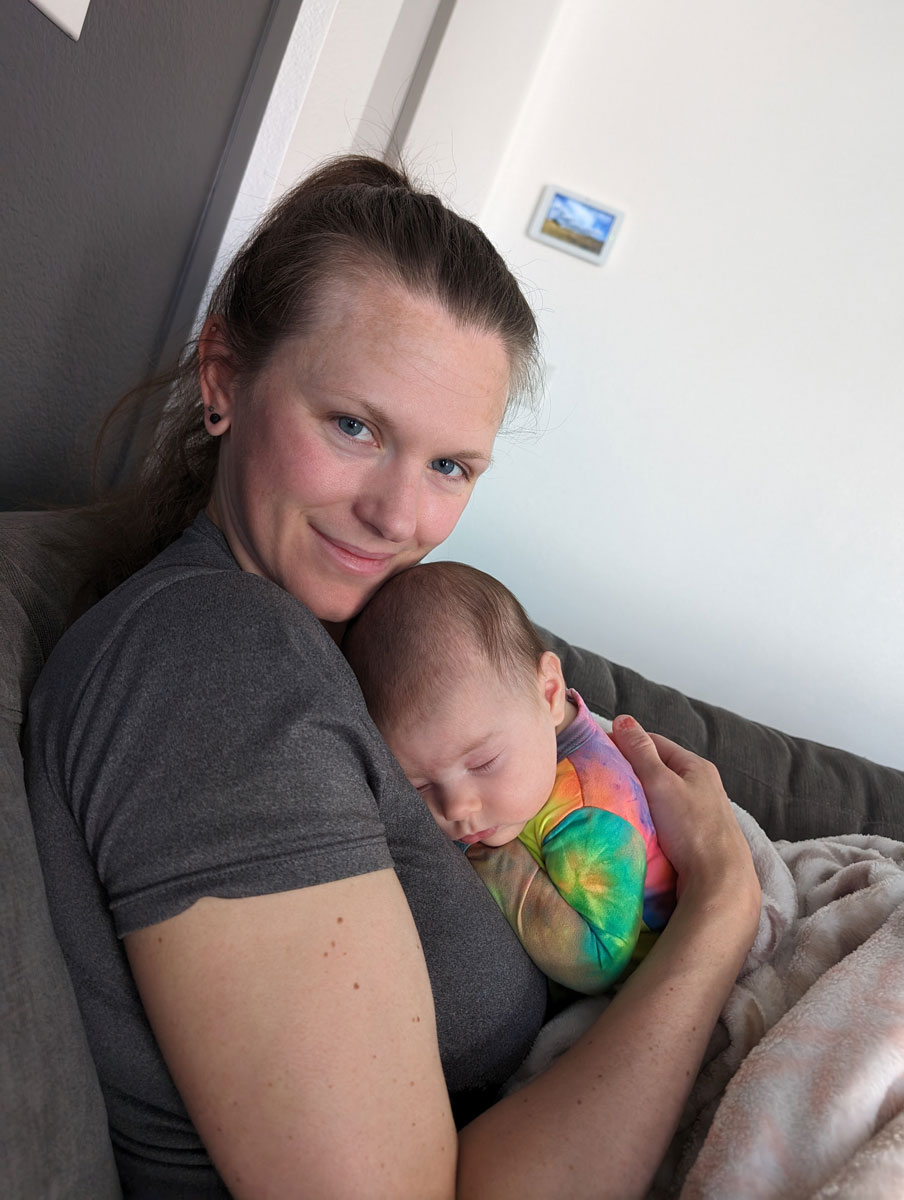
Rebecca Vincen-BrownRebecca Vincen-Brown and baby (Courtesy of Rebecca Vincen-Brown)But she couldn’t choose to do that in her hometown or anywhere else in Idaho, where the Republican Party is dominant and state legislators had passed one of the most restrictive abortion laws anywhere in the country.

*  *  *

In June 2022, a few months before Vincen-Brown’s second pregnancy, the U.S. Supreme Court issued the now-famous decision in a case called Dobbs v. Jackson Women’s Health, which overturned the constitutional right to abortion care established nearly 50 years earlier by Roe v. Wade. After Dobbs, all states and U.S. territories could set their own laws about whether abortion would be legal and, if so, under what circumstances. 

Even the exceptions in Idaho's abortion law had to be “proven by a preponderance of the evidence” showing that physicians had provided “the best opportunity for the unborn child to survive.”

Well before that, some anti-choice Republican officials had prepared for the possible overturn of Roe by passing “trigger laws,” meaning severe restrictions or outright abortion bans that would go into effect as soon as such a decision occurred. On March 24, 2020, Idaho Gov. Brad Little — a Republican, like every other statewide elected official — had signed S1385, which made it a crime to conduct all abortions except in cases of documented rape or incest, or in order to prevent the mother's death. Even those exceptions had to be “proven by a preponderance of the evidence” showing that physicians had provided “the best opportunity for the unborn child to survive” in their “good faith medical judgment.” Any doctor who violated the law could face up to five years in prison and lose their medical license. 

Just before the Dobbs ruling, Idaho passed a second law that overlaps with the “trigger law” in confusing fashion. It prohibits all abortions after six weeks of gestation and allows for lawsuits against medical professionals who provide abortion services, or are suspected of doing so. It even encourages neighbors and community members to monitor pregnant people in their communities. Both laws were in effect by the time Vincen-Brown found out she was pregnant again.

After many sleepless nights and conversations with her doctors, Vincen-Brown and her husband decided they would travel to another state and terminate the pregnancy. The risks to her health, including possible miscarriage and hemorrhage, preeclampsia and the possibility of endangering future pregnancies, were just too high, they concluded.

“It was not a knee-jerk reaction, it was not a knee-jerk decision,” she said. “It was not a birth control decision. It was based on many tests.” 

*  *  *

Vincen-Brown’s traumatic odyssey was nowhere near over, as it turned out. Largely because of what happened next, she would later become one of several plaintiffs in a case called Adkins v. Idaho, which seeks clarification of the limited exceptions to the state's abortion laws, as well as clearer language that physicians can apply in emergency situations. Among other things, the plaintiffs are demanding that Idaho’s exceptions to its near-total abortion ban be expanded to include fatal fetal anomalies, so that no pregnant person is forced to face the discouraging options that confronted Vincen-Brown.


Want more health and science stories in your inbox? Subscribe to Salon's weekly newsletter Lab Notes.


According to Marc Hearron, senior counsel for U.S. litigation at the Center for Reproductive Rights, which filed the lawsuit, Idaho’s two laws restricting abortion “have conflicting language with different standards” and fail to use standard “medical terminology.” Hearron and his team are asking for a change to the legal language of the laws that would allow physicians to provide abortion care when a pregnant person has “a medical condition or complication of pregnancy,” such as a risk of infection or bleeding, that poses a severe risk to herself, the fetus or both, or when “the fetus is unlikely to survive the pregnancy and sustain life after birth.”

Although the incidence of birth defects has steadily declined since the 1970s, an estimated 2 percent of pregnancies are diagnosed with a congenital anomaly each year in the U.S. But according to KFF, 13 of the 20 states that have restrictive abortion laws or early gestational limits in effect make no exceptions for fatal fetal anomalies.

This means that many women who find themselves in the already devastating situation of having a nonviable pregnancy must either be forced to stay home and carry a nonviable pregnancy to term or travel out of state to terminate. For those who do have the resources to travel — like Vincen-Brown, or Kate Cox, a woman from Dallas who made national headlines — things don’t necessarily get less difficult when they cross state lines.

*  *  *

After several rounds of phone calls to abortion providers in neighboring states, Vincen-Brown and her husband secured an appointment several days later at a clinic in Portland, Oregon, more than 400 miles away. Her husband took time off work and they loaded up the car. Since they had no reliable child care they brought along their two-year-old daughter, who was going through potty training at the time. They tried to make the journey seem like a “normal road trip,” Vincen-Brown said, offering their daughter “lots of bribery snacks” and occasionally stopping at a park or playground to let her play on the swings. 

“We didn't want to be targeted, we didn't want to put our family at risk of any negative effects. We just didn't tell anybody what really happened, except for a few friends."

After seven hours on the road, they checked into their hotel in Portland. The next day, Vincen-Brown went to the clinic, where a physician dilated her cervix, the first stage of a normal abortion procedure. She went back to the hotel to rest, expecting to return the following day for the second part of the procedure, when the uterus is emptied. 

But when Vincen-Brown tried to fall asleep that night, she started having painful cramps that kept getting worse, and became labor contractions by midnight. The on-call doctor at the abortion clinic told her that “cramping was normal,” she said. But she had experienced labor before, and understood what was happening. 

“It just kept persisting, 30 seconds apart, 30 seconds apart, and the whole time I'm thinking to myself, I need to hold out until 8 a.m.,” when the clinic would open, she said. Around 3 o’clock in the morning, her contractions began to slow down, but the pain was exponentially worse, “the kind where you can't walk or stand up during them.” All this time, Vincen-Brown and her husband were trying not to wake their daughter, who was asleep across the room in a portable crib. 

They called the clinic’s doctor one more time. He said he could come to their hotel room if necessary, but told Vincen-Brown to keep “hanging on.” She knew she needed urgent medical care, but their car was four blocks away in a valet parking lot. She didn’t want to call 911, since her out-of-state medical insurance wouldn’t cover the cost of an ambulance and an emergency-room visit. 

Rebecca Vincen-BrownRebecca Vincen-Brown (Courtesy of Rebecca Vincen-Brown)

After that second phone call, Vincen-Brown had a miscarriage on the bathroom floor, at around 4 a.m. Her husband gave her a fundal massage in the shower, trying to control the potentially dangerous bleeding and painful cramping. The miscarried fetus lay on the bathroom floor for another four hours, until someone from the clinic finally arrived. 

“We were just whispering, trying to be quiet, and my husband's taking phone calls in the hallway,” Vincen-Brown said. “Nothing about it was right. It was actually quite barbaric.”

The next day she went back to the clinic to finish the procedure, and then Vincen-Brown, her husband and their daughter — who had no idea what had just happened — drove another seven hours back to Idaho. Along with the shock, grief and physical and emotional trauma, she and her husband spent about $5,000 out of pocket for travel costs and the abortion procedure itself. She estimates she put 900 miles on her car.

We need your help to stay independent

Looking back on this nightmarish experience, Vincen-Brown draws what many would consider a logical conclusion: All of it could have been avoided if she had access to appropriate care in Idaho. “A lot of unnecessary complications happened that could have been foregone if we stayed home,” she said.

After Vincen-Brown and her husband first got home, they didn’t tell anybody they knew what happened. Their story was partly true: She’d had a miscarriage, and later testing determined that the fetus had a fatal anomaly. 

Their semi-rural community on the southern edge of the Boise metro area, Vincen-Brown said, is “very loud” on the abortion issue. “We didn't want to be targeted, we didn't want to put our family at risk of any negative effects. We just didn't tell anybody what really happened, except for a few friends. We didn't want the judgment either.”

*  *  *

Jillaine St. Michel, 38, lives a few miles away from Vincen-Brown, in the same Idaho county, and became pregnant just a few months earlier. In July of 2022, she texted her husband that she had “very exciting” news. He knew what that meant: They, too, were having a second child and were elated about it. At first, everything went smoothly. At a first-trimester screening, St. Michel found out she was having another girl. At around 16 weeks of pregnancy, she announced the news on social media. When she went in for her 20-week anatomy scan, she told her husband she felt confident going alone.

St. Michel is a chiropractor who understands anatomy, and noticed during the sonogram, she said, that the fetus’ arms did not look quite right. The sonographer disappeared to talk to a specialist in the next room — and was gone for 20 minutes. Eventually, the doctor returned with a genetic counselor.

“My heart dropped,” she told Salon. “I knew something was not OK.” The doctor suggested that St. Michel call her husband, Brandon St. Michel, saying, “We've seen some really severe stuff that we want to go over with you.”

By the time her husband arrived 20 minutes later, St. Michel was in tears. The doctor told them the fetus had severe genetic and developmental conditions that impacted multiple organ systems. Because of a “caudal regression sequence,” the lower spine had not formed properly, nor had the bones of one leg. The fetus also had a cystic hygroma, a form of benign tumor that creates a high risk of miscarriage. Her pregnancy was unlikely to reach full term, the doctors said, and the infant would not survive past birth.

Doctors even asked St. Michel, she said, whether she had been exposed to toxic chemicals, because the complications of this pregnancy were so unusual. 

St. Michel and her husband asked for help finding abortion services. The only thing the doctor could do was to hand them “a sheet of paper with a list of clinics in other states.”

She too confronted a range of options, none of them promising: St. Michel could seek additional imaging or consult a specialist. She could arrange “palliative care” for the fetus, aimed at reducing the suffering of a birth process that would likely also bring death. Some people in her situation, the doctor said, would choose to terminate the pregnancy.

St. Michel and her husband had never had that conversation, they said, but at that moment they both felt sure that the last option was right for their family.

They asked for help finding abortion services and the only thing the doctor could do was to hand St. Michel “a sheet of paper with a list of clinics in other states.” The doctor told her, “I don't even know how updated this is, the laws are changing so rapidly in other places. This is the best we can do here, because it’s illegal in our state.”

*  *  *

Dr. Julie Lyons, a family physician who is chief of staff of St. Luke’s Wood River Medical Center in Hailey, Idaho, is another plaintiff in the case against the state. She’s familiar with those sheets of paper. It feels like physicians “are being gagged” and their “hands are being tied” when it comes to helping the patients get the resources they need, she said. 

The summer of 2023 was “especially horrific” in Idaho, Lyons said. State Attorney General Raúl Labrador — a far-right Republican and staunch supporter of Donald Trump — wrote a letter suggesting that sending a patient out of state for treatment could be considered “aiding and abetting” and could put a doctor’s medical license at risk. That sent “shock waves” through Idaho’s medical community, she said. (Salon repeatedly contacted Labrador’s office and received no response).

“I have had several patients who have had to leave the state since the abortion laws have been passed, for fatal fetal diagnoses,” Lyons said. She recalled one patient who spent three hours making phone calls to clinics, and ultimately spent more than $1,000 on airfare and travel. 

“It is a very big, traumatic grieving process for the patient, as well as the physician delivering the news,” Lyons said, and Idaho’s laws have introduced unnecessary extra steps, in terms of “advocacy to ensure that our patient gets the health care they need and deserve.” Idaho’s laws, she suggested, make women who face these painful situations feel stigmatized: “It takes away the ability to grieve publicly.”

Working from their sheet of paper, St. Michel and her husband found several non-working phone numbers for clinics that had shut down. Among those still open, most had lengthy waiting lists. 

After two days of increasingly frantic calls, they connected with a clinic in Seattle that had an unexpected opening. They scrambled to buy three last-minute plane tickets and three nights in a hotel. Like Vincen-Brown, they had no choice but to bring their older daughter along.
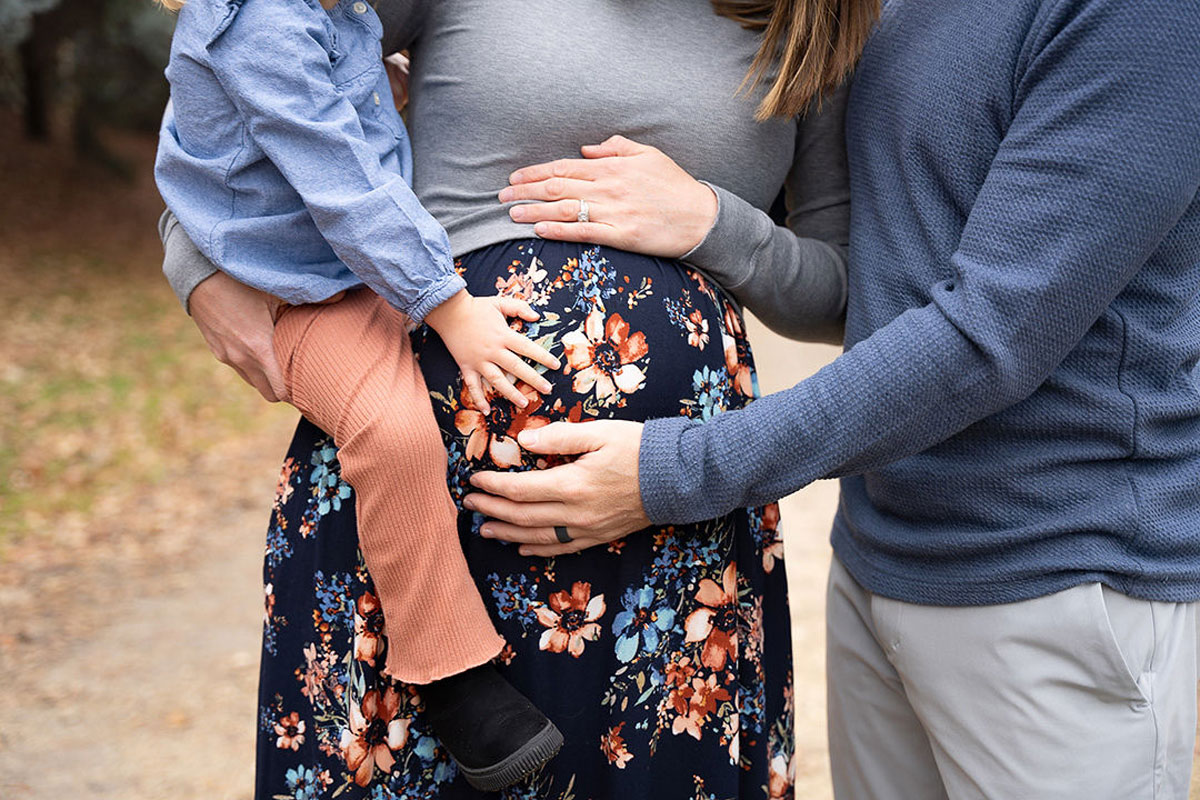
Jillaine St. MichelJillaine St. Michel and family (Courtesy of Jillaine St. Michel)

At the Seattle clinic, St. Michel went to her appointment for dilation and evacuation, or D&E, alone. “I had to say goodbye to this extremely wanted child by myself,” she said. “That was taken away from my husband, which should have never happened.”

Within a few weeks, the sadness had given way to anger. “I started to get really, really angry about how things went down,” she said. “The more I thought about it, and after my grief settled a bit, I realized that was not OK.” 

*  *  * 

It’s reasonable to wonder about the alternative case: What is likely to happen when a pregnant woman carries a nonviable pregnancy to term? In terms of physical risk to the mother, there is no single straightforward answer: It depends on the circumstances, medical experts told Salon, especially the nature of the fetal anomalies, the mother’s previous health history and her previous pregnancies, if any. That makes it difficult for providers in states like Idaho to terminate a pregnancy under the “life of the mother” exception often written into abortion laws. 

“I had to say goodbye to this extremely wanted child by myself. That was taken away from my husband, which should have never happened.”

Providing obstetrical care to a pregnant patient carrying a fetus with severe fetal anomalies is “very nuanced,” Lyons said. “Each patient does have their own individual risk. We can't always assess when or how, and that's what's so frustrating about these laws: They don't allow doctors the autonomy that we need to provide nuanced care.”

Dr. Maria Phillis, a maternal fetal medicine specialist, told Salon that continuing with a pregnancy under such circumstances is nearly always riskier than termination. 

To some extent, she said, it’s a simple equation: “If you think about benefit versus risk, pregnancy is always more dangerous than not being pregnant.” Indeed, in a 2012 researchers study published in the journal Obstetrics & Gynecology, researchers concluded that the risk of dying in childbirth was “approximately 14 times higher than that with abortion.”

Many people confronted with likely fatal fetal anomalies would conclude, Phillis said, that “the risks that I would be willing to undergo to my own health and life to obtain a healthy pregnancy are not worthwhile in this situation.” But there’s no right or wrong answer, she said, in either moral or medical terms: “Every patient is a different person, and they have different thoughts about what they want to do. The key is to provide options.”

*  *  *

Caitlin Silverstein is very familiar with women who face the trauma of “no good choice.” She’s a licensed social worker and therapist in New York who specializes in perinatal loss, including stillbirths, miscarriages and terminations performed for medical reasons. Much of her work, when supporting pregnant women going through the decision to terminate a nonviable pregnancy, is to validate that trauma, she says. 

For the patient, that process involves “multilayered grief,” Silverstein said, which begins with hearing a dire diagnosis. Follow-up tests may offer some hope, but when the outcomes are unfavorable that can lead to deeper feelings of loss and grief. When a woman chooses to terminate the pregnancy, Silverstein tries to help her manage the depression, anxiety and shame that can come along with that decision. The current landscape of ever tighter legal restrictions on abortion care, she believes, only makes the emotional and psychological effects worse. 

A pregnant person may be thinking that “the government doesn't think that this is good for me to do, I shouldn't be doing this — but I don't want this future for my child,” she said. No parent wants a child to lead a life of pain and suffering, and through that lens many may conclude that termination is the most compassionate option. Women who feel that choice being taken away, Silverstein said, are at risk of “hopelessness,” a principal component of depression. “You're going to feel trapped, you’re going to feel hopeless, isolated, stigmatized, already more than you already would be,” she said. “Regardless of what choices they had to make for whatever reason,” women facing this situation “have lost a child. They are grieving mothers."

For Jillaine St. Michel, being open about what happened led to the realization that she was not alone, and that many other women have faced similar situations. 

“Regardless of what choices they had to make for whatever reason,” women facing this situation “have lost a child. They are grieving mothers."

“I had people from work that I'm not even that close with, that I would have never expected would even approach me, tell me how proud they are of me,” she said. Several told her they had daughters of their own and were glad “that somebody is speaking up.” 

That made her wonder where restrictive abortion laws like Idaho’s were coming from, and why legislators in her state and many others were passing them. 

“Who is part of this? It's a very small minority of people,” St. Michel said. “So why is this happening? It's very, very confusing.” 

A report published in January 2024 by Boise State University’s Idaho Policy Institute found that only 33 percent of those surveyed in Idaho — by any standard, one of the most conservative states in the country — supported keeping the current abortion laws intact, while 58 percent supported changing them. Within that second cohort, 24 percent wanted to expand the law’s exceptions to allow termination in the case of a nonviable pregnancy, while the other 34 percent favored either no restrictions at all or unrestricted access until 22 or 24 weeks of pregnancy. Nationwide, according to Pew Research Center, 63 percent of Americans say abortion should be legal in all or most cases. 

*  *  *

In January 2023, the Idaho Supreme Court took up a case arguing that the state’s abortion laws violated the state constitution, which contains language about fundamental privacy rights and the right to make family decisions. But the justices upheld Idaho’s abortion ban by a 3-2 vote, writing in the majority opinion that they “cannot read a fundamental right to abortion into the text of the Idaho Constitution.” 

The current case, Adkins v. Idaho, rests on a similar argument that the laws violate the state constitution, but Hearron says his legal team is demanding the “bare minimum” in asking the state to expand and clarify exceptions to current law. “The risk of death does not have to be imminent or extremely high in order for that right to access abortion care to exist,” he said. “We're not asking here for all of the abortion bans to be stricken down in their entirety.”

Jillaine St. MichelJillaine St. Michel (Courtesy of Jillaine St. Michel)

More recently, the Texas Supreme Court rejected a challenge to that state’s restrictive abortion laws. Plaintiffs in that case were women who’d had serious pregnancy complications. One of them, Amanda Zurawski, spent days in intensive care with sepsis after being denied an abortion when her water broke at 18 weeks. Similar lawsuits have been filed in Tennessee and North Dakota.

Personal stories, like those of Vincen-Brown and St. Michel, will serve to illustrate the “harm” done to Idaho citizens, Hearron said. “We’re going to ask the court to alleviate that harm and vindicate constitutional rights.” A trial is scheduled for November.

Meanwhile, pregnant women in Idaho, as in many other states, continue to struggle with the consequences of these laws. 

Vincen-Brown and St. Michel both got pregnant for a third time after their traumatic terminations. There’s good news: Both women delivered healthy babies in the end. But their journeys to that destination were clouded with fear and anxiety, they say. 

“We couldn't go through this feeling blissful,” St. Michel said. “It was always like: What if?”

Vincen-Brown said that this time around she never stepped into the nursery until after she had a full anatomy scan. She kept the door to that room closed.

“We didn’t tell people about it. We didn't get excited and jovial, like you would when you’re pregnant, because of the fear of it happening again.” Her entire third pregnancy, she said, had been “tainted.”

Supreme Court’s Civil War callback: Justice is denied with historic Trump delay

As important as Donald Trump’s conviction in Manhattan for corrupting the 2016 election is, justice demands that Trump be brought to trial in the most important of the three remaining cases against him: the federal indictment charging him with conspiracy to interfere with the lawful transfer of power after the last presidential election, culminating in the Jan. 6, 2021 attacks on the Capitol. But with only a few weeks left before Trump becomes the Republican presidential nominee, his trial for attempting to block Joe Biden’s 2020 election remains stalled due to the nation’s highest court.   

Sadly, history is repeating, or at least rhyming. It happened once before that the Supreme Court’s fingerprints, or at least those of one justice, were on the denial of justice in a case involving the leader of a failed attempt to overthrow our constitutional order. If Trump is not tried for his conduct leading up to the Jan. 6 attacks, there will be empty pages in American history books to rival the absence of any trial of Jefferson Davis for treason against the U.S.  

It is remarkable that neither Davis, the president of the Confederacy, nor any other Confederate was ever tried for a secession and Civil War that took 700,000 lives – more American lives lost than lost in all other American wars combined. The Union side lost some 335,000

While memories of that carnage were still raw, in May 1866 a federal grand jury sitting in Virginia indicted Davis on charges of treason. Delays then set in and a new federal jury again indicted Davis for treason in March of 1868. Six of the 18 grand jurors were Black, the first time Black people had ever been allowed to serve on a grand jury in the South.  

But on February 15, 1869, the prosecution walked into a Richmond, Virginia court and asked to have all charges against Davis and other leading Confederates dismissed. Instead of a jury verdict, all our history books record are the words “nolle prosequi,” for abandonment of the case. This left Henry Wirz, commandant of the dread Andersonville prison, as the only Confederate found guilty (and hanged) — and it was for war crimes in the treatment of prisoners, not for treason itself.

We need your help to stay independent

Of note, one Supreme Court justice helped to stymie the trial of Davis, just as some current justices today appear poised to delay or delete the federal election interference trial of Trump. At the time of Davis’s indictment, Chief Justice Salmon Chase was also assigned as the Circuit Judge for the federal district of Virginia and thus would have co-presided over Davis’s trial. The chief justice was also trying to secure the Democratic nomination for president at the same time. 

While novel legal issues needed to be resolved before Davis could be brought to trial, the case fell apart for reasons of politics rather than law.  Chase appears to have held private consultations with Davis’s legal team, a clear legal violation. Historian Robert Icenhauer-Ramirez quotes Chase writing to his friend Horace Greeley that “I desire to avoid all causes of irritation and controversy” and a treason trial of Davis could not be held “without irritation or controversy.” Icenhauer-Ramirez’s 2019 book concludes that the “political ambitions of Salmon Chase motivated him to have nothing to do with allowing Davis to be brought to trial.”  

Like Davis, Trump was indicted by a federal grand jury. The indictment was issued on August 1, 2023, and alleged Trump’s unlawful attempts to disrupt the official congressional count of electoral votes on Jan. 6.  

Although the trial was scheduled to begin on March 4 of this year, thanks to delays from the Supreme Court, it is now unlikely to start in time to reach a verdict before voters must decide the November presidential election. We are witnesses to historic justice delayed becoming justice denied.

Just as Chief Justice Chase helped delay and kill off any trial of Davis, the current Supreme Court is coming to Trump’s rescue.  It is not just Justice Samuel Alito and his two different Alito family homes that flew two different flags symbolizing support for the Jan. 6 attacks (it was my wife not me, he lamely defends). It is that a majority of the court appears to take seriously Trump’s claim that a former president enjoys nearly absolute immunity from criminal prosecution for his conduct in office. This claim has no basis in the Constitution’s text and flies in the face of the most basic of constitutional principles – that no one is above the law.  


Want a daily wrap-up of all the news and commentary Salon has to offer? Subscribe to our morning newsletter, Crash Course.


Both presiding trial judge Tanya Chutkan and a panel of appellate judges rejected Trump’s claim of immunity with dispatch. But the Supreme Court declined to accept special counsel Jack Smith’s December request to accept the case, waiting until February to hear Trump’s appeal. The court then took its time scheduling the case for oral argument, finally heard argument on April 25, and has yet to issue a decision. The justices have nearly doubled the 25 days it took them to overturn the Colorado Supreme Court’s decision applying the 14th Amendment to keep Trump off the state’s ballot for being an insurrectionist. 

This delay already gives Trump a victory because the clock is running out on trying his January 6 case to a verdict before the election. If he wins in November, he will have the Justice Department dismiss the case outright. If he loses, we will see what kind of limited criminal prosecution of a former president the Supreme Court’s pending immunity decision will allow.

The absence from the annals of American law of a trial of Jefferson Davis or any other Confederate leader for treason means we are a nation with a haunting hole in our historical record. The Court appears to be making the same mistake twice, now by failing to bring to trial before November the only president who threatened to stay in power after losing an election. We, the people, deserve to know before casting our ballots whether a jury of his peers finds Trump innocent of 2020 election interference, or whether we might be re-electing a man who is guilty as charged of conspiring to obstruct the lawful transition of power in January 2021.

Trump says he’ll work “side by side” with religious group that wants to “eradicate” abortion

Donald Trump said he’ll work “side-by-side” with a newly formed religious group that wants to ban abortion if he is re-elected in November.

At its inaugural Life and Liberty Conference in Indiana on Monday, the group, dubbed The Danbury Institute, played a two-minute recording of Trump saying he will work with it to defend the values of “religious liberty, free speech, innocent life,” though he avoided using the word abortion, The Oregonian reported.

The Danbury Institute is an association of churches and organizations that says abortion is “the greatest atrocity facing the United States.” The Life and Liberty conference was held in conjunction with the annual meeting of the Southern Baptist Convention.

On its website, the Danbury Institute says the organization stands “for life from conception to natural death.” It advocates for “every person’s rights to be respected from the moment of conception, meaning that each pre-born baby would be treated with the same protection under the law as born people.”

“These are going to be your years because you’re going to make a comeback like just about no other group,” Trump told attendees in the recording. “I know what’s happening. I know where you’re coming from and where you’re going. And I’ll be with you side by side.”

He then urged The Danbury Institute and members of the church to vote for him in November.

“You just can’t vote Democrat. They’re against religion. They’re against your religion in particular,” Trump said.

Democrats have already criticized Trump’s connections to the group. 

“Four more years of Donald Trump means empowering organizations like The Danbury Institute who want to ban abortion nationally and punish women who have abortions,” Sarafine Chitika, a spokesperson for Biden’s campaign told the Associated Press. “Trump brags that he is responsible for overturning Roe, he thinks the extreme state bans happening now because of him are ‘working very brilliantly,’ and if he’s given the chance, he will sign a national abortion ban. These are the stakes this November.”


“That is not justice”: Missouri sets execution date for a man who even prosecutors say is innocent

The Missouri Supreme Court has set an execution date — September 24th at 6 p.m. —  for defendant Marcellus “Khaliifah” Williams, despite prosecutors insisting that he is completely innocent.

It is not the first time the 55-year-old has faced execution. On two separate occasions, Williams' execution was halted to conduct further investigation and DNA testing. The results, including DNA on the murder weapon, show no connection between him and the crime.

And now it seems the state’s Republican governor is refusing to free a man who prosecutors say is innocent, setting the stage for him to be put to death for a crime he does not appear to have committed.

On August 22nd, 2017, hours before his scheduled execution, former Missouri Gov. Eric Greitens enacted a stay and ordered a board of inquiry to look into Williams' case. Last June, the new Gov. Mike Parson lifted the stay and dissolved the board, claiming that another six-year delay would defer justice and leave the victim’s family in “limbo.”

He ignored the findings from the report created by the five-member board put in place by Greitens. “This board was established nearly six years ago, and it is time to move forward,” he said.

That decision came despite evidence that Williams never should have been convicted based on the claims of a jailhouse informant and an ex-girlfriend who was herself seeking to avoid prison time. No physical evidence was ever presented that linked Williams to the crime.

In a court filing earlier this year, the office of St. Louis County Prosecuting Attorney Wesley Bell said that there was no way that Williams was in fact the killer. According to the filing, three DNA experts "each has independently concluded that Mr. Williams is excluded as the source of the male DNA on the handle of the murder weapon.”

Williams, who has always maintained his innocence, was originally convicted in 1998 after being accused of breaking into the home of Lisha Gayle, a social worker and one-time St. Louis Post-Dispatch reporter. Prosecutors at the time alleged that Williams heard the shower running, found a butcher knife, and stabbed Gayle 43 times when she came downstairs, NBC affiliate KSDK reported

Critics say the state's top Republicans, including Attorney General Andrew Bailey, are ignoring all the evidence that has since come forward and are preparing to execute an innocent man.

“To date, no court has ever reviewed the DNA evidence proving Mr. Williams was not the individual who wielded the murder weapon and committed this crime,” said Tricia Bushnell, the executive director of the Midwest Innocence Project, The Kansas City Star reported. “Yet, the State successfully sought an execution date, highlighting the system’s emphasis on finality over innocence. That is not justice."

The court’s decision to schedule the execution is “alarming,” Williams' legal team said in a statement. But the decision does note that he can be spared death if the governor intervenes, as Parson enjoys “absolute discretion to grant clemency relief.”

Heat waves are making restaurant kitchens unsafe. Workers are fighting back

Last month, Oscar Hernández couldn't sleep. The cook, who worked at a restaurant located inside of a Las Vegas casino, had found that after coming home from his shifts, his body would not properly cool down. 

The air conditioning at work had been broken for about four months. Hernández worked eight-hour shifts during the restaurant's brunch service, whipping up eggs, waffles, and fried chicken. He spent hours in front of a scaldingly hot grill — an older model that only ran at extremely high temperatures. Most often, his station on the line was in a corner, and it seemed as if all of the other heat sources in the kitchen — the gas burners, the four deep-fryers, the waffle iron — converged right there. Summer had not officially started, but Las Vegas was already seeing above-normal temperatures in May, sometimes reaching triple digits. The fans that the owners put in the kitchen were not strong enough to cool down the space.  

Extreme heat is nothing new to Hernández, who lives in Nevada and has worked in the restaurant industry for 22 years. But the situation at this non-union restaurant, a rarity on the Las Vegas strip, was becoming untenable. Sometimes it got so hot in the kitchen that Hernández preferred the heat outside, where at least there was a breeze. He had a headache that would not go away, and at home he sometimes found himself getting irritated with his children over small things. 

"The heat inside a restaurant is different — it gets into your body," Hernández said in an interview in Spanish. He knew doctors recommend getting adequate rest to help recover from overheating, but now he could not do even that. So he quit. 

"I'm the only one who works in my family," he said. "So I decided that I'd rather look for another job, one where I can work comfortably and then hopefully, I'll be able to get some sleep." He has since found a job at a different restaurant.

Stories of working under heat stress are common in the restaurant and food service industry, where back-of-house workers stationed "on the line" must stay on their feet for hours, cooking and prepping next to hot stoves, ovens, fryers, and more. But increasingly, this workforce must contend with an additional source of heat exposure: the record-breaking summer temperatures and heat waves taking place outside the kitchen. The confluence of indoor and outdoor heat has inspired some workers to unionize and fight for stronger safeguards at work. Employees at a Seattle-based sandwich chain recently secured historic protections against extreme heat in their first union contract. Labor organizers say they expect more food service workers to organize and bargain around heat in the years to come. 

Of all the climate issues that workers are facing on the job, "heat, I would say, is one of the most common right now," said Yana Kalmyka, a volunteer organizer for the Emergency Workplace Organizing Committee, a grassroots effort started out of the pandemic to support worker organizing. 

Scientists now largely agree that all heat waves are made more likely or stronger because of climate change. That's thanks to a relatively new but growing field called attribution science, which allows researchers to determine how much more likely extreme weather events are made by global warming. A report published last month found that in the last year, human-caused climate change led to a global average of 26 additional days of extreme heat

Food workers have long been on the front line of worsening global temperatures. Farmworkers in the U.S. are necessarily exposed to the elements, but lack federal regulations around heat exposure and safety. Delivery workers must also travel through extreme heat (and other weather events) to earn a living, and may not have adequate places of rest throughout the day. 

Similarly, restaurant cooks and servers can often be subject to extremely high indoor temperatures — and depending on their workplace setup, outdoor temperatures can exacerbate that heat stress. The nature of restaurant work — where quick service is key and kitchens stay open even during global pandemics — means that workers are expected to show up for shifts even during historic heat, when their safety and that of their customers might be compromised.

Jason Flynn, a Chicago line cook who has worked in restaurants for many years, said that the fast-paced, high-pressure nature of commercial kitchens, where workplace injuries are often simply toughed out, means workers may feel as if working through excessive heat exposure is their only option. The result of that, he said, is that "people are going to pass out, have strokes, or other kinds of long-term heat-related issues, like blood pressure and heart problems." 

Women and people of color are disproportionately represented in certain restaurant roles. For example, Hispanic people are more likely to be staffed as dishwashers or cooks, according to an Economic Policy Institute report. Many are immigrants or undocumented, and may fear retaliation or losing work for speaking out about working conditions. These are "populations who already experienced heightened impacts of climate injustice at home in their community," said Kalmyka. "And their growing exposure to extreme heat at work is just another dimension of how inequitable the impacts of the climate crisis are." 

There are a few ways that outdoor heat exacerbates indoor heat for restaurant workers. Tall windows in restaurants and cafes can let in a lot of heat on sunny days — as is the case at multiple locations of Homegrown, the Seattle-based sandwich chain that recently won heat protections after unionizing.

Some Homegrown locations, according to workers, are in older buildings that lack adequate climate control. Most are set up for counter service, meaning the workers take orders in the same area where they toast and prepare sandwiches. "We're in this big old brick building," said Zane Smith, a worker-organizer at Homegrown. "And we don't have very good air conditioning, and we have an oven. So the whole building becomes this big brick oven."

Smith, a Seattle native, said heat was one of the main issues workers were rallying around when they first started talking about forming a union. Despite working indoors, Homegrown workers say they have been feeling the impact of Seattle's record-topping summer heat. The city, which has historically lacked air conditioning, faced record-shattering heat in 2021, with temperatures as high as 108 degrees F sending many to the hospital with heat-related illnesses. Attribution scientists said the unprecedented heat wave was made at least 150 times more likely by human-induced climate change. 

"It's always hotter inside than it is outside," said Smith. "Every time it's 80 degrees outside, it's 85 in the store; when it's 90, it's 95 in the store."

In what is likely an industry first, the workers at Homegrown won language in their union contract in March that could help with that. The workers fought for a clause that allows them to receive time-and-a-half pay when temperatures in the store reach 82 degrees Fahrenheit and double pay when store temperatures reach 86 degrees F. (According to the Occupational Safety and Health Administration, when a workplace reaches 77 degrees F, it becomes potentially unsafe for workers to engage in "strenuous work.") 

Emily Minkus, who has worked for Homegrown for nearly six years, said her colleagues shared stories about working through heat stress and illness during bargaining sessions with management. 

"We have people who have passed out. We have people who have had asthma attacks," said Minkus. "We have locations where people were taking breaks in walk-in" freezers. 

She credits these testimonials with convincing management that workers were asking for heat pay not because "ideologically, it's good for the world. We're doing it because we need it."

Homegrown workers unionized with Unite Here Local 8, which represents about ​​4,000 hospitality workers in Oregon and Washington state. Anita Seth, the president of Unite Here Local 8, said the goal of the Homegrown heat pay language is to "really incentivize the employer to update and improve their heat mitigation systems," which could include repairing and maintaining AC but also installing shade coverings for windows. It seems to be working — Minkus reported that when the AC broke down at her store this spring, she and her colleagues received heat pay for three days straight. The following week, a technician arrived to repair the equipment.

Homegrown's management didn't reply to Grist's request for comment.

Homegrown isn't the only food chain where heat and faulty cooling systems have become a labor issue. Last summer, workers at a Starbucks located in Houston, Texas, went on strike over extreme heat in their store. 

"We did not have a functioning air conditioner last summer, and we were forced to work in temperatures between 80 and 85 degrees," Madelyne Austin, a Starbucks barista organizing with Starbucks Workers United, said in a statement. "Our managers had known the air conditioner wasn't working correctly for months, but refused to listen to us when we begged them to fix it." 

The Starbucks union is currently bargaining with the coffee chain over a "foundational framework" that will help shape contracts at the store level. Austin said that workers are fighting for "universal safety standards" to mitigate extreme heat. 

In response to a request for comment, Starbucks said the company is committed to ensuring worker and customer safety and routined review conditions in stores. "Where issues in store jeopardize the well-being of our partners," the company said in a statement, "we have been working with deep care and urgency to take action." (Starbucks refers to all employees as "partners.")

The Starbucks story demonstrates how sometimes the quickest way restaurant workers can secure their own safety during a climate emergency is to shut down. Starbucks Workers United confirmed that after the Houston store employees walked out, their AC was repaired. 

Homegrown workers also understand this well. In addition to their heat pay language, they won a clause in their contract that allows them to clock out due to extreme heat in their store without facing disciplinary action. Minkus and Smith say workers have already been taking advantage of this provision, and that staff members are prepared to simply close up for the day if it ever gets too hot.

Minkus called working in 88-degree heat next to a 600-degree oven "miserable." "And so a lot of workers are leaving early. We had one location shut down early because everybody was just so, so hot." 

Smith says that when Homegrown workers first approached the bargaining table, they were fighting for better air conditioning. "That's still what we want," he added. "Heat pay is great, but we would actually like the workplace to be a reasonable, safe temperature year round." Until then, workers at Homegrown know they'll be paid extra for working through the heat; Smith says that since the contract went into effect in March, his store has received 10 or 15 days of heat pay.

Seth notes that extreme heat is increasingly impacting workers across industries, most immediately outdoor workers, and that heat has come up in other food service contract negotiations. For Kalmyka, the connection between climate change and labor organizing takes on even greater urgency when considering productivity demands on workers. "Across the service industry and many other industries, we see employers continually trying to squeeze their workers to produce more for less," she said, adding that "as a result, workers are often forced to work more and faster under pretty dire levels of short staffing," which can exacerbate the effects of heat stress.

As the labor movement continues to be impacted by the climate crisis, organizers like Kalmyka are hoping to help workers draw connections between their struggle and the planetary one. To her, the connection between worker exploitation and human-induced climate change is clear. "Both have the same root cause, which is putting profits ahead of people and the planet."

This story has been updated.                 

This article originally appeared in Grist at https://grist.org/labor/heat-waves-are-making-restaurant-kitchens-unsafe-workers-are-fighting-back/.

Grist is a nonprofit, independent media organization dedicated to telling stories of climate solutions and a just future. Learn more at Grist.org.

"This story was originally published by Grist. Sign up for Grist's weekly newsletter here."


Chiquita found liable for paying off right-wing death squad that killed labor organizers in Colombia

Chiquita Brands International, the banana giant, has been found liable for funding a right-wing Colombian paramilitary organization, the United Self-Defense Forces of Colombia (AUC), that targeted labor organizers, and must now pay $38.8 million in damages, Al Jazeera reported

“This historic ruling marks the first time that an American jury has held a major U.S. corporation liable for complicity in serious human rights abuses in another country,” according to a press release from the plaintiff EarthRights International.

In 2007, Chiquita admitted in a sentencing agreement to paying the AUC protection money from 2001 to 2004, though company representatives insisted it was a victim of extortion. A U.S. court ordered it to pay a $25 million fine, the National Security Archive noted. No executives who authorized the payments were identified, much less prosecuted.

The six-week-long trial at a federal court in Florida included testimony from the families of victims, Colombian military officials and Chiquita executives. 

"Testifying on May 14, Evans described the '1006 summary' he created for the plaintiffs tracking ten years of Chiquita’s paramilitary payments and based exclusively on thousands of internal records produced by Chiquita in the case," the National Security Archive noted. "Evans explained how he sorted through thousands of payment request forms, security situation reports, spreadsheets, auditing documents, depositions, legal memoranda, and other documents from Chiquita’s own internal records to create the summary, which tracks over one hundred payments to the AUC, most of them funneled through 'Convivir' self-defense groups that acted as legal fronts for the paramilitaries."

The claim against Chiquita is that the company still paid the AUC nearly $2 million despite knowing that the paramilitary group was engaged in considerable violence: kidnappings, extortion, torture, forced disappearances and murder. 

The West Palm Beach trial only focused on the nine of the cases brought against Chiquita by victims of AUC violence, among hundreds. The jury found the company liable in eight of the cases presented.

"The verdict does not bring back the husbands and sons who were killed, but it sets the record straight and places accountability for funding terrorism where it belongs: at Chiquita’s doorstep," said Agnieszka Fryszman, a lawyer who represented the plaintiffs, The New York Times reported.

According to jurors, Chiquita had “failed to act as a reasonable businessperson”; the company had "knowingly provided substantial assistance to the AUC” that created “a foreseeable risk of harm to others”; and the company had failed to prove that AUC threatened it or that they had  “no reasonable alternative” to paying AUC.

Chiquita has vowed to appeal the decision.

“The situation in Colombia was tragic for so many,” the company said in a statement, per the Times. “However, that does not change our belief that there is no legal basis for these claims."

Judge rules against Florida law banning transgender medical care for young people

Parts of a Florida law banning gender-affirming healthcare for minors have been ruled unconstitutional by a federal judge.

U.S. District Judge Robert Hinkle’s wrote in an order released Tuesday that “gender identity is real” and invalidated much of a 2023 law that prohibited children from accessing puberty blockers and hormones. 

“The state of Florida can regulate as needed but cannot flatly deny transgender individuals safe and effective medical treatment — treatment with medications routinely provided to others with the state’s full approval so long as the purpose is not to support the patient’s transgender identity,” Judge Hinkle wrote in his 105-page decision.

The measure was signed into law by Republican Gov. Ron DeSantis. It prevented minors from accessing transition-related medications and required that transition-seeking adult patients meet with a doctor in person and not via telemedicine. Hinkle struck down both rules.

The plaintiffs in the case were three families whose attorneys argued the law restricted their rights as parents to make medical decisions for their transgender children and that the law was enacted out of “discrimination and animus”, Forbes reported

Hinkle agreed.

“Transgender opponents are of course free to hold their beliefs. But they are not free to discriminate against transgender individuals just for being transgender,” he wrote.

DeSantis has signed a number of other laws restricting trans rights, including bathroom usage bans and limits on which pronouns can be used in schools.

The Tampa Bay Times reported it’s likely the state will appeal Hinkle’s ruling.

Trump’s felony convictions could bar him from holding liquor licenses at his New Jersey golf courses

According to The New Jersey Division of Alcoholic Beverage Control, in order for someone to secure and maintain a liquor license, they must “have a reputable character and would be expected to operate the licensed business in a reputable manner” — which means the agency is currently left to debate whether Donald Trump’s recent felony convictions should bar him from holding liquor licenses in the state. 

As the Associated Press reported, the New Jersey attorney general’s office, of which the Division of Alcoholic Beverage Control is a part, is reviewing whether the former president’s conviction on 34 felony counts in neighboring New York should impact his ability to hold licenses at his three New Jersey golf courses. State law prohibits anyone from holding liquor licenses who has been convicted of a crime “involving moral turpitude” which “denotes a serious crime from the viewpoint of society in general and usually contains elements of dishonesty, fraud or depravity.”

This is the first time in American history that a former president has been found guilty of a crime. In a statement to the Associated Press, a representative from the New Jersey Division of Alcoholic Beverage control said the office “is reviewing the impact of President Trump’s conviction on the above referenced licenses, and declines further comment at this time.” 

Donald Trump on Taylor Swift: “She’s legitimately liberal? It’s not an act?”

The Donald Trump and Taylor Swift beef seems to have taken a new turn in a new book where the former president called the pop musician "very beautiful" for a "liberal."

In the book, “Apprentice in Wonderland: How Donald Trump and Mark Burnett Took America Through the Looking Glass" by Ramin Setoodeh, Trump was asked about his thoughts on Swift in Novembert 2023 in an excerpt reported by Variety. This was at the height of right-wing conspiracy theories surrounding Swift and her boyfriend and football player Travis Kelce colluding with President Joe Biden to steal the 2024 election.

Trump answered, “I think she’s beautiful — very beautiful! I find her very beautiful. I think she’s liberal. She probably doesn’t like Trump. I hear she’s very talented,” he said. “I think she’s very beautiful, actually — unusually beautiful!”

However, even though she is beautiful to Trump, he questioned, “She is liberal, or is that just an act?”

He repeatedly asked Setoodeh about her political affiliations, “She’s legitimately liberal? It’s not an act? It surprises me that a country star can be successful being liberal.”

The pop singer was rumored to be a Republican for years but in 2018 she endorsed two Democrats in her home state of Tennessee. In 2020, she also supported Biden's campaign. However, in this election cycle, Swift has yet to make her support for Biden clear. She told her fans to get out and vote on Super Tuesday, saying "I wanted to remind you guys to vote the people who most represent YOU into power."

Bail Project closes Atlanta office after Georgia Republicans target criminal justice reform effort

The Bail Project, a national nonprofit that helps thousands of incarcerated people get out of jail as they await trial, closed its Atlanta branch on Monday due to a new Georgia law that strictly curtails the freedom to post bail for others.

The law, Senate Bill 63, limits people and organizations from posting more than three cash bonds in a year, restricting that ability to dedicated bail companies. It also requires cash bond for an additional 30 crimes, many of which are usually considered misdemeanors, including possession of marijuana, failure to appear in court, and trespassing. The law goes into effect in July. 

For four years, The Bail Project’s Atlanta branch provided free bail assistance and pre-trial support to thousands of low-income people, the majority of whom are people of color. Nationwide, The Bail Project says it has paid $81 million to free more than 30,000 people.

“We’re deeply dismayed by Georgia’s lawmakers’ pursuit of this regressive approach to public safety, which flies in the face of evidence showing that cash bail does not enhance safety. Cash bail perpetuates a two-tiered system of justice in Georgia – one for the rich and another for everyone else,” the organization said in a statement.

Senate Bill 63 was signed into law in May by Gov. Brian Kemp, who said in his signing ceremony that the bill “ensure dangerous individuals cannot walk our streets and commit further crimes," the Associated Press reported

A number of criminal justice organizations have spoken out against the law and the American Civil Liberties Union of Georgia has threatened to sue.

Instead of passing Senate Bill 63, The Bail Project said Georgia lawmakers could have chosen to adopt “evidence-based” policies to address court delays and invested in community services to “reduce reliance on pretrial incarceration,” as other states have done. “Instead, they opted for a path that perpetuates more incarceration, racial inequity, trauma, and harm. Shame on them."

“Highly unusual”: Legal experts say Trump got special treatment at probation interview

Former President Donald Trump was allowed to attend his pre-sentencing interview Monday under “highly unusual” circumstances, appearing virtually from his residence in Mar-a-Lago with his counsel Todd Blanche present by his side, the Associated Press reported.

Defendants such as Trump, who are out not jailed, are usually required to appear alone and in person for a probation interview, lawyers told Business Insider. However, authorities insist the same accommodations are potentially available for anyone.

In New York, the pre-sentencing interviews that probation officers have with defendants and prosecutors, respectively, are conducted so that the officer can write up a report with their sentencing recommendation. Although he may use it to inform his decision, Judge Juan Merchan can ultimately use his discretion to determine the nature of Trump’s punishment.

The preemptive Republican nominee is due to be sentenced July 11 after being convicted of 34 felonies related to his falsifying business records to cover up a hush payment to adult film star Stormy Daniels. He could be sentenced to anything from probation to up to four years in prison.

Martin Horn, a former commissioner of the New York City Department of Corrections and Probation who now lectures at the John Jay College of Criminal Justice, told The Daily Beast Monday that the cushy conditions of Trump’s meeting were “highly unusual.” Having a counsel present during such a meeting can influence the way the interview goes, what the defendant says and ultimately how the report is written, he said.

Others who represent people convicted of crimes agree.

“Pre-sentencing interviews with probation officers influence sentencing, and public defenders are deprived of joining their clients for these meetings. The option of joining these interviews virtually is typically not extended to the people we represent either,” said a statement from the Legal Aid Society, Bronx Defenders, New York County Defender Services, and Neighborhood Defender Service of Harlem. “All people convicted of crimes should be allowed counsel in their probation interview, not just billionaires. This is just another example of our two-tiered system of justice."

The interview is also a chance for the defendant to express remorse for their crimes so they can earn a lighter punishment. However, Trump has vehemently denied his attempt to hide his hush money payment to Daniels right before the 2016 presidential election. In fact, his campaign exploited his lack of remorse in a fundraiser email on Monday.

“Can you believe this, Friend?” the email read. “I’m actually about to speak to a probation officer after my RIGGED CONVICTION! My only crime? Putting the AMERICAN PEOPLE, ahead of the COMMUNISTS, MARXISTS, AND FASCISTS that want to see our country DESTROYED,” The Daily Beast reported. 

We need your help to stay independent

"I've never been present at a probation interview," said Legal Aid attorney Sam Roberts, who estimated he's had over 3,000 clients do these interviews.

"Defendants are prejudiced daily by damaging statements they make without counsel present," Thomas Eddy, an attorney from Rochester, New York, told Business Insider. "How much trouble do you think Trump would get into today if Blanche wasn't there to muzzle him?"

A spokesperson for the city said that defendants have had the option to conduct their pre-sentencing interview virtually since before the pandemic began in 2020. Ivette Dávila-Richards, a deputy press secretary for Mayor Eric Adams, added that defendants have also always had the provision to have their lawyer present, provided that the judge signs off. 

She said claims that Trump was receiving special treatment were “ridiculous.”

“Trump has not been given any special treatment,” Dávila-Richards said. “He is being treated as any defendant convicted of a crime. It’s just since he’s so high-profile, everyone is making it bigger than what it is.”


“Our grandchildren will still be fighting for democracy”: Why Ali Velshi says it’s worth it

“Why does anyone leave anywhere?” is the compelling title of the first chapter in Ali Velshi’s new book, “Small Acts of Courage: A Legacy of Endurance and the Fight for Democracy.” The award-winning MSNBC host shares his family's immigration story, which spans from India to South Africa, Kenya, Canada and the U.S., and digs into why so many people around the world decide to pick up and leave their homelands.

As the son of a Palestinian immigrant myself, and especially in contemporary America, where the right so often attacks immigrants with false claims, I connected deeply with what Velshi's family endured. As he explained during our "Salon Talks" conversation, although immigrants come from many different places and their stories are all different, they've come to America for the same reason: the prospect of a better life for themselves and their families.

Velshi, who is particularly known for his background in economic reporting, made clear that our nation still needs immigration, contrary to the stereotypes of conservatives. “Economically, immigrants are an imperative in America," he said, largely because of the "negative birth rate" among native-born U.S. citizens. But Velshi cautioned that America is “developing into this anti-immigrant society,” with the MAGA movement's evident focus on preserving white supremacy taking priority over the needs of economic growth. 

Speaking of the former and perhaps future president, Velshi and I share a concern that too many Americans truly don’t believe that we could lose our democratic republic if Donald Trump returns to the White House. Velshi had recently returned from a reporting trip in the Middle East and said people he spoke with there would love to live in a democracy that offered a greater level of self-determination. In the U.S., far too many of us take this experiment for granted. 

The ongoing threat from anti-democratic forces in our nation on the right has led to a kind of epiphany for Velshi, he said: “It's made me realize that the fight for democracy doesn't end. Our grandchildren will still be fighting for democracy, as well they should." Watch my "Salon Talks" conversation with Velshi on YouTube. The transcript that follows has been edited for length and clarity.

Your book resonates with me because I'm the child of an immigrant. You're an immigrant yourself, but so much of your story is about your family, why they came, what they hoped for, what their dreams were. You start out, in the first chapter, with the question of why anyone leaves anywhere. So tell me why your family left India a few generations ago?

There are a lot of things in this book, and different people read it differently, but you locked into the main theme here. It is a universal story of migration, right? Everybody leaves everywhere, historically. That's how it's generally gone. And that's not just OK, it's the way of the world.

In our moment right now, economically, it's an imperative right in America. We're on the wrong side of this whole thing because we have a negative birth rate in America, and we need immigrants. And yet we're developing into this anti-immigrant society. Now I'm telling that story from the other side.

My family have been migrants since the late 1800s. They left India because of drought and went to South Africa, which was, in theory, the promised land. Except it was this deeply racist society, and they wanted to change it for the better. They go to another country for opportunity, then they tell the government of that country, in the process of fighting against racism, that you're not doing this right and you're not treating us properly and you can do better. And these other people in South Africa are saying, "Why don't you all go home if you don't like it here?” Does that sound familiar to you?

People come to this country and they would like us to do better for them and for ourselves. And our attitude is, you're not from here, you're just taking our jobs and doing bad things. So my family gets to South Africa, they become anti-apartheid fighters, which makes them the enemy of the government. Then they leave to go to Kenya, where I was born, thinking that was a real democracy.

They got to Kenya when it was a colony. They got to see the British flag come down, the Kenyan flag go up. Can you imagine being there at the birth of democracy and being able to vote for the first time? Because they were not able to do that [in South Africa] because of the color of their skin. But that dream didn't work out for other reasons. There was an anti-immigrant, anti-Asian sentiment going through East Africa at the time. You'll remember that in Uganda they expelled all the Asians.

So finally my parents get to North America and it is the promised land, right? It's freedom. They jump in with both feet. Basically this is the story of how my family has just fought to be involved in the political and the civil process for so long. That's the moment we're all still in right now.

You and I are having discussions of the sort that my grandfather and my great-grandfather would like to have had, but in apartheid South Africa, that would have been illegal.

You touched on your family’s Indian heritage and time in Kenya. What those places have in common is they were part of the British Empire. They were colonies. My dad was born in what was then Palestine under the British mandate, so it was also colonized in a different way. How did that experience affect your family? You grew up in two former colonies, first Kenya and then Canada, which was also part of the British Empire.

Yeah, it was part of the British Empire and then the British Commonwealth. It's a former colony that didn't throw off the yoke of colonialism. So you don't have mch anti-colonial sentiment in Canada. In fact, the king is still on the money. I grew up thinking the queen was a really nice lady, which she was. But liking the royal family because you think they're nice and sweet does not take away the fact that the British Empire and colonialism was — can we swear on the show or not? — was s**t for everybody involved except the colonials, except the British. There is no country where they went that they didn't wreck. They thought, oh, they'll give you an education, two percent of your people can go to London and get a law degree — as Gandhi did, by the way. He was a British-educated lawyer, but he was an Indian.

"Colonialism was  s**t for everybody involved except the colonials, except the British. There is no country where they went that they didn't wreck."

They will say, well, we brought you railroads and we taught you heathens the English language and we brought you Christianity. It's all garbage. When the British took over India, India was a quarter of the world's GDP, a quarter of the world's economic production. When they left India in 1948, it was down to 2%. They fully wrecked the country, and today it's not even 10%. And that's the world's most populous democracy, most populous country.

India will get there eventually, but it'll take them decades to get back to where they were. So colonialism actually wrecked the world. That said, it was better than apartheid where my parents were. So it all became measures of betterness, and by the time they got to Canada, what they found was not just freedom, not just equality, but the ability to be involved in the political process.

Now here's the rub. I figured when my parents got to Canada in 1970, 1971, that fight was over. I didn't grow up thinking about the fight for democracy. And now look where we are, where you and I talk on a regular basis about the possible demise of democracy in our country in 2024. That's a real discussion, one that I didn't think I would have to have. I thought that was a conversation for my grandfather and my parents, not for me.

There are so many examples. There are women who didn't think Roe v. Wade would ever be an issue again. If you're Black in America, you had more voting protection in August 1965, when the Voting Rights Act was signed, than you do today.

That's right.

The move backward is happening. You mentioned that when you moved to Canada, that's when you became Indian. Explain why that is, because that might not make sense to people.

Yeah, when you grow up in this sort of diasporic way, you're never clear what you are in your new country, right? You've had this experience yourself, right? You've grown up and at different points in your life, your identities have been different depending on what's under threat or what's in vogue. When my parents were in South Africa, they were Indian because that's how the society divided you up into ridiculous byzantine categories. Then they get to Kenya and they're sort of South African, but they're still in the Indian diaspora in South Africa, in Kenya, and they want to be Kenyan. They want to be part of this new democracy, but that didn't quite work out.

Then they get to Canada, and they want to be Canadian, but my grandmother,, who raised us and lived with us wore a sari and spoke Gujarati. The food inside our house was all Indian.

"I didn't grow up thinking about the fight for democracy. And now look where we are, where you and I talk on a regular basis about the possible demise of democracy in our country in 2024."

The decorations were all Kenyan, because we were so far removed from India that we didn't have any Indian stuff. In South Africa you couldn't take on or enjoy the parts of anybody else's culture because apartheid meant white people had their music and their art, Black people had their music and their art, "colored" people as they called them, who were mixed-race between white and Black, had their own music and art and way of speaking. Indians had their own, Chinese had their own. So there was no carryover from South Africa.

So we get to Toronto, and we're not white because Toronto at the time, when I grew up, was 17 different kinds of white. It was Irish Protestants, Irish Catholics, Scottish Presbyterians, English Anglicans. And so we, by definition, had to be something.

My buddy Mikey, who lived on my street, who is one-quarter Sicilian, one-quarter French Canadian and half Syrian Arab, was also not 17 different kinds of white. So the two of us were like brothers. We don't look anything alike, but they treated us like brothers because we were the "other" on the street. So I grew up identifying a little bit as Indian, but very confused as a kid. Am I Kenyan? Am I Indian? Am I Canadian? Am I South African? What am I?

It's interesting when you feel alone. I grew up in Lodi, New Jersey, where you were either Italian or my father — that was the entire town. My dad was the only non-Italian. I'm half Italian because of my mom, so we fit in. But it was weird to have that experience. I really grew up identifying as a white guy. Then 9/11 happens, and I'm told I'm not white. My "white card" is taken away, and now I'm just an American patriot. That's how I identify myself.

But it's great though, right? Because people of our age, when we were kids, if you were something different from the mainstream, you generally hid that. That moved into my career where I did not want to be the other guy when I worked for local news in Toronto. I was not drawing attention to me, my people's holidays, my people's events and all that. I was just trying to get a seat at the table.

We need your help to stay independent

Now it's amazing. Kids take the food they ate for dinner last night to their schools. They have very long ethnic names. They're proud of it. I think it's amazing that there's much more freedom to be your authentic self in America or Canada today than there was when I was growing up.

Yeah, I'm much more in touch with being Arab today than I was growing up. This wasn't the life that I lived. So things change. It's interesting though, you’re Indian ethnically and Muslim religiously. When you see what's going on in India, does it…

It devastates me.

Is it painful to see [Prime Minister] Narendra Modi, a Hindu nationalist spewing anti-Muslim hate?

It devastates me on a million levels, right? One is that my family were Indians. Most Pakistanis were Indians [before the partition of 1948], but there are actually more Muslims in India than in Pakistan. There are more than 200 million Muslims in India who are being treated very, very poorly.

"India is the world's biggest democracy — the democracy that threw off the yoke of colonialism in 1948 — and could be leading the world right now on so many levels. But India is going in the wrong direction."

But here's a sad thing: In 1948, Gandhi gives India independence. This is a guy who says, "I was born in India, but I was made in South Africa." So all the stuff in my book about what he does in South Africa — he leaves in 1913, believing he has failed. Ultimately, he had planted the seeds not only for the end of apartheid but for the civil rights movement in the United States, but he thinks he's failed.

He then goes to India, convinces everybody about this independence thing. He negotiates with Britain, gets independence in a pluralistic society. Now, the saddest thing to Gandhi, after 1948, was that India and Pakistan became two countries because he wanted it to be one. He really was a pluralist. But the Muslims said, "We're going to drown in your massive country. So we want our own country." So there's been this tension. The two countries have officially been at war since the day of independence.

India has tried to be a pluralistic country. It has educated its workforce. It has become a major force in the world. And now it is becoming a xenophobic, Hindu nationalist, Islamophobic country. But it's not just that: They arrest journalists, they arrest opposition leaders. It is, like Hungary, and to some degree like Turkey, becoming an anti-democratic country. The world's biggest democracy — the democracy that threw off the yoke of colonialism in 1948 — this is the country that could be leading the world right now on so many levels, especially when we need democratic leaders. India is going in the wrong direction.

And the United States potentially is going in the wrong direction as well. We'd have to look to leadership outside our soil for democratic leaders, if Donald Trump were to win. You write in your book about how Canadians viewed the United States and how that changed in 2016 when Trump won. Share a bit on that, please.

Yeah, I mean first of all, when I worked in the United States and I'd go back to Canada, people would say, "What do Americans think of us?" I’d say, they don't. The average American knows almost nothing about Canada, maybe it's Mounties and their hats or that it's wilderness or that they went to a camp there or that the Olympics were in Calgary or Montreal. Or maybe they know about hockey.

We Canadians grew up watching American TV. So it was very hard to distinguish, in Canada, between Canadians and Americans. But after 9/11, you started to see some distinctions between these two countries because you realized that Canada had achieved pluralism a bit better than America had. And then after the election of Donald Trump, there were a whole lot of Americans looking at real estate in Canada and understanding that Justin Trudeau had just been elected prime minister, this handsome, eloquent guy.

They're doing sort of normal things as a government and being leaders on the world stage. And we had Donald Trump. So I think a lot of people in America became very interested in Canada after 2016. And by the election of 2024, I think they're going to be looking for a lot of real estate in Canada as well.

Depending how this turns out. I've never had more conversations with people who've talked about, in all seriousness, a plan B. They’re also exploring other options, if a parent was born in another country, for example

Right. How they can get a visa, a European passport, something of that nature.

I fear that too many Americans don't get the threat. You have said that your viewers don't always want to see what Trump is saying.

Correct.

I think we must pay attention. For example, at rallies he is using the word "liberate" and saying he's going to liberate the United States from a list of enemies. And we're on that list.

Correct.

His crowd is cheering. If he wins, he'll think he has a mandate to "liberate" the country from us. And I don't know what that means, but history tells us to be wary.

And they've written it down as part of this Project 2025. It's not this loose clown car of an administration like last time. You could laugh at them and say they didn't really break all that much, which I disagree with, because they've broken faith in the political process, which is all that we apparently had.

But if it happens this time around — yeah, I think there will be real retribution, first of all. He has used the same kind of language that Mussolini used. I think there are two kinds of people who are worried. The people who are kind of worried, who are looking for an escape hatch: Can I go to Canada? Can I go to Europe? And there are those who are worried who are saying, "What will the fight look like at that point?" There are some people who think it would be better, people who are Democrats who say it would be better if Donald Trump won because it'll hasten the decline and the demise of America, out of which a phoenix shall rise.

Who's saying that?

I've heard it and I don't think that makes sense. I don't know that we should burn the place down to try and save it. I think it is a house that is dry and there's kindling and there's sparks in the air and we need to keep the house from burning down. I would rather do that.

"After 2016, there were a lot of Americans looking at real estate in Canada and understanding that Justin Trudeau had just been elected, this handsome, eloquent guy. They were doing normal things as a government and being leaders on the world stage."

But some people say it's so broken that we should let the whole thing crumble. I don't know what that looks like. I don't know what starting again looks like for America. The American experiment has not been a failure. It has not been perfect at any point. I think there have been remarkable efforts, leading to the Civil War, leading to universal suffrage, leading to the civil rights movement, to try and improve things in this country. More often than not, after a period of time we've done better. That's what we need to continue.

The idea is that democracy is a cactus. As I write about in the book, it's relatively hardy but you can't give it no attention, you can't stick it in a dark closet and hope it'll work, right? You have to give it some attention, and that's where we are. Democracy will go away if you don't practice it and you don't nurture it. And that's the moment we're at in America.

Do you think the fact that your family came from different countries and you literally came from a different country helps you understand that you could lose this?

You could lose this, yes. I got off a plane last night from the Middle East. There are people all over the Middle East, notwithstanding the current war, who are talking about politics, how they would love to have a real political system with real political parties where they could debate and do those things. We have it! Don't give it up. Don't ignore it. You can't say, "I can't read this anymore, I can't watch TV anymore, it’s too much for me." It can't be too much for you.


Want a daily wrap-up of all the news and commentary Salon has to offer? Subscribe to our morning newsletter, Crash Course.


You mentioned the Middle East. You've covered the Gaza conflict and other conflicts. Why does this one feel so different? Why is this one so heavy for so many of us?

It's truly the worst story in the world. It is the equivalent of being a firefighter and you get a call, you get dispatched to a building, and you show up and this building's on fire and it's the biggest building you've ever seen. There's no way that your hoses or the water will reach the top. There's no way your ladders will reach the top.

There are people up there who need to get out and you can't rescue them, but you can't get in your truck and leave. You have to stay here until this is fixed, even though it is obvious to everybody around you that it's not going to get fixed. IN the case of Israel and Gaza, the leadership in both cases are deeply disincentivized to solve this problem, because a real solution to this problem largely means the end of Netanyahu and his crazy right-wing government.

It probably means the end of the people who currently run Hamas. Doesn't mean that the concept of Hamas, which has been around since the 1920s, will go away, but these leaders will go away. They might get exiled somewhere, but the Israelis will take them out. So everybody who can do something about this is disincentivized to do it.

The rest of us in the world have decided to start reading this book from the final chapter, right? This is the demise of social media and cable news. It's caused us to have a hot take on a situation that does not deserve a hot take. This is an old problem. It's an old case. It needs to studied and understood. It is actually solvable. There is a way in which the people of those lands can live in the peace that they deserve and the security that they deserve. It is the will that is absent from a whole lot of leaders who are not prepared to do it. What we in America owe the world is to know the full story, to be fair arbiters of this thing, to humanize the people on both sides of this issue and to say, this does not need to happen.

It would take a lot of compassion and empathy. It would take a balanced U.S. policy to incentivize compromise. Because if you're the Israeli government, you don't actually have to compromise. We're going to end up giving you exactly what you want in the long run. That doesn't incentivize the compromise you need to get to a just solution where there's safety and security for both Palestinians and Israelis.

The problem is that there are a lot of people who want that, who are very frustrated with the Biden administration right now. Both in primaries and in the general election they are suggesting they will vote against Joe Biden, knowing well that that will result in a victory for Donald Trump. And there must be some satisfaction in saying, "because of what you did, I voted against you and I took you down." And I can empathize with people who think that way, except tat this is a binary election. Whether Israel-Palestine is your main issue or climate's your main issue or whatever your main issue is, it's a binary election.

If it's not Joe Biden, it's going to be Donald Trump. So everybody needs to sit for a moment and be comfortable with the idea that Donald Trump may be the president of the United States for another four years and whatever carries from that.

It could be way beyond that, if Trump gets in. He knows that he's never leaving. One last thing here: How have your family's small acts of courage inspired your passion you have to fight for democracy in the United States?

Well, first of all, it's made me realize that the fight doesn't end. Our grandchildren will still be fighting for democracy, as well they should. There will always be people who don't want democracy. So you need to fight for it.

I also spend a lot of time in other parts of the world, including places that my family is from, where people still are in that fight. I was in Egypt just a couple of days ago, where they're so desperate for democracy. It's not a country that's falling apart. It's relatively stable, but they don't have democracy. I travel a lot in the Arab world. They don't have democracy. Sadly for a lot of my Israeli friends, they don't have democracy. They believe they do. They say they do. But what we've seen for the last two years, including in those protests in the street, is that they don't.

Everybody wants fairness and justice and equality. And what I realized is that I am part of that fight and you're part of that fight, as much as my great-grandfather was and my great-grandmother and my grandparents were, and my sister and my mother. That’s what I'm writing about, that we're all in it together.

The point of the small acts of courage is that you don't have to boil the ocean. You don't have to solve America. The election of 2024, Israel and Gaza, Russia and Ukraine — you don't have to solve everything. Just solve something. Small acts of courage are where success lies.

“Holocaust denial … was turning into ‘Hitler was right'”: Director on urgency of Nazi docuseries

Whenever Joe Berlinger makes a docuseries, he told me in a recent conversation, he always looks for the social justice angle. He asks himself, what needle can I move? That answer might be obvious when it comes to his latest project, “Hitler and the Nazis: Evil on Trial” . . . but don’t be so sure.

There’s no shortage of Adolf Hitler profiles or examinations of World War II in the totality of film and TV. Fewer view the rise of the Third Reich through the framing of the Nuremberg Trials, and as Berlinger points out there are fewer probes into the origins that led to the atrocities committed on the Eastern front, where Hitler sought to enact his version of expansionism known as Lebensraum, and where much of the focus of the six-episode series is concentrated.

"The war in the West was, by many criteria, a very normal war," Berlinger explained in our video chat. "The atrocities were in the East. Lebensraum was in the East. Racial superiority was in the East. Most Americans are familiar with the war in the West, because that's where we sent our soldiers. But what happened in the East is much less known and is much more important to drawing parallels to today."

But when Berlinger mentioned emphasizing social justice in his work, the examples he cited were 2019's “Conversations with a Killer: The Ted Bundy Tapes” and its fictionalized counterpart “Extremely Wicked, Shockingly Evil and Vile.”

“I know this sounds like a strange comparison,” he admitted. At the time the films premiered, he was criticized for giving more exposure to a vile criminal who took pleasure in murdering young women. Berlinger saw it differently, explaining that when he told his daughters, who were then in college, that he was working on these projects, they had no idea who Bundy was.

“The fact that he preyed upon young, collegiate women who fell victims of trusting somebody because they were white and good-looking and charming — that's the lesson I want to put into the world for my daughter's generation,” he said. “By the same token, the statistics of how ignorant people are about the Holocaust, these demagogues of today who have normalized hate and the impact that's having on young people, I felt like I wanted to reach a younger demographic with this show.”

“So how do you do that?” he asks. “You embrace the tools of cinema that they’re used to.”

Although “Hitler and the Nazis” uses audio and limited video from Nuremberg to establish the facts concerning Nazi atrocities, the primary voice tracking Hitler’s rise is that of journalist William L. Shirer, a foreign correspondent for CBS News and Hearst’s wire service who was stationed in Berlin between 1934 and December 1940.

Hitler and the Nazis: Evil on TrialBalázs Kató as William Shirer in "Hitler and the Nazis: Evil on Trial" (Netflix)Shirer witnessed Hitler’s rise from a little-known populist figure who in a decade went from a laughingstock who fronted a failed beer hall putsch in 1923 to be named the chancellor of Germany, a position from which he consolidated absolute power. Shirer’s “Berlin Diary,” published in 1941, and his exhaustive 1960 publication of “The Rise and Fall of the Third Reich,” remain among the most authoritative first-person accounts of Hitler and Nazi Germany.
Berlinger uses recordings of his radio broadcasts along with an AI-generated version of his voice, which was done with his family’s blessing, to walk us through this history from a humanistic and very personal perspective instead of simply traveling through headline events or battles.

Through Shirer’s testimony and presenting the Nuremberg Trials via a combination of colorized film footage and dramatic reenactments, Berlinger sought to make “Hitler and the Nazis” what he calls “a present-tense experience.” The trial is his nod to the audience’s familiarity with true crime structure, representing the search for the truth in what he rightly calls “this era of anti-truth” through witness testimony.

At Nuremberg, the star witnesses were also Hitler’s collaborators, including Rudolph Hess and Hermann Göring. Many were honest without expressing remorse, attempting to push all blame onto Hitler who, conveniently, wasn’t there to defend himself, having committed suicide in his bunker.

Berlinger sought to make “Hitler and the Nazis” what he calls “a present-tense experience.”

Berlinger’s use of actor portrayals to bring moments of the testimony to life where only audio exists lends a continuity to the court scenes, and his use of technology and colorization to update footage of life at that time helps modernize the content. The only segments he intentionally refrained from colorizing are the footage of the atrocities uncovered by the Allies at the concentration camps, keeping them in black and white out of respect for the victims.

Hitler and the Nazis: Evil on TrialGábor Sótonyi as Hermann Göring in "Hitler and the Nazis: Evil on Trial" (Netflix)At the same time, Berlinger staged dramatic reenactments of some of the most violent chapters in this era, including the massacre at Babi Yar in Ukraine, because “the footage in that era is just grainy stuff that doesn't, I think, translate emotionally to this younger generation that I'm trying to reach,” he insisted. “If you're trying to reach a younger audience, and make them feel and make them see themselves — because that's the definition of empathy — if you can see yourself in that victim, to me, that's some of the most powerful footage in the show.”

Berlinger grew up in Westchester County, New York, in a very secular Jewish family. His father’s family immigrated from Germany in the 1850s and his mother’s from Poland around the same era. As far as he knew none of their immediate relations were left behind. “We weren’t a family that was really affected by the Holocaust,” he said.

We need your help to stay independent

He was around 15 years old in 1974 or ’75 when he saw Holocaust liberation footage for the first time. “I literally couldn't get it out of my mind. And I thought to myself, ‘OK, I'm Jewish, but not really, because we're not observant. I'm German, but not really. No one speaks German, and there are no German traditions. But had I been born at that period, I would have been murdered.’ So I just obsessed over it.”

Berlinger majored in German at Colgate University and took a position with an advertising agency in Frankfurt after he graduated in 1983. But he soon left that world for filmmaking, working under Albert and David Maysles for a time. 

Studying German culture and living in Germany, he says, helped him “[sort] through all my issues and my feelings, by studying the history and having a better understanding that it's not particularly a German phenomenon, but a European phenomenon. Obviously, I'm not condoning the Germans. They did a terrible thing, but it was part of a larger historical movement which they executed.”

"I wanted to focus on the psychology of hate and the psychology of where the otherization of people leads to."

In recent years several studies have revealed a general lack of knowledge about the Holocaust, especially among Millennials and Gen Z, including the most basic facts such as the number of Jewish people who perished.

The 2020 findings of a 50-state survey conducted by Schoen Cooperman Research on behalf of the Conference on Jewish Material Claims Against Germany cites that 63% of all national survey respondents do not know that six million Jews were murdered and 36% thought the number to “two million or fewer.” This comports with similar findings by the Pew Research Center released in the same year.

This speaks to general failures in our educational system, but Berlinger also cites other echoes in our modern discourse.

“I'm looking for touchstones to today,” he said. “I wanted to focus on the psychology of hate and the psychology of where the otherization of people leads to . . . this line of thinking when you vilify other people, when you dehumanize other people, when hate speech is normalized — which is the environment we live in — it leads to this kind of behavior. That's what we need to guard against.”

And the filmmaker doesn’t deal in veiled terms when he specifies to whom he’s referring. Citing his work on another documentary about conspiracy thinking he noticed common links between Trump’s followers and antisemitic rhetoric. “I was noticing that a Holocaust denial, which is bad enough, was turning into Holocaust affirmation – like, ‘Hitler was right.’”


Want a daily wrap-up of all the news and commentary Salon has to offer? Subscribe to our morning newsletter, Crash Course.


And that dangerous misinformation has moved from the fringe into the mainstream. “You see propaganda replacing news. You see the vilification and blaming of problems on other people . . .  You see, disenfranchised white people longing for the times that were better when those times actually never really existed,” he points out.

Hitler and the Nazis: Evil on TrialHans Frank, Nazi Governor General of the occupied Polish territories from "Hitler and the Nazis: Evil on Trial" (Netflix)Berlinger adds that the comparisons between Trumpism and the Nazi era are particularly pronounced right now, along with other warning signs in the world, including Russia’s war in Ukraine, Israel continued killing of unarmed civilians in Gaza and our inability to agree on whether the conviction of a former president on 34 felony charges was justified.  

“But the erosion of the truth, the level of ignorance of a certain generation about these events, the normalization of hate speech  — I mean, these things have been happening since 2016,” he said.

The filmmaker adds that his point in making “Hitler and the Nazis” is to wake up the audience to the reality of how extremely fragile democracy is. “It depends upon people with different interests, and beliefs all coming together and set seeing and agreeing upon what is best for everybody, what is the common good,” Berlinger said. “And that is not possible when you've otherized each other, and you divide into camps and hate each other, and you also can't even agree on what the basic truth is.”

Berlinger adds that he’s not here to tell people what the truth is, only to warn that “if you look back at Nazi Germany, you’ll see some echoes.”

“Hitler and the Nazis: Evil on Trial” is now streaming on Netflix.

What does USDA’s new nutrition rule mean for school meals?

In April 2024, the U.S. Department of Agriculture announced a new nutrition rule aiming to improve school meals. The rule builds upon the efforts of the 2010 Healthy, Hunger-Free Kids Act (HHFKA), which Michelle Obama championed as first lady, to improve school nutrition. That law was met with criticism, followed by attempts to roll back nutrition standards under the Trump administration and a relaxation of certain provisions by President Biden during the height of the COVID-19 pandemic.

The new rule, Child Nutrition Programs: Meal Patterns Consistent With the 2020-2025 Dietary Guidelines for Americans, will align the nutritional quality of public school meals served in schools nationwide more closely with the 2020-2025 Dietary Guidelines for Americans. However, it is important to note that several proposed provisions, initially released in February of 2023, were weakened after the USDA received feedback from food companies, school food professionals and more than 136,000 members of the public.

In my current work at Wellness in the Schools, a national nonprofit that works with school food providers to ensure access to nourishing food and active play for children in public schools, I’ve seen firsthand that nutrition guidelines are not just bureaucracy or a list to check, and can make a huge difference in the quality of school meals and learning outcomes. For these reasons, this new rule should be applauded.

However, there are several places where the rule could have gone further to make school meals more nutritious; it fails to cut chocolate milk from school cafeterias, for example and does not align its sodium reductions with the most recent dietary guidelines. Furthermore, not enough has been done to ensure that school food professionals have the budget, infrastructure and time to make these changes a reality — which, as we’ve seen in the past, can jeopardize buy-in from providers and long-term success.


The role of school meals in child nutrition

The USDA’s National School Lunch Program (NSLP) and School Breakfast Program (SBP) are fundamental federal nutrition assistance programs that provide low-cost or free meals and snacks to children in public and nonprofit private schools and residential childcare institutions. School meals are one of the healthiest food sources for many of the 29 million children participating in the NSLP, some of whom rely on school meals for more than half of their food intake. In 2023, school lunch and breakfast programs cost the federal government about $21 billion.

"29 million: The number of children who participate in the USDA's National School Lunch Program"

Since the Obama administration, continued efforts have been made to improve the nutritional profile of school meals to combat rising childhood obesity rates and nutrition insecurity. This new rule marks the next phase in this ongoing journey. In 2010, the HHFKA significantly improved school food and other child nutrition programs, by increasing whole grains, fruits and vegetables, and decreasing saturated fat and sodium to align with the 2010 version of USDA and U.S. Health and Human Services’ Dietary Guidelines. The act also required each local education agency participating in the NSLB and SBP to develop a local school wellness policy that promotes students’ health, well-being and ability to learn. Additionally, the HHFKA gave more funding to free and reduced-cost meals; gave additional funding to schools that met the updated required nutritional standards; and helped communities establish local farm-to-school networks and create school gardens, encouraging school districts to use more local foods in their cafeterias, a win for health as well as local farmers.

When the HHFKA became law in 2010, it had overwhelming support from Congress. A generation raised on Pizza Hut, Lunchables and microwave meals meant the average weight of children had increased significantly since 1980; 1 in 3 American children were now overweight or obese and rates of Type 2 diabetes and other diet-related diseases were increasing. However, when it came time to nail down specific rules and how they would impact certain players, the war against obesity and obesity-related illnesses turned into a war against former first lady Michelle Obama and others who had supported and championed the HHFKA.

Some Republican lawmakers began to criticize the HHFKA as a nanny-state intrusion by Mrs. Obama, arguing that parents know what their kids like best and schools should serve kids what they like. Food companies claimed that the new standards were too severe and would lead to excess food waste, and spent millions of dollars lobbying to thwart or change them. The School Nutrition Association (SNA), a national, nonprofit professional organization representing 50,000 members providing school food across the country, argued that some of the act’s requirements led to higher costs, food waste and reduced lunch participation.

The USDA rolled back some of the HHFKA’s standards in 2018, partly due to those same concerns. However, ample research suggests that none of these fears were substantiated.

Overall, nutrition advocates say that the HHFKA has been a public health success, with students consuming more fruits, vegetables and whole grains and fewer starchy vegetables. And research backs up these claims. A 2019 USDA study analyzed school meals to see if they were in accordance with nutrition regulations and found that school meals are significantly healthier — with lunches scoring 41 percent on the agency’s Healthy Eating Index, following the implementation of the HHFKA.

Given that the HHFKA was considered such an improvement, why is there a need to change school food nutrition guidelines again? The USDA’s new rule goes even further.


Key highlights of the rule

One of the most significant aspects of the rule is the establishment of limits on added sugars in school meals — the first limit of its kind, based on newer research about added sugar’s contribution to poor health outcomes like Type 2 diabetes as well as negative school behaviors and lower test scores. Beginning in the 2025-26 school year, breakfast cereals, yogurt and flavored milk will be subject to strict added sugar limits, meaning many manufacturers will have to make changes to products that are presently sold to schools. By the 2027-28 school year, cafeterias will be required to limit added sugars to fewer than 10 percent of calories across the week.

An interesting counterpoint on the inclusion of added sugars in the new rule came from a trade group, the Sugar Association, during deliberations about the rule. The group supported limits on added sugars but called applying limits to individual products like flavored dairy products “arbitrary,” cautioning that the new standards could inadvertently lead to increased use of artificial sweeteners. These additives are not addressed in the new rule but have their own health ramifications, highlighting a potentially significant oversight by the USDA.

Under the new rule, schools will now have more flexibility on many fronts. School meals can offer a wider range of meats and meat alternatives than previously allowed, including beans, yogurt, peas, lentils, eggs and tofu. Additionally, the previous grain requirement for schools is now more flexible and can be achieved with a combination of grains and protein, allowing for more diverse and nutritious choices for students.

Schools will be given more flexibility than before to substitute vegetables for fruits at breakfast. This will allow schools to serve more vegetables, which are generally lower in sugar and calories, and contain more vitamins, minerals, fiber, antioxidants and other nutrients than fruits.


Where the rule falls short

Under the new rule, schools have the flexibility to include more vegetables and meat alternatives. However, even better would have been requiring schools to include more vegetables and meat alternatives a certain number of meals per week. Making this change could lead to an increase in vegetable consumption and expose kids to more vegetables and meat alternatives in a school setting, a move that could lead to improved health outcomes and nutrition over the course of their lives. Research shows that it can take a child at least ten times to try a new food before they like it — an equity issue and an opportunity. For many children, school food is an occasion to try new things they don’t have the luxury of trying at home.

Despite many public health and nutrition advocates’ desire to eliminate flavored milk from school-provided meals, the USDA will continue to offer flavored fat-free and low-fat milk to students. However, as stated earlier, the new rule will introduce a limit on added sugar in flavored milk.

The new rule will require a 15 percent sodium reduction for lunch and a 10 percent reduction for breakfast by the 2027-28 school year. These changes will reduce student sodium consumption, which is linked to high blood pressure and heart disease, but does not do enough to align with the latest dietary guidelines. Furthermore, the rule maintains current sodium limits for the next three school years before gradually reducing sodium content — meaning the full impact of the change won’t be felt until many of today’s kids are out of school.


Beyond nutrition

The rule includes many other notable changes that go beyond what we might think of as “nutrition,” including making school meals more culturally inclusive. For example, schools serving primarily American Indian and Alaska Native children will be able to serve vegetables to meet the grain requirement, since the grain requirement is typically fulfilled with wheat, which is not a traditional Indigenous food.

Under the Buy American provision in the new rule, there will be a phased-in limit on the amount of non-domestic foods that school food authorities can purchase each school year, to support more resilient domestic regional food supply chains. This “geographic preference” for U.S. foods will encourage schools to incorporate more locally grown, raised and caught unprocessed food. However, it could have unintended consequences. Limiting the amount of food that can be procured internationally could make it more challenging to buy tropical fruits such as bananas, kiwi and pineapple, which are often kid-favorites, and certain spices, which are critical for increasing culturally inclusive meals.


Looking ahead towards a healthier future

Recognizing the importance of thoughtful implementation, which was a key point of contention during the rollout of the HHFKA, the USDA has opted for a gradual rollout of the new rule. While the rule goes into effect on July 1, 2024, program operators will have time to adjust; changes will not be mandated until the 2025-26 school year at the earliest. This phased approach ensures that schools have ample time to adapt their menus and operations to meet the new requirements seamlessly.

The implementation of the new rule will require additional assistance, training and funding for school districts to meet new targets. In my work, I have observed how critical side-by-side, hands-on training is to systemic change in public school cafeterias across New York City and recognize that further discussion is needed about how the USDA will support school districts in making these changes. The USDA’s Food and Nutrition Service recently announced $26 million in new grants to support the implementation of the updated nutrition standards. These grants are a good start. However, this is not enough funding to successfully implement the new rule. Much of the onus of implementation will now fall on the shoulders of school food providers — a missed opportunity by the federal government to ensure buy-in and an effective transition.

School meals are clearly a critical piece of childhood health. This is especially the case for vulnerable children who rely on them for the bulk of their nutritional intake. As policy on school meals continues to evolve, the USDA should keep in mind that these changes impact the children in our country suffering from food and nutrition insecurity the most and do what is necessary to ensure the transition happens in a way that is thoughtful and effective. 

Alexina Cather is the director of policy and special projects for Wellness in the Schools, a national nonprofit that promotes healthy eating and fitness for kids in public schools.

“Top Chef” frontrunner Dan Jacobs on cooking with Kennedy’s disease — both on and off the show

On "Top Chef: Wisconsin," Dan Jacobs has unquestionably been one of the top competitors.

He's the hometown guy, he's a James Beard nominee, he's won multiple challenges with some terrific-sounding food and he's been upfront about the challenges and difficulties of Kennedy's Disease, both in general as well specifically as someone working in a frenzied, highly physical kitchen environment, both on the show and in "real life."

Now, with only two episodes to go, he's made it to the final four as the competition departs his home state and heads to Curacao for the final challenges. How will he fare? We'll find out shortly.

In the meantime, Salon Food spoke with Dan about his experiences on the show, his adoration for food and his background in the restaurant industry in general and his hopes that he can inspire and impact others watching the show.


The following interview has been lightly edited for clarity and length.

Congrats on the James Beard nomination! Tell me about your come up — everything you did prior to this season of Top Chef. 

I grew up in Chicago in a very humble, hardworking family. Neither of my parents cooked much, but when my Dad got laid off in 1987, he would pass the time by making pasta sauces, chili and more. I would hang out with him in the kitchen as an excuse to skip chores. I have fond memories of us experimenting in the kitchen and throwing things in pots to see what would happen. This is what gave me the cooking bug.

After high school, I got a job at The Cookery in Fish Creek (Door County). Then, I went to work at the Inn at Cedar Crossing in Sturgeon Bay. This is where I really fell in love with cooking and knew that I wanted to make this my career.

I went on to take a few courses at the Cooking and Hospitality Institute in Chicago before taking another role with Carlos Nieto at his Restaurant in Highland Park, Chicago. I worked at several Chicago restaurants including TRU, North Pond, Abriot, Naha, Pluton, Narra, Green Zebra and Spring.

In 2011, my wife and I moved to Milwaukee where I took the Executive Chef position at Roots, a restaurant that contributed early on to the development of the local farm-to-table movement. We instantly fell in love with everything about Milwaukee and Wisconsin and the great quality of life — the people, culture, community, food scene . . . all of it. 

What led to your being on Top Chef? 

I tried out for Top Chef over a dozen times before getting picked for Season 21. I've always wanted to challenge myself in this way and inspire differently-abled people on this national scale. It's truly a dream come true. 

Top ChefDaniel Jacobs on "Top Chef" (Stephanie Diani/Bravo)

Can you explain Kennedy’s Disease for those unfamiliar with it? How is it managed? 

Kennedy's Disease is a rare and progressive genetic neuromuscular disease that will slowly affect my ability to walk, speak, and use my hands. It's often mistaken for ALS or Parkinson's. It makes tasks like walking up the stairs, putting on shoes, or buttoning up my shirts pretty difficult and sometimes painful.

There is no treatment yet, but I've learned workarounds, and my mind is sharper than ever. 

Did you do any sort of special prep for Top Chef?

I read a ton of cookbooks. I spent a lot of time revisiting the fundamentals and mastering techniques that I may not practice every day in my kitchens. 

What surprised you most about competing on Top Chef?

No one can prepare you for how mentally challenging it is. The physical aspect is tough [like in] the cheese fest episode, but at the end of the day you have to have the mental toughness to push through some challenges. That voice that doubts yourself gets louder than ever. 

What sort of changes did you have to make in order to keep up with the grueling Top Chef schedule? 

I stretched every morning and took the time to get my mind right. But there's truly nothing you can do to fully prepare no matter what.  

Based on what’s aired thus far, of course (up to and through episode 12, "Goodbye Wisconsin"), what would you say is your favorite or best moment of the competition thus far? 

I might not have a favorite moment, but I've just loved how this show forces you to think in a way that’s completely unconventional to how we would do stuff in a kitchen in a restaurant. It pushed my creativity far beyond what I ever knew I could do. 

I'm always a sucker for a Top Chef friendship and your bond with Amanda is one of my faves. What do you think helped the two of you to connect? 

It was just natural! We're both nerds and it was obvious from the jump that we have a ton in common. 

What are some of the biggest challenges in a professional kitchen? 

Discipline: It takes a huge amount of time, energy and discipline to really cook at a high level. 

What are your goals for the future, both personally and professionally? 

My goals are to continue building up Milwaukee's vibrant food scene. We have such a tight-knit supportive community that has made it possible for me to be taking this interview right now. I want to continue to mentor my staff and pave the way for the next generation of chefs that define Wisconsin's restaurant culture. 

Top ChefDaniel Jacobs on "Top Chef" (David Moir/Bravo)

Tell me about Dim Sum Give Some? 

Dim Sum Give Some is our annual Kennedy's Disease charity gala. We bring all of our closest industry friends together to cook for a cause and raise awareness. It's always a huge success and I'm proud to say that our team has raised $100,000 and counting. 

How would you explain the difference between EsterEv and DanDan?

I co-own both concepts with my business partner, Chef Dan Van Rite. EsterEv is a globally inspired tasting concept inspired by our great-grandmother's shared love for cooking, and Dandan is a Chinese American concept with Midwestern sensibilities inspired by the food that Dan and I grew up eating and loving. EsterEv is rooted in Wisconsin's agricultural seasons and Dandan is a nostalgic, comfort food spot that's inspired by the food that Dan and I love to cook and eat. 

What motivated you to get into Asian cuisine professionally ? 

Who doesn't love Chinese food? This cuisine has always been a passion of mine. I grew up eating Chinese food in Chicago and it's super nostalgic for me. It's so diverse that we're hosting a "Taste of China Regional Dinner Series" this year to celebrate the flavors of each unique region. 

What would you like to see viewers — or diners at your restaurants — take away from your experiences both in and out of the kitchen?

I hope that being on the show inspires anyone to pursue their dreams, able-bodied or differently abled. I'm also really pleased by how much attention Wisconsin's culinary community is getting. We have such a vibrant group of chefs, farmers, hospitality professionals and so on that are doing amazing things and deserve nationwide recognition. 

Congrats on winning "Restaurant Wars!" Your smoked walleye got such rave reviews. I loved what Kristen said about it. Can you explain a bit about the development and execution of that dish? 

Thank you! Man, what a dream come true. This was one of my favorite dishes of the season. I like to compare it to sour cream and onion dip in the best way. It's 100% Wisconsin smoked walleye with labneh, hash brown potato cake, and harissa. 

Watch Dan on the penultimate episode of "Top Chef Wisconsin" tomorrow on Bravo (and the next day on Peacock) to see if he makes it to the finale!

“Not appropriate”: Cannon removes indictment text referring to Trump sharing classified information

U.S. District Judge Aileen Cannon decided Monday to throw out a paragraph from the federal indictment of former President Donald Trump detailing his haphazard handling of classified information, claiming it is not relevant because it is not explicitly connected to a specific crime he is accused of committing.

The paragraph in question describes an instance where Trump showed a classified military document to a representative of his political action committee without security clearance while at his private club in Bedminster, New Jersey. 

The ruling comes after Trump’s legal team requested the charges against him be dismissed for not clearly stating the “distinct violations of federal law." 

Judge Cannon denied the defense request in a 14-page ruling, stating the language of the indictment is “permissible," but did agree to strike paragraph 36.

The 60-page indictment against Trump was filed by special prosecutor Jack Smith and accuses the former president of  illegally retaining classified documents and keeping them at his home in Palm Beach, Florida. Trump has pleaded not guilty to each of the 40 charges.

In the ruling, Cannon criticized Smith for including using “legally unnecessary” allegations and language to describe the charges.

A trial was supposed to begin in May but has been pushed back as Cannon deals with a host of pretrial motions and hearings. The exclusion of paragraph 36 will have little impact on the case, The Washington Post reported, noting that prosecutors can introduce the same evidence at trial.

Jon Stewart blasts corporations exploiting the “decades-long struggle of gay people” for Pride month

Jon Stewart on Monday's episode of "The Daily Show" called out major corporations for what he claimed to be disingenuous displays of allyship with the LGBTQ+ community during Pride Month as well as members of diverse communities more broadly. 

Stewart kicked off the segment by arguing that companies "financially exploit the decades-long struggle of gay people for acceptance and equality," before highlighting several examples of ad campaigns that he felt defined his allegations. Burger King, for example, introduced a Pride Whopper featuring two bottom buns, and Oreo debuted a lengthy commercial about a conservatively inclined father accepting his daughter's same-sex relationship, while Skittles released a colorless version of their signature rainbow-colored candy. "Only one rainbow matters during Pride Month," a slogan on the candy's packaging read, per an image Stewart displayed, which he claimed was a move meant to avoid confusing "gay people with competing rainbows." 

The late-night host then took aim at Target, which he jested cared so ardently about Pride Month "that they set up one small area in their 20,000 square feet of store to sell you a Pride t-shirt they had made in Indonesia for 29 cents landed because they believe so much in the cause."

Despite the retail corporation's history of selling a substantial Pride Collection — selling queer merchandise every June for more than a decade — Target recently rolled back the initiative in a move that ostensibly catered to conservative concerns, pulling the LGBTQ merchandise from half of its stores. Following the news about Target's "dialing back" its Pride Month support, Stewart displayed a clip of far-right political commentator Candace Owens stating, "Do not shop at Target, or else you're gay and a pervert." 

"Even if I'm just getting paper towels?" Stewart joked. 

"But that's the burden corporations must bear," he added. "They care almost too much about the human condition, often finding themselves in the crosshairs of ideologues and fundamentalists. But they stand by their values, sometimes for a couple of months."

We need your help to stay independent

Stewart used this comment to pivot to a critique of corporations that, after the Jan. 6 Capitol insurrection, elected to cease sending financial support to congressmen who voted to overturn the election. "And that moral stand in defense of democracy itself lasted almost a month," he said. "Yeah, they ran the numbers and apparently you can sell more cell phones in a dictatorship."

“But don’t be sad,” Stewart continued, “for this is only following in a long line of hollow corporate pandering meant to convince you that not only are corporations people — they’re good people. Decent people who care about the systemic ills of this great nation.”

The comedian sarcastically alleged that proof of this good character corporate quality could be found in the wake of George Floyd's murder, when "corporations saw people's demand for a reckoning with America's racist past," before displaying a montage of campaigns from Vaseline, Doritos, and Kraft in response to Floyd's killing and the subsequent Black Lives Matter movement. This display of seeming solidarity and dedication to improving diversity and inclusion standards was superficial, Stewart said, as their commitment "only lasted until the protests died down." He followed this claim by showing reports of tech giants like Meta and Google axing DEI positions and laying off workers in those respective departments. "DEI-related job postings in 2023 declined 44%," said an anchor in a clip from Fox Business. 


Want a daily wrap-up of all the news and commentary Salon has to offer? Subscribe to our morning newsletter, Crash Course.


"Turns out the recipe Kraft wanted called for just a dash of inclusion, just a soupcon of diversity," Stewart said. "So they're very clearly conflicted between what they think we want and the amoral values that serve their shareholders."

"So if I may address corporate America quickly in this moment," he continued, "Stop."

"The Daily Show" airs Monday through Thursday at 11 p.m. on Comedy Central and streams on Paramount+

Jury finds Hunter Biden guilty on all three felony counts

A jury in Delaware declared Hunter Biden guilty on three felony counts Tuesday, finding that the president's son falsely claimed to have overcome drug addiction when he purchased a gun.

Prosecutors had charged the businessman with lying on his federal gun application when he stated that that he wasn’t a drug user at the time he purchased the firearm. In doing so he lied to a licensed gun dealer, they said. Biden was also charged with possessing the gun for 11 days while he was still battling his cocaine addiction, CBS News reported.

Biden faces up to 25 years in prison and fines of up to $75,000.

In trying to build their case, the prosecution presented the jury with pictures of the president’s son bare-chested in a bubble bath with drug paraphernalia. Testimonies from exes, such as ex-wife Kathleen Buhle, ex-girlfriend Zoe Kestan, and his brother Beau Biden’s widow, Hallie Biden, were used to show how his drug use affected his relationships. Gordon Cleveland, the man who allegedly sold Hunter the gun, also testified, CBS News reported

"On October 12, 2018, when the defendant filled out that form, he knew he was a drug addict," prosecutor Derek Hines said during opening statements last week. "The law does not require us to prove that he was using drugs on that very day. Just that he knew he was a drug user or a drug addict." 

Biden’s attorneys argued that there was no evidence Biden was using drugs the day that he bought the gun. The form uses the word "are" to refer to the use of drugs, his attorney Abbe Lowell said in opening statements. 

Biden had pleaded not guilty to the charges, claiming he’s been sober since 2019. He accused the Department of Justice to succumbing to political pressure from Republicans and former President Donald Trump, AP News reported.

President Biden has said that he will not pardon his son. In a statement on Tuesday, he emphasized that he intends to respect the verdict.

"As I said last week, I am the President, but I am also a Dad," Biden said. "Jill and I love our son, and we are so proud of the man he is today. So many families who have had loved ones battle addiction understand the feeling of pride seeing someone you love come out the other side and be so strong and resilient in recovery."

Biden added that he "will continue to respect the judicial process as Hunter considers an appeal."

“Yes, I’m worried”: Rachel Maddow thinks Trump’s “massive camps” may not just be for migrants

Rachel Maddow did not mince words in an interview with CNN's Oliver Darcy about Donald Trump aiming to seek revenge on his political opponents — suggesting she could be one of the people targeted.

"Are you worried that you could be a target?" Darcy asked Maddow as Trump continues to threaten to retaliate against critics like Maddow.

Maddow responded that she is "worried about the country broadly if we put someone in power who is openly avowing that he plans to build camps to hold millions of people, and to 'root out' what he’s described in subhuman terms as his 'enemy from within.'"

She continued: "He’s not joking when he says this stuff, and we’ve seen what happens when people take power proclaiming that kind of agenda."

Moreover, Maddow noted a complacency people have that Trump "only intends to go after individual people he has already singled out. Do you really think he plans to stop at well-known liberals?"

The MSNBC host added, “For that matter, what convinces you that these massive camps he’s planning are only for migrants? So, yes, I’m worried about me — but only as much as I’m worried about all of us.”

Justice Alito’s wife says she will raise a “shame” flag outside her home to protest LGBTQ+ Pride

In a secretly recorded conversation, U.S. Supreme Court Justice Samuel Alito’s wife, Mary-Ann, said she wants to hang a Catholic flag at her home in response to the indignity of seeing a Pride flag in her neighborhood.

The conversation was recorded by documentary filmmaker Lauren Windsor, who posed as a religious conservative at the Supreme Court Historical Society’s Annual Dinner on June 3. “I want a Sacred Heart of Jesus flag because I have to look across the lagoon at the Pride flag for the next month,” Alito told Windsor.

Alito added that, at her husband's request, she will hold off putting up the flag until he is “done with all this nonsense.” But after that, she said that she would fly the flag to “send them a message every day, maybe every week.” She went on to tell Windsor that she dreams of putting up a custom white flag with red and orange flames that read, "Vergogna," which means “shame” in Italian. 

Windsor posted an edited six minute recording of the conversation to social media on Monday evening, just hours after sharing another secretly recorded conversation with Justice Alito.

The Alitos have already flown controversial flags outside their homes. Days after the Jan. 6, 2021 attack on the U.S. Capitol, an upside-down American flag was raised outside their house in Virginia. The upside-down flag has historically been used in various protest movements, signalling a nation in distress, but has turned into a pro-Trump symbol in support of his false claims that the 2020 election was stolen.

The New York Times reported last month that an “Appeal to Heaven” flag, also adopted by the far right as a pro-Trump and Christian nationalist symbol, was seen flying outside Alito's vacation home in New Jersey. 

Justice Alito wrote to Democratic members of Congress that his wife was solely responsible for the flags outside their homes.

In her conversation with Windsor, Alito, a native of Kentucky, went on to rant about being attacked by the media and liberals. “I’m German, from Germany," she said, presumably referring to time she spent in the country after her father was stationed there as part of his U.S. military service. "My heritage is German. You come after me, I’m going to give it back to you.”


“Utterly unethical”: Experts alarmed at Alito’s secretly recorded Christian nationalist “confession”

If this is how Samuel Alito speaks in public – declaring it near-impossible to live beside the heathens of the left; ruling out the possibility of compromise – can you imagine what the U.S. Supreme Court justice had to say on the private jet of a right-wing billionaire?

As Rolling Stone reported Monday, the conservative jurist spoke earlier this month at a dinner hosted by the Supreme Court Historical Society. A liberal documentary filmmaker, Lauren Windsor, attending under her real identity but asking questions that would suggest she herself is far to the right, got Alito to weigh in on her ostensible take that liberals and conservatives can no longer really live side by side.

“I don’t know that we can negotiate with the left in the way that needs to happen for the polarization to end,” Windsor said, according to a recording she secretly made. “I think it’s a matter of, like, winning.”

At this point, a member of the nation’s highest court, particularly one already battling the appearance of partisan bias, should have reached for their bag of platitudes and maybe tossed out a quote from George Washington: This country was built, as its first president said, on “mutual deference and concession.” Anyone hearing this would have smiled politely, gone home and forgotten the exchange.

Alito did not play it safe, though, choosing instead to take the bait (and raising the question: What did he say to billionaire hedge fund manager and Republican megadonor Paul Singer on the luxury vacation they took together?).

“I think you’re probably right,” he told Windsor. “On one side or the other — one side or the other is going to win. I don’t know. I mean, there can be a way of working — a way of living together peacefully, but it’s difficult, you know, because there are differences on fundamental things that really can’t be compromised. They really can’t be compromised. So it’s not like you are going to split the difference.”

Alito added that he agreed with his questioner, who had said the country’s devout Christians “have got to keep fighting” to “return our country to a place of godliness.” Alito’s flag-loving wife, Martha-Ann, was also in attendance, ranting in a separate conversation with Windsor about the indecency of Pride Month.)

We need your help to stay independent

It’s revealing but, of course, not a total shock that a hard-right appointee of former President George W. Bush, who already barely conceals his pro-Trump lean and refuses to speak with Democrats about his ethical obligations and transgressions, would feel comfortable in a public setting openly aligning himself with a politics of Christian nationalism (Martha-Ann, per the justice, already raised that banner outside their beach house).

Eric Segall, who teaches constitutional law at Georgia State College, said Alito’s remarks show him to be unfit for his job.

“The key part of the Alito tape is his concession that compromise on fundamental issues is probably impossible,” Segall wrote on social media. “A horrific quality for a judge,” he continued, “or human being”

Even in this age of polarization – Alito and the faux-conservative Windsor aren’t wrong about that – the justice’s comments are extreme. Chief Justice John Roberts, another Bush appointee, was pressed at the same event about whether the U.S. ought to be a “Christian nation.”

“I know a lot of Jewish and Muslim friends who would say maybe not,” he responded, adding that it’s not the Supreme Court’s “job” to make the country one, either.

No one doubts that Roberts is on the right, but he at least, here, is trying to uphold his end of the bargain, as a taxpayer-funded public servant who is supposed to serve a country, not just a political faction.


Want a daily wrap-up of all the news and commentary Salon has to offer? Subscribe to our morning newsletter, Crash Course.


Andrew Seidel, an attorney who has written about the “myth” that America’s founding deists were actually Christian crusaders, described Alito’s remarks as a disappointing but not surprising “confession" from a man who still insists he's free enough from bias to hear cases involving Donald Trump and the January 6 insurrection.

“Sam Alito is a Christian Nationalist,” he wrote on social media. “Anyone familiar with his opinions on religious freedom and church-state separation … has known this for some time.”

Indeed, as former U.S. attorney Joyce Vance noted, Alito’s behavior on the bench revealed his partisan allegiance long ago. While some conservative justices surprise observers of the court from time to time – Neil Gorsuch, for example, is an ardent defender of tribal rights – Alito is predictable. One analysis of Supreme Court rulings, cited by Vox, “found that Alito rules in favor of conservative litigants 100 percent of the time, and against liberal litigants in every single case.”

“How is this impartial justice,” Vance asked, “especially when his votes/rationale on cases are considered?”

Although they are a marginal presence on the American right, which has largely surrendered to Trump’s MAGA movement and the politics of unapologetic extremism, even some conservatives say Alito has crossed a line. In fact, Norman Ornstein, senior fellow emeritus at the American Enterprise Institute, argued that he does not have what it takes to be a judge at all.

“Utterly unethical, corrupt, a serial liar, and a radical lacking every element of judicial temperament,” Ornstein, electing not to hold back, wrote on social media. “This monster does not belong in civil society, much less on any court, much less on the Supreme Court.”

Trump’s shark tale: We have to come up with a new word for “unhinged”

We have to come up with a new word for “unhinged.”

That was my reaction after watching the entirety of Donald Trump’s speech at his Las Vegas rally on Sunday. We also need a new phrase for “word salad,” because it does not adequately describe either the structure or content of Trump’s sentences…if they can be called that. 

The best that can be said for the Trump Las Vegas performance is that his face didn’t melt, but then, that’s a credit to a cosmetics company, not to Trump himself.

I have spent more time than I would have, if I were not in the business of covering politics, watching tapes of Trump’s rally speeches this year. During the 2016 campaign, I even attended one of them in Bethpage, New York, on Long Island, where I caught the barest glimpse of Trump appearing to be detached from either his circumstances as a candidate or the reality around him. He began that speech, to a largely working-class audience in heavily Republican Nassau County, with a paeon to the Bethpage Black Course, a storied public golf course near the venue where Trump was speaking. It’s a public course where he played golf as a boy from Queens. Trump ran his mouth about the course his love for the game of golf, how much he played the game now, his ownership of multiple private golf clubs…on and on he went until, from my perch near the back of what had been a massive Grumman aircraft company hanger, I could see people walking out before he had reached the 10-minute mark of what would turn into an hour-long tirade.

Trump’s stump speech has evolved from its infancy back in early 2016. In those speeches of yore, he spent a good deal of time going after Hillary Clinton, his opponent for the presidency. But in the early ones, he had not yet reached the point of leading audience chants of “lock her up,” preferring to link her to non-scandals of the Clinton White House, during which the independent counsel, Kenneth Starr, stumbled into the sub-scandal that became Clinton’s sexual dalliances with his intern, Monica Lewinsky. It led to Bill Clinton’s impeachment, but sadly in Trump’s view, Clinton was subsequently acquitted.


Want a daily wrap-up of all the news and commentary Salon has to offer? Subscribe to our morning newsletter, Crash Course.


Today, as has been reported so often there is little need to go into it here, Trump’s stump speech is largely a thumb-sucking litany of all the bad things that have been done to him by nasty liberals, who have morphed recently into Marxists and Communists in his telling. It’s a sad tale that is so unfair, as if fairness has had any place at all in American political life.

But the speech in Las Vegas, delivered to a crowd estimated at about 7,000 on a day when temperatures reached 100 degrees Fahrenheit, turned notable when Trump’s teleprompters failed, causing him to begin what some press accounts have called “riffing” but what I would call a descent into some previously unexplored loony tunes, psychotic, batty, demented, crackpot, crazed, bonkers, maniacal, nutty, daft, non-compos, whacko, gaga parts of his brain. Those are synonyms for “unhinged” courtesy of the Merriam-Webster Dictionary, by the way.

After telling the crowd he was going to end “the electric,” Trump started describing a visit he made to a boat company in South Carolina.

Beautiful company, beautiful, guy’s been doing it for 50 years, sells hundreds of boats, they use Mercury engines, they want to take that out, they want to make it all-electric, I asked, “How is it?” He said, ‘It’s a problem, sir, they want us to make all electric boats, the problem is, the boat is so heavy, it can’t float.’ I said, ‘that sounds like a problem.’ He said, ‘also it can’t go fast because of the weight, and they want to now have a 50 mile or 70 mile radius, you have to go out 70 miles before you can really start the boat up, and you go out at two knots, that’s essentially almost like two miles an hour.’ I said, ‘How long does it take you to get out there?’ He said, ‘many hours, and then you’re allowed to go around for ten minutes, and then you have to come back, because the battery only lasts a very short period of time.’ So I said, ‘let me ask you a question,’ and he said, 'nobody has ever asked this question,’ and it must because of MIT, my relationship to MIT. ‘Very smart,’ he goes. I say, ‘What would happen if the boat sank from its weight, and you’re in the boat, and you have this tremendously powerful battery, and the battery’s now under water, and there’s a shark that’s approximately 10 yards over there — by the way, a lot of shark attacks lately, do you notice that? Lotta shark attacks — I watched some guys justifying it today, ‘well they weren’t really that angry, they bit off the young lady’s leg because of the fact that they were, they were … not hungry but they misunderstood who she was.’ These people are crazy.’ He said, ‘there’s no problem with sharks, they just didn’t really understand a young woman swimming,’ No, really got decimated and other people too, a lot of shark attacks, so I said, ‘there’s a shark 10 yards away from the boat, 10 yards, or here. Do I get electrocuted if the boat is sinking, water goes over the battery, the boat is sinking? Do I stay on top of the boat and get electrocuted or do I jump over by the shark and not get electrocuted?’ Because I will tell you, he didn’t know the answer, he said, ‘you know, nobody’s ever asked me that question.’ I said, ‘I think it’s a good question. I think there’s a lot of electric current coming through that water.’ But you know what I’d do if there was a shark or you get electrocuted? I’ll take electrocution every single time. I’m not getting near the shark. So we’re going to end that, we’re going to end it for boats, we’re going to end it for trucks.

The looks on the faces of the MAGA faithful behind Trump were, uh…how can I put this? Blank? Puzzled? Confused? Amazed? 

We need your help to stay independent

And off he went into trucks. 

How a diesel truck “they go from New York to Los Angeles without a stop.” And with electric trucks “they have to stop six times.” Speaking in Las Vegas, there had to be truck drivers in his audience who know that truck drivers must stop for a rest break after driving for 11 hours and must take a 30-minute break after driving for eight hours…and the whole federal driving regulations thing does not address drivers’ bladder capacities. Anyway, Trump ended his disquisition on electric trucks this way: “And there’s another thing, the truck is so heavy, because batteries are so heavy, the truck weighs twice as much as a gasoline truck, a diesel, so what happens is, they have to fix every bridge all over the United States to handle the weight, every bridge has to be rebuilt because the weight is double and triple that of a gasoline or diesel truck. And you say to yourself, who are these people who are destroying our country? Why are they destroying our country?”

Not a whiff of a clap from the sweating crowd. Not a peep.

This from the man who celebrated “infrastructure week” again and again and again throughout his four years in the White House without passing a single infrastructure bill, going around the country speaking in congressional districts of Republican congress members who voted against Biden’s Infrastructure and Jobs Act but show up to take credit for every pothole that’s fixed in their district.

The best that can be said for the Trump Las Vegas performance is that his face didn’t melt, but then, that’s a credit to a cosmetics company, not to Trump himself.

I hope President Biden has a debate prep war room already in operation so these rally speeches can be studied because Biden is going to have to practice keeping a straight face when Trump’s, shall we say, departs from…uh…let’s just call it reality.