Spring Sale: Get 1 Year, Save 58%

“Temptation Island” is the land of broken hearts and promises, making it America’s truest reality TV

“Outside perspective, this seems nuts and crazy and people are probably wondering what the hell we’re doing. And I feel the same way.” While these could be the regretful words of any American voter in the aftermath of November’s election, they originate from a more bewildering source, if you can believe it.

This is how “Temptation Island” participant Ashley Moore attempts to rationalize why letting her boyfriend of one and a half years join three other committed but not engaged men in a villa stacked with single women cavorting in bikinis is a fine idea.

Ashley's partner Grant Larson has cheated on her before, but this time will be different, he swears before the rolling cameras. “I love you. I want to be with you,” Grant tells Ashley, adding, “I hope that we get through this.”

In that moment, it looks like Ashley believes he means what he’s saying. Maybe she's forgotten which show she's on  . . . and who she's with.

Shanté Glover, Tyler Breshears, Grant Larsen, Ashley Moore and Alexa Santamaria in "Temptation Island" (Courtesy of Netflix)

Much has been written about how our culture-wide demise of critical thinking skills accelerated the spread of disinformation and the fracturing of reality. Arm in arm with this, and less discussed, is the death of deductive logic, the ability to understand cause and effect by composing simple conditional arguments with an antecedent and a consequent.

One prevalent question never changes: Why on Earth would anyone agree to this?

We recognize this has the simple mapping tool of if/then. If a felonious politician tells you that he will be a dictator, then he will behave like one if you elect him. If his allies have a meticulous plan to consolidate power among the few to the detriment of the rest of the world, then we should assume they will follow it to the letter when given the chance.

"Temptation Island" shrinks disastrous outcomes to a manageable size, limiting the inhumanity to a few pairs of lovers stubbornly ignoring enough warning flares to turn the skies scarlet.  

If a man confesses/brags in front of the woman he’s betrayed, “I’ve had multiple women in my life before. I’ve had threesomes. I’ve done it all,” then burying that man in boobs and twerking yams will likely lead to tears faster than the altar. And then I will watch all of it to feel better about society's oil-slicked slide from the eighth circle of hell into the ninth. 

Jaded viewers are right to wonder why "Temptation Island" keeps cycling back into circulation, especially in an era that’s already lousy with spinoffs of “The Bachelor,” international editions of “Love Is Blind” and nutty fare like “Too Hot to Handle.”

“Temptation Island,” an EPA Superfund site among trashy romance competition shows, predates all of these. But somehow, apart from its first season in pre-9/11 2001, it meets the moment without changing many of its methods.

In every season, the consenting couples are split into separate villas where they’re surrounded by single members of the opposite sex. Cameras are everywhere, including inside bathrooms. Every so often each group gathers at bonfires to watch selectively edited clips showing what their partners are saying or who they’re doing while they’re not around. They’re informed that these clips don’t tell the whole story, but are designed to inform them and evoke an emotional response. 

If a person is going to betray their partner, the bonfires have a way of lighting that wick and exploding seasons into chaos. Since this ninth season is on Netflix, the standards and practices aren't as strict as on Fox or USA, where the show aired previously. This also means we're subjected to captions we will never unsee (hello, “rhythmic wet slapping”) leaving no questions about what’s taking place in the dark. Tears are shed. Regrettable behavior escalates. Everybody is on a journey!

Brion Whitley and a "Temptress" in "Temptation Island" (Courtesy of Netflix)

Some of the transgressors try to gaslight the audience in their confessionals despite what they’ve recently burned into our eyes and ears. They sophomorically deceive the strangers they’re shacking up with, hoping the ones they want will ignore their manipulations. Sometimes it doesn’t work, but for the most part, it does.  

A new addition tailored to our era’s cruelty is the “Temptation Havens,” glamping tents set up in each villa’s yards where the cameras aren’t allowed to go. The catch is that whenever someone enters, red lights blink on and off at their partners’ villa to alert them that someone is sticking a few appendages where they shouldn't be. When it happens for the first time in Season 9, tears are shed, followed by retaliatory tent trips that transform the men's aggressive disregard into regret once they realize how their partners must feel. 

Otherwise, denial flows freely. That’s also true of the single participants, some of whom responded to the casting call without entirely understanding what they were signing up for. “I didn’t come here to play games, and that’s kind of what this is feeling like to me,” says one peeved competitor on this romance game show, “And it’s a little disappointing.”

We need your help to stay independent

Following a 15-year hiatus, “Temptation Island” revived smack in the middle of Donald Trump’s first administration. Back in January 2019, the president’s lies and attempts to shape reality with Sharpies were startling but feckless, to drop that era's defining term.

In today’s depressing consequence, the show embodies another popularly used phrase: “Shocked but not surprised.”

Reading the news lately yields plenty of tales of people acting against their interests despite warnings from reasonable fellow adults.

Ashley and Grant, Tyler Breshears and Tayler Byrd, Brion Whitley and Shanté Glover and Alexa Santamaria and Lino Troisi all seem to have a grasp on reality as we all understand it. Although they profess to be in this screwy loyalty gauntlet for similar reasons, not everyone’s impetus is the same.

A few conversations reveal that diving into “Temptation” was Brion’s idea, not Shanté’s. Ditto for Grant, who brings along his acoustic guitar, a.k.a. the louche’s lyre. Whatever prima facie reasoning each couple scripts for being on this show is blown apart by the end of the first day and the 10th body shot.

Guiding everyone is the show’s host and relationship guru Mark L. Walberg, whose disconcertingly white smile doubles as a line of gravestones for all the ailing relationships his show has mercy killed. He is half Mr. Roarke from “Fantasy Island,” and half early aughts-edition Dr. Phil, in that he wants the best for everyone even if that means shattering their merry illusions.

Mark L. Walberg on "Temptation Island" (Courtesy of Netflix)

At each bonfire, he shows each man and woman footage of their partners banging out their worst nightmares, i.e. enacting the most predictable outcome. To the women, he offers support; to the men tough love.

The “Temptation Island” format is nearly 25 years old and has gone global. Only a few weeks ago, a contestant on the Spanish version, José Carlos Montoya, became a worldwide sensation. His bonfire revelation set him to sprinting down a moonlit beach to confront his girlfriend mid-grind with another man as the host helplessly cries out, "Montoya, por favor!”   

Regardless of the language and cultural differences, one prevalent question never changes: Why on Earth would anyone agree to this? Montoya can at least claim to know the score, since he was a Spanish reality TV veteran before romantic distress transformed him into a heartsick Sonic the Hedgehog.

Nine American seasons of this show haven’t yielded an answer that makes any more sense than a toddler’s urge to stick a fork in an electrical socket. But reading the news lately yields plenty of tales of people acting against their interests despite warnings from reasonable fellow adults.


Want a daily wrap-up of all the news and commentary Salon has to offer? Subscribe to our morning newsletter, Crash Course.


Like scores of contenders over this show’s nine seasons and 24 years, more than 77 million voters effed around and now we’re all finding out.

With that being our reality, watching these struggling monogamists swim through the opposite sex’s bare skin and lower standards is a relief. This sounds judgmental because it is. Again, we’re talking about this show as an illustration of logic’s failure across genres, mediums and cultures. The federal worker who voted for a guy bent on dismantling the government while believing his job would be safe is as much of a wishful thinker as anyone on this show whether precariously coupled or inebriated and single.

Not everyone is unclear on the basics of syllogism, happily. If the option is to play stupid games, then tailoring our reactions accordingly is better than weeping over stupid prizes.  

“I came for the margaritas, I drank a lot of margaritas,” one woman nonchalantly confesses as she exits the island. It’s good to know some people still get it.

"Temptation Island" is streaming on Netflix.

“2 million dead by the end of the year”: Ex-USAID chief says aid cuts will kill starving children

In the wake of USAID’s shuttering by billionaire Elon Musk and President Donald Trump, those familiar with USAID’s work have been fighting for the restoration of key programs, like those that relieve the starvation of children, while bracing for the impact of the cuts around the world.

One of the most high-profile programs since Musk’s gutting of USAID was a program that supplied acutely malnourished children with a peanut-based food product called Plumpy Nut meant to help save children who are unable to ingest normal food safely. This program was first cut by Trump and his billionaire partner before being reinstated after significant public pressure.

Andrew Natsios, the former administrator for USAID under the President George W. Bush’s administration, told Salon that there are countless programs like this one and that the destruction of the agency will lead to famine, mass migration and suffering unless some of these programs are restored.

“We're going to see mass starvation in many countries,” Natsios said. “I hope that doesn't happen, but the evidence is that the international system is breaking down now, the other donors are not cutting their budgets back. Once USAID was shut down, many other donors said, ‘You know, we're going to shut ours down too.’ They do follow the leader.”

Some of the countries following the United States in cutting foreign aid include the United Kingdom, the Netherlands, France and Belgium. Jean Van Wette, the head of the Belgian development agency Enabel, described the trend as a “snowball effect” to Euronews Health. 

“Something we've never seen, I think in the history of international cooperation, is such a massive cut, not from one donor, but from multiple,” Van Wetter said.

Earlier this month, Secretary of State Marco Rubio confirmed that, after a six-week purge, 83% of USAID's programs had been permanent cut — despite congressional authorization — and that the remaining programs would be administered by the State Department. In fiscal year 2023, USAID distributed roughly $44 billion in aid.

In a statement, Rubio thanked Musk, saying that "our hardworking staff who worked very long hours to achieve this overdue and historic reform."

The White House had previously claimed that the agency, which was audited in 2024 and 2023, was rife with fraud and abuse, while also claiming it was "woke," asserting that USAID had funded a Colombian "transgender opera" and a Peruvian "transgender comic book." The White House did not provide any evidence for these claims, and they've since been debunked. 

The unilateral shuttering of the agency has been challenged in court, with a federal judge saying that Trump had overstepped his authority by closing down the congressionally-mandated agency, though the judge's order did not force officials to revive canceled contracts.

Beyond food aid, the agency supplied assistance for projects like containing the spread of Ebola, clearing landmines and providing prosthetic limbs to injured soldiers in Ukraine. USAID’s President’s Emergency Plan for AIDS Relief was also one of the largest global programs for combating HIV and AIDS, with operations in more than 50 countries, and had been credited with saving some 26 million people since it was created in 2003.

PEPFAR has since been effectively shuttered. That and the cancellation of food aid threatens the lives of millions, critics say.

Natsios said that, without USAID's intervention, he’s expecting to see at least 2 million people dead by the end of the year from a combination of famine and disease, citing the discontinuation of programs supplying corn soy blend, a food item created to help treat malnourished children; it has recently been used to help treat children in places like Niger and Malawi and is specifically meant to help children who are at risk of dying if they are given too much food too quickly, administered up to 20 times a day in small portions.

Rachel Beatty Riedl, a professor of government at Cornell and director of the university's Center on Global Democracy, told Salon that these sorts of short-term interventions in response to acute humanitarian crises are exactly the sort of thing for which USAID was built. She said that, in the absence of American aid, she expects famines in places like the Congo to quickly worsen in places like Sudan. She also said that populations remember the aid long after the crisis is over.

“Where food supports are provided, those are such immediate and timely interventions that are responding to an acute crisis, but they have very long-term implications in thinking about who has influence with the population,” Riedl said. “The point of these types of programs is that they are rapid response and that they move location as the crisis is identified. That’s why the USAID expertise is so critical and the dollar amount is so small for the long term investment.”

We need your help to stay independent

Oral rehydration salts are another program that Natsios provided as an example, saying that they save countless lives around the world at a relatively low cost to the United States.  

“The refugee and displaced camps have oral rehydration salts, ORS, because a lot of the children that die in the famine die from diarrheal disease. That's the biggest killer,” Natsios said. “So we use oral rehydration salts that you mix with clean water, and if you give it to a child, it prevents the child from going into shock.”

While it’s not known how many lives oral rehydration salts have saved exactly, they are credited as being part of the reason that deaths from diarrheal diseases plummeted in the last 20 years of the 20th century, from 4.8 million in 1980 to 1.2 million in 2000, according to an article published in the journal of Health, Population and Nutrition. 

While cutting off food will have one of the most immediate effects, Riedl said that ending USAID's infectious disease monitoring programs in places like Tanzania and the Democratic Republic of the Congo may have the most serious long-term consequences globally.

USAID, Riedl explained, has played a critical role in monitoring and containing outbreaks of Ebola and the Marburg Virus in these and other countries. Combined with domestic public health programs, she says the effort to contain these outbreaks has been highly effective.


Want a daily wrap-up of all the news and commentary Salon has to offer? Subscribe to our morning newsletter, Crash Course.


Aside from nutritional interventions, Natsios said that there are other public health interventions, once provided by the United States and other countries, that saved countless lives, like vaccinations for measles and other common childhood diseases.

“There are five childhood diseases all kids are supposed to be immunized from under the age of five, because children die first in the famine, then pregnant women and lactating mothers,” Natsios said. 

Even interventions like sending condoms and other contraceptives to places like Afghanistan have helped save the lives of women, who, when pregnant, normally die first in a famine. Natsios said that the intervention was administered through health centers established by the United States during its occupation of the country and that he would have sent the aid as well if he were in office, despite the fact that the aid was mocked by conservatives.

“The reason we do is that many of the women who are pregnant will be dead by the end of year, because there's a famine spreading across the country and a woman who is acutely malnourished, usually dies because they're feeding two people, the child they’re pregnant with and themselves” Natsios said. 

The effect of Musk and Trump’s efforts to cut USAID, Natisos said, will go far beyond the millions of people he expects to die due to famine. One example is in combating novel viruses and epidemics. Migration is another issue he expects to be affected by the pullback in aid. Specifically, Natsios said he expects the pullback in aid to worsen the ongoing forced migration crisis, which he says is the worst since World War II.

“It's been building up for eight or 10 years now; it's getting worse and worse. The same thing happened, by the way, when the Cold War ended, there was the same kind of crisis, but not as bad as this. This is worse, right now,” Natsios said.

Peter Wolf on “warming up” to The Beatles, his musical roots and his memoir, “Waiting on the Moon”

Legendary rock musician and frontman Peter Wolf joined host Kenneth Womack to talk about discovering obscure songs, “warming up” to The Beatles, his new memoir “Waiting on the Moon” and much more on a special bonus episode of “Everything Fab Four,” a podcast co-produced by me and Womack (a music scholar who also writes about pop music for Salon) and distributed by Salon.

Wolf found international fame in the early 1980s as lead singer of the J. Geils Band, the group behind such hits as “Centerfold,” “Freeze Frame” and “Love Stinks.” As he told Womack, his father, mother and older sister all played instruments, and thanks to them he experienced what he called “the two great early music impacts on his life”: accompanying his father to a rehearsal by famed Italian conductor Arturo Toscanini and tagging along on his sister’s date to an Alan Freed rock ‘n’ roll revue which featured such stars as Chuck Berry, Jerry Lee Lewis, Little Richard and Buddy Holly.

As a teenager, Wolf was an Everly Brothers fan, and he entered (and lost) a local talent contest singing “Bye Bye Love” with some neighborhood friends. A few years later, he started taking his music more seriously and formed a popular Boston area band with fellow art college students. By the time The Beatles hit America, Wolf claims to have already heard them by religiously listening to a late-night radio show that played their Vee-Jay records prior to their famed “Ed Sullivan Show” appearance in 1964.

“It took me a while to warm up to The Beatles,” he explained to Womack. “I wasn't part of the initial Beatlemania.” For his money, the first song that had made him run out and buy a record was Elvis Presley’s “Heartbreak Hotel.” And as it turned out, he would be on tour with Peter Frampton (who was a previous guest on Everything Fab Four) in 1977 – along with the same crew that often traveled with Elvis – when they received the news of Presley’s death.

These types of stories would lead to Wolf writing his memoir, “Waiting on the Moon: Artists, Poets, Drifters, Grifters and Goddesses” (out now), which had been years in the making. “I was a big reader,” he said. “And I’ve read a lot of musicians’ memoirs that came from the same template.” Noting that people would often tell him that he should write a book because of his unique style of storytelling, he decided to do just that – offering nuanced glimpses into his many collaborations and connections throughout his life and career – including crossing paths with all four Beatles. In fact, he’d met them all except for Ringo Starr up until the 2015 Rock & Roll Hall of Fame induction ceremony, where Paul McCartney was in attendance to induct Starr and incidentally ended up teaching Wolf the origin of a well-known phrase.


Want a daily wrap-up of all the news and commentary Salon has to offer? Subscribe to our morning newsletter, Crash Course.


And when it comes to what he believes makes rock music great, Wolf says it’s a combination of both songwriting and being able to truly honor other’s songs with cover versions – which he says both J. Geils Band and The Beatles did well. “They covered obscure songs to pay homage to the original artists – like tributes, because they loved the records. ‘Mr. Moonlight’, which Lennon sang so beautifully, is undeniably great. And the original is pretty d**n good.”

Listen to the entire conversation with Peter Wolf on “Everything Fab Four” and subscribe via Spotify, Apple, Google or wherever you’re listening. “Everything Fab Four” is distributed by Salon. Host Kenneth Womack is the author of a two-volume biography on Beatles producer George Martin and the bestselling books "Solid State: The Story of Abbey Road and the End of The Beatles” and “John Lennon, 1980: The Last Days in the Life.” His latest book is the authorized biography of Beatles road manager Mal Evans, “Living The Beatles Legend,” out now.

How Kash Patel could quietly — and even legally — use the FBI to target Trump critics

Government agents interviewing your co-workers and friends, examining your phone data, rummaging through your trash, email history and transaction records — if the Federal Bureau of Investigation deems you a threat to national security, its agents don't need a judge or a warrant to launch an intrusive investigation. Now these powers, abused by the FBI in the past, are in the hands of new bureau chief who has promised to "go after" the perceived enemies of President Donald Trump.

Indeed, FBI Director Kash Patel and Deputy Director Dan Bongino's loyalty to Trump — and the technology at the modern FBI's disposal — could make the bureau's surveillance regime even more of a threat to political dissidents and others deemed threats by this administration, experts and former agents told Salon.

Nominally, the FBI is subject to oversight by the so-called Attorney General Guidelines upheld by the Department of Justice. But because those guidelines are indeed guidelines, not legally binding mandates, their effectiveness is almost wholly dependent on the FBI director to adhere to the rules and the good faith of the attorney general to follow her oversight responsibilities. Absent these conditions, Yale senior lecturer and former FBI agent Asha Rangappa said in an interview, the Trump administration could act on its "expansive view" of Article II of the Constitution, which vests the president with authority to “take care that the laws be faithfully executed" and which some on the right have interpreted as license to govern more or less like a king.

"Under the idea of unitary executive, the president could assert personal influence or control over the Justice Department and any federal investigations," Rangappa said. That's the same legal theory relied on by the President George W. Bush and his administration to circumvent normal administrative procedures to enact unpopular and perhaps unlawful policies, like detaining terrorist suspects without charge and subjecting them to torture. 

In a statement to Salon, an FBI spokesperson insisted that the administration will respect constitutional rights, saying the bureau will "focus on individuals who commit or intend to commit violence and criminal activity that constitutes a federal crime or poses a threat to national security."

"We can never open an investigation based solely on protected First Amendment activity and we do not conduct investigations based on a person’s views," the spokesperson said.

As it stands, however, the FBI can conduct preliminary investigations on the "on the basis of any allegation or information indicative of possible criminal or national security-threatening activity" without needing court approval, according to DOJ guidelines. While those investigations are time-limited, FBI agents can use the allotted time to practice techniques against targets, like recruiting informants and ferreting through their mail, financial transactions, phone data and abandoned trash.

The reason why there are any guardrails for the FBI in the first place — or that people know about historical abuses at all — is, in part, because eight Vietnam War protesters broke into an FBI field office in 1971 and stole hundreds of government documents. Those documents revealed a systematic campaign to target and harass political dissidents, shocking a nation and prompting a congressional investigation.

Instead of placing the FBI under legislative charter or statutory control, however, the resulting reforms placed supervisory responsibility in the hands of the Justice Department, now run by Attorney General Pam Bondi, who like Patel has been criticized for politicizing her office and valuing loyalty to Trump above all else.

"We don't need a crystal ball or to be clairvoyant about what could happen at the FBI. We can simply look back to FBI history and [its first director] J. Edgar Hoover, who planted evidence, used illegal wiretaps, had a Black Panthers leader killed and wrote a letter to MLK telling him to commit suicide," Frank Figliuzzi, a former FBI assistant director, told Salon. "From the DOJ perspective, Hoover actually briefed attorneys general on what he was doing, and they were okay with it. People think we aren't facing that very same situation. Here, I say we are, and I say it could get worse."

While the FBI has been accused of overstepping its authority multiple times between Hoover and Patel, University of Richmond law professor Carl Tobias told Salon it has largely stayed within guidelines (or at least avoided the most egregious abuses) due to "layers and legal and supervisory review" that go all the way back to the DOJ. Now that the Trump administration has been firing high-ranking lawyers and administrations at the FBI, DOJ and other departments, Tobias thinks "a lot of this supervision will go away."

We need your help to stay independent

In pursuing a preliminary investigation, the FBI could operate under maximum secrecy with the goal of "fishing" out anything that could be used against a target. Alternatively, a person whom the FBI wanted to intimidate or harass might find black vans parked outside their home or hear of agents aggressively interviewing co-workers and friends, which also serves to create a cloud of suspicion around them.

"What the Hoover years revealed is that people often don't know and can't prove that they're under investigation, so they wouldn't be able to go to court and try to enforce their civil liberties," Rangappa, the former FBI agent, said. "Eventually, there is a point were if the FBI chooses to charge someone or get a search warrant for your residence, then they would need to convince a grand jury that there's probable cause of a crime being committed. But there's a lot of what they call 'less intrusive' investigative techniques that's up to the discretion of the agency."

The result of widespread and vaguely-defined surveillance, she continued, could have an "incredible chilling effect" on legitimate political opposition and efforts to seek accountability from the federal government, with the possibility that journalistic sources, for example, could "face retaliation from the FBI and other bodies of government."

Electronic surveillance as part of full investigations concerning national security typically falls under Foreign Intelligence Surveillance Act Court, which consists of seven rotating federal judges picked by the chief justice of the Supreme Court. While on their tour of duty, the judges decide on FBI requests to wiretap alleged foreign spies.


Want a daily wrap-up of all the news and commentary Salon has to offer? Subscribe to our morning newsletter, Crash Course.


But those judges cannot necessarily be trusted to be partial, Figluizzi said, as the federal bench is full of Trump appointees who critics have accused of showing overt ideological bias and loyalty to Trump. The combination of a "MAGA director, MAGA attorney general and MAGA judges sitting in FISA and other courts" could result in some "really harmful things," he said. Moreover, legislation by a GOP-controlled Congress could change how judges are picked and give more decision-making power to Trump in particular, who might decide to select only those judges he believes he can count on. And less than two months into Trump's second term, Congress has been more than happy to meet Trump's legislative demands, often with substantial Democratic support.

If there's almost no recourse at the federal level to curb an FBI run amok, state and local authorities could defy federal authorities by refusing to cooperate in joint task forces, such as those that might be re-directed to round up immigrants and deport them. This tactic was used before, such as when the San Francisco Police Department pulled out of a joint anti-terrorism effort in 2017 amid concerns that the Trump administration was trampling on local laws. State attorneys general could also sue the federal government over potential state law violations, assuming there's any awareness that the FBI is abusing its power.

But according to Figliuzzi, those probably won't be enough to really make an impact — participation in task forces offers grant money and prestige, while federal authorities more often win jurisdictional arguments in court than not.

"I don't see a lot of people putting the skids on this, except lots of lawsuits that we're seeing and injunctions," he said. "The problem is that we may not hear about what the FBI is doing. In criminal cases, it ends up in court. But what about national security cases? That's what J. Edgar Hoover was saying, that MLK and Panthers were national security threats, therefore he could do whatever the hell he wanted, and it would never see the light of day. And it didn't see the light of day until the famous break in of a small FBI office in Pennsylvania, where the protesters grabbed the documents and showed them to reporters."


Trump hawking Teslas? That’s his truest form

It’s settled. Donald Trump is a Tesla car salesman. If you have any doubts, then I refer you to Trump and Elon Musk’s appearance on the South Lawn of the White House Tuesday to plug the flagging car brand. That’s right, Tesla’s been suffering under Musk’s leadership – particularly after he embraced Trump to the point where many can’t tell where one man begins and the other ends. Angry customers have protested Tesla dealerships, sales have suffered and Tesla’s stock has tumbled.

So there they were on the South Lawn in a red “S” series Tesla; Trump fumbling around pretending to be enamored of the computer software, while his faithful Renfield, Musk, smiled donning a black MAGA hat and his usual casual attire. For the richest guy on the planet, he certainly has a limited wardrobe. But to his credit, the pair looked like they were on a date. Trump would like to say he’s the husband, but some suspect he and Musk have swapped genders in that relationship.

They smiled and laughed. All that was missing was a big screen and a WWE match to make it a superlative bro’ down. The perfect commercial. As it turns out, this was a very expensive commercial for Tesla. A quick reminder; Musk gave over a quarter of a billion dollars through his super political action committee, America PAC to the president and Republicans in 2024.

True to form, Trump promised to buy a Tesla.He picked the “S” class when prompted. The Secret Service may not allow him to drive it, but he’s going to park one in front of the White House nonetheless.

An hour after that announcement, several news organizations reported that Musk is now mulling contributing another $100 million to Trump and the Republicans. 

Quid meet pro quo.

It would be unfair, however, to categorize the live-streaming commercial as nothing but a commercial — because a bigpart of it was about payback to former President Joe Biden. 

More than 50 days into his new administration Trump continued to criticize his predecessor, claiming that  Biden would never do what Trump did from the White House.

That part he got right. And he is correct in more ways than he knows. But the key point is this: Tuesday’s event at the White House was a response to Biden promoting the United Auto Workers Union and electric vehicles when he actually drove a Jeep Wrangler on the White House grounds on Aug. 5, 2021.

I was there that day and remember a few questions being tossed Biden’s way concerning the lack of Tesla products on the South Lawn – since Musk’s Tesla brand was and is a pioneer in electric automobiles. Biden and his people were quick to remind everyone that while Tesla hires about 140,000 workers, almost none of them are union workers. That stung.

Tuesday Elon Trump and Donald Musk got their revenge. Or so they thought.

This wonderful commercial interruption, however, takes place as a trade war due to tariffs escalates across the globe, threatening an unnecessary recession, along with more pain and suffering for the middle class. This is an unforced error that Trump won’t acknowledge he made, but then he rarely acknowledges responsibility for anything.

Trump’s people, including White House  press secretary, or as I like to call her, Pep Secretary, Karoline Leavitt, told us Trump is on top of things and that corrections have to be made because the ship of state has been set adrift by the previous administration. Even if that were true, and it certainly is not, the question has to be, “Have you lost your f***ing mind?”

Tuesday the Pep Secretary said in her weekly briefing that tariffs are tax breaks for American consumers. Even Fox News didn’t buy that and Leavitt was left getting testy, angry and “insulted” when reporters questioned her knowledge of economics.

We need your help to stay independent

Too bad. That’s our job. We question authority and there is so very much to question when it comes to Trump’s authority. And you don’t have to be exceptionally bright to recognize something is wrong – just look at the press corps. Even we are starting to get it.

My father was also a new car salesman, and much better than either Elon Trump and/or  Donald Musk. I once came to pick up my pop for lunch on the Ford car lot at which he worked. He asked me to wait a minute as he handed his business card to a potential customer eyeing cars on the lot. The man snapped at my father, complaining that he wasn’t about to be hustled and my dad was a pig for interrupting him. I wanted to jump in and defend dad’s honor, but with a brush of a hand dad waved me off. 

“This will be the easiest sale I make all day,” he whispered to me. Pop knew people. He sold the man a car and a truck and I walked away in awe. Pop never lost his temper and did nothing but smile. He was never petulant, argumentative or stubborn – though I knew he was easily capable of those emotions.

Trump is the opposite of my father. He always gives into his baser instincts. He always looks to see how low he can go while telling people what they want to hear. He’s the worst car salesman. He’d have you buying a used Pinto, paying too much for it and claiming he had no idea of the public knowledge that it would blow up when struck from the rear. “That was Biden’s fault. Can you imagine how bad that guy was?” he’d say. “They say he’s the worst salesman. Absolutely the worst. I’m here to clean up after his fire sale.” 

He acts like the Energizer Bunny to obtain the only goal he’s ever had: Avoiding responsibility for anything he’s done his entire life.

Trump’s idea of cleaning up is to burn it all down. He’s the car salesman who sells you a lemon, burns down the dealership, destroys the manufacturing, advertising and even the instruction manual and tries to make you think you’re benefiting from it.

Imagine Nicholas Cage’s Dracula as Donald Trump selling cars. Musk as Renfield and the rest of us, including his friends, family and neighbors, are prey. So far no one has been able to effectively force Trump into the sunlight for any length of time, so he has continued his vampiric lifestyle with a flourish unseen since God cleansed Egypt for Moses. 

“A warranty? No. No warranty. Not here. Okay. We have one, but it was planted by the FBI. OK I have a warranty for you, but I declassified it in my mind. You’re out of luck,” the vampire Donald would say before grinning and piercing your neck with his hollow money-fangs.

Trump is dangerous, exceedingly so. But let’s be honest, Count Donald is also getting exceedingly boring. He has no imagination in his criminality; no panache, no style, no originality. Hell, if you stand up to him he’s not even that scary. He’s just a schoolyard bully with less brawn and brain than he thinks, but excels at survival. He’s conniving, manipulative and has somehow incredibly managed to survive flying on the seat of some very thin pants since his father sent him out to collect rent as a budding slumlord.

Trump has no empathy card which makes him the perfect political wife to Musk who has apparently equated empathy with the fall, not the rise of civilization.

After seven weeks in office, if you’re not bored and want to change the channel on this, you’re either a minion or perhaps suffering serious brain damage – the kind that occurs when your head is impaled on an iron rod.

“Let the Golden Age of America begin,” Trump hissed like an arthritic snake just before his administration played whack-a-mole with 1300 full time employees in the Department of education. “I feel very badly, but many of them don’t work at all,” he told us. “Many of them never showed up to work. Many of them, many of them never showed up to work.”


Want a daily wrap-up of all the news and commentary Salon has to offer? Subscribe to our morning newsletter, Crash Course.


Turns out that Trump isn’t just a vampire, but he likes to play with his food before he eats it. Worse, he’s unaware his prey are sentient beings. They are merely either food or currency to him.

There is no way any of this ends well, despite Trump’s preternatural ability to avoid the piercing light of day. In the most likely scenario, Trump merely expires on the back nine of Mar-a-Lago sometime during the next four years. Having already spent two weeks of his first 50 days there, there is statistical data to support this idea. The golf ball and his body hit the ground hard at the same time after he shanks one into the underbrush. 

Trump escapes any legal responsibility for his criminal acts and his minions and the world at large are left holding the bag.

The cleanup could resemble post World War II Europe, or worse. Then again, it may go down as easy as waking from a collective nightmare as the people of the world say in unison, “Wow, so that’s what taking the wrong acid at Woodstock was all about.”

Donald Trump isn’t Hitler, no matter how similar the two appear to be. Those similarities are superficial because Trump is superficial. As evil as he appears to be, he also appears to many across the world as an aging grifter whose only redeeming quality is his single-minded resolve.

I remember asking former White House press secretary Sarah Huckabee Sanders during Trump’s first administration if she thought he was above the law. She said no. His actions state otherwise.

But let’s be clear about who Donald Trump really is: a vampiric, exceedingly bad new car salesman who’s only trying to avoid the light of day. He thinks he can get away with whatever he wants because he’s done it his whole life. He is a boring, boorish grifter hell bent on declaring this the “Golden Age” of America by totally destroying it. And if he’s caught in the act, he’ll blame someone else and continue on his way. No one ever really stops him. He acts like the Energizer Bunny to obtain the only goal he’s ever had: Avoiding responsibility for anything he’s done his entire life. Making everyone else pay after he dies is merely icing on the cake. He’ll be happy merely going to his grave never having to pay the piper. If he can avoid paying the piper and avoid the grave, he’s in for that too.

That’s why he’s a vampire.

There is no deep thought rattling around in Trump’s head. There’s no grand plan. He’s merely trying to survive and thrive and he’ll do anything to make sure that happens. You have to admire the focus and single-mindedness of this pursuit. Or, you could also realize he’s incapable of having more than one thought on his mind. That is both his greatest danger and his greatest weakness.

Federal employees union tells Congress: Don’t just give Musk and Trump more money

The union that represents many federal workers is arguing that a formal government shutdown would be better than allowing Elon Musk to continue his unilateral assault on its members.

In a letter to senators, obtained by Talking Points Memo, the American Federation of Government Employees urged lawmakers to oppose a Republican plan that would keep the federal government open for another six months. That plan, a continuing resolution passed by the GOP-controlled House earlier this week, would avert a shutdown that is due to start Saturday.

But passing the Republican proposal in in the Senate would mean lawmakers effectively surrendering their constitutional power to the executive branch, where Musk — backed by President Donald Trump — has claimed authority to slash congressionally-authorized appropriations. If the White House can disregard such appropriations, in defiance of the Constitution giving Congress sole discretion over spending, then passing a CR with no limits imposed on Musk or his Department of Government Efficiency would in effect be providing the Trump administration a pot of money to spend as it pleases.

Everett B. Kelly, national president of AFGE, argued that Congress, in the name of preventing a shutdown, would be cosigning an ongoing assault on the federal government, noting that the Trump administration recently announced its intent to "effectively destroy" the Department of Education without the consent of lawmakers.

"With thousands of federal workers either fired, placed on administrative leave, or at immediate risk of losing their jobs, AFGE members have concluded that a widespread government shutdown has been underway since January 20 and will continue to spread whether senators vote yes or no on [the CR]," Kelly wrote. While a formal government shutdown would indeed deprive remaining workers of a paycheck, if Congress passes the CR then "AFGE knows that DOGE will dramatically expand its terminations of federal workers and double down on its campaign to make federal agencies fail."

The letter comes amid mixed signals from Senate Democrats on whether they will block the Republican CR, with some members of the caucus expressing concern that they could be blamed for a shutdown.

“Elon Musk is trying to shut down the government," one Democratic senator told The Hill. "If we shut down the government, it takes the blame away from him and it puts the blame on us for chaos and confusion.”

Kristi Noem’s bizarre war on “leakers”: MAGA paranoia’s new frontier

On February 8, 2025, the Los Angeles Times reported on a “leaked document” that said large-scale immigration enforcement was coming soon to the City of Angels as part of President Trump’s mass deportation effort. More specifically, that U.S. Immigration and Customs Enforcement (ICE) would lead the operation, zeroing in on those without legal status in the U.S. or who have pending orders of removal, and that FBI & DEA agents were being called in to assist. 

The next day, Department of Homeland Security (DHS) Secretary Kristi Noem suggested that the FBI leaked the raid information. 

“The FBI is so corrupt. We will work with any and every agency to stop leaks and prosecute these crooked deep state agents to the fullest extent of the law,” she wrote on X, apparently failing to realize that the FBI is the agency that investigates leaks.

A month later, Noem posted on X that DHS had identified the leakers and that they were not from the FBI, but rather her own agency. Moreover, she said she was preparing to refer them to the Justice Department for prosecution, noting that they “face up to 10 years in federal prison.” On CBS’s “Face the NationSunday, Noem elaborated further that there were two leakers and that they “were leaking our enforcement operations that we had planned and were going to conduct in several cities.”

I’ve represented a number of alleged “leakers” and this struck me as odd for many reasons.

As an initial matter, when government, law enforcement, and/or military operations are the subject of an unauthorized disclosure, the government rarely confirms the leak’s authenticity right out of the gate. The first official response is usually that the government can “neither confirm nor deny” that a leak even occurred.

None of this is sound investigatory practice, nor a sign of a healthy, trusting, well-functioning government agency — especially one in charge of our homeland security. 

Nor does the government normally verify a leak’s content — especially operational details — of supposedly sensitive information. Even if the information at issue is entirely unclassified, a law enforcement operation (including aborted ones) is still closely held. Additionally, by verifying and describing the leak, Noem essentially rebroadcasted it — this time with a louder megaphone and the imprimatur of the United States. 

Noem stating that employees are being polygraphed is yet another irregularity. It begs the question why employees are being subject to polygraph exams,which are notoriously unreliable and inadmissible in court, if DHS has already identified the culprits. To the extent that Noem is revealing details of DHS’s own internal investigation, that’s either sloppy or meant to intimidate the workforce she oversees. It also reveals details of what appears to be an ongoing federal criminal probe. None of this is sound investigatory practice, nor a sign of a healthy, trusting, well-functioning government agency — especially one in charge of our homeland security. 

We need your help to stay independent

Finally, Noem noted that “leakers are being held accountable and will be criminally prosecuted,” failing to realize that “leaking” is not a crime unless it involves the mishandling of national defense information — something she has never asserted and would look opportunistic after her myriad other public statements. When she says leakers “face up to 10 years in federal prison,” she appears to be alluding the the fraught Espionage Act of 1917 (I have criticized the law here), which has been used primarily to go after whistleblowers from Daniel Ellsberg to Thomas Drake, John Kiriakou, Edward Snowden, Reality Winner, and Daniel Hale.

Notably, however, those Espionage Act cases involved alleged press disclosures of allegedly classified information that allegedly harmed national security. Noem invoked none of those magic buzz words, which the national security regime hardly shies away from levying in leak cases. It is unclear why she plans to use the full force of the entire Executive branch to go pursue and punish a leak that embarrassed the administration, but caused (in her own assessment) no actual, identifiable harm.

Noem’s statements raise more questions than they answer. Perhaps a better line of inquiry might be to find out why employees tasked with protecting our homeland would feel the need to leak about ICE raids in furtherance of Trump’s deportation designs. In her pledge to “continue to do all that we can to keep America safe,” it is perhaps worth examining who Kristi Noem is really trying to protect.

Robert Morris, former Texas megachurch pastor and Trump adviser, indicted for child sex crimes

"Robert Morris, former Texas megachurch pastor and Trump adviser, indicted for child sex crimes" was first published by The Texas Tribune, a nonprofit, nonpartisan media organization that informs Texans — and engages with them — about public policy, politics, government and statewide issues.

Sign up for The Brief, The Texas Tribune’s daily newsletter that keeps readers up to speed on the most essential Texas news.


Robert Morris, the Dallas-area megachurch pastor who resigned last year amid sexual abuse allegations, has been indicted in Oklahoma for child sex crimes that date back to the 1980s.

Morris is a former spiritual adviser to President Donald Trump, and Gateway — one of the nation’s largest megachurches — has been particularly active in politics. In 2020, Trump held a “Roundtable on Transition to Greatness” there that was attended by then-U.S. Attorney General William Barr and other prominent Republicans.

Morris faces five counts of lewd or indecent acts with a child, the Oklahoma Attorney General’s Office said in a Wednesday evening press release.

The indictment comes less than a year after Morris resigned from Gateway Church in Southlake after an adult woman, Cindy Clemishire, said Morris repeatedly sexually assaulted her while she was a child in Oklahoma in the 1980s. Morris was at the time working as a traveling preacher.

In a Wednesday text message, Clemishire said through an attorney that she was grateful for the indictments.

“After almost 43 years, the law has finally caught up with Robert Morris for the horrific crimes he committed against me as a child,” she said. “Now, it is time for the legal system to hold him accountable. My family and I are deeply grateful to the authorities who have worked tirelessly to make this day possible and remain hopeful that justice will ultimately prevail.”

Clemishire’s disclosure came as the Dallas religious community was still reeling from a handful of recent sex abuse scandals. Since then, at least a dozen Dallas-area churches or pastors have been accused of committing or concealing sexual misconduct — allegations that have ensnared some of the area’s most prominent leaders and institutions.

Few, if any, were more high-profile than Morris, who steadily involved himself in state and national politics after founding Gateway in 2000. In 2017, Morris was tapped by Gov. Greg Abbott to help support the so-called “Bathroom Bill” that sought to ban transgender people from using their preferred bathroom — in part by arguing that it would allow children to be sexually abused.

During Trump’s 2016 presidential campaign, Morris was among at least three other Dallas-area religious leaders who served on Trump’s evangelical advisory board. And in 2021, Morris was part of an effort to mobilize conservatives and evangelicals ahead of Trump’s 2024 presidential bid.

As Morris’ national political spotlight grew, so did his church’s local footprint. For years, Morris and Gateway would show slates of local school board candidates on the church’s massive screens in the lead up to elections — potentially in violation of federal rules that prohibit overt political activity by churches.

We need your help to stay independent

“Many of you see what Satan has been trying to do even in our school systems,” Morris told some of the church’s roughly 25,000 members in 2023, before showing a list of Republican candidates.

Those tactics have since been replicated at nearby congregations such as Mercy Culture Church. The Fort Worth church was founded with financial support from Gateway, and has become a staple of local Republican circles, often hosting local elected Republicans and the chair of the Texas GOP.

Rep. Nate Schatzline, R-Fort Worth, is also a pastor at Mercy Culture. Schatzline was among numerous Republican lawmakers who called on Morris to resign after Clemishire came forward last summer.

Rep. Jeff Leach, R-Dallas, joined those calls, and vowed to use this legislative session to pursue bills that would give more rights to victims of childhood sexual abuse — including extending the time period that victims have to file lawsuits against their attackers or those who enabled them.

This session, multiple bills have been filed that would broaden civil statutes of limitation, allowing those like Clemishire to sue those responsible for their attacks and be compensated for the hundreds of thousands of dollars in lifetime costs associated with childhood abuse.

In a Wednesday text message, Clemishire’s attorney Boz Tchividjian said she has been working behind-the-scenes with advocates for such reforms. “I don’t know if they have gotten to the point of testifying committees,” he said. “But I have no doubt she will do so when that time comes.”


We can’t wait to welcome you to the 15th annual Texas Tribune Festival, Texas’ breakout ideas and politics event happening Nov. 13–15 in downtown Austin. Step inside the conversations shaping the future of education, the economy, health care, energy, technology, public safety, culture, the arts and so much more.

Hear from our CEO, Sonal Shah, on TribFest 2025.

TribFest 2025 is presented by JPMorganChase.

This article originally appeared in The Texas Tribune at https://www.texastribune.org/2025/03/12/robert-morris-texas-megachurch-indicted-sexual-abuse/.

The Texas Tribune is a member-supported, nonpartisan newsroom informing and engaging Texans on state politics and policy. Learn more at texastribune.org.

The “dangerous” reason why Trump wants Mel Gibson to get his gun rights back

There could be no better poster boy than Mel Gibson for the wisdom of "red flag" laws, which allow the state to remove guns from people in a mental health crisis or who are an active threat to the community. To be clear, the actor lost his gun rights due to a 1996 federal law that strips gun rights away from people convicted of domestic violence. Gibson was convicted of misdemeanor domestic violence in 2011 after pleading "no contest" to accusations of punching his girlfriend while she held a baby. Yet Donald Trump's administration reportedly forced out a pardon attorney for the Justice Department because she refused to restore Gibson's gun rights.

"This is dangerous. This isn’t political — this is a safety issue," Elizabeth Oyer told the New York Times, which first reported on her Friday firing.

She's right. A history of domestic violence is a strong predictor of a man's overall tendencies towards violence, a fact so well-known that even the far-right Supreme Court balked last year at ending the law prohibiting domestic abusers from having guns. Eighty-two percent of Americans agree that wife-beaters should not have guns, including even 81% of Republicans. Gibson's story illustrates why this is such a big deal. While Gibson downplayed the attack against his then-girlfriend as a "slap," prosecutors said he punched her hard enough to bust her teeth. But what's telling is how remorseless Gibson has been. During the attack itself, he screamed that she "deserved it" while calling her names, outraged she refused to "smile, and blow me." In official court documents, he continued to insist his violence was merely "an attempt to bring her back to reality." 


Want more Amanda Marcotte on politics? Subscribe to her newsletter Standing Room Only.


Trump has a long history of rewarding men accused of violence against women with praise, cushy jobs and legal interference to protect them. He clearly feels a kinship with them, as someone who was found liable by a civil jury of sexual assault, in an attack that sounded very much like what he bragged about doing routinely on the infamous "Access Holllywood" tape. Trump and his allies often spin the issue as a "woke" assault on men. Recently, Vice President JD Vance complained, "our culture sends a message to young men that you should suppress every masculine urge." He pretended that it's about telling men they can't "tell a joke," when the real problem is men punching women in the face and sexually assaulting them in department store dressing rooms. 

Domestic abuse is far more likely to turn deadly when a gun is involved. But not only does Trump not care, it seems very much like the threat of violence is part of the allure.

The battle over Gibson's gun rights underscores how this is not, as MAGA likes to pretend, a matter of feminist joykills complaining about a few off-color jokes. Gibson's legal right to tell jokes, no matter how tasteless, is not in dispute. The issue is letting him have weapons designed to kill people with ease. The research on this is crystal clear: Domestic abuse is far more likely to turn deadly when a gun is involved. But not only does Trump not care, it seems very much like the threat of violence is part of the allure. Trump's toxic brand of "masculinity" valorizes violence and abuse, especially against people who are smaller or less powerful. That's why his administration appears to have intervened in the prosecution of Andrew Tate, a misogynist "influencer" who was charged in Britain and Romania for rape and sex trafficking. 

In 2013, the American Psychological Association (APA) released a report about the psychological causes of gun violence, and found that what is commonly known as toxic masculinity is a major factor. "Adherence to stereotypic masculinity" is associated with "stress and conflict, poor health, poor coping and relationship quality, and violence." When men who are invested in this view of manhood feel their masculinity is threatened, they tend to lash out even more violently, especially against women. Despite all the tough guy talk, men who are invested in stereotypical masculinity tend to be especially insecure and even prone to mental health issues. Subsequently, they are at a high risk of suicide. 

It wasn't too long ago that Republicans reacted to these realities not by calling for stricter gun control, but by claiming that they wanted more focus on "mental health." But that was always a bad faith argument, because the GOP has never shown any real interest in improving access to mental health care. Still, it was enough to get some states to pass "red flag" laws that at least allowed family members and law enforcement the ability to remove guns, at least temporarily, from people who are exhibiting signs of mental health breakdowns. These laws are often passed in reaction to mass shootings, which they do help prevent. But there's robust evidence that they are especially effective at preventing suicide and domestic homicide, as well

Unfortunately, the "red flag" behaviors that indicate that someone poses an imminent threat of killing others or themselves are often indistinguishable from the toxic masculinity that Trump promotes. Making threats, throwing tantrums, escalating violence against women or less powerful people? That's what makes you a "man" in the eyes of Trump and his MAGA movement. So it's unsurprising that there's a growing push in MAGA leadership to strip away protections aimed at keeping guns out of the hands of the most violent men. Mel Gibson is the most showy example, but even scarier is what is happening in Florida, where the Republican Gov. Ron DeSantis is trying to repeal the red flag law that was passed — by a Republican-controlled state legislature, no less — in the aftermath of the infamous Parkland school shooting in 2018. 

Luis Valdes, the Florida director of Gun Owners of America, backed DeSantis, telling the Miami Herald, "Red flag laws are a political Band-Aid that swept the issue under the rug," and that the "issue is that there’s a mental health issue in Florida." This gambit reveals the total bad faith operating here. If someone is having a mental health crisis, the solution is not to allow them to access guns until they've sought and completed treatment. Taking the guns away is how law enforcement and family members can keep the person from hurting themselves or others until they are well again. 

But there's reason to doubt that the Trump-led GOP wants people, especially men, to be stable and mentally healthy. As the APA report noted, happy, healthy men are less likely to be "aggressive, coercive, or violent." Aggressive, coercive, and violent is what Trump wants from men — even if it means sacrificing mental health. Paul Krugman wrote in a recent newsletter, "I don’t see how you can look at recent statements by Donald Trump and Elon Musk without concluding that both men have lost their grip on reality." He extensively quotes both men's social media posts to "get a full sense of the madness," arguing they're both being consumed by their tendencies "to grandiosity, vindictiveness and paranoia." He's not wrong, but what reasonable people see as full-blown nuttiness reads to Trump and the MAGA faithful as the truest essence of masculinity — and they don't care how destructive or violent it gets for the rest of us. 

“An utter state of fear”: In Springfield, Haitian immigrants quietly prepare for an exodus

Haitian immigrants in Springfield, Ohio, have been reeling since President Donald Trump won the election — his threats of mass deportation looming over their already uncertain futures. Now, the administration's decision to rescind the extension of their temporary legal status has put them on an expedited timeline to lose their protections and everything they've built in their new home.

First shoved into the spotlight during Trump's September 2024 presidential debate, residents, since the late February announcement on TPS, have been flocking to the Haitian Support Center in this rust-belt city of some 60,000 people, according to Viles Dorsainvil, the center's executive director. Many have called or stopped by in search of guidance on what to do next or what their options are, he said, but his advice is limited. 

"I continue to encourage them to know their rights," Dorsainvil told Salon. He's advised, for those who can, applying for a different form of legal immigration status. "That would be the best course of action — [and] continue to do what they're doing. That's it. I can't normally tell them anything different."

Some of the city's Haitian residents are planning to relocate to Canada or elsewhere, while others are waiting to see how Trump's crackdown on immigration plays out. Dorsainvil doesn't know anyone planning to go back to Haiti, he added, but as unlikely as it is, it's still an option. 

With just under five months before they lose legal status, everyone is on edge. One Haitian TPS recipient who previously spoke to Salon declined to talk, pointing to widespread concerns in the community over their future in the country.. 

In late February, the Department of Homeland Security announced that it had revoked the extensions of TPS for Venezuelan and Haitian immigrants in the United States. TPS, granted to applicants regardless of their legal status from designated countries with immense political, violent or environmental upheaval, allows those who receive it to live and work legally in the U.S. for a renewable period of up to 18 months. More than 500,000 Haitian citizens were eligible for TPS as of June 2024, according to DHS data, including around 15,000 recipients living in Springfield. Unless re-extended or protected in federal court, that status will now expire on Aug. 3. 

"People just can't figure out why the administration is taking that move. They believe it's some kind of wickedness. Even the U.S. embassy in Haiti cannot operate properly because of the gangs and violence," Dorsainvil said, describing the shock that he and other Haitian Springfielders felt upon learning the news. "It's just some kind of injustice."  

He hadn't expected the revocation, he added, because he didn't think the president would want to further upend the Haitian community after spreading the false claims that beget a bevy of violent threats to Springfield. Plus, he said his administration knows the circumstances in Haiti are intolerable.

Haitian citizens have been eligible for TPS since 2010, when the Caribbean nation was hit with a devastating earthquake that displaced millions and decimated its infrastructure. A steep uptick in political violence, set off by the 2021 assassination of the country's president, has also resulted in thousands killed as gangs seized control of the government. Since then, Haitian citizens have sought refuge in other countries out of fear for their lives and a need for better opportunities.

Before he left office, President Joe Biden extended TPS for Haitian immigrants for an additional 18 months until Feb. 3, 2026. The Secretary of Homeland Security evaluates at least 60 days prior to the expiration of each TPS designation whether to extend or end the status based on the conditions in the country. DHS Secretary Kristi Noem's decision partially vacated that extension, shortening it to just 12 months from the Aug. 4, 2024 effective date. 

In a statement accompanying the announcement last month, a DHS spokeswoman argued that the Biden administration had extended Haiti's TPS for "far longer than justified or necessary."

"We are returning integrity to the TPS system, which has been abused and exploited by illegal aliens for decades," the statement read. "President Trump and Secretary Noem are returning TPS to its original status: temporary.” 

But Julie Nemecek, an immigration lawyer working with Haitian clients in Springfield, argued that the administration has made the decisions arbitrarily, failing to account for the conditions in Haiti and Venezuela and acting out of racism. 

"They're just making these anti-immigrant decisions to scare people, to shock people, to implement white supremacy, Project 2025, whatever you want to call it," she told Salon in a phone interview. "These decisions are just wrong, and there's no justification supporting these decisions on TPS. It makes absolutely no sense."

Nemecek said she's received an "enormous" boon in calls from clients since Trump took office, her schedule packed largely with clients from Haiti, Venezuela and — more recently — Ukraine. 

We need your help to stay independent

The impacts of the Trump administration rescinding TPS extensions will be devastating, she predicted. With immigrants already struggling to get by, the community will likely see an increase in homelessness, mass layoffs as work authorizations expire and a mass exodus of people out of states like Ohio into places where they can work without documentation. Amid Trump's crackdown, losing status leaves a lot more migrants susceptible to detention and removal, she added. 

"It leaves people in pretty much an utter state of fear without a sense of security, sense of safety," Nemecek said. 

In many ways, Haitian immigrants' hands are now tied, she explained. While many would likely have a viable case for asylum, the timeline for approval isn't conducive to reobtaining status quickly. They'd spend a few weeks preparing an application, then wait 150 days followed by a 30-day adjudication period, leaving six months until they can receive work authorization. Even if they rushed to apply now, the soonest they could receive asylum would be in October and by then it'd be too late, she said. 

Complicating matters more, she added, is that a number of her clients are resistant to apply for asylum because they believe it's a comparatively "degrading" legal status to have. 

The situation is more volatile for migrants with removal cases, she added. Before Noem rescinded the extensions, courts generally terminated their removal cases if their TPS application had been approved, opening them up to apply for asylum. Now, however, judges are denying TPS applications because the statuses are set to expire — and appearing before a judge places migrants in the "hot seat."

Legal challenges to the DHS recissions could offer a more viable pathway, Nemecek said. "Those things take time, though. They don't provide an overnight solution."

Three immigrant rights organizations — Haitian Americans United, Venezuelan Association of Massachusetts and UndocuBlack Network — and four individual recipients filed a lawsuit in Boston federal court earlier this month challenging Noem's decision. In addition to arguing that the move is unlawful and racially biased, they asked the court to halt the revocations, which would also terminate TPS for Venezuelan immigrants on April 7. 


Want a daily wrap-up of all the news and commentary Salon has to offer? Subscribe to our morning newsletter, Crash Course.


"The TPS statute does not authorize the Secretary to pull the rug out from under vulnerable TPS recipients and rescind an extension that has already been granted; she simply has no statutory authority to do so," the complaint said. 

A hearing on the motion to stay Noem's revocations was postponed Tuesday in deference to a hearing in a similar case currently before a California federal court.  

As members of his community scramble for options and prepare to uproot their lives, Dorsainvil said he wants Americans to understand how little, if at all, the administration acknowledges immigrants' contributions to the nation's stability and progress. 

"They should know that the administration is not doing justice to the immigrants who have been contributing to this country for over 20 years or 15 years, 10 years, five years," he said, arguing that the Trump administration is attempting to strip TPS recipients of their legal status so it "can remove them as soon as possible." 

But immigrants, he added, will find a way forward as they have before.

"A human being has that kind of survival instinct," he said. "They will do things that is not right just to survive, and who will be responsible for that?"

SpaceX mission to recover ISS astronauts postponed

Elon Musk and Donald Trump have made plenty of hay around Suni Williams and Butch Wilmore, two astronauts that have been stuck on the International Space Station since last June. Just a month into the Trump administration, Musk has found that successfully swapping ISS crews on time is easier said than done.

A joint launch between Musk-led SpaceX and NASA was set to send a crew to the orbiting station and begin the process of sending the waiting Wilmore and Williams back to Earth. However, that Wednesday launch was scrubbed when Cape Canaveral crews detected a problem with a clamp that helps to hold the Falcon 9 rocket upright on the launchpad. The postponed launch could be rescheduled as soon as Thursday, provided the issue is addressed. 

Musk and Trump have disingenuously used Wilmore and Williams to portray former President Joe Biden as negligent. In an interview with Sean Hannity in February, Musk said the astronauts were "left up there for political reasons." Musk failed to mention that the initial SpaceX flight to swap the ISS crews was scheduled for December but was delayed while NASA and SpaceX processed a new Dragon spacecraft.

The rhetoric around the two astronauts became superheated when Dutch astronaut Andreas Mogensen accused Musk of lying about the mission. Musk called Mogensen a slur and maintained that the astronauts' extended stay was politically motivated. Earlier this week, Trump said the delay was caused by the "most incompetent president in history."

The astronauts, for their part, maintain that they were never stranded.

"That’s been the narrative from day one: stranded, abandoned, stuck — and I get it, we both get it," Wilmore said in an interview with CNN in February. "Help us change the narrative; let’s change it to prepared and committed despite what you’ve been hearing. That’s what we prefer."

“Don’t know what this is gonna look like tomorrow”: Trump advisers, allies spooked by tariff chaos

You don't need to venture far from the Oval Office to find critics of President Donald Trump's chaotic economic agenda. Many of the people put off by Trump's on-again, off-again tariffs are roaming the halls of the White House. 

That's the news from the Wall Street Journal, who spoke with insiders in Trump's White House and found that the volatile stock market and tariff-induced uncertainty have rattled senior officials like Chief of Staff Susie Wiles. The tension has mounted as Trump underlings handle concerned calls from donors and business leaders about planned tariffs on Canada, Mexico and other prominent U.S. trade partners. 

Anonymous sources who spoke with the Journal said the executive branch's National Economic Council has tried to nudge Trump off his current path to no avail. In spite of the concerning news coming from inside the White House, officials are claiming the admin is of one mind.

“Every member of the Trump administration is playing from the same playbook—President Trump’s playbook—to enact an America First agenda of tariffs, tax cuts, deregulation, and the unleashing of American energy,” White House spokesperson Kush Desai told the Journal.

The stock market slumps stemming from uncertainty around Trump tariffs have disrupted the lock-step of MAGA diehards on Capitol Hill. Republican legislators have begun speaking out about Trump's economic agenda, worrying that the confusion around trade could cause pain without a point. 

Sen. Mike Rounds, R-S.D., told the Journal that he was "very frustrated" by the wishy-washy approach to duties by Trump.

“We don’t know what this is gonna look like tomorrow,” he told the outlet.

The typically conservative Wall Street Journal has been a vocal critic of Trump's planned tariffs. The editorial board of the paper called Trump's idea "the dumbest trade war in history" in a fiery op-ed. Trump responded that the Journal was "always wrong" and promised the U.S. was "not going to be the 'Stupid Country' any longer."

“You’re better off”: Trump takes shot at Rosie O’Donnell after comic flees for Ireland

President Donald Trump took a shot at recent émigré Rosie O'Donnell while meeting with Irish Prime Minister Micheál Martin on Wednesday.

For the unaware, the former talk show host revealed that she has decamped the United States for Ireland in a nearly 10-minute video shared to TikTok on Tuesday. Trump, who has feuded with O'Donnell for decades, saw an opportunity for a put-down when the veteran comic's name came up during Wednesday's meeting.

"Do you know who she is?" Trump asked Martin, getting a shrug in return. "You're better off not knowing."

O'Donnell shared earlier this week that she moved to the Emerald Isle shortly before Trump's inauguration, saying it was "best for myself and my 12-year-old child."

"I was never someone who thought I would move to another country," O'Donnell said before hinting at the political winds that have blown her across the Atlantic. “It has been heartbreaking to see what is happening over there politically and hard for me personally as well."

O'Donnell, who came out as gay in 2002, pointed toward the Trump administration's attacks on LGBTQ people while explaining her move. She said that she might return once she feels it is "safe" in the U.S.

“When you know it is safe for all citizens to have equal rights there in America, that’s when we will consider coming back,” she said.

O'Donnell and Trump have squabbled publicly and repeatedly since her first stint as a co-host on ABC's "The View." In 2006, O'Donnell called the president a "snake-oil salesman" while discussing a scandal around Trump's Miss USA pageant. Trump has celebrated every cancellation of O'Donnell-hosted programs ever since.

“Rosie O’Donnell has failed again," he wrote on social media when O'Donnell's series on OWN was ended in 2012. "Her ratings were abysmal and Oprah cancelled her on Friday night. When will media executives learn that Rosie just hasn’t got it?"

O'Donnell said that her time in Ireland has been "pretty wonderful" and urged her fellow Americans to do what they can to push back against Trump's actions in his second term.

“I encourage everyone to stand up, to use their voice, to protest, to demand that we follow the constitution in our country, and not a king and not a man and we don’t have cruelty as part of our governing style,” she said. 'Protect your sanity as much as you can, and try not to swim in the chaos, if possible. But I know it’s nearly impossible when you’re there in the middle of it."

Inflation cooled in February, but Trump’s trade war threatens to raise prices

If your wallet has whiplash from an uncertain economy, here's a bit of welcome news: Inflation eased more than expected last month. 

A report released by the Bureau of Labor Statistics on Wednesday showed the Consumer Price Index — a measure of average change in prices paid by consumers over time — increased by 0.2% in February, down from a rate of 0.5% in January. Economists had been expecting a 0.3% increase last month. 

Core prices, which measure all prices but food and energy, are also at a four-year low, according to The Associated Press

Kathy Bostjancic, chief economist at Nationwide, described the inflation report as “old news” to Bloomberg

“There’s no disinflation momentum right now,” she said. She and other experts are “predicting a little bit of a bump up in the coming months because of these tariffs.”

A 10% tariff on imports from China was the only one implemented during the period that covered the inflation data. Trump has since doubled those tariffs, is putting others in place and has threatened more.

The “bump up” will likely be felt by consumers across the nation for goods ranging from groceries to luxury purchases such as automobiles and electronics. Egg prices hit a record high in February as the avian flu continued to infect livestock, and tariffs will likely force companies to pass the extra cost onto customers.

“It does put a lot of businesses like ours in a tough spot,” Ethan Frisch, co-CEO of the New York spice company Burlap & Barrel, told The Associated Press. “We’re going to have to pass along [the cost] to the consumer. We can’t afford to eat that cost ourselves as a small business. And we certainly can’t pass it back to a farmer in central Mexico. So, it’s going to make the product more expensive, which is then in turn going to slow down sales.”

“Seven Veils” is the latest film to reconsider how much value we put into an artist’s pain

A few years ago, it was reported that one of the world’s most influential faces in music, Lydia Tár — a pupil of the great composer and conductor Leonard Bernstein — faced a particularly troubling group of students at New York’s Juilliard School of Music. During a session of her masterclass, Tár told students that their worries about performing a piece written by Johann Sebastian Bach were unfounded. They were concerned about performing a piece written by another white male, and according to Tár, brought external concerns to the conversation that had nothing to do with the music itself. “If you want to dance the mask, you must service the composer,” Tár said, referring to cultural performances where dancers strive to lose their identity by taking on the visage of someone or something else. “You’ve got to sublimate yourself, your ego, and yes, your identity. You must stand in front of the public and God and obliterate yourself.” 

“Seven Veils” takes a different approach to an oft-told story, becoming a defiant model for a forward-thinking world where great art can exist by acknowledging suffering rather than enduring it.

Of course, all of that is only half-true. Tár is not a real person, but rather an amalgamation of egos from the world of fine arts, played by Cate Blanchett and masterfully captured in Todd Field’s 2022 film “Tár.” And the title character's belief that one must destroy one's own identity and autonomy to perform a piece successfully isn’t exactly correct, either — though many within the arts would disagree. In Field’s film, the writer-director slyly lampoons the pretension of figures high up in the worlds of ballet, opera, theater and symphony, as well as more recognizable personas in public-facing industries like film and music. His fictional conductor is a cipher for all of the ways that power and influence can taint an artist, and how many believe that great art is born not only by suffering, but by creating a vacuum in which suffering can persist. “Tár” takes place inside that vacuum, where the conductor propagates this great myth to maintain her control.

Cate Blanchett in "Tár" (Focus Features)But unlike other films of its ilk, such as John Cassavetes’ 1977 drama “Opening Night” and Darren Aronofsky’s 2010 thriller “Black Swan,” Field pulls the rug from beneath his fictional artist. We watch as Tár’s life and career, built so carefully by the composer over decades, fall apart by her same hand. Field turns the long-held belief that artists must suffer for their work on its head, setting the stage for Atom Egoyan’s new film “Seven Veils” to explore these themes on a more granular level. Though “Seven Veils” isn’t as undeniable and scathing as something like “Tár,” it’s a compelling study of the shifting belief about how great art is made, upended by contemporary mores. Instead of depicting another woman crushed by her ambition — fighting to be seen as equal to her prolific male peers and losing her identity to the art in the process — Egoyan bucks the trend. “Seven Veils” allows its virtuoso lead character to process her traumas through art instead of being ruined by them. Egoyan’s film takes a different approach to an oft-told story, becoming a defiant model for a forward-thinking world where great art can exist by acknowledging suffering rather than forcing an artist to endure it.

In “Seven Veils,” a young but promising regional theater director, Jeanine (Amanda Seyfried), remounts a beloved production of the opera “Salome” originally directed by her recently deceased mentor, Charles. A revival directed by Jeanine was Charles’ specific dying wish, and beginning with Charles’ posthumous request, Egoyan slowly unspools a wicked yarn that runs through the film’s final moments. As it turns out, Jeanine has an unnerving connection to the story of “Salome,” particularly Charles’ high-concept, multimedia production, a staging involving video footage and dancers’ shadow movements projected on a large, white sheet. Jeanine sets out to make “small but meaningful” changes to the show, but is met with pushback from the theater company, who wish to honor Charles’ request by remounting the show exactly as it once was. 

But things are different now than they were then. Jeanine, a teenager when Charles’ production of “Salome” initially ran, is no longer under her mentor’s spell. With a fresh perspective, Jeanine can identify the parts of her life that converge with Charles’ version of “Salome,” which speculates abuse between the titular character and her father. Egoyan intersperses scenes set in the present with home video footage of Jeanine as a child, shot by her own father, blindfolded and doing strange dances in the woods. Egoyan puts all the pieces of his puzzle on display from the very start of “Seven Veils,” but the thrill comes from watching as he gently moves them into place. One such riveting revelation comes when we realize the videos in Charles’ “Salome” are recreations of Jeanine’s home movies. In this moment, Egoyan asks us to consider all the nauseating possibilities surrounding that truth.

Amanda Seyfried in "Seven Veils" (Courtesy of XYZ Films and Variance)
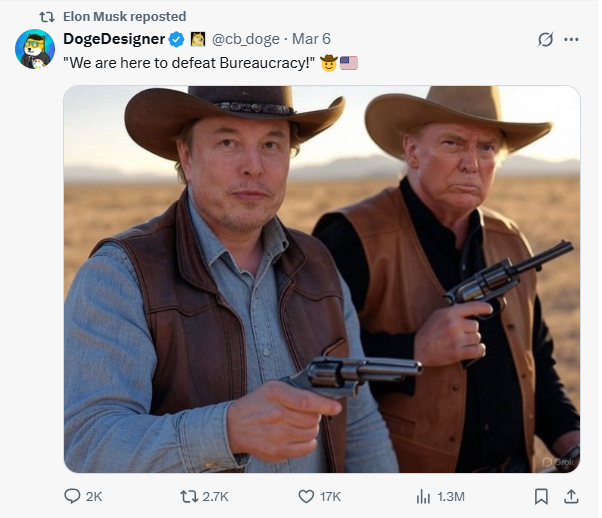
Jeanine, however, is undeterred. One wonders why she would agree to remount a production that's seemingly the vile extension of a lifelong trauma, and that’s one question Egoyan refuses to answer explicitly. But his cold ambiguity enables the mind to wander. Viewers watch as Jeanine intellectualizes each character’s motivations and inner thoughts, dictating them to the performers onstage and their understudies. She projects her own experience into the remounted show to create something that looks similar to Charles’ dark vision but is just different enough to be her own. Though she gets dangerously close to falling into the abyss of her pain, she catches herself before it’s too late. Jeanine doesn’t succumb to her trauma, but challenges its hold over her. Where Charles and her father rose to greatness by abusing their authority in the name of art, Jeanine aims for glory by reclaiming the power those men took from her. She does not obliterate herself, as Tár would demand — she frees herself.


Want a daily wrap-up of all the news and commentary Salon has to offer? Subscribe to our morning newsletter, Crash Course.


There’s a reason why that narrative is so uncommon in a film like this: The “tortured artist” archetype remains one of the most fascinating thematic models in storytelling, partly because its narrative is so widely believed in real life. From the technicolor tragedy of “The Red Shoes” to “Black Swan,” we’ve seen films depict the anguish that artists often suffer in the name of creating great art. These films pose questions that spring forward into our reality when Heath Ledger is posthumously nominated for an Oscar for his role as the Joker in “The Dark Knight,” or when Jeremy Strong practices “identity diffusion” just to make a few good episodes of “Succession.” The question of how much the public values art over humanity is an enduring one, only further complicated by the fact that men dominate the world of fine arts. Because men primarily have the platform to question whether losing your identity for the work is of any value, they’ll also be the ones who promote that false ideal using patriarchal systems of power that exist within subsections of culture.

That’s not to say that films like “Seven Veils” and “Tár,” both written and directed by men, are advancing this outdated notion that artists must suffer to make great work. Rather, they’re two recent examples of how bogus that idea is. Tár wants so much to be like the men who control her industry and abuse their power that she loses all sense of herself as a woman in the arts. By the time she’s clawed her way to the top, she’s left her personhood behind. As soon as she settles into that space in the upper echelon, finally earning recognition from the public and from the men who now consider her a peer, she abandons her identity to assume theirs, inheriting all of their most predatory and narcissistic traits. It’s a biting take on sacrificing perspective for art, ultimately becoming the enemy you spent years warring against.

Because men primarily have the platform to question whether losing your identity for the work is of any value, they’ll also be the ones who promote that false ideal using patriarchal systems of power that exist within subsections of culture.

Other notable characters who walk this same path haven’t even had the privilege of staying at the top as long as Tár does before they fall back into the pits of their artistic torment. In “Black Swan,” Natalie Portman’s character Nina is pushed to the brink by the psychosexual demands of her ballet director, Thomas (Vincent Cassel). She starves herself and practices until she aches and bleeds, but nothing is ever quite enough, especially when a new foe transfers to Nina’s company and threatens her spot. And in “Opening Night,” Gena Rowlands’ fabulous yet tortured stage actress Myrtle descends into addiction, tormented by ghostly visions and crippling doubt. Similarly to “Black Swan,” Myrtle’s director presses her to continue with a new play despite knowing she’s unwell, and Myrtle’s lowest moment becomes her most grand artistic victory. 

I was reminded of all of these works while listening to a recent interview that Lady Gaga gave The New York Times, both in print and recorded in an emotional companion podcast episode. David Marchese asked Gaga about the feeling of contentment evident on her fantastic new album “Mayhem,” and whether that feeling has resulted in any doubt, given the pervasive idea that great art is born from suffering. “I think that romanticizing sick artists perpetuates this thing that’s super negative, especially for women,” Gaga said. “At a certain point, I completely lost touch with reality. I was falling so deeply into the fantasy of my artwork and my stage persona . . . I wouldn’t say that falling deeper into a life of being a tortured character was good for anything.”

And yet, despite the knowledge that comes from years of experience, resisting the inclination to go deeper into your work will always be innately difficult. Art demands so much of its creators and performers. Even the mediocre stuff can produce a great internal struggle, where artists toil over how to make an average piece of work better. It’s why we as spectators are so drawn to it. Something is compelling and distinctly human about how much artists care about wanting to be great — it’s why the tortured artist archetype will always exist alongside the art, because the process can be just as interesting as the work itself, even if it’s macabre. But losing touch with reality won’t serve the art any more than a clear head will. Even more than an internal feeling, truly great art produces new conversations, and this one about how to create without forsaking yourself in the process is only just beginning.

“There’s real risks”: Senate Democrats fear that Musk and Trump could exploit a government shutdown

All eyes are on Senate Democrats after Republicans on Tuesday passed a continuing resolution, a measure that would temporarily fund the government but which paves the way for President Donald Trump to seize even more of Congress’s constitutional authority.

Republicans passed their continuing resolution and dubbed it a “clean CR” despite the fact that it contains $13 billion in spending cuts and increases the military budget by $6 billion.

The bigger problem, however, is that in order to force the CR through the House, Vice President JD Vance promised Republican lawmakers that Trump and his administration would pursue impoundment, an illegal method of budget cutting in which the executive seizes Congress’s power of the purse by refusing to spend money appropriated by a coequal branch of government.

The situation has left Senate Democrats with a decision to make, given their ability to stop the passage of the CR through the Senate with a filibuster, which would require 60 votes to defeat. Democrats can either vote for cloture and allow the Senate to pass the CR, effectively endorsing Trump’s impoundment plan, or they can invoke the filibuster and refuse to lend votes to the GOP, which would likely lead to a government shutdown.

Sen. Chris Coons, D-Del., told CNN that “I'm gonna vote against what came over from the House Republicans to the Senate last night because I don't want to give my vote to support what Trump and Musk are doing.”

“I do think there’s real risks to a government shutdown so I respect those who are saying they are concerned that President Trump will go even further if we hand him that possibility,” Coons said. “But what’s come over. which is often called a ‘clean CR’ in the talk of the Congress, is not clean, it’s dirty. It’s got lots of provisions that will make cuts and harm organizations and communities all over our country.”

As Salon reported, in the event of a government shutdown, the executive branch has considerable authority over which agencies are kept open and which are not. Trump could use this authority to, for example, furlough the employees who send out Social Security checks. Musk, though he stands to be further empowered by either a shutdown or further impoundment, has expressed support for a shutdown, potentially for this reason.

Sen. John Hickenlooper, D-Colo., has voiced concern about Trump's ability to choose who is furloughed in a shutdown, telling CNN’s Manu Raju that “If you shut down the government, the president is the person who decides what is essential. He decides what part of the government stays open, so you are actually giving him even more power.”

“Who knows how long it stays shut down? Who knows how long the president decides that he liked making all the decisions for the government. You can imagine him saying, ‘Congress has failed, Congress can’t help you. It’s up to me to save everyone.’ And then we can’t reopen the government without Republicans,” Hickenlooper said.

RFK Jr. wants to completely remove the FDA’s food additive program as part of MAHA campaign

U.S. secretary of health and human services, Robert F. Kennedy Jr., has directed the U.S. Food and Drug Administration (FDA) to revise its Substances Generally Recognized as Safe (GRAS) Final Rule in an effort to increase oversight of specific food ingredients and heighten food transparency.

“For far too long, ingredient manufacturers and sponsors have exploited a loophole that has allowed new ingredients and chemicals, often with unknown safety data, to be introduced into the U.S. food supply without notification to the FDA or the public,” Kennedy said in a recent statement. “Eliminating this loophole will provide transparency to consumers, help get our nation’s food supply back on track by ensuring that ingredients being introduced into foods are safe, and ultimately Make America Healthy Again.”

Currently, the FDA “strongly encourages” manufacturers to submit GRAS notices disclosing ingredients and substances that are safe to use, the Department of Health and Human Services specified in a press release. Manufacturers, however, can also affirm the use of a substance without notifying the FDA.

Removing the GRAS process “would require companies seeking to introduce new ingredients in foods to publicly notify the FDA of their intended use of such ingredients, along with underlying safety data, before they are introduced in the food supply,” the department added.

The latest initiative comes after the FDA proposed a new requirement in January to include nutrition labels on the front of packaged foods and drinks. Called the “Nutrition Info box,” the labeling system would detail the content of saturated fat, sodium and added sugars. It would also accompany the agency’s Nutrition Facts label.

Trump takes advantage of our collective COVID amnesia

Five years ago, the World Health Organization announced that COVID-19 was officially a pandemic and the whole world embarked on a shared experience like nothing before in any of our lives. Although the quick roll out of vaccines and accumulated knowledge about how to treat the illness saved millions, the pandemic lasted for over two years and took 1.2 million lives in the U.S. and over seven million worldwide. Many people were left with serious lingering effects of the virus the reasons for which are still being studied.

Hospitals and morgues were overwhelmed and the world economy was brought to an abrupt halt in March of 2020 which quickly brought mass unemployment and a shortage of goods as the global supply chain was disrupted. We learned very quickly that the federal government under Donald Trump was so lacking in logistical and crisis management ability that America had one of the worst responses of any developed country in the world. The U.S. experienced 16% of the world’s deaths with just 4% of the population.

We should have seen it coming. As Judd Legum at Public Notice presciently posted on X:

Months before that a prominent Democrat had warned the country about the possibility of a pandemic and the country's lack of preparedness:

The President of the United States downplayed the threat and insisted that he wanted to "keep his numbers down" because he was beginning to understand that this was going to interrupt his plans for a triumphant return for a second term. On March 9, Trump made one of his most famous public appearances of the COVID era when he went to the Centers For Disease Control in Georgia and declared himself a genius:

He said:

Maybe I have a natural ability. Maybe I should have done that instead of running for President.

Over the next few months he proved that he had definitely not missed his calling as a medical expert or a president. In fact, it became more obvious than ever that his talents, such as they are, are completely useless in a crisis.

Two days after that memorable visit, when the WHO made its announcement (an act which Donald Trump has never forgiven and so petulantly withdrew the U.S. from the organization) the world stopped. Tom Hanks and his wife Rita Wilson announced that they had contracted the virus and the NBA suspended its schedule. The highly respected virologist Dr. Anthony Fauci testified before Congress that the pandemic could result in "many, many millions" of deaths.

That night Trump made the only semi-dignified announcement of the crisis from the Oval Office, shutting down travel from Europe, but the order was typically poorly drafted and had to be repeatedly walked back over the following days. It was the beginning of the Trump COVID response and it was a horror show.

We need your help to stay independent

Those of us who were not essential workers sat cloistered in our homes watching the unfolding horror on television as the news kept a countdown clock of cases, hospitalizations and deaths that grew exponentially over the weeks that followed. And unfortunately, it became clear that we were led by a man who was completely in over his head.

Before long Trump was blaming Democrats, his go-to, for the pandemic because they suffered the greatest death toll in the big blue cities during the first wave. He demanded that they lick his boots before they could get vital medical supplies and forced them to bid against each other for them. If they failed to adequately grovel and praise him, he punished their states by delaying the needed supplies and publicly derided them as incompetent.

He denigrated the use of masks, frequently mocking those who did and ignored the social distancing measures recommended by the experts because his "business friends" told him it hurt the economy. Within just a couple of weeks he was already exhorting people to stop worrying and learn to love the virus saying that "the cure cannot be worse than the disease," meaning that the crisis could not be allowed to disrupt his campaign. 

His main concern at this juncture was the effect it was having on the economy which he needed to be booming before the fall campaign. Unemployment was still very high and businesses were shuttered so he wanted them open immediately, whether people would die or not. He had signed the first relief bill called the CARES Act but did not want to extend any more government help and basically told the country he wanted them to get back to normal now.

Unfortunately, the vaccines were still months away and new variants were springing up so he resorted to his usual tactics of pitting people against each other. He encouraged anti-mask and anti-shutdown MAGA people to rebel against all mitigation efforts. He trained his followers to distrust the science and the scientists by pushing snake oil cures on television (now linked to at least 17,000 deaths) and encouraging them to believe crackpot conspiracy theories. By the time the vaccines came online, his MAGA voters had such contempt for scientists that they rejected them, ironically denying Trump the great moment of victory he had craved.

All that and much, much more happened with a federal government that still had a working CDC, NIH, HHS and friendly, cooperative relationships with the world's leading scientific research institutions and their countries' leaders. Now imagine what will happen if another pandemic comes along.


Want a daily wrap-up of all the news and commentary Salon has to offer? Subscribe to our morning newsletter, Crash Course.


Here's a little preview of the kind of scientific expertise we'll be relying on going forward:

A lot of people who got the measles as children died or suffered lifelong disabilities as a result. The measles vaccine was a godsend to worldwide public health, and it's an absolute scandal that this lethally ignorant dolt has any power over public health.

[image or embed]

— southpaw (@nycsouthpaw.bsky.social) March 11, 2025 at 10:42 PM

Meanwhile, HHS is "reevaluating" existing contracts for MrNA vaccine development for a potential avian flu epidemic. Their plan is apparently this gobbledygook:

It has struck me as very odd these last couple of years that the pandemic has gone so far down the memory hole that it's like it never happened. But it did, millions died and our society was scarred by the experience even if we don't want to admit it. Our political culture is divided even worse than before largely because the man in charge at the time didn't know how to deal with an emergency and was more concerned with his re-election than saving lives.

Sadly, our national amnesia allowed that same man to be restored to the White House where he is furiously tearing up the federal government including the world class scientific research centers and public health institutions that were all that stood between him and millions more dead the last time he was confronted with a crisis. It will be a hundred times worse if it happens again on his watch.

Two transgender girls, six federal agencies: How Trump is trying to pressure Maine into obedience

ProPublica is a Pulitzer Prize-winning investigative newsroom. Sign up for The Big Story newsletter to receive stories like this one in your inbox.

On a Monday last month, after a conservative Maine legislator expressed outrage on Facebook about a transgender girl winning a high school pole vaulting event, the hammer of the federal government began to swing.

By Friday of that week, Feb. 21, President Donald Trump singled out Maine’s governor during a White House event and threatened to cut off the state’s federal funding. “See you in court,” Gov. Janet Mills shot back.

Then came a barrage of investigations and threats: The U.S. Department of Education opened inquiries into the Maine Department of Education and the student’s school district, alleging they had violated federal civil rights law. The same day, the U.S. Department of Health and Human Services targeted the Maine Education Department, too, as well as the state’s university system.

The U.S. Department of Agriculture then launched an investigation into the university system; and on Tuesday, the university said the USDA had halted funding as the agency investigates “prospective” civil rights violations, records show.

The U.S. Department of Justice sent a letter that “Maine should be on notice” that the agency was poised to sue. The National Oceanic and Atmospheric Administration even pulled $4.5 million for marine research, but it didn’t touch the 33 other grantees who get similar funding.

Then last week, the Social Security Administration briefly became the sixth federal agency to target Maine, canceling contracts that allowed hospitals to automatically report births and funeral homes to report deaths.

Although the Social Security contracts were reinstated, and the state may reapply for the marine research funding, the moves had already wreaked havoc.

Now, more federal agencies are pressing down on Maine than there are transgender girls competing in girls’ sports in the state. Only two transgender girls are competing this school year, according to the Maine Principals’ Association.

“The president is trying to crush the opposition. He’s trying to crush Maine,” said David Webbert, a longtime civil rights attorney in Maine. To Webbert, it’s as if Trump is saying: “‘Maine believes in transgender rights? Well, you’re going to see what happens to you.’”

Some view Maine as a test case for how the Trump administration may try to force its policies on states, regardless of existing state laws. In public comments, residents have invoked the state’s motto to rally Mainers: “Dirigo,” Latin for “I lead.”

“It’s Maine now, but what state is it going to be next? This is not just a Maine issue, but Maine spoke up. So right now, it’s, ‘Let’s make an example out of Maine,’” said Kris Pitts, executive co-director of the nonprofit MaineTransNet.

State officials, thrust into the spotlight, have been trying to avoid becoming more of a target, carefully choosing their words and declining interviews with reporters. And Mills hasn’t challenged Trump again publicly on this issue.

There are signs the administration is preparing to force other states to follow the president’s directives: The DOJ recently sent letters to California and Minnesota threatening to sue those states if they don’t ban transgender girls from athletics.

The Trump administration also is taking a multiagency approach with Columbia University. On Friday, several federal agencies canceled a combined $400 million in grants and contracts because, the administration alleged, the university was not sufficiently combatting antisemitism.

The press release announcing the multimillion-dollar punishment contained a caution for noncompliant institutions: “Doing business with the Federal Government is a privilege.”

Nearly everything about the blitz of investigations in Maine, including how they’re being carried out, is not ordinary.

Federal agencies that don’t usually enforce civil rights laws in schools launched inquiries. HHS, for instance, usually focuses on health care access for people with disabilities or language translation, and there’s no evidence it’s conducted an investigation of Maine in the past 20 years.

Not only did it dive into Maine’s policies on transgender athletes, it reached a conclusion with unprecedented speed.

Investigations like this typically take months, if not years, according to a review of federal investigation data and records by ProPublica and the Bangor Daily News. But just one business day after announcing the investigation, the federal agency decided the Maine Department of Education wasn’t giving girls equal opportunities and had violated Title IX “by allowing male athletes to compete against female athletes,” according to a letter from HHS to the state.

It sent that finding to the general inbox at the Maine attorney general’s office after interviewing no one from that office, the Education Department, governor’s office or officials from two high schools cited in the letter for allowing transgender athletes to compete against girls, according to those agencies and schools.

The Maine attorney general’s office pointed out that the letter cited an incorrect sum of federal funding that flows to the state. Legal experts also viewed its interpretation of Title IX as problematic. Trump’s Feb. 5 “Keeping Men Out of Women’s Sports” executive order asserted that transgender girls can’t play girls’ sports under that federal law. But Title IX has never required schools to exclude them, and Trump’s order can’t rewrite federal law, said Deborah Brake, a professor at University of Pittsburgh School of Law.

“The president can put out an executive order saying anything he wants,” Brake said, but “there has never been a court decision interpreting Title IX to require the exclusion of transgender girls from girls’ sports.”

In a statement, the agency reiterated that Maine could lose federal funding if it didn’t comply with its position. “HHS will investigate and enforce Title IX to the full extent permitted by law to uphold fairness, safety, dignity, and biological truth in women’s and girls’ educational athletic opportunities. Men have no place in women’s sports,” it said.

We need your help to stay independent

The USDA investigation of the University of Maine, launched on a Saturday, the day after Mills’ exchange with Trump, also is unusual. In announcing the investigation, the department said $100 million to the university was at risk because of the state’s “blatant disregard” of Trump’s order; a university system spokesperson said that amount reflected multiple years of funding.

Then came a series of questions, according to records obtained by the Bangor Daily News and ProPublica. At 10:50 a.m. the following Tuesday, a USDA official sent a University of Maine official 10 yes-or-no questions about its transgender athlete policies — and gave her 1 hour, 10 minutes to respond. The officials agreed to discuss the questions over a Zoom call, and, about five hours after that call, the USDA sent a list of follow-up questions. The agency wanted those answers by 1 p.m. the following day.

Sherron Jernigan, a USDA civil rights director for the animal and plant inspection service, sent the questions:

“Does the University of Maine System provide sex-separated toilet, locker room, and shower facilities for male student athletes and female student athletes?” The university answered “yes.”

“Does the University of Maine System permit a biological male to participate in individual or team contact sports with biological females?” The university answered “no.”

The university’s Title IX coordinator told the USDA that none of the seven universities within the system has transgender athletes participating in NCAA-sanctioned sports. (Of the more than 500,000 students who compete on NCAA teams across the country, fewer than 10 are transgender, the league’s president recently told a U.S. Senate panel.)

In her response to follow-up questions, Liz Lavoie, the university’s Title IX coordinator, added that the USDA had not given the university “any explanation as to the basis or scope of its inquiry, or the steps in the process.”

“Further, we have been given mere hours to respond to both sets of questions and we are responding in good faith but find the approach concerning given the lack of official service and the informal nature that the questions and interview have been presented,” Lavoie wrote.

The USDA did not issue any findings after the questioning, but the agency already is taking action. On Tuesday, the university said the USDA had frozen funding that could affect research on everything from the contamination of Maine farms by forever chemicals to the sustainability of Maine’s lobster industry. Last fiscal year, the USDA awarded nearly $30 million to the University of Maine.

A USDA spokesperson said the agency would not comment on a pending investigation.

Webbert, the civil rights attorney, called the federal government’s inquiries “a show.”

“It’s a political move dressed up, very barely, with a legal process, but it’s a fake legal process. So it is very concerning because they’re not even trying to make it look like it’s due process,” he said. “It reeks of pure politics.”

The federal government has made no effort to hide the ideological perspective that its various inquiries are seeking to enforce in Maine and the rest of the county, according to documents obtained by ProPublica and the Bangor Daily News. In announcing its action in Maine, HHS said it wanted to “restore biological truth to the federal government” and in its findings cited an article from OutKick, a Fox-owned conservative news site with a mission of “exposing the destructive nature of ‘woke’ activism.”

Meanwhile, the Office for Civil Rights in the U.S. Department of Education — which does have a mandate to investigate gender-based discrimination in schools and, with more than 500 people, dwarfs most of the nation’s civil rights enforcement divisions — seemed to conclude that Maine was violating Title IX before it finished investigating.

The press release announcing the launch of the investigation quoted the department’s acting assistant secretary for civil rights, Craig Trainor: “It is shameful that Governor Mills refuses to stand with women and girls. Her rejection of the antidiscrimination obligations that Maine voluntarily accepted when it agreed to receive federal taxpayer dollars is unlawful.”

Trainor linked to “credible local reporting” around the pole vaulter in his letter to Maine officials announcing the civil rights investigation. The report came from the Maine Wire, an online outlet founded by a conservative think tank based in the state. The office hasn’t made contact with Maine since it notified state agencies of its investigation, according to the Maine agencies.

The Education Department did not respond to a request for comment.

Maine’s governor never believed her state would receive an impartial investigation. “I imagine that the outcome of this politically directed investigation is all but predetermined,” Mills said in a statement after the Education Department investigation began. She has since declined to discuss her view of Maine’s transgender athlete policy.

But she has reiterated that Trump legally can’t force the state to violate its own law, the Maine Human Rights Act, which prevents discrimination based on gender identity.

Mainers aren’t sure what this full-court press will mean for their state; keeping up with it is hard enough. State Sen. Joe Rafferty, a Democrat who co-chairs the Legislature’s committee on education and cultural affairs, expressed disbelief when a reporter informed him that HHS’ investigation only lasted four days. He wasn’t aware it had officially started.

“That is why I think part of this is a mirage,” he said of the various investigations. The eventual resolution, he said, is more likely to be settled in a courtroom.

Indeed, HHS referred its finding to the DOJ, which can sue Maine to remove its federal funding. (The health agency also expanded its investigation last week to include the Maine Principals’ Association and the Maine high school where the pole vaulter is a student, according to the agency.) The results of that lawsuit could have significant implications, said Brake, the law professor. Not once since Congress enacted Title IX in 1972 has the DOJ ever cut off funding for a violation.

All the federal attention has been unsettling to some Mainers, welcomed by others who don’t want transgender girls playing girls’ sports and disruptive to the 625-student Greely High School, which the transgender pole vaulter attends.

“It’s just upsetting to everybody at school to be the center of attention and focus. It’s unnerving to go to school and the school is surrounded by police and reporters on every corner,” Gia Drew, who leads a statewide LGBTQ+ advocacy group called EqualityMaine, said of what she’s hearing from the community. “It’s hard to focus on a calculus test when your friends are under attack. It affects not just trans people but everyone who is part of a school system.”


Want a daily wrap-up of all the news and commentary Salon has to offer? Subscribe to our morning newsletter, Crash Course.


After state Rep. Laurel Libby, a Republican from Auburn, singled out the student on her Facebook page and brought Trump’s attention to Maine, parents in the school district planned to show support by displaying signs and handing out treats before classes began, said state Rep. Christina Mitchell, a Democrat who represents Cumberland, home to Greely High School. She’s also a school board member in the district.

But there were television trucks and a police presence surrounding the school, so parents decided not to add to the commotion.

The Bangor Daily News and ProPublica reached out to the family of the student athlete but received no response. Mitchell said other students, including the transgender student’s teammates and competitors, are supportive of her. “Nobody was making a fuss,” she said.

And many in Maine don’t want a fuss. Even as Mills’ response to Trump made some proud — you can now buy “See you in court” T-shirts — others recognized that it launched Maine into the nation’s consciousness. “You watch it and feel like: ‘Oh, all eyes will be here. This will be something big,’” said Pitts, with MaineTransNet.

Libby and other Republican lawmakers have welcomed the chance to amplify their viewpoint that allowing transgender girls in sports is unsafe and discriminates against girls. Another Republican lawmaker introduced a bill to the Legislature to require transgender athletes to compete on teams matching the gender they were assigned at birth.

“All of the accomplishments of women over the years are being erased by men masquerading as women, erasing us from the history books,” Libby said in a weekly address from Maine House Republicans.

While Libby has been censured by Democrats who control the Maine House for her initial Facebook post about the pole vaulter, she has continued to make appearances on right-wing media to urge the governor to stop supporting the right of transgender girls to compete in girls’ sports. On Tuesday, she filed a lawsuit in Maine District Court against the state’s House speaker over the censure, accusing him of stripping her voting rights “in retaliation for protected speech on a highly important and hotly debated matter of public concern,” according to the complaint. Her party has rallied around her and her cause.

“Allowing biological boys to compete with our girls, is not only unpopular, and unfair, but it is also illegal,” Republican House Minority Leader Billy Bob Faulkingham of Winter Harbor said in a written statement. “Governor Mills should abandon this indefensible position and uphold Title IX protections for our girls.”

Maine institutions being targeted by the federal government have continued to follow state law. And at a regularly scheduled school board meeting at Greely High School on Thursday night, the board president pledged the district’s “unwavering support” of all students.

Mitchell said that Maine may be the federal government’s target now, but other states could be next.

“I think you have to stand up to it. Whatever you think is right, you have to stand up for it, because, if you don’t, it’ll just keep going and spread to other places,” Mitchell said. “We’re a small state, but if you give an inch, you know?”

In Canada, Indigenous advocates argue that mining companies violate the rights of nature

In Western legal systems, arguments against pollution or the destruction of the environment tend to focus exclusively on people: It’s wrong to contaminate a river, for example, because certain humans depend on the river for drinking water.

But what if the river had an inherent right to be protected from pollution, regardless of its utility to humans? This is the idea that drives the “rights of nature” movement, a global campaign to recognize the intrinsic value of nonhuman nature — not just rivers, but also trees, mountains, animals, ecosystems — by granting it legal rights. Many Indigenous worldviews already recognize these rights. The question for many in the movement, however, is how to bring the rights of nature into the courtroom.

Enter the International Rights of Nature Tribunal, a recurring gathering of Indigenous and environmental advocates who present arguments regarding alleged violations of the rights of nature and Indigenous peoples. Given international law’s broad failure to recognize the rights of nature, the events provide a model showing what this type of jurisprudence could look like. 

At the sixth tribunal in Toronto late last month, a panel of nine judges heard cases against Canadian mining companies, ultimately ruling that they had violated “collective rights, Indigenous rights, and rights of nature.”

“Today’s testimonies have emphasized the age-old stories of greed, colonization, … and the ongoing ecocide caused by the extractive industries,” said Casey Camp-Horinek, an elder of the Ponca Nation of Oklahoma and one of the tribunal’s judges. She and the other judges called for the ratification of a United Nations treaty on business and human rights, a report from U.N. experts on critical minerals and Indigenous peoples’ rights, and further consideration of mining’s impacts at the U.N. Permanent Forum on Indigenous Issues. 

Those recommendations and the verdict against the mining companies are set to be presented later this year at COP30 in Brazil — the United Nations’ annual climate change conference — where the tribunal judges hope their findings will pressure countries to develop legal protections for nature and Indigenous peoples.

Mining was selected as the theme of this tribunal because of the damage that resource extraction can cause to people and ecosystems, even though the sector is necessary for addressing climate change. Minerals like lithium and copper are needed in large quantities for electric vehicle batteries, solar panels, and other renewable technologies to replace fossil fuels. A previous session of the tribunal, held in New York City last September, focused on oil and gas infrastructure. 

Canadian companies were singled out because of their prominence in the global mining sector. According to a recent report by the nonprofit MiningWatch Canada, the country is home to more than 1,300 mining and exploration companies, 730 of which operate overseas. About half the world’s public mining companies are listed on Canadian stock exchanges.

The tribunal was also meant to contrast with this week’s annual conference of the Prospectors and Developers Association of Canada, which featured climate change and Indigenous issues in a way that speakers described as opportunistic — by now a familiar criticism

James Yap, the tribunal’s prosecutor and acting director of an international human rights program at the University of Toronto, called out one particular event titled “Caliente Caliente Ooh Aah: Latin American Mining Is Heating Up!,” which invited attendees to “dance to the Latin beat through the various regulatory issues affecting the region.” 

Neither the law firm that organized the Latin American mining event nor the Prospectors and Developers Association of Canada responded to Grist’s requests for comment.

Jérémie Gilbert, a professor of social and ecological justice at the University of Southampton in the United Kingdom, applauded the tribunal for building an evidence base of the alleged human rights and nature’s rights violations by transnational mining companies. His research has highlighted how most international law treats nature as a resource to be owned or exploited instead of having value in its own right.

Legal protections that include Indigenous knowledge and the rights of nature have already been implemented in several countries — most famously in Ecuador, which in its rewritten 2008 constitution acknowledged the rights of Mother Earth, or Pacha Mama, to the “maintenance and regeneration of its life cycles, structure, functions, and evolutionary processes.” 

“What’s required for the rights of nature is a pen and then enforceability,” said Dov Korff-Korn, the legal director of Sacred Defense Fund, an Indigenous environmental group based in Santa Fe, New Mexico. Korff-Korn said that giving rights to nonhuman entities like water, animals, and plants is already baked into how many tribes see the world, so using tribal laws and respecting sovereignty is a way forward. 

“We’ve got some unique rights and laws that have unique expressions,” said Frank Bibeau, an enrolled member of the Minnesota Chippewa Tribe and a tribal attorney with the nonprofit Center for Democratic and Environmental Rights who has worked on cases that give rights to nonhuman relatives under Chippewa treaties. 

One example came during the fight against the controversial Line 3 pipeline proposed by the oil and gas company Enbridge in Minnesota. Bibeau listed manoomin, Ojibwe for wild rice, as a plaintiff in a lawsuit against Minnesota’s Department of Natural Resources, arguing that the rice had rights to clean water and habitat that would be jeopardized by the pipeline and the oil spill risks it would bring.

Bibeau said the lawsuit is an example of how many tribes see the rights inherent in nature. But since most settler courts don’t, he argues that Indigenous treaties are a useful way to help protect nonhuman relatives. 

Other ways to develop legal protections could involve tribal courts. tribal courts. This year in Aotearoa, also known as New Zealand, the mountain Taranaki Maunga was recognized as a legal person because the Maori see it as an ancestor. The country also recognizes the rights of the Te Irewera Forest and the Whanganui River, so there is a developing global precedent for this sort of legal framework. 

Protections like these could protect ecosystems in the examined cases of the tribunal, including in Brazil where a firm called Belo Sun has proposed the development of the country’s largest open-pit gold mine, and in regions affected by copper, silver, and other metals mining throughout Ecuador. One of the cases heard by tribunal judges related to a gold mine proposed in eastern Serbia by the Canadian company Dundee Precious Metals, and another centered on uranium mining within Canada

In a presentation about heavy metals mining in Penco, Chile, Valerie Sepúlveda — president of a Chilean environmental nonprofit called Parque para Penco — criticized the Toronto-based Aclara Resources for opaque operations and a failure to engage with residents near its mines. “We must reevaluate what mining is really necessary and which is not,” she told the audience. One of the judges, in describing the 2015 release of millions of liters of cyanide solution from a gold mine in San Juan, Argentina, said mining companies are “sacrificing these towns so that Americans can have their Teslas.” 

Another judge — Tzeporah Berman, international program director at the nonprofit Stand.earth — told attendees she was “horrified and embarrassed” by the practices of Canadian mining companies. “Canada must pursue human and environmental due diligence,” she added while delivering her verdict. “I hope that our recommendations will be used in future policy design and legal challenges.”

This article originally appeared in Grist at https://grist.org/equity/in-canada-indigenous-advocates-argue-mining-companies-violate-the-rights-of-nature/.

Grist is a nonprofit, independent media organization dedicated to telling stories of climate solutions and a just future. Learn more at Grist.org

“I am the alpha in this relationship”: What Musk’s romantic history reveals about his hold on Trump

Donald Trump is over-the-top on an hourly basis, but even by his standards, his frenetic defense of Tesla CEO Elon Musk this week was unsettling. "Elon Musk is 'putting it on the line' in order to help our Nation, and he is doing a FANTASTIC JOB!" Trump posted on Truth Social at 12:14 AM on Tuesday. Musk's company is seeing plummeting stock prices and sales, around the world, due to his association with Trump and his efforts to illegally decimate the federal government through his Department of Government Efficiency (DOGE). Trump went on to bemoan "the Radical Left Lunatics" for "trying to illegally and collusively boycott Tesla, one of the World’s great automakers, and Elon’s 'baby, in order to attack and do harm to Elon, and everything he stands for." Trump, pledging to purchase a Tesla, spent a large part of Tuesday afternoon cutting a commercial for Musk's car company.

It's important to note briefly that it is not a crime to refuse to buy a Tesla, throw the bird at people who drive Teslas, make fun of Tesla drivers online, or hurriedly sell off your Tesla at half its previous market value after being called a "Nazi" in a parking lot. Musk's crashing brand reputation is just the free market in action, something Republicans used to claim they supported. But what's striking about Trump's post is not his baseless threats, which constitute much of his communication on any given day, it's his tone. The president talks about Musk not like a valued colleague or even a friend. No, Trump's plea resembles that of a lovesick woman angrily defending her worthless boyfriend to skeptical friends. 

Trump and Musk are consenting adults, of course, but unfortunately, their team-up is ruining lives and threatens to destroy the American economy, so they've made their relationship the public's business. For months now, it's been baffling how Trump, whose narcissism is boundless, has allowed himself to become a supplicant to Musk, instead of getting annoyed and competitive with the billionaire meglomaniac. Looking over Musk's romantic history, however, offers a strong clue. Musk lacks charisma as a public speaker, but his long line of failed and frankly strange relationships with women — which have produced an estimated 14 children — suggests the tech executive is well-versed in the art of interpersonal manipulation. Musk got a lot of practice on the women in his life, and now appears to be using similar strategies on Trump. 


Want more Amanda Marcotte on politics? Subscribe to her newsletter Standing Room Only.


In 2010, Musk's ex-wife Justine Wilson, published a chilling account of their marriage in Marie Claire. She describes initially rejecting him for a date in college, but he followed her to the student center and insisted. "He's not a man who takes no for an answer, she wrote. He won her over, she wrote, with over-the-top financial generosity, including handing her a credit card while out shopping and telling her to buy whatever she wanted. 

Musk lacks charisma as a public speaker, but his long line of failed and frankly strange relationships with women — which have produced an estimated 14 children — suggests the tech executive is well-versed in the art of interpersonal manipulation.

Entertainment journalist Kat Tenbarge told podcast host Matt Bernstein that this form of "love-bombing" is what many of Musk's former partners describe experiencing. "At the beginning of the relationship, he is really doting. Presents himself as like, 'I'm going to save you.'" On Bluesky, she added that Musk has "a well-established pattern of pursuing younger women" only "to humiliate them later." For instance, he famously had a years-long relationship with the musician Grimes, having 3 children with her — while having children with other women, seemingly behind her back. At one point, his biographer recalls, Musk showed up at a studio while she was recording with a gun and demanded to be included. He dated actress Amber Heard, giving her Teslas as gifts, but she later worried they were bugged, because she said he was "controlling." After their break-up, he appeared to taunt her by posting a private photo online

Wilson recalled feeling like she and Musk were "soul mates" and he was her own "Alexander the Great" in the lead-up to their wedding. Dancing at their wedding reception, however, she claims he told her, "I am the alpha in this relationship." From there on out, she describes a controlling dynamic, where he would even say to her often that if she were his employee, "I would fire you." When she stood up to him, she said, he divorced her. 

While it's not romantic, Musk appears to be engaging the same dynamic with Trump. He lavished Trump with cash, spending at least a quarter-billion on the campaign, and he's now reportedly promising to pour another $100 million into Trump's political outfit. He's using the "won't take no for an answer" technique of never leaving Trump's side, even moving into Mar-a-Lago so that he could keep a close eye on his new "buddy." The love-bombing is over-the-top and incredibly public. Musk jumping around like an excited child at a campaign rally in October was embarrassing to most people, bur for an egotist like Trump, it probably felt like the praise he craves. Musk gushes about Trump shamelessly, telling Fox News, "I love the president" and even tweeting, "I love @realDonaldTrump as much as a straight man can love another man." 

Musk also uses a common technique that manipulative men use against their partners: the old "it's just you and me against the world, babe" narrative to convince their target to ignore people's concerns about their relationship. 

The cringeworthiness of all this love-bombing is part of the strategy. Musk has practiced for years on various women, honing the skill of making them feel like he loves them so much he doesn't care if it's embarrassing. Someone like Trump, whose narcissism feeds on a belief that people are bowing for him, is probably a far easier mark than most of the women who fell for Musk's phony groveling. 

To be excruciatingly clear, Trump is not a victim. No one is easier to con than a con artist, precisely because they are so susceptible to flattery. A lot of good women fall for this nonsense because they're socialized with romantic tales of being "rescued" by the handsome "prince," and learn the hard way that's just a fairy tale. Trump, on the other hand, made himself vulnerable to this manipulation by being a childish narcissist who will give the world to anyone who fawns over him.

No, the victim isn't Trump, but the entire nation. Republicans and Trump's base voters are increasingly expressing anxiety over the way DOGE's rampage through the federal bureaucracy is harming not just the hated "liberals," but his own voters. In the past, Trump likely would have been concerned with keeping those people on board, but right now, he seems too enthralled with Musk to defy his beloved's wishes. 

Even Trump cheerleader Steve Bannon is lashing out about all this, calling Musk "truly evil" and warning on his podcast that Musk is a threat to the larger MAGA movement. Bannon has a healthy ego himself, but he's not wrong that it's really stupid politics for Trump to saddle up with Musk, who is now going after Social Security and Medicare. Trump, addled as he is, still understands that it's unwise to alienate his largely elderly base by attacking two popular programs they depend on. But he shows no sign of actually getting in Musk's way. Instead, he reportedly told Bannon to lay off Musk, and is trying to get Bannon to go to dinner and make peace with the billionaire. As long as Musk continues to love-bomb Trump, we can expect that Trump will defend his self-declared "first buddy," no matter what other allies he alienates in the process. 

Democrats should forget about having a united message

During his address to Congress last week, Donald Trump promised that he was “just getting started." Trump is America’s first elected autocrat. His “just getting started” means an escalation in his neofascist campaign to end America’s multiracial pluralistic democracy and turn the country into a version of Viktor Orbán’s Hungary or Vladimir Putin’s Russia, nullify the rule of law, ignore and stain the Constitution (and especially the Bill of Rights), make the country into a white Christian authoritarian state, betray America’s allies and friends, take even more of the American people’s money and give it to the richest corporations and individuals, and pull apart an already threadbare social safety net — which will include gutting Social Security, Medicare and Medicaid.

At his core, Trump’s political vision and style are driven by political sadism. Trump’s will to power and his personality demand that he not stop his “shock and awe” campaign against American democracy and a humane society.

Some Americans are starting to rise to the challenge. At town hall meetings across the country, thousands have begun to demand that Democrats take a more aggressive posture and become a true opposition party. By comparison, the Republicans are no longer holding such meetings because of the public’s growing hostility in response to the harm that the Trump administration’s policies are causing (and will cause) to huge swaths of the country.

This growing discontent with Trump has not yet translated into a significant change in American public opinion. President Trump’s base of support remains stable: approximately 47 percent of Americans approve of his performance so far.  

Civil society organizations are using the courts to slow down some of the Trump administration’s most egregious assaults on the rule of law and the Constitution. In what appears like a concerted effort to force a constitutional crisis, the Trump administration is refusing to fully comply with many of the courts’ judgments against it. The Democratic Party continues to be unfocused and lacking a unified strategy and vision for how best to oppose President Trump and the MAGA Republicans, and the larger American fascist movement and their allies.

Donald Trump is more than a man; he is a symbol and a character. But Trump, both the man and the symbol and the almost mythic leader for his MAGA followers and others who are so devoted to him is not a supervillain or all-powerful God or prophet (despite how many of his followers would like to believe that he is).

At the American Prospect, Robert Kuttner highlights how Trump’s recent pivots "suggest a certain vulnerability" that presents an opportunity for Democrats:

Having to repeatedly countermand your own incoherent policies is a sign of weakness. It invites more pushback. Republican critics of Trump, European allies, federal judges, and Democrats facing a big budget battle should all keep that in mind. Trump is far from invincible.


Ultimately, Donald Trump is a high-dominance leader. To have any chance in a political battle against such a leader and his authoritarian populist MAGA movement, the Democrats, the so-called Resistance and other defenders of democracy and American freedom and honor need to get some momentum and move from being on the defense to the offense — immediately. 

In an attempt to make better sense of the Democratic Party’s low-dominance leadership style, ineffective approach to political battle in the Age of Trump (and beyond), and their ongoing failures of strategy and messaging — and potential ways to correct them and win victory — I recently spoke with M. Steven Fish, a professor of political science at the University of California, Berkeley. Fish has appeared on BBC, CNN and other major networks, and has published in The New York Times, The Washington Post and Foreign Policy, among others. His new book is “Comeback: Routing Trumpism, Reclaiming the Nation, and Restoring Democracy's Edge.”

This is the second part of a two-part conversation.

For Trump’s Cabinet and the rest of his appointees, fealty to Trump is all that counts. Trump’s Cabinet is an extension of his high-dominance leadership style. Your thoughts on this?

I agree with your assessment, but it’s important to bear in mind the implications of your observation that Trump has turned the whole show and the whole government over to lackeys. Because their authority and identity are just extensions of their Dear Leader’s, the government is now staffed mostly by supplicants, people who lack strength. Much the same can be said of the multitude of Republican members of Congress who have sacrificed every last bit of their dignity and principles to follow Trump into the darkness.

What this all means is that if the Democrats can take down Trump himself, the whole MAGA operation is left rudderless, bereft of figures with minds, principles or expertise of their own.

The Democrats can’t just stand by and hope Trump sabotages himself or suffers a fall in public approval. They’ve got to overmatch his dominance and bring him down themselves. Whether it’s FDR taking on the plutocracy and whipping its Republican abettors, JFK confronting America’s foreign enemies and challenging Americans to sacrifice for the country, or LBJ and MLK smacking down bigots and dismantling a centuries-long edifice of racial injustice, the Democrats have plenty of high-dominance role models to inspire us.

How did you read Trump’s meeting with Zelenskyy? Trump attempted to publicly humiliate Zelenskyy and make him beg for America’s continued assistance in Ukraine’s freedom struggle against the Russian invaders.

Trump, Vance, Rubio and the rest thought that they’d humiliated Zelenskyy, but that’s not what at least half of Americans and most of the rest of the world saw. They saw a mighty man of consummate integrity and courage defend his country, decency and democracy in the face of a farcical onslaught. They saw Trump and Vance forfeiting their own nation’s power, honor and global leadership to please a man, Vladimir Putin, whose greatest career passions have been to undermine American power and prestige in the world and conquer former Soviet territories, starting with our staunch ally, Ukraine.

Trump’s antics are not popular at home; in the Russia-Ukraine war, 52 percent of Americans support Ukraine while 4 percent back Russia (the rest register neutrality). A slight majority supports continuing to supply Ukraine with weapons, and 96 percent consider West European countries as “allies” or “friendly” powers, while four percent consider them “unfriendly” or “enemies.” Trump’s foul attacks on Zelenskyy are intended for an audience of one: Vladimir Putin.

Donald Trump is determined and will not stop, which is why his followers and MAGA followers love him so much. His resilience and compulsion to power and his mastery of being “Donald Trump,” the character. His sense of humor and timing make him very compelling. What Trump is doing to the United States (and the world) is contemptible and unconscionable. But as a main character in a story –- a horror movie, political thriller and dark comedy all in one — Trump is very compelling. He is also honest and direct. I don’t think the Democrats and other pro-democracy Americans can defeat him and the larger authoritarian and fascist project unless they accept these facts and get past their normative priors and outside their “Trump is bad and how could anyone support him!” echo chamber. Why are these aspects of Trump’s appeal so difficult for many liberals, progressives, centrists and other normal-politics types to understand?

Among the Democrats’ normative priors you mention, I think the most significant and damaging is the notion that high-dominance politics is essentially anti-democratic since Trump is both illiberal and high-dominance. Specifically, goes the story, since Trump is always on the offensive, “we”, here meaning the Democrats and “the resistance” should avoid aggression. Since he plays us-versus-them politics and treats opponents with disdain, we must avoid “othering” our opponents. Since he’s an entertaining showman, we should avoid drama and spectacles. Since he goes “low,” we must go “high.” Since he makes it all about himself, we need to shun personalism and charisma in our ranks and make innocuous policy engineers and personnel managers like Chuck Schumer and Hakeem Jeffries the faces of the Democratic Party.

"On language and broader messaging: Let’s shut down the pablum about 'defending the middle class,' 'sticking up for working families,' and other such drivel."

But this mentality — or what you aptly call Democrats’ “normative priors” — makes for purely reactive politics. It hands Trump the laser pointer while we play the cats. It also ignores the fact that high-dominance politics is innately neither virtuous nor wicked. It’s just a tool you need if you want to win, all the more against high-dominance opponents. You can wield it like FDR and Churchill did to crush autocrats and would-be autocrats, or you can use it to crush democracy like Putin and Trump are doing.

I have a prediction that seems more and more likely: Donald Trump is going to be given a third term because the Constitution and rule of law increasingly no longer apply. He will declare a holiday in his own honor: “American Renewal Day” or “MAGA Day” or the like. Some of his Republican supplicants are already proposing something like this. Trump will also give the American people more "stimulus" money with his face and name on it — $1,000 at least. Most Americans do not have $500 for an emergency. If all that occurs, Trump easily wins a third term and is regarded by many Americans as one of the country’s greatest presidents ever.

When the Supreme Court ruled for Trump in Trump v. United States, effectively immunizing him from violations of the law, it trashed the founders’ intentions and destroyed our democracy’s most important institutional safeguard, that being constraints on executive power. The decision was 6-3 in favor of Trump; had Biden been under indictment for or at risk of indictments, the decision of course would have been 9-0 in favor of the United States, with the six Republican justices siding with the rest. That decision, along with a host of other Supreme Court rulings and congressional Republicans’ refusal ever to stand up to even Trump’s more egregious acts, leads me to agree that the Constitution and the rule of law increasingly no longer apply.

But enabling Trump to stand for a third term would require amending the Constitution to void the 22nd Amendment, which states: “No person shall be elected to the office of the President more than twice.” Getting two-thirds of both houses of Congress and three-quarters of state legislatures to approve of Trump’s scheme would be impossible, so the only clear route to a Trump third term would be Congress passing a law allowing it, and then when the law is challenged, the Supreme Court declaring it constitutional. The decision would effectively end even the pretense of the court’s status as a guardian of the Constitution, which makes me skeptical that any of the justices besides Alito and Thomas would back it. As for Republican governors, members of Congress, and other elites, being the Trump supplicants they are, many will at least feign support for such an authoritarian move for a time, but the fact remains that many of them want to run for president themselves in 2028, and retiring Trump is key to their ambitions.

I think there are reasons to doubt that Trump, stimulus checks or not, is going to be popular enough to be reelected in 2028, though it can’t be ruled out. Remember, too, that voiding the 22nd Amendment means that Obama could run again. For now, at least, I think we should treat Trump’s third-term threats as another attempt to drive the libs to distraction, and my hope is that they don’t take the bait.

The Democrats are floundering in their search for a new message. Any suggestions?

I think the Democrats should forget about having a “united message” and drop the idea that everyone in the party must be on the same page before we can step out with a message at all. That’s never going to happen, and whatever compromises party elites could make to try to force it would amount to nothing more than a pile of platitudes. In 2016, the Republican Party’s message could not have been less united, since most Republican leaders still couldn’t stand Trump, but he was elected anyway. The Democrats dominated politics during the middle third of the 20th century, even as the party couldn’t even agree on whether to let Black people vote.

Take DEI and trans issues, which the Republicans bludgeoned the Democrats with during the election and are now using as a distraction from Trump’s autocracy-building project. Democrats are tearing themselves to pieces over how to respond to Trump’s attacks and to grapple with polls showing, for example, that most Americans think that people who are born male shouldn’t compete in girls and women’s sports. Goodness me, what’s our party to do?!

The best course of action is for the Democratic Party’s leaders to speak their own truths. For example, a Democratic Party leader who is genuinely tired of what she sees as woke excesses can stick up for everybody’s right to be protected from discrimination while also poking fun at universities and government agencies changing “breastfeeding mothers” to “lactating employees” in their statements on maternity leave policies (presumably to avoid excluding “chest-feeding” trans men).

As we did before the election, if the Democratic Party’s leaders asked you for concrete advice about what they should do right now to slow down Trump and get some momentum back, what would you tell them?

I’d say the same thing I said in my book "Comeback," which was published in May of last year. First, instead of treating Trump as a terrifying, offensive beast who’s bound to eat us all alive, treat him as being ridiculous, insecure and hostile to the best of what America is and should be. As long as the Democrats make it all about big, bad Trump, they are sticking with the low-dominance strategy that has cost them election after election and now threatens to cost us our democracy. Second, and relatedly, quit reading polls and feverishly adjusting the message to them. Trump tells people what he thinks and aims to change the way we think, while the Democrats wait for polling results and tell people what they think they want to hear. Consequently, Trump seems like a real leader and armed with that reputation, he has literally bent the arc of history toward injustice. The Democrats look like anxious, reactive petitioners and panderers who need polls to tell them how to define justice. Seize the flag and hammer at Trump’s betrayal of our allies, national interests, security and devotion to Putin.

On language and broader messaging: Let’s shut down the pablum about “defending the middle class,” “sticking up for working families” and other such drivel. Democratic elites are addicted to this language, and it has demonstrably done nothing to win anyone over. Do you swell with pride at being a member of the “middle class”? Are you ready to go to the barricades to fight for the “middle class”? Do you think working-class people exalt in the pity parties that well-heeled, overeducated liberals throw for them? Why not take a page from FDR, who said on the eve of his first landslide reelection: “Most of us whether we earn wages, run farms or businesses, are in one sense businessmen. All they seek and all we seek is fair play based on the greater good of the greater numbers.” Imagine that! Calling wage-earners “businessmen” instead of “struggling working families.” In that same speech, FDR also defended each of his progressive reforms as nothing more than “the American thing to do,” repeating the refrain over and over. Never mind that his radical reforms had never been tried in America — or anywhere else, for that matter. In the minds of his listeners, Roosevelt made them the “American thing to do” — much like Trump is now tragically making stripping people of their rights and joining with America’s enemies the American thing to do.

Further: Stop talking to Black people primarily as Black people and Hispanics as Hispanics and Asians as Asians and women as women and immigrants as immigrants and LGBT people as LGBT people. How much more evidence do we need that the Democrats’ identity-group-targeted messaging doesn’t work, still more when it’s tinged with pity? Liberal elites don’t seem to know it, but the data show that Black Americans are as proud to be Americans as whites are, and nobody is prouder of being American than first-generation Americans from all over the world. Speak of and for America as a whole and address everyone, first and foremost, as Americans. Then we can talk about specific groups’ concerns — but here we’ve got to avoid any hint of the condescension that so often seeps into our message.

Above all, the Democrats need to avoid demoralization and remember that our country is still the greatest experiment in self-government, the greatest cultural and technological innovator, and the most prosperous nation in the history of humankind. It is still the light of the world. The main reason the world seems to be darkening dramatically right now is that the light of America is flickering.

Trump’s executive orders are exacerbating the country’s mental health crisis

The Trump administration is bent on repealing or ignoring just about every law that gets in the way of its drive to remake the federal government.

But the administration can't repeal the law of unintended consequences. And plenty of people outside the executive branch — particularly health care providers, mental health professionals, and social workers — will have to clean up the messes the president's directives are creating.

Consider the human cost of the administration's mass culling of federal workers. Some experts estimate that nearly a half-million federal workers could be laid off within the next two years. That's roughly 20% of the federal workforce. It would represent the largest mass firing in American history.

Certain regions of the country — like the Washington, D.C., area — are especially vulnerable to economic disruption. But there are 35 states with at least one county where close to 5% of civilian employees are federal workers.

By the time the long-term effects of these firings filter through our society, the Trump administration will be long gone.

Putting hundreds of thousands of federal employees out of work will only make such mental health challenges more prevalent.

Researchers have investigated just this kind of mass firing event, like a factory closure where an entire workforce is shown the door at the same time. Nearly all of those fired workers experienced mental health declines. The longer their unemployment lasts, the worse they fared.

Even without serious financial strain — if a spouse, for example, has secure employment — losing a job can be highly detrimental to mental health. Removing a person’s daily routine as well as their sense of purpose and identity can seriously undermine their sense of self.

Our nation is already experiencing a mental health crisis. Suicide rates are rising. The number of deaths by drug overdose has quintupled in the last quarter-century. Some 29 million people are struggling with alcohol use disorder.

Putting hundreds of thousands of federal employees out of work will only make such mental health challenges more prevalent.

Or take the administration's crackdown on undocumented migrants. The president has given immigration authorities permission to enter schools, health care facilities, and houses of worship to arrest people suspected of being undocumented.


Want more health and science stories in your inbox? Subscribe to Salon's weekly newsletter Lab Notes.


Many migrants have lived in the United States for years and may have nowhere else to go. Others may not be safe if they return to the places they were born. Terror and trauma are already sweeping migrant communities.

This crackdown has the potential to traumatize U.S. citizens, too. Churches, schools and community organizations are preparing for the possibility that federal agents may invade their grounds in search of people suspected of being undocumented.

How are teachers supposed to explain to their students why federal agents are removing their peers from class? Are priests expected to pause their sermons while immigration officials drag congregants from their pews for deportation?

The administration's assault on transgender people will also make our nation's mental health crisis worse. Denying access to gender-affirming care, as the Trump administration aims to do, increases the risk that a person will experience depression, anxiety and suicidal ideation. And it's at odds with the recommendations of major medical organizations.

We need your help to stay independent

Local public health workers, especially social workers, will be the ones who have to help communities navigate the mental health challenges that the administration's blitz of executive orders has wrought.

Nearly 40% of America’s 750,000 social workers specialize in adult mental health. We are crucial pieces of the nation’s healthcare infrastructure. Many of us have completed advanced training; four in five have a master’s degree, with hundreds of hours of field work as part of the requirement.

Unfortunately, there are not enough social workers to meet the increasing demand for our services. We need to bolster public support for social workers, promote awareness of the valuable services we provide, and amplify recruitment efforts to attract new people to the profession.

That's especially true now that millions of vulnerable Americans have found themselves targets of this administration.

“The first step”: Department of Education to lay off half of workforce, McMahon promises “shutdown”

The Department of Education announced that it was laying off half of its workforce on Tuesday, a move that Secretary of Education Linda McMahon called "the first step" toward completely dismantling the department.

A press release from the DOE said that nearly 2,000 employees of the department would be placed on administrative leave on March 21. The mass layoffs will leave the department with 2,183 employees, down from 4,133 at the beginning of President Donald Trump's term. 

"Today’s reduction in force reflects the Department of Education’s commitment to efficiency, accountability, and ensuring that resources are directed where they matter most: to students, parents, and teachers,” McMahon shared in a statement. "I appreciate the work of the dedicated public servants and their contributions to the Department. This is a significant step toward restoring the greatness of the United States education system.”

The department head struck a much harsher tone while speaking on Fox News Tuesday night. McMahon agreed with host Laura Ingraham that the layoffs were an opening salvo in the Trump administration's attempts to shutter the department and called the soon-to-be jobless employees as "bureaucratic bloat."

"The president's mandate as directed to me clearly is to shut down the Department of Education," she said. "We'll have to work with Congress to get that accomplished."

The shocking move to cut the Department of Education in half drew immediate condemnation from elected Democrats. 

"The president is letting unelected billionaires like Elon Musk and Linda McMahon eliminate the Department of Education," Rep. Jason Crow, D-Colo., shared on X. "Taking away opportunities from students in low-income or rural schools in order to give massive tax breaks to the wealthy is wrong."

Rep. Greg Casar, D-Texas, said the Trump administration was "stealing from our children to pay for tax cuts for billionaires," a sentiment that Bill Clinton Cabinet member Robert Reich agreed with.

"As Trump guts the Department of Education, remember that his plan to cut the corporate tax rate to 15% would give the 100 largest corporations a tax cut larger than the entire department's K-12 budget," Reich wrote on X. "Really think about how twisted this all is."