

“Your technique is magnificent . . .When cut across the neck, a sound like wailing winter winds is heard, they say. I’d always hoped to cut someone like that someday, to hear that sound. But to have it happen to my own neck is ridiculous.” – “Shogun Assassin”
“Energy is felt once the cards are dealt/ With the impact of roundhouse kicks from black belts/ That attack the mic-phones like cyclones or typhoons/ I represent from midnight to high noon” – The GZA, “Liquid Swords”
Any kid who grew up in a major city in the ‘70s and ‘80s probably remembers their version of the kind of rundown joints that played kung fu movies nonstop. In Chicago, where I grew up, you could gorge on them all day at the, ugh, Oriental Theater, obviously named long before political correctness was a glimmer of an idea.
Every Wu-Tang joint is designed to be the sonic equivalent of a film.
But my love of Asian cinema and TV shows began at home, courtesy of my local UHF stations packing their weekend daytime schedules with Hong Kong action classics, Japanese monster movies and syndicated airings of “Speed Racer,” “Spectreman” and “The Space Giants.” Very different cinematic sensibilities originating in entirely separate cultures that broadcasters and film distributors lumped together on the cultural fringe.
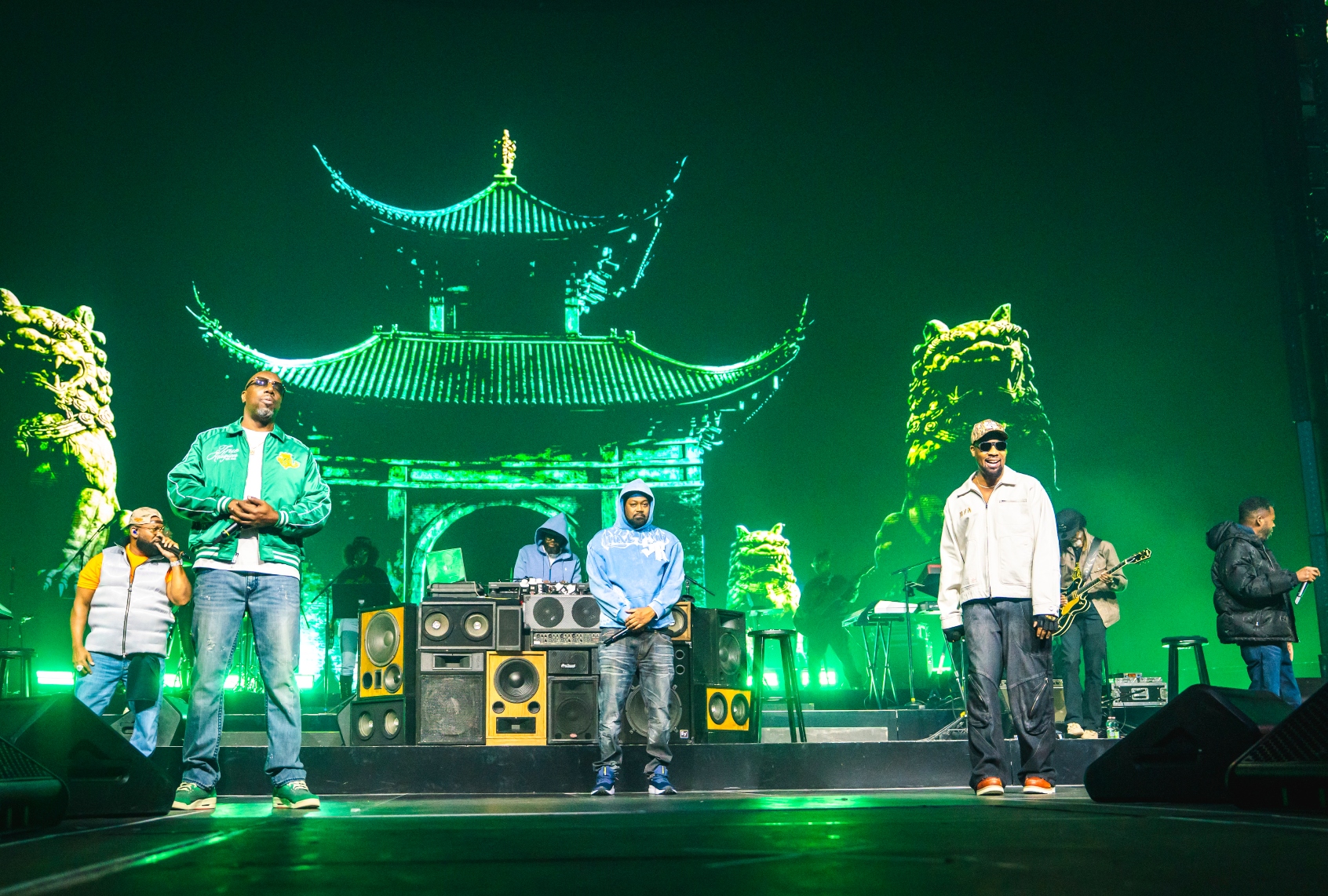
Now contrast those ancient memories with the Wu-Tang Clan’s national conquest in 2025, when their alleged swan song tour, “Wu-Tang Forever: The Final Chamber,” became one of summer’s hottest legacy tickets. The RZA, the GZA, Ghostface Killah, Raekwon, Method Man, Inspectah Deck, U-God, Masta Killa and Cappadonna represent hip-hop’s greatest squad and one of the last standing from the genre’s golden era in the 1990s. Each is a respected solo artist. The RZA and Method Man are also movie stars.
What I remember most clearly about “The Final Chamber” tour’s Seattle stop was the way the performance’s construction mimicked a back-in-the-day movie marathon. There were built-in intermissions, during which advertisements for fine Wu-Tang products played on large screens. The featured trailer promoted “One Spoon of Chocolate,” the RZA’s recently released blaxploitation-style revenge thriller, but the show also pushed other official Wu-Tang merchandise, including a video game.
Art and commerce are necessary bedfellows, a truth the Wu-Tang Clan not only knows, but uses to their advantage. Billboard Boxscore’s August 2025 estimate places “The Final Chamber” tour’s gross from the 27 shows scheduled between June and July at $30.6 million, with a $1.2 million average gross per show.
You’ll be excused for viewing that shameless promotion with cynicism as long as you also leave room to appreciate it as an indicator of how far the group has pulled popular culture. Fans love clocking their samples from kung fu movies, shouting out “Tiger style!” from “Executioners from Shaolin,” or the definitive quote about Shaolin shadowboxing teaming up with the Wu-Tang sword style: It could be dangerous! And profitable!
But consider where The RZA and his late cousin, Ol’ Dirty Bastard, along with other members, were first exposed to these flicks. When they were kids, the Staten Island, N.Y.-based crew sought them out in theaters on 42nd Street in Manhattan, the low-culture hub immortalized as The Deuce. Today, the spirit and dialogue of those movies take center stage at some of the world’s biggest venues. “The Final Chamber” tour recently completed its European and Australian legs. Japan got its turn on Sunday, May 24, after the RZA’s scheduled appearance at Crunchyroll’s Anime Awards.
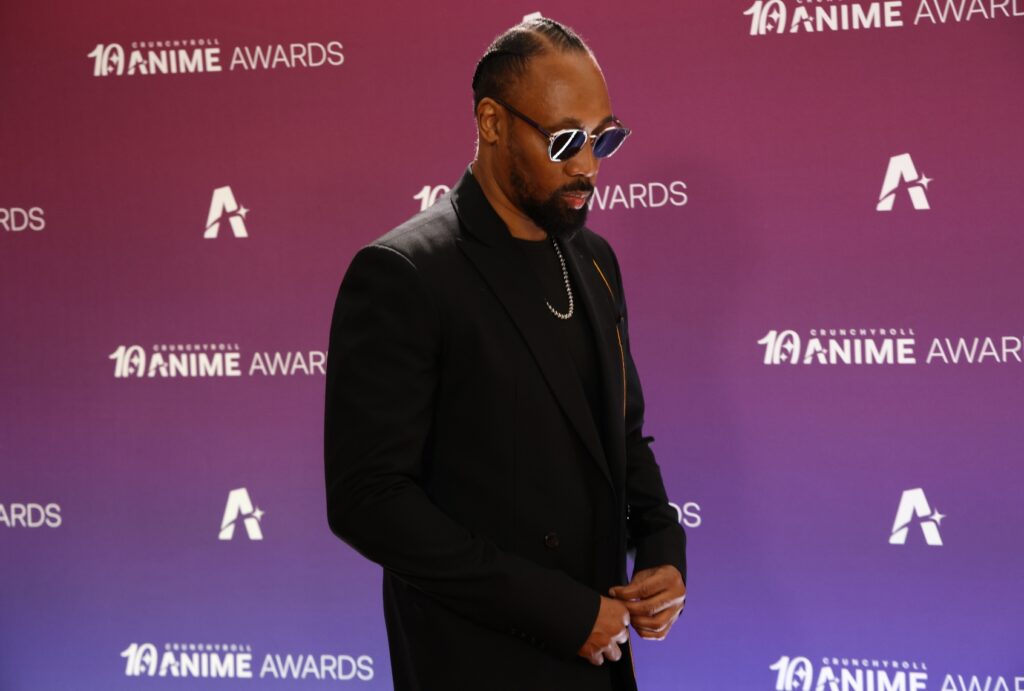 (Crunchyroll)
“Our tongue is like a sword,” RZA once told Vanity Fair. “If you think you’re the best lyricist, you must be using the Wu-Tang sword, and so we’re the Wu-Tang Clan. We felt we were the best lyricists in hip-hop.”
The GZA’s 30th anniversary tour celebrating “Liquid Swords,” considered one of the best hip-hop works of all time, is currently underway in North America. Digital journalist Matt Daniels once calculated that the GZA’s overall lyricism places him in the top tier in terms of his unique vocabulary usage – a key reason “Liquid Swords” represents one of the earliest instances of the RZA, who produced the album, incorporating themes and samples from a jidaigeki drama, “Shogun Assassin,” into a body of work.
“In Japanese samurai movies, it’s one stroke kills,” RZA said. He chose “Shogun Assassin” to represent the GZA, he said, because “his lyrics are straight to the point.”
Spring savings are here!
But regardless of who’s on the mic, every Wu-Tang joint is designed to be the sonic equivalent of a film.
As often as critics hail Quentin Tarantino for making movies about movies, the Wu-Tang Clan deserves credit for mainstreaming Asian action cinema. Today, you can find exhaustive lists of Asian martial arts classics that are either sampled on their albums or referenced within their lyrics. YouTube has playlists dedicated to that task that could keep you couch-bound for days.
But even if you never attended any Asian film festivals or other events, you have likely benefited from the larger market exposure the group helped to inspire.
“I maintain that RZA was single-handedly responsible for the world’s renewed interest in kung fu movies,” writes “The Baddest Bitch in the Room” author Sophia Chang in a 2012 essay for the Asian American Writers’ Workshop. “Without Wu-Tang, ‘Crouching Tiger, Hidden Dragon’ and ‘Hero’ would not have met with the success they did.
We take it for granted that these films hold prized placement in American popular culture, along with hip-hop’s influence across Asia. But that wasn’t always true. Long before RZA and the GZA became musical legends – when their friends called them Robert Diggs and Gary Grice – martial arts cinema was relegated to cinematic margins.
Jeff Chang, author of “Can’t Stop Won’t Stop: A History of the Hip-Hop Generation” (and of no relation to Sophia), puts it more bluntly in a 2023 podcast episode for KEXP-FM.
The reason the RZA or any non-white American fans of these movies were exposed to them was because of racism, he said. Films from the Shaw Brothers’ catalog and other Hong Kong-based studios were segregated into run-down theaters, often in the inner city, where tickets cost around a buck and anyone could hang out and enjoy some air conditioning.
“So the folks who are fans of Black exploitation movies go to the kung fu movies, and they see the same types of connections between . . . these Confucian, Taoist and Zen-like principles and values, and these ideas of loyalty and brotherhood,” he explained.
Thus, in the discriminatory early marketing of a cinematic genre, we eventually reap the benefits of two non-white cultures meeting and mixing concepts. Hip-hop prowess is established and honed through lyrical battles. Martial arts films portray competition as a means of pushing your opponent to do better, to go further. Then the Wu-Tang Clan’s first album, “Enter the Wu-Tang (36 Chambers)” comes out, and as Jeff Chang describes it, “competition gets turned into this beautiful cultural building type of thing.”
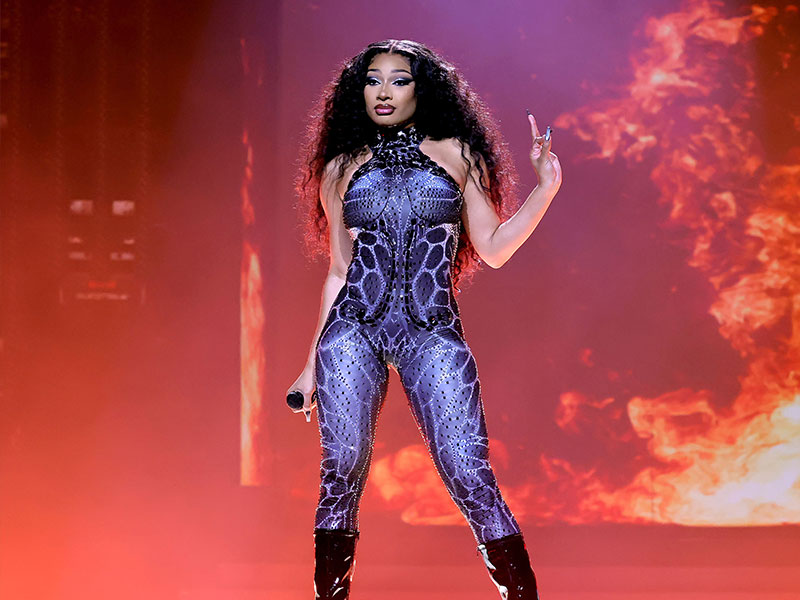
(Kevin Winter/Getty Images for Live Nation) Megan Thee Stallion performs onstage during the Hot Girl Summer Tour at Crypto.com Arena on June 21, 2024 in Los Angeles, California.
Part of that building inspired the next generation of rappers to incorporate their love of other aspects of Asian pop culture, such as anime, into their prose and performance style. Hip-hop’s biggest anime ambassador these days may be Megan Thee Stallion, who built a whole alter ego, Todoroki Tina, around her favorite character from “My Hero Academia.” And her explanation of why she loves anime is very similar to the philosophies that drew RZA to kung fu movies and, eventually, Asian philosophies and martial arts.
“I like how you grow with the character, and you see all the trials and tribulations he’s got to go through, and then you see him meet new people along the line that’s really helping him become the hero that he’s meant to be,” she told Crunchyroll. “So, I feel like I apply that to my life a lot.”
These connections made anime and martial arts cinema’s incorporation into hip-hop, an art form built on collaboration and sonic collage, somewhat inevitable. Whether in the films beloved by the Wu-Tang or the animated sagas Megan favors, characters battle not simply for survival but to achieve mastery. “It was through these films that I was able to see and feel from a non-Western point of view,” RZA once said. “Some of the dialogue struck a chord with me. It was Buddhism and psychology. ‘Without wisdom, there is no gain.’ There’s beauty in that.”
Read more
from Salon’s Culture newsletter, The Swell
