David Petraeus

Petraeus and the signature of U.S. terror

The CIA pressures Obama to step up indiscriminate attacks in Yemen

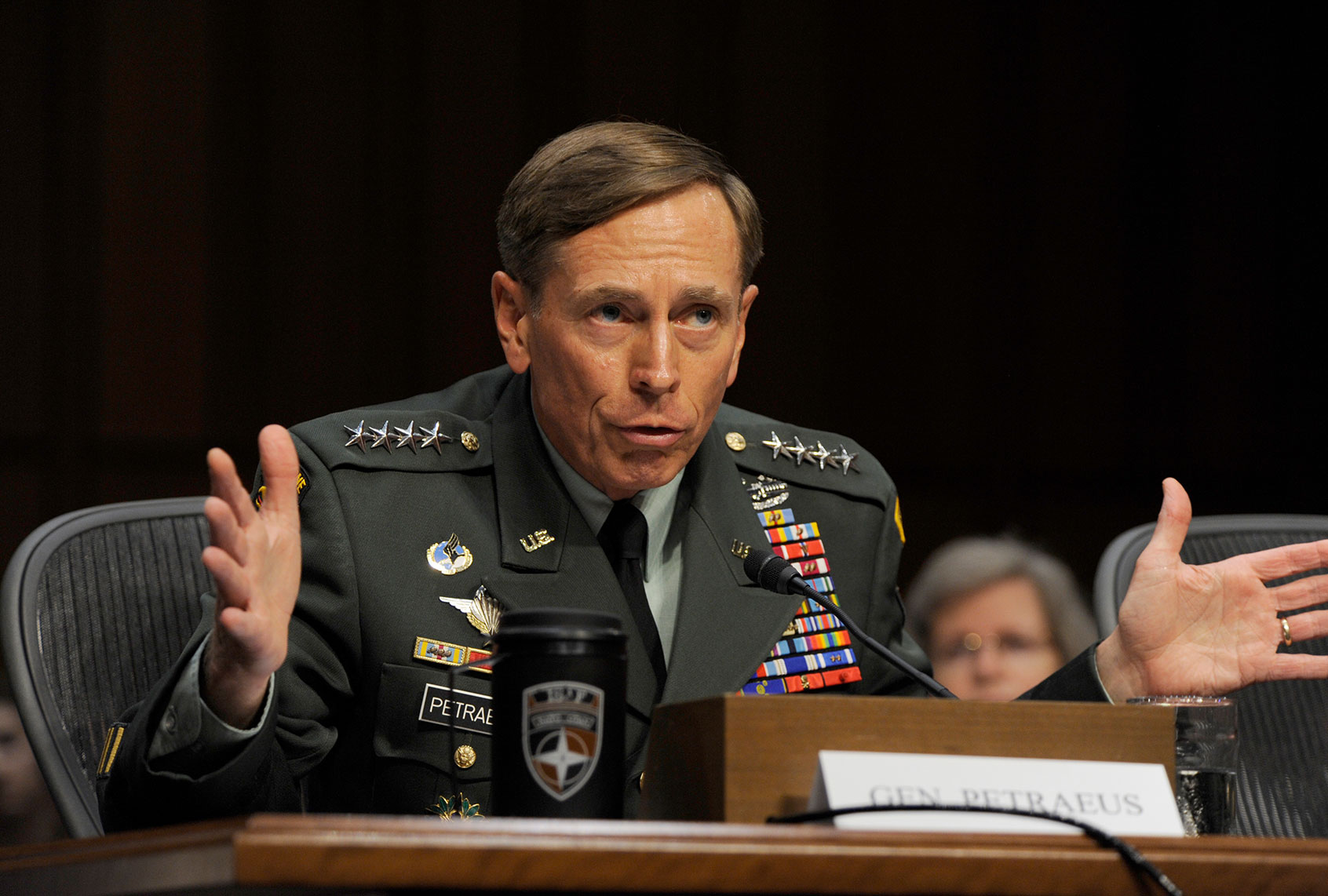
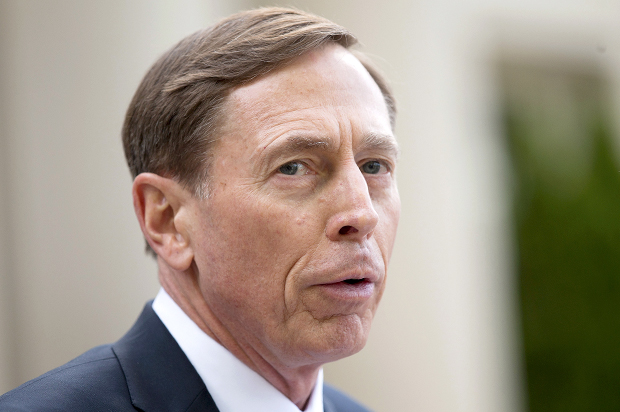
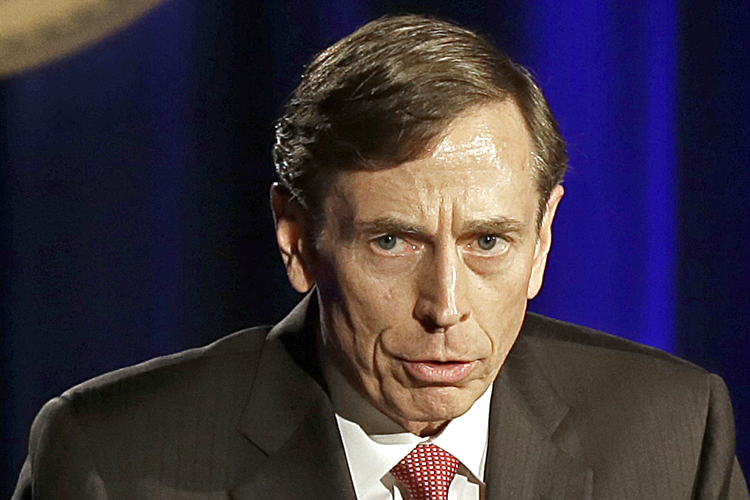
David Petraeus(Credit: Wikipedia)

Greg Miller of the Washington Post reports on the White House debate about CIA director David Petraeus’ request for a homicidal escalation of the CIA drone war in Yemen.

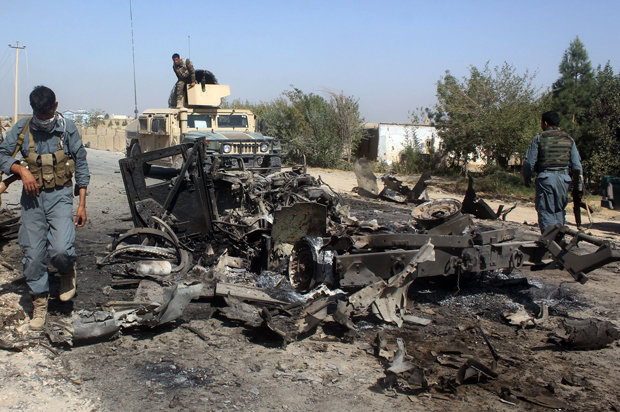
The CIA is seeking authority to expand its covert drone campaign in Yemen by launching strikes against terrorism suspects even when it does not know the identities of those who could be killed, U.S. officials said.

Securing permission to use these “signature strikes” would allow the agency to hit targets based solely on intelligence indicating patterns of suspicious behavior, such as imagery showing militants gathering at known al-Qaeda compounds or unloading explosives.

The brutality of “signature strikes” is not new for the CIA leadership. As the London-based Bureau of Investigative Journalism has reliably reported, “signature strikes” have regularly targeted funeral ceremonies in Pakistan. The amorality of the U.S. actions is chilling. An alleged militant is killed by a U.S. drone. Then when his family and friends try to come to mourn him, the U.S. attacks the gathering from the sky, on the grounds that attending an al-Qaida funeral is evidence of hostile intentions toward the United States. In one such attack reported by the New York Times in June 2009, 60 people were killed. Local press accounts of the incident, cited by BIJ, put the death toll at 83, 45 of whom were non-combatants. It is said that 10 were children.

The Post story indicates that the efficacy and wisdom of such tactics is now being debated in the White House. Obama has defended the drone war on the grounds of its specificity.

“Drones have not caused a huge number of civilian casualties,” he told a questioner at an online forum. ‘This is a targeted, focused effort at people who are on a list of active terrorists trying to go in and harm Americans.”

It seems Petraeus and his allies in the current inter-agency debate do not want to be constrained by a list. They calculate if the U.S. slaughters a particular crowd of people at an al-Qaida funeral, they are sure to kill men plotting to attack the United States. The logic, if not the morality, is persuasive: If you kill the certainly innocent, you will also get some of the presumably guilty.

This is also the logic of terrorism, which is one reason why the defenders of “signature strikes” prefer that their names not be published in the Washington Post.

U.S. officials said the agency killed more senior al-Qaeda operatives there [Pakistan] with signature strikes than with those in which it had identified and located someone on its kill list.

Why these “U.S. officials,” who may include Petraeus, approved of the illegal leaking of this classified information to the Post, is inevitably hazy in a story dependent on anonymous sources. It appears Petraeus trying to overcome reluctance of the Obama White House to expand the use of signature attacks. It may be that White House officials are trying to shed public light on the CIA practices the better to resist their use in Yemen.

A senior administration official, who like others spoke on the condition of anonymity to discuss sensitive internal deliberations, declined to talk about what he described as U.S. “tactics” in Yemen, but he said that “there is still a very firm emphasis on being surgical and targeting only those who have a direct interest in attacking the United States.”

Surgical strikes, otherwise known as “profile strikes,” are directed at a specific person, known or suspected of planning attacks. These too have killed non-combatants but their morality seems more defensible. Signature strikes are intentionally less discriminating and more lethal. That, it seems, is precisely why the CIA and Petraeus want to introduce them to the battlefield of Yemen.

Some U.S. military commanders recognize the folly, if not criminality, of such a strategy. Dennis Blair, four star admiral and former director of National Intelligence, called for scaling back the drone war last year:

… as the drone campaign wears on, hatred of America is increasing in Pakistan. American officials may praise the precision of the drone attacks. But in Pakistan, news media accounts of heavy civilian casualties are widely believed. Our reliance on high-tech strikes that pose no risk to our soldiers is bitterly resented in a country that cannot duplicate such feats of warfare without cost to its own troops.

But the “bitter resentment” of the family and friends of innocent people killed from afar does not overly concern the CIA. This is the sort of argument that Petraeus must overcome if the Agency is to expand the terror tactics of the drone war to another battlefield.

Jefferson Morley

Jefferson Morley is a staff writer for Salon in Washington and author of the forthcoming book, Snow-Storm in August: Washington City, Francis Scott Key, and the Forgotten Race Riot of 1835 (Nan Talese/Doubleday).

The dangerous allure of Washington hero worship

Projecting our wish to be safe on the general is making us less safe

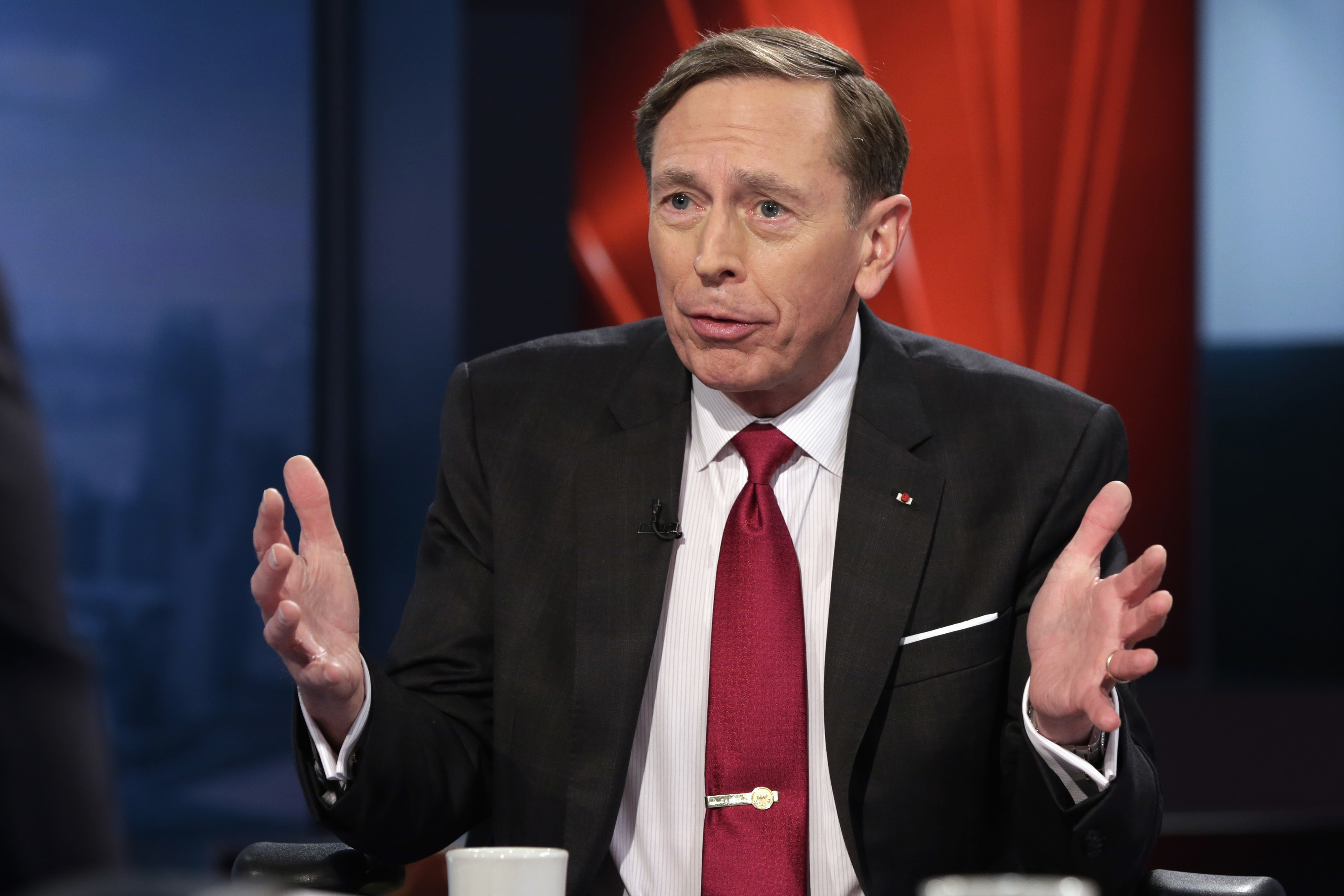
David Petraeus (Credit: AP/Salon)
This is Part 2 of a series on Gen. David Petraeus. Read Part 1: The Petraeus Projection: The CIA Director's Record Since the Surge.

“War is too important to be left to the generals,” said George Clemenceau, French prime minister during World War I — especially to former Gen. David Petraeus, the prime architect of American’s militarized foreign policy. Like Wall Street’s focus on boosting short-term profits at the expense of long-term economic health, Petraeus’ short-term tactical focus on expanding the drone war and ground assassinations throughout the Muslim world is jeopardizing America’s long-term strategic position. Yet Petraeus’ sorry record, as reviewed by Salon, has largely escaped scrutiny.

Congress seems uninterested. During his confirmation hearings to be CIA director last March, most senators genuflected to Petraeus. Only a few dared ask whether as CIA director he might shade his Afghanistan reporting to hide his failures. When he assured them he wouldn’t, they smiled gratefully. “Senators … merely urged the war’s commander to recite once more the reasons why we’re fighting there,” observed Slate. “None of them asked a single tough question.”

Reporters for the mass media seem equally credulous. The Washington Post’s normally perceptive Karen DeYoung, for example, recently referred to the “air strikes that have been proved so effective in Pakistan” — ignoring the many warning signs that Petraeus’ strategy has increased the strength of U.S. foes, undermined the Pakistani government, and increased the dangers of nuclear materials falling into anti-U.S. hands.

Washington Post columnist David Ignatius, a Petraeus confidant who regularly calls him a “warrior-statesman,” recently worried that Petraeus’ top-down style might not work at the CIA. At the confirmation hearings, Ignatius was relieved when “Petraeus reassured the committee that he will be open to the work force … and told the senators that he’d like to eat in the cafeteria some days.”

That sort of irrelevant personal detail has all but crowded out any sort of critical thinking about what Petraeus has actually done. Roger Cohen, columnist for the New York Times, reported that Petraeus is “a soldier-scholar with an impish smile.” Cohen went on to say, “of course I asked about the presidency. The résumé will look good after the C.I.A.” Newsweek’s John Barry told his readers that “the dutiful soldier [is a] hard-as-a-rock, 5-foot-9, 150-pound-distance-running, push-up-pumping Petraeus.” And Barbara Walters chose Petraeus as “The Most Fascinating Person of the Year” in a 2010 program watched by more than 10 million viewers.

Petraeus has gone to extraordinary lengths to cultivate major journalists, as did the diplomat Richard Holbrooke before his sad death in December 2010. Time columnist Joe Klein, for example — an old political friend of mine, decent guy and domestic liberal — has written of his close friendship with Richard Holbrooke, “an extraordinary mentor and an even better friend,” and how Holbrooke “championed” his son’s State Department career after giving him a job on his U.N. staff. Klein also recently wrote a column describing how Petraeus invited him to a weeklong briefing when the general was developing counterinsurgency strategy at Fort Leavenworth, and a recent visit to the general’s home.

Klein’s column was titled “David Petraeus’ Brilliant Career,” as he explained to readers that “the general’s most important legacy may lie in the role he has played in transforming the Army from a blunt instrument, designed to fight tank battles on the plains of Europe, into a ‘learning institution’ that trains its troops for the flexibility and creativity necessary to fight guerrilla wars in the information age.” Klein did not mention that the core of this “learning institution” is an “industrial-sized killing machine” that has given the general a license to unilaterally kill unarmed suspects anywhere on earth without according them any human or legal rights whatsoever.

Petraeus, like Henry Kissinger before him, excels at the hidden game of cultivating journalists with personal attention. Had he hired a public relations firm to write a press release titled “David Petraeus’ Brilliant Career,” it would have been ignored. Klein’s column was much more effective at sending the same message. Since most readers do not realize that many journalists function as a virtual arm of government, however, they are far more influenced by what is considered “objective” reporting. The Joe Klein who today ignores Petraeus’ failure and shameful focus on assassination is not the admirable journalist I knew in the 1970s and 1980s, before access to the powerful fundamentally changed who he is as a person.

The psychological dimension

But even an understanding of the collusion between senior officials and journalists does not fully explain the extraordinary position Petraeus occupies in the American psyche. To understand why journalists and the public avert their eyes from Petraeus’ record of failure since Iraq, one must turn to the realm of psychology, and particularly the phenomenon of projection, one of the most powerful forces driving human behavior.

While the technical definition of psychological projection is attributing one’s own repressed negative traits to others, a “positive projection,” whereby one projects desires for security, love, respect, understanding and other desirable traits onto others, is equally strong.

Anyone who has ever fallen in — and out — of love can understand the unconscious power of projection. As a therapist friend says, “You fall in love with a projection not a person, and the first task of building a relationship is to separate the two.” When we first “fall in love” we inevitably project onto our love-object (whom we may not really know) our desires to love and be loved, valued, cared for and admired. It is only after time that we discover the person behind the projection, a process that often leads to primal bitterness at the failure of one’s projections.

Unconscious projections are particularly strong in the case of powerful politicians and military leaders. Ernest Becker, author of the Pulitzer Prize-winning book “The Denial of Death,” has theorized that the origin of hierarchy itself lies in our unconscious desires to be protected from death — the reason why for most of human history leaders, for example, claiming “the divine right of kings,” have exercised both secular and sacred power.

People naturally project their desires to be protected onto military leaders like Petraeus, especially at this moment in our history. Americans were understandably terrified by the Sept. 11 attack and naturally looked to someone like Petraeus for protection. In addition, we live in a largely hero-less age. Presidents have launched war on false evidence or engaged in adultery. Popes have covered up child abuse. Baseball players have cheated with steroids. Bankers have grabbed huge bonuses after wrecking the economy. We have gone from Franklin Roosevelt to Bill Clinton, from Dwight Eisenhower to George W. Bush, from David Sarnoff to Rupert Murdoch, from Martin Luther King Jr. to Al Sharpton. It is thus understandable why so many Americans, lacking other heroes, have projected their deep desires to be safe and protected onto Petraeus.

Projection itself is not necessarily harmful, of course. Many have been inspired to noble and selfless needs by their projections about their leaders, nation or religion. People who project deep feelings onto actors, musicians or athletes are at worst engaged in harmless fantasy.

But projections can also be quite dangerous. Human history is replete with catastrophes caused by humans either projecting their own repressed negative traits onto hated “others.” In the cases of military leaders from Napoleon to Gen. Westmoreland, people have projected their positive desires onto once-heroic leaders whose subsequent lack of judgment brought ruin to their nations.

This tendency is especially dangerous in our time as war has become increasingly automated, as U.S. leaders employ machines to kill human beings thousands of miles away as if they were playing a video game. As Jane Mayer reported in the New Yorker: “Human beings running for cover (from U.S. drone strikes in Pakistan) are such a common sight that they have inspired a slang term: ‘squirters.’” Today, our special forces roam the globe, assassinating unarmed suspects (and inevitably killing innocent bystanders) so routinely that they refer to it as “mowing the lawn.”

If we once thought of warfare as “inhuman” activity in which enemies who genuinely hate each other commit all sorts of savage atrocities, we have today entered a new age of “ahumanity,” in which war is increasingly becoming a technical exercise, bereft of malice or rancor, an exercise in eliminating “squirters.” The ascent of Defense Secretary Robert McNamara in the 1960s — the corporate executive turned national security technocrat — was one sign of the transformation of war. So too is Petraeus.

Here is a man described by his admirers as “intelligent, forceful, courageous, decent … skill and perseverance, brilliance and selflessness … taut, controlled, driving … a man of force, moving, pushing, getting things done … the body tense and driven, the mind mathematical, analytical, bringing order and reason out of chaos … marvelous with charts and statistics … good intentions, ability, almost ferocious sense of public service … discipline, concentration, relentless work all day and night … years later his teachers would remember him with pleasure, he was always well behaved, never pushy, his work always ready in case you called on him.”

In fact, these words were written about McNamara, the key architect of America’s failure in Vietnam, by David Halberstam in his classic “The Best and the Brightest.” Halberstam explained that he had set out to understand “why men who were said to be the ablest to serve in government in this century had been the architects of what struck me as likely to be the worst tragedy since the Civil War.” His conclusion about McNamara? “If he was brilliant, he was not wise.”

Although Petraeus is commonly described as America’s greatest military hero since Dwight Eisenhower, it is McNamara whom he most closely resembles. McNamara too was the object of hero worship: “so impressive and loyal that it was hard to believe, in the halcyon days of 1963 when his reputation was at its height, that anything he took command of could go wrong,” Halberstam wrote.

Like Petraeus, “that McNamara had such a good reputation in Washington was not entirely incidental — he knew about the importance of public relations, and played that game with surprising skill.” His traits dated back to high school, where “Bob was always well behaved, never pushy, his work always ready in case you called on him.”

We hear the same story today. Mark Bowden has written in Vanity Fair that Petraeus in high school also “diligently tended to his lessons. His old friends remember a boy who kept meticulous notebooks, and who followed instructions.”

Steve Coll reported in the New Yorker that “the General leads the Iraq war in the style of a corporate chief executive … Petraeus is a professional briefer, and with a PowerPoint slide before him he will slip into a salesman’s rapid-fire patter.” Like McNamara, Petraeus frequently misstates figures to give a false impression of progress.

But Newsweek’s John Barry has described perhaps the most important trait that Petraeus shares with McNamara. As Barry wrote this summer, “Petraeus describes his father as ‘at heart a crusty old Dutch sea captain,’ who taught him never to accept anything less than a win. Any deviation from that standard brought an icy-blue stare and a growl: ‘Results, boy, results!’ Those words have driven Petraeus ever since.”

In this single-minded focus on quantifiable results, Petraeus, like McNamara before him, embodies a value-free technocratic mentality that is dangerously abstracted from political reality. At the same time, the public and the press look to him, consciously or subconsciously, for protection from that reality.

If we can detach ourselves from the impulse of hero worship, we can see the problem is not Petraeus’ competence but his judgment. His emphasis on such short-term results has been accompanied by growth in the overall size and motivation of America’s foes. Petraeus may be brilliant, but his role expanding U.S. assassination strategy throughout the Muslim world risks a long-term disaster that could well exceed McNamara’s failure in Vietnam.

As a key former organizer of U.S. clandestine military operations, Petraeus is uniquely positioned to expand the militarization of U.S. intelligence. As CIA director he is now in charge of a dramatically growing fleet of thousands of CIA drone aircraft, and vast networks of U.S. and local assassins on the ground. It is no exaggeration to say that uncritically granting such clandestine power to one man violates the democratic principles America stands for and endangers the very hopes we project onto him. The Petraeus projection poses a growing threat to America.

Fred Branfman served as research director for California Gov. Jerry Brown, 1979-83, and for Sen. Gary Hart’s Center for a New Democracy from 1985-87.  He exposed the U.S. Secret War in Laos as a volunteer and journalist from 1967-71, and has written 10 articles about U.S. warfare in the Muslim world for AlterNet and Truthdig. He can be reached at fredbranfman@aol.com.

Continue Reading Close

Fred Branfman can be reached at Fredbranfman@aol.com. His Web site is www.trulyalive.org.

The Petraeus projection: The CIA director's record since the surge

Hero worship hides the military failures of the CIA director's "global killing machine"

David Petraeus (Credit: AP/Salon)

Few issues are more important to America’s future than reducing the threat of future terrorist attacks, which not only risk killing Americans but also provoking a U.S. government response that could destroy our democracy. As Bob Woodward has warned: “Another 9-11 … could happen, and if it does, we will become a police state.” It could thus be a matter of the survival of American freedom that the media, instead of continuing to simply record official claims of militants killed by ground and drone assassinations, also report on the compelling evidence that these killings are weakening our overall national security.

Congress, the mass media and public are overlooking evidence that the current U.S. “counter-terror strategy” of global assassination by drones and special operations commandoes, isn’t working.  No small part of the problem is the lack of critical thinking about former Gen. David Petraeus, perhaps the most important architect of this strategy, and now the director of the CIA.

This week’s assassination of Anwar al-Awlaki, a U.S. citizen and Muslim cleric, alleged to have orchestrated attacks on Americans, will no doubt be touted as another victory for Petraeus.

But such victories have a way of proving elusive. The killing of various “al-Qaida leaders” is not heroically “turning the tide” in the war on terror, as unnamed U.S. officials are no doubt explaining to credulous columnists right now. In fact, most of the data from the drone war theater indicates that the Petraeus assassination strategy is increasing the numbers, motivation and geographic scope of America’s foes. It is making our allies are weaker. We face more potential suicide-bombers. And we have managed to increase — not decrease — the danger of nuclear materials falling into terrorist hands.

Yemen, in fact, is a useful case-study of how the Petraeus assassination strategy is creating more new anti-American enemies for every Awlaki it illegally kills. Last May,  the Washington Post reported that U.S. drone and air strikes in the country have depressed the local economy, increased support for anti-U.S. groups and demonstrated “the potential for U.S. policies to have harmful, if unintended, consequences in this politically brittle nation.” Despite the air strike campaign,” reported the New York Times, “the leadership of Al Qaeda in the Arabian Peninsula survives, and there is little sign the group is much weaker.”

The Petraeus record is not pretty.

It is a strategic and military failure. The issue is critical. For if Gen. Petraeus’ policies are backfiring and, God forbid, there is another domestic terror attack committed by Muslims, like the Times Square bomber, angered by U.S. murder in the Muslim world since 9/11, the present U.S. “counter-terror” strategy will be largely responsible.

If Pakistani nuclear materials fall into the hands of anti-U.S. terrorists, or there is a coup by pro-Islamist Pakistani military officers, Petraeus’ misguided policy toward Pakistan will bear much of the blame. If Yemen becomes a new center of anti-U.S. terrorism, it will be at least partly because U.S. drone strikes and ground assassinations have increased, not decreased, anti-U.S. sentiment.

Assassination as policy

Petraeus began focusing on widespread assassination of suspected terrorist  during his time  in Iraq.

“Beginning in about May 2006,” Bob Woodward reported in his book “The War Within,” “the U.S. military and the U.S. intelligence agencies launched a series of top secret operations that enabled them to locate, target and kill key individuals in extremist groups. A number of authoritative sources say these covert activities had a far-reaching effect on the violence and were very possibly the biggest factor in reducing it.”

When Petraeus took over Central Command in 2008, he expanded his assassination strategy throughout the region. As the New York Times reported on May 2010, Petraeus had “ordered a broad expansion of clandestine military activity … sending of American Special Operations troops to both friendly and hostile nations in the Middle East, Central Asia and the Horn of Africa.”

In August 2010, the Times reported that “in roughly a dozen countries” from the deserts of North Africa, to the mountains of Pakistan, to former Soviet republics crippled by ethnic and religious strife, the United States has significantly increased military and intelligence operations, pursuing the enemy using robotic drones and commando teams, paying contractors to spy and training local operatives to chase terrorists.”

The 7,000 Special Operations commandoes Petraeus brought into Afghanistan and the 3,000 conducting assassinations in Iraq, are today the nucleus of a global force of “60,000 operating in 75 countries. As CIA director, Petraeus will now integrate this force with the CIA drone program as part of the new “National Strategy on Counterrorism.” Unveiled on June 29, 2011, the policy commits the United States to “disrupt, dismantle and eventually defeat al-Qaida and its affiliates and adherents” in the following “areas of focus”: “The Homeland, South Asia, Arabian Peninsula, East Africa, Europe, Iraq, Maghreb and Sahel, Southeast Asia (and) Central Asia.”

Retired Col. John Nagl, a confidante of Petraeus, has aptly described the new U.S. assassination apparatus as an “industrial-sized counterterror killing machine.”

Is it working?

Petraeus claimed success for his “surge” strategy in Iraq on the grounds that violence decreased dramatically after U.S. troops were bolstered and redeployed. Whether the calm that followed was the result the U.S. troop buildup or the result of payment of massive bribes to Sunni militia leaders — or both — is still disputed. But there is no question the country became less violent after the surge.

If the reduction of violence, however, is the criterion on which Petraeus deserves to be judged, his record since the Iraq surge is poor. During his tenure at CentComm in 2008-2010, the violence in the region grew and spread — including a fourfold increase in Pakistan alone. In Afghanistan, the U.N. has reported violence rose 51 percent while he led NATO forces there for the past year.

Petraeus’ perceived success in Iraq has blinded the Congress, and much of the media to the reality of his accomplishments. But not Adm. Dennis Blair, the former director of National Intelligence.

Last month, the New York Times published Blair’s careful assessment of the U.S. drone war. While “drone attacks did help reduce the Qaeda leadership in Pakistan,” he wrote, “they also increased ‘hatred of America’.” He said the drone has also damaged “our ability to work with Pakistan [in] eliminating Taliban sanctuaries, encouraging Indian-Pakistani dialogue, and making Pakistan’s nuclear arsenal more secure.”

Blair is hardly alone. Petraeus’ colleagues in the intelligence community have also criticized  the strategy he did so much to shape. Former counterinsurgency adviser Col. David Kilcullen, has written that drone strikes “increase the number and radicalism of Pakistanis who support extremism,” and that “it would be in our best interests, and those of the Pakistani people, to declare a moratorium on drone strikes into Pakistan.” Robert Grenier, former CIA counterterrorism chief, said the drone war has motivated militants so “they now see themselves as part of a global jihad.”

“We have helped to bring about the situation that we most fear,” he said.

Foreign observers have grave doubts. Muhammed Daudzai, chief of staff for Afghan president Hamid Karzai, said “when we do those night raids the enemy will get stronger and stronger in numbers.” Sherard Cowper-Coles, Britain’s  former special representative to Afghanistan, said “for every dead Pashtun warrior, there will be 10 pledged to revenge.”

In Pakistan, violence is surging, with attacks up from an average of 470 in 2004-2008 to an annual average of 1,722 in 2009-2010.. Wajid Shamsul Hasan, Pakistan’s High Commissioner to London for the past 16 years, said U.S. drone and gunship attacks in Pakistan have “set the country on fire.”

And the effects on the battlefield are visible. McClatchy News, one of the last independent news gathering networks, reported recently, “In Valley Where SEALs Died, U.S. Raids Boost Taliban Support”:

“Residents of the Tangi Valley issued complaints about the night raids in their vicinity, charging that they have killed civilians, disrupted their lives and fueled popular support for the Taliban … ‘The Americans are committing barbaric acts in the area and this is the reason that the Taliban have influence,’ [a doctor] said.

Ambassador Cowper-Coles has said that “Petraeus should be ashamed of himself.”

“He has increased the violence, trebled the number of special forces raids … and there has been a lot more rather regrettable boasting from the military about the body count,” he said.

The return of the body count

Last spring, the Washington Post reported that U.S. and Afghan officials had given reporters statistics showing 2,448 insurgents have been killed over the past eight months.” “Team Petraeus Brings Body Counts Back,” wrote Spencer Ackerman of Wired.

After all, it’s the easiest statistic to understand: a dead fighter. The trouble is, the militants never seem to run out of ‘em. The insurgents have between 25,000 and 35,000 fighters, according to a guess by the Afghan Ministry of Defense. As Joshua Foust of the American Security Project notes, that’s been the estimated total for years, suggesting that the insurgency is a) very large and b) opaque to the U.S. and its allies. Clearly the insurgency can replenish its ranks, discrediting the suggestion that NATO can kill its way to victory.

Using a “body count” as a criterion of military success was discredited by the U.S. experience in Vietnam. In that war, North Vietnam, with a population of 16 million, was able to defeat U.S. forces that numbered more than 550,000 men,  largely because it could more than replace the than 1 million soldiers whom the U.S. claimed to have killed.

How could U.S. military leaders be so foolish as to repeat this failed experience in the 1.8 billion-strong Muslim world? Why does the American public acquiesce? In the 1960s, at least, there were senior legislators like Sen. William Fulbright and independent journalists like David Halberstam who challenged claims of success based on body counts in Vietnam. Why are so few challenging Petraeus and the military today?

One factor is the psychological phenomenon of projection: deep unconscious drives that project our primal desires to be protected onto military leaders such as Petraeus. To challenge such military leaders may be a rational exercise, but it also risks triggering fear and anger from those looking to a Petraeus for protection. We need to get beyond the Petraeus projection to the reality of our situation.

Nations have often suffered irreparable harm when they allowed military leaders’ early successes to blind them to subsequent failure. So it was with Napoleon, whose early successes in stabilizing revolutionary France and subduing Europe were followed by his reckless invasion of Russia and defeat at Waterloo. The French WWI heroes who designed the Maginot Line which fell so quickly in the early days of WWII, and the previously distinguished Gen. Henri Navarre who designed the French strategy that proved disastrous at Dien Bien Phu in 1954.

So it was with Gen. William Westmoreland, who stood out in the Korean War but then in the 1960s instituted a “body count” strategy that proved largely responsible for the U.S. defeat in Vietnam. Westmoreland, like Petraeus, once graced the covers of news magazines which  reported his claims that that he was winning the war. In November 1967, he said, “The enemy is running out of men.” The U.S. forces, Westmoreland insisted, had killed some 453,000 to date. The total enemy strength was 299,000, a figure he lowered to 248,000 a few months later.

 Sam Adams, an analyst assigned by the CIA to assess enemy strength, concluded that the more accurate figure was 600,000. In early 1968, the Tet offensive dealt a powerful blow to the U.S. and its local allies.  “There was just no way they could have pulled it off with only 248,000 men,” Adams said.

Then as now, the issue was not how many enemy are killed, but how many remain. When Petraeus rose in the ranks of the U.S. military, he seemed to know this fundamental truth. He seems to have forgotten it.

The nuclear danger

At the same time, the record shows that the Petraeus’ policy has increased the risk of Pakistani nuclear materials falling into anti-American hands. As U.S. Ambassador Anne Patterson wrote in a February 2009 cable released by Wikileaks, “our major concern has been … the chance someone working in [Pakistani government] facilities could gradually smuggle enough fissile material out to eventually make a weapon and the vulnerability of weapons in transit.”

In May 2009, Patterson explained that the Pakistanis were refusing to return nuclear fuel to the U.S. as previously agreed because “if the local media got word of the fuel removal, they certainly would portray it as the United States taking Pakistan’s nuclear weapons.”

This in a country where the drone war has made the U.S. government widely reviled. One recent poll found that 69 percent of Pakistan’s 120 million people — some of whom undoubtedly work in Pakistan’s nuclear weapons facilities — now regard the U.S. as their “enemy.”

So, as the U.S. influence on those controlling Pakistan’s nuclear arsenal grows weaker, the pro-war Long War Journal, reports that U.S. strikes have killed 56 known al-Qaida and Taliban leaders since 2004, the vast majority of them in recent years.. Thus in total, we have killed less than five dozen alleged jihadists at the cost of spreading regional violence and a growing a risk of nuclear proliferation.

Is that a wise or prudent choice? In much of the U.S. media and Congress, the Petraeus projection prevails. That question is rarely asked and our situation is barely understood. An “industrial-sized counterterror killing machine” may sound impressive to some. So did Gen. Westmoreland’s body counts in Vietnam. But if the Petraeus killing machine isn’t turned off, it will achieve the same result: strategic defeat for the United States.

Tomorrow: The Petraeus Projection, Part II: The danger of hero worship

Continue Reading Close

Fred Branfman can be reached at Fredbranfman@aol.com. His Web site is www.trulyalive.org.