Love and Sex

Mother-daughter sexperts

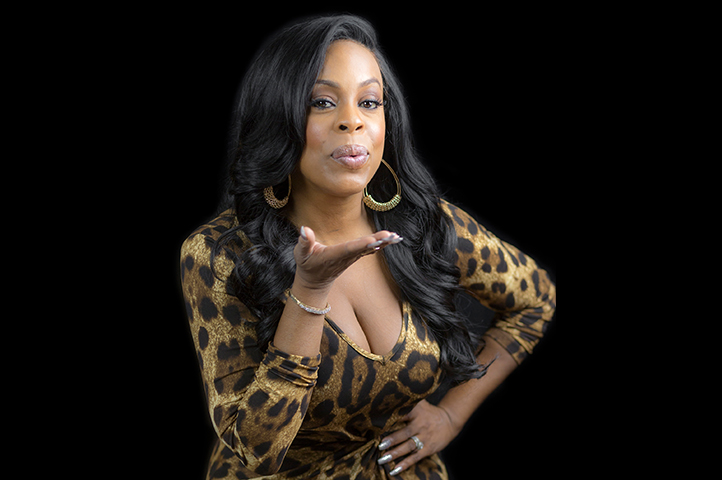
Susie Bright and her daughter, Aretha, make parental talks about sex look easy -- and fun

Most parents loathe talking to their kids about the birds and the bees, let alone pubic hair grooming, faked orgasms and “water sports” — but most parents are not legendary “sexpert” Susie Bright.

Better than talking about these things, she penned an advice column in 2009 with her daughter, Aretha, then 19, for the ladyblog Jezebel. Their answers to questions about everything from porn to Paxil were unflinching but playful, and at times controversial. Now the pair have collected those columns into a new e-book, “Mother/Daughter Sex Advice.” Together, they read as an irreverent version of “Our Bodies, Ourselves” for the Internet age. The mother-daughter team also reflect on what the experience of writing the column was like, and it turns out it wasn’t as weird as many would think: For the most part, it was just a continuation of conversations they had been having throughout Aretha’s life.

I spoke with them both by phone about sex-positive parenting, where they draw the “TMI” line with each other, and their tips for making “the sex talk” less awkward.

Aretha, this might be an annoying question, because I’m sure you’ve gotten it for most of your life, but: What’s it like having a “sexpert” for a mom?

Aretha: I’ve been getting this question since second grade. Kids brought it up in the line at the cafeteria. I remember being way more defensive about it then, because just saying the word “sex,” it was like a four-letter word.

But now? It’s the same answer I always give, which is that it was pretty cool. I was the envy of all of my friends throughout puberty and high school. It’s interesting because now that I’m college-aged, I can see differences in how kids were brought up and, you know, I can see how my upbringing has affected me.

Did you have friends in high school who desperately wanted to come over and ask your mom for advice?

Aretha: I started community college when I was 13, so I had college friends who were in their 20s and late teens, and they felt really comfortable talking to my mom. Sometimes I got really jealous because they’d want to have alone time with her to talk about their relationship problems. With my high school friends, they felt too shy and inhibited. It was more that they’d come to me with a crisis and then I’d bring it to my mom.

Were you ever uncomfortable talking to your mom about sex when you were younger?

Aretha: No. Never. From age zero to now, I don’t think it’s ever been uncomfortable.

Susie: There’s an important distinction between “Do you feel comfortable talking about your personal sex life with your parents?” and “Do you feel comfortable talking about other people’s sex lives and sex in general, sex in the news and ‘what if’ sex, where you say, ‘I have a friend …’” All of that we’re very comfortable with. I think anybody would be shy when you feel like you need a little distance between you and your parents.

Sometimes I talk to kids and they tell me, “I have the opposite problem. My parents confide to me as if I was their little friend.” For me, that isn’t a healthy, sex-positive parental frame any more than being uptight and refusing to let a single word be said about it. Somehow, it’s the opposite but the same thing. A good parent says, “You can talk to me about anything and it can be in general terms. If you’ve got a physical problem and you’re uncomfortable talking, can I help get you to a clinic or a doctor that you would feel comfortable talking to?” Don’t get all hurt that they don’t want to tell you, just help them find someone that they can talk to instead of getting all sulky about it and saying, “You have to tell me everything or else I won’t help you!”

Aretha: I think we’ve always been sensitive about talking about each other’s sex lives. Except for when it comes to things that happened earlier in her life. I remember being really curious about how my mom lost her virginity. I could hear that story a million times.

Susie: There’s so many different levels of what it’s like to have conversations about sex, and because so many families don’t discuss it at all, they think that once you open the door it’s somehow like there’s no privacy, there’s no boundaries, there’s no self-respecting way to talk about anything. But I knew that wasn’t the case, even from my own growing up. My mom told me about getting her period, which I thought was fascinating, because she told me about the nuns stuffing a rag down her pants and they wouldn’t tell her what was happening. Her moral was, “I’m telling you this because you’ll never have to go through that, because I’m going to tell you the scientific reason for menstruating.”

My dad was the same. He would say, “I was so shy, I never kissed anyone until I kissed your mom, and I was in college,” but there were other things he wouldn’t have expressed to me — and of course not. It just starts to feel creepy, and I guess not everyone’s creep line is in the same place.

It’s just knowing that you can hold your privacy and yet you can share things that are part of a valuable conversation. Part of what I liked so much about writing the Jezebel column, and writing this book, was that I could hear Aretha’s reactions to things and it made me realize how strongly she felt about certain topics. I wasn’t going to just say to her, “So, Aretha, what do you feel about oral sex personally?” No way, I would have been too embarrassed and she would have been like, “Are you out of your mind?” When I heard her sticking up for other girls getting satisfied in bed and not just lying there and crying afterward …

Aretha: Why would I want them to do that? That makes no sense!

Susie: Well, you say that, but I know plenty of women who would say, “What do you expect, you shouldn’t be so romantic or you should try harder.” There are some really negative, shaming answers. The fact that you were such a good advocate, it just made me so happy inside. It wasn’t like I had dragged you over to a desk every day and said, “Now, Aretha, how do you spell ‘orgasm’?”

Susie, what sort of parental anxieties did you have about sex?

Susie: Well, I still have them in the sense — this is more dating and relationships — when she meets someone new, I wonder if I’ll like her boyfriend. If I don’t think they did something right or they hurt her feelings, there’s part of me that wants to run over and slap them — even though I’m supposed to just listen and be cool because they’re probably going to make up in 10 minutes and then I’ll look ridiculous.

Aretha: From my side, I see my mom worrying, like, “I want Aretha to feel like she can ask for what she wants with anyone, because not everyone’s had the same upbringing she’s had, so they might not know that everything’s supposed to be egalitarian.”

Susie: Yeah, but you haven’t had any really terrible sweethearts. You’ve had pretty open-minded people in your life so far.

Aretha: Well, there might be ones that maybe you don’t know about …

Susie: OK, now it all comes out! [Laughs] When you first asked that question, Tracy, I wondered what you meant, if it was, “Were you worried that Aretha would get pregnant too young?”

Well, here’s another question: What do you think most parents are afraid of when it comes to sex and their kids — is it the fear of them getting pregnant, of them having sex too soon?

Susie: I think the fear of having sex too soon is this big, tender topic that covers a lot of things. On the surface, they would say, “An early pregnancy or some sort of STD could be tragic and wipe my kid’s life out.” But if you scratch at that a little bit, lots of times it’s because the parent identifies with the kids and is having memories about regrets, about things they did or didn’t do when they were teenagers. So their child’s coming of age is like their chance of doing it over again.

As much as it’s true that I could just jump in there and completely micromanage every detail for Aretha, it is so important not to do that, to be a good listener and let them know that you hear them, to respond if they want your help but to mostly just be really solid and say, “I’m there for you.” You have to take every lesson you ever learned from a good therapist and bring it to bear and give them the space to figure it out on their own — not to be neglectful but not to be a busybody either. It’s such a hard line to walk, I’m not trying to make it sound easy.

Why is it so hard for most parents and kids to talk about sex with each other? We make such a big deal about the Sex Talk, as though it’s one talk that happens, ever, between parents and their kids. Why is that?

Aretha: Where to even start?

Susie: There’s so many fingers you want to point. For me, it had a lot to do with being raised in a religion that was very condemning of sexuality outside of procreation and women’s subjugation.

That sure covers a lot territory. So how can you make talking about sex with your kids, or with your parents, less awkward?

Susie: I got some of my first lessons of how to handle this when I worked in a vibrator store and someone would say, “How do I raise this with my husband?” or “How do I raise this with my wife?” I got really good at answering this: First of all, if talking is the part that freaks you out, buy a book and leave it in the bathroom or on the coffee table.

Aretha: I think you have to be careful with that, though! So many people complain, “My parents left a book under my bed about our changing bodies and they never said word one, they just expected me to find the book and come to them with questions later.” And guess what, they never came to them with any questions because they figured, “My parents are too shy to talk to me about it so I shouldn’t talk to them.” Not to, like, totally slam your suggestion, mom.

Susie: But they did something! People are always asking me, “Are there any particular books I should have in my house for sex education?” and I say, “You know what? If you have books at all, that’s great.” Books! Newspapers! Talk about what you’re reading on the Web! Sex will inevitably come up if you’re talking about it like you’d talk about anything else — in politics, in science, in arts. It’s not a ghettoized topic.

Here’s another thing: I call it “the cool aunt theory.” You realize that you, the parent, are too upset and uptight about sex to say anything, but your sister or friend or ex or someone you know very well has a sense of humor and has a good head on their shoulders and you go to them and ask, “Could you do this?” Or here’s another thing, when your kid raises an uncomfortable question, to just say, “You know, that is a really good question and I’m not sure I know the answer.” You’ve given yourself some time, but you’ve been friendly about it and then you can decide if you bring in somebody in the family or you get a book or find a documentary on PBS. The point is you don’t just freeze like a deer in the headlights and go, “Ahh!”

You can use that for a million things. People act like this is the only difficult topic — try talking about death in the family or money issues. There are so many things where people feel tense and if you can find some calming, loving ways to handle touchy questions in one area, you can pretty much apply it to everything.

Aretha: And definitely you can never start too early. Kids are talking about sex in one way or another starting in kindergarten.

Generationally, how were your youthful sexual experiences different?

Aretha: My mom was in high school in the ’70s — you know, a lot of free love everywhere. Seriously, when I was in high school and I liked two boys at the same time, my mom would suggest that we have an open relationship, like it was the most normal thing in the world! And she was like, “Why are you so possessive of each other? You’re so young, you don’t know who you are yet, so just experiment! They can’t even say they’re straight yet.” I just remember feeling like, “She does not understand. It is so different now.”

There’s also way, way more virgins and people who are waiting to have any sexual experiences. In some ways, I think kids know more, but they also know less, practically speaking.

Susie: I knew I was being kind of snotty when I was saying, “Why not have an open relationship?” but I just had to make my little feminist point.

Aretha: Well, you said it a lot.

Susie: I have a lot of feminist points to make, I guess. You know, all these people that are trying to live out the romance bible are going to grow up and realize that life is more complicated, and why not be exposed to reality? People either are having open relationships or they’re cheating, and here are these people in ninth grade acting like they’ve got to take their vows and it’s just so silly!

I not only came of age in the ’70s, I was also in a major urban high school and I was in a feminist consciousness-raising group, I was involved in an underground commie anarchist newspaper. So it’s like, yes, I was in an extremely different scene, but the tenderness, the inexperience, the shyness and all the drama that happened every day, that was the same.

Did you notice any themes in the questions that you got for the column?

Aretha: Um, that they have horrible boyfriends and that they should dump them?

Susie: The funniest line was people would always say, “Our sex life is awesome, but …” and then they would tell me this problem that would negate it being “awesome.” This is from my crabby old feminist dyke warrior lady position, but I was constantly saying, “Why would you give a fuck what he thinks?” Or I’d think, “What you need is a nice, big lesbian experience.” I would think that the lesbian cure, if you were in a lesbian milieu, you wouldn’t be so second-guessing yourself and your femaleness all the time, but I realized that’s a generation gap too. I get some questions from young lesbians and some of them are just as fragile as any straight girl. I realized it’s more my feminist point of view rather than gay or straight.

What was your favorite question that you got for the column?

Aretha: This wasn’t my favorite question, it was what happened afterward: Someone sent us a picture of her hand and an engagement ring on it and I was like, “Yes! It worked out!” I liked the throw-up column, the girl who throws up every time her boyfriend comes in her mouth. I liked the boyfriend who asked how he could ask his girlfriend to shave her pubic hair, politely.

Susie: Aretha’s answer to that is, “There is no polite way!”

Aretha: I stand by that.

Susie: My favorite was we answered a question from a girl who was given a Paxil prescription after a five-minute intake and it had a terrible impact on her libido. We wrote her a super-sympathetic, supportive thing that basically said, “Go see someone who will pay attention to you.” We thought it was a great answer, but it got a lot of pushback from people who are using and approve of the SSRI’s in their life. The Paxil cheerleaders were enraged!

But the girl who wrote the question really, really liked our answer and felt encouraged. It felt good, it makes you feel great when you’re a total stranger and you’re able to make a positive difference in someone’s life or their health. That’s what I like about my job in general, and it was even more poignant to do it with Aretha. It was like suddenly having a million daughters instead of just one.

Tracy Clark-Flory

Tracy Clark-Flory is a staff writer at Salon. Follow @tracyclarkflory on Twitter.

On the rack: A cultural history of breasts

Did breasts evolve for lactation or to enhance sex appeal? A new book explores why they matter

(Credit: iStockphoto/NadyaPhoto)

It’s hard to be boobs. Sure, breasts are cherished as givers of milk and the pinnacle of sex appeal, but the modern world hasn’t been good to mammaries.

As Florence Williams writes in “Breasts: A Natural and Unnatural History,” they’re the most tumor-prone organ in the human body. They “soak up pollution like a pair of soft sponges,” and transmit environmental toxins to babies through breast milk. “Breasts are bellwethers for the changing health of people,” she says. While we’ve “genetically modified our crops to be able to protect them from the ill effects of pesticides,” Williams writes, “we haven’t yet figured out how to modify our breasts.” Aside from using saline and silicone, of course.

Speaking of, breast implants are more popular than ever: It’s the most common form of plastic surgery, above even nose jobs and liposuction. Even cosmetic enhancement notwithstanding, breasts are bigger than ever, and girls are getting them at increasingly younger ages. These recent dramatic changes are the heft of Williams’ book, although she also covers evolutionary basics, like why we have them, what they’re made of and how they work. It’s an interesting and engaging read peppered with factoids the kid from “Jerry Maguire” would no doubt appreciate (e.g., “the average breast weighs just over a pound”). Occasionally, it veers into technical territory that will put some readers to sleep, but overall it’s a much-needed look at why breasts matter more than we realize, even in our boob-obsessed society.

I spoke with Williams by phone about the myth of the perfect pair, growing bra sizes and toxic breast milk.

One of the trickiest questions posed by the book is the simple one of why breasts exist. After all of your research, where do you stand on that question?

It’s a pretty contentious debate and surprisingly so. I think both sides have some biases and also some logic behind them, but where I see it coming down is between natural selection — like, “Are these breasts for women and their babies?” — or sexual selection, as in, “Are they signals for men?” Ultimately, I really fall down on “Let’s look at how breasts work and what they’re made out of.”

So, for me, it made sense that these are naturally selected organs, which is true for mammary glands in every other mammal that we know of. There are no other mammals in which breasts are sexually selected. It just makes sense that in our deep evolutionary past we really needed those extra few percentages of fat, and breasts gave us a place to put that, and really helped gestate and lactate the human infant, which has these unique fat requirements. The mammary gland in the breast in humans is filled with estrogen receptors and those actually make fat. There’s this relationship between fat and estrogen, and where there’s estrogen, that’s going to tell cells to start storing fat, and as there’s more fat, that’s going to help make more estrogen.

So it’s possible that breasts are the result of natural selection but they also play their part in sexual selection?

Yeah, absolutely. There’s no doubt at all that a lot of men are really, really attracted to breasts! But it could be that that attraction came later or was secondary, and it’s never really been satisfactorily proven that all men in all cultures across all times are obsessed with breasts.

It so totally goes against common wisdom, but it’s common wisdom that hasn’t been proven?

It hasn’t been proven. In fact we have such strong cultural biases about breasts that it’s easy to see how some of these anthropologists may just be projecting their own beliefs back into evolutionary times, and that’s just a classic no-no. We don’t really have fossil evidence of when breasts evolved because you can’t dig up a fossil of an early human and know what her cup size was.

So, there’s no “perfect” breast in terms of male sexual preference?

Well, certainly Hollywood and plastic surgeons would like us to believe that there’s a universally preferred large breast, but the evidence just doesn’t really bear that out. There are a lot of men out there who like small- or medium-size breasts, and there are some men out there who don’t seem particularly interested in breasts. In fact, breasts are so varied in humans that if there really was this evolutionary or even sexually selected preference for large breasts, you’d think we’d see a lot more of them. Women with small breasts are just as capable of nursing infants and that’s why those traits persisted.

Speaking of plastic surgeons: You actually had one evaluate your own breasts for the book. What was that like?

It was really bizarre and funny. I always thought my breasts were sort of perfectly fine. I kind of went in there thinking, “Oh, he’s gonna tell me that, ‘Congratulations, your breasts are fine,’ because he’s this great judge of breasts and presumably he’s seen all these incredible deformities.” I walk in there and take off my robe and he squeezes me and squishes me and pulls out a measuring tape and gives his final pronouncement, “Well, let me just say you would be a perfect candidate for augmentation.” I had to just crack up. So much of that industry is about the soft sell — they’re just so good at making women think that they’re not good enough the way they are.

When did breast implant mania really begin?

The first silicon breast implant was performed in 1962, so 50 years ago. It was up and running pretty quickly after that. It was particularly popular among women who made their living onstage — the go-go dancers and the burlesque dancers and the topless dancers and then Hollywood. Eventually it leaked into the broader culture, and certainly by the ’70s and ’80s women were going for this. Then there was the implant scare of the ’90s, in which a lot of women had problems with their implants, and the FDA actually banned them for 14 years. But now they’re back; they’ve never really been proven to be linked to disease or cancer. In fact, more women are getting implants now than ever before — over 300,000 a year.

And breasts are getting bigger in general, not simply because of plastic surgery. What’s going on there?

The main factor there is, of course, the American diet. Women’s bodies are getting bigger and their breasts are getting bigger along with it. Men are getting bigger, too! In fact, men are getting breasts more often and male breast reduction surgery is becoming more and more popular.

There also may be other factors at play that have to do with hormones in food and birth control pills and in hormone replacement therapy, and of course we have all these estrogenic chemicals in our environment. All of those things appear to be interacting with our breasts on some level.

Somewhat related, why are girls experiencing puberty and getting breasts earlier and earlier?

I would say similar reasons. We don’t know for sure, but it appears that diet is the major factor there. Girls are sort of undergoing what’s sometimes called over-nutrition. A third of kids now are overweight or obese. You’re also seeing skinny girls getting breasts earlier, so the obesity theory does not seem to fully explain the phenomenon. There are researchers out there that have tried to examine the role of chemicals and pharmaceuticals, but the jury is still out.

Turning to the function of breasts for feeding infants, one of the purposes of breasts that’s not actually up for debate: How and why did lactation evolve?

Lactation evolved 200 million years ago, even before there were mammals as such. It evolved in the precursor to mammals, probably not as a food but as an anti-infection substance. It helped fight pathogens and helped the immune system, and many of those qualities have been conserved. Breast milk today is not just filled with nutritional substances but it’s filled with these immune system-boosting substances that scientists are just beginning to understand. There are proteins and enzymes and complex sugars that are really quite amazing at inhibiting parasites and killing E.coli on contact. It also seems to be filled with bacteria too, and so it may be inoculating the infant’s immune system or educating it as to which bacteria are good and which are bad.

It’s an amazing, complex, highly evolved substance. It’s the only food on the planet that’s really meant to be eaten by humans.

It seems that nearly everything breast-related is controversial and lactation is no exception. What’s your position on the breast-is-best debate?

Really, throughout human history there have been women who just didn’t want to breast-feed, and I totally get it. Breast-feeding can be really hard. One of the earliest professions was not prostitution but actually being a wet nurse.

Certainly in Western societies it’s really safe to be raised on formula. Where you see the more dramatic benefits from breast milk are with preemies; they do much, much better. When you go to developing countries where the water isn’t safe, formula isn’t a great option, and you can really use these extra immune-boosting benefits because of these pathogen rich environments. It makes sense from a public health standpoint to really advocate breast milk in developing countries. In our country, what would be great is to really support women who want to breast-feed through better workplace policies.

We see negative entities in breast milk as well. The weight of the book is devoted to ways that our breasts are, as you write, “the catchment for our environmental trespasses.” Why are we seeing toxins show up in breasts and breast milk, of all places?

A lot of these substances, if they exist in the breast they also exist in the blood and in a lot of cells in our body. But many of them are attracted to fat and our breasts are among the fattiest organs we have next to our brains. So breasts are these soft sponges and they soak up a lot of things in our environment. They’re incredibly good at converting these substances into breast milk. It’s a little creepy.

What about the transmission to nursing babies?

It appears that the benefits of breast milk still by far outweigh the risks, and even though we have these unnatural substances in our breast milk it still exists for the most part in small quantities. Nonetheless, we don’t really understand what the health effects of this are. It seems wise to look harder at these chemicals. If they’re not proven safe, maybe we should try to use something else. It would be great to provide greater incentives for manufacturers to put safer chemicals on the marketplace.

I’m so curious what you think of sexualized attempts at raising awareness about breast cancer — ads like the “Save the Boobs” PSA, which pictured a pair of bouncing bikini-clad breasts, and the explosion of “I (heart) boobies” bracelets.

I guess the sexualization of breasts is a reality and we’re not going to change that any time soon. I did like that those ads tried to reach a younger audience, so there you have it. Breasts are filled with contradictions and conflicting messages, but the more we can understand their complexity and appreciate that complexity, the healthier we’ll be down the road.

Continue Reading Close
Tracy Clark-Flory

Tracy Clark-Flory is a staff writer at Salon. Follow @tracyclarkflory on Twitter.

Right-wing sexual pathos

Attempts to ban talk of birth control and homosexuality from classrooms reveal conservatives' deepest sexual fears

(Credit: Everett Collection via Shutterstock)

Imagine a high school teacher having to separate a smooching pair outside the classroom door to protect herself from being sued for condoning “gateway sexual activity.” Envision a sex education class where the mention of homosexuality is forbidden by law and discussion of contraception, or even puberty, is deemed unnecessary.

That’s the world that would be created by a recent raft of abstinence education bills in Tennessee, Utah and Wisconsin. These initiatives are frightening — but, viewed the right way, they shine light on extreme conservatives’ deepest, darkest fears about sex. They’re veritable inkblot tests for right-wing sexual pathos.

This week saw the passage of a Tennessee bill that has the usual aim of abstinence initiatives — to “exclusively and emphatically” promote abstinence until marriage. But the bill ultimately goes above and beyond the usual. It allows parents to seek damages in court if a teacher “promotes gateway sexual activity” to their child. It’s unclear what exactly “gateway sexual activity” is because the measure defines it vaguely as “sexual contact encouraging an individual to engage in a non-abstinent behavior.” Critics of the bill have suggested that this could include everything from hand holding to french kissing. The bill also proscribes “implicitly” promoting or “condoning” gateway sexual activity (the latter could mean simply turning a blind eye to it, hence the example above).

The potential legal implications here are what’s most important, but understanding the philosophy behind this view of “gateway” sexual activity is crucial, too. The thinking here is transparent: Premarital or extramarital sex, even physical affection, is like a drug — all-consuming, addictive and life-destroying. Sen. Margaret Dayton, a co-sponsor of the bill, actually said, as the Salt Lake Tribune paraphrased, “Teaching children about contraception is comparable to telling kids not to do drugs, then showing them how to ‘mainline’ heroin.” Here we have that fundamental fear of sex, of the power it holds over us, and of the possibility of losing ourselves (or our kids) to it.

Shortly before the “gateway” bill, Tennessee lawmakers advanced Senate Bill 49, dubbed the “Don’t Say Gay Bill,” which stipulated that “no public elementary or middle school shall provide any instruction or material that discusses sexual orientation other than heterosexuality.” The measure managed to get Senate approval but, after intense public and legislative outcry, it was yanked by one of its sponsors before it faced a final vote in the House. An abstinence bill in Utah, which breezed through the state legislature but was ultimately vetoed last month by the governor, similarly banned any discussion of the gays. Wisconsin’s abstinence bill doesn’t prohibit the mention of homosexuality, but it does overwrite a current law requiring that teachers “use instructional methods and materials that do not promote bias against pupils of any race, gender, religion, sexual orientation, or ethnic or cultural background.”

Here we have that classic conservative view of homosexuality as a corruptive idea rather than an inherent identity; as a social virus — one that can be inoculated against through silence (or, as some of us might prefer to call it, censorship) — rather than an inborn reality. (What always strikes me about this attitude is that it seems implicitly to hold that gay sex is so awesome that just hearing about it will make folks want to try it; otherwise, it wouldn’t pose such a threat, now, would it?) It also gets at that right-wing sore spot: The possibility of sex for love or pleasure, rather than procreation.

Of course, homosexuality is far from the only thing that treads in this forbidden territory. The Utah bill forbids any “human sexuality instruction” from covering contraception, premarital sex or “the intricacies of intercourse, sexual stimulation, or erotic behavior.” (The ultimate effect of the extreme restrictions is a ban on human sexuality classes. Either teach anti-gay, anti-contraception, abstinence-only “human sexuality,” or teach nothing at all.) Contraception helps reduce the negative consequences for engaging in pleasure- or love-based premarital sex — and abstinence-only advocates desperately want to keep the sexual stakes high. (For the same reason we see attempts to restrict access to contraception and HPV vaccines.)

Speaking of negative consequences, the Utah and Wisconsin bills share a focus on STIs and unwanted pregnancy as the inevitable result of premarital sex. The Utah measure requires that human sexuality classes underscore “the importance of abstinence from all sexual activity before marriage and fidelity after marriage as the only sure methods for preventing certain communicable diseases.” The Wisconsin initiative mandates that human sexuality classes “promote abstinence and marriage over contraception” and “emphasize that abstinence is the only reliable way to prevent pregnancy and avoid sexually transmitted infections” (which is patently false).

Even the acknowledgement of hormonal changes and natural urges is dangerous. Earlier this month, Wisconsin Gov. Scott Walker signed into law a bill that removed not only contraceptives but also puberty — puberty! — from the list of required topics in sex-ed classes. The concept of puberty itself makes natural what abstinence-only advocates desperately want to seem unnatural.

More relatable is the concern guiding the push for greater parental power in some of these bills. The Utah measure requires that guardians make up the majority of review committees for human sexuality curricula and that they be allowed to participate in the development of abstinence-only classes. This year, Arizona introduced a bill that requires schools to obtain written permission from parents in order to teach any form of sex ed and secures parents’ rights to opt out on behalf of their kids. Adults are desperate enough to control sex in their own lives — from the content of their, or their spouse’s, fantasies to the threat of infidelity. And, of course, there’s that universal desire to protect our kids from the dangers of the world (and you don’t have to be a right-winger to believe that sex can be dangerous).

Together, these recent bills make clear several fundamental fears — of the power of sex, of losing control of our kids and of the allure of non-procreative sex without consequences. Aside from their magnitude, those worries aren’t a uniquely right-wing phenomena. What is uniquely right-wing is taking such extreme attempts to legislate against those fears.

Continue Reading Close
Tracy Clark-Flory

Tracy Clark-Flory is a staff writer at Salon. Follow @tracyclarkflory on Twitter.

The prudes are winning

The author of "America's War on Sex" says things have gotten worse under Obama

The explosion of government-funded abstinence-only education, extreme assaults on reproductive rights, crackdowns on “indecency” and “obscenity”: This is but a small sampling of what spurred sex therapist Marty Klein to publish “America’s War on Sex: The Attack on Law, Lust and Liberty” in 2006, midway through George W. Bush’s second term. Six years later, under a Democratic presidency, many of the same problems exist — in fact, in some regards, things have gotten worse.

That’s why Klein has updated the book in a new edition published this week to detail the ways that sexual rights have actually become “increasingly tenuous” under President Obama. Sure, abstinence-only programs have been greatly defunded, but the battle over sex education still rages on — as do assaults on reproductive rights and all manner of sex-related business, entertainment, expression and experience.

Klein points to examples like “restrictions on access to abortion, pointless expansion of sex offender registries with increasingly punitive conditions, restrictions on the availability of adult entertainment, protections for licensed medical personnel who reject their professional responsibilities, and heightened entrapment programs (often motivated by federal grants) to pursue adults in adult chat rooms engaged in fantasy age-play,” as well as unprecedented kowtowing to “religious sensitivities” that almost always relate to sex. The onslaught also became increasingly mainstream — just consider the rhetoric this year from mainstream GOP presidential candidates about banning pornography and outlawing birth control.

Klein blames part of this sexual devolution on “the lack of a coherent vision of either sexual rights or sexual health coming from the president” — but of course the real culprit, the aggressor in all this, is the religious right, which he says has “become stronger, smarter, richer, and more aggressive with regard to sexuality.” I spoke with Klein by phone at his home in Palo Alto, Calif., about our best tools of defense and whether this battle will ever end.

What’s been the single biggest change in the war on sex since the first edition of the book?

The two things that jump out to me are, number one, the attacks on sexual orientation have ramped up because sexual orientation is the one arena in which there is actually more sexual freedom now than there was five years ago. The other arena that’s really evident is the continuing and highly successful attack on reproductive rights. The fact that contraception is back on the public policy agenda is shocking, to say the least, and it represents an extraordinary victory in the war on abortion and in terms of a reconceptualization of what sexual health means. Am I just going to depress the crap out of you during this whole interview?

I know, I just felt my heart sinking. I suppose we could talk a bit about the positive changes we’ve seen.

The sexual orientation arena is really where a lot of the positivity is. One of the things that’s very heartening is that young people really have a completely different take on sexual orientation now. When Kinsey did his work in 1948, he talked about sexual orientation more as a snapshot that anything else. Through the ’80s and ’90s and the zeroes, we started to see sexual orientation more as a movie than as a snapshot, and now young people are bursting out of that movie and they’re really attacking the very categories themselves. That really is a reflection of sexuality at its most profound.

While there is a tremendous rear-guard action in the war on sex to sort of reestablish the world that never existed of simplistic sexuality, young people, they’re not defending sexuality the way it supposedly used to be. They’re saying, “I’ve got a body, other people have bodies, let’s throw all the arms and legs up in a pile and see what happens.” That’s very heartening and that’s not going to change.

As these younger generations grow up, what will happen to the war on sex?

That is the crucial question. I’ll tell you what’s been going on since the book was published for the first time and that is that America has simultaneously gone in two extremely opposite directions. On the one hand, externally, outside the bedroom, Americans are more sexually conservative than they were 10 years ago. There are more laws restricting and regulating sexual behavior today than there were 10 years ago or even 25 years ago. On the other hand, Americans’ private bedroom behavior has more variety, more experimentation, more sex toys, more non-monogamy than ever before.

So when people, especially from other countries, ask me, “Is America becoming more conservative or less conservative sexually,” I say, “Yes, it is.” When you ask me about the future, I think that those two trajectories are going to continue, that externally it’s going to get worse and in the bedroom it’s going to get more humane. Sooner or later, there’s going to be a collision of those two trends. I don’t think it’s going to be in the next three days or three years, but sooner or later those two trajectories have to reconcile themselves — but for now I see them continuing.

There is so much political benefit to scaring people about sex. There is so much political capital to be gained by insisting that, sexually, America is more dangerous today than it was 10 years ago — how endangered our children are on the Internet, how pornography destroys lives — that politicians are going to continue to respond to that opportunity.

Why do we see people supporting the attempt to restrict behaviors that they themselves engage in?

That is the question of the century. That famous sex therapist Karl Marx [laughs] used to talk about false consciousness. The bigger question is how is it that people are persuaded to support public policy that is demonstrably against their best interest. It’s not just around sexuality. You have people who are demanding to have less healthcare options. You have people demanding that they don’t have the right to do something that they don’t want to do.

In terms of sexuality, I think people are so afraid of their own sexual impulses, people feel so guilty, and people are so wigged out by the complete failure of monogamy to deliver what they desperately need emotionally that they’re open to demagoguery. When it comes to sexuality we’re looking at the Weimar Republic here, we’re looking at 1933 in Germany.

We’re looking at people who are desperately frightened and lonely and sad and upset about their own sexual impulses and they’re turning to any place they can find to comfort themselves. Ironically, the religious right and the extreme right-wing of the Republican Party and Fox media, they’re offering a kind of comfort. It’s a Pyrrhic victory because the public doesn’t walk away feeling, “Oh, I have this wonderful sexuality and this wonderful body.” No, no, no. People get to walk away with, “Phew, I dodged a bullet, here are the sexual restrictions that alleviate my guilt, lower my anxiety about my neighbor’s sexuality, that make me as a parent feel less anxious.” People walk away with their sexuality diminished but they feel less anxious about the complicated world in which they live.

What are our best weapons to fight back?

That’s a great question and there are a number of answers. The first might seem like a lame one but I really believe it: It’s to call it the “war on sex,” because we just saw a great example of not calling it the war on sex: when that Rush Limbaugh thing came up, calling Sandra Fluke a slut, immediately followed by all this anti-choice legislation, and then people saying it’s a war on women.

Calling it a war on sex takes the moral high ground away from the people who are doing it. They say the war on sex is really about protecting parents’ rights, pharmacists’ rights; they come up with all these justifications and now, of course, the war on pornography is being framed as a public health issue rather than as an issue of immorality. That’s another tremendous victory in the war on sex. Thirty-five years ago people were saying you shouldn’t look at porn because it’s immoral; now they’re saying you shouldn’t look at it because it’s bad for your health. So, my first answer is: Let’s call it what it is and take away all these justifications.

The second thing we can do is begin to own our own sexuality. This has always been a battle about who controls whose sexuality. Morality in Media wants to control your eyeballs when it comes to sex. Who controls your genitalia when it comes to sex? I think we need to be talking about who is in charge of your sexuality. We thought we dealt with this in 1970 with “Our Bodies Ourselves,” but apparently not.

The third thing is, and this sounds so square: People have to get in touch with their legislators. They have to call up their local state assembly representatives. The democratic process has trouble adjudicating issues when people are not willing to identify themselves as citizens. If the government decided to pass a law taxing Toyotas extra, every Toyota owner would call their representative and say, “Hey, I’m a Toyota owner I want you to stop.” But when the local community says, “We’re going to eliminate adult bookstores or strip clubs,” very few people are willing to say, “Excuse me, as a person who goes to strip clubs, I don’t want you to eliminate strip clubs.” As a result, the democratic process can’t function successfully.

As long as you have homes where Joe goes to strip clubs on his lunch hour and his wife doesn’t know, because if his wife knew she’d kill him, as long as you have a home like that, Joe is not going to want to go to a city council member or his county board of supervisors or his state assembly member and say, “Excuse me, I go to strip cubs, cut it out.” Joe’s going to have to say to his spouse: “Honey, don’t take this personally, but every once in a while I go to a strip cub. It’s really a lot of fun. If you want to come that’s great, if you don’t that’s OK with me, but I just want you to know that I go to strip clubs.” Believe it or not, that would be a building block toward political action on the legislative level. Because right now, people can’t go to their legislators because they’re not willing to come out.

What would you say to those who aren’t moved by the issue of sex in particular, who don’t feel that they are in jeopardy in this particular battle?

The war on sex is how the religious right and cynical politicians are using the issue of sexual regulation for undermining secular democracy. The reason the issue of sexual regulation keeps coming back up is that the religious right is erasing the line between church and state. You don’t have to care one bit about sex to care about the war on sex. You just need to care about secular democracy, free speech and the separation of church and state. If you care about any of those things, then you need to care about the war on sex, because that’s where it’s being fought.

Continue Reading Close
Tracy Clark-Flory

Tracy Clark-Flory is a staff writer at Salon. Follow @tracyclarkflory on Twitter.

I’ve got “baby fever”

Could there be real science behind the old cliche of a woman's biological clock? I didn't believe it -- until now

(Credit: erikreis/iStockphoto)

It started with a TV commercial. I can’t remember what was being advertised. All I know is that it showed a father holding a newborn baby, and I started to cry — not out of sadness, but awe. A baby, a beautiful baby!

Look, I’m human, and as such, I’ve always found babies cute — but, suddenly, right around my 28th birthday earlier this year, crossing paths with them caused me to grab the arm of my acquaintance as though I’d seen a celebrity. Reactions formerly reserved for baby animals began to apply to human infants. Noticing this shift, a friend who hadn’t seen me for a while remarked, “Since when are you baby crazy?” The real question is: Since when did I become such a cliché?

It’s not that I’m ready to reproduce — good God, no — but I do want to have a baby eventually, though the possibility seems many years off. Will I be ready — emotionally, professionally, financially, romantically — before my fertility nose-dives? This longing feels physically acute — a twitching in my ovaries, an itching in my arms to cradle. In the past, I’d always written off the cliché of the woman in her late 20s or early 30s with a “ticking biological clock” as a sexist trope. Now I find myself reconsidering and wondering how real it is, and why it is.

While common wisdom has it that this desire grows throughout a woman’s 30s, Anna Rotkirch, the director of the Population Research Institute in Finland, says studies have shown “the urge appears to be strongest in the late 20s.” (Dude, I know.) Some women, however, “say they have felt ‘baby fever’ more or less intensely since their early teenage years,” she says. “Other women feel it for the first time in their late 20s.” (You heard it here first: Not all women are the same.)

Rotkirch reported in a paper in the Journal of Evolutionary Psychology that her Finnish interview subjects described the phenomenon in terms of “a painful longing in my whole being” or an “unbelievable aching,” sometimes accompanied by the sensation of having “empty arms” or breasts that “became sensitive and hard.” In a related survey, she found that 58 percent of male respondents and 78 percent of female respondents reported having “experienced a strong desire to have a child of [their] own” — although this seems less a measure of sudden, acute longing than of a general desire to reproduce at some time.

As for why this alleged phenomenon might exist, Rotkirch says we know very little.

“All existing studies use written texts or questionnaires,” she says, which tell us more about how women perceive their “baby lust” rather than the actual origins. Still, Rotkirch has found evidence of a “hormonal underpinning,” she says, with “little influence” of social factors like education or income.

In her paper, she pointed out that, in terms of evolutionary biology, “the ‘default mode’ of the female body is to have experienced both nurturing and pregnancies by the early 20s.” Rotkirch suggested that “longing for a baby can develop as a by-product of hormonal changes that evolved to prepare the woman for motherhood,” she wrote. “Such changes could be induced by falling in love; the ‘nesting behavior’ related to settling down and starting to live with a partner; exposure to infants; and/or by the processes of aging.”

If evolutionary theories are too caveman-y for your taste, there is the undeniable fact that women’s fertility begins to decline in their late 20s, right around the average time that baby panic sets in. She says, “My informed guess is that baby fever is one mechanism for reproductive timing” — or, in other words, a way to urge that “now is a good time to have a baby.” It seems to make intuitive sense, but the science on exactly how this mechanism might work is just not there.

Clearly, though, many women do not ever feel the pull of the ticking clock, or don’t feel it distinctly, and “part of the variation is probably genetic,” she says, “as with most things.” It’s also important to note that men have been found to encounter baby fever too: In an exhaustive study surveying the potential causes of the phenomenon, Gary Brase, an associate professor of psychology at Kansas State University, found that men experience it, just to a lesser degree than women do.

Adding to the lists of “could-bes,” baby fever might just be a “superfluous” feeling arising from “general interest in parenting,” she says. (Although, if a nurturing instinct were the sole explanation, pets would be a far more effective — not to mention cheaper and easier — solution to baby fever.) “At an age were most women in our evolutionary past would have been mothers, or at least surrounded by babies and children, many Western women are not, and this may create a situation where you feel a strong urge to have an outlet and object for your maternal emotions.” Rotkirch points to research on baboons and chimpanzees showing a clear variation in maternal behavior: “Some are very interested in mothering and training to become a mother,” she says, while others are not.

But it’s impossible to ignore the social influence and culture of baby mania — just consider the pregnancy porn in celebrity tabloids and the high-profile exhortations to hurry up and settle down before it’s too late! Then, too, girls are often trained as nurturers from the time they’re in the bassinet. However, Brase, who has studied the issue for nearly a decade, found that beliefs about gender roles — for example, a woman’s conviction that her proper place is in the home — were not strong predictors of baby fever. “Desire for a baby is not strongly connected to people’s gender roles,” he told me.

There is good evidence of a different kind of social influence, though. A Swedish study found that women are more likely to have babies shortly after their co-workers have babies. Is might be a coincidence that my sudden baby ache arrived right around the time that my peers started getting pregnant, or it might not. Within a couple of months of each other, two friends, a family member and a co-worker, all but a handful of years older than me, announced that they had a baby on board. Brase also found that one of the strongest predictors of baby fever was prior positive experiences with babies.

Regardless of whether it stems from our evolutionary roots, there’s no denying that baby fever as a cultural phenomenon or topic of discussion is “a very new and ‘social’ thing,” Rotkirch says. “This is due to the fact that in contemporary developed societies, we grow sexually mature younger but start having babies later than in most other societies through history,” she says. “There is more time to be physiologically mature for a baby without actually having one.”

It’s also the case that women’s greater choices and freedom has resulted in “more ambivalence and decision making,” she says, over whether to have a baby, as well as when and with whom. There are also greater potential barriers related to education and career. Rotkirch found in surveying women that “the longing usually awoke when having a child would theoretically have been possible as the woman was basically healthy and had a satisfying couple relationship,” but “circumstances opposed it, usually the woman’s own life plans, problems in reproductive health, or the attitude of her male partner.”

In an attempt at clarity amid all the hypotheticals, Brase offers, “The short answer is that it is most likely a combination of biology, circumstances and personality.” Does my baby-ache come from a basic, biological imperative? Probably in part. But it’s the tension that results from that urge running up against the constraints of reality that makes it so acute. Without a tension between the two, the ache would simply be an urge put into action.

Continue Reading Close
Tracy Clark-Flory

Tracy Clark-Flory is a staff writer at Salon. Follow @tracyclarkflory on Twitter.

Secret Service scandal: GOP gets ahead of the facts

We don't know what happened in Colombia, but GOP congressmen are already talking about unlikely sexual blackmail

(Credit: iStockphoto/johnnyscriv)

Secret Service agents, with their impenetrable black sunglasses and unwavering stoicism, seem anonymous, sexless beings. They are rigorously trained to sacrifice all, including their lives, in the name of their president. And yet even they, in their nun-like devotion, are vulnerable to the lure of easy sex.

At least, that’s the narrative playing out in the news today surrounding allegations of misconduct involving Secret Service agents and a prostitute — possibly prostitutes, plural — in Cartagena, Colombia, ahead of the president’s visit there. The media has been whipped into a frenzy — finally, another sex scandal! — while officials have been quick to offer condemnation, some claiming that the incident could put national security at risk.

Now, before getting all hot and bothered, let’s look at the actual evidence that’s available: This happened before the president arrived in the country. The agents in question are not members of the presidential protective division. Officials have said that some of the agents under investigation “may merely have been attending a party and violating curfew,” according to ABC News. Still, Republican congressmen Peter King (N.Y.) and Darrell Issa (Calif.) have claimed that the incident could leave the agents vulnerable to blackmail.

Dan Emmett, a two-decade Secret Service veteran, disagrees. “I spent six years in the CIA after I left the Secret Service and am well familiar with sexual blackmail espionage,” he told ABC. “It is a tactic, but I just don’t see that here. The Secret Service is not an intelligence organization, it’s law enforcement.” He also noted that prostitution is legal in parts of Colombia and that “this is not a criminal conduct type of situation, it’s strictly personal conduct.” (That’s an important distinction — although it might not spare the agents their jobs: Paul Morrissey, the Secret Service’s assistant director, told CNN that the agency has a “zero tolerance policy on personal misconduct.”)

Rep. Peter King, who was briefed on the investigation, says a “significant number” of the agents involved brought women back to their hotel on the night in question and that the women are “presumed” to be prostitutes. But it hasn’t been confirmed. It’s alleged that one of those women refused to leave the agents’ room the next morning until she was given money, but we have no clue whether there was negotiation over her services before she came to the room, or why there was an alleged disagreement over, or delay in, payment. Based on news reports, it could be that Secret Service agents had a massive orgy with Colombian prostitutes — or that one agent had a date that ended with a disagreement over money. We just don’t know.

No matter: The American public loves a good sex scandal, especially one involving politicians or law enforcement — and with this story, we have have bit of both. We never tire of seeing authority figures felled by their sexual appetites, do we? Stories like this function as an allegory for our own repressed desires, our terror of the power of sex, and fear of losing control. I have but one question: How long before the porn parody is made?

Continue Reading Close
Tracy Clark-Flory

Tracy Clark-Flory is a staff writer at Salon. Follow @tracyclarkflory on Twitter.

Page 1 of 1168 in Love and Sex

www.salon.com/topic/love_and_sex/index.html