Pennsylvania

Heal thyself

Tired and uninspired, Bush unveils his Medicare reform plan, but his campaign still looks ill.

  • more
    • All Share Services

In an effort to catch up with Vice President Al Gore in the polls and deliver on the promises of his own political spots, Gov. George W. Bush campaigned in the swing state of Pennsylvania Tuesday to unveil his prescription drug plan for seniors.

Just weeks ago, the idea that Bush would be following Gore’s lead on such an issue — one demonstrably off-message for the GOP nominee — seemed unlikely, to say the least. But, with his wife Laura, running mate Dick Cheney and Pennsylvania Gov. Tom Ridge as seemingly calming presences, Bush tried Tuesday to reassert himself as the candidate of bipartisan reform after a rough spell on the campaign trail.

It’s been a bad couple of weeks for the GOP nominee, who has shown himself to be alternately irritable, crude, listless and fumble-mouthed. Attacked for approving a sneering TV ad skewering Vice President Al Gore last week, he insisted condescendingly that he hadn’t violated his pledge to “change the tone” in Washington from a politics that is “ugly and mean” with the controversial spot.

Then he sidetracked his campaign with his refusal to accept the three presidential debates laid out by the bipartisan Commission on Presidential Debates, instead agreeing to two network chat show invitations — one with Larry King on CNN, the other with NBC’s Tim Russert on “Meet the Press” — forums that would be shorter and have smaller audiences than the CPD-proposed events

CNN’s “Larry King Live,” while popular, only draws an average of 1 million or so viewers, while NBC’s “Meet the Press” with Tim Russert has an audience of about 3.6 million. Even if both shows got a big bump by hosting the two major candidates, they’d draw only a fraction of the audience expected for the debate commission’s proposed three-network, prime-time debates. The 1992 Bush-Clinton debates were on every major network, not just one, and averaged 90 million viewers per debate.

The controversy, which bubbled out of control over the weekend, certainly made it seem as though Bush is running from exposure. (That said, it’s also worth noting that Gore did in fact accept with no conditions both King and Russert’s invitations to debate, though he’s now claiming that Bush must accept the CPD debates before he’ll entertain any other offers.)

Bush capped off Labor Day weekend by calling the New York Times’ Adam Clymer “a major league asshole,” a remark that was intended for the ears of running mate Dick Cheney, but was inadvertently picked up by a vigilant microphone and widely broadcast.

Bush’s appearance at the Gross Towers retirement community in Bethlehem, not far from Allentown, didn’t exactly restore his campaign to its midsummer health.

In a state of seeming exhaustion, he unveiled his $198 billion drug-benefit proposal — which carries the clunky title “MediCARxES” — with a lackluster performance. The plan includes $110 billion for Medicare modernization, the restoration of $40 billion in Medicare funding that the GOP Congress fought to have cut (though Bush blamed it on the Clinton administration), plus something he called “An Immediate Helping Hand” — a four-year, $48 billion grant to states for immediate relief until Medicare reform is enacted.

But toward the end of his low-key address, Bush made a telling stumble.

“The measure I am proposing today: immediate prescription drug help for all seniors — for seniors — will be my second bill introduced to Congress,” he said, quickly amending his remarks to eliminate the “all” from the pledge.

And rightly so. In fact, the plan will provide free prescription drugs only for seniors living at less than 135 percent of the poverty level — individuals making less than $11,300, and couples making less than $15,200. It also includes a sliding scale subsidy for those with incomes between 135 and 175 percent of the poverty level — those making less than $14,600, or $19,700 for couples — and will cover 25 percent of the cost of drugs for everyone above that income level.

Unlike Gore’s larger prescription drug plan, Bush’s plan would do little for a senior with an annual budget of, say, $14,605.

As the Gore campaign was quick to point out in a fact sheet waiting for reporters at the hotel where we were shuttled to write our stories, more than half of the seniors without drug coverage have incomes that exceed 150 percent of the poverty level. His plan, therefore, would only pay for 25 percent of the drug costs for an elderly couple making $19,705 a year.

So while Bush’s ad on the topic pledges to provide prescription drugs for every senior who needs them, he was judging that “need” somewhat sparingly. That’s a judgment made necessary by the $1.3 trillion tax cut he’s proposed, 60 percent of which is earmarked for the nation’s richest 10 percent, in addition to $1.3 trillion in additional spending programs such as $200 billion in Social Security transition costs and $350 billion in various congressional tax cuts Bush has endorsed.

It all adds up to $2.9 trillion in new spending, the Gore folks argue, while the Congressional Budget Office assesses the on-budget surplus — not including Social Security and Medicare — as being more than a trillion dollars less than that: $1.75 trillion.

Casting himself as the non-Washingtonian with a decent Texas record of bringing Democrats and Republicans together — which is somewhat true — Bush had more than a few salient points to make about the failure of the Clinton-Gore administration to accomplish much when it comes to healthcare, and not just after the first lady’s disastrous partisan approach.

Bush accused the Clinton-Gore administration of playing politics with Medicare reform, pointing to the administration’s failure to act on the recommendations of a bipartisan commission appointed to deal with the issue. The commission, headed by Rep. Bill Thomas, R-Calif., and Sen. John Breaux, D-La., “outlined a bipartisan direction for fixing this program,” Bush said. “But, at the last minute, the Clinton/Gore administration turned against the commission and undermined its work.”

Many observers have suggested that Clinton scrapped the Breaux-Thomas Commission’s recommendations as a way of shoring up his liberal base in the wake of the Lewinsky scandal.

Bush then quoted Breaux complaining: “We are not going to fix it. We are going to be looking for issues to beat each other over the head once again. That is the old way of doing it. That is old politics.”

But that’s the Clinton-Gore way, Bush insisted. “Instead of solving an important problem, they chose to score political points,” he said.

But Bush is guilty of at least some of the old politics when it comes to Medicare, too. One of the Breaux-Thomas recommendations was the politically risky suggestion of raising the first year of Medicare eligibility from 65 to 67. Bush has hemmed and hawed on this issue, but Tuesday he stated that his “reforms will be made without increasing the eligibility age of Medicare or increasing the payroll taxes. My position is clear. There will be no age increase, no tax increase. This is my commitment to the American people.”

Other specifics within the Bush plan seemed inherently contradictory — which is the problem with them pesky specifics: They can bite ‘cha when you’re not looking. Bush slammed Gore’s Medicare proposal as putting “us well on the way to price controls for drugs,” since the federal government would be “the largest purchaser of prescription drugs in America.”

But later in his speech, when describing what his “Immediate Helping Hand” proposal would do, Bush argued that it would let states have large buying pools as part of their $48 billion, 4-year plan, and thus “states will be able to negotiate significant discounts on drugs.” That seemed to be exactly what he was warning against in the Gore plan.

When asked about the seeming incongruity of the remarks, Bush healthcare advisor Gail Wilensky said that the state program was short-term and just for the very poor, as opposed to forever and for everyone. When it was suggested that short-term, small government programs have a nasty habit of becoming long-term, enormous ones, Wilensky said “I won’t argue that point.” But she continued to point to the difference in the programs’ sizes, regardless of the similarities in principle.

Thus, much of Bush’s proposal remained somewhat vague, despite his attempt to sketch out specifics.

Reporters wanting to know how to describe to their readers what the Bush proposal will do and cost as compared with the Gore plan left the speech and the subsequent briefing unsatisfied.

“This is an issue where we would like you to be reasonable,” Wilensky said to the press corps at the Bethlehem Holiday Inn when pressed for details. While Wilensky’s genial explanations and dodges were an improvement over Bush’s whiny snarl about Adam Clymer caught on tape Monday, some hostility nonetheless lingered. Much of it seemed to come from the school of reporters, many of whom detect a bit of blood in the water.

Reporters peppered Wilensky, healthcare advisor Sally Canfield and spokeswoman Karen Hughes for information about the proposal that they wouldn’t or couldn’t give — like, say, how much it would cost for those above the 175 percent poverty level to join the prescription drug program he would set up.

“One size doesn’t fit all,” Hughes said.

Bush was clearly hoping reporters and voters would focus not on his plan’s details, but on his depiction of Gore as a harsh partisan who failed to make good on his 1992 campaign’s promises on healthcare.

“The Clinton-Gore administration promised,” said Pennsylvania Gov. Tom Ridge at a Tuesday afternoon event at a Scranton community medical center. “They promised that they would reform Medicare. They promised they would provide prescription drug coverage … There’s been eight years of promises and eight years of talk but there’s been no reform.”

Jake Tapper is national correspondent for Salon.

Last stop on John McCain's non-victory tour

At last, the senator ties the knot with George W. Bush, but has to be reminded to say the word "endorsement."

  • more
    • All Share Services

Sen. John McCain didn’t utter his “I do” to Gov. George W. Bush on Tuesday until the press demanded it, and even then he had to be reminded of the word “endorsement.”

“I endorse Governor Bush,” McCain said without smiling. He took an actor’s beat with Bush hanging above his shoulder, peering out at the crowd of press like a puppy eager for a pat. “I endorse Governor Bush.” Beat. “I endorse Governor Bush I endorse Governor Bush I endorse Governor Bush.”

By now McCain was bent in half, smiling so broadly there was no mistaking his meaning. If you need me to, that smile said.

“And I enthusiastically accept,” Bush said.

If they ever touched each other, it was only because Bush was trying to get into McCain’s lap.

There were no empty pews here. Bush’s traveling press faction, whose exclusive filing quarters had been a hive of torpor a mere hour before, now crowded the first three rows to outshout each other from assigned seats: USA Today, Reuters, ABC, the New York Times, Associated Press (twice), the Washington Post (twice), Dallas Morning News, Wall Street Journal, CNN, CNN, CNN and so on. Watching the de facto Republican presidential nominee cozy up to the man he’d already defeated is the sole political story between now and the conventions, and it couldn’t be missed.

This morning was the last stop on McCain’s non-victory tour. And even after dropping out of the race following his defeat in the primaries, McCain still proved to be the biggest draw of the presidential campaign. He had little to gain but a chance at 2004 or 2008 and the right not to be perceived as a spoiler. Bush hopes to grab a chunk of McCain independents and Democrats, but it isn’t clear that he gained them after the endorsement performance.

The announcement of Tuesday’s nuptials drew the international media crowd to arrive the night before and cover McCain’s stop at a Waldenbooks in Pittsburgh’s North Hills suburb, where he was signing his memoir, “Faith of My Fathers.” Local reporters seemed cynical about the show.

“Oh, it’s utterly hideous, isn’t it?” said Dennis Roddy, Pittsburgh Post-Gazette columnist. “I have never seen a corps that gets along better with its candidate. In 1988 I expected George Bush’s people to come out with nightsticks and beat us.”

Roddy stepped over to watch McCain through the crosshatch of the store’s night grate, which was blocking the Waldenbooks’ second entrance for extra security. McCain was halfway through a line of 175 eager autograph seekers — the biggest crowd ever, according to the store manager, rivaling the draw of the Pirates’ 1960 World Series hero Bill Mazeroski. Even in this Democratic city’s Republican suburbs, that’s a feat.

Some were waiting to score a photo shaking the senator’s hand. Some posed for pictures with McCain 20 feet in the background, like a piece of majestic scenery.

McCain’s legacy from this campaign may be putting the words “campaign-finance reform” together in the same sentence. Many independents and Democrats in the crowd said they would have voted for him if he’d stayed in the race, citing his “integrity” and “honesty.” Even McCain’s late stand on the South Carolina flag issue contributed to the picture of personal integrity.

The impossibly tall David Gregory of NBC News said he knows these people well, having followed McCain for part of the primaries. “There’s a lot of parents who bring their children,” Gregory said. “He’s got an appeal that goes beyond a typical public figure. What generated enthusiasm about him is his bio, and bio endures beyond the campaign.”

Peggy Lisac, clutching McCain’s book, was actually dragged here by her son Mark Lisac to wait in line for most of an hour. “I like history,” Mark Lisac said. “He seems like a part of history.” Had he ever stood in line for the autograph of a politician? “Never felt the need to before,” Lisac said.

After the endorsement, the question came: To what degree was McCain endorsing Bush? Was he enthusiastic about Bush? Or was it simply a matter of taking his medicine now?

“‘Take the medicine now’ [is] probably a good description,” McCain answered, again military stiff. “We are not in agreement on every issue. I’d like to say that I’ll not give up on the reform agenda.”

What about McCain for vice president?

“I asked his advice — ” Bush said.

” — and I asked that I not be considered,” McCain added, stepping to the microphone with enthusiasm for the first time.

Pennsylvania Gov. Tom Ridge, a V.P. front-runner, was absent after meeting with Bush earlier, but he was an invisible bridesmaid for much of Tuesday’s proceedings. Members of his political staff had been manning the press credential tables all morning.

Any animus remaining from the campaign?

“There’s no point,” McCain shrugged.

Where’s the kiss? the crowd shouted.

“I love you, man,” Bush said.

Continue Reading Close

Marty Levine is a writer in Pittsburgh.

Where do Peeps come from?

Visiting the birthplace of Easter's innocent marshmallow icons -- and the Web sites that twist and transform them.

  • more
    • All Share Services

Where do Peeps come from?

I‘m driving between Nazareth and Bethlehem, seeking enlightenment about an age-old Easter tradition. Quaint houses dot the landscape; one displays a flag honoring Marvin the Martian. As I take a sharp curve, a box of blue marshmallow rabbits slides closer to the driver’s seat. I select one and bite its head off.

The rabbits have more to do with this pilgrimage than you might think. For this Nazareth and Bethlehem aren’t in anyone’s Holy Land; they’re in Pennsylvania’s rolling Lehigh Valley. And the Mecca I’m traveling to is decidedly secular. It’s Bethlehem’s Just Born factory, breeding ground for the most ubiquitous of all Easter candies: sugar-encrusted marshmallow Peeps and their cousins, marshmallow Bunnies.

For five years running, Peeps and Bunnies have been America’s favorite nonchocolate Easter treats. But numbers don’t tell half the story. These innocent-looking creatures — the chick-shaped Peeps in particular — have become icons of American pop culture. People don’t just eat Peeps. They take pictures of them. They make crafts with them. They write songs about them. They put them on wreaths. They put them on pizza. They create parody porn Web sites for them. And some curious souls devote countless hours to Peep research, testing the effects of everything from heat to liquid nitrogen on the hardy little fertility symbols.

What is it about Peeps that inspires such passion? Is it their expressions, as winsome as a kitten offering you its paw? Maybe. But hollow chocolate rabbits are cute, too, and nobody writes loving odes to them. Is it their long-standing association with Easter? Perhaps; the Just Born company has been putting Peeps in Easter baskets since 1953. But Cadbury eggs have the holiday-icon thing going on too, and nobody builds little dioramas for them to live in.

Maybe it’s the pure sugar rush that ensues five seconds after you pop a Peep in your mouth. Some folks find it blissful; others shudder in disgust at the mere thought. Arguably, though, those marshmallow Circus Peanuts provide the same result. And, safe to say, nobody devotes parody porn sites to them.

The Just Born factory seems the ideal place to start a Peeps-related investigation. It sits off a wide industrial street in Bethlehem, a sprawling town of 70,000 often pronounced “Bethl’m” by the locals. The company moved here in 1932, nine years after Russian immigrant Sam Born founded it in New York. Around 1953, Just Born acquired another candy manufacturer, Rodda. This was fortuitous. Rodda’s products included an early version of Peeps: little marshmallow birds squeezed out of tubes and hand-decorated in a laborious process. Just Born began streamlining the process, and the Peeps phenomenon was on its way.

Today, Just Born’s headquarters are shiny and modern, the result of a recent remodeling. Inside, I’m met by community relations manager Rose Craig, who says it’s a “hoot” that Peeps have captured such a large — and weird — segment of the American imagination. She introduces John Kerr, group product manager for Peeps and other seasonal products. He’s friendly and professional, with the air of someone who frequently deals with the Peep faithful. He offers a factory tour.

Before I can enter the factory, though, I have to remove all jewelry and other loose items that might conceivably fly off into a vat of burbling marshmallow. Even the cap on my felt-tip pen is forbidden. I’m given steel pens with the Just Born logo, along with a lab coat and hairnet. We head to an elevator; its handrail is filled with Mike & Ike jellybeans, another Just Born product. “It’s a fun atmosphere,” Kerr says with understatement.

Soon we step into the large, bright factory, and that’s when the sensory overload kicks in. The air is humid and sharp with cinnamon, courtesy of the company’s Hot Tamales candy product. Huge metal ovens — in which jellybeans bake for 17 hours — tower in front of us. All around, machines are producing such a clatter that most of the workers are wearing earplugs.

To the left are the star attractions: two Peeps-related assembly lines. One makes nothing but the classic chick-shaped Peeps. Although they’re only sold during the Easter season, they’re produced throughout the entire year; a Peep’s shelf life is 24 months. The second assembly line creates the company’s other marshmallow products: Bunnies, creamy Easter eggs, Halloween ghosts and cats, Christmas trees and snowmen and Valentine’s Day hearts. Workers in hairnets and lab coats bustle around each line.

The first things that catch my eye are the huge containers pouring colored sugar onto each line’s conveyor belt. Right now the first line is making yellow Peeps, while the second line is creating lavender Bunnies. Yellow is the most popular color for Peeps and Bunnies, but in the wilds of your local drugstore you’ll also find lavender, pink, blue and white variations. The albino Peeps are the rarest, though Kerr says they still account for 4 percent of sales. “Chefs like them,” he says. I imagine a pair of pristine white Peeps perched atop someone’s wedding cake.

A closer look at the Peeps assembly line reveals a fascinating process. The liquefied marshmallow mix, produced on-site with sugar, corn syrup, gelatin and potassium sorbate, is aerated in a vat and pumped into a machine. About once a second, it undulates in an S-like motion and squeezes out six groups of five Peeps. They’re perfectly formed from beak to tail — except for the fact that each Peep in a group of five is joined to its neighbor. Siamese quintuplets, if you will.

The 30 Peeps — at this point just quivering, chick-shaped masses of white marshmallow — land on the sugar-coated conveyer belt and roll upward to a covered area. Inside, a tiny, perpetual tornado picks up the colored sugar from the belt and sprays it around. When the Peeps emerge, they’re totally covered. A bit further up the line, a photo-sensor machine triggers the mechanism that adds eyes made of little drops of carnauba wax.

Even with their new eyes, though, the Peeps can’t see what’s happening to them. This is because they’re traveling backward up the line. “Rose jokes that we do that so they don’t get nervous and try to make a break for it,” Kerr says.

Indeed, it’s for the best that the Peeps don’t know what’s next. The conveyor belt drops each of the six sets of Peeps onto a separate smaller belt that leads to the packaging area. Winding down from the ceiling are transparent pneumatic tubes filled with boxes. Each tube regularly spits out boxes at the belt level, catching a group of five Peeps as it drops from one segment to the next. The timing is exquisite: shwoomp, shwoomp, shwoomp. I could watch it for days.

Kerr breaks the spell by grabbing a box and offering a just-born Peep, which is delectably warm and smooth. “You’ll never get them quite as fresh as this,” he says. He’s right.

Next, the boxes of Peeps travel down to a cellophane-sealing area, where they’re automatically packaged and dropped into cartons. The entire production time of each Peep, from the marshmallow-squirting machine to the sealer, takes less than seven minutes. Up to 2 million Peeps can be made per day. This is fortunate, because the company anticipates this spring’s sales of its Easter products — the Peeps, the Bunnies and the new marshmallow eggs — will top 600 million.

The second production line, which runs parallel to the Peeps line, requires a bit more human labor. Because it makes different shapes at different times of the year, the process can’t be quite as mechanized. As sugarcoated Bunnies wind their way to the packaging area, employees scoop up groups of four and nimbly fit them in boxes, which then roll down to the sealing machine. The workers laugh and elbow one another as they gather Bunnies. I’m awed by their speed and dexterity. If I were involved, there’d be definite rabbit carnage.

A bit later, we leave the factory and are joined in a nearby conference room by Greg Barratt, the company’s V.P. for marketing and sales. The room is festooned with Just Born products and Peep crafts. A child’s Easter bonnet sports four Peeps, and more nestle in a small tree branch. This is a company that recognizes that people do more with their products than eat them.

So what accounts for Peeps’ appeal as more than a confection? Kerr thinks for a second and cites their adaptability: “You can make a wreath with them or decorate cakes or make a centerpiece.”

“They’ve developed a real personality over time,” adds Barratt. “They’re colorful, obviously. They’re fun. They’re squishy.”

Never underestimate the power of personality — or squishiness — to capture the American imagination. Take to the Internet, and you’ll find the alt.food.peeps newsgroup, where Peep fans rhapsodize about finding them when “Peep season” begins shortly after Valentine’s Day. They debate the merits of eating fresh Peeps vs. letting them age by poking holes in the packaging. (When Just Born did a customer survey last year, it found that 20 percent of consumers prefer their Peeps stale. Five percent like them frozen.)

And then there are the Web sites. “You must know there are many, many unauthorized sites, which is part of what prompted us to do our own two years ago,” says Barratt. “People have spent all kinds of time on them. They take pictures and do all kind of creative things.”

Indeed. With all due respect to the folks in Bethlehem, the Internet has become the true home of the Peeps phenomenon. In addition to Just Born’s official site — a cheerful affair featuring crafts, recipes and many, many dancing Peeps — you’ll find dozens of fan-created pages. Many are simple tributes, but some get weirder: There’s the aforementioned porn parody page (“The hottest chicks on the Web!”) and, predictably, a Peep Dance. One of the oddest pages features Peeps-related lyrics corresponding to several Monkees songs; for example, “I’ll Be Back Upon My Feet” becomes “I’ll Be Back to Throw Some Peeps.” And you thought you had too much time on your hands.

One of the Internet’s more established Peeps pages belongs to Philadelphia Web designer Tracy Bannett. Every spring she and her girlfriend, Mia Levesque, post a new gallery of Peep-related photos.

Bannett says she loves the Peeps’ aesthetic and believes they have the power to bring out latent inventiveness in adults. “When people get older they have so much anxiety when it comes to doing something creative,” she explains. “So sometimes at parties I’ll just have Peeps and glitter and markers and pipe cleaners. And I swear, Peeps bring out the creativity in people. All their inhibitions fall by the wayside.”

As a vegetarian, Bannett doesn’t eat the gelatin-containing creatures. Yet she had an epiphany a few years back when she accidentally barreled over an empty Peeps box with her bike. “Implanted in my brain were the words ‘marshmallow Peeps,’” she recalls. “That’s all I said for a week: ‘Peep peep!’”

As Bannett’s Peeps obsession grew, Levesque gave her the ultimate birthday present: a Peep neon sculpture commissioned from a local artist. Bannett proudly displays it in her window every Peep season.

She answers quickly when queried about Peeps’ appeal. “They have this combination of cuteness and kitsch and almost repulsion about how bad for you they are. But they’re so cute! And innocent-looking, with the little eyes.”

The natural innocence of Peeps and Bunnies also attracts Brooklyn, N.Y., artist Spencer Holloway, who says his work deals with “discrimination against the Peep.” Some of his first Peep-related pieces showed Bunnies attached to boards with words above them like “jerk” or “asshole.”

“It’s a pun on taking something that looks so cute and innocent and trying to give it a personality that’s not so innocent,” he says. “So a person would ask, ‘Why did this person just call that Peep an asshole?’ Never judge a book by its cover.”

Holloway’s latest pieces morph the faces of celebrities like Britney Spears onto Bunnies. And he has a Bunny-related vision for the future.

“I’d like to cover an entire room,” he says. “Like my bedroom, from wall to floor, covering every piece of furniture. Or maybe even a kitchen. Just to see a million yellow Bunnies.”

Washington, D.C, artist David Ottogalli also deals with Peeps en masse. His Web site displays several Warholian pieces featuring rows upon rows of Peeps and Bunnies. The effect is surreal and slightly unsettling.

“I’m just fascinated with all kinds of colored food,” he says. “And it’s funny — when I do pictures where I do rows of either the Bunnies or the Peeps, if you actually look at them, you’ll realize each one is different. They’re mass-produced, but the eyes might be crooked on this one or different on the next. It’s almost as if they each have their own personalities.” He pauses and laughs. “Maybe I’m reading too much into it.”

Ottogalli occasionally spray paints the Peeps and Bunnies for added effect. “The paint doesn’t melt the marshmallow or anything,” he says. “It just makes them glow.”

He’s not the first to note Peeps’ curious resiliency against the elements. One very visible subculture of Peep fandom is fascinated by their ability to withstand factors that would turn lesser candy into mere blobs. While amateur Peepologists simply throw Peeps into microwaves, one team of actual scientists — Gary Falcon and James Zimring from Atlanta’s Emory University — has conducted extensive clinical studies in regard to Peep hardiness. With hilariously dry scientific detachment, their site documents the effects of everything from smoking to liquid nitrogen on the brave little Marshmallous microfoulus.

As Peepology is a young science, research is ongoing. The team tells me that it’ll soon have new results online: “We have some results from our investigation of aging and space travel on Peep health to publish, as well as a new theory to test about behavioral responses of Peeps to enclosed spaces and bright lights.”

Of course, you could always just test the effects of Peeps on your stomach. One group of gastric adventurers in Sacramento, Calif., holds an annual Peep-off, in which contestants consume as many Peeps as possible in 30 minutes, washing them down with bourbon and Schlitz. The 1999 winner, Dennis Gross, ingested 81.

“And then he went home and ate a pizza,” marvels organizer Dave Smith, who got the idea from a Peep-off held years ago on the East Coast. Smith says he’s not a fan of Peeps’ taste but nonetheless finds them “deeply amusing.”

“Probably 15 or 20 people participated last year,” he says. “And about twice that many people were hanging out and barbecuing, going, ‘You people are sick.’”

Understandably, the company’s reaction to all this Peep-related tomfoolery is mixed. “There are things people do that we certainly wouldn’t encourage,” says Kerr, “but we really can’t police it.”

“It’s all done tongue-in-cheek,” adds Barratt, “as long as you read it in that fashion.”

And to be sure, the company’s relationship with the public encourages a few leaps of logic. A 1999 survey asked U.S. fans which celebrity most embodied the spirit of a Peep; the winner was Rosie O’Donnell. And in preparation for Peeps’ inaugural season in the U.K. this year, a second poll revealed that the Brit celebrity most like a Peep was Benny Hill. (One can only imagine the uses Hill could have come up with for Peeps on his show.)

Peeps were also introduced in Canada a few years back, but Barratt grew up there when the country was Peep-free. “When I came to this company, Peeps were just a brand name to me,” he says. “I now understand this phenomenon. It’s truly amazing.”

Too soon, my time with Kerr and Barratt is up; I thank them and bid the factory goodbye. A few hours later, Bethlehem has disappeared from my rearview mirror. My box of blue Bunnies is almost empty, colored sugar sliding around in the corners. Half of me wants to bounce off the car ceiling; the other half just feels queasy. But I can’t help myself; the last Bunny disappears.

And somewhere in Philadelphia, Tracy Bannett’s neon sculpture is glowing softly from a window, letting all passersby know that Peep season is well underway.

Continue Reading Close

Lisa Gidley is a freelance writer living in New York.

Lighten up, Sandy baby

The recent Supreme Court decision on nude dancing had Justice O'Connor ruling on G-strings and pasties.

  • more
    • All Share Services

Lighten up, Sandy baby

Police departments, cut your budgets. The Supreme Court has decreed that pasties and G-strings can protect “the public health, safety and welfare.”

In last week’s decision to uphold a ban on nude dancing in Erie, Penn., Justice Sandra Day O’Connor waltzed around the First Amendment protection of “expressive conduct” by arguing that the Erie ordinance was regulating conduct, not symbolic speech. O’Connor reasoned that since it targeted the “secondary effects” of lowlife behavior outside the strip club Kandyland, the pasties and G-strings requirement didn’t limit expression.

Hypocritical horndog Clarence Thomas joined Antonin Scalia concurring in the decision but “disagreed with the mode of analysis.” Thomas dittoed Scalia that nude dancing is not protected expression: “There is no need to identify ‘secondary effects’ associated with nude dancing that Erie could properly seek to eliminate. The traditional power of government to foster good morals, and the acceptability of the traditional judgment that nude public dancing itself is immoral, have not been repealed by the First Amendment.” Plus G-strings will keep those pesky pubic hairs off your Coke.

In his dissent, John Paul Stevens (joined by Ruth Bader Ginsburg) jumped on the absurdities like a lap dancer. “In what can most delicately be characterized as an enormous understatement,” he wrote, “the plurality concedes that ‘requiring dancers to wear pasties and G-strings may not greatly reduce these secondary effects,’” such as increases in crime, prostitution and sexually transmitted diseases.

How did the justices determine that fabric slivers would save our neighborhoods and were worth limiting freedom of speech? Did they “know it when they saw it” — or had they even seen it?

To gauge the expression of All Nude Girls, I decided to take in their symbolic speech myself. Unless I saw, I would never know if communication of a bare nipple is muffled by a tiny doily or a mohawk of pubic hair by a thong. I wondered if any justices had used the ruling like I did, as a good excuse for their first visit to a strip club.

I invited my friend Karen, who had been to stripper bars before, and my friend Julia, who had not. We picked a “Gentlemen’s Club” in downtown Washington with no cover or drink minimum. As we waited in line, I asked the chatty doorman about the Supreme Court ruling, and he quickly answered, “It’s expression as far as I’m concerned.” He then defended the stripping biz with logic as twisty as O’Connor’s: A) His day job is teaching autistic children, so B) he’s a good guy, so C) strip clubs must be OK.

As we walked in, a wholesome redhead named Angel was swinging her bare moneymaker around the tiny stage, a 5-foot square raised a foot-and-a-half off the ground. A horizontal bar hung above; the girls steadied themselves with it, swung from it and occasionally did pull-ups. The ceiling was low enough that the tallest girl, a Russian immigrant called Star, scraped her platform shoe on it during a Rockette kick.

There was no backstage, so each dancer hobbled up from one end of the long room in her 5-inch heels and tight dress. The previous dancer, after pulling her clothes back on, gave the new one a hand up, then stepped gingerly off the platform and hobbled back to the dressing room. The new dancer hung up her purse, then grabbed a bottle of Windex from behind a lami curtain and washed the previous girl’s sweat off the mirror behind the stage. Performing these homey rituals every two songs turned the gorgeous, costumed artistes into sexy domestics, which seemed possibly intentional.

The moment I took out my notebook, a second doorman rushed over to ask what I was writing. I said the Supreme Court ruling had brought me out and he rejoined aggressively, “I don’t see any secondary effects, do you? I don’t see any prostitution or drug dealing, do you?” I didn’t, though the girls did spend a lot of time working the room and sitting with the men who stuffed the most into their garters. And when I returned to my car at the end of the evening, lo and behold, my car stereo had been stolen. Whether the thief was spurred on by un-G-strung labia I will never know.

We watched all 10 dancers express themselves twice, and each of us could pinpoint our moment when it plunged from intriguing to banal (about an hour and a half for me). Until that crash, the perfect bodies in motion held our attention along several tracks, including the tangential lust generated by watching, with men, a beautiful naked person 7 feet away. But, unlike our fellow patrons — mostly young, handsome, preppy guys with zombie faces — we also got to study hair-removal techniques close up and envy/marvel at their flawlessness. All three of us independently went “yeah” and pumped our fists like March Madness fans when one leggy beauty twisted just the right way to summon a whisper of cellulite on her butt for a few seconds.

Angel, Star and the rest used light, music, movement and their bodies to create an illusion, just like any theater performance. (An Erie production of “Equus,” featuring naked people, was not prosecuted under the nudity ordinance.) Nudity on stage always packs a dramatic punch, and the strippers’ artistic arsenal would be compromised without it.

Angel’s crotch, for example, did personalize her expression. Her body was as flawless as the other dancers’, but her red pubic hair was less groomed, which helped her craft a sort of heartland tomboy character. Her tips shot up as the night wore on and the men grew maudlin: The girl next door became more appealing than the Vegasy statues. In her dance to Tom Petty’s “Free Falling,” Angel pulled down her skirt, then her thong, then her top to the titular chorus, which was funnier than any other move I saw.

All the strippers agreed that pasties and G-strings stifle their earnings as well. In her thick Russian accent, Star said, “When you dance in a G-string, it is not so expressive, and guys don’t tip as much.” Heather, a sullen ectomorph who directed her onstage gaze at the mirror only, praised the wider range of choice, pointing out that “You can express yourself by not taking off your G-string, if you want to say, you know, F.U.”

Strip joints aren’t the only places where the right to say F.U. is under siege. Last week, the Senate almost passed a constitutional amendment to make flag burning a crime, a debate also framed as conduct vs. expression. The Erie case’s precedent, United States vs. O’Brien, found that a war protester who burned his draft card was unprotected by the First Amendment.

All the ’60s politics revived to tilt at symbols converged on the cafi au lait-colored body of Kiya, a stunning Janet Jackson look-alike. For her final number, she started in an American flag bikini top and a long matching skirt. Her song was “American Woman,” originally by Canada’s Guess Who, appropriated here by hippie throwback Lenny Kravitz.

As Kiya tossed the flag skirt away to reveal Old Glory butt floss, Lenny K. railed at war machines and ghetto scenes. It was all pretty fabulous — countercultural dissent in sequins, bought and sold back and forth, a sassy, cynical spin on Jimi Hendrix’s “Star-Spangled Banner” and guitar-burning at Woodstock.

Kiya shrugged off her bikini and clung to the overhead pole, fluttering her long body like a clean sheet. She flashed her brilliant smile at a big-spender special friend, a dark-skinned black man in a blue suit standing at her pedestal. She caressed his hair, looked tenderly into his eyes and turned him into an ATM. He slid bill after bill into her garter as she steadied herself with one hand to the ceiling.

A chunky white man in his own blue suit appeared at Big Spender’s side and briefly jostled for position at the garter belt. A triangle of aggression formed at Kiya’s feet as the padded shoulders pushed against each other threateningly. Then suddenly the two men were embracing. Kiya beamed down at them like some morphed hologram of all the world’s beauties, and then they took turns pushing bills into her garter. The black guy and the white guy admired the sunflower of money bursting from her thigh, hugged each other again and returned to their seats.

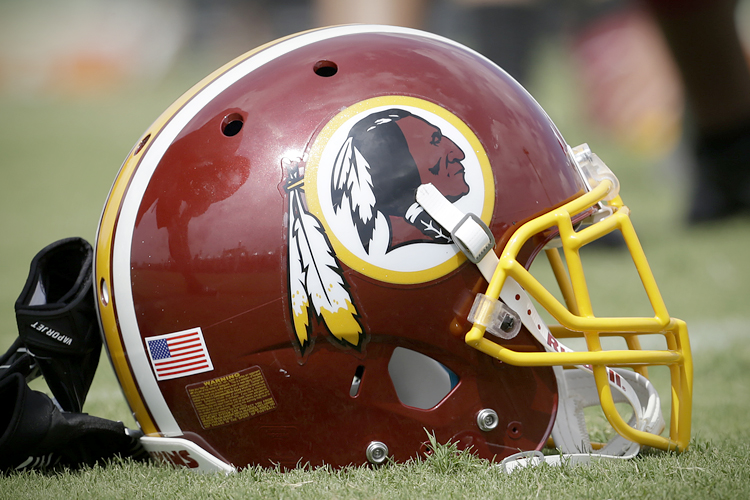
Not expression!? As Redskin John Riggins told O’Connor in another context, “Lighten up, Sandy baby.” Kiya’s “American Woman” number got commodification, dissent, racial vs. sexual loyalties, power and nationalism into three minutes on and around a tiny stage. I had to admit that a G-string and pasties would have added another layer of hypocrisy, flash and delusion, but I don’t think that’s what O’Connor was getting at.

Continue Reading Close

Virginia Vitzthum is a writer living in New York.

Philly's IOU mayor

With so many political favors to return after his anemic victory in Philadelphia, will John F. Street turn City Hall into a house of cards?

  • more
    • All Share Services

Four out of five voters are registered Democrats in Philadelphia. But it still took more than $5 million, a steady parade of national party bigwigs from President Clinton on down, and what may prove to be an unholy alliance of big-money, long-time insiders, patronage hacks, unions and clergy to push Democratic mayoral candidate John F. Street to a very narrow victory over an underdog Republican Tuesday night.

Despite their victory, Democrats woke up with a hangover Wednesday morning. Street’s anemic 8,000-vote margin over GOP entrepreneur Sam Katz raised a serious question for the Dems: How will the party be able to govern effectively in Philadelphia considering how many political favors it took to get Street elected in a city so overwhelmingly Democratic that he should have been a shoo-in?

The answer lies in understanding why this was Philadelphia’s closest mayoral contest since Keystone-Democrat Rudolph Blankenburg beat Republican George Earle by a mere 4,000 votes in 1911. Simply put, John Street being John Street allowed the Republicans their best chance to rule City Hall.

It still took a great campaign for a Republican in Philadelphia to come within 8,000 votes of City Hall. First, Katz was smart enough to entice his only GOP opponent, state boxing commissioner George Bochetto, to step aside without a nasty fight and put himself in a strong position to take on Street.

Then, Katz immediately took the initiative, campaigning all through the summer while Street played rope-a-dope. He raised millions and spent it on TV while Street was recovering. By Labor Day, when Street finally reentered the picture, Katz had captured the momentum, which was only overcome by a frantic, all-out effort by Street’s massive coalition. Katz also out-manuevered Street in the seemingly endless array of debates the two engaged in. He also helped make it not only the most expensive mayoral race in the city’s history, but also one of its best.

Street, meanwhile, had only himself to blame for his razor-thin victory margin.

The 56-year-old veteran politician, who transformed himself from a brawling youthful radical into the savvy leader who helped the city recover from the brink of bankruptcy, is both his own best asset and worst nightmare.

Street is a tireless worker with an amazing grasp of Philadelphia’s $2 billion budget and what makes the city tick. His deft behind-the-scenes maneuvering helped Philly avert a race war when tensions flared in 1997 in the city’s Grays Ferry neighborhood. And his leadership of the Philadelphia City Council, where he presided from 1992 until he stepped down in January, helped transform what once resembled a World Wrestling Federation farm team into an efficient legislative body.

But in person, Street is aloof. Worse, he’s been known to be petty and vindictive to those who won’t go along with his program, which is the main reason that few Democratic council members offered any more than lukewarm support.

As a result, Street was almost unable to overcome his image as a bomb-tosser who once engaged in fisticuffs in City Hall and another time physically shoved a reporter out of his office — an image captured on tape 19 years ago and used in commercials to great effect this spring by primary opponent Marty Weinberg.

In that five-way primary, held in May, Street garnered only 36 percent of the vote, winning in large measure only because Weinberg, his chief rival, was so unpalatable.

Despite capturing little more than a third of the electorate, the primary showed a new side of Street. He maintained the high road, refusing to trash his opponents and running on his record as outgoing mayor Ed Rendell’s key partner in the city’s recovery.

However, any positive impressions Street made on those who have traditionally mistrusted him were squandered by his general election campaign, which from the onset was so poorly run that phone calls often went unreturned and campaign dates were routinely ignored.

It was Street at his worst. Dismal polling results — that showed him neck-in-neck with Katz — forced Street to rely more heavily than ever on a conglomerate of labor and patronage hacks like Weinberg, who was a part-time city resident and makes millions as a legal advisor to the Philadelphia Gas Works.

And therein lies the concerns about Street’s ability to govern. As mayor, he will have to renegotiate four major union contracts, an already difficult task made even more so by news that HMO rates will jump by nearly 10 percent and, according to Rendell in an impassioned stump speech days before the election, wipe out the city’s multi-million dollar budget surplus.

But how can Street be tough on unions when he owes them his election? After all, most union members in this heavily union town were given election day off, and many were virtually ordered to vote for Street.

And how can Street say no to folks like Weinberg who feed off the public trough when, if it weren’t for Weinberg’s considerable muscle among conservative Democrats, Sam Katz would likely have won?

The confusion that set in at the victory celebration early Wednesday morning was the perfect metaphor for the worst-case scenario of a Street mayoralty.

An hour before the official results were released, dozens of fat cats and bigwigs — all expecting favors for their support — were jousting for space on the dais, leaving several white labor union members squeezed out of the festivities, muttering that despite all their hard work getting Street elected, they were quickly dissed when it came time to divvy up the spoils.

And what does an embarrassingly slight victory in a race like this say about the ability of Rendell, who was recently appointed chairman of the Democratic National Committee, to deliver for his party?

Plenty.

Rendell, a fund-raising machine who explained in Buzz Bissinger’s book “A Prayer For The City,” the importance of “getting down on his knees and sucking people off” for the benefit of the city, was able to help raise a total of more than $10 million in the primary and general election. For a candidate, who, while immensely talented, was a tough sell thanks to his prickly personality.

Wheedling, cajoling and, at the end, twisting arms when he had to, Rendell engineered Street’s victory, which, while slim, was still a victory.

After Street, Gore or Bradley will be a piece of cake for Rendell.

Continue Reading Close

Howard Altman is news editor at Philadelphia City Paper.

Weird morning in America

A review of Thomas Pynchon's "Mason & Dixon"

  • more
    • All Share Services

the all-American lost poet Delmore Schwartz — best remembered for the proverb “even paranoids have real enemies” — also deserves credit for the Caffeine Theory of the Enlightenment. By this account, the Age of Reason owed its brilliance, energy and encyclopedic ambition to the arrival, in Europe, of the java bean. Schwartz meant it as a joke. Yet cultural historians have spent many happy years researching the economic, social, literary and political (if not gastrointestinal) consequences of the coffeehouse for the rising bourgeoisie. And the example of Voltaire — who sucked down a few dozen cups a day whenever possible — has long seemed to me to clinch the case.

But the most eloquent statement of the Caffeine Theory, as adapted to American circumstances, appears about halfway into Thomas Pynchon’s “Mason & Dixon.” The year is 1761. Charles Mason (an astronomer) and Jeremiah Dixon (a surveyor) have reached Philadelphia, sent by the Royal Society in London to establish the border between Maryland and Pennsylvania. They have yet to put together a work team for the job. And their first trip to an American coffee shop reveals a murky den of iniquity: a “Combination, peculiar and precise, of unceasing Talk and low Visibility, that makes Riot’s indoor sister, Conspiracy, not only possible, but resultful as well.” Infusions of “the Invigorating liquid” and New World rowdiness give the place a decidedly revolutionary atmosphere: “An individual in expensive attire, impersonating a gentleman, stands upon a table freely urging sodomitical offenses against the body of the Sovereign, being cheered on by a circle of Mechanics, who are not reluctant with their own suggestions.”

Besides coffee, these Yankees wolf down sugary pastries and puff away on tobacco. (A few pages earlier, Mason and Dixon have sampled a little of George Washington’s hemp crop.) The narrator wonders, “May unchecked consumption of all these modern substances at the same time, a habit without historical precedent, upon these shores be creating a new sort of European? less respectful of the forms that have previously held Society together, more apt to speak his mind, or hers, upon any topic he chooses, and to defend his position as violently as need be?”

Let’s see now. Fervent consumption of mood-altering substances … a certain reckless vigor in the expression of opinion … pothead humor … It all sounds rather like the ’60s of more recent memory. And that (as old-timey Communists used to say, and militia folk still do) is no accident!

But more paranoia later. The crossroads where serious literature and conspiracy theory meet is not that busy. Potential readers — most of them, anyway — will reach “Mason & Dixon” along the High Culture thoroughfare. All the standard Pynchonian elements are in place — most conspicuously, of course, the erudition, which is casual yet abundant. “The Crying of Lot 49″ incorporated thermodynamics, Jacobean revenge plays and the evolution of the postal system. “Gravity’s Rainbow” drew from behaviorism, rocket science and German history. With “Mason & Dixon,” a nodding acquaintance with British and American history of the period is taken for granted; and it does not hurt to have a look at Dava Sobel’s recent bestseller, “Longitude,” unless you have acquired some knowledge of 18th century astronomical and navigational problems through alternate means.

Other familiar qualities carry over from Pynchon’s earlier work. There are references (direct and indirect) to his past novels — and, as always, funny character names. The narrator, for instance, is the Rev. Wicks Cherrycoke. Pynchon once dreamed of writing musicals, and his characters sometimes burst into poetry and song — all of it deliberately awful, usually to humorous effect. Sometimes, though, it merits only a groan.

And then there is the prose. For nearly 800 pages, Pynchon mimics the rhythms, punctuation and spelling of the 18th century — with those irregular, tho’ colorful, Bursts of Capitalization and Italics, govern’d by one knows not what internal logic, save it be that of the Author’s peculiar Humor. Every review of the novel in the continental United States, Hawaii and Guam will compare it to John Barth’s “The Sot-Weed Factor,” and some resemblance is certainly there. But in “Mason & Dixon,” the pastiche is livelier and shows a better ear. In the life and opinions of the Reverend Cherrycoke, Pynchon has created a narrative voice that shifts between various styles of prose (novelistic, philosophical, psychotic) — and unites the comic and the pathetic. Pynchon somehow borrows from Laurence Sterne’s “Tristram Shandy” without sounding anything like it. That is more difficult than it might sound.

From his earliest work, Pynchon has focused on that state of heightened and modified attention called paranoia. And I do mean earliest. In a piece of fiction from his high school newspaper, he has a character mentioning “a fascinating experiment in psychology entailing the instilling of paranoid hallucinations into the logical mind by psychoanalytic deletion of the superego.” And so today — with the benefit of keen hindsight — it seems inevitable that he would set a novel in colonial America during the 1760s. After all, the years leading up to the Declaration of Independence were a period of intense conspiracy theorizing. Countless pamphlets and sermons denounced the nefarious intentions of both the king and the pope, and their various minions. George Washington himself believed in a “regular, systematic plan” by which the British intended to reduce the colonists to slaves “as tame and abject … as the blacks we rule over with such arbitrary sway.” Anxiety has deep roots in our history; it finds plenty to nourish it there.

So the mid-18th century colonies offer Pynchon a perfect stage for cabals to skulk upon. “Mason & Dixon” arrives with the requisite number of grand, sinister plots. There are schemes involving — among others — the Freemasons, Sweden, France, the Dutch East India Company, calendar reform and a very long-term Jesuit maneuver to take over China. (Diagraming how the conspiracies all link up is a task best left to Lyndon LaRouche’s staff.) Cherrycoke’s impressions of the New World Order have their echoes in the land today, but the familiar paradoxes of paranoia are not so overtly the focus of Pynchon’s own interest, now, it seems to me. He gives Cherrycoke other things to think about.

What has taken its place, then? Mysticism, for one thing. And melancholia as well. In Pynchon’s hands, the surveying expedition becomes the model of a rational, scientifically-minded Enlightenment trying to re-create the world in its image. Mason and Dixon use precise instruments and calculations to determine where a perfectly straight line should be. Yet their progress — moving east to west, slowly, for several years — cuts through scenes of Old World occultism (golems!) and New World religious enthusiasm. Backwoods surrealism is not the only dominant note, though. Extermination of the Indians is off to a gradual but promising start. And the line divides (or, conversely, joins) a slave state and a free state. The coffeehouse libertarians do not trouble themselves too much about such things.

As Mason and Dixon finish their work, they realize that the line itself is evil. “To mark a right Line upon the Earth,” explains their companion, Captain Zhang, master of feng shui, “is to inflict upon the Dragon’s very Flesh, a sword-slash, a long, perfect scar, impossible for any who live here the year ’round to see as other than hateful Assault. How can it pass unanswer’d?” Or perhaps the line’s effects simply confirm “the melancholy suggestion, that the ‘new’ Continent Europeans found, had been long attended, from its own ancient Days, by murder, slavery, and the poor fragments of a Magic irreparably broken.” All of which must sound unbearably gloomy. Not at all. “Mason & Dixon” is, by turns, demanding, silly and profound. And, at times, just plain weird. (There is, for example, an involved subplot involving an amorous mechanical duck that undoubtedly owes something to the “unchecked consumption of … modern substances.”) Pynchon’s reputation as a fearsomely abstruse and difficult writer is secure, as long as the larger reading public never finds out how funny and moving he can be. After finishing “Mason & Dixon,” I am ready to turn back to page 1, to read anew Pynchon’s map of “this Country cryptick and perilous.”

Continue Reading Close

Scott McLemee, a contributing editor at Lingua Franca, writes regularly for Salon.

Page 10 of 10 in Pennsylvania