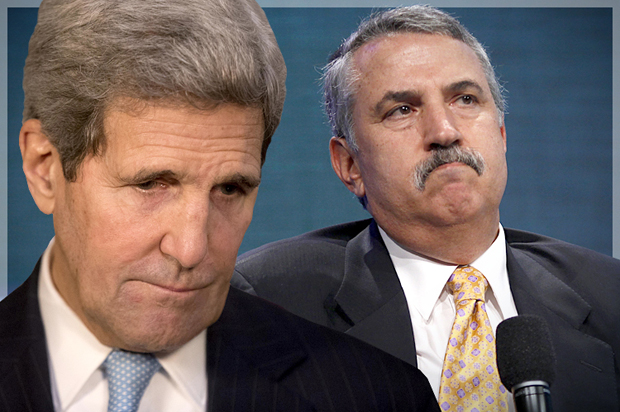
Thomas Friedman

Thomas Friedman: America’s escalator is broken and only Mike Bloomberg can repair it

The dumbest columnist in the world calls for Mayor Mike to save America with third-party pixie dust

  • more
    • All Share Services

Thomas Friedman: America's escalator is broken and only Mike Bloomberg can repair itThomas Friedman (Credit: AP)

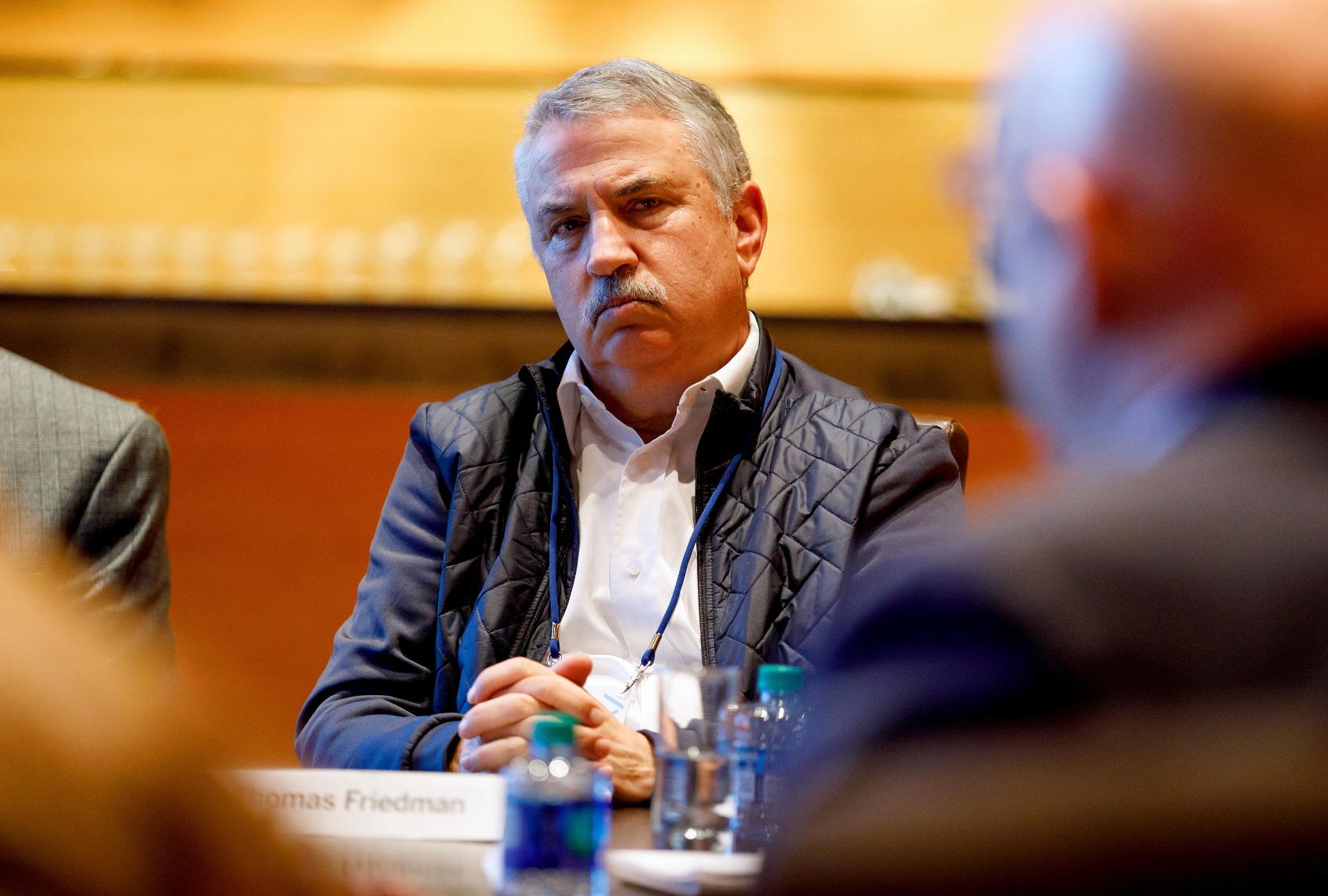
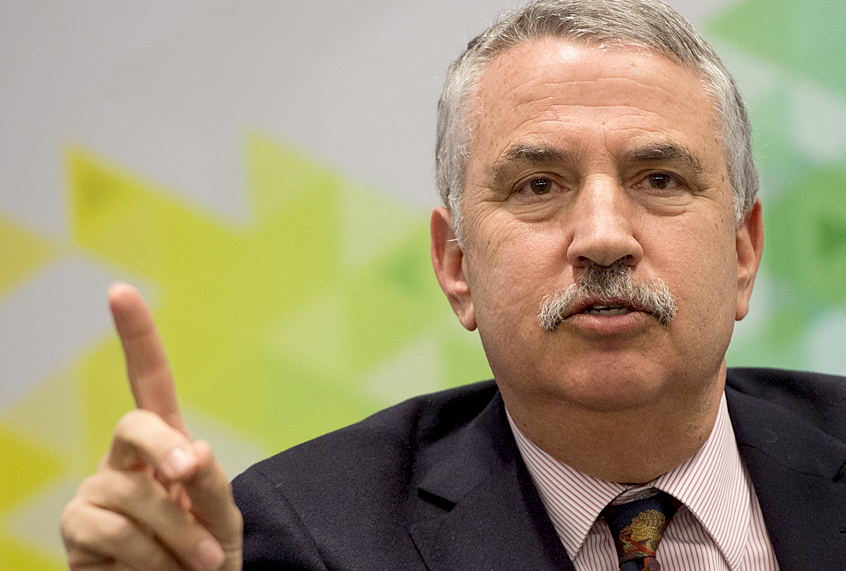
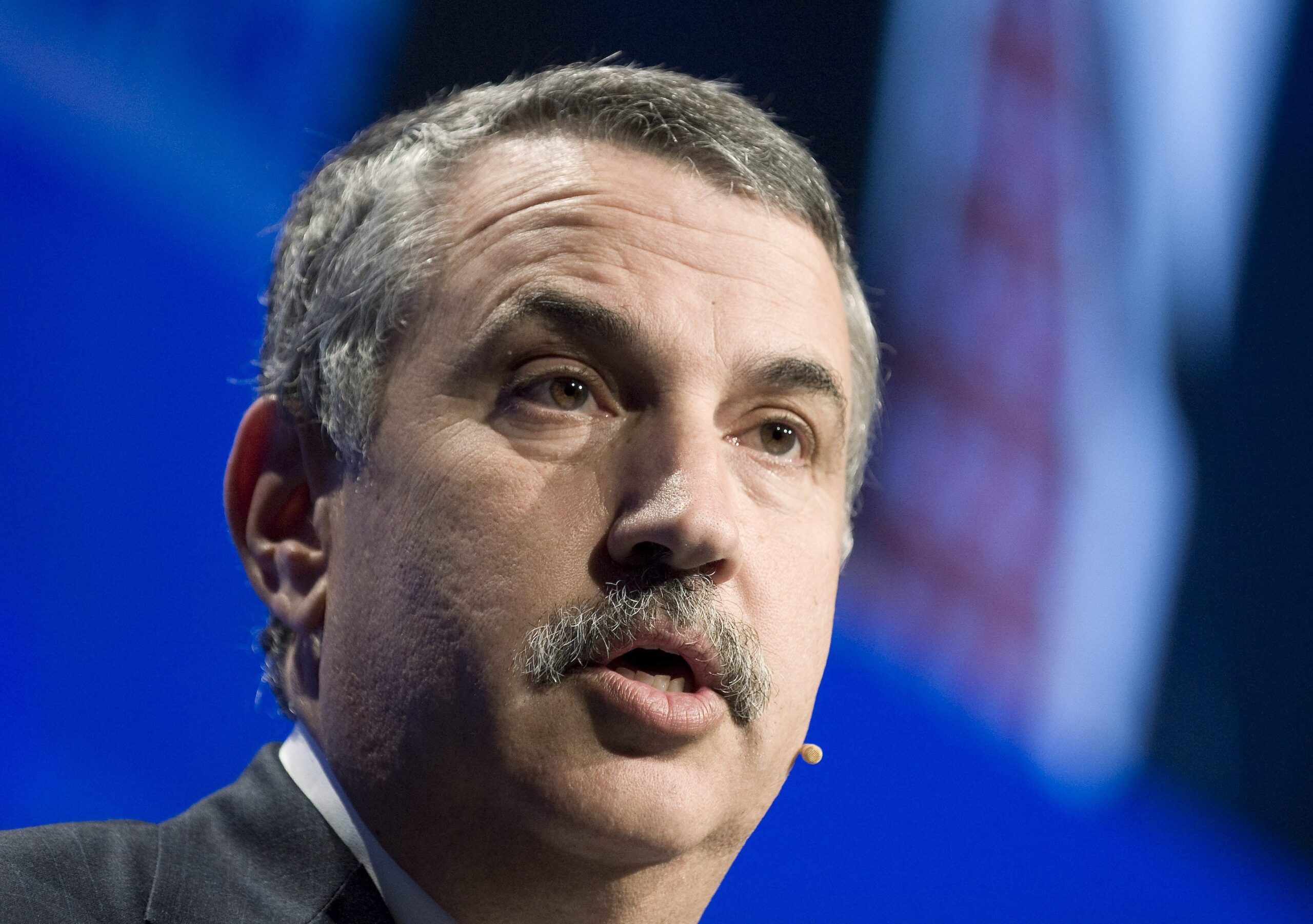
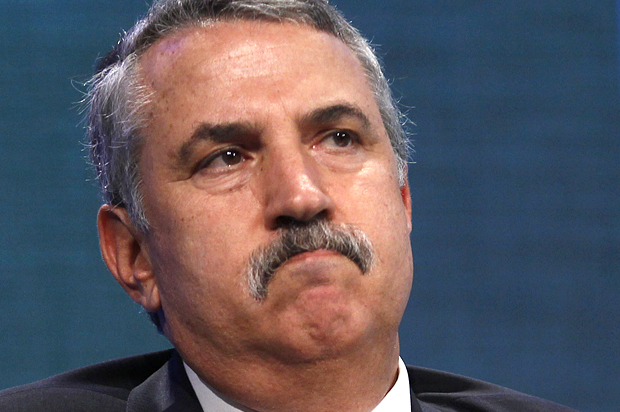
Thomas Friedman, globe-trotting superstar New York Times columnist and America’s foremost Big Thinker, noticed recently that America is Broken, and by “America” he means an escalator, in a parking garage, at the train station in Washington. There is only one man who can fix this escalator that represents America: Famed escalator repairman and billionaire mogul Mike Bloomberg.

I had to catch a train in Washington last week. The paved street in the traffic circle around Union Station was in such poor condition that I felt as though I was on a roller coaster. I traveled on the Amtrak Acela, our sorry excuse for a fast train, on which I had so many dropped calls on my cellphone that you’d have thought I was on a remote desert island, not traveling from Washington to New York City. When I got back to Union Station, the escalator in the parking garage was broken. Maybe you’ve gotten used to all this and have stopped noticing. I haven’t. Our country needs a renewal.

And that is why I still hope Michael Bloomberg will reconsider running for president as an independent candidate, if only to participate in the presidential debates and give our two-party system the shock it needs.

Sure, yes, that is a very logical progression. “I had crappy cellphone service on the train because of the two-party system. Save me, Mayor Bloomberg.” In Bloomberg’s America, calls wouldn’t be dropped! Under Bloomberg’s aegis, every single escalator in New York is operational. Men are escalated to and from basements and mezzanines like kings in our shimmering parking garages that are an inspiration to the world.

Because he is a sophist and a fool, Friedman takes mild inconveniences suffered on a trip from one enclave of wealth and power to another to be proof of national decline and his prescription is based primarily on clapping really hard for Tinkerbell.

Bloomberg doesn’t have to win to succeed — or even stay in the race to the very end. Simply by running, participating in the debates and doing respectably in the polls — 15 to 20 percent — he could change the dynamic of the election and, most importantly, the course of the next administration, no matter who heads it. By running on important issues and offering sensible programs for addressing them — and showing that he had the support of the growing number of Americans who describe themselves as independents — he would compel the two candidates to gravitate toward some of his positions as Election Day neared. And, by taking part in the televised debates, he could impose a dose of reality on the election that would otherwise be missing. Congress would have to take note.

THE NEAR FUTURE: Mitch McConnell picks up the day’s Washington Post. A1 headline: “BLOOMBERG CALLS FOR SENSIBLE SOLUTIONS ON IMPORTANT ISSUES.” McConnell gasps! “Get me Boehner,” he shouts. “It’s time to get serious on comprehensive revenue-raising tax reform, and escalator repair.”

What I enjoy most about this column is that it comes as the Times’ grown-up columnists were having a debate about the merits and goals of “centrism” that had at least some sort of connection to observable political reality. Then little Tommy Friedman arrives with his touching plea for the magical third-party man to solve all of America’s problems (broken escalators) with his centrism wizard staff. You can’t even refute his argument, because there is no argument. “America needs leaders who share all of the priorities of the current administration but who have Big Ideas like fixing this broken escalator with tax reform.”

Alex Pareene

Alex Pareene writes about politics for Salon and is the author of "The Rude Guide to Mitt." Email him at apareene@salon.com and follow him on Twitter @pareene

Hack List Alums: Where Are They Now?

Still employed, mostly

  • more
    • All Share Services

Hack List Alums: Where Are They Now?Clockwise from top left: Jonah Goldberg, Bill Keller, Thomas Friedman and George Will

You can think of these guys as retired from the Hack List (like a Hall of Fame) or as simply to dull to rip into at length for a second time, but these 2010 Hack List veterans did not actually improve their game in 2011.

Pat Caddell (Last year: Number 27.)

The fake Democratic pollster is repeating himself, and somehow it just gets dumber every time.

Jonah Goldberg (Last year: Number 7.)

In March Jonah Goldberg literally wrote “meh” instead of rebutting an argument, in his nationally syndicated political column.

Thomas Friedman (Last year: Number 3.)

Thomas Friedman continued to, domestically, demand a centrist third party that acted exactly like our current centrist Democratic party. But his best work, as always, concerned foreign lands. What other columnist would have the balls to go to the scene of a popular revolution and “quote” a native pleading with the wise American columnist to explain what he thinks is going on in her country?

Marty Peretz (Last year: Number 5.)

Poor Marty lost his New Republic blog and “editor” title, but the magazine still lets him go on at length about middle eastern affairs, despite his lengthy and well-documented history of being an unrepentant anti-Arab racist.

George Will (Last year: Number 11.)

Will got an early start on his traditional election year conflict of interest, trashing Romney and Gingrich on television and in print before being forced to disclose that his wife is a paid Rick Perry advisor. Also, he’s still lying all the time about climate change.

Marc Thiessen (Last year: Number 6.)

The lying torture-defender still has a Post column, and even got to ask questions at a presidential debate! It’s not as morally repulsive as his other work, but the single silliest thing he wrote this year was this bit claiming that “Occupy Wall Street” was to blame for the inevitable failure of the supercommittee.

Bill Kristol (Last year: Number 17.)

Kristol’s Weekly Standard belatedly and bizarrely hopped on the Gingrich bandwagon as the year drew to a close. And why not? Kristol wouldn’t be Kristol if he didn’t endorse and prop up toxic, unelectable Republicans.

Mickey Kaus Number 25.)

The inventor of annoying political blogging moved his blog to the Daily Caller, where I assume he is still complaining about immigrants. His hackiest moment: I’ll say, picking more or less at random, this post, expressing dismay that Arizona nutcase politician Russell Pearce was recalled, because it sent the message that Arizona voters may be going soft on fanatical hatred of immigrants.

Tucker Carlson (Last year: Number 22.)

Tucker Carlson’s Daily Caller news site is as inessential as ever. His hackiest moment of the year: Hiring a professional Berman and Company liar to edit the Caller, then printing a rather blatantly untrue story about the EPA.

Tina Brown (Last year: Number 18.)

Tina may be working incredibly hard at salvaging a dying newsweekly, with a clueless boss holding the purse strings, but on the other hand, that Princess Di fanfic cover was unacceptable. (Her actual hackiest moment, though, might be doing a phone interview and a conference call from the Acela’s quiet car.)

Continue Reading Close
Alex Pareene

Alex Pareene writes about politics for Salon and is the author of "The Rude Guide to Mitt." Email him at apareene@salon.com and follow him on Twitter @pareene

Paul Krugman and the art of calling out a colleague

The New York Times columnist demolishes familiar arguments made by unnamed hacks

  • more
    • All Share Services

Paul Krugman and the art of calling out a colleaguePaul Krugman, David Brooks and Thomas Friedman (Credit: AP)

The New York Times opinion section, like the Senate, has this rule where you aren’t allowed to call out a colleague by name when you think he or she is full of shit. As in the Senate, this rule is silly and anachronistic and enforces a strained phony cordiality at the expense of honesty. It doesn’t ever stop Paul Krugman, though, who simply responds to his columnist peers’ dumb arguments without ever referring to them by name.

For example: David Brooks, whose most annoying schtick is to write something that sounds reasonable until you realize what he’s actually arguing (like, for example, “people often don’t intervene when they see something horrible happening” is a very interesting point, unless your real point is that this is because of hippies and the terrible ’60s), wrote earlier this month that American income equality is overstated, and that the real income gap worth examining is that between the college-educated upper middle class, who are doing well, and those with only a high school education, who have been left behind by our post-industrial economy. (In this case Brooks’ “actual” point is that “Blue inequality” is merely the resentment of educated liberals who hate success while “Red states” have the real authentic American inequality.)

Krugman, in a column published three days later, wrote:

Anyone who has tracked this issue over time knows what I mean. Whenever growing income disparities threaten to come into focus, a reliable set of defenders tries to bring back the blur. Think tanks put out reports claiming that inequality isn’t really rising, or that it doesn’t matter. Pundits try to put a more benign face on the phenomenon, claiming that it’s not really the wealthy few versus the rest, it’s the educated versus the less educated.

So what you need to know is that all of these claims are basically attempts to obscure the stark reality: We have a society in which money is increasingly concentrated in the hands of a few people, and in which that concentration of income and wealth threatens to make us a democracy in name only.

Hah, I wonder who those “pundits” are, don’t you? He went on:

In response, the usual suspects have rolled out some familiar arguments: the data are flawed (they aren’t); the rich are an ever-changing group (not so); and so on. The most popular argument right now seems, however, to be the claim that we may not be a middle-class society, but we’re still an upper-middle-class society, in which a broad class of highly educated workers, who have the skills to compete in the modern world, is doing very well.

It’s a nice story, and a lot less disturbing than the picture of a nation in which a much smaller group of rich people is becoming increasingly dominant. But it’s not true.

Oh, those usual suspects!

In today’s New York Times, Krugman’s column on the doomed supercommittee contains what I would characterize as a slightly off-topic tangent:

Oh, and let me give a special shout-out to “centrist” pundits who won’t admit that President Obama has already given them what they want. The dialogue seems to go like this. Pundit: “Why won’t the president come out for a mix of spending cuts and tax hikes?” Mr. Obama: “I support a mix of spending cuts and tax hikes.” Pundit: “Why won’t the president come out for a mix of spending cuts and tax hikes?”

You see, admitting that one side is willing to make concessions, while the other isn’t, would tarnish one’s centrist credentials. And the result is that the G.O.P. pays no price for refusing to give an inch.

These so-called “centrist” pundits sound pretty dumb, right? Here’s New York Times columnist Thomas Friedman, earlier this week:

Here we are in America again on the eve of a major budgetary decision by yet another bipartisan “supercommittee,” and does anyone know what President Obama’s preferred outcome is? Exactly which taxes does he want raised, and which spending does he want cut? The president’s politics on this issue seems to be a bowl of poll-tested mush.

How funny, this sounds a lot like what Paul Krugman’s unnamed idiot “centrist” pundit keeps saying.

To my knowledge, no one bothers to do this with Maureen Dowd columns, because she rarely makes arguments worth engaging with.

[Second example via Weigel]

Continue Reading Close
Alex Pareene

Alex Pareene writes about politics for Salon and is the author of "The Rude Guide to Mitt." Email him at apareene@salon.com and follow him on Twitter @pareene