Debra J. Dickerson

Race matters

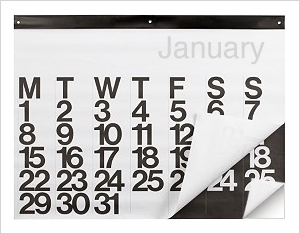
Black History Month is coming soon. I wonder: Will anyone pay me to be black for them this year?

  • more
    • All Share Services

Race matters

When you’re as neurotic as I am, it’s important to plan ahead for things to worry about. That’s why Thanksgiving found me obsessing over Black History Month. You see, it’s early December, and no one’s asked me yet to come and be black for them in February.

Just as all professors yearn to be stand-up comedians, those of us who eke out a living writing in our basements long to be highly paid blowhards on the lecture circuit where, if you’re shameless enough, you can make serious dough for just a few hours’ work. If you’re black, February is the optimal time to cash in. All the lucrative keynotes and fancy book clubs sign their speakers six to 12 months in advance, so I was pitifully late in the all too obvious realization that I had been passed over. Still, I got to thinking. Even if I had been invited somewhere, I wouldn’t have the least notion what to say about the role of race in modern life, except that I’m pissed only to be asked the question once a year. The irony of Black History Month is that it makes life a bitch for blacks. All that pesky thinking about how to take advantage of an opportunity that’s condescending, if well-intentioned, at its core.

Black ambivalence to BHM specifically, and to the travails of always being the racial Lone Ranger generally, is a well-worn topic among “mainstream” blacks. In 1997, a wry essay about the indignities of BHM made the rounds of what Zora Neale Hurston, also wryly, called the “Niggerati”: black intellectuals, artists and writers. In her piece for the Seattle Times, Ethel Morgan Smith, a black professor at a white university, sketches an evocative pastiche of what it’s like to be required to represent your race when you least expect it.

She muses:

During February, my mailbox is overflowing. Most of the mail wants me to represent “my people” for some worthwhile organization in February and February only. Sometimes the tone is pleasant. I generally accept those. Most often the tone is not pleasant.

I group the mail into categories of “accept for sure,” “decline for sure,” “maybe” and “I’ll get back to you.”

I’ve had letters that point out (if not in so many words) that their tax dollars pay my salary and they rightfully deserve a piece of me. The least I can do, these letters imply, is come and be black for them. I dump those requests in my recycling bin.

I also get numerous calls. A pleasant woman from the arts council needed someone to attend her luncheon book-club meeting at her house. One of my colleagues, whom I haven’t even met, gave her my telephone number. Her group is thinking of including a black writer on its reading list next year. I accept her pleasant invitation. It doesn’t conflict with my calendar. I can be black that Wednesday.

Come January, we’ll all start sending her words around again, even as we scour our in boxes for last-minute solicitations and fill our send boxes with indignant forwards of “come be black for me” invites from white people we’ve never met. The ones we forward and mock are those from people who expect us to come be black for free. The others, the paying ones, we hoard and reply to promptly.

What I most appreciated about Smith’s essay was its nuance, its lack of bile and its appreciation of the absurd; dealing with race is hard for everyone. We think you’re racist if you ignore BHM and mock you when you honor it. Unless we get paid. Avoiding embarrassment, let alone offense either experienced or inflicted, is damned tricky.

The one time I had a “real” journalism job, I was perfunctorily informed of the planning meetings for the upcoming National Association of Black Journalists conference and automatically assigned to staff our booth there. I am not now, nor have I ever been, a member of the NABJ; it’s not personal, I’m just not a joiner and I hate meetings. When I politely disengaged, the whites, while surprised, let it drop. The blacks took it less well, so who’s essentializing whom? Another black friend whose children attend a swanky Manhattan private school was sweetly asked to explain Kwanzaa at a holiday school assembly. (He’s Catholic.) Harder to forgive is one black journalist’s report of the frequency with which her brainy, lively child is complimented, by whites, on his no doubt bright future as a rapper.

Blacks understand that it isn’t, or needn’t be, racism that causes pale knees to jerk like this; everyone says something stupid eventually, and you have my official permission to mock anyone who calls Al Sharpton in response to such benign inanities. Whenever I meet a British journalist working here, it’s all I can do not to ask him if he knows “Chris,” a British journo friend of mine, the same way that whites ask me if I know “Dave,” since we’re both from St. Louis. (“And both black” is the part studiously avoided in the latter instance.) Given the number of times a white acquaintance has dragged me across a party to triumphantly introduce me to the only other black person there, someone with whom I have little in common besides the ditz who just left, I have no excuse for recently introducing two random Nepalis by e-mail.

In a D.C. Starbucks recently, I stood star-struck trying to get up the nerve to approach a hero of mine. Hating myself even as the witless words left my lips, I actually said, “Are you who I think you are?” The handsome, dignified man who’d faced down the Klan with MLK was too dignified to laugh at me, so he asked the only question a sentient human could, “Who do you think I am?”

My mind went blank. “Andrew Young, right?” (This was pre-Wal-Mart.)

“Sorry, no. Just Julian Bond.”

If a white person had been overheard making such a mistake, bitter, facile “Guess what? We all still look alike” posts would have peppered the Negro blogosphere. I got the benefit of the doubt that my stupidity was just that, star-struck tongue-tiedness and not racism. We had a lovely chat. I’m sure Julian Bond is the consummate gentleman, but I wonder how tense that moment might have been for even the most well-intentioned white. All of which lets me know I’m better off without all that quick BHM cash because, like the essayist who spoke for all of us, I struggle daily figuring out how to handle my race, my personhood and my personality simultaneously. What wisdom could I possibly impart to a Black History Month crowd, black or white, when I keep bumping into exceptions to the rules — i.e., human beings?

It used to be easier. In the ’70s, when a friendly phone conversation to set up a nail appointment turned into an ugly, sudden denial of service once I showed up with my afro, I knew exactly what to do. Back then, people were helpful enough to say, “You didn’t sound black on the phone!” Again, I knew in the ’80s when none of my white Air Force buddies reacted to, let alone objected to, white civilians’ frequent use of “nigger” during a volleyball game. No one called me, the lone Negro, a nigger. They just kept demanding that we athletic GIs fresh from training stop hitting the balls over their heads since, “not being no nigger” they couldn’t reasonably be expected to field them.

Ah, but the ’90s and the ’00s. There’s been so much progress that black writers like me have been urging our community to focus more on opportunities than on obstacles. Then, all in one week, an unarmed black bridegroom is torn apart by police fusillade and funnyman Michael Richards doesn’t even need to get drunk before venting his hatred of us for daring to interrupt the mighty white man. What speech could encompass both realities?

Still, only a few of us have to confront “in your face” racism like this. Our dilemmas are small, but frequent, and woven into the fabric of our daily lives. So, what to do when a tipsy gay friend blurted out, “Yeah! The sister’s gonna dance!” when I joined the gang on the dance floor at an all-white party. Everyone froze. Poor Gary’s face was red with regret; his eyes pleaded with me not to hate him. Looking back, I suppose it was then that my shot at the Black History Month moolah officially disappeared before it ever materialized. I could be black or I could be human.

“OK, princess,” I said. “One free ‘flaming queen’ slam to be named later, deal?”

“Deal.”

All of a sudden, I see the difference between then and now. Back then, a black woman had to clean up the mess. Now, a black woman can choose to clean up the mess. Not much of a Black History message, huh? Call me a Tom but I laughed aloud at the absurdity of it all when those drunken white folks actually cheered at my gay bashing/de-escalation of tension.

And then the sister danced.

Souls on ice

While the GOP was exploiting the bigotry of the black clergy in the midterms, black piety was melting before America's eyes.

  • more
    • All Share Services

Souls on ice

Since we’ll all no doubt be parsing the meaning of the 2006 midterms till kingdom come, it’s time to tackle the area of discussion most likely to lead us all to hell and damnation: religion. Black religion, specifically. Is it just me, or did we learn an awful lot of things we’d all much rather we not have about the black view of religion and its role in society in the last election cycle? Raised a Southern Baptist in a home so pious that I could play neither cards (tools of the devil) nor games with dice in them (see: Monopoly), I thought I knew a thing or two about fire, brimstone and all the many reasons I’d be looking for asbestos panties when the bacon fat and Marlboro Lights finally call me home, but even I was taken aback by the bitch-slapping that the black clergy gave America, courtesy of a determined GOP.

I was even more surprised by how cowed America remained when doused in bigotry and anti-intellectualism by the group known worldwide as “the conscience of America.” Since it’s unlikely that a beast as well-fed as the black religious right has lately been is going to quietly go back on the calorie-restricted diet of irrelevance it has long subsisted on, how long will it be, I wonder, before America, guilty as it still rightfully is over its racism, finds its backbone and calls bullshit on the brothers.

In a very religious nation, blacks are the most religious of all. Nationally, 83 percent describe themselves as Christian. Accordingly, 67 percent believe in an afterlife in either heaven or hell. Surveys show that only 3 percent of blacks report having no religion but instead are the Americans most likely to participate in religious activities like prayer, Bible reading and worship attendance. They are most likely to strongly agree that the Bible is totally accurate and to strongly disagree that Jesus sinned while on earth.

Their church services are even 70 percent longer than whites’, and blacks are among the most generous givers to religious organizations; while nationally three out of every four dollars donated go to religious institutions, the figure is nine out of 10 for African-Americans. The black tradition of tithing (a biblical requirement to give a set percentage — usually 10 — to the church) is strong enough to have propelled affluent, majority-black Prince George’s County in Maryland into the top five counties in the nation for charitable donations.

Without a doubt, then, blacks are America’s most religious group. On any given Sunday, blacks all over America fill church pews to have their hearts and minds filled with … what? If you guessed turning the other cheek and offering paeans to tolerance, you’d be in for a shock.

As the gospel soundtrack accompanying any civil rights movie or documentary quickly reveals, blacks have long been seen as dignified and exalted by their suffering, a position they could occupy as long as they were only marginally politically relevant. But five minutes into the GOP’s renunciation of the Southern Strategy and up to their ashy elbows in attention, validation of their prejudices, and faith-based-initiative millions, blacks turn out to be no more high-minded than any other group that’s bellied up to the special-interest trough and — to mix a metaphor — no less quick to throw others out of the lifeboat. It was particularly fitting, then, that I happened to watch Alfred Hitchcock’s 1944 “Lifeboat” this weekend.

In it, the Germans sink an ocean liner, and we join the survivors in their quest to survive the sea and each other. There’s the doomed, shell-shocked Blitz refugee, complete with doomed baby, the captain of the U-boat that sank them, a dedicated but lovelorn Army nurse, a multimillionaire industrialist, a glamorous Margaret Bourke-White knock-off, and three merchant mariners. And, of course, George (“Call me Joe”) Spencer, the black ex-pickpocket so reformed now that he’s all but wearing Gandhi’s spare toga.

Knowing himself outside (and therefore above) decision making, he abstains from the fray on what to do with the German. “So I gets to vote now?” he observes without bile but only, always, with pity, as the whites make a perfunctory effort to pretend that his input matters. Delicately, seemingly out of respect for him but really out of respect for themselves, no one pursues the matter of his preferences further, and he remains largely out of frame. Until, of course, either music or Grace is required. Only Joe can manage the words, transported by piety and bathed in holy light, to the Lord’s Prayer for a burial at sea. At the movie’s climax, when the castaways startlingly beat and drown the nefarious Nazi, Joe turns his back on the horror of it all; only he refuses to join the mob.

There could hardly be a better metaphor than “Lifeboat” for blacks’ role in politics as it existed until recently. But with the GOP’s newly launched effort to win the black vote, the pastoral view of both the piety and humanity of blacks (more Protestant than the Puritans and ennobled by oppression) may well, if the religious left keeps twiddling its thumbs, dissolve before America’s eyes and take the electorate in directions no one ever contemplated. At a minimum, the understanding of blacks as victims either exalted or emasculated by their suffering will be … let’s just say, modified.

The core understanding of blacks as easily disregarded guilt symbols who sing and pray while the white folks run most things has expanded little since the pre-movement days, mostly because the GOP officially scorned their vote. The only change of note in the story line was the spotlight that the GOP threw on non-GOP blacks’ racism. Al Sharpton, Jesse Jackson of “Hymietown” fame and the racist lunacies of the Nation of Islam have been such reliable right-wing boogeymen that Clinton couldn’t get elected president until he had his Sister Souljah moment. And what a masterful twofer that was: by disowning Sister Souljah at a Jesse Jackson event, Clinton sent the world’s most unsubtle message to whites not to mistake his fondness for fried foods, round rumps and saxophones to mean he didn’t know how to keep those people in line.

Now that political shoe is about to be on the other foot, because the GOP’s black outreach was aimed directly at a black bigotry. First stop: homophobia. It’s simply inarguable that the white right reached out to religious blacks via that most polarizing strand of their psyche and, in so doing, cynically elevated the unworthy and the untested to national prominence — black ministers like the Rev. Dwight McKissic of Cornerstone Baptist Church in Texas. At 2006′s high-profile right-wing Values Voter Summit, McKissic attacked as “insulting, offensive, demeaning, and racist” any consonance between gay rights and civil rights. A well-known and vicious opponent of gay rights, he derided gays as “comparing their sin to my skin” and scoffed that they “can’t reproduce so they have to recruit.” While the civil rights movement sprang from holiness and righteousness, the gay rights movement springs from “the pit of hell itself” and is a “satanic anointment,” birthed as it was from the anti-Christ who himself is, of course, gay.

The only wonder is that it took the GOP so long to mine this rich conservative vein when even liberal black ministers like the civil rights activist Rev. Willie Wilson of Union Temple Baptist Church in southeast D.C. channel Jesus thusly:

“‘Lesbianism is about to take over our community … I ain’t homophobic, because everybody here got something wrong with him,’ he said. ‘But … women falling down on another woman, strapping yourself up with something, it ain’t real. That thing ain’t got no feeling in it. It ain’t natural. Anytime somebody got to slap some grease on your behind and stick something in you, it’s something wrong with that. Your butt ain’t made for that.

“‘No wonder your behind is bleeding,’ he said. ‘You can’t make no connection with a screw and another screw. The Bible says God made them male and female.’

“The congregation can be heard shouting its approval in the background during Wilson’s sermon.”

No wonder, then, given his parishioners shouted approval, that Wilson could only bring himself to call his remarks “intemperate” when the backlash began. Indeed, it turns out that rank-and-file blacks may exhibit a political complexity and potential for growth that their leaders don’t: While two-thirds of blacks oppose, and voted against, same-sex unions, they also believe that the Democrats will handle the issue better than the GOP. And they voted accordingly: The black percentage of the Democratic vote remains virtually unchanged. Fifty-six percent of conservative Virginia’s blacks voted to ban same-sex marriage, but only 15 percent went on to vote for Republican George Allen.

Black ministers like McKissic and Wilson may truly believe that homosexuality is blacks’ most pressing problem, but there is reason to believe that not all those amens were sincere. Now that blacks are wiggling free from the echo chamber of irrelevance that kept them from hearing what their thoughts sound like to others, they may come to wish they could go back to rocking hymns while the real citizens got to make all the decisions. It’s much easier being a plaster saint than a simple voter trying to hold on to his morality and humanity in a winner-take-all system. The humbling that blacks are about to undergo, as they engage in the same bruising consciousness-raising that whites have had to, will likely do wonders for the soul.

Continue Reading Close

Memo to O.J.: Kill yourself

But meanwhile, let's hear it for the white girl who got him to confess.

  • more
    • All Share Services

Memo to O.J.: Kill yourself

When I first heard of the O.J. saga, it was only the tiny rectangle of news I could make out on my corner news box as I walked to work. I lived in San Francisco in 1994, and I saw the headline about O.J.’s pathetic slow-speed Bronco chase as I dodged North Beach’s swarms of fanny-packed tourists and the aggressive, mentally altered panhandlers who screeched in their far-too-generous wake. As a summer associate at a law firm, I spent most of my time hiding from partners bearing last-minute work so that I could party away the weekends with the other overpaid summer associates, as was our divine right. So after that news box glimpse I tried to ignore all things O.J., and the firestorm of attention about him has always been a mystery to me. Squatting and squinting on that North Beach corner, the genius law student solved the case: entitled, famous, paid-to-be-violent bully kills the centerfold ex-wife his power bought for him and the Good Samaritan unlucky enough to be standing there when the testosterone, steroids and male privilege finally hit the fan. What’s with all the tsuris?

A decade and a never-ending national nightmare later, I’m still wondering. Disgusted and dismayed from the start, I may well have been the only sentient American to avoid all contact with the seamy, ongoing spectacle. I failed to block it out, however; its presence was as impossible to avoid as secondhand smoke. But I tried. And back then, whenever I was forced to talk about it, all I ever said to all who would listen, was: He should have killed himself in that Bronco on the 405.

As most people were happily immersed in the forensic gore and tawdry details of the case, I never offered that gruesome tidbit of wisdom to anyone who wasn’t shocked into speechlessness. But 12 years later I remain steadfast. As Stephen Colbert would say, the facts may change but my opinion never will. Better late than never. O.J. — take a powder. Like anthrax. Spare your kids, spare the victims’ families, spare the planet, and embrace the only remaining act of decency left to a human hemorrhoid like you. Leave. Given the living hell that must be your life — and though this is a minor, minor benny — spare yourself the agony of facing that monster in the mirror every day. For once, be a man. Drive into a tree. OD on the suitcase full of psych meds you must be taking. Slit your bloodstained wrists. Drink hemlock. Gouge your eyes out with your Heisman or choke down a “Naked Gun” DVD. Just do the species a favor and go claim that seat Udai and Qusay are saving for you.

How did a no-brainer “husband kills wife, innocent bystander” murder become a Rorschach for all of America’s unresolved quandaries of race, gender, socioeconomic status, celebrity and, most of all, justice? Whites blamed blacks for being either too stupid or too primitively tribal to deserve (or understand) jury duty, blacks were so determined to get even with whitey that they demanded and celebrated the acquittal of a vicious double murderer, and the police were so used to framing even the guilty that they don’t even bother to do it well anymore. Like the painful clarity that comes the morning after a bad, bad night of drinking, one would imagine that America would have long since been too ashamed of its revealing O.J. behavior to have an appetite for more. And yet here we are, and it comes rushing back.

How much better off we would all be, how precious that tiny shred of blessed ignorance about how far we haven’t come might seem, had you, O.J., only been moldering in Forest Lawn these past dozen years. But you’re alive, because you’re a wuss — a “remnant,” as a girlfriend of mine scornfully calls the limping, deficient crop of men available to us as single mothers of a certain age. Like a herpes outbreak, here you are to plague us again. Since you won’t die, who will finally, if only a tad, cleanse us all of the poison of injustice that infects us?

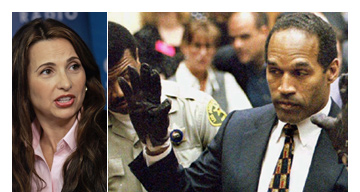
Perhaps a woman, an abuse victim, a medium who channels the battered everywhere, a virago in the original and true sense of the word. Judith Regan had to do what you and an army of lawyers, cops and filthy minded citizen-voyeurs couldn’t.

Like most observers, I assumed that Regan, publisher of O.J.’s upcoming quasi-confession “If I Did It” and interviewer of Mr. Simpson on Fox for two separate hours on Nov. 27 and 29, was a bottom-feeding huckster willing to do anything for a dime. Or, I assumed that she was merely a bottom-feeder. But as I sat down to write this, I came to believe that, whatever her motivation, on some level she had to be focused on wringing a confession from the bastard, the only kind such a coward is capable of: a pitifully hypothetical one. Turns out, I was right in spades. I just hadn’t known it was personal.

In Friday’s New York Post, Regan comes out spitting and clawing and, frankly, breaking my heart. The pain and fury she suffered as an abused and unavenged wife sizzles on the page. In a self-penned article titled “Why I Did It,” she writes, “I wanted the confession for my own selfish reasons and for the symbolism of that act.” She says that her charming, accomplished, handsome first husband knocked her out and put her in the hospital. “I had once been that young woman … who believed in the beauty of romance, the power of love … Like Nicole Brown, I believed with all my heart … and then got punched in the face.” Ever since O.J.’s acquittal, which she predicted and which she watched, weirdly, in the company of Howard Stern, Regan says she has wanted some form of “conviction.” “And if Marcia Clark couldn’t do it, I sure wanted to try.”

If it turns out Regan made any of this up, I may go O.J. on her myself and skip the suicide watch. But absent any proof to the contrary, and given the widespread and sadly unreported abuse of women generally, I believe her, as I never believed O.J. or trusted the proffered explanations of the bloodthirsty crowds calling for either his acquittal or his head. After a dozen years of abstinence, I will definitely be watching on TV next week as O.J. squirms and suffers and cowers before every woman ever pummeled anywhere by a sorry-assed man.

Turns out, it takes a white woman to clean up a racial mess she didn’t make and drag us to where we should have been all along — demanding justice. Nothing less, nothing more, nothing else. If Judith Regan is half the woman this coup hints at, by Christmas we may all be dancing on O.J.’s grave.

Continue Reading Close

Old school

I'm supposed to be inspired by women my age who run marathons and go back to college, but I'm too tired to be young. It's too much work.

  • more
    • All Share Services

Old school

Once I turned 47 last year, I contemplated moving every few months so that the AARP storm troopers won’t be able to sucker punch me with one of their unavoidable membership packages and assign me my very own congressperson to stalk about Social Security and hip replacement coverage. But I’m thinking now that I’ll just pull up a nice rocking chair in the shade and let the wrinkled bastards find me. I’m too tired to be young anymore. It’s just too much damn work.

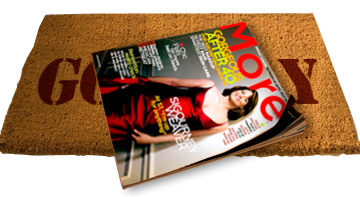
Young people complain about the stranglehold we boomers have on the culture. But being forced to wait until our narcissistic parade passes by isn’t half as hard as being forced to march in it, let me tell you. Every month, More, America’s only magazine for “mature” women, is chock full of estrogen-fed Amazons in their 50s and 60s who can not only still fit into their Priscilla Presley knockoff wedding dresses but, two husbands later, are still friendly with the fool they married while they were wearing them. I stopped speaking to my husband before the reception was over. I was 40. We have two kids. I didn’t fit into my dress during the ceremony.

I’m supposed to be inspired by the free spirits of women my age who are joyfully running their first marathons, getting Ph.D.s in Klingon studies, starting wineries in the Loire Valley or rebelliously letting their hair go gray. But if they were really like me, they still wouldn’t know what to do with their hair, whatever its color, or even have a favorite brand of pantyhose yet. It’s doubtful, too, that like me they’re still getting most of their sustenance in the candy aisle at CVS.

I’m an almighty boomer: I’m supposed to have it all figured out, rewrite the rules, then force it on the rest of the country, but I’m just realizing that I don’t even know what the questions are. More, which I usually devour and for which I have happily written, is the prime cheerleader for the “kick ass” old broad. I love it, but some months just the table of contents makes my ass feel pretty thoroughly pummeled. None of the women in the “Over 40″ model search look a day over 25 and the chick making a six-figure living selling popsicle villages on eBay (post-cancer, post-divorce, post-sky diving of course) is schtupping a Brad Pitt look-alike half her age. I may be exaggerating a tad … Still, guys like that call me “ma’am” and worry that I’ll pass out trying to mow my lawn.

Granted, I discovered More when it featured Jamie Lee “killer bod” Curtis as she really looks along with her public apology for helping — by being airbrushed and perfect — to make us normal chicks feel bad about our cellulite and flatulence. But now, I’m becoming suspicious. Is More becoming the once-devoted “ya-ya” girlfriend for life who lost weight and suddenly won’t stop asking if I’m ever going to the gym again?

This constant bombardment of the power of the menopausal is making me feel like a flat-chested 16-year-old eyeing the bustiers and garter belts all the cool girls are wearing to church: just what every woman needs, another way to feel inadequate. I remember the exact moment when I stopped reading glamour girl magazines like Vogue and Cosmo. It was two articles in the same issue: One said “Red is out. Do not wear red lipstick this season.” The second said that, rather than settle for pantyhose that are less than a perfect match, you should, you must, go barelegged. It was a January issue. I clearly remember thinking, “Bite me.”

Those two words buzzed anew in my head as a recent More cover warned of humiliation to come: “13 Things You Should Know by Now.” I may not know much, but I definitely knew to rip that article out, unread, and burn it because I’m pretty sure I don’t know. I’m equally sure that y’all need to back the “f” off with those never-ending self-improvement programs. A generation and three dress sizes later, I also know that there’s just no hiding place from the female need to make ourselves crazy. The epistle intended to make me feel good about my gray chin hairs produced what can only be described as the involuntary skyward movement of both my middle fingers. The fact that the subtitle was something like “And if you don’t we’ll explain it to your dumb ass” did little to mollify me.

Now that a little time has passed and the Zoloft has kicked in, I realize that the girls at More just caught me on a bad day (fully medicated, I enjoyed the offending issue a week later). But, at 47, with two kids under 5, a bad divorce under my belt and a roller-coaster freelance writing career, I wouldn’t mind reading more about women who are still struggling and less, frankly, about women who love their new macrobiotic lifestyles. These days, I can barely stay either awake or afloat, but I’m treated like I’m on the same subscription list with the perky Katie Couric and in the same tax bracket with Oprah Winfrey; I’m feeling a little cheated and not very polite.

To be fair, More always contains true-to-life pieces on women reduced to near poverty caring for elderly parents or making lattes after that Loire Valley winery went bust, but I guess what I’m asking for is not one “misery loves company” issue per year but maybe more stories about age not equaling wisdom. Where are the 50-year-olds who got crabs from that boy toy or the chick who saved all her life to afford that pied-à-terre in Paris only to learn that she loathed France? All I can say is, give up already, grannies of America! Where are the articles like “You Still Filing the 1040-EZ, Too? Right on, Sister!” or “Skip That Surgery: Sequined Appliqués for Those Varicose Veins.”

Born in 1959, I was jumping rope during the civil rights movement and too busy learning to cook for a family of eight to notice the “libbers” burning bras. Vietnam? Much too gory for a preteen. Worse, by the time I was a teen in the mid-late 1970s, women were back to being whores for liking sex. By my mid-20s, when the “real” boomers had come down from their LSD trips and were making millions oppressing the masses, I got to have all the sex a slutty feminist could ask for, as long as I didn’t mind risking herpes, AIDS, hepatitis C and the brimstone of the conservative Reagan revolution; no free love for me, yet I have to take the rap for Woodstock and Jane Fonda.

I haven’t so much been marching in the boomer parade as sweeping up after its elephants. With the wisdom of age, and the prodding of my high-heel-induced aching bunions, rather than the witness protection program to avoid my dotage, I’ve decided to embrace geezerhood. I’ve earned it, goddamn it! So come and get me you old biddies. Bring some orthopedic shoes and some licorice with you, but hold off on those “empowering” mature women’s magazines. Medicare Part D is damned stingy with the Zoloft.

Continue Reading Close

“Jesus didn’t smoke no weeds!”

I tried to persuade my Bush-hating, Baptist mother to vote to legalize marijuana in Nevada -- but she wouldn't believe her Savior was cool with pot.

  • more
    • All Share Services

Until today, and like most decent people, I had little sympathy for the consultants and K Streeters who earn millions figuring out how to get people to vote their way. Then I tried to convince a 78-year-old Southern Baptist, a former Mississippi sharecropper with an eighth-grade education and the intellect of Thomas Jefferson, to vote to legalize drugs. My mom’s a retired manual laborer in Nevada, where there’s a ballot initiative aiming to do just that, and she called for help deciphering her absentee ballot.

Voting has always ranked perhaps half a step behind Jesus and fried pork chops with her, and ever since 2000, when “that old Bush stole the election,” she has become somewhat deranged on the subject. She spends months at a time on the road visiting her six children, nine grandchildren and five great-grandchildren, and is convinced that the CIA does little apart from either shredding or altering her absentee ballots, otherwise the Democrats would win. “You can’t put nothing past the Republicans, nothing! Deal with the devil for a dollar.”

I’ve stopped telling her the statistics on the number of blacks who voted GOP in 2004 (“ain’t nobody black voted for those devils”) and don’t have the heart to remind her that both Colin Powell and Condoleezza Rice are Republican because it makes her so sad, the way they must be breaking their mothers’ hearts.

This election, she’s sure that her ballot alone, correctly filled out, will make all the difference. So if the GOP stays in power, she will only have me to blame. After making me swear repeatedly as a member of the bar and a former military officer that it was legal to discuss her ballot with me (I finally pretended to go to her local registrar’s Web site), I saw my chance to get my money’s worth from all those college loans. You’d think the daughter she scrimped and slaved to provide with a fancy education would know better, but you’d be wrong. It went something like this:

Me: You’re going to vote to legalize marijuana, right?

Mama: (Sharply indrawn breath)

Me: You know. Get the dealers out of the loop and make sure the supply is safe? It’ll raise (quick Google) as much as $30 million in revenue. Already no state tax and, with this, you might even get a big refund. (That could be true, right?) More senior services? (Cheap shot: My mother demands a senior citizen discount at hot dog carts). Ma?

Mama: (Hissing) I’m a Christian!

Me: (Chuckling condescendingly) And what would Jesus say about criminalizing marijuana? It’s no worse than wine and didn’t he turn water into —

Mama: Jesus didn’t smoke no weeds! (Never noticing the snickers, she’s been calling it that since I was a teenager in the ’70s.) And the water back then made you sick. He was saving folks! I know you’re not trying to call Jesus a … a drug boy? (That’s what the old folks in the hood call the low-level knuckleheads who deal drugs on the streets.)

Me: (I spend a moment picturing the Savior with a grill, pants hanging down his holy ass.) I’m not calling Je — (determined sigh). You know, Mom, in Europe you can get heroin in bars, prostitution is legal. Clean needles, clean girls, no pimps —

Mama: (Frightened pause) Are you smoking weeds now? Is that why you’re talking so crazy? Tell me you ain’t on the dope, Debbie, please.

Me: Mom, please. I’m 47. I’m on Monistat 7 and Zoloft. This is about public pol —

Mama: Answer me!

Me: I’m not on dope.

Mama: Don’t you lie to me, girl.

Me: Yes ma’am. I mean, no ma’am. I’m not on weed … s.

Mama: (Mollified. She’s always bought my good girl shtick. I got away with murder.) Talking like this when you know what your Aunt Edna went through with her boys. Now she’s got the glaucoma and the twins keep selling her prescription. What they don’t sell they smoke themselves, don’t even share it with her. Poor thing has to keep her stash in her Bible. She says she only takes a puff a day, but with those kids and grandkids of hers?

Me: Stash? Stash? You think weed is plural but — “stash”?

Mama: (Prissily) You kids think I don’t know, but I know what’s going on.

Me: What did Madonna just do?

Mama: What?

Me: Never mind. (Bitchily, now, ’cause I’m frustrated.) And, anyway, Aunt Edna was always such a “rhymes with witch,” her glaucoma was the best thing that ever happened to this family. (Not even a drunk-ass Andy Dick would curse in front of my mother.)

Mama: Don’t you disrespect Jesus and your auntie. I raised you better than that. (I can hear her eyes narrow and her bony finger jabbing at the mouthpiece. I’m frightened. There was no Child Protective Services when I was a kid and I know this tiny woman still wouldn’t hesitate to take me out.)

Me: (Sitting up straight) Yes ma’am.

Mama: You’ll never be that grown or that smart.

Me: Yes ma’am. But legalizing marijuana would —

Me: Why on earth would I help your cousin Junior get more of them weeds? You remember how he took the Family Reunion BBQ money and bought drugs? Smoked up a whole picnic ‘fore your Uncle Son tracked him down.

Me: Wha? I’m confused. Oh yeah, good point, Mom. If it were legal, weed would cost less and folks like Junior wouldn’t have to steal to get it. (Then he could get just as high as every one else got drunk at family functions, but perhaps that point wouldn’t help my case overmuch, so it goes unsaid.)

Mama: How does one boy smoke a whole picnic? Twenty years later and that boy still ain’t right, all them drugs. (Much tsk-tsking) He won’t ever be getting out of your auntie’s basement, and you want me to help him be, just, nothing?

Me: But Ma 

Mama: Well, do you want Junior to be something or not?

Me: Well, he might still be nothing, but he wouldn’t be a criminal.

Mama: (Triumphantly) And if I voted for drugs, I wouldn’t be a Christian.

Me: Yes ma’am.

Continue Reading Close

Too damn little, too damn late

Senators can take their half-assed lynching apology and shove it.

  • more
    • All Share Services

Too damn little, too damn late

You were expecting, maybe, gratitude for your lynching apology? You should live so long. Here are my top 10 reactions to America’s latest patronizing attempt to repent its racism:

1. Bite me.

2. Damn right, the least you could do.

3. Mighty white of you.

4. Gee, couldn’t you have waited just a little longer — until even the trees from which the “strange fruit” swung were dead?

5. I’m not impressed, but then, I’m bell-curved. What do I know?

6. Thanks for kicking our asses so hard, and for so long, that we were forced to develop entire art forms around our oppression.

7. Try not to break your arm patting yourselves on the back.

8. Give us back the land, the businesses and the unpaid debts that were the true cause of many lynchings. You sleaze bags!

9. Gee, was there no appropriate Hallmark card? Let a sister help you out:

Sorry I castrated your granddad. My bad.
What’s 300 years of raping your ancestors among friends?
Sticks and stones may break your bones … Oops. They already did.

And my topmost reaction to your lame-ass, late-ass lynching apology:

10. Thanks for absolutely, positively nothing. You feel better. We feel worse. Déjà bloody vu all over again.

Here’s the problem with apologizing for stuff like slavery, Jim Crow laws and lynching — and the problem with digging up Emmett Till or prosecuting Edgar Ray Killen, an 80-year-old man, for murder 41 years after it happened: It’s too damn little, much too damn late. Does America’s contempt for us never cease? How else to describe the refusal of 15 senators to cosponsor the lynching apology bill, and its late-night voice vote? For all we know, the bill was passed by one lonely, overcaffeinated senator who happened by in search of an Ambien. We aren’t sure which senators voted for the bill and which voted against it. An accident? I think not.

Sen. Robert Byrd can apologize again and again for having been in the Ku Klux Klan and for having fought tooth and nail against every civil rights bill that came down the pike. The military can give posthumous medals to black World War I, World War II and Korean War veterans who are long dead and not around to describe the racism they faced under fire. And, as of June 13, some — but not all — senators can apologize for taking 105 years to pass an anti-lynching bill.

The crux of the matter is this: Had America ever truly repented its racism, no apology would be needed now. Our schools and neighborhoods wouldn’t be segregated. The term “driving while black” need never have been coined. Oprah, who routinely graces the list of America’s most admired people, could shop in an “upscale” neighborhood without a camera crew to mark her as a “daylight white.” The words “black” and “white” would be as giggle inducing as “23 skidoo” and “Chi-town.”

So I’m with the lynching descendant who said: “I won’t accept their apology … What they used to do with a rope, today they do with a paper and pencil.” And that’s why we reject the apology: It’s insincere. You either pity us or hate us; either way, we’re still “other.” Half-assed apologies like this take the place of actual progress, of actually embracing and accepting us.

And now that we’ve gotten our empty apology, the question isn’t how blacks feel, it’s how whites do. Shamed? Guilty? Bored? Patronizing? Victimized? Shriven?

Bored and patronizing, I think.

Shove your apology and kiss my unforgiving ass.

Continue Reading Close

Page 2 of 2 in Debra J. Dickerson