Gabriel Winant

Stephen Colbert’s simplified oil spill speech

"See spot. See spot spread"

  • more
    • All Share Services

“Mr. President, your flowery verbiage is opaque and perplexing.”

The Colbert Report Mon – Thurs 11:30pm / 10:30c
Obama’s Simplified BP Oil Spill Speech
www.colbertnation.com
Colbert Report Full Episodes Political Humor Fox News

The energy independent future is now, and always has been

America is like a giant machine for breaking dependency on oil. Unfortunately, that machine runs on oil

  • more
    • All Share Services

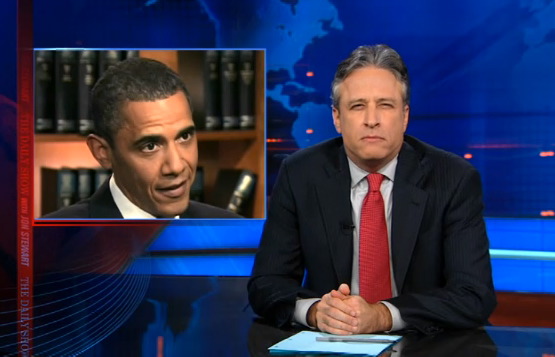
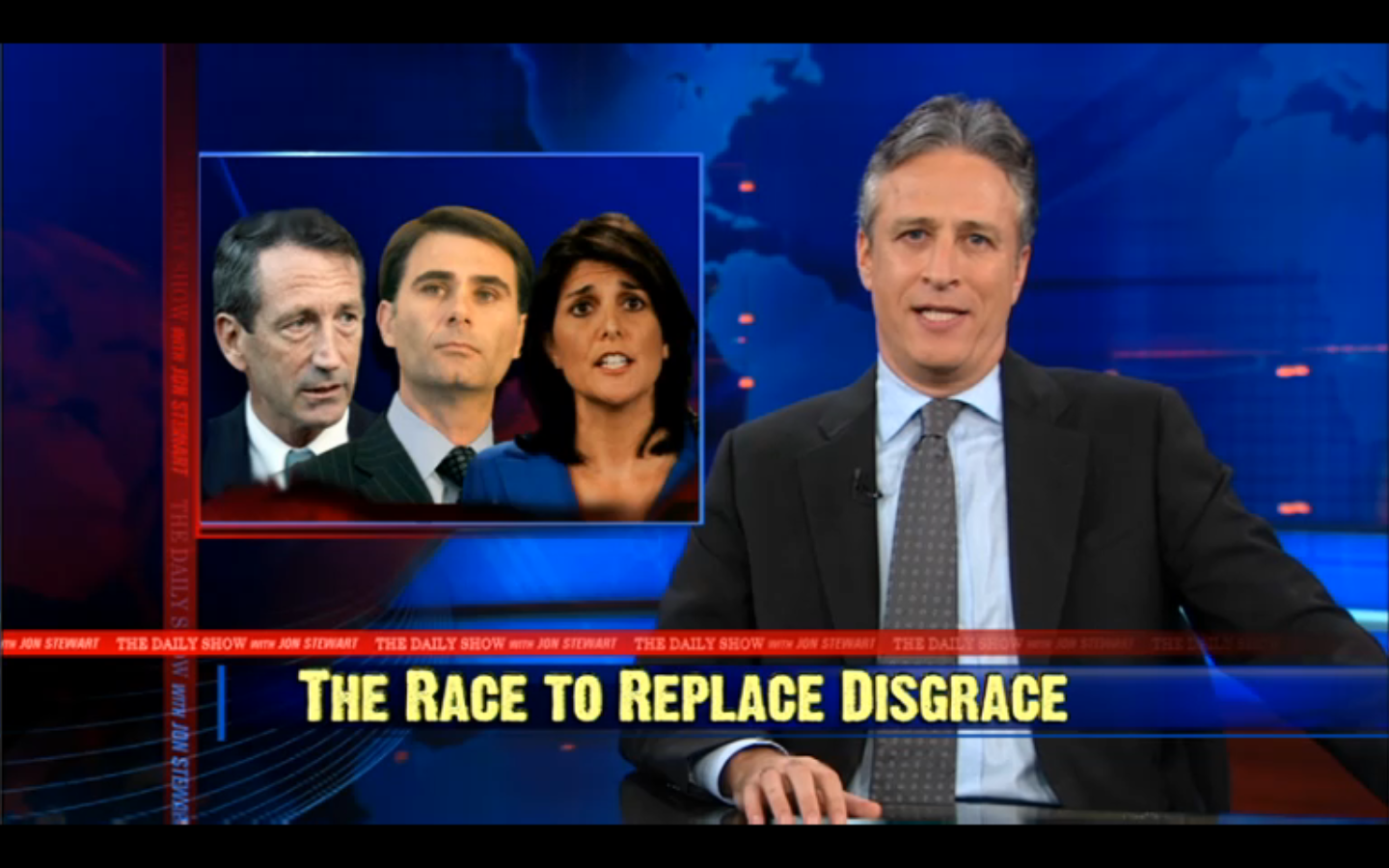
“So counting Barack Obama, the last eight presidents have gone on television and promised to move us toward an energy-indepndent future. Before that, I’m sure they did it on the radio.”

The Daily Show With Jon Stewart Mon – Thurs 11p / 10c
An Energy-Independent Future
www.thedailyshow.com
Daily Show Full Episodes Political Humor Tea Party

Bullying snob demands the governorship

Meg Whitman and her sons seem to think their wealth entitles them to whatever they want, including high office

  • more
    • All Share Services

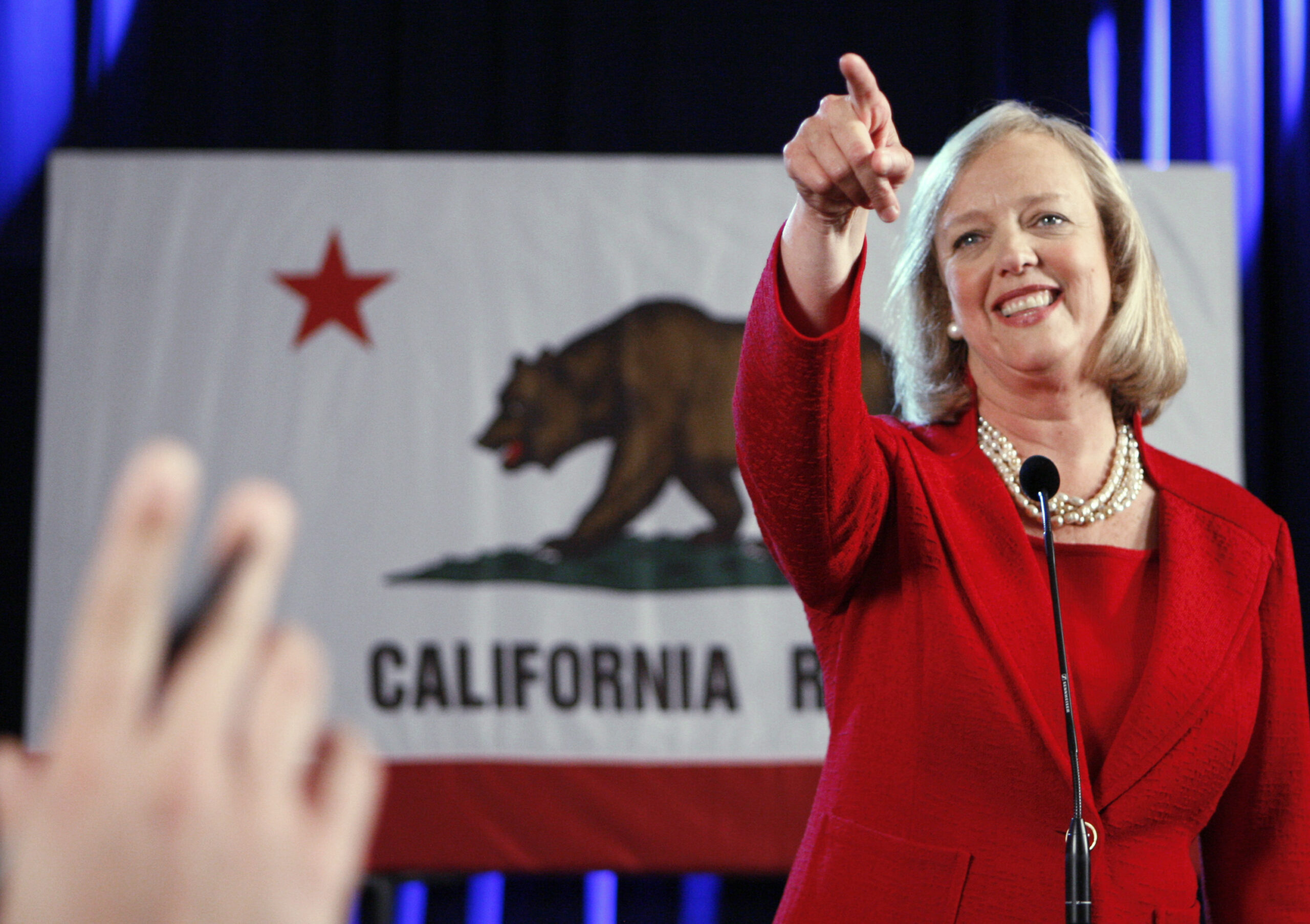
Bullying snob demands the governorshipMeg Whitman, after winning the Republican nomination for governor of California, speaks to reporters after a post-primary election celebration in Anaheim, Calif., Wednesday, June 9, 2010. (AP Photo/Reed Saxon)(Credit: Reed Saxon)

We don’t know exactly what’s true in the charges that have been flung against various members of Meg Whitman’s family, and against the Republican gubernatorial candidate herself. What we do know, however, is that she and each of her sons have been accused of atrocious acts that bear a surprising family resemblance.

The candidate herself has been accused of shoving an employee while she was in charge at eBay. Apparently, a staff member named Young Mi Kim was helping Whitman prepare for an online interview. Whitman seems to have been unhappy with Kim’s briefing, and either shoved her, or “physically guided her” out of the room. The resulting lawsuit was settled out of court and included a confidentiality agreement.

As Alex Pareene wrote yesterday, we recently found out that one of Whitman’s sons, Griffith Rutherford Harsh V, was arrested in 2006 for battery, after breaking a woman’s ankle at a bar in Palo Alto. Harsh, who was 21 at the time, apparently pushed Victoria Sanchez after she knocked off his hat and said, “Fuck your fraternity.” Harsh disputed the story, saying she had pushed him and then stumbled, but a security guard corroborated Sanchez’s account. Whitman bailed her son out, and charges were eventually dismissed.

Griff Harsh’s younger brother Will, meanwhile, was supposedly banned from an eating club at Princeton, where he was a student, for using the n-word. As it’s reported, he had already been put on notice for picking a fight with a bouncer, and the racial slur was the last straw.

Obviously, we’re relying on hearsay somewhat here, especially in the last case. And is it even appropriate to be talking about Whitman’s children?

I don’t feel too guilty about that. Political families are generally taboo subjects because they’re vulnerable without being relevant — in other words, easy targets for journalistic bloodsport. But the Harsh boys are neither vulnerable nor irrelevant. They’re in the news exactly because they’ve been picking on people who aren’t their own size, and their mother has too.

The Harshes apparently had a reputation for lording it over their fellow Princeton students based on their wealth and their parentage. Whitman is Princeton’s most prominent living donor. The university divides up its undergraduates into colleges, of which there were five until recently. The brand-new sixth college was funded with a $30 million gift from Whitman, and is named after her. (The dining hall is called “Community Hall,” not for the university community but for the eBay community.)

So, like their mother who got sick of an employee’s yapping, the Harshes seem to have thought that they owned the damn place and could do what they pleased. A sense of entitlement doesn’t live in the DNA, but it sure seems to have been passed down from mother to sons.

This is important because Whitman’s entire campaign is built around her class privilege. She can’t stop talking about it, though obviously she uses different words to describe it. Whitman is constantly talking about applying her CEO savvy to run California like a business. Her campaign introduced her to voters with TV ads about her time as an executive. “People who worked with Meg Whitman trust her to lead,” says one ad. A former colleague testifies, “Meg knew what she was doing.” She has an ability, says another, “to figure out what the right thing to do is.”

Whitman, in other words, is running on her class position. (And she’s spent $91 million so far. She’ll almost certainly break the record for self-funding by November.) It’s literally the centerpiece of her campaign: as a really rich lady, she has access to secret knowledge about how to fix the broken state government. I see a new campaign slogan: Meg Whitman 2010 — Putting Californians in Their Place.

Continue Reading Close

On climate, Obama is becoming part of the problem

By bowing to political reality in his speech, president just postpones inevitable reckoning

  • more
    • All Share Services

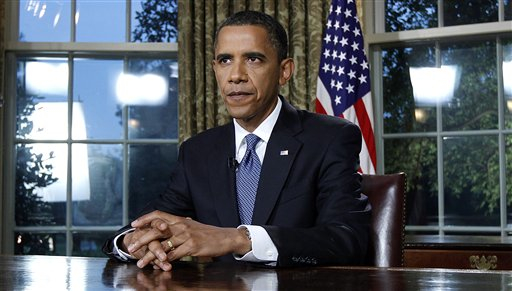
On climate, Obama is becoming part of the problemPresident Barack Obama is photographed after delivering a televised address from the Oval Office of the White House in Washington, Tuesday June 15, 2010. President Obama said the nation will continue to fight the oil spill in the Gulf of Mexico for "as long as it takes." (AP Photo/Alex Brandon)(Credit: AP)

Sarah Palin went to talk to Bill O’Reilly last night to offer a reaction to the President Obama’s speech delivered from the Oval Office. She told the Fox News host, “What [Obama's] top priority is, Bill, is cap and tax. It is using this crisis, not letting it go to waste, but to use this crisis to increase the cost of energy.”

If only.

While the Gulf of Mexico oil spill that prompted the president’s speech is an unprecedented catastrophe, it’s nothing compared to what’s ahead if we keep pretending that fossil fuels are cheap. Addressing our habits of carbon consumption isn’t just the most important possible response to this particular disaster. It’s probably the most important issue this president, or any other for the next few decades, will face. Moreover, there’s a fairly clear solution that’s already been outlined: at the moment, there’s an implicit public subsidy for carbon use that enables our reliance, so the government needs to compensate for it by jack up the price of energy somehow. A cap-and-trade system is the preferred method here in much the same way that an insurance mandate was in healthcare reform: it’s a politically palatable partial measure, but far better than nothing.

But, as Joan Walsh wrote last night, Obama decided only to offer vague generalities about “increasing the cost of energy,” Sarah Palin notwithstanding. Here’s the crucial piece:

Last year, the House of Representatives acted on these principles by passing a strong and comprehensive energy and climate bill — a bill that finally makes clean energy the profitable kind of energy for America’s businesses.

Now, there are costs associated with this transition. And some believe we can’t afford those costs right now. I say we can’t afford not to change how we produce and use energy — because the long-term costs to our economy, our national security, and our environment are far greater.

So I am happy to look at other ideas and approaches from either party — as long they seriously tackle our addiction to fossil fuels.

At one point, he talked about the need to “seize the moment.” Then he neglected to do so.

So Obama gave a lame speech, failing to lay out the case for the reform that he knows perfectly well to be the only viable one. And now we’re left with a choice. Should we gnash our teeth and tear our hair at another disappointment at the hands of this president? Or maybe that would be naïve and foolish, blind to the political and institutional realities that constrict and govern his ability to act. Instead, maybe we should shrug unhappily and concede that he’s doing what he can. The man has no power to force Lindsey Graham or Jim Webb to vote how he would like.

This latter view, the pessimistic defense of the president, has an unfortunately strong relationship with the truth. There’s no clear path through the Senate for cap-and-trade, even in its current form, watered-down and riddled with corporate giveaways. Saying some favorable things in an Oval Office speech might make us feel better, but it doesn’t actually get the bill closer to law.

But that’s not to say the president is powerless, or that talking is useless. If this were any other issue, he’d be well-advised to face facts and apply his energy where it can make more of a difference. But it’s not any other issue, and Obama owes it to the country to start trying to move some mountains.

If the president decided to take the idea of energy reform to the people, he probably still wouldn’t get legislation passed. (Though there is evidence that Americans are much more reasonable — that is, worried — about climate change than we generally give them credit for.) If he did pull it off, it would outshine healthcare reform as a watershed accomplishment. But even in failure, there’s something to be gained from speaking clearly and honestly to the public.

Woodrow Wilson was a generally pretty detestable guy (this is one thing Glenn Beck gets sort of right), but there’s something Obama could learn from him. At the end of World War I, Wilson expended massive, futile effort trying to convince Americans that the League of Nations was the world’s only hope for peace and stability. The Republicans who opposed Wilson over the League succeeded, in large part, because a weary country wasn’t willing to accept an intellectual president’s high-flown scheme to prevent the recent disaster from repeating. It’s hard to miss the parallel.

When the feeble League failed and the crisis of the 1930s developed into World War II, it offered a kind of perverse validation to Wilson’s effort. By forcefully campaigning for the United States to take a central role in global stability, he had elucidated the choices facing the American people. After World War II, the argument of 1919 reoccurred, but it was won by Wilson’s successor, Harry Truman. The reoccurrence of global war had validated Wilson’s argument, making it much easier for Truman to sell Americans on the Marshall Plan, NATO, the United Nations and, ultimately, the Cold War itself. By being ambitious and clear, Wilson lost, but his side won out in the long term for the same reason.

The goals of Wilson and Truman weren’t particularly noble, but that’s not the point. This is: the process of attaining difficult political goals sometimes involves a bitter and futile-seeming first act. It’s not that political martyrdom somehow earns the public’s trust. It’s that the sooner we start talking honestly, the better. This was part of Obama’s basic promise as a candidate. Now’s the time to live up to it.

So when Obama said, last night, that he’s open to all ideas and looks forward to working with both parties, he’s not only lying — the GOP has nothing of substance to offer here — he’s not even achieving a valuable strategic gain by appearing bipartisan and lofty. If progressives are going to win on climate change, then what the public needs to hear is this: we know roughly what kind of action is required to prevent climate disaster. We can choose to do it or not. But in the likely event that we choose not to, we’ll be having this argument again pretty soon, after things have gotten worse.

Even if Obama were to make the case now and seem to fail, he’d make it harder for the next guy to fudge it. Of course, it’s understandable that the president wouldn’t want to stake his popularity and legacy on what looks like a losing issue. But that’s just how it looks for now.

Continue Reading Close

Colbert renames English muffins

It's "freedom muffins" as long as they're screwing up our shores and opposing us in soccer

  • more
    • All Share Services

Colbert renames English muffinsStephen Colbert

“It’s time to bring it to these limey bastards.” 

The Colbert Report Mon – Thurs 11:30pm / 10:30c
America’s Strained Relationship With England
www.colbertnation.com
Colbert Report Full Episodes Political Humor Fox News

The medium-big president

Obama's speech tonight on the oil spill and energy policy looks like it may be another risk-averse half-measure

  • more
    • All Share Services

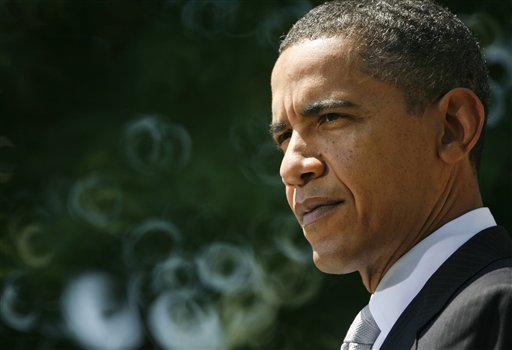
The medium-big presidentPresident Barack Obama makes a statement on his small business jobs initiatives, Friday, June 11, 2010, in the Rose Garden of the White House in Washington. (AP Photo/Charles Dharapak)(Credit: AP)

President Obama will give a speech today from the Oval Office on the ongoing disaster in the Gulf of Mexico. According to Atlantic Monthly reporter Marc Ambinder, the president believes the crisis is at an “inflection point.” Either he’ll convince the public now that he’s got some plan going forward, at least to recoup some money from BP and prevent another spill, or he never will. As Ambinder puts it, Obama’s speech tonight will be “medium big” in its ambition.

Have you ever heard a better description of the Obama presidency than “medium big”?

The real question is whether Obama will push some scheme for pricing carbon. Although everybody seems to have forgotten about it, the House of Representatives has already passed a cap-and-trade bill in this Congress. The combination of this and the oil spill do seem to present a unique opportunity for the White House to grab hold of public opinion with both hands.

Ambinder writes,

If “Go Big” means a strong push for carbon pricing, then this would be the middle ground — a speech that focuses on the oil industry, pollution reduction (including renewable standards and CAFE standard enhancement), lots of money for relief and reconstruction, and an assumption of responsibility for the clean-up.

Have we ever known this administration to do much of anything with full force? The urgency of the climate crisis — both the immediate, localized disaster in the Gulf, and the long-term global catastrophe of climate change — calls for ambition like no other issue the president faces. And here, most certainly, is an area where he promised ambition during the campaign. In one famous speech (heavily mocked on the right), then-candidate Obama said that his administration would be remembered as “the moment when the rise of the oceans began to slow and our planet began to heal.”

The weak party system and presidency that define the American political system mean that it’s a given that a candidate won’t enact everything promised during the campaign. This is part of why we end up trying to peer into the souls of our politicians: We’re trying to guess what they really care about and where they’re bullshitting.

So here, with Obama — florid language  about the planet “healing” aside — we have a chance to see if he really meant it. If cap-and-trade doesn’t pass now, there’s no point in the near future when it might really have a shot.  It’ll be tough-to-impossible to get it through the Senate as currently configured, and that body doesn’t really get any more progressive than it is right now. And if it doesn’t pass in the near future, it’ll be too late. In other words, Obama can’t play footsie on this one like he has on so many other progressive priorities. On labor reform, the healthcare public option, and even past iterations of the energy debate, the president has intimated that he’d be happy to sign a law if it made it to his desk, but he’s shown little appetite for the risks involved in getting it there.

Commentators have lately been making the point that the president is no superman, and particularly on domestic policy, can’t just will laws into being. As the healthcare battle showed, it’s extremely hard for the White House to push Congress around. Very little leverage over recalcitrant legislators is available to a president who wants to do some bullying.

The only hope for cap-and-trade, then, is for Obama to make his own leverage, by moving public opinion. That’s an extraordinarily tall order, but it’s all the president can do. The power of the presidency, as political scientist Richard Neustadt famously said, “is the power to persuade.” Without a relentless presidential lobbying campaign, there’s no way that Congress will move on meaningful energy reform in an election year. Even with one, it probably won’t happen, so the question is if Obama is willing to take a risk, the unlikely payoff of which is enormously worth it. (Even though the cap-and-trade law passed by the House already is itself so weak that many serious environmentalists have opposed it as an unforgivable band-aid measure.)

It’s worth remembering that just weeks ago, the White House was preparing to abandon energy policy entirely, in favor of focusing on immigration reform. The issue of climate change was no less pressing than it is now. The president just didn’t have the oil spill to use to make his point.

You can call that pragmatism in the face of harsh political reality if you like. That’s not a bad description. But the truth is that there was never any point in time when getting cap-and-trade passed was going to be anything but extraordinarily difficult. It still will be now, if Obama tries. A White House that gave up on the issue when it seemed too hard and came haltingly back when it seems marginally easier isn’t exactly the picture of idealism Obama painted when he talked about how his presidency would be remembered. At least on this issue, I thought we were getting a big president.

Continue Reading Close

Page 2 of 55 in Gabriel Winant