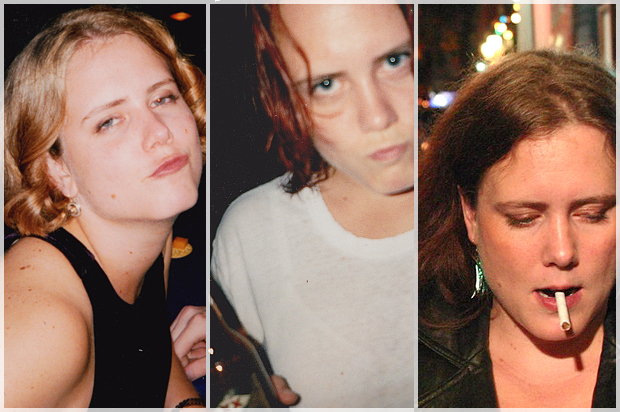
Sarah Hepola

My iPhone foreclosure

As the world clamors for the latest upgrade, I finally resolve to surrender mine. If only it were that simple

  • more
    • All Share Services

My iPhone foreclosure (Credit: calvindexter via Shutterstock)

Last Saturday night at 10 p.m., I parked my car in the driveway, hustled myself inside as it began to rain, and locked the door behind me when I realized: I did not have my iPhone.

So weird. I’d just had it, like, 10 minutes ago, when I checked my voicemail at a friend’s place. I started to call her to ask if it was lying around, which is when I realized: Not having an iPhone means you can’t actually use your iPhone.

That night, even as rain pelted the windows, my home felt eerily silent. Like so many people, I do not have a separate landline, and I do not have cable TV. Without that small and all-powerful device within arm’s reach, I was in exile. Typing emails on my laptop (because I still had wireless) seemed a bit like scribbling on parchment in the amber glow of an oil lantern. I would send the emails and receive nothing in response. Gah, is this thing even on???

The next morning, I walked out to the car to head to my friend’s house when I discovered where my iPhone had been all night — lying face-up on the driveway, inches from the driver-side door of my car, water still pooled on its black screen.

An iPhone suicide.

I thought I could save it. A friend who once dropped his iPhone in the sink told me rice sucked out the moisture, though it could take a while. I cradled the little guy in my hands and rushed it to the ICU of my kitchen, where I nestled it in a bowl filled with brown rice. (Nice to know that brown rice was good for something.) As the days passed, it languished, unblinking, in its starchy bed — and my life without an iPhone began.

This is not one of those uplifting stories in which the author disconnects from technology but finds meaningful connection with the people in her real life. I’m not all that addicted to my iPhone, and it has never deterred me from long, deep conversations with other humans. This is also not one of those screeds wherein I tell you what a hideous, overhyped device the iPhone is. To be honest, I think the iPhone is the single greatest piece of equipment I have ever owned, and though I was reluctant to buy one, it took mere minutes to determine that I held in my hands the stuff of which history was made. No, this is a story about giving up an iPhone — or trying to, anyway — because the cost of keeping one had just become too high. That was my problem: I loved my iPhone, but I could no longer afford it. It was too much phone for me. I was like one of those homeowners sinking into debt, realizing too late they are heaping money into a sinkhole to pay for a life beyond their reach.

This is about my iPhone foreclosure. It didn’t exactly go as planned.

It made sense, in 2008, for me to buy an iPhone. I was an editor who needed to check email often during the day and work on-the-go. I liked the way the iPhone looked, and what it said about me. It telegraphed to strangers that I was tech-savvy and fashionable and high-powered (though I was none of those things). But if I’m honest, I was also afraid of slipping into irrelevance. There is an anxiety in this hyper-connected digital age that you must adapt to new technologies — or you will perish. You’re not on Twitter? Enjoy your life as a dinosaur. You don’t use Facebook? Welcome to 1988. And so I took a big cannonball dive into my fancy two-year contract and wished for the best.

But problems began to emerge. Not with the iPhone itself — but with me. For all my phone’s superpowers, for all its techno razzle-dazzle, I knew relatively little about how to use it. I texted, sure, and I could set the alarm. But I would guesstimate that I learned 10 percent of the iPhone’s functions, maybe even less. It’s like I had a magic wand in my purse, and I was using it to scrape glass off the windshield.

In July, when I reupped to my iPhone 4, I actually carved out an entire afternoon to figure out the sucker. But that afternoon came, and I was less interested in reading CNET stories than I was in listening to Marc Maron podcasts, one after the other, which I actually just streamed from my laptop. The iPhone might be capable of changing the world, but alas, it can’t change me. There is nothing I find more deadly dull than an instruction manual. If I can’t figure it out by tapping around for 10 minutes, it ain’t gonna happen.

There were other issues, too. My having an iPhone was like driving an elegant horse-drawn carriage in the demolition derby. Mere weeks after purchase, I was texting as I walked past an elementary school one morning when my shiny new phone tumbled out of my hands and landed on the sidewalk with an unmistakable crunch. Little kids passed by me as I literally stomped my foot on the ground and said, for perhaps the first time in my life, “Oh fudge. Oh fudgety fudge.” My gleaming, flawless companion now had a split right up its middle with two branches coming off it, like a line-drawn tree.

After I moved to Texas and shifted into part-time work, my iPhone bills started to climb. Frankly, they were staggering. I switched plans, but the next month the bill was even bigger. This was a problem, because financially, I didn’t have much wiggle room. A year ago, I paid off and cut up several credit cards — a slow crawl back from when they were maxed out, at 29 percent interest — and I only purchased items with the money in my bank account, as opposed to simply purchasing items with the magical thinking that money would appear somewhere down the line.

I was still trying to scheme a way to pay those massive iPhone bills when the poor guy drowned himself outside, and I had to wonder: Why was I holding on to this thing anyway? Why was I going broke for a piece of equipment I didn’t even know how to use? Since I’d started working from home, the only thing I really used my iPhone for was to talk. And that’s the one function where the iPhone isn’t all that great. I’m not just talking about dropped calls. Have you ever tried to hold the iPhone against your ear for long periods of time? It’s like cuddling with a curling iron. The iPhone is for typing, for deep dives into Internet underworlds, for home videos and schedule management and working from the back of a taxi cab and tweeting quips about a ham sandwich to your 2,000 followers. If you want to lose three hours chatting with your friend on a Monday night — not so much. And that’s too bad. Because as the world grows more digital, an ever-percolating mix of emoticons and instant messages, I find myself drawn toward the warm sound of someone else’s voice in my ear. Skype is just not my bag; I resent any device that draws attention to my shiny forehead.

So that was it: I had to give up my iPhone. It felt good just to say it. It gave me a jolt of consumer rebellion. I fired up my old iPod nano and pulled my cracked old second-gen iPhone out of the drawer to see if it still took pictures (it did). See, I didn’t need a fancy new iPhone after all! I could make my own smart phone out of the misfit tools I already owned. I felt so practical, so boldly against the grain. I was leading a charge away from high-priced must-have doodads and back into the calm waters of clunky flip phones. I was going to save so much money. I was going to make a statement. My phone wouldn’t say, “Ooh look at me, I have an iPhone!” It would say, “My phone doesn’t define me. Also, I’m working part-time.”

But the powers that be don’t make it easy to give up your iPhone. In fact, they make it very very hard. When I arrived at the AT&T store, brimming with pluck, I was met by a friendly employee, his hair gelled into a perfect triangle.

“You know, thanks to a one-year warranty, you could purchase another iPhone for just $200,” he said.

“That’s OK,” I said, smiling. I did not feel like explaining to him that a proper “warranty” would not involve paying the exact same amount you did in the first place. I did not feel like complaining to him about the injustice of the Apple empire, because I had a plan. “I’ve decided to downgrade to the flip phone for the rest of my contract. You can just give me your cheapest one.”

He began to shift on his feet. His eyebrows started to flutter. “But those flip phones cost $200, too. Because you’re not eligible for a new contract.”

Wait, what? I had not anticipated this. It had never occurred to me that anyone would have the gall to charge $200 for a piece of machinery that was roughly as current as the horse and buggy. Shouldn’t they be giving those away on the street to homeless people? “So wait,” I said, trying very hard not to be That Customer, though my strained voice hadn’t gotten the memo. “Those clunky old flip phones cost as much as another iPhone would?”

He nodded. It was silent, except for my sighs. “You could look on Craigslist,” he said finally. “If you find an AT&T branded flip phone for sale, you could use that.”

Great. Just what my afternoon didn’t need — freaking Craigslist. Now I was going to have to drive 60 miles into the suburbs to buy a Samsung that had been jacked from some poor old lady.

I rubbed my forehead. “How much would it cost to just cancel my contract?” I asked.

“$250.”

Oof. This revolution was getting awfully inconvenient. I had to wonder: How much did I want to pay for freedom from my iPhone? Would I be saving that much money in the long run?

Earlier that afternoon, I had dumped my old iPhone in my purse. Not the one that died, but the one I shoved in a drawer last July when I upgraded to my fancy new widget. I had this idea that I’d use it to take pictures from now on. It was clunky all right, the bottom half of the screen so shattered it practically turned everything into abstract art. I wasn’t certain if I wanted to keep using it. But I knew I needed to get a cellphone — some kind of cellphone — today. Like, now. And so I sucked it up, and set it on the counter.

“And how much would it be to just power this up again?” I asked.

He smiled and clapped his hands together. “I could do that for you for free.”

When my cat finally took to the leash

Salon readers urged me to give it another try. And after a world of changes, I did

  • more
    • All Share Services

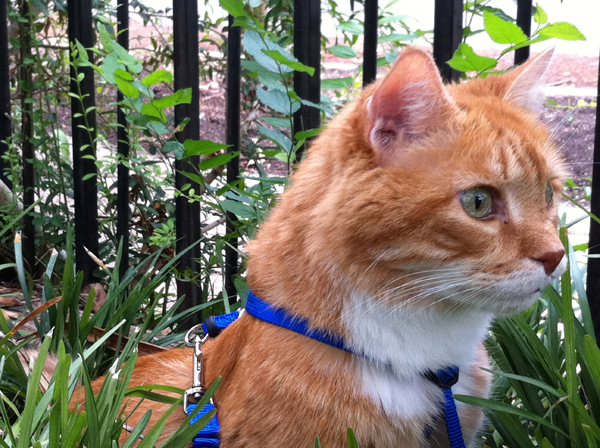
When my cat finally took to the leashA photo of the author's cat.

The night I discovered my cat could walk on a leash did not begin well. I was sitting on the couch, toiling away on some dorky craft project, when Bubba set himself down at the front door and began to meow.

“Ugh, cut it out,” I said, because everyone knows: That helps.

Only weeks ago, we moved from a 200-square-foot studio in Manhattan to a roomy cottage in Dallas, which was a little bit like waking up one morning and discovering your black-and-white movie had gone Technicolor. This place is a find. It has two stories, a huge open kitchen, and windows that look out onto leafy, sun-dappled trees where birds flutter about. As far as I could tell, this is Cat Paradise.

And while I didn’t exactly expect a Martha Stewart thank you card, my mood quickly soured when he didn’t appreciate it. I’d already done so much for him: toys littered the floor, unused; a scratching post had become a tacky mail holder. Now, the cat stood at the front door, firm and ever-striving, demanding access to the one place I would not allow him to go.

“You’re not going outside,” I said.

Mrrrrow.

“The dogs next door will eat you,” I said.

Mrrrooowww.

I took a deep breath, and tried to focus on my latch hook rug. I don’t know how long you can successfully block out a cat’s insistent whining — or a dog’s bark, or a baby’s screams — but I have found I can maintain an admirable Zen-like calm for about 10 minutes. After that, I pretty much want to rip out someone’s heart.

“If you meow one more time, I’m going to totally lose it, I swear!” I finally said.

Which was such a setup, right? Because, come on: That cat knows one sound. There was zero chance he was going to veer off-script at this point. Bubba looked at the door, looked at me, blinked his gorgeous green peepers, and said: Mrroooww.

That was it. I jumped off the couch and dug through the junk drawer till I found it, stored in the funny plastic packaging in which it had arrived a year ago: “Come with me kitty,” it read, next to a picture of a proud tabby walking in his harness, tail aloft. I cracked it open and unfurled the blue nylon like I was holding our nation’s flag.

“OK, mister,” I said. “You are going on a leash.”

Last July, I wrote a story for Salon about my failed attempt to leash-train my cat. At the time, Bubba had grown cranky in our cramped quarters, and I felt the bone-deep frustration of someone woken up every morning at 5 a.m. by a tiny paw in her face. Everyone I asked about my endeavor — literally, everyone — warned me that it would not work. Cats don’t take to leashes, particularly at the robust age of 13, but to me it seemed like an elegant solution to the great dilemma of my cat’s life. He would die if he went outside. And he would die if he didn’t.

I know some cats are content to skitter about in the comfy confines of a house or apartment, never even bothering with the Great Beyond. But not my guy — he had tasted blood. Years ago, he was an outdoor cat in Dallas who returned at dawn with bloody teeth marks in his cheeks and feathers in his claws, and let me tell you, it has been hell to walk that back. I know he wouldn’t have survived this long if he hadn’t become an indoor cat — particularly in New York, where it was the only option — but there is part of me that will always feel I ripped Bubba away from his true calling just so he could cuddle with me on cold nights.

The leash was a non-starter. Once I coaxed him into the harness, he nailed himself to the floor. When I carried him down the stairs to our courtyard, he whined to go back inside. Cats are stubborn. Trying to force them to enjoy something is like trying to make a goth teenager line-dance at a wedding. And so I tossed the leash in the junk pile, a quirky keepsake from a fizzled experiment, the latest in the funny-sad adventures of pet owners who love too much.

Six months later, Bubba got sick. There were weeks of vomiting, one dramatic trip to the E.R., and a ghastly night in which he spit up white foam and I tried, with shaking hands, to insert a baby enema in the swollen blossom of his rear. He stopped eating. There were tests, and pills twice a day, and dozens of baffling late-night searches on the fear factory that is the Internet. Eventually Bubba got diagnosed with a chronic illness — irritable bowel disease, or IBD. The incessant 5 a.m. meows from July now seemed less like a cat who craved more square footage and more like the first distress signals of a body winding down.

No one knew exactly how long he had. “He could die next month. He could die in a year,” I cried to my mother one afternoon.

“So you have to be grateful for today,” my mother said. She is very sane and grounded. It can be deeply irritating at times.

But of course she was right. What else can you do? After we moved back to Dallas, the pills did their job, and he got better, stronger. He regained his appetite, and put back some of the weight. Still, I suspected the outdoors would call to him, and I wasn’t sure what to do about that. Our neighbor (and landlord) keeps rescue dogs, three barky bruisers, on the other side of the fence, and I was sternly warned not to let the cat roam free. But the space we had to ourselves was generous: A tidy little lawn, a narrow walkway that leads to a big gravel driveway. It is perfect for sauntering back and forth. It is perfect, quite frankly, for a cat on a leash.

That night, when I grabbed for the package, I did not think the leash was going to work. No way. I was doing that thing where you try to prove your own point by demonstrating the hopelessness of the other side. See how miserable it is on your leash? See, see? But I’d be lying if I didn’t admit I’d retained some hope. I had held on to that leash, after all, even after shedding most of my belongings in New York.

After my Salon story, a few readers emailed to tell me I should keep trying. “He’ll get used to it,” they said. “Don’t give up.” And those words were dancing around my head as I fastened the harness around his white scuff. He let out a frustrated little yelp.

“You’re trying to exhaust me so I won’t miss you when you’re gone,” I told him. And then, I opened the door.

I expected him to hunker down and refuse to budge. Instead, it was like he had been electrified. He wasn’t spazzy and frantic, just alert, as though his ears were a tuning fork that had just divined the sounds of the entire universe. He padded through the grass and gummed blades of grass. He rolled around in a pile of dirt. He scratched an old log with his claws. He sniffed everything: the license plate on my car, an old ceramic pot. He sniffed the air like a cartoon animal standing underneath a pie that has just been set on the window sill — his snout pulsating madly, his whole body arcing upward.

He explored all corners of our little universe that night. A crawl space behind a tree. A patch of scrub in the driveway where bugs hide. The cool feel of the gravel on his belly. I was delighted that he didn’t seem to mind being tethered to me. He never tried to break free or wriggle his way out of the harness. A few times the leash got caught on some inconvenient bush, and he waited, patiently, until I untangled it.

I don’t know what changed, why the experiment worked this time. Maybe it’s the fact that I live on a quiet side street, with less bustling background noise than in the courtyard where we once tried this in New York. Maybe it’s that the smells and sounds outside the door finally matched the ones imprinted on his memories from so long ago. Maybe it’s just that failure is often the beginning of a success story.

In the weeks since then, we have gone out every day. He knows exactly when the dogs next door are inside, and he announces it with his mewling presence at the front door. Sometimes, he walks out, looks around, and comes right back in. Sometimes, he just lies in the grass while I read the paper. Sometimes, he’ll be in the middle of a mission, and a sound will startle him, and he’ll bolt so fast that I have to sprint to keep up with him, only I can’t move that fast in flip-flops holding a cup of coffee, so he thrashes about on the leash like a caught fish at the end of a line. It’s hilarious and horrible. (The leash is a marvel of gentle but sturdy engineering; it is designed for these panics and does not choke or hurt him.) I have new anxieties now: He will scramble up a tree before I catch him; he will somehow make his way into the dogs’ yard (his current obsession) and be unable to escape. But he’s happier now. He sleeps more soundly.

When my cat first got sick, I panicked. I was not ready to let him go. Worse than the sadness, perhaps, was the embarrassment I felt at how it unraveled me. He was an old cat. He was a cat. Friends of mine were shouldering such epic loss — a parent, a spouse, a child. I felt like I was just dipping a toe in the stream of grief that life holds for a human being — and it had undone me. Still, the loss of any true companion can be excruciating. It’s just in our nature.

Each night at 10:30 p.m. we wander outside and sit together on the gravel driveway. He stares up at a streetlight where the dragonflies buzz and cluster. I stare up at the moon. I still don’t know if he’ll die next month, or next year. But I try to be grateful that today, at least, my cat got to live.

Continue Reading Close

When I finally stopped going to bars

A year after I quit drinking, I avoid my old haunts. But now that I'm not a lush anymore -- what, exactly, do I do?

  • more
    • All Share Services

When I finally stopped going to bars

Of course Tim suggested we meet at the bar. Where else would we meet? It’s where the guys go every day after work, 5 to 7 p.m. Tim likes to brag that they get the employee discount.

I used to love to join them there. Whenever I’d come home to visit, I’d find the guys in that back booth, steady as a sundial. I’d order a Stella, or a Harp, something tart enough to sting but light enough to drink by the gallon. I’d drain it while they told their stories, and we shook off the frustration of the day, and became an easier, funnier version of ourselves. And every 15 minutes, a woman in a tank top and a casual ponytail would appear. “Can I get you another?” she’d ask, pointing to the empty glass.

It was the world’s easiest question. The only question that might have been easier was, “Where should we meet?” because the answer was always: the bar.

And so I knew I was making everything more difficult, I knew I was disrupting the natural flow of the universe when I emailed Tim and said, “Actually, I quit drinking — do you mind if we meet for lunch or coffee?”

It was such a simple request. Why did it feel like I was asking everyone to stop breathing for a while?

I quit drinking more than a year ago. It was time. None of my closest friends said, “Wow, I didn’t know you had a problem,” because that was untrue. What they mostly said was, “Good for you.” And, “Let me know how I can be helpful.” But what I struggled with — and still struggle with, more than 365 days after I drained my last glass of sauvignon blanc at a friend’s wedding reception — was telling people who weren’t my closest friends. Who might have been close, but not that close.

I have come to dread the moment when I need to tell an acquaintance that I have quit drinking.

I do it too fast: “How are you?” / “Oh, I quit drinking.”

I do it way too slowly, drag it out, so that what might have seemed like a casual lifestyle switch now seems grim and problematic: “I’m OK. I quit drinking. Had a bit of a problem. Bit dark there for a while. Beware of Mexican busboys, that’s all I’m going to say.”

More often, I don’t say anything at all. Avoid the topic entirely. I understand that most people, honestly, don’t give a damn.

But since moving back to Texas from New York last month — and embarking on the string of reunion dinners and meet-ups this entails — I feel I owe my former drinking buddies fair warning. I know what it was like to anticipate a debauched evening at the bar only to hear, “I’m pregnant!” Or, “I’ve decided to cut back.” And what was going to be a last-call rager got tragically downshifted to two guilty glasses and bed by 11 p.m. Yay, good for you, I’d say, sipping a glass of wine that suddenly felt like it was the size of a thimble.

But the bar is just where people meet here. “Want to meet for a drink?” they ask, and it narrows all of life’s confusing dilemmas — uptown or downtown? Healthy or decadent? Outside or inside? — down to one convenient locale. For five years, whenever I visited, we met at the bar (to be perfectly accurate, three different bars, as each cluster of friends had their own go-to place) and to walk in was like returning to a family reunion, if your extended family was warm and hilarious and generously happy to see you. I would drink all night and have, like, a $5 bar tab.

“See what you’re missing in New York?” my most trusted drinking buddy would ask. And I did.

For decades I defined myself as a drinker, spent weekends and evenings in the cozy confines of a nice, steady stupor, but now I confronted a problem bigger than the mere practical issue of where to meet. Indeed, it was the central crisis of my life: I did not know what to do with myself. For a year, I had buried myself in work. On Saturdays, if I felt itchy, I took long walks along the Hudson River — six-, seven-hour walks, listening to podcasts compulsively. Having shifted around my job to create more free time and transferred myself back to a city that moved at roughly the pace of a slow waltz, I felt an anxious emptiness without my laptop in front of me. I did yoga. I read books. I went to meetings that served bad coffee. But real, live human interaction — I missed it. This is a high-class luxury problem, I know, but still, it plagued me as if I were an angsty college sophomore: Who am I, and what do I like to do?

When Tim and I did meet for lunch, at a place I remembered for its hearty salads, we talked about this for a bit. I was expressing disappointment that I hadn’t seen the guys from the magazine he runs, the guys I usually catch up with over a pint or four.

“We could go bowling,” Tim says. “Or play kickball.”

Ugh: sports. I didn’t want to sound too negative. But how do you explain to someone you only know through bar chatter that you are embarrassed by the world? That you can’t do anything that involves running, sweating or standing outside? This is why drinking was so convenient. It was a smoke screen for the fact that I sucked at everything else.

“You could have a game night over at your house,” he says. “Or start a book group.”

“Oooh,” I say. “Would you go to a book group if I had one?”

He avoids this question, which I take as an honest no. Everything Tim comes up with — a Rangers game, a movie night outside, a music festival — I respond to with a strained nod. The truth is I always felt an allergy to these perky organized activities; to the tyranny of hobbies. Even when I covered live music for the paper, I was the one in the back, slunk in my seat and talking to the bartender.

“Couldn’t you just go to the bar and not drink?” Tim asks.

This is a fair question. It is a question that, for most of my life, I would answer yes to, because yes seemed like the only reasonable response.

In fact, about a year and a half ago — when I was trying to quit, and slipping — that is exactly what I said when Tim asked me to meet him at the bar. I was in town, and we had some business to discuss, and while I had stumbled putting together two weeks, it only made sense to convene in that familiar back booth. To keep myself honest, I drove my parents’ Prius to the bar. A kind of moral insurance.

“You’re not drinking tonight?” Tim asked when I ordered my second tonic water. From where I sat, I could smell the hops from his Stella. It made my mouth water.

“I’ve been having trouble sleeping,” I told him, to avoid the Big Confession. This was true. Ever since college, I would startle awake four hours after I passed out, and the rest of the day would be one failed attempt to coax myself back to slumber. I would spend hours simply enumerating my failures: I forgot to email that woman! I forgot to pay that credit card bill! I forgot to get married and have kids!

“I hear you,” Tim said. “Drinking gets harder when you get older.”

I nodded. “I’ll drink later tonight,” I said, which was a lie when I said it, but sounded like a brilliant plan as soon as it fell off my tongue. “I just don’t want to get too drunk.”

Fifteen minutes later, when the pretty woman with the casual ponytail walked past our table, I ordered a Stella. And when Tim left 30 minutes later to have dinner with his wife and kids, I stayed and ordered another. I met my most trusted drinking buddy at a second bar, then accompanied him to a third. The night was a blur of good times. At 3 a.m., I got behind the wheel of the car (which was an insanely stupid thing to do, by the way). I was pulled over by a cop driving home without my lights on.

“I have been drinking, officer,” I said, my voice shaking. “But also, this is my parents’ car. And have you ever tried to drive a Prius? It’s really confusing.”

I charmed my way out of that DUI. But so much for quitting. I’d probably had 10 drinks that night.

So the short answer to Tim’s reasonable question was no. Sadly, stupidly: No. No, I couldn’t meet them at the bar and not drink. And even if I could, I didn’t particularly want to be reminded of that extravagant failure, or the hundreds of others that trailed behind me. A year after I’d stopped waking up in the middle of the night, consumed with remorse, I wanted new failures. I was tired of the same old regret.

As I spear the lettuce on my chicken Caesar, I try to explain this, somewhat, to Tim. “Back when I used to join you guys at the bar, you all left at 7 p.m. But I never left. I would stay out till midnight. I would stay out till 2 a.m.”

“I can solve that problem,” Tim said. “Get married, and have kids.”

He’s right, in a way. I have friends who are a testament to this radical moderation management program, who drank lustily in their 20s but have now happily settled down into responsible, two-drink-maximum adulthood. If you look at drinking patterns over a lifetime, this is where the cliff happens. When people start a family, their drinking just plummets.

“But I don’t have a husband,” I said. “And I don’t have kids.” This isn’t a sore subject yet, but at 36 years old, it’s approaching one. And it doesn’t take a genius to add up all the time I spent in bars and all the bruises I got from falling down the steps, and the lack of commitment I had to anything beyond my cat and my laptop and a cold pint of Pilsner Urquell, and determine that were I to want a husband and kids, the bar was perhaps not the keenest place to find them.

But this is just my experience. It’s not Tim’s experience. Tim leaves the bar at 7 p.m. every night, steady as a sundial, and goes home to his kids and his wife — who are, in case you were wondering, all quite beautiful. So he gets to keep the bar, while I can’t touch the bar without fearing that my life might implode, and part of me feels unspeakably blue that this is how it turned out.

“You could start crochet bombing.” I’m driving Tim back to his office now, and he is riffing. I think he just likes to hear himself talk. “You could start an activity club. You could join a church.”

“I think I might become someone crafty,” I say, being serious, though he is not. I always admired women who sewed their own clothes and had unusual hair styles and tried to find art in the incidental details of their life: A throw rug, a couch pillow. Lately, I have been shopping at vintage stores, which I always thought were reserved for cool girls with funky glasses, but it occurred to me that all I was missing, really, was the funky glasses. “I know the DIY trend hit about five years ago,” I tell Tim. “But I like coming to trends after they’ve passed. There’s less competition.”

What I really like to do, though — what I like more than anything else, more than anything in the world, whether I’m at the bar or languishing in my apartment — is to talk to people. I like to have honest conversations with other humans that surprise me, and challenge me, and make me think about my life in new ways. It’s what I always wanted from the bar in the first place. And it strikes me, driving home that day, that it’s exactly what I just had.

Continue Reading Close

“The Killing’s” real killer

We talk to Joel Kinnaman, whose dirty-sexy Detective Holder is one of the suspenseful show's greatest pleasures

  • more
    • All Share Services

Joel Kinnaman in "The Killing"

In a gripping show about grief, murder and our utter inability to know anyone else, Joel Kinnaman provides a much-needed shot of sexual energy. His Detective Stephen Holder has a slithery charm — all shifty eyes and defiant slouch, a far cry from the barrel-chested, middle-aged men in Burlington Coat Factory suits we usually see in the homicide office. (As his partner Sarah Linden, played by the marvelous Mireille Enos, sniffs at him: “You dress like Justin Bieber.”)

It’s a sign of just how magnetic Kinnaman’s performance is — and how great and unpredictable “The Killing” is — that for at least two episodes, I actually thought Detective Holder was the perp. Between his temper flares and the sly evasions native to any former undercover narcotics cop, Holder seemed a likely candidate for Man Leading a Double Life. It turns out I was right on that last count– recently, we discovered Holder is in the shaky first year of recovery from meth addiction. As his character evolves into someone more complicated and vulnerable, I feel comfortable nixing him from the suspects list. But there’s a reason I keyed in to him so powerfully: He may not be the show’s killer — but he is likely its breakout star.

Kinnaman is already a celebrity in his native Sweden, where he played the lead in the dazzling drug-runner drama “Snabba Cash,” being remade in America as “Easy Money” (starring Zac Efron in his role). He will soon become familiar to American cinemagoers as well: He has roles in the upcoming Denzel Washington-Ryan Reynolds thriller “Safe House,” the Emile Hirsch alien invasion movie, “The Darkest Hour,” and the David Fincher-directed version of “The Girl With the Dragon Tattoo.” Our brief, 12-minute phone interview was sadly too short to delve into any of that, or his fascinating family life — he is the son of an American man who defected to Sweden while fighting in the Vietnam War, and he has five sisters from different mothers. Instead, we spoke about “The Killing,” his years of teenage hooliganism and what he learned going sober for a month to play Holder.

I’ve been very curious to hear your real speaking voice. I watched one interview with you, and you had a Swedish accent. And then I watched another interview, and you had an American accent.

[laughs] I’m a bit like a chameleon with my accent. I get caught up in that, like when I talk to people who are interviewing me with a Swedish accent I fall into a weird Swedish accent. I did a lot of traveling when I was younger. I went to places where I was speaking a different language than they were, and I tend to simplify my language in those situations. But the way I’m speaking now, this is my actual accent.

You sound, actually, a lot like Holder.

Well, we have different vocabularies. The way he talks he leans my accent in a different direction.

It’s kind of fun to see how different critics describe your character: “macho doofus,” “skeevy.” One reviewer wrote, “you can smell the cannabis rising from his hoodie.” What did you want to convey about this character by dressing and moving like he does?

He’s a blue-collar kid who’s grown up in a rough neighborhood that’s diverse and he’s known a lot of different people. He never had a father around. Never had a mother. Raised by his sister, who’s not that many years older than him, pretty much raised himself, grew up on the streets. I imagine that a lot of his friends became criminals, and he was pretty much saved by the choice he made to go into the academy. And then when he got into the academy, those qualities that would be a weakness — that way of talking or relating that defines him as blue-collar kid — becomes his biggest asset as a cop undercover. That’s kind of how I think of Holder. His biggest strength is his biggest weakness.

There have been so many detective shows over the years. I would think one of the challenges is to be enough like a cop that you seem authentic but different enough that it doesn’t seem like a cliché. What were some of the original qualities you wanted to bring to Holder?

Well, his uncop-like demeanor was written into the script. My challenge was to find the suit that fit that frame. He doesn’t think too much before he speaks. He tells it like it is. He’s a good character to play.

On Sunday we learned that your character is six months in recovery for a drug addiction. How does that change the way you play him? What are some of the things you add to the portrayal?

That was part of my portrayal from day one. The audience finds out now. When I was preparing to play that part, that was totally key and central. I went to NA meetings. I went sober myself for a month.

You did? What was that like?

It was difficult. It was uncomfortable, going to nightclubs and not drinking. If you’re used to drinking, which I am on a social level, it’s demanding. It took a lot out of me not to drink for a month. It made me respect people who have done that for years and years.

Are there certain “tells” you left along the way about this — for instance, if we were to watch it again, what would jump out as, “oh, right, yeah, he’s six months sober.”

I have a bunch of old tweaks, but a lot of that is cut out, because they really didn’t want any tells at all. So how I played it is a little bit departed from what you see on the screen. When you go back, then I think you’ll see it — this is a guy who’s a meth addict.

Are you familiar with the Tumblr “Fuck Yeah Joel Kinnaman“?

[laughs] No, I am not.

Well, it’s just a fan site. It has some translated magazine covers from Sweden on there. One of the headlines was, “From teenage hooligan to Hollywood star.” Were you a teenage hooligan?

Well, yeah, I was having some troubles in my teens. Coming of age was — there weren’t a lot of gangs in the sense we think of today, but there were football gangs where you’d feel that community and I had spent some time with the football gangs. I was fighting a little bit.

And apparently you spent a year in Texas. Where were you?

Outside Austin, in this town called Del Valle [a tiny town in Central Texas known for having about 300 residents].

You’re kidding. What an odd place to live.

Do you know it? Yeah, it was different. And 45 percent of the students were in gangs. It was a bit of a bummer for my parents, because they sent me there since I was getting into trouble in Sweden. They wanted to get me out of the south side of Stockholm. I was an exchange student and then, yeah, I ended up in Del Valle.

And how did you become an actor?

I have five sisters. My oldest sister is an actress. She introduced it as a profession. I would watch her plays. When I was 21, I traveled and worked for a year, and I had a friend who was an actor. I applied to the National Theater School. I got in immediately, which apparently was a bit unusual. I got a part in a movie. As soon as I started working the scenes, I got really addicted really fast. I focused all my energy on it. I didn’t give myself a backup plan. It was like, shit I actually am good at this. And that was the inspiration.

Continue Reading Close

My humiliating email disaster

I fell for an Internet ploy and embarrassed myself to 900 people. But then, something amazing happened

  • more
    • All Share Services

My humiliating email disaster

It began with a simple email: “So-and-so bought you a free movie ticket redeemable at 200 theaters!”

I like to think I’m skeptical of email scams, but this one took me by surprise. As it turned out, so-and-so kind of owed me a movie ticket. I’d done her a favor earlier that month. So on that particular day, at that particular time, I didn’t raise one eyebrow when I saw the email. I didn’t sniff a fraud or send her a message to clarify. What I thought was: Good.

It had only recently struck me that email scams were getting craftier. After years of laugh-out-loud Nigerian hoaxes, chockablock with mangled grammar and outrageous pleas for the secret prince’s survival — hoaxes that only poor, good-hearted old people would ever fall for, at least according to the John Stossel report I watched — it seemed that scams were becoming harder to suss out. After all, we were moving faster, with less concentration, through more mediums than ever before. The mea culpas from vague acquaintances — “Sorry, everyone, please ignore that email” — were becoming a regular fixture of my in box. When two whip-smart co-workers fell for a Facebook scam that promised to show you how you ranked among your friends, well, I knew that could have been me.

In fact, I was still unsettled by an email hoax that ensnared me months earlier. The message arrived one morning from a friend who claimed to be traveling in London. “I’m writing this with tears in my eyes,” it began, and went on to describe every traveler’s worst nightmare: being mugged in a park, unable to pay the hotel bills. It sounded phony, but it had an almost touching attention to post-traumatic dialogue. “I’m freaked out at the moment!!” the email ended. Well, who wouldn’t be?

Surely it was fake. It had to be fake. But sitting there in my office, thousands of miles away, I felt torn between wanting to be a savvy Net user and wanting to be a decent human being. Was there a chance it was true? And if so, how would I feel later, knowing I had just clicked delete? I decided to call her, but despite having worked extensively with this woman, having met her for drinks once in my neighborhood, I didn’t have her phone number. This silly little email address was my one and only road to her. Eventually I hit reply: “Hey, I don’t think this is you — but if it’s you, what on earth is going on?”

(What a hopeless philosophical conundrum: “I don’t think this is you. But if it is you, is what you’re telling me true?”)

“Glad you replied back,” came the fast response. “All I need now is just $2,350 you can have it wired to my name via Western Union i’ll have to show my passport as ID to pick it up here and i promise to pay you back as soon as I get back home … Let me know if you are heading to the WU outlet now???”

OK: This was an obvious scam.

And yet, the exchange haunted me. I couldn’t shake the fear that something had happened to my friend. These grammar-challenged assholes had her email — did they have her, too? I know that’s not how email works, but I couldn’t stop imagining her strapped to a chair in a musty backroom, duct tape over her mouth. At other times, I would wonder if she had a drug problem — crack? heroin? — and was shacked up in some seedy motel on a bender, emailing everyone she’d ever met for money. The lingering anxiety stayed for days, weeks. I felt that if something happened to her, I would be responsible. Her email had implicated me in this drama. Not only was her safety in jeopardy; so was my karma.

OK, so now that I think about it, maybe I’m not all that skeptical about email scams. In fact, I’m actually a bit suggestible, which is a terrible, terrible quality to have when it comes to the Internet. I want to believe. I want to believe that you — person from high school I haven’t spoken to in 15 years — are dying for me to click on this link to see all your cool photos on facebook LOL. I want to believe the colleague I worked with 10 years ago really would send me a note about this amazing app he just discovered TRY IT YOU WILL LOVE IT. (Aww, for me? That’s sweet.) And apparently, when I get an email that says, “”So-and-so bought you a free movie ticket redeemable at 200 theaters!” I don’t stop to think, “Huh, that wording sure does sound promotional.” Or, “Why is it only good for $10? That’s less than the cost of a movie in New York.” Instead what I think is: It’s about time. So-and-so owed me a free movie ticket and, voilà, it arrived.

It took me months to redeem it. (To “redeem it.”) Such was my faith in this free movie ticket that I would think of it fondly on Saturdays as I ran errands, wondering if I should try to sneak in a film. I’ve got that free ticket. But life was stressful and time-crunched.

Then, this Saturday, I resolved to do just that. I pulled up the old email, went to the site, and clicked around with mounting frustration. I sighed when a pop-up asked me to type in my gmail address and password (“Why would they need that?” I wondered, but plowed ahead anyway).

Unable to find any information on my free movie, I gave up. Never mind, I thought. I’ll buy my own ticket.

By the time I closed the window, I had five new messages in my email, all of them out-of-office replies.

Subject line: OUT OF OFFICE, re: Sarah Hepola has bought you a free movie ticket redeemable at 200 theaters!

Dammit. I’d been scammed.

It’s a humbling thing to put a tiny little pill of poison into the in box of everyone with whom you regularly correspond. Afterward you feel … embarrassed? Ashamed? Exposed? I was worse than uncool. I had been gullible. But I would eventually discover that wasn’t the worst of it. This wasn’t even a phishing scam — it was just a coupon site’s aggressive Internet marketing gone wrong. One of the screens I impatiently clicked through asked if I wanted to send out a promotional notice to everyone on my contact list. I had inadvertently agreed to do just that — which made my story less “The Internet is evil” and more “I am an idiot.”

Eventually, I decided the only responsible thing to do was to email an explanation to everyone. Wading through my contact list was an intimidating task: 900 people. (Nine hundred people? How did I even know 900 people?) Just scrolling through the list made my hands clammy: writers I admired, professional contacts, friends I’d been meaning to get back in touch with for years. (Hey, sorry I forgot that baby shower gift, but look! A movie ticket redeemable at more than 200 theaters!) The public embarrassment was more excruciating for its away-from-view quality. I imagined my ex-boyfriend shaking his head when he saw the email: Well, I’m glad I broke up with her. What a dupe.

At this point, I know some of you must be thinking I was overreacting. Let me clarify: I was totally overreacting. But it’s just so humbling to cop to an email scam. It’s worse than thinking Joaquin Phoenix’s documentary was authentic, or buying that media story from earlier this year that the zodiac signs had all changed (guilty). There are a million disingenuous pieces of information zipping about at any time, and it’s forgivable to trip and believe a news story is real when it isn’t, to believe a writer when he is fudging the truth. But when you fall for some marketing ploy, you’re not just bringing embarrassment on yourself; you’re bringing everyone else down with you. All those 900 people who agreed to the unspoken social contract of being your Facebook friend, of writing you at your personal address — they’ve been dragged into this, too, because you did not look both ways before you clicked the link.

The episode also touched a nerve because I have been grappling with technological ignorance for some time. At 36, I was feeling left behind by interns whose brains ran like a Twitter feed, who used their smartphones like an extra limb. Despite working for an Internet company, despite being a capable single woman who could comfortably wield a power tool, I sometimes sat helplessly tapping at my iPhone like a chicken frantically trying to peck its way out, and it was not uncommon for my 27-year-old colleague and best work friend to look at me with exaggerated mock disdain: “What are you, my mother?”

But as I was cobbling together my red-faced response to 900 people that night, something kind of amazing happened. Something I didn’t expect. An email from my favorite high school English teacher popped up in my in box.

“Is this legit?” the subject line read.

I think my heart actually skipped a beat when I saw her name. I’d emailed her years ago — five, perhaps? — after another sleight of the Internet had helped our paths intersect. She was dubious of the offer that had arrived that afternoon, but she thought she’d ask anyway. It was wonderful to hear from her. It was always wonderful to hear from her, but the timing was perfect. I had just undergone some major shifts in my life that needed to be shared with a wise and favorite former English teacher. I know it was all just chance, I know it was random and weird and chaotic — but on this particular day, at this particular time, it felt a little bit like magic.

Eventually, I did send out that walk-of-shame email to my contact list. “Sadly, I did not buy you a free movie ticket,” it began. “I wish I had — but I didn’t.”

Emails started pouring in almost immediately. Laugh-out-loud jokes from clever friends, sympathetic “don’t-sweat-it” messages. I did not go to a movie that night. Instead, I caught up with dozens of people I hadn’t talked to in years, making arrangements to see some of them soon.

I spent that evening alone — but it sure didn’t feel that way.

Continue Reading Close

Your favorite Salon essays on “The Story” from American Public Media

Our new partnership with the great radio program offers you more ways to enjoy our first-person pieces

  • more
    • All Share Services

We’re pleased to announce a new partnership with “The Story,” a terrific radio show produced by APM and carried on NPR stations across the country. Now, fans of Salon’s personal essays can enjoy them in another medium — as the authors recount their own tales to host Dick Gordon.

The partnership is a natural fit: “The Story” offers fascinating first-person accounts on engaging, timely topics, much like Salon has since its inception. Though “The Story” has run pieces inspired by our Life section before, today marks the launch of our official alliance, as Marcelle Soviero, author of “Making peace at my ex-husband’s Seder,” offers a poignant account of interfaith marriage and life after divorce. Listen to Soviero tell her tale on “The Story” by clicking here.

Find when “The Story” is playing on your local public radio station here, or subscribe to the podcast.

Page 2 of 48 in Sarah Hepola