Spring Offer: Get 1 Year, Save 58%

Lara Trump’s takeover of the RNC turns the GOP into a second Trump Organization

Poor Republican National Committee (RNC) Chair Ronna McDaniel. Nobody has debased and humiliated themselves more chasing the approval of Donald Trump. McDaniel even went so far as to change her name from Romney McDaniel to just McDaniel because Trump despises her uncle Mitt. But it didn't really do her any good in the end because like so many others before her, loyalty and Trump are a one way street and he has decided that he's done with her.

In some ways you can't blame him.The RNC is a mess. The Federal Election Commission released its year end fundraising reports and they showed that the RNC had its worst fundraising year since 2013 only managing to take in $87.2 million in 2023. According to Fox News, "if adjusted for inflation, the RNC's fundraising was last this low in 1993 — before the 2002 McCain Feingold Act restricted political committee fundraising from corporations and capped donations from individuals." They started off this year with just $8 million in cash. That's bad. To make matters worse, the Democrats raised three times as much last year and are rolling in the dough.

McDaniel is out because Trump wants to totally control the RNC with MAGA purebreds.

This isn't really McDaniel's fault, however. The reason they can't raise any money is because Trump is hoovering it all up for his campaign and his Super PACs which are paying his voluminous legal expenses. In addition, the GOP primary candidates have all been spending like drunken sailors on their doomed campaigns, further consuming cash which might have gone toward national party building.

The Republican Party is actually in disarray all over the country. There are battles royale going on in various states over who controls the party apparatus and controversies over spending. The swing states, Arizona, Michigan and Nevada are among them and they are very important to Trump's presidential ambitions.

But McDaniel is out because Trump wants to totally control the RNC with MAGA purebreds, which he has never considered McDaniel to be. After all, she was a Romney. So on Tuesday, he endorsed a couple of new co-chairs, who he assumes will be elected without debate. He named Michael Whatley, the head of the North Carolina GOP and current RNC general counsel, and his daughter-in-law Lara Trump, wife of Eric, to run the party for him.

Whatley is a true blue, "Stop the Steal" election denier who's been sowing mistrust in the electoral system for many years. In fact, it's what he's known for which explains why he and Trump are so sympatico. (That, and the fact that Trump apparently thinks he can get the RNC to start picking up some of his legal bills again with Whatley in charge.)

Just in case you were wondering if the RNC was going to maintain even a shred of independence, Trump is also expected to install his campaign manager, Chris LaCivita, as RNC Chief Operating Officer where he will continue to do both jobs. He might as well rename it the Trump Organization.

But what about Lara Trump whose desire to be a "star" is so overweening that you'd think even Donald Trump would cringe in embarrassment. (In fact, according to former Trump lawyer Michael Cohen, Trump and the rest of the family mocked her for years.) But she is family and she wants desperately to be in the middle of everything so it seems he finally found a slot for her.

Lara Trump has done everything possible to leverage her Trump name into fame but it just never seems to work. She doesn't have the moneyed glamour of Ivanka or Melania and neither does she have the crude brazenness of Don Jr's girlfriend Kimberly Guilfoyle. But she tries, oh how she tries.

Lara had ambition to be in showbiz originally, but only went as far as associate producer on Inside Edition before quitting to join the campaign in 2016. She became a paid adviser on the 2020 campaign proving that she's a true Trump (just like Melania, who was paid $155k by the Super Pac for a speaking engagement on behalf of her husband.) Sure, most family members do that sort of thing as volunteers but the Trumps never leave a nickel on the sidewalk.

We need your help to stay independent

In 2021 Fox News hired her as a regular contributor, a real dream come true. She was finally on TV. Unfortunately, they said they had to let her go at the end of 2022 once Trump announced his run for president. They did say she was welcome to appear in an unpaid capacity as a campaign surrogate which basically means they knew she'd be paid by the campaign again and didn't feel as if they should have to do so too. It's not as if her commentary changed in any way.

Since then she's been spending a lot of time putting out strange Instagram videos which seem more like auditions for the Real Housewives of Mar-a-Lago.

And podcasting, of course:


Want a daily wrap-up of all the news and commentary Salon has to offer? Subscribe to our morning newsletter, Crash Course.


And then she decided she really wanted to be a singer, like Taylor maybe, because she's just that good. She released a single:

Being a Trump she naturally complained that the system was rigged and her song had been "shadow banned" on all the streaming platforms because it was "too political" to explain why it was getting no play. She went on Hannity to complain: “It’s really sad, because this is the kind of treatment that I think conservatives are used to. We’re used to being censored, we’re used to being shadow-banned." Let's just say, social media was not kind:

One person said: “Now would be the ideal time for Lara Trump to back down”.My ears have been violated,” another said. A third person tweeted: “I can never un-hear this. It is fitting for Halloween as it’s one of the creepiest cringy things I’ve ever seen.” While another Twitter user begged: “Please don’t make us listen to more.”

The Tom Petty estate has demanded that Trump stop playing his song at his rallies but I'd guess he'll be playing Lara's version and paying her for it as well. That's how the Trumps roll. They always get a taste.

So now Lara's got herself a new gig. It's not as glamorous as she might have liked but she'll be able to pretend to be important even if all the power will really be in the hands of Whatley, who is actually a political professional.

She's off to a great start. I'm sure all the GOP office holders and candidates are thrilled to hear what the Trump RNC agenda for 2024 will be:

Of course it will be. 

“Perpetual loser” Trump rages on Truth Social after being blamed for “stupid strategy” in NY loss

Democrat Tom Suozzi on Tuesday won a special election to reclaim his old New York congressional seat that was vacated by disgraced former Rep. George Santos, R-N.Y.

Suozzi led Republican Mazi Pilip 54-46 Wednesday morning with nearly all of the votes counted, according to The Associated Press.

Suozzi, a centrist who pushed for tougher border policies and bail laws, won his old seat thanks to a strong showing in Nassau County, where he previously served as the county executive, despite a snowstorm hitting the area on Election Day. The win further cuts the slim House GOP majority to 219-212.

Former President Donald Trump immediately deflected blame for the loss on Pilip, a registered Democrat who holds local office as a Republican and sought to distance herself from Trump before praising him ahead of the election.

“Republicans just don’t learn, but maybe she was still a Democrat? I have an almost 99% Endorsement Success Rate in Primaries, and a very good number in the General Elections, as well, but just watched this very foolish woman, Mazi Melesa Pilip, running in a race where she didn’t endorse me and tried to ‘straddle the fence,’ when she would have easily WON if she understood anything about MODERN DAY politics in America,” Trump wrote on Truth Social.

“MAGA, WHICH IS MOST OF THE REPUBLICAN PARTY, STAYED HOME – AND IT ALWAYS WILL, UNLESS IT IS TREATED WITH THE RESPECT THAT IT DESERVES. I STAYED OUT OF THE RACE, ‘I WANT TO BE LOVED!’ GIVE US A REAL CANDIDATE IN THE DISTRICT FOR NOVEMBER. SUOZZI, I KNOW HIM WELL, CAN BE EASILY BEATEN!” he added.

CNN analyst Scott Jennings, a Republican strategist, raised concerns that Democrats “crushed” Republicans in early voting in the district while the majority of GOP voters had to face a snowstorm on the day of the election.

“A big part of it is the Republican Party remains resistant to getting votes in the bank,” Jennings complained after Trump and his allies repeatedly attacked early voting in 2020.

“Who could have possibly given the Republicans the idea that it’s not a good idea?” asked anchor Anderson Cooper.

“Who could have given you such a stupid strategy?” pundit Van Jones interjected. “I’m just trying to think to myself, is there someone who’s just a perpetual loser, who loses over and over again, who also has a losing strategy when it comes to not voting early? Do you have, sir, any idea?”

CNN anchor Dana Bash reported that several voters said to her on Election Day “that they don’t want to vote for the Republican because it’s clearly impossible to get a solution on the issue of immigration” after the party tanked a bipartisan border bill last week amid pressure from Trump.

We need your help to stay independent

“The fact that Republicans killed that bipartisan deal put them over the edge to vote for Tom Suozzi,” Bash said.

MSNBC host Joe Scarborough agreed that Trump’s pressure to kill the bipartisan deal hurt the GOP in a race where the border was a top issue.


Want a daily wrap-up of all the news and commentary Salon has to offer? Subscribe to our morning newsletter, Crash Course.


"Tom Suozzi was on the defensive on the issue of immigration until that happened, and when that happened, when Donald Trump killed the bill, the reporters up there say, the entire issue turned on its head. Suozzi leaned into it and won on the issue of immigration. Stop for a second, listen to what I just said: A Democrat won on the issue of immigration,” Scarborough said.

"Republicans lose again – 2017, 2018, 2019, 2020, 2021, 2022, 2023, last night, and they aren't just losing because the stars are aligned against them," he added. "They're losing because one self-inflicted Trump wound after another. This is just the latest chapter and verse of that."

New research pinpoints Antarctica’s melty past. Scientists warn it’s happening again

Scientists have thoroughly demonstrated that we are overheating our planet by emitting greenhouse gases, with the vast majority of this (89%) coming from fossil fuels. As this process of climate change worsens, humans will continue to endure extreme weather events including intensified storms, droughts, heatwaves, wildfires and floods.

That last category of natural disaster, floods, deserves particular attention because billions of humans live on or near coasts. Climate change is causing the Arctic and Antarctic alike to slowly melt, contributing to rising sea levels that will subject affected residents to frequent flooding – and, in some cases, entirely submerge their communities under water.

"This is a study that shows how looking at the past can help us understand how the future may pan out."

To avoid or at least minimize this to the greatest extent possible, it is critical to understand the rate at which Earth's cryosphere (the Arctic and Antarctic "frozen" areas) is disintegrating. One way of doing so is to look at Earth's history, which is exactly what researchers from the University of Cambridge and the British Antarctic Survey did recently.

As they explain in their recent study for the journal Nature Geoscience, the West Antarctic Ice Sheet — which is roughly the size of Mexico (1.97 million square kilometers in area), and which is already melting at an alarming rate — once underwent a period roughly 8,000 years ago in which it dramatically and quickly shrank.

"We knew that the Antarctic ice sheet was larger at the last glacial maximum (20,000 years ago) than today," Professor Eric Wolff, the Royal Society Professor of Earth Sciences at the University of Cambridge and corresponding author of the study, told Salon by email. "But what we didn't know was when it retreated and how fast it retreated. Our study proves (for sure, I would say) that in this large sector of the continent it occurred at 8,200 years ago, and it was really fast — a 400 meter drop in the ice sheet surface in 200 years."

To learn this, the researchers drilled a 651-meter-long ice core from Skytrain Ice Rise in 2019, which formed as layers of snow falls and turns into ice over thousands of years. As they do so, they trap bubbles of ancient air and contaminants which provide information about Earth's past. They then studied it in detail such as by measuring stable water isotopes (to learn about the temperatures when the snow fell) and the pressure inside air bubbles (which helps determine the elevation at which the snow fell). In a sense, the ice cores serve as a time capsule into Earth's meteorological past, with information that experts can use to project into its future.

Wolff elaborated on the study's implications for humanity. For one thing, it confirms the mechanisms seen in ice sheet models which anticipate very fast retreating; now scientists know that this has already happened at least once. In addition, there were so many models run for both the past and the future that scientists can select the ones where the retreat occurs at the correct time and extrapolate from those about future melting events.

"This is a study that shows how looking at the past can help us understand how the future may pan out," Wolff said. "It looks at a process of a much larger ice sheet retreating to its present size, whereas in the future we worry about the present ice sheet getting much smaller. But this informs us about how the processes work in real life."

If one imagines this resulting in a scenario out of a disaster movie, with giant floods causing apocalyptic conditions overnight, think again. "The rates of change we observed would, if translated to large parts of the ice sheet, imply sea level rises of order one to a few meters per century," Wolff explained. "So that's not by itself causing disasters, but it means that when the next storm surge comes along it's much more likely to overwhelm sea defenses. And its rapid in the sense that raising sea defenses by meters is, for many cities a major engineering issue that may take decades to organize."

The recent study included some standout statistics. Perhaps foremost among them is that in one location, the West Antarctic Ice Sheet managed to shrink by 450 meters over just 200 years. That is larger than the height of the Empire State Building.

Scientists not affiliated with the study supported its conclusions. Dr. Richard B. Alley, a professor of geosciences at Pennsylvania State University, told Salon that the study is "beautiful work," adding that it has "first-rate analyses" and is "comprehensive." Alley pointed out that "one of the difficulties in projecting large future changes in ice sheets and sea level is that we haven’t had instrumental records of large changes in the past for testing the models and gaining knowledge for improving them. We can test against the small changes that have occurred while we’ve been here watching, but how to test against larger changes?"

It is in this field, Alley asserted, that the new study makes its most important contributions, and in the process "provides really strong evidence of past changes in an important part of the ice sheet, involving processes that are likely to be important in the future."


Want more health and science stories in your inbox? Subscribe to Salon's weekly newsletter Lab Notes.


"We are experiencing very significant changes in Antarctica right now and need to take it seriously."

Dr. Eric Rignot from the University of California, Irvine's Department of Earth System Science also told Salon by email as a "very good paper," observing that it "is important to know to establish some boundaries on how fast an ice sheet can melt away in a changing climate. In this study, the authors report 270 km of retreat in 400 years, or 0.7 [kilometers per year], which is within the range of what we observe today in some rapidly changing sectors of Antarctica and Greenland."

Now scientists can help trace how fast a retreat can proceed both in that region of Antarctica and elsewhere with comparable conditions. (While 0.7 kilometers per year is a breakneck pace for this type of ice melt, Rignot added that there are areas in Antarctica where the rate of melt is 1.0 kilometers per year.) "This study among other things shows that we are experiencing very significant changes in Antarctica right now and need to take it seriously," Rignot said.

Dr. Josh K. Willis, a climate scientist at NASA's Jet Propulsion Laboratory with expertise in sea level rise and ice loss, told Salon that "the big thing about this study is that it shows just how fast these gigantic rivers of ice can change. In just 200 years, this glacier had a huge and sudden response as the planet warmed up thousands of years ago. We tend to think of this ice as reacting very slowly. But as paleoclimate scientists bring prehistoric changes into sharper focus, we keep finding out that these giants are more nimble than we thought."

We need your help to stay independent

In addition to helping climate scientists better reconstruct the past and predict the future, the study also underscores the importance of proper preparation for climate change. While the sea level rise will not cause floods akin to the Book of Genesis, there are many locations that will still be quite vulnerable to dangerous levels of flooding. If nothing else, the new research makes it clear that the types of scenarios are indeed possible.

"In some places it's a question of raising large scale sea defenses (like the system now protecting Venice)," Wolff told Salon, who noted that his expertise is in assessing how high the sea may rise rather than how to protect against sea level rise. "It may be possible to protect individual buildings and infrastructure against higher tides. But in some cases, communities may have to accept that some locations can't be defended against sea levels that are one to several meters (or 3 to several feet if you readers prefer), and they may need to prefer to relocate some communities. Bangladesh is always given as the prime example of areas where sea level rise of only meters can make large areas uninhabitable, but I think Florida would also be concerned, for example."

New documents underscore why the Supreme Court must let Jack Smith’s Trump case move forward

Despite taking their own sweet time to render what should have been a five-minute decision ruling that Donald Trump is not immune from criminal prosecution, the D.C. Circuit Court of Appeals did do Americans one big favor: They removed most of Trump's avenues to continue delaying what has become known as the "January 6" criminal case against him. I'll spare readers the tedium of recounting the legal maneuvering that was avoided, and sum it up as this: The court gave Trump a Monday deadline to appeal to the Supreme Court. He, as usual, put it off until the last minute but did indeed make that appeal by the end of the day. 

Now there is only one question: Will the six Republican justices on the court sabotage the case brought by special prosecutor Jack Smith?

Almost no legal experts think that the justices, despite being partisan hacks, will humiliate themselves by upholding Trump's asinine claims of total license to commit as many crimes as he wishes. But, as Ian Millhiser at Vox explains, "the Court could simply sit on his request for a very long time without taking any action on it." Doing so would destroy the chance that Trump's criminal trial for his attempted coup would occur this year. If he wins the election, it would destroy the case completely. There is no doubt that Trump would appoint a corrupt crony to head the Justice Department, and that stooge would kill the case. 

On the same day that Trump filed his appeal, Talking Points Memo released a blockbuster report that underscores what a devastating blow to democracy it would be if the Supreme Court derailed this criminal case against Trump. As Josh Kovensky writes, Kenneth Chesebro, one of the unindicted (so far) co-conspirators in Smith's D.C. case, provided "a trove of documents" to Michigan prosecutors as part of a cooperation agreement to avoid charges of efforts to steal the election in that state. (Chesebro has already pled guilty in a similar case in Georgia.) The documents show how Trump and his conspirators hatched a plan to steal the election by interrupting, delaying, filibustering or otherwise blocking the congressional certification of electoral votes. The idea was to sow chaos for days, if not weeks, in hopes the Supreme Court would step in and simply nullify the election, declaring Trump president. 


Want more Amanda Marcotte on politics? Subscribe to her newsletter Standing Room Only.


The full plan never came to fruition, in large part because the conspirators didn't get enough buy-in from then-Vice President Mike Pence and other key Republican leaders to pull it off. But the documents are a chilling reminder that the violence of the Capitol insurrection was just a small part of what was a vast, sweeping conspiracy to steal the 2020 election from President Joe Biden and the voters who elected him. This matters, because "January 6" has become a shorthand for an attempted coup that, in actuality, lasted for two months and across multiple states. No doubt, the Capitol riot was the flashiest part of this effort. But there's a real danger that the violence that day is eclipsing the public's understanding of all the events — and crimes — that led up to QAnon idiots storming the Capitol. 

There's a real danger that the violence that day is eclipsing the public's understanding of all the events — and crimes — that led up to QAnon idiots storming the Capitol. 

Worse, focusing on the Capitol riot at the expense of talking about Trump's larger attempted coup allows Republicans to gaslight voters about how serious Trump's efforts to overthrow democracy really were. One of the favorite tactics of Republicans is to pretend the riot was just a protest that got "out of hand" and deny that Trump was deliberately instigating it with his "fight like hell" speech.

That lie is harder to pull off when one looks at the larger context. Trump and his conspirators had been plotting for months to derail the electoral vote count, creating what they hoped would be a pretext to nullify the election. The attack on the Capitol was part of this larger plan. That's why it's ridiculous to pretend Trump didn't deliberately instigate the riot. Taken together with all his other actions to derail the electoral vote-counting, it's clear that the riot was part of the larger scheme to keep the election from being certified. 

It's worth revisiting the indictments that Smith filed against Trump last summer. While journalists tend to call this the "January 6" case, the indicting document refers to a conspiracy that stretched from "November 14, 2020 through on or about January 20, 2021." The evidence is extensive, but only a fraction of it involves the efforts to bring followers to the Capitol to be foot soldiers in the insurrection. Mostly it's about the various efforts to persuade officials on all levels of government to certify fraudulent electors in the place of the real ones, or to fabricate enough votes for Trump to throw the election, or to get the Justice Department to declare the election fraudulent as a pretext to throw out the results. It's only when all that failed that Trump turned to violence to create the chaos that Chesebro and his associates thought could be used as cover to declare Trump the victor. 

It's crucial that Smith get to present this evidence to a jury — and to the nation — before the election, and ideally, before the official party nominations are secured at the conventions this summer. Republican voters will probably pick Trump as their nominee anyway, but it's only fair that they have a chance to be reminded of how central he was to his own coup before they decide to move forward. Trump is more than a guy who gave an ill-advised speech on a single day. He spent every day for weeks scheming to overthrow democracy. Voters really are owed a full accounting of the attempted coup, and not this reductive view that it was just one bad day at the Capitol on January 6.

The new Chesebro documents are a strong reminder that the plot to steal the election really hinged on whether the Supreme Court would, as Trump hoped, use the Trump-created chaos as an excuse to simply declare the election null and claim Trump can retain power indefinitely. There's some reason to believe the justices, like Pence, wouldn't have played along it if came to that, because they knocked down Trump's other lawsuits asking for the courts to nullify the election. 

But if they slow-walk this case so that Smith doesn't get to try it before this year, the court has proved themselves just as corrupt as Trump believed them to be when he asked them to steal an election for him. The case presented to them is a lay-up. There's no legitimate cause to argue that Trump gets forever immunity for his crimes. All they need to do is put out a one-sentence response upholding the D.C. opinion. That can be done this week. Frankly, that could have been done within minutes of Trump filing his appeal. It's rare that matters of law are as black-and-white as this, but here we are. If the Supreme Court slow-walks this, the only reason would be to help a man who tried to overthrow the government get away with his crimes.

Republicans amass a record of loss under Trump: “Democrats have been winning at an impressive clip”

President Biden and Donald Trump are tied in the early 2024 Election polls, and what many observers have described as “the longest election” in modern American history.

The 2024 presidential election is shaping up to be a last-man-standing fight between challenger Donald Trump and reigning champion Joe Biden where the two participants fight until they collapse or are otherwise unable to continue. Trump has manic crazy energy; President Biden is wise, weathered, tough, and experienced. In a fair fight, Biden stands more than a good chance of winning. Unfortunately, this fight is anything but fair. In a repeat of 2016, the mainstream news media appears to be actively rigging the outcome by quite literally holding up Donald Trump.

To that point, last weekend, instead of focusing on Donald Trump’s threats to be a dictator on day one of his “presidency” when/if he takes office in 2025, plans for mass deportations and concentration camps, and his gangster-like extortion of NATO and telling Putin to invade Europe, the New York Times wrote this fawning profile:

Mr. Trump, by contrast, does not appear to be suffering the effects of time in such visible ways. Mr. Trump often dyes his hair and appears unnaturally tan. He is heavyset and tall, and he uses his physicality to project strength in front of crowds. When he takes the stage at rallies, he basks in adulation for several minutes, dancing to an opening song, and then holds forth in speeches replete with macho rhetoric and bombast that typically last well over an hour, a display of stamina.

By comparison, at Bloomberg, Nia-Malika Henderson neatly summarizes the differences between Biden and Trump and what is at stake in the 2024 election: “The choice in November isn’t between two old men. It’s between an unhinged, wannabe dictator and a stable, well-meaning leader who believes in America’s bedrock principals of freedom and democracy.”

"This will be the longest general election which plays to Trump’s strength because it will create apathy, and the more apathy, the better for Trump."

In an attempt to gain some clarity about this bewildering “longest election ever”, what the early public opinion polls mean or not, and how many professional political observers and operatives are deeply concerned that the 2024 election is increasingly feeling like a repeat of the disastrous 2016 Election, I recently asked a range of experts for their thoughts and suggestions.

Norm Ornstein is an emeritus scholar at the American Enterprise Institute and contributing editor for The Atlantic.

Much of our national press remains in shock over missing the grassroots support for Trump in 2016; I see few signs of the shock abating. Our press is inclined to focus on the odds and horse-race coverage, often overlooking the stakes of electoral outcomes; this partly explains the press’s obsessions over alleged Biden shortcomings (lack of memory recall, for example), while mostly laughing off similar Trump shortcomings.

It’s true in every election: lots feel dissatisfied with their choices. Our press overlooks this. Come November, though, any lack of enthusiasm will cede to the reality of the volatility of a second Trump presidency. It’s a future conversation, but a reckoning of our national media is imminent. Not that polls this far out, no matter how good, are very meaningful. But polls are a huge asset for media organizations that want to do horserace all the time. Instead, they should focus like a laser on the stakes of the election.

Joe Walsh was a Republican congressman and a leading Tea Party conservative. He is now a prominent conservative voice against Donald Trump and the host of the podcast "White Flag With Joe Walsh."

I’m feeling the same I’ve felt since the beginning of the primaries: there is no primary. Nothing has changed. This was always Trump’s nomination, and as long as Biden stays alive, he was always going to be the nominee. I’ve been resigned from the very beginning of this that the man who led a violent attempt to overthrow an American election would be his party’s nominee and has a decent chance of becoming president again. This will be the longest general election which plays to Trump’s strength because it will create apathy, and the more apathy, the better for Trump.

What we know right now is that this general election is going to very close electorally. We know that this is going to be much more of a persuasion election than the experts think. The experts think it’s just going to be a turnout election because everyone knows Trump and Biden so well, but I think that’s wrong. I think there are a lot of voters now genuinely torn between Biden and Trump. And I know that each man is wrestling with an unfitness problem – Trump, because he’s a criminal, traitorous psychopath, Biden because he’s too old. So, this election will come down to whose unacceptability is a greater concern to the voters. This is not a turnout election. In fact, a lot of voters who voted for Biden in 2020 may vote for Trump this year. The experts are missing this.

We are living in a populist moment, experts still don’t recognize this, Democrats don’t understand this, Trump feeds off of it. Voters are angry, voters well beyond the GOP base. Biden is a typical old establishment politician. Trump is perceived as a non-politician, as a disrupter, which is nonsense, but it plays in this populist moment. Combine that with Biden’s age problem, with the Israel/Gaza war, and Biden has real problems. And people have forgotten how chaotic Trump’s four years were. Short memories. We’re too far removed. Now they look at him and laugh again. They don’t understand how dangerous he is. Right now, unless Biden embraces his age, is honest and real about it, and has fun with it, he’ll lose.

Most Americans do not understand how broken our politics are, how anti-democratic my former political party is, and how divided we the people are. They don't understand what’s at stake in this election. If we don’t wake up, Trump, an insurrectionist, becomes president again.

D. Earl Stephens is the author of “Toxic Tales: A Caustic Collection of Donald J. Trump’s Very Important Letters."

Despite myself, I have never felt more confident that Democrats will have a very good election this year. I touch on this in the bit about polling below, but I am a big believer in past results instead of conjecture.

I am not sure I have seen the Democratic base this motivated for this long in my lifetime. Their string of victories dating back to 2017 is impressive. No reason to believe this will suddenly end in the biggest election of our lifetimes. I think Roe will be the absolute deciding issue. Just impossible to imagine that a majority of women will walk into a voting booth and pull the lever to have their rights taken away from them.

"This election will come down to whose unacceptability is a greater concern to the voters."

As to the longest election in U.S. history, I reckon we have been in full election mode since that terrible blast on November 8, 2016. That’s why when you bump into an ardent Democrat it looks like they haven’t had a good night’s sleep in seven years — because they most likely haven’t. There was never any true resolution in 2020. Instead of conceding and turning the page, we were treated to a nuclear-powered temper tantrum, and the most loathsome behavior by a political loser in history, which ended with the attempted coup.

Many people forget that the night before Trump and his Republicans tried to incinerate our votes on January 6, the Democrats took the Senate by winning the two races in Georgia. So much for enjoying the fruits of our success. When we win in November, there should be parades.

If I never see another poll again, it will be too soon. I recently wrote about this. Polls are completely worthless, and nearly always wrong. As I say in my piece, even so-called experts like the New York Time’s Nate Cohn (or a wary editor) have taken to inserting this line into their stories on polling: “The limitations of polling are well known, especially almost a year before an election.”

I’m sorry, what? This is absurd. They are literally admitting the veracity of their polling is limited, so why bother with them?

The most important data out there is the actual results of all the elections since November 8, 2016. It’s hard to think of one key election out of hundreds that Democrats lost or didn’t over-perform in. The examples are endless, but for this exercise I’ll focus on my home state of Wisconsin. Since 2017, Democrats and/or the Left have won 14 of 17 statewide elections. This might be the most “battlegroundy” of the battleground states, and Democrats have been winning at an impressive clip up here.

In the state supreme court race last April to decide which side would control the court, Trump and abortion rights were front and center on the ballot. The liberal justice, Janet Protaciewicz, won that race by a whopping +11 against her Trumpy opponent. Again, this is a deep-purple state. Trust me, that gigantic win sent shockwaves through the Republican Party, because it looks like Trump and abortion rights will be on the top of the ballot again in November.

We need your help to stay independent

Finally, if you really want to get my hackles up, which is an easy trick these days, ask me why in the hell a media that is supposed to report on the news, tries to make news with these damn polls. It’s journalistic malpractice.

I think we all had flashbacks to 2016 with the release of this loaded Special Counsel Hur report that exonerated Biden in his handling of classified documents. Hur's attack on Biden’s age — even to suggest he allegedly couldn’t remember the year of his son Beau’s death " within several years" — was brutally partisan, and proof the GOP will stop at nothing and say and/or do anything to win.

It is incredible to me that upon review, Attorney General Merrick Garland allowed that into the report. I am also flabbergasted that the White House didn't have a ready response to it, given they got an executive review on the report before it went public. This was a very, very bad day for Biden, and an unforced error. They’ll probably survive it, but if this came out in October, it might have been fatal. They simply must do better combating these ageist attacks because they will be coming one after another until the election.

Finally, it underlined again what a disastrous job Garland has done as AG. Even former AG Eric Holder piled on in “X” post. “[The report] contains way too many gratuitous remarks and is flatly inconsistent with long-standing DOJ traditions. Had this report been subject to a normal DOJ review these remarks would undoubtedly have been excised.”

Wow.

So, yes, the issues — women’s rights, democracy, guns, environment, etc. — are with the Democrats, but will that be enough to get them across the finish line? I believe they will, but, again, they must do better at punching back at what’s coming from Republicans. They could even stand to start punching down more.

And, PLEASE, message better on the work that went into laying the groundwork that has led to the best economy in the world. The more that story is told, the better.

Are you listening, media?

Rich Logis is a former right-wing pundit and high-ranking Trump supporter. He describes himself as "a remorseful ex-Trump, DeSantis and GOP voter."

“The most important election of our lifetime” is typical election speak. The 2024 election, however, is not merely the most important of our lives: it’s the most significant in the life of our nation. A second Trump presidency will irreparably damage our democracy, and there is no nation comparable to the U.S. whose democracy was permanently fissured; we have no example—past, or present—to look to for guidance. The understandable anxiety about the survival of America’s republican (lower-case r) form of government is why the next nine months will be the longest we’ve ever felt.

There are reasons for some optimism. No one should construe this prognostication as justification for not voting, but I maintain that the GOP and MAGA will be historically repudiated in November: in addition to what I expect will be the highest-ever turnout of single-issue, blue voters, I believe Trump will be convicted in Georgia and the two federal cases. The majority of Americans will decide that their lives, livelihoods, children’s education and entitlements are not well-served with a convicted felon, facing de facto life sentences, as President. No, the popular vote doesn’t matter in presidential races, but President Biden will, possibly, receive 100 million votes, thus ensuring Election Day victories for Democrats up and down ballots, in a night that will shock the nation comparably to Trump’s victory.


Want a daily wrap-up of all the news and commentary Salon has to offer? Subscribe to our morning newsletter, Crash Course.


I’m an ex-MAGA activist; I’m now empowering others to leave MAGA, tell their stories, reconcile with friends and family and lead to help others lead. Yes, a tall, tall task. However, I believe an electoral renunciation of the GOP will begin to slowly create feelings of remorse amongst some percentage of MAGA voters.

Much of our national press remains in shock over missing the grassroots support for Trump in 2016; I see few signs of the shock abating. Our press is inclined to focus on the odds and horse-race coverage, often overlooking the stakes of electoral outcomes; this partly explains the press’s obsessions over alleged Biden shortcomings (lack of memory recall, for example), while mostly laughing off similar Trump shortcomings. It’s true in every election: lots feel dissatisfied with their choices. Our press overlooks this. Come November, though, any lack of enthusiasm will cede to the reality of the volatility of a second Trump presidency. It’s a future conversation, but a reckoning of our national media is imminent.

One of the primary reasons we’ve endured is because Americans have instinctually formed unlikely, but necessary alliances, when the order and stability of democratic institutions were acutely threatened. Our current epoch will, I believe, see such an alliance. Does all this mean Biden and the Democrats are guaranteed to win? No; hubris was one of Hillary’s flaws in 2016, and it was, also, the press’s: media from The New York Times to Fox, and everyone in-between expected a convincing win for Hillary. I understand why it’s hard to shake the 2016 feelings of déjà vu; our nation is still reeling from Trump’s win, which I contributed to, as a one-time MAGA true believer. But I have confidence and faith in the Democrats’ abilities to starkly contrast themselves from MAGA. If we play like we’re ahead in the score, and want to stay ahead, we will have perfected our union and democracy. Progress is always accompanied by struggle and strains. I don’t believe the American experiment of self-government is ready to come to an end. It is prudent, however, to remember that it’s a thin line between strength and fragility.

Brynn Tannehill is a journalist and author of "American Fascism: How the GOP is Subverting Democracy."

I find myself between despair and resignation. Things are developing more or less as I expected. The polls just get worse for Biden. The news just gets worse for the Biden campaign. Republicans have basically stopped pretending to be anything other than dedicated to bringing about the end of the U.S. as we know it and are not even pretending to govern in the meantime. Trump was always the presumptive nominee, and here we are.

As for the length of the campaign: the polls for Biden and Trump barely budged from March 2020 onwards. We'll see the same here: as I wrote for TNR: the results are already basically baked in because almost everyone already knows the candidates. Unfortunately, just enough Americans have forgotten the shambolic first Trump administration to think it might be better a second time around, or see it with (very) rose-tinted glasses.

What jumps out at me are several things. The first is that even the average of the top-quality polls says Biden is losing narrowly in the national vote. Second, the Electoral College bias says that if Trump narrowly wins the popular vote, it's a near certainty he will get 270 EC votes. People on the left keep latching on to outlier (positive) results, dismissing the quality polls that say Biden is losing, and it reminds me so much of 2016. Democrats simply cannot believe that Trump will win. And I'm saying, barring another black swan event, he will be President again.

Then, the real horror starts. Most people have no idea how bad it will get, and how fast. We're talking Enabling Acts fast.

My head and heart tell me the same thing: Trump will win again in 2024, and it won't even be as close as 2016. The fascist movement is ascendant, Biden is terribly unpopular, and important segments of his base (young people, Muslims) are vowing to stay away from the polls in 2024. Basically, I think his goose is cooked. Sadly, many of people who are deserting him radically under-estimate how bad a second term Trump administration will be for them, personally. For example, I think the trans community in the U.S. will effectively disappear within 4 years of a Trump administration. I think Trump will follow the lead of the evangelicals and encourage events in Israel that they believe will result in the battle of Armageddon.

They want chaos and death.

Once again, the media in the U.S. is treating this like a horse race, when in reality, this is the November 1932 election in the Weimar Republic. If we choose poorly based on disappointment that Biden didn't deliver us the pony we wanted, we're instead going to get a bullet to the back of the head next to a long ditch. A second Trump presidency is a non-survivable event for many people, and certainly the nation. We will either Balkanize or fall into abject fascism. But whichever we end up with, we cease to be the United States as we knew it.

The sloppy case against Fani Willis

Fani Willis, the DA prosecuting Donald Trump, Michael Roman and 18 co-conspirators in Georgia’s 2020 election interference case, has filed her response to Roman’s motion to disqualify and dismiss the case on the grounds that Willis and her outside counsel are having a consensual affair. There is obviously no conflict of interest.

Roman, who served as Trump’s director of election day operations, was indicted along with Trump and others on a full range of election felonies, including impersonating government officials, forgery, pressuring officials to lie, and advancing fake electors to falsify Georgia’s election results.

Roman’s motion, previously scheduled for hearing on February 15, 2024, is defeated by its own attached Exhibits, which Roman apparently failed to read. Donald Trump, whose trial counsel also seems to struggle with exhibits, has joined in Roman’s motion.  Aside from defeating Roman’s motion on the face of his own exhibits, and despite all the hyped-up headlines suggesting otherwise, Willis’ response lays bare the lack of any conflict of interest created by her retention of Wade as outside counsel.

A trumped-up claim that Willis acted without county authority

Roman insists that under Georgia law, Willis was required but failed to obtain Fulton County’s approval prior to appointing Wade as special prosecutor, which means the indictment “suffers from a structural and irreparable defect and must be dismissed.”  

Despite spending the bulk of real estate in his motion on the claim that Willis hired Wade without Fulton County’s permission, Roman seems to have overlooked his own exhibit C, a fully executed Fulton County Commissioner’s “Resolution authorizing funding for additional personnel for the office of Fulton County District Attorney personnel.”

We need your help to stay independent

The resolution was signed by the Fulton County commissioners on Sept. 15, 2021. It granted Willis nearly $800,000 for 2021 and $5 million for 2022 to retain more prosecutorial staff. Two months after the Fulton County commissioners authorized the additional appropriations, Willis hired Wade. 

Roman argues that the county’s authority was limited to prosecuting COVID backlog cases, and suggests his and Trump’s election felonies somehow fall outside that prescribed authority. Roman is wrong.  Not only were the alleged Georgia election crimes committed during the heart of COVID, but, the Fulton County’s Commissioners’ signed resolution says no fewer than four times that it was granting Willis the funds to help address Georgia’s rising crime rate, without limitation as to crime type, level, or severity. Any felony identified under Georgia’s penal code is a crime under Georgia law, including Trump on a recorded call, after he lost the election, pressuring Georgia Secretary of State Brad Raffensperger to “find” 11,780 non-existent votes.

A trumped-up motive to hire “her boyfriend”

The bottom line of the disqualification motion is that Willis hired Wade because they were involved romantically, and she wanted to benefit financially from his hourly compensation. It’s a sloppy theory. 

Willis included Wade's affidavit in her filing, admitting to the consensual affair but clarifying that it started after Wade was hired. As previously revealed, Willis tried to hire two other prominent attorneys before she offered the role to Wade. Willis first asked Roy Barnes, a former Georgia governor, to serve as senior counsel in the Trump prosecution, then asked Gabe Banks, a former federal prosecutor.  Both men, concerned about MAGA threats to their personal safety, declined.

Willis’ previous offers to Barnes and Banks defeat Roman’s trumped-up motive that Willis hired “her boyfriend” just because she wanted to “benefit financially” from his contract; the affidavit as to when the affair began dispels Roman’s theory that Wade and Willis were already involved when Willis retained him.

A trumped-up conflict of interest 

The Roman/ Trump strategy, more PR than legal, succeeded in garnering headlines about Willis’ alleged “conflict of interest.” But, while sleeping with opposing counsel could create a conflict of interest, as could receiving a financial incentive (like a commission payment) to secure a conviction, having a consensual affair with someone on your own team, and expecting to get paid for work performed under an assigned and accepted duty, doesn’t create a conflict. 

As Willis’ response outlines, under Georgia caselaw, a DA is not disqualified by personal interest in a case where he ‘was not acting … for his personal or individual interest, but in his character as an officer of the law specially charged by statute to perform this particular duty.”  Wade was hired to fulfill the particular duty of pursuing a just conviction against Trump and his co-conspirators. 

Expecting to get paid for work performed, like all retained counsel, is not a disqualifying “personal interest,” nor is a consensual romance. 

Willis’ response questions whether Trump/ Roman’s true intent in seeking to disqualify her is to handicap a prosecutor pursuing an historically momentous case against Trump at great personal cost, because they hope to see Willis “substituted with someone less committed to do so.” 

Willis’ commitment to pursuing justice in the Trump election case, despite obvious risks to her own personal safety, is one of the last remaining lines of defense against an above-the-law authoritarian threatening our democratic norms. The motion should be denied.

Biden has paused some liquefied gas exports. Is this really a win for climate reform?

As with so many political issues, the meaning of the Biden administration’s decision to temporarily pause approvals of liquefied fracked gas exports (commonly referred to as liquefied natural gas or LNG) depends on who you ask. Republicans convened Congressional hearings and generally howled about Biden’s outrageous gas "ban," as the White House attempted to have it both ways – speaking of the existential threat of climate change while boasting about its role in boosting fossil fuels.

Though the eventual impact of the policy is still unknowable, the basic facts are relatively straightforward. Over the last few years, the United States went from not exporting any gas at all to being the world leader. The Biden administration picked up where the Trump White House left off; in fact, one of Biden’s closest energy advisers, Amos Hochstein, has close ties to major LNG players.

This gas frenzy is bad news for the climate. One study finds that a full accounting of LNG’s emissions could make it even worse for the climate than coal. Meanwhile, communities that live near fracking sites and massive export terminals and are saddled with the negative health effects of increased pollution. The White House’s new pause will allow for more analysis of how LNG exports impact our climate, public health, and even domestic fuel prices.

Is this new gas permitting pause really a win for a climate movement that has been too often disappointed by the White House?

Does the pause affect existing gas exports? Not at all. Nor does it impact existing exports or permitted but not yet operational facilities set to come online over the next two years, which have already won approval from the Department of Energy to sell gas overseas. Indeed, the White House announcement of the policy noted that exports ”are expected to double by the end of this decade.” If this makes the furious reaction from Republican leaders and their partners in the fossil fuel industry seem histrionic, that’s because it is.


Want more health and science stories in your inbox? Subscribe to Salon's weekly newsletter Lab Notes.


While the right-wing overreaction is untethered from reality, is this new gas permitting pause really a win for a climate movement that has been too often disappointed by the White House? In the short term it most certainly is, as it delays approval of projects that would have a devastating climate impact. In the long term, it depends on what happens next. The new analysis of LNG exports could determine that the pollution and pocketbook impact of exporting massive amounts of fossil fuel are too significant to ignore. Or the review could determine that the status quo is preferable to other alternatives.

While that unfolds, it is fair to say that the administration’s thinking at least appears to be shifting. Up to this point, the White House has championed gas exports, often on foreign policy or national security grounds. Administration officials have generally dismissed calls for an export ban, and Secretary Jennifer Granholm once even once suggested there was nothing the administration could do to curtail exports.

It is worth also acknowledging that we have seen this kind of gesture before. On the campaign trail, Biden vowed to stop new oil and gas drilling on public lands. Shortly after taking office, Biden delivered an executive order to pause drilling permits. A few months later, the pause was over, and the permitting returned. In fact, over his first three years, Biden approved about 50 percent more drilling permits than even the “drill baby drill” Trump administration.

We need your help to stay independent

So while the White House wants the public – and young climate-minded voters in particular – to see this pause as a bold move, it is entirely possible that we could see a repeat of the drilling scenario. Consider, for instance, that the administration is sending a very different message to industry leaders. Appearing at a major energy conference in Italy, Assistant Energy Secretary Brad Crabtree assured the audience that this pause could “serve the industry well,” and spoke of the country’s “special role as the world's largest oil and gas exporter.” He also laid out the scale of LNG expansion that has already been approved – approximately four times the current volume of gas being exported.

That record flies in the face of wild Republican claims about the damage President Biden is doing to ‘energy security.’ But setting aside all the rhetorical excesses, the White House is now responsible for updating how it judges the public interest impacts of the LNG frenzy that it has up to now supported. As it stands, this gas pause is a modest step. Now climate and community advocates will be demanding that President Biden live up to the promise of his own climate commitments and use this moment to create a durable and necessary shift away from dirty fossil fuel pollution.

Wenonah Hauter is the founder and executive director of the national advocacy group Food & Water Watch.

“Objectively old”: Jon Stewart returns to “The Daily Show” and doesn’t spare Joe Biden

Jon Stewart is back in the anchor's chair at "The Daily Show," and the part-time host is already angering viewers on both sides of America's political aisle.

On Monday's season premiere, Stewart tackled a range of hot topics, from conservative conspiracy theories about the Super Bowl, Taylor Swift and Travis Kelce to his gripes with the ages of candidates, President Joe Biden, 81, and Donald Trump, 77, who seem to be headed for a rematch in the 2024 election.

The host's long-awaited return to the show after a nine-year absence was met with pushback online from audience members calling out his critiques of the Democratic establishment and Biden himself. During the episode, Stewart opened the show with "Nine months to the election, people! Woot! Woot! And the exciting part is we already know our candidates." Then a picture of both Trump and Biden appeared, "It's . . . drumroll please . . . these f*****g guys!"

In the 20-minute opening, Stewart unveiled a new segment, "Indecision 2024 American Demockracy," and then changed the segment title again to "Indecision 2024 Electile Dysfunction." Then he dove right into his critiques of both candidates' very public blunders, including the new special counsel report that has called into question Biden's memory and judgment. 

Stewart poked fun at Trump's forgetfulness in legal depositions and Biden's recent press conference, in which journalists asked about his memory and were immediately shut down by the President. After, as Biden answered questions about the humanitarian crisis in Gaza, he mistakenly said President Abdel Fattah El-Sisi was Mexico's president instead of Egypt's.

Stewart continued to say that the questions about the "president's fitness and acuity are legitimate, especially those at an advanced age, but Biden's opponent also seems to live at the Villages. . . So the question then becomes, what the f**k are we doing here people?"

“These two candidates, they are both similarly challenged, and it is not crazy to think that the oldest people in the history of the country to ever run for president might have some of these challenges,” he said.

Stewart even called out Democrats who think it's unfair to critique Biden for his age.

"They are the oldest people ever to run for president, breaking by only four years the record that they set the last time they ran. They're objectively old," he said.

Stewart then turned the age lens on himself, telling the camera to zoom in closer on his face. "Look at me. Look at what time hath wrought." 

Nevertheless, his scathing remarks about both candidates' ages appear to have turned off some potential viewers.

Former MSNBC host Keith Olbermann posted to X, "Well after nine years away, there's nothing else to say to the bothsidesist fraud Jon Stewart bashing Biden, except: Please make it another nine years."

"Wow. So you basically say because Biden is old, he is basically as bad as Trump," posted Tennessee state election commissioner Chris D. Jackson, a local Democratic party chair. "Why the F do we never learn as a country? Sorry, but I won't be watching you either."

"Stewart still has it in terms of being funny and entertaining, but the political content of this monologue is basically the New York Times op-ed page in TV form," wrote journalist Aaron Rupar. "Both sides are not in fact equally bad!"

"Jon Stewart complaining that 2024 is 'two old guys' again is like me complaining that it’s 'two white guys' again," posted journalist Stephen Robinson. "It misses the point and minimizes the stakes."

"The Daily Show" airs every weeknight at 11 p.m. ET on Comedy Central.

Fatal case of Alaskapox reported, the first confirmed death since the virus was discovered in 2015

An elderly man died on Alaska's Kenai Peninsula in the first confirmed death caused by Alaskapox virus (AKPV), according to recent reports. While experts have not yet reached a determination about how the man contracted the infectious disease, some speculate that he may have contracted it from a stray cat.

AKPV is a so-called "orthopoxvirus" and as such is related to other diseases that include the '-pox' suffix including mpox (formerly known as monkeypox), cowpox and smallpox. It was first documented in Alaska in 2015, hence the name. The primary symptoms of Alaskapox include skin lesions like pustules and bumps, joint and muscle pain and swollen lymph nodes. While in most cases AKPV symptoms are mild, the disease can be deadly for individuals who are immunocompromised. Indeed, the six confirmed cases of Alaskapox since 2015 all involved minor symptoms with individuals who did not need to be hospitalized. All of those cases also occurred in or near the city of Fairbanks, which is more than 300 miles away from the Kenai Peninsula.

There are mitigating circumstances which apply in the situation of the elderly man who died of AKPV. He was in the process of undergoing cancer treatment and his immune system was suppressed as a result of the drugs. Additionally, he frequently interacted with a stray cat that would scratch him, and this cat was known to interact with prey that frequently develops AKPV infections (including red-backed voles and shrews). The man even appeared to have a scratch mark on his armpit in the same area where the first lesion appeared. As such, local officials are warning residents to be careful when interacting with wildlife and with pets that interact with wildlife.

"We are not sure exactly how the virus spreads from animals to people but contact with small mammals and potentially domestic pets who come into contact small wild mammals could play a role," the Alaska government explains on its website.

Millions of older people don’t get enough nutrients – how to spot it and what to do about it

By 2050, approximately a quarter of the UK population is expected to be over the age of 65. With this in mind, the World Health Organization (WHO) has put "healthy ageing" on its agenda. This means finding ways to maintain health, wellbeing and functional ability in order to have a good quality of life and enjoy the later years.

Everyone ages at a different rate – but there are some things that can influence how well we age, such as by making changes to the types of activity we do and the foods we eat.

Older adults are generally less physically active than they were when they were younger and because of this, their energy intake requirement may decrease. However, there is a difference between energy requirements and nutrient requirements, and nutrient requirements actually remain the same, if not increase, as we get older.

This means we need to get more nutrients into less energy which can be tricky as older adults often have lower appetites. This is why scientists suggest that it may be necessary to enrich the food of older people to maintain the nutrient intake.


How to spot when someone isn't eating enough?

Several studies have shown that undernutrition affects one in ten older people living independently at home. However, it affects five in ten older people living in nursing homes, and seven in ten older people in hospital.

Being overweight, even obese, does not protect against undernutrition. And when older adults lose weight, they lose muscle, meaning that they are more likely to lose their abilities to do daily tasks.

Weight loss in older adults is a key sign of malnutrition that needs to be addressed – but it can be easily missed, especially when many older adults associate the idea of thinness with good health. But clothing that's too loose or a watchstrap that floats on the wrist are all warning signs of undernourishment.

Similarly, if someone you care for has started to say things like, "Oh, I don't want much food today, I'm not hungry", "I'm not hungry, it's natural, I'm getting older", or "I'd rather just have a biscuit to be honest," then these could be warning signs. An effective way to keep on top of this is regular weighing at least once per month which enables a quick response to potential indicators of malnutrition.


Getting more nutrients into less food

If people are eating small amounts of food, it is important to think about how to add more nutrients into it. A very effective technique, "fortification" is commonly done with pre-made products such as breakfast cereals, plant-based milk and bread in the UK.

Fortification (adding foods, ingredients or nutrients into to existing foods or meals) is easy to do at home as well and can provide a flexible approach for older adults as it allows them to continue eating the foods that they most enjoy.


For older adults in particular, protein is a very important nutrient, because of muscle loss (sarcopenia) which is a natural part of aging. This could be slowed down or even reversed by eating enough protein at regular intervals throughout the day. A few ways to increase protein include:

• Adding dairy ingredients such as milk, high-protein yoghurt, Quark (soft cheese), milk powders, eggs and cheese into meals – even into simple foods like mashed potato.

• Nuts are a great source of protein, try adding ground almonds to savory or sweet meals (beware of nut allergies).

• Soy protein can be a convenient and cost-effective option, either for vegetarians or to further fortify minced-meat meals.

• Look in the sports section of supermarkets to find whey protein powders. These are marketed to gym enthusiasts, but actually whey is one of the best proteins to stimulate muscle growth. This versatile ingredient can be mixed into porridge before cooking or used it as a substitute for other powdered ingredients in baking.


Importance of physical activity and strength exercises

Physical activity and nutrition go hand-in-hand – both are equally important. As we age, being physically active becomes even more essential as it helps to prevent disease, maintains independence, decreases risk of falls, improves cognitive function, mental health and sleep.

Exercise can also combat isolation and loneliness which has also been linked to decreased appetite in older adults. Often strength training gets ignored when we think of being active but to keep independence and prevent falls, older adults should do varied physical activity that emphasizes balance and strength training at moderate or greater intensity on three or more days a week.

Ultimately, it's essential to contact a doctor or dietician with any worries or concerns about malnutrition or unintentional weight loss. There are, however, some excellent resources to learn more about aging healthily and maintaining a good quality of life in later years.

Miriam Clegg, Senior Lecturer in Human Nutrition, University College Cork and Rachel Smith, Sensory and Consumer Scientist, University of Reading

This article is republished from The Conversation under a Creative Commons license. Read the original article.

“Exceptionally weak”: Experts say Trump filing effectively asks SCOTUS to “sanction future Jan. 6’s”

Donald Trump on Monday asked the Supreme Court to block a lower-court ruling that rejected his argument claiming he has presidential immunity for his efforts to overturn the 2020 election results, arguing that the D.C. Circuit Court of Appeals’ ruling last week is “a stunning breach of precedent and historical norms.”

The former president insisted that a trial would “radically disrupt” his reelection bid, marking his second appeal to the highest court in less than a week, The Washington Post reported. 

If Trump's prosecution is allowed, then "such prosecutions will recur and become increasingly common, ushering in destructive cycles of recrimination," his lawyers wrote, adding that without immunity from criminal prosecution, “the Presidency as we know it will cease to exist.”

The lawyers argued that the DC Circuit's ruling poses an “immediate irreparable” threat to both Trump's First Amendment rights and the millions of American voters who are entitled to hear his campaign message as they make their election decisions in November.

“Trump’s attempt to use election disruption concerns as a bulwark against prosecution for actions aimed at not only disrupting, but actually overturning, a valid election is, at best, cognitive dissonance,” Hofstra University constitutional law professor James Sample told Salon. 

No matter what the court decides regarding Trump’s immunity claim, there will be a “prospective impact” on future elections, he added. However, a finding of “complete immunity” would effectively invite future election-denying actions as – or even more – “malicious” to democracy than Trump’s. 

“I sincerely doubt that the Supreme Court wants to sanction future January 6’s,” Sample said.

Trump’s Monday filing came on the same day that he attended a closed-door court hearing in the Florida classified documents criminal case where he is charged with mishandling classified documents and obstructing government efforts to retrieve them. 

The court has asked for a response from special counsel Jack Smith's team by next Tuesday regarding Trump's petition for a “stay” in the recent appeals court ruling. The justices will wait for Smith's input before taking any action, which will delay the proceedings until the immunity claim is resolved.

The proceedings have been delayed for two months as Trump has litigated the immunity issue, prompting U.S. District Judge Tanya Chutkan to postpone a trial date previously set for March 4.

Smith has previously urged the Supreme Court to prioritize the case, requesting in December for the justices to expedite consideration of the immunity question even before the appeals court reviewed it. However, the justices declined this request at the time, providing no reasoning or dissent.

The D.C. Circuit delivered a strong and unanimous opinion last week, asserting that “Former President Trump has become citizen Trump, with all of the defenses of any other criminal defendant.”

The judges added: “We cannot accept former President Trump’s claim that a president has unbounded authority to commit crimes that would neutralize the most fundamental check on executive power — the recognition and implementation of election results.”

We need your help to stay independent

The Supreme Court's decision regarding Trump's request will significantly impact the likelihood and timing of the former president facing trial for criminal allegations as he pursues the Republican nomination.

Presidential immunity, as the Court of Appeals pointed out, only extends to “mandatory and official acts” committed by the president while in office, David Schultz, professor of political science at Hamline University, told Salon. The crimes Trump is charged with are allegedly of his own doing. It does not extend to crimes that are not part of the official duties of the president. 

“The prosecution here is of acts that were not part of the official duties of the president,” Schultz said. “To allow former presidents carte blanche immunity from all criminal prosecution renders the president above the law and sets a dangerous precedent that he can do whatever he wants. The threat of criminal prosecution is one of several checks to restrain presidential abuses of power, and it also ensures, as Article II Section 3 of the Constitution states, that the president takes care that the laws are faithfully executed.  One cannot ‘take care’ if one can violate criminal law with impunity.”


Want a daily wrap-up of all the news and commentary Salon has to offer? Subscribe to our morning newsletter, Crash Course.


Trump’s legal team has largely argued that subjecting Trump to a criminal trial would create concerns for future presidents about facing prosecution for their official actions, potentially limiting their ability to issue decisions in the public's interest.

However, this is an “exceptionally weak” argument on many fronts, Schultz pointed out.

“One cannot do something wrong and then argue that this wrongdoing unfairly limits my ability to wage an effective political campaign,” he said. “The answer is that one should have avoided acts that arise to possible criminal charges.”

The former president's claim is similar to someone committing a robbery and then pleading that an arrest and a criminal trial are interfering with their life, he explained. "Trump should have thought of all of this before he did what he did."

There is also no indication that future candidates or elections will be disrupted by allowing Trump to be prosecuted, he continued. Trump’s prosecution will serve as a “deterrent” to future candidates to avoid acts of criminality if they wish to run for office. It puts future candidates on notice to “behave well.”

On the other hand, failing to prosecute would establish a “bad precedent,” Schultz explained.  It would imply that individuals running for office can evade prosecution for crimes they commit. This sets a “new tier” or a “double standard,” particularly for presidential candidates. 

“If presidents are sworn to preserve, protect, and defend the Constitution, failing to prosecute them as candidates essentially says that they are exempt from honoring or upholding the very oath they must take if elected to that office,” Schultz said. 

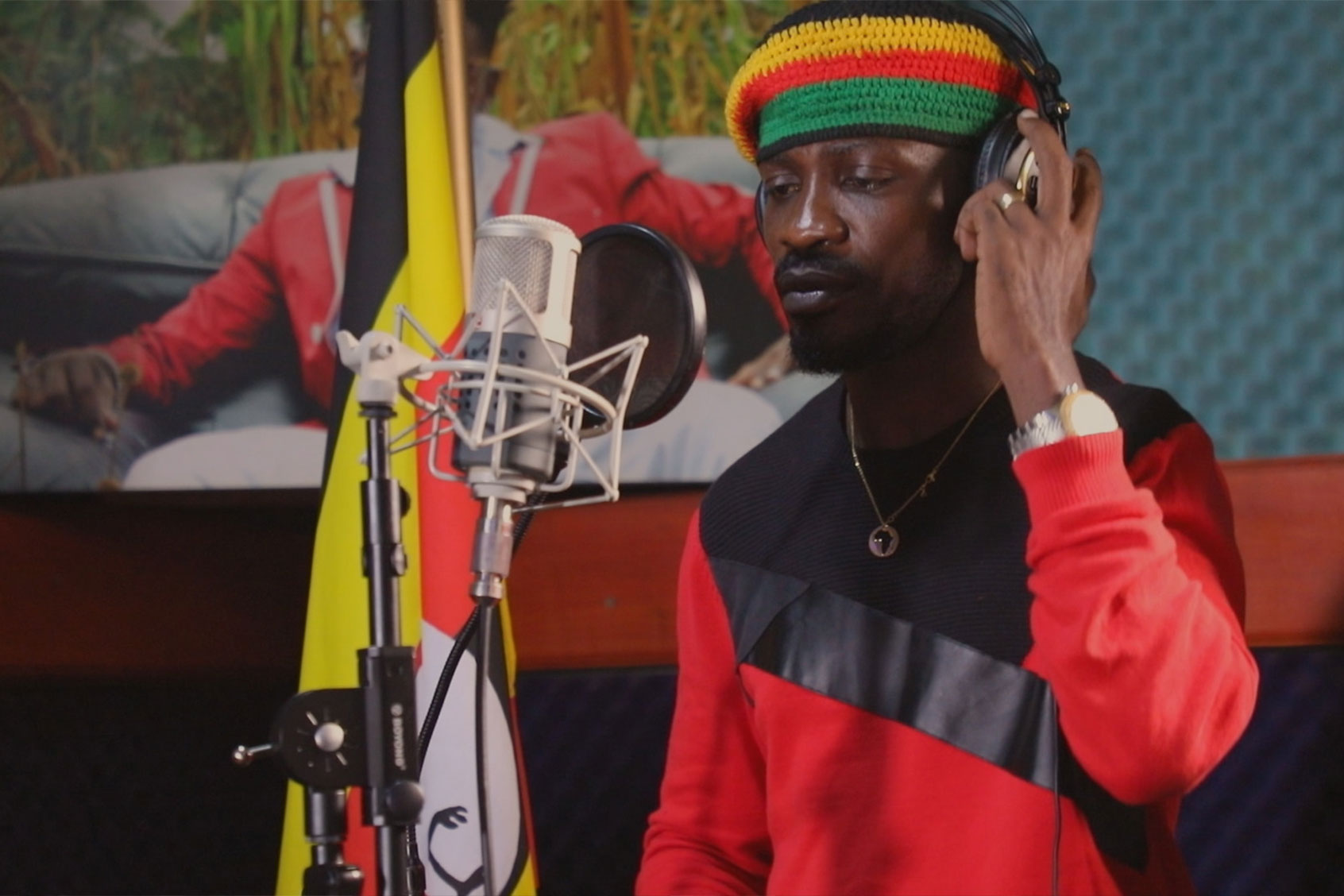
Bobi Wine, “The People’s President,” has a message for us: “Be inspired to defend your democracy”

A week before Bobi Wine and his wife Barbara Itungo Kyagulanyi received word that their documentary "Bobi Wine: The People's President" had been nominated for an Academy Award, the Uganda government placed them under house arrest. 

"We just wanted to tell our story and smuggle it, sneak it out of our country, because we have a country where the media is very securely controlled by the regime."

The documentary follows Wine through his campaign to unseat Yoweri Kaguta Museveni in Uganda's 2021 presidential election, who has been in power for nearly four decades. Museveni’s military police arrested Wine many times over the years on charges related to his political and social activism, first as an artist, and more lately as the opposition’s leader. But after "The People's President" received an Oscar nod, he says the military withdrew from his family's home.

“Bobi Wine: The People’s President” spends six years following the musician turned politician and activist, whose real name is Robert Kyagulanyi Ssentamu, as he transitions from one of the country’s most popular stars into a political force who poses a fierce challenge to an entrenched and corrupt regime. 

On Oscar night, “Bobi Wine: The People’s President" will compete with “Four Daughters,” “20 Days in Mariupol,” “The Eternal Memory” and “To Kill a Tiger.” But the worldwide exposure for “The People’s President" is not without a steep cost. Moses Bwayo, the movie’s co-director and director of photography, has been tortured, shot in the face, and is currently seeking asylum in the United States for himself and his wife.

Regime forces confiscated footage and stole or destroyed their equipment. Nevertheless, Bwayo and Christopher Sharp, the movie’s other director and producer, were able to smuggle more than 4,000 hours of footage out of the country by working with sympathetic white journalists.

Museveni’s government tightly controls the media, banning Wine’s music along with curtailing the public’s access to certain social media platforms.

And yet, as Wine and Kyagulanyi were visiting Pasadena, Calif., as part of National Geographic’s presentations for the Television Critics Association’s winter press tour, Wine told reporters that Museveni invited an Emmy-nominated director to counter “The People’s President” by making a tourist-friendly documentary about Uganda's natural beauty.  

“Of course, they're not showing the schools and hospitals,” he said during a panel, adding that the documentary has netted some positives for his family as well. “There has been more fear for the camera, more safety for us and more effort to cleanse the image because, for a long time, all this could not escape home.”  

In Pasadena, Salon sat down with Bobi Wine and Barbara Itungo Kyagulanyi to talk about the ways that the documentary has become “a bulletproof vest” for them as well as the lessons Americans might draw from his story.

This interview has been lightly edited for length and clarity.

We hold a very America-centered view of current events. What that means for the rest of the world is that unless something is happening that's directly aligned with our interests, either politically or socially, people don't pay as much attention as they should. What did it mean to you when you first heard that that film was nominated? 

Bobi Wine: Being nominated for the Oscars was [beyond] our wildest imaginations. . . . We just wanted to tell our story and smuggle it, sneak it out of our country, because we have a country where the media is very securely controlled by the regime. And the only way we could tell our story, unfiltered, unedited, was by a documentary. To see that our documentary got such a huge viewership and attention, for us, is mega. But the Oscar nomination, above everything else, is a lifeline. It’s an additional layer of safety, knowing that the world is watching what is happening in Uganda, and therefore, it's much harder now for the regime – not impossible, but harder – to eliminate us.

Barbie, what was it like for you to have to have cameras on you as a presidential candidate’s wife, and on top of that, all of those things happening to your family?

"The camera was more like a bulletproof jacket."

Barbie Kyagulanyi: For me, I was very happy that we had that camera – in the end, not initially. Initially, it was just filming him and what he does, but as we went along and started the most challenging and dangerous times . . . the camera was more like a bulletproof jacket. I felt a little bit more comforted that whatever was going to happen there, we would have it recorded. And then at least we would know exactly how whatever happened, happened. 

Bobi Wine: The People's PresidentBobi Wine assists his music producer Dan Magic into a hospital in Kayunga, Uganda, after he was injured by police teargas canisters and rubber bullets used to disperse crowds on December 1, 2020. (Southern Films/Lookman Kampala)
Another recent example of that was the increase of coverage here of the war going on in Ukraine and of Volodymyr Zelenskyy. I wonder if you had any thoughts about the way that the media turned its eyes towards Europe versus the way it monitors conflicts and challenges to democracy in different African countries, including Uganda.

Wine: Of course, the media initially was not as gagged. And it wasn't as dangerous to cover us at first. Indeed, when the filming of this documentary started, for us the interest kept changing. Because the first interest for us in accepting the cameras was to allow an inspiring story to be recorded. Our intention was to inspire young people to get involved in politics. When it got more serious and more [punishments] were unleashed on us, then we saw it as an opportunity to expose the impunity of the regime. 

Back home, that’s something that had been very securely kept from the rest of the world. But again, towards the end, the camera had become a bulletproof vest.

What goes out in the world is controlled and is only meant to paint a rosy picture. But this was defying all that. There came a time when even journalists and people [with] cameras were very much in danger. Moses, the director of photography was beaten, arrested, thrown in jail, shot in the face, all that. He had to flee the country and is living in America, seeking political asylum. The same thing happened to so many journalists. Those who did not lose their jobs were thrown in jail. Very many of them are across the world seeking safety.

I’m wondering what your impression is of what's been going on here in terms of both the presidential campaign and the stakes of this election. Second, what is your impression of the state of this country’s democracy?

"Violence will only beget more violence."

Wine: I would say, look at our story. It should communicate to people all over the world, especially you people in America who have the luxury of democracy, not to take it for granted. It can be lost. This film speaks not only about the situation in Uganda, but the fragility of democracy across the world, and why it must be guarded very, very jealously. You have what we are yearning for. And as you have seen in the past, that is not a given. It is a constant fight, not just to achieve, but to maintain a democracy. That is the most amazing thing that you have, and that you must not lose. 

Every time you think of losing your democracy, look back at Uganda and be inspired to defend your democracy.

We need your help to stay independent

Do you think that there's a shift going on in Uganda now? Do you see that there may be a future very close at hand where its people will be able to select their own leaders? 

Wine: There is definitely a future where people are able to select their leaders. But will their selection be allowed to stand? That is the question. 

. . . People have many times suggested numerous things, including violence. However, our leadership is a leadership that discourages violence and believes in nonviolence. I believe that violence will only beget more violence. But if we achieve our freedom nonviolently, first of all, it means that all people will be involved in it. If we achieve it nonviolently, then we can maintain its nonviolence, and that's the most progressive way to keep going. 

That’s an important message especially for people in the United States to hear. Because there are a lot of folks who believe a civil war is inevitable. What would you say to someone who views nonviolent dissent as a relic of the past?

Wine: Nonviolent resistance breaks resistance. I disagree with violence because violence only gives rise to violent men and violent methods and violent keeping of power. . . . We are a living example. Uganda has never had a peaceful transfer of power since independence [in 1962]. And that's a vicious circle that we must stop by using other means. Yes, we know that nonviolence sucks sometimes because it delays immediate results. We're not looking for immediate results, because immediate results are usually temporary. We’re looking for lasting results . . . for a lasting democracy. 

Bobi Wine: The People's PresidentBobi in the studio in "Bobi Wine: The People's President" (Southern Films)

I wanted to make sure that I talked to you about your art, your music and their power.

Wine:  Yeah.

American voters have an interesting relationship with performers. Several actors have become elected officials, from the local and state level to the presidency. Far fewer hip-hop artists and musicians have mounted successful runs for major political positions. And the difference, from what I can see, is that you have someone who projects an image, a fantasy, people come to believe in, versus a message that comes through your music. What role does delivering your message through your music play in your political life and your campaigns? 

Wine: The things I'm saying now are the things I've been singing about: equality for men and women, boys and girls. Better health care, better education, justice, respect for human rights, and the like. These are things that I've been talking about, only with a beat and a melody. 

And the message that went out to people, this did not happen over just a year or two, but a span of over a decade. It became our way of life, just the people that inspired us, people like Tupac Shakur. He inspired young people so much. 


Want a daily wrap-up of all the news and commentary Salon has to offer? Subscribe to our morning newsletter, Crash Course.


So: We go through campaign season, win the Oscar, and your music and the documentary are available here on streaming platforms. What's next in terms of keeping the world's eye on Uganda?

Wine: It has always been a cry and our prayers and our request that the U.S. and the EU reconsider their policies on Uganda. And we don't ask for too much. We're only asking for conditions on the aid up to $1 billion U.S. given to Museveni, conditions like respect for democracy, respect for human rights, and respect for the rule of law. If we get that, this is the biggest solution to our problems. That means when we go to the polls, we will not be massacred. That means when we say something through our vote, it's going to be respected. That has been our cry. 

With this film, we present a solid case to the world. And we're asking all the funders to consider it because what is happening in the film is going on courtesy of the funding and support of the international community, particularly America and the EU. 

Of course, when the award season ends and the cameras go down, the attention of the media will probably be diverted to other places. As you can see, now the world is in chaos. If it's not Ukraine, it’s Israel and Gaza. If it's not that, it's in the Congo. With so many problems in the world, we are already very grateful that our case has gotten this attention. We'll pray that by the time the cameras go down, those who make the decisions, the American legislators, will have been touched, that we will have provoked their conscience to respond positively. That is what makes sense for us. Otherwise, we shall continue using all possible ways to highlight our plight.

"Bobi Wine: The People's President" is currently streaming on Hulu and Disney+.

“All my heroes have been in handcuffs”: Killer Mike talks Grammys arrest on “The View”

Progressive activist and rapper Killer Mike won three Grammys including rap album of the year last week but was taken away backstage during the ceremony in handcuffs, arrested and booked for a misdemeanor.

On Monday's episode of "The View," host Sunny Hostin told the rapper that there were other headlines outside of his wins that night. "I was very upset about it because it was unnecessary and you don't do that on that on that special night," Hostin said.

Hostin asked the rapper, whose real name is Michael Renner, even though it is an ongoing legal matter, what he could share about what happened that evening.

Killer Mike described the evening and the incident that led to his arrest and being held at the Los Angeles Police Department for hours. “Backstage was overcrowded. The winners were exuberant, and I think security got a little overzealous,” he said.

He continued, "It's water under the bridge for me. I'd like to say all of my heroes have been in handcuffs – Malcolm [X], Martin [Luther King Jr.], [Nelson] Mandela, Medgar [Evers]. I walked out with the same dignity and respect that I walked in with, and I would implore people to just take that from it.”

In our Salon Talks interview with MSNBC journalist, Joy Reid, who wrote "Medgar and Myrlie: Medgar Evers and the Love Story that Awakened America" said that figures like Evers were crucial to the civil rights movement because he "was the person who was training those young people how to do civil rights work."

There may be no better way to celebrate Fat Tuesday than with this King Cake Bushwacker cocktail

A King Cake Bushwacker is a favorite seasonal cocktail that pops up in many local bars and restaurants during the weeks leading up to Mardi Gras. Whether you know what King Cake tastes like or not, you will love this mouthwatering libation, but for those of us who are well acquainted, it is mind-blowing just how exactly it replicates the flavor of the quintessential Mardi Gras confectionary delight. 

What I am giving you really is a two-fer: A tried and true Bushwacker recipe to make year round, plus a King Cake version to celebrate Mardi Gras in a way that is fun and unique. Topped with whipped cream, tinted sugars, decorative swirls of caramel or chocolate syrup and a miniature baby (if you want it to be ultra-authentic), this dessert-like drink is the perfect thing to get your Laissez les bons temps rouler on.

I feel like I should say, “Long story short,” before jumping in as people do before proceeding on to a very long story. My intention is to give you a great recipe for a cocktail I know you are going to love, but it would not be right for me to toss out a recipe that includes, of all things, a miniature plastic baby without providing context. I will use “brevity” as my mantra and do my best to stick to the high points.  

If you have ever celebrated Mardi Gras in its birthplace of Mobile, Alabama (our neighbor to the west and my hometown for most of my life) or ventured to New Orleans where this Christian holiday leading up to Lent has taken on the epic proportions of Carnival in Rio de Janeiro; you have seen, and perhaps tasted, King Cake. This colorful, wreath-shaped cake is featured from January 6th until Fat Tuesday in the finest bakeries and the lowliest of supermarkets and just about everywhere in between. More like a Danish, or a cross between a coffee-cake and a French pastry; King Cakes are circular (representing the unity of one's religious faith), lightly filled and heavily sprinkled with colored sanding sugar in shades of purple (justice), green (faith) and gold (power) in honor of each of the three kings who visited the baby Jesus on Epiphany (the twelfth day after Christmas). 

There is one more very important and most unique ‘ingredient’ in a King Cake: a little plastic baby. Measuring a little over an inch in length, it is pressed into and purposefully hidden within the cake after baking. Tradition says, whoever is served the piece containing the baby has good luck throughout the year and has to host the following year’s party. (King Cake babies often have to pull double duty at Christmas when you find that the Baby Jesus is missing from your Christmas creche or nativity scene.)


Want more great food writing and recipes? Subscribe to Salon Food's newsletter, The Bite.


King Cakes come in every conceivable flavor with an equally astonishing number of fillings; in fact, a bakery right outside of New Orleans advertises over sixty different kinds, but cinnamon-pecan with a cream cheese filling is traditional.  

Whew! Okay.. that was a lot, but honestly, I only provided the broad strokes. The takeaway here is this: King Cake Bushwackers taste amazing.

Whether you add it to your Mardi Gras celebration or not, you will love this cocktail. And maybe I have piqued your interest to learn more about our most rambunctious and raucous festival season that dates back to the eighteenth century. 

Let the good times roll! Happy Mardi Gras!

We need your help to stay independent

King Cake Bushwacker
Yields
2 servings
Prep Time
5 minutes

Ingredients

2 ounces Kahlua

*3 oz RumChata

1 ounce white rum

1 ounce Hiram Walker dark Creme de cacao

4 ounce Coco Lopez

4 ounces half-and-half

2 cups ice

Optional: whipped cream, chocolate or caramel syrup, a sprinkling of purple, green and yellow colored sugar & and a miniature little baby figurine (aka a King Cake Baby, a little baby Jesus)

Directions

  1. Place all ingredients, except for optional toppings, in a high-speed blender and process until smooth like a milkshake.

  2. To serve, drip syrup down sides of two cold glasses, pour  equal amounts into both, top with whipped cream and sprinkle colored sugar on top. Place a miniature baby on top. 

    *For a regular Bushwacker, omit the RumChata.


Cook's Notes

The Bushwacker is our signature frozen drink. It’s popularity in the US began in Pensacola, FL (our close neighbor to the east) and took off from there. It is sweet and creamy like a milkshake with hints of cocoa, coconut and coffee. They range from slightly icy to thoroughly smooth and are ridiculously delicious. They have a deceptively high alcohol content, which can sneak up on you, leaving you “bushwacked,” a term we use to describe someone who has fallen hard from overindulging.

Bushwackers have an interesting history. They originated in the Virgin Islands but were brought to Pensacola, Florida in the 1970’s by the original owner (there have only been two) of The Sandshaker, a funky dive-bar known for being the local watering hole for the Blue Angels and oldest beach bar on Pensacola Beach, located right by the iconic beachball water tower. From the time they were first served there in the late 70’s, Bushwackers quickly made their way all along the northern Gulf of Mexico shores, aka The Redneck Riviera and beyond.

Jon Stewart on Taylor Swift and conservatives “politicizing every aspect of American life”

Jon Stewart's triumphant return to "The Daily Show" feels like he never left, already firing away at culture wars fueled by conservatives.

The long-time comedy news host returned to his post on Monday for his part-time hosting gig as the 2024 election season heats up. Stewart opened the top of the show with a temperature check on American politics and pop culture — so, of course, the Super Bowl, Taylor Swift and Travis Kelce were mentioned.

“It was sadly, a lose-lose for real America. The Kansas City Chiefs are world champions, which means the decades-long plot in which Travis and Taylor brainwash America into getting routine vaccinations is complete," Stewart joked.

"But it was really kind of a no-win for conservatives. I mean, if the Chiefs lost, who wins? The People’s Communist Republic of Gay Pelosistan," he said. "It’s almost like the right’s ridiculous obsession with politicizing every aspect of American life ruins everything.”

Stewart, who left the show in August 2015 and was replaced by Trevor Noah, will serve as an executive producer throughout the election cycle and will host every Monday.

"The Daily Show" airs every weekday evening at 11 p.m. ET on Comedy Central.

From “Be Mine” to “Text Me,” how candy hearts reflect the shifting heart of contemporary dating

Alongside heart-shaped boxes of chocolate, Sweethearts are enjoying their moment under the spotlight during Valentine’s Day week. The confectionery hearts are both sweet in taste and nature, flaunting an array of brief yet heartfelt messages on each candy. In the wake of the internet and online dating apps, those messages have taken on new meaning, mainly to poke fun at shifting attitudes about dating. 

Sweethearts — also known as conversation hearts — were created in 1847, when a Boston pharmacist named Oliver Chase invented a machine that made it easier to create apothecary lozenges. The machine itself rolled lozenge dough and pressed them into perfect discs, thus eliminating the use of mortar and pestle to manually knead, roll and cut out the dough. Unbeknownst to Oliver, he had created America’s first candy-making machine. Originally set on making medicinal lozenges to help alleviate sore throat and bad breath, Oliver began creating candy — and founded a profitable business along the way.  

Amid the 1800s, Chase and his brother Daniel Chase debuted their Sweethearts Conversation Hearts, which were released under Oliver’s company, the New England Confectionery Company (NECCO). Originally called “motto hearts,” the heart-shaped candies were conceived from a “cockle,” a Civil War-era scalloped candy that contained a wholesome message written on colored paper inside it, akin to a fortune cookie. It was Daniel who eventually came up with the idea of emblazoning words directly on the candy with red vegetable dye, explained Louise McCready for Bon Appétit. Such candies were first available in shapes like baseballs, horseshoes, and watches. The wedding-themed versions featured lengthy yet witty sayings, including “Married in pink, he will take a drink,” “Married in White, you have chosen right,” and “Married in Satin, Love will not be lasting.”

Conversation hearts took off by the early 1900s. They had become smaller in size and featured one-liners, which remain an enduring characteristic. Many of the original sayings, like “Be Mine,” “Kiss Me,” “Be Good” and “Be True,” are still printed on candies today. But in the late 90's, NECCO began changing up its phrases in accordance with a yearly theme. In 1997, NECCO featured expressions like “Email Me,” “Call Me” and “Fax Me” to spotlight technology’s growing impact on people’s romantic relationships. The early ‘80s were deemed peak years for faxing since fax machines were used for all types of office communication. Computer-based messaging became a reality in 1971, shortly after the fax machine’s inception, when the first ARPANET network mail was sent. In the late ‘90s, cell phones became a primary communication tool that slowly replaced landlines and online messaging.

We need your help to stay independent

In 1998, the candies “took a youthful approach,” per The State Journal-Register, with sayings like “Cool Dude” and “Yeah Right.” Pop culture was the theme in 1999, with the addition of “1-800-Cupid” and “As If.” In an attempt to modernize the candy’s phrases, NECCO asked consumers for suggestions in an online poll in 2010. The top choice was “Tweet Me,” which came amid Twitter’s growing popularity, while the second most popular choice was “Text Me.” The new phrases replaced “Email Me” and “Fax Me,” which had grown outdated.

Last year, Sweethearts poked fun at the concept of sending “likes'' on social media with its “The IRL Like” box of candy hearts. Unlike an online like, Sweethearts’ like is edible, comes in pretty colors and “shows someone you’re really thinking of them,” the company said on social media. “It’s giving real human connection. And also a sugar rush,” Sweethearts wrote.


Want more great food writing and recipes? Subscribe to Salon Food's newsletter, The Bite.


Most recently, Sweethearts launched its now sold-out box of "Situationship" candy hearts, which feature “messages as blurry as your relationship.” A situationship, by definition, is “a romantic or sexual relationship that is not considered to be formal or established.” The buzzy term is yet another subset of casual relationships that has arisen to popularity (albeit, unfortunately) within the internet dating culture. Online dating — which has become the norm recently as more folks look to Tinder, Bumble or Hinge to find a partner — has “created this paradox of choice,” Christie Tcharkhoutian Kederian, PhD, LMFT, a renowned relationship expert and former celebrity matchmaker at eHarmony told Women’s Health. That means more people are unwilling to commit to relationships because they have an abundance of options readily available.

https://www.instagram.com/p/C2x32P8SmQ6/?utm_source=ig_web_copy_link&igsh=MzRlODBiNWFlZA==

https://www.instagram.com/p/C20CyS1xIiE/

As online dating continues to reign supreme in 2024, dating experts predicted several major trends that are slated to take over this year. There’s “contra-dating,” which relationship coach Jonathan Hartley from PositivesDating explained is a term “used when you want to broaden your horizon” and pursue “someone you would not usually go for.” There’s also “micro-flirting,” a fairly new (but growing) dating trend that describes “flirting in a subtle, not-so-obvious way.” And there’s the infamous ghosting, which is when someone suddenly ends all communication with the person they’re dating sans any explanation.

Keeping up with dating trends on top of navigating the current dating scene is quite frankly exhausting. But at least we have Sweethearts to continually keep us up to date — even humble us and remind us how abysmal our love lives truly are.

Free yoga and meditation at work don’t seem to benefit workers, research finds. But better pay might

In the 2010s, startup companies in Silicon Valley became known for not only their product innovation, but for revolutionizing office culture as well. Specifically, the idea of offering “wellness perks” became the norm. Since then, dozens of companies have made headlines for offering yoga in the office, mental health benefits, a ball pit in the break room and even nap time. While a bit infantilizing at times, the intent has been to improve the well-being — and productivity — of employees as stress, anxiety and burnout have become a frequently discussed phenomenon over the last decade.

Yet another study published last month found that these so-called “wellness perks” which have dominated work culture over the last decade don’t improve well-being, perhaps acting as the final nail in the coffin to yet another chapter where healthcare has been inextricably tied to work. 

Published in the Industrial Relations Journal, the study looked at the outcomes of 90 different wellness interventions among 46,336 workers in 233 organizations. In the study, William J. Fleming, the author and a fellow at Oxford University’s Wellbeing Research Center asked the question: Do participants in individual-level mental well-being interventions at work have higher well-being? And if so, or if not, how and why?

"There was quite a bit of criticism of individualized approaches in general and an intuition that these programs wouldn't engage with working conditions."

Using data based on responses from the Britain’s Healthiest Workplace survey in 2017 and 2018, the study found that the following types of wellness interventions — relaxation practices, time management, coaching, financial well-being programmes, well-being apps, online coaching, sleep apps and sleep events — did not improve employee well-being. 

In an interview, Fleming told Salon his results were surprising because these programs have been so popular. Individually, many of the perks offered have been shown to have a positive effect on people’s health.


Want more health and science stories in your inbox? Subscribe to Salon's weekly newsletter Lab Notes.


“But I wouldn't say I was personally that surprised,” he said. “Because there was quite a bit of criticism of individualized approaches in general and an intuition that these programs wouldn't engage with working conditions.”

Indeed, the study isn’t the first to look at the impact of wellness perks in the context of the workplace. In 2022, the Illinois Workplace Wellness Study — a large randomized controlled trial of a wellness program at the University of Illinois at Urbana-Champaign followed nearly 5,000 employees to see how various health-focused programs, like exercise, tai chi, and financial wellness classes affected their health — landed on similarly disappointing results. A separate study published in 2019 raised concerns about the effectiveness of such programs, too. In Fleming’s study, he suggested organizational and structural changes to the workplace — like changes to scheduling, management practices, staff resources, performance review and performance reviews — would better improve employee well-being. 

“The biggest takeaway is that individualized strategies will not improve employees' well-being,” he said. “If there is not first a serious engagement with working conditions and organizational practice and culture.” 

Notably, the only “perk” that improved well-being was volunteering. When asked why this helped while others didn’t, Fleming said it was likely because it enhanced “a sense of purpose among workers.”

"I think ultimately making more money would have made my life easier in a more significant way than having in-office meditation sessions ever did."

“By making their work more meaningful or by giving meaning separate from the job,” he said. “They could also offer time away from usual work demands, give more chances for socializing or develop new skills. It will depend on what types of volunteering opportunities which I wasn't able to go into with the data.”

Ryan Farley told Salon via email that he previously worked at a company that offered mental health and wellness perks as part of its benefits package. While he appreciated having access to them, he said at the end of the day he would have preferred to be making more money. 

“The wellness benefits I had access to were things like an in-office masseuse, guided meditation sessions, along with access to therapy,” he said. “But, I think ultimately making more money would have made my life easier in a more significant way than having in-office meditation sessions ever did.”

Lindsay Lalonde, who lives in Canada, told Salon via email that wellness in the workplace for her would be “flexible working hours, more PTO, and recognition.”

“Many wellness perks are geared towards a certain type of person, usually a health-conscious person interested in meditation, yoga, fitness or anything along those lines,” she said. “That's great, but that's not everyone's idea of wellness, plus, who has the time for any of those things?”

We need your help to stay independent

More and more research keeps strengthening the case for a four-day work week. A study published last year in the International Journal of Behavioral Nutrition and Physical Activity found that employees were physically healthier as a result of being more likely to be physically active during their days off. Another study found that higher minimum wages are associated with positive health outcomes. While some research has stated that money doesn’t equate to happiness (although there is some controversy over that), there is an international consensus that access to basic needs and social determinants of health such as housing and education, is good for one’s health. 

Fleming said this study adds to the argument that work should be considered as a “determinant of health and wellbeing.”

“I think the future will be a reorientation to fundamental aspects of work; pay, contracts, schedules, management, colleague relationships, workloads, etcetera,” he said. “The workplace has had a place in public health policy for decades now, [and] I don't see that going away.”

Uber Eats edits star-studded Super Bowl ad after backlash over food allergy insensitivity

A star-studded Uber Eats commercial has caused some controversy for downplaying the seriousness and legitimacy of food allergies. The commercial, which features Jennifer Anniston, David Schwimmer, Usher, Jelly Roll and David and Victoria Beckham involves the celebrities being forgetful about various topics ("Remember when you used to be a 'Pepper Lady'?" Beckham asks in a pretty middling take on being forgetful about the group named The Spice Girls). The overarching message is "don't forget Uber Eats." 

The correlation with food allergies has to do with another character in the commercial who "forgets" his peanut allergy, which some research and activism groups say minimizes the seriousness of peanut allergies and many others like it. The man, who then breaks out in hives as his eye swell shut, says, "There's peanuts in peanut butter? Oh, it's the primary ingredient."

Following the airing of the ad, the Food Allergy Research & Education group issued a statement on social media: “We’re incredibly disappointed by @UberEats’ use of life-threatening food allergies as humor in its Super Bowl ad. The suffering of 33M+ Americans with this condition is no joke. Life-threatening food allergy is a disease, not a diet. Enough is enough.”

In responding to the backlash, Uber "did not issue a statement but shared the edited version of the ad," as per the BBC. FARE responded positively, thanking the company for their swift edit. Uber "will air an alternate version of the spot without the peanut-butter scene in the CBS telecast but currently does not plan to edit or remove the ad previously released online," according to Variety

Judge says “it’s possible” DA Fani Willis could be disqualified from Trump RICO case

The judge overseeing former President Donald Trump's election interference case in Georgia indicated Monday that Fulton County District Attorney Fani Willis could face disqualification after she and a prosecutor on her team admitted earlier this month they were romantically involved. The pair's acknowledgment came in response to a co-defendant in the racketeering case accusing Willis of financially benefitting from an alleged "improper relationship" with special prosecutor Nathan Wade, allegations both have denied.

Fulton County Superior Court Judge Scott McAfee ruled that he would hold an evidentiary hearing Thursday to investigate the co-defendant's claims and consider his request to have Willis, Wade and her office nixed from the case. “It’s clear that disqualification can occur if evidence is produced demonstrating an actual conflict or the appearance of one,” McAfee said, according to HuffPost. “I think it’s possible that the facts alleged by the defendant could result in disqualification. I think an evidentiary hearing must occur to establish the record on those core allegations.”

The judge's precise language appears to show his cautious approach to the matter, attorney John Acevedo, a visiting professor with Emory University, told Atlanta local news organization, 11Alive News. "The key phrase from Judge McAfee was 'the appearance of conflict of interest,'" Acevedo said. "And that's clearly what's on Judge McAfee's mind here; it's the appearance of impropriety, even where there may not be any."

McAfee also declined to address subpoenas for witness testimony from Willis, Wade and other prosecutors in her office in Thursday's hearing, but said he intended to maintain focus and act during the proceedings to shield Willis and Wade from "undue embarrassment." The judge added, "The issues at point here are whether a relationship existed, whether that relationship was romantic or non-romantic in nature, when it formed and whether it continues. And that’s only relevant because it’s in combination with the question of the existence and extent of any benefit conveyed as a result of their relationship.”

15 states chose not to participate in Summer EBT for hungry kids. Here’s why

In early January, the United States Department of Agriculture (USDA) announced that it would be expanding food benefits programs this summer in an effort to provide children nutritious meals even when school is out. Nearly 21 million children in the U.S. and its territories are expected to receive such benefits through the Summer Electronic Benefits Transfer program, or Summer EBT.

Families with children who are eligible for free or reduced-price lunches will be eligible for Summer EBT. The benefits will come in the form of pre-loaded cards that families can use to purchase groceries. Beginning in summer 2024, families will receive $40 per eligible child. Summer EBT benefits will work in tandem with other federal nutrition assistance programs — including summer meal sites, Supplemental Nutrition Assistance Program (SNAP) and Special Supplemental Nutrition Program for Women, Infants, and Children (WIC) — to boost children’s access to healthy foods year round.

A USDA report, published in October, found “statistically significant” increases in food insecurity nationwide due to expiring pandemic-related government air coupled with rising food costs. Roughly 17 million households reported problems affording enough food in 2022 — compared to 13.5 million households in 2021 and 13.8 million households in 2020.

Thirty-five states, all five U.S. territories and four tribes opted into Summer EBT, per the Associated Press. Fifteen states — all Republican-governed — chose not to opt in for this summer, citing cost and existing programs that already feed children during the summer. They will have a chance to join for summer 2025, the USDA said.  

Here’s a closer look at all the states that will not participate in Summer EBT, and why:

01
Alabama

State officials said changes to federal funding and bad timing would prevent the program from being set up in time.


“Unfortunately, the federal government has now cut funding for administering the program by 50% and issued guidance after our legislative session ended,” Deputy Communications Director Mike Lewis wrote to AL.com, “thereby eliminating the potential for securing state funds to continue administering these limited additional benefits.”


Alabama is reportedly considering whether to participate in 2025, but the total cost to administer the program (an estimated $10 million) has not been determined yet.

02
Alaska

The Alaska Department of Education and Early Development (DEED), which operated the pandemic-era EBT program during its first year, will not apply for the new Summer EBT program because the administrative requirements “greatly exceeds the benefit that would be issued to children.”


“The cost and administrative requirement to create a new EBT issuance program either with DEED or in coordination with a partner agency greatly exceeds the benefit that would be issued to children,” a legislative liaison for the department wrote in an email to Juneau Empire. “DEED is currently pursuing other avenues to increase (availability) of nutritious foods to children during the summer months through the Summer Food Service Program. Alaska remains open to the option to pursue Summer EBT in future years should it become more feasible to implement.”


The decision, announced in December, comes as state officials struggle to clear out a lengthy backlog of food stamp applications that has kept thousands of Alaskans waiting months for benefits.

03
Florida

The Florida Department of Children and Families said it wouldn’t be pursuing the funding for Summer EBT: “We anticipate that our state’s full approach to serving children will continue to be successful this year without any additional federal programs that inherently always come with some federal strings attached,” a spokesperson for the department wrote in an email to Governing.


The Summer EBT program for 2024 would serve approximately 2.2 million children and deliver  an estimated $259 million in nutrition aid, if the state were to apply. Florida previously opted out of Summer Pandemic-EBT before changing its decision in 2021 following pressure from stakeholders across the state.

04
Georgia

State leaders cited existing state-administered programs that already feed children during the summer including Seamless Summer and Happy Helpings. A statement from Gov. Brian Kemp’s office said the state “remains focused on well-established and effective programs that are tailored to address our state's specific needs by providing necessary nutrition and engagement to families and kids.”


“Unlike the many successful programs Georgia already has in place, the most notable being GaDOE's Seamless Summer Option, which alone provided millions of breakfast and lunch meals to students statewide last year, this federal Covid-era EBT program not only lacks basic nutritional requirements and sustainability but fails to address the mission of improving the health and wellness of our children,” a spokesperson for the governor told Georgia’s WXIA-TV via email.

05
Idaho

Despite Idaho’s decision to opt out of Summer EBT in 2024, Gov. Brad Little has supported the program, asking the state legislature for an estimated $1 million in state funds required to administer it. Even if lawmakers approved that spending, the state funding wouldn’t begin until Idaho’s fiscal year starts July 1. Idaho may be able to participate in Summer EBT for the summer of 2025, but a decision hasn’t been made at this time.

06
Iowa

Iowa Gov. Kim Reynolds said in a news release that an EBT card “does nothing to promote nutrition at a time when childhood obesity has become an epidemic.”   


She added, “If the Biden Administration and Congress want to make a real commitment to family well-being, they should invest in already existing programs and infrastructure at the state level and give us the flexibility to tailor them to our state’s needs.”


Participating in Summer EBT would cost Iowa about $2.2 million, the Associated Press reported


Reynolds’ decision was met with opposition from some state lawmakers. Democratic Sen. Izaah Knox of Des Moines said the “cruel and short-sighted decision will have real impacts on children and families in my district and communities all across Iowa.”

07
Louisiana

State officials said Louisiana missed the Jan. 1 deadline to opt in Summer EBT benefits due to the recent changeover in administrations. Former Gov. John Bel Edwards was succeeded by Gov. Jeff Landry, who officially took office on Jan. 8. A statement from the Louisiana Department of Education said it was “improper to commit Governor Landry and a new legislature to millions of dollars in increased spending toward a new government program.”


Local stakeholders have urged officials to reconsider participating in Summer EBT, noting federal enrollment requirements are less difficult in the first year. Roughly one in four children in the state live in poverty, compared to 17% nationally.

08
Mississippi

The Mississippi Department of Human Services, which oversees SNAP, informed the Mississippi Department of Education that it does not have the personnel to manage the Summer EBT program.


“Mississippi declined to participate at the direction of Governor Reeves because it was originally intended to be a temporary pandemic-era program,” Gov. Tate Reeves’ press secretary told Mississippi Clarion Ledger.


Reeves added that he decided against participating in Summer EBT to protect Mississippi from "attempts to expand the welfare state."

09
Nebraska

Officials said Nebraska will not participate in Summer EBT, which would cost the state roughly $300,000 annually in administrative costs, the Lincoln Journal Star reported.


“In the end, I fundamentally believe that we solve the problem, and I don’t believe in welfare,” Nebraska Gov. Jim Pillen told the outlet. Nebraska, however, will continue taking part in a different federal program, called the Summer Food Service Program, which combines programming — like reading, physical activity and nutrition education — with food assistance.


“We just want to make sure that they’re out. They’re at church camps. They’re at schools. They’re at 4-H. And we’ll take care of them at all of the places that they’re at, so that they’re out amongst (other people) and not feeding a welfare system with food at home,” Pillen said.

10
Oklahoma

Republican Gov. Kevin Stitt rejected an estimated $60 million in federal funds that could have benefitted more than 400,000 children in the state this year. Stitt cited concerns over the federal government’s implementation of the program and said existing services like SNAP and state-level food programs already address food insecurity.   


“We gave over $20 million over the last couple of years to different food banks,” Stitt told KJRH News. “So, we are satisfied that kids won’t be going hungry in the summertime. We just don’t know enough about the program; not saying we won’t do it next year.”


Stitt added that there wasn’t enough information surrounding Summer EBT, saying there was “more bureaucracy for families to wade through.”

11
South Carolina

South Carolina Gov. Henry McMaster said the state decided not to participate in Summer EBT because officials are trying to move past pandemic aid.


“That was a COVID-related benefit. We’ve got to get back to doing normal business. We just can’t continue that forever, but we’re still continuing all the other programs that we have,” McMaster told reporters, per The Hechinger Report.


South Carolina’s existing summer meals programs currently rely on support from sponsors, who have been decreasing in number over the years. The state’s biggest program is run by the USDA and relies on sponsors, like the Lowcountry Food Bank, to distribute the food. Since 2019, fewer sponsors have signed up to participate. According to the South Carolina Department of Education, there were 78 sponsors in 2019 compared to 45 in 2023.

12
South Dakota

Republican Gov. Kristi Noem said South Dakota’s low unemployment, the administrative burden of running the program, and the state’s “robust existing food programs” are just a few reasons why the state opted out of Summer EBT.


“Federal money often comes with strings attached, and more of it is often not a good thing,” Ian Fury, the chief of communications for Gov. Noem wrote in an email to Chalkbeat.

13
Texas
According to KFOX14, the Texas Health and Human Services Commission said participating in the program was not possible this summer because the USDA guidance came so late last year, making it challenging for approval by the state legislature.
14
Vermont

Officials at the Vermont Department for Children and Families (DCF) decided to forego Summer EBT benefits due to administrative costs. Deputy Commissioner of Children and Families Miranda Gray said the administrative costs could be significant, due to the fact that Vermont lacks the IT system needed to “streamline the collection of eligibility information from participating households,” the Vermont Public reported.


Gray added that moving forward with the Summer EBT program this year would cause undue “budgetary pressure.”


“It’s not just bringing this [federal food assistance] income here. There is an expense to Vermont to being able to administer this program now,” she said.


Vermont hopes to have a new, working IT system at the Agency of Education and DCF in advance of the summer of 2025. Gray said the state plans to permanently enroll in the Summer EBT program once that system is in place.


“Vermont is very committed to doing this, but also wanting to make sure we are doing this thoughtfully and correctly, because it is federal money that will be audited, so wanting to make sure that we are prepared,” she said.

15
Wyoming

The state claimed the Summer EBT program is a welfare program mis-marketed as a program for kids. 


“I will not let the Biden Administration weaponize summer school lunch programs to justify a new welfare program,” Superintendent of Public Instruction Megan Degenfelder said in a statement emailed to WyoFile. “Thanks, but no thanks. We will continue to combat childhood hunger the Wyoming way.

Merrick Garland’s ex-law professor blasts him over Republican special counsel’s Biden report

Attorney General Merrick Garland is facing a deluge of backlash, including from his friend and former Harvard professor, following the release of special counsel Robert Hur's final report on President Joe Biden's retention of classified documents. Experts have derided the report for including what they say are partisan remarks about Biden and his memory that violate the Justice Department's normal practice. Some, including the president, believe Hur overstepped in his comments and place some of the blame on Garland, according to Politico.

In a post to X/Twitter Laurence Tribe, a professor emeritus at Harvard who taught constitutional law for decades, agreed with the criticism of Garland.

"I’ve long respected my friend and former student Merrick Garland but he has bent too far backwards in order to avoid seeming pro-Biden," Tribe said. "Bob Bauer, as Biden’s personal lawyer, rightly 'raised concerns over the inclusion of these details to both Hur and Garland,'" he added in a separate post, quoting an Associated Press article in VOA News. "Garland should’ve granted Bauer’s appeal because Hur’s report violated DOJ 'norms that work to avoid prejudicing the public against people who are not charged with a crime.'”

"It was entirely foreseeable Rob Hur would pull a Comey in his report," former FBI general counsel Andrew Weissmann added. "Garland was [100 emoji] right to have appointed a Special Counsel but wrong to pick Hur and to think only a Republican could fit the bill."

“Classic autocratic move”: Trump accused of “nepotism” for pushing Lara Trump as RNC co-chair

Former President Donald Trump announced Monday night his preferred pick to head the Republican National Committee — and replace current Chairwoman Ronna McDaniel — and endorsed his daughter-in-law for the committee's co-chair. The GOP frontrunner voiced support for his "friend" Michael Whatley, the RNC's general counsel and a supporter of his false voter fraud claims, and “my very talented daughter-in-law, Lara Trump,” to act as party leaders, according to The New York Times

"The RNC MUST be a good partner in the presidential election. It must do the work we expect from the national Party and do it flawlessly," Trump said in a statement, explaining that that work is to ensure "fair and transparent elections" nationwide and boost voter turnout. “Lara is an extremely talented communicator and is dedicated to all that MAGA stands for,” Trump added of the wife of his second son, Eric. “She has told me she wants to accept this challenge and would be GREAT!”

Leah Wright Rigueur, a Johns Hopkins University professor and political historian, on Tuesday called out the former president's push for his daughter-in-law to assume the leadership role.

"I think his policy is one of nepotism," Rigueur told CNN in a clip flagged by RawStory. "He firmly believes in that, and part of it is because it is a way of enforcing an agenda and an outlook that holds close to him. What better way than to have a daughter-in-law or a family member in a position of power when you need them to be in a position of power?"

Republicans, she added, have a "delusional belief" that they can corral Trump when that is not the reality. "This is Donald Trump's party and right now, he is putting things in place and in position to ensure that you cannot control him," Rigueur said. 

"Classic autocratic move. Turning politics into a funnel of personal profit requires the party be subordinated to (crime) family interests," added NYU professor Ruth Ben-Ghiat, a historian of authoritarianism, fascism and propaganda.

An astronomer’s lament: Satellite megaconstellations are ruining space exploration

I used to love rocket launches when I was younger. During every launch, I imagined what it would feel like to be an astronaut sitting in the spacecraft, listening to that final countdown and then feeling multiple gees push me up through the atmosphere and away from our blue marble.

But as I learned more about the severe limitations of human spaceflight, I turned my attention to the oldest and most accessible form of space exploration: the science of astronomy.

Since 2019, I’ve watched my unencumbered enthusiasm for rocket launches soften to tepid interest, and finally sour to outright dread. The corporate space race, led by SpaceX, is entirely responsible for this transformation in my mindset.

I am worried by the complete shift to the move-fast-and-break-things attitude that comes from the tech sector instead of government scientific agencies. I am put off by the colonialist language and billionaire-worship of private corporations. I am increasingly furious at the nonexistent public education and lack of transparency offered by these companies.

The final nail in the coffin for my love of rocket launches came with SpaceX’s Starlink satellite megaconstellations.

Crowded orbits

The corporate space race is well underway, with private companies flooding Low Earth Orbit with thousands of mass-produced satellites. In previous decades, the prohibitively high cost of launch kept the rate of increase and total number of satellites from growing too rapidly. But launches have been getting steadily cheaper for years.

Al Jazeera reports on the impacts of Starlink satellites.

SpaceX has launched thousands of their own Starlink communication satellites, as well as hundreds of satellites for their direct competitors. Half of all launches worldwide in 2023 were SpaceX rockets.

As an astronomer, I’m painfully aware of what these thousands of new satellites have done to the night sky worldwide. They reflect sunlight long after the sky has grown dark, looking like moving stars.

Starlink satellites are the most numerous and occupy some of the lowest orbits, so they make up the majority of the satellites seen in the sky.

Last year, SpaceX launched one of the brightest objects in the sky on behalf of another company: BlueWalker 3, a satellite with the same sky-footprint as a small house. They plan to operate a fleet of dozens, each as bright as the brightest stars in the sky.

Lost information and knowledge

These satellites are now increasingly obstructing telescopic space exploration, both on the ground and in space. Astronomers are the canaries in the coal mine for this rapidly expanding experiment in orbit: we see these satellites increasingly affecting our research every day.

I have watched over the past five years as satellite streaks in my own research images from the Canada-France-Hawaii Telescope have changed from an unusual occurrence to lost data in nearly every image.

a series of grey boxes with white streaks

A composite of 29 individual exposures from the Canada-France-Hawaii Telescope on Maunakea, taken in August 2022. The horizontal and diagonal white lines are bright satellites that unexpectedly flew through the field of view during observations, covering any objects behind them. (P. Cowan/W. Fraser/S. Lawler/CLASSY Survey Team/CFHT)

Astronomy is the only way to learn about the universe, the overwhelming majority of which can never be explored by humans. The farthest human-made object from Earth is the Voyager 1 probe, now eight times farther from the sun than Neptune after 46 years continuously travelling significantly faster than a speeding bullet.

But even if Voyager 1 was pointed directly toward our nearest neighbouring star, Proxima Centauri (it’s not), it would take over 100,000 years to get there. We are light-years away from having technology that can robotically explore even our neighbouring solar systems on a human timescale, let alone bring humans out to the stars.

The vast majority of astronomy research is carried out by telescopes on Earth: large optical telescopes on remote mountaintops, large radio telescopes in radio-quiet zones that are meticulously maintained, as well as smaller telescopes scattered around the world.

There are a handful of telescopes in Low Earth Orbit that also have to contend with light pollution from Starlink and other megaconstellations. There are also a handful of telescopes outside Earth orbit which can only operate for a few years, unlike ground-based facilities that can be maintained and enhanced with new technologies for decades.

Government regulation needed

Space exploration using Earth-based telescopes is growing increasingly less effective as more bright and radio-loud satellites are placed between Earth and the stars. But there are much worse problems ahead if corporations continue launching satellites: atmospheric pollution on launch and reentry, ground casualty risks from reentries, and the very real possibility of a runaway collisional cascade in orbit, referred to as the Kessler Syndrome.

Satellites are an incredibly useful part of our lives, but there are limits to how many can safely orbit Earth. Current regulations on launches and orbital operations by governments are very weak, and are not set up for the current regime of thousands of new satellites per year.

Regulation on the number of satellites in orbit would force corporations toward technology improvements and service models that use fewer satellites, keeping orbit usable for future generations.

Ask your government representatives to support satellite regulation, and expansion of rural broadband. Get out and enjoy your dark skies, before they change.

With proper regulation, our oldest form of space exploration can continue. I desperately hope we never reach a point where the natural patterns in the sky are drowned out by anthropogenic ones, but without regulation, corporations will get us there soon.

Samantha Lawler, Associate professor, Astronomy, University of Regina

This article is republished from The Conversation under a Creative Commons license. Read the original article.

“Really bizarre”: Legal experts trash Trump’s “poorly-written” Supreme Court immunity filing

Former President Donald Trump on Monday asked the Supreme Court to block a lower-court ruling allowing his D.C. criminal election subversion case to move forward, echoing his repeatedly rejected argument that he is immune from prosecution.

“Without immunity from criminal prosecution, the Presidency as we know it will cease to exist,” Trump’s lawyers claimed in the filing, arguing that if presidents can be charged for actions in office, “such prosecutions will recur and become increasingly common, ushering in destructive cycles of recrimination.”

A three-judge panel on the U.S. Court of Appeals for the D.C. Circuit last week rejected Trump’s claim that he is immune from prosecution, writing that “we cannot accept that the office of the Presidency places its former occupants above the law for all time thereafter.”

Trump’s lawyers asked the Supreme Court to suspend the ruling and keep the D.C. case on pause while he asks the full appeals court to review his bid. The appeals court ruled that the D.C. trial proceedings may resume later this month without an additional stay.

Trump’s lawyers argued that a trial would sideline him from campaigning, which they claimed undermines the First Amendment right of American voters “whether they support him or not, and threatens to tarnish the federal courts with the appearance of partisanship.”

Chief Justice John Roberts is likely to ask special counsel Jack Smith’s prosecutors for a quick response before the court rules on Trump’s request, according to the Washington Post. The court can reject Trump’s request and allow the lower-court ruling to stand, which would clear the way for the trial proceedings to resume. At least five of nine justices are required to keep the D.C. Circuit ruling on hold. It takes four justices to accept a case for review.

Former federal prosecutor Andrew Weissmann, who served on special counsel Bob Mueller’s team, was unimpressed with Trump’s filing — starting with the first line.

“This application is ‘déjà vu all over again,’” the filing says, referencing a line from New York Yankees legend Yogi Berra.

“If you were going to be snarky, they might as well have cited Yogi Bear,” Weissmann told MSNBC. “I mean, that is just a bizarre way to start on something they are asking the Supreme Court.”

We need your help to stay independent

Weissmann noted that during court proceedings, Trump’s attorneys argued that the president can’t be prosecuted even if he had someone killed.

 “So, for something this serious, that is a bizarre, really bizarre first sentence and I think has a real tin ear,” he said.

Former Trump White House attorney Ty Cobb, who worked for Trump during the Mueller probe, agreed that Trump’s filing is “pretty weak.”

“It’s repetitive of their briefs below which, the arguments that they presented were not only soundly rejected, but you know, eviscerated both in oral argument and in the opinion,” he told CNN. “I don’t think the Supreme Court is going to find those arguments compelling in any way. The Supreme Court can do a variety of things here. You know, they can grant or they can grant or deny the stay. If they’d grant the stay, you know, they will likely expedite consideration of the case.”


Want a daily wrap-up of all the news and commentary Salon has to offer? Subscribe to our morning newsletter, Crash Course.


Former federal prosecutor Renato Mariotti has long predicted that the Supreme Court would not take up Trump’s case at all.

“After reading this poorly-written application for a stay, I’m feeling good about my prediction,” he tweeted.

MSNBC legal analyst Lisa Rubin agreed that Trump is likely to “fall short of the five votes that he will need to get a stay” but the timeline will be key.

"This is a Supreme Court that can move with all deliberate speed when it chooses to," Rubin said. "The time between the Florida Supreme Court decision in Bush v. Gore and the United States Supreme Court decision is four days, and that includes briefing and oral argument. On the other hand, this Supreme Court could hold onto this case for some time. They could grant a stay, for example, and then ask for briefing on a cert petition, taking weeks and weeks, schedule oral argument far out, perhaps even beyond June. I don't think that's going to happen, but the timing here is entirely in the Supreme Court's hands."