What Democrats must at last learn from the GOP

Republicans complain about process, but scorn bipartisan niceties. Democrats should push back with equal force

iStockphoto

The most troubling aspect of "deemed to have passed" -- the oddball procedure that the House Democratic leadership is considering as an alternative to the normal rules in passing healthcare reform -- is that it gives the Republicans something else to talk about aside from the bill itself and the issues it is designed to address. From the beginning, subtraction by distraction -- whether framed as "death panels" or "backroom deals" -- has been the fundamental Republican strategy. Rarely have the Democrats answered with the forceful scorn that was appropriate.

The proper reply to "death panels" was that they already exist in the corporate bureaucracy of the insurance companies -- and in the lobbying firms where reform that would save tens of thousands of lives annually has been killed every time.

And the short answer to "backroom deals" -- as well as all the other complaints about process in the House and the Senate -- is that the Republicans have used many of the same tactics and worse whenever that suited them and certainly will again if they regain power next fall.

That was why I had to stifle a laugh this morning when Joe Scarborough asked me on his radio show (and later on "Morning Joe," too) why the alleged abuse of parliamentary maneuvers didn't cause me to worry about the future. "Won't this give the Republicans the excuse to use the same tactics when they win the majority and John Boehner becomes speaker?" he demanded. But then Joe had to laugh when I asked whether he doubted that the Republicans would use whatever tactics suited their agenda -- no matter what the Democrats do now -- just as they did when he was in Congress. He knows they will.

(Scarborough also asked, perhaps sincerely, why the insurance companies haven't run their own "Harry and Louise" campaign to kill this bill if they actually hate it and don't secretly see it as a subsidy to them. The answer is that Frank Luntz warned last year against raising the industry's profile in a debate where they are the entities most despised by the public -- and that they have instead run their campaign against reform through other corporate outfits, notably the mammoth U.S. Chamber of Commerce.)

The will to stand and fight is the fundamental difference between the parties, which the current struggle over healthcare may yet begin to bring into closer balance. At the moment, too many elected Democrats pay too much heed to David Brooks and the editorial page editors of the Washington Post, whose chief purpose in life is to oppose their interests and objectives. Democrats constantly worry that they won't seem sufficiently "bipartisan" and "responsible" if they employ the legislative and procedural tactics required to achieve their aims and enforce majority rule. Democrats are afraid to look bad.

Republicans think David Brooks is a wuss, to put it politely, but at least he is their wuss. Republicans openly proclaim that bipartisanship is merely another cynical ploy, only to be used and then discarded in their quest to "defeat the left" -- a quest that to them has always meant dismantling the progressive achievements of the past century via permanent one-party rule. Republicans rarely worry whether they look bad to anyone beyond their narrow ideological base.

It's a style that can lead to excess and often does. But the Democrats may at last get something done this week by emulating it. And they may be surprised by the respect they earn from the public -- and from their adversaries -- by standing up with strength for what they claim to believe most deeply.

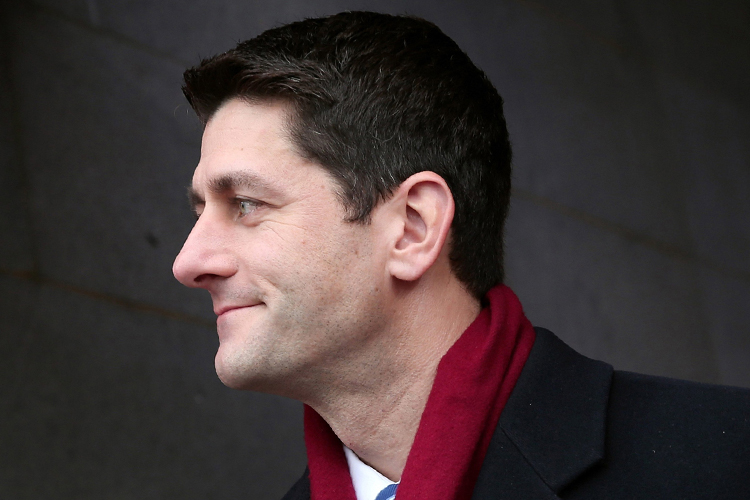
Paul Ryan's populism: Raising taxes on the middle class

Rep. Paul Ryan's "tough" budget would raise middle-class taxes, favor the wealthy -- and fail to balance the budget

AP/Haraz N. Ghanbari
Rep. Paul Ryan, R-Wis., listens to comments in Washington on Monday during the House Budget Committee's markup on the Reconciliation Act of 2010.

From the editorial pages of major newspapers to "Hardball's" Chris Matthews to President Obama himself, nearly everyone in public life seems to feel obliged to praise Rep. Paul Ryan for his tough-minded, cost-slashing budget "road map" that even his own party isn't quite bold enough to fully adopt. In the mainstream media, the Wisconsin Republican is often presented as a straight-shooting prophet whose prescriptions for privatizing Social Security and eviscerating Medicare can only be ignored if we want to jeopardize America's future, and so on.

Fortunately, the Center on Budget and Policy Priorities has studied Ryan's proposals with its usual perspicacity and issued a clear warning that his road map would only lead us -- after a series of hard-right turns -- to the same old plutocratic dead end. Like so many Republican speeches about fiscal responsibility, the Ryan promise to balance the budget is a scam whose real purpose has more to do with redistributing taxes downward and wealth upward -- that is, more of the same.

The CBPP report is bracing in its candor about what we might actually expect from enacting Ryan's plan -- as opposed to its advertised effects. The middle-class tea party types who believe the Republicans will save them from high taxes and big deficits should know that Ryan's plan will not lead to fiscal balance someday, but in fact is more likely to balloon both deficits and debt until well after 2070.

What should be even more disturbing, from the tea party perspective, is that the Ryan plan sharply raises federal taxes on the middle class by imposing a value-added or sales tax. It raises taxes on the consumption of items like tea, quite literally. By definition such taxes are regressive, falling much more heavily on working- and middle-income families than on the rich, unless they include specific features to make them more equitable (which the Ryan version does not).

The fiscal analysis used by the CBPP found that three out of four Americans, with incomes between $20,000 and $200,000, would see their taxes go up, not down, if Ryan's plan replaced current law.

Indeed, the reason that Ryan's plan cannot balance the budget is quite simple. (And as CBPP points out in responding to Ryan's whiny complaints, the only way he can claim it would is to quote a wildly skewed revenue estimate conjured up by his own research staff.) 

While raising the taxes of middle-class families via the sales tax, it reduces taxes on the richest 1 percent of Americans -- those with incomes over $633,000 -- by half. The wealthiest taxpayers would receive larger and larger tax cuts going up the income scale, with the richest one-tenth of 1 percent, with annual incomes above $2.9 million, receiving an average tax cut of $1.7 million per year. And these generous cuts would be in addition to the benefits that the nation's very wealthiest households would get from making permanent the Bush tax cuts, which are supposed to expire at the end of this year.

As a result of these changes, middle-class taxpayers would end up paying a larger percentage of their annual income to the government than now, while the wealthiest taxpayers would pay a smaller percentage. According to the CBPP -- which many conservatives acknowledge for its tradition of honesty and accuracy -- Ryan's plan would damage health coverage for most Americans and endanger if not destroy the safety net for the elderly, whose rise from mass poverty began with Social Security and Medicare.

This is what passes for "populism" on the Republican right. 

Renewed Massa probe cannot vindicate Boehner

GOP leader John Boehner hopes to embarrass Nancy Pelosi with the Massa scandal -- but his revenge may prove bitter

AP
Minority Leader John Boehner, left, and President Obama.

Now that Eric Massa has outlived his very brief moment as a star on right-wing media, the deranged ex-congressman is again merely a foil for attacks on the Democrats. Yesterday, the House passed a resolution directing the busy, busy ethics committee to investigate the handling of the Massa matter by Speaker Nancy Pelosi, Majority Leader Steny Hoyer and their staff members.

Instigated by Minority Leader John Boehner, the renewed probe is meant to restore, in his words, the “broken bonds of trust” between Congress and the American people. So far, of course, there is no evidence that anyone in the congressional leadership violated that trust regarding Massa’s misconduct. But the ethics committee will have ample opportunity to uncover and examine any such evidence between now and the deadline for its report on June 30.

In the meantime, Boehner’s indignant-sounding resolution provides a reason to recall his own behavior during the Mark Foley scandal. On the day that Foley resigned in September 2006 after media exposure of his suggestive communications with House pages, Pelosi — then the Minority Leader — brought a resolution to the floor demanding that the ethics committee begin an immediate investigation, with a preliminary report due 10 days later. Her resolution directed the committee to find out "when the Republican leadership was notified [of Foley’s misconduct with a former House page] and what corrective action was taken."

But Boehner, then the Majority Leader, blocked that resolution, and the House referred the matter instead to the ethics committee, which met in October to decide what to do. The committee — then overseen by the Republican leadership’s pliant handpicked chairman Doc Hastings — did not complete its report until early December (after the blowout midterm election that returned the Democrats to the majority).

Yet that report, titled Investigation of Allegations Related to Improper Conduct Involving Members and Current or Former House Pages, contains harsh criticism of Boehner. Much investigative work was required to sort out the contradictory accounts that Boehner and then-Speaker Dennis Hastert, among others, had offered concerning what they knew about Foley’s suggestive messages to the pages, when they knew it, and what they did. The short version, stripped of self-serving memory malfunctions, is that they knew for many months and did nothing.

The main findings regarding Boehner can be found on page 85:

The Investigative Subcommittee finds that the weight of the evidence supports the conclusion that Speaker Hastert was told, at least in passing, about the [Foley] emails by Majority Leader Boehner and Rep. [Tom] Reynolds in the spring of 2006 … Like too many others, neither the Majority Leader nor Rep. Reynolds showed any curiosity regarding why a young former page would have been made uncomfortable by emails from Rep. Foley. Neither the Majority Leader nor Rep. Reynolds asked the Speaker to take any action in response to the information each provided to him, and there is no evidence that the Speaker took any action.

Although the report did not recommend any action against Hastert, Boehner or Reynolds, its executive summary arraigned them all for an awful dereliction of duty:

The failure to exhaust all reasonable efforts to call attention to potential misconduct involving a Member and House page is not merely the exercise of poor judgment; it is a present danger to House pages and to the integrity of the institution of the House.

On page 68, the report also contains a little-noticed account of a questionable meeting of several members of the Republican leadership in Boehner’s office only hours after Foley resigned — and after the House had directed the ethics committee to investigate. (Among those present was Rep. Eric Cantor, R-Va., now the minority whip.)

Sometime before midnight, a meeting was held in Majority Leader Boehner’s office to talk about the [Foley] matter … Since the meeting was convened after the referral [to the ethics committee], some participants questioned whether it was appropriate to conduct the meeting. Rep. Reynolds chose not to attend the meeting on the advice of his counsel, Randy Evans, after suspecting that Rep. [Rodney] Alexander and others who had prior knowledge of the Foley matter might be in attendance. Rep. Reynolds testified: ‘I’m not inclined to go in and collaborate or memorialize anything that would deal with this based on the fact that, previous to this, we had voted to send it to the Ethics Committee … Not being a lawyer, there are not many things I know about the legal side of this, but I do know that discussion of recollecting anything is not preferred.”

The meeting proceeded anyway in order to facilitate media spin by the leadership, with Boehner assuring everyone that there was no desire to influence anyone’s recollections.

Boehner’s urge to investigate Pelosi and Hoyer is understandable, even if it represents nothing more than partisan pettiness and revenge. To avoid disappointment, however, he should realize that the standard set by him and his Republican colleagues in the Foley affair will not be difficult to surpass.

GOP finance chief's background in dubious "charity"

Rob Bickhart, the finance chief whose weird anti-Obama PowerPoint embarrassed the GOP, has a strange resume

Reuters/Jeff Zelevansky
Republican National Committee Chairman Michael Steele

Decent Republicans were embarrassed and disturbed last week by exposure of the bizarre fundraising presentation at their party's Boca Raton, Fla., retreat -- and now they are facing questions about the GOP's exorbitant payments to Rob Bickhart, the Republican National Committee finance director responsible for this fiasco. It seems that party chairman Michael Steele (and whoever else was responsible for hiring Bickhart) failed to adequately vet the consultant before bringing him on staff last year. Back home in Pennsylvania, where he worked closely with Rick Santorum and the Bush-Cheney 2004 campaign, his ethical record was splotched.

Specifically, Bickhart oversaw a "charitable" foundation set up by Santorum, known as Operation Good Neighbor, which shared both staff and space with Santorum's own Senate political action committee, confusingly called America's Foundation.

In early 2006, dubious spending by both entities came under sharp scrutiny by the American Prospect (where I was then the investigative editor) and the Philadelphia Daily News, which jointly published a two-part examination of Santorum's tangled finances by reporter/blogger Will Bunch.

What Bunch found wasn't very edifying, especially for a politician who had just been named to rewrite ethics rules for the Senate Republicans in the aftermath of the Jack Abramoff scandal. The Operation Good Neighbor Foundation, billed by Santorum as a "compassionate conservative" project to uplift the poor, was raking in money but spending most of the proceeds on overhead, salaries and fundraising, with relatively little devoted to actual charitable endeavors:

A review of federal tax returns filed by the foundation for 2001, 2002, and 2003 shows that the charity spent just 35.9 percent of the nearly $1 million raised on its charitable grants, while spending 56.5 percent on expenses like salaries, fund-raising commissions, travel, conference costs, and rent. Charity experts say that charitable groups should spend at least 75 percent of their money on program grants, and that donors should beware of organizations that spend as little as Santorum's has.

"The majority of organizations are able to meet that 75 percent figure," says Saundra Miniutti of Charity Navigator, a watchdog group. Without addressing Santorum's charity specifically, she noted that nonprofits spending in the range of just one-third on programs are "extremely inefficient."

Moreover, the foundation is not registered with the Pennsylvania Department of State. A spokeswoman for the state agency said that any charity that solicits and raises more than $25,000 in Pennsylvania is required by law to register. Records included on the foundation's 2002 tax filing list $94,000 in donations from sources in the state. State law says that violators of the registration law run the risk of civil penalties and possible legal action by the state.

The list of 2002 donors -- displayed on a Web page marked "not open to public inspection" -- includes several major donors to Santorum's political campaign. Most notable is Philadelphia Trust Company, the same private bank that refinanced Santorum's Virginia home in 2002, which gave $10,000. The CEO of Philadelphia Trust, Michael Crofton, is chairman of the charity's board of advisers. The foundation also raised $25,000 from the PMA Foundation, the charitable arm of a risk-management firm in suburban Philadelphia; $25,000 from the suburban Philadelphia development firm Preferred Real Estate; and $10,000 from J. Brian O'Neill, the brother of that firm's founder and himself a developer.

The charity also received $10,000 from the Keystone Sanitary Landfill, owned by Louis DeNaples, a controversial Scranton businessman who is fending off published allegations that he associates with organized-crime figures. [DeNaples is in fact a casino owner whose alleged ties to the Bufalino mob family in Pennsylvania have landed him in very hot water over the past few years.]

The donor list isn't the only overlap between Santorum's charity and his political operation. The charity's treasurer is Barbara Bonfiglio -- who works out of the Washington, D.C., lobbying firm of Williams and Jensen and serves as treasurer of the senator's leadership PAC, America's Foundation.

Operation Good Neighbor also paid $50,000 in total salary in 2002 and 2003 to Rob Bickhart, Santorum's finance director, who is also the charity's executive director. It has paid $118,710 in fundraising fees to Maria Diesel of Chester County, Pa., who also raises money for Santorum's political efforts.

Under Bickhart's direction, in other words, Santorum's tax-exempt nonprofit "charity" filled the wallets of his political operatives while shortchanging the poor. The story provoked immediate revulsion. The Washington Post ran a strong editorial complaining that outfits like Operation Good Neighbor were marred by "an inevitable element of extortion" and noting its shoddy self-dealing. Santorum stepped aside as the Senate leadership's ethics spokesman and lost his bid for reelection.

Four years later, everybody associated with that dingy episode is back in business, thanks to short memories and enduring gall.

Bickhart is collecting huge fees on top of a big salary at the RNC, where Chairman Steele has now asked him to investigate his own misconduct. Santorum raised well over a million dollars for his still-active PAC last year, which he is using to promote himself as a potential presidential nominee. Just the other day, he addressed a major religious right group in Iowa, where he was introduced by none other than Ralph Reed, the former Christian Coalition leader and Abramoff crony -- who is also trying to refurbish his career.

If Republicans worry about the party's lousy public image, they should ask themselves why figures like Bickhart, Reed and Santorum always prosper in their midst -- and why such political grifters are never punished or ostracized.

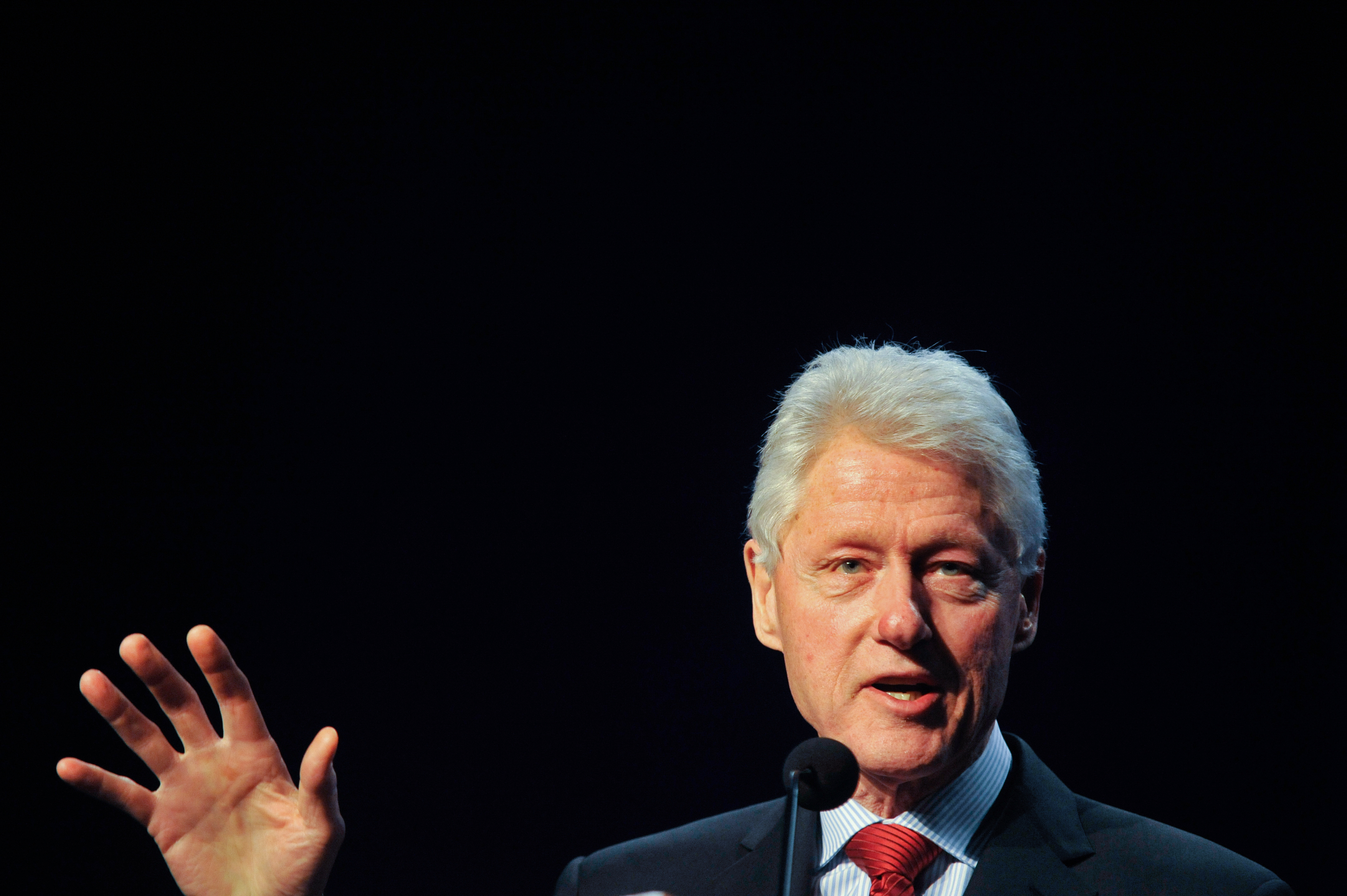
"Filegate" judge: There's no there there -- and never was

At long last, federal Judge Royce Lamberth dismisses "Filegate." Let's not forget the fraud's keenest promoters

AP/iStockphoto/Salon composite

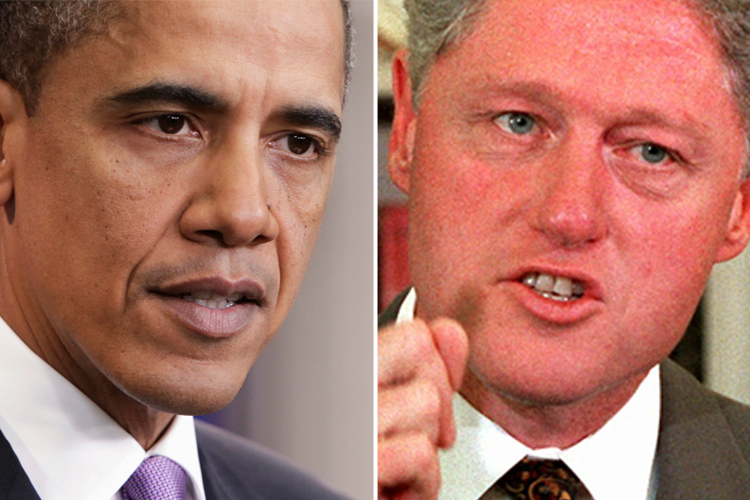
"Filegate" is a term that always deserved scare quotes, because the putative scandal concerning the misuse of FBI files in the Clinton White House was so clearly, from its very beginning in 1996, no scandal at all. But the obvious absence of any credible evidence that Bill or Hillary Clinton or any of their employees or associates had ordered up such files, or committed any abuse of them, did nothing to dissuade mainstream media, right-wing outlets, or Republican politicians from hysterically promoting the pseudo-scandal.

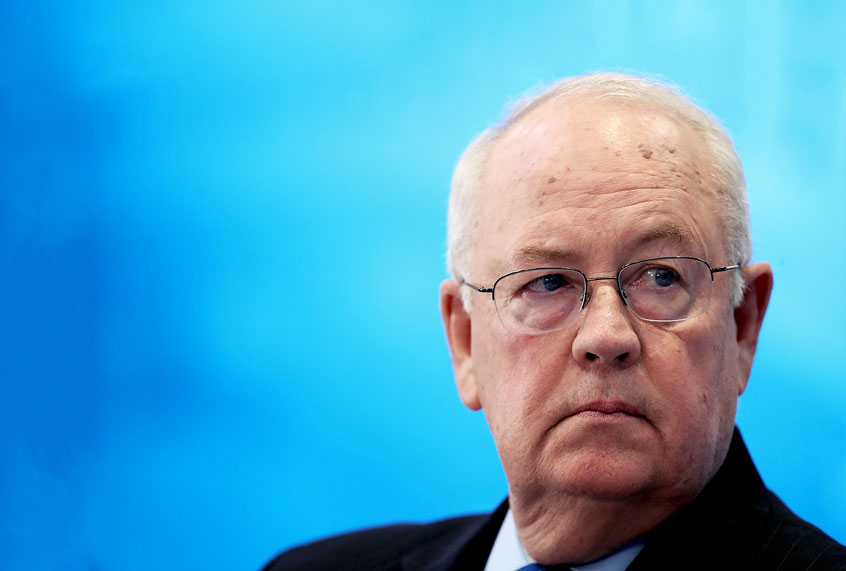
Today it is amazing to recall how significant this nothingness was once deemed to be, with nightly coverage on network newscasts. On Capitol Hill, Sen. Orrin Hatch demanded a fingerprint analysis to determine whether Hillary Clinton had touched the files (she hadn't) while lengthy investigations got under way in the Senate, the House and the Office of the Independent Counsel led by Kenneth Starr. Bob Dole, the Republican presidential candidate in 1996, compared "Filegate" with Nixon's Watergate scandal and asked: "Where's the outrage?"

Yesterday the last wheeze of hype was squeezed from that old controversy, when U.S. District Judge Royce Lamberth dismissed the remaining civil lawsuit against former Clinton administration officials in the FBI files affair. Brought by eccentric attorney Larry Klayman, who became a favorite of cable television and conservative funders during the Clinton era, those costly lawsuits were described in the judge's decision as essentially baseless.

Summing up his findings, Lamberth wrote: "After years of litigation, endless depositions, the fictionalized portrayal of this lawsuit and its litigants on television, this court is left to conclude that with the lawsuit, to quote Gertrude Stein, 'there's no there there.'" A Reagan appointee once lauded by Klayman himself as "this great jurist," he showed a talent for understatement when he noted that "after ample opportunity," the plaintiffs "have not produced any evidence of the far-reaching conspiracy that sought to use intimate details from FBI files for political assassinations that they alleged. The only thing that they have demonstrated is that this unfortunate episode -- about which they do have cause to complain -- was exactly what the defendants claimed: a bureaucratic snafu."

The judge's decision specifically exonerated the remaining civil defendants, former White House officials Craig Livingstone and Bernard Nussbaum. Perhaps forgotten now, they -- along with Hillary Clinton, the supposed mastermind of "Filegate" -- were accused of felonies by top Republicans on Capitol Hill and maligned countless times by right-wing figures in the media and many mainstream journalists as well.

Of Livingstone, a low-level White House official who resigned immediately when he learned that FBI background summaries had been mishandled, the judge wrote: "There has been no evidence that Craig Livingstone sought to obtain the plaintiffs' FBI summary background reports for any improper purpose, political or otherwise." Concerning Nussbaum, an honorable attorney who also left the White House under a cloud, Lamberth noted, "There has been no evidence that Mr. Nussbaum made these requests himself and as the court has noted earlier, there has been no evidence presented that there was a conspiracy to request the plaintiffs' summary background reports for political purposes, let alone that Mr. Nussbaum was involved in it." In short, Nussbaum was wholly innocent even of responsibility for the "bureaucratic snafu."

In passing, the judge also mentioned his opinion of the House Government Operations Committee report on "Filegate," compiled when Congress was in the hands of Republicans who believed that their purpose in Washington was solely to obstruct the Clinton administration, mainly by concocting and conducting bogus investigations. (Their history of irresponsibility and frivolousness offer a preview of the Republican agenda should they win control next fall.) Lamberth wrote that the House report was inaccurate and not "sufficiently trustworthy" to be relied upon for factual information, and therefore "inadmissible" as evidence in the case.

Now that the moldy remnants of "Filegate" have at last been properly trashed, can anything relevant be learned from its distasteful history? Certain of the most assiduous promoters of the phony scandal are dead or retired from public life. But others are still around, exaggerating in the same old style when attacking the Obama White House, ACORN, and Democrats in Congress. So the pronouncements of all those responsible for pushing the bogus FBI file controversy are forever subject to the deepest doubt. Googling the term "Filegate" brings up stories that should embarrass the Wall Street Journal editorial page; the Media Research Center, whose chief wingnut Brent Bozell  continued to flog this discredited fake as late as November 2007;  National Review Online; WorldNetDaily; Fox News Channel, then in its  noisome infancy; and indeed, nearly every other organ-grinder and kazoo-blower of the Republican noise machine.

It took Judge Lamberth a long time to say so, but when these people (and their gullible friends in the mainstream media) cry scandal, it is safe to assume that there is no there there. 

Newsmax: Americans strongly prefer Obama -- to Bush

The right-wing site's online poll may cheer the White House, a little

AP/Charles Dharapak
President Obama greets the audience before speaking about health care reform at Arcadia University in Glenside, Pa. on Monday.

Online polls taken by partisan Web sites tend to be discounted -- and some observers would question a Zogby online poll in particular -- but when the results cut against the ideology of the sponsor, they may still be worth noting. Today's morning lead on the ultra-conservative Newsmax site touts a Zogby online survey on presidents past and present, with findings that bolster the White House’s current occupant, who is usually the target of extremely harsh criticism from Newsmax and its columnists (one of whom seemingly advocated a military coup last year). 

The headline on the Newsmax poll story -- "Bill Clinton Bests Former Presidents to Handle Crisis Today" -- concerns the unsurprising discovery that the American public considers the last Democratic president best qualified of all his peers (by far) to cope with the issues that America confronts today. Comissioned by Newsmax, which is run by Christopher Ruddy and owned by him and Richard Mellon Scaife, among others, the poll queried 4,000 people who participate in Zogby's online surveys. 

Among respondents asked the following question -- "Of the current living former presidents, which do you think is best equipped to deal with the problems the country faces today?" -- 41 percent chose Bill Clinton, trailed by George W. Bush with 15 percent, George H.W. Bush with 7 percent, and Jimmy Carter with only 5 percent, while 26 percent chose "none," and 5 percent were "not sure." Those choices may be partly a function of the age of the former presidents, since the elder Bush and Carter are considerably older than the younger Bush and Clinton. But Clinton finished first among all age groups, all races, all religions, and both sexes, with a significantly better showing among women (46 percent) than men (36 percent). 

The most salient question -- given Barack Obama’s dipping numbers and the right-wing ripple of nostalgia for George Bush -- tested them against each other. By a margin of 48 to 38, respondents said they would elect Obama over Bush if they faced that choice. Twelve percent said "other" and 2 percent said "not sure." Newsmax didn’t publish the cross tabs but its story noted that, according to the poll, "Obama still nabs a large proportion of self-described independents, pulling 42 percent of these voters. Only 33 percent said they would opt for Bush."

While those aren't wonderful numbers for Obama, they aren't terrible either -- especially at a moment when the mainstream media depict him as weakened and imperiled.

Page 1 of 143 in Joe Conason Earliest ⇒

Politics in the news

Loading...

Currently in Salon

Other News