Jay-Z

Jay-Z’s daughter will be the worst

Blue Ivy's dad admits that parents fail -- and offers a reality check for the rest of us

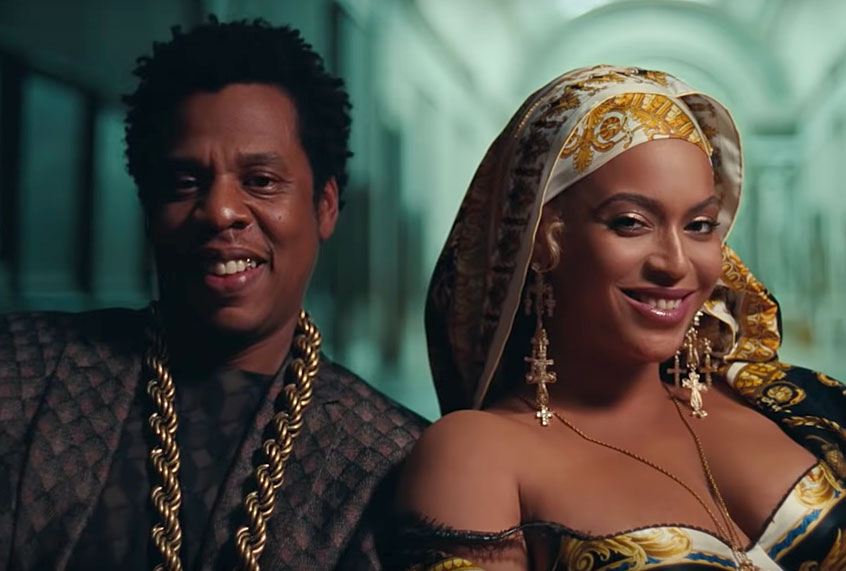
Beyonce and Jay-Z (Credit: AP/Bill Kostroun)

Jay-Z’s daughter is going to be insufferable. Just ask Jay-Z. In an episode of “Oprah’s Master Class” that aired on her OWN network Sunday, the Grammy winner, entrepreneur, ball and chain to Beyoncé and new dad to Blue Ivy Carter admitted, “I imagine I’ll take things I learned from my mom and things I’ve learned from raising my nephews and apply that — then at the end of the day, I just know I’ll probably have the worst, spoiled little kid ever.”

For a man who’s built a career on his swagger, there’s something very different – and adorably humble about Z’s acknowledgment that “Everyone imagines they’ll be a great dad — until their teenager’s saying, ‘Get away from me, Dad. You’re embarrassing me!’” And it’s a refreshingly clear-eyed view of the complicated reality of parenting.

Blue Ivy will not have a hard-knock life. She was born in a hospital suite bigger and nicer than your apartment.  She will know her way around red carpets before she can walk on them, and she will fall asleep to lullabies from Mary J. Blige.

But having a childhood that may include getting horsey rides from Kanye West is no assurance of happiness or fulfillment or future success. Z is, with his characteristic savvy, aware of that. He knows there’s a vast difference between the high-minded intentions of parenthood and the visceral, practical realities of it. You set out with goals for a perfect baby who will eat only organic vegetables and watch nothing but PBS episodes of “Live From Lincoln Center,” who will grow into the academic superstar/Oscar winner/beloved humanitarian who cures cancer.

And then they turn into people. People who are sometimes difficult and downright unlikable and who make mistakes, just like their parents. By being willing to laugh about that now, and acknowledge that sometimes your kids can be jerks, Jay-Z is sensibly keeping the hard work of parenting right-sized. He’s reminding us that you can give your kid everything and have her not turn out well. Sometimes, it’s because you give her everything she doesn’t turn out well. We all just do our best. And strange as it may sound, Blue Ivy’s dad is off to a fine start by saying she might be the worst. If someday he’s having girl problems, I’ll feel bad for him. But I have a feeling Z – and Ivy — will turn out just fine.

Mary Elizabeth Williams

Mary Elizabeth Williams is a staff writer for Salon and the author of "Gimme Shelter: My Three Years Searching for the American Dream." Follow her on Twitter: @embeedub.

Jay-Z’s Occupy Wall Street problem

The millionaire rap star lamely tries to cash in from a populist movement -- but nobody's buying it

Jay Z (Credit: Reuters/Salon)

Jay-Z’s got 99 percent problems. And in the wake of scathing criticism, the rapper, producer and Beyonce impregnator is now allegedly backtracking on his attempts to make a buck off Occupy Wall Street.

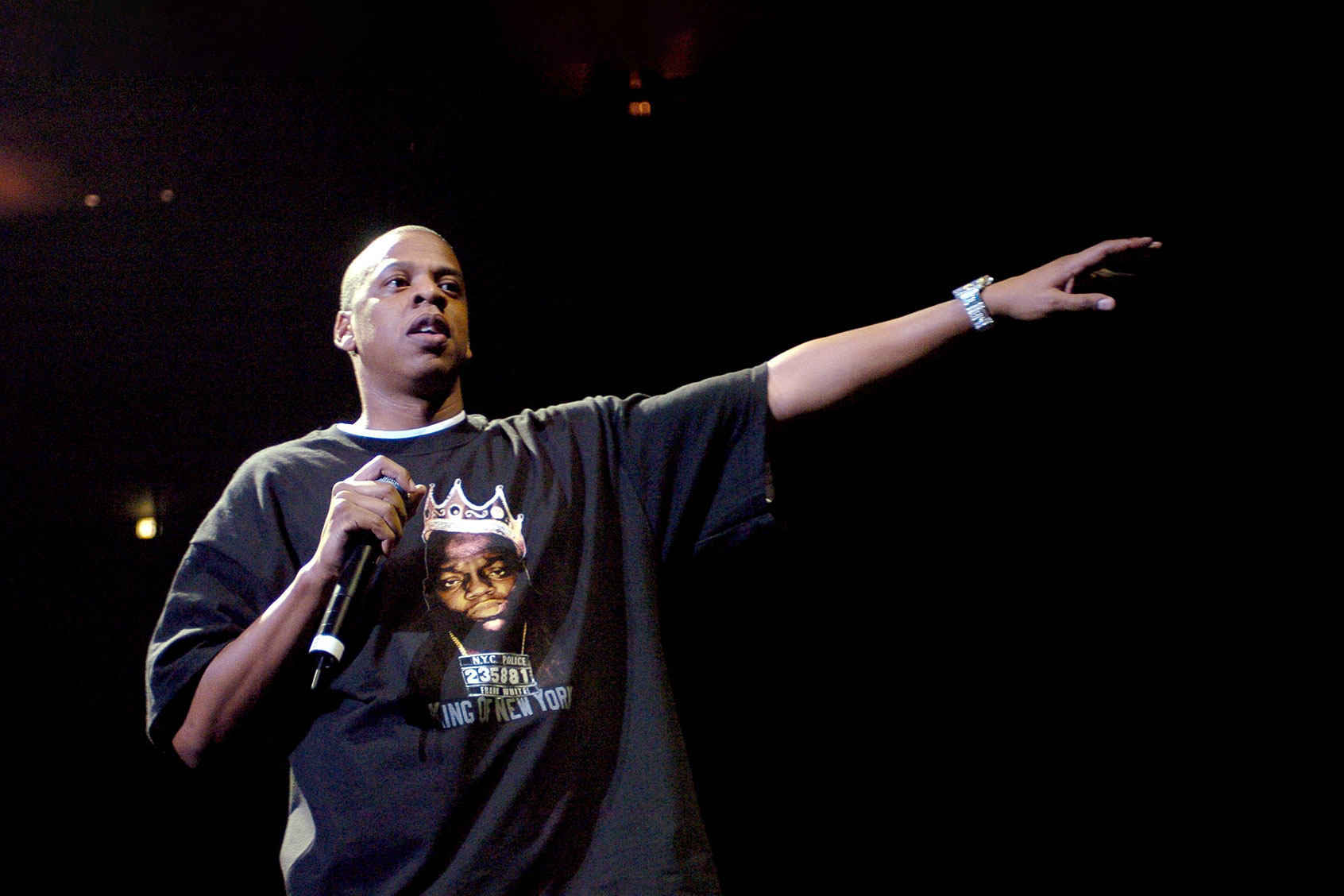
Just last week, the former Shawn Carter was photographed strutting around in a T-shirt with the phrase “Occupy Wall Street” selectively scrawled over to read “Occupy All Streets.” Stick it to the man! Rock and roll! That bold fashion statement was then followed by the inevitable business announcement that the shirts were a new creation from Jay-Z’s own Rocawear line, available for $22 — tax and shipping not included. And Z’s minders further clarified that “‘Occupy All Streets’ is our way of reminding people that there is change to be made everywhere, not just on Wall Street. At this time we have not made an official commitment to monetarily support the movement.” Whooooo, anarchy!

Jay-Z certainly doesn’t have an obligation to stand behind the sentiments on his shirts. Nor, for that matter, does anyone who wears them. I think we can safely assume that if you’re sporting a Rocawear “Fresh Out the Hood” or “A Block Away from Hell” tee, no one’s going to stop you and ask for your hood or hell credentials. Just because your shirt says you’re “Big Pimpin’,” you are not legally obligated to be, in fact, in a perpetual state of big pimpin’.

So perhaps the prompt and near-universal retching that greeted the Rocawear shirt came as a surprise to Mr. Z. He is, after all, a kid who grew up in the Marcy Houses projects of Bed-Stuy, who gained his first hit bragging about being “from the school of the hard knocks.” Wasn’t he just doing what entrepreneurs with a stash of Hanes beefy tees and a dream have always done, every time an imperative to “Don’t Worry, Be Happy” or “RELAX” enters the vernacular. Was he not merely reflecting a popular sentiment? It’s not as if the man’s going to go sleep in a tent downtown; it’s just a shirt, for God’s sake.

But “Occupy Wall Street” isn’t a demand for “More Cowbell.” As Styleite explained, the movement is “about money and the disadvantageous lack thereof,” thereby making profiting from it just “a supportive sentiment rendered pretty hollow.” Or, as Mogulite put it, that shirt is a gesture that “misses the whole point.” The Hollywood Reporter says this week that the shirts are being pulled, though the made-in-Mexico garb is still for sale as of today – and, hilariously – now described as “drawing inspiration from the ‘Watch The Throne’ Concert Tour.” Oh, so that’s where he got the idea. The tour.

The great rock conundrum is maintaining that fine line between keepin’ it real and livin’ the dream. (Step one: dropping the letter G.) You see it in rap; you see it in country. You see it in the way the Black Keys dress like hobos. Like so many in his industry, Jay-Z has built his entire career on that braggadocio dualism, painting himself as the man who hangs with De Niro but will be “hood forever.” Right, and Madonna’s just a simple girl from the Midwest.

Perhaps it’s possible to duke it out with Warren Buffett in the Forbes 400  and still maintain your street cred. You can certainly sell the idea, as Rocawear does, the idea that “My Love Is the Bomb.” You can be a celebrity and show up at Zuccotti Park to express solidarity. But even the Sex Pistols knew that at a certain point, you can’t sell revolution. And while parks and streets teem with protesters, it seems pretty clear that if there’s one thing nobody much feels like occupying today, it’s a stupid shirt, sold by a millionaire, signifying nothing.

Continue Reading Close
Mary Elizabeth Williams

Mary Elizabeth Williams is a staff writer for Salon and the author of "Gimme Shelter: My Three Years Searching for the American Dream." Follow her on Twitter: @embeedub.

Jay-Z’s hip-hop of distraction

The hip-hop superstar hypes a Brooklyn, N.Y., sports arena that failed to deliver on its jobs pledge

You can’t hustle a hustler, right? So Shawn Carter, aka hip-hop superstar Jay-Z, surely doesn’t mind fronting for two other world-class hustlers: Bruce Ratner, Brooklyn, N.Y’s most powerful developer, and New Jersey (to Brooklyn) Nets majority owner Mikhail Prokhorov, Russia’s second-richest man. The three men are partners in promoting the new Barclays Center sports arena now under construction in Brooklyn, the first building in the massive, controversial Atlantic Yards project.

While Brooklyn-born Carter owns a tiny fraction of the team, he’s become the face of the franchise, the Teflon-coated superstar employed by his partners to distract attention from the hardball politics, sweetheart deals and private profits behind the arena and the rest of the 16-tower project.

As Jay-Z, Carter will get to open the arena next fall with a string of concerts. ”Get All Access to Jay-Z,” proclaim widespread advertisements, pushing a ticket package that offers team home games and the right to purchase seats to other arena events. He’s even said to have a hand in designing the team uniforms and some of the luxury suites. These all help Carter take the Jay-Z  brand to the proverbial next level. As he’s rapped, “I’m a business, man.”

Along the way Carter has spouted bogus “facts” about the project that don’t stand up to scrutiny. Take, for example, an interview Jay-Z did Sept. 26 with Rosanna Scotto of Channel 5′s “Good Day New York.” The interview preceded the much-hyped media event in which Jay-Z, billed as “Cultural Icon Shawn ‘Jay-Z’ Carter,” announced the less than surprising news that the team plans to change its name to the Brooklyn Nets.

“What do you think the arena’s going to mean to people in this neighborhood?” Scotto asked. “Well, it’s already created so many jobs, especially at a time like this in the world,” Jay-Z responded. He told an in-house Nets interviewer that the under-construction project “employs thousands and thousands of people.”

The number of jobs created turns out to be  a lot fewer than promised, and a lot less than “thousands and thousands.” The total number as of now is probably under 500. And Ratner’s job projections are far from credible. The New York City Independent Budget Office calls the arena a net loss to the city.

In fact, some once-vocal supporters of the Atlantic Yards projects — recruiting from the same housing projects that Jay-Z likes to invoke — in July held an angry protest outside the arena site. Yes, the recession and litigation have slowed the project, but, most important, Ratner negotiated a 25-year deadline for a project he always promised would take 10 years. Still Carter promotes the arena by proclaiming, “Oh, it’s Brooklyn. We have deep love … for our heroes.”

The strategy of distraction has worked out well for Ratner. At the December 2003 announcement of the Atlantic Yards project, he had a couple of weapons beyond the promise of a new hometown basketball team: famed architect Frank Gehry, known for the iconic Guggenheim Museum in Bilbao, Spain, and Jay-Z, still on his remarkable journey from a hustler slinging drugs to an international icon.

Gehry’s wavy architectural renderings were aimed to preempt criticism from Brooklynites already appalled by Ratner’s hulking, blank-walled Atlantic Center mall nearby, a mall deliberately designed — as the developer later would admit — to keep out “tough [implied: black] kids” from the nearby Fort Greene neighborhood.

By adding glamour and Brooklyn street cred, Jay-Z would help Ratner distract New Yorkers from noticing how a corporation based in Cleveland, and controlled by Ratner’s family, would be reaping the benefits of government assistance, including subsidies, tax breaks and eminent domain. No wonder Ratner, at that initial 2003 press conference, addressed Jay-Z with elaborate solicitousness: “Thank you for honoring us.”

Even as Nets players used as press conference props — Vince Carter, Jason Kidd — were traded away, Jay-Z stuck with Ratner. After the developer in 2009 sold 80 percent of the team to Prokhorov, there was Jay-Z, helping the new owner recruit NBA players, posing in a photo op with Prokhorov and New York Mayor Mike Bloomberg, and helping deflect focus from the Russian oligarch’s questionable path to wealth.

Fast-forward to the Sept. 26 media event, which generated international coverage. Prokhorov was absent, but sent an emissary, who didn’t speak. Jay-Z was onstage for less than two minutes before he left in his limo, but that was long enough to pose for a photo with star-struck Brooklyn schoolkids — an image that now helps sell the Barclays Center.

By invoking his partner, Ratner even got to soften the impact of an arena larded with corporate sponsorships. “As Jay-Z knows, this arena is largely about the children and youth of Brooklyn,” the developer insisted.

State Sen. Velmanette Montgomery has a different view of the Atlantic Yards project.

“I feel extremely frustrated and a lot insulted,” she said later that day. Thanks to a development process, worked out by Ratner along with then-Gov. George Pataki and Mayor Bloomberg, no local elected officials have ever had a voice, with the project shepherded by the shadowy Empire State Development Corp. (ESDC).

At a community meeting that day with the ESDC head, Montgomery and three other elected officials (all, by the way, African-American) raised hard questions about Ratner’s failure to deliver promises of jobs and housing — the original Atlantic Yards slogan was “Jobs, Housing, and Hoops” — and the state’s gentle deadlines for the development. In contrast with the Jay-Z event, it generated barely any press coverage.

Jay-Z also generated much buzz at the elaborate March 2010 arena groundbreaking event. The Rev. Al Sharpton, whose organization is supported by Ratner’s firm, tried to invoke a Brooklyn connection, claiming that “we’ve gone from Jackie [Robinson, who integrated baseball as a Brooklyn Dodger] to Jay-Z, where we can not only play the game but we can own a piece of the game.” (Jay-Z’s minority ownership of the Nets doesn’t quite have the societal impact of Jackie Robinson.)

The Rev. Clinton Miller of Brown Memorial Baptist Church, a Brooklyn clergyman more grounded in Atlantic Yards, recently called for “a more triangular version of development,” one that involves not just the developer and the state but also the community. “Maybe it’s too late to add that template to the Atlantic Yards,” Miller mused. “But certainly the developer could not have gotten to this point without the ESDC. And it looks like the developer said whatever it had to say to get up to a billion dollars in taxpayers’ money.”

Jay-Z’s got such credibility that he was recruited to guest star on a recent episode of  “Secret Millionaires Club,” a financial literacy cartoon series on the Hub network featuring billionaire Warren Buffett.

“Being a good businessman has allowed me to help others, like my charity, the Shawn Carter Scholarship Foundation,” Jay-Z advised kids in his cameo. Ratner and Prokhorov, however, come first.

Continue Reading Close

Brooklyn journalist Norman Oder, author of the Atlantic Yards Report blog, has written about Atlantic Yards for the New York Times, New York Observer, Columbia Journalism Review, and other publications. He's writing a book about Atlantic Yards.