Law and Order

Thompson gets one step closer

The former Tennessee senator and "Law & Order" star files the papers to form a presidential exploratory committee.

  • more
    • All Share Services

You know how “Law & Order” gets, well, a little formulaic after a while? They get their suspect, there’s a plot twist, there’s a new suspect, everyone fights, the trial comes to some sort of conclusion, everyone sort of makes up?

Well, presidential politics is a little like that too sometimes. That’s probably fitting, since former “Law & Order” star Fred Thompson has just filed the papers to establish a committee to help him decide whether to get in the race for the 2008 Republican nomination.

Thompson, who is also a former senator from Tennessee, has been following the standard presidential run formula over the past few months: First, make it clear that you’re all but in, then pretend to play coy for a bit, all the while making it ever more clear that you’re in, then form an “exploratory committee,” which allows you to consider a run for president without making a formal declaration or having to file financial paperwork with the Federal Election Commission.

Anonymous “officials close to Thompson” tell the Associated Press Thompson could make his run officially official as early as July; NBC’s “First Read” notes that he has been booked on “The Tonight Show With Jay Leno,” a potential if probably unlikely forum for an announcement, on June 12.

Alex Koppelman is a staff writer for Salon.

Conservatives flex muscles over Ashcroft

In a pugnacious appearance, right-wing groups serve notice to "liberal ideologues" that there's a new sheriff in town.

  • more
    • All Share Services

Conservative advocacy organizations want the world to know that Attorney General-designate John Ashcroft has some friends. Thursday morning, the Concerned Women of America convened its own rainbow tribe of pro-Ashcroft crusaders with representatives from more than a dozen groups denouncing Ashcroft’s opponents as an out-of-control left-wing Borking brigade.

“John Ashcroft is a man of integrity with experience and impeccable credentials,” said Wendy Wright, director of communications for the CWA. “But since he has been nominated as attorney general, he has come under a vicious attack that is meant to destroy him as a person.” Those vicious destroyers went largely unnamed at the press conference, with the exception of People for the American Way.

But the coalition doesn’t express any real worry about whether Ashcroft will prevail. “This is a question about whether he is going to get 54 votes, or 58 votes or 60 votes,” said the Rev. Lou Sheldon, chairman of the Traditional Values Coalition, echoing Republican Senate leader Trent Lott’s assertion that all 50 GOP senators will vote to confirm Ashcroft. A simple majority of 51 is needed for confirmation; even if all 50 Democrats voted against Ashcroft, Vice President Dick Cheney would be able to cast the tie breaker. If 41 Democrats decided to filibuster, they could effectively kill the nomination — 60 votes are required to override a filibuster.

Confident of a win, the groups seemed mainly determined to remind liberals that the sun is setting on the Clinton era and that there is a new sheriff in town.

Heather Cirmo, spokeswoman for the Family Research Council, says that Democrats don’t want to acknowledge that the conservatives are back at the wheel, and that Bush has the right to make his Cabinet as conservative as he wants. “There’s no reason that a conservative should have to appoint moderates or try to please liberals,” she said.

To others, the battle is less political than spiritual. Several members of the conservative coalition backing Ashcroft accused his opponents of using their stated concern over civil rights and abortion rights to mask their true objections to Ashcroft: his godliness and his belief in law and order. According to Beverly LaHaye, CWA’s founder, anti-Ashcroft groups know that he understands the “role of government is to protect the innocent and punish the guilty.” LaHaye continued, “Tragically, this view is not in vogue among liberal ideologues. And that is why they have targeted him for personal destruction.”

There are, however, some logical hops, skips and jumps necessary to turn the battle over Ashcroft’s nomination into a battle of good vs. evil. For example, conservatives try to distill the racial charges swirling around Ashcroft to just one name: Ronnie White, the black Missouri Supreme Court justice whom Ashcroft denied a seat on the federal bench.

“Extreme left-wing groups smear Ashcroft as a ‘racist’ because his concerns about victims’ rights and upholding the death penalty led him to oppose one African-American judge,” read an e-mail alert from Republican National Committee chairman Jim Nicholson. LaHaye also said that the the issue of race and Ashcroft was all about White, and White was the real villain of the piece. “Ashcroft voted against that judge because of the lack of content of Ronnie White’s character, not the color of his skin,” she said. (In fact, many of Ashcroft’s opponents have charged that he opposed White not out of racism, but political opportunism.)

Yet none of the conservative groups addressed the other concerns about Ashcroft’s record on race, like his close ties to the Council of Conservative Citizens, or his 1998 interview with the neo-Confederate journal Southern Partisan. Rita Thompson, head of the ad hoc pro-Ashcroft group Coalition of People of Color for a Clear Voice, didn’t know anything about his links to the neo-Confederate movement.

The CWA’s Wright also claimed that environmental and gun control activists who were bashing Ashcroft were, at best, victims of political brainwashing: “I think they’re just listening to somebody who doesn’t know what they’re talking about,” she said of the Sierra Club and the Million Moms. When asked about the specific grievances the two groups had, however, Wright said, “I don’t know. That’s not really my area.”

Anita Blair, president of the Independent Women’s Forum, thinks that the hunger for publicity is really what’s holding together the different wings of the anti-Ashcroft coalition. “You need an enemy to motivate people to raise money,” she said. “Ashcroft is their enemy.”

Continue Reading Close

Alicia Montgomery is an associate editor in Salon's Washington bureau.

Real Life Rock Top 10

  • more
    • All Share Services

1-4) Campaign events (September)

With Al Gore recently citing “He not busy being born is busy dying” as his favorite Bob Dylan quotation, David Hinkley of the New York Daily News suggested a contest on what Gore’s favorite Dylan line should be.

“Bury the rag deep in your face/ Now’s the time for your tears,” sneered Nader supporter Dave Marsh. But Marsh also volunteered that perhaps more to the point would be a question recently raised by Berkeley, Calif., photographer Liz Bordow: “Everyone remembers where they were when they heard that Kennedy was shot; I wonder how many people remember where they were when they first heard Bob Dylan’s voice. It’s so unexpected.”

Marsh: “Gore’s answer? Bush’s?” Yes, that would settle it — assuming Bush has heard it. On the other hand, the recent Radio City Music Hall benefit for the Gore-Lieberman ticket, where, at the end, Bette Midler, Sheryl Crow, Don Henley, Timothy B. Schmidt, Glenn Frey, Lenny Kravitz, Matt Damon, Paul Simon, Julia Roberts and Salma Hayek came out to sing “Teach Your Children,” would have raised an even more awesome question, had Dylan been there too: When was the final time you heard Bob Dylan’s voice?

5) “Nurse Betty,” directed by Neil LaBute, written by John C. Richards & James Flamberg (Gramercy Pictures)

This hilarious and affecting movie is remarkable in that after two unrelentingly cynical films (“In the Company of Men” and “Your Friends & Neighbors”) LaBute has exchanged realistic stories and utterly contrived emotions for an unbelievable story that turns up real emotions. One result: In a dark bar in Williams, Ariz., empty except for the middle-aged bartender and the regular drunk, Ricky Nelson’s beautifully underplayed 1958 No. 1 “Poor Little Fool” is on the jukebox. The song doesn’t fill up the room, it simply lives in it. The message is that nothing ever changes here, nothing ever happens, and for a moment the tune takes the scene outside of the violence of the plot, which has just pulled into the parking lot.

6) Telluride Film Festival Diary: to name the movie would be to give away the ending, so . . .

It’s an almost generic scene: after an increasingly edgy buildup following a beginning that promised little more than a comedy of skits, there’s a terrific payoff in the form of a double killing by a hitman. As the bodies tumble in a basement, rising up on the soundtrack are the Dells, from 1956: “Oh What a Night,” still a lot of people’s favorite doo-wop song. Playing over a scene of really convincing carnage, the music is sweet, confirming, and most of all complete. Which made me wonder: Why does it work? The same association is all over Martin Scorsese’s movies, starting with “Mean Streets” and Johnny Ace’s “Pledging My Love.”

The director stood up for a question-and-answer session; “Why does doo-wop seem so appropriate for killings in movies?” I asked him.

“Well, doo-wop is Joe. And it’s his night, so — ‘Oh What a Night.’”

That couldn’t have been the whole story. There is something about the simplicity and directness of the emotionality in doo-wop that speaks to the lack of complexity in the desire to see bad people who are troubling your life dead — and which, on screen, confirms that desire: confirms it, makes it beautiful, for the moment.

The director: “But he committed a crime. He’ll get caught.” But not that night, and not on his screen.

7) Anthony Frewin, “Sixty-Three Closure” (Four Walls Eight Windows)

A cool, then panicky book about a man and a woman in a small town in England stumbling on an anomaly in the who-killed-Kennedy story: Photos collected by a dead friend seem to say Lee Harvey Oswald was in the U.K. when he should have been in the Soviet Union. What makes the story work is the confidence it gives you that the couple will get out of the story sadder but wiser, not with the discovery of who-killed-Kennedy but that, after a lifetime palship, they were meant for each other, that the past really is another country, and a valid passport will get you home.

8) Waco Brothers, “Electric Waco Chair” (Bloodshot)

It seems certain now that on record the self-proclaimed Last Dead Cowboys will never get close to their live sound, where a vehemence that seems to come out of the ground is summoned to overwhelm any mere songs, and so burns the songs into your heart. On record they’re closer to the ’70s English country band Brinsley Schwarz, which is nothing to be sorry about, unless you want to judge all those you find wanting, which dead cowboys tend to do. Here the vocals alternating between Jon Langford and Dean Schlabowske produce the sense of a conversation between friends who see the world in the same way and feel everything differently. Defeat is the primary condition of their lives, but while for Langford defeat is the only condition of life he trusts, and so in a way he loves it, can trust himself only when he’s looking up from the bottom, Schlabowske will never be at home in his misery, even if he’s never lived anywhere else. He’s Hank Williams, still singing about hope long after he should have learned it’ll never knock; Langford is Williams’ biographer, saying all those things Williams could never say out loud.

9) Telluride Film Festival Diary: Wilkinson Library Dedication Stone, 2000 (Telluride, Colo.)

“Access to knowledge is the superb, the supreme act of truly great civilizations. Of all the institutions that purport to do this, free libraries stand virtually alone in accomplishing this mission.” — Toni Morrison

OK — but it’s a library. How about access to syntax?

10) Minimalist poet found hiding in New York Times daily TV log listing of “Law and Order” repeats (Sept. 21)

A&E, 6 P.M. “The Troubles.” Violence.
A&E, 11 P.M. “Silence.” Murdered.

Continue Reading Close

The Rude Mechs' theatrical adaptation of Greil Marcus' book "Lipstick Traces" will play Jan. 30-Feb. 1 at DiverseWorks in Houston. For more columns by Greil Marcus, visit his column archive.

Ripped from the headlines

New mysteries are lifting their plots out of the newspapers. And that's not a bad thing.

  • more
    • All Share Services

Ripped from the headlines

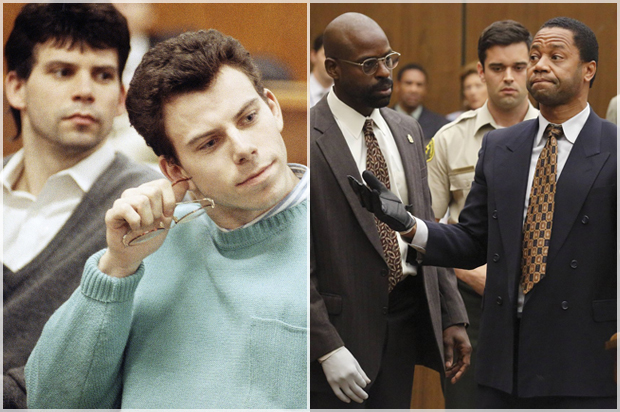
Fictional works based on real-life causes cilhbres are nothing new, but fiction-nonfiction cross-pollination is particularly abundant these days. The much admired television show “Law and Order” has created years’ worth of plots “ripped from the headlines” — some are so transparent I wonder how the producers can use the fictional disclaimer at the end with a straight face. At first I found the show’s swerving in and out of real-life elements disconcerting, and I was annoyed at what I took to be the writers’ laziness in not thinking up their own stories. But soon, I too felt the tug that the anchor of reality provides. Now I plan my Wednesday evenings around the show. (Not that there still aren’t some bafflers. Remember the one based on Hugh Grant’s being caught with his pants down, only he’s given a wife who then kills the prostitute? As if there weren’t any other prostitutes in the world?)

R.D. Zimmerman’s new mystery novel, “Innuendo,” deals with the possible homosexuality of a very big, very married movie star. Even I, as sketchily informed as I am about such matters, had no trouble figuring out which Hollywood actor inspired the portrait. The murder of a gay runaway is thrown in to provide the narrative.

“Innuendo” is the latest installment in Zimmerman’s Todd Mills series. Mills is a formerly closeted, now proudly gay investigative reporter for a TV station in Minneapolis. The movie star, Tim Chase, is in town to film a movie about AIDS after suing a tabloid over allegations that he had abandoned a longstanding gay lover and winning $8.5 million, thus “vindicating” his sexuality, according to a spokesperson.

The book’s prologue, in which the victim, post coitus, stares “into the eyes of the stunning man who’d just taken him to the stars and back,” is not overly promising. And too much of the beginning is devoted to showing how any of the male characters could be the killer — the star, Mills’ new cop boyfriend and a number of others. At first the plot threatens to remain a simple eeny-meeny-miny-mo. But it does eventually thicken, and the solution manages to be a neat twist on the very contemporary themes of outing and coverup.

Zimmerman walks a fine line here. He could have killed his story right off the bat by making Chase too obviously unsympathetic — or too obviously anything. Zimmerman, however, is good at capturing the odd pocket of happiness in the Chase household. Despite the occasional preposterousness of the flirtation that may or may not be happening between Todd Mills and Tim Chase (names that belong in a porn movie), the star’s troubling charm does come across.

When you read the book, it is hard not to picture the actual man Chase is loosely based on. In this way, Zimmerman is both outing him and expressing sympathy for his fear of outing, a kind of irony that ends up being not a whole lot more complicated than a story in People magazine. Like that magazine, the book would be far less interesting if it were less timely, but so what? Just don’t wait 10 years to read it.

Last month, a New York Times article called “A Changing South Revisits Its Unsolved Racial Killings” included a discussion of the little-known car bombing of Wharlest Jackson in Natchez, Miss., which is clearly the inspiration for Greg Iles’ new mystery, “The Quiet Game.” The novel’s hero, Penn Cage, sounds suspiciously like a mint-julep version of Scott Turow — a prosecutor turned writer of bestselling legal thrillers, one of which is called “Presumed Guilty.” Cage returns to his hometown of Natchez and discusses the 25-year-old unsolved murder of a black Korean war vet with a comely young newspaper publisher. (The real-life murder took place in ’67, but Iles changes the date to coincide with the surge of support for Bobby Kennedy in the ’68 presidential race. That’s a hint of the many far-reaching complications to come.)

When the newspaper runs an article on Cage’s remarks, everyone assumes that he has started his own investigation, which of course he eventually does. The book starts very slowly, with a lot of different characters and quandaries to introduce — an unusually large number for a mystery — and Iles is not good at catching a reader’s interest in any low-key way. It’s enough to make you suspect that at the heart of any mystery there’s a very bad conventional novel struggling to get out.

But Iles is quite good — if a bit redundant — when the action picks up. Where earlier you felt forced to trudge and trudge across a sodden field, you are now flying head over heels down a steep slope, words slipping past you, over and under, around and about. Characters pop in and out; possible explanations come into focus, blur, then come back into focus; facts repeatedly regroup. What actually may be struggling to get out here is a book that’s about a hundred pages shorter.

Fictional rewrites of true-to-life situations pose obvious difficulties. For one thing, it’s easy to lose the suspense. The “Innuendo” twist is a fair answer to the problem of how to provide the requisite surprise at the end of a relatively well-traveled path. “The Quiet Game,” however, is another matter. The real Natchez murder is still officially unsolved, but there has never been any doubt that it was racially motivated. Iles’ little sleight of hand makes race play only an indirect role in the killing. This solution is not surprising, only annoying; to leave race on the front burner would not have changed the plot complications a bit — believe me, I’m giving nothing away — and it seems sacrilegious to rewrite history this way. Wharlest Jackson, after all, was a real martyr to a real cause, and to minimize that martyrdom, even in part, is simply not an interesting turn of the screw.

A footnote: These two media-savvy authors expect a similar level of saturation in their readers. Both briefly offer up a possible parent-child incest scenario; Iles, the more flat-footed, even refers to “Chinatown,” while Cage talks himself into the theory. But such incest has so saturated popular culture that it is now nothing more than another expectation to overturn, and both writers have fun teasing us with it.

- – - – - – - – - – - – - – - – - – - – -

One of the least satisfying entries in “The Best American Mystery Stories 1999″ is the most topical: Joseph Hansen’s “Survival,” in which a private investigator reminiscent of the precancerous Marlboro Man stumbles upon a white supremacist group living in the woods of Northern California. There are no surprises, just a contrast between what is supposed to be a “real” Westerner and these narrow-minded zealots.

But most of the stories in this collection, which was guest-edited by police proceduralist Ed McBain, are very fine indeed. I have always liked short mystery stories for their purity: At their best, they are distilled plot. A standout here is Tom Franklin’s “Poachers.” In this thick slice of Southern Gothic, the brooding gloom of the woods never obscures the narrative itself. I didn’t even mind the graduates of the Elmore Leonard School for Hip Hit Men who populate Lawrence Block’s “Heller’s Last Refuge,” Jeffrey Deaver’s “Wrong Time, Wrong Place” and Victor Gischler’s “Hitting Rufus” — though these characters are so articulate, levelheaded and genial that it’s hard to imagine mystery stories based any less on real life.

Continue Reading Close

Jacqueline Carey is the author of "The Other Family," a novel, and "Good Gossip," a collection of short stories. Her book reviews also appear in the New York Times.

Page 2 of 2 in Law and Order