Mel Gibson

Mel Gibson defended by gay adopted brother

Sibling interview fails to answer the question: If the star is so tolerant, why does he say such terrible things?

  • more
    • All Share Services

Topics: , , ,

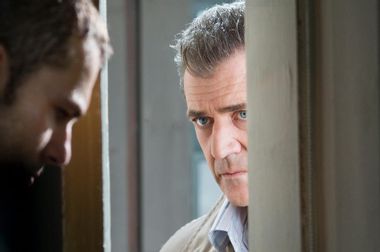
Mel Gibson defended by gay adopted brotherMel Gibson in "What Women Want."

Mel Gibson may have permanently sundered his relationship with the American public after half a decade of bad publicity – including a famous anti-Semitic tirade after being pulled over for drunken driving in Malibu and the leaked audiotapes in which he threatened ex Oksana Grigorieva with physical violence (with some racial slurs thrown in for good measure)  — but there is still at least one person in the world willing to defend the actor’s honor. That would be Andrew Gibson, 43: Mel’s gay adopted brother.

Andrew has kept a low media profile, but in an interview over the weekend with PerthNow (a subsidiary of Murdoch’s News Corp.), the other Mr. Gibson stood up for his famous sibling: “He never meant to upset anyone. I have never once heard anything anti-gay come out of his mouth,” Andrew told the paper. Which goes along with what that small contingent of Mel’s supporters in Hollywood (among them Danny Glover and Jodie Foster) have been claiming … that the actor is a loving, tolerant individual who sometimes says dumb things. Still, it’s hard to believe this vocal minority’s opinion when stacked up against the rest of the evidence of the “Lethal Weapon” star’s behavior.

After all, how do you explain that infamous 1991 interview, when Mel whined to the Spanish newspaper El Pais that he didn’t know why gay people love him since he didn’t talk, move or act like a homosexual? (This was the same piece where he told the interviewer that he didn’t like to “take it up the arse” before bending over and pointing to his butt, exclaiming, “This is only for taking a shit.”) Andrew gives it a shot:

“He’s a straight man and he was illustrating that fact. In the same way a gay man wouldn’t want to have sex with a woman.” 

No? No. There is no way to spin the Pais quotes to make Mel look like anything other than an ignorant homophobe. Even the actor had a better excuse for that occasion when he admitted in 1999 that he was “tickling vodka” during the interview.

Mel’s relationship with the LGBT community has had its up and downs after that point: He stuck by his Pais words in an interview with Dianne Sawyer in ’92, told Playboy in ’95 that he’d apologize to GLAAD when hell freezes over, but then seemingly relented and worked with the Gay & Lesbian Alliance to invite 10 queer filmmakers to the set of “The Conspiracy Theory” for a meet-and-greet in 1997.  Mel may have made his peace with gay community almost a decade before his other troubles began, but that doesn’t mean his comments in El Pais came from any place other than small-minded stupidity.

Andrew makes a far better case for his brother when he sticks to the personal anecdotes, like Mel’s gruff acceptance of Andrew’s coming out, “It’s not my choice, but I love you and you’re my brother.” The younger Gibson said it’s been a tough road to reconcile with his family, who “didn’t like my choice of boyfriends. They wanted me to go out with a Country Road queen and I like strong, dangerous men,” but he’s spent the past year in building up his contact with them. Andrew adds that Mel doesn’t care about the money he’s expected to lose in his divorce case, since “he would rather have love and happiness in his life.”

Nice words, but unfortunately Gibson may be past the point of no return. Mel has hung himself so thoroughly with his own words that its doubtful that anyone else’s could go very far in convincing us that the star’s documented bigotry is just one big misunderstanding.

Continue Reading Close

Drew Grant is a staff writer for Salon. Follow her on Twitter at @videodrew.

Jodie Foster distances herself from Mel Gibson

The actress tones down her admiration for her movie's troubled star. Is it a smart move?

  • more
    • All Share Services

Topics: ,

Jodie Foster distances herself from Mel Gibson

It’s been a while since Jodie Foster has touched on the subject of Mel Gibson — and in that time, it looks like she got herself a mini version of the ten-foot pole the rest of the industry has been using on him. On “Letterman” Thursday night, the actress/director, promoting her new movie “The Beaver,” could not have been more uncomfortably restrained in her assessment of her leading man. Foster, who back in March was gushing, teary-eyed, to the Hollywood Reporter that “God, I love that man,” still had kind words for the actor. She told Letterman, “He’s very good in the movie; he’s a very good friend,” and didn’t hesitate to declare, again, “He’s wonderful in the movie.”

But those accolades are a far cry from her lavish praise of Gibson back in October, when, at an Elle magazine event honoring women in the film industry, she called him “incredibly loved by everyone who ever comes into contact with him or works with him … truly the most loved man in the film business, so, hopefully that stands for something.” This time, there were no outpourings of love, just acknowledgment of his acting, and a nodding agreement of “yeah” when Letterman suggested that drinking had been Gibson’s “real problem.”

More tellingly, when Letterman described Gibson as someone who “has had some trouble and seems troubled,” and asked if his personal life had affected the film’s shoot, Foster brushed him off by saying the issues were “mostly after we wrapped” and said there was “no inkling” of discord. Yet in her Hollywood Reporter interview, Foster spoke clearly of working together while his relationship with Oksana Grigorieva was deteriorating, saying, “We talked about it all the way through, about what was going on in his life. I don’t think he told me until it was something he couldn’t handle by himself.”

And she added that she was aware of the explosive, incriminating recordings of his tirades to Grigorieva before they were made public last summer. “I knew about that. He was upset. Then, on the last day of reshoots of Mel, it all came out…. I went to his trailer, and he was a mess.” Sure, the last day of reshoots is indeed mostly after wrapping, but it’s clear from Foster’s own account they both had more than an “inkling” of what was going down in Mel’s life that led to his plea of no contest to domestic battery. Perhaps now, though, with “The Beaver” in theaters, she’s decided to soften her account of just how aware she was of how her pal was behaving toward the mother of his child.

Foster’s relationship with – and continued public admiration for – controversial figures has been an object lesson in the complexity of friendship, and the ways in which in loyalty is tested by harsh revelations of a person’s worst side. In her Hollywood Reporter interview, she replied to a question about her current director Roman Polanski’s rape charges with a curt “none of my business.”

Friendship is complicated, and a relationship doesn’t instantly cease because a person does bad things. But it does seem that Foster is strategically starting to clarify to her audience that she can discern between the man and his behavior. In March she hinted at that, saying, “I know that [Gibson] has troubles, and when you love somebody you don’t just walk away from them when they are struggling.” And when Letterman asked her Thursday if she could defend Gibson’s personal actions, she cut him off with a firm, immediate “No.” You don’t have to walk away from someone when he’s struggling. But with her own career and public image in question, Foster may be beginning to consider that a little distance isn’t a bad idea either.

Continue Reading Close
Mary Elizabeth Williams

Mary Elizabeth Williams is a staff writer for Salon and the author of "Gimme Shelter: My Three Years Searching for the American Dream." Follow her on Twitter: @embeedub.

The role Mel Gibson was born to play

The actor's performance in "The Beaver" is peculiar, disturbing -- and utterly brilliant

  • more
    • All Share Services

Topics: , ,

The role Mel Gibson was born to playJodie Foster and Mel Gibson in "The Beaver"

Even before Mel Gibson’s most recent set of personal and legal difficulties — i.e., the “revelation” that he sometimes behaves like an unbelievable prick, and may be dangerously unstable — “The Beaver” was always going to be a weird footnote to his career. But both within the universe of Hollywood and the universe of the film, there was a logic to it: Take an immensely gifted actor, once a dominant star but now viewed as a bigot and a wacko, and unleash him on a dark, ambitious script about a character suffering a schizophrenic breakdown. Add the fact that Gibson’s director and co-star is perhaps the most respected woman in the film industry and roll the dice; if producer Steve Golin was imagining a possible upside of “Being John Malkovich” or “Eternal Sunshine of the Spotless Mind” here, it’s no wonder, since he helped make those movies too.

In the wake of Gibson’s unfortunate phone calls to his ex-girlfriend and the ensuing blizzard of bad publicity, “The Beaver” became more of a sideshow than a footnote. I can understand why its bizarre combination of ingredients sounded to many people like a career-killing disaster: Gibson and Jodie Foster? They’re not just colleagues but good friends? And they play a couple? And there’s a mangy, demonic beaver puppet with a Michael Caine East End accent and a faint resemblance to Godzilla? That’s all accurate, and it’s pretty hard — no, it’s impossible — not to watch “The Beaver” through the lens of what we know or believe about its actors and their off-screen lives.

I suppose the perfect ending to the chapter would be to report that “The Beaver” is a masterpiece. It isn’t quite, but it does offer an astonishing and resonant performance by Gibson, who spends most of the movie playing two simultaneous characters, often in the same shot. On one hand, he’s the profoundly depressed toy executive Walter Black, and on the other hand (ha, ha!) he’s the cheerful, scabrous alternate personality that Walter has poured into a puppet he dug out of a Dumpster behind a liquor store. Walter isn’t a ventriloquist and there’s no suggestion of supernatural agency here, so Gibson frequently has to voice the Beaver’s lines at the same moment as he’s reacting, with his face and body, as the terrified and uncertain Walter. I don’t know whether Gibson is Method-acting out of his own psychology or is just a brilliant mimic, but it’s tough to resist the conclusion that this guy knows what it’s like to look in the mirror and not quite recognize the person he sees there.

Kyle Killen’s screenplay for “The Beaver” floated around Hollywood for several years as one of those legendary, perhaps unfilmable projects; it resonates with literary ambition and film-school influences, which isn’t quite the same thing as saying it all works. (I should note that in 2004 Killen wrote a hilarious and highly popular article for Salon about his career in tech support.) There’s a bit of Charlie Kaufman-style high concept here, filtered through arguably a bit too much of Alan Ball’s script for “American Beauty.” If the latter movie is narrated by a dead man and this one is narrated by, well, a beaver with a put-on London accent, Walter nonetheless undergoes a symbolic death and rebirth, with the aid of a shower-curtain bar, a television set and an episode of “Kung Fu.”

From the uncanny moment when the Beaver wakes Walter from an alcoholic stupor in his trashed motel room, all is changed, changed utterly: He comes home to his bewildered wife, Meredith (that’s Foster, giving a tense, restrained performance), and their two kids, demonstrates newfound skills at fatherhood, and brings his company back from bankruptcy with a line of Beaver-inspired woodworking toys. Killen is both invoking and parodying the American mania for sudden transformation — meetings with Jesus, being touched by an angel, surrendering to a greater power, etc. — and echoing all those Frank Capra-style movies about someone who is granted magical favors and then must deal with the consequences. (With a bigger budget and more slapstick, this could and arguably should have been a Jim Carrey movie.)

Walter tells Meredith that the Beaver was his shrink’s idea, which isn’t true, and doesn’t make her feel that much better about the puppet being in bed with them (the funniest of the film’s black-comic sequences). Yes, even the most sympathetic viewer may have trouble staying in this movie’s diegetic universe the whole time; “The Beaver” offers passionate scenes of simulated sex between a presumed misogynist asshole, a presumed not-quite-closeted lesbian and a semi-menacing beaver puppet, and it’s not possible to tell whether you’re laughing for the right reasons.

Foster responds to the outrageous premise of “The Beaver” by dialing back the direction and delivering the story in unassuming, largely realistic fashion. She clears a calm, quiet space around Gibson, allowing him to deliver a brilliantly contradictory performance. He’s always been an actor of tremendous charisma and almost manic energy, and he deploys that here to play a paunchy, battered, leathery-looking man so exhausted with himself that he outsources his own life force. At least in theory Foster’s approach sounds like the right idea, but whether she was overly concerned with protecting her friend or with playing a difficult supporting role, she never seems to develop a clear idea of what the movie’s about or why it exists. There’s an ancillary plot about Walter and Meredith’s damaged teenage son (Anton Yelchin) and his budding romance with the school valedictorian (Jennifer Lawrence), which is likable enough but doesn’t seem to be happening on the same planet.

Maybe the most compelling scene in “The Beaver” is also its most artificial, when Walter-via-Beaver delivers a moving monologue to “Today” show host Matt Lauer about how sometimes it’s necessary to throw away your past and start over. He joshes with Jon Stewart, poses for the covers of Wired and Fortune. But the Beaver is not entirely a benevolent force, and has no intention of surrendering control of Walter’s personality. (There’s more than a dash of “Magic,” the late-’70s Anthony Hopkins ventriloquist-horror flick, in this movie’s DNA.) Walter’s final solution to this problem is both shocking and ludicrous, but it only heightens the sense that Foster and Gibson — mismatched friends with quasi-public secrets — have made a psychodrama that’s partly therapy and partly self-criticism. Was it Mel who made those terrible phone calls, or was it the puppet?

“The Beaver” opens May 6 in New York and Los Angeles, with wider release to follow.

Continue Reading Close

Mel Gibson says he was “betrayed”

The actor begins his image rehabilitation with a new interview -- and still doesn't get it

  • more
    • All Share Services

Topics: , , ,

Mel Gibson says he was Mel Gibson appears at Los Angeles Airport Courthouse Friday, March 11, 2011, in Los Angeles where Gibson pleaded no contest to a misdemeanor spousal battery charge. He was sentenced to 36 months of probation and ordered to attend 52 weeks of domestic violence counseling. Gibson, 55, was accused of striking then-girlfriend Oksana Grigorieva during a fight in January 2010 at the actors Malibu home. He was charged after a lengthy investigation by authorities. (AP Photo/Mark Boster/Pool)(Credit: Mark Boster)

He’s back. With his new movie, “The Beaver,” just weeks away from release, Oscar-winning hothead and domestic abuser Mel Gibson is at last on the full career rehab track, granting Deadline his first interview since a series of explosively vitriolic, threatening conversations with his ex Oksana Grigorieva emerged a year ago. Though he’s a long way from the sputtering loon of the tapes and says “of course” he regrets what he said on them, the real revelation of the interview is how easy it appears for Gibson to believe he’s a victim too.

It would have been a challenge to promote a movie in which he stars without his doing any publicity for it, and Gibson appears to have chosen very carefully for his first foray back into the spotlight. Finally owning up to the veracity of the tapes he long refused to acknowledge, Gibson bravely dealt with journalist Allison Hope Weiner’s hard-hitting questions like “Aren’t you going to be hurt if people judge you based on what they believe occurred here?” and her reassurances that director Todd Phillips’ decision to ax his cameo in “The Hangover 2″ “a very Hollywood hypocritical moment.” It’s the interview that reads like a colonoscopy!

Asked about how he felt about the release of the tapes — which he says were edited — he sighed, “Who anticipates being recorded? Who anticipates that? Who could anticipate such a personal betrayal?” He described the tapes as “a heated discussion at the height of a breakdown” and “one terribly, awful moment in time, said to one person, in the span of one day.” Just a reminder — that “one moment” is represented by five lengthy tapes in total.

Gibson went on to insist, “I’ve never treated anyone badly or in a discriminatory way based on their gender, race, religion or sexuality — period,” an interesting assertion for a man who once said that the “fucking Jews are responsible for all the wars in the world,” who in the tapes referred to “wetbacks,” and who famously told the mother of his baby Lucia that “if you get raped by a pack of niggers it’ll be your fault.” And it’s hard to imagine there wasn’t anything “bad” or gender-specific about Gibson’s assertion to Grigorieva that “I’d like to show you what mean really is, bitch, cunt, whore, gold digger” or when he said that “I’ll burn the goddamn house down” and that “I’m threatening, I’ll put you in a fucking rose garden, you cunt. You understand that? ‘Cause I’m capable of it.”

At other times in the interview, Gibson was understandably tight-lipped about aspects of his personal life — he’s still got a young daughter to raise and court orders to honor. But he insisted he entered the no contest plea simply because “I could have continued to fight this for years and it probably would have come out fine. But I ended it for my children and my family” — a boldly confident statement in light of the photographic evidence of Grigorieva’s teeth after Gibson got through with her, and the tape of Grigorieva telling him, “You were hitting a woman with a child in her hands. You. What kind of a man is that? Hitting a woman when she’s holding a child in her hands? Breaking her teeth, twice, in the face, what kind of man is that?” To which Gibson angrily replied, “You fucking deserved it.”

Fortunately for Gibson, in a world where Charlie Sheen can do a sold-out tour and Chris Brown can have a No. 1 album, audiences can be very forgiving toward a man who will wallop a woman, call her a whore and then insist he’s been betrayed. And based on some of the comments for the story applauding his “courage” and “class beyond measure,” Mad Max still has plenty of supporters beyond Whoopi  and Jodie. But the next time they see a genial, well-coached Gibson insisting he’s never treated anyone badly, they might do well to remember the furious, verbally abusive side of Gibson he never intended the world to hear. At one point in the interview, Weiner observed to Gibson that “Your public persona is not really you.” Whatever else he said in the service of self-promotion, believe what he said when he responded to her: “It never is.”

Continue Reading Close
Mary Elizabeth Williams

Mary Elizabeth Williams is a staff writer for Salon and the author of "Gimme Shelter: My Three Years Searching for the American Dream." Follow her on Twitter: @embeedub.

Why are Christian movies so awful?

As "Soul Surfer" demonstrates, "faith-based" movies are a boom industry. Do they have to be so lame?

  • more
    • All Share Services

Topics: , ,

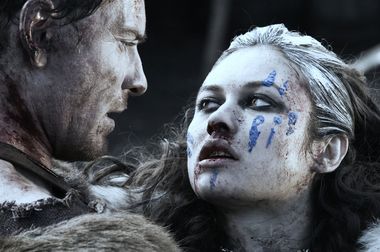
Why are Christian movies so awful?Stills from "Soul Surfer," "The Passion of Christ," "Fireproof"

When a star teenage surfer named Bethany Hamilton lost her left arm in a 2003 shark attack, and then got back on her surfboard just three weeks later, you could hear another species of shark — the ones from Hollywood, who turn dramatic real-life events into movies — swimming to the scene. Not only did Hamilton’s story have an attractive and charismatic central character, it also came with a moral message attached and (to think more cynically) a much-desired target demographic. Hamilton’s family were evangelical Christians who understood what had happened to Bethany as a personal and providential test of faith, and also saw it as an opportunity to testify to the wider world.

The resulting film, “Soul Surfer,” which stars AnnaSophia Robb as Hamilton and Dennis Quaid and Helen Hunt as her parents, took some interesting twists and turns on its way to the big screen. There was evidently disagreement between the Hamiltons and the film’s producers along the way, over the question of how explicit to make the references to faith and the quotations from Scripture. (They’re plenty explicit, if you ask me.) But success has a way of resolving all such disputes, and “Soul Surfer” opened last weekend on 2,214 screens with a $10.6 million gross, and the third-highest per-screen average of any film in wide release (after “Hop” and “Hanna”).

You could call “Soul Surfer” a Christian film that got picked up by a mainstream distributor (Sony) or an inspirational mainstream film that was concocted with the “faith-based” audience partly or largely in view, after the fashion of “The Blind Side,” “Secretariat,” the “Chronicles of Narnia” series and so on. (For whatever it’s worth, the universe of Christian movie sites and bloggers seem to view it as the former.) While the Hamilton family’s religion runs through the story as an undercurrent, the movie’s only mouthpiece for official Christian theology is a youth counselor played (very clumsily) by country star Carrie Underwood. As Carolyn Arends, the film critic for the evangelical site Christianity Today, has noted, director Sean McNamara and his team of writers aren’t trying to preach the gospel to outsiders but to create a recognizable self-portrait for their target audience, “a reasonable approximation of daily American Christianity.”

However you want to categorize “Soul Surfer,” it’s going to make plenty of money, and should serve to remind those of us in the secular moviegoing public that the evangelical audience that emerged with Mel Gibson’s “Passion of the Christ” and the out-of-nowhere 2008 hit “Fireproof” hasn’t gone anywhere. Christian-identified viewers remain voraciously hungry for content, and even though the major studios all have marketing arms devoted to courting them, they still feel poorly served by the mainstream film industry and its addiction to violent, sexual and otherwise profane subject matter. (Dozens of Christian-oriented movies are made every year, but only a small fraction of them will reach general release.)

But do Christian-themed movies really have to be so bad? I won’t even pretend that “Soul Surfer” is the worst film I’ll see this month, since it lacks the overarching, high-concept horribleness of something like “Your Highness.” But it’s a trite, sentimental puddle of sub-Hollywood mush, with mediocre photography, weak special effects and an utterly formulaic script that somehow required seven (!) credited writers. Believe me, I have learned, over and over again, that ordinary moviegoers, a lot of the time, want to see a story that’s positive, predictable and not all that challenging, but even measured on that yardstick this one is pretty awful. Even Arends of Christianity Today, who is eager to praise the film but too principled to be dishonest, admits that the writers offer up “some not-quite satisfying resolutions about God’s plans in the face of tragedy.” Robb and Quaid are OK, after the fashion of TV-drama acting, but Helen Hunt is severely miscast as Bethany’s worrywart mom and Carrie Underwood is embarrassingly weak.

If evangelical Christians want to see their life and faith and values reflected on-screen, I guess that’s understandable. But movies are not mirrors, and the mass audiences that went to see “The King’s Speech” or “Black Swan” or “The Social Network” didn’t necessarily identify with the characters or their lifestyles. Although the prehistory of Christian cinema goes back several decades — the Campus Crusade for Christ film “Jesus” played mainstream theaters in 1979 — with the solitary exception of Gibson’s gruesome and visionary “Passion of the Christ” the genre hasn’t evolved past the most tedious stage of message-delivery and representational politics. (Insert joke here about Christians and evolution.) At the risk of offending many people in many different directions, Christian cinema reminds me of gay cinema. If, that is, gay cinema were permanently stuck in 1986, with a self-ghettoizing mandate to present positive role models for youth and tell an anodyne but uplifting story that sends a message of hope.

On the face of it, this is a curious turn of events. Whatever you want to say about Christianity as a system of thought or a force in history, you’ll have to admit that it has a pretty impressive record as a source of inspiration for artists and writers. But when we use the buzzword “Christian” in contemporary American society, we’re talking about a distinctively modern cultural and demographic phenomenon that has almost no connection to the spiritual and intellectual tradition that fueled Dante and Milton and Leonardo and Bach. Furthermore, American evangelical Christians, concentrated in the heartland and the South, have felt a certain level of antipathy toward the film industry since its birth. They have long viewed Hollywood (not without justification) as a Jewish-dominated metropolitan enterprise that was fundamentally secular and indeed almost Nietzschean in its worship of bigness and money and power.

Marketers in Hollywood have been aware of this all along, and throughout movie history we see overt efforts to reach out to America’s majority religion, as in “The Ten Commandments” or “The Greatest Story Ever Told.” From the 1930s through the mid-’60s, the studios also generated handsome returns on “family films,” light comedies or inspirational dramas that usually had no religious content but also no violence or risqué humor, and were meant to be equally inoffensive to all. Mind you, it’s impossible to generalize about those movies: Some are unwatchable and cloying, like the Shirley Temple musicals my mother remembers being dragged to, while others (like Frank Capra’s best movies) are masterpieces of a certain overcooked variety.

But American cinema and the Hollywood system and the rest of our society were turned upside down in the ’60s and ’70s, and the rise of the Christian-oriented film industry, like so many other things in our cultural life, is an aftershock from that earthquake. It’s only oversimplifying a little to say that pop culture went in one direction and the evangelical population went in another, and despite a long process of reconciliation, it’s still not clear that they speak the same language. If I really had any faith in American pluralism and in my fellow human beings, I guess I would predict that someday soon Christian filmmakers will ramp up their craft and make much better movies than “Soul Surfer.” Does the Lord really want to be glorified by way of something that looks like an especially tame episode of “Baywatch”?

Continue Reading Close

Mel Gibson cops to domestic abuse

The actor is set to enter a plea of no contest -- but will it kill his career?

  • more
    • All Share Services

Topics: ,

Mel Gibson cops to domestic abuseActor Mel Gibson watches the Los Angeles Lakers play the Chicago Bulls in their NBA basketball game in Los Angeles November 18, 2007. REUTERS/Lucy Nicholson (UNITED STATES)(Credit: © Lucy Nicholson / Reuters)

You’ll soon be free to officially refer to him as a domestic abuser. Mel Gibson, Oscar winner, Jew blamer and king of bad breakups, is set to plead no contest today to a misdemeanor count of domestic violence in Los Angeles court. It was a defensive move for the hotheaded former Sexiest Man Alive, currently embroiled in a child custody dispute with his ex-girlfriend Oksana Grigorieva. He had been expected to be formally charged this week with misdemeanor battery against Grigorieva for a 2010 incident in which he allegedly punched her in the face during an argument. In court papers last year, Gibson insisted he only slapped Grigorieva “with an open hand in an attempt to bring her back to reality” as she held their baby daughter, Lucia — a slap that was apparently forceful enough to knock out her veneers. And in one of their infamous telephone conversations, Grigorieva says, “You were hitting a woman with a child in her hands … Breaking her teeth, twice, in the face, what kind of man is that?” To which the gentleman alleged to be Gibson answers, “You fucking deserved it.”

Today, however, a considerably more toned-down Gibson is gingerly trying to ease his way back into the public’s good graces. His oft-delayed new movie “The Beaver” is premiering this week at South by Southwest, and will open in May. The last thing he needs is some drawn-out battle, detailing precisely what went down that night he knocked his girlfriend around. Or as his lawyer put it, “I know from almost 20 years as a criminal defense lawyer that sometimes justice can come for a client at too high a personal price. That is particularly so for Mel, whose right to due process can only be exercised in this case with an enormous media circus attached. Mel’s priority throughout all of this has been that the best interests of his young daughter Lucia and the rest of his children be put first in any decisions made. It is with only that in mind that he asked me to approach the district attorney with a proposal that would bring all of this to an immediate end.”

Note clever use of words like “justice” at “too high a personal price,” “due process” and “a proposal to bring this to an end.” Well, wasn’t that nice of poor Mel, a man who has admitted he hit girlfriend, not in self-defense but “to bring her back to reality.” Gibson will now likely be placed on probation and ordered to complete a yearlong program for batterers. Gibson’s planned extortion charges against Grigorieva appear to have died on the vine as well, with Radar reporting that the Los Angeles County District Attorney’s Office has dropped the investigation due to lack of evidence.

So now, for the bargain price of a “no contest” plea, a little counseling and an unsatisfying resolution to his accusation of extortion, he’s essentially a free man, with only a slight official taint to his name. If Chris Brown’s still working, why not Mel? Speaking to the Los Angeles Times Thursday, veteran producer Mike Medavoy said, “Would I take him off my list of people I would hire as an actor, no I wouldn’t. If he’s learned something from this experience and if he changes, then I would have no problem. But that’s a bunch of ifs.” Publicist Howard Bragman, however, put it more decisively. “He’s even further away from redemption in Hollywood, and he was far away to begin with.” But if redemption is possible anywhere, it’s in Hollywood. It’s not his spotty history or an admission of battery that could be the final nail in his career — it’s a crappy opening weekend for “The Beaver.” In the entertainment industry, the only real crime  is no longer being a draw — and as Charlie Sheen and his over 2 million Twitter followers could tell you, being a crazy ranting domestic abuser never stopped anybody from being just that.

Continue Reading Close
Mary Elizabeth Williams

Mary Elizabeth Williams is a staff writer for Salon and the author of "Gimme Shelter: My Three Years Searching for the American Dream." Follow her on Twitter: @embeedub.

Page 1 of 5 in Mel Gibson