Amy Benfer

Bristol and Levi: Family values role models

The couple announce their engagement. Soon enough, this will be fed to us as a Republican parable

  • more
    • All Share Services

Bristol and Levi: Family values role models

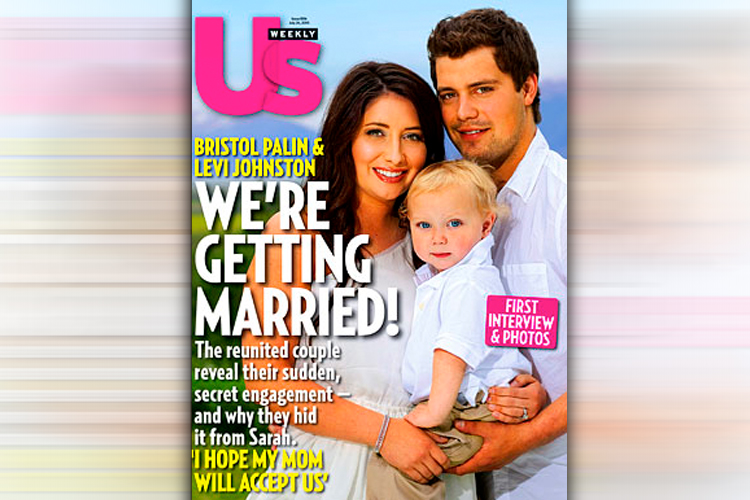
She has been a (perhaps unwitting) symbol of her mother’s ultimate pro-life commitment; he cut off his mullet and agreed to wear a suit for the Republican Convention. She spent her first year postpartum making bank telling other young women not to even think of having sex; he was dubbed “Sex on Skates” by New York magazine and stripped down to his skivvies for cash. But perhaps, like the boy who pulls your pigtail on the playground, all those differences and petty squabbles were a sign of true love; according to this week’s Us Weekly magazine, it was all just a prelude to a big white Alaskan wedding: Bristol Palin, abstinence educator, and Levi Johnston, Playgirl model, have announced their (second) engagement.

Apparently, the couple told Us Weekly before their own family, and Sarah Palin’s official response — “Bristol believes in redemption and forgiveness to a degree most of us struggle to put in practice in our daily lives” — might give a cynical reader reason to believe that Mama Grizzly is still caught up in that “struggle” bit. The Washington Post’s Reliable Source sees a ray of light in the announcement, however, and basically says: Who the hell else could they be with? “The two have shared a completely unique experience: Small town teens catapulted to worldwide fame through the convergence of an unplanned pregnancy and her mother’s overnight political ascendance.” But if being a co-conspirator in a media maelstrom were all it took to build a strong marriage, the Gosselins would be our most steady couple.

Bristol and Levi are just one of dozens of tabloid-ready couples whose lives we “know” far too much about. But the Gosselins and the Jolie-Pitts don’t have a family member who regularly flirts with running for the highest political office in our country. And thus we betcha whatever path their private lives take will eventually be served back to us as a political narrative demonstrating good Republican family values.

Before the unfortunate demise of their relationship, Bristol and Levi were more or less toeing the Republican Party line on unplanned pregnancy: Condemn the premarital sex, but offer redemption to those who go on to have the baby, get hitched and make a proper family (hence the shotgun engagement on the eve of the Republican Convention). During the Bush years, as you may remember, this philosophy formed the backbone of the Healthy Marriage Initiative, which started from the premise that two-parent families tended, statistically speaking, to make more money and provide more stable homes for children, and thus decreed that the best way to make poor, unstable single parents into stable, affluent families was to marry them off to one another.

But as it turns out, things didn’t quite work out the way they planned. Just last week, conveniently enough, Women’s eNews ran a feature by Julie Marsh that concluded that marriage isn’t exactly the magic pixie dust young parents are looking for. Yes, two-parent families may be, statistically speaking, more affluent than single-parent families, but married women also tend to be more educated in the first place. Encouraging poor parents with little education and few job prospects to better themselves by marrying each other just gives you a family headed by two poor, uneducated parents. Marriage might not hurt, but it is basically irrelevant: What that family needs is at least one person with a decent education and a good job. Plus, having money doesn’t guarantee a good relationship. As one young mother told Marsh, “You can have a man that got a lot of money and do you dirty and that’s not cool.”

There’s no rule that says young parents can’t have both: a good marriage to the parent of their child, in which they mutually support each other’s goals to finish school and/or come up with enough resources, economic and otherwise, to keep everyone reasonably happy and cared for. But in practice, all too often, when two people slap together an idealized family as the solution to an unplanned pregnancy, it just means that one or both partners (most often the mother) delay getting the education and work experience they need to support their family solo, a shaky proposition given that women who marry in their teens are much more likely to divorce.

How does this all apply to Bristol and Levi? People’s lives don’t willingly conform to statistical norms, so perhaps this particular marriage will turn out just fine. All those months of public vitriol might make an interesting addition to baby Tripp’s scrapbook (file under: Parents’ “youthful indiscretions”). Then again, it’s possible that in not choosing to marry when Bristol’s mother’s political ambitions were the virtual loaded gun over their heads, they came to a better-planned, more thoughtful decision to be together. One might also point out that the “problem” many government programs, rightly or wrongly, seek to fix isn’t necessarily young parents, but poor parents. And right now — thanks to speaking fees, tabloid interviews and skin mags — neither Bristol nor Levi is poor (though one presumes that the job security of “professional tabloid star” may turn out to be even more rickety than “child actor,” and one positively cackles wondering what rules govern the allowable behavior between an “abstinence educator” and the father of her child in the weeks leading up to her wedding). If nothing else, consider it an experiment in the impact a decent speaker’s fee can have on teen parenting.

Bristol and Levi’s lives, of course, are their own, and as private citizens, I wish them well. Still, there is no getting around the truth that their private choices will eventually be served back to us as political parable. While I’m no fan of one-size-fits-all prescriptions, I’m still of the mind that a college diploma and decent job skills are a much better guarantee of young family’s healthy future than a marriage license.

The rise of the digital wet nurse

Yes, breast milk is awesome stuff. But isn't asking another woman to lactate for your child kind of ... weird?

  • more
    • All Share Services

The rise of the digital wet nurse

In earlier times, aristocratic Western women who found breast-feeding unseemly or undignified or time-consuming, or who believed it might have a negative effect on their girlish figures, frequently borrowed the breasts of others, usually poor women, servants or slaves, to feed their children. In the American South, apparently, it was common for women of all social classes to use a wet nurse. In countries where many women die in childbirth, it may still be common for other mothers to nurse the dead woman’s child. But in this country, where the sight of a well-known actress nursing another woman’s child can still provoke an uproar, those searching for the substance touted as the miracle elixir for all humankind can score their fix in a more contemporary manner — via the Internet.

“Women are starting to get the message that mother’s milk is really important,” Nancy Mohrbacher, the author of “Breastfeeding Made Simple: Seven Natural Laws,” tells Newsweek reporter Maria Dolan, an understatement of vast magnitudes. With studies that credit breast-feeding for virtually every good — it will make your child smarter! — and an inoculation against every ill — prevents cancer, ear infections and obesity! — it may be more accurate to say that women are “getting the message” that offering one’s child anything less is tantamount to just begging for an unhealthy kid with crappy SAT scores. But what about adoptive parents, gay male parents, and others who have trouble producing milk in house? “Just because he was adopted, my little one should not have to miss out on the antibodies and heath breast milk provides,” mother Sarah McNeil tells Dolan.

Parents like McNeil are fueling a boom in demand for the milk of others. Over the past decade, demand at milk banks — which accept human milk and screen for diseases, including HIV — has quadrupled. And those who can’t afford the milk bank’s prices — up to $3 an ounce, keeping in mind a baby can need up to 30 ounces each day — are turning to new, unregulated programs like the Milk Share website, which connects those who’ve got milk with those who need it, thanks to the miracles of ice and Fed Ex.

Although I come from a long line of women who breast-fed their babies, and have plenty of sympathy for those who can’t nurse their children for whatever reason, I have to admit the idea of helping oneself to the milk of others seemed to me to be, at first, a bit of overkill. Yes, breast milk is awesome stuff, and common sense would tell us that human milk is likely a better fit for human babies than milk from a cow or a legume, but the fine print of all those studies tells us repeatedly that it is nearly impossible to discern why, exactly, breast-fed babies tend to do better. Is it really some magical properties inherent to the chemical composition in the so-called liquid gold? Is it because babies tend to get more face time with mothers who are hauling around their food supply? Or is it because right now, breast-feeding is most fashionable with affluent, educated women? But most of all, I wondered just who was producing all that liquid gold: Could this be just another example of wealthier women helping themselves to the bodies of poor women?

After poking around a few of the websites mentioned in the article, I got some answers. The first American milk bank, according to this piece produced by La Leche League, was founded in Boston in 1911 and was staffed — surprise! — primarily by unwed mothers who were paid for their milk. Earlier “lactariums” in France also housed wet nurses and their children in hospitals. But today the Human Milk Bank of America accepts only donated milk and, according to its ethical guidelines, “does not condone, and in fact, questions the practice of buying and selling human milk as a commodity” — in part, out of worry that a woman might feel pressured to provide milk to others at the expense of her own infant (their fees cover only screening, handling and processing). More than 50 percent of the bank’s milk goes to doctors who use it to feed sick children, especially premature babies; babies with a medical prescription for breast milk typically covered by insurance companies. The Milk Share site also explicitly forbids paying cash for milk over and above the cost of packaging and shipment (the downside to its program is that the milk is not screened, and one has to trust that the donor prepared it properly).

In a fair and ethical world, breast milk would go first to the babies who need it most — those who are sick, premature or who have severe allergies to other milks. But providing more democratic access to breast milk for all children may be just a question of simplifying the logistics. One of Dolan’s sources points out that opening more centers would make milk significantly cheaper for all parents, as shipping costs are among the highest expense. In Brazil, according to La Leche League, more than 40 percent of all mothers donate to milk banks; their milk is collected at their homes on a weekly basis. The upside of the breast milk fetish may be that women who produce more milk than they need, or have extra stashed in the freezer, may prefer to see their milk go to another infant, rather than down the drain. There’s plenty of evidence that the milk is out there: According to La Leche League, a single advertisement asking for donations in a baby magazine generated more than 300 calls per day — so much that they had to warn potential donors not to get angry with overworked staff.  

Continue Reading Close

“On the Outskirts of Normal”: White mom, black daughter in small-town Texas

National Book Award nominee Debra Monroe writes about the complications, and gifts, of transracial adoption

  • more
    • All Share Services

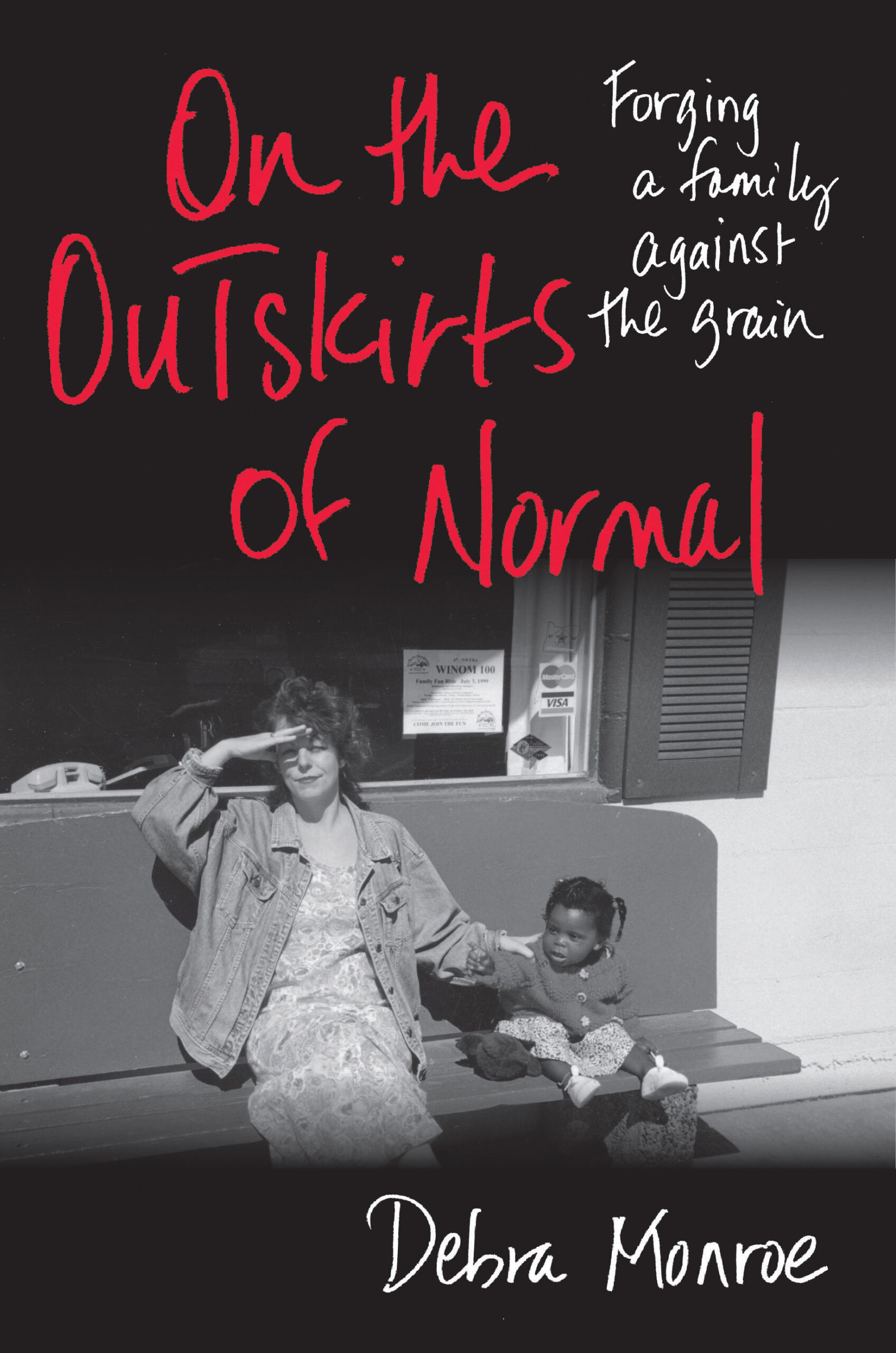
When Debra Monroe, a writer and a professor living in a small town in Texas, went to adopt a child, she was told that, as a single white woman, she could expect to wait about six years for a baby. Unless, that is, she was willing to do a “transracial” adoption. When Monroe said she was, the flabbergasted social worker initially suspected she was too dim-witted to know what she meant. “Black,” she explained. Monroe again said OK. The social worker responded, “Can you take a baby in two weeks?”

It took a bit longer than two weeks for Monroe’s daughter, Marie, to arrive, but once she did, their new family, described in Monroe’s new memoir “On the Outskirts of Normal,” was so unusual, she felt like a “minority’s minority.” Although most single adoptive parents are white women, only one percent choose to adopt a black child. This isn’t solely a result of white racial discomfort; historically, the National Association of Black Social Workers has been vehemently opposed to transracial adoption. Placing a black child in white families, they have argued, is akin to “cultural genocide”; white parents, they claim, can neither teach black children their heritage, nor train them to live in a racist society.

Barnes & Noble ReviewMonroe pretty much gets it (“No one talks about it,” she writes, “but it’s the specter of history—humans bought and sold”), but by the time she was looking to adopt, during the mid-’90s, the Multiethnic Placement Act—which said that no child should be denied a parent or vice versa based on race or ethnicity—had just been passed. And she doesn’t waste much time worrying about what might have been. “If a black mother had been available, my daughter would have fared better there. Probably. But why stop?” Why not also look for a married couple, with a stay-at-home mother and a dad with a fulfilling, financially rewarding job? “I could go on, romanticizing the parent I’m not,” she writes. “Skin color is the least of it.”

The path she sets off on with her daughter may be far from conventional, but it is surely deliberate. The first in her family to go to college, Monroe went on to earn a doctorate, then became an author (she has written four books of fiction, and twice been nominated for the National Book Award). She was estranged from her mother when she refused to put up with her mother’s abusive second husband, then had two failed marriages of her own, the second to a guy who ended up abusing her. (“In brief, people I came from tried not to hit or get hit, but we did, and we didn’t talk about it—it was too private.”) But by her mid-thirties, freshly divorced, she meticulously set out a plan for motherhood: she had a good job, bought a little yellow house in the country, and, along with hired contractors and newly-acquired skills with power tools, prepared for her new daughter.

Marie is a thoroughly wanted child, “spiffy, adorable and well-tended.” Monroe gives her little girl a garden plot of her own, sews her clothes, and obsesses over her safety. She swiftly discovers that allowing her daughter to have “bad hair”—”the black woman’s anorexia,” one stylist explains—is a cardinal sin of white mothers parenting black children, and spends years learning the intricacies of corn rows, weaves, hot combs, relaxers, and sister locks, mostly through an underground network of home stylists, where she is sometimes welcomed and at other times greeted with disapproval.

But her Texas small town is still racially conflicted, and she has to deal with everything from busybodies (who always expect to hear “the story”) to outright racism (one doctor makes remarks about the tainted gene pool in the black side of town; a clerk asks her, “Is that a crack baby?”). When a white pediatrician repeatedly claims Marie has the early symptoms of a rare, disfiguring disorder, Monroe can’t shake the feeling that he is simply unfamiliar with black skin. But other people’s opinions of their family become the least of their worries when both mother and daughter end up with serious (unrelated) health problems that further strain their fragile household.

Monroe doesn’t waste much time justifying her family to others—her care and clear-eyed, unwavering focus on her daughter makes its own argument. Nor does she complain: whether she’s packing her daughter onto planes to go on a book tour, or taking her along to a gig as a visiting writer, where the two stay with an old friend with questionable housekeeping habits, it’s absolutely clear that this is the life she chose for them. “The sprawling mess of life is why we need stories,” she writes, “a fleeting sense of order so we return to life with the unproven but irresistible conviction our mistakes and emergencies matter, so life might make sense too.”

Continue Reading Close

“Video Slut”: The mother of the ’80s music video

Sharon Oreck is the woman behind some of the era's most iconic images -- and, boy, does she have stories to tell

  • more
    • All Share Services

Scenes from Madonna's "Just Like a Prayer", and Prince's "When Doves Cry" videos.

Over the past few decades, Sharon Oreck has played mom to a sizable contingent of ’80s music royalty. When a passel of cops showed up on the set of Madonna’s “Just Like a Prayer” video, thinking the 20 petroleum-soaked flaming crosses made out of asbestos were part of a hate crime, she was the one who had to convince them otherwise. When the local pet trainers ran out of white doves before the shoot of Prince protégée Sheila E’s “Glamorous Life” video, she used gray homing pigeons shellacked with a white substance used by mature men to cover their bald spots. And when Michael Jackson was offended by an alleged offer of oral pleasure from Naomi Campbell on the set of the aptly named “In the Closet” video, it was Oreck who had to soothe egos all around.

Oreck’s new memoir, “Video Slut,” tells the story of how she went from being an unwed mother, cut off by her middle-class family, to a hotshot video producer in the golden age of MTV. (Subtitle: “How I Shoved Madonna off an Olympic High Dive, Got Prince in a Pair of Tiny Woolen Underpants, Ran Away From Michael Jackson’s Father and Got a Waterfall to Flow Backward so I Could Bring Rock Videos to the Masses.”) Over the next two decades, she went on to produce more than 800 videos, including some of the most iconic of all time: Prince’s “When Doves Cry” (working with Prince, she writes, was “a drag, a bore, and a disappointment”), Suzanne Vega’s “Luka” (they wanted something “kinda up” about child abuse, and the team delivered) and Janet Jackson’s “Nasty” (in which patrons at a nearby transvestite bar, enraged by not receiving a sufficient fee for being extras, decided to take off their panties and cancan through the official dance sequences, thus freaking out the cops, who subsequently called a SWAT team, starting a near riot).

Salon spoke to Oreck about Madonna’s pain tolerance, what she loves about “Glee,” and the sad decline of the music video.

Looking back, the ’80s seem like a golden age of music video. Did that seem true at the time?

People keep telling me over and over that their childhoods were really affected by music videos. I was at a club in Argentina with 25-year-olds and they were all like, “You did Sheila E ‘Glamorous Life’! Oh!” We did not have any idea that it was perma-fodder. We just thought, “Oh, it’s like newspaper work. You write it, and then the next day, you write something else.” But because of the Internet, it will live forever. I think that people look back at it and think of it as a golden age. And the reason for that is it was a free time. You could do anything. Nobody was micro-managing it; no one was paying any attention to it. No one was managing what was being seen; it was not p.c., it was not corporate-approved; it was just what people really wanted to do. MTV is over now, in terms of music programming. That’s why it was a golden age; because there is no more music programming. There is no age at all.

Your first work as a producer was on Sheila E’s “The Glamorous Life” when you were 29 years old. Was it typical at the time to have a young woman working as a producer?

In the music video world, there was no standard at all. Nothing was typical because there was no industry until 1982. When I entered it, it was still pretty much the Wild West. When I went in and declared that I made 10 percent of the budget, that is not the industry standard, believe me. I would never pay anyone that much money. But I just didn’t know you couldn’t ask for that. So they gave it to me.

Did that Wild West atmosphere allow MTV to be more free in the kind of music it promoted?

When I started working in the music industry, the only thing going was radio and radio stations were very segregated in terms of whether they played white or black music. You either had urban music or you had pop music or you had rock music. When MTV began, it was designated as a rock-pop venue and there was an unofficial policy not to play urban music — to the point that when I was working with Sheila E., when we cast her boyfriend, the guy that’s supposed to get with her in the car, we cast a black guy, and they told us we couldn’t use him. We had to use a white guy. And I was like, “But she’s … black.”

Everyone will deny it came from them, but they wouldn’t put it on MTV. They would say it wasn’t “crossover.” Then all of the sudden, kids started to say, We want to see rap music. The gradual takeover of rap music on MTV changed the way America saw music. I believe it changed the way that you integrated the youth of America. That’s the first time you really saw mass idol worship of black artists combined with black athletes. I do think it had an impact.

You began as an unwed mother who had a child at 16 in 1972. What was your parents’ reaction to your decision to keep your child?

I don’t think I put this in the book, but my parents actually hired a therapist and she sat down with me and said, “I want to help you with this. I’ve come up with two lists. One of those lists is why you should keep your child and this other list is why you should give your child up for adoption. I think we should examine each of these lists and make a really good decision.” So she hands me the “why you should adopt your kid out” list and it’s got like a hundred items on it. But the first one is: “Your son will be gay.” No, no, it’s the ’70s: “Your son will be a homosexual.”

Are you kidding me?

This is a licensed psychologist! No. 1: Gay. She was hired by my parents to give me a list of horrifying scenarios that would definitively occur, without question. They were proven by science! The list also included: He’ll hate you, you’ll never get a husband — that was No. 3. Not one thing on her list came true.

But I knew for months I wasn’t going to do it. I just couldn’t say it out loud. I didn’t tell anyone. And then I was in that hospital, and I just said, “I’m not going to go home without him.” And then they said, “Well, then you can’t come home.”

You describe O Pictures, your music video production company, as “bucolic feminist utopia,” run by a bunch of ladies and gays. All of your stories mostly involve you, the producer, and Mary Lambert, your director, bossing these big industry guys around, getting in fights with Joe Jackson, all of that.

My company was really famous for being run either by these fantastic, beautiful girls, or a bunch of big dykes, depending on whether you liked us, were jealous of us, or hated us. That was pretty much how it went down. My peer group — well, now they all act like they love me and they always respected me — but in my field, there were probably five companies of merit in the ’80s and ’90s, and lots that came after. But the big one was Propaganda. We perceived them as the USSR and we were Poland. They were super-big and they brought Polygram in really early for tons of money and they ended up making movies and they kind of folded it into this entertainment magnet. We were more the arty, boutique company.

Were they the ones who staged a fake riot for U2′s “Where the Streets Have No Name” video?

Yes they were. Fuckers.

I’ve seen VH-1 specials on the making of the U2 video, and everyone is like, “Here come the cops! They’re shutting us down!”

“And we had no idea!” They totally planned that. It was a pre-planned riot.

Even though you often seemed grossed out by some of the ’80s excess, you write that “Madonna made narcissism look hot.” I get the feeling reading this that she is one of the few characters you unabashedly adored.

Oh, beyond. I absolutely love her. I hate the term “empower,” because it’s so wrongly appropriated by, for example, strippers, but she really did empower me, because she just took power so unapologetically, in my presence, just over and over and over. I had a lot of strength in that world, but she was so powerful. I’ve never before or since seen anyone like that.

She stabs herself on a cactus and keeps dancing. She jumps from an Olympic high-dive herself, rather than using a stunt double. That sounds like the exact opposite of pop-princessy behavior.

She didn’t even flinch, with this giant cactus stuck in her foot. She has the worker ethic. Everything she did with her life, she took everything that could have gone wrong and made it a positive thing. She had an almost scary religious background and she turned it into something positive. She took all the Catholic guilt and turned it into this incredibly rigorous pro-sex liturgy; she turned it into her own religion.

Where do you see that energy now?

I think that musicals are coming back. Watching the success of “Glee” warms the cockles of my heart. It’s fascinating for me to see how so many people are able to turn all of that work that we did over the years to create iconography into so much positive energy. That makes me feel really good about the ’80s — because most of it wasn’t very well thought out. What really amazes me about that show is how they pull it off. It’s at least 30 minutes of really complicated musical moves. I know from experience how long it takes to a do a dance sequence. It takes at least two days. And they have seven days. I don’t know how they do it.

Continue Reading Close

A Southern songstress with a brass pair

Elizabeth Cook sings about mullets, hipsters, sleeping with drunks and how "it takes balls to be a woman"

  • more
    • All Share Services

A Southern songstress with a brass pair

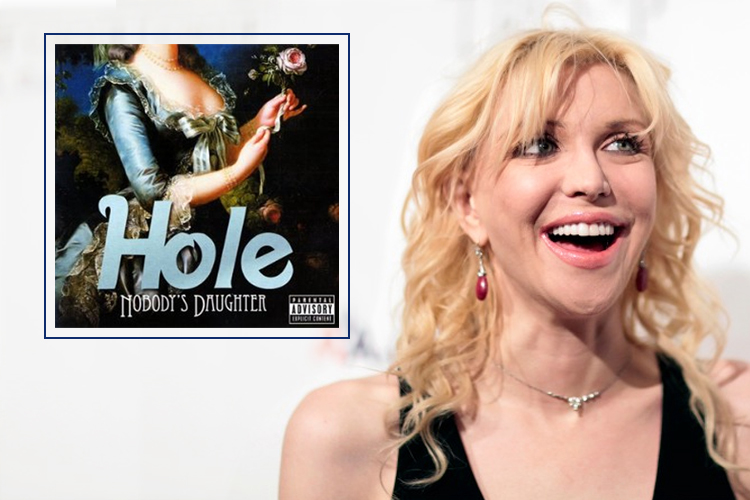
The other night, while washing dishes, I could have sworn I heard Dolly Parton on my radio telling some story about her daddy selling moonshine. It wasn’t Dolly, but Elizabeth Cook, who has a sweet Southern twang, serious songwriting skills and a pretty good set of brass ones, if she doesn’t mind saying so herself. In fact, “Balls,” as in “Sometimes It Takes Balls to Be a Woman,” was the title of her previous record, released in 2007 (you can see the video, in which Cook dances in what looks like a wedding dress outside an auto body shop here). Her fifth record, “Welder,” was released earlier this month. Cook isn’t a welder, but her daddy is, “courtesy of the the Atlanta federal penitentiary,” where he spent some time for selling moonshine. He joined a prison band, then later met her mother, also a musician, and the two played bars together, their young daughter in tow.

Many of the songs on the record are slapstick hilarious: “El Camino” is an ode to the driver of a ’72 brown and tangerine, “low and obscene” car of the same name (“We were making out in the disco era,” she sings, “he was Travolta and I was Farrah,” before concluding with the inspired rhyming couplet: “If I wake up married, I”ll have to annul it/Right now my hands are in his mullet.”) Many women will recognize the hipster dude she describes in “Rock ‘n’ Roll Man,” (he’s got “all his money tied up in guitars,” with a “tip bucket by the microphone stand,” and “likes to talk about Elvis, but only the Sun years”). Unfortunately, even more might know just exactly what she’s talking about in “Say Yes to Booty” when she sings: “When you say yes to beer, you say no to booty. If you’ve slept with a drunk man you understand, it’s not that hard.” On the other hand, the song “Snake in the Bed” seems even funnier because it doesn’t seem to be so much a double entendre as it is a warning about the possible hazards of sleeping on a pull-out couch in the country.

But Cook’s songwriting has serious range: “Heroin Addict Sister” uses her knack for details to create a heartbreaking portrait of a loved young woman who shoots “the devil’s DNA” and comes home “asking for her mama’s bathrobe and a pot of potato soup.” In “Mama’s Funeral,” a family gathers around the porch swing to look at the paint worn down by their mother’s feet. Cook also covers “I’m Beginning to Forget You,” a song written by her mother, Joyce, soon after her first husband left her alone with five small children.

Besides making records and touring the country, Cook also hosts “Apron Strings,” each weekday on Sirius radio, in which she “chit-chats” about aspects of her daily life, like making music, being on the road, and missing her cat and her bathrobe. We caught up with her just after her morning radio show taping and just before she got back on the road for her nightly gig.

You were raised by country musicians and you’ve played everywhere from the Grand Ole Opry to folk festivals to rock festivals. Is there a more eclectic audience for country music in your generation than there was for your parents’ generation?

At last night’s gig, we had some old punk rock guys, then these total country boys, tattooed-up roughnecks, then older well-heeled couples and intellectuals. So hipsters, intellectuals, folkies, hippies, it’s absolutely across the board. People are generally more diverse. Everyone has a richer, more unique experience. Just because you live in some town doesn’t mean you live a stereotypical life from that town. Yet at the same time, people are nostalgic for where they come from. That’s why the old-school country sound is still viable. Longing for a simple, more innocent time.

And are your influences diverse?

My first concert my parents took me to, when I sat on my daddy’s knee, was Conway and Loretta. The first concert I went to where my daddy drove me and three of my girlfriends and sat in the parking lot while we went inside was Madonna on the “Like a Virgin” tour, with the Beastie Boys as the opening act. MTV came on the air when I was coming of age, and they had Michael Jackson and Bruce Springsteen, everything on the same channel; there wasn’t so much focus on the genre issue. I knew all the words to Merle Haggard and Tammy Wynette songs, but found pop music very exotic.

Madonna is obviously a huge generational touchstone for women musicians in terms of pushing the boundaries of what one can say in a song, owning your sexuality, and all that. Do you have any thoughts on what you’ve taken from someone, like, say, Madonna, and singers like Dolly and Tammy and Loretta? Do you feel there are things you can say that they couldn’t?

The thread is that they all represent themselves in an open, honest way. I think a lot of women struggle with it. We use different terminology now but it’s all saying the same thing. “Say Yes to Booty” is “Don’t Come Home a Drinkin’ With Lovin on Your Mind.” It’s all the same message; just different ways of saying it.

Something about that “Snake in the Bed” song sounds like the snake in question was more literal than metaphorical.

It’s actually 100 percent true. I was at Georgia Southern; I was sick, I was sleeping downstairs on a foldout couch-bed and I thought I would catch up on some schoolwork. I had my backpack sitting by the sliding glass doors in our little condo and I went and dumped my whole backpack out on my bed. I was laying back, sorting through folders, and this little black thing went wiggling down my leg. I completely freaked out and ran and got the neighbor. He was a big old strapping country boy and he was such a wimp about it. We both ended up taking the sheet out and shaking it out. But I actually wrote the song after watching Bush’s State of the Union address in 2005 or 2006. It’s somehow metaphorical; I don’t quite understand it myself.

Something about watching George Bush address the nation made you think of a black snake in the bed?

It just seemed like there was some trickery going on.  

Continue Reading Close

Come on, let Bristol Palin have some fun

As the country's most famous teen mom gets caught clubbing, I wonder: How long does she have to say her life sucks?

  • more
    • All Share Services

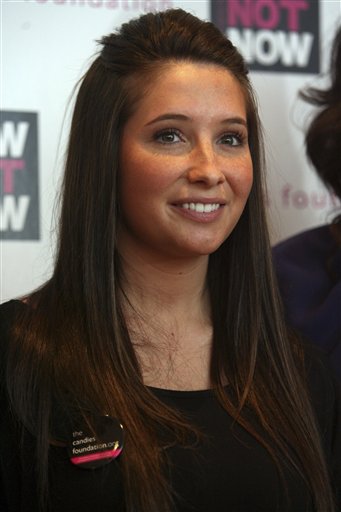
Come on, let Bristol Palin have some fun**FILE** This Wednesday, May 6, 2009 file photo shows Bristol Palin, daughter of Alaska Gov. Sarah Palin, as she poses for photographers on the red carpet during an event to promote National Teen Pregnancy Awareness Day in New York. (AP Photo/Mary Altaffer, File)(Credit: AP)

Poor Bristol Palin. Earlier this week, it seemed that the nation’s most famous teenage mother, now serving her second year as our nation’s most prominent spokesperson for the National Day to Prevent Teen Pregnancy, had finally got the hang of the script she’s been handed, however contradictory it may seem: Yes, she admitted while making the rounds of daytime talk shows this past Wednesday, motherhood is a blessing (she cried at Tripp’s first smile!), but that doesn’t mean it was OK for her to have a kid in the first place. Those who were afraid she would rely on her famous family to support her will be relieved to know that she, according to an interview with People magazine, is actually living on her own and working a “regular” job to provide for her son without any financial help from her parents (her ex, too, finally kicked in with his child support payments). And though she may have screwed up in the past by declaring abstinence to be “unrealistic,” she now claims that she herself plans to go the born-again-virgin route and be abstinent until marriage. So far, so good.

So good that, according to the New York Daily News’ Gatecrasher, Bristol celebrated a job well done by wrapping up the National Day to Prevent Teen Pregnancy by going clubbing at the hotspot 1Oak. “She was trying to have fun, but she looked like she was terrified people would recognize her,” says the unnamed source who did just that, then reported back to writers of the Gatecrasher blog. “It seemed like she couldn’t even relax.”

Though the club is 21-and-over, the same eyewitnesses said she didn’t seem to be drinking, though I, personally, would sure as hell consider myself entitled to a glass of champagne after dissecting my sex and family life on national television. I’m going to go out on a limb here and say that if anyone deserves a night out dancing with friends, it might be a young woman who has spent the past year working, caring for an infant, going to school and, oh yes, serving as a national symbol of fallen young womanhood, who happens to find herself in New York City and presumably with a decent baby sitter. Surely, she was sharing the space with many 19-year-olds whose day jobs might be more easily described as “NYU student” than “frazzled mother of a 1-year-old frequently asked to declare her sexual ineligibility via press release.”

(No one, I trust, needs to be reminded that Bristol’s ex has done the exact opposite, at least as far as the public narrative is concerned: Clubbing might be among the most innocent activities Levi Johnston has engaged in while visiting New York City, and it’s hard to think of any action that screams “sexually available” quite like posing for Playgirl.)

Last year, I pointed out that one of the things that bothers me most about the press on Bristol Palin and other teen mothers is that, thus far, they are expected to stay within a box: Their stories are narrowly focused as cautionary tales aimed at discouraging younger teens from ending up like them (i.e., pregnant) with little or no thought as to what examples they might hold for the small number of girls who do. And one has to wonder: How many more years does Bristol have to publicly declare that her life sucks? No one expects her to be allowed to talk about the pleasures of sex any time soon, obvious as those pleasures may be. But how many more years is she required to follow up any glowing anecdote about motherhood with some sort of dire reminder about sleepless nights and the cost of diapers?

And while I assume that her mother’s political base would be glad to hear that Bristol is pulling herself up by her bootstraps, rather than relying on money from her famous family, I was more curious to know why she is working full-time, but finding it difficult to attend school. According to Bristol, she is working from 8 to 5 doing “just very repetitive work”; she tried to attend night classes as well, but found it “nearly impossible” to work and attend school. “I’m trying to chip away as much as I can at college,” she says. “I want to beat that statistic of teen moms not graduating from college.”

Fair enough; she’s in her first year as a single parent and has a few years yet to get it all together (even without a kid, it took her mother several tries to get through college, and her father never finished). It’s also fair to assume that Bristol and Levi’s public notoriety might come with a certain number of media appearances, some of which — Candie’s Foundation spokeswoman, Playgirl model — have been known to include paid compensation. But if Bristol can work a 40-hour week as a mother, she can finish college (I did it with a part-time job, financial aid and a kid). I’d hazard a guess that college tuition is well within the reach of the Palin family budget, with or without Bristol holding down an additional full-time job. Assuming Bristol feels the same, it’s time for us to stop worrying about her night life and for her to start chipping away at that degree. 

Continue Reading Close

Page 2 of 34 in Amy Benfer