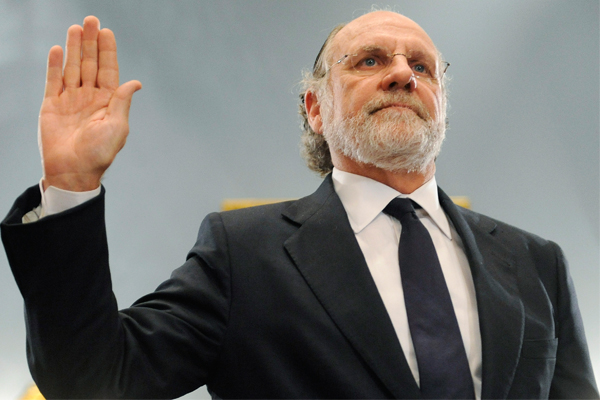
When word of the obscene bonuses being doled out to top executives of Jon Corzine’s failed MF Global went public the other day, I expected white-hot fury. A major brokerage had gone belly-up, $1.6 billion had simply “vanished,” and the people responsible for the mess are about to be enriched. But except for isolated pockets of outrage like congressional fist-shaking and a Minnesota farmer protest — victims demanding that the money go to them and not to the fat cats who ran the company into the ground — reaction has been subdued.
Call it Wall Street greed fatigue. You say there is a group of devious men (and they are usually men) who lost or stole the money from a large group of trusting and trustworthy people and then enriched themselves for their atrocious behavior? And we’re supposed to be surprised? As a news story, the MF Global bonuses is familiar. The headline “Vultures Flourish in the Great Recession” reeks of 2009. Besides, what can you do about it? Not a single executive responsible for the crash of 2008 has gone to jail or even visibly suffered. After a while the story gets tiresome.
Whatever the cause of Greed Fatigue, its prevalence today is a shame because MF Global, headed by former New Jersey Sen. Corzine, may well have engaged in criminal conduct. The rewarding of their irresponsible behavior with bonuses ought to get free-market types and Republicans fired up alongside the usual progressive Wall Street-bashers. Perhaps the fact that Corzine is a liberal Democrat may encourage right-wingers to overcome their Greed Fatigue. We can only hope. The MF Global fiasco is not only the best example I can find of how the culture of greed has survived in the aftermath of the 2008 financial crisis. It’s also an example of crony capitalism at its most pernicious.
To understand the MF Global story, you’ve got to explore a bit why the firm went belly-up last October, and why we even know in advance that these bonuses are going to be paid. Unless they are publicly traded companies, Wall Street trading firms don’t disclose to a soul how much they pay their top people, and only do so after the fact.
MF Global used to be known as Man Financial, and it had a reasonably good reputation. It did a humdrum business placing commodities trades for fund managers, as well as farmers, grain dealers and others whose livelihoods depend on the vagaries of commodity prices. To protect themselves, many of them hedge by trading in derivatives. That’s the “Dr. Jekyl” side of the commodities and derivatives business, a conventional business that performs a useful function for corporations engaged in real commerce. The “Mr. Hyde” side of the business — the adventurous speculation for personal profit -- was represented by the trading that MF Global and the Wall Street banks do for themselves. When speculators start imagining huge profits, caution has a way of being thrown out the window, as happened in the run-up to the 2008 financial crisis. It happened again to MF Global — in spades.
In the case of MF Global, the problem was simple competence. The firm traded complex financial instruments called “repurchase agreements.” Despite the presence of CEO Corzine, who made a fortune at Goldman Sachs before going into politics, the firm somehow “misplaced” over $1.2 billion from 36,000 customer accounts. To make matters worse, MF Global actually dipped into the customer funds that remained — to the tune of $700 million — to make up for the shortfall. That’s like a lawyer stealing client funds.
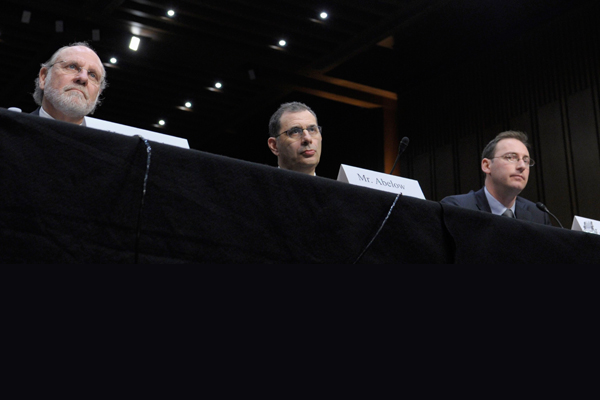
The usual congressional inquisition followed. It was more of a circus than usual, because top MF Global officials said they didn’t know where all that $1.2 billion went. (The number was later put at $1.6 billion, a huge chunk of the $6.9 billion in customer cash.) MF Global execs were called before a congressional committee in December: Corzine, president and chief operating officer Bradley Abelow and chief financial officer Henri Steenkamp. They got the usual tongue-lashing. Addressing Steenkamp, Sen. Mike Johannes, a Nebraska Republican, fumed, “You’re dancing around with me.” The other two were similarly chastised, and rightly so.
What seems to have happened is simple: The traders at MF Global screwed up, and stole money from customers to make up for the losses. It’s hard to think of any other possible explanation.
MF Global wound up in bankruptcy court. That is how we know that bonuses may actually be paid to the same people who were roasted in Congress. Former FBI director Louis Freeh, the bankruptcy trustee, indicated that he was planning to pay bonuses to Abelow, Steenkamp and Laurie R. Ferber, general counsel. The amount of the bonuses has not been determined yet, but the Wall Street Journal reported that the three execs, and 20 other MF Global employees, will get bonuses “if they hit specified targets such as increasing the value of MF Global’s estate for creditors.”
What makes this outrageous is not just the obvious horror, which is that money is going to two executives, Abelow and Steenkamp, who were not only in charge at the time of the mess, but stonewalled Congress about the money, and presumably have some explaining to do in both the criminal and numerous civil inquiries being conducted into the MF Global collapse. Also shocking is that this charade is being played out in bankruptcy court, which has a broad mandate to prevent anyone involved in a bankruptcy from being unjustly enriched. Freeh, as the former federal judge that he is, surely should have known that paying out bonuses to the top execs of the company reeks to high heaven, and has the odor of crony capitalism at its worst.
It’s not an “excess compensation” issue. It’s not left versus right or Wall Street bashing at work here. It’s the way bankruptcy courts are supposed to work. That’s why, for instance, the trustee in the Robert Madoff liquidation, Irving Picard, has caused such a ruckus with his “clawback” suits against investors who cashed out of the Madoff funds. The aim is to treat all victims fairly.
But here, in the MF Global mess, you have top officials of a company that “misplaced” customer money getting paid to help clean up the mess that they created. Their reward, at the most, should be leniency from regulatory or law enforcement sanctions — not bonuses. But that apparently hasn’t dawned on the MF Global trustee.
It’s not clear that the MF Global perps will ever be prosecuted. A criminal inquiry is underway by the Justice Department, although that seems to be headed nowhere — perhaps because of fear that prosecuting Corzine will hurt Obama, as Joe Nocera suggests. I suspect that the same kind of double standard is also at work in this bonus fiasco, in which Corzine’s cronies (though not Corzine himself) stand to benefit.
Another way of looking at this is that the bonus culture is so ingrained on Wall Street that nothing, I mean absolutely nothing, will keep these dudes from getting their bonuses. Not failure, not stonewalling Congress. Nothing. Not even when they are in bankruptcy, when the sword of Damocles is supposedly hanging over their heads. Not even with the feds conducting a criminal investigation. Doesn’t matter. They get their bonuses. And the rest of us get Greed Fatigue.
It’s possible that the outcry, muted as it has been, will be sufficient that the bankruptcy judge will nix the bonuses, or allow them to be paid only to employees who had no role in the collapse of the firm. I wonder if it might be better to pay the bonuses to all of them. Then they can be a kind of living monument to the mind-set that got us into the mess that is continuing to burden the economy.
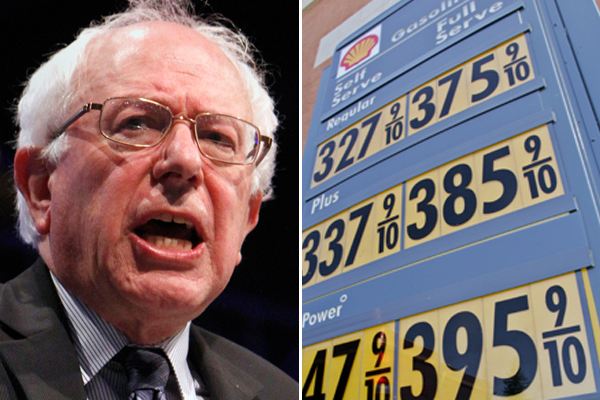
Republicans have been stridently exploiting the gas price horrors facing motorists in what Steve Kornacki correctly observes is an indication of President Obama’s strength. Taking that thought one step further, I’d suggest that there’s an opportunity here for the Obama Administration to throw down the gauntlet to the GOP on this issue.
Just rigorously enforce the law. Dodd-Frank, to be exact.
A little-noted provision of that 2010 law, which was passed in reaction to the 2008 financial crisis, requires an even littler-noticed federal agency, the Commodity Futures Trading Commission, to establish “position limits” for commodity and swaps traders. I’m something of an obscure-securities-law buff, but even I wasn’t aware of that Dodd-Frank provision until this week, when the dependably progressive Vermont senator, Bernie Sanders, got 67 congressional signatures on a letter calling on the CFTC to do its job.
If enacted in a sensible fashion, position limits would go a long way toward easing consumer pain at the gas pump. That’s because speculators have played a major role in driving up gas prices. That’s not just empty rhetoric, or conspiracist theorizing, but proven fact. A recently updated study by the staff of the St. Louis Federal Reserve (get your copy here), found that speculation “played a significant role in the oil price increase between 2004 and 2008 and its subsequent collapse.”
It’s reasonable to conclude that speculators are also playing a key role in the current oil-price run-up, in addition to the sabre-rattling over Iran and other geopolitical and economic factors. A study by none other than Goldman Sachs has found that each million barrels’ worth of speculation adds 10 cents to every barrel of oil. There were about 233.9 million crude oil contracts that were the subject of speculation as of Feb. 28. Thus speculation added $23.39 to the price of a $108 barrel of oil, which translates to 56 cents a gallon at the pump. Without speculation, Forbes writer Bob Lenzner notes, a barrel of oil would have cost as little as $74.61, and the cost of fuel would have been $3.12 a gallon on Feb. 28, and not the price it was actually commanding in the northeastern U.S.: $3.68.
In his letter to the CFTC, Sanders points out that “It is one of your primary duties–indeed, perhaps your most important–to ensure that the prices Americans pay for gasoline and heating oil are fair, and that the markets in which prices are discovered operate free from fraud, abuse, and manipulation.” He’s right, but in fact there doesn’t even have to be manipulation for oil traders to have an adverse impact on oil prices.
The reason is that the oil futures markets have been a merry playground for hedge funds—multibillion-dollar partnerships that make immense bets in stocks, futures and swaps contracts and commodities. Some hedge fund managers have made big bucks trading oil futures—George Soros is one. The problem is not that their trading has gamed the market, necessarily, but that they have made the pricing swings even more severe than they otherwise would have been. We’re talking about immense sums of money. Trading volume in commodity index trading strategies, for instance, climbed from $13 billion in 2004 to $260 billion in March 2008, according to the St. Louis Fed study.
With such enormous bucks devoted to trading in oil and other commodities, the distortions that they cause have been exacerbated. Studies as far back as the 1920s have found that large speculative positions in grain resulted in “wild and erratic” price moves. Recent studies cited by the St. Louis Fed described how speculators hurt consumers. One study, for instance, found that speculators distort the supply and demand equation simply by purchasing large numbers of futures contracts, thereby boosting their prices. “As producers expect a higher price of oil for future delivery, they will hold oil back from the market and accumulate inventories,” the Fed notes, citing a 2011 study.
Hey, you would too, if you knew that something that you produced was going to be more expensive two or three weeks down the road. And, of course, holding back your product also tends to make it more expensive, by reducing supply. When frosts damage orange crops, juice prices go way up.
Now, this is not to say that (contrary to what some of the coverage of Sanders’ letter has incorrectly reported) the CFTC has taken no action on this issue. Au contraire, the agency published complex formulae covering a slew of commodities, including oil, gasoline and natural gas, which were published in the Federal Register in January, as can be viewed here.
The problem is twofold. First these limits just aren’t strict enough, as Sanders points out in his letter. Secondly, Wall Street trade groups filed suit in December—before the interim final rules were even published—arguing that even the modest contract limits that were imposed were actually too strict. The lawsuit has delayed implementation of the position limits that were put into effect. Another obstacle, his letter noted, is that there have been delays in gathering the data needed to put the limits into effect.
Obviously Sanders isn’t going to get much, if any, Republican support for his letter, because position limits (and even the very concept of Dodd-Frank) are anathema to the Republican Party’s stringent adherence to free-market dogma. One doesn’t have to be a laissez-faire absolutist like Ron Paul to oppose position limits on commodity traders. The very idea is just a nonstarter to the GOP.
But that doesn’t make them any less of a good idea, which is why Obama should fight that Wall Street lawsuit like hell, and demand that the Republicans join him in opposing it. I’m damned if I understand why he hasn’t done that already. Obama also should lean on the CFTC to put some more muscle in the position limits.
Frankly, given their destructive impact on consumers, I’m not really clear why we even need an oil futures market in the first place, or why speculation can’t be banned from the oil market entirely. Oil futures were originally created to give heating oil dealers, gas retailers, aviation companies and other businesses a method of hedging against adverse price changes. Instead, they’ve become just another Wall Street plaything.
There’s plenty of precedent for Obama taking a strong hand on the oil markets. The New York Stock Exchange was closed for four months at the beginning of World War I for a public purpose—to prevent panic selling. Sure, Wall Street will try to circumvent any such action. But if Obama can take action against Iranian bankers quite as effectively as he has, he can certainly do the same with oil speculators. He can at least try. And if the GOP wants to support Wall Street against him and the American consumer on this issue—so be it.
Continue Reading
Close
Is the new Consumer Financial Protection Bureau poised to stamp out lawlessness by the street thugs of American business: debt collection agencies?
The answer is a rousing “maybe.”
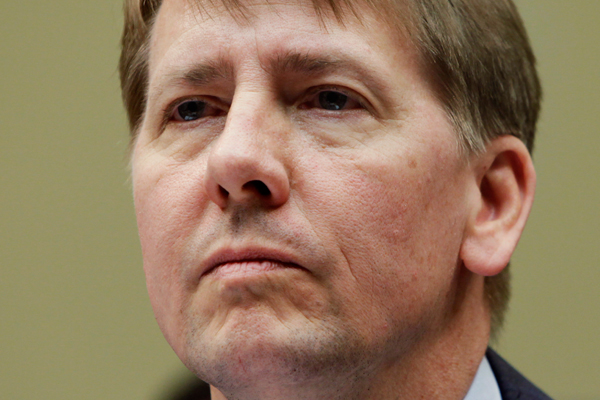
On Friday, the CFPB inserted a 17-page rule proposal into the Federal Register, in a major step toward getting a grip on the out-of-control debt collection business, as well as riding herd over consumer credit bureaus. But this was just the first step on a long and perilous journey into one of the most nauseating back alleys of free enterprise. It’s an open question whether the CFPB, under its new director, Richard Cordray, is up to the task of corralling these corporate snakes. It’s almost certain to run into stiff opposition from the debt-collectors’ pals in Congress.
But let’s look on the bright side. This is Cordray’s big opportunity, a chance to really make a difference in an area that matters to millions of consumers. Let’s hope he doesn’t blow it.
No other facet of American business is more corrupt, more intoxicated with illegality, more weakly regulated, and has a greater impact on poor and working people than debt collectors; not credit card companies or subprime mortgages, not even payday lenders. In 2011, 30 million Americans — that’s 14 percent of the population — had an average of $1,400 in debt that was subject to the collection process, according to the CFPB. Reports of abuse have been on the rise for years, with complaints swamping the Federal Trade Commission, the undermanned agency that has the task of enforcing the oft ignored Fair Debt Collection Practices Act.
The CFPB hasn’t even gotten started, for which you can blame Congress. This rule-making sets the parameters for whatever action it takes in the future, by defining the size and characteristics of the companies that will be supervised by the CFPB. The CFPB had to jump through this hoop because of a weakness in the law that created the agency, Dodd-Frank. It only allowed the CFPB to supervise “larger” non-bank outfits. That’s less of a problem for credit raters, which are dominated by three national firms, than it is for the highly fragmented debt collection “industry,” if you can use that term for people whose job it is to harass other people into paying their debts.
The rule proposal the CFPB generated on Friday is a mixed bag. As defined, just 4 percent of debt collectors will be supervised by the CFPB. That doesn’t seem like a lot, but the CFPB calculates that those firms are 175 in number and encompass 63 percent of the debt collection “market,” as measured by annual receipts. Law firms will be subject to CFPB supervision, which is no great surprise — the FTC already regulates them — but not employment- and tenant-screening firms. That’s a disappointment, because firms that scour the criminal records and rent-paying records of potential employees and renters, flying below the regulatory radar, are an increasing source of concern to consumer advocates.
Behind the dry statistics is a heap of misery: people hounded at work, sued without proper justification, and sometimes subject to “sewer service” in which they are served with lawsuit papers by crooked process servers working with shady law firms. As I pointed out a couple of weeks ago, tackling unsavory debt collectors (a pleonasm if there ever was one) is not really a job for Richard Cordray. It’s a job for Eric Holder and his man in Manhattan, U.S. Attorney Preet Bharara, bane of Bronx drug gangs and insider traders and non-bane of the big banks.
The lack of law enforcement interest is lamentable, because just about every day there’s news of yet another enforcement action against debt collectors by the FTC and the states. It reminds me of the days of out-of-control penny stock peddling in the 1990s, which was only curbed when federal prosecutors began throwing crooked brokers in the clink.
With the Bhararas of this world as yet uninterested in protecting consumers from lawbreaking debt collectors, the only weapon in the law enforcement arsenal that’s ever used is the civil enforcement action, such as this lawsuit filed against a large Skokie debt collector by the Illinois attorney general last month. Read the Illinois complaint and you can see the kind of everyday abuses that victims of the recession have to face from these characters:
“Revealing information about debts to people other than the consumer, including employers or family members;”
“Fronting as a law firm and intimidating consumers with fake court case numbers on letters sent to consumers to falsely represent they had been sued for failure to pay a debt;”
“Debiting more money from consumers’ bank accounts than consumers authorized, causing some to incur overdraft fees;”
“Accessing consumers’ credit reports without authorization to intimidate them to pay alleged debts.”
If you comb through complaints about debt collectors, which can be found in myriad localities on the Internet such as the Ripoff Report and Pissed Consumer, you can see that these practices are more the rule than the exception. Beefs against debt collectors are consistently among the top complaints received by both the FTC and state attorneys general. Numbers for 2011 haven’t yet been released, but in 2010 the FTC received 140,036 complaints about debt collectors, which accounted for 27 percent of all complaints the FTC received. That’s an increase from 119,609 in 2009.
As in the Illinois attorney general’s report last month, the FTC has found that consumer complaints fall into much the same broad categories: harassment, misrepresentation, illegal disclosure to third parties and overcharging. It’s almost as if these debt collectors are all reading the same “How to Be an Illegal Bill Collector” handbook.
So Cordray’s job is clear. Unless he and his staff are blind, they know what the unscrupulous debt collectors are doing. And he knows what needs to be done:
Read consumers their rights. People are told their rights when they’re arrested. Consumers getting collection letters are entitled to the same courtesy. Cordray should put teeth in the Fair Debt Collection Practices Act by requiring collectors to provide consumers a pamphlet, drafted by the CFPB, informing them of their rights under the FDCPA. Few consumers realize, for instance, that debt collectors are required to validate debts upon request, providing consumers with the details of sums owed. The FDCPA also makes it clear that bill collectors aren’t allowed to collect any amount unless it is “expressly authorized by the agreement creating the debt or permitted by law.” Collectors that don’t provide the FDCPA pamphlet should be shut down. Not fined, put out of business.
Statute of limitations disclosure. Debt collectors should be required to disclose the applicable statute of limitations in the body of their collection letters, in bold type. While it’s not illegal to dun a consumer for an old debt, it is illegal to sue for one. Consumers should be told when a collection effort has no teeth, in plain language drafted by the CFPB. They need to be told that if they make a partial payment it can make it impossible for them to assert the statute of limitations as a lawsuit defense. Again, the penalties for nondisclosure should be severe. Suing for ancient debts exploits the poor and uneducated, and needs to be heavily regulated if not banned entirely.
Criminal referrals. The worst abusers, the ones that engage in a pattern of lawbreaking such as “sewer service,” should be referred to federal and state criminal authorities for prosecution. Federal prosecutors have made creative use of the RICO racketeering statutes against securities law transgressors as well as old-fashioned mobsters. Why not use them against criminal debt collectors?
So those are three modest proposals for Richard Cordray. There’s only one catch, and again it was put there by Congress. Under Dodd-Frank, any rules promulgated by the CFPB are subject to review not just by the courts but by two other potential sources of mischief: Congress and the Financial Stability Oversight Council, a panel consisting of top federal regulators, among them two of President Obama’s most pro-industry voices, Tim Geithner of the Treasury Department and Mary Schapiro of the Securities and Exchange Commission. As the White House has pointed out, the FSOC may, “at the request of a member agency, review regulations issued by the CFPB and, in some cases, even reject the consumer bureau’s regulations.”
So what? Cordray should show his cojones by making the strongest possible rules against debt collectors, and then say to Congress and the FSOC, “Go ahead, make my day.” This is an area in which Obama can show some leadership, because most of the members of the FSOC are presidential appointees. And as for the Republicans in Congress, if they want to make a fuss, so much the better. The GOP has a golden opportunity to show that it’s on the side of debt collectors against the American people.
Continue Reading
Close
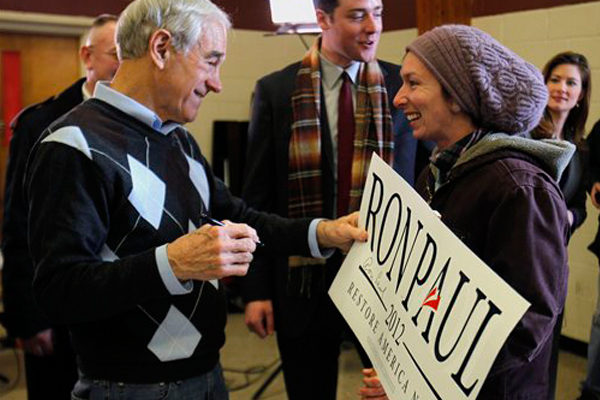
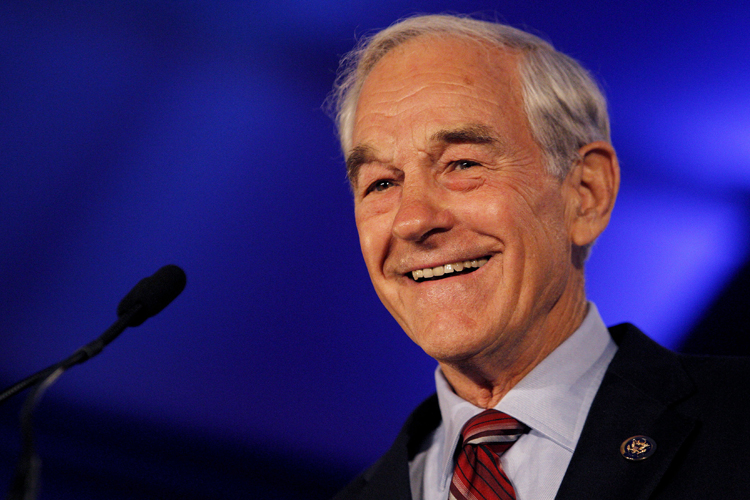
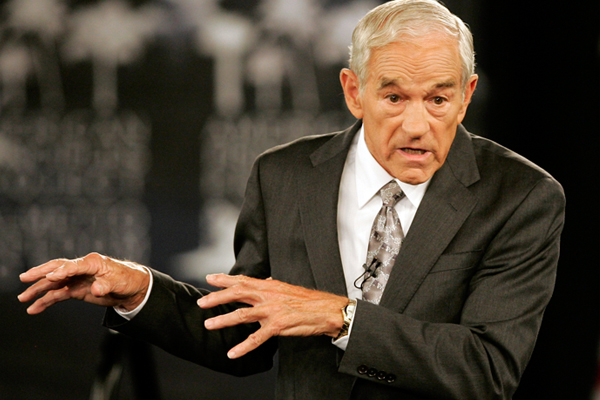
These are depressing days if, as I do, you don’t care much for Ron Paul.
His strong showing against Mitt Romney in Maine is further proof that the libertarian Texas congressman is not going away. So this is as good a time as any for those of us who view him as an off-the-charts extremist to come to grips with two larger questions presented by his candidacy: Why do so many people like this guy?
And even: Do Paul’s followers have a point?
My credentials in the anti-Paul camp are unassailable, and I have the hate mail to prove it. I haven’t changed my mind about his views. I still think that he’s a phony populist, because his positions would favor the 1 percent more than any other Republican candidate. I haven’t changed my mind that his “end the Fed” campaign is diversionary, and that his advocacy of the gold standard would put us in another Great Depression were it ever implemented. I’m concerned by the cult-like fervor of so many of his followers. I don’t buy his excuses for the racism that appears in newsletters that were published under his name.
But that doesn’t mean that those of us who aren’t won over by Paul should just dismiss the guy as a nut, which seems to be a popular practice in news organizations. I don’t think he’s been terribly forthcoming, especially on those newsletters, but you can’t deny that Paul has a number of positive qualities that moderates and liberals need to understand and appreciate, in order to effectively counter his views:
1. He has integrity. I grimace as I write this, but it’s true. Perhaps not compared to Mother Teresa, but certainly he does when stacked up against pretty much any other politician I know, including more than a few Democrats. (He obviously has more integrity than Mitt Romney, but that’s not saying much.) His consistent dedication to the same ideals, the same causes — obsessions, actually — cannot be seriously disputed. A perusal of his books, House of Representatives floor speeches and miscellaneous bloviating over the years shows that the man has been hammering away at the same isolationist/monetary/no-government/”Constitution” themes for decades. He has opposed the war on drugs for decades, just as for years he has opposed the Civil Rights Act of 1964. Mind you, he’s not always internally consistent, in the sense that he takes positions that stray from the libertarian ideal: taking earmarks for his district and stridently opposing abortion. But on most issues you can expect that his rigidity on matters of ideology will shine through, no matter how politically inexpedient.
2. He’s likable. Paul doesn’t give off mean-S.O.B. vibes like Newt Gingrich. He’s rumpled, and walks with the head-forward bad posture of a slightly distracted junior college professor, shuffling along, late for his next class. He doesn’t make a big show of bullying debate moderators as Gingrich has been doing (though he has walked out on an interview). Though his positions are even more uncompassionately conservative than Romney’s, he comes across with considerably more warmth (again, not saying much). His delivery on the stump is folksy, not fanatical. He talks about cutting $1 trillion out of the federal budget like your family doctor telling you he’s got to take out a gallstone. It’s good for you. It won’t hurt for long. Paul is often compared to the old man in the neighborhood who shoos the kids off his lawn, but he reminds me a lot more of Sen. Eugene McCarthy, the antiwar Democrat of the 1968 campaign. He doesn’t have McCarthy’s urbane wit, but that’s asking a bit much.
3. He’s smart, and in a nice way, unlike Gingrich or Romney. He doesn’t lecture; he doesn’t talk down to people. I think this explains a great deal of his appeal to the young. He’s this generation’s Mr. Wizard, the affable TV science teacher who taught baby boomers how refrigerators operate and how to get electricity out of a spool of wire and a magnet. Ron Paul’s Mr. Wizard character similarly reduces complex issues that people don’t understand into simple concepts amenable to simple solutions, such as abolishing a good part of the federal government and getting rid of the income tax. Yet he is able to embrace these off-the-charts positions in a manner that doesn’t make them seem extreme. It takes a genius to do that, and I don’t mean that in a nice way.
4. He knows the American people are fed up. He’s struck a chord with a lot of people I respect. His talk about American “empire” makes many a progressive feel warm and fuzzy. More than any other candidate — including President Obama — he understands how tired Americans are of being underemployed, exploited by the big banks and sent to engage in nation-building overseas. Sure, his policies would entirely wipe out regulation of banks, but he gets away with it from sheer force of personality. (And yes, I can already see the comments — the hedge fund managers and bankers support Romney. Sure they do: because he’s going to get the nomination.)
Paul’s views on foreign policy hearken back to the Republican isolationists of the 1930s, the Robert Tafts and Gerald Nyes, and he similarly taps into the latent Heartland “fortress America” mentality. He cannily exploits the paranoia that has long characterized American politics, and the deep-rooted dislike of foreign entanglements that has been dormant for decades. There’s an aroma of the old America First movement to much of what he says about foreign policy, and that’s scary to people who’ve read a lot about the 1930s, and know that we’d all be speaking German today if the Firsters had gained power. But they didn’t. Most people don’t give a hoot about what happened five years ago, much less 70.
5. He talks some sense. That’s what Paul haters have had a lot of trouble digesting: He’s an extremist on most issues who makes a lot of sense on foreign policy. He’s the only antiwar candidate in 2012. Even people who don’t agree with him totally on foreign policy have to admit that his opposition to the U.S. getting involved in Libya is looking smarter as every day passes, as do his views on staying out of the maelstrom in Syria. Sure, it’s insane for progressives to support a candidate who wants to turn back the clock on the New Deal and Great Society, as I pointed out a few weeks ago. But Paul has outsmarted us. He knows that dismay about Iraq and Afghanistan is strong enough to overcome any lingering doubts about his foreign policy views among a staggering number of people who’d otherwise find him repugnant.
The solution, I think, is the same one that applies to the spreading influence of another extremist who has gone mainstream, Ayn Rand. What’s needed is not shunning but debate, and an understanding that his positions need to be viewed as part of an organic whole. Anyone who reads “Atlas Shrugged” knows that laissez-faire capitalism is just part of the Randian package. So are atheism and a lot of other concepts that people in the Tea Party don’t always recognize when they brandish those “Who is John Galt?” posters.
It’s the same with Ron Paul. If you swallow his foreign policy, you guzzle down laissez-faire capitalism as well, whether you like it or not. So, sure, he makes sense on Syria, but he has one of the worst records on the environment and global warming of any member of Congress. That’s just one part of the price tag. It’s a long list.
Politics is compromise, and so do the choices that voters have to make. Those of us who oppose Ron Paul believe that his positions are too extreme to warrant compromise. But we need to understand why so many reasonable people feel differently.
Continue Reading
Close
Two intriguing magazine cover stories are on the stands this week, on more or less the same topic. New York magazine shows a man clutching between his knees, with the headline: “The Emasculation of Wall Street.” Time’s cover has the impassive puss of Preet Bharara, the U.S. attorney in Manhattan, and “This Man Is Busting Wall St.”
Seeing these two covers side by side, you’d think that Bharara was Wall Street’s Great Emasculator. The Time article is subtitled “Prosecutor Preet Bharara collars the masters of the meltdown,” while the New York piece describes how the Street is reeling from “a crisis that would not be flip to call existential.” Yet nowhere in Gabriel Sherman’s well-researched piece in New York is there even one mention of Preet Bharara.
There’s a simple reason for that: Preet Bharara is not busting Wall Street. He’s not collaring the masters of the meltdown. He’s done nothing to even slightly discomfit Wall Street’s still-ferocious money machine, or has yet to bring to justice the architects, enablers and continuers of the 2008 financial crisis — the bankers who got us into that mess, and the ones who are continuing to extract pain from foreclosed homeowners, in the New York area and beyond.
As a matter of fact, his over-hyped insider-trading prosecutions, the main focus of the Time piece, are doing the Street a favor, by targeting people who actually ripped off Wall Street — individuals like hedge fund managers Raj Rajaratnam and Danielle Chiesi, who functioned a bit like the goons who used to dope race horses in the old days.
Bharara’s insider trading targets rigged the game for their own profit by illegally misappropriating information, in effect stealing from their employers and other investors, just as the horse-dopers cheated racetracks and other betters. Another analogy, also from the racetracks of old, would be to the scam artists who used to “past-post”: bet on races after they knew the outcome.
That’s how insider trading works. It’s a form of theft and cheating. It’s bad. Bharara was right to prosecute them, just as he has aggressively pursued drug gangs in the outer boroughs. But let’s be clear on something: The big players, the Goldman Sachses, Merrill Lynches, Banks of America and so on, don’t like insider trading any more than Preet Bharara does. And none of his criminal prosecutions to date — including his recent bust of three high-ranking former Credit Suisse execs, accused of rigging the value of mortgage bonds they held in 2008 — had any connection to the pain being felt by Americans today, which can be directly traced to the misconduct of mortgage bankers and derivatives traders in the run-up to the financial crisis.
The real perps of the financial crisis haven’t been in Bharara’s — or the Justice Department’s — cross hairs for a single moment since Barack Obama took office three years ago. It’s one of the most troublesome failings of his administration.
What almost upended the economy was not insider trading, but dreck. (Look it up.) Misleadingly marketed, overcomplicated subprime and Alt-A mortgages were sold to homeowners, often using fraudulent methods. Those dreck mortgages were then packaged by Wall Street as complex derivatives and sold to banks, large investors and insurance companies like American International Group. Along the way, the likes of Lehman Brothers utilized gimmickry to shunt their mortgage-dreck liabilities off their balance sheets.
It was a story of screw-ups and villains, whose screwing up and villainy have been described in a number of best-selling histories of the financial crisis, as well as the final report of the Financial Crisis Inquiry Commission. Insider traders just weren’t part of the picture. And if you don’t believe me, see if you can find one reference to Time’s so-called masters of the meltdown in the FCIC report, or even one mention of insider trading in that voluminous tome.
The financial crisis was the culmination of a fundamental conflict between the so-called financial services industry and the interests of society as a whole. To maximize their returns, and thus their bonuses, Wall Street firms ratcheted up their use of leverage and engaged in proprietary trading strategies that ultimately proved to be harmful to society, when those strategies failed. Government regulation failed to prevent them from hurting us. The result was a series of immensely unpopular bailouts conducted by the Federal Reserve and Treasury Department, which were forced to clean up the mess that they created.
Today, of course, the right has turned the facts of the crisis upside-down, turning it into a failure of government and not out-of-control capitalism. Dodd-Frank, now under attack from the Republicans —and dead meat if Obama is defeated — cut into leveraged-fueled trading strategies and, hence, bonuses. That law hit Wall Street where it hurts: in the wallet. While Dodd-Frank, the actual bane of Wall Street, has preventing the Street from hurting the rest of us by cutting into its earnings, Bharara was engaged in his insider-trading prosecutions, which were worthy and nice as far as they went, but never came close to throwing sand in the gears of the money machine.
So it’s a stretch, to say the least, for Time to compare Bharara with Eliot Spitzer, the New York attorney general of a decade ago. Spitzer actually impeded the way Wall Street did business, by assaulting the conflicts of interest that then abounded in the research departments of large Wall Street brokerage firms.
The same can be said for comparing him to his predecessor from the 1980s, Rudolph K. Giuliani. Though Giuliani in later years became a kind of megalomaniac self-parody, in his prosecutor days he went after genuine big wheels, Michael Milken and Ivan Boesky. None of the six Bharara targets arrayed across the top of pages 24 and 25 in the U.S. edition, their profiles tinged blood red, came anywhere close to rising to that kind of Gordon Gekko-like status.
Now, this is not to say that there aren’t some wide-awake prosecutors out there, ready to tackle real issues of concern to real people, and not headline-grabbing insider trading cases. There is at least one — in Boone County, Mo., where a grand jury just handed up a 136-count indictment against a home foreclosure service, DocX, for using forged documents against homeowners whose houses are being seized by banks.
Is Missouri a hotbed of foreclosure crime, and not the Big Apple? Don’t make me laugh. In Brooklyn, the banks’ tactics are so sleazy that a New York State Supreme Court judge, Arthur M. Schack, has single-handedly fought against the banks’ sleazy tactics in foreclosures. It’s a job that really should be tackled by Bharara. This is a state, mind you, where the debt collection industry is so out of control that the New York state attorney general, the now-Gov. Andrew Cuomo, asked a judge in 2009 to throw out 100,000 faulty judgments against consumers who were victims of unscrupulous collectors.
The closest Bharara has come to tackling foreclosure fraud — the most serious, ongoing source of consumer pain to arise from the financial crisis — was his November 2011 suit against a mortgage broker for fraudulent lending practices. A civil suit, not a criminal case. As for the day-in, day-out practices that Judge Schack has been wrestling with in his courtroom for years: nothing so far.
I happen to think that Bharara is a decent guy, albeit with his priorities poorly chosen. If he starts going after the real bad guys he will finally deserve to get all the puff pieces he’s now inspiring. But for now, definitely not.
Continue Reading
Close
Now that Mitt Romney has won in Florida, it is time to ask if President Romney would rate as a Wall Street enabler. How capitulatory? How obsequious? How much worse than any president who has grinned his way to the White House since Ronald Reagan?
Since President Obama has hardly been God’s gift to the 99 percent when it comes to regulating the financial industry — just look at his dreary appointees, such as Wall Street favorite Tim Geithner as Treasury secretary — it’s purely a frying pan vs. fire situation. But let’s be clear that Wall Street regulation is one area where the old political expression “not a dime’s worth of difference” doesn’t apply. All the Republican candidates would be much worse than the incumbent. The big question post-Florida is: How bad would the front-runner be?
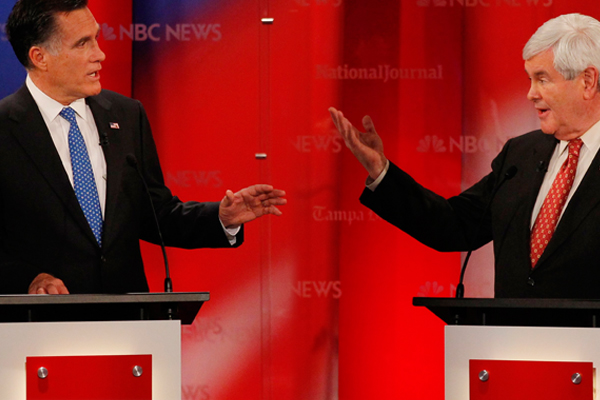
The subject hasn’t come up very much in the debates, and Romney hasn’t volunteered much on his stance toward financial regulation, certainly not as much as Newt Gingrich, who gave a little-noticed speech pledging his fealty to Wall Street’s agenda, in detail, in 2006. We know that Romney opposes Dodd-Frank, as do all the other GOP candidates, so he’d roll back the only steps Congress has taken to heighten scrutiny of the financial industry. But that’s about it.
Still, he has offered up a significant clue in recent weeks. Just listen to his attacks on Newt Gingrich in South Carolina and Florida and you hear something chilling: a man who is either deceptive about the financial crisis of 2008, or is as deluded as a Tea Party fanatic about the origins of the crisis. That unsettling choice, combined with his record as a steely-eyed job-slasher at Bain Capital, means that he would most likely be a horror when it comes to preventing banks from treating the 99 percent like those little companies Bain used to squeeze.
I’m talking about Romney’s attack on the former House speaker for his well-compensated “consulting” for Freddie Mac, the government-sponsored enterprise that bought up mortgages from the big banks and fed the monster of the financial crisis. There you find not just the business-as-usual hypocrisy that has become a feature of this dreary campaign, but an implicit endorsement of a factually incorrect, widely repudiated theory of the origins of the financial crisis.
It’s hard to calculate, but there’s little doubt that the Freddie Mac attacks contributed significantly to Romney’s victory margin in Florida. His latest gimmick is a “reward” for Gingrich’s Freddie Mac contracts, which remain undisclosed. The point being not so much that Gingrich got paid a lot of money — something that Romney can hardly dispute — but that he was paid by a government-sponsored entity that, by his telling, is primarily responsible for the financial crisis. That’s the key. In his stump speeches in Florida he has said that Gingrich “made $1.6 million in his company, the very institution that helped stand behind the huge housing crisis here in Florida.”
Here is how Romney spun that yarn at a debate on Nov. 9: “The reason we have the housing crises we have is that the federal government played too heavy a role in our markets,” he said to applause. “The federal government came in with Fannie Mae and Freddie Mac, and Barney Frank and Chris Dodd told banks they had to give loans to people who couldn’t afford to pay them back.”
I’ve heard that same line of malarkey a bunch of times, mainly from Tea Party people and Ayn Rand devotees: that the government, through the Community Reinvestment Act and Fannie Mae and Freddie Mac, was directly and primarily responsible for the financial crisis. Not out-of-control banks. Indeed, note his language. The banks were told to loan money to people who can’t afford it.
Embracing this mythology of the right, Romney has rewritten the history of the crisis as a fairy tale in which the banks were mere pawns in the service of the real villain: the government. It’s pure fiction. The contention that the CRA played a pivotal role has been refuted “up, down and sideways,” as Paul Krugman once put it. For one thing, most subprime lending was made by institutions not subject to the CRA. Commercial real estate lending, “which was mainly lending to rich white developers (not you-know-who) is in much worse shape than subprime home lending,” Krugman noted.
There’s little doubt that Fannie Mae and Freddie Mac contributed to the financial crisis. As Gretchen Morgenson has pointed out, they “amplified the housing boom by buying mortgages from lenders, allowing them to originate even more loans.” That was their job, to encourage home ownership. But as the Financial Crisis Inquiry Commission pointed out in its final report, “they were not a primary cause.” They participated in the risky subprime and Alt-A loans that were made by the banks only after they were made. The real abusers of the housing bubble were the mortgage lenders who dreamed up the super-complicated loans that they foisted on people who couldn’t afford them, and the Wall Street banks that packaged them into financial weapons of mass destruction.
Those “toxic waste” mortgage-backed derivatives ultimately exploded in the portfolios of American International Group, Merrill Lynch and other financial institutions. Poor judgment, greed, ridiculous compensation: All had nothing to do with Fannie and Freddie. Yet you never see them mentioned by the right, or by Romney.
As with the Community Reinvestment Act, Fannie and Freddie had no role in commercial real estate and obviously didn’t contribute to the global real estate mania, which rampaged out of control in countries like Germany and Greece. They certainly committed a long list of misdeeds of their own, of course. The top echelons of Freddie were recently the long-overdue subject of Securities and Exchange Commission charges a few weeks ago. On Monday, ProPublica and NPR revealed the shocking story of how Freddie Mac bet that U.S. homeowners would be stuck in high-interest loans, at the same time that Freddie was making it harder for them to escape from those loans.
There will probably be more stories like that in the months to come. But the myth that Fannie and Freddie were the prime movers behind the financial crisis — in league with congressional liberals like Barney Frank — is a crock, concocted by the right for ideological reasons, to perpetuate the myth that banks were over-regulated, not inadequately regulated.
This alternate version of the history of the financial crisis, which Romney is embracing, is, in other words, a lie, what one astute financial observer, Barry Ritholtz, has called “The Big Lie” of the era. “Some [of the people pushing this nonsense] stand to profit from the status quo,” Ritholtz writes. “Others are hired guns, doing the bidding of bosses on Wall Street.” And then we have Romney, who knows perfectly well that it’s a lie — he didn’t get to be a multimillionaire by subscribing to crackpot theories — but also knows he must pander to his party’s right wing if he hopes to win the White House. Either that or, more remotely, he believes the swill he has been pushing.
Whether dishonest or deluded, Romney is a worrisome potential guardian of the public’s interests against Wall Street abuses. Whatever the fate of his presidential aspirations, Mitt Romney has already accomplished a great deal for his cronies in the 1 percent, by further coarsening the national dialogue.
Continue Reading
Close