Gary Weiss

Ringmasters at the Corzine circus

Democrats and Republicans posture about financial misdeeds so that they don't actually have to do anything

  • more
    • All Share Services

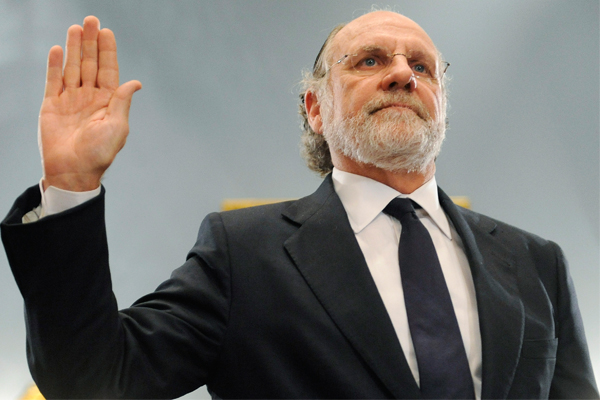
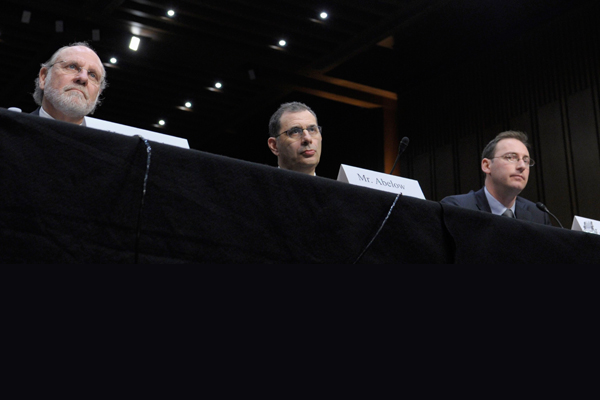
Ringmasters at the Corzine circusJon Corzine, circus act(Credit: Reuters/Jonathan Ernst)

The circus begins today at 1 o’clock.

I am, of course, referring to the congressional ritual known as the “no-cost inquisition.” Others will appear, but Jon Corzine is the star attraction. Sometime during the afternoon he will raise his right hand, swear to tell the truth, and then be subjected to impressive cross-examination by the House Financial Services Subcommittee on Oversight and Investigations in Washington. Corzine has been to several of these, so he knows he has a role to play.

His job will be to once again explain how MF Global became the Frankenstein of financial scandal, with elements of every financial scandal in recent years (without it being his fault in any kind of punishable way!). He will do his best to show humility, contrition and, above all, lack of scienter.  This and the other MF Global hearings are useful exercises, shedding light on a grotesque example of Wall Street run rampant. They are unarguable Good Things. They keep up the decibel level, raise public awareness, and are fine for journalists, prosecutors (for they lock the witnesses into their stories) and any actual regulators out there. It’s a fine thing for Congress to exercise its oversight function, until you consider that no legislation of any value ever seems to emerge from them, because Congress is simply too corrupt and ideologically paralyzed.

When it comes to making laws that protect the public from the financial services industry, Congress has done a progressively worse job since the Pecora Commission hearings of the early 1930s, which led to Congress taking bold steps to regulate banking and securities firms in 1933 and 1934. By the time of Enron in 2001-2002, Congress was hesitant and vacillating. In 2008-2009 it was feeble. Today, with Republican dominance meaning it does literally nothing — except, perhaps, weaken what has already been enacted that impedes Wall Street — it is a joke.

Unlike classic congressional hearings in the past, such as the Watergate or CIA/Contra hearings in the 1970s and 1980s, respectively, the primary purpose of congressional Wall Street hearings in recent years is to provide a cover for congressional inaction. It doesn’t matter who is in the hot seat, Alan Greenspan, Lehman Brothers’ Dick Fuld, or a parade of  Bernie Madoff-ignoring regulators. What these processions down the via Dolorosa conceal is that Congress simply isn’t going to do anything about whatever it is told, and that if it does anything, it will be ineffectual, or — as it was throughout the deregulation mania of the Clinton years — worse.

So on with the show! And quite a show it will be, for MF Global is a marvelous, multifaceted scandal, an assemblage of small pieces of just about every financial scandal over the past two decades. Somehow the firm “lost track” of $1.2 billion of client money (shades of Bernie Madoff?), made use of “repurchase agreements” (as in the Salomon Brothers bond trading scandal of the early 1990s) in a fashion that seems to have confounded its management team, board of directors and auditors (as in Enron and the early-aught scandals), perhaps because it was all so darned complicated (as in the Long-Term Capital Management collapse of the late 1990s). It was presided over by a CEO who seems to have been either deeply inattentive, deeply culpable, or simply brain dead (as in all of the above).

What won’t be said during the Corzine circus is that each of the above financial fiascoes resulted in congressional hearings and dramatic revelations. The contrast with the 1930s is that dramatic revelations did not lead to dramatic action. Enron and other scandals of that era led to Sarbanes-Oxley, which dealt with criminal fraud not by strengthening regulation of Corporate America but by imposing paperwork requirements. Meanwhile, George W. showed his devotion to securities regulation by appointing anti-regulation corporate lawyer Harvey Pitt to head the Securities and Exchange Commission.

Sarb-Ox was as big a joke as Pitt. Take its approach to ethics. Enron and similar scandals involved deeply unethical corporate executives. Sarb-Ox required public companies to make their ethics codes publicly available, and to grant “waivers” when its top officials wanted to do something unethical.  Therefore, unethical behavior (unless there was a waiver) became a kind of backhanded Sarb-Ox violation — or at least it would have been, had that provision of the law ever been enforced, which it never was.

The heart of the 2008 financial crisis was a coterie of reckless financial executives, working for too-big-to-fail financial companies, who were handsomely compensated for taking risks that almost ruined the economy when they failed. Congress could have tackled too-big-to-fail by reinstating Glass-Steagall, the 1932 law that separated commercial and investment banks, which was eroded during the 1990s and finally wiped out by the Gramm-Leach-Bliley Act of 1999.  Instead of undoing all the damage that it wrought on the financial system in 1999, Congress enacted a watered-down package of  reforms and created a Consumer Financial Protection Bureau, which it has since emasculated as Senate Republicans refuse to confirm a director. We’re seeing that battle being played out right now.

Effective legislation is unthinkable for hard-right Republicans, of course, but is problematic for Democrats and Republicans alike because it would jeopardize campaign dollars. According to OpenSecrets.org, which tracks such things, nearly $6.5 million has flowed into the 2012 campaign coffers of House Finance Committee members from finance, insurance and real estate PACs, plus another $3.4 million from individuals in those industries.

For Randy Neugebauer, the Texas Republican who chairs the investigations subcommittee,  the top sources of funding for his 2012 reelection campaign are from the insurance, banking, finance, securities and real estate industries. The congressman issued a huffy press release announcing the Corzine subpoena, which was a good thing. But one can reasonably expect that his anger, if any, is unlikely to result in any actual legislation discomfiting the financial services industry. Not if he wants to keep those campaign dollars coming in, or to prevent a skewering from the far right.

It’s a bipartisan circus. Ranking investigations subcommittee Democrat Michael E. Capuano also gets substantial backing from contributors in finance, though not proportionally as much as Neugebauer. But Capuano does not have the stage presence of New York Democrat Gary Ackerman, who I mentioned in my last piece on congressional double-dealing (which he didn’t like very much).

Ackerman won’t be at today’s hearing, which is a shame as he is famous for his performances at no-cost inquisitions, especially his scolding of SEC officials who failed to catch on to the Madoff scandal.  When the cameras are turned off, Ackerman does stuff like campaign against a key provision of Dodd-Frank, as I described in my last piece, or vote in favor of Gramm-Leach-Bliley.

That’s what makes the no-cost inquisition a thing of beauty. CEOs and regulators don’t care if they’re yelled at. The regulators will resume business as usual, the CEOs will cook up new schemes, and the campaign contributions will continue to flow, just as they did after Ackerman tongue-lashed regulators in 2009. In the 2009-2010 election cycle, his take from finance, industry and real estate interests (see the bar chart here) totaled $283,000, dwarfing every other industry sector financing his campaign. Ackerman’s biggest campaign contributors in the 2012 cycle are the good people at Bank of America, corporate parent of Merrill Lynch — thanks to Glass-Steagall repeal. Finance, insurance and real estate contributors are the biggest sources of  financing for Ackerman’s 2012 reelection campaign.

What could Congress actually do to prevent future MF Globals? I don’t need to subpoena anyone to come up with the solution, because it’s been evident for years: ditch the failed system of self-regulation that allows scandals like MF Global to take place time and time again. Reinstate Glass-Steagall. Ditch FINRA, the financial industry’s self-regulatory body. Put some backbone in the existing regulatory agencies, the Commodity Futures Trading Commission and the SEC, by boosting their funding, forcing them to stop “no fault” consent decrees, and replacing their industry-captured leadership. Better still, toss out the whole regulatory apparatus and start afresh, just as Congress did in 1933 and 1934, when it enacted a regulatory framework that didn’t previously exist.

None of that is going to happen when Congress prefers spectacle to substance.

Richard Cordray is no Elizabeth Warren

Obama's competent consumer watchdog isn't a pit bull and that's the problem

  • more
    • All Share Services

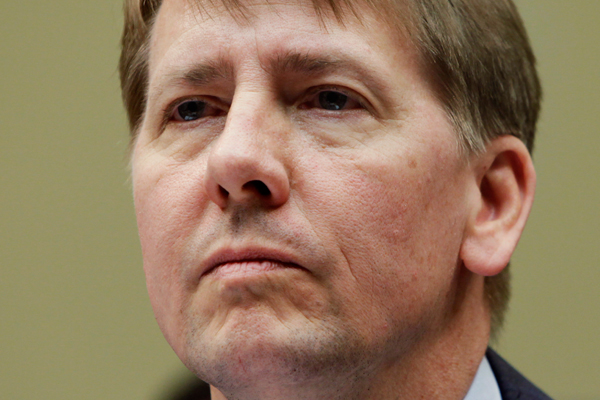
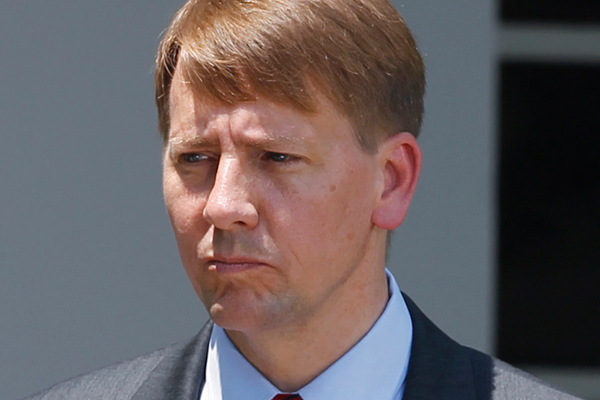
Richard Cordray is no Elizabeth WarrenRichard Cordray, nice guy(Credit: AP/Manuel Balce Ceneta)

So it seems that we have a president at last. Not the president who’s been on the defensive, seeking compromise with uncompromising congressional Republicans, but the one the American people elected. A president who is taking a firm stance on core issues like jobs and taxes. We have a populist president!

In President Obama’s speech in Kansas on Tuesday, he made a passionate reference to Richard Cordray, his nominee as director of the Consumer Financial Protection Bureau, now the center of a fierce battle in Congress. “Nobody claims he’s not qualified,” the president said. “But the Republicans in the Senate refuse to confirm him for the job; they refuse to let him do his job.” That’s true enough. But the Death Valley of financial regulation is not a good issue for the president, no matter how atrociously the Republicans have behaved, most recently by their obstructionism on Cordray. Wall Street regulation is a dreary picture, and there isn’t an ounce of populism to be found in it.

As we all know, the Obama administration hasn’t prosecuted anyone of significance on Wall Street for their role in the financial crisis. It’s too hard, you see. So instead we have a consolation prize in the form of Cordray, a kind of suer-in-chief standing in the wings, ready to slam writs into the clammy hands of bankers and financial service types, with press releases at the ready, and P.R. people on standby. The CFPB is the new agency set up by Dodd-Frank for tackling the kind of nitty-gritty consumer issues that have been pretty much abandoned by the federal bureaucracy, such as unfair mortgages, debt collection, credit cards, payday lenders and other potential sources of pernicious practices.

Cordray was nominated to this position, itself a watered-down affair subordinated to the Federal Reserve, because Republicans effectively vetoed the founder of the agency, Elizabeth Warren. But as with most conciliatory gestures Obama has made to the Republican right, the response amounted to, shove it. Cordray’s nomination is in trouble, and he has become the current cause of the moment for Democrats in Congress. Obama is pushing hard for his man, we are assured.

The Kansas speech made that reasonably clear. But somehow it doesn’t make me feel any better about Obama’s approach to the Street, no matter how it might discomfit the likes of hedge fund magnate Leon Cooperman, who thinks Obama’s “tone” should be sweeter. To me, the Cordray nomination is emblematic of precisely what’s wrong with the Obama approach to regulating the financial services industry. It’s not a question of tone, which is perfectly fine, but substance.

There’s no question that Cordray is well qualified for his present post as the CFPB’s enforcement director. With a few years of seasoning he could probably step into the top job without any problem. He is a competent suer of people who ought to be sued, meaning pretty much every major bank and American International Group, when he was attorney general of Ohio. He won some really nice settlements. Here, take a look at his record. (He was kind enough to put all his lawsuits on a sheet of paper while he was still Ohio’s A.G.) Billions of dollars! Why, if this was 1960, that would be a lot of money.

But a hard-driving line attorney is not what’s needed in a job like this. You see, there is a symbolism to Obama’s fight with Republicans over the Consumer Financial Protection Bureau, a difference not of tactics or politics but a deeply philosophical struggle that goes to the root of how this nation should be governed. At issue is not the future of the CFPB, but whether we should regulate finance at all, or simply let the banks, debt collectors, etc., do what they want and let “the market” step in to correct unfair practices. That, after all, is the aim of libertarian-leaning types like Rep. Darrell Issa, chairman of the House Oversight and Government Reform Committee, and über-libertarian Ron Paul, who increasingly set the tone for their party.

What made Elizabeth Warren a fine choice for the job were the very qualities that got her tossed under the bus by Obama. She actually became a better choice as the opposition to her mounted and she stood her ground. She was a “polarizing” figure when she appeared before Congress. Perhaps the ultimate accolade came from the phony populist Paul, who called her a “socialist.” She wouldn’t take any bull from the Wall Street shills arrayed before her like overstuffed turkeys in Capitol Hill hearing rooms. Somehow, that very positive quality became a bad thing. So a few days after her last appearance on the Hill in July, Obama picked Cordray instead of Warren, who stood loyally by as he nominated her deputy for the job she should have gotten.

Take a look at the picture of this very nice and able man, read the generally glowing press coverage of this folksy, youngish, John Edwards-ish legal warrior, and ask yourself: Does this man have enough enemies to take on a job like this? Has anyone called him a “socialist” lately? Honestly, if we must have a symbol — a sacrificial lamb, perhaps, given the serious chances of defeat — if we are to have a Scopes in our generation’s Monkey Trial, can’t we have someone more worthy? More of a lightning rod? Instead, we read that Cordray squired his cute twin daughters around the Capitol. What’s needed is a trench knife, and he brings along the kiddies. As if he was on trial or something, which I guess he is.

In place of iconic, we got folksy. True, as Ohio A.G. he competently sued banks and even took on the rating agencies — though he lost that battle. But think of the other choices Obama could have made, potential appointees even less acceptable to the Republicans than the twin-squiring, glad-handing Ohio suer. Think of a steamroller like Eliot Spitzer, whose personal peccadilloes concealed the fact that he was easily the best adversary to face Wall Street since Pecora. Can you see Cordray blackmailing Wall Street execs, forcing them to change their ways? No way. True, you wouldn’t see him consorting with prostitutes, either, but he’s up for a job that requires a street fighter, and a dirty one, not a clean-living family man.

Cordray could be a competent deputy to a maniacal genius like Rudy Giuliani, another fine choice if he were a few years younger and hadn’t morphed into a RWNJ. How we forget that before he became the overhyped “nation’s mayor” and presidential candidate, Giuliani was a kick-butt prosecutor who would stop at nothing to nail his target.

Neither Spitzer nor Giuliani were choirboys. They were mean, rotten SOBs. In other words, they were just what you’d want to take on rapacious credit-card overchargers and their ilk, because there was a streak of badness in these law enforcers. (Forget what you read about Eliot Ness — I’ll bet he was a wife-beater with an opium habit.) These momsas share with Elizabeth Warren the kind of bulldog tenacity that literally terrified everybody with whom they came into contact when they were in their respective positions.

I’m sorry, but Richard Cordray isn’t anything like that. He ought to be Fighting Rick Cordray, the Foul-Mouthed Scourge of the Plains, but he isn’t. Sure, Spitzer and probably even Giuliani wouldn’t stand a hornet’s chance in hell of getting confirmed. But it would have been a war cry, a “Currahee!” to rally the troops. After all, our man from Ohio stands an awfully good chance of not getting confirmed, twins notwithstanding. His primary virtue, aside from being the warm body Obama offered up to Congress, is that he is a cut above the lemons Obama has picked for economic and regulatory posts since 2009.

Cordray is not an appalling choice like Timothy Geithner, who was far too close to major bankers while he was New York Federal Reserve chief, and brought that same institutional fealty to the Treasury Department. He’s not anywhere near as horrid as Geithner’s former boss Larry Summers, who along with Bob Rubin was an architect of bank deregulation during the Clinton administration. He’s not a bad joke like Mary Schapiro, who was the overpaid CEO of the Financial Industry Regulatory Authority before being appointed to head the bureaucratic albatross known as the Securities and Exchange Commission.

I’m still pulling for Cordray, misgivings notwithstanding. He’s lame, but he’s all we’ve got. I hope that the process of getting past the congressional meat grinder is an ennobling experience for him. Maybe it will put some steel down his spine if he gets the job. Maybe he’ll leave the twins with the sitter next time and try some choke holds.

Meanwhile, I have three words for President Obama: think recess appointment. Then he can really call himself a populist.

Continue Reading Close

Why liberals aid the 1 percent

Two New York Congress members seek to help their constituents by watering down already weak Wall Street regulations

  • more
    • All Share Services

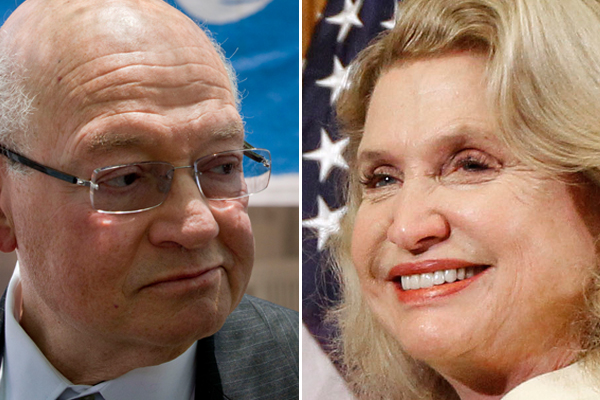
Why liberals aid the 1 percentGary Ackerman and Carolyn Maloney (Credit: AP)

Most people view Wall Street as less a geographical location than a kind of metaphor, like “the Beltway” and the “Rust Belt.” But it is an actual street, and the firms that surround it—and are spread across Manhattan—employ millions of fine, hardworking people.

I make that point by way of pleading for mercy for a really good person who has strayed. Her name is Carolyn B. Maloney, and she is a Democratic member of Congress from New York City and sits on the House Financial Services Committee. Do not hate this woman, even though she has joined in the effort to slice away at the ineffectual Dodd-Frank non-market-reform “market reform” legislation, by co-sponsoring a bill that is gutting transparency in the swaps market. She knows not what she does. Well, OK, she knows perfectly well what she does, but she can’t help herself. She’s represents New York, you see.

It’s really that simple. As I say, she’s a good person, has a fine record, as does much of the city’s congressional delegation, but there’s something about representing a New York constituency that does something to one’s judgment when it comes to Wall Street.  She is no shill for the banks. Maloney was among the toughest advocates of credit card reform legislation, and her Credit Card Bill of Rights, which she proposed in 2008, was something that would be unheard of today—progressive, pro-consumer legislation that was actually passed into law.

Then why, oh why, is she co-sponsoring a bill that would turn back the clock on swap contracts? Abusive swaps were the financial weapons of mass destruction that caused such misery in the run-up to the 2008 financial crisis. I say “abusive” because swaps are like radium—beneficial when not abused, but horrid in the hands of the wrong people, such as the executives of American International Group, which used them to wager on the housing market so ineptly that it required an $85 billion bailout from us taxpayers.

One of the many problems with swaps is that they have jet-age implications, but are traded the way cavemen used to trade arrowheads for bear carcasses—mano a mano, or “over-the-counter” as such trading is called. Except that unlike OTC stocks and bonds, there is no mechanism for the reporting of their prices. This is known as “opacity,” and it is universally decried as a bad thing. It also means that there are no safeguards in the event one party defaulted.

Dodd-Frank tried to tackle this problem by requiring that swap contracts be traded in the open, via “swap execution facilities,” with their prices publicly disclosed. Bring trading of swaps out into the open, the thinking went, and abuses would be prevented. Metaphorically speaking, there would only be good radium, medical isotopes and not nuclear fuel.

The Street, however, never tolerates any impingement on its freedom to do anything, and that includes trading swaps in the back alleys like real men. So now we have the Swap Execution Facility Clarification Act, which sailed through the House Financial Services Committee on Wednesday. It would prevent regulators from requiring that these swap execution facilities have a “minimum number of participants receive a bid or offer or respond to any trading system or platform functionality.” So just two could play, just as in the back-alley days of yore. And there would be no requirement to “display or delay bids or offers for any period of time.”

Translation: The prices would be secret, just as in the bad old days.

This marvelously senseless piece of legislation was sponsored by Scott Garrett, a New Jersey Republican, and Carolyn Maloney. Why Carolyn Maloney? Well, at least she’s reasonably honest about it. As Gretchen Morgensen pointed out in the New York Times over the weekend, Maloney “had heard concerns about the [Commodity Futures Trading Commission] rule from financial firms in her district,” and was “concerned about job losses on Wall Street.’

OK, the latter is legitimate enough. But the “rule” that she’s talking about was the CFTC simply taking charge of the swap market, which was precisely the point of Dodd-Frank. It was the absence of such oversight that resulted in misery for the entire nation—and job losses for the very financial firms in her Upper East Side district that have been carping to the congresswoman. We can never expect the financial services industry to favor sane regulation, and swaps dealers are very much like the banks that fought hard against Maloney’s credit card legislation. That is why we elect people like Carolyn Maloney, to stand up to people like that.

But let’s not tilt at windmills, shall we? The New York congressional delegation, progressive as it is in so many ways, reacts the way congressional delegations do when confronted with power constituencies. Maloney’s campaign coffers are not exactly overflowing with banker cash, by the way. Cantor Fitzgerald, which deals in swaps as in many other financial products, is among her biggest campaign contributors. I personally doubt that the $10,000 that it donated to her 2012 reelection campaign was much of a factor in her deciding to sign on to this weakening of Dodd-Frank.

No, it’s not payola but the kind of ingrained constituent loyalty that made Maloney’s colleague, Queens Rep. Gary Ackerman, go to bat for the banks in 2010, opposing a proposal to force banks to spin off their derivatives subsidiaries. This is the same Gary Ackerman who browbeat regulators when they crawled up to Capitol Hill to discuss their Bernie Madoff failings in February 2009.

It’s how the 1 percent stays that way. It’s not just the ideologically rigid Republicans that we read about every day, but the active participation of liberal Democrats who know what side of their bread the butter can be found. Joining Ackerman in his letter was Michael E. McMahon, another New York City Democrat, and I guess that’s where you might find the moral of the story. Which is: Bad as the New York Dems may be when it comes to the Street, there is always a worse alternative waiting in the wings.

McMahon’s subservience to Wall Street was insufficient to keep him in office. In 2010 he was defeated by the aptly named Michael Grimm, a conservative Republican who co-sponsored yet another effort to weaken Dodd-Frank. It exempts “end users”—companies that use swap contracts for hedging—from the law’s margin (that is, leverage) provisions. It sailed through the Financial Services Committee on Wednesday, alongside Maloney’s bill.

Grimm says the legislation frees up “capital to be used for job creation and to help our companies remain competitive in the global economy.” It might also serve to free up capital to fund his 2012 reelection campaign. During his brief career in Congress, McMahon’s two top contributors were JPMorgan Chase and Goldman Sachs. Grimm didn’t do nearly as well. Securities firms were the third-biggest source of funding when he ran for the seat in 2010, but he’s working hard to even the score.

Carolyn Maloney is no Mike McMahon. She’s more of a fire-breather, more of an Ackerman. But she’s also a New Yorker. So she’ll fight for consumer rights and, if it’s not too high-profile, she’ll go to bat for Wall Street. She won’t lose her job for doing that. The alternative, as she knows perfectly well, can be awfully Grimm.

Continue Reading Close

The myth of Barney Frank

The retiring Democrat is a swell guy, but a tough Wall Street regulator he was not

  • more
    • All Share Services

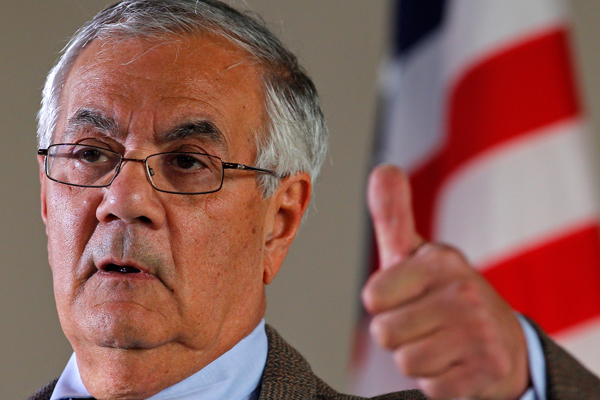
The myth of Barney FrankBarney Frank: Thumbs up or thumbs down? (Credit: Reuters/Adam Hunger)

I was sorry to see Barney Frank retire. He’s a good guy. He meant well. That’s what my mother used to say about a well-intentioned but ineffectual person, like maybe the butcher who threw in an extra piece of meat that wasn’t chewable.“He means well,” she’d say.

Or, like the nice kid who used to get beaten up by bullies, Frank was always unafraid to go on Fox News and mix it up with Bill O’Reilly. The right hated him, pushing the trope that “Fannie and Freddie” were the cause of the 2008 financial crisis, not the banks. Or the Community Reinvestment Act,  not the banks. Always the government, never the banks. The criticisms stung, even though baloney like the CRA yarn had been refuted “up, down and sideways,” as Paul Krugman once pointed out.

Barney Frank was the nice kid on the block who worked hard, producing the major legislation bearing his name that is now being sentimentally lauded upon his imminent passing from the scene. The Dodd-Frank law, which dominates today’s eulogies, surely meant well. If it didn’t, it would not be targeted by the Republican presidential candidates, notably the phony populist Ron Paul.

The Dodd–Frank Wall Street Reform and Consumer Protection Act was the only legislative reaction to the 2008 financial crisis. It’s understandable in a time of legislative gridlock that we would look back with nostalgia on any positive accomplishment by Congress, anything that would not turn back the clock, no matter how weak. And make no mistake about it: Dodd-Frank was, and is, weak.

It had many good features, to be sure. As I said, it meant well. But as market reform it was a flop, for the simple reason that it was not intended to be market reform. It was, instead, a political reaction to the crisis that did not go far enough, and did not purport to do so.

Its primary weakness is that it was not a clear response to the actual causes of the financial crisis. As subsequently recounted by the Financial Crisis Inquiry Commission and every serious study of the crisis, what up-ended the economy was serial recklessness by major banks that simply could not be trusted to self-regulate. But Dodd-Frank did not reverse the tide of self-regulation, or even take back the goodies that Congress had piled on the banks over the years.

Probably the worst of these was the repeal in 1999 of the Glass-Steagall Act, which was enacted during the Depression and which separated commercial from investment banks. Repeal took place during the Clinton administration, and was heavily promoted by Alan Greenspan and Robert Rubin, the Goldman Sachs and, later, Citigroup executive, who was Clinton’s primary interlocutor with Wall Street.

The end of Glass-Steagall was the chief enabler of the financial crisis. It paved a way for monstrosities such as the behemoth that is now JPMorgan Chase. John Cassidy observed in the New Yorker that as the mergers continued between investment and commercial banks, “the remaining Wall Street firms, grappling with new competition in their traditional businesses, increased their borrowing and made riskier bets.”

Having gotten rid of Glass-Steagall before the crisis, it would have been logical to restore it afterward. Robert Reich noted while Dodd-Frank was crawling through Congress that “No public interest has been served by allowing the casino called investment banking to merge with the traditional intermediary function linking savers to borrowers. In fact, it’s caused nothing but trouble.” He was right. But Glass-Steagall was never reenacted.

Dodd-Frank also failed to address another root cause of the financial crisis, which was the rollback since Reagan of consumer protection rules and the weakening of banking and securities regulators. The too-big-to-fail banks like Merrill Lynch had loaded up on subprime securities, and the subprime crap came into existence because of mortgage lenders’ ability to hoodwink borrowers into taking on mortgages with terms so murky that the sellers did not always understand them.

The solution was a Consumer Financial Protection Bureau, which originally was to be a separate agency but was folded into the Federal Reserve, thereby coming under the aegis of Wall Street’s tool, Timothy Geithner. And then, of course, President Obama, who also means well but is loath to go to the mat with Congress, made the CFPB toothless by failing to push for Elizabeth Warren as its first chief.

As Dodd-Frank crept through Congress, it was steadily weakened. The Senate voted down a ban on a pernicious derivative, naked credit default swaps. An attack on “too big to fail” — explicit size limitations for financial institutions — was also kept out of Dodd-Frank, even though the humongous size of financial institutions made necessary the bailouts that Congress supposedly despised. There was no serious limit on executive compensation, even though lust for bonuses was also a direct cause of the recklessness that nearly sabotaged the economy. Instead of Glass-Steagall repeal, the Volcker Rule banning bank proprietary trading was enacted. But by the time it emerged from the rule-making mix-master, the rule was so complex as to be almost useless.

Frank knew perfectly well that Dodd-Frank was watered down because of interference from the GOP, and said so. You have to give him credit that he never viewed the legislation in the glowing terms currently being used to describe it.

Obviously, Frank can’t be faulted for the majority of the shortcomings of Dodd-Frank. No congressman, no matter how skilled a negotiator, could have made Dodd-Frank into the market reform mechanism that it was never destined to be. His departure means that a strong voice for regulation will soon be gone. But let’s not forget that the job of the Barney Franks in Congress today is not so much to accomplish anything, as to prevent the sparse achievements of the Obama years from being eroded.

And that’s the dilemma. Sure, it’s nice to pass low-key legislation that looks nice to the folks at home even if doesn’t accomplish very much. Window dressing may even get President Obama reelected. But it won’t provide health care to the uninsured, put people back to work — or prevent the markets from being plunged into another crisis.

Continue Reading Close

Ron Paul’s phony populism

The libertarian presidential candidate is a true friend of the 1 percent

  • more
    • All Share Services

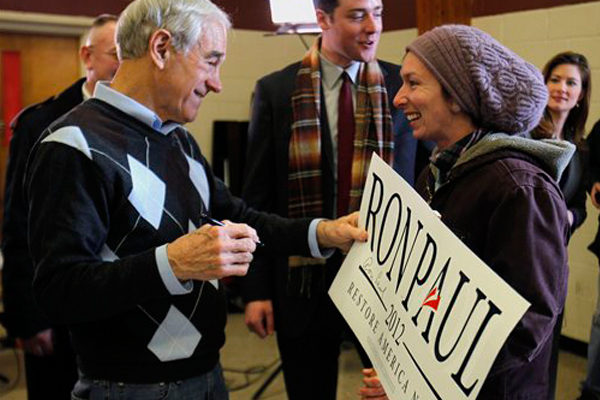
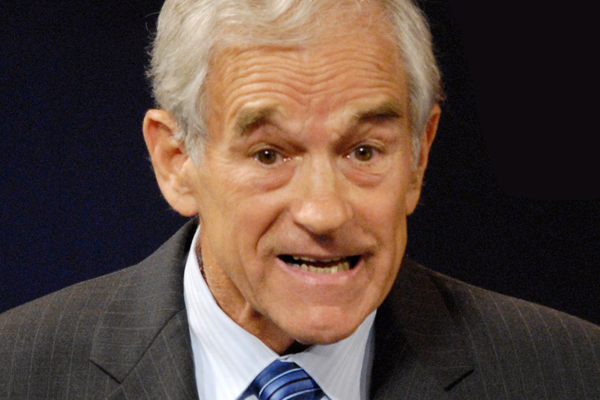
Ron Paul's phony populismRon Paul, phony populist (Credit: AP)

To me, the epiphany of the most dreadful presidential campaign in history took place in Keene, New Hampshire, last week, when a Ron Paul town meeting was interrupted by some Occupy Wall Street hecklers.

“Let me address that for a minute,” the Republican presidential candidate said, “because if you listen carefully, I’m very much involved with the 99. I’ve been condemning that 1 percent because they’ve been ripping us off –” He was interrupted again, this time by cheers, almost drowning him out.

After the usual chants of “We are the 99 percent” and “There are criminals on Wall Street who walk free,” Paul quickly took back the audience, not that he had ever lost it. “Do you feel better?” he asked, to laughter.

“We need to sort that out, but the people on Wall Street got the bailouts, and you guys got stuck with the bills, and I think that’s where the problem is.”

It was a masterful performance. Ron Paul — fraudulent populist, friend of the oligarchy, sworn enemy of every social program since Theodore Roosevelt — had won the day, again.

Why shouldn’t he? Frauds win, whether they are in finance or politics. Bernie Madoff proved that, and so did Ronald Reagan. The success of the Ron Paul campaign with young voters, which David Sirota pointed out in Salon Monday, is but the latest example of how Americans can be persuaded to support the most reactionary politicians in America when they’re suitably manipulated, even if they aren’t reactionary and, sometimes, even when they identify themselves as progressive.

There’s little doubt that aspects of his message are both appealing and sincere. There is a definite “yay factor” in some of his oratory, and his denunciations of Dick Cheney are the kind of thing that gets yays on “The Daily Show With Jon Stewart.”

Paul has been consistent in opposing the wars in Iraq and Afghanistan, and in opposing American military adventures in general. He has staked out a lonely position as the only presidential candidate to oppose aid to Israel (until Rick Perry more or less aped him on that), and his distinctly non-aggressive posture on Iran is indistinguishable from that of dovish Democrats like Dennis Kucinich.

So there’s no question that there’s a lot to like in Paul’s foreign policy positions, if you’re leaning to the left. The problem is that Paul is less of a 21st century dove than he is a throwback to the isolationism of the early to mid-20th century, in which fear of foreign entanglements was embraced by the hard right — with all that came with it. Paul emerges from that mold as about as far right as they come, further right than Ronald Reagan ever was, more of an enemy of the poor and middle class, and an even warmer friend of the ultra-wealthy. A Ron Paul America would make the Reagan Revolution look like the New Deal.

Paul’s own oratory tends to deemphasize his reactionary stance on social issues, or to sugarcoat it. But his program is now laid out in black-and-white. Last month, the Paul campaign set forth the details of what it grandiloquently called a “Plan to Restore America.”  It has received surprisingly little attention, given Paul’s surging popularity.

This is not a plan for the 99 percent. It is about as much of a 1 percent-oriented ideological meat cleaver as you can find anywhere in the annals of politics. Paul would take an ax to the federal budget, hacking off $1 trillion in the first year alone, ripping and cutting and deenacting and deregulating so as to ostensibly return America to “its former constitutionally limited, smaller-government and less-burdensome place.”

“Return” implies that America would be taken back to a starting place, though it’s not clear where that would be. What I do know is that there is definitely an undercurrent to his slash-and-burn philosophy, a strong whiff of Ayn Rand — the Russian-born philosopher-novelist, atheist and advocate of individuality, rational self-interest and selfishness. Paul is, in fact, the closest of all the GOP candidates to carrying out the anti-government policies Rand advocated.

To be sure, there are aspects of this budget plan that hardcore Randers would not like. It leaves in far too many nonessential government functions, such as allowing the continued existence of the Department of Health and Human Services. But, from the Randian perspective, Paul is definitely moving in the right direction. His “restore” plan embraces the kind of deprivation that Rand’s Objectivist philosophy would impose on America, and would enact a fundamental change in the role of government that the radical right cherishes.

After spelling out the good stuff from the leftist perspective — a 15 percent Defense Department spending cut ending all funding for the wars in Iraq and Afghanistan — the hard charge backward commences:

  • No more aid to education. Goodbye, Department of Education.
  • No more government-subsidized housing. Goodbye, Department of Housing and Urban Development.
  • No more energy programs. Goodbye, Department of Energy.
  • No more programs to promote commerce and technology. Goodbye, Department of Commerce.
  • *No more national parks. Goodbye, Department of the Interior.

His opposition to the very existence of the Federal Reserve — he wrote a book titled “End the Fed” — is straight out of Rand, as is his promotion of the gold standard.

Paul would not reform the abysmally flawed and underfunded Securities and Exchange Commission, he would eliminate it. The only agency of the federal government that stands between the public and greedy bankers and crooked corporations would be gone. He is philosophically opposed to it, as he is to Sarbanes-Oxley and Dodd-Frank, the reform measures enacted after Enron and the 2008 financial crisis, respectively. His Reformed America would no longer discomfit Wall Street with the latter’s restrictions on banks or annoy corporate executives with Sarb-Ox’s ethics and fair-disclosure rules.

And this is but the beginning of the shower of blessings that would rain down upon the very richest Americans. He would end the income tax, thereby making the United States the ultimate onshore tax haven. The message to both the Street and corporate America would be a kind of hyper-Reaganesque “Go to town, guys.” With income, estate and gift taxes eliminated and the top corporate tax rate lowered to 15 percent (and not a word about cutting corporate tax loopholes), a kind of perma-plutonomy would come to exist in the land — to the extent that there isn’t one already.

The guts of Paul’s grand scheme, where its rubber hits the road, is in the all-important theme of cutting programs that benefit the poor and middle class. Despite all its window-dressing and spin, the heart of every libertarian plan for this country is a kind of mammoth subtraction: making deep cuts in programs benefiting millions of Americans, out of a belief that such programs are morally wrong. Restoring America is a moral statement, an enshrinement of the Randian belief that aid to one facet of the population (the poor) is really “looting” of resources from other facets of the population (the wealthy).

So when you see in this plan a $645 billion cut in Medicaid over four years, what you are seeing is an expression of the philosophy that Medicaid itself is wrong, that it should not exist because it is not the function of society to provide healthcare for the poor. If they get sick, tough. While Paul does not go the full Randian route by entirely eliminating this program, he goes a long way to establish the principle that as a general proposition, as a moral question, we simply should not have this program.

Ayn Rand believed that there is no such thing as a “public,” and that the public was a collection of individuals, each having no obligation to the other.  So when you read through this budget, and see the deep cuts in food stamps and child nutrition, what you are seeing is an expression of a philosophy that is at odds with the Judeo-Christian system of morality embraced by most Americans.

That, fundamentally, is what the deficit debate is all about, from the perspective of Ron Paul and the radical right. It’s not about getting the red ink out of the government but using the government’s fiscal travails as a pretext to change the very purpose of government. So yes, he opposed the Wall Street bailouts, as Rand no doubt would have, and that also is “yay”-worthy to many people. But if you buy that, if you buy Ron Paul, you have to buy the rest of his belief system: his opposition to securities regulation, his opposition to consumer protection, his belief that the markets can defend Americans from the depredations of big business.

What I’ve just described is many things, but it is the very antithesis of the values of Occupy Wall Street, which is based on opposition to the prerogatives of the top 1 percent at the expense of the 99 percent. Yet rather than forthrightly oppose OWS, which would at least be intellectually honest, Paul has sought instead to co-opt it, con it, calling it a “healthy movement” at one appearance, and seeking to link it with his “end the Fed” agenda. In Keene he went one step further by declaring himself as being in league with the 99 percent and against the 1 percent.

That’s about as far from the truth as it possibly could be. The only question is, how long is Paul going to be allowed to get away with his faux-populist con job? I agree with his backers in this sense: He is less of a fringe candidate than he is sometimes portrayed in the media. His positions are increasingly infecting mainstream Republican politics, and it’s scary.

No, strike that. His positions are scary only if you know what they actually are, and not how he spins them.

Continue Reading Close

The O’Murdoch factor

Rupert Murdoch's bid to take over the Wall Street Journal is a dramatic illustration of why public ownership is a disaster for newspapers.

  • more
    • All Share Services

The O'Murdoch factor

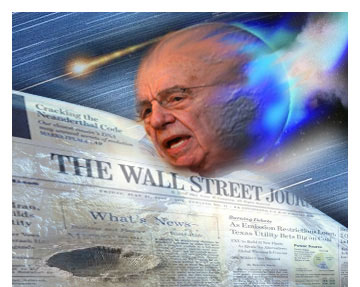
Imagine an asteroid plummeting toward Earth. You are an astrophysicist, so you have done the calculations. You know the trajectory and azimuth and mass of the thing, and you know that this speck in the sky will soon be turning all of humanity into carpet sweepings.

That describes the predicament facing the reporters and editors of Dow Jones & Co., publishers of the Wall Street Journal, as they watch asteroid Rupert Murdoch stream their way. The mogul is offering $5 billion to make Dow Jones part of his News Corp. media empire, sandwiched somewhere between the New York Post and “The O’Reilly Factor.” While the rest of the world struggles to make sense of that dark blotch in the sky, these unemotional business and financial reporters have it all figured out. They know what’s going to happen because they cover this kind of thing all the time — stodgy, family-owned, “mature” businesses about to be made more “efficient” and “lean,” all in the name of God, country and shareholder value.

They know that it is Dow Jones’ turn to be put on the Shareholder Value Slim-Fast diet. With 52 percent of the voting shares opposing the merger, that means that just 3 measly percentage points stand between Murdoch and his prize. The sheer power of his money is very likely to pull in the shares that he needs. And Wall Street expects the Dow Jones board of directors to fall in line. As CNBC’s Jim Cramer put it, “They are not on the board to protect the newsroom. They are on the board to assess whether Dow Jones can get to $60 on its own at some time in the future without the Murdoch bid.”

The reporters at Dow Jones know that you can forget about all the spin you see from the Murdoch camp — about how he will continue the Journal’s lofty journalistic traditions and how he beefed up the foreign bureaus of the Times of London when he took over that paper. If and when Murdoch gets Dow Jones he is going to make money on it, and that will require drastic cutbacks — entire “inefficient” divisions shuttered, employees thrown into the streets. Employee union negotiators, who had thought current management was hardheaded, are likely to look back on the pre-Murdoch days with nostalgia. “He’s paying 40 to 50 times earnings, and he is going to get a return on that. He is going to crank down on costs,” said one longtime Dow Jones journo who knows his way around a balance sheet.

And why not? Dow Jones opened the door to Murdoch — or anyone with sufficient bucks to buy the company — when it became a public company in 1963.

The Murdoch-Dow Jones face-off is only the most dramatic illustration of what has been obvious for a long time, which is that public ownership and newspapers do not mix. Investor interests can be balanced against the interests of journalism, and compromises in either direction can be rationalized, but at bottom it is an irreconcilable conflict in which journalism will always lose.

Public ownership has been a disaster for newspapers not just because it invites hostile takeovers. Quite simply, much of what newspapers do has no clear investment rationale. Entire segments of the business — such as foreign bureaus and investigative reporting — are inimical to profitability, particularly when viewed on the quarter-by-quarter basis favored by Wall Street. Cramer nailed down the shareholder value view of the newspaper biz a few weeks ago, when he said, “These are diminishing assets. They don’t need to exist. Younger people rarely read them.”

Cramer is not wrong or cynical; he is simply being realistic and refreshingly free of hypocrisy. Viewed from a shareholder value perspective, the newspaper business is a dinosaur. And that is why the shareholder point of view needs to be eliminated from the newspaper business. The shareholders, not the newspapers, are the ones who don’t need to exist.

A free press has a purpose in society. Shareholders, bless their hearts, deserve to make money without being screwed. But they should find another way of turning a profit. Columbia Journalism Review put the case against public ownership mildly in a recent editorial, saying, “Public ownership of newspapers no longer makes the kind of sense it made when the industry was rapidly shedding labor costs thanks to new technology, and when the money that stockholders poured in was invested partly in editorial.”

This is not to say newspapers don’t benefit from infusions of capital and fresh ownership at the top. The Hartford Courant is, in many respects, a better paper now than it was when I worked there in the 1970s, before it came under Times Mirror (now Tribune Co.) ownership. But the same cannot be said for the Norwich Bulletin, which was stripped of its distinctive local character after being bought by the Gannett chain, publisher of USA Today and other, less glorious properties. A newspaper that once presented dull but exhaustive coverage of local news has been homogenized, stripped of individuality and turned into a wire-service-dominated McPaper.

While it’s true that today’s Courant is always in the running for top awards, it has lost much of its down-home spirit. When I began working there, in a long-disbanded bureau next to a riverfront bar in a smelly section of Groton, Conn., I produced three to four daily articles of local interest to the Courant’s readers in nearby New London — all 650 or so subscribers. That would have been an insane waste of shareholder resources for a public company. But the Courant didn’t worry about that. It was privately owned. Covering New London and other low-readership towns was viewed by management as a duty for a statewide newspaper.

My competitor in New London was a feisty little paper called the Day. It is still one of the best small newspapers in the country because it has not been gobbled up by a chain, and it has not been gobbled up by a chain because it is owned by people who don’t have to answer to shareholders. It is owned by a public trust established by the man who ran the paper from 1891 until his death in 1938, an immigrant from Düsseldorf, Germany, named Theodore Bodenwein. Bodenwein was no Joseph Pulitzer. “He emphatically opposed muckraking, which he felt was unnecessary and out of character for a small New England city,” observed Gregory Stone in his book, “The Day Paper,” about the independent newspaper. But the ownership structure Bodenwein created means that New London will always have a competent, non-chain-owned newspaper devoted to covering southeastern Connecticut.

So while the Courant folded its New London-Groton bureau, and the Norwich Bulletin was Gannett-ized, the Day, heedless of profit motives, has continued to do a great job as a useless, doesn’t-need-to-exist newspaper.

The Day used to be the rule, not the exception. Newspapers were operated by public-spirited families like the Bodenweins and the Sulzbergers and the Bancroft clan that owns most Dow Jones shares. The latter, unlike the Sulzbergers, had no role in the operation of the paper — a hands-off attitude that Dow Jonesers will, I am sure, miss greatly once they enter the Murdoch era. With a few isolated exceptions, the families have long since sold out and their successors have surrendered to the number crunchers, because numbers are all that matter to a public company.

Take a look at the Los Angeles Times, which cut its staff by almost 6 percent, or 150 persons, last month. Or the Chicago Tribune, which is cutting its staff by 3 percent, or 100 employees. But even drastic cuts like those are not enough to satisfy the Street, which views newspapers as being as obsolete as a dumpster full of IBM Selectrics. Last month, the Tribune Co. threw in the towel and sold out to real estate magnate Sam Zell. It’s a complex deal and far more modest than the king’s ransom Murdoch is offering.

Public companies are valued on the basis of the share price divided by earnings per share, the “price-earnings ratio.” Murdoch’s offer of $60 a share divided by its earnings per share equals a hair over 43. His bid (which could still go up a bit) is a loopy, sky-high sum that is a 65 percent premium over Dow’s recent share price. It’s obvious he wants the company bad. By comparison, Gannett, the famously “well-managed” corporate journalistic homogenizer, has a P/E of just 12.

The only reason Murdoch is in the game at all, the only reason he has a chance of forcing a hostile Bancroft family to sell the company, is that as a public company, Dow Jones’ chronic struggles with profitability are public property. Every public company is perpetually on the auction block. The Bancroft family tried to stave off the inevitable with a two-tier stock structure, but as they are learning, that cannot keep out a determined suitor. And with numbers like this, they may not want to.

It all comes down to values — not journalistic values, God forbid, but shareholder value. Corporate boards are supposed to worship at the altar. If a Murdoch or a Saudi prince or a hedge fund wants to buy a company, the highest bidder wins — unless there is a “shareholder value” excuse for him or her being passed over. And what the new owners do with a company afterward is nobody’s business but theirs. Remember that newspapers don’t need to exist from an investor standpoint. Remember too that this position may not seem all that terrible if it is your pension fund or 401K that is invested in a media stock.

My Dow Jones journo friend recognizes the inevitable: Newspapers, he says, are in a “contracting industry, and in a contracting industry you want a rat bastard who will restructure the costs.” That is likely to mean integrating the company’s far-flung operations with the rest of the News Corp. empire. Or it could mean “restructuring” in the traditional Rust Belt slash-and-burn sense of the word.

Already we’re getting hints of things to come from the Murdoch camp — such as his recent interview with the New York Times in which he expressed impatience with “long” articles in the Journal. What this means is that one of the last habitats of the Tyrannosaurus rex called “long-form journalism” is about to be covered with asphalt. Another concern is that the Journal’s conservative editorial page might spill over into the news columns, as many have feared. Murdoch’s comment some weeks ago that the CEO-friendly CNBC cable channel was actually hostile to business, unlike his planned Fox business channel, could be a harbinger of things to come.

If indeed Dow Jones descends into purgatory, don’t blame Murdoch. What you will be seeing is shareholder value in action, and you can bet that its bounties will continue to flow even if Dow Jones eludes his grasp. Newspapers will continue to linger on as wretched parodies of their former selves, their articles shortened, their skepticism toward business curtailed and their “unnecessary” areas of coverage terminated.

The only solution is to get rid of the shareholders. Newspaper owners need to buy back their shares — not to sell them to the local skyscraper tycoon, but to put them in trusts such as Bodenwein’s, or the Poynter Institute, which keeps the St. Petersburg Times independent, or the Harper’s Magazine Foundation, set up by members of the MacArthur family, which rescued the magazine from death in 1980.

There is, in other words, no solution, and what I have just described has approximately zero chance of happening. Nor is there much interest among today’s moguls in rescuing the newspaper industry, not as a money machine but as a public trust. George Soros is focused largely overseas, and his hedge fund pals are more interested in being seen at the Robin Hood Foundation gala with Gwyneth Paltrow than in saving a dying industry that might have some public value.

Today’s captains of industry have proved clueless, or worse, when blundering into journalism. Last year, the billionaire owner of the Dallas Mavericks, Mark Cuban, set up a Web site called “Sharesleuth” devoted to investigative reporting of crummy small companies. At first the move seemed terrific — a supposedly public-spirited billionaire backing a notoriously unprofitable form of journalism. But then it emerged that Cuban would be trading ahead of Sharesleuth’s stock picks, turning a potential boon for investors into a legal insider-trading vehicle. When critics finished retching, Cuban observed: “Our obligation is not to the reader, it is to the trading activities of our owners.” In that single, breathtakingly arrogant sentence, Cuban neatly summed up the credo that is likely to put Rupert Murdoch in charge of the world’s leading business and financial newspaper.

The only sliver of hope for Dow Jones would be a stiff-necked, principled stance by the Bancroft family. On Monday, two major shareholders, James H. Ottaway Jr. and his son Jay, put out tough statements ferociously opposing the merger. “As a citizen,” said Jay, “I would be afraid to live in a world where news is solely entertainment, and there is an agenda behind every story I read, watch or hear. There is plenty of evidence that Murdoch does not treat his news services as a public trust.”

If this were an old Warner Bros. newspaper movie, the Ottaways would pull off a triumph in the third act. But this is real life, and the Ottaways control just 5.2 percent of the voting shares. In a showdown between journalistic grit and cold, hard numbers, the numbers win every time.

Continue Reading Close

Page 3 of 4 in Gary Weiss