The indisputable idiocy of the Supreme Court’s decision in Citizens United — leading to a midterm tsunami of what we New Yorkers call “sewer money” — is featured on the front page of today’s Los Angeles Times. Reporter David Savage begins with the salient quotation from the majority opinion written by Justice Anthony Kennedy and then goes on to explain why that opinion is so grossly flawed:
“With the advent of the Internet, prompt disclosure of expenditures can provide shareholders and citizens with the information needed to hold corporations and elected officials accountable for their positions,” Justice Anthony M. Kennedy wrote in January. “This transparency enables the electorate to make informed decisions and give proper weight to different speakers and messages.”
But Kennedy and the high court majority were wrong. Because of loopholes in tax laws and a weak enforcement policy at the Federal Election Commission, corporations and wealthy donors have been able to spend huge sums on campaign ads, confident the public will not know who they are, election law experts say.
Former FEC Commissioner Karl Sandstrom calls the Kennedy opinion “naïve,” saying that it reflects “a very uninformed view of how disclosure works.” Then again, neither Kennedy nor his conservative colleagues attempted to inform themselves about the realities of donor disclosure before overturning the century-old restrictions on corporate cash. But was that truly naive, or cynically partisan?
As the Justices could have discovered quite easily, the IRS code allows nonprofit groups to register as “social welfare” organizations under Section 501 c (4) — and lets them support “independent” campaign advertising without disclosing the names of donors, so long as their “primary activity” is not political advocacy. That loophole was enlarged last August when the FEC ruled, in a divided opinion, that a donor who funds political advertising campaigns need not be disclosed unless the money was provided for a “particular advertisement.” In practice, as former Republican FEC commissioner Trevor Potter told Savage, that is an impossible standard that permits any donor to remain anonymous, no matter how much he, she or (in the case of a corporation) it gives.
What is naive is to imagine that we are all concerned with civic virtue and political transparency. Former FEC chairman Bradley Smith dispels any such illusion with a few breezy, characteristically misleading words:
“Voters do know who is funding the ads — every single one of them,” he said.
Smith said the U.S. Chamber of Commerce discloses its spending on election ads, as does Rove’s group, even if they do not specifically disclose their donors.
“Is there anybody who doesn’t know where the chamber is coming from?” he asked. “None of this troubles me in the least.”
And why would any of “this” trouble Smith, yet another Republican appointed to run a federal agency whose laws and rules he despised? The free flow of sewer money is what Republican lawyers like him have advocated for decades – ever since the Watergate scandal exposed their party’s easy access to suitcases of corporate cash.
The question is why Kennedy and the other four justices in the majority would pretend otherwise.
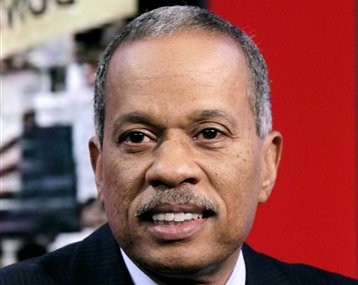
Is it plausible that the right-wing uproar over NPR’s firing of Juan Williams is motivated by concern for “free speech” – and not by longstanding conservative animus against public broadcasting? To anyone who has been paying attention to the behavior of politicians, pundits, and media agitators on the right for the past few decades, the latest upwelling of volcanic rhetoric is drearily familiar.
These same voices have reliably exploited every chance to damage public broadcasting, not because of any supposed liberal bias, but because they disdain the straightforward, probing journalism that the public network provides every day. What the NPR haters want to see and hear on America’s airwaves is the “fair and balanced mentality” of Fox News, Rush Limbaugh, and Michael Savage and nothing else. After all, they hate CNN, CBS, NBC, and ABC with almost equal passion, no matter how much those networks or NPR bend over to accomodate conservative viewpoints.
Now reasonable people can certainly dispute NPR’s decision to dismiss Williams over his remarks on Fox News about fearing Muslims. Reasonable people can question the way in which NPR management handled that decision. And reasonable people can wonder whether NPR news standards place too much emphasis on objectivity. Perhaps that obsession would fade if Republicans finally succeeded in withdrawing federal funds from the network.
But like any other news organization, NPR must be free to determine its own standards and practices, which Williams had clearly violated on more than one occasion. If the network’s management believes that his expressions of befuddled opinion have compromised his stature as a “news analyst,” that should be their prerogative – without partisan interference from Congress.
Of course it is also the prerogative of public radio critics to question that decision and demand that federal funding be reduced or withdrawn. But be assured that such demands have nothing to do with protecting Williams’ right to speak freely, which he will continue to exercise for top dollar on Fox News, in the same role he has long played as a tame “liberal” (the only kind that Roger Ailes will usually tolerate on his network). What the right dislikes about NPR, aside from its dogged effort to achieve ideological balance, is its devotion to actual reporting about real issues, from campaign finance and Congressional lobbying to the Supreme Court, the war in Afghanistan, and mine safety.
For me, the imperative is to protect one of the nation’s last, best sources of news against the partisan political abuse of a single controversial decision. Every day, NPR provides journalistic value worth far more than anything that Juan Williams will say or do if he lives for another hundred years – no, make that a thousand years. Both the network and its local affiliates provide news and information available on no other broadcast outlets. They provide that service as fairly and honestly as any news organization in America, giving copious airtime to politicians and commentators of many stripes, including those like Newt Gingrich who have sought repeatedly to destroy them. (Their coverage of the Wiliams firing is scrupulously fair and even self-critical — something that will never be seen on Fox.) Moreover, their local stations foster a sense of community that offends the selfish, paranoid sensibility of the far right.
Without NPR, we would soon be left with very little on the radio that doesn’t conform to the debased worldview of Rupert Murdoch, or that fails to make money for the likes of him.
The Williams affair happens to have occurred at a moment when many NPR stations are in the midst of seasonal fundraising. With that coincidence comes an unusual opportunity. I’ve been a regularly contributing member of my local NPR station for many years; but this week, I’m going to give a few dollars more. Everybody who prefers real reporting to propaganda parading as journalism can ante up, too.
Continue Reading
Close
Is there a vast corporate conspiracy behind the Tea Party and the midterm resurgence of the far right? The most suggestive evidence involves the well-documented role of the billionaire Koch brothers, their Americans for Prosperity front group and other Koch-funded entities – but now a secret letter from Charles Koch shows that the tentacles of the “Kochtopus” include a high-level “network” of corporate, lobbying, nonprofit, and media organizations that meet regularly to plot right-wing strategy. The letter and accompanying documents first appeared on Think Progress in a post by Lee Fang that is well worth reading in full.
Dated September 24, 2010 and signed by Koch himself on company stationery, the letter urges recipients to join “our network of business and philanthropic leaders, who are dedicated to defending our free society” – and specifically to attend the group’s next meeting at a Palm Springs resort in late January. Most revealing is an attached brochure about the network’s most recent meeting, which occurred in Aspen last June 27-28.
According to that document, the Palm Springs meeting attracted such corporate and financial titans as Stephen Schwartzman of the Blackstone Group, Philip Anschutz of Anschutz Industries, and Steve Bechtel of Bechtel Corp., as well as representatives of Bank of America, Allied Capital, Citadel Investment, among many others – all of whom gathered to learn how to “elect leaders who are more strongly committed to liberty and prosperity” with a “strategic plan to educate voters on the importance of economic freedom.”
Explaining the network’s plan for November and beyond were David Chavern, second in command at the US Chamber of Commerce; Tim Phillips, the president of Americans for Prosperity; Veronique de Rugy of the Mercatus Center at George Mason University; and Gretchen Hamel, the former Bush administration official who runs Public Notice, a group launched last spring under mysterious auspices to attack government spending.
But conservative journalists were the true stars of that June meeting, notably Washington Post columnist and Fox News pundit Charles Krauthammer (who spoke at a mountaintop dinner on “What’s Ahead for America?”), the National Review’s Ramesh Ponnuru, syndicated columnist and author Michael Barone, and Stephen Moore of the Wall Street Journal editorial board. Glenn Beck of Fox News – who has lately been defending the Chamber of Commerce as advocates of “the little guy” – is also listed as a “presenter.”
Nobody was supposed to talk about the meeting, as the brochure’s “Confidentiality and Security” section emphasizes, so nobody was meant to know that Krauthammer, Ponnuru, Barone, Moore and Beck were flown out to Aspen, lodged in luxury accommodations, and presumably paid a handsome honorarium by Koch to entertain and enlighten the would-be saviors of the Republic. But now we know. So where are the guardians of media integrity, who made so much noise about the innocuous jawing of the liberals on Journolist?
Still more troubling is the same brochure’s boast that Clarence Thomas and Antonin Scalia have addressed past meetings of the Koch network. Why would two Supreme Court justices show up at a secret conclave of far-right activists and corporate lobbyists, impairing the transparency and impartiality of the nation’s highest court? This is a much more important story than that harebrained harassing phone call by Virginia Thomas to Anita Hill.
Continue Reading
Close
Enjoying life tenure and political immunity as they do, the judges on the nation’s highest court are never held accountable for their transgressions in any meaningful way, except by history. Yet rarely if ever has a landmark opinion by a Supreme Court justice been proved wrong as quickly and as decisively — and with such fateful effects — as the historic decision penned by Justice Anthony Kennedy last January in Citizens United v. Federal Elections Commission. Wrong not only as a matter of ideology, partisanship, or constitutionality, although it is arguably all of those, but wrong in its most important assertions.
When Kennedy, along with his four conservative colleagues, overturned the century-old limitations on corporate funding of political campaigns, he justified this enormous gift to his fellow Republicans with what amounted to a false promise. Full and timely disclosure of the sources of the expected flood of corporate money, according to Kennedy, would serve the same essential purpose as the discarded restrictions, keeping voters informed by exposing politicians and their business benefactors.
“The Court has explained that disclosure is a less restrictive alternative to more comprehensive regulations of speech,” Kennedy wrote in a tone of condescension, citing earlier cases in which the Supreme Court had upheld federal disclosure requirements even while rejecting limits on expenditures and noting the disclosure requirements imposed on lobbyists. With the zeal of an internet huckster, he claimed that technology would dispel the aura of corruption and secrecy that inspired McCain-Feingold and earlier attempts to restrict corporate money.
If corporate shareholders objected to the political expenditures of a company’s management, wrote Kennedy, their protests “can be more effective today because modern technology makes disclosures rapid and informative.” In his mind, indeed, the mere existence of the Internet seems to excuse the shredding of all limits on corporate political activity:
A campaign finance system that pairs corporate independent expenditures with effective disclosure has not existed before today. It must be noted, furthermore, that many of Congress’ findings in passing [McCain-Feingold] were premised on a system without adequate disclosure … With the advent of the Internet, prompt disclosure of expenditures can provide shareholders and citizens with the information needed to hold corporations and elected officials accountable for their positions and supporters. Shareholders can determine whether their corporation’s political speech advances the corporation’s interest in making profits, and citizens can see whether elected officials are “in the pocket of so-called moneyed interests.” The First Amendment protects political speech; and disclosure permits citizens and shareholders to react to the speech of corporate entities in a proper way. This transparency enables the electorate to make informed decisions and give proper weight to different speakers and messages.
Nine months later, we know that there is no effective disclosure — and that rather than increasing, actual disclosure has fallen precipitously in this midterm election year. A recent study by Public Citizen, the nonpartisan organization founded by Ralph Nader, shows that effective disclosure of spending by “independent” groups has dropped from 98 percent in 2004 to 32 percent this year. Political malefactors like Karl Rove, who were unable to conceal the sources of the “Swift Boat” sewer money six years ago, feel so liberated by Citizens United that they are now collecting and spending tens of millions of dollars without bothering to register as a political committee, let alone disclose the names and interests of their fat-cat backers.
Perhaps Kennedy’s naiveté extended to the assumption that his fellow Republicans, especially in the U.S. Senate, would share the civic commitment to an informed electorate. Or perhaps he knew that once he and the other four conservatives on the court lifted restrictions on corporate political power, all the rhetoric about transparency would be discarded in a classic bait-and-switch. The Court’s insistence on delivering a broad constitutional decision without benefit of facts or investigation looks even worse today. But whatever Kennedy’s motives were, his own words now rebuke him and the conservative majority on the court — and vindicate the president who was excoriated last winter for criticizing them in the State of the Union address.
Continue Reading
Close
While Democrats must still expect to lose dozens of House seats and several Senate seats on November 2, the earlier trend toward a massive Republican landslide may have been arrested, according to the latest NPR Battleground Poll released Friday. Conducted jointly by Democratic pollster Greenberg Quinlan Rosner and Republican pollster Public Opinion Strategies, the NPR survey of voters in 96 most hotly contested districts indicates significant narrowing of the Republican lead since the public radio network’s last midterm survey in June.
Still warning of a likely shift in control of the House, the NPR polling team says that while the midterm is still “an ugly election” in the 86 Democratic-controlled districts that they surveyed, this election should no longer be considered a “death march” for Democrats. Their analysis highlights four important new developments:
First, in ten “battleground” House districts currently held by Republicans, the latest numbers suggest that the GOP will “lose a fair number” of those seats bedause their lead has been cut in half since June.
Second, in 58 House districts polled last June and this month, Democrats are gaining ground, with the Republican lead cut by more than half from eight points to three. Those advances are not enough to save the seats for the Democrats but suggest that the trend is now moving in their direction. If it keeps going that way, they may save some of those seats.
Third, independent voters have stopped moving toward the Republicans and reversed direction. Back in June, the Republicans held a 21-point lead among independents, which has shrunk since then to 13 points – still sizeable but not insurmountable if the numbers keep moving.
Finally, the NPR survey shows the Democrats winning the “message debate” in recent weeks, a development that the pollsters call “amazing” – and it is, considering how poorly the Democrats have fashioned their messaging in this election. In the June poll, Democrats “lost every message contest” by 12 points; now, the Democratic message is prevailing. If this is a “wave election” that will produce a Republican tsumami, voters ought to have tuned out the losing party by now.
As Democratic activist and analyst Simon Rosenberg noted today, a Democratic resurgence meme surfaced and then disappeared within a matter of days. But the NPR poll ratifies a growing strain of analysis suggesting that the Republican tide has crested — and that voter sentiment has begun to reverse direction.
Continue Reading
Close
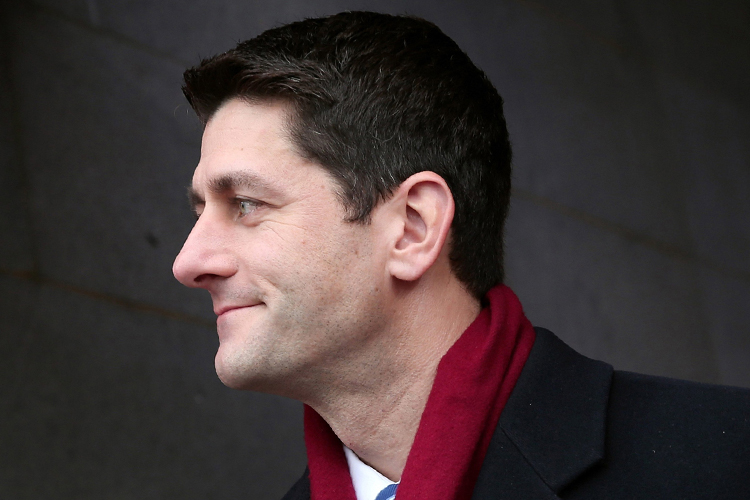
[Updated below] Can you guess which tax is bad, bad, bad when suggested by Democrats but perfectly acceptable when proposed by Republicans? Listening to Rand Paul and Paul Ryan, among others, the answer is a national sales tax or value-added tax, known in Europe as a VAT. While Republicans argue ferociously to preserve the Bush tax cuts for America’s wealthiest families, the notion of a new federal tax on goods and services — which would disproportionately penalize working consumers — is becoming fashionable among their party’s most prominent figures.
The Kentucky Republican Senate candidate made headlines yesterday when he proposed a national sales tax to replace the income tax, but Paul is scarcely alone in preferring a tax that falls most heavily on the middle class, workers and the poor. Rep. Ryan’s budget “roadmap,” released earlier this year to much fanfare in the conservative and mainstream media, relies on an 8.5 percent “business consumption” tax — yet another name for what Europeans call a VAT. From Arizona to Maine, Republican candidates seem increasingly eager to impose a national sales tax — and although they usually say this new tax would “replace” the income tax and abolish the IRS, such fantasies aren’t contemplated by Ryan, the ranking Republican on the House Budget Committee.
Regressive taxation is a perennial enthusiasm among conservatives. But whatever happened to “no new taxes” and the Taxpayer Protection Pledge popularized by Grover Norquist? Ryan and Paul are both among the signatories of the Norquist pledge, a document that forbids any “changes in tax deductions or credits that increase the tax burden on Americans,” as a national sales tax or VAT would inevitably do — especially if it doesn’t replace income and wage taxes. Evidently the Wisconsin Republican believed he could get away with sneaking a VAT into his budget plan (which is one of several reasons that the Ryan roadmap would increase the tax burden on most American families while lavishing new tax breaks on the wealthiest few).
This right-wing sales-tax vogue represents not only a departure from conservative orthodoxy but an embarrassing plunge into political hypocrisy. Soon after health care reform passed last spring, dire predictions of an “Obama sales tax” to pay for the program blared from the likes of the Republican National Committee, RedState and Norquist himself, who warned that any promises to replace the income tax should be considered worthless. The anti-tax crusader remarked disdainfully last summer that “VAT is French for big government,” while RNC Chairman Michael Steele denounced the idea as an example of the despised “European-style” policies favored by the president. (Of course, many conservatives simply adore European ideology as long as the authors are Austrian and ultra-right, but that’s another flavor of hypocrisy.)
Yet now at least some Republicans are promoting the same tax proposal they warned us against six months ago. So perhaps the section of the midterm Pledge to America that vows to “permanently stop all job-killing tax hikes” should carry an asterisk, at least for Paul, Ryan and all the other advocates of a sales levy (which would surely reduce employment in the retail sector). And perhaps that foreign stigma could be removed by renaming the VAT. From now on, let’s just call it “the Ryan tax.”
Update: Norquist says that while he opposes VAT in principle because they are tax hikes and make it too easy for government to raise revenue, he likes other aspects of Ryan’s roadmap. His group, Americans for Tax Reform, hasn’t focused on the Ryan bill because “it is not up for a vote right now” — although that didn’t stop him from campaigning against the Obama administration’s nonexistent VAT proposal. Norquist doesn’t believe that a VAT necessarily violates his group’s Taxpayer Protection Pledge, so long as the enabling legislation would repeal the federal income tax (unlike the Ryan bill, which merely makes the income tax more regressive).
Continue Reading
Close