Patrick Winn

Asia’s rampant cheating problem

Determined to get into U.S. colleges, more and more students turn to fake transcripts, essays and SAT scores

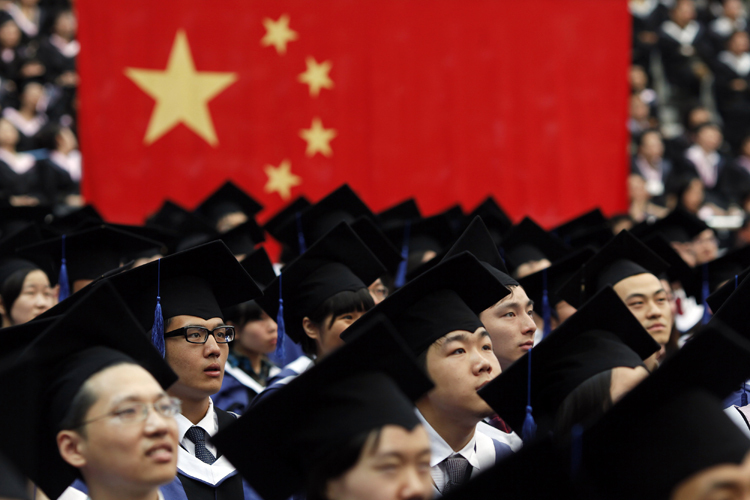
Students attend their college graduation ceremony in Shanghai's Fudan University July 2, 2011. (Credit: Carlos Barria / Reuters)
This article originally appeared on GlobalPost.

BANGKOK, Thailand — From sleep to social lives, there is little Asia’s most upwardly mobile students won’t sacrifice for education. Though they belong to the so-called “Asian Century,” American colleges remain the premier destination for the elite from Shanghai to Singapore to Seoul.

Global Post

The path to U.S. college acceptance, however, increasingly compels students to sacrifice their integrity. For the right price, unscrupulous college prep agencies offer ghostwritten essays in flawless English, fake awards, manipulated transcripts and even whiz kids for hire who’ll pose as the applicant for SAT exams.

“Oh my God, they can do everything for you,” said Nok, 17-year-old Thai senior in her final year at a private Bangkok high school. (She asked GlobalPost to alter her name for this article.) “They can take the SAT for you, no problem. Most students don’t really think it’s wrong.”

Among Asian high society, and particularly in China, parents’ obsession with sending their offspring to U.S. colleges has given rise to a lucrative trade of application brokers. Depending the degree of assistance, families can expect to pay between $5,000 and $15,000.

“The parent says, ‘My kid needs this GPA but, frankly, his scores aren’t that strong.’ Then the unscrupulous agent says ‘Don’t worry. We’ll figure that out,’” said Tom Melcher, chairman of Zinch China and author of a Chinese-language book on choosing American colleges.

A 250-student survey by Zinch China, a Beijing wing of the California-based Zinch education consultancy, suggests college application fraud among Chinese students is extremely pervasive. According to the survey, roughly 90 percent of recommendation letters to foreign colleges are faked, 70 percent of college essays are ghostwritten and 50 percent of high school transcripts are falsified.

“For the right price,” Melcher said, “the agent will either fabricate it or work with the school to get a different transcript issued.” Admission into a top 10 or top 30 school, as defined by the U.S. News & World Report, can bring a $3,000 to $10,000 bonus for the agent, he said. The magazine, Melcher said, is commonly confused in China for an official government publication.

Demand for such agents is high and getting higher. Rapid economic growth across China and other parts of Asia has sparked an explosion in foreign students hoping to secure their ascent with a Western diploma.

Chinese citizens currently account for more than one in five foreign students studying at U.S. colleges. Nearly 158,000 Chinese students are enrolled at any given time, a full 300 percent jump over mid-1990s numbers, according to the Institute of International Education.

Chinese, Indian and South Korean students comprise roughly half of America’s foreign college student population. Vietnam has sent 13 percent more students to the U.S. within the last year, and Malaysia has added 8 percent, the institute reports.

But many American college officials are oblivious to the application fix-it men these foreign students may have paid back home. Worse yet, remaining blind to the deception is often financially incentivized.

America’s economic downturn has drained the state tax coffers that provide a funding lifeline to many U.S. colleges. Many schools have resorted to unpopular tuition hikes. But many are also courting wealthy foreign students whose families gladly fork over money for housing and tuition along with out-of-state or even out-of-country fees.

“International students are seen as a source of revenue … and the trend has exploded in the past two years,” said Dale Gough, international education director for AACRAO, the American Association of Collegiate Registrars and Admissions Officers.

Foreign students, through tuition and living expenses, contribute $2.1 billion to the U.S. economy, according to the U.S. Commerce Department. “In short,” Gough said, “they help the bottom line.”

Excuses abound for ignoring fraudulent applications, Gough said. Some assume that kids who cheat will inevitably flame out anyway and never score a degree. Some admissions officers, he said, contend that “that’s just the way it’s done over there.”

Many schools also make sloppy attempts to translate foreign transcripts, calculated by an “indigenous” and unfamiliar methodology, into America’s GPA or “grade point average” system, Gough said.

His association publishes a guide to deciphering foreign scores, the only one of its kind, but fewer than 500 of the 3,500 institutions represented by AACRAO bother to buy a copy.

“Translating foreign grades into a GPA system is meaningless,” Gough said. “They attempt to do it anyway.”

Gough fears that universities’ lax standards, and focus on big foreign tuition payments, will eventually undermine the pedigree of an American diploma. The damage, he said, would be nearly impossible to undo.

“This scenario spells disaster,” Gough said. “Even if a lot of the students who cheat are bright, and they go on to succeed, is this fair to American students? Or [to] the foreign students who play by the rules?”

While America has ceded manufacturing power and foreign influence to China, an American degree remains the gold standard of educational prestige. Nok, who is currently applying for colleges abroad, never considered applying to universities in Asia.

“Students who study in America are elite, the privileged,” said Nok. “It shows you’re smarter than the others.”

But like most Asian students, Nok has felt baffled and overwhelmed by America’s complex application system.

“Here, you take a big test one day and report the score. That’s how you figure out where you’ll go to college,” she said. “The Americans are different. They want to know the big picture. All these essays. All this stuff about your life.”

America’s liberal arts application system is “fundamentally more confusing,” said Joshua Russo, director of Top Scholars, a college prep and tutoring agency in Bangkok.

Asian families unfamiliar with the process, he said, are justified in seeking an agency’s help with application strategies and tutoring to build the skills U.S. colleges demand. But Russo’s refrain to parents, he said, is that kids who can’t write their own essays are likely to burn out once enrolled in America.

“Some consultants will promise the world … and they’re fundamentally preparing students to fail,” Russo said. “Beyond fabricating an essay, they’re fabricating a whole life story. Students will start to believe in the lie. It’s wrong.”

The allure of America’s universities, and the pressure-cooker drive to succeed among Asia’s expanding upper class, will continue to propel Asian students into American schools. Many Chinese teenagers applying abroad, Melcher said, are the sort of highly motivated students colleges desire.

“Chinese kids are typically great,” Melcher said. “They’re not at the tailgate parties drinking. They’re busting their butts. Failure is not an option.”

But college application fraud will continue, he said, so long as the risks are low and the rewards are so high. His consultancy suggests interviewing all Chinese students via online video chats, conducting spot tests in English, and hiring a mainland Chinese staffer in the college’s home office.

“Frankly, I feel really bad for Chinese families who are trying to be honest,” he said. “They’re driving 55 while everyone’s zooming past them. After a while, they throw up their hands and say, ‘Fine, I’ll speed up.’”

Anxiety reigns after Kim Jong Il’s death

As North Koreans are told to rally around the leader's enigmatic son, other regional powers brace for the worst

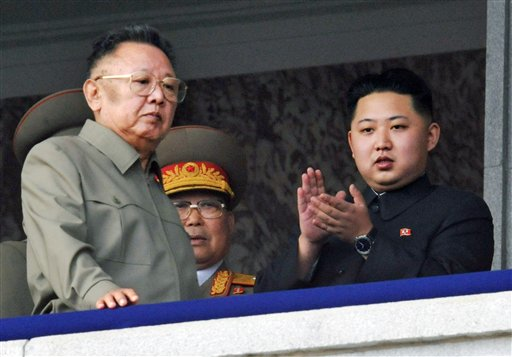
Kim Jong Un, right, along with his father and North Korea leader Kim Jong Il, left, attends during a massive military parade on Oct. 10, 2010
This article originally appeared on GlobalPost.

BANGKOK, Thailand — North Koreans lucky enough to own TVs learned of their nation’s biggest event in decades from a stout, sobbing anchorwoman in black robes.

Global Post“Our comrade, Kim Jong Il, the General Secretary of the Korean Workers Party, the Chairman of the National Defense Commission and the commander of the Korean People’s Army has died,” read the news presenter, her voice quivering with grief.

“We make this announcement with great sorrow.”

It has been received, however, with great uncertainty.

Even experts on North Korea concede that intelligence from the secretive, authoritarian state amounts to rumor and guesswork. Following an announcement that Jong Il suffered a fatal heart attack in a train carriage, North Korea’s unpredictability is driving its enemies to brace for the worst.

Inside North Korea, where Kim Jong Il lorded over 24 million citizens like an emperor, the communist government has urged the public to remain strong despite their grief.

In video posted by North Korea’s propaganda outlet, mourners are seen red-faced and wailing on the freezing pavement in the capital of Pyongyang. Uniformed men and little girls alike prostrated before Kim Jong Il’s image. Their anguished groans left puffs of steam in the frigid air.

North Koreans are now told to rally behind a baby-faced heir called the “righteous cloud” or the “young general,” a son of Kim Jong Il’s named Kim Jong Un.

Poised to take his father’s job, Kim Jong Un underscores North Korea’s elusive nature: No one knows his exact age, though estimates run between 27 and 30. Little is known about his background, though he is Swiss educated and believed to speak English.

The young general will soon help arrange a mighty sendoff for his father, described in an official state obituary as “a great revolutionary who covered an untrodden thorny path with his iron will and superhuman energy.”

But while Kim Jong Il’s tastes in booze, women and cuisine were outrageous to the extreme, and his ego was boundless, the government will likely throw a ceremony less grandiose than the 1994 funeral of his father, Kim Il Sung.

Il Sung, the country’s guerilla founder, installed the family dynasty and is still revered as semi-divine. After Kim Il Sung’s extravagant funeral, Kim Jong Il declared a three-year period of mourning and proclaimed Kim Il Sung the “Eternal President of the Republic.”

“That was essentially to show his filial piety, that he was a good Confucian son who would follow his father’s lead,” said Bradley K. Martin, a veteran journalist and author of “Under the Loving Care of the Fatherly Leader,” a book about the Kim dynasty.

However, Martin said, “we won’t see quite the same sort of production we saw for Kim Jong Il’s father’s funeral and sendoff.” Kim Jong Il, he said, was careful not to upstage his father and his successors will likely follow suit.

What we could see instead, judging by maneuvers in South Korea and Japan, is dangerous bluster from Kim Jong Un. With such a young, mysterious man poised to take the throne, North Korea’s regional foes are taking no chances.

South Korea has placed all troops and officials on “emergency response status,” according to the Seoul-based Yonhap News outlet, and raised its anti-North Korea surveillance system, Watchcon, to a stage indicating a “vital threat.” Japan’s military is urging “vigilance.”

Only China, North Korea’s core protector and benefactor, offered generous condolences. A Chinese foreign ministry spokesman told state media fellow communist Jong Il was a “comrade” and an “intimate friend of the Chinese people.”

Investors are already wagering on conflict between the bitterly estranged Koreas. Shares of South Korean military defense firms — Speco and Victek — shot up following the announcement while the overall South Korean market dropped sharply.

But North Korea’s recurring threat to turn Seoul into a “sea of fire” aside, Pyongyang has so far offered no sign that its leader’s death will shift its 1.2 million troops into attack mode.

Still, fears abound of two scenarios: Kim Jong Un plays the hero, whipping up a conflict to prove his valor, or Kim Jong Un is ousted in a destabilizing coup. The South Korean press has paid particular credence to a possible power struggle waged by Kim Jong Il’s brother-in-law, Jang Song Taek.

Such consternation has already made its way to Washington DC, where the conservative think-tank Heritage Foundation warns that: “To secure his hold on power, Kim Jong Un may instigate a crisis in order to generate a ‘rally around the flag effect.’”

Earlier this year, North Korea experts writing for the U.S.-based academic journal International Security offered an even more frightful warning: “A collapse of the North Korean government could have several dangerous implications for East Asia, including ‘loose nukes,’ a humanitarian disaster, a regional refugee crisis and potential escalation to war between China and the United States.”

Continue Reading Close

Terrorism at a Thai brothel

In Asia's bloodiest Islamist insurgency, jihadis target a lesser known breed of sex tourist

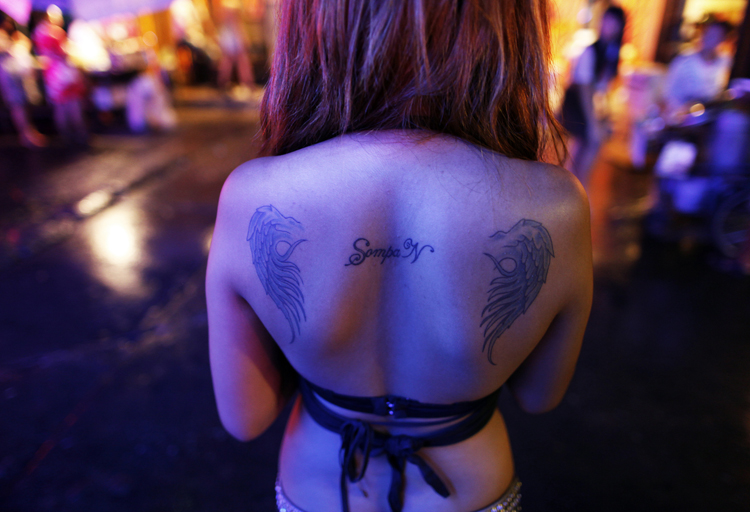
A Thai go-go dancers waits for customers at Bangkok's normally packed Soi Cowboy red-light area just before curfew May 25, 2010. Bar owners and go-go dancers say a night-time curfew in the Thai capital has badly affected their business, with tourist scared off and expatriate customers staying home. REUTERS/Damir Sagolj (THAILAND - Tags: POLITICS CIVIL UNREST TRAVEL BUSINESS)(Credit: Reuters)

BANGKOK, Thailand — There are no battlefield guarantees in Asia’s bloodiest Islamic insurgency, a jihad in Thailand’s tropical south that has ended nearly 5,000 lives.

But there are a few rules of thumb. In their self-proclaimed “holy war” to carve out the world’s newest Muslim state on the Thai-Malaysia border, jihadis consider soldiers, cops, Buddhist monks, government teachers and their Muslim collaborators as fair game. Backpackers partying just a short distance up the coast are left alone.

But less mercy is offered to a different sort of tourist: Malaysian men, many fellow Muslims, border-hopping into insurgents’ turf for paid sex. Now, after a bloody Sunday night bombing spree in their favored brothel town, Malaysia’s government is warning its men to stay away.

Shortly after sunset on Sept. 18, in the gritty Thai border town of Su-Ngai Golok, a series of explosions erupted on a busy lane lined with hotels, food stalls and karaoke joints.

Televised mobile-phone footage shows pyres raging in front of a bar fitted with Christmas lights, Thai code signaling the availability of cheap beer and hands-on female hostesses. A half-naked man, his clothes singed and shredded, is seen sprawled nearby in the street.

Five were killed in the bombings, four of them Malaysian. Roughly 110 were wounded, some severely. If Islamic insurgents aimed only for men on the prowl, they failed: A 3-year-old Malaysian boy was among the dead.

The attack is surprising, even for insurgents known for beheading Buddhist monks and torching village headmen in the street. Though Malaysian tourists have been targeted before, such strikes are rare and have never caused so many foreign deaths in one night.

Worse yet, the attacks signal jihadis’ heightened brazenness and stomp out any flickering promise of peace talks.

Just months ago, Thailand’s military acknowledged secret meetings with separatists, whose ultimate goal is restoring a Connecticut-sized sultanate called “Patani.” At the turn of the 20th century, Thailand (than called Siam) seized the tiny kingdom and claimed dominion over its Muslim, ethnically Malay inhabitants.

More than 100 years later, armed resistance to Thai rule has hit its stride. Since a 2004 declaration of renewed jihad, more than 4,700 have died and insurgents have evolved into Taliban-worthy bombers. In 2007, a particularly bloody year, jihadis in Thailand managed 91 bomb deaths — 13 more than that year’s bombing death toll against U.S. and allied troops in Afghanistan.

As a younger wave of Islamic militants grows more agile and lethal, they appear more distant from an old-guard of separatists willing to negotiate with the Thai military.

Quasi-secret peace talks, which seemed to offer a twinkle of hope just months ago, have collapsed. “It’s closed. It’s finished,” said Kasturi Mahkota, a senior member of the separatist group Patani United Liberation Organization.

“Now, at this point, there is no cease-fire agreement,” Kasturi said over the phone from Scandinavia, his home-in-exile. “We’re not going to surrender. We’re not going to give goodwill to them.”

But perhaps the separatists willing to negotiate have nothing to surrender in the first place.

Kasturi and other old-guard leaders have proclaimed an alliance with the insurgency’s backbone militia, BRN-C, and claimed joint responsibility for roughly 80 percent of attacks. In reality, he and his ilk are “pretenders to the cause” according to insurgency expert Zach Abuza in an Institute for National Security Studies report released this week.

They consist of “a few exiles in Malaysia and Europe who command no forces and do not have the loyalty of men on the ground,” according to the report.

The real killers abhor the thought of negotiation. They’re also more radical than ever, said Sunai Phasuk, a senior researcher for Human Rights Watch, who has documented the insurgency for more than a decade.

“It’s a liberation war,” he said. “They do not believe in coexistence with the Thai population. They aim to win the war by wiping Thailand clean of non-Malay Muslims.”

Muslims from Malaysia, who share customs and language with Malay-speaking natives in the insurgents’ territory, are seldom attacked in Thailand — unless they’re loitering around spots deemed decadent by jihadi hardliners.

“They feel an ideological justification to target vice: brothels, karaoke joints, nightclubs,” Sunai said. “They want to send a message that, as a Muslim, you shouldn’t get involved in dirty activities.”

Thai authorities, however, seem to hate acknowledging insurgents’ ideological motives. Police are apt to cast them as rudderless bandits and smugglers. Within hours of the Su-Ngai Golok attacks, a senior officer announced, with little proof, that the bombings were retaliation for cops seizing 100,000 meth pills earlier that week.

Dismissing the rebels as mere criminals diminishes an unpleasant thought for Buddhist Thai authorities: that an estimated 8,000 armed separatists believe Allah condones their killing. Calling them drug runners also strikes at the jihadis’ proclaimed piety; a Muslim can only boast of so much righteousness if his living comes from smuggling bundles of meth.

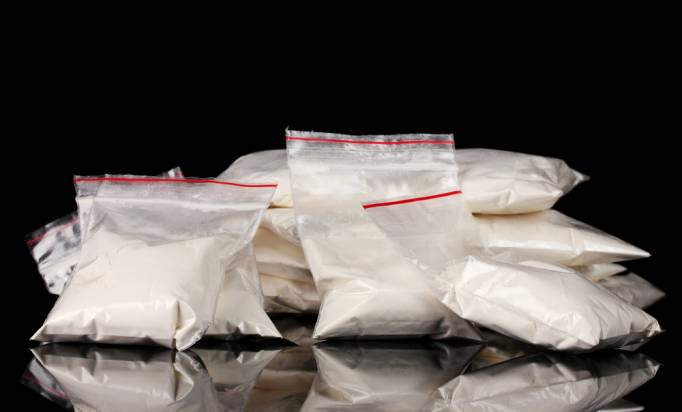
But just as the Taliban is believed to fund attacks with Afghani heroin, proclaiming its jihadi credentials all the while, many experts believe Thailand’s insurgency is similarly tied to the drug trade.

“Some are funded by underground business like contract killings, drug smuggling and human trafficking,” Sunai said. “That doesn’t mean they don’t also have political motives. They can be paid to attack by drug lords who are unhappy with law enforcement … killing two birds with one stone.”

With peace talks appearing futile, and jihadis growing more bold, hopes of settling Thailand’s insurgency appear bleak. In the estimation of Abuza, the terror expert, the rebels aren’t winning “but they are also not losing, which, in an insurgency, is often enough.”

Many of the remaining ethnic Thais, roughly 15 percent of the population, have stockpiled guns and assembled all-Buddhist militias. The rest have simply fled the region.

A turn in the road appeared several months ago when Prime Minister Yingluck Shinawatra, then on the campaign trail, traveled to the region in a red hijab and promised a semi-autonomous zone to give local Muslims greater political power.

But after her July election victory, the new premier’s cabinet dismissed her pledges as mere ideas. Prominent academics and non-separatist Muslim groups have pressured her to honor her campaign commitment. “I think it’s finished,” Kasturi said. “That was just for the election. Now they don’t dare talk about it.”

Given doubts that aging rebels in exile can reign in young militants, it’s unclear whether any action by the Thai state would soothe the insurgency. The new breed does not appear willing to sit down for tea with the Thai military or even issue public declarations. They prefer to speak through violence and the occasional handwritten threat scattered around their victims’ corpses.

“There will be no negotiation with our enemy. We will not accept any compromise. We will not debate in the parliament,” says one written screed acquired by Human Rights Watch.

“We will purge all Siamese infidels out of our territory to purify our religion and culture … we will establish our country as a Muslim country to be recognized internationally.”

Continue Reading Close

Vietnam War babies: Grown up and low on luck

An obscure U.S. visa program once offered great hope for children fathered in Vietnam by GIs

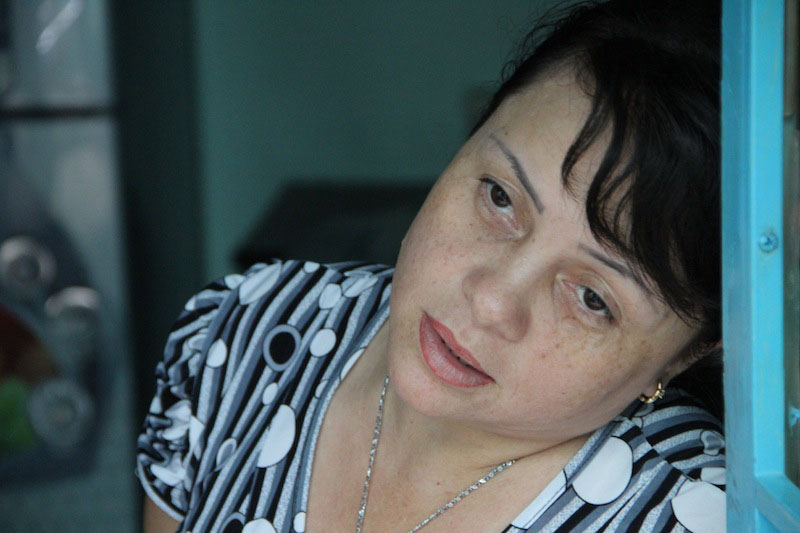
(Credit: Pailin Wedel)

HO CHI MINH CITY, Vietnam — Vo Van Dang is not Vietnamese.

That, at least, is his contention. Though he has never left Vietnam, speaks no English and lives in a Ho Chi Minh City slum house, where 20 people share an open-air toilet, Dang insists he is American through and through.

“I don’t belong here,” said Dang, born in 1971 during a brief love affair between a nightclub prostitute and a dark-skinned American GI. “I belong in America.”

If only he can prove it.


Dang is among tens of thousands of children fathered in Vietnam by U.S. troops during the 1965-1973 war. Most were born to absent fathers and mothers who risked Viet Cong wrath by working as housekeepers, vendors or bar girls around U.S. bases.

There was once great hope for men and women like Dang: an obscure U.S. visa for Vietnamese nationals fathered by GIs. But the allowance for “Vietnam AmerAsians,” a clunky State Department term for mixed-race children of the war, appears to be fizzling at last.

According to State Department data provided to GlobalPost, the number of approved AmerAsian visas has dwindled to an average of 240 per year in the last decade. Last year, the figure slipped to a new low: 23 admissions.

“My life has been miserable,” said Dang, who spent part of his childhood in a communist labor camp. “Life will still be hard after I move. But I have an American family and we belong in the states.”

The AmerAsian visa was created in 1987, when Congress relented to the outcry over urchins with American faces abandoned in the Vietnamese slums. No one knows exactly how many AmerAsians were born in Vietnam, but the U.S. has vetted and resettled nearly 30,000 children of U.S. troops and employees along with nearly 80,000 Vietnamese relatives.

Still, an estimated 1,000-plus AmerAsians remain in Vietnam. Most live in cramped tenements. They are often poorer than the average Vietnamese, their poverty entrenched by discrimination, their faces bearing the freckles and pastel eyes of men from the world’s most powerful nation yet none of the privileges.

The AmerAsian visa, however, is not dwindling for lack of applicants. Charities devoted to assisting the adult children of GIs insist there is a hundreds-deep backlog of applications. But U.S. consular officers have been hardened by scam artists who see an illiterate half-American as their family’s ticket to America.

Children of the enemy

Much has changed since Ho Chi Minh’s forces captured Saigon in 1975 and renamed it after their communist revolutionary hero. Having ditched purist Marxism in the 1980s, Vietnam’s communist rulers now embrace China-style capitalism. Ho Chi Minh City has the buzz of a nation on the make and a taste for iPhones and KFC.

But while the world has moved beyond the war, AmerAsians remain its bitter relic. The childhood torment exacted on half-American kids still defines them. Most remember being thrashed with sticks by kids or sneered at by adult neighbors who called them “children of the enemy.”

All can recall a signature insult: “Americans with 12 assholes.” The slur rhymes in Vietnamese.

“They loved to chant that at us,” said Nguyen Thi Phan, born in 1968 to a base security officer and the woman who washed his clothes. “The kids would say, ‘Your mom’s a whore. Your dad’s black. Why don’t you get the hell out of Vietnam?” Children of black GIs were doubly mistreated, she said.

“Even now, people look at me and say I’m dirty. It’s hard to get a job because they don’t want a dirty-looking person cleaning houses or dishes,” she said. “They say it’s bad for business.”

Like many AmerAsians, Phan insists she is not Vietnamese. In fact, each of the six Vietnamese children of former U.S. troops interviewed by GlobalPost described themselves as either American or AmerAsian. All bristled at being labelled Vietnamese.

“All my life, everyone told me I wasn’t Vietnamese. So fine,” Phan said. “I’m not.”

Doomed love

To the Vietnamese, AmerAsians are assumed to be the outcome of a paid fling between imperialist grunts and loose, traitorous women.

But according to AmerAsian mothers, many children were born from passionate couplings. The father of Cao Thi My Kieu was so smitten with her mom, a bar girl, that he swept her into a rented apartment and promised she’d never need to sell her body again.

“She was really pretty during the war,” said Kieu, born in 1967 outside a former U.S. air base in coastal Nha Trang. “And he was very kind. He took in her three kids from a previous guy. Americans are strange in that way. They will actually raise someone else’s kid.”

Such domestic arrangements were common, according to Robert McKelvey, a U.S. Marine Corps veteran turned psychiatrist who has studied AmerAsian orphans. “Many fell in love,” he wrote in a 1998 paper, “and lived as de facto spouses for months or years.”

These love affairs were doomed. By 1973, almost all U.S. troops had been deployed home.

And by 1975, South Vietnam had fallen and the Viet Cong emerged from the shadows.

Vietnamese who had fought, colluded or slept with the enemy braced for forced labor or death. Children like Dang, along with their mothers, were sent to communist labor camps to live off a meager vegetable plot and what jungle mice they could capture.

Another AmerAsian interviewed by GlobalPost claimed her pregnant mother escaped punishment by fleeing to the jungle, where she was born in the wild.

Hoarding photos or love letters from an American mate was a fatal liability. “My mom had all these details about my father,” Kieu said. “His U.S. address, letters, everything. She wanted to bury it in a hole before the Viet Cong showed up. My auntie said, ‘Are you stupid? If they find it, you’re dead.’”

So, like many other paranoid mothers of half-American babies, she burned the letters, Kieu said. The evidence she would later need to emigrate turned to cinders in the wind.

“My father’s name is James. James Alexander,” said Kieu, sitting on the floor of her $40-per-month rented shanty. Her husband, also AmerAsian, and three kids live in a single closet-sized room.

“My mom told me, ‘When you finally make it to America, look for a man with a birthmark on his face,’” said Kieu, her eyes running hot with tears. She paused to fumble through a closet and produced a faded U.S. consular rejection letter. In blue ink, a bureaucrat had written: “YOU HAVE FAILED TO ESTABLISH YOU ARE THE CHILD OF A U.S. CITIZEN.”

Though Kieu cannot read the words, she knows the meaning very well. “I am so disappointed in my life,” she said. “All I can do is try to make life bearable for my kids.”

Easy prey

In the late 1980s, Vietnamese opportunists realized the value of a good sob story and a half-American face.

The 1987 Congressional “Homecoming Act” led the U.S. to fund a nearly $500,000 Ho Chi Minh City residential center for AmerAsians, many of them homeless. Consular officers, flying in from U.S. ally Thailand, began offering them U.S. visas by the tens of thousands. Mixed-race features alone could secure free resettlement to the States.

The outcome was inevitable. Barefoot and broke, AmerAsians were easy prey for traffickers. Many kids were paid or coerced to apply with fake relatives, rich Vietnamese who wanted a new life in the U.S. In return, the con rings promised connections inside the consulate that would guarantee approval.

But by the mid-1990s, consular officers were tired of getting duped. They started investigating applicants closely and demanding harder evidence.

“My traffickers put me with a fake husband but let me list my real daughter,” said Phan Anh Nhung, 39, the daughter of a GI and a prostitute. “The consular officers figured it out. They asked my daughter, ‘Who’s your dad?’ She accidentally said her real father’s name instead of the fake guy.”

Another AmerAsian applicant, now a street noodle vendor, confessed that a trafficking syndicate offered her $1,000 to claim 12 bogus relatives.

“It didn’t work,” she said. “Neighbors ratted us out.”

Dashed hopes

Though the flow of AmerAsian visas is down to a trickle, it technically lives on. Only an act of Congress could end the program for good, said Rebecca Dodds with the Bureau of Consular Affairs in Washington D.C.

“With time, immigration through the program is decreasing, but we are not aware of any current legislation to discontinue the program,” Dodds said. Despite rumors to the contrary, she said, new applicants are still accepted.

Consular officers have no ironclad criteria expected of applicants. But these days, they typically request parents’ residential certificates or birth records. Many of these documents were never issued in wartime Vietnam or destroyed after reunification.

Most AmerAsians with proof that solid have long since emigrated to the U.S. The remaining AmerAsians’ best hope is finding their actual father via the internet and persuading him to compare DNA samples. Illiterate day laborers, however, are unlikely to access Google, punch in hazy details and sift through the results.

That chore is instead assumed by an unlikely AmerAsian ally: a working-class Danish furniture painter named Brian Hjort. Though lacking any personal connection to America’s war in Vietnam, he is obsessed with tracking down veterans who left kids behind.

Hjort, 40, has stayed in touch with AmerAsians since the early 1990s, when he stumbled upon war orphans while backpacking in Ho Chi Minh City. “Even though they had nothing, they took me in. I knew I had to help them out,” he said. Hjort went on to devote his spare time and money to connecting AmerAsians with their fathers. He has completed dozens of “closed cases,” he said.

“I’m just Googling and Facebooking guys’ names, units, veterans’ groups, uploading photos,” said Hjort, who maintains a database of AmerAsians’ photos and personal details at his website, FatherFounded.com. “Working on just one case leaves you brain dead. You’re trying to go 40 years back in time.”

Cases often go cold, he said, when he runs out of cash for DNA tests or father-finding expeditions in the United States. “You don’t have to be the Red Cross to help,” he said. “But I’m damn poor myself. I need help with this.”

Even when Hjort is lucky enough to locate a father online, men and their families are not always receptive to a European stranger with revelations about offspring in a far-off land.

“They can be pretty rude. Two times, guys tried to put me in court for harassment,” Hjort said. “I’m like, come on, do you want to do a DNA test? Who’s going to draw the gun first?”

Those who accept the truth often pay a heavy price.

Army veteran James Copeland, 65, kept his half-Vietnamese daughter’s existence secret until this year. “It had been a long and worrisome 40 years,” said Copeland, who lives in northern Mississippi.

When his 14-month deployment ended in 1970, he was forced to leave behind a pregnant Vietnamese girlfriend who worked as a housekeeper at Bien Hoa Air Base. “We just lost contact. The people I knew that were left over there, they rolled out and I had no way to get in touch.”

Through Hjort, he found his daughter living in Pennsylvania. With her mother, the housekeeper, she had relocated to the States after securing an AmerAsian visa in the 1990s.

“I felt like a big weight was taken off of me,” he said. His wife, however, felt the exact opposite sensation.

“It’s a bad situation at home. I still don’t know what the outcome will be with my wife and children,” said Copeland, his voice trembling. “All these years, I had tried to block out a segment of my life. But you can’t do that.”

“In a combat zone, you adjust to your surroundings or you don’t make it. I think we all made mistakes,” he said. “I have friends who think they might have left a child there too. But they don’t want to search. They don’t want to know. They just want to forget.”

Over the years, Hjort said, the AmerAsian cause has lost its allure.

AmerAsians are no longer the doe-eyed, pitiful kids that provoked Connecticut House Representative Stewart McKinney to label them America’s “national embarrassment” in the 1980s.

They are older, broken down and sometimes sick. So are may of the former GIs. “The U.S. did just enough to say, ‘Hey, we did something’ and left the others behind,” Hjort said. “Now they’ve got wars in Iraq and Afghanistan. There’s no money. Almost no one is interested.”

Almost no one except AmerAsians like Dang, who fears his father is dead and has pursued DNA links with far-flung relatives in America.

“My mom tells me she stopped dad from grabbing me as a baby and putting me on a plane before he deployed home,” Dang said. “I almost made it out then. I will never stop trying.”

Continue Reading Close