Help keep Salon independent

Like Tim Walz, we were also wrongly accused of abusing our special needs son

The internet is currently in an uproar over accusations that Vice Presidential nominee Tim Walz supposedly abused Gus, his neurodivergent teen son, while onstage and on camera as his family joined him after his acceptance speech at the Democratic National Convention. Based only on a brief moment of Walz tugging on his son’s hand, commentators declared Walz an abuser with a secret rage problem. This misreading was so misguided even Snopes.com, a website devoted to fact-checking rumors, issued an unequivocal statement: “Online users wrongly claimed a video showed Minnesota Gov. Tim Walz physically abusing his son, Gus, at the 2024 Democratic National Convention.”  

I sat up in recognition when Gov. Walz was being accused of so-called anger and abuse when the opposite was true.

A similar uproar occurred in our family recently from a lighthearted Instagram post of Jason, my adult son with autism, saying – via pointing to letters on an alphabetic board – that he was so happy that we’d rented an Airbnb so he could attend one of my out-of-town book events. Jason’s autism-related behaviors are so severe — loud vocalizations all the way up to full-throated attacks, including on himself — we hadn’t dared try to travel by plane since he’d had a meltdown 10 years ago and found ourselves increasingly confined to home. 

But after decades of silence, Jason has learned to communicate by pointing to letters on a laminated piece of paper. He often gets so excited while communicating, that he tires out his communication partner (often, Dad) who provides support for his spelling arm so he can spell faster; this touch also gives Jason needed sensory input. As he grew more adept at communicating, his behaviors improved to the point that since the Concord Book Festival could be reached by car, it was doable. Even better, Jason had expressed a desire to visit where his parents grew up, and Concord is Dad’s hometown, so the event offered us an opportunity to visit his childhood house. Of course, even this quick trip was not without incident — Jason ended up too agitated to actually attend the author breakfast — but that’s the nature of his disorder. On the outside, he still looks very autistic with his stims (repetitive self-stimulatory behaviors), even frightening when he does things like lunge at us when upset. Or sometimes, when he’s not upset — it’s a behavior.

“I hope we can do more trips together,” he spelled in the Instagram post.

For the record, we are not practicing the technique known as “facilitated communication,” which has caused some controversy. Jason’s pointing to a letterboard fits broadly with the Rapid Prompting Method invented by Soma Mukhopadhyay, who has worked directly with Jason in the past. I have also received parent training in that method. Jason sometimes uses an augmentative and alternative communication or AAC device, but it is not his preferred way of communicating — as he can now tell us via the letterboard. These are Jason’s words: “I can write on my own. It is is me writing, although I sometimes like getting input on my arm to help it get oriented In space. I do not appreciate having my intelligence called into question.”

It was unnerving to receive a flood of notices; the Instagram video was viewed hundred, thousands, then millions of times. From this slice-of-life posting, one of dozens from my book tour, came threats to call Child Protective Services, to have us arrested. 

Therefore, I sat up in recognition when Gov. Walz was being accused of so-called anger and abuse when the opposite was true: in his big moment under the camera lights, his first instinct was to make sure to guide his son, who reportedly has a visual/spatial learning disorder, around a teleprompter stand. 

The conservative commentators’ vitriol is oddly cloaked in a self-righteous insistence that they are exposing some deep dark secret of Tim Walz and therefore on a bizarre level, supposedly protecting children or the disabled. Of course this is part of an opposition political strategy (even though most standards of decency suggest not involving a candidate’s minor children) by a party that often disdain the disabled, such as when Trump mocked reporter Serge Kovaleski – who has from congenital arthrogryposis, which limits the movement of joints  but doesn't affect cognition – by flopping his arm around, while saying in a singsong voice, “'Uhh, I don't know what I said. Uhh, I don't remember.'" Or how conservatives perennially push to defund or undercut services for the disabled, such as when former mayor Rudy Giuliani tapped New York City’s Office for People with Disabilities, as a slush fund to cover unauthorized travel expenses.

He wants me to keep posting, but he does not want to read the comments any more.

My son is a private citizen, but the unusual and violent reaction to his autistic spelling shows similar confluences of eager internet sleuths ready to treat a seven-second clip as a Zapruder film. People have called us “evil,” “bad parents” (a given), “abusive,” “ignorant,” “exploitative,” “criminal.” A number have claimed they have already called CPS, even the FBI.  These are all people who’ve never met Jason, or us, and base their outrage on a few seconds of footage of Jason spelling out his thoughts while his father holds his letter board. Some declare we are faking the clip for attention and money. Others hear the satisfying “tok” noise of the reinforced paper and say we are abusively slamming his hand on the laminated piece of paper.  The paper is now reinforced with duct tape because of how decisively Jason taps his finger on it, and he enjoys the input both tactilely and aurally.

Even more insulting, these accusations of us as puppetmasters devalues Jason, presuming him to be, as he himself points out, “the mindless dummy.” No matter how many times I include in the post that Jason is 24 years old, shaves, (well, shaved by dad) and towers over Mom, these commenters fall prey to stereotypes about neurodivergent individuals and constantly mistake him for a young child.  For some reason, in popular culture, like the urban mystery of baby pigeons, there are no adults with autism.

More respectful strangers still insist we stop because the way Jason is communicating has been “proven” not to work. Trying to maintain a curious attitude, I often ask commenters to post links to these studies, but they never reply. In the end, I don’t know what they actually want. I appreciate the time if not the misplaced intention in their posting. However, a study “debunking” that nonspeaking autistic kids have the potential to communicate through spelling does not debunk my son’s words, and it should not be allowed to tarnish his incredible achievement just because commenters can’t believe that someone who looks so disabled on the outside is showing the world something it’s not used to: a person with various debilitating sensory issues, who shouts gibberish, flicks his fingers and won’t respond when you talk to him actually has a lively intelligent mind. 

Jason’s communication has introduced us to a loving, protective spirit, and when I show him the comments, he can see that outside of the bombastic abuse comments, there is a much larger silent contingent of people sharing and saving the video, suggesting  hope for other parents of noncommunicative kids, maybe inspiration of how life can radically change for the better when you least expect it. He wants me to keep posting, but he does not want to read the comments any more. 

No studies or Snopes.com posts or comments would stop us from communicating with our son, especially not to satisfy strangers on the internet. Similarly, I appreciate that the Walz family seems unbothered by the misinterpretation of Dad Walz’s protective action. They know what loving care looks like in their family — and millions of families, especially special needs families like ours, know it too. 

New COVID vaccines have arrived just as a vaccine equity program is ending

Last week, the Food and Drug Administration approved two COVID-19 vaccines earlier than expected due to record-breaking surges of the virus. Instead of releasing them in the fall, following the pattern of previous coronavirus vaccine roll outs, they are available as early as this week. However, for some people, time is already running out to get the updated shots.

For the nearly 27 million adults who do not have health insurance, the new coronavirus vaccines will only be available for free until August 31. That’s because the Center for Disease Control and Prevention’s Bridge Access Program, which provided free coronavirus vaccines to uninsured adults, will end. Over the last year, the program provided free vaccines for nearly 1.5 million people since it launched in September 2023. Without insurance, the vaccine can cost at least $115.

“Uninsured adults are going to have more difficulty accessing the vaccines this fall,” Dr. Kelly Moore, president and CEO of Immunize.org, a nonprofit organization that works to increase vaccination rates and is funded by the CDC, told Salon. “Budget cuts on the federal government side have eliminated that program, and the amount of money available to purchase the COVID vaccine and offer it to people who are uninsured is quite limited.” 

While the program was meant to be temporary, the original termination date for the program was slotted for December 2024. However, the fiscal 2024 government funding bill rescinded $4.3 billion in COVID-19 funding, some of which was being used for the program, as reported by The Hill in May. After August 31 of this year, local health departments might have a small amount of free vaccine available, but supply is expected to be limited for those without health insurance. While the Biden administration advocated for a more permanent solution in 2025, Congress hasn’t agreed to appropriate the funds. 

"The amount of money available to purchase the COVID vaccine and offer it to people who are uninsured is quite limited.” "

“We hoped that the Bridge Access Program would be a bridge to a more permanent solution, a safety net program that would ensure affordable access to recommended vaccines for uninsured adults,” Moore said. “But unfortunately, it's turned out to be a bridge to nowhere.”

The ending of the program comes at a time when public health officials will be tasked with the assignment of getting vaccines into more peoples’ arms. The optics of last year’s vaccine roll-out was chaos, and not as many people received the vaccines as health officials hoped. Only about 28% of Americans received updated shots last year, a decline from 69% when the first round of vaccines were released.

In a statement to Salon, a spokesperson for the CDC said the Department of Health and Human Services (HHS) has started a campaign called "Risk Less. Do More." to increase uptake of vaccines, including for COVID. The public health agency said it is also "providing additional resources to support access to COVID vaccines this fall and winter season to serve needs of the most vulnerable populations, including uninsured adults, farmworkers, tribal populations and others."

"Much of that support will be provided to the 64 state and local public health departments through their immunization programs," the agency said.

This year, the two new vaccines are updated versions of the mRNA vaccines produced by Moderna and Pfizer-BioNTech, They are specifically designed to vaccinate people against the KP.2 strain, which has been driving a large proportion of infections this summer. For the last several weeks, related but different strains KP.3 and KP.3.1.1 have been the ones most responsible for infections lately. The vaccines still offer cross-protection against these variants, but it's another indicator that this virus will always be changing, evolving new ways of evading our immunity.


Want more health and science stories in your inbox? Subscribe to Salon's weekly newsletter Lab Notes.


“They have an updated vaccine formula, and that's a good thing,” Katelyn Jetelina, an epidemiologist and author of the newsletter Your Local Epidemiologist, told Salon. “This virus mutates incredibly quickly, and so we need to patch up our immunity walls to make sure we can recognize this vaccine or recognize the virus as it changes, and that is one driving factor why we have updated vaccines every fall.”

The vaccines are recommended for everyone six months and older, with a few exceptions. If you’ve had a recent COVID-19 infection, officials recommend waiting two to three months to get the vaccine. For everyone five years old and older, even if they’ve never been vaccinated against the coronavirus before, these two new vaccines only require one shot. Anyone younger than five may have multiple doses depending on whether they’ve been vaccinated before or not and what vaccine they received. 

“The reason that we're no longer recommending multiple doses of vaccines for people who've never been vaccinated is that if you've never been vaccinated at this point, it's almost certain that you've had at least one infection with the coronavirus virus to prime your immune system,” Moore said. “So your immune system is already familiar with this virus, and it just needs to be reminded and updated with the latest vaccine.” 

Moore said it’s most important for people who are older than 65, the age group where most serious COVID disease occurs, to receive the latest vaccine. According to the CDC’s data tracker, weekly deaths from COVID-19 have steadily risen across the country and wastewater viral activity has increased since May. Currently, the national level is “very high,” according to the CDC. One bit of good news is that the federal government plans to offer each household four free at-home COVID-19 tests again starting at the end of September.

Moore said aside from vaccine access being limited to uninsured Americans, she expects this year’s roll-out to be less chaotic than last year’s because people might have been experiencing “vaccine fatigue.” 

“There was also a lot of distraction, in a positive way, about the offering of a new RSV vaccine available for the same sort of populations, older adults, 60 and over,” Moore said. “So there was a lot of focus on the RSV vaccine, and I think people just have been tired of thinking about COVID, and that's unfortunate because the vaccine is our best defense against COVID infection and the risk of long COVID.”

We need your help to stay independent

Jetelina said it will be “interesting” to see if more people get vaccinated this year, especially since the HHS has a big vaccine campaign coming this fall that will target high-risk people.

“I'm curious if that will move the needle, but I will say I'm not holding my breath,” she said. “I don't think a lot of other things have changed since last year, people are still tired of hearing about COVID, there's still a lot of confusing information out there, and I don't know how many minds we can really, truly change from season to season.”

Jetelina said she is also concerned about the Bridge Access Program ending. 

“We know the easier we make these vaccines, the more accessible these vaccines are, the more people will get them,” Jetelina said. “And they are expensive, especially for uninsured people; the whole access issue is a major challenge.”

Carla Hall, José Andrés, Tom Collicchio and other big-name chefs will be “Cooking for Kamala”

In her YouTube series “Cooking with Kamala,” Vice President Kamala Harris appeared in the kitchen where she cooked alongside celebrities and cultural figures like Mindy Kaling, who joined Harris to make masala dosa, and former First Lady Michelle Obama, who prepared a family recipe while discussing public health and nutrition. 

Now, over 20 celebrity chefs and culinary industry leaders will be “Cooking for Kamala” on Thursday night. 

The free, live virtual event, which was organized by California Congressman Eric Swalwell, will be hosted by Padma Lakshmi, of “Taste the Nation” and “Top Chef,” and actor Joel McHale (who just announced he was joining the third season of the hit thriller series “Yellowjackets”). The sign-up page reads: “Please join the best chefs in the world as they gather online as they introduce you to new recipes of their own AND to recreate one of Kamala Harris' very own recipes!”

The planned list of participating chefs reportedly includes Tom Collichio, Carla Hall, José Andrés, Cat Cora, Gail Simmons, Ruth Reichl, Nancy Silverton, Art Smith, April Bloomfield, Nyesha Arrington, Marcus Samuellsson, Chris Bianco and more. 

"It's going to be an epic night of fun, food, and surprises," the event website says. "Grab your apron and come cook along with us." 

Donald Trump tells Dr. Phil he’d win California if “Jesus Christ came down and was the vote counter”

Donald Trump insists he would win the state of California in November if the votes were counted by Jesus himself.

“If Jesus Christ came down and was the vote counter, I would win California, OK?” Trump said Tuesday in an interview with Dr. Phil McGraw. 

He criticized California’s mail-in voting system, falsely claiming it leads to more voter fraud. Without it, he said he would win the deep-blue state, which has consistently been won by Democratic presidential candidates since 1992.

“In other words, if we had an honest vote counter, a really honest vote counter, I do great with the Hispanics, great, I mean I had a level that no other Republican’s ever done, but if we had an honest vote counter, I would win California,” the former president told Dr. Phil, himself a Trump supporter.

“You think so?” the TV host replied.

“Oh I think so, I do,” Trump responded.

In 2020, Trump lost California, Vice President Kamala Harris’ homestate, by over 30 points. Harris currently leads Trump in most national and several battleground state polls, with a national polling average lead of 49-46, according to The New York Times

The Harris campaign said in a statement that Trump has “reached a level of delusion difficult for even Dr. Phil to diagnose.” 

Dr. Phil also asked Trump about his comment to a group of Christians last month, when he said they “wouldn’t have to vote anymore” if they voted for him in November. The comment sparked outrage and was called anti-democratic by critics who said Trump was implying he would no longer hold elections if he wins again.

“It doesn’t mean we’re not going to have elections. You’re going to have elections. But you have to vote this time, because we have to win,” Trump responded to Dr. Phil.

“So, you didn’t mean, ‘Vote me in once ‘cause I ain’t never leaving?’ You’re meaning, ‘This is an important one. Vote this time?’” Dr Phil asked.

“Of course that’s what I meant,” Trump replied.

“They call me crypto president”: Trump is selling more $99 NFT trading cards to the MAGA faithful

Donald Trump announced his digital trading cards are back “by popular demand,” this time with the theme “America First.”

The new collection features 50 different NFT “baseball cards,” all depicting images of Trump as a man of absurd power, from him riding a motorcycle to dressed as a superhero to wearing American flag-colored boxing gloves. This is the fourth series of NFT trading cards Trump has released, which he says have generated millions of dollars with each launch. 

“These cards show me dancing and even holding some Bitcoins,” Trump said in an infomercial-style ad. 

An NFT is a crypto asset that can come in the form of art, videos and games that are often bought and sold online with cryptocurrency. Each card sells for $99 and come with captions like “Greatest of all Time,” “Super Trump” and “Crypto President."

The website for the cards states that the NFTs "are not political and have nothing to do with any political campaign," meaning Trump will likely pocket the proceeds. According to Trump's 2022 financial disclosure, the former president made at least six figures of income from selling NFTs in 2022.

In his ad for the latest batch, Trump rails off the benefits of buying the NFTs if one spends enough, including autographed sneakers, a piece of his suit from the June debate with President Joe Biden and even dinner with the former president himself.

“You know they call me the crypto president,” Trump said in the ad. “I don’t know if that’s true or not but a lot of people are saying that.”

The launch of the “America First” series comes just a week after Trump announced a new cryptocurrency project called “World Liberty Financial,” linking to an official Telegram channel for the project. The channel now has almost 50,000 subscribers, though little is known about the project itself.

Dunkins’ fall menu launches with its PSL — and a “creamy” coffee drink inspired by Rhode Island

It's not even September yet, but PSS (pumpkin spice season) is already in full swing. Last week, Starbucks launched their PSLs along with new and returning autumnal fare. Today, Dunkin releases its fall menu, complete with its classic Pumpkin Spice Signature Latte, along with lots of other seasonal options, including an Almond Spice Coffee, a "Dunkalette" and tons of non-beverage fall items. 

According to a press release from the company, Dunkin is also announcing a new $6 Meal Deal, "an offering that not only delivers on value but also packs a punch in its satiating size." It will consist of a breakfast sandwich, hash browns and a medium coffee. Meanwhile, the Dunkalatte is being marketed as "the brand's first-ever coffee milk latte," while the DoorDash caption for the product characterizes it as "creamy coffee milk combined with bold espresso for a sippable go-to embodying a milkshake on the rocks. There's creamy coffee…and there's this." 

The press release notes the drink is inspired by Rhode Island's official beverage, coffee milk, and that "more Dunkalatte excitement is brewing, so fans should keep an eye out for what Dunkin' has in store next." 

Dunkin is also bringing back its Pumpkin Donut and Munchkin Donut Hole treats, Apple Cider Donut, Loaded Hash Browns, Maple Sugar Seasoned Bacon, Banana Chocolate Chip Load and much more.

"This fall, we want to bring our guests the joy of their favorite pumpkin flavors and some delightful surprises," Beth Turenne, the vice president of category marketing at Dunkin, said in the release. "From the hearty $6 Meal Deal to our new Dunkalatte, we’ve put together a lineup that not only celebrates the best of the season but delivers exceptional value with offerings you can only find at Dunkin."

Regular consumption of processed meat linked to a higher risk of Type 2 diabetes, study finds

Many studies have found that the consumption of processed meats is linked to a higher risk of various forms of cancer and heart disease. Now, new research has discovered that there’s also a higher risk of developing diabetes.  

In a study published in The Lancet Diabetes and Endocrinology, researchers from the University of Cambridge found that regular consumption of processed meats — like lunch meat, bacon, sausages and hot dogs — along with unprocessed red meat are major risk factors for developing Type 2 diabetes. 

The research team analyzed data from 31 cohorts participating in the InterConnect project. Cohorts included those from the Americas, Eastern Mediterranean, Europe, South-East Asia and Western Pacific regions. Individual participants were at least 18 years of age and “had available data on dietary consumption and incident type 2 diabetes,” the study noted. Those who were unable to participate either had a diagnosis of any type of diabetes at baseline or missing health data. The study contained a total of 1,966,444 eligible participants.

Regular consumption of 50 grams of processed meat a day — or the “equivalent to [two] slices of ham” — is associated with a 15% higher risk of developing Type 2 diabetes in the next 10 years, researchers noted. Additionally, the consumption of 100 grams of unprocessed red meat a day — or the “equivalent to a small steak” — was associated with a 10% higher risk of Type 2 diabetes.

Researchers also found that the habitual consumption of 100 grams of poultry a day was associated with an 8% higher risk. However, further analyses that tested the findings under different scenarios revealed that the link between poultry consumption and Type 2 diabetes became “weaker,” the study said. On the other hand, the associations between Type 2 diabetes and both processed meat and unprocessed meat “persisted.”

“Our research provides the most comprehensive evidence to date of an association between eating processed meat and unprocessed red meat and a higher future risk of Type 2 diabetes,” Professor Nita Forouhi of the Medical Research Council (MRC) Epidemiology Unit at the University of Cambridge, and a senior author on the paper, said in a statement. “It supports recommendations to limit the consumption of processed meat and unprocessed red meat to reduce Type 2 diabetes cases in the population.”

“While our findings provide more comprehensive evidence on the association between poultry consumption and Type 2 diabetes than was previously available, the link remains uncertain and needs to be investigated further,” she added.

Dr. Chunxiao Li, a fellow lead author also of the MRC Epidemiology Unit, explained that examining data from individual participants meant that researchers could “[harmonize] the key data collected across studies, such as the meat intake information and the development of Type 2 diabetes.” 

“Using [harmonized] data also meant we could more easily account for different factors, such as lifestyle or health behaviors, that may affect the association between meat consumption and diabetes,” she said.


Want more great food writing and recipes? Subscribe to Salon Food's newsletter, The Bite.


Based on the current findings, the study concluded that “lowering the consumption of unprocessed red meat and processed meat could benefit public health by reducing the incidence of Type 2 diabetes.”

The recent study comes amid growing concerns surrounding processed foods and ultra-processed foods (UPFs) — a newfound threat to global public health, per many experts. Unlike their processed counterparts, UPFs are high in high-fructose corn syrup, hydrogenated oils, synthetic preservatives, artificial flavors, emulsifiers and other additives not found in raw, whole foods.

Calls to ban UPFs have reached a fever pitch in recent years. Carlos Monteiro, the Brazilian epidemiologist who coined the term ultra-processed food, has pushed for an even stricter regulation, urging that tobacco-style warnings be placed on such foods.

“There’s a stigma that pilots are infallible”: Aviation’s mental health paradox endangering us all

When Joseph Emerson, an off-duty pilot aboard Alaska Flight 2059, was taken into custody in Portland, Oregon after seemingly trying to switch off the plane's engines while it was 30,000 feet in the air, Carmen García Durazo was only a few miles away. 

This was in October of 2023. Now, less than a year later, the team at "The New York Times Presents" has rolled out "Lie to Fly," a new documentary film — for which Durazo serves as director — on FX and Hulu that structures a broader investigation into pilot mental health around Emerson's story.

"The public doesn't understand the real story."

For several years before his in-flight episode, Emerson had been silently grieving the death of his close friend and fellow pilot Scott Pinney. Though Emerson was struggling mentally, he hesitated to seek medical treatment — doing so would mean he'd have to disclose his situation to an aviation medical examiner (AME) during a routine check-in. If he was deemed unfit to fly, he could be grounded for months — leaving his wife and two children to live off of only one salary in the interim.

Instead, during a grief retreat with Scott's father and a few friends, Emerson tried psychedelic mushrooms. The experience, which Emerson found to be deeply overwhelming, ultimately led to existential fears on the flight a few days later. While sitting in the jump seat, Emerson grew restless and anxious, leading him to believe, "this isn't real, I'm not actually going home . . . until I became completely convinced that none of this was real," per what he told ABC News in a recent interview. Then came his frightening actions, which saw him subsequently charged with 83 counts of attempted murder: one for each passenger and crew member on board the Alaskan Airlines flight. 

Though Emerson is no longer charged with murder — he is now charged with one count of endangering an aircraft and 83 counts of recklessly endangering another person — "Lie to Fly" reveals how his mental-health predicament is not an original or isolated case. Less than a month after Emerson was arrested, he spoke to The Times' Mike Baker about the incident. For Durazo, that conversation "honestly raised more questions than it answered," prompting her to delve further.

"Perhaps this isn't a story about one man who had a struggle one day on an airplane. Perhaps there's a bigger system involved here," she told Salon.

"It's a way of telling a bigger story and it's a way of interrogating a system," Durazo added, referencing the Federal Aviation Administration's stringent and largely outdated guidelines and policies around pilot mental health.

Check out the full interview with Durazo, in which she discusses the "delicate dance" of approaching sources who have been through tragedy and broader public misconceptions of pilots' perfectionism. 

The following interview has been edited for length and clarity.

How did you first come upon Joe's story, and what was your reaction as a director and news consumer?

I think it's funny because I approached it the story from all of those angles, but also like the unplanned landing in Portland is in my backyard. So in addition to the headline about like an emergency landing in a plane . . . the fact that this one was happening a few miles from my home immediately caught my attention, just because the first instinct that comes up is like, "This is something out of the ordinary, something aberrant or abnormal must have happened."

So right away my curiosity is piqued there just as a resident I suppose. And it's not until more trickles of information started pouring out in dribs and drabs that I started to wonder, "What's the bigger story here, and what actually happened?" So I think that engaged the natural curiosity again, just as a resident, then as a journalist. And then Joe, as people will see in the film or if they were following the story immediately after that event in October, as his charges were pending, he was immediately obviously taken into custody and held awaiting the grand jury. So again, I just had this feeling of, "He's so close to me, and the person who could probably answer all of these questions that I have is just a few miles away." 

The access question is always very tricky just because there's a lot of celebrity-authorized stuff, a lot of people are savvy about wanting editorial control, which we do not allow. So fast-forward a few more weeks later, Mike Baker — who's the national reporter for the New York Times who's based in Seattle — published a story that was the first long-form interview with Joe when he was still incarcerated. So this is prior to his release. And that interview — both the print and online story and then later the full audio, which I was able to listen to — honestly raised more questions than it answered, which again makes my documentary spider sense tell me that there's something even bigger going on. Perhaps this isn't a story about one man who had a struggle one day on an airplane; perhaps there's a bigger system involved here. And the reason I say that is because Mike's interview with Joe revealed someone who was very calm, very logical, very intelligent. It seemed — from listening to him speak — very aware and competent. And basically, when you read the first headline of this person threatening the lives of 83 people on an aircraft you think, "Oh my god he's crazy," right? And I think Mike's article revealed someone who was certainly not and also planted seeds of doubt with regards to how this one individual existed within a system, meaning the broader aeromedical system and how that impacted the decision-making that happened that day.

So that's all of those questions that were simmering for me, for the folks at The Times, for Mike Baker, certainly for FX and Hulu, as well our network partners. And so we started the slow process of approaching Joe and Sarah, his wife, about potentially — if they were open to an interview, if they were open to giving us the larger story. And within those stipulations that I mentioned. Like, they can't control anything.
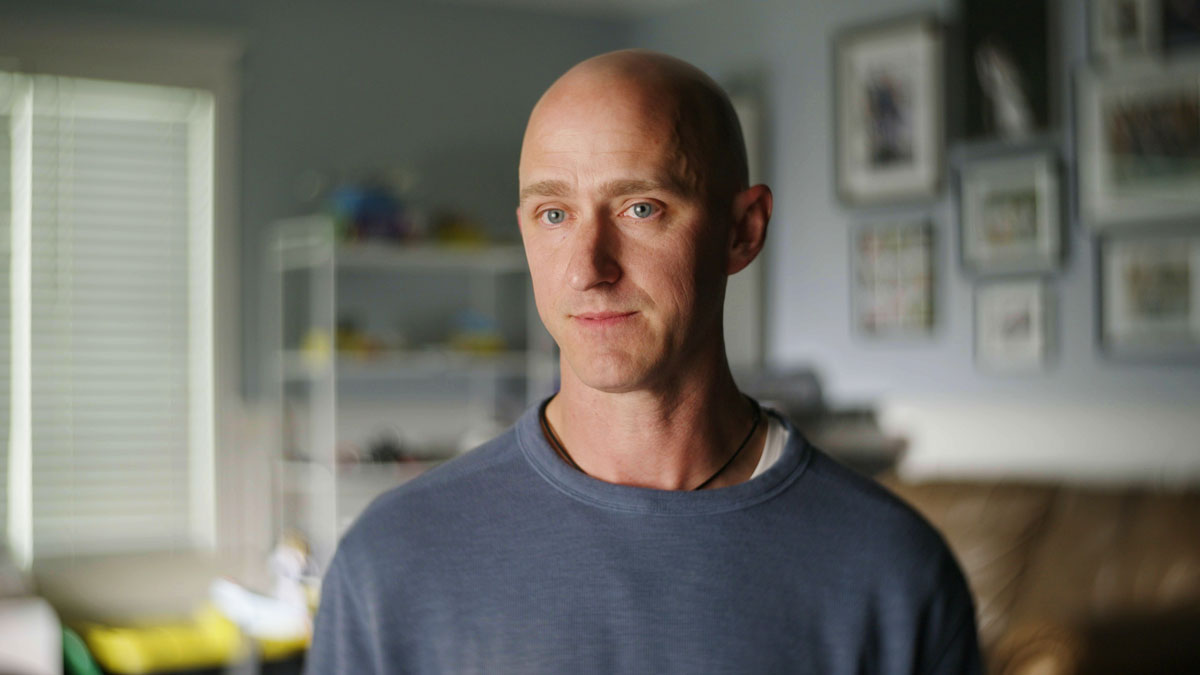
Lie to FlyJoe Emerson in The New York Times Presents "Lie to Fly" (FX)So what was your pitch to Joe? How did you officially get him to sign on and how did you get that access?

You know, it's a really delicate dance. I think the short answer would be through a lot of very careful and patient and I like to think empathetic outreach. From what I understand, the family was getting a lot of media outreach because this was covered all over the place. It's kind of a ripped from the headlines, tabloidy story if you treat it as such. So basically Mike  Baker, I think first of all with his very measured article, had gained some amount of trust from the family as it was very thoroughly and accurately reported. And so that was step one. Step two was then brokering an intro with — again because Joe is incarcerated at this point so it was very difficult to speak to him for obvious reasons logistically. So he's speaking with his defense lawyers, understanding what the legal questions that were remaining, and again there were plenty of them. And also speaking with Sarah, Joe's wife who was, when he was incarcerated, the real protector obviously of the family.

"A lot of people we spoke to within the aviation world didn't see him as a villain."

And it was a series of very long involved conversations during which part I was mostly listening. I think a huge part of gaining their trust was listening to them and not dictating what we thought the story was. There weren't any demands for their participation. It was just really being there to understand as they were processing in real time what was happening. So yeah, a lot of really careful and measured conversations, which were mostly listening on our part at first.

We need your help to stay independent

What would you say your intention was in making "Lie to Fly"?

It changed. When the first instinct started kicking in and the questions started kicking in, my biggest intention after having conversations with the family and with his [Joe's] lawyers and with Mike Baker, my biggest takeaway was that the public doesn't understand the real story. Because again, even locally — this happened in my backyard — there were people calling him "The Mushroom Pilot." There were people saying, "He deserves to be in jail," there were people saying all sorts of things, passing judgment on what I knew at that point was not the real story. And so part of my driving ambition as a filmmaker, but also as a person is to get the story right. And I was hearing from people – who are very well-informed, very educated people in my orbit even socially – things that were just not true. Especially after having spoken to the family, so many things that I understood to be so completely off the mark that I thought it could be a public service to almost bring to light the real contours of the story as I knew them.

What were some of those things?

Well, some of those things were that Joe was crazy, that he was on mushrooms [on the plane] which he wasn't. That he deserved to rot in prison. That, in general, we shouldn't let depressed pilots fly planes and stuff like that. And I was just kind of like, "Huh, I think on its surface I understand why people had those reactions." I think you hear 83 counts of attempted murder and most people think that should be avoided at all costs. So those were some of the misconceptions.

As we started reporting, we were reaching out to more aviators, reaching out to more people on all sides of the aviation world. So we have pilots, we have flight attendants, we have flight crew, air traffic controllers during that process. It was this really eye-opening moment of scores of people who, for very good reason, didn't want to go on the record because they had similar concerns that Joe expressed. Obviously, his circumstances demanded that he make those public, but a lot of people we spoke to within the aviation world didn't see him as a villain. They saw him as a "There but for the grace of God go I" story. And that scared me. I mean that again made me realize, "Oh my God — this might be bigger. It's bigger than Joe for sure, but it also might be bigger than people realize because of the reasons not to come forward with any kind of mental health concern."

In the U.S., men make up the majority of pilots. How would you say that gender plays into the issues of mental health for pilots specifically?

I don't really know. I'll have to think about that. Definitely in our reporting, we found more pilots who were male, and I think what we also found in talking to those people is that a lot of these folks with families have organized their lives around the fact that the husband — if it's a married, cis couple — is the breadwinner. And that this person is going to be away, out of the house, nearly constantly on the road, and thus is the main breadwinner for the family, which basically makes that position that much more vulnerable if they disclose a mental health concern and then are grounded and their income is halved or taken away.

Lie to FlyA cockpit seen in The New York Times Presents "Lie to Fly" (FX)I remember Sarah mentions in the film how Joe's disclosing of his struggles to his AME would have more than likely resulted in him being grounded for a minimum of half a year. And she said something like, "We just couldn't do half salary with two kids."

Yeah, they organize their family life such that her main role is to take care of the house when he's gone, and that's a big job first of all. And it's also not easy to change those circumstances on a dime if you've been a career pilot for however many years, right?

Joe takes psychedelics when he's on a grief retreat. How did you approach representing the role of drugs in the film?

That's such a good question because it's such a huge reason why a lot of people are interested in the story, because of all the big money and also the fashion of psychedelics coming into play as a way to negotiate grief. So we started really by educating ourselves and speaking to all the experts in the film. We had a former John Hopkins academic who studies this stuff, and he was a really great resource but he was by no means the only one. We spoke to local people here at OHSU (Oregon Health and Science University), Dr. Aryan Sarparast, who studies brain plasticity and how psychedelics affect that. So we approached it first understanding what the science is and how often this could affect someone. Is it common? Is it not, etc.? And what we found in that research too was that it wasn't obviously solely the psilocybin or the psychedelic components — it was that, compounded with untreated and unchecked grief for however many years.

And so it's funny. This is such a big part of the story — "this" meaning psychedelics — and the more we dug into it a lot of those psychedelic experts were telling us, "Yeah but the bigger part of the story is this unchecked and untreated grief. That is how this can have this compounding effect." So ironically that experience took us back to the main part of the issue which is, "How do we take care of ourselves in a way such that we are not susceptible to psychotic breaks like this?"

In the aftermath of Joe's mental health episode, he's hit very hard by the media and the greater public. What misconceptions do you think people still have about him?

I think the biggest misconception is that his actions that day were solely the actions or solely the ripple effects of an individual and not of the greater results of a system that might need some investigating. It became clear that the decisions that he was making were because of a system and it became very clear that the decisions he was making that a lot of people criticize — when you actually write them out on paper — are very logical responses to very real pressures. That sort of logic is more compounded by — again, a lot of the folks that didn't make it on screen that we talked to who echoed those exact same concerns. So yeah, I think now the current misconception is that he was a lone wolf acting alone. And the biggest underpinning to that is that he is part of a system and a symptom of a system.

What misconceptions do you think people have about pilots in general, and what would you say are the social implications of those misconceptions?

This is from speaking to a lot of pilots, there's a stigma that pilots are infallible. That pilots have to be perfect and physically fit and mentally — completely like a calm sea. And again, we do want physically and mentally fit pilots in the cockpit, this is not to argue that we want unfit folks in the cockpit. This almost double-edged sword of perfectionism that we associate with that profession in particular, I think is a bit outdated. 

In a time where airline safety feels more precarious than ever, how should we be thinking about pilots and their mental health? How should we be thinking about passenger safety?

"This almost double-edged sword of perfectionism that we associate with that profession in particular, I think is a bit outdated."

I think we should be thinking about pilot mental health — and this is echoed a few times in the film — but the question isn't "Do we want depressed pilots flying planes?" It's, "Do we want depressed pilots flying planes who are treated for that or untreated for that?" And that is the operating question here. In terms of passenger safety, I think for all of the drama, for lack of a better word, that occurred on that flight, the impeccable instincts and behavior of the flight crew, the flight attendants and the pilots ensured that there was no loss of life and there was nobody actually hurt on that plane. Just really respect your flight crew is something that I would always advise, and you're going to get to where you're going safely. And even though there are all of these stories recently of aircrafts malfunctioning and passengers being unruly and things like that — statistically air travel is safer than it's ever been. The question that we're posing with this film is, "How do we ensure it stays that way with tools that we do have at our disposal?"
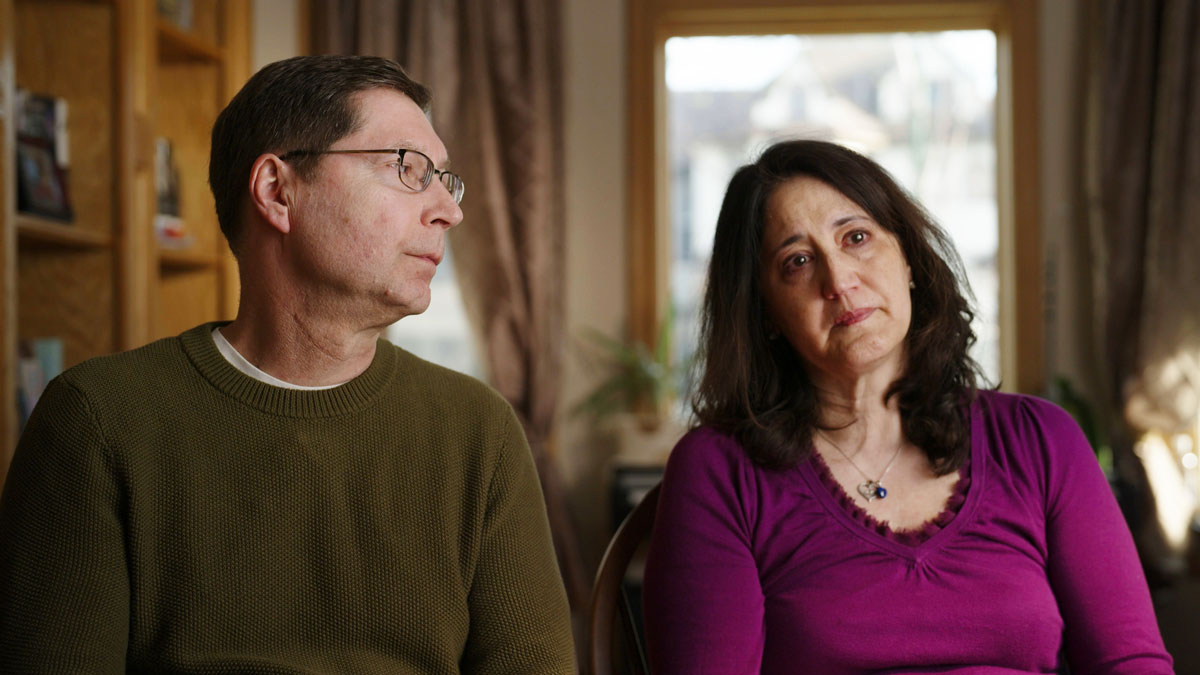
Lie to FlyDr. Alan Hauser and Dr. Anne Suh, John Hauser's parents in The New York Times Presents "Lie to Fly" (FX)There's a really emotional segment of the film when we're with the parents of John Hauser, a 19-year-old aviation student from the University of North Dakota who ended up taking his own life. His parents share his suicide note with the viewers in which John very explicitly asks them to “get the FAA to change their rules on pilots seeking help with their mental health.” What were the challenges in asking Dr. Suh and Dr. Hauser about such a difficult experience?

The challenges were just the enormous emotional and ethical concerns about not retraumatizing people, not profiting off of people's pain. That relationship was treated very delicately. I reached out to the Hausers earlier in the year — always with the spirit of, "We're collecting and gathering information about this story that we know for better or for worse you unfortunately have a lot of really deep experience with." And so this outreach is very like, "Please let us know if you want to talk. We're not going to pressure you or follow up incessantly or anything like that."

That was a really delicate relationship that we worked on for weeks, and we did gain their trust. And I'm very, very grateful to them for sharing their story. We went to Chicago, spent a lot of time with them in their home, and I think and I hope what they gleaned from us was that we wanted to include John's story as a way to illustrate the bigger picture that could potentially save more lives down the line. I believe that message comes through in the film, I think they trusted us as messengers of that message. And I really hope when they see the film that they will feel we did right by them.

The challenges though in dealing with suicide — so honestly, they're huge. I mean, it's thorny, it's scary, you have to be again mostly a listener in that regard. And in terms of the letter itself, that was something we didn't expect to show. We didn't even broach [that] until we were at their home in Chicago spending quite a few meaningful hours just talking through the story. And they had it in their possession, and . . . that was an inclusion we weren't counting on. It was only because the moment felt correct to ask for it and I'm very glad we did because I do feel like it's a very stark reminder of the real stakes with regard to human life that there are questions about that in film.

Why do you think that it takes tragedies like John's death or extreme situations like Joe's to bring awareness to a topic like pilot mental health, both by the FAA and the greater public?

"Joe's story is a microcosm."

I think because — and this is through no fault of anyone's own, whether that's like journalists covering aviation or the FAA itself — change, especially big systemic change that has been in place for decades, it's just hard to enact. It's expensive, it's unruly, it's difficult. So I don't think it's a sinister reason people avoid talking about these things and that there's usually some sort of incident that has to happen to create change. I think it's unfortunately part of the human and bureaucratic reality that we're in. But again, what we're uncovering in the more people we speak to is that it's almost like, "No news is good news" in terms of aviation incidents. And we're just trying to say — potentially with some changes in the policy that would allow for a bit more leeway with regards to mental health treatment and physical health treatment as well, we can just avoid more of these down the line. 

Toward the end of "Lie to Fly," FAA senior AME Dr. Brent Blue acknowledges that while the agency’s updated guidelines are a great “baby step,” it could and should make changes without congressional involvement. What do you see as the biggest hurdle to implementing new measures at the legislative level?

I personally don't see any. I mean, there are a lot of people — Rep. Sean Casten, D-Ill., is doing a lot of great work on this stuff. If I'm giving everyone the benefit of the doubt, it could be a bandwidth or budget thing. But I don't see]  any — I think it could be implemented tomorrow. Eight days after our interview [with the FAA] they did implement some change, and I think we were grateful to see that. But it proves that there can be change implemented without a huge congressional bill being passed or anything like that. Dr. Susan Northrup is in a very powerful position as the federal air surgeon, so I was happy to see those changes made. I think it just shows that change is a little bit easier perhaps than we thought. 


Want a daily wrap-up of all the news and commentary Salon has to offer? Subscribe to our morning newsletter, Crash Course.


If there's one thing you hope viewers take away from "Lie to Fly," what would it be?

I think the important thing is that there's a larger system at play here. We're so incredibly respectful and grateful for [Joe's] full-throated trust in our project, in our process. That's very rare to find, so first of all thanks to him and his family. But I think the biggest takeaway that I want people to have is that Joe's story is a microcosm. It's a way of telling a bigger story and it's a way of interrogating a system. And I think part of what we wanted to convey is exactly that there's a larger system here we want to interrogate. It affects all of us, so mostly that. And I think again, the biggest question is, "Is the status quo making the flying public less safe or more safe?" And that's up to viewers. I can't answer that question. I have my own thoughts on it, but I'd be curious what people think about that.

"Lie to Fly" is streaming on Hulu.

If you are in crisis, please call the 988 Suicide and Crisis Lifeline by dialing 988, or contact the Crisis Text Line by texting TALK to 741741.


Joe Rogan claims MSNBC “deceptively” edited a clip that made him seem pro-Harris

Comedian and podcast host Joe Rogan on the latest episode of "The Joe Rogan Experience" claimed that MSNBC "deceptively edited" a video of him to make it appear as though he is a supporter of Vice President Kamala Harris, the Democratic nominee in the 2024 presidential election. 

Rogan said that he would not be taking legal action against the network for allegedly doctoring a clip of him, which he stated came from the amalgamation of two separate statements he'd made: one about Harris, and another about former Democratic congresswoman turned conservative, Tulsi Gabbard.

“I’m not suing MSNBC, but this is what MSNBC did. They took a clip of me talking about Tulsi Gabbard and they edited it up and made it look like I was saying great things about Kamala Harris,” Rogan said to neuroscientist Andrew Huberman, referencing a video put out by Gabbard earlier this month on X/Twitter.

Gabbard on August 2 took to the social media platform, calling MSNBC a "propaganda machine for the Democrat Elite" and accusing the network of attempting to "brazenly … deceive the American people."

"One part of the video @joerogan was talking about Kamala; on another part of the video, he was talking about me. MSNBC combined it together to make it look like everything said was about Kamala and that he was endorsing her," Gabbard wrote. "Of course this is completely false. Furthermore, it’s another violation of the FEC law by failing to report their propaganda as a contribution to Kamala’s campaign."

We need your help to stay independent

“They just deceptively edited the things I was saying," Rogan continued. "They took it completely out of context where I was talking about — first of all, I was talking about Tulsi Gabbard and then I was talking about the media behind Kamala Harris, all this surge and all these people deciding that she can win and they put the two of those together and made it seem like I was praising Kamala Harris."

The MSNBC clip in question features footage of Rogan from a previous installment of "The Joe Rogan Experience," in conversation with author and podcaster Mike Malice. Rogan in the clip can be heard saying, "She's gonna win. She is a strong woman." He also refers to the individual he's speaking about as "a person who served overseas twice," a "congresswoman for eight years," and "a person of color."

“I was talking about Tulsi Gabbard being a congresswoman for eight years and about how she served overseas [as part of] two deployments in medical service dealing with people who were blown up by the war,” Rogan said. “That’s not something Kamala Harris did. That’s something Tulsi Gabbard did.”

Rogan continued by asserting that MSNBC didn't "care about the truth."

"They just want a narrative to get out there amongst enough people because most people are just surface readers."

According to the New York Post, MSNBC has since pulled the video, which contained the following disclaimer: “We have removed an earlier version of this post that incorrectly implied Joe Rogan was talking more about Vice President Kamala Harris. He was referring to Tulsi Gabbard.”

“Sick and tragic”: Veterans, Democrats criticize Trump for “incident” at Arlington National Cemetery

Two members of Donald Trump's campaign staff pushed and verbally abused an official at Arlington National Cemetery while the former president was participating in a wreath-laying ceremony on Monday, NPR first reported.

A source with knowledge of the incident told NPR that the official tried to prevent staffers from filming and photographing in Section 60, a restricted area where recent U.S. military casualties are buried. According to the source, officials had already made clear that only cemetery staff were permitted to film and photograph in that area, and when one of the officials tried to prevent Trump campaign staffers from entering, the staffers verbally abused and pushed the official aside.

Arlington National Cemetery, in a statement to NPR, said it "can confirm there was an incident, and a report was filed."

"Federal law prohibits political campaign or election-related activities within Army National Military Cemeteries, to include photographers, content creators or any other persons attending for purposes, or in direct support of a partisan political candidate's campaign," the statement continued. "Arlington National Cemetery reinforced and widely shared this law and its prohibitions with all participants."

Trump was in Arlington to mark the third anniversary of a suicide bombing at Abbey Gate at Kabul Airport in 2021 during the chaotic withdrawal of U.S. forces from Afghanistan. Thirteen U.S. service members were killed in an attack, which Trump has cited to criticize President Joe Biden and Vice President Kamala Harris over the administration's handling of the evacuation.

On Tuesday, Trump posted a statement from relatives of two service members killed in the bombing. “We would like to express our heartfelt thanks and appreciation to president Donald J. Trump for his presence at the recent Section 60 gathering, honoring our children and their fallen brothers and sisters,” the Truth Social post read. “On the three-year anniversary of the Abbey Gate bombing, the president and his team conducted themselves with nothing but the utmost respect and dignity for all of our service members, especially our beloved children.”

The statement also said that the family members accepted the presence of an official videographer and photographer at the event, though their approval does not override existing rules by the cemetery that regulate behavior near the grave sites of many other veterans. In the end, Trump got his photo, which depicts the former president smiling widely and giving a thumbs-up behind the graves of the two Marines.

Trump campaign spokesperson Steven Cheung pushed back on the altercation story in a statement to NPR, saying that "we are prepared to release footage if such defamatory claims are made." (As of Wednesday morning, no such footage has been released.)

"The fact is that a private photographer was permitted on the premises and for whatever reason an unnamed individual, clearly suffering from a mental health episode, decided to physically block members of President Trump's team during a very solemn ceremony," Cheung claimed.

Predictably, reports of an altercation on hallowed ground sparked outrage from veterans and veterans' groups. Liberal veterans organization VoteVets demanded that Trump take action against the staffers who took part in the incident. "If Donald Trump respects the fallen (he doesn't) he will fire the people who fought with Arlington National Cemetery staff," the group said in a statement on social media. "The fact is, Trump staff did this because he wanted them to do it. He sees Section 60 as Suckers and Losers too," the group said, referring to Trump's past alleged comments about veterans.

We need your help to stay independent

Former Rep. Max Rose, D-N.Y., who fought in Afghanistan, called the photograph and the alleged altercation that made it possible a "sick and tragic" affair. "Trump and his team care only about using the military as a prop," he wrote on X. "No respect for our nation’s fallen heroes. Trump only cares about himself."

Rep. Mickie Sherrill, D-N.J., a former Navy lieutenant, said that the former president using Arlington National Cemetery as a "photo-op" was to be expected from Trump, as "disrespecting veterans is par for course."

Criticism over Trump's comments about veterans exploded in 2020 after multiple Trump White House sources provided examples of him disparaging veterans for a report by The Atlantic. According to one story, he resisted visiting the grave sites of American World War I veterans in Aisne-Marne American Cemetery in France because "it's filled with losers" who were "suckers" for getting killed. At a briefing given by then-Chairman of the Joint Chiefs of Staff, Joe Dunford, Trump reportedly turned to aides and said: “That guy is smart. Why did he join the military?”

Trump has denied those claims, but some public statements he's made are more difficult to dismiss: In 2015, he described former Sen. John McCain, R-Ariz., as "not a war hero" because he was shot down and captured by North Vietnamese forces.

It's not just words that have put a spotlight on Trump's record with veterans. During his administration, Trump gave authority over Department of Veterans' Affairs policy to a trio of business executives with memberships at his Mar-a-Lago club and personal ties to him, sparking a 2021 investigation by congressional Democrats that found the arrangement "violated the law and sought to exert improper influence over government officials to further their own personal interest." Investigations by ProPublica also found that Trump's Veterans Affairs officials enriched large companies while imposing longer waits for benefits on veterans, weakened the department by cutting its staff and retaliated against whistleblowers over reported abuse and malpractice at VA facilities.

If Trump was sometimes reluctant to visit military cemeteries during his presidency, some commentators observe that he now sees the political benefits of putting it in his schedule.

"The idea that any candidate of any party would use, intentionally or unintentionally, use that sacred ground as a prop for a political campaign is beyond condemnation," journalist Mike Barnicle said on MSNBC. "It’s terribly upsetting, obviously, to people who have buried loved ones in Arlington National Cemetery."

“Hoax” and “witch hunt”: Trump responds as usual to Jack Smith’s latest indictment

Donald Trump went on an explosive Truth Social rant Monday night after he was re-indicted by special counsel Jack for attempting to overturn the 2020 election results. 

In a slew of posts, Trump wrote that the superseding indictment was an “act of desperation to resurrect a dead Witch Hunt,” claiming he was being subjected to the justice of “third world countries” and “Banana Republics.”

“This is merely an attempt to interfere with the election, and distract the American People from the catastrophes Kamala Harris has inflicted on our Nation,” Trump wrote on Truth Social.

The new 36-page filing came after a Supreme Court ruling that granted Trump presumptive immunity for "official acts." It contains the same four counts against Trump as the original indictment, but it also eliminates a section accusing Trump of weaponizing the Department of Justice after the Supreme Court ruled Trump’s directions to the DOJ were not prosecutable offenses.

The new indictment also drops all mentions of “co-conspirator 4,” who has previously been reported as Jeffrey Clark, a former Trump-appointed Department of Justice official.

In his Truth Social rant, Trump baselessly accused the White House of orchestrating the case against him.

“This ridiculous political HOAX, which most thought was already won by me, comes right out of the White House and DOJ, and is being pushed by Kamala Harris and Crooked Joe Biden against their political opponent, ME,” Trump wrote.

6 things to know about the Paralympics

The next installment of this summer’s hotly anticipated international sports competition is here. 

A couple weeks since the Olympic Games concluded, the Summer Paralympic Games will take over in Paris on Wednesday, Aug. 28, and will run through Sunday, Sept. 8. The 11-day competition, which marks the first time the Summer Paralympics have been held in France, will feature 4,400 athletes with physical or cognitive disabilities from 128 different countries across 22 sports. 

If you’re tuning in from the U.S., you can watch the Paralympics on any of NBC’s various channels, such as USA Network. You can also stream the Games on Peacock, the official Paralympics YouTube channel, NBCOlympics.com and the International Paralympic Committee (IPC) website. 

Check out what you should know about these historic Games. Go, Team USA!

01
The opening ceremony takes place at the Champs Élysées

Like the Olympic Games, the Summer Paralympics are opting to forgo a stadium start and instead will introduce the world to its bevy of athletes from a more intimate location within the city itself. Beginning on Wednesday, Aug. 28 at 1 p.m ET, Paralympians will traverse the famed Champs Élysées, a stunning avenue in Paris that runs from the Arc de Triomphe to the Place de la Concord. 


The lighting of the Paralympic torch will take place at the end of the route, which will also be accessible to fans and spectators. Team USA’s Steve Serio, a member of the Paralympic basketball team, and Nicky Nieves, a Paralympic volleyball player, will act as flag bearers for the ceremony. 


https://www.instagram.com/p/C_LyrKpx86a/


https://www.instagram.com/p/C_AzNt1xcx_/

02
The Paralympics' classifications

This system, which takes place before the Games begin, is meant to ensure that athletes of similar abilities are matched to each other. According to the Olympics' official website, medical and technical experts assess Paralympians to determine which sport class they should be allocated to, in accordance with “the degree and nature of their eligible impairments.”


Given the varied nature of sports at the Games and the manner in which they are played, there is no single classification system; instead, each discipline has its own separate classification. Classifications are delineated with a letter, typically the first letter of a specific sport, followed by a number which typically corresponds to the severity of an athlete’s impairment. 


Chuck Aoki, a member of Team USA’s wheelchair rugby team, explains the Paralympic classification system to his Instagram followers in a post shared on Aug. 14. “The goal is . . . to have people of like ability competing against each other,” he said. “Visually impaired runners will compete against other visually impaired runners. You won’t have a visually impaired person going against a wheelchair user, for example, because that would be chaos.”


Aoki, whose classification number is a 3, also noted that “there are a lot of nuances” to the system. 


https://www.instagram.com/p/C-qBe3ypDaE/?utm_source=ig_embed&utm_campaign=embed_video_watch_again

03
The first trans woman Paralympian

In an especially historic moment, Italian sprinter Valentina Petrillo will become the first transgender woman to compete at the Paralympics. The 50-year-old athlete, who has a degenerative visual impairment called Stargart disease, will run the 200- and 400-meter events as part of the T12 classification.


“Yes, I have problems with my vision, I’m partially sighted, I’m trans – and let’s say that’s not the best in our Italy, being trans – but I am a happy person,” Petrillo told The Associated Press in Italian during an interview held in a suburb of Bologna, Italy. “I began transitioning in 2019 and in 2020 I realized my dream, which was to race in the female category, to do the sport that I had always loved doing,” she said. “I got to 50 before it came true . . . we all have the right to a second choice of life, a second chance.”

04
The first deaf presenter of live sports coverage on TV

In another trailblazing first, British actor Rose Ayling-Ellis is set to become the first deaf person to host live sports coverage on television when she acts as the lead broadcaster for the U.K.’s Channel 4. Ayling-Ellis, who formerly starred in the BBC soap opera, “EastEnders,” shared with the outlet that the Paralympics are "a great opportunity to show people what us disabled people can do.”


She added that the event "breaks people's barriers of understanding what we are capable of,” but noted that disabled people “shouldn't be trying to prove this to people."

05
"The Three Agitos" Paralympics symbol

The Paralympic symbol — which was introduced in 2019 — is comprised of three elements in red, blue and green, representing widely used colors in national flags across the globe. The name “The Three Agitos,” comes from a Latin term meaning “I move.” Per a post on NBCOlympics’ Instagram page, the symbol “encircles a central point to symbolize motion and emphasizes the role of the Paralympic movement in bringing athletes together from all corners of the world to compete.”


According to the IPC’s official website, The Three Agitos also “emphasize the fact that Paralympic athletes are constantly inspiring and exciting the world with their performances: always moving forward and never giving up.”


https://www.instagram.com/p/C_JoheYv1o6/?utm_source=ig_web_copy_link

06
The 22 sports of the Summer 2024 Paralympic Games
  • Para Archery
  • Para Athletics
  • Para Badminton
  • Blind Football (soccer)
  • Boccia
  • Para Canoe
  • Para Cycling
  • Para Equestrian
  • Goalball
  • Para Judo
  • Para Powerlifting
  • Para Rowing
  • Shooting Para Sport
  • Sitting Volleyball
  • Para Swimming
  • Para Table Tennis
  • Para Taekwondo
  • Para Triathlon
  • Wheelchair Basketball
  • Wheelchair Fencing
  • Wheelchair Rugby
  • Wheelchair Tennis

Of the range of sports played at the Paralympics, only three are open to athletes with intellectual disabilities: para athletics, para swimming, and para table tennis


Legal experts: New Trump indictment reveals “strong hand” from the “very first paragraph”

In its immunity ruling, the Supreme Court’s six right-wing justices asserted that a president’s “official” conduct was off limits to prosecutors, meaning that someone — Donald Trump, for example — could order their underlings at the Department of Justice to break the law, perhaps by trying to overturn what they knew to be a free and fair election, and no one could ever charge them with a crime.

That July ruling from the nation’s highest court was seen as a death knell for the cases against the former president, the conservative majority having effectively legalized “criminal and treasonous acts,” per liberal dissenter Justice Sonia Sotomayor. The consolation was that special counsel Jack Smith would at least get to air all his evidence in the D.C. court of U.S. District Judge Tanya Chutkan, an appointee of former President Barack Obama who would get to decide what if any of it could withstand the Supreme Court’s novel new standard.

But Smith, who has charged the former president with conspiring to defraud the United States and obstruct the certification of the 2020 election, himself decided to start over instead. Having seated a new grand jury, on Tuesday Smith returned a fresh 36-page indictment of Trump that maintains the same core charges but with a freshly emphasized framing: these were criminal acts that the former president undertook not in his official capacity but as a private citizen running for public office.

“Even the very first paragraph of the indictment now refers to Donald Trump not as the 45th president of the United States, but as a candidate for president in 2020,” noted Barbara McQuade, a former U.S. attorney who teaches law at the University of Michigan. Appearing on MSNBC, she predicted that Trump’s legal team would certainly maintain anything he did while president was an “official act.”

But McQuade argued that Smith had effectively purged the original 45-page indictment of any conspicuously official conduct, the special counsel now stressing, for example, that Trump’s speech on January 6, 2021, was at a privately funded campaign event — and that the ex-president, whose legal team organized a plot to recognize “fake electors” from the likes of Arizona and Pennsylvania, never had an official role in certifying state elections.

“I think this threads the needle,” Ty Cobb, a former White House lawyer under Trump, told CNN, describing the new indictment as a “forceful document” that drives home “the crimes that Donald Trump actually committed.” Smith wisely chose to avoid the moral victory of what legal experts had termed a “mini trial,” publicly fighting over what could survive in the previous indictment, Cobb said. But that also guarantees that there won’t be any sort of trial before voters cast ballots in the presidential election.

“It’ll be slow from here,” Cobb conceded. There “will be a lot of delaying tactics by his lawyers,” he said, but then the case was never likely to go to trial before November.

We need your help to stay independent

By paring down the original indictment, Smith has also made it more likely the case goes to trial, ever.

Appeals by Trump’s defense team could ultimately land the case before a sympathetic Supreme Court majority, which may well decide to expand its definition of official conduct, but Smith at least removed the most obviously now-problematic allegations: namely, that Trump and conspired with a Justice Department lackey, Jeffrey Clark, “to use the Justice Department to open sham election crime investigations and influence state legislatures with knowingly false claims of election fraud.” Since such conduct is apparently now above board for presidents, it’s nixed from the latest indictment, even if the underlying charges remain the same.

Norm Eisen, a senior fellow at the Brookings Institution and a legal analyst at CNN, said “the subtractions stand out more than the additions” in Smith’s latest filing. But in light of the Supreme Court’s decision, those subtractions make the case that much stronger.

“I don’t think that you can quibble with Smith’s effort to slim this indictment down,” Eisen said. “I do think he has a strong hand — and he’s played it.”

Donald Trump likes to pretend he is still president — but his act caught up with him at Arlington

Over the weekend Donald Trump whined that the Harris campaign was treating him like the incumbent and it's totally not fair:

The fact is that they are framing some of the campaign as a referendum on Trump. And why wouldn't they? The former president is running on the lies about the alleged halcyon days when America was great (2017 -2019) and the vice president is running on "a new way forward" and "we're not going back." If he doesn't want to be seen as the incumbent maybe he should stop pretending he is one.

If he didn't want people to think of him as the incumbent maybe he shouldn't have acted like he was for the past four years. 

From the moment Trump glumly flew off to Mar-a-Lago on January 20, 2021, he's been acting like a president in exile. He flies around on a plane he calls "Trump Force One" and uses an ersatz presidential seal at any podium he stands behind. He insists on being called "Mr. President" (never "former") and everyone around him treats him as if he still is. He's been running a shadow government, with GOP officials rushing to get his permission before they take any action and everyone clamoring for his dispensation in their campaigns. One of the most obvious examples of his power over the GOP was his thumbs down on the painfully negotiated bipartisan border bill. He didn't even pretend that it had anything to do with the policy, he just didn't want Biden to be able to run on it as one of his accomplishments. He essentially vetoed the bill from his Gilded White House in Florida.

And he routinely meets with foreign leaders at his beach club as if they are there for an important state occasion. The events are small and somewhat tawdry (more like people dropping by to see the Duke of Windsor and Wallace Simpson back in the day) but he's managed to persuade a number of his foreign allies to kiss the ring on the chance that he'll be back in power soon and will deliver for them.

It's not usual for presidential candidates to take a foreign trip to demonstrate that they can be presidential on the world stage. (Recall former Wisconsin GOP Gov. Scott Walker's disastrous trip abroad just before he imploded in the 2016 presidential race.) But having foreign dignitaries come to the U.S. and pay homage to Trump at his Florida resort, as if they are supplicants, is something else altogether. Here's some footage of a visit from Hungarian President Viktor Orbán last spring.

Trump recently met with Israeli leader Benjamin Netanyahu and staged a fake summit in what appears to be the Mar-a-Lago dining room:

He's reportedly been talking to his pal Netanyahu in recent days discussing the situation in Gaza. I think it's fair to assume that he may be exhorting him not to agree to a ceasefire or hostage deal in order to ensure Harris doesn't benefit from any agreements before the election. After all, as we saw with the border bill veto, that's his M.O.

We need your help to stay independent

And then there is the fact that he claims he is the rightful president having supposedly won the 2020 election. Millions of his followers believe that he won that campaign and that he should be sitting in the White House today — maybe forever. There are even people interviewed at his rallies who think he actually is the current president, pulling the strings from behind the curtain.

This week he performed one of the most audacious presidential acting jobs I've seen him do since he went into exile. In fact, when I first saw the footage I thought it must be from when he was in office:

He is not a real president yet he used Arlington National Cemetery this week as a campaign prop to hit his political opponent for the withdrawal of U.S. troops from Afghanistan. It later turned out that he was also taking smiling thumbs-up souvenir pics with unauthorized personnel, as NPR reported:

A source with knowledge of the incident said the cemetery official tried to prevent Trump staffers from filming and photographing in a section where recent U.S. casualties are buried. The source said Arlington officials had made clear that only cemetery staff members would be authorized to take photographs or film in the area, known as Section 60.

When the cemetery official tried to prevent Trump campaign staff from entering Section 60, campaign staff verbally abused and pushed the official aside, according to the source.

Trump's crude spokesman Steven Cheung said it didn't happen and accused the official of mental illness. Trump's campaign manager Chris LaCivita called the official a "disgrace." Officials at Arlington told NPR that they've filed a report with local authorities. 


Want a daily wrap-up of all the news and commentary Salon has to offer? Subscribe to our morning newsletter, Crash Course.


This is, of course, just the latest in a long line of Trump's insults to the military. For someone who loves the idea of being commander in chief, he sure doesn't have a high regard for the people who gave their lives in war. (Yes, "suckers and losers".) It's something I've always found a little bit mystifying. He loves cops. He loves uniforms. But he has absolutely no respect for service members, especially the brass. It's odd considering that they are required to salute smartly and follow orders. You'd think he'd love that. But I suppose the fact that he issued so many illegal and maniacal orders that they had to object makes him angry.

There are exceptions, of course. The cracked former General Michael Flynn, the disgraced former Admiral Ronny Jackson and certain war criminals he pardoned and invited down to his resort. But for the most part, Trump was always uncomfortable around the military, maybe because it's not in their nature to sycophantically tell him what he wants to hear. Even when he's play-acting, as he was on Monday at Arlington, he can't seem to get it right.

Trump has spent the last four years pretending to still be the president and continuing to dominate our political culture even though he's really just some rich guy who lives in Palm Beach and likes to run for president. If he didn't want people to think of him as the incumbent maybe he shouldn't have acted like he was for the past four years. 

Donald Trump’s embrace of RFK Jr. exposes the campaign’s QAnon strategy

Is Donald Trump wishing he could replace Sen. JD Vance of Ohio with Robert F. Kennedy Jr. as his running mate?

That question jumped from the world of social media jokes to a serious inquiry on Monday, when the anti-vaccine conspiracy theorist and former presidential candidate told Tucker Carlson that he's been hired to "pick the people who will be running the government" if Trump gets elected in November. Since Kennedy dropped out of the race and endorsed Trump, the GOP candidate has fully embraced the black sheep of the famous Democratic clan. Trump used to sneer that Kennedy was a "Radical Left Democrat," which was false, and that he's the "dumbest member" of the Kennedy clan, which is fair enough. After Kennedy endorsed him, however, Trump hugged Kennedy and declared, "He's a great guy, respected by everybody." (Fact check: Kennedy isn't even respected by his family members, who are blanketing the airwaves to say his behavior is "obscene" and a betrayal of his father, a New York senator and presidential candidate who was assassinated in 1968.)

The imagery of the two men together spread far and wide, to the point where it seems that Kennedy is Trump's running mate — not Vance. 

Vice President Kamala Harris' campaign seems fine with this, since Kennedy's presence only proves the "weird" accusations the campaign has blasted onto the Trump ticket. "In the four days since he endorsed Trump, RFK Jr. has spent his time tweeting about chemtrails and dodging questions about illegally sawing off a dead whale's head," DNC senior adviser Mary Beth Cahill said in a statement. "Normal candidates would run from a surrogate like this, but desperate men do desperate things."


Want more Amanda Marcotte on politics? Subscribe to her newsletter Standing Room Only.


Trump has a stench of desperation to him, as Harris rises in the polls. Still, it's not initially clear what an alliance with Kennedy does for Trump. Although he and Vance keep insisting they're "normal" and "not weird," here they are, lavishing attention on a man who claimed to have a brain worm and by his own account once dumped a dead bear cub in Central Park. The choice is yet another indicator of how much the Trump campaign's strategy depends on appealing to fringe constituencies in hopes that they turn out just enough creeps and conspiracy theorists to eke out a win in the swing states. 

The number of Democrats espousing QAnon beliefs doubled after Trump left office, from 7% in 2021 to 14% in late 2023. Harris' rise in the polls suggests she may be starting to get some of the drifters back. 

Kennedy doesn't just connect with the anti-vaccine community. He likely has special appeal to a group that isn't mentioned as much in the mainstream media anymore, but whose bizarre ideas still hold power over millions: QAnon, a cult-like conspiracy community that believes Trump is a savior sent to stop an imaginary cabal of Satan-worshipping pedophiles.

"QAnon has effectively shed its branding," explained journalist Jesselyn Cook. Her recently published "The Quiet Damage: QAnon and the Destruction of the American Family" tracks the havoc this conspiracy theory is causing in the lives of ordinary Americans. While the name "QAnon" is not used by its followers much anymore, the "core conspiracy theories have remarkable staying power," she added. "They're repeated by major political influencers, right-wing media stars and elected officials, and they appeal even to everyday people who would never consider themselves to be affiliated with QAnon." Cook pointed to data from the Public Religion Research Institute (PRRI) that shows "tens of millions of Americans believe that the government, media and financial worlds are controlled by Satan-worshiping pedophiles."

A popular belief in QAnon circles is that John F. Kennedy Jr., who was Robert Kennedy's first cousin, did not actually die in a 1999 plane crash, but has been in hiding and will emerge as Trump's running mate. Many have decided that Vince Fusca, a random Trump follower, is the dead son of President John F. Kennedy.

But why should they bother propping up this man who looks nothing like a Kennedy, when they have a verifiable Kennedy on board? Sure, he's merely the son of the assassinated candidate, not the assassinated president, but still. The photos of RFK Jr. and Trump standing together are so close to what many QAnoners have long imagined. They're not going to balk because he's the "wrong" Kennedy son. 

"Trump’s alliance with Robert F. Kennedy Jr. seems to be part of a pattern of Trump and his allies associating with those who spread conspiracy theories," Alex Kaplan of Media Matters told Salon. "Trump has increasingly amplified accounts that have promoted the QAnon conspiracy theory, doing so hundreds of times, and some of his advisers and associates have connected with those conspiracy theorists as well. It also speaks to how some conspiracy theory movements, like RFK Jr.’s anti-vaccine movement, the election denial movement and the QAnon community, are now working more closely together.”

On Monday, Kennedy offered a perfect example. In response to a conspiracy theorist yelling about "chemtrails" on Twitter, Kennedy replied, "We're going to stop this crime." The account's handle — "@BGatesIsaPyscho" — is a QAnon reference and the account heavily promotes the main QAnon theory that the world is secretly run by Satan-worshipping pedophiles. BGatesIsaPyscho has over half a million followers. 

There's been a good deal of media discussion about Americans who voted for Joe Biden in 2020, but are leaning toward Trump now. Those numbers are relatively small but could be enough to make a difference in tight swing-state elections if Harris can't win them back. A lot of theories abound to explain this drift, from inflation to gender relations. What is under-discussed, however, is the role of conspiracy theories like QAnon. Most QAnoners are white conservatives, but in recent years, QAnon has sucked in a more diverse group of people. In her book, Cook tells the stories of Bay Area Bernie Sanders supporters, an elderly Democrat and a Black single mother who were pulled into MAGA after being radicalized by QAnon. PRRI data reflects this, showing that the number of Democrats espousing QAnon beliefs doubled after Trump left office, from 7% in 2021 to 14% in late 2023. Harris' rise in the polls, however, suggests she may be starting to get some of the drifters back. 

To be sure, Trump isn't short on options. Huge numbers of voters who were down on Biden are telling pollsters they like Harris, especially younger voters, women and people of color. Most of these people will not be dissuaded from voting for her by ludicrous conspiracy theories, but if even a small percentage could be, that might flip major swing states to Trump. It's not like he's got better ideas. These voters don't like his real-world policies. The best Trump can hope for is to distract enough of them long enough that they forget or ignore his dangerous real-life conspiracies, like Project 2025. 

Why Kamala Harris’ “joy” works: “The Democrats quit fretting, now Trump looks like the fretter”

For decades, so-called conservatives have branded the Democratic Party and “liberals” as un-American, weak, bad for the economy and as the enemy of “freedom” and “liberty.” Instead of consistently fighting back and taking control of their own political brand, Democrats have engaged in a defensive struggle, forced to react and rebut. The Republican Party, therefore, has been very good at winning the argument while the Democrats remain smug and self-satisfied that they have “the facts” on their side. Decades of research by political scientists and other experts have repeatedly shown that emotions and compelling stories win the fight, not the facts alone.

The “conservative” movement thinks in terms of decades. By comparison, the Democratic Party thinks in terms of election cycles. In the face of an existential challenge to the country’s democracy and future from the right wing, Democrats and other pro-democracy Americans must radically reframe their thinking and approach to politics. Thankfully, last week’s Democratic National Convention (DNC) in Chicago was a deviation from the norm, and perhaps even a sign that the Democrats with Kamala Harris as the presidential nominee have finally realized that to defeat Donald Trump, the MAGA movement, and the other neofascists will require winning both the hearts and minds of voters.

"Trump’s behavior even seems to have changed in the face of the Democrats’ onslaught. Trump’s always been a whiner, but now whining is all he does."

The DNC was a political celebration of the changing of the guard. The Democrats hosted a party with celebrities and popular music and used humor to mock Donald Trump and the MAGAfied Republicans as being out of step (“weird”) with the American people. Harris and her vice-presidential running mate, Tim Walz, presented themselves and by extension their version of the Democratic Party, as being “happy warriors” who are looking to the future in the battle to save American democracy and to improve the country more broadly. And perhaps most importantly, the Democrats finally decided to make freedom, democracy, and rights central to their brand with the goal of breaking the stranglehold that the Republicans and “conservatives” have on those core American values.  

Will this new approach be enough for the Democrats to defeat Donald Trump and his MAGAfied Republicans and the larger antidemocracy movement on Election Day and beyond? In some 70 days, the American people and the world will soon find out. To make better sense of last week’s Democratic National Convention, the political terrain and momentum going forward, our emotions in this tumultuous time, and what may happen next with the 2024 election, I recently spoke to a range of experts. Read parts one and two here.

M. Steven Fish is a professor of political science at the University of California, Berkeley. His new book is “Comeback: Routing Trumpism, Reclaiming the Nation, and Restoring Democracy's Edge.”

In my new book, I argued that the Democrats’ main problem was not that voters were disenchanted with their policies or mired in desperation and bigotry. Instead, the Democrats were losing half the time to a party that should never even have had a shot because voters saw liberals as wimps and weak patriots.

Donald Trump was always on the offensive; the Democrats were ever on defense. Trump exulted; the Democrats fretted. Trump ridiculed the Democrats; the Democrats recoiled in wounded umbrage. The Republicans ruled the arena of cultural politics; the Democrats shrank from the culture wars on everything but abortion. Trump entertained with transgressive language; the Democrats adhered to the “norms of civility.” The Republicans claimed the flag, even as they betrayed America’s democracy, immigrant tradition, and support for democratic allies. Democrats treated patriotism as an unpleasant atavism that we need to get over. Trump had an emotionally appealing national story, however cramped and un-American. The Democrats had no national story.

Over the past five weeks, the Democrats have flipped the script, and the DNC showcased the transformation. The Republicans were no longer owning the libs; the Democrats were owning them. Rather than dwell on how scary Trump is and leave it at that, they laid out the threats Trump poses and followed that with a big “No!” Instead of their usual “Isn’t Trump terrifying?!” the Democrats’ message was “Bring it on MAGA!” They quit shrinking from the culture wars and aggressively pressed their case on guns, immigration, and racial justice, not just abortion. They peppered their speeches with colorful language. They also embraced the flag and wrapped their program in a stirring national story. Speaker after speaker laid out a vision of a glorious America made stronger by its past struggles and current challenges as it reached for still greater heights. Party leaders framed their aspirations in terms of freedom, not just fairness. The Democrats had a ball trolling Trump and reclaiming the nation for decency, democracy, and the American way. They made people feel like they were part of a revolutionary movement that was sure to crush the MAGA counterrevolution. Kamala Harris’ speech was almost picture-perfect.

I’m optimistic the Democrats will stay the course since it’s working so well. In fact, what we see here is proof of the concept I presented in "Comeback": Adopting a high-dominance style, embracing patriotism, and offering a compelling, optimistic story of the nation are the keys to whipping MAGA. At last, the Democrats are all fight and no funk. The key now is for the Democrats not to revert to low-dominance, patriotism-squeamish politics. The ultimate evidence of the effectiveness of high-dominance, patriotic politics is the change in public perceptions of Trump — and even Trump’s own behavior — over the past five weeks. The Democrats quit fretting; now Trump looks like the fretter. Now that the Democrats are projecting exuberance and confidence, Trump’s brand of self-assurance looks like farcical fake swag. Since the Democrats started claiming the nation with a gripping narrative of strength, hope, and unabashed love of country, Trump’s national story looks as pathetic, pessimistic, and treasonous as it is. And Trump’s behavior even seems to have changed in the face of the Democrats’ onslaught. Trump’s always been a whiner, but now whining is all he does. It’s so unfair that the Democrats replaced Biden, how could they do that to me?! They’re making personal attacks on me! Once you stand up to the bully, he wilts. The Democrats didn’t seem to even think of this until about five weeks ago. Now, nothing could seem more obvious.

 "I felt that the expression of pure joy started to drive Trump crazy. "

My only concern is that the Democrats won’t grasp what has enabled them to suddenly change the game. If they think it’s just because Harris is younger than Biden, that Trump is undermining himself, or that voters are only responding because of abortion bans, there’s a danger they’ll fall back on their usual risk-averse, policy-and-polls-obsessed politics that gave us Trump. They must make their newfound winning style the party’s modus operandi. The Democrats will have to win the next two or three national elections to force the Republicans to come to their senses. Until the Democrats do so, the Republicans will remain, as Harris said of them during her magnificent speech, “out of their minds”—and a mortal threat to democracy.

Dr. Justin Frank is a former clinical professor of psychiatry at the George Washington University Medical Center and the author of "Trump on the Couch: Inside the Mind of the President."

As Kamala Harris ended her acceptance speech on Thursday night, I felt this was the finest DNC Convention I’d ever witnessed on TV or in person since the first one I attended just after graduating high school in 1960. That was in Los Angeles and the nominee was John F. Kennedy, who I didn’t get to meet. And despite meeting people like Adlai Stevenson, Eleanor Roosevelt, and others, 2024 was the best. It was full of joy and hope with a serious undertone of purpose and strength.

As a psychoanalyst, I’ve been influenced by the teaching of Elvin Semrad who said “Sorrow is the vitamin of growth.” I added “and strength” after growth. Michelle Obama began her powerful speech on Tuesday with just that understanding. She spoke of recently burying her beloved mother who had been the source of her strength. She wasn’t even sure she’d have the strength to speak that Tuesday, she said, but found that force deep inside. Her mother made her a stronger person throughout her life, but she internalized others’ strength as she grieved. And so did Harris internalize her mother’s strength with her own grief. Both these women face challenges head-on with strength and integrity. Her speech, for me, contained the entire convention. Hope and strength; of moving forward with force and clarity about the opposition; of being direct rather than thinking about going “high” or “low.”

For years — since Joe McCarthy in the 1950s — the Democrats have been generally cautious when criticizing Republicans, preferring to counterpunch when they punch at all. This year was different. Donald Trump scares members of his own party less than he does the Democrats. In fact, many members of his own party left to speak at the DNC Convention. This was unheard of and personally swept me away. I was deeply impressed.

We need your help to stay independent

Joy and health are different from the “manic defense” which involves triumph over feeling helpless. Triumph involves denial of the former conflict. Those who left Trump explained why they left, and while the Democrats did mock him at times, they also took seriously the damage he could do if elected in 2024.

This felt like a different party, not simply defensive or grandiose, but seriously hopeful and energetic without being psychologically manic.

I was thrilled by the energy that was about feeling strong enough to face reality rather than deny it as they did in 2016 when so many felt Hillary Clinton was a sure thing and they treated Donald Trump with contempt. I get the contempt on one level, but at a deeper level, contempt becomes a defensive denial of vulnerability and potential danger. That is the kind of manic behavior I saw in the MSNBC and CNN commentators with their giggling and at times celebratory behavior. I felt that the expression of pure joy started to drive Trump crazy. The Democrats are ready to fight the good fight and they're not afraid of fighting it. They know Trump is nothing more than a “bone spur guy” who is afraid of fighting, period. He has a defensive use of contempt for those who are braver than he is and calls them “suckers” because he is himself a coward.

Marcel Danesi is professor emeritus of linguistic anthropology and semiotics at the University of Toronto. His new book is "Politics, Lies and Conspiracy Theories: A Cognitive Linguistic Perspective."

What struck me in particular was the contrast between the Democratic National Convention and the Republican National Convention. The difference was not just one of opposing political ideologies but of vastly different cultural and human emphases. The major Republican speeches were replete with untruths, fear narratives about the cultural destruction that those who were unlike themselves would bring about, and, in the case of Trump, outright lies designed for self-promotion, with the same old tropes of liberal operatives who are working to defeat him behind the scenes.

The DNC speeches were forward-looking, inclusive, and compassionate, even if at times aggressively portentous (and rightly so) of the dangers posed by Trump and MAGA. The music used at the RNC was “harsh” in every sense — aggressive, confrontational, hard-hitting. The music at the DNC was softer, and hopeful, alluding to a need for kindness and inclusion. This “war of musical styles” reflected vastly different views of America. Like the music, the DNC events emphasized human stories of pain, suffering, and hardship, while the RNC emphasized the dangers of cultural incursions into the “real America” from the inside, fueled by liberal policies about race, gender, civil rights, and freedoms.


Want a daily wrap-up of all the news and commentary Salon has to offer? Subscribe to our morning newsletter, Crash Course.


I have been around a long time, starting out as a professor at Rutgers University in 1972 during the Watergate hearings. After Nixon resigned, I felt a sense of relief that democracy was restored. When Trump came onto the scene, the fear and cynicism that I felt in 1972 came back to me. However, the Democrats’ convention in Chicago has rekindled a sense of hope that democracy will again survive. Maybe it was the vibrant atmosphere and energetic mood of the people at the gathering. Maybe it was the power of the speeches that emphasized what kindness and inclusivity can do to people—unite them no matter who they are and what views they possess of the world. Maybe it was the brilliant performances of the artists. But the danger remains — Trump is still lurking in the background, a weakened but still resilient feral person, ready to spew lies constantly, aware that many of these will stick with his fervent followers.

Thoughts about the future?

Kamala Harris’ hope, and happiness, emblemized by her wonderful smile, gives me great hope. Like any historically symbolic smile, from the Mona Lisa’s suggestive smile to Louis Armstrong’s bittersweet smile, exuding sadness and hope at once, Harris’ beaming, overwhelming smile penetrates the unconscious where it reverberates with the delight, sociability, happiness, joy, and hope that she talks about in her speeches. In comparison, Donald Trump’s smile is a grimace, a satirical grin.

I am cautiously hopeful that Trumpism will be given a fatal blow on November 5. On the other hand, the bully is always most dangerous when he is on the ropes. No one knows what dirty tricks Trump has up his sleeve. Hopefully, they will be seen as wearisome, and that it is time to move on — the Trump circus has come and is on its way out.

Matthew Sheffield is the founder of Flux, a progressive podcasting platform. A former right-wing activist and Salon writer, he is also the host of Theory of Change, a podcast about larger trends in politics, media, and culture.

President Joe Biden will go down in history as one of America's most significant presidents, despite serving only a single term, and he's continuing to rack up achievements since announcing he would withdraw as the Democratic Party standard-bearer, including a possible ceasefire between Israel and Gaza. Unfortunately, however, he was not able to maintain the hard-charging campaign that was necessary to defeat Donald Trump, even before his poor debate performance this past June. Before Biden decided to end his re-election bid, I had started to wonder whether Democrats actually believed their rhetoric about democracy being at stake in the 2024 election. The president's historic and selfless choice to sacrifice for the good of the nation is a significant indicator that at least he does. Biden's decision to lead from behind was a rare, positive shock to our national system and it completely reset the race, making millions of Americans more willing to give Vice President Kamala Harris, the beneficiary of Biden's incredibly unusual gesture, a second look.

"My only concern is that the Democrats won’t grasp what has enabled them to suddenly change the game."

As many people have observed, the much younger Harris becoming the Democratic candidate has reversed the stamina issue in the contest with Trump. But it's also the case that his strange sense of style and overweight appearance also put him at a disadvantage to the glamorous and joyful Harris. The social science data is overwhelming that people who are more attractive do better in elections. Trump instinctively knows this, which is why he has lately been pushing the absolutely ludicrous idea that he is somehow better-looking than Harris. For her part, Harris has handled the moment with alacrity and verve, particularly her refusal to get bogged down writing unnecessary policy papers, which not only consume time she utterly lacks but also create opportunities for Republicans to divide and conquer.

She has also had the good sense to realize that while Republicans are horrible at governance, they have great skill at campaigning. With that insight in mind, she has cribbed an essential Republican realization that the mainstream media are in it for themselves — and that as such, they do not need to be indulged. Harris' communications shop refused to make her available for an extended interview ahead of her convention introduction to the public. They also made it a point to invite independent, progressive content creators to cover the event, something that Republicans have been doing for years.

I have been repeatedly and pleasantly surprised since Harris stepped in, for the reasons stated above, but also because she and her advisors also seem to have at least some understanding that the Republican Party is dominated by a cadre of reactionary extremists whose viewpoints are fundamentally bizarre and anti-American. Special credit for pushing this insight within the Harris campaign goes to her running-mate, Minnesota Gov. Tim Walz, who used the word “weird” to describe the tyrannical and busybody policies of Donald Trump and his running mate JD Vance.

As someone who has been trying for years to draw attention to the deep-seated hatred of their fellow Americans that animates Republican elites, it's been immensely gratifying to see some of those messages finally being presented to the general public. I know many other journalists, commentators, and researchers who feel the same way. The most effective attack you can launch against the radical right is to quote them accurately. The successful effort to accurately tie Trump to right-wing authoritarianism also paved the way for the freedom theme that Harris persuasively utilized during the Democratic National Convention, reclaiming not just that value from the Republicans, but patriotism as well.

While the race is certainly looking good for Harris at present, there are several wildcards that present cause for concern: The September 10 debate with Trump is almost certain to be one of the most pivotal events of this election cycle. Trump will come loaded for bear and aim to do what he did in his earlier debate against Biden, lie and obfuscate to such an immense degree that viewers will only be aware of his messages. Harris faced a much tamer version of what Trump will do in her 2020 vice presidential debate with Mike Pence and her earlier, now-famous refusal to countenance deceitful interruption remains an effective strategy to push back against the firehose of falsehoods that the disgraced ex-president is sure to open up.

It's also very possible that one of the various foreign leaders Trump has established an alliance with might try to take action to help his candidacy as well. As Harris herself noted in her Thursday address, “the dictators of the world are rooting for Trump.” We should remain vigilant about what they may try to do, as in the case of North Korean dictator Kim Jong Un and Russian authoritarian Vladimir Putin, or what they may not do, as in the case of Israeli Prime Minister Benjamin Netanyahu.

No law can capture the complexity of abortion

The Supreme Court decision ending the constitutional right to abortion has highlighted the inhumanity of attempting to legislate and restrict potentially life-saving care. As a Latina abortion physician, I see this every day. Each day brings another harrowing story of someone denied the abortion they need.

People who want to ban abortion want you to believe that this conversation can be reduced to an arbitrary number: a number of weeks after which abortion becomes illegal. But the complexities of our lives — particularly of pregnancies — can’t be captured in black and white. Existing in the gray area are people’s hopes, dreams, families, dignity and health. They are things that politicians should never attempt to control.  

This black and white conversation can’t hold every step that has brought someone seeking abortion care to me. I’ve witnessed all kinds of barriers that stand in the way of someone getting an abortion once they’ve made the decision to do so. Many of my patients face countless hurdles: inability to take time off from work, coordinating childcare, and abortion restrictions that force them to travel hundreds or even thousands of miles. Some patients are scraping enough money together to pay for everyday living expenses, never mind an unexpected cost like abortion that often isn’t covered by health insurance. I’ve encountered patients who have decided not to pay their utility or credit card bills that month because they knew the longer they waited, the more expensive their abortion would become.

Black and white has no room for me as a mother, guided by my Catholic faith, to provide abortion care.

In our San Francisco clinic, I have seen far too many young girls who come to us later in pregnancy because they were raped while crossing the border into the U.S. Some as young as 11 years old, whose small pelvises aren’t ready to have a baby. They arrive scared, alone and unsure who to trust. Those are the hardest days for me. They’ve had their innocence taken away and had to fight so hard just to make it to their appointment. The last thing they need is to worry that on top of every other horror they’ve faced, it’s too late for them to get the abortion care they need.

Black and white can’t account for the times when life doesn’t go as planned. Someone might get a diagnosis that means their baby can’t survive or discover a medical condition that puts their own life at risk. Someone might feel they could take on a pregnancy, and then find themselves in a different situation financially, physically, psychologically or emotionally. They could lose a job, a partner or a safe place to live.  Only the person who is pregnant can decide what their life can handle. My role is to support people as they make the right decision for them based on their judgment about what they need to stay healthy and whole.


Want more health and science stories in your inbox? Subscribe to Salon's weekly newsletter Lab Notes.


Black and white has no room for me as a mother, guided by my Catholic faith, to provide abortion care. What some people see in the doctrine of the church, a rigid doctrine that clearly influences the recent abortion bans, does not align with how so many Catholics live our lives. I’ve seen patients who’ve made the very conscious decision to end their pregnancy make the sign of the cross or grasp a rosary as they drift off under anesthesia. I’ll often provide an abortion and then share a moment of prayer to mark the moment. This isn’t rare. It happens on a daily basis.

My Catholic faith guides me to care for my patients, to meet them where they are, and support them in their journey to determine for themselves whether or not they can handle a pregnancy. This is essential for Black and Latinx patients who face the most barriers and don’t have the same access to high-quality health care. I can see a weight lift from my Latinx patients’ shoulders when they realize they have a Spanish-speaking physician taking care of them.

Those moments fuel my commitment to spending as much time as I can in the clinic providing abortion care. The people who have abortions are our friends, neighbors and families; they’re the people who form our communities. We need to end stigma and allow individuals the dignity they deserve by being able to make their own medical decisions. We also need to ensure they can access the quality health care that every person in this country has a right to.

We need your help to stay independent

When people are turned away because of an arbitrary limit imposed by politicians, they face a heavy burden in trying to find the care they need. They have the additional stress of having to travel to another state, get time off from their job, and make sure someone can take care of the children they may already have. They lose the trust and comfort of the relationship formed with a clinician who has been guiding them through their pregnancy. It makes them feel like pawns in a cruel or indifferent system rather than a partner in determining their medical care and future. They could be forced to continue a pregnancy they’ve decided they shouldn’t have. That was true when the arbitrary Roe standard was in place, and it remains true to this day.

The tragic fallout of the Dobbs decision has shown the public that the government has no place in deciding how and when someone can end their own pregnancy. Every pregnancy is different. There is no list in black and white words on a paper that can encompass the broad spectrum of individuals and scenarios where abortion care is necessary. There is no good law that tells us which abortions are acceptable, and no situation in which physicians like me or my patients should be treated like criminals for recognizing that.

In the face of persistent attacks from people who want to ban abortion in all its forms, we must fight for a world in which no politicians stand in the way of people’s ability to make their own decisions about their pregnancies. 

Jack Smith responds to Supreme Court immunity ruling by re-indicting Trump

A federal grand jury on Tuesday re-indicted former President Donald Trump on four felony charges in the 2020 election subversion case.

Special counsel Jack Smith's team secured the new indictment from a grand jury that did not previously hear evidence in the case after the Supreme Court ruled that presidents have immunity from criminal prosecution for “official acts,” and signals the Justice Department's intention to continue with the prosecution despite the ruling.

Smith’s original indictment was filed last August and accused Trump of attempting to use the Department of Justice in an “unlawful” attempt to overturn President Joe Biden’s victory. The superseding indictment has dropped some allegations against Trump, but maintains the same four charges that accuse him of conspiring to overturn the results of the 2020 election.

In light of the Supreme Court’s immunity ruling, the 36-page document references how Trump mixed political and personal duties in his actions post-election and during the Jan. 6 attack on the capitol.

“Throughout the conspiracies, although the Defendant sometimes used his Twitter account to communicate with the public, as President, about official actions and policies, he also regularly used it for personal reasons- including to spread knowingly false claims of election fraud…” the filing reads.

Politico's Kyle Cheney noted on X, formerly Twitter, that the biggest change in the indictment appears to be the removal of former DOJ official Jeff Clark and details about Trump's alleged efforts to place him in control of the department to pursue his election fraud claims.

We need your help to stay independent

Smith "streamlined the case and avoided immunity battles by removing Jeff Clark as an unindicted co-conspirator and cutting allegations about Trump's interactions with his own WH officials," wrote Randall Eliason, a law professor at George Washington University. 

Anthony Michael Kreis, a law expert and political scientist at Georgia State University, wrote that the new indictment as an indication of Smith’s work to “preserve his case” amidst the Supreme Court ruling.

"The superseding indictment is the Special Counsel's attempt to adhere to the Supreme Court’s presidential immunity decision without showing the prosecution's cards in an evidentiary hearing," he wrote on X.

National security attorney Bradley P. Moss called the changes to the indictment “smart.” 

“All of this would arguably be inadmissible now under the SCOTUS ruling. No reason to bother keeping it in,” he wrote on X.

Feds urged to investigate story of RFK Jr. chainsawing a dead whale

An environmentalist non-profit is calling for an investigation of former presidential candidate Robert F. Kennedy, Jr., who is accused of breaking endangered species laws by chainsawing the head off of a beached whale.

Kennedy, who is known for his role as an environmental attorney and for being the nephew of former President John F. Kennedy, was revealed to have used a chainsaw to decapitate a dead whale and take the trophy home on his car roof. While his daughter Kick Kennedy likely did not intend the anecdote to be controversial when she shared it with Town & Country Magazine in 2012, the Washington D.C.-based Center for Biological Diversity Action Fund claims Kennedy committed a felony by transporting the skull from the beach of Squaw Island in Hyannis Port, Massachusetts across state lines.

Brett Hartl, the center’s national political director, alleged that Kennedy violated the Lacey Act of 1900, which prohibits possessing “any part of an animal” protected by the Marine Mammal Protection and Endangered Species acts. In his letter, Hartl asked the National Oceanic and Atmospheric Administration (NOAA) to investigate the claim.

"Normally, an unverified anecdote would not provide sufficient evidence as the basis for conducting an investigation," Hartl said in the letter, according to Axios. "However, Mr. Kennedy has admitted that he has recklessly — and with no regard to legal requirements — taken other species of wildlife for his own personal benefit."

Hartl was of course referring to a separate incident earlier this month, in which RFK Jr. shared a video of himself discussing dumping a dead bear in New York City's Central Park. The former presidential candidate has had other strange animal encounters: in May, it came out that in a 2012 deposition, he admitted a worm (seemingly a pork tapeworm larva) had crawled into his head, eaten part of his brain and died. He has also received criticism lately from his own family members, including his sister Kerry Kennedy, who have condemned his decision to endorse Donald Trump for president.

“Don’t f**k s**t up”: Quentin Tarantino’s advice to Kamala Harris on her presidential campaign

Oscar-winning filmmaker Quentin Tarantino has some advice for Vice President Kamala Harris' run for the presidency: stop doing interviews with the press.

In a conversation with Bill Maher on the comedian and host's YouTube show "Club Random" about how Harris has avoided interviews with the media, Maher said he thought Harris should have a dialogue with him and other independent voters. However, the "Pulp Fiction" and "Django Unchained" filmmaker disagreed. Tarantino stated that Harris should continue to avoid interviews because of her late-stage entry into the race.

Tarantino said, "I’m going to vote for her f**king anyway no matter what she says in the stupid f**king interview, so don’t f**k s**t up.

"There’s nothing you said that isn’t right. There’s definitely nothing you said that isn’t right in a normal election cycle. Irrefutably right in a normal election cycle where you have a year to set your case," Tarantino continued.

"I think, it’s all about winning the f***ing election. The easiest path to winning the election is . . . Look, you can talk about maybe she should have had more guts about this or that or the other, but we’re the f**king president," Tarantino said. "And Trump’s not the president, and we’re the f**king president, and now it’s going to be about this. This is about f**king winning."

In the past, Republican nominee Donald Trump has made unsavory comments about the director, tweeting in 2013, “'Django Unchained' is the most racist movie I have ever seen, it sucked!” 

Moreover, Tarantino has been a vocal Trump opponent, endorsing Hillary Clinton in 2015 and calling Trump's plans to ban Muslims from entering the U.S. "ridiculous" on the red carpet for the premiere of his film "The Hateful Eight."


Trump team won’t condemn RFK Jr. “chemtrails” conspiracy, says campaign “proud” to have him on board

With his endorsement of Donald Trump, former independent candidate Robert F. Kennedy is now all aboard the GOP candidate’s campaign train, boasting that he's been picked to help the former president draft policy for his next term in office. He has also suggested that Trump would join him in seeking to criminalize the spraying of "chemtrails," promoting a debunked conspiracy theory about the government releasing toxic chemicals into the air to kill off undesirable elements of the population.

The Trump campaign, meanwhile, is declining to condemn Kennedy's latest conspiratorial remarks, instead telling Salon that its "proud" to have him on the former president's "transition team."

“As President Trump’s broad coalition of supporters and endorsers expands across partisan lines, we are proud that Robert F. Kennedy Jr. and Tulsi Gabbard have been added to the Trump/Vance Transition team," Brian Hughes, a spokesperson for the Trump campaign, said in a statement. "We look forward to having their powerful voices on the team was we work to restore America’s greatness.

The Trump campaign's comment comes a day after Kennedy seemed to suggest that the government is spraying population-control chemicals into the air — and that Trump would criminalize the practice.

The term "chemtrails" first appeared in the 1990s when U.S. Air Force published a research paper about potential weather modification, the Telegraph reported. It has since been adopted by conspiracy theorists who baselessly allege that the government is indeed spraying chemicals, visible as trails of condensation from planes, as part of a scheme described variously as being aimed at controlling minds, reducing the population or increasing extreme weather events.

As per the conspiracy theory, the condensation trails left by high-flying aircraft in the sky are actually chemical or biological agents being sprayed by the government without public knowledge and with ill intent — you know, like population control, the Washington Post reported.

We need your help to stay independent

"We are going to stop this crime," Kennedy posted Monday on X, responding to a 60-second video in which a purported "Chemtrail Pilot Whistleblower" says chemicals are being sprayed and "killing off unwanted or leaching aspects of America and the world."

Two hours after his post, former Fox News commentator Tucker Carlson shared an interview in which Kennedy described his new role as part of Trump’s team. 

“We’re working on policy issues together. I’ve been asked to go on to the transition team, to help pick the people who will be running the government, and I’m looking forward to that,” Kennedy told Carlson.

As the Washington Post noted, there is no guarantee that Trump’s micro-managerial tactics will afford Kennedy any real autonomy should the former president win the election. But it is also possible that the embrace of Kennedy, and refusal to condemn his more outlandish claims, from chemtrails to anti-vaccination pseudoscience, is intended as a signal to other conspiracy theorists that Trump is on board with their agenda.

Martin Shkreli ordered to give up copies of unreleased Wu-Tang Clan album

Martin Shkreli, the "pharma bro" who infamously boosted the price of a lifesaving drug and went to prison for seven years for fraud, has been ordered by a judge to hand over his copies of an unreleased Wu-Tang Clan album.

On Monday, a New York judge ruled that Shkreli must give up what some people refer to as "the world’s rarest album" to his lawyers Friday. He must also report the names of anyone he shared the music with by Sept. 30 alongside the revenue he's received from the album "Once Upon a Time in Shaolin," The Associated Press reported.

The ruling is a part of an ongoing legal battle between Shkreli and PleasrDAO, a group of NFT collectors, which bought the album for $4.74 million. According to the lawsuit, the cryptocurrency collective sued Shkreli in June because he kept copies of the album and “intends to release them to the public."

In a statement, Shkreli’s attorney said “this Order is merely a preliminary measure entered by the Court to maintain the perceived status quo before any discovery occurs – the Order has no bearing whatsoever on the final outcome of the case.”

The rare Wu-Tang album was created in secret by the rap group's members over six years with the intention for only one copy of the album to ever exist. The group did not intend for the album to be released digitally or through streaming. It is reported that in 2015 that Shkreli paid $2 million for the album, CNN reported.

Justice Department sues software company for helping landlords raise rents across the country

The Department of Justice has announced it is suing a Texas software company for designing a program that helps landlords keep rent prices allegedly higher than they otherwise would.

RealPage Inc., which sells and collects real estate data, used private information from landlords to train the company’s algorithm to set pricing recommendations, maximizing the amount landlords can charge, the suit alleges. Attorneys general in North Carolina, California, Colorado, Connecticut, Minnesota, Oregon, Tennessee and Washington have also joined the suit.

“Americans should not have to pay more in rent because a company has found a new way to scheme with landlords to break the law,” Attorney General Merrick Garland said in a statement Friday. “We allege that RealPage’s pricing algorithm enables landlords to share confidential, competitively sensitive information and align their rents."

The suit alleges that RealPage broke sections 1 and 2 of the Sherman Act, a federal antitrust law. Section 1 states that business contracts that "unreasonably" restrain trade are prohibited. Section 2 states that any company which monopolizes or attempts to monopolize a market is guilty of a felony. 

According to the suit, RealPage describes itself as “driving every possible opportunity to increase price even in the most downward trending or unexpected conditions." The company however, has denied the allegations, arguing that their information sharing is legal and doesn’t actually raise prices.

​​“The software is not driving higher rates than what would happen in a competitive market,” Stephen Weissman, a lawyer for RealPage told USA Today

The announcement comes as housing costs reach record-level highs across the country and cost of living has become a major point of discussion in the upcoming 2024 election. Democratic candidate Kamala Harris has pledged to build 3 million new homes to bring down housing costs, as well as “cap unfair rent prices.”

"Some corporate landlords collude with each other to set artificially high rental prices, often using algorithms and price-fixing software to do it.It's anticompetitive, and it drives up costs," Harris said in a speech in North Carolina earlier this month.

Trump-appointed judge blocks path to citizenship for undocumented spouses

A Trump-appointed judge in Texas has blocked the implementation of an executive order from President Joe Biden that would have granted immigrants in the country without authorization but married to U.S. citizens an easier path to citizenship, CBS News reported

The decision by District Court Judge J. Campbell Barker came as a result of a request from 16 Republican-led states that challenged the new policy. The Texas judge’s order brings a large immigration program — one that opened just last week and would have provided relief to 500,000 immigrants who have lived in the country for over 10 years — to a screeching halt. 

The program called “Keeping Families Together” was created to provide a pathway to citizenship for undocumented spouses of U.S. citizens who met a list of specific requirements. Under the status quo, such individuals are required to leave the country before applying for a green card, granting temporary authorization. The Biden administration's "parole in place" approach would allow them to apply without first leaving the country and their families behind. 

Keeping Families Together started accepting applications on Aug. 19. However, the program was sued by Republican attorneys general last Friday, with Texas' Ken Paxton claiming the program “directly violates the laws created by Congress,” NBC News reported

In his ruling, Judge Barker wrote that the states' claims “are substantial and warrant closer consideration than the court has been able to afford to date.” While his ruling is only a temporary pause on the program, it should be noted that this entire ordeal is the latest example of what can be described as judge shopping

Trump nominated Barker for a judicial seat in the United States District Court for the Eastern District of Texas back in 2018. He was narrowly confirmed by the Senate the following year.

In recent years, especially, conservative plaintiffs have been able to challenge Biden administration policies on everything from abortion to immigration by filing lawsuits in courts where they know judges will grant them standing and sympathize with their arguments. This litigation tactic received some pushback in March when the federal judiciary’s policy-making body suggested that it would require federal courts to combat the practice, Politico reported

Department of Homeland Security spokesperson Naree Kedut told CBS News on Tuesday that the government has already stopped processing applications, even as it welcomes more of them.

"Keeping Families Together enables U.S. citizens and their family members to live without fear of separation, consistent with fundamental American values," Ketudat said. "The Department of Homeland Security will comply with the court's decision, including continuing to accept applications, while we defend Keeping Families Together in court."