Spring Sale: Get 1 Year, Save 58%

“I am the MAGA king”: NM GOP election loser who cried fraud charged in shootings targeting Dems

A failed Republican candidate for the New Mexico House of Representatives was arrested by a SWAT team on Monday and charged with orchestrating a series of shootings targeting Democrats in Albuquerque, police said.

Solomon Peña, who lost his race to represent the state’s 14th House District last year, paid and conspired with four men to shoot at the homes of two state lawmakers and two county commissioners, according to Albuquerque Police Chief Harold Medina.

“It is believed he is the mastermind,” Medina said at a news conference, according to CNN.

Peña is charged in a December 4 incident at the home of Bernalillo County Commissioner Adriann Barboa, a December 8 shooting at the home of state House Speaker Javier Martinez, a December 11 shooting at the home of former Bernalillo Commissioner Debbie O’Malley, and a January 3 shooting at the home of state Sen. Linda Lopez, where he was present himself, police said.

“Peña himself went on this shooting and actually pulled the trigger on at least one of the firearms that was used,” Albuquerque Police Commander Kyle Hartsock said, according to CNN, but the AR handgun he was using malfunctioned. Another shooter fired more than a dozen rounds from a different gun, according to police.

“Nobody was injured in the shootings, which resulted in damage to four homes,” police said in a news release.

A SWAT team arrested Peña on Monday on suspicion of “helping orchestrate and participate in these four shootings, either at his request or he conducted them personally, himself,” Hartsock said.

Peña’s 2022 opponent, Democratic state Rep. Miguel Garcia, sued to have him removed from the ballot, arguing that he should not be allowed to run because he is an ex-felon. A judge allowed Peña, who served seven years in prison after being convicted in 2008 of a “smash and grab scheme,” to remain on the ballot, according to KOAT. Peña ultimately lost the race 74-26.

Peña baselessly alleged fraud in his race.

“I dissent,” he wrote on Twitter on November 9. “I am the MAGA king.”

In a subsequent tweet on November 15, he wrote that he “never conceded” his race and was “researching my options.”

Peña approached the senators and commissioners he allegedly targeted at their homes with paperwork he claimed showed proof of his fraud claims, Albuquerque Police spokesperson Gilbert Gallegos told reporters.

“What our investigation shows … after the election in November, Solomon Peña reached out and contracted someone for an amount of cash money to commit at least two of these shootings. The addresses of the shootings were communicated over phone,” Hartsock said Monday, according to CNN. “Within hours, in one case, the shooting took place at the lawmaker’s home.”

Hartsock added that police are still investigating whether the people suspected of carrying out the shootings were “even aware of who these targets were or if they were just conducting shootings.”

“APD essentially discovered what we had all feared and what we had suspected – that these shootings were indeed politically motivated, and that has basically been confirmed by this investigation,” Albuquerque Mayor Tim Keller told reporters on Monday.


Want a daily wrap-up of all the news and commentary Salon has to offer? Subscribe to our morning newsletter, Crash Course.


“I also know that fundamentally, at the end of the day, this was about a right-wing radical, an election denier who was arrested today and someone who did the worst imaginable thing you can do when you have a political disagreement, which is turn that to violence. That should never be the case. Differences of fundamentals in democracy are going to happen. Disagreements take place. We know we don’t always agree with our elected officials, but that should never ever lead to violence,” Keller said.

The first shooting occurred on December 4 at the home of Barboa, the county commissioner. She said that she discovered four gunshots through her front door and windows “where just hours before my grandbaby and I were playing in the living room,” according to The Washington Post.

“Processing this attack continues to be incredibly heavy, especially knowing that other women and people of color elected officials, with children and grandbabies, were targeted,” Barboa said in a statement.

On December 8, several shots were fired at the home of Martinez, the state House speaker.

“We have seen far too much political violence lately and all of these events are powerful reminders that stirring up fear, heightening tensions, and stoking hatred can have devastating consequences,” Martinez said in a statement.

On December 11, more than a dozen shots were fired at the home of O’Malley, another commissioner.

“To say I am angry about this attack on my home — on my family, is the least of it,” O’Malley told KRQE. “I remember thinking how grateful I was that my grandchildren were not spending the night, and that those bullets did not go through my house.”

On January 3, about a dozen shots were fired at the home of state Sen. Linda Lopez. Three bullets went through her 10-year-old daughter’s bedroom as she slept, according to the Albuquerque Journal.

Police also investigated gunshots fired near the campaign office of Attorney General Raúl Torrez and another shooting near the office of state Sen. Antonio “Moe” Maestas but a spokesperson said that the department does not have evidence linking those shootings to the alleged plot.

“Detectives no longer believe the shootings are connected to reports of shots fired near a campaign office of the Attorney General, nor the law office of a state senator,” police said in a news release.

Peña during this time repeatedly pushed conspiracy theories on social media.

“Everyone in the NM government who helped overthrow Trump are the active treasonists who must be placed in Guantanamo Bay Cuba for natural life. Once they are gone I can work on rebuilding Albuquerque,” he tweeted on December 28.

On November 17, he vowed to “attempt to stop the certification in Bernalillo County, until a hand recount has been done. It was rigged!”

At another point he posted a photo that appears to have been taken in D.C., writing that it was “one of the last pictures I have of the Jan 06 trip.”

“The apocalyptic mindset is Republican orthodoxy at this point:” How paranoia consumed the GOP

The idea that history is recurrent is one of the most powerful in Western society, from the halls of Harvard to characters on “Battlestar Galactica” reciting, “All this has happened before. All of this will happen again.” It can feel like we’re living in unprecedented times in the United States, with a rising fascist movement led by a reality TV star. But it’s not so. (Well, the reality TV part is novel.) In his new book, “The Midnight Kingdom: A History of Power, Paranoia, and the Coming Crisis,” author Jared Yates Sexton roots the delusional thinking that drives Trumpism in a long history of the world, where people often sink into paranoid fantasies in order to justify their worldview. 

Sexton spoke with Salon about how the toxic rejection of reality we’re all witnessing now has long been an unpleasant feature of human societies, and how hopefully we can learn from this to do a better job in fighting back in our current moment. This interview has been edited for clarity and length.

You open this book with anecdotes about the power that paranoid Christian belief had over your family, especially your grandmother, when you were growing up. How much did your background inform your desire to write about the influence of conspiracy thinking on the American right?

I mean, completely. I grew up in a really problematic, radicalized environment. What we’ve watched over the past few years, not just QAnon, but with the rise of Christian nationalism and the conspiracy theories that they’re telling themselves: It was very familiar. It was something that I used to think was contained within my family, or within my community, or within my church. What I had come to realize over the past couple of years is that extremist thinking has found purchase, not just with a political party, but with literally millions, if not tens of millions, of Americans and people around the world. It is, I’ll be frank, scary as hell. The things that I had grown up with, that I had heard my family and community talk about — it’s starting to hold sway over the political process and possibly over the future.

My family wasn’t like that, but I grew up in a community with a lot of evangelical Christians who would talk about the end of the world, the Beast and 666, stuff like that. I barely believed that they believed it. Now it’s mainstream.

My childhood was marked by incredible dysfunction and abuse. On top of that, a terror that is almost hard to communicate to people. When you take a look at these ideas and these conspiracy theories, one of the things you start to realize is if you believe these things, if these actually build the world around you or the way that you interact with politics or even your neighbors or your day-to-day life, you’re living in literal terror. And when you feel that way, when you believe that you’re in the middle of a supernatural battle, you literally will do anything in order to protect yourself and the people around you.

It isn’t just the effect it has on individuals’ mental health. When it becomes the political motivator, history has shown us it leads to incredible violence. It hurts democracy. It leads to everything from genocides to world wars. To watch that become the operating worldview of not just the major political party, but of a worldwide movement is really concerning. The more research I did about it, the more concerned I became.

A lot of people really grasped this on January 6, since it was based on the Big Lie. But I there’s still a lack of understanding of how much apocalyptic Christianity fueled what happened that day. 

“Extremist thinking has found purchase, not just with a political party, but with literally millions, if not tens of millions, of Americans and people around the world.”

When you take a look at January 6, it’s really easy to see the insurrection. I think a lot of people now, dangerously, think of it as if it was a one-time event. They want to believe we’ve moved beyond it. Joe Biden was inaugurated. Donald Trump seems to be losing some sway over the Republican party. They think everything will go back to normal. But when you start to take a look at what actually happened on the ground, you start to realize that the apocalyptic mindset is just Republican orthodoxy at this point. It literally says, this is a life-or-death struggle.

The right says there is a conspiracy against them — an incredibly powerful, well-resourced sadistic conspiracy. Unless they do everything in their power, it is going to mean the difference between living and dying. Or, if you want to take it down the supernatural route, they worry about actually losing their spiritual power or spiritual vitality. It creates a story that these people can use to carry out previously unthinkable actions, including assaulting people, breaking into public buildings. There’s a willingness to carry out full-fledged violence or anti-democratic actions. And when you take a look at it from that standpoint, you start to understand that these stories and these mindsets are precursors to something larger, as opposed to being the end result of something.

You write in the book that American history is largely “the story of paranoia.” What do you mean by that?

Even starting with the colonialists, they felt like anti-Christian conspiracies were coming after them. And as a result, they needed to leave and find some place for themselves. And then you take a look at the actual [American Revolutionary War]: Everybody wants to believe that the revolution is this spontaneous uprising of patriotism. But a lot of the appeals were based on conspiracy theories, like that England was going to stir up uprisings among the enslaved population, or they were going to use Native Americans as an army.

Even if you move forward just a couple of years, to the first really contested presidential election of 1800: The Federalists said Thomas Jefferson is an Illuminati conspiratorial agent who’s trying to destroy Christendom. The paranoid roots of this country run very, very deep. 


Want more Amanda Marcotte on politics? Subscribe to her newsletter Standing Room Only.


Paranoia is far more associated with the right than the left. Why do you think that is?

From the very beginning of conservatism, it was based on the idea of natural hierarchies, that there is a natural elite that rises to the top of society, and as a result, they should be the ones who run the world in political affairs. This is a leftover from monarchical thinking. Edmund Burke and others looked at these revolutions, they saw an unnatural leveling. They believed democratic energies were very destructive. So conservatives ascribed these movements to the Illuminati, the Freemasons, and the Jews, supposedly overthrowing society as it should be.

Nowadays, never-Trumpers blame all of this conspiracy thinking on Donald Trump, right? That everything was fine before Donald Trump came along. In truth, the origins of that movement are hierarchical thinking that is bolstered and founded or founded in conspiratorial worldviews. They’ve always couched hierarchical thinking in an ideology that there is a conspiracy that has to be protected against. Conservative thinking always relies on those stories.

There’s this widespread misconception out there that there’s this meaningful difference between Christian nationalism and white identity politics. How should we understand the relationship between the two?

They are inextricable from one another. I ended up going back to when Christianity merged with state power, with the Roman Empire. There are really important parts of Christian mythology that are used by the powerful. It starts with a Roman empire, where there’s a difference between citizens and barbarians, and later on between Christians and pagans.

Christianity is what provides the story: I have God on my side, I have the universe on my side, I have good on my side, and as a result, I should be able to do whatever I need to do to carry out God’s vision. That has been inextricable with white supremacy from the very beginning. White supremacists say that they hold possession of so-called Western civilization or the progress of humanity. They’ve been able to say, listen, this is why I need to enslave people. This is why I need to colonize people. It allows them to carry out the processes that otherwise are indefensible. But because they have that story on their side, they can defend it and tell themselves the story.

So Trump’s out of office. But as many of us predicted, Trumpism only seems to be metastasizing. 

Trump was a symptom and not the disease. The problems that we are facing right now are the consequences of a cataclysmic crisis, in terms of both capitalism and this neoliberal era that it feels like we’re reaching the end point of. Trump was an opportunist. He never meant anything that he said. He recognized the opportunity to go out and create this faux populist movement of Trumpism or MAGA or whatever we want to call it. It’s merely an expression of something that is taking place within the political and social body that was always going to take place.

Trump was the type of person who could take advantage of it and also turn it into a consumer identity. Trump basically gave people products that they could wear and identities that they take on. It prepares people for a more concrete ideology. It’s something that’s happening all over the world. He created an opportunity for some really wealthy, dangerous people to recognize that the defenses and liberal democracy weren’t there anymore. Trump was the right figure at the right time, the one a lot of people were looking for.

I’m assuming you wrote this book mostly when things were looking pretty bleak. But, in the past few months — I’m sure after it was edited and sent to the printer — there have been promising signs that people are turning against authoritarianism. The Ukrainian resistance seems to be holding its own. Brazil’s kicked out Bolsonaro. The American midterms shut down a bunch of election deniers and damaged Trump’s path to a coup in 2024. What do you make of all this? How are you feeling about everything these days? 

You know, I’m actually really optimistic and I have been for a while. Sometimes when you take a large look at history, it can feel very crushing. It makes you feel very small and powerless. But the more that I looked at things, the more that I came to realize that there are an incredible number of things that are about to take place and synthesize into what I think is going to be a generational moment. There’s gonna be some struggle. There’s going to be some ugliness. But I will tell you, I’m very optimistic for a lot of the reasons you just brought up. Not just Ukrainian resistance. Look at how the regime in China is being challenged. You look at the protestors in Iran. I think Vladimir Putin is reaching a terminal point in his regime.

You have workers who are piling on victories against the largest corporations in the history of the world through organizing and labor actions. The illusion of the meritocracy, the illusion of American exceptionalism, I think those things are falling apart.

The difference maker here is whether or not we realize that the window is opening to change the world for the better. Or will the authoritarian right wing persuade people they have the solutions. And their solutions are terrible. Their solutions are making people work for cents on the dollar, relegating women to second-class birthing machines. But I think the window is open for a positive, generational change. And I think that’s where we’re going to go. I don’t think it’s going to be easy, but I do think that that is the direction we’re heading in.

Salon uses Bookshop affiliate links. Making a book purchase through our links may earn us a commission.

Does anyone still think Joe Biden is Democrats’ best option for 2024?

For many months, conventional media wisdom has told us that Joe Biden would be the strongest candidate to defeat Donald Trump in 2024 because he did it before. That claim has always rested on shaky ground — after all, Trump was the ultimate symbol of the status quo when he lost in 2020, as Biden would be in next year’s election. That’s hardly auspicious when polling shows that the current electorate believes the country is “off on the wrong track” rather than “headed in the right direction” by a margin of more than three to one.

But now the bottom has dropped out of that timeworn spin for Biden in the wake of the discovery of unsecured classified documents under his control, the appointment of a special counsel to investigate him and the botched handling of this widening scandal by the White House.

Yes, Trump’s handling of classified documents was far more egregious, when compared to what we know of Biden’s so far. But looking ahead, a Biden campaign would be incapable of making any effective criticism of Trump on the issue.

We can already see how having Biden at the top of the ticket would be a serious liability up and down Democratic ballots nationwide. “Awkward” barely begins to describe the position in which recent developments have put leading Democrats. An early preview came just a few days ago when Rep. Pramila Jayapal, chair of the Congressional Progressive Caucus, appeared on CNN and did the best she — or just about any other Democrat — could do under the circumstances.

“Certainly there’s a political problem for all of us as Democrats,” Jayapal acknowledged after being confronted with her tweet from four months ago condemning Trump’s conduct with classified documents, “but I do think that there are significant differences, and I do think it’s important to look at the fact that this president is cooperating completely with the investigation.” Later in the interview, Jayapal said: “So there are significant differences. It doesn’t take away my concern about the overall situation, and I do think we have to continue to look at the facts.”

As more facts emerged over the weekend, the situation worsened for the party currently hitched to Biden’s star. Under the telling headline “Biden Missteps on Secret Papers Create Self-Inflicted Crisis,” Bloomberg reported that “the decision to wait more than two months, until after midterm elections, to disclose the initial discovery of classified documents has fanned criticism of the president’s commitment to transparency that has only grown as Biden and his team stumbled through the subsequent week.”


Want a daily wrap-up of all the news and commentary Salon has to offer? Subscribe to our morning newsletter, Crash Course.


Expanding on its big-type subhead “Drip of incomplete information suggests attempt at cover-up,” the article added: “Statements by the president, his lawyers, and his spokespeople that omitted key details — including information later revealed in news reports or subsequent statements — intensified the impression that the White House has something to hide. And the steady stream of revelations knocked Republican dysfunction on Capitol Hill out of the headlines while also offering a lifeline to former President Donald Trump, who is under criminal investigation for his own handling of classified documents.”

After several minutes defending Biden on NBC, staunch loyalist Rep. Jim Clyburn finally admitted that “this undercuts all of our credibility as Democrats” on the issue of classified documents.

Even one of the most loyally partisan House Democrats, Adam Schiff of California, felt compelled to say during an ABC News interview on Sunday that “I don’t think we can exclude the possibility” that Biden’s handling of classified documents jeopardized national security. On Monday, after several minutes of defending Biden on NBC, consummate “mainstream” Democrat Rep. Jim Clyburn of South Carolina said: “It’s no question the reporting of all this undercuts all of our credibility as Democrats when it comes to this kind of an issue.”

Another seasoned Democrat, only willing to be identified as a “former Clinton aide,” presented this analysis of Biden’s political peril in comments to The Hill: “Everyone can say what they want but this weakens him, full stop. This is just one of those things that will stick around and won’t go away.”

What does all this mean for progressives and anyone else who doesn’t want a Republican to win the White House in 2024?

Biden’s electoral future should be taken off the national table so we can proceed with focused discussions of crucial issues on their merits, rather than everything being viewed in terms of political calculus regarding the president’s prospects for re-election. This country is facing an ongoing cascade of crises, and Republicans pose a clear and present danger to democracy, whether their nominee is Trump or someone else. Democrats will need the strongest possible ticket to defeat them. Joe Biden definitely should not be on it.

We asked experts whether children are really getting more sick, more often

Just as the pandemic fears started to wane, we were hit by what media and public health officials deemed a “tripledemic” — a trifecta of viruses (RSV, flu, and new COVID-19 variants) all circling simultaneously. For parents with kids in schools, this was a nightmare: like any congregate setting, schools are veritable petri dishes, and children tend to be worse at practicing good protective measures for their health compared to adults. 

Data from the U.S. Bureau of Labor and Statistics found that sick kids were keeping hundreds of thousands of parents home from work. Children’s hospitals were reportedly filled to capacity and strained healthcare systems.

Simultaneously, a new urban legend began to circulate among worried parents: that their children were getting more sick, more frequently, than they were pre-pandemic. In transmission of this legend, the logical reason is often cited as related to “immunity debt,” the mostly untrue idea that the immune system becomes weaker after long periods of isolation in which the body is not exposed to many pathogens.

Anyone who is a parent, or knows a parent, has likely heard anecdotally that kids are getting sick more frequently than before. But is there any truth to these anecdotes?

“There was this huge drop [in respiratory viruses] during all the lockdowns starting in April, March and April 2020, and then it started creeping back in 2022.”

Dean Blumberg, chief of pediatric infectious diseases and associate professor in the Department of Pediatrics at the University of California, Davis, told Salon despite what meets the eye, data shows that the frequency of children’s illnesses are actually returning to pre-pandemic levels.

“If you look at the respiratory viral detections, for example, it looks like it’s a return to pre-pandemic rates of infection,” Blumberg said. “There was this huge drop during all the lockdowns starting in April, March and April 2020, and then it started creeping back in 2022. So around the same time there was this big drop of isolation of virtually all respiratory viruses, and then they came back at different levels.”

That might explain the metaphorical shock to the system that parents are experiencing with their children. The measures that the country took to mitigate the spread of COVID-19 — social distancing, masking, school closures — not only worked for the coronavirus, but they also helped prevent children from other respiratory viruses such as the flu. Indeed, flu numbers hit a record low in the 2020-2021 season. The number of children in pediatric intensive care units for bronchiolitis and pneumonia also plummeted between April and June 2020.


Want more health and science stories in your inbox? Subscribe to Salon’s weekly newsletter The Vulgar Scientist.


“When people were still masking, but they started being out and about, we started seeing more rhinovirus, enterovirus, and that’s because we think people were touching things and then maybe getting infected that way, but they were still wearing masks,” Blumberg said. “Now that mask wearing is no longer mandatory and the vast majority of people aren’t masking, we’re seeing things that are primarily transmitted via the respiratory route— so that’s why we’re seeing relatively normal rates of influenza, respiratory syncytial virus (RSV) and other viruses.”

“They were indoors for a year and a half or two years and so they didn’t get exposed,” Karp said. “Viruses are just out there waiting for them; they’re gonna get them sooner or later.”

Dr. Harvey Karp, pediatrician and Founder & CEO of Happiest Baby, told Salon in a way kids are “making up for lost time.”

“They were indoors for a year and a half or two years and so they didn’t get exposed,” Karp said. “Viruses are just out there waiting for them; they’re gonna get them sooner or later.”

Indeed, some people have referred to this concept as “immunity debt” or an “immunity gap” to describe this phenomenon.

“But this really just means that we are more susceptible to viruses we have not seen for a few years because we don’t have any immunity to them,” Dr. Monica Gandhi, infectious disease doctor and professor of medicine at the University of California–San Francisco, told Salon via email. “Children would be the most susceptible since they didn’t have years of exposure behind them and due to the school closures.”

But despite these viruses returning to pre-pandemic levels, the severity of the viruses could have worsened, Gandhi said. It’s possible, Gandhi noted, that viral interference is at play here, which “is a concept that COVID-19 interfered with other viruses over the past few years, with the usual viruses that circulate and cause respiratory illness.” Some of the ill may be suffering from two viruses at the same time, making them much more sick.

Fortunately, experts are optimistic that the worst is over this winter.

“Due to an increase in susceptibility to other viruses and declining viral interference from COVID-19 with this degree of population immunity in the US, we did see a significant RSV and influenza surge among children over the winter months which are both now declining,” Gandhi said. “Children are likely to still be susceptible to other respiratory viruses this season as our immune systems catch up.”

Gandhi added there are influenza vaccines available down to the age of six months.

“And there will be an RSV vaccine available soon for pregnant women to protect their neonates,” Gandhi said.

Trump lashes out at “thug” special prosecutor on Truth Social: “This is a Gestapo type operation”

Former President Donald Trump on Monday closed out Martin Luther King Day by uncorking another furious attack on special counsel Jack Smith, who is investigating both his alleged mishandling of classified documents and attempts to illegally stay in power after losing the 2020 election.

Writing on his Truth Social platform, the former president raged at being under yet another criminal investigation.

“The FBI (Fake Bureau of Investigation) & the Department of Injustice, together with the Trump Hating Thug, Jack Smith, are interviewing, harassing, and subpoenaing people that work for me relative to the BOXES HOAX, & the ‘Peacefully & Patriotically’ speech I made at the January 6th protest of the Rigged and Stollen (sic) Presidential Election, where so many have been treated horribly and Unconstitutionally,” he wrote. “This is a Gestapo type operation! Are they doing this to the Biden people? I don’t think so!”

In fact, Attorney General Merrick Garland did appoint a special prosecutor to look into President Joe Biden’s alleged mishandling of classified documents, and the Biden White House is getting multiple subpoenas from the new Republican majority in the House of Representatives.

Unlike Trump, however, Biden has not lobbed personal attacks against investigators and has pledged to fully cooperate with the probe.

“A sign of disloyalty”: Trump calls evangelical leaders who haven’t backed presidential bid disloyal

Former President Donald Trump on Monday railed against evangelical Christian leaders who haven’t yet pledged support for his 2024 presidential run despite having backed him in the past.

In an interview with Real America’s Voice reporter David Brody, Trump railed against evangelicals such as Robert Jeffress who haven’t given him their endorsement even though he made their decades-long dream of overturning Roe v. Wade come true by appointing three right-wing Supreme Court justices.

“That’s a sign of disloyalty,” Trump said. “There’s great disloyalty in the world of politics, and that’s a sign of disloyalty because nobody, as you know . . . has ever done more for right to life than Donald Trump. I put three Supreme Court justices, who all voted [to overturn Roe v. Wade] . . . They won, they finally won!”

Trump then seemed to blame evangelicals for appearing to stay home during the 2022 midterm elections, as he acknowledged that overturning Roe provided a boost to Democratic turnout figures.

Trump has also in recent weeks blamed hardline evangelicals for pushing too hard on the abortion issue by not making exceptions for cases of rape of incest, which he said he believes should be included in all anti-abortion legislation.

Watch the video below or at this link.

How overturning Roe led to the Supreme Court’s “obvious departure from collegiality of years past”

Over the years, for the most part, justices of the Supreme Court of the U.S. have maintained amicable interpersonal relationships with one another. But after the reign of former President Donald Trump, and with an increasingly conservative Supreme Court panel of judges, that has changed.

Steven Mazie, SCOTUS correspondent at The Economist, recently reflected on his last 10 years of covering Supreme Court cases in an op-ed for The Atlantic, in which he highlights the drastic shift in the working relationship between the justices.

Having observed oral arguments since 2013, Mazie has gained an understanding of the outward appearance of the justices’ dynamics over time. From the sustained camaraderie between former Justice Stephen Breyer and current Justice Clarence Thomas despite their moral differences, to the assistance Justice Thomas would offer to the late Justice Ruth Bader Ginsburg during her declining health, the justices always remained on good terms.

Even through disagreements over a church-state case, same-sex marriage, the Affordable Care Act, voting rights, labor unions and abortion, it became clear to Mazie that no matter the circumstances or differences of opinion, “peace prevailed” and “civility reigned.”

However, that seemed to change once Roe v. Wade was overturned following the leak of Justice Alito’s opinion in June 2022. Not only has the friendly relationship between the justices become noticeable for onlookers, but according to Mazie, the justices are “sometimes bordering on disrespect.”

Although not apparent every day, the panel of justices have developed a tension that was not there before Trump tipped the court further right.

“The Supreme Court that Donald Trump reshaped isn’t simply more conservative; it’s also much more strained,” Mazie wrote, adding that the nine justices are now charged with navigating a relationship of which any “manager would be concerned.”

The tension on the court continued past the overturning of Roe v. Wade in June and carried on throughout the summer and fall. The court is currently facing charges that question its legitimacy following the Roe v. Wade opinion leak. And, as the court becomes more “partisan” in its rulings, Justice Elena Kagan recently said “Americans are bound to lose confidence in a Court that looks ‘like an extension of the political process.'” In staunch disagreement of questions surrounding the court’s legitimacy, Justice Samuel Alito has claimed that anyone who says SCOTUS is “becoming an illegitimate institution” is questioning the justices’ “integrity”.

As the justices reckon with their relationship in the courtroom, the “worry” around their “fractured relationships” remains pressing. After all, the rights of millions of Americans are at stake.

An environmental health professor explains the fracas over gas stoves

Cooks love their gadgets, from countertop slow cookers to instant-read thermometers. Now, there’s increasing interest in magnetic induction cooktops – surfaces that cook much faster than conventional stoves, without igniting a flame or heating an electric coil.

Some of this attention is overdue: Induction has long been popular in Europe and Asia, and it is more energy-efficient than standard stoves. But recent studies have also raised concerns about indoor air emissions from gas stoves.

Academic researchers and agencies such as the California Air Resources Board have reported that gas stoves can release hazardous air pollutants while they’re operating, and even when they’re turned off. A 2022 study by U.S. and Australian researchers estimates that nearly 13% of current childhood asthma cases in the U.S. are attributable to gas stove use.

Dozens of U.S. cities have adopted or are considering regulations that bar natural gas hookups in new-construction homes after specified dates to speed a transition away from fossil fuels. At the same time, at least 20 states have adopted laws or regulations that prohibit bans on natural gas.

On Jan. 9, 2023, the U.S. Consumer Product Safety Commission announced that it will consider measures to ban gas stoves or regulate hazardous emissions from them. The agency has not proposed specific steps yet, and said that any regulation will “involve a lengthy process.”

As an environmental health researcher who does work on housing and indoor air, I have participated in studies that measured air pollution in homes and built models to predict how indoor sources would contribute to air pollution in different home types. Here is some perspective on how gas stoves can contribute to indoor air pollution, and whether you should consider shifting away from gas.

Natural gas has long been marketed as a clean fuel, but research on its health and environmental effects is calling that idea into question.

Respiratory effects

One of the main air pollutants commonly associated with using gas stoves is nitrogen dioxide, or NO₂, which is a byproduct of fuel combustion. Nitrogen dioxide exposures in homes have been associated with more severe asthma and increased use of rescue inhalers in children. This gas can also affect asthmatic adults, and it contributes to both the development and exacerbation of chronic obstructive pulmonary disease.

Nitrogen dioxide in homes comes both from outdoor air that infiltrates indoors and from indoor sources. Road traffic is the most significant outdoor source; unsurprisingly, levels are higher close to major roadways. Gas stoves often are the most substantial indoor source, with a greater contribution from large burners that run longer.

The gas industry’s position is that gas stoves are a minor source of indoor air pollutants. This is true in some homes, especially with respect to exposures averaged over months or years.

But there are many homes in which gas stoves contribute more to indoor nitrogen dioxide levels than pollution from outdoor sources does, especially for short-term “peak” exposures during cooking time. For example, a study in Southern California showed that around half of homes exceeded a health standard based on the highest hour of nitrogen dioxide concentrations, almost entirely because of indoor emissions.

How can one gas stove contribute more to your exposure than an entire highway full of vehicles? The answer is that outdoor pollution disperses over a large area, while indoor pollution concentrates in a small space.

Ventilation is an essential tool for improving indoor air quality in homes.

How much indoor pollution you get from a gas stove is affected by the structure of your home, which means that indoor environmental exposures to NO₂ are higher for some people than for others. People who live in larger homes, have working range hoods that vent to the outdoors and have well-ventilated homes in general will be less exposed than those in smaller homes with poorer ventilation.

But even larger homes can be affected by gas stove usage, especially since the air in the kitchen does not immediately mix with cleaner air elsewhere in the home. Using a range hood when cooking, or other ventilation strategies such as opening kitchen windows, can bring down concentrations dramatically.

Methane and hazardous air pollutants

Nitrogen dioxide is not the only pollutant of concern from gas stoves. Some pollution with potential impacts on human health and Earth’s climate occurs when stoves aren’t even running.

A 2022 study estimated that U.S. gas stoves not in use emit methane – a colorless, odorless gas that is the main component of natural gas – at a level that traps as much heat in the atmosphere as about 400,000 cars.

Some of these leaks can go undetected. Although gas distributors add an odorant to natural gas to ensure that people will smell leaks before there is an explosion risk, the smell may not be strong enough for residents to notice small leaks.

Some people also have a much stronger sense of smell than others. In particular, those who have lost their sense of smell – whether from COVID-19 or other causes – may not smell even large leaks. One recent study found that 5% of homes had leaks that owners had not detected that were large enough to require repair.

This same study showed that leaking natural gas contained multiple hazardous air pollutants, including benzene, a cancer-causing agent. While measured concentrations of benzene did not reach health thresholds of concern, the presence of these hazardous air pollutants could be problematic in homes with substantial leaks and poor ventilation.

Infographic showing methane leakage rates from the natural gas system

Methane leaks from natural gas at all stages of production and use. UC Santa Barbara, CC BY-ND

Reasons to switch: Health and climate

So, if you live in a home with a gas stove, what should you do and when should you worry? First, do what you can to improve ventilation, such as running a range hood that vents to the outdoors and opening kitchen windows while cooking. This will help, but it won’t eliminate exposures, especially for household members who are in the kitchen while cooking takes place.

If you live in a smaller home or one with a smaller closed kitchen, and if someone in your home has a respiratory disease like asthma or chronic obstructive pulmonary disease, exposures may still be concerning even with good ventilation. Swapping out a gas stove for one that uses magnetic induction would eliminate this exposure while also providing climate benefits.

There are multiple incentive programs to support gas stove changeovers, given their importance for slowing climate change. For example, the recently signed Inflation Reduction Act of 2022, which includes many provisions to address climate change, offers rebates for the purchase of high-efficiency electric appliances such as stoves.

Moving away from gas stoves is especially important if you are investing in home energy efficiency measures, whether you are doing it to take advantage of incentives, reduce energy costs or shrink your carbon footprint. Some weatherization steps can reduce air leakage to the outdoors, which in turn can increase indoor air pollution concentrations if residents don’t also improve kitchen ventilation.

In my view, even if you’re not driven to reduce your carbon footprint – or you’re just seeking ways to cook pasta faster – the opportunity to have cleaner air inside your home may be a strong motivator to make the switch.


Jonathan Levy, Professor and Chair, Department of Environmental Health, Boston University

This article is republished from The Conversation under a Creative Commons license. Read the original article.

Here’s what experts say about the rewards — and risks — of intermittent fasting

“So, what do you do about eating?”

My annual physical was going well, and my doctor was inquiring about my diet. “A little big of everything in moderation?” I said, shrugging; then, I countered, “What do you do about eating?”

“Well,” the doctor replied, “I practice intermittent fasting.”

I’d heard the hype over the years, about how fasting can help maintain a healthy weight, and potentially stave off everything from Alzheimer’s disease to sleep apnea to cancer. But it was the sight of my energetic, razor-sharp doctor — who is my age but doesn’t look anywhere near it — that made the most compelling case I’d ever seen for fasting. 


Want more health and science stories in your inbox? Subscribe to Salon’s weekly newsletter The Vulgar Scientist.


As someone who has never once uttered the phrase, “I forgot to eat,” who carries granola bars around specifically to stave off hunger rage, I figured myself as unlikely a candidate for meal skipping as you would ever find. And the information out there about intermittent fasting seemed so confusing, so contradictory, I wasn’t even sure where to get started. Do you restrict certain types of food? Do you only eat at certain times of day? Do you not eat at all some days? Most importantly of all, though, I wanted to know: what’s actually in it for me?

As it turns out, quite a lot… maybe.

“Intermittent fasting isn’t about what you eat, it’s about when,” says Elizabeth Ward, a Boston area registered dietitian and nutrition consultant. “With no calorie restrictions or special foods to make or buy, IF (intermittent fasting) is more of a lifestyle than a prescriptive diet.”

How one goes about that, however, can be flexible.

“There are several types of IF, including time-restricted eating, and going with no, or very little, food for entire days,” Ward continues. “On the 16:8 plan, only calorie-free beverages are allowed for 16 hours and you eat during an eight-hour period of your choosing. The 5:2 plan consists of eating as usual on five days of the week and consuming 25% of your daily calories (about 500 for women and 600 for men) on the other days. Alternate day fasting (ADF), allows for calorie-free beverages on every other day of the week, and eating on the remaining days.” 

Most people discover IF because they’re interested in losing or maintaining their weight, because it seems to promise dramatic and fast results. It’s definitely a simple way of restricting calories and avoiding less nutrient-rich foods.

“Breakfast in America is usually a high carbohydrate, high sugar, dense calorie meal,” says New York doctor James Stulman, a physician in my local practice. “And then after 7 pm, that is a really challenging time. A lot of my patients, including myself, are hungry at 9:30 pm. We’re snacking on cookies or something sweet. So if you’re disciplined enough not to eat after seven o’clock, you’re probably getting rid of all the nasty carbohydrates, which are the real problem.”

But unlike other diets, intermittent fasting seems to offer real possible health advantages, because it kicks in different processes that can make the body more efficient. A 2021 paper in the journal Nutrients explains, “As a result of periods of restricted food intake, the human body initiates a metabolic switch from glucose to stored lipids, which leads to a cascade of metabolic, cellular, and circadian changes that are associated with numerous health benefits in animal models and humans. Periods of IF have not only been associated with weight- and metabolism-related diseases, but also with reducing the risk/prevalence of neurological diseases.”

And a widely circulated 2019 New England Journal of Medicine review of the “Effects of Intermittent Fasting on Health, Aging, and Disease” reported that “The metabolic switch from glucose-based to ketone-based energy” may result in “increased stress resistance, increased longevity, and a decreased incidence of diseases, including cancer and obesity.” 

Intermittent fasting has been linked to a decrease in inflammation, which is believed to be a contributing factor to several chronic diseases.”

There is science that attests to why intermittent fasting can be healthy for your cells. Christine Kingsley, Health and Wellness Director of the Lung Institute and an advanced practice registered nurse, explains that “during intermittent fasting, the body attains lower levels of glucose more efficiently, catalyzing the activation of brain synapses and stress resistance. This allows the brain to function at its fullest capacity as humanly possible, which is why verbal memory is notably improved during and after the practice.”

There are other potential benefits as well.

Intermittent fasting also typically means your body isn’t busy digesting during your resting hours. That can lead to better sleep, experts say.

One of the main effects is a reduction in insulin levels,” says John Landry, a registered respiratory therapist and the founder and CEO of Respiratory Therapy Zone. “High levels of insulin have been linked to an increased risk of chronic diseases like diabetes and heart disease. By reducing insulin levels through intermittent fasting, individuals may be able to reduce their risk of these conditions. Intermittent fasting has also been linked to a decrease in inflammation, which is believed to be a contributing factor to several chronic diseases.” He adds, “There is currently limited research on the effects of intermittent fasting on lung health. However, some studies suggest that intermittent fasting may have potential benefits for respiratory function, such as reducing inflammation and improving oxidative stress.”

Intermittent fasting also typically means your body isn’t busy digesting during your resting hours. That can lead to better sleep, experts say.

“An IF schedule that has your last meal at least two to three hours before you go to bed (caveat: for the general population, not night shift workers) can support healthy sleep and optimal daily energy in many ways,” says Chester Wu, a board-certified MD in Psychiatry and Sleep Medicine with the sleep and energy app RISE. “It allows for better digestion, reducing the risk of heartburn and acid reflux keeping you up at night.” Furthermore, he says, “when we sleep, our brains clear out waste products. But if your body is busy digesting a meal, blood gets diverted to the digestive system, leaving the brain with fewer resources to do this job.” 

Regardless of the perceived benefits of IF, some people absolutely shouldn’t attempt it. As Elizabeth Ward explains, that includes “people under 18 and over 75; pregnant and breastfeeding women; those on medication that must be taken with food at certain times of the day; those with a chronic medical condition, such kidney disease; people with a history of disordered eating.” She adds, “IF can be triggering. Preoccupation with the timing of eating can encourage obsessive behaviors concerning food. In addition, exercise reduces glucose and insulin levels, and people relying on IF may need to change the intensity, and timing, of exercise to prevent fatigue.”

I may be intrigued by intermittent fasting, but my lifestyle right now isn’t realistically compatible with it. I could get by with just black coffee for breakfast, but I’m not yet ready for consistently early bird dinners. People who have families, who travel or socialize, or keep erratic hours would probably likewise struggle to stay on intermittent fasting. And any eating plan is only as good as your ability to stick with it. So for the time being, I’ll continue to pay more attention to what I eat than when. “Of first and foremost most importance,” says Dr. Stulman, “is your choices of food.”


If you’re craving warmth and comfort, this umami-rich pasta is bound to satisfy

Miso’s unique umami and the concentrated intensity of caramelized onions take this five-ingredient dish to new flavor heights.

When you’re craving warmth and comfort as the weather turns brisk, this rich and creamy pasta is bound to satisfy.

When you’re craving warmth and comfort as the weather turns brisk, this rich and creamy pasta is bound to satisfy.

Umami means “pleasant savory taste” and is often referred to as the fifth taste, joining the pillars of sweet, salty, bitter and sour. Foods with umami are high in the amino acid glutamate and have a complex, meaty and savory flavor profile. Miso, seaweed, soy sauce, gravy and Parmesan cheese are a few examples. Combining miso, chicken stock and heavy cream produces an umami-centric sauce without cheese.

Caramelizing onions also boosts the dish’s flavor. Caramelization results when sugar interacts with heat and changes in color and flavor. Natural sugar is found in vegetables like onions, which allows them to caramelize, get darker and intensify in flavor. “Onions contain large sugar molecules that we can’t perceive in their raw form, but as those molecules are broken down into smaller molecules by heat, we’re able to perceive the sweetness,” Institute of Culinary Education chef Seamus Mullen explained on Martha Stewart.


Want more great food writing and recipes? Subscribe to Salon Food’s newsletter, The Bite.


In this recipe, you’ll see the sliced onions evolve as they caramelize, first sweating out and getting tender, then fully softening and gradually changing in color to a rich golden brown. Caramelized onions are also great on a cheese board, your favorite sandwich or mixed in with roasted vegetable sides.

You probably have most of the ingredients for this pasta sauce in your pantry already; if you need white miso, it can easily be found in Asian markets and likely even your local grocery store. Whether you serve it as a hearty main or a warming side, this caramelized onion and miso cream pasta comes together easily, boasts uniquely savory flavor and will impress guests and family alike.

Miso Cream Rigatoni with Caramelized Onions
Yields
4 servings

Ingredients

  • 2 tablespoons unsalted butter
  • 1 small onion, thinly sliced
  • 1/2 cup chicken stock (not low-sodium)
  • 1/2 cup heavy cream
  • 3 tablespoons white miso
  • 8 ounces rigatoni (or your favorite pasta shape)
  • Salt and freshly ground pepper, to taste


Directions

  1. Melt the butter in a medium saucepan. Add the sliced onions, season with salt and pepper and cook over medium-high heat, stirring occasionally.
  2. Once the onions start to soften and color, turn heat down to medium and continue cooking and stirring until they caramelize, about 20 minutes.
  3. Add the chicken stock, heavy cream and miso to the onions and bring the mixture to a boil. Cook over medium-high heat for 5-8 minutes, until sauce slightly thickens. At this point, taste the sauce and season with salt and pepper as desired. (You may find you may not need any additional salt due to the miso’s inherent saltiness.)
  4. In boiling salted water, cook the pasta of your choice until al dente. If you prefer a thinner sauce, add a splash of pasta water to the miso mixture before draining the pasta.
  5. Drain the pasta and add to the pot of sauce, tossing with tongs to coat everything together well.
  6. Serve immediately with a few generous cranks of freshly ground pepper.

By Joy Cho, Institute of Culinary Education Pastry Writer

Tech experts on what AI tools like DALL-E mean for artists and creative workers

From steam power and electricity to computers and the internet, technological advancements have always disrupted labor markets, pushing out some jobs while creating others. Artificial intelligence remains something of a misnomer – the smartest computer systems still don’t actually know anything – but the technology has reached an inflection point where it’s poised to affect new classes of jobs: artists and knowledge workers.

Specifically, the emergence of large language models – AI systems that are trained on vast amounts of text – means computers can now produce human-sounding written language and convert descriptive phrases into realistic images. The Conversation asked five artificial intelligence researchers to discuss how large language models are likely to affect artists and knowledge workers. And, as our experts noted, the technology is far from perfect, which raises a host of issues – from misinformation to plagiarism – that affect human workers.

Creativity for all – but loss of skills?

Lynne Parker, Associate Vice Chancellor, University of Tennessee

Large language models are making creativity and knowledge work accessible to all. Everyone with an internet connection can now use tools like ChatGPT or DALL-E 2 to express themselves and make sense of huge stores of information by, for example, producing text summaries.

Especially notable is the depth of humanlike expertise large language models display. In just minutes, novices can create illustrations for their business presentations, generate marketing pitches, get ideas to overcome writer’s block, or generate new computer code to perform specified functions, all at a level of quality typically attributed to human experts.

These new AI tools can’t read minds, of course. A new, yet simpler, kind of human creativity is needed in the form of text prompts to get the results the human user is seeking. Through iterative prompting – an example of human-AI collaboration – the AI system generates successive rounds of outputs until the human writing the prompts is satisfied with the results. For example, the (human) winner of the recent Colorado State Fair competition in the digital artist category, who used an AI-powered tool, demonstrated creativity, but not of the sort that requires brushes and an eye for color and texture.

While there are significant benefits to opening the world of creativity and knowledge work to everyone, these new AI tools also have downsides. First, they could accelerate the loss of important human skills that will remain important in the coming years, especially writing skills. Educational institutes need to craft and enforce policies on allowable uses of large language models to ensure fair play and desirable learning outcomes.

Second, these AI tools raise questions around intellectual property protections. While human creators are regularly inspired by existing artifacts in the world, including architecture and the writings, music and paintings of others, there are unanswered questions on the proper and fair use by large language models of copyrighted or open-source training examples. Ongoing lawsuits are now debating this issue, which may have implications for the future design and use of large language models.

As society navigates the implications of these new AI tools, the public seems ready to embrace them. The chatbot ChatGPT went viral quickly, as did image generator Dall-E mini and others. This suggests a huge untapped potential for creativity, and the importance of making creative and knowledge work accessible to all.

Potential inaccuracies, biases and plagiarism

Daniel Acuña, Associate Professor of Computer Science, University of Colorado Boulder

I am a regular user of GitHub Copilot, a tool for helping people write computer code, and I’ve spent countless hours playing with ChatGPT and similar tools for AI-generated text. In my experience, these tools are good at exploring ideas that I haven’t thought about before.

I’ve been impressed by the models’ capacity to translate my instructions into coherent text or code. They are useful for discovering new ways to improve the flow of my ideas, or creating solutions with software packages that I didn’t know existed. Once I see what these tools generate, I can evaluate their quality and edit heavily. Overall, I think they raise the bar on what is considered creative.

But I have several reservations.

One set of problems is their inaccuracies – small and big. With Copilot and ChatGPT, I am constantly looking for whether ideas are too shallow – for example, text without much substance or inefficient code, or output that is just plain wrong, such as wrong analogies or conclusions, or code that doesn’t run. If users are not critical of what these tools produce, the tools are potentially harmful.

Recently, Meta shut down its Galactica large language model for scientific text because it made up “facts” but sounded very confident. The concern was that it could pollute the internet with confident-sounding falsehoods.

Another problem is biases. Language models can learn from the data’s biases and replicate them. These biases are hard to see in text generation but very clear in image generation models. Researchers at OpenAI, creators of ChatGPT, have been relatively careful about what the model will respond to, but users routinely find ways around these guardrails.

Another problem is plagiarism. Recent research has shown that image generation tools often plagiarize the work of others. Does the same happen with ChatGPT? I believe that we don’t know. The tool might be paraphrasing its training data – an advanced form of plagiarism. Work in my lab shows that text plagiarism detection tools are far behind when it comes to detecting paraphrasing.

two rows of six images, each top and bottom pair very similar to each other

Plagiarism is easier to see in images than in text. Is ChatGPT paraphrasing as well? Somepalli, G., et al., CC BY

These tools are in their infancy, given their potential. For now, I believe there are solutions to their current limitations. For example, tools could fact-check generated text against knowledge bases, use updated methods to detect and remove biases from large language models, and run results through more sophisticated plagiarism detection tools.

With humans surpassed, niche and ‘handmade’ jobs will remain

Kentaro Toyama, Professor of Community Information, University of Michigan

We human beings love to believe in our specialness, but science and technology have repeatedly proved this conviction wrong. People once thought that humans were the only animals to use tools, to form teams or to propagate culture, but science has shown that other animals do each of these things.

Meanwhile, technology has quashed, one by one, claims that cognitive tasks require a human brain. The first adding machine was invented in 1623. This past year, a computer-generated work won an art contest. I believe that the singularity – the moment when computers meet and exceed human intelligence – is on the horizon.

How will human intelligence and creativity be valued when machines become smarter and more creative than the brightest people? There will likely be a continuum. In some domains, people still value humans doing things, even if a computer can do it better. It’s been a quarter of a century since IBM’s Deep Blue beat world champion Garry Kasparov, but human chess – with all its drama – hasn’t gone away.

In other domains, human skill will seem costly and extraneous. Take illustration, for example. For the most part, readers don’t care whether the graphic accompanying a magazine article was drawn by a person or a computer – they just want it to be relevant, new and perhaps entertaining. If a computer can draw well, do readers care whether the credit line says Mary Chen or System X? Illustrators would, but readers might not even notice.

And, of course, this question isn’t black or white. Many fields will be a hybrid, where some Homo sapiens find a lucky niche, but most of the work is done by computers. Think manufacturing – much of it today is accomplished by robots, but some people oversee the machines, and there remains a market for handmade products.

If history is any guide, it’s almost certain that advances in AI will cause more jobs to vanish, that creative-class people with human-only skills will become richer but fewer in number, and that those who own creative technology will become the new mega-rich. If there’s a silver lining, it might be that when even more people are without a decent livelihood, people might muster the political will to contain runaway inequality.

Old jobs will go, new jobs will emerge

Mark Finlayson, Associate Professor of Computer Science, Florida International University

Large language models are sophisticated sequence completion machines: Give one a sequence of words (“I would like to eat an …”) and it will return likely completions (“… apple.”). Large language models like ChatGPT that have been trained on record-breaking numbers of words (trillions) have surprised many, including many AI researchers, with how realistic, extensive, flexible and context-sensitive their completions are.

Like any powerful new technology that automates a skill – in this case, the generation of coherent, albeit somewhat generic, text – it will affect those who offer that skill in the marketplace. To conceive of what might happen, it is useful to recall the impact of the introduction of word processing programs in the early 1980s. Certain jobs like typist almost completely disappeared. But, on the upside, anyone with a personal computer was able to generate well-typeset documents with ease, broadly increasing productivity.

Further, new jobs and skills appeared that were previously unimagined, like the oft-included resume item MS Office. And the market for high-end document production remained, becoming much more capable, sophisticated and specialized.

I think this same pattern will almost certainly hold for large language models: There will no longer be a need for you to ask other people to draft coherent, generic text. On the other hand, large language models will enable new ways of working, and also lead to new and as yet unimagined jobs.

To see this, consider just three aspects where large language models fall short. First, it can take quite a bit of (human) cleverness to craft a prompt that gets the desired output. Minor changes in the prompt can result in a major change in the output.

Second, large language models can generate inappropriate or nonsensical output without warning.

Third, as far as AI researchers can tell, large language models have no abstract, general understanding of what is true or false, if something is right or wrong, and what is just common sense. Notably, they cannot do relatively simple math. This means that their output can unexpectedly be misleading, biased, logically faulty or just plain false.

These failings are opportunities for creative and knowledge workers. For much content creation, even for general audiences, people will still need the judgment of human creative and knowledge workers to prompt, guide, collate, curate, edit and especially augment machines’ output. Many types of specialized and highly technical language will remain out of reach of machines for the foreseeable future. And there will be new types of work – for example, those who will make a business out of fine-tuning in-house large language models to generate certain specialized types of text to serve particular markets.

In sum, although large language models certainly portend disruption for creative and knowledge workers, there are still many valuable opportunities in the offing for those willing to adapt to and integrate these powerful new tools.

Leaps in technology lead to new skills

Casey Greene, Professor of Biomedical Informatics, University of Colorado Anschutz Medical Campus

Technology changes the nature of work, and knowledge work is no different. The past two decades have seen biology and medicine undergoing transformation by rapidly advancing molecular characterization, such as fast, inexpensive DNA sequencing, and the digitization of medicine in the form of apps, telemedicine and data analysis.

Some steps in technology feel larger than others. Yahoo deployed human curators to index emerging content during the dawn of the World Wide Web. The advent of algorithms that used information embedded in the linking patterns of the web to prioritize results radically altered the landscape of search, transforming how people gather information today.

The release of OpenAI’s ChatGPT indicates another leap. ChatGPT wraps a state-of-the-art large language model tuned for chat into a highly usable interface. It puts a decade of rapid progress in artificial intelligence at people’s fingertips. This tool can write passable cover letters and instruct users on addressing common problems in user-selected language styles.


Just as the skills for finding information on the internet changed with the advent of Google, the skills necessary to draw the best output from language models will center on creating prompts and prompt templates that produce desired outputs.

For the cover letter example, multiple prompts are possible. “Write a cover letter for a job” would produce a more generic output than “Write a cover letter for a position as a data entry specialist.” The user could craft even more specific prompts by pasting portions of the job description, resume and specific instructions – for example, “highlight attention to detail.”

As with many technological advances, how people interact with the world will change in the era of widely accessible AI models. The question is whether society will use this moment to advance equity or exacerbate disparities.


Lynne Parker, Associate Vice Chancellor, University of Tennessee; Casey Greene, Professor of Biomedical Informatics, University of Colorado Anschutz Medical Campus; Daniel Acuña, Associate Professor of Computer Science, Affiliate Professor of Information Science, University of Colorado Boulder; Kentaro Toyama, Professor of Community Information, University of Michigan, and Mark Finlayson, Associate Professor of Computer Science, Florida International University

This article is republished from The Conversation under a Creative Commons license. Read the original article.

Why food deprivation in childhood is linked to obesity

As energy prices rise and the cost of living goes up, it is estimated that there are 4 million children from poorer households who have limited or uncertain access to healthy food.

My current PhD research is examining how this childhood food insecurity affects eating behavior. Research suggests that food deprivation in childhood leads to obesity.

A 2017 study found that children between the age of eight and 10 from homes that do not have easy access to healthy food are five times more likely to be obese compared to those from households that have enough food.

The study, which looked at 50 mothers and their children, found that children in households where food scarcity is a problem ate food when they were not hungry and were more likely to eat five or more snacks per day.

This is what is known as the “insurance hypothesis.” The theory is that people who do not have ready access to food eat more to store energy when they do have food to avoid hunger in the future when food is scarce.

But another recent study conducted with 394 adults in the U.K. found no difference in the total energy intake of food-insecure and food-secure people. What it did find, though, was that the diet of people without ready access to healthy food was high in carbohydrates, with less fiber and protein than other people in the study.

The time gaps between when food-insecure people ate were also inconsistent when compared to those with ready access to healthy food. This could be due to financial reasons. The people who lacked access to food could not keep regular intervals between meals but instead ate as food became available.

These research findings are concerning because eating high-calorie foods (often high in sugar and fats and classed as unhealthy food items) and skipping meals have been found to be linked with obesity.

It suggests that eating practices that result from food insecurity are factors that can lead to obesity.

The role of stress

The emotional toll of a childhood living in poverty may also lead to obesity. A 2018 research review of the factors leading to childhood obesity looked at the role played by family environment.

It suggests that low income, the inability to access or afford nutritious food and the stress caused by lack of income and food create a negative psychological and emotional environment for children. This family disharmony disrupts homeostasis, the body’s ability to monitor and maintain its internal state.

Over time, this research suggests, this can lead to obesity. One way this can happen is through overeating to cope with stress — what is known as “emotional eating” — when we use food to soothe or make ourselves feel better.

Increased stress levels cause dysregulation of certain peptides and hormones in the body, such as insulin, cortisol and ghrelin. In turn, higher levels of these hormones and peptides are associated with increased appetite for high-calorie foods.

Children are particularly affected because they are in the process of developing habits that will last into adulthood. Negative emotions cause changes in parts of the brain that are responsible for the development of habits and memory. If children eat comfort foods to reduce distress and this becomes a habit, they will use the same strategy to respond to future stress. Over time, this could lead to obesity.

Emotional eating

Other research studies have explored the link between emotional eating and obesity. A study conducted in 2019 with 150 adults explored the relationship between obesity and socioeconomic disadvantage, psychological distress and emotional eating.

It found that lower socioeconomic status was associated with higher distress and that higher distress was associated with higher levels of emotional eating. In turn, higher emotional eating was associated with higher BMI.

Research carried out at the University of Salford with more than 600 adults also found that food insecurity was associated with a poorer diet and that greater distress and eating to cope was linked with higher BMI.

This research was conducted with adults rather than looking at the childhood causes of obesity. But it suggests that psychological distress and subsequent emotional eating is a pathway that links poverty with obesity.

What’s more, a study carried out in the U.S. with 676 adolescents from diverse backgrounds found that perceived stress, worries and confused mood were associated with emotional eating.

In the U.K., 29% of men and 27% of women are obese. This rate will be higher in the coming years if more is not done to protect children living in poverty.

Khizra Tariq, PhD Candidate in the Nutrition, Psychopharmacology & Brain Development Unit, University of Salford

This article is republished from The Conversation under a Creative Commons license.

“PBS NewsHour” co-hosts report facts in an era of distrust: “There’s an assumption of bias in media”

PBS NewsHour” co-anchors Amna Nawaz and Geoff Bennett took the reins on Jan. 2, smoothly transitioning from Judy Woodruff’s era as the face of PBS’ nightly newscast by maintaining the institution’s high standards. If you didn’t notice much of a change, that’s the point. Aside from its reputation for journalistic integrity and expansive, contextual coverage of issues half-hour newscasts merely touch upon, the mark of “NewsHour” is its reliably straightforward presence, cultivated over the nearly five decades it has aired.

Woodruff remains part of the “NewsHour” team as its senior correspondent and hosts the segment titled “Judy Woodruff Presents: America at a Crossroads.” Her approachable impartiality, which earned her industry-wide respect, is a reason the program’s changing of the guard was drama-free. During a Sunday conversation with Nawaz and Bennett in Pasadena, where PBS introduced them to reporters attending the Television Critics Association’s Winter Press Tour, the pair sang her praises without prompting. 

“I think it’s worth really emphasizing how generous Judy has been during this whole process,” Bennett told Salon. “I didn’t know her previously, but I admired her work from afar. And the first time I met her, she said to me, ‘How can I be of help to you?’ When you’re stepping into a role like this, that is precisely what you want – not just the blessing of someone who happens to be a legend, and the previous anchor of this broadcast, but to also know that she has our back and really is there as a resource whenever we need it.”

Nawaz and Bennett represent the first time “PBS NewsHour” has been co-anchored by two people of color. Nawaz, the daughter of Pakistani immigrants, is the first Muslim and first-generation American person to assume that title. Bennett is the first Black man in the “NewsHour” weekday co-anchor chair. They follow in the footsteps of the late Gwen Ifill, Woodruff’s partner from 2013 until Ifill died in 2016.

Nawaz points out that this is merely one aspect of what these award-winning journalists bring to the public television institution. An Emmy and two-time Peabody Award recipient, Nawaz is familiar to “NewsHour” viewers as the primary substitute anchor, a role she’s played since she joined the newscast in 2018. Before joining PBS’ news team, she was an anchor and correspondent at ABC News and a foreign correspondent and Islamabad Bureau Chief for NBC News.

Bennett came to PBS from NBC News, where he served as a White House correspondent as well as subbing in as an anchor on MSNBC, and was part of the NBC team that won a 2022 Edward R. Murrow Award 2022 for overall excellence. Prior to that, he covered Congress and the White House for NPR. Both expressed a passion for continuing to meaningfully connect their viewers and the communities in which they live, with the domestic and global information directly impacting them.

In a wide-ranging conversation with Salon, we discussed their plans for “NewsHour” as the United States barrels toward the 2024 presidential election as well as the challenges they face in delivering the news at a time when misinformation is rampant

This interview has been edited for length and clarity.

Let’s talk about how you two would like to shape “NewsHour.” This is the first time in the program’s history where two non-white co-anchors lead the broadcast, who can bring your perspectives to covering the news. How might your personal perspectives shape or impact the breadth of coverage?

Amna Nawaz: One of the things I’ve always said is that I bring my full self to this job. And that means my professional self and my personal self. I think journalism is better when you’re really throwing your entire self into it and show up in your full self. I have had years overseas reporting as a foreign correspondent, I bring that experience to this. I’m a first generation American, I bring that experience to this.

I’ve spent years in Washington now covering power and politics, and out in the rest of the country, and seeing how those policies impact people in their homes. I bring all of that experience to this. So while yes, Geoff and I are making history in this institution in this way, I think we both have our own unique backgrounds as journalists in the field, bringing our reporting to this work. And that’s a key part of our role as anchors as well, which means we’re going to continue to get out there and see how the policies and power in Washington impacts and ripples across the rest of the country. Because I think that’s what “NewsHour” has always done best, is reflect and report on the communities that we’re there to serve.

Geoff Bennett: Absolutely. And I will say, this isn’t true of just “NewsHour.” I think in every newsroom I’ve ever worked, I have always been one of few people of color, and certainly one of few Black men.  So the thing I’m always attuned to is giving voice to the people who aren’t represented in a specific newsroom, however that manifests. And in some ways that can be a burden. But it’s also a blessing, and it’s a responsibility. . . . I’ve covered politics for most of my career, but in talking to people in their communities, I have access to people and stories that other journalists don’t. And so, you know, I’m always keeping my eyes open for those kinds of stories, where can I add value just based on the virtue of my experience. And to the degree that I’m able to do that at news hour, I think it will be great.

I was just looking at the coverage around Judy’s departure. And one of the things I wanted to pose to you was something she observed in the New York Times about how divided people have become politically. [Specifically Woodruff said: “When I made the decision to stop anchoring, I asked myself, ‘What are the most important questions that journalists should be answering? It was right there in my face: How did we end up so divided, so at each other’s throats, families divided, work colleagues divided, neighborhoods divided?”]

As we’re moving into this new age of “NewsHour,” what are your thoughts about how the newscast can contend with those shifts and contend with audiences who may viewing mainstream news differently than, let’s call them “outlets,” that they believe more than conventional information sources?

“It’s mission-driven work. And good journalism sits at the center of that,” said Bennett.

Bennett: The “NewsHour” is really well positioned for this era that’s rife with misinformation and disinformation. Because from where I sit, the antidote to that is more information. It’s more context, it’s more transparency. It’s thoughtful framing, and the “NewsHour” has been doing that for nearly 50 years. . . . I think moving forward, the thing I’m particularly attuned to is knowing that the way people receive the news is not always the way that we program it. And so people might be seeing news, our tweets alongside their friends’ feeds and TMZ and The Daily Wire and everything else. And so it’s particularly important to make sure that the language is clear, because people don’t always have the time and sort of the discernment when they’re getting all this push media to make choices about what’s accurate and what’s not.

Nawaz: I think it’s also important to stress when we talk about the “NewsHour” as a show, it’s obviously our daily show, but it is so much more than just that hour that we program every day. We have incredible content online across all of our social media platforms. We are now on TikTok. We have primetime specials, we do long form documentary work as well. And I think all of that falls under the news, our brand in terms of us meeting our audience, wherever they are.

Geoff and I are the same generation. We’re in our early 40s. We have young kids. We consume our news very differently than the generation before us, and very differently than the generation after us. And I don’t even know what my kids will do when they start consuming news. So we’re attuned to that; I think we have to meet people where they are in terms of putting our content in front of them.

PBS NewsHourPBS NewsHour hosts Geoff Bennett and Amna Nawaz (Courtesy of PBS NewsHour/Mike Morgan)

PBS News is viewed by the public as trustworthy. As we head toward the 2024 election, what challenges do you see in terms of maintaining that centrist status? Because I think that’s becoming more difficult for a lot of newsrooms.

Bennett: I really think it’s building on the foundation that exists. The key reason that the “NewsHour” has that reputation of being the most trusted brand in media, is because at the center of it is a mission to provide reliable reporting and strong storytelling. It’s mission-driven work. And good journalism sits at the center of that. And if you were to call into any one of our editorial meetings, that’s always the focus: How can we give our viewers the clearest, most accurate distillation of the facts and the news of the day? And whether it’s a presidential election of the midterms or a hurricane, that is the prism that we use to cover the news. And that won’t change.

The news cycle has gotten a much faster, and it’s been difficult for a lot of newsrooms to sort information that rises up online. I don’t even mean straight disinformation. I’m talking about just strange things where – well obviously “NewsHour” is not going to be reporting on, say, the NyQuil Chicken challenge or anything like that. But –

Nawaz: Things like that come up in our editorial meeting, actually.

Sure. There’s a rise in made-up “trends” on TikTok or social media that attract coverage. Many are completely unsuitable to be elevated. But there are some subtle enough to insert themselves into otherwise serious news coverage that have risen to gain the attention of national desks that have reported on them in some way. Even if their purpose is examine and question what it is and possibly debunk it, maybe they’re also elevating something that shouldn’t necessarily be elevated at all.  In this role, how do you foresee looking at those situations and evaluating what needs to be kind of chased down? Because sometimes those are connected to greater issues.

“People have questions, and we need to replace that void with facts,” said Nawaz.

Nawaz: Geoff and I both have had experience at commercial network. We know what it is to work in public media. And I will say that “NewsHour” is the most thoughtful newsroom I’ve ever been. And I don’t mean that to disparage anywhere else I’ve been. They’re incredibly thoughtful journalists, and incredibly thoughtful journalism is being practiced everywhere I’ve ever worked. But we have the benefit of a little bit more space and time, and a reputation for applying that more thoughtful prism to the stories that we do. And that’s a standard we hold ourselves to. That’s not to say that we are not responsive to questions and things that are in the zeitgeist, I think we are so deeply connected to the audience that we serve. We hear from them regularly. And we know if there’s something that they have questions about, if there are things that are popping up that seem like they’re interested in, we have a duty and responsibility to look into it. Whether or not it makes it on the show is another issue.

But you know, if people are talking about the NyQuil Chicken challenge and are worried about it, or it suddenly takes on a new light. And –

I’m so sorry I brought that up.

Bennett: It is a good example, though.

Nawaz:  – the issue of elevating misinformation, we talk about this all the time in our meetings. There’s a very fine line, it’s a very thin tightrope to have to walk to say, we don’t want to elevate it. At the same time, people have questions, and we need to replace that void with facts. We have to put the good information out there to combat the bad sometimes. That’s where the editorial discussion comes into play. Sometimes we let it play out a little while longer to see what happens, and we have the benefit of that with the space and time. But sometimes those things have to be tackled head on, especially in this age.


Want a daily wrap-up of all the news and commentary Salon has to offer? Subscribe to our morning newsletter, Crash Course.


As you said, you hear a lot from your viewers. In your view, what is the biggest challenge you’re encountering, not just anchors, but as professional journalists, in terms of negotiating public’s level media literacy right now?

Bennett: When it comes to media literacy – and this isn’t specific to the “NewsHour” audience, this is just what I’ve encountered overall – is that people don’t understand how sourced stories come together. . . . I think it’s really important for us to be as clear to the audience as we can when it comes to those kinds of stories, about the bona fides of those sources, and to be very transparent about why we’re not sharing who those anonymous sources are. I think that’s one of the things that has changed dramatically in just political coverage over the last five to six years.

Nawaz: One of the things we hear a lot from our viewers is on any given day, along the lines of media literacy there’s an assumption of bias with a lot of media. We hear that too. We do hear from our viewers all the time. I would say the best part about that is that some days, we are accused of being too liberal and other days, we are accused of being too conservative. And that, to me, says that we’re doing something right, because over the course of our reporting, if you watch us over any given week, clearly anyone who’s showing up consistently with us will see that the facts are what’s driving the reporting, and there isn’t a partisan bias there in any way.

If we were to chat again a year from now, what would you hope that we’d talk about, in terms of what you’ve achieved?

Bennett: I would hope that by this time next year, that people will turn to the “NewsHour” and encounter stories and interviews that either make them think differently about their own lives, or give them a greater understanding for how issues and policies affect them directly. I view myself as a political journalist, even though I’m the co-anchor of “NewsHour,” and  for me, there is no higher calling than that helping people understand how politics affects them directly and why they have a vested interest in paying attention.

Nawaz: I’ll also say just on the political front, when you have this divided government, and we’ve seen what can happen in the past, especially when you look at these last two years, and what we saw in the midterms, it feels like a lot of the legislative muscles have shifted to the States as well. So if you can expect us to be featuring a lot of those leaders, the governors and the mayors and the folks who are on the frontlines of that policymaking that impacts people in their real lives.

A year from now, I will say I hope you’re sitting down and saying to us, “Man, that was a great interview you did with the President of the United States. And I’d like to talk to you about that, Geoff and Amna.”

“PBS NewsHour” broadcasts on all PBS member stations. Check your local listing for airtimes. It also streams live online nightly at pbs.org/newshour beginning at 6 p.m. ET. 

I talk to my elementary aged kids about alcohol. Experts say you should, too

“‘Excessive alcohol consumption’ a factor in Penn State student’s death.”

I stared at the headline on my computer screen and the headline stared back, filling me with motherly angst. Another college student had died, unnecessarily, at my alma mater. Only days prior, my eleven-year-old told me something that would make any alumna’s heart swell: “I want to go to Penn State, like you.” Admittedly, I, like any proud Nittany Lion, had been gently propagandizing this notion to my son ever since he could talk.

Yet now, upon hearing these words, I was apprehensive. I imagined him swimming in college drinking culture — a custom I know firsthand. Alcohol consumption on college campuses is a toxic problem — and every year, more students die from it.

The National Institute of Health (NIH) notes that drinking during college has become a ritual that students see as an integral part of their college experience. In 2017, I was heartbroken by the story of Timothy Piazza, a Penn State student who died from a fractured skull and shattered spleen after consuming 18 drinks in less than two hours during his fraternity initiation process. As a mother, and a Penn State graduate, Timothy’s death is one I’ll never forget.

Psychologists actually say that there is no harm in talking to younger children about alcohol. Indeed, it may even benefit them more later.

According to Sharecare, nearly 2000 students die from alcohol related injuries each year—meaning Timothy is far from alone. There was Ryan O’Malley of Penn State (2022) and Stone Foltz from Bowling Green State University in 2021. Ciaya Whetstone at the University of New Orleans also lost her life this year, as did James Gilfedder III at Lyon College last year. College drinking culture is an ongoing epidemic.

Mainstream parenting wisdom would have me wait until they were high school age to have the talk about alcohol. After all, that is when alcohol use begins for most: 60 percent of Americans try alcohol by age 18, according to the National Institutes of Health. That suggests that the “talk” should happen then.

A national poll revealed that fewer than half of American parents have spoken with their kids about alcohol and underage drinking. 

But psychologists actually say that there is no harm in talking to younger children about alcohol. Indeed, it may even benefit them more later.

Unfortunately, not enough parents seem to be having the talk at all. A national poll revealed that fewer than half of American parents have spoken with their kids about alcohol and underage drinking. Nearly half of parents believe that peers and siblings have the greatest influence on children — yet data reaching back to 1991 shows that parents have the strongest influence on their children’s decisions about underage drinking. That means we need to start the conversation about alcohol consumption with our children and we need to do it early.

Many experts concur that it’s best to have a more casual, ongoing dialogue throughout childhood and adolescence. The Substance Abuse and Mental Health Services Administration (SAMHSA) within the Department of Health and Human Services confirms the notion that parents are the number one reason kids decide not to drink. They recommend parents initiate this conversation with children as young as nine years old. Discussions of underage drinking with our elementary aged children may seem irrelevant, but they’ll remember our words later. It just may save their life.

Nemours Children’s Health organized a helpful guide for talking to kids within each age bracket:

  • Ages 4 to 7: Talk about alcohol as it comes up naturally.
  • Ages 8 to 11: Teach them about the effects of alcohol and why it’s dangerous for growing bodies and minds.
  • Ages 12 to 17: Be a good listener and keep the lines of communication open. Set good examples. Remember that even if your kids don’t appear to be listening, studies show that parents influence teens’ behaviors. Lay out the reasons not to drink—drinking at a young age can lead to alcohol problems later, teens who drink are more likely to be sexually active, teens who drink are more likely to have problems in school, drinking can hurt athletic performance, drinking before age 21 is illegal, and drinking can lead to long-term brain changes.

The Mayo Clinic and the National Institute on Alcohol Abuse and Alcoholism also confirm that having conversations about alcohol use with young children is beneficial. Psychology Today recommends talking to children about alcohol as incidents arise in the community. Answering questions and setting clear expectations through concrete language is also beneficial. They suggest providing kids with facts before they’re needed to provide a strong foundation of knowledge to pull from when the time arises.

Some ways of speaking about alcohol seem to work better than others. Experts say to consider coaching as opposed to controlling in these conversations — as our goal should be to provide them with the information needed to make healthy decisions on their own.

Huebner says parents should acknowledge that alcohol, in moderation, can be safe for adults. That narrative is important in ensuring children exhibit appropriate levels of fear when it comes to drinking.

In an interview with Dawn Huebner, PhD, parent coach, author, and speaker, Dr. Huebner provided her expert opinion on having an ongoing conversation about alcohol during childhood. “It does make sense to start really early,” Dr. Huebner explained. “Kids tend to think in black and white ways, so I think the difficult thing is figuring out how to talk to kids about how excess— with alcohol — is problematic.”

Huebner says parents should acknowledge that alcohol, in moderation, can be safe for adults. That narrative is important in ensuring children exhibit appropriate levels of fear when it comes to drinking, as Dr. Huebner says we want to make sure we’re teaching children without unnecessarily frightening them.

“One of the advantages of starting early and talking to kids over time is that you can add information and help kids to kind of recognize that it’s not black and white,” she added.

Dr. Huebner recommends beginning this conversation as young as three or four years old if the child is around people who drink. If they have no awareness of alcohol, the conversation can begin later, around the age of six. Throughout the interview, Dr. Huebner stressed the importance of using age-appropriate language and over time, adding new information to expand the conversation. For example, she suggested using language like drinks that parents enjoy versus drinks for children and, with time, adding to this concept by explaining that alcohol is a drink adults enjoy on special occasions and that some people don’t react well to alcohol and shouldn’t drink it at all.


Want more health and science stories in your inbox? Subscribe to Salon’s weekly newsletter The Vulgar Scientist.


As with all difficult conversations, Dr. Huebner recommends tapping into what kids already know to help them understand new concepts. For instance, she suggested using candy to explain moderation when it comes to alcohol. “People really enjoy sweets and it’s fine to eat sweets sometimes but it’s not fine to eat sweets all the time,” she offered, as an example of this kind of analogy.

Finally, Dr. Huebner mentioned the importance of normalizing childhood curiosity. “As you get older, there are going to be lots of things that you’re curious about…alcohol might be one of those things,” she said, as she described how a parent may talk about curiosity to an 8- or 9-year-old. Dr. Huebner stressed the importance of letting children know that speaking to a parent about curiosities is not only okay but invited.

At the end of the interview, Dr. Huebner recognized the importance of acknowledging when there is a genetic predisposition to alcoholism within the family. This helps kids understand the negative side of alcohol consumption and whether it may be something they should steer clear of, even when they’re older.

I’m happy to say I have initiated the conversation about alcohol consumption with my elementary aged children. Because the day will come when they find themselves amid college drinking culture, having to make choices they hadn’t anticipated. And when that time arrives, I want them to remember the ongoing discussion that began when they were young. I want them to feel comfortable coming to me with questions as they arise — and that will be easier for them if the dialogue has been gently evolving over time.

I hope you’ll join me in starting this conversation with your children. It’s not too early, but it can easily become too late.


With the largest defense budget in world history, military families are going hungry

By any standard, the money the United States government pours into its military is simply overwhelming. Take the $858 billion defense spending authorization that President Biden signed into law last month. Not only did that bill pass in an otherwise riven Senate by a bipartisan majority of 83-11, but this year’s budget increase of 4.3% is the second highest in inflation-adjusted terms since World War II. Indeed, the Pentagon has been granted more money than the next 10 largest Cabinet agencies combined. And that doesn’t even take into account funding for homeland security or the growing costs of caring for the veterans of this country’s post-9/11 wars. That legislation also includes the largest pay raise in 20 years for active-duty and reserve forces and an expansion of a supplemental “basic needs allowance” to support military families with incomes near the poverty line.

And yet, despite those changes and a Pentagon budget that’s gone through the roof, many U.S. troops and military families will continue to struggle to make ends meet. Take one basic indicator of welfare: whether or not you have enough to eat. Tens of thousands of service members remain “food insecure” or hungry. Put another way, during the past year, members of those families either worried that their food would run out or actually did run out of food.

As a military spouse myself and co-founder of the Costs of War Project, I recently interviewed Tech Sergeant Daniel Faust, a full-time Air Force reserve member responsible for training other airmen. He’s a married father of four who has found himself on the brink of homelessness four times between 2012 and 2019 because he had to choose between necessities like groceries and paying the rent. He managed to make ends meet by seeking assistance from local charities. And sadly enough, that airman has been in all-too-good company for a while now. In 2019, an estimated one in eight military families were considered food insecure. In 2020, at the height of the Covid-19 pandemic, that figure rose to nearly a quarter of them. More recently, one in six military families experienced food insecurity, according to the advocacy group Military Family Advisory Network.

The majority of members of the military largely come from middle-class neighborhoods and, not surprisingly perhaps, their struggles mirror those faced by so many other Americans. Spurred by a multitude of factors, including pandemic-related supply-chain problems and — you guessed it — war, inflation in the U.S. rose by more than 9% in 2022. On average, American wages grew by about 4.5% last year and so failed to keep up with the cost of living. This was no less true in the military.

An indifferent public

An abiding support for arming Ukraine suggests that many Americans are at least paying attention to that aspect of U.S. military policy. Yet here’s the strange thing (to me, at least): so many of us in this century seemed to care all too little about the deleterious domestic impacts of our prolonged, disastrous Global War on Terror. The U.S. military’s growing budget and a reach that, in terms of military bases and deployed troops abroad, encompasses dozens of countries, was at least partly responsible for an increasingly divided, ever more radicalized populace here at home, degraded protections for civil liberties and human rights, and ever less access to decent healthcare and food for so many Americans.

That hunger is an issue at all in a military so wildly well-funded by Congress should be a grim reminder of how little attention we pay to so many crucial issues, including how our troops are treated. Americans simply take too much for granted. This is especially sad, since government red tape is significantly responsible for creating the barriers to food security for military families.

When it comes to needless red tape, just consider how the government determines the eligibility of such families for food assistance. Advocacy groups like the National Military Family Association and MAZON: A Jewish Response to Hunger have highlighted the way in which the Basic Allowance for Housing (BAH), a non-taxable stipend given to military families to help cover housing, is counted as part of military pay in determining the eligibility of families for food assistance. Because of that, all too many families who need such assistance are disqualified.

Debt-funded living, debt-funded wars

The BAH issue is but one part of a larger picture of twenty-first-century military life with its torrent of expenses, many of which (like local housing markets) you can’t predict. I know because I’ve been a military spouse for 12 years. As an officer’s wife and a white, cisgender woman from an upper-middle-class background, I’m one of the most privileged military spouses out there. I have two graduate degrees, a job I can do from home, and children without major health issues. Our family has loved ones who, when our finances get tight, support us logistically and financially with everything from childcare to housing expenses to Christmas gifts for our children.


Want a daily wrap-up of all the news and commentary Salon has to offer? Subscribe to our morning newsletter, Crash Course.


And yet even for us, affording the basics has sometimes proved challenging. During the first few months after any move to a new duty station, a typical uprooting experience for military families, we’ve had to wield our credit cards to get food and other necessities like gas. Add to that take-out and restaurant meals, hotel rooms, and Ubers as we wait weeks for private contractors to arrive with our kitchen supplies, furniture, and the like.

Tag on the cost of hiring babysitters while we wait for affordable childcare centers in the new area to accept our two young children, and then the high cost of childcare when we finally get spots. In 2018, during one of those moves, I discovered that the military had even begun putting relocated families like ours at the back of wait lists for childcare fee assistance — “to give others a chance,” one Pentagon representative told me when I called to complain. In each of the five years before both of our children entered public school, we spent nearly twice as much on childcare as the average junior enlisted military service member gets in total income for his or her family.

Our finances are still struggling to catch up with demands like these, which are the essence of military life.

But don’t worry, even if your spouse isn’t nearby, there are still plenty of social opportunities (often mandated by commanders) for family members to get together with one another, including annual balls for which you’re expected to purchase pricey tickets. In the post-9/11 era, such events have become more common and are frequently seen as obligatory. In this age of the gig economy and the rolling back of workplace benefits and protections, the military is, in its own fashion, leading the way when it comes to “bringing your whole self (money included) to work.”

Now, add the COVID-19 pandemic into this fun mix. The schedules of many military personnel only grew more complicated given pre- and post-deployment quarantine requirements and labor and supply-chain issues that made moving ever less efficient. Military spouse unemployment rates, which had hovered around 24% in the pre-pandemic years, shot up to more than 30% by early 2021. Spouses already used to single parenting during deployments could no longer rely on public schools and daycare centers to free them to go to work. Infection rates in military communities soared because of travel, as well as weak (or even nonexistent) COVID policies. All of this, of course, ensured that absenteeism from work and school would only grow among family members. And to make things worse, as the last Congress ended, the Republicans insisted that an authorization rescinding the requirement for military personnel to get COVID vaccines become part of the Pentagon budget bill. All I can say is that’s a bit more individual freedom than this military spouse can wrap her brain around right now.

Worse yet, this country’s seemingly eternal and disastrous twenty-first-century war on terror, financed almost entirely by national debt, also ensured that members of the military, shuttled all over the planet, would incur ever more of it themselves. It should be no surprise then that many more military families than civilian ones struggle with credit-card debt.

And now, as our country seems to be gearing up for possible confrontations not just with terror groups or local rebel outfits in places like Afghanistan or Iraq, but with other great powers, the problems of living in the U.S. military are hardly likely to get easier.

The fire of war is spreading

Secretary of Defense Lloyd Austin has at least publicly acknowledged hunger as a problem in the military and taken modest steps to alleviate the financial stresses on military families. Still, that problem is far larger than the Pentagon is willing to face. According to Abby Leibman, MAZON’s chief executive officer, Pentagon officials and military base commanders commonly deny that hunger exists among their subordinates. Sometimes they even discourage families in need of food assistance from seeking help. Daniel Faust, the sergeant I mentioned earlier, told me that his colleagues and trainees, concerned about seeming needy or not convinced that military services offering help will actually be useful, often won’t ask for assistance — even if their incomes barely support their families. Indeed, a recently released RAND Corporation investigation into military hunger found that some troops worried that seeking food assistance would jeopardize their careers.

I’m lucky that I haven’t had to seek food assistance from the government. However, I’ve heard dozens of officers, enlisted personnel, and family members shrug off such problems by attributing debt among the troops to lack of education, immaturity, or an inability to cope with stress in healthy ways. What you rarely hear is someone in this community complaining that military pay just doesn’t support the basic needs of families.

Ignoring food needs in the military is, in the end, about more than just food. Individual cooking and communal meals can help individuals and families cope in the absence of adequate mental healthcare or… well, so much else. The combat veteran who takes up baking as a tactile way of reminding himself that he’s here in the present and not back in Afghanistan or Iraq or Somalia or Syria is learning to conquer mental illness. The family that gathers for meals between deployments is seizing an opportunity to connect. In an age when military kids are suffering from widespread mental-health problems, eating together is one way parents can sometimes combat anxiety and depression.

Whatever is life-enhancing and doesn’t require a professional degree is vital in today’s stressed-out military. Heaven only knows, we’ve had enough excitement in the years of the war on terror. Perhaps in its wake you won’t be surprised to learn that military suicide rates have reached an all-time high, while mental health care is remarkably inaccessible (especially to families whose kids have disabilities or mental illnesses). And don’t let me get started on sexual assault or child abuse, or the poor school performance of so many military kids, or even the growth of divorce, not to speak of violent crime, in the services in these years.

Yes, problems like these certainly existed in the military before the post-9/11 war on terror began, but they grew as both the scale and scope of our disastrous military engagements and the Pentagon budget exploded. Now, with the war in Ukraine and growing tensions with China over Taiwan, we live in what could prove to be the aftermath from hell. In other words, to quote 1980s star Billy Joel’s famous record title, we did start this fire.

Believe me, what’s truly striking about this year’s Pentagon funding isn’t that modest military pay raise. It’s the way Congress is allowing the Department of Defense to make ever more stunning multi-year spending commitments to corporate arms contractors. For example, the Army has awarded Raytheon Technologies $2 billion in contracts to replace (or even expand) supplies of missile systems that have been sent to aid Ukraine in its war against Russia. So count on one thing: the CEOs of Raytheon and other similar companies will not go hungry (though some of their own workers just might).

Nor are those fat cats even consistently made to account for how they use our taxpayer dollars. To take but one example, between 2013 and 2017, the Pentagon entered into staggering numbers of contracts with corporations that had been indicted, fined, and/or convicted of fraud. The total value of those questionable contracts surpassed $334 billion. Think of how many military childcare centers could have been built with such sums.

Human welfare, not corporate welfare

Policymakers have grown accustomed to evaluating measures meant to benefit military families in terms of how “mission ready” such families will become. You would think that access to food was such a fundamental need that anyone would simply view it as a human right. The Pentagon, however, continues to frame food security as an instrument of national security, as if it were another weapon with which to arm expendable service members.

To my mind, here’s the bottom line when it comes to that staggering Pentagon budget: For the military and the rest of us, how could it be that corporate weapons makers are in funding heaven and all too many members of our military in a homegrown version of funding hell? Shouldn’t we be fighting, first and foremost, for a decent life for all of us here at home? Veteran unemployment, the pandemic, the Capitol insurrection — these crises have undermined the very reasons many joined the military in the first place.

If we can’t even feed the fighters (and their families) decently, then who or what exactly are we defending? And if we don’t change course now by investing in alternatives to what we so inaccurately call national defense, I’m afraid that there will indeed be a reckoning.

Those worried about looking soft on national defense by even considering curbing military spending ought to consider at least the security implications of military hunger. We all have daily needs which, if unmet, can lead to desperation. Hunger can and does fuel armed violence, and has helped lead the way to some of the most brutal regimes in history. In an era when uniformed personnel were distinctly overrepresented among the domestic extremists who attacked our Capitol on January 62021, one of the fastest ways to undermine our quality of life may just be to let our troops and their families, hungry and in anguish, turn against their own people.

Richard Avedon, Truman Capote and the brutality of photography

What obligation does a portrait photographer have to their subject? Is it their duty to cast that person in the best light, or the most revealing light?

As chief curator at the University of Arizona’s Center for Creative Photography, I have worked with the images of fashion and portrait photographer Richard Avedon on a handful of occasions during my 16-year tenure. I curated my first exhibition of his work in 2007. The most recent show, “Richard Avedon: Relationships,” is now being exhibited in Milan.

Avedon’s portraits include so many rich details that they can feel more revealing than seeing someone in person. In his photographs, gesture, expression, clothing and facial features all convey information about the subject – their eyebrow hairs, wrinkles, makeup application, teeth and gaze all tell a story. The highly detailed pictures are an invitation to scrutinize the photograph and, of course, the person Avedon reveals.

One of his subjects, the writer Truman Capote, became a collaborator and friend. Avedon made a radically different pair of portraits of Capote: the earlier in 1955, when both men were in their early 30s, and a later one in 1974 when the two were in midlife.

The two images, which are on display in Milan side by side, show Avedon’s relentless scrutiny. One highlights Capote’s youth and sensuality. In the later picture, the writer’s hard-lived years weigh on his face and suggest that age has dulled him.

Friends and collaborators

Avedon, who was born in 1923 and died in 2004, began his career in the 1940s as a staff photographer for Harper’s Bazaar. His fashion photographs staged glamorous models donning the latest fashions and living it up in exotic Parisian locales. His studio portraits shimmered with elegance and, through a lighting technique he developed that he dubbed the “beauty light,” Avedon mesmerized the magazine’s readers.

Avedon first photographed Capote in a solo portrait in 1955, when the writer was just 31 years old. At the time, Capote was a rising literary star. His 1948 novel, “Other Voices, Other Rooms,” had been published when the author was just 24, and was met with critical acclaim and controversy for its openly gay protagonist.

The two were part of the New York art and culture scene and shared a number of friends and acquaintances. Avedon’s picture features the young man, his torso unclothed, eyes closed, arms back, and chin raised.

The photographer’s choice of a pose underscores the vulnerability of the young Capote. Capote’s face is relaxed and conveys no expression; since his eyes are shut, viewers are able to observe him even as he doesn’t return their gaze. Avedon placed Capote in front of a light-colored backdrop, and the wide margin of space around Capote sets him apart from the world, offering a pure and guileless figure.

In 1959, Avedon and Capote collaborated on a book, “Observations,” which included a range of Avedon’s portraits and a running narrative from Capote. The writer also appears, suspender-clad, toward the end of the volume, in a portrait by Avedon that has none of the transcendental qualities of the earlier 1955 picture.

Capote also wrote a three-page essay about Avedon for the opening of “Observations,” praising the photographer for his clarity of vision, his prolific production and his expansive artistic influence.

A 1959 letter to Avedon, in which Capote refers to the photographer as “beloved collaborator,” compliments the finished volume and lauds Avedon for “doing handsomely with our little tale.”

Man wearing glasses holds a portrait of a man wearing suspenders.

Richard Avedon poses with his 1959 portrait of Truman Capote at a tribute event for the deceased author in 1994. Rose Hartman/Getty Images

Then, in early 1960, Capote wrote to friends announcing he had just signed a contract for the book he had been researching. The true crime novel, “In Cold Blood,” was about the brutal murder of the Clutter family in Holcomb, Kansas. In the letter, he mentioned that he intended to return to the Midwest with Avedon, whom he described as “quite easily the world’s greatest photographer.”

Avedon traveled to Kansas to visit Capote during his research and to photograph accused killers Perry Smith and Richard “Dick” Hickock. The unflinching portraits of the men, with their white backgrounds and rich detail, were typical of Avedon’s style at the time. Dick Hickock’s face appears damaged, but there’s little to suggest that the subject, who appears defeated and vulnerable, could be capable of such unthinkable violence.

Beautiful or cruel?

In his later years, Capote started dishing out literary menace, publishing stories in his unfinished novel “Answered Prayers” that exposed secrets of New York’s high society. Chapters of the book-in-progress were printed in Esquire in the mid-1970s, which led to broken friendships and Capote’s social isolation. His alcoholism and drug use were well known, and after an unproductive decade, Capote died of liver cancer at age 59 in 1984.

Avedon made his last portrait of Capote in 1974, when the writer was 50 years old. By that point, the two had maintained a relationship for nearly two decades. In this image, the lithe sensuality of the earlier portrait is gone. Avedon now focuses on Capote’s head, which fills much of the frame.

Capote looks out from puffy eyes, his thinning hair retreating from his spotted forehead. The mind that produced some of 20th-century America’s richest prose is there, but the face depicted is aged and damaged.

Capote reportedly complained about the 1974 portrait, calling it “very unflattering” and claiming he had been ill the day the picture was made.

Critics aimed at Avedon for unfairly wielding the power of his camera. As he shifted from a focus on early fashion works intended to celebrate fashion designers and sell clothes and magazines toward a focus on portraiture, his photography became more probing and revealing.

The term “cruel” has been used to describe some of Avedon’s portraits, although the photographer pushed back on that charge.

By the late 1990s, the photographer saw the portraits as functioning as works of art, and this, he believed, relieved him from concern about the feelings of those pictured. In a 1999 interview with the San Francisco Chronicle, he said, “I’ve never thought of my pictures as cruel in any way, but as sort of beautiful. I really find great beauty in the sort of avalanche of flesh that happens to a face with age.”

Certainly, being the subject of Avedon’s photographic scrutiny could be uncomfortable. The detailed, relentless and permanent qualities of his black-and-white prints – especially in their largest sizes – could convey an honest brutality. When photographed by Avedon in 1976, then-U.S. Secretary of State Henry Kissinger is rumored to have said, “Be kind to me.”

Back in his 1959 essay for “Observations,” Capote acknowledged Avedon’s attraction to – and prowess for – depicting the evidence of age.

“It will be noticed, for it isn’t avoidable,” Capote wrote, “how often he emphasizes the elderly; and, even among the just middle-aged, unrelentingly tracks down every hard-earned crow’s foot.”

Capote, himself of sharp wit and quick tongue, should have anticipated that he would one day be subjected to that same unrelenting eye.

Rebecca Senf, Chief Curator, Center for Creative Photography, University of Arizona

This article is republished from The Conversation under a Creative Commons license. Read the original article.

How “M3GAN” weaponizes music

I’m not a laugh out loud in a movie theater kind of person. Maybe it was the way I was socialized, maybe it was a Midwest upbringing, but unless something is uproariously, unexpectedly funny, I usually keep my laughs to myself in public. There was a moment while watching “M3GAN” when I — along with just about everyone in attendance in the crowded theater — laughed aloud, long and loud. It was when the killer robot doll sings.

M3GAN sets it up like a young leading lady about to kill it in her middle school production of “Camelot.”

In “M3GAN,” the title character, voiced by Jenna Davis with Amie Donald physically portraying M3GAN, is a life-sized and very lifelike AI doll created by genius roboticist Gemma (Allison Williams). The robot’s name is short for Model 3 Generative Android. While initially scrapping the project, Gemma gets M3GAN in working order in a desperate attempt to soothe her young niece Cady (Violet McGraw), who comes to live with Gemma after Cady’s parents die in a car accident. M3GAN becomes Cady’s doll. More than that, she becomes her friend, Cady’s only friend after the world she knew was taken away.

From the film’s brilliant marketing campaign, to the little tastes that have found their way online like poison breadcrumbs, we knew the doll was going to dance. But the singing really caught me — and the people around me, based on the screams and guffaws — off guard.  Which is how M3GAN gets all of us. By belting her little metal heart out.

M3GAN first sings during a demonstration of the robot that Gemma, and her boss and colleagues at tech toy company Funki, are giving, using Cady as the test subject. The little girl and M3GAN are to interact, in an example of the toy’s power, in a creepy “Rainbow Room” as onlookers watch behind two-way glass. But Cady doesn’t cooperate. She’s going through a lot and breaks down in tears. Rather than spoil the demonstration, the unexpected emotional outburst cements it as M3GAN comforts Cady. She makes the girl feel better in that time-honored way of Broadway shows and special episodes: she sings.

M3GANM3GAN and Cady (Violet McGraw) in “M3GAN” (Universal Pictures)

Is M3GAN programmed to sing, like a psycho Teddy Ruxpin?

M3GAN sets it up like a young leading lady about to kill it in her middle school production of “Camelot.” Without batting a synthetic eyelash or taking a fake breath, she launches into “Tell Me Your Dreams” by Anthony Willis and Jenna Davis, a song that just happens to be co-written by her voice actor (a teen performer who first became famous via her YouTube channel). Is M3GAN programmed to sing, like a psycho Teddy Ruxpin? Is this supposed to be an AI-generated song?

The audience is moved by this unexpected melodic turn of events, but Gemma doesn’t seem super surprised. Of course, her robot would turn to song at a time like this. Spoken words don’t suffice because song is the realm of sweet stories, the ones that have happily-ever-afters — and Cady still needs that fake hope. When she asks Gemma for a bedtime story, like her mom used to tell her, Gemma balks; she doesn’t have any children’s books. But M3GAN’s got a library inside her (and whew, she takes over the boring job of reading to a kid!). She’s also got lyrics like, “If you should feel alone / Or that your world has come apart / Just reach out.” Yes, that vague ballad of nothing is just like the first song of so many musicals, when the heroine must declare her yearning for . . . something or other.

I also kept thinking, nearly whispering it aloud: Is that you, Renesmee?

Or like the first song of Disney films. M3GAN is a princess who thinks you’re prettier. She’ll be your wingman to get the prince (or main him). She has the hair of Aurora or Belle with the eye makeup of a Bratz and the bowed petticoat frock of a lost American Girl Doll. At times during the film, when the CGI blurred like a facial oil painting, I also kept thinking, nearly whispering it aloud: Is that you, Renesmee?

M3GANM3GAN and Cady (Violet McGraw) in “M3GAN” (Geoffrey Short/Universal Pictures)Songs, like young children, are also emotionally manipulative. It’s the easiest way to tug at the heart strings (or sever them): to sing. And M3GAN sings more than once. There’s quite a lot of music in “M3GAN” in general, perhaps aiming for that elusive Gen Z crowd with tunes by the likes of Taylor Swift. Along with her original song, M3GAN turns “Titanium” into a ballad. Yes, that “Titanium,” the David Guetta hit from more than a decade ago featuring Sia. The guffaws came from the theater crowd for this moment too. We were surprised into it. 


Want a daily wrap-up of all the news and commentary Salon has to offer? Subscribe to our morning newsletter, Crash Course.


One might infer that, as AI technology, M3GAN knows the words of the song fit the moment, even if we humans are more used to hearing it as a pounding radio hit, not an emotional torcher sung in a kid’s dark bedroom. Neither M3GAN nor Cady was around yet when “Titanium” was on the radio. Yes, anything can be a lullaby — I used to sing Tin Lizzy’s “Whisky in the Jar” to my son as an infant — but as part of her adapting and learning, M3GAN figures out how to control people. She uses music to deflect. 

Near the end of the film, when Gemma is trying to fend her off, M3GAN sings again. It’s the big fight scene, people. And she sings . . . Johnny Mercer’s 1944 hit “Ac-Cent-Tchu-Ate the Positive,” another emotionally discordant song, cheerful and upbeat amid her whirling kicks and punches. It’s also a silly song, childish, a plea along the lines of: Don’t pull the plug, Mom. I’m a still a baby killer robot.

We’re still waiting for that album to drop, M3GAN.

Colds, flu and COVID: How diet and lifestyle can boost your immune system

Every day, we are exposed to a wide array of potentially harmful microorganisms — such as colds, the flu and even COVID. But our immune system — a network of intricate pathways within our body — helps protect us against these microorganisms and other potential diseases. Essentially, it recognizes foreign invaders, such as viruses and bacteria, and takes immediate action to defend us.

Humans have two types of immunity: innate and adaptive. Innate immunity is the body’s first line of defense, primarily consisting of physical barriers (such as skin) and secretions (including mucus, stomach acid and enzymes in saliva and sweat that prevent microorganisms from getting inside the body). It also consists of cells that attack all foreign invaders entering the body.

Adaptive immunity is a system that learns to recognize a pathogen. It’s regulated by cells and organs in our body, such as the spleen, thymus, bone marrow and lymph nodes. When a foreign substance enters the body, these cells and organs create antibodies and multiply the immune cells specific to that harmful substance in order to attack and destroy it. They also remember the pathogen for future reference.

There are many things we can do to support our immune system and even improve its function. Simple changes to your diet and lifestyle can all play a big role in helping you avoid getting sick.

We are what we eat

The nutrients we get from the foods in our diet play key roles in both building and maintaining our immune system.

Take for example the amino acid arginine: This is essential for generating nitric oxide within immune cells, which is an important defense molecule against organisms. Vitamin A and zinc are crucial in the rapid reproduction of immune cells. Vitamin C contributes to immune defense by supporting the cell functions of both immune systems. Similarly, vitamin E has been shown to enhance immune responses in animals and humans and to provide protection against several infectious diseases, such as flu, COVID and the common cold.

A varied diet including fruits and vegetables, whole grains, nuts, seeds, dairy products, as well as fish, meat or plant protein alternatives, will all contain these key nutrients that support our immune health.

The vast combination of microorganisms that live in our gut — known as our microbiome — also have significant effects on our health and well-being despite their tiny size. In fact, the microbiome is often referred to as the “second brain” due to the extensive relationship it has with the body’s organs and systems.

One particular role the microbes in our gut play is supporting immune function. They help to control inflammation, the process the immune system uses to protect us from harmful pathogens. Ensuring the microbiome is healthy can improve immune function.

There are many ways we can support our microbiome through the foods we eat. For example, research has shown a Mediterranean diet, which is rich in vitamins, minerals and dietary fiber, has an anti-inflammatory effect in the gut, which can help boost the body’s immune function.

This effect may be explained by a strain of bacteria known as Faecalibacterium prausnitzii, which is key to immune regulation. This bacteria tends to be low in the Western diet but abundant in the Mediterranean diet. You should also avoid too many refined cereals, sugars and animal fats, which can all heighten inflammation in the body, which weakens the immune response.

Probiotics (supplementary blends of live bacteria) may also have benefits. Research has even shown a probiotic blend of bacterial strains Lactiplantibacillus plantarumand and Pediococcus acidilactici reduced the amount of virus detected in the nose and lungs, as well as the duration of symptoms, in COVID patients.

Living a healthy lifestyle

Your lifestyle can also have a big effect on immune function.

For example, smoking affects both innate and adaptive immunity, causing it to both overreact to pathogens and lower its immunity defenses. Alcohol has also been shown to increase susceptibility to both bacterial and viral infections. It does this by altering the way our immune system defends against infections. Even moderate drinkers may have lower immunity.

Sleep is also crucial for maintaining immune function. Studies show that frequent, poor sleep causes inflammation in the body. This may worsen immune response, increasing infection risk and worsening infections. Adolescents who only get around six hours of sleep are also more likely to suffer from common illnesses, such as cold, flu and gastroenteritis.

Stress is another factor known to have a large impact on the immune system. It isn’t just chronic stress that suppresses the immune system either — even brief periods of stress (such as an exam) can worsen immune function. Fortunately, mindfulness meditation (which can help manage stress) may be beneficial for the immune system — though it isn’t entirely clear yet why.

Exercise has also been shown to affect immune function, with research showing moderate-intensity physical activity in particular (such as a brisk walk or ballroom dancing) can improve immune response. However, it’s important to strike the right balance as long, intense exercise without sufficient rest between workouts can actually worsen immune function and make you more likely to catch an infection. And according to some data, this decrease can happen after only 90 minutes of moderate- to high-intensity physical activity.

Of course, vaccination remains the best way to prevent infection from many common diseases, such as the flu. But a good diet and lifestyle — alongside other preventative measures, such as washing your hands or wearing a face mask — help support your immune system and the effectiveness of vaccines.

Samuel J. White, Senior Lecturer in Genetic Immunology, Nottingham Trent University and Philippe B. Wilson, Professor of One Health, Nottingham Trent University

This article is republished from The Conversation under a Creative Commons license.

“The Banshees of Inisherin”: Competing concepts of justice wage war in McDonagh’s Irish tragicomedy

Countries at war can reach settlements, civil war factions can proclaim truces and paramilitaries can be accommodated at the negotiating table. But it can sometimes be more difficult to find a way to cease hostilities in battles between friends, partners and family members.

This is the territory of writer and director Martin McDonagh’s black comedy “The Banshees of Inisherin.” The film is set on an island off the west coast of Ireland in 1923, towards the end of the gruesome civil war that pitched friends and siblings against each other. But its focus is more domestic.

Out of the blue, local man Colm (Brendan Gleeson) decides that his lifelong friendship with his neighbour Pádraic (Colin Farrell) has run its course, much to Pádraic’s bewilderment.

Colm’s abrupt ending of this friendship is an assertion of his need to focus on playing his fiddle and composing music, not – as he explains to Pádric – to waste what is left of his life on dreary pub conversation.

A new take on justice

Pádraic is unlike many of the gargoyle-like characters that populate McDonagh’s work, where dysfunctional couplings and longstanding grudges are commonplace.

McDonagh’s characters are generally self-obsessed and take delight in the suffering of others. But here, his focus is on what prompts someone to move from decency towards destructiveness. Pádraic is non-combative and friendly, making his descent into chaotic vengeance all the more compelling.

Many of McDonagh’s plays and films focus on toxic couplings, such as the mother and daughter in “The Beauty Queen of Leenane” (1996), or the face-off between a bereaved mother and corrupt police officer in “Three Billboards Outside of Ebbing, Missouri” (2017). The director likes transgressive characters and morally complex situations.

Though boring, Pádraic is devoted to his island’s community. He has done little to set his former friend on this path and his lack of culpability is reinforced by the compassion shown by his sister, Siobhán (Kerry Condon) and by a progressing connection with Dominic (Barry Keoghan), the son of a sexually abusive and authority-exploiting police officer.

Pádraic’s distress and incomprehension around Colm’s rejection allows McDonagh to explore not only the grief experienced when adult friends decouple, but also vicariously the collapse of childhood friendships or family estrangements. A future without a loved one is often unforeseen and feels un-embraceable.

The interpersonal plot swells to take on the reach of a fairy tale, where the ogre that needs embracing or slaying is as much within as without.

Colm delivers a grisly ultimatum – he will cut off a finger each time Pádraic speaks to him. The macabre threat is counterintuitive for a musician. In fairy tales we associate heroic action with courage and self-fulfilment, not self-destruction.

Macabre forms of self-harm litter McDonagh’s work, ranging from the plunging of hands into molten fibreglass in “The Lonesome West” (1997), to Billy Bickle’s obsession with shootouts in “Seven Psychopaths” (2012). Suicide as punishment is what Ray wishes for in “In Bruges” (2008), while Ken opts for suicide as sacrifice to save the life of his friend. In “Hangmen” (2015), Mooney induces a lynch mob to take his life.

Destructiveness is always nearby and characters do not dwell on their own self-preservation.

Justice as revenge

Once Pádraic is deprived of his sister, who leaves the island to work as a librarian on the mainland and his other true companion (Jenny the little donkey) dies, the film ricochets into familiar McDonagh territory about the fragility of justice.

Pádraic sees no alternative than to take justice into his own hands. This happens in many of McDonagh’s plays and films – characters pivot to vengeful chaos, surprising themselves with the lengths they might go.

Under the weight of a tragicomic need to avenge, self-endangerment becomes inconsequential. This is also evident in Seven Psychopaths, in the story of Hans and Myra, two pacifist Quakers who stalk their daughter’s killer.

In “Three Billboards Outside Ebbing, Missouri,” the inciting incident is a horrific crime, followed by an inadequate investigation and arson. In “The Pillowman” (2003) it is child murders.

Suffering and justice are presented in “Banshees” without the irony his work is generally associated with. McDonagh has previously acknowledged that “Seven Psychopaths” over-relied on layering and citation of other work. It was too self-conscious and self-aware. “Banshees” is better served by being relatively free from such impulses.

Rewriting justice

Justice is typically associated with rationality and proportionality. But Pádraic’s vigilantism is driven by a frenzied, if calculated, need to retaliate and then destroy.

As the tensions between Pádraic and Colm play out, distinctions between antagonist and protagonist, friend and enemy, perpetrator and victim, the innocent and guilty collapse. The punishment (arson and attempted murder) no longer befits the offence but has its own grim righteousness regardless.

As Colm’s home burns, revenge is not just done and seen to be done, but is the perverse measure of Pádraic’s newfound resilience.

Eamonn Jordan, Professor in Drama Studies, University College Dublin

This article is republished from The Conversation under a Creative Commons license. Read the original article.
I tried Reddit’s viral, creamy, tortellini-packed “The Soup” — and it was totally worth it

The past few years have brought us several viral soups. There was New Yorker writer Helen Rosner’s “Roberto,” a soup that she developed now nine or ten years ago, made by “sautéing some onion and garlic with a few links of spicy Italian sausage, dumping in a can of white beans and a can of crushed tomatoes, adding a few cups of chicken stock, and stirring in a fistful of torn kale.”

“The result was good, but not quite good enough, so in went a flurry of grated Parmesan, for savory depth, and a shower of lemon juice, to lend some tart, shimmery brightness,” Rosner wrote for the New Yorker in January 2020. “Almost no individual element of this was original—beans and greens have been the stuff of dinner since beans and greens began—and yet the gestalt had something to it, something unexpectedly right.”

Rosner initially wrote about Roberto in a personal newsletter that only went out to a few hundred subscribers, but amid the pandemic, as more and more of us were cooking at home and documenting that effort, Roberto gained worldwide popularity thanks to soup fans making and sharing their riffs on the versatile recipe. 

Several months later, Alison Roman’s internet-famous New York Time’s recipe for Spiced Chickpea Stew With Coconut and Turmeric (which some argued was actually a curry and should have been labeled as such as a deserved acknowledgement of culinary traditions that aren’t Roman’s own) went viral yet again thanks to its usage of pantry staples like coconut milk and canned chickpeas. 

 “The Stew” became shorthand for the recipe; now, when you search #TheStew on Instagram, you’ll be presented with nearly 10,000 nearly identical images of bowls filled with golden-yellow chickpeas topped with dollops of creamy yogurt and chopped cilantro. 

While some recipes that have seen surging popularity on social media aren’t necessarily worth the hype (like, ahem, Mississippi pot roast), most soups are very good for the reason that both Rosner and Roman’s recipes are objectively very good: the right combination of ingredients becomes so much greater than the sum of their parts with just a little heat and time. 

That’s why I have to admit I was pretty optimistic about trying yet another viral soup — a tortellini and tomato-packed number that has now been ceremoniously dubbed “The Soup” by Reddit users over the several weeks. 

The r/slowcooking subreddit is currently packed with posts titled “Finally made The Soup — you guys weren’t kidding, it’s so good,” “the soup lived up to all the hype 10/10” and “Obligatory ‘The soup’ post. Thank you this sub for recommending!” 


Want more great food writing and recipes? Subscribe to Salon Food’s newsletter, The Bite.


“The Soup” was originally published on the food blog 365 Days of Slow and Pressure Cooking in October 2017 as Slow Cooker Creamy Tortellini, Spinach and Chicken Soup.

“You guys, this is a soup that you absolutely have to try,” recipe developer Karen Bellessa Petersen wrote. “It is so super good. For reals! You are going to love it. It’s like a creamy tomato soup with cheesy tortellini and chicken and then a pop of color from the bright green spinach.” 

Petersen’s version is made in a slow cooker or Instant Pot and calls for a simple list of ingredients, some of which you may already have in your pantry: tomato paste, canned diced tomatoes, chopped yellow onion, garlic, dried basil, chicken thighs, spinach, cream or half-and-half and — arguably the most important addition — frozen cheese tortellini. 

After a total of three to six hours in the slow cooker (or until the chicken is “very tender”), a relatively hands-off dinner is served. 

As I mentioned, Petersen’s recipe is designed for slow cooker or Instant Pot cooking. I feel like I’m one of the few folks out there who have neither appliance; I gave my brother my Instant Pot after it sat unused on my countertop and I’m currently in the market for a small slow cooker, mostly so I can make soup, ironically. So, I just used my handy Dutch oven for the hours of necessary simmering. 

Petersen’s version of “The Soup” also starts with a “microwave roux,” made by combining the chopped onions, flour, dried basil, garlic tomato paste and olive oil in a microwave-safe bowl and then nuking it for five minutes, stirring every 90 seconds or so. 

Since I was going to be using my stovetop to cook anyways, I simply made a normal roux for thickening the soup. 

Finally, like many very good soups, “The Soup” is pretty riffable. I swapped in fresh basil for dried, fresh tomatoes for canned, and used bone-in and skin-on chicken thighs instead of boneless and skinless; all these decisions were made simply because these were the ingredients I already had in my kitchen. I simply popped it on the stove right before lunch and by the time dinner rolled around, I had a really fresh-tasting, but decadent meal waiting for me. 

Initially, I just garnished it with some shaved Parm and parsley for a little extra pop of verdance, but then I remembered that I had a new jar of red pepper flakes and some toasty croutons in my pantry — both of which definitely made it into my bowl. 

“If I could eat this soup every day this winter, I would be happy,” Petersen wrote of her recipe. After trying it, I have to say that I’m inclined to agree

We need Martin Luther King Jr.’s lessons in resistance — that’s why the right wants to erase them

Just over two years ago, Donald Trump and his supporters attempted a violent coup against multiracial democracy. In its place, they wanted to create a new version of apartheid in which the votes and “rights” of white people — specifically, white people like them — would be elevated over those of Black and brown Americans.

We honor Dr. Martin Luther King Jr.’s life and legacy this year 10 days after that second anniversary. In my mind those two dates — the Jan. 6 insurrection and the MLK Day holiday are tied together, as with like an old ominous chain or rope found wrapped around a footlocker or safe that was thrown into a bayou years ago. 

Dr. King and the other soldiers in the Black Freedom Struggle fought, sacrificed and died to protect the human and civil rights of Black Americans — and in fact of all people on both sides of the color line. In effect, they fought to create the kind of humane and democratic society that today’s Republican Party and the larger neofascist movement and white right want to destroy.

Dr. King understood that all Americans are connected to one another across lines of race, class and other divides. As a moral philosopher and thinker, he saw that white Americans were trapped in a self-imposed prison of white supremacy that limited their humanity and their capacity for love and dignity. This illness does not merely hurt white people but all others who subscribe to the dogmas of whiteness and its poisonous psychological and material wages.


Want a daily wrap-up of all the news and commentary Salon has to offer? Subscribe to our morning newsletter, Crash Course.


Unfortunately, more than five decades after Dr. King’s assassination and the height of the civil rights movement, many white people still refuse to free themselves from that prison, as the Age of Trump and white backlash have made clear.

It’s important to remember that the real Martin Luther King Jr., the radical truth-teller rather than the magical hero invented by white America’s mythmaking machine, was a highly unpopular figure at the time of his assassination in 1968. Here is Michael Harriot in the Root: 

There once was a man named Martin Luther King Jr. who actually lived and breathed. He was a radical who believed in the redistribution of wealth, argued for slave reparations and that wrote that moderate whites who didn’t speak out on racism were just as bad as the Ku Klux Klan. Seventy-five percent of Americans disapproved of that man when he was killed by a white supremacist in 1968.

Then, there is the Martin Luther King Jr. that exists in the collective white memory. Through a complex combination of whitewashing, self-guilt and the intentional rewriting of history that absolves them of their hatred, they have painted a sanitized, impressionist portrait of a civil rights icon whose dreams were fulfilled by America’s unwavering commitment to justice and equality.

Out of whole cloth, they managed to fabricate a fantastic hologram of King that is ahistorical, but still “based on a true story.” Their Martin was a lover, not a fighter. They remember a socially conservative, respectable reconciler; not an anti-establishment revolutionary. And, for their sake, his doctrine of nonviolent resistance was eventually reduced to simple “nonviolence.”

Here is what the real-world Dr. King said about white people and racism:

Whites, it must frankly be said, are not putting in a similar mass effort to reeducate themselves out of their racial ignorance. It is an aspect of their sense of superiority that the white people of America believe they have so little to learn. The reality of substantial investment to assist Negroes into the twentieth century, adjusting to Negro neighbors and genuine school integration, is still a nightmare for all too many white Americans. … These are the deepest causes for contemporary abrasions between the races. Loose and easy language about equality, resonant resolutions about brotherhood fall pleasantly on the ear, but for the Negro there is a credibility gap he cannot overlook. He remembers that with each modest advance the white population promptly raises the argument that the Negro has come far enough. Each step forward accents an ever-present tendency to backlash.

Many white people, King suggested in a sermon, were fundamentally narcissistic, “concerned only about the length of life, their preferred economic positions, their political power, their so-called way of life.” If white people had the courage and wisdom to “rise up,” he suggested, and add “the other-regarding dimension to the self-regarding dimension, we would be able to solve all of the problems in our nation today.”

Accounts of the mythical Dr. King often neglect to mention his critique of America’s culture of violence and his staunch opposition to the Vietnam War. When he counseled angry young Black men in American cities to avoid violence, some of them responded by asking, “What about Vietnam?”:

They ask if our own nation wasn’t using massive doses of violence to solve its problems, to bring about the changes it wanted. Their questions hit home, and I knew that I could never again raise my voice against the violence of the oppressed in the ghettos without having first spoken clearly to the greatest purveyor of violence in the world today — my own government….

For those who ask the question, “Aren’t you a civil rights leader?” and thereby mean to exclude me from the movement for peace, I have this further answer. In 1957 when a group of us formed the Southern Christian Leadership Conference, we chose as our motto: “To save the soul of America.” We were convinced that we could not limit our vision to certain rights for black people, but instead affirmed the conviction that America would never be free or saved from itself until the descendants of its slaves were loosed completely from the shackles they still wear….

Furthermore, although King avoided the contentious term “socialism,” there is no mistaking his language about social inequality and systemic injustice: “The evils of capitalism are as real as the evils of militarism and racism. The problems of racial injustice and economic injustice cannot be solved without a radical redistribution of political and economic power.

King did not believe America could be redeemed until all Americans recognized that it was “still a racist country.” His withering remarks on the behavior of “white moderates” are justly famous:

I must confess that over the past few years I have been gravely disappointed with the white moderate. I have almost reached the regrettable conclusion that the Negro’s great stumbling block in his stride toward freedom is not the White Citizens Counciler or the Ku Klux Klanner, but the white moderate, who is more devoted to “order” than to justice; who prefers a negative peace which is the absence of tension to a positive peace which is the presence of justice.

In numerous states and school districts governed by Republicans, attempting to teach the real history of the color line in America is becoming a thought crime. Republican governors, legislators and school board members are advancing a project that involves banning books, harassing librarians and teachers, forbidding certain classes and lesson materials, defunding entire programs on the college and university level, firing educators for the “crime” of being “woke” and other symptoms of white racial paranoiac thinking.  

The ultimate goal is to undermine or destroy public education as we now know it and install a nationwide system of “patriotic” education that is de facto white supremacist and objectively false, aimed at creating an ignorant public largely incapable of being responsible citizens and participants in democracy. 

In this new American dystopia the real history of Dr. King and the Black Freedom Struggle may be erased outright. Even worse, King’s story and his legacy will be twisted into right-wing propaganda, in which King was a conservative who would have opposed Black Lives Matter protests and supported Donald Trump. 

In the shadow of the ongoing coup attempt against American democracy, it’s important to remember that the real-world King was also a democratic theorist. Like other civil rights leaders and Black folks more generally, he understood both from academic study and personal experience that the Jim and Jane Crow regime and white supremacy were America’s native form of fascism and authoritarianism. That basic truth remains elusive for much of the white commentariat and pundit class, who have just discovered Umberto Eco and dabbled in some other works on European fascism.

Fascists and other authoritarians seek to crush a people’s capacity to imagine their freedom and agency, in order to maintain control over them. In distorting the history of the civil rights movement and turning it to their own purposes, the Republican fascists are attempting to erase one of the most powerful and instructive examples in recent world history of how an oppressed people can fight back and defeat their oppressors.

In a recent conversation on my podcast, Thomas Ricks, author of the important new book “Waging the Good War: A Military History of The Civil Rights Movement, 1954-1968,” argued that Dr. King and the other nonviolent freedom fighters of the civil rights movement “are as important to American history as Civil War generals. They should be known like Civil War generals’ names are known. Their names should be on military bases. Their faces should be on postage stamps”:

These people are my candidates for a Great Generation. They are every bit as important to America as the generation that fought and won World War II…. These are people who made America a better place and moved it toward being more of a genuine democracy.

The Republican fascists and their allies do not want these names or true stories to be known. The civil rights movement embodied the type of energy, planning, vision, moral courage, intelligence and dignity that the American people will need to continue a long struggle to defend, improve and expand democracy and to defeat fascism. This work will be measured in decades, not weeks or months. Dr. King famously counseled that “We shall overcome because the arc of the moral universe is long, but it bends toward justice.” He did not say that work would be easy or brief, or that it would not come at great cost. His martyrdom on behalf of a movement to build genuine multiracial democracy stands as proof of that.

“Take them home with you”: Trump instructed Giuliani on how to handle confidential documents

Rudy Giuliani, a personal attorney for Donald Trump, said the former president invited him to take confidential documents home with him.

On his Sunday WABC radio show, Giuliani recalled how Trump handled confidential documents soon after becoming president.

“Top secret files are very strange,” Giuliani said, referring to classified documents found at Trump’s Mar-a-Lago resort and President Joe Biden’s home.

“What concerns me, and this is because of politics, the total difference between Trump and Biden,” he continued. “Trump is going through a negotiation every president goes through. He took them and he put them in his home and he put them in a secure place.

“When I was his lawyer, I mean, there was a period of time I was there like 10 straight days,” he remembered. “I was vetting other people when he first became president and their tax returns.”

Giuliani said that Trump told him to take documents out of the building.

“This is my training on top secret,” he explained. “I didn’t take them out of Mar-a-Lago. He told me, ‘Oh, take them home with you.’ I’m not going to take Wilbur Ross’ tax returns home with me! I could misplace them!”

Listen to the audio of the WABC show.

Voters have few options to remove George Santos from Congress besides waiting till the next election

There are mounting calls from both politicians and voters to force the newly elected apparent fabulist U.S. Rep. George Santos from Congress following revelations he fabricated his background and other details of his life.

But New York’s 3rd Congressional District voters, who elected Santos as their representative in November 2022, cannot directly force him out of office until the next election, in November 2024.

It appears that Santos, who beat Democrat Robert Zimmerman during the 2022 midterm election, has woven a web of lies about his personal and professional background, some of them touching on on major historical and tragic events. Santos falsely claimed, for example, to have Jewish ancestry and said that his maternal grandparents fled to Brazil during the Holocaust. He also said that the Sept. 11, 2001, terrorist attacks seemingly “claimed” the life of his mother – who actually died in 2016.

Santos said he graduated from Baruch College in the top 1% of his class and from NYU’s Stern School of Business – but he never attended either institution, nor did he graduate from college.

He also lied about his work experience, falsely claiming Citigroup and Goldman Sachs as former employers.

Santos has since admitted to embellishing parts of his résumé and said that he has not worked for CitiGroup or Goldman Sachs – and does not have a college degree.

Although a local weekly newspaper raised questions about his background in September, the story did not gain traction until The New York Times published its own story in December 2022. If the voters had known about these lies before the election, Santos might have lost.

As a scholar of constitutional law and public policy, I think it is important to understand that voters have limited options at this point. Forty states provide for the recall of state and local elected officials. But there is no federal recall law that could lead to the removal of someone like Santos from Congress.

There are few federal options to remove Santos

The Nassau County Republican Committee and other local offices in Santos’ Long Island district are calling for him to step down. Several Republican House members have joined the chorus.

Santos, meanwhile, has said that he will not resign.

“I was elected by 142,000 people. Until those same 142,000 people tell me they don’t want me, we’ll find out in two years,” Santos recently said.

He may be right.

The Constitution says that members of Congress can be impeached and removed for treason, bribery or other offenses. The Constitution does not specify grounds for expulsion – or actually removing someone from office – leaving that to each chamber of Congress to determine.

The Constitution also says nothing about recall elections.

The Supreme Court has also never specifically addressed the legality of a federal recall, but two other rulings suggest that such a law would be unconstitutional. The court first determined in 1969 that Congress may not refuse to seat a duly elected member who meets the constitutional qualifications for office. And it also ruled in 1995 that states may not impose term limits on members of Congress, because that would add an additional qualification for membership beyond the citizenship, age and residency requirements mentioned in the Constitution.

Even if a federal law authorizing the recall of members of Congress were adopted and survived a legal challenge, the legislative and legal processes would consume virtually all of Santos’ two-year term. So recalling Santos is not a promising option, even if it were legal.

Critics might also try to get the House to expel Santos. But expulsion is exceedingly rare. The House has expelled only five members in its entire history, most for joining the Confederacy during the Civil War.

Ethics concerns are at play, though

Santos would not be committing any crime simply by telling lies. Maybe he did other things that violated the law – state, federal and Brazilian authorities are currently investigating whether he used campaign funds for personal expenses, and whether he committed fraud in Brazil by using someone else’s checkbook to pay his bills.

But Santos will not automatically lose his office even if he is convicted of any crime. The House does not require members to forfeit their office in those circumstances – or even if they go to prison.

Santos’ case, however, does raise ethics concerns that members of Congress can address. Two House Democrats from New York have filed ethics complaints against Santos with the House Ethics Committee regarding incomplete financial disclosure forms.

This bipartisan committee investigates alleged law violations by Congress members and makes recommendations to the full House. Ethics Committee recommendations are not legally binding. The House itself must consider them, though. In any event, this process probably would extend far into or beyond Santos’ term.

Santos might also resign if the Ethics Committee recommended his expulsion. That has happened on several occasions. In 1986, Sen. Harrison Williams resigned when facing an Ethics Committee’s recommendations that he be expelled because of corruption. In 1995, Sen. Robert Packwood left his post for the same reason.

Rep. Mario Biaggi of New York also stepped down before an expulsion vote in 1988.

No clear exit ahead

In short, Santos would be able to serve most or all of his term even if the House did ultimately vote to expel him. But there are additional complications. The Constitution requires a two-thirds vote to expel a member of Congress. Such a supermajority is unlikely, especially in a House with a narrow majority in which every vote counts and when Republicans might be hard-pressed to win a special election to fill Santos’ vacancy.

Voters who are appalled by George Santos’ apparent lies have little direct leverage to force him out of office quickly. Their first and best opportunity will come in 2024 if Santos decides to seek another term. Voters could defeat him in the Republican primary, where he surely would face opposition. And if he somehow survived the primary, he would still have to face a Democrat in the general election.

Jonathan Entin, Professor Emeritus of Law and Adjunct Professor of Political Science, Case Western Reserve University

This article is republished from The Conversation under a Creative Commons license. Read the original article.

Why do musicians like Elton John find retirement so tough? A music psychology expert explains

With his Farewell Yellow Brick Road tour, Elton John confirmed his latest plans for retirement. The final show of the tour in July 2023 will be his last. However, deja vu suggests this might not be the last we see of Elton.

The singer has announced plans to retire at least five times since 1984 but is still going strong. By the end of his current tour, Elton John will have performed in over 300 concerts in the UK, the U.S. and Europe and he shows no sign of slowing down. He’ll perform a headline slot at Glastonbury in 2023.

Elton is not the only performer with a history of retiring and unretiring. He is in good company with Barbra Streisand, Justin Bieber, Jay-Z, Lily Allen and Phil Collins.

Hip-hop star Nicki Minaj’s retirement lasted for only 22 days, while heavy metal singer Ozzy Osbourne’s valedictory No More Tours tour in 1992 preceded a further 30 years of performance.

In contrast with handsomely rewarded performances on the global stage, retirement can be an intermittent pipe dream for many musicians. Long, unsociable hours in the music industry often offer modest remuneration and few of the perks available in other sectors.

There is no compulsory retirement age in the UK, which can be a godsend for lower paid professional performers who find that saving for an adequate pension is beyond their means. In these cases, working beyond the third age is a necessity.

For Elton and his internationally acclaimed peers, however, the incentive to return to performing is less likely to be financial. So why do some successful musicians find it so hard to stick to retirement?

The motivation of the stage

The key to understanding this lies in motivation.

For many musicians, the motivation to perform is intrinsic rather than extrinsic. Extrinsically motivated performers are interested in tangible rewards such as money. Intrinsic motivation meanwhile, is present when a musician performs mainly because of a strong inner desire to make music.

For intrinsically motivated performers, making music is inherently pleasurable and a means unto itself. This partly explains why the music profession remains attractive even if it does not always bring the financial security of other careers. It also explains why some celebrated performers find it difficult to stay out of the public arena.

Among those with a passion for music, the rewards of performance often exceed the financial benefits. The status and accolades derived from a celebrated performance career provide a source of affirmation which can become difficult to obtain elsewhere.

Once human beings have fulfilled their basic needs of food, water, shelter and relationships, self-actualisation becomes a significant driving force. For dedicated performers, achievement in the musical sphere can become an irreplaceable vehicle for attaining self esteem, personal growth and the satisfaction of fulfilling their potential.

You’re only as good as your last performance

Identity is also a central component in the motivation to perform. Continuing to perform professionally can provide validation for musicians, regardless of the level of income and recognition.

Nicki MinajNicki Minaj attends The 2019 Met Gala Celebrating Camp: Notes on Fashion at Metropolitan Museum of Art on May 06, 2019 in New York City. (Jamie McCarthy/Getty Images)
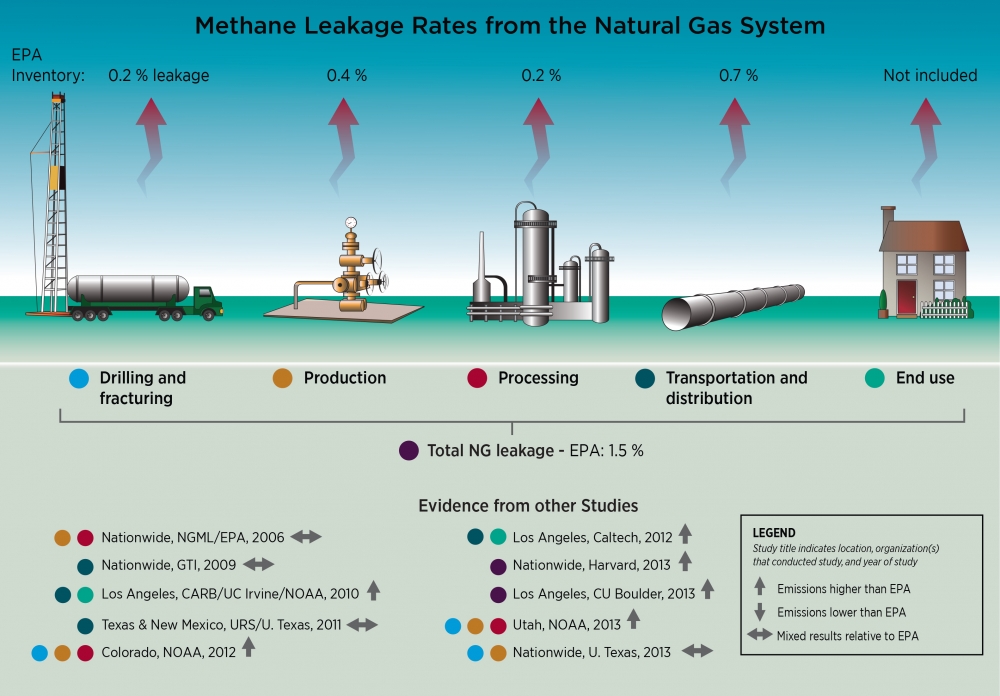
For many, being a musician is inextricably linked with their sense of self. Their self worth is then strongly affected by their capacity to perform. This is especially true for singers, as voice is an integral part of identity formation and expression.

There is some truth in the old saying, “You’re only as good as your last performance.” If you’re not performing at all, how good can you be?

For retired musicians, it can be challenging to find a comparable way to channel the energy they once dedicated to performance.

Musicians, like other professional groups, are diverse in many ways, but there are some personality traits different types of musicians tend to share.

For example, classical musicians typically score highly on introversion, which partly accounts for their ability to focus on the solitary practice necessary for developing technique before engaging in ensemble playing.

In contrast, rock and pop musicians tend to score highly on extroversion, often learning and rehearsing more informally in collaboration with their peers. Extroverted performers often derive their energy from audience interaction so it can be difficult to achieve that “buzz” once the music stops.

Don’t stop me now

Performing music is widely recognized as a way of achieving the highly desired state of “flow,” otherwise known as “peak performance” or being “in the zone.”

Providing that the challenge of performing closely matches the skill level of the performer, music can become an all-absorbing activity, which is so immersive that it distorts our sense of time and distracts us from our everyday concerns. During live concerts, the audience and performers can experience a sense of “collective effervescence” rarely achieved elsewhere.

Add in the emotional high derived from the adrenaline released in public performance and we can begin to understand why the rewards of performance can be difficult to replace in retirement.

Rihanna’s “Don’t Stop the Music,” Queen’s “Don’t Stop Me Now” and Elton’s “I’m Still Standing” are these musicians’ ways of telling us that they want to be in the limelight, just as much as their audiences want them to stay there.

Michael Bonshor, Course Director, Music Psychology in Education, Performance and Wellbeing, University of Sheffield

This article is republished from The Conversation under a Creative Commons license. Read the original article.