Excerpted from the book
"ME THE PEOPLE" by Kevin Bleyer. Copyright © 2012 by Kevin Bleyer. Reprinted by arrangement with Random House, an imprint of The Random House Publishing Group, a division of Random House, Inc. All rights reserved.
I once drove through Nebraska, via I-80, days after my girlfriend broke up with me, on a self-imposed road trip from Los Angeles to Cedar Rapids to find my brother’s shoulder and cry on it. It is a long, straight, hypnotically boring drive that not only gave me ample time to think about the loss, but also put my recent heartbreak in much-needed perspective.
It could be worse, I realized. I could live here.
Cold comfort, perhaps, but comfort nonetheless. And so, for providing the enforced monotony that only a dull road trip can provide, and the bleak void to which to compare my own relatively full life, I am grateful to the state of Nebraska. Nebraska has a special place in my heart.
It has no place, however, on a map of the United States.
Let me explain: California is a state. New York is a state. Texas, for the time being at least, is a state. And they deserve to be. They’re big, they’re boisterous — but most crucially, they’re populated. Thirty-seven million people live in California, four million in Los Angeles alone. New York is home to almost 20 million people. If California were a country, it would have the eighth largest economy in the world. If New York City were its own state, it would be the 12th largest — and in my humble New Yorker opinion, the best.
Whereas Nebraska?
There are more Americans in prison than in Nebraska. And not for nothing, but as I drove past endless rows of cornstalks, I couldn’t help but think: What’s the difference? Nebraska, whose official state motto is “Equality Before the Law,” nonetheless feels like a punishment for a crime. And like a criminal, I whiled away the hours (or was it days?) thinking up mottoes that better apply: “Nebraska — a great place to serve some time.” “Nebraska — if you lived here, you’d be bored by now.” “Nebraska — Canada’s Mexico!”
Sure, the argument could be made that Nebraska is in fact an idyllic land full of picturesque cities with enviable small towns steeped in small-town values personified by some of the loveliest Americans to grace the planet — and, I confess, in my wildest dreams I often fantasize about living among them in such a glorious place — but let’s be honest: It’s also a lifeblood-sucking leech on our body politic. Yes, my fellow citizens, despite what the original Constitution of the United States says about the qualifications for statehood and the guarantee of representation in Congress, by every measure that truly matters in America (bigness, crowdedness, awesomeness, Texasness), Nebraska doesn’t deserve its star on the American flag.
Which is to say nothing about Montana (4th largest, 44th most populous).
Or Wyoming (10th largest, 50th most populous).
Or the largest but 47th most populous state we call Alaska.
Add it up, and more than half of all Americans live in eight states. The big ones. The important ones. How many live in the eight least populated states? Less than 3 percent. Three percent — also known as the margin of error. (Which raises a terrifying scenario: It’s possible these states are completely empty.)
Yet what concerned me during my soul-deadening voyage toward Omaha was not whether these states deserve their claim on so much territory (they don’t), or whether, as guaranteed by Article I, they should be represented by two senators as powerful as the senators in states where people actually live (they shouldn’t). Rather, as my car sped past miles and miles of unharvested high-fructose corn syrup, my muscles atrophying and my eyes fluttering in and out of semi-consciousness, my mind was focused on Article IV. Because it is Article IV, the first in the Constitution to turn its full attention to the states rather than the branches of national government, that wants me to believe that Nebraska, this expanse of emptiness which so begs for my disdain, actually deserves my respect.
It reads, in part:
Section 1: Full Faith and Credit shall be given in each State to the public Acts, Records, and Judicial Proceedings of every other State.
Section 2: The Citizens of each State shall be entitled to all Privileges and Immunities of Citizens in the several States.*
Put plainly, Article IV makes a revolutionary claim: All states are created equal. Laws made in Alaska, which is known for its lawlessness, are as valid as laws made in Pennsylvania, which invented laws. Article IV insists that, as a nation, we should care as much about the Carolinas as we do about California. Montana matters as much as Massachusetts. And New York is no better than any of its 49 neighbors — not even Nebraska. Which is, put even more plainly, ridiculous.
I should know. I’ve driven through Nebraska. I live in New York.
- – - – - – - – - – - – -
Was I thinking about the merits of giving “Full Faith and Credit” to each state as I drove through Nebraska? Not at all. At the time, I was merely thinking: I am soooooooo not a Nebraskan.
I was, at the time, a Californian. I had lived in the Golden State for four years, and as such, all of the rights and benefits of California residency were mine, all mine! I could serve on California juries, vote in California state elections, and draw California unemployment checks. Had I a major case of glaucoma or a minor case of cancer, in a few years I would even be eligible for my very own California-state-sanctioned, medically warranted marijuana — if I were, you know, into that type of thing. Citizenship has its privileges.
And Article IV is cool with that. It is designed to help me be a Californian even outside California. As written, it would guarantee that if I am granted certain “Privileges and Immunities” in my home state, all other states must also grant me those rights. I can thank Article IV for the fact that when I crossed the border from Colorado into Nebraska, I wasn’t immediately pulled over for not having a valid driver’s license. It is why when I stopped in North Platte to fill up my gas tank, the attendant couldn’t legally charge me $10 a gallon just because I wasn’t “from ’round these parts.” Although the Supreme Court has occasionally retreated to a more “limited interpretation” of Article IV — merely that states may not discriminate against citizens of other states in favor of its own citizens — it has always returned to the basic theme of Article IV: States must play nice with others, and do unto residents from other states as they would do unto their own.
Oklahoma must say to Oregon: Legal physician-assisted suicide? Not the way I would have done it, but I respect your choice. It looks good on you.
Oregonians must say to South Dakotans: Seriously? You’ll only provide abortions to a woman who has been raped if her life is at stake? Seems a bit heartless, but I guess that’s just another reason why we don’t live there.
This makes sense — I, for one, enjoy those regional quirks, and wouldn’t want to live in a country where I couldn’t tell Montana from Maine.
Yet Article IV isn’t all-powerful. As a referee between the states, it has its limits. The most famous check on Article IV, in fact, involved the states of New Jersey and Delaware, a boatload of purloined oysters, and George Washington’s nephew Bushrod. In 1832, Bushrod, then a federal circuit court judge, ruled on a landmark case, Corfield v. Coryell. The question at hand was whether the state of New Jersey should be allowed to prohibit the plaintiff, Mr. Corfield (and all other non-Jerseyans), from gathering oysters found in the pristine waters off New Jersey (keep in mind, this was back in 1832, when New Jersey waters stood the chance of being pristine) only to return back to their home states to sell them for profit. Bushrod ruled that although the “Privileges and Immunities” protected by Article IV do include “the right of a citizen of one state to pass through any other state … for the purposes of professional pursuits,” stealing oysters isn’t one of them. “We cannot accede to the proposition,” he wrote, “that the citizens of several States are permitted to participate in all the rights which belong exclusively to the citizens of any particular State, merely upon the ground that they are enjoyed by those citizens.”
In other words, go ahead and cruise down our New Jersey turnpike and breathe our fresh New Jersey air, but if you’re not from New Jersey, hands off our New Jersey shellfish.
Article IV doesn’t merely snub oystermen from Delaware. It fails to protect Mormons who might want to marry a dozen sister-wives in Utah and expect Vermont to approve of their polygamous bliss, or gun-toting Kentuckians who want to bring their semiautomatics to church while visiting gun-skittish Maryland. These, too, go too far.
But what if I’m not a Delaware oysterman or a Utahan missionary or an armed Kentuckian? What if I am, say, a gay Iowan? And instead of illegally gathering winkles in Weehawken or wives in Salt Lake City, I have gotten legally married in Iowa — which sanctioned gay marriage way back in 2009. And what if I wanted to celebrate the nuptials with a road trip through Nebraska? (I’m not sure why I’d do that, but just roll with me.) Would Article IV compel Nebraskans to recognize my marriage?
Congress has tried to say no. In 1996, it passed the Defense of Marriage Act, citing the broad power Article IV gives Congress — brace yourself for some gobbledygook — to “prescribe the Manner in which such Acts … shall be proved, and the Effect thereof.” Which, if you ask me, makes about as much sense as in which such Sentences … shall be understood, and the Nonsense thereabouts.
Now, such gibberish would baffle a normal human; to Congress, however, it made perfect sense. It determined, conveniently, that if could limit “the Effect” that gay marriage would have as it traveled the nation, it could also prescribe that it must have no effect at all — which is to say, it could give states the power to ignore gay marriages entirely. The Harvard constitutional scholar Laurence Tribe has called this linguistic tap dance “a play on words, not a legal argument,” which forms in us the bad habit of creating “categorical exceptions” to Article IV, when Congress has no such power.
Neither side is happy with the arrangement. Gay couples, skeptical that the federal government will ever give them that wedding day owed to them, want to see more states legalize gay marriage; opponents of gay marriage, fearful that gays might spontaneously band together and attack their northern border brandishing Le Creuset spatulas and Rufus Wainwright CDs, want to see nothing less than a constitutional amendment defining marriage as between a man and a woman. It’s all very confusing. What’s a gay couple to do — other than plan their honeymoon in San Francisco?
It is this competition, between what one state might want for its citizens and what another state might demand for its own, that Article IV is supposed to referee. Yet it hasn’t. It doesn’t. And what’s more — with all due respect to our nation’s homosexual polygamist mollusk aficionados — its failure to do so has meant repercussions far greater than a marriage license, or a second wife, or cheap, tasty New Jersey seafood: Namely, Article IV, with its schoolyard devotion to fair play and radical equality, has done something far more treacherous.
It started the Civil War.
From the book “Me the People,” by Kevin Bleyer. Copyright © 2012 by Kevin Bleyer. Reprinted by arrangement with Random House, an imprint of The Random House Publishing Group, a division of Random House Inc. All rights reserved.
From a proposed sex strike to mock legislation restricting access to Viagra, women are coming up with increasingly creative ways to respond to attacks on reproductive rights. Many of them are relying on something ladies are often said to be without: a sense of humor.
In case you didn’t catch on, the sex strike is tongue-in-cheek. Annette Maxberry-Carrara, founder of Liberal Ladies Who Lunch — the group that proposed the “Access Denied” protest — tells me with a laugh, “We’re not looking at it as a literal strike.” But they are making a serious political statement. The event’s tagline reads, “If our reproductive choices are denied, so are yours.”
You would have to be profoundly tone deaf to not recognize the satire in recent bills proposed by female lawmakers that proclaim “every sperm is sacred” and restrict access to the blue pill. Last month, Oklahoma state Sen. Constance Johnson offered a bill in response to Senate Bill 1433 — which seriously and nonsatirically holds that a fetus at “every stage of development” has “all the rights, privileges and immunities available to other persons, citizens and residents of this state.” Her proposal states, “[A]ny action in which a man ejaculates or otherwise deposits semen anywhere but in a woman’s vagina shall be interpreted and construed as an action against an unborn child.”
A handful of similar bills call for men to jump through hoops to obtain Viagra — a mandated cardiac stress test, a rectal exam, even being forced to watch a “horrific” video on the drug’s side effects. Some have managed to make a big statement without a bill: During a protest of Oklahoma’s Personhood measure, state Sen. Judy Eason McIntyre stood in front of the state Capitol with a grin on her face and holding a sign reading, “If I wanted the government in my womb I’d fuck a senator.”
It isn’t just these daring female lawmakers who are turning to humor to combat the anti-choice onslaught. Consider the scores of everyday women who have hijacked the Facebook page of Virginia state Sen. Ryan McDougle — a supporter of the state’s transvaginal ultra-sound mandate — with exquisitely detailed descriptions of their vaginas. For example: “Hey senator! just a quick hello to let you know that I’m currently ovulating! my vaginal discharge is thick and sticky and smells acidic (probably all the garlic i’ve been eating!).” In February, my Facebook news feed was filled up with repostings of a screenshot from “Morning Joe” showing an all-male panel criticizing an all-male Congressional panel on birth control. (The show certainly didn’t intend it as satire, but it read like a piece from the Onion, and women circulated it as such.) That’s not to mention recent biting commentary on the topic from comedians like Amy Poehler.
This isn’t entirely new, of course. Women have long used satire to make political points. Just look at suffragette Alice Duer Miller’s bulletpoint list of reasons why men should not be given the right to vote (a highlight: “Because men are too emotional to vote. Their conduct at baseball games and political conventions shows this, while their innate tendency to appeal to force renders them unfit for government”).
“There were a lot of women humorists in the 19th century who were going at the political system in a very similar way, and it had a very big effect on women getting the vote and being able to be admitted to colleges,” says humorist and feminist theory professor Gina Barreca. “Every generation of women sadly thinks they’re the first ones ever to do this because the tradition isn’t usually encoded.”
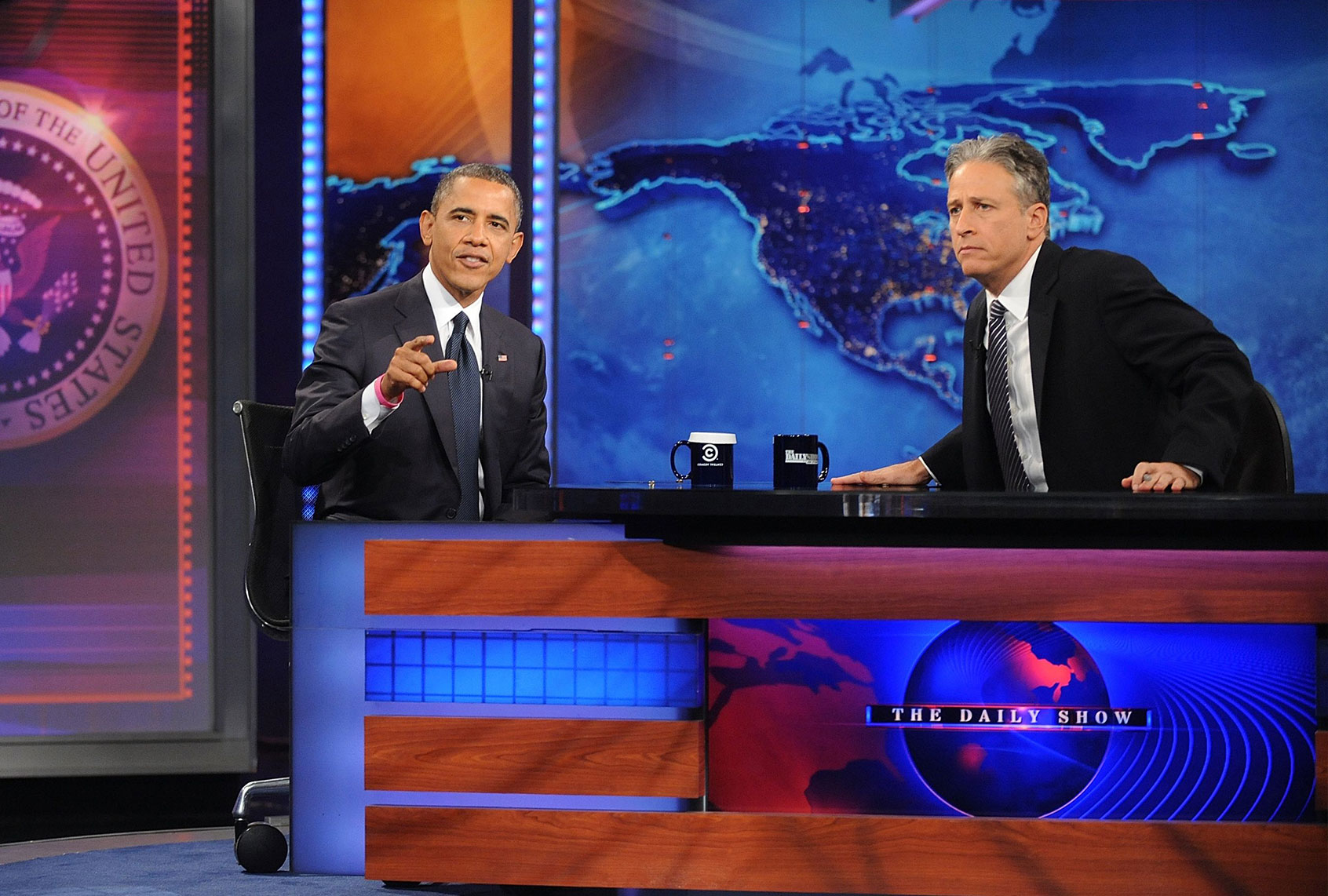
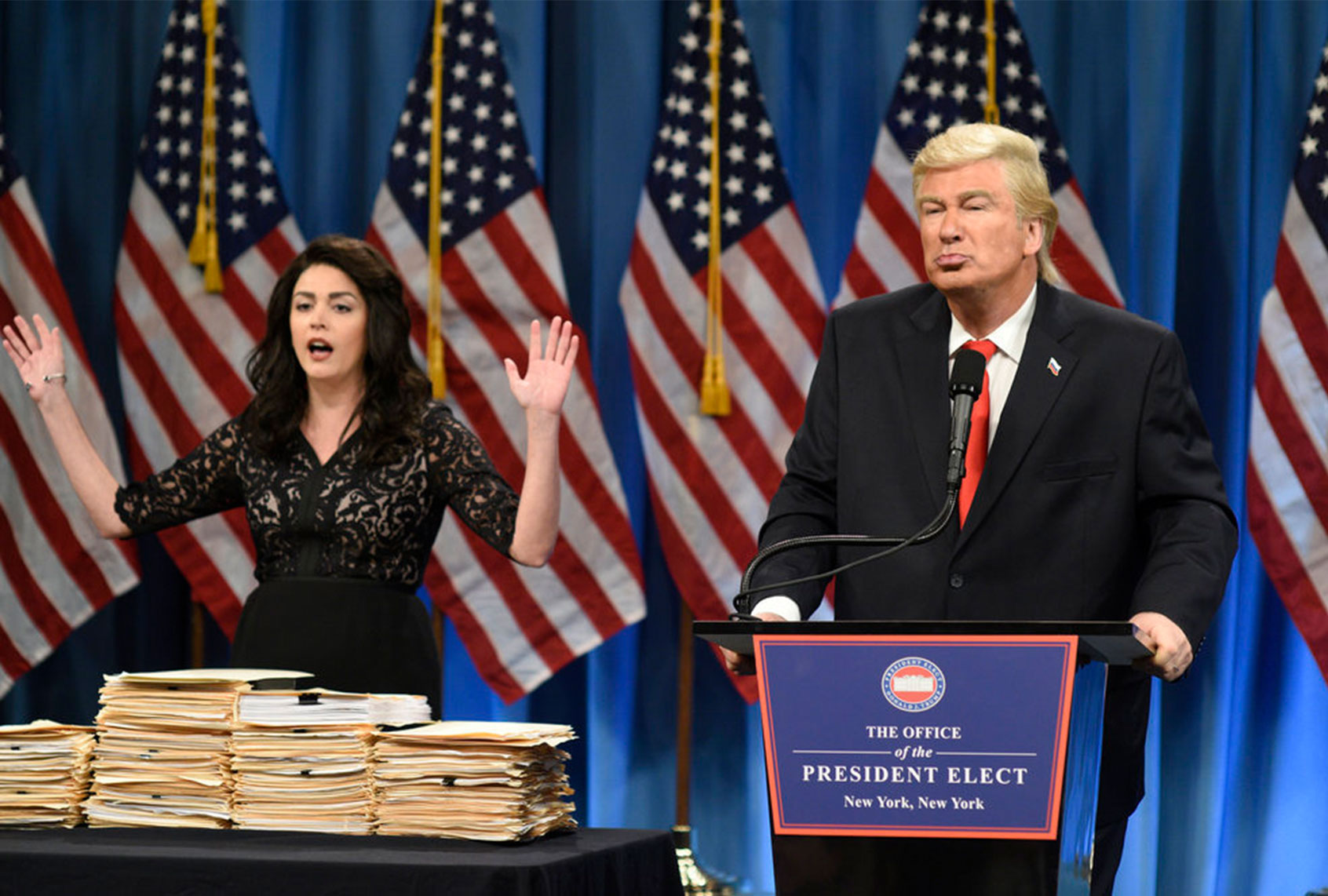
That said, it’s reached a fever pitch as of late. The recent comedy-infused pushback against the assault on reproductive rights builds on what Amber Day, author of “Satire and Dissent: Interventions in Contemporary Political Debate,” calls a “satirical renaissance” of the last decade. It’s a result, in part of the fact that “political debate has become so heavily stage managed that there is rarely any discussion of substance happening,” she says, and talking points are “repeated ad infinitum on the debate programs, with scarcely anyone bothering to fact check or to push through to the real substance of the matter.” Contemporary satire — from “The Daily Show” to “Saturday Night Live’s” Weekend Update — offer “us a way to satisfyingly break through the existing script.”
Women are turning to satire now “for many of the same reasons others have in the past,” Day says — it’s just that the current war on reproductive rights is more motivating for vagina-havers. “What much of the recent satire has demonstrated is that there is still a lot of sanctimonious language that gets used in discussions of women’s health and sexuality,” she says. “That language is revealed as ridiculous when applied to men’s sexuality.”
That was the aim of Missouri state Rep. Stacey Newman, a Democrat, who proposed a measure earlier this month that read in part, “A vasectomy shall only be performed to avert the death of the man or avert serious risk of substantial and irreversible physical impairment of a major bodily function of the man.” She tells me that attempts to restrict women’s reproductive rights are constant. “We deal with this all the time,” she says. “You feel like all you can do is sit there and bury your head and go, ‘Is anybody paying attention?’”
Maxberry-Carrara, of the faux sex strikers, was similarly aiming to get people’s attention, and her tongue-in-cheek protest did the trick — and the strike hasn’t even officially started yet. “What we wanted was to bring attention to the assault on women’s rights,” she says. Her hope is that by poking fun at these legislators, “the less seriously we can take them as candidates.”
Barreca, author of “It’s Not That I’m Bitter … : Or How I Learned to Stop Worrying About Visible Panty Lines and Conquered the World,” says women are turning to humor right now “because it’s so much more effective than weeping or banging your shoe on that table!” She says, “The point of satire is not only to illustrate the absurdity of things but to show what the world looks like when it’s turned upside down.”
Amanda Marcotte, a feminist commentator and author, says, “Things have just gotten to the point of absurdity that you can’t react without being absurd yourself.” Thanks to recent attacks on even contraception, “ordinary women who often don’t pay attention to politics are finally beginning to pay attention,” she says. “And I think that means more opportunities to communicate through humor instead of the typical outrage thing. Humor can be very clarifying.”
Meg Wolitzer, author of “The Uncoupling,” a fictionalized account of a sex strike, points out, there’s a long tradition, “starting with Aristophanes and continuing up through a strange episode of “Gilligan’s Island” that I remember from my childhood,” of sex strikes being used for comedy. “Desperate times do call for creative and vigorous responses, and the assault on reproductive rights today certainly qualifies as desperate times. I think women need to find lots of ways to speak out and act, and this is just one,” she says.
You might ask how effective it is in bringing about actual change. Day says, “Historically, satire has often been dismissed as never actually accomplishing anything, because it is extremely rare to be able to draw a straight line from a piece of satire to a substantive political response, like a bill being passed.” (Although she gives the example of Jon Stewart and the Zadroga Act; Stewart helped shame Republicans who filibustered against extending benefits to Sept. 11 responders who died of cancer or respiratory diseases.) But this is “an overly narrow way to think about political efficacy,” she says. “When satire is successful, it functions to shift the terms of the wider public discussion. And that, in itself, is a big deal.”
Continue Reading
Close
Muslims worldwide groaned upon hearing the news that Oliver Stone’s son, Sean, converted to Islam while filming a documentary in Iran.
Although we — the collective 1.5 billion Muslims worldwide — assume Sean Stone is a fine, upstanding man and sincerely wish him spiritual contentment, we earnestly ask Allah why Islam only attracts controversial celebs (in this case, the son of a controversial celeb) who further tarnish our already toxic brand name?
We plead to the heavens for an answer as to why he converted in Iran, of all places, which is currently the most feared and loathed country in America and about as popular as herpes.
We have patiently endured, oh, Allah.
We miraculously survived Mike Tyson, who converted to Islam while incarcerated, and then angrily threatened Lennox Lewis in an infamous interview: “I want your heart. I will eat his children. Praise be to Allah.”
Awesome.
Islam has the lowest favorability rating of any religion in America. If Islam were a world economy, it would be Greece. If it were a professional athlete, it would be San Francisco 49ers punt returner Kyle Williams, who muffed two critical punts, which helped the New York Giants reach the Super Bowl. If Islam went to the prom, it would be the ugly girl with freckles and an overbite standing in the corner with a bucket of pig’s blood teetering precariously over its head. If Islam were a Republican presidential candidate, it would be Newt Gingrich.
A diverse jirga of American Muslim leaders decided “enough was enough” and held an emergency meeting at Lowes’ Home Improvement store in Dearborn, Mich., to strategize how to bolster Islam’s faltering image.
A consensus emerged that we needed to draft popular, mainstream celebrities whose successful addition to our starting lineup would boost our international brand name. After all, 1,400 years of civilization and the religious practices of 1.5 billion solely rest on the tanned shoulders of the rich, famous and beautiful.
Inspired by comedian Dave Chappelle, one of the few Muslim converts who could be considered a net gain, the Muslims held a “Religious Draft” this week, inviting major religions to participate on hallowed ground: McDonald’s.
The following is a summary of the proceedings.
THE FIRST ROUND PICK
Since it was universally accepted Islam was the 2011 Indianapolis Colts of world religions, they had first pick.
Predictably, the Muslims drafted free agent Liam Neeson, who recently said, “There are 4,000 mosques in [Istanbul]. Some are just stunning and it really makes me think about becoming a Muslim.” The Irish actor is experiencing a pop cultural rebirth as the 21st century embodiment of uncompromising, kick-ass masculinity and sage paternalism. On behalf of Muslims, he took revenge against France, which recently caved into hysteria and banned the burqa. Neeson single-handedly destroyed the entire country with his bare fists in the blockbuster action film “Taken.” Muslims believe Neeson will help rebrand them as Jedi Knights, due to his portrayal of Jedi Qui-Gon in “Star Wars: The Phantom Menace,” and replace their current image as Dark Lords of the Sith.
Rumors circulated that many Evangelical Christians felt slighted by this pick since Muslims stole their digital Avatar of Jesus: Neeson voices “Aslan the Lion” from the “Narnia” movies.
The rest of the day’s picks were organized according to different types of celebrity.
ATHLETES
In a surprise move, the Buddhists requested Mike Tyson from the Muslims. Exhausted from voluntarily suffering for the past 2,500 years, the Buddhists decided Tyson’s crushing right uppercut could “really eff up China.”
In turn, the Buddhists decided to offer the Beastie Boys — the aging, versatile, hip-hop trio from Brooklyn – sensing they peaked with their 1998 “Hello Nasty” album. The Muslims accepted, acknowledging the songs “Sabotage” and “Shake Your Rump” as perennial favorites in Egypt and Lebanon.
The Buddhists selflessly threw in Richard Gere and DVD copies of “American Gigolo” to sweeten the deal.
The Jews intervened and said they wanted the Beastie Boys back on their team. They offered the Muslims Ben Roethlisberger, two-time Super Bowl champion quarterback of the Pittsburgh Steelers. Having read about Big Ben’s dubious history of sexual impropriety, the Muslims passed, but decided to donate Mike D of the Beastie Boys to the Jews as a truce offering. Allegedly, the Muslims could never forgive Mike D for the horribly weak rhyme “Everybody rappin’ like it’s a commercial, acting like life is a big commercial” on the song “Pass the Mic.”
The Jews accepted the offer.
The Muslims, feeling emboldened, made an ambitious pitch to the Christians for Denver Broncos quarterback Tim Tebow, who “just wins.”
Muslims offered former NBA all-star Shaquille O’Neal, who fell from their graces after he acted as a giant genie in the box-office bomb “Kazaam.” They also threw in Mahmoud Abdul-Rauf, the controversial Denver Nuggets star who converted to Islam and refused to stand for “The Star-Spangled Banner” before games. The Christians were initially enticed, seeing this as a perfect “born-again” moment, but they passed.
The Muslims went aggressive and promised they wouldn’t supplant the Constitution with Shariah and replace the White House with minarets unless Tebow and Mel Gibson crossed over.
The Christians, anxious to excommunicate Gibson, agreed. For the 2012 NFL season, Tebowing will now consist of prostrating and praising Allah after every touchdown. The Christians asked the Muslims to preserve Tebow’s chastity and not introduce him to Miss USA Rima Fakih or hot Arab women from the reality TV show “All-American Muslim”; the Muslims said they’d try, but they promised nothing.
COMEDIANS
The Jews made a play for comedian Dave Chappelle, a Muslim, citing his hit series on Comedy Central “Chappelle’s Show” as a creative juggernaut that still influences the masses — especially several rabbis, who apparently love saying, “I’m Rick James, bitch!” after performing circumcisions.
The Muslims immediately rejected the offer, saying Chappelle is perhaps the only living proof that Muslims can be intentionally funny.
Instead, they offered Iranian President Mahmoud Ahmadinejad as an example of an unintentional comedian and provocateur in exchange for Israel cooling down its dangerous rhetoric of a preemptive strike on Iran.
Furthermore, the Muslims offered the newly acquired Mel Gibson straight up for Jerry Seinfeld.
The Mormons tried to intercept Seinfeld by playing one of their highest cards: “Napoleon Dynamite” actor Jon Heder. The Jews pretended not to hear this mockery and allowed the Mormons to slink away with some shred of remaining dignity.
The Jews finalized a deal with the Muslims and rumors have circulated since that Mel and Ahmadinejad are under house arrest in Tel Aviv, forced to watch “The Chosen” and “Fiddler on the Roof” on repeat while listening to Jerry Lewis perform comedy.
MUSICIANS
Sensing friendly relations, the Jews humbly approached the Muslims for rapper Ice Cube, citing his immense street cred and respect from the hip-hop and African-American communities. The Jews conceded the Matisyahu experiment, although initially promising, had failed, as the Hasidic reggae rapper never lived up to his “King Without a Crown” potential.
The Muslims mulled it over for a considerable time. The jirga decided they would retain eternal rights to Cube’s 1993 hit single “It Was a Good Day” from his multi-platinum album “Predator,” but ultimately release him because he inexplicably starred in the awful family comedy “Are We There Yet?”
Muslims in return asked the Jews for Kabbalah-worshipping Madonna, sensing serious comeback potential after her excellent Super Bowl halftime show.
Catholics made a request for multi-talented actor and hip-hop artist Mos Def from the Muslims, who soundly rejected any and all future offers, stating the entirety of the Middle East and North Africa could never bear to part with Def’s song “Ms. Fat Booty.”
Instead, Muslims counter-offered with alternative rock artist Everlast, whose 1998 single “What It’s Like” has made a surprising comeback on radio stations due to the economic recession. The Catholics still remember Everlast as the lead singer of the hip-hop band House of Pain, who produced the classic party anthem “Jump Around,” before his conversion to Islam. The Catholics accepted; South Asian Muslims danced to “Jump Around” one last time; and the Muslims in return received Taylor Swift and her legions of pubescent female fans, along with her former boyfriend Taylor Lautner, who played the ethnic werewolf in the “Twilight” movies.
The Muslims had finally secured their most promising young-adult celebrity.
POLITICIANS
The Mormons halfheartedly offered Mitt Romney. The Evangelicals promised Michele Bachmann and her lifetime supply of blinks. The Catholics, out of sheer desperation and embarrassment, bartered Newt Gingrich and his third wife, Callista.
The Muslims decided to stick with their boy, Barack Hussein Obama, in hopes of retaining the White House in 2012.
MISCELLANEOUS
Muslims threw a Hail Mary and asked fundamentalist Christians for Chuck Norris, who so thoroughly kicked the Middle East’s entire ass during the ’80s. The Muslims respected Norris for his ability to fire an Uzi, perform a roundhouse kick and wave an American flag at the same time. In return, Muslims offered the infamous WWF wrestler the Iron Sheikh and even agreed to teach the Christians the impregnable camel clutch. Norris, humbled by the offer, respectfully declined, and admitted that although he enjoyed killing hordes of fictional Arabs in jingoistic action movies like “Delta Force,” he currently fancied himself an intellectual and activist committed to exposing the nonexistent threat of Shariah infiltrating America. The Muslims were saddened, but collectively agreed to watch Norris in the summer action film “Expendables 2.”
The Hindus decided to play their strongest card, actress Julia Roberts, and made a request for journalist Lauren Booth, former British Prime Minister Tony Blair’s sister in law, who converted to Islam in 2010. The Hindus saw her as the perfect revenge and giant, henna-painted middle finger to England for the British Empire’s previous colonization and exploitation of India’s resources. The Muslims thought this was reasonable and now the “Pretty Woman” flashes her million-dollar smile behind a burqa.
THE CHOSEN ONE
Finally, the draft ended with all the religions coveting “the chosen one,” who would single-handedly redeem their public image both at home and abroad.
The Mormons offered former Republican presidential candidate Jon Huntsman, highlighting his excellent Chinese and fine hair. The Muslims initially offered NBA Hall of Famer and current cultural ambassador Kareem Abdul Jabbar. They sweetened the deal and threw in President Obama. The Jews presented Steven Spielberg and his entire film library. The Hindus humbly offered Bollywood actors Amitabh Bachan, Aishwarya Rai and a picture of Gandhi signed by Ben Kingsley. The Buddhists presented Tina Turner, Herbie Hancock and Tiger Woods.
But, it was sadly to no avail.
The Christians and Church of New York decided to keep NBA superstar and New York Knicks point guard Jeremy Lin. Rumors circulated that they were talking to China about a potential trade to ensure the ambitious superpower does not ask the United States to repay its debt, thus financially crippling and utterly destroying our great nation.
All in all, “it was a good day” for the Muslims in the first Religious Draft.
Continue Reading
Close
When “Do They Know It’s Christmas?” came out in 1984, I pretty much thought I was British. I dressed like the asexual keyboard player from the Cure, pretended to love everything Depeche Mode was singing about – because, you know, people are people – and pledged undying love for bands I read about in the obscure British magazines sold at Tower Records. (In fact, only since getting Spotify have I even heard an entire album by the Blue Nile and, it turns out they sound like every other band I pretended to like in the 1980s, except for Belouis Some, who were terrible on a whole other level.) So “Do They Know It’s Christmas?” combined all of the greatest things in my world:
1. British bands.
2. British bands singing morosely.
3. British bands singing morosely about hungry people in Africa, a place I was familiar with primarily through playing Risk, but which I nevertheless felt a great passion for. We must get these people fed, the world kept telling my 13-year-old self, and therefore I, too, felt this very strongly … for about two months, anyway, because puberty was making me very interested in a whole host of other things.
At any rate, I loved “Do They Know It’s Christmas?” and routinely waited for hours for the video to show up on MTV or “Night Flight” or “Friday Night Videos,” hoping against hope that I’d get to see the extremely moving vision of Boy George dressed like an advertisement for bulky women’s housecoats (watch the video, people) or see the plaintive look in Sting’s eyes as he sang the word “sting” (again, check the video, it’s a moment of utter grace). But what I especially loved was the righteous anger of Bono shrilling, “Well, tonight thank God it’s them instead of you …” So powerful, so wise!
It wasn’t until this month, however, 27 years in the dust — the song such an oldie it can be performed on “Glee” — when the song came on the radio that it dawned on me what a dick line that is. It got me thinking about the song in its entirety and what I’ve determined is that, of all the Christmas songs, it’s really the most fucked-up one that doesn’t have to do with the systematic bullying of a red-nosed reindeer. And so I present an annotated guide to how utterly corrupt “Do They Know It’s Christmas?” is, in line-by-line fashion:
“It’s Christmas time,
there’s no need to be afraid.”
Really? No need to be afraid? Does cancer stop on Christmas? What about prostate exams? Have you even pondered how frightening it would be if you were sitting in your living room on the evening of Dec. 24 and heard something coming out of your fireplace and before your wondering eyes appeared some lunatic in a red suit? What about getting the shit stomped out of you at Walmart? No need to be afraid? You lie, Bob Geldof!
“At Christmas time
we let in light and banish shade”
OK, now, as it relates to Africa, wouldn’t shade actually be a better gift?
“And in our world of plenty
we can spread a smile of Joy
Throw your arms around the world
at Christmas time.”
Unless, of course, you try to throw your arms around a place that doesn’t celebrate Christmas — like, you know, large parts of Africa — and instead of spreading joy, you end up starting 25 years of sectarian civil war.
“But say a prayer,
Pray for the other ones.”
I’m gonna go ahead and presume “the other ones” are the godless heathens …
“At Christmas time it’s hard
but when you’re having fun …”
Like, say, if you’re Simon LeBon and you’ve spent the last 12 months sleeping with supermodels, or you’re Boy George and you just got done shooting up some great smack, or you’re the other guy in Wham! and you’re just biding your time until the gig is up and you can marry one of those boxy Bananarama girls and race cars for the rest of your life …
“There’s a world outside your window
and it’s a world of dread and fear”
Technically, the world outside, at the time of the song’s recording, was a London street — and in the video it looks like it was filled with fans who wanted everyone’s autographb… and, in fact, according to the video, it looked like everyone was having a pretty smashing time.
“Where the only water flowing is
the bitter sting of tears”
Oh, for fuck’s sake. Sting sings this line in what is a fantastic merging of the real world and the world where a guy named Gordon gets to name himself Stingb… and then gets to, ironically, sing the word “sting” but make it, you know, really serious, because it’s a dreary allusion to how dry it happened to be in Africa that year.
“Where the Christmas bells that are ringing
are the clanging chimes of Doom”
Just so we’re clear here, if they don’t know it’s Christmas, why would they have Christmas bells? And why ring in the doom when they are clearly already doomed? Wouldn’t doom just walk right in at this point? No bells needed.
“Well, tonight thank God it’s them instead of you.”
Ah, yes, the crux of it all. If there’s one thing the Bible teaches, it’s that you should thank God for other people’s suffering. Now Bono is a goddamn hero, we’re told, since he’s spent the last 30 years standing on moral high ground – a moral high ground paved with the money of kids like me, who didn’t know what the fuck “Sunday Bloody Sunday” was all about, but who were, like, totally in support of it – though one has to think he could have looked at the line before he sang it and suggested a rewrite. Maybe something along the lines of “Well, tonight thank God you have food and clean water and a slight disposable income which allows you the opportunity to buy this great song on the latest technology … the cassette tape! Get thee to Sam Goody!” If this song were written today, Justin Bieber would certainly have something wise to say, like, I dunno, “Well, tonight thank God you’re not a Kardashian.”
“And there won’t be snow in Africa this Christmas time”
This is egregiously stupid. It never snows in Africa during Christmastime, because it’s the summertime there. Most specifically in Ethiopia – which is what this song is actually about, the famine in Ethiopia – it’s the start of the driest season. And it’s not as if people were starving in, say, South Africa, or else why would everyone have to get together a few months later to pledge that they ain’t gonna play Sun City? – but beyond that, it just doesn’t snow in Ethiopia. Ever.
“The greatest gift they’ll get this year is life.”
A shitty fucking life, as you’ve made abundantly clear!
“Ohh….
Where nothing ever grows
No rain or rivers flow
Do they know it’s Christmas time at all?”
No, because they are starving to death. And also, depending upon where they are in Ethiopia, they may very well be Muslim.
“Here’s to you…
Raise a glass for everyone
Here’s to them
Underneath that burning sun
Do they know it’s Christmas time at all?”
How grand. These rich former colonial oppressors are raising a glass to the Africans, who don’t even have any fucking water! You’re just sipping on wine like it’s nothing! You bastards! Send over a bottle of water!
“Feed the world
Feed the world
Let them know it’s Christmas time”
And here the real, dark truth of the song reveals itself. It’s not just about feeding the Africans, it’s about feeding the world and, in addition, letting the entire world know it’s Christmastime. This happened once before. It was called the Crusades.
All that said, still love the song. For real. Very catchy.
Continue Reading
Close
Christopher Hitchens and I were friends for 40 years, plus another five when we were enemies. He took ideas so seriously that if he disagreed with you on a matter that he deemed important, he’d literally throw you in a ditch. It was 1972, the height of our mutual virility. He and I went to a pub to celebrate his most recent intellectual victory over the establishment press. I intimated that sometimes women could be funny on purpose. Even back then, the thought enraged him. Hitchens threw a drink in my face, pressed a lit cigarette into my neck, and hit me over the head with a barstool. The next thing I knew, it was two days later and I was lying hogtied and naked beside the M5. Hitch had already severely damaged my reputation in a vicious essay in the Guardian. But that’s how he operated, and that’s why we loved him.
University, as you know, is the only time in one’s life when anything really worthwhile happens. I met Hitch there. The first time I saw him, he had a bird on each arm and a woman by his side. She beamed as he read aloud passages from “Homage to Catalonia.” He looked up.
“Who the hell are you?” he said.
“I’m your housemate,” I said.
“Are you in favor of the war in Vietnam?”
“Of course not.”
Hitch put down the book and took a swig of cheap Scotch.
“Good,” he said. “Because I refuse to fraternize with men who are afraid to be intellectual heroes.”
In the annals of history, only Orwell, Voltaire and maybe a half-dozen other guys could match’s Hitch ideological bravery and breadth of political knowledge. In 1977, after I’d returned to his graces by aiding him in a plot to assassinate Henry Kissinger’s character, Hitch and I visited Borges’ library in Buenos Aires. At the time, Hitch was working for the KGB while pretending to work for the BBC, and I was working for the Mossad while pretending to work for Burger King. But our many identities were merely covers for our lives as political writers at low-paying magazines.
Borges invited Hitch and me into his home, fed us tea and empanadas, and launched into a seamlessly brilliant discourse on surrealism in Latin American history. He talked for 30 minutes without stopping, during which time Hitch smoked six-dozen cigarettes. When Borges finished, Hitchens paused, spat in his ashcan, and said,
“Of course, you know, you’re wrong about everything.”
He then proceeded to refute Borges, point for point, until he reduced the blind scribe of Buenos Aires to tears.
No one loved ideas more than Hitch.
Much ink has been spilled, of course, about the legendary friendships Christopher forged with other writers throughout his life. For a time in the 1980s, he, Martin Amis, Salman Rushdie and I lived together in London. Hitchens rented us a six-story flat so we could swap partners more easily. Many was the time we passed the bottle until dawn, bemoaning Thatcher’s England, Reagan’s America, and also some stuff about the Middle East. Sometimes Hitchens would bring over a dissident writer who was fleeing oppression in his native country, and we’d all make fun of Mother Teresa and Princess Diana, then remove our pants to compare our manhoods. We were so middle-aged and foolish then, so committed to the struggle.
Hitchens spoke out against war, and also for war. In a span of five years, he bore witness to the fall of the Berlin Wall, the explosion of the Eiffel Tower, and the construction of the new holographic Eiffel Tower. He had acid in his pocket, acid in his pen and acid in his veins. Then Darkness fell, on Sept. 11, 2001. We’d all moved to America and gotten totally rich.
Hitchens changed that day. For months, he’d wander the streets at night, looking to drunkenly berate someone who disagreed with him about the evils of Islamofascism. Occasionally he’d attempt to strangle young journalists, who admired him unquestioningly, with their own neckties. But he was right. He was always right. Even when he was wrong.
The night they killed Osama bin Laden, he showed up at my apartment, drunk but lucid, quoting T.S. Eliot, Longfellow and, of course, himself. We stayed up watching CNN, which was actually pretty boring. In the morning, over a breakfast of corn flakes and whiskey, I said, “Well, I guess that’s the end of Islamofascism. Good job!”
Hitchens went into my kitchen, took a cutting board off the counter, and threw it into my forehead, drawing blood.
“Don’t be an imbecile,” he said. “The struggle never ends. Also, you must remember that there is no God.”
I needed four stitches that day. Hitch put them in himself, with his teeth. What a friend he was.
Rest in peace, dear man.
Continue Reading
Close