The Lord of the Rings

Is “Game of Thrones” too white?

Fantasy fiction might have racial problems, but they're just a reflection of America's broader battles

  • more
    • All Share Services

Is Nonso Anozie, Lena Headey and Jason Momoa in "Game of Thrones"

Ser Jorah’s face grew thoughtful as their horses trod together down the godsway. “When I first went into exile, I looked at the Dothraki and saw half-naked barbarians, as wild as their horses. If you had asked me then, Princess, I should have told you that a thousand good knights would have no trouble putting to flight a hundred times as many Dothraki.”

“But if I asked you now?”

“Now,” the knight said, “I am less certain.”

– George R.R. Martin, “A Game of Thrones”

Epic fantasy — sprawling stories full of swords, castles, magic, kings and lots and lots of white people – is slowly finding its way into America’s cultural mainstream. In the age of the anemic box office, Peter Jackson’s films of J.R.R. Tolkien’s Lord of the Rings trilogy remain a gold standard of blockbusterdom – and his forthcoming version of “The Hobbit” will almost certainly follow suit. Newer writers like Brandon Sanderson and Patrick Rothfuss have sold hundreds of thousands of their “door-stopper” tomes of wizardry and courtly intrigue. And tonight, countless viewers will be glued to their sets for the return of what is arguably the hottest show on television, “Game of Thrones,” HBO’s adaptation of George R.R. Martin’s A Song of Ice and Fire fantasy novels.

This is all a bit odd for those of us who grew up with – maybe even got beaten up for – an obsession with these sorts of books. Accustomed to being mocked for our profoundly uncool fixations, many fantasy nerds, myself among them, have an almost nurtured notion that our love of the fantastic and the pseudo-medieval is something that the rest of the world Just. Doesn’t. Get.

But now, as our beloved genre finds its way into “normal” people’s hearts and minds, fantasy fans are increasingly confronted with an inversion of this notion – a question that I, as an Arab-American fantasy fanatic, have been wrangling with for years: If the mainstream doesn’t get fantasy, just how well does epic fantasy, with its lily-white heroes, get the multicultural real world of 21st-century America? As some of the most popular works in the genre’s history – works that shed any pretension of being children’s fare – A Song of Ice and Fire and its wonderful TV spawn are particularly useful springboards for this question.

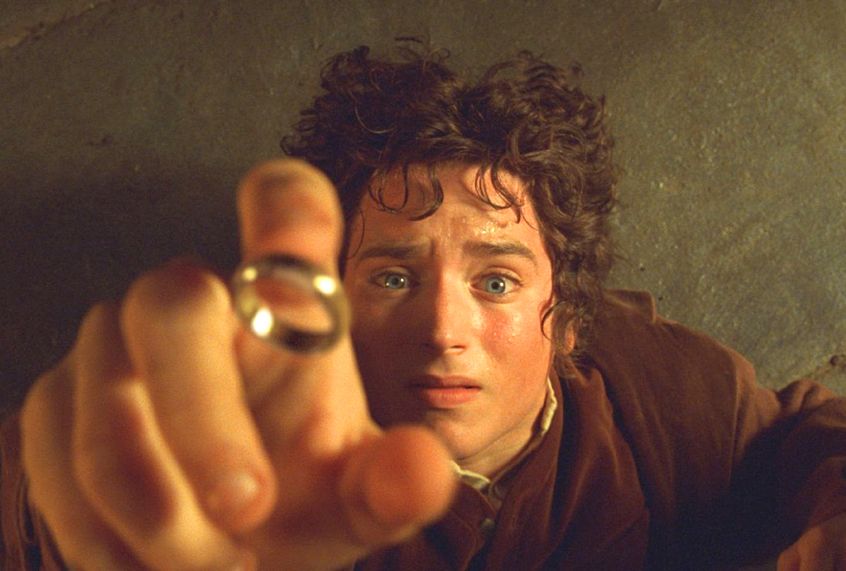
When it comes to inherited conventions regarding race in epic fantasy, “Game of Thrones” is, in a sense, standing on the shoulders of dwarfs. The Lord of the Rings is the most obvious predecessor to Martin’s work, and it’s not hard to find subtle rhetorical responses to Tolkien in his books. When Time magazine dubbed Martin “the American Tolkien,” it highlighted not only Martin’s rather astonishing genius in world-building and narrative scope, but also the ideological baggage that all of us writing in the genre have inherited from our shared progenitor.

And it’s heavy baggage indeed, however much we love Tolkien’s creation. His half-sublimated wranglings with race are more complex and fraught than either his shrillest detractors or his most fawning defenders would have us believe. But there is some irreducible ugliness in his masterpiece that really can’t be convincingly redeemed. The men of the global East and global South (“black men like half-trolls with white eyes and red tongues”) are monstrous and evil, naturally and culturally inclined to bow to Sauron, and to make war on the good men of the North and West. The bestial visages of orcs bear a striking resemblance to racist caricatures of African and Asian facial features. Above all, to be dark-skinned in Middle Earth is to be part of a savage horde – whether orcish or human – rather than to be a true individual.

The savage hordes described by Tolkien have been imported by his dozens of imitators over the years, becoming a mainstay of fantasy in books, movies and video games. It’s a convention that Martin both takes up and departs from in depicting the Mongol-inspired Dothraki. As a people en masse, the Dothraki value only their horses, treating life cheaply, and reveling in violence:

Across the road, a girl no older than Dany was sobbing in a high thin voice as a rider shoved her over a pile of corpses, facedown, and thrust himself inside her. Other riders dismounted to take their turns. That was the sort of deliverance the Dothraki brought the Lamb Men.

The HBO production – which has been so remarkable on so many fronts — has exacerbated this hard-R-rated cartoonishness, bringing out some of the novel’s more unfortunate tendencies. The show’s depiction of the Dothraki has been positively cringe-inducing. In the novels, Martin’s quasi-Mongol warrior culture is depicted in a problematically essentialist, but still complex fashion. But HBO has nudged Martin’s creation fully into racial caricature by casting a seemingly random variety of colored people, and apparently raiding productions of both “Hair” and “Braveheart” to clothe them.

Even so, by skillfully replicating the juxtapositions posed by Martin’s back-and-forth POV, the show has managed also to replicate his ultimate, rather un-Tolkienish subtext: There is nothing unique about the savage horde’s savagery. If Dothraki society is depicted as violently perverse, so is Westerosi (i.e., quasi-European) society, which bows to the whims of the Aryan-featured boy-monster King Joffrey, and which has knighted mass murderers and rapists like Ser Gregor Clegane, one of the most horrifying minor characters in all of fantasy. Every culture is savage in “Game of Thrones,” and that’s a very different view of the world than what Tolkien gave us.

- – - – - – - – - – - – -

Sunday’s Season 2 premiere begins HBO’s adaptation of “A Clash of Kings,” the second book of A Song of Ice and Fire. Book II is even more wide-ranging in terms of setting and scope than Book I was, so viewers can expect brief glimpses of characters from other parts of the world, including the Summer Isles, Martin’s analogue for Africa.

Unfortunately, some of these depictions partake in some pretty familiar stereotypes about African sexuality. It will be interesting, for example, to see what the show does with Chataya, an associate of Tyrion’s from the Summer Isles, and an upscale brothel madam. Chataya blithely sends her own 16-year-old daughter into prostitution at her “pillow house.”

Chataya continued, “My people hold that there is no shame to be found in the pillow house. In the Summer Isles, those who are skilled at giving pleasure are greatly esteemed. Many highborn youths and maidens serve for a few years after their flowerings, to honor the gods.”

“What do the gods have to do with it?”

“The gods made our bodies as well as our souls, is it not so? They give us voices, so we might worship them with song. They give us hands, so we might build them temples. And they give us desire, so we might mate and worship them in that way.”

“Remind me to tell the High Septon,” said Tyrion. “If I could pray with my cock, I’d be much more religious.”

Again, an entire nonwhite culture is presented as holding skewed values. But this wince-inducing depiction is tempered by some interesting implied questions about sex and commerce and spirituality and culture and power. Here’s hoping there’s a hint of this in the show’s version of things as well.

Part of the challenge of adapting Martin’s novels for television has to do with honoring his skill in constructing jaw-droppingly epic sweeps of plot and setting from beautifully rendered small details. If there’s a saving grace for the racial imagery in A Song of Ice and Fire, it’s in some of these little glimpses and hints that appear throughout – skillful deployment of which on”Game of Thrones” could help make an already good show great.

As an example, the only black character in the first novel is the barely mentioned, but deeply intriguing Jalabhar Xho, “an exile prince from the Summer Isles who wore a cape of green and scarlet feathers over skin as dark as night.” In the first novel, Xho’s most notable act is to frighten one of Sansa Stark’s fellow court ladies with his exotic appearance. So the first black guy to show up in A Song of Ice and Fire basically scares a white girl and then disappears. (He also ties for second place in an archery competition.) Not exactly marquee stuff, but – if online reader reactions are any measure – tantalizing. Yet the character didn’t appear at all in Season 1 of “Game of Thrones” – an understandable enough choice, given that Xho is essentially court furniture, but still a disappointing one for those of us who notice such things.

Another minor character who might have been used a bit more effectively to add a smidge of color to the screen in Season 1 is Syrio Forel, Arya Stark’s vaguely Mediterranean “dancing master” (a gender-acceptable euphemism for “sword-fighting teacher”). Forel is a fan favorite among readers, much more than one might guess from his brief appearances. The show could certainly have added a scene or two more of the wonderful actor Miltos Yeromelou, giving us just a bit more of his character training Arya in the deft swordsmanship of the East. All the more so because Arya’s POV on the show has thus far felt a bit diminished from the books. One supposes training flashbacks are always possible …

Of necessity, turning 1,000 pages of prose into a relatively few hours of screen time involves dropping, combining and retooling elements of a novel. “Game of Thrones” has already taken a few liberties with Martin’s books – cutting minor scenes, combining some characters and eliminating others, and (most notoriously) signposting plot points and character motivations through clumsy new “sexposition” scenes. It would be nice if, moving forward, the writers and producers chose as well to keep an eye on these sorts of promising moments of cultural variety and — dare I say it? — color in Westeros. But, given the contempt our culture currently holds for anything smacking of the much maligned (if chimerical) “political correctness,” I’m not holding my breath.

- – - – - – - – - – - – - -

As an Arab-American writing fantasy fiction, I’ve been asked more than once whether fantasy’s race problem is in a better place now in the Age of Martin than it was in the Age of Tolkien. My short answer is yes, but honestly, I think such questions are almost beside the point.

Ultimately, A Song of Ice and Fire, like the Lord of the Rings, is the work of a brilliant and conscientious writer who is nonetheless writing in his own time and place. The United States in 2012 is, far too often, and even with a black president, still a culture rich in racist stereotypes and xenophobic fear-mongering. Expecting a writer to remain entirely unstained by this is expecting a person to live underwater without getting wet. If we still find troubling racial assumptions and caricatures in fantasy – whether on the page, or on the big or small screen — this probably tells us more about our culture-wide problems than it does about a single writer’s, or a single show’s issues. A Song of Ice and Fire is indeed our American Lord of the Rings, and if Westeros has its race problems, they are simply a powerful reflection of America’s.

Saladin Ahmed has been a finalist for the Nebula Award for Best Short Story and the Campbell Award for Best New Science Fiction or Fantasy Writer. His fantasy novel "Throne of the Crescent Moon" was recently published to wide acclaim.

Five pop culture items we missed

Today's catch: Broship of the Rings, discouraging drunk puppy purchases, and a Chumbawamba cover that doesn't suck

  • more
    • All Share Services

Five pop culture items we missed"The Broship of the Ring" by Noelle Stevenson.

1. PSA of the day: Don’t drink and buy puppies! A pet store in Greenwich Village has banned boozy patrons from purchasing dogs. Finally, taking responsibility for a live animal requires the same amount of mental wherewithal as getting a tattoo.

2. Cover of the day: They Might Be Giants goes “Tubthumping” for The Onion’s A.V. Undercover series. “I get knocked down, and I get up again…”


They Might Be Giants covers Chumbawamba

3. Performance slide of the day: Grantland has declared Natalie Portman to be the actor who most “cuba’d” their Oscar cred in 2011. Thanks, “No Strings Attached.”

4. Saddest idiom of the day: “The apple doesn’t fall far from the tree”… at least not in the case of Weston Cage, who was arrested with his wife on domestic battery charges over the weekend.  In April, father Nicolas Cage was taken in for a similar charge.

5. Tolkien dudes of the day:Broship of the Rings,” an amazing series of illustrations by Noelle Stevenson. Did you know the Elvish language doesn’t even have a word for hipsters??

Continue Reading Close

Drew Grant is a staff writer for Salon. Follow her on Twitter at @videodrew.

Five pop culture items we missed

Today's catch includes Harrison Ford talking smack, Charlie Sheen's 'roid rage, and J.Lo's "American Idol" future

  • more
    • All Share Services

Five pop culture items we missedCharlie Sheen on drugs.

1. Grizzled old man uttering profanities of the day:

Harrison Ford on Shia LaBeouf talking crap about the last “Indiana Jones” movie, “I think he was a fucking idiot.” Boom!

2. Major nerd accomplishment of the day:

Fifty thousand Lego pieces and a love of “Lord of the Rings” is what inspired Kevin Walter to create the world’s most complex model of the Dark Tower Barad-dûr. One block to rule them all?

3. Exposed Twitter (non)scandal of the day:

The reason for Lindsay’s sudden interest in the Federal Reserve? The Twitter blast was actually a sponsored message paid for by the National Inflation Association. Are there really so many people out there that look to Lindsay Lohan for financial advice? Wasn’t she just released from house arrest today for stealing a necklace?

4. American Idol holdout of the day:

What’s keeping Jennifer Lopez from re-upping her contract for Fox’s hit singing competition? I’m guessing the fear of sitting next to Skeletor Steven Tyler for another season.

5. Charlie Sheen of the day:

Sorry, folks, I know we had one of these yesterday, but Sheen just told the world he was on steroids during the filming of “Major League.” You know, that very realistic sports drama that required him to get fully in character as a drug-enhanced baseball player? Totally method, that guy.

Continue Reading Close

Drew Grant is a staff writer for Salon. Follow her on Twitter at @videodrew.

“Game of Thrones” actors encounter real-life violence

Not content to keep the blood splattering on HBO, these warriors live in constant danger

  • more
    • All Share Services

Sean Bean as Lord Eddard Stark in "Game of Thrones."

You have to be somewhat out of your mind to take on one of the bloodthirsty warmongers from HBO’s popular George R. R. Martin adaptation, “Game of Thrones.” After all, these guys wouldn’t think twice about putting their sabers between your ribs on TV, and in real life, actors like Sean Bean (who plays lead Lord Eddard Stark) and Jason Momoa (Khal Drogo) aren’t any less intimidating. So why are the actors constantly under attack?

The most recent injury occurred earlier this week when Bean was drinking at a pub in London. According to the Daily Mail, a drunk passing by made lewd comments toward the “Lord of the Rings” actor’s female drinking partner, and Bean stepped in to confront the man. Although he initially slinked away, the guy later returned and punched Bean in the face, then stabbed him in the arm with broken glass.

But because Bean is such a badass (and has his reputation to protect), the actor refused to go to a hospital, and instead ordered another round of beer. Another patron of the pub gave a quote when Bean and his lady-friend refused to comment:

“He came in with a cut on his arm and a bruise on his eyebrow. We saw to his injuries with the first aid kit. He seemed ok and wanted to have another drink.

This might be seen as an isolated incident — after all, Bean just kind of looks like a badass who could handle his way through more than a couple of drunken bar brawls — except for the fact that his costar Jason Momoa once had his face rearranged in a very similar incident back in 2008. During that November, Momoa, who at that point was best known for his roles on “Baywatch” and “Stargate: Atlantis,” was attacked by a fellow barfly in Hollywood and smashed in the face with a beer mug. Momoa required 140 stitches to repair his good looks during reconstructive surgery. (It seems to have worked, as Momoa will be playing the title role in the upcoming “Conan the Barbarian” film.)

The takeaway from all this? Maybe the fantasy warriors need to steer clear of the local drinking establishments for a while and get their daily fill of mead on-set only.

Continue Reading Close

Drew Grant is a staff writer for Salon. Follow her on Twitter at @videodrew.

Five pop culture items we missed

Today's catch: Actors With Action Figures, Beyonce's new track, Pippa's triumphant return and more

  • more
    • All Share Services

Five pop culture items we missedIan McKellen plays with dolls.

Even if you spend all day surfing the Internet, some stuff will invariably fall through the cracks. Here are five pieces of pop ephemera we managed to salvage before the day was over.

1. Song of the day: Beyoncé’s “4″ album leaked three weeks early, and our favorite track so far is “Party” with Outkast’s Andre 3000:

2. Creeping sense of your own mortality … of the day : Dakota Fanning graduates … high school.  I could have sworn she was already in college. Or was still in middle school. One of the two.

3. Tumblr of the Day: Actors With Action Figures

Stars holding a pint-size version of themselves. Both creepy and adorable.

4. New Jersey’s non-”Jersey Shore”-related item of the day: Kevin Smith is taping a reality show for AMC about his comic book store, and is looking for some new employees. Hey, they can’t be any worse actors than Randal from “Clerks.”

5. Royal news of the day: Pippa Middleton is back on the radar after getting some tea with Prince Harry. Yes! Called it!

Continue Reading Close

Drew Grant is a staff writer for Salon. Follow her on Twitter at @videodrew.

Why I reimagined “LOTR” from Mordor’s perspective

Kirill Yeskov explains what led him to write "The Last Ringbearer," his parallel version of Tolkien's classic

  • more
    • All Share Services

Why I reimagined

First, a few words about myself. I’m not a writer either in form (no literary memberships; royalties are a negligible share of my income) or in substance (writing fiction is not my only or even main occupation). I’m a senior researcher at the Paleontological Institute of the Academy of Sciences – the very place where [Russian paleontologist and science fiction author] Yefremov used to work; professionally I’m known as the author of almost a hundred works on the classification of Chelicerata and historical biogeography. In the last few years I have found it more interesting to deal with living children than with extinct arthropods – I teach electives in high school, summer and winter supplemental courses, etc. I wrote a couple of textbooks, got involved in creating a new natural history school curriculum; if I had to state a preference, it is precisely those activities that I consider my most important. I graduated from the Biology College of the Moscow University (a well-known nest of Voltairians) and have gained most of my life experience in expeditions through Siberia and Middle Asia; I’m an epicurean hedonist in my aspirations and a skeptical rationalist by conviction. Do you get the picture?

I’m saying this to explain that I wrote “The Last Ring-bearer” (like my previous novel, “The Gospel According to Afranius”) strictly for my own enjoyment and that of my friends; I can be termed a graphomaniac in that sense. A graphomaniac can be a good or a bad writer (there were some geniuses among them, like Griboedov and Lewis Carroll), but he never writes competitively – that is, to fit the tastes of a publisher or some average book-buying audience; he only writes for his own niche (whether it’s some group or Alice Liddell is irrelevant).

“The Last Ring-bearer” was written for a very specific audience, too – it’s just another “fairy tale for junior scientists” of which I am one. It is meant for skeptics and agnostics brought up on Hemingway and brothers Strugatzky, for whom Tolkien is only a charming, albeit slightly tedious, writer of children’s books. Those were the people who got the biggest kick out of the novel; theirs were the reviews that used the expression “sleepless night,” dear to any writer’s heart, most often.

On the other hand, I can somewhat understand the feelings of “professional” Tolkien fans who foolishly parted with their money to buy this… this… whatever. This is not unlike some teenager, besotted with pirate fiction, tricked by the “Corsair” title into buying a book by a certain G. G. Byron, and then inveighing on the net: “Total baloney – loads of stupid love stories and not one decent boarding! The name must be there to trick the readers, otherwise who’d buy this crap!” Guys, please understand that this was not written for you! If you do grab something not meant for you – which ought to be obvious after reading about three paragraphs, n’est-ce pas? – then don’t whine like an Arkansas bumpkin who got taken by “The Royal Nonesuch.”

However, the reaction of the upset Tolkien fans leads us to a really interesting problem regarding the propriety of utilizing derivative worlds created by one’s demiurge predecessors. (Whether our own world is all that primary – whether Richard the IIIrd was an evil traitorous hunchback or Alexander of Neva a chevalier sans peur et sans reproche – is another question that is well beyond the scope of this essay.) The founder of this literary tradition of playing with others’ masks and backdrops is one Dio Chrysostomos, a Greek who lived during in the Roman Empire; dissecting Homer’s text with the scalpel of irony, while strictly abiding by his “facts,” he had rather convincingly proved that the Greek Achaeans had suffered a resounding defeat at the hands of the Greek Trojans and went home empty-handed, and that the rest was all pure PR, to use a modern term.

There are two ways of dealing with the foundation world. First, one can mechanically expand it in time or space, making a sequel. A sequel is by definition secondary and competitive, and I know of no sequels that are a more or less notable as literature (serial novels are another matter). Moreover, an author can’t even write a decent sequel to his own text: I think we can agree that “Twenty Years After” vs. “The Three Musketeers” is like a woodcutter vs. a carpenter.

An apocryphal work – a different take on well-known events (whether from the real or an imaginary world is irrelevant: who are we to judge which is derivative?) — is totally different. Naturally, the world of an apocryphal work turns out differently, bearing at best the same relation to the initial world as that of d’Artagnan and milady Winter does to real France under Louis the XIII… or is it vice-versa? Actually, upon contemplation, what difference does it make? What’s important is that while the world of a sequel is a reproduction that adds absolutely nothing to the original, the worlds of the canonical and the apocryphal works can ideally make a “stereoscopic pair” that adds “depth” to the former. That is the field where all self-respecting authors have been playing ever since the aforementioned Dio, sometimes with quite decent results. (Interestingly, one can’t write a sequel to one’s own work, but one definitely can write a worthy apocrypha – take Stanislaw Lem’s “Local Session.”)

This immediately creates a moral contradiction that’s difficult to resolve. A view of any interest is only possible when one looks at a given world from an unusual ethical or aesthetical viewpoint, one that’s most removed from that of its creator. Thus did Mark Twain, an orthodox adept of liberte, egalite, fraternite, plunge his Yankee into the idealistic knightly world, proving convincingly that all those Galahads and Merlins lied often and bathed seldom; thus did Sapkovsky gaily turn Wonderland into black horror, brewed, for good measure, from a clinical psychoanalysis of the relationship between Professor Dodgson and little Alice Liddell; thus did feminist Gloria Howard prove, from the viewpoint of Captain Ahab’s wife, that the entire stupid hunt for the White Whale was but a game of a bunch of developmentally arrested guys, an apotheosis of male infantilism and lack of responsibility … The literary worth of the aforementioned works is beyond doubt, but whether it’s ethical to so treat the source texts by Melville, Carroll, and the Arthurian legends is not obvious.

Nor is this an idle question. For example, I’ve read Yankee at King Arthur’s Court prior to the legends themselves, and Mark Twain had forever poisoned my perception of this part of the global cultural heritage for me with his vitriol: “Now Sir Kay arose, and began to fire up on his history-mill with me for fuel. It was time for me to feel serious, and I did.” (And brothers Strugatzky made it even worse with their “comrade Merlin” and “fair sir Melnichenko…”) Honestly – cross my heart and hope to die – the last thing I want is to poison some teenager’s future experience of Tolkien. Looking for a place for “The Last Ring-bearer” in the long row of literary apocrypha, I dare place it next to my personal favorite “Rozenkrantz and Gildenstern Are Dead” (the movie, not the play). An exquisitely paradoxical post-modern game Tom Stoppard played against the Shakespearean backdrop is precisely the relationship with the source Text that I sought to accomplish. Whether I have succeeded is for readers to judge.

Now for the biggest question which I get asked constantly: “What was it about the world of ‘The Lord of the Rings’ that had so attracted you, enough to make you want to write in it?” Briefly, I was attracted by a logical challenge to come up with a consistent explanation for several obvious contradictions in the image of Middle Earth that the Professor painted, demonstrating thereby that those contradictions are not real. Paradoxically, it was precisely the widely known “the Professor was wrong” thesis (which, thanks to the publisher’s whim, graces the cover of the first edition of “The Last Ring-bearer”) that I sought to disprove.

“It appears to us that the chief motive and the main impulse of Tolkien’s myth-making was the joy of creating a vast and consistent imaginary world, well developed in space and time. It is this joy of creation that undergirds Tolkien’s ethical-religious concept of ‘co-creation,’ which likens the true Artist creating his own world to the Creator Himself. […] Apparently, this writer has created the most complete ‘personal’ mythology in the history of literature: an imaginary world with its own Book of Genesis, history, chronicles, geography, languages, etc. This painstakingly detailed imaginary universe has no close literary equivalent (emphasis mine).” (R.I. Kabakov, “Tolkien’s Lord of the Rings and the Problem of Contemporary Literary Myth-making.”) In other words, the world the Professor had created turned out to be “real”; moreover, it is the only real one in the entire fantasy genre. Well, noblesse oblige .

It’s unlikely that anyone will devote any serious effort to analyzing the ecosystem of a barren desert populated by train-sized predatory worms that eat excavators and sweat psychedelics: fantasy is fantasy. Not so the Middle Earth; the developed perfection of Tolkien’s world quite impels one to conduct natural history studies of it, sometimes provocatively so. This invites another comparison, however strange at first blush, between Tolkien and Yefremov.

Perhaps you remember “The Hour of the Bull” – a sociological dissection of totalitarianism plus intriguing (albeit sometimes drawn-out) philosophical digressions on various topics. Besides all that, the book featured a very curious planet – with its axis of rotation in the orbital plane (making for no seasons), eight continents grouped in four-link chains in the middle latitudes of either hemisphere (the combination of ocean currents that arises under such conditions makes for a very warm and even climate, like that of Earth’s Mezozoic). And if we observe the existence of ancient giant trees (much like mallorns), then you can be sure that the absence of strong winds that would endanger such structures is implicit in the properties of atmospheric circulation in the planet’s trade wind belts in this type of climate. It’s noteworthy that Yefremov introduced all of those peculiarities of Tormans’s physical geography only for that “real feel;” they are totally irrelevant to the literary goal of the book. It’s just that Yefremov (a professional geologist who was awarded the USSR State Prize for his scientific, rather than literary, work) couldn’t help but do a good job on these details.

Tolkien was a practicing scientist, too, but a linguist rather than a natural scientist like Yefremov, so the foundation of professional knowledge he had used to erect Middle Earth was different. It is fairly obvious to me that the game the Oxford professor decided to play with nature began, in essence, with the creation of imaginary languages, with their own alphabets and grammar. Then he created the epic tales to match those languages, then the peoples who wrote those tales, and only then the steppes, mountains, and forests for those people to pasture their herds, build citadels, and battle the “Dark from the East.” This, precisely, was the sequence: “In the beginning was the Word” – Ainur’s music, pure and simple. Truly an excellent model of the Act of Creation!

However, Tolkien the philologist had obviously had a very weak interest in this last, non-living component of Middle Earth – its physical geography – and created it only because he had to, with predictable results. It is a well-known fact that the Professor had painstakingly verified, to the day, the lunar phases during his heroes’ long quest. I believe that, but the problem is that he had overlooked some much more significant elements of the local natural history background.

The Middle Earth has several built-in physical defects, and there’s no getting away from that. In his well-known essay “Must Fantasy Be Stupid?” Pereslegin provides a detailed classification of errors commonly committed by fantasy authors. He uses Tolkien’s work as an example of one of them, an “irreversible professional error”: “It occurs in a geologically unstable world. Tolkien, being a professor of English Literature, knew nothing of plate tectonics, while the topography of Beleriand and Eriador are highly important to the story; therefore, it seems impossible to fix the author’s mistake.”

(To explain: If a planet has a single continent – Middle Earth – it means that the convection currents in the planet’s mantle form a single cell, meaning that the entire “light” part of the continental crust has gathered over the point where the mantle material sinks toward the core, like foam gathers over the bathtub drain. (This had happened on Earth at least twice, in mid-Proterozoic and late Paleozoic, which is when two super-continents of Megagea and Pangea formed.) When subcontinents collide, they bunch up into folds (e.g., the Himalayas that arose at the collision of the Indian subcontinent with the Eurasian plate). This means that there ought to be a huge mountain plateau like Tibet smack in the center of Middle Earth; where is it?

Pay attention, now – strictly speaking, such errors are trifles. In Pereslegin’s litany of sins an “irreversible professional error” is classified under tolerable errors, being one of the minor ones. It’s obvious that one person can’t be equally proficient in linguistics and geology (I suspect that Yefremov had committed no fewer errors creating Tormansian languages than Tolkien had in Middle Earth tectonics). So we can pardon the Professor – the infraction he had committed was not particularly dangerous to society; “The Lord of the Rings” can go free. This will acknowledge it to be a regular fantasy text – I mean, a real good one, easily in the top five…

Do you like this option? Me neither. Because “The Lord of the Rings” is not a good, or even the best, fantasy text. It is sui generis, the only one of its kind; therefore, we will not settle for anything less than a full exoneration.

We will assume that Middle Earth is as real as our world, so if some of the details do not fit our concepts, it’s our problem. On the other hand, we will adhere scrupulously to the laws of nature. As Tolkien himself wrote, it’s easy to imagine a green sun, but “To make a Secondary World inside which the green sun will be credible, commanding Secondary Belief, will probably require labour and thought, and will certainly demand a special skill, a kind of elvish craft.” Well, the sun has its usual color in Middle Earth (and probably belongs to G-2 spectral class), its surface gravity and geochemistry do not seem different from ours, and even the lunar month is 28 days. Therefore we have to approach the task wielding Occam’s Razor (as is customary to the European intellectual tradition): we will appeal to magic and suchlike only when out of all other options.

It turns out that all the seeming contradictions of Middle Earth’s natural history can be resolved with a single assumption: that Tolkien is describing only the northwestern part of the local landmass, rather than the whole thing. Actually, it’s not even an assumption: Tolkien’s map is obviously intentionally cut off in the south and the east; why should we assume that his world ends there? There’s enough room there for the hypothetical central plateau or even other continents and archipelagos.

If Middle Earth is as real as our world, it must be as infinitely varied. It must have a myriad of aspects that Tolkien had not covered as not worthy of his attention. For example, any mention of economics is as missing from his romantic world as sex was supposedly missing in the USSR – but how likely is one to find any such mundane matters in the knightly romances of our world? It seems quite justified to me to assume that the Middle Earth population, aside from battling the Dark Lord and his minions, also plowed, reaped, traded, robbed, etc. The heroic hobbits on their quest did not subsist only on herbs, rabbits, and Elvish breads – they also drank beer in taverns, and one has to pay for beer. (I mean, one doesn’t have to, really, but that would make for a criminal rather than a knightly novel.) Trick question: what coin did they use? Right – the Professor made no mention of that.

This question regarding Middle Earth currency (which I often used to stump Tolkien experts) has served as the departure point for a whole series of conclusions. Take Rohan, for example: What was its population’s occupation? “The best horses in Middle Earth” are all nice and fine, but horse-breeding can in no way be the mainstay of an economy. Or take the Dark Lord’s countless hordes: What did they eat in the desert of Mordor – jackrabbits? We’ve all read Lev Gumilev and have some idea about the logistics of expansion. In general, how can there be a capital city smack in the middle of a desert? That just doesn’t happen… but actually, it does happen! Cities in the desert – that’s the perished city civilizations of Sahelian Africa. Once the “Atlantic optimum” was over, Sahara began encroaching on the savannah, and that was the end of them. Actually, sorry – this isn’t LOTR any more, but rather “The Last Ring-bearer”!

And if the world of Middle Earth is real, then so are its people. If all those Aragorns and Faramirs are not “dramatis personae” but real people who figure in the epochal tales of the North-western peoples (which tales Professor Tolkien had then collected and adapted), then there can be a variety of opinions concerning their deeds. This is something we’re quite familiar with in our own world: in alternative opinions Richard the III comes out a most noble man who had paid for his nobleness with both his crown, his head, and posthumous reputation to boot, whereas Joanne of Arc turns out to have been a sadistic psychopath who belonged on the auto-da-fe pyre like few others… Plus Middle Earth surely has PR and info wars (how else?); perhaps it even has its own Professor Fomenko to claim, in all seriousness, that there was no Second Age, Angbad is nothing but Mordor, and Fingon, Isildur and Aragorn were the same person…

However, a diversity of opinions doesn’t mean that those opinions lack clarity; quite the contrary. I see fantasy as a genre with very strict rules (only the classical “closed” detective story has stricter ones). Among those rules (such as medieval space-time structure of the world and medieval structure of the spiritual world, meaning a conflict of Absolute Good with Absolute Evil) Pereslegin lists this one: “A consistent romantic ethic – a romantic attitude of the author, the characters, and the readers toward war, love, heroism, and death.” It follows inexorably that the characters have to be classified as “good guys” and “bad guys” – it is precisely this “black-white” contrast that makes fantasy so appealing to teenagers. In other words, the very canon of fantasy forbids moral relativism – sort of like having a classical tragedy in more than one place or having the detective be the murderer in a classic detective story.

Tolkien adheres to this rule perfectly, which is why for many readers, especially older ones, LOTR has forever remained a kind of an American action movie – a bunch of good guys goes to wipe out a bunch of bad guys, who are bad if only because they are on the other side. In reality it’s not quite so, and possibly not so at all, but this view is very common. So when it was time to set up the pieces in LRB, I have decided that although I have to have “black” and “white” (as per the canon), at least I would draw the boundary between them in a line somewhat more meandering than the Anduin – more like it usually lies in real life.

And another thing. The romantic tradition does not presuppose that every bad guy be a priori treated as a fiend from Hell, which is what Tolkien consistently practiced. Even if we kill each other at the walls of Dechaud, does it follow that Comte de Rochefort is any less noble than Athos? Not to mention that the Sheriff of Nottingham counts Richard at the Lee among his men, while there are future risaldars among the Afghan bandits of Kamal. Recall Kipling’s famous:


Oh, East is East, and West is West, and never the twain shall meet, Till Earth and Sky stand presently at God’s great Judgment Seat; But there is neither East nor West, Border, nor Breed, nor Birth, When two strong men stand face to face, tho’ they come from the ends of the earth!

Tolkien clearly prefers the first two lines, while I go for the last two, even though both are unadulterated 24K romanticism…

In conclusion, a few words about my personal take on the Professor. It is of a dual nature: I bow before Demiurge Tolkien who had created an amazing Universe, but am rather cool toward Tolkien the Storyteller, author of the tale of four Hobbits and their quest. In other words, to me the theatrical backdrop is way more majestic and interesting than the play itself. Terry Pratchett said it well: “Tolkien’s mountains have more personality than characters.” So I’ll bet that mine is far from the last Game that will be played in the Professor’s world. Rozenkrantz and Gildenstern Are Dead – long live “Rozenkrantz and Gildenstern!”

Kirill Yeskov is a Russian biologist, paleontologist and writer.

 Yisroel Markov emigrated from the USSR to the United States in 1987. He works as a financial reporting accountant in Boston. He is the first person to translate Yeskov’s “The Last Ring-bearer” and this essay into English. 

Continue Reading Close

Page 1 of 3 in The Lord of the Rings