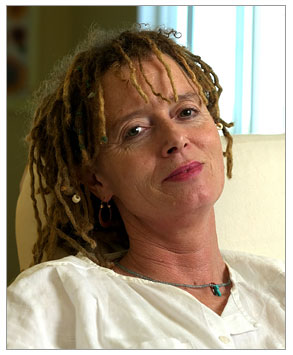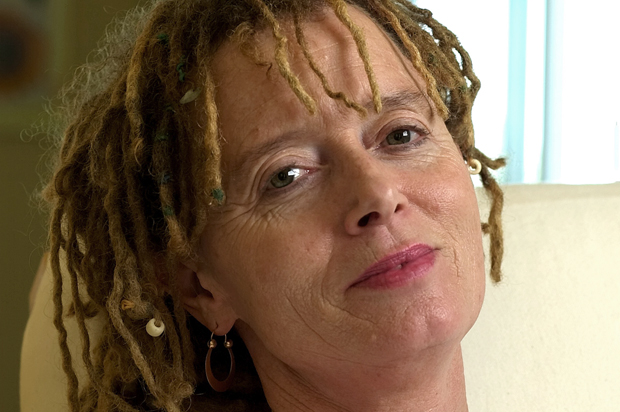
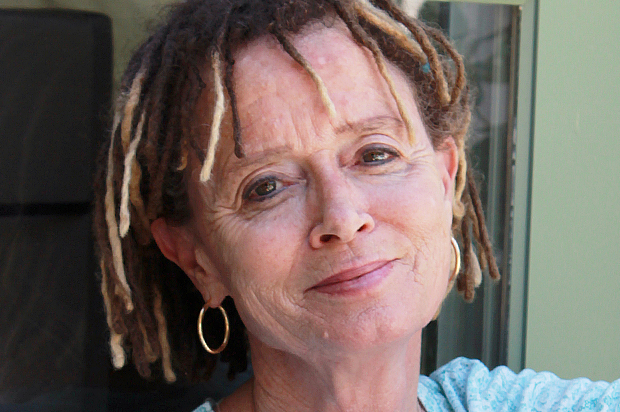

Anne Lamott

My son, the father

When my 19-year-old announced he was having a baby, I was worried -- and happy. Then came a terrifying birth ...

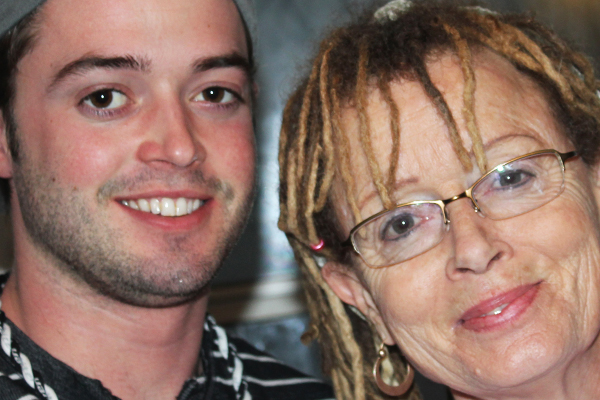
Anne Lamott with her son, Sam.
Anne Lamott has written extensively about parenting for Salon, and her memoir about the birth of her son, "Operating Instructions," is a parenting classic. In a new book, "Some Assembly Required," from which this article is excerpted, Lamott and her son tell the story of a new twist in their lives -- when Sam became a father at the age of 19.

My very young son became a father in mid-July 2009, when his girlfriend, Amy Tobias, gave birth to their son. They named him Jax Jesse Lamott, Jesse after Amy’s beloved grandmother Jessie, and Jax because they liked the way it sounded. Amy was twenty when she delivered, and Sam was nineteen. They’re both a little young, but who asked me?

Sam’s birth, on August 29, 1989, was by far the most important day of my life, and Jax’s was the second. Sam and I are quite close, and I’d always looked forward with enthusiasm to becoming a grandmother someday, in, say, ten years from now, perhaps after he had graduated from the art academy he attends in San Francisco and settled down into a career, and when I was old enough to be a grandmother. I was a young fifty-five. Maybe a medium fifty-five. Let’s say a ripe fifty-five, with a child just one year past his majority.

The day before Thanksgiving 2008, I had heard that Amy was expecting, when I got a call from Sam, in despair.

“Mom, I’m going to be a father,” he said.

I was silent for a time. “Oh, Sam,” I said finally.

He and Amy had been together, tumultuously, since his birthday a year earlier, but they had split up a couple of months before—although not, I can see now, in the biblical sense. Amy is beautiful, tiny and Hispanic, with her roots in Chicago and her parents now living in North Carolina. She had arrived in our lives on the morning of Sam’s eighteenth birthday, to attend cosmetology school in San Francisco: they had become friends at a camp on the East Coast, stayed in touch by phone and text, and begun a long-term relationship, which I hadn’t heard about. One day Sam told me he’d offered her his living room couch until she found an apartment. “Right,” I said when he told me this plan: I was not born yesterday.

“God, Mom,” he had said. Like, get your head out of the gutter.

She had moved off the couch by lunch that first day. They arrived for Sam’s family party at my house at four that afternoon, very much in love. My brother Stevo, his sunny six-year-old daughter, Clara, adopted at birth, and his fiancée, Annette, were there, as was our beloved uncle Millard, our aunt Eleanor, our best family friends, including Gertrud, a ninety-year-old German who’d always served as Sam’s paternal grandmother, and a scattering of cousins. We were all transfixed by this beautiful girl who bounced into the house, in tiny shorts that would fit my cat—she is around four-foot-nine, and weighed ninety pounds at the time—with long black hair, huge brown eyes, and a perfect smile; and my first thought was, “Who did I invite who has a teenage Hispanic daughter?” I thought she might be related to Annette, who is also Latina. Then Sam stepped inside, smiling sheepishly, and introduced Amy to me.

A little over a year later, Amy had terrible morning sickness that lasted a few months, and she spent a lot of time taking naps on my couch, and nibbling bird-sized snacks. I was happy all the time at the thought of Sam’s being a father, and my getting to be a grandmother, except when I was sick with fears about their future, enraged that they had gotten themselves pregnant so young, or in a swivet of trying to control their every move, not to mention every aspect of their futures. She and Sam had moved back in together, into his tiny studio apartment on Geary, two blocks from his art school, and I was paying all of his bills while he was in college. Although Amy’s parents were also contributing generously to her expenses, I was paying their rent, and much of their monthly nut. Amy frequently escaped to my house in Marin, mostly for companionship, as Sam was in school full-time, but also for the sun and relative peace, as their apartment was dark and loud. By the time the morning sickness passed, her belly was huge, especially because she is—or rather was—so tiny. She had an elaborate space-age ultrasound at four months, which indicated that the fetus was a boy: the technician printed out Jax’s picture for us. He looked like a bright, advanced baby. Even gifted.

Sam was woozy with pride and scared to death. Amy was clear, calm, and fiercely into becoming a mother. She did things the way she wanted to, even when it made me unhappy. For instance, two weeks before her due date, she skipped a routine doctor’s appointment for some youthful, willful reason, and I spent several days pacing around my house, trying to make peace with the idea that now the baby would almost certainly be born with some degree of disability. I cried. Sam tried to protect Amy from my neediness and anxieties—i.e., they purposely didn’t call or text me for days. And they fought routinely. Amy would threaten to move back to Chicago, which made me crazier than anything, but I would not interfere, and Sam would call in despair, and I would stay neutral, with undertones of suppressed rage, and they’d come through their conflict, and I would get to be the beloved tribal elder for having stayed impartial.

We went to our little church, St. Andrew, many Sundays, unless Sam had too much homework. The month before Jax’s birth, Sam was both in summer school and working for a contractor, trying to sock some money away. I would still be paying the bills, as I had promised Sam a four-year education: room, board, books, transportation. It was extremely expensive, and I had a nagging hunch that things were not going to become cheaper after Jax was born.

I had loved being pregnant with Sam, mostly: all the parental blessings of feeling bigger, envied, completed, astounded, proud, grateful. And I loved Amy’s being pregnant with Sam’s baby, mostly. I was excited that Sam was going to have all these feelings for someone, too. It would be better for him in some ways than it had been for me; I had not had any money our first few years, and that had been hard. And it could be only good for a baby to have two parents around. Yet having a child ends any feelings of complacency one might ever have, and I knew what Sam was in for. It was like having a terminal illness, but in a good way.

I frequently got to put my hands on Amy’s belly and feel Jax roll and kick around in his chambers. She and I would take afternoon naps together on the two couches in my living room. She gained sixty pounds; I gained five. Her mother, Trudy, and I would get to be there at the hospital for his birth, which Amy passionately hoped to accomplish without drugs. Her mother would fly in from North Carolina near the due date, and she and I spoke or texted from time to time, making plans for Amy’s hospital stay, and for just after. Amy, Sam, and the baby would come to my house from the hospital, along with Trudy, and then at some point Amy’s father, Ray, would come from North Carolina to stay for a few days. We would all be one big happy family, as Ray liked to say.

I prayed every day for a healthy baby, for an easy delivery, for Sam and Amy to be good parents, and for me to let God be in charge of our lives. I prayed to be a beneficent grandmother, and not to bog down in how old that made me sound. I had two slogans to guide me. One was: “Figure it out” is not a good slogan. And the other was: Ask and allow: ask God, and allow grace in.

July 21

Amy delivered late last night by C-section after eighteen hours of hard and heroic natural labor, at the University of California San Francisco Medical Center, one of the nation’s great teaching hospitals, in the upper Haight-Ashbury, just beyond the southeast corner of Golden Gate Park.

Sam had called me at two yesterday morning and told me to meet him, Amy, and Trudy at the hospital. Trudy is five-foot-six, an inch shorter than I am, brunette, and very sweet, and a few years older than I. Her grandma nomenclature will be “Grammy,” and mine will be “Nana,” which is what Sam called my mother. Amy was given a private room, and was plugged into various monitors. Sam coached her for the first few hours, and then Trudy and I coached her, and then Sam again. After many hours, Amy was dilated to six centimeters, but she wasn’t getting any further.

She refused any drugs for hours, even Pitocin to intensify the contractions, and watching her I felt crazy with powerlessness and thwarted Good Ideas: Let’s everyone settle down and take a lot of drugs! Get this show on the road! Of course, I pretended to be supportive of whatever she decided. Sam, Trudy, and I took turns going to the cafeteria for snacks, while Amy was brought hospital meals which no one ate, because the meals looked like upscale pet food, with a side of boiled vegetables. When all was said and done, we ate mostly Cheetos and M&M’s. And when I say “we,” I mean me.

Amy’s contractions were wracking her body, but they weren’t quite productive enough. She was in maternal warrior mode, and I was humbled by how hard she was working, how much pain she was able to bear, and how stoic she was. By this point in my own labor, almost twenty years before, I’d already had the Pitocin, an epidural, and a few refreshing shots of morphine to take the edge off. I felt stunned and teary about what a good birth coach Sam was—it wasn’t so long ago that we were bickering about wet towels on the bathroom floor or why the hell he can’t manage to keep his cell phone charged.

Hours later, Amy finally let the nurses put some Pitocin in her IV, and the three of us took turns breathing with her. But the baby, who had been estimated to weigh nine pounds, was just too big for her small body, and she was exhausted. At seven at night, a number of doctors came by on rounds, with third-year medical students in tow, and said, Tut-tut, like Pooh in the Hundred Acre Wood, and then that everything looked fine — and finally, at around eight or so, a doctor who looked a lot like a young Ethel Kennedy, scrappy and beautiful, bounded in, as if we were all on a tennis court. She was about my age and she exuded intelligence, and we all instantly knew she was perfect—although her eyes squinted like a mole would in sudden bright sun. My first thought was, “Oh my God, she’s a blind gynecologist. Affirmative action has gone too far this time.” There were so many nurses in the room, with a few scattered leftover med students thrown in, and a new batch of med students. Within a minute, Dr. Ethel had most of her arm inside Amy.

All of us held our collective breath when she said, “Oh, jeez, is that the umbilical cord?” and some of the medical students and the labor nurse made the quiet face of studious concern that nurses are taught in their first semester. And then the doctor said cheerfully, “Oh, it’s just an ear.” Like, Silly me! Sighs of relief all around. Then her arm disappeared again, up to her elbow, as if she could wiggle her fingers and tickle Amy’s heart. She squinted off to one side, way in the distance, as if to the hills whence help comes, like Mr. Magoo in Pharaoh’s Egypt, and I realized she was not seeing with her eyes, but with her hand and her mind.

As I watched her bend in, with her head and shoulders sideways, I was reminded of all those times as children when we stretched sideways over a storm drain, an ear pressed against the grille, reached our arms through, and blindly tried to grab a coin from below with our fingertips, before resorting to sticking a wad of bubble gum on the end of a stick.

Finally the doctor’s arm reappeared, and she explained to Amy that there was way too much amniotic fluid, which posed a dangerous hurdle, and she needed to break Amy’s water. We all nodded knowingly, even the medical students. The labor nurse gave the doctor a needle, and the doctor’s arm disappeared again, and after a minute she announced that she had pierced the sac and would let the water out slowly.

But the water gushed out of Amy, about ten gallons of a green soup from “The Exorcist,” and I thought with my ever-present Christian faith: Amy’s dying now for sure; I just hope they can save the baby. But the doctor squinted at the hills again and repositioned the baby’s arm and hand; she was, we learned later, trying to keep the rivers of soup from pouring over the sides of the banks all at once: she was siphoning it off.

Amy lay in a widening pool of green soupy fluid; nurses tried to shove towels under her butt without bumping the now one-armed doctor. The doctor’s head tilted, in full squint; she worked on until she seemed to listen for a minute, but not with her visible ears. Then she withdrew her arm and took off the glove.

She told Amy that she would give her one more hour, but she didn’t think there was a big chance of success, even with more Pitocin. Amy should have a C-section, while there was still a choice. I was silently begging, Please have it. Amy looked to Sam, and he told her that it was her body, that he supported her in whatever she decided. I wanted to scream into his face, “Stop saying that! You’re encouraging her,” but somehow I didn’t say anything. Amy asked for more Pitocin, yet an hour later when the nurse checked her cervix, she said it was just the same. She left the room, and the four of us prayed together as a family. After a few minutes, Dr. Ethel came back, and her arm disappeared up Amy again. In full Mole Squint, the doctor said, “I recommend we do a cesarean,” and Amy said, quietly, “Okay.”

Trudy and I went off to the waiting room, where we writhed around and read the sacred texts of crisis — People and the National Enquirer — and ate the temple foods — Cheetos and M&M’s — for about an hour, until a huge male nurse came to tell us that Jax had been born. Amy was fine, but she desperately needed to sleep for a few hours, before she could begin nursing. He said we could go meet the baby. Trudy and I hugged and jumped and pumped our grandmotherly fists.

We found Sam in the nursery, dressed in scrubs, holding his swaddled new son, peering into his peaceful face, crying and saying over and over, “Hi Jax, I’m your dad. I’m your dad, Jax.”

Jax was the loveliest baby boy I’ve ever seen, a dead ringer for Sam as a newborn, but Latino, gorgeous as God or a crescent moon, with huge black eyes, black hair, lightly tan. I felt as though I was seeing a river gorge, from way up high on a bridge, silenced by the vastness of his tiny face, the depth of his brown-black eyes.

Excerpted with permission from “Some Assembly Required” by Anne Lamott, now available from Penguin.

Why I’m inspired by the midterm election

Christine O'Donnell is gone, and Harry Reid isn't. Now, let's buckle up for the bumpy ride that faces us in 2012

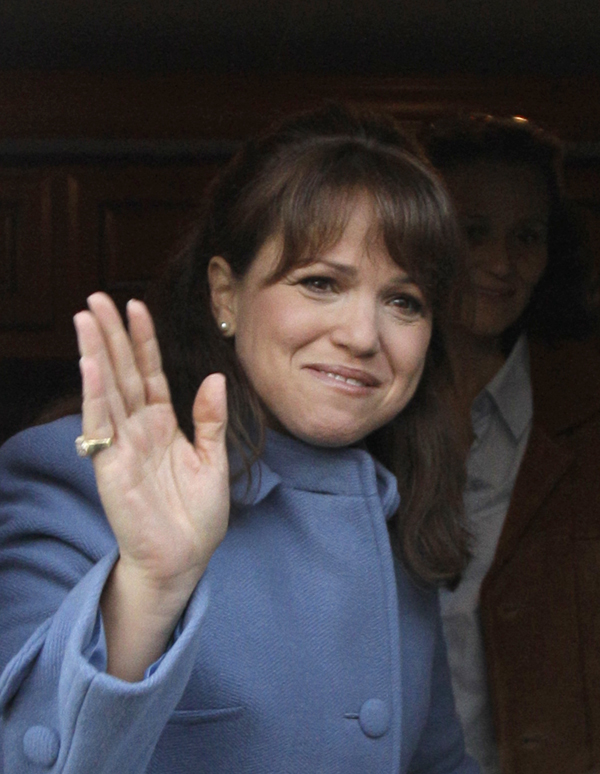
Delaware Republican U.S. Senate candidate Christine O'Donnell waves from inside a vehicle after voting, Tuesday, Nov. 2, 2010, in Wilmington, Del. O'Donnell is facing Democrat Chris Coons. (AP Photo/Rob Carr)(Credit: Rob Carr)

I am awash in the afterglow of the midterms.

Perhaps “afterglow” is not exactly right. Or “awash.”

Maybe I mean “profound relief.” Barbara Boxer and Jerry Brown, and Michael Bennet (amazingly) in Colorado, Patty Murray hanging on, and most of all, Harry Reid, HAR-RY, HAR-RY, HAR-RY. My man. Dawg! For me, holding the Senate and Harry Reid is almost up there with the Giants winning.

So maybe they have the Aqua Buddha, but we have two months to go with this House, this Senate, this president. People say that 10 days or two weeks is an eternity in politics, so two months is four or five eternities. Two months is eternity-plus-plus.

And that Obama is nothing if not brilliant. This guy has had some liberal victories legislatively, and when word of these victories — the realities of healthcare, financial reform, student loan reform, etc. — trickles out, we will have pride and stamina again. We will experience grace again, the grace of generosity to the underdog; the grace of second winds, and psychic WD-40. The grace of unseen water wings.

I say, buckle up, buckeroos and buckerinas. Fingers crossed and heads high. Once more into the breach. Also, figure out how you, in your area, can help mobilize the Latino vote. We owe Harry Reid to Hispanic outrage and get-out-the-vote efforts — send someone money today. (I love Mi Familia Vota, but there are organizations in every state.) Or go somewhere nearby and register Latino voters, and the youth, who accidentally forgot to show up on Tuesday — the “yout,” to quote the great Joe Pesci in “My Cousin Vinnie.” Help whip up the Youts for 2012. Lots to do! Kids to mentor, wars to protest, homeless people to help through the coming winter night. Time to rest and get ready.

So goodnight, moon. Goodnight, long national nightmare of the last two months, when it looked like we might lose John Dingell, and Barney Frank, and HAR-RY. Good night, Carl Paladino, with your cute red bat! Goodnight, Christine O’Donnell, with your election night list of demands — fabulous! I don’t know a living writer who could have thought that up, or the “I Am not a Witch” campaign. Maybe the late, great Terry Southern? But anyway, excellent — and goodnight. Goodnight, Dino Rossi, but can we keep the name? And goodnight, icky Meg Whitman, thank you from the bottom of my heart for not being my new governor. Money and power and ego can’t buy ya love, huh? Does that suck, or WHAT? And we all know what it’s like to spend money unwisely — who among us does not have some crazy purchase in our closet or drawer and garage right now? The stories I could tell — the blisters, the eyeglass frames that look so adorable on Justin Timberlake. Oh well, good night, Meg; and thank you for your courage, Meg Whitman’s housekeeper. And good night, Joe Sestak — but DON’T go very far away. You’re the real thing. Good night, Joe Miller, even with all those rascally votes still to count. But goodnight, and thank you for sharing.

Let’s all go have some well-earned rest. A new day dawns.

Continue Reading Close

Why I believe in a Democratic comeback

I learned from years of competitive sports that the best time to beat the other side is when they're gloating

There is nothing as sweet as a comeback, when you are down and out, about to lose, and out of time. The almost certain victors are already in full gloat mode, and that’s why the rest of us feel lower than a gopher hole, as Molly Ivins said to me after Bush v. Gore. Nothing you try seems to work. But as I experienced dozens of times in tennis matches as a youth, if you don’t give up, sometimes there’s a shift under your feet, and you win one unexpected point, and then another, and somehow, miraculously, you pull ahead.

I’m not thinking of the San Francisco Giants here, although I have been following them with love and a sick stomach for most of my 56 years. This year they are almost certainly going to the Series, a great and unique team. Yet some of my earliest memories are of coming into the kitchen of the small coffee-colored house we rented in the late ’50s, to find my parents and older brother seated around the radio, with their arms folded across their stomachs. They’d be doubled over with worry as the Giants seemed poised once again to throw away victory, blowing a comeback at the last possible minute.

I’m not thinking about how much being a lifelong Giants fan is like having been a lifelong Democrat — they are both such beautiful teams, from the Willies May and McCovey in that coffee-colored house, to Tim Lincecum and Pablo Sandoval; from Adlai Stevenson to Lynn Woolsey and Russ Feingold. They have taught me that when it comes to playoff games and midterm elections, you can’t let your hopes get too high — but of course you do, and once again, the Giants or the Democrats break your heart — or totally, hilariously kick butt.

The Giants are usually described as rag tag, kind of a great garage sale team, and the Democrats are described as the Mommies to the Republican Daddies; and everyone hates the mommies, but wait, wait — I didn’t intend to get into the pathos and thrill of being a Democratic Giants fan. There is a certain delusional nobility in the wild ride.

And I’m not even thinking of a recent discussion I had with my Sunday School kids, about how when we as individuals or nations get so terribly lost, we have prophets to call us back. The prophets aren’t like the guys on Christian radio, predicting the end of the world for sometime next Thursday, right after lunch. They are truth tellers, lights, Dr. King or Nelson Mandela, calling us back to decency, sanity, to each person being treated exactly the same.

All I started out to say was that I remember so many matches I played as a junior tennis star, when I got off to a bad start, and was losing big time to someone I either should have been able to beat, or needed to beat to keep up my ranking. My opponent was frequently an awful arrogant, stupid person, which I say without judgment. It was simple reality — most competitive tennis players in my day were privileged, spoiled, entitled and white. Also, many of them were beautiful, fit, tan and of good stock — great big hair and white teeth and long legs. Then there were the rest of us.

Future Democrats, and Giants fans.

Anyway, you’d be losing by a set and a service break, say 6-3, 4-1, to an athlete whose practice partner has come to watch her, and whose father was hiding behind a bush nearby, giving her hand signals (whereas your pathetic Giants-and-Adlai-Stevenson-fan father has such bad nerves that he couldn’t even watch you play, even when you were in the finals). Your stomach ached, but you held serve, 4-2. Then, about to serve for 5-2, your opponent got a little cocky, began wondering who was winning the match over on court 12, which would be her next opponent on the march to the finals. And so your opponent double-faulted. Love-15. And because you had nothing to lose, and the game was surely over, and you did not have much of a chance, let alone great hair, long legs and braces on your future perfect white choppers, you secretly got back in the game. You secretly dared to hope.

When your nonplussed opponent crossed over to ace you from the backhand side, you’d nick one of your stealth serial killer moves with your eyes looking away quickly. Then she caught your eye as she aimed at a spot on your service court. You flicked your eyes over to the left, and it threw her. She served long, and her second serve is weak, and you suddenly have the advantage, because you have nothing to lose. And you rallied hard for, and eventually won the point.

Now it’s love-30, and your opponent starts to fall apart. Her nerves fail her, and her left arm on the next toss is as herky-jerky as a tennis ball machine, and she actually has to change down the toss to hit it, or do it over. She’s reduced to pushing in her serve, and you make winners. And she begins to come apart like a two-dollar watch. She’s grinding down those teeth, and her father is losing his mind in the hydrangeas, signaling for her either to serve as hard as she can, or smash in your head at the net. You can’t tell, but he’s furious. Oh, well. Ha ha, as we Christians like to say.

I won a lot of matches when there was almost no hope, and even less time, and it always started with winning one point here, and one point there. It always depended on not giving up, on getting my focus and courage back. It was the greatest feeling on earth, and, I imagine, it would still be so today, to take such a risk, and God only knows, maybe prevail.

Continue Reading Close

Why I hate Mother’s Day

It celebrates the great lie about women: That those with children are more important than those without

I did not raise my son, Sam, to celebrate Mother’s Day. I didn’t want him to feel some obligation to buy me pricey lunches or flowers, some annual display of gratitude that you have to grit your teeth and endure. Perhaps Mother’s Day will come to mean something to me as I grow even dottier in my dotage, and I will find myself bitter and distressed when Sam dutifully ignores the holiday. Then he will feel ambushed by my expectations, and he will retaliate by putting me away even sooner than he was planning to — which, come to think of it, would be even more reason to hate Mother’s Day.

But Mother’s Day celebrates a huge lie about the value of women: that mothers are superior beings, that they have done more with their lives and chosen a more difficult path. Ha! Every woman’s path is difficult, and many mothers were as equipped to raise children as wire monkey mothers. I say that without judgment: It is, sadly, true. An unhealthy mother’s love is withering.

The illusion is that mothers are automatically happier, more fulfilled and complete. But the craziest, grimmest people this Sunday will be the mothers themselves, stuck herding their own mothers and weeping children and husbands’ mothers into seats at restaurants. These mothers do not want a box of chocolate. These mothers are on a diet.

I hate the way the holiday makes all non-mothers, and the daughters of dead mothers, and the mothers of dead or severely damaged children, feel the deepest kind of grief and failure. The non-mothers must sit in their churches, temples, mosques, recovery rooms and pretend to feel good about the day while they are excluded from a holiday that benefits no one but Hallmark and See’s. There is no refuge — not at the horse races, movies, malls, museums. Even the turn-off-your-cellphone announcer is going to open by saying, “Happy Mother’s Day!” You could always hide in a nice seedy bar, I suppose. Or an ER.

It should go without saying that I also hate Valentine’s Day.

Mothering has been the richest experience of my life, but I am still opposed to Mother’s Day. It perpetuates the dangerous idea that all parents are somehow superior to non-parents. (Meanwhile, we know the worst, skeeviest, most evil people in the world are CEOs and politicians who are proud parents.)

Don’t get me wrong: There were times I could have literally died of love for my son, and I’ve felt stoned on his rich, desperate love for me. But I bristle at the whispered lie that you can know this level of love and self-sacrifice only if you are a parent. We talk about “loving one’s child” as if a child were a mystical unicorn. Ninety-eight percent of American parents secretly feel that if you have not had and raised a child, your capacity for love is somehow diminished. Ninety-eight percent of American parents secretly believe that non-parents cannot possibly know what it is to love unconditionally, to be selfless, to put yourself at risk for the gravest loss. But in my experience, it’s parents who are prone to exhibit terrible self-satisfaction and selfishness, who can raise children as adjuncts, like rooms added on in a remodel. Their children’s value and achievements in the world are reflected glory, necessary for these parents’ self-esteem, and sometimes, for the family’s survival. This is how children’s souls are destroyed.

But my main gripe about Mother’s Day is that it feels incomplete and imprecise. The main thing that ever helped mothers was other people mothering them; a chain of mothering that keeps the whole shebang afloat. I am the woman I grew to be partly in spite of my mother, and partly because of the extraordinary love of her best friends, and my own best friends’ mothers, and from surrogates, many of whom were not women at all but gay men. I have loved them my entire life, even after their passing.

No one is more sentimentalized in America than mothers on Mother’s Day, but no one is more often blamed for the culture’s bad people and behavior. You want to give me chocolate and flowers? That would be great. I love them both. I just don’t want them out of guilt, and I don’t want them if you’re not going to give them to all the people who helped mother our children. But if you are going to include everyone, then make mine something like M&M’s, and maybe flowers you picked yourself, even from my own garden, the cut stems wrapped in wet paper towels, then tin foil and a waxed-paper bag from my kitchen drawers. I don’t want something special. I want something beautifully plain. Like everything else, it can fill me only if it is ordinary and available to all.

Anne Lamott’s latest novel is “Imperfect Birds.”

Continue Reading Close

Dear Mr. President: What are you thinking?

Stop dawdling on healthcare, forget about Snowe and Lieberman, and become the leader we voted for already

Dear Mr. Obama,

I hate to complain, and I certainly do not want to sound cranky. But time is awasting, so here goes: Nearly 70 million people voted for you because we supported your commitment to ending the war in Iraq, closing Gitmo and creating universal healthcare. Only a couple thousand of them were passionate about the whole bipartisanship thing, and based on my scientific research, exactly 38 believed that Olympia Snowe’s vote on the healthcare reform bill would even make it bipartisan. Thirty-eight people! (And you should see them.) So now the other approximately 66,999,962 of us are left wondering, Why did you lose so much time courting her vote?

I mean no offense, but the belief that Snowe’s vote made the bill bipartisan was delusional from the start. It was exactly the sort of thing my mother would have come up with — and she was from Liverpool. I rest my case: Those of us with English parents faithfully attend special 12-step meetings to break through the uniquely English forms of denial. The vote of one extremely withholding woman — and I say that without judgment — never changed the nature of the bill, no matter how much you and your staff convinced yourselves it did. It is a Democratic bill — a quintessentially Democratic bill, in that it’s about trying to help those in need. It is about fairness, decency and the common good, the values most Americans were raised on. But you can’t even mention those words and ideals these days without getting laughed at by the Republican leadership — or, worse, tea-bagged.

A great pastor in New York City once said that if you wanted to get into heaven, you needed a letter of recommendation from the poor. Teddy Kennedy got his. So did Lincoln, FDR, Shirley Chisholm. And now it’s up to you.

To get Ms. Snowe’s mingy vote, you would have needed to include her little pet rock, the trigger option. But the trigger option was the emperor’s new clothes. Perhaps a more precise way of saying this is that the trigger option was a figment, a dodge from greatness. My mother would have called it a “crock.” My 20-year-old son, “Totally bogus.”

I am not saying that continuing to waste our time — while people die every day from lack of healthcare — will keep you out of heaven, although you may get an inferior seat, possibly in the room serving only nursery snacks. How will you face Teddy if you muff this historic moment? Do you think he will share his eclairs with you? His brie?

It’s OK that you wanted Ms. Snowe’s vote so desperately, but the truth is that she was getting high on not giving it to you. She was getting a hit, like a junkie, from withholding. Believe me, I have dated men like her. She had a chance to participate in greatness, which does not happen all that often anymore in American politics, but the possibility is there now — for you, for us, for our country.

A huge majority of people in America and specifically in Maine want the public option. For a few months there, she had the power to kill it. Dude, what was that about? Was it some form of Kabuki theater, wherein you knew she would never give you her vote, but you needed to pretend she might for another week? Was it a multilevel chess game that all the people who voted for you were too dumb to figure out? She didn’t want decent medical care for the poor and middle class: She wanted power. She, like so many of us, is hungry for what she is not giving — for generosity of spirit, the only thing that can fill us up. And yet, she chooses to withhold, this woman who happens to have great government healthcare. I bet she and her extended family never worry when they get sick, or even when they need psychiatric care. Not to mention dental, which just kills me to think about — me and my family, with our terrible English teeth.

So we’ve lost two or three months to that business. And now we have Lieberman. In some ways, he’s even worse, because of — well, you know — the voice.

We do not personally blame you for the fact that we have to listen to him. It’s political life, on political life’s terms. And maybe his therapist or rabbi will help staunch his latest episode of swerving sickness. But recently on “The Rachel Maddow Show,” the great Jane Hamsher compared the healthcare debate to a beauty contest in which the contestants who feel ignored start stripping and said that, at some point, one of the directors will convince Lieberman to put his shirt back on. So I am wondering, why can’t that be you? Why can’t you do what Leon on “Curb Your Enthusiasm” keeps urging Larry to do? Take him the ruckus.

Use your most reliable parenting skills: Joe Lieberman is acting like a petulant, icky little kid — I say that with love. Use those classic parental standbys, bribes and threats. Back-channel him. Try reverse psychiatry — “Thank God you stepped in, Joe. Otherwise, we would have been responsible for all those slacker poor people. All those feverish babies and children. All those English expats, with their bad teeth.” If that doesn’t work, maybe you could just remind him of the famous story from 15 years ago, that family with a 5-year-old girl with leukemia who needed blood in massive quantities to stay alive. You remember: Everyone in her family except her older brother was tested and found to be incompatible. But the boy was afraid of having blood drawn in order to test it, and his parents respected him enough to let him come to the decision by himself.

One day he came to them and told them he was ready. They took him to the doctor, his blood was tested, and it was an almost exact match with his little sister. So the two of them were put on beds side by side in a hospital room, and the nurses withdrew blood from his arm, and let it flow into his sister’s. He lay with his eyes closed, in silence for the entire procedure, until the doctor gripped his shoulder and asked how he was doing. The boy opened his eyes.

“How soon ’til I start to die?” he asked.

This kind of profound and innocent moral courage is the most attractive characteristic a person can display, especially a politician. It is time for you to come out vigorously and loudly for Harry Reid by getting your people in line. Reid has managed, with a lot of help from liberals and progressives and too much time lost, to whip most of the Senate Democrats behind what you campaigned for. Now it is time for you to roar. Ms. Snowe and Joe can still choose greatness, too: They have free will, and they may surprise us all. Or, hey, while we are at it, why not hit up George Voinovich? He is not running for reelection and is — or should be — rooting around for a legacy. Otherwise, people will scratch their heads while trying to remember who he was. “Oh, Voinovich? Wasn’t he the guy up on Laurel who had to tent his house for termites?” He could go out a hero, by simply doing what public servants are supposed to do — stand up for the people, for greatness, for compassion, fairness and the common good.

So again I ask you, do the right thing, and do it now. Shoot the moon, Boss: right between the eyes. 

Continue Reading Close

Sign me up for Barack Obama’s death panel!

Deciding the fate of all those helpless Americans won't be an easy task. But I'm ready for the job

Sign me up for Barack Obama's death panel!

Dear Mr. Obama,

Like many Americans, I was initially shocked upon hearing of your proposed death panels. But after a short cooling-off period, I have come around.

It troubled me at first to hear that your followers would be deciding the fate our grandparents — i.e., who would be rescued, and who would be thrown on the death pile. Then I began to wonder if there might be some sort of rebate program for those of us whose grandparents are all dead. Since no one in my family from this generation will need to be processed, I wonder if the government might be willing to pay $100 in savings per grandparent — sort of a variation on the “Cash for Clunkers.” You and your people would make it worthwhile for us not to have random old people lying around. It goes without saying that this would only include American grandparents. My mother’s father, John Wyles, died in Liverpool in 1933, and would therefore not qualify. I think we could all agree on this.

Another troubling thing: I do not know when you first began to insist that Sarah Palin’s baby boy would need to appear before one of your panels, but I can tell you this, Mr. President, it is not going to fly with the American people. If you are going to try to ram the death panels through Congress, I have three words of advice: Easy does it. Certainly there are people we can all agree are of borderline value. For instance, there is this guy I know named Harold who is a total monster. Everyone hates him. No matter how friendly we are to him, he never returns our greetings, but instead gives us the stink-eye, and a sneer. It is hard for me to believe that even Jesus would argue on his behalf at one of your panels. But the little Palin baby? No way, no how.

There would need to be a system of checks and balances so that we could all rest assured that favoritism was not a part of determining who would receive healthcare. Some people would say that if someone more closely resembled an Alturien than an American citizen, that person might be considered for the death pile. But that strikes me as being very cavalier. Life is precious, Mr. President, and just because somebody’s appearance makes you think of space aliens and anal probes rather than car seats and root beer, it is no reason to throw them away, as you have proposed. Obviously, if there is going to be a lot of killing going on in your healthcare program, panels would have to be made up of people with impeccable credentials. Otherwise, this would be a real deal-breaker for a lot us. For God’s sake, what if someone like Harold ends up as a judge on the panel, instead of coming before it, like the little Palin baby, or someone’s perfectly good grandparents?

This death panel of yours will require people of sensitivity, fairness, efficiency and patience. And that is why I would like to volunteer to serve: I am fair, fast and fun. Mr. President, I am at your service.

Best wishes,

Anne Lamott 

Continue Reading Close

Page 1 of 20 in Anne Lamott

www.salon.com/writer/anne_lamott/index.html