Donald D. Groff

Insiders guides to Prague

Our expert offers tips on visiting the Czech capital, exploring the U.S. Northwest and finding a flat in London.

  • more
    • All Share Services

Insiders guides to Prague

Can you offer any tips on tours or sources of general information for a weeklong visit in Prague?

The Czech Republic’s capital city continues to be one of the hottest spots for tourists and expatriates alike. Tens of thousands of young foreigners, many American, reside in the city. Lodging gets tight from spring to fall, so it’s advisable to arrange for a place to stay before you arrive, if at all possible. Start at the Czech Tourism Pages, a sleek official site with hundreds of links. A good personal site is Czeching out Prague, providing one woman’s travelogue and mini-guide.

Czech Center New York is produced by the Czech Ministry of Foreign Affairs to promote the country; its phone number is (212) 288-0830. The site has a section of links to tours and tour operators.

TimeOut.com, the events magazine, has a Prague edition, updated weekly, that also includes tips on restaurants and clubs. Sample review: “Prague’s newest blues bar is a blissful anomaly in Old Town. Just a cobblestone’s throw from Old Town Square on ritzy Parizska, Sputnik somehow manages to be a simple, honest blues dive, serving up cheap Pilsner Urquel in a smoky, laid-back cellar atmosphere. The music at this self-described ‘music art club’ is consistently grooving and makes for outstanding background noise when you want to perch and gab.”

A simple but informative page for links is the Czech Republic FAQ.

The influx of visitors since 1989 has made Prague a prime target for guidebook publishers. Among top Prague titles are those by Lonely Planet, Rough Guides, Frommer’s, Knopf Guides, Cadogan, Eyewitness Guides and the Insight Guides series.

I’m in search of sources for things to do in the Washington, Oregon and Idaho region. Things like horseback riding, fishing and arts festivals — nothing strenuous, but “interesting.” I am new here and I know the resources are rich, but they are also scattered, and I don’t know where to look.

The Northwest is indeed fertile territory for many activities, and tracking them all can be daunting.

Check out the Washington State Tourism site, the Oregon Tourism Commission site and the Idaho Tourism and Recreation site. State tourism sites tend to be on the unhip side — they’re aiming for the middle ground — but they often are the single best source for a wide range of diversions. They also excel at pulling together statewide events calendars, a thankless job that most for-profit sites are loath to undertake.

Other sources for tracking festivals are FestivalFinder.com, Festivals.com and What’sGoingOn.

The Northwest is a magnet for guidebook publishers — many trees have given their lives in the name of tourism and adventure. Some of the best-informed guides come from publishers based in the Northwest, including Sasquatch Books and the Mountaineers Books, both based in Seattle. Sasquatch offers a “Best Places” series, including “Northwest Best Places,” edited by Stephanie Irving, now in its 12th edition. It includes Alaska and Northern California, too. Other books include the adventure guides “Inside Out Oregon,” “Inside Out Washington,” “Olympic Peninsula Best Places” and “Oregon Coast Best Places.” It also publishes “Northwest Budget Traveler: Cheap Eats, Cheap Sleeps, Affordable Adventure,” by Nancy Leson (1998).

Among Mountaineers titles are “A Waterfall Lover’s Guide to the Pacific Northwest,” “Washington’s Rail-Trails: A Guide for Walkers, Bicyclists, Equestrians” and “Kayak Routes of the Pacific Northwest Coast.”

Other strong Northwest guides include:

“Hidden Pacific Northwest” (Ulysses Press, 4th edition 1998), “Adventure Guide to the Pacific Northwest,” by Don and Marjorie Young (Hunter Travel Guides, 1999) and “Pacific Northwest: Washington, Oregon, Idaho,” by Bill McRae, Jennifer Snarski and Judy Jewell (Lonely Planet, 2nd edition).

A site that takes aim at Washington, Idaho, Wyoming and Montana (and Oregon, still under development) is Destination Northwest.

For a month in London, where can we locate flats or other non-hotel properties in which to unpack our bags?

You can find companies that book London apartments, as well as apartment blocks you can contact directly, in the booklet “City Apartments,” available from the British Tourist Authority, phone (800) 462-2748. You also can find listings through the British Tourist Authority site; click on “Plan your trip,” then “accommodations.”

Here are a few companies that arrange lodging in London flats:

  • Villas International, phone (800) 221-2262

  • In the English Manner, phone (800) 422-0799

  • British Homes-London Flats, 10010 Queens Oak Court, Charlotte, NC 28210, phone (704) 541-6370

  • London Lodgings & Travel, 954 Risa Road, Suite B, Lafayette, CA 94549, phone (800) 366-8748

  • Castles, Cottages & Flats Ltd. in Arlington, Mass., phone (800) 742-6030 or (781) 646-6552

  • Interhome Vacation Rentals, phone (800) 882-6864.

  • In other words

    The scoop on finding a translator in Egypt, getting a cheap seat on a half-empty plane and planning a cross-country train trek.

    • more
      • All Share Services

    In other words

    For a trip to Cairo, Egypt, where can I locate an Arabic translator?

    Foreign correspondents often turn to local universities once they’re in an area; check with the English language department, the student employment office or a department that pertains to the topic you’re researching. A logical starting point is the American University in Cairo.

    If an informal guide would suffice, note that Cairo is one of those places where travelers who aren’t part of a tour group are often approached by people who want to help, either as full-time guides or in exchange for a little baksheesh — gratuity.

    If you’re comfortable with the idea of an on-the-spot interview, this can be a good way to contribute to the local economy without a middleman taking a cut. Also, you’re face to face with the person and can gauge for yourself his fluency in English and familiarity with the subjects you’re interested in. But agree to the price beforehand, and write it down to make sure there is no misunderstanding.

    Another tactic is to approach someone who already has a personal guide and ask where they found him. At some tourist sites, such as the pyramids or Luxor, freelance guides may make themselves available as well.

    You can also use the Web as a resource, although in my experience, the translation-related companies to be found there are more often aimed at businesses that need document translation rather than tour-guide help. One such site is the Global Directory of Language Services.

    You also can find guide services in Cairo through travel agencies and tour companies. Many U.S.- and Cairo-based agencies are listed, some with links, at the Egypt tourism site. Some of these companies may be willing to recommend interpreters with whom they’ve had contact.

    Why don’t airlines have more sell-offs? There’s a short flight from Toronto to Baltimore that I regularly take, and it’s never full. Why aren’t the prices cheaper, say, a week before, to fill these seats?

    Although it seems logical that the airline would rather auction off or otherwise sell those seats cheaply than not at all, it’s likely the airline is letting those seats go as part of some larger scheme.

    All the major airlines practice “yield management,” in which computers calculate supply and demand, using many variables such as time of flight, season, anticipated demand of leisure and business travelers and competition on the same routes by other airlines. They then price seats in ways designed to fill the plane as full as possible and extract maximum profit from the load.

    The computer models also know where to draw the line; in other words, they’ll only go so far with the cheap seats. The airline knows how many seats it must sell at what price to ensure that the flight isn’t losing money. It could be that your flights have enough high-paying passengers that the airline is making money even with the empty seats. In which case, there may be nothing you can do about it.

    But the story isn’t all grim. Airlines already offer more discounting than ever, but they occur in subtle ways that don’t register as a sell-off. The weekend online specials, such as US Airways E-Saver fares, are, in effect, a sell-off. For weekday flights, airlines feel less pressure to sell off those empty seats because business travelers are paying a higher rate for their seats.

    The increasing number of auction possibilities and sites such as Priceline also give passengers new options for cutting their costs. You can expect to see more of these.

    Another example: Delta Air Lines offers something called FanFares, which are presented as discounted fares to cities where crowd-pleasing events are scheduled on a given weekend — concerts or stock-car races or festivals. This gives the impression that the airline is cutting fares to give fans a good deal. If you cut through the marketing hype, though, you can bet that Delta’s computers first identify which flights have too many unbooked seats, then they determine what events are going on in those cities, and then neatly package the program as a FanFare offer.

    Your situation could be affected by the small number of airlines making the BWI-Toronto run. Routes without competition usually result in higher average fares. Sometimes you can combat that by taking an airline that gets you there using connecting flights. But many of us are willing to pay a higher fare for a nonstop flight, and the airlines know it.

    For other low-fare strategies, check a few sites such as BestFares.com, Webflyer and BudgetTravel.com.

    Could you direct me to a Web site that can show me schedules and costs to take the train cross-country?

    All you need is the Amtrak site, which has a fare and schedule engine that makes checking out routes and fares quite easy. Once in a while it stalls out, but I’ve found it to be increasingly reliable and fast.

    Beyond that, though, it’s worth perusing the site because there are many ways to save money using the various specials and passes. For instance, Amtrak now offers online RailSale specials that change periodically. Most of them are for the long-distance trains rather than the business corridors, but they offer some significant savings. The only specials are clearly highlighted on the opening page.

    Other types of specials are pegged to age or student status, and several types of passes are available for unlimited travel on the train, either throughout the U.S. rail network or throughout the U.S.-Canada network.

    There’s also a wide-ranging pass available only to international visitors, the USA Rail Pass.

    Among the low-tech specials is one that many people overlook: If you present a AAA card you’re often entitled to a 10 percent discount, and you can get this discount even if you’re booking the ticket yourself using the online booking engine.

    Continue Reading Close

    Artistes made daily

    Our expert directs travelers to French art workshops, Disneyland/Grand Canyon vacations and flight-tracking Web sites.

    • more
      • All Share Services

    Artistes made daily

    I’m trying to find information on painting workshops in France — small groups. Can you suggest any?

    Head straight to the ShawGuides Directory to Art & Craft Workshops, where you can find dozens of workshops in France and a fine search engine that lets you sort for focus, ability level, location and date.

    The directory and other art-related information also can be found at the Artist’s Magazine site.

    A search for intermediate painting workshops in France in June turned up 31 matches, including California’s Artists Workshop Tours Agency, which is offering a two-week program in Provence, and Paris’ En Plein Air, which is offering a “Monet’s Garden” program in late May, a “Paris Keepsake” program in June and “A Taste of France” in September.

    The Educated Traveler newsletter has a specialty-travel search engine, too, which turned up a seven-day painting workshop in France this month aboard the luxury riverboat Caprice.

    An annual six-issue subscription to the newsletter is $57. To subscribe or order a single copy, call (800) 648-5168. Past issues with art articles include Travel With Art (July/Aug. 1997), Seeing and Sleeping in Art (May/June 1996), Artist Workshops (July/Aug. 1995) and Supporting Art Through Travel (May/June 1995). Back issues cost $8.

    Another source is the Specialty Travel Index, which lists dozens of companies offering art, art history and artist workshop programs around the world. An annual subscription, including Spring/Summer and Fall/Winter issues, costs $10 from Specialty Travel Index, 305 San Anselmo Ave., San Anselmo, CA 94960.

    During a family trip to Disneyland, we’d also like to see the Grand Canyon. What’s the best way to do this in four or five days?

    You’ve got several options, depending on how much you want to spend in airfare and driving time. Among possibilities:

    • Drive all the way from Anaheim, Calif., to the Grand Canyon, which means you’ll spend a big chunk of time on a grueling drive. Selecting this method hinges on whether you and the family are accustomed to the long haul. The drive time is about nine-and-a-half hours, nearly 500 miles. This is probably the least expensive, but most travel-intensive, way to get there.

    • Fly to Flagstaff, Ariz., then drive the 80 miles to the Grand Canyon in two hours or so. This is a scenic drive, but during peak summer periods is heavily traveled and can be jammed as you get closer to the park entrance. There are several ways to fly to Flagstaff, and the least expensive involve stopping in another city, such as Phoenix on America West Airlines.
    • Fly to Las Vegas, then drive 280 miles to the canyon in about six hours. This isn’t a bad compromise, as there are plenty of nonstop flights to Las Vegas and the fares can be quite reasonable; several airlines recently were posting round-trip fares around $80. (Besides Los Angeles International Airport, check fares from other area airports such as Burbank and Orange County.) This could also give you a peek at Vegas, if you’re interested.
    • Finally, for tops in speed — and expense — you can fly to the little airport just south of the Grand Canyon. For instance, you could fly out of Los Angeles International at noon, reach Vegas by 1, and be at the Grand Canyon by 5, with aerial views to add to your experience. This will probably cost you $300 or more per person.

    To plan your Grand Canyon National Park trip, visit the site or write Trip Planner, P.O. Box 129, Grand Canyon, AZ 86023. The park’s phone number is (520) 638-7888. Also available is “The Guide,” a seasonally updated publication that describes ranger talks and other programs, gives sunrise and sunset times and offers good maps with distances of various trails.

    I’ve heard about Web sites that track a flight and tell you exactly where it is in the journey at any given time. Where can I find this feature?

    The flight-tracking programs you mention can be very useful if you’re planning to pick up someone at the airport and don’t want to arrive too soon or too late. Typically you provide a flight number and, when all is working right, the program quickly tells you how far along the flight is, as well as its estimated arrival time.

    The one I’ve used successfully is FlightTracker, which can be reached through Trip.com and Webflyer.

    The FlightTracker provides arrival and departure cities, flight status, departure and arrival times, distance to arrival city, altitude and speed. If you’ve selected the graphic mode, it pinpoints the current location on a map. Very impressive.

    Many of the airlines’ sites also have a less-sophisticated flight-status option. Be wary of these, however. Despite recent vows to be more forthcoming with such data, the airlines have a pretty poor reputation for telling passengers quickly when they know about delays. If they’re not promptly informing passengers at the gate, they’re probably not going to post better information on the Web site.

    I was trying to track an America West flight a few months ago and noted that its Web site information contradicted what I’d heard from a connecting passenger whom I planned to pick up. When I pointed out to an agent that the Web site showed no departure yet, she nonchalantly said the status feature was often not updated until 45 minutes after the flight was gone.

    One hopes the pilots are getting better information on their computers.

    Revisiting a previous Travel Advisor Q&A:

    A recent column item about the New Orleans Jazz & Heritage Festival, to be held April 28-May 7, drew this advice from a festival spokesman:

    Prime lodging for festivalgoers can be found at hotels and B&Bs in the French Quarter, Central Business District, Warehouse District, Faubourg Marigny, Garden District and Uptown. And you can find lots of little B&Bs near the festival site itself in the Bayou St. John and Mid-City neighborhoods.

    The New Orleans Hotel and Motel Association offers a toll-free number that’s a catch-all for available rooms in the city: (800) 695-2264.

    A really good resource is the Jazz Fest Concierge message board on the festival’s Web site.

    Continue Reading Close

    Rail good time

    How to see the West by train, visit France at the right time and find a bed at the New Orleans Jazz Fest.

    • more
      • All Share Services

    Rail good time

    This summer we’d like to see scenic Colorado and Arizona, including the Grand Canyon, by train. What’s available?

    Rail lines cut through Colorado like rich veins of ore, and several tourist trains also can be found in the other Four Corners states — Arizona, Utah and New Mexico. Besides Amtrak, narrow-gauge railways meander through the mountains on extremely scenic routes.

    For starters, the Grand Canyon Railway runs daily from Williams, Ariz., to the Grand Canyon’s South Rim, a 65-mile trip that can be made in one day as a round trip or with a stay at the South Rim. On the day trips, riders spend three-and-a-half hours at the canyon’s edge. Contact Grand Canyon Railway in Flagstaff, phone (800) 843-8724.

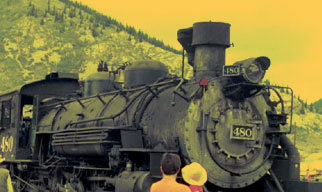
    In southwest Colorado, the Durango & Silverton Narrow Gauge Rail Road makes daily round trips between the two towns in its name. Contact the railroad HQ in Durango, Colo., at (303) 247-2733. The train has open-sided cars, as well as parlor cars and coach cars. You can make the round trip by train, or take a faster bus connection in one direction.

    In northern New Mexico, you can board the Cumbres & Toltec Scenic Railroad in the tiny town of Chama. A 64-mile route goes over Cumbres Pass and through the Toltec Gorge and two tunnels to Antonito, Colo. Several itineraries are available. For information, call (800) 317-0471.

    Amtrak’s California Zephyr and Southwest Chief trains also cut through this part of the country. The two-level Superliner trains have “sightseer lounges.” The Southwest Chief rolls across Arizona, with connecting bus service from Flagstaff to the Grand Canyon. Phone (800) 872-7245.

    The most complete guide to tourist railroads that I’ve seen is the “Steam Passenger Service Directory” published by the now-defunct Locomotive & Railway Preservation magazine. The directory, last revised in 1996, lists all such railroads in the country, including 10 in Colorado, three in Arizona, one in Utah and one in New Mexico. You’ll have to look for it in libraries or used-book stores, as it’s no longer in print. A listing of many railroad-oriented publications is at the Roundhouse Products site.

    A newly revised guidebook that includes the tourist railways of the region you’re interested in is “Journey to the High Southwest: A Traveler’s Guide to Santa Fe and the Four Corners of Arizona, Colorado, New Mexico, and Utah” by Robert L. Casey (Globe Pequot, 6th edition 2000).

    When is the best time to travel to France? I’m not concerned so much with crowds, but am wondering about August as a vacation month for the French.

    Three main considerations can help you decide when is the best time to go to France: weather, price and, as you mention, the vacation pattern of the country.

    For strolling Paris, spring and autumn can be the most pleasant times to visit. But even in spring, chilly drizzle is no rarity. Weather forecasts for many French cities are at the Weather Underground.com site.

    As for vacations, most of the French have at least five weeks off, and the urban population tends to take most of it between mid-July and the end of August. They head for the beach, villages and resort areas, resulting in overcrowding there, while leaving many restaurants and other businesses closed in the city.

    School holidays, particularly around Christmas and in February and March, are periods in which resorts are also packed with French tourists. A listing of these holidays is found on the French Government Tourist Office site.

    Airfare and hotel prices are highest during the peak season, mid-June to early September. Early in the year, and continuing even now, you can find some great airfare deals — under $300 to Paris from the East Coast — by watching the many Web sites with airfare engines and fare-watching features. During peak season, expect to pay more than $600 for a coach seat.

    The past few summers have seen a surge in airline bookings to France and a shortage of seats for those who wait too long to make reservations. Those who wait will find themselves paying top dollar or having to fly to another European capital for connections to Paris.

    Among sites for spotting good Paris fares are
    Travelocity.com,
    Expedia and
    1Travel.com.

    My wife and I and another couple are planning on going to the jazz festival in New Orleans for a few days. What part of town should we try to stay in? Is there anything we shouldn’t miss?

    This year’s New Orleans Jazz & Heritage Festival is scheduled for April 28-May 7, with more than 4,000 musicians, cooks and craftspeople sharing their talents, cultures and heritage with locals and visitors alike.

    The festival has two main components: the Louisiana Heritage Fair and the Evening Concert Series. The Heritage Fair takes place at the Fair Grounds Race Course, 10 minutes from the French Quarter. The Heritage Fair runs from 11 a.m. to 7 p.m., April 28-30 and May 4-7. The Evening Concerts take place at venues throughout the city over the 10-day period.

    The official tour operator is Destination Management, which offers a number of packages including tickets and lodging; call (800) 380-3378 or (504) 592-0500. Northwest Airlines offers a Jazz Festival discount, but you must request it when booking; call (800) 328-1111 and refer to World File Code NNBA3.

    New Orleans has many other attractions, of course, some of which are overwhelmed during the Jazz Fest, when people crowd into restaurants, music venues and everywhere else. Many people like the idea of staying in the French Quarter, but other popular lodging sites are the Garden District and across the river in Gretna. The most convenient hotels tend to fill up, but it’s not unusual for cancellations or blocks of space to open up as the festival dates approach.

    Keep in mind that some residents rent their homes or town houses to visitors during the festival period. Your best bet for finding these is checking Internet bulletin boards, or working the phones — if a B&B or carriage house owner has no room, ask if that proprietor can recommend another who might have space. The festival Web site has lodging and other links.

    The New Orleans Metropolitan Convention and Visitors Bureau also has a packet of festival information, including sightseeing information and housing sources. Call (800) 672-6124. Other sites worth checking are InsideNewOrleans.com and BigEasy.com.

    Revisiting a previous Travel Advisor Q&A:

    A recent column on places to swim with dolphins brought this comment from reader D.L.:

    Another place to do this in the Bahamas is Dolphin Encounters near Nassau. This is actually a self-contained dolphin sanctuary, with different levels of programs available. My wife and I visited it on an excursion from the nearby Club Med, and had a great time.

    Continue Reading Close

    Bali's day of silence

    Our travel expert offers tips on a Balinese holiday, flying with hamsters and car-rental insurance.

    • more
      • All Share Services

    Bali's day of silence

    We plan to be in Bali in late March and early April and are wondering if we’ll be there for Bali’s Hindu New Year, when everything shuts down for 24 hours or so. Can you help us with this?

    The observance you’re referring to is called Nyepi. The next one is April 4 — and you’ll no doubt have a memorable time. I once stumbled onto Nyepi in Ubud, tipped that something was about to happen by the bamboo cannons going off constantly in the days before the actual holiday. The night before, there was a big parade with local teenagers spitting fire, plus feasts and other processions.

    Most visitors take this interruption in stride, but if you think you can’t handle it, it’s easy enough to take a side trip to one of the other islands for a few days. Travelers may want to avoid the holiday, though, if their itinerary calls for them to go through the airport in Denpasar that day.

    The Bali Update newsletter earlier this year ran this notice: “The Ngurah Rai International Airport will be closed during the celebration of the Bali Hindu New Year ‘Nyepi’ which falls this year on April 4. According to a circular letter from the governor of Bali, in strict conformance with observance of Bali’s day of silence, airlines will not be allowed to pick up or disembark domestic or international passengers on that date.

    “Nyepi is a day marked by absolute quiet on the island. On this day of reflection, which marks the Hindu New Year, all traffic is banned from the streets. Bali appears deserted on this single day of the year when people do not venture outside the walls of their homes and refrain from lighting fires and electrical lamps. Hotels guests are required to confine their activities to hotel grounds. In the past, passengers departing or arriving at the Bali airport on Nyepi day were granted special license to travel the roads directly between the airport and the hotel.

    “Many complaints that tour operators were abusing that permit system has brought about the new and much stricter application of the rules of silence which must be observed by all residents of the island, both Hindu and non-Hindu.”

    The full report can be found by going to the newsletter archive; click on the Jan. 10, 2000, issue.

    A good source for checking out holidays in Bali and around the world is the Worldwide Holiday & Festival Site, which offers a country-by-country rundown of what happens when.

    The Indonesian Embassy in Washington offers a description of Indonesian holidays, including this for Nyepi:

    The Hindu Dharma New Year of the solar/lunar (Caka) calendar is celebrated only in the island of Bali.

    This holiday falls on the spring equinox and is observed as a day of complete stillness. No fire may be lit, no transport taken, no work done. No one should be seen on the roads. One day before Nyepi, the last day of the old year, purification sacrifices and offerings are placed at crossroads and in the centers of the villages and towns all over Bali. Priests chant mantras to exorcise the demons (buta and kala) of the old year.

    In the evening the people of Bali bang gongs and cymbals in all the corners of the family compound and parade through the streets with torches to make sure that all the lingering evil spirits are aroused. In Denpasar (capital city of Bali), thousands of boys gather at streets.

    The next day, the day of Nyepi, it is silent everywhere.

    Recently, we wanted to take my daughter’s two hamsters with us on a trip to grandma’s. The airline wanted $50 per hamster, per flight (that is, once going, once coming back). That’s $200 for a small cage to sit on my daughter’s lap — almost the price of my daughter’s ticket. The increased weight is negligible, the hamsters don’t get a meal — why the high price? And why per animal? What’s the difference if I have two or 20 hamsters in the cage?

    Yes, it seems absurd that an airline would try to charge you $200 to let your daughter carry her pet hamsters in a cage — but I’m surprised you found an airline that would let you do it at any price. Agents for the first five I checked (American, US Airways, United, Northwest and TWA) all said they allow only cats, dogs and birds in the passenger cabin. Most said hamsters could be shipped through their cargo departments.

    Delta Air Lines was the only airline I talked with that had an open-door policy toward hamsters, which fall under its policy of accepting “domesticated warm-blooded mammals and birds.” (It’s those cold-blooded mammals they’re wary of. And so am I.) In fact, Delta tries to embrace pet-toting travelers, providing lots of information at its Web site and promising to take good care of animals that must go as cargo. Cost for the hamsters: $60 one-way per “kennel,” holding as many fur balls as you like.

    For Delta or any other airline you find that accepts hamsters in the cabin, make sure you reserve space at the time you book your own tickets. There’s a limit — usually two — to how many live animals can go in the cabins, and hamsters would count the same as a dog or cat in that tally.

    Having told you about the formal policies, I gotta say it’s a bit ridiculous to pay any amount to carry a $7 hamster on board a plane, and I would invoke the Travel Advisor’s Rule of Common Sense. No one should have to pay as much to carry a hamster as to buy a ticket for their child. The reason airlines charge these fees is to make money and they know they’ve got you where they want you — jumping through costly hoops to keep your kid happy.

    If you’ve got the will to stand up to such bureaucratic buffoonery, I suggest just tucking the hamsters into a backpack for the trip. Take some steps to make sure they can breathe and are not going to chew through — perhaps a wee cage or container — and be discreet. No playing with the little beasts en route. You can imagine that a small rodent running through the cabin is not going to go over big with the airline or the other passengers.

    For the security check you can tuck them into a zipped pocket — and hope you don’t need to be frisked!

    I rented a Ford Ranger for a weekend trip and declined to buy the collision damage waiver, using my Visa card’s automatic coverage. I got into an accident and now Visa won’t cover me because the vehicle is considered a truck. Can this be right?

    I understand your disappointment, but Visa is not alone in this exemption for trucks, truck-like and many four-wheel-drive vehicles. In fact, all the credit card companies I know of that offer automatic insurance on rentals exclude these types of vehicles.

    Your situation underscores why it’s good to understand the fine print. Other common exemptions are for long-term rentals (often 30 days, sometimes less, depending on the company), rentals used for commercial purposes and rentals in Italy and a few other places where the possibility of theft is high.

    Some foreign jurisdictions require renters to purchase the local coverage; ask at time of rental. If you make your rental arrangements in the United States for a trip abroad and you’re uneasy about a provision, get the understanding in writing. If at the rental site you’re forced to take insurance, you’ll have more evidence when you complain to the rental agency back home.

    About.com has good advice on rental car insurance, and a separate link for rental insurance in Europe.

    Continue Reading Close

    Cruising the Mediterranean

    Our travel expert offers tips on small cruise ships, Grand Canyon white-water trips and swimming with dolphins.

    • more
      • All Share Services

    Cruising the Mediterranean

    My husband and I are looking for
    some cruise information and wonder if
    you can point us toward Web sites,
    travel agencies and the like. We have in
    mind a 10-day eastern Mediterranean
    cruise including ancient sites –
    Turkey, Greece and the Greek isles. We’d
    prefer a smaller ship.

    Many Web sites and guidebooks examine
    cruises and cruise ships, but one of the
    best places to start is Fielding’s
    Cruisefinder,
    which describes the
    cruise lines and directs you to those
    operating in certain regions, including
    the Greek islands and
    Turkey.

    There you’ll find more than two dozen
    ships operated by more than a dozen
    cruise lines that ply those waters.
    Links take you to each ship’s itinerary,
    details on number of cabins and other
    statistics and tips on value for money.

    The site also has a Crowsnest forum,
    in which readers can share information
    on ships and itineraries.

    America Online users also can get help
    via the service’s Cruise Critic site;
    use keyword “Cruise Critic,” where you
    also can find a cruise selector engine.
    It, too, has a forum where many readers
    have filed their opinions and advice on
    Greek-island cruising. Nonsubscribers
    can find cruise information through
    AOL’s Cruise Critic site.

    To check out the full range of smaller
    ships in the Mediterranean and
    elsewhere, drop your anchor at the Small Ship Cruises site. There you’ll
    find links to specialists on small cruise ships
    and theme cruises, including
    some in Greece.

    Another excellent site for browsing for
    cruises is Cruise
    Ship Center & Cabin Exchange.
    Among
    many other features, it points toward
    cruise discounts in specific regions.
    Check Mediterranean Current Discounts.

    Visit any store with a big travel book
    section and you’ll probably find half a
    dozen or more cruise titles, including
    “Fielding’s Worldwide Cruises,” “Berlitz
    Complete Guide to Cruising and Cruise
    Ships” and “100 Best Cruise Vacations”
    (Globe Pequot, 2000), which includes a
    section on the Royal Olympic Cruises’
    Stella Oceanis and Windstar Cruises’
    Wind Spirit, both of which sail the
    Greek islands and Turkish coast.

    A number of companies offer
    white-water tours through the Grand
    Canyon. Since they’re all approved
    operators from the National Park
    Service, can you pick any of them and be
    assured a quality trip?

    Those white-water companies operate under
    license and the business is competitive
    enough that standards are generally
    high. But there are differences in craft
    – oar-powered rafts, motorized rafts,
    dories, kayaks and so forth — and it’s
    worth examining several companies to see
    what would appeal most to you. The
    companies also may have trips that vary
    in length, cost and amenities. It’s also
    worth asking a few questions about the
    experience of the crews.

    Safety is a big consideration, of
    course, and experience can be a
    reflection of how safe an operation is.
    Ask how long employees have been on the
    river and how long they have been
    employed by the company. River men and
    river women tend to stick with companies
    that are well run and treat them right.

    If you call individual companies and
    casually ask about their competitors,
    you can sometimes get candid appraisals
    – particularly after it’s established
    that you won’t be able to go with the
    company you’ve called because of timing,
    price or some other reason.

    A general description of the different
    trips available is at the Grand Canyon National Park
    page. Click on “River Trips” in the
    upper-right menu.

    A good source for tracking down river
    trips is the Grand Canyon
    River Outfitters Association,
    phone
    (520) 556-0669. At the site you’ll find
    17 companies listed, most of them with
    links.

    An unusually authoritative source for
    checking out river-running outfitters is
    a book called “Top Rated River
    Adventures: Canoeing, Kayaking & Rafting
    in North America” by Maurizio Valerio
    (Picked-By-You Guides, 1999). This
    series asks outfitters to supply client
    lists, then surveys the clients. The
    first edition includes only two Grand
    Canyon outfitters, but it’s likely
    others will be included in later
    editions. Look for the guide in stores,
    or visit the Top
    Rated
    site.

    My kids are fascinated with the idea
    of swimming with dolphins, especially
    wild dolphins. A quick check of the Web
    shows a number of
    companies offering these trips, most of
    them in Florida. I assume these
    companies are not all created equal.
    Any suggestions?

    Most of the dolphins you’ll find in the
    dolphin-swim programs in Florida aren’t
    exactly wild — when you’re charging
    people $75 or more a pop you usually
    have to guarantee a predictable level of
    contact. Most of the basic programs run
    $75 to $120 and include some educational
    instruction. Some are fairly short,
    in-and-out swims; some are
    therapeutic. Still others are good for
    children and people who’d like to
    explore working with dolphins.

    Until recently there were only a handful
    of dolphin-swim programs in the United
    States, where regulation and controversy
    over the propriety of confining dolphins
    had a chilling effect. But there’s been
    a spurt of interest — and options –
    that’s likely to continue with the
    opening July 1 of SeaWorld’s Discovery Cove, an Orlando
    theme park that will offer a dolphin
    experience as well as other aquatic
    diversions.

    Also riding the dolphin wave is “Dolphins — The
    Ride,”
    a short film making the
    rounds at Imax theaters.

    Among the longest-established U.S.
    programs are:

  • Dolphin Research Center, Box 522875,
    Marathon Shores, FL 33052; phone (305)
    289-1121.

  • Theater of the Sea, Box 407,
    Islamorada, FL 33036; phone (305)
    664-2431.

  • Dolphins Plus, Dolphins Plus,
    Box 2728, Key Largo, FL 33037; phone
    (305) 451-1993.

  • Another Keys location, Hawk’s Cay Resort, 61 Hawks Cay
    Blvd., Duck Key, FL 33050-3756, phone
    (888) 443-6393, has dolphin programs,
    too.

    The Bahamas have several dolphin
    programs, including Bimini Undersea (800-348-4644), which
    operates trips from North Bimini two or
    three times a week. These include a
    one-hour boat ride to dolphin grounds
    and 30 minutes to one hour in the water
    with the wild dolphins, which approach
    the boat 80 percent of the time, the
    company says.

    A recent article in USA Today
    addressed the topic of the public’s love
    affair with dolphins, noting that there
    now are nearly 20 dolphin programs in
    the United States.

  • Continue Reading Close

    Page 2 of 10 in Donald D. Groff