Spring Offer: Get 1 Year, Save 58%

“No longer an afterthought”: Chef Scott Crawford on how nonalcoholic cocktail culture has shifted

In 2018, writer Julia Bainbridge published an interview with North Carolina-based chef Scott Crawford about his work in the restaurant industry and his, at the time, 14 years of sobriety. He speaks remarkably candidly about his experiences with alcoholism, drug addiction and myriad illnesses and struggles that came along with them.

When asked what helped him to make a change, he named Alcoholics Anonymous, or AA.  

"It took me a while to embrace the program," Crawford said. "I get why it doesn’t work for some people, but you know, if you really, truly have the desire, like I did … I didn’t want to die."

As far as what helped him "stay the course," as Bainbridge put it?

"Well, it was cooking," Crawford continued. "I felt like I had something to contribute. I had some people tell me that I was wasting talent that not everyone has. And I felt guilty about that. And you know, I used to create that culture of work hard, play hard. These guys in my kitchen looked up to me. I didn’t view myself as a role model, but I was, and I didn’t accept the responsibility of that. So I wanted to make up for that a little bit."

Now, years later — and 20 years sober — Crawford and his team just recently were nominated fo the 2024 James Beard award for "Outstanding Hospitality," the first time he was nominated for a Beard award in the hospitality category (He'd been a semifinalist in the chef category five times prior this recognition).

Salon Food had an opportunity to speak with Crawford and spoke about his sobriety, the growing culture (and "mainstreaming," if you will) of eschewing alcohol in restaurant spaces, his multiple restaurants, his previous nominations, why he cooks and more.

The following interview has been lightly edited for clarity and length.

Hello! I remember your incredibly honest interview with Julia Bainbridge from a few years back and wanted to get an "update" of sorts. Since 2018, "sober curious" has become such a trademark for so many. I gave up alcohol two summers ago and haven't had even a scintilla to pick it back up. How do you think this recent "sober curious" shift is impacting the industry at large, both for customer-facing purposes and also internally?

The sober movement has come a long way and is so thoughtful and no longer an after-thought. And it’s created so many great options for us!

I recently had a N/A wine at Boca in Chicago that I absolutely loved. Internally, in Crawford Hospitality, it's challenged us to be creative in so many ways . . . we’re now grilling fruit to build complexity for cocktails, in place of using spirits and also do a lot with shrubs and drinking vinegars. We have strong spirit-free cocktail programs on all of our menus and they’re very popular.

This fall, I’ll be celebrating 20 years of sobriety, and I wanted to do that by giving back, because so many people gave back to me through my recovery process. I serve on the board of Healing Transitions – a long-term recovery program and shelter. It’s incredibly special to me to acknowledge this moment and all the people that have contributed to my recovery and also to take stock of how much sobriety has meant to my life. 

Congrats on the James Beard nomination! How validating was that moment? 

It felt so much more validating because it involved our entire team. That category – Outstanding Hospitality – felt so much more gratifying than any other award could have. And to have our team travel together and experience that, was incredible. They’ve worked so hard and earned that recognition. 

We need your help to stay independent

You've had some amazing accolades over the years. WIth Crawford & Son, Jolie, Crawford Cookshop, Brodeto, Sous Terre — and the upcoming Crawford's 4. Genuine and Crawford's Brother — you truly have your hands full! What else is on the agenda for you? 

I’m always keeping an eye open for exciting new opportunities. And as our team expresses desire to grow, we are looking at ideas and opportunities for them, so we’re always exploring options. In the future, we want to create ownership opportunities for our team and we’ve begun to do that – with Jordan at Sous Terre, our new cocktail bar, for example. We hope to do that with other senior leadership team members.

 Tell me a bit about your "pedigree," if you will, in the industry?

Back in the ‘90’s, I worked for the very talented Chef Scott Howard at the Black Cat in San Francisco — a JBF “Best New Restaurant.”  After that, I spent many years with Ritz Carlton, traveling around the country, as part of their opening team. We opened so many hotels and restaurants across the country during that time.

In 2004, I became Executive Chef at the Relais & Chateaux property near Charleston — Woodlands Resort & Inn, and then was Executive Chef at The Georgian Room at The Cloister Hotel in Sea Island, GA, when Esquire named it a “Best New Restaurant.” Throughout my career, I spent over 15 years in luxury hotel properties and earned 5 stars from Forbes 9 times.

In 2016, I finally went out on my own and now am an owner operator, business owner and CEO of Crawford Hospitality.

Why do you cook? What stands out for you as a formative moment that got you into cooking or food at large? 

I’ve always been a craftsman and an artist and love where craft & art intersect. At a young age, I could see how I could have a career in this industry and it could be an amazing creative outlet for me. As a creative person, that outlet was essential for me. Cooking helped me channel my creativity and gave me an opportunity to serve others and make people happy. It also gave me an opportunity to be a leader and create a sustainable life for myself and my family. It’s been pretty amazing to have been able to do all of this, just because of my love of cooking.

Scott CrawfordScott Crawford (Photo courtesy of Jessica Crawford Photography)

 What is your favorite cooking memory? 

There are so many, but that one night in Greenville, South Carolina, when I cooked for Curtis Duffy, Dominique Crenn and Keanu Reeves was especially memorable.

I prepared a really soulful meal because I know that they eat delicious technique-driven food all over the world.  I made a North Carolina goat ragu with pumpkin fazzoletti and pumpkin seed pesto.

 What’s your biggest tip for cutting down on food waste?  

To understand techniques that allow you to use every part of everything. There is a use for everything. Learn to make delicious food out of trim. Learn how to make beautiful sauces and broths from trim as well as terrines and other charcuterie, for instance. These are skills you have to practice. 


Want more great food writing and recipes? Subscribe to Salon Food's newsletter, The Bite.


How do you practice sustainability? 

We work with farmers who have sustainable practices. Like Fortune Fish & Gourmet. Our industry has come a long way and you have to be sustainable within your own four walls as well. Every day, we’re making sure people aren’t overworked or feel unsafe. It's something we take very seriously and work on every day. In  fact, beginning July 1, we added a Director of Culture —  a role that’s all about cultivating a sustainable culture. It’s all about regular training and team relations. And we recognize how critical it is to have this in place as we grow.

For the unaffiliated, how would you differentiate between all of your restaurants?

Crawford & Son is our flagship and where we’re doing the most intensive, creative work; it represents a certain level of freedom in terms of the lens through which we view American cooking. 

Jolie, located next door, is our whimsical indoor-outdoor French bistro. It’s inspired by my daughter – Jolie’s — personality and love for all things Paris. Here, we really lens into classical French cooking. 

At Brodeto, our newest restaurant, it is more concept-driven and 100% based on our families visits to the Adriatic Coast over the past five years.

Cookshop is an expression of more casual food, some of which you can eat with your hands. It resonates with me because of my blue collar roots.

FBI says Virginia man threatened to kill Kamala Harris, saying she deserved an “agonizing” death

A man in Virginia was arrested last week and is now facing federal charges after he allegedly made death threats against Vice President Kamala Harris and other public figures like President Joe Biden and FBI Director Christopher Wray, according to federal court documents. 

Frank Lucio Carillo, 66, is accused of posting over 4,000 comments on the right-wing social media platform GETTR, founded by Trump advisor Jason Miller, in which he also threatened Canadian Prime Minister Justin Trudeau, an FBI special agent said in a complaint filed last week in the U.S. District Court for the Western District of Virginia, NPR reported

“Kamala Harris needs to be put on fire alive I will do it personally if no one else does it I want her to suffer a slow agonizing death,” Carillo allegedly said in a social media post flagged by the FBI, The Independent reported. Carillo, whose first court appearance was scheduled for Monday, mentioned the presumptive Democratic nominee 19 times on the account according to the complaint — and several times in the days after Biden announced he was exiting the presidential race.

The account, “joemadarasts1,” was first discovered after Carillo allegedly made threats to the Maricopa County, Arizona, Recorder’s office. That office reported the threats to the FBI’s Arizona office, which then contacted Google and GETTR to track down IP addresses, email addresses, and location history attached to Carillo's accounts and devices.

In one online post, Carillo allegedly wrote: “I HAVE MY AR-15 LOCKED AND LOADED.”

The 66 year old has been charged with one count of violating the U.S. Code that states that it’s illegal to “knowingly and willfully otherwise makes any such threat against the President, President-elect, Vice President or other officer next in the order of succession to the office of President,” NPR reported. When the FBI searched Cariollo’s home in Winchester, Virginia, last Friday, agents found a RF-15 rifle and a 9 mm handgun. 

“Open political discourse is a cornerstone of our American experience,” U.S. Attorney Christopher R. Kavanaugh said in a staement. “We can disagree. We can argue and we can debate. However, when those disagreements cross the line to threats of violence, law enforcement must step in.”

During the search of his home, the FBI said Carillo asserted that the search was "ridiculous," adding: "I guess I’m gonna need a lawyer."

When the power of athletic superstitions is as real as the game itself

Forty-five minutes before he steps onto the court, Rafael Nadal must take a frigid shower. "It’s the point before the point of no return," he says. “Under the cold shower, I enter a new space in which I feel my power and resilience grow."

He places his water bottles in front of the chair to his left on the sidelines, neatly in front of each other with the labels facing the same way, diagonally aimed at the court. He won’t step on any of the straight white lines that frame the doubles alley, nor anywhere else on the court. Before serving, he tugs at his shirt, brushes his hair back and wipes his face. Only then can he thwack the ball toward his opponent. 

For Nadal – the Spanish tennis player, 22-time Grand Slam champion and current Olympian at the Paris Games – these practices are synonymous with other, more conventionally anticipated aspects of elite performance, such as proper hydration, sleep, and strategic training. 

"Some call it superstition, but it is not," Nadal wrote in his 2011 autobiography, “Rafa.” "If it was superstition, why would I keep doing the same thing over and over, whether I win or lose? It is a way of placing myself in a match, of ordering my environment to match the order I am looking for in my head."

For those outside the athletic community, it may seem hokey and illusory. After all, an icy shower does not an Olympic champion make. But for many athletes, the sense of mental security engendered by these superstitions is as real as the game itself. 

I found myself beholden to a set of superstitious rules born out of my own mental concoctions.

It’s a sentiment I understand well. As a longtime competitive runner, I’ve assembled my own menagerie of talismanic objects and superstitious routines over the years, all of which I felt were directly correlated with my success and speed. And unlike black cats or opening an umbrella indoors, these superstitions are rooted in the reality of performance.  

I wore the same crew socks for every race, a practice I know I share with at least three friends from collegiate running days. They were emblazoned with shamrocks on the inner and outer ankles – the fabric of the left sock was singed from a time my mom over-ironed them while trying to quickly dry them for me before a morning cross country race. Several weeks later, the day before a showcase meet in Rhode Island, I realized I’d forgotten my lucky socks at home. My parents, who were arriving the morning of race day, got to quick thinking. Ever wily and ever aware of the mental stronghold that my shredded shamrock socks had over me, they managed to secure an identical pair, even burning a hole into the side of the left one for good measure. “We found them!” my mom said smiling as she met me at my team’s tent, where I was furiously rolling my legs and meditating. As I slid the socks over my bare feet, cold and white in the brisk November air, I immediately knew they weren’t my lucky ones, which were far more threadbare than these plush imposters. 

I understand how ridiculous this may sound. It’s only one example of many in which I found myself beholden to a set of superstitious rules born out of my own mental concoctions. When I ran my personal record at a notoriously difficult course, I modeled my future races off everything I had done leading up to that one. I wore the same sports bra, drank a 32-ounce lemon-lime Gatorade and ate a sleeve of gummy chews. Even now, far removed from the days of high school and Division I running, I still wear the same gray, checker-patterned sports bra anytime I approach the starting line. 

"I would say that most athletes have very strong superstitions," four-time Grand Slam champion Naomi Osaka said, per the Games’ official website. "It could be one thing, it could be two things. For me, it's definitely the lines and the logo. Also, I need my water bottles to be completely straight. I'm not sure why that is.”

Italian high jumper Gianmarco Tamberi made headlines in Paris late last month when he shared a heartfelt tribute to his wife after losing his wedding ring in the Seine River during the Games’ opening ceremony. But what Tamberi is best known for — aside from his position as the reigning Olympic, world and European champion — is his visually striking facial hair. The athlete opts to compete in qualifying rounds with a full set of whiskers before shaving them into a half-beard for the finals. 

https://www.instagram.com/reel/C8FfVMhMWW2/?utm_source=ig_embed&ig_rid=40a014bf-90eb-4ce5-a987-fe5075d4bec0

American high jumper Vashti Cunningham readies herself by channeling the energy of a katana-wielding killer and Jesus all in one. "The night before the competition, I watch ‘Kill Bill’ and then the pre-competition is just me and my dad doing a Bible study before I go out and get ready for warm-up and jump," Cunningham told PEOPLE in 2021 during the Tokyo Olympics. 

When the superstition is tethered to something concrete and external, losing control of it invites a decided amount of chaos.

And it would be hard to forget the image of American swimmer and decorated Olympian Michael Phelps reaching his impressive wingspan around his body and slapping his back three times before diving into the pool. I used to do something similar while waiting for a relay handoff, jumping three times in quick succession to jolt my legs with energy. 

It’s somewhat tricky to elucidate the “why” behind athletes’ fixation on superstitions, given that the method and madness are both subjective. In some ways, it mirrors the influential belief systems that underpin religiosity. It’s hardly a surprise that so many athletes are hyper-devout — attributing one’s talent to something (or someone) is often easier than assigning it to the individual.

Some experts have surmised that it has less to do with a set of imagined beliefs or practices and more with the sense of routine that is innately bound up in Olympic-level sports — mental fortitude and fastidious training both require diligence and consistency. After all, athletes by nature are creatures of habit.

“I think of things less in terms of superstition and more in terms of a routine,” the Director of the University of Kentucky’s Sport and Exercise Psychology department, Dr. Marc Cormier told KYTV. “So like, what is it that you need to do to make sure that you can dictate the behaviors that happen before a performance?”

For me, it’s always been about control. I’ve historically dealt with anxiety by harnessing it into an actionable activity, quelling my concerns by doing something that I can manage. It’s part of why I was once plagued with skin-excoriation problems, creating lesions on my face from “pimples” that were barely there anytime I felt a surge of stress. Picking was a control-seeking mechanism that brought me relief and a surge of serotonin. In elite athletics, ritual and superstition function the same way, soothing nerves and bringing a sense of familiarity, comfort, and confidence to an otherwise high-stakes situation.

Therein, though, lies the drawback of hinging one’s ability to succeed on objects and practices. 

“Superstition is more of a belief system that if a certain set of events happen and those events don’t necessarily have anything to do with the person, and that can become problematic because as much as possible you want athletes to kind of take control over what they’re doing,” Cormier adds.

When the superstition is tethered to something concrete and external, losing control of it invites a decided amount of chaos. If a special pair of swim goggles goes missing, or the grocery store only carries the blue raspberry version of a sports drink when they need fruit punch, it can send an athlete spinning. Imperiled by their own mind, they are at risk of forgetting all the training they’ve done — which would hold up with or without these items — and focusing on the wrong thing.

"I have too many superstitious rituals, and it's annoying. It's like I have to do it and if I don't then I'll lose,” four-time Olympic medalist Serena Williams previously told “The Evening Standard,” per PEOPLE. "And I'm not losing because I didn't play well, I lost because I didn't tie my shoe the right way and it's totally ridiculous because I have to use the same shower, I have to use the same sandals, I have to travel with the same bags."

So why do we still engage with our ritualistic quirks? Simply put, because they work. The power of a psychological placebo effect, especially as it relates to sports — and on a global stage like the Olympics — cannot be underestimated. Just look to Suni Lee, a member of Team USA’s women’s gymnastics team who struck gold in Paris during the team competition before earning a bronze medal in the individual all-around. Her checklist of pre-competition items includes taking a nap, doing her own makeup and only affording one try to the person who braids her hair. “I always say it will dictate how my meet goes!” she told Forbes last month.

Suffice to say, Lee was right.


How the FDA could shape the future of psychedelics research

Within the next week, the U.S. Food and Drug Administration is expected to make a decision about whether to approve the psychedelic MDMA (midomafetamine) for use in patients with post-traumatic stress disorder in conjunction with psychological intervention. In the last decade, psychedelics have moved from the fringes of medicine to the mainstream, drawing attention from the media, investors, and the general public. But in a June meeting, an FDA advisory committee declined to recommend MDMA’s approval. If the FDA heeds its advisers, as it usually does, the agency’s decision could slow down the timelines of getting psychedelics to market as other potential treatments, including psilocybin and ketamine, are likely to face similar regulatory challenges.

During the June meeting, FDA advisers raised a range of issues related to the quality of evidence. To move psychedelics forward, manufacturers may need to follow the advice the FDA has previously given, in addition to considerations provided in FDA draft guidance and advisory committee minutes, particularly on how to structure clinical trials that address FDA concerns about methodological biases and missing data.


Psychedelic-assisted treatment involves the use of psychedelic substances alongside traditional talk therapy for a wide range of mental health issues, including PTSD, treatment-resistant depression, severe anxiety, and substance abuse. Most psychedelics are Schedule I substances with no currently accepted use in medicine. There appears to be a broad consensus, however, that psychedelics are worthy of research in disease areas with a significant amount of unmet need, in particular, PTSD and treatment-resistant depression.

PTSD is a complex psychiatric disorder which can be associated with substantial disability and poor quality of life that occurs in people who have experienced or witnessed one or more traumatic events. In the U.S., somewhere between 9 and 13 million people suffer from PTSD annually. Treatment-resistant depression affects approximately 30 percent of patients diagnosed with major depressive disorder. The National Institute of Mental Health estimates that 21 million adults had at least one episode of major depression in 2021.

There appears to be a broad consensus that psychedelics are worthy of research in disease areas with a significant amount of unmet need, in particular, PTSD and treatment-resistant depression.

The FDA first granted breakthrough therapy status to MDMA and psilocybin, another psychedelic substance being studied for its potential mental health applications, in 2017 and 2018, respectively, which helped to expedite their development and review. The designation recognizes a drug’s therapeutic potential when that medication is intended to treat a serious condition and when early clinical evidence suggests the drug may be more effective than currently available treatments.

Excitement in the field gathered steam when Nature Medicine published findings in 2021 from a study on MDMA, which showed that the drug combined with psychological counseling yielded symptomatic relief to patients with severe PTSD. Around the same time, a study published in the New England Journal of Medicine found psilocybin, a psychoactive ingredient in certain mushrooms, performed similarly to an antidepressant at treating major depressive disorder. (However, the study noted that “the absence of a placebo group in the trial limits conclusions about the effect of either agent alone.”) These results came on the heels of another important study, published in JAMA Psychiatry, which suggested “substantial, rapid, and enduring” antidepressant effects of psilocybin-assisted therapy among patients with the condition.

The Nature Medicine study was funded by the U.S. nonprofit Multidisciplinary Association for Psychedelic Studies. In 2022, the organization announced that its for-profit drug developer, Lykos Therapeutics (known as MAPS Public Benefit Corporation at the time), had completed a second Phase 3 trial on MDMA as a treatment for PTSD. MAPS said the findings from the second Phase 3 trial — which tested the safety and efficacy of MDMA against a placebo — echoed positive results from the Nature Medicine paper. Subsequently, Lykos filed a New Drug Application in late 2023.

FDA expert panelists reviewed data from these two phase 3 trials, in which PTSD patients received three doses of MDMA or a placebo over a period of three months combined with sessions of psychotherapy.

In the Phase 3 studies, researchers found greater improvements in symptoms in those who were given the combination of MDMA and psychotherapy compared to those who only received psychotherapy. But FDA advisers raised a number of concerns about how the trials were conducted.

Ideally, in a clinical trial, neither the patient nor the therapist knows which patients are receiving the drug and which are not. But because MDMA, like other psychedelics, produces perceptual disturbances, many patients in the Lykos trials knew whether they received MDMA or a placebo. This raises the possibility that the trial results were influenced by expectancy bias: Those who received MDMA might have improved because they expected, or hoped, that the drug would help them. Conversely, those who received the placebo may have experienced a nocebo effect, which means worsening symptoms because they were aware they did not get active treatment.

FDA officials had suggested in 2016 that Lykos use an active compound for the control group to help mask whether participants had received MDMA. But the company pushed back. Ultimately, the trial went ahead in 2017 with an inactive placebo and with FDA’s backing.

Ideally, in a clinical trial, neither the patient nor the therapist knows which patients are receiving the drug and which are not.

Lykos also asked that its recommended psychotherapy be included in the approval procedure. But this made the trial design problematic for the committee. Because MDMA and psychotherapy were administered together, it’s hard to tell how much of the effect was due to MDMA and how much owed to psychotherapy. Moreover, the FDA does not regulate psychotherapy.

An additional problem cited by the committee is that Lykos didn’t collect all MDMA abuse-related adverse events in its Phase 3 studies, even though the FDA advised as far back as March 2017 that it should. (At the advisory committee meeting, the FDA announced that it was investigating allegations of data suppression and sexual misconduct in the clinical trials.)


Psilocybin contends with similar challenges.

Some studies of psilocybin have also failed to account for expectancy bias and how to untangle the possible effects of other antidepressants, as well as psychotherapy, used by subjects in trials.

In 2022, Nature Medicine published a paper in which the authors suggested an “antidepressant mechanism for psilocybin therapy,” or what some experts call a rewiring of the brain in which there’s an increase in connectivity between areas of the brain.

A vigorous debate ensued over the quality of the study design. In a blog post, Eiko Fried, an associate professor of clinical psychology at Leiden University in the Netherlands, remarked that to show a treatment “outperforms” another — in this case, psilocybin compared to an antidepressant — researchers must test for an interaction effect, which he said the authors failed to do. In other words, the researchers would need to look at whether the difference in change between the two treatment groups was large enough to be significant.

Indeed, prior to the blog post, Fried published a checklist to assess the quality of psychedelic research, writing it’s imperative to test for issues such as interaction effects and expectancy bias. He also called for greater sample sizes and more consistent reporting of adverse events.

Several Phase 3 trials have commenced for psilocybin-assisted therapy, including a Phase 3 program consisting of two pivotal trials being conducted by Compass Pathways, a mental health biotechnology company, and a similarly designed Phase 3 trial being carried out by the Usona Institute, a nonprofit medical research organization. It’s unknown whether the issues cited by Fried and others are adequately accounted for in the trial design.

If the FDA denies approval of Lykos’ MDMA-assisted therapy, the company could conduct revised studies and reapply. FDA draft guidance posted in June 2023 provides a potential framework on how to overcome expectancy bias and the nocebo effect by employing an active placebo which could be a substance that also has mind-altering effects but no expected therapeutic benefit. This was reiterated during a virtual public meeting, “Advancing Psychedelic Clinical Study Design,” organized by the Reagan-Udall Foundation for the FDA in the winter of 2024.

If the FDA denies approval of Lykos’ MDMA-assisted therapy, the company could conduct revised studies and reapply.

In the case of MDMA specifically, Lykos and other psychedelics companies could consider, for example, as one psychedelic clinical trials organization suggested, a study design to separate the efficacy of the psychedelic substance from the psychotherapy component and run four arms of the trial: psychedelic with psychotherapy, psychedelic alone, placebo with psychotherapy, and placebo alone.

No one who has a stake in the development of psychedelic drugs — including researchers, developers, and patients — wants the process to be delayed by regulatory setbacks. Accordingly, researchers must design trial protocols that properly account for potential harm to subjects, bias, functional blinding, and use of other treatments such as antidepressants and psychotherapy.

This article was originally published on Undark. Read the original article.

Former Trump attorney Jenna Ellis agrees to cooperate in Arizona “fake electors” case

Former Donald Trump attorney Jenna Ellis agreed to cooperate with prosecutors Monday by testifying against her co-defendants in the Arizona fake electors case. In return, the charges filed against her by state Attorney General Kris Mayes will be dropped, Forbes reported.

Ellis is part of a group of eleven fake electors who plotted to cast false votes for Trump in 2020 and and the first of the 18 defendants to cooperate with the AG’s office. 

In the indictment, a grand jury alleged that Trump’s one-time attorney, along with her co-defendants, made false claims of election fraud in Arizona while encouraging lawmakers in the state to change the outcome of the presidential election.

Ellis — who was indicted on charges of conspiracy, forgery, and fraudulent schemes and artifices — agreed to “provide truthful information” to and “testify completely and truthfully” in the case in exchange for all her nine felony counts being dropped, Axios reported.

"​​This agreement represents a significant step forward in our case," Mayes said in a statement, per Axios. "I am grateful to Ms. Ellis for her cooperation with our investigation and prosecution. Her insights are invaluable and will greatly aid the State in proving its case in court."

Ellis can be charged again if Mayes' office determines she is not providing truthful testimony in accordance with the agreement.

“They’re laying the foundation to do it again”: Maddow details GOP plan to undermine 2024 election

MSNBC's Rachel Maddow sat down with Democratic lawyer Marc Elias on Monday to discuss Donald Trump's past efforts at election subversion and how his supporters are preparing to again undermine the vote in November.

"Republicans pioneered this in Michigan in 2020," Maddow said, speaking about Trump's pressuring of GOP officials to not sign a certification of the 2020 presidential election. "Now Republicans have kept trying this thing in every election since," she added, citing a recent report from Democracy Docket, Elias' voting rights advocacy group, that officials in at least 10 counties have now refused to certify accurate election results. Republicans in Pennsylvania and Arizona also attempted to block the certification of the general election results outright. 

"They're laying the foundation to do it again, in the next national election," Maddow claimed, noting how Trump at a Georgia rally last weekend "randomly" shouted out the names of three members of the Georgia state board of elections. "Those three officials have all refused to acknowledge that Joe Biden won the 2020 presidential election," Maddow clarified. "They are now trying to push through new rules that would make it easier for county-level officials to refuse to certify election results."

"This seems to be part of a unified strategy," she alleged. "Encourage Republican elections officials at every level to refuse to certify the elections — doesn't matter what the results are, doesn't matter where, doesn't matter if it's a country the Democrats won or a county that Republicans won. Refusing the certify the election at the local level just sticks a wrench in the works. If you make it impossible to certify a county, then you effectively make it impossible to certify a state. And then ultimately, that puts the whole tallying of the presidential election result into question."

Maddow then quoted Elias' report, which argued that "it's worse this election than previous ones because this year, the GOP is far more organized. They might have tried to subvert the results in a handful of places in 2020 and 2022, but this year, they will try to subvert them all, setting the stage now for what's to come in November."

Elias himself then joined the conversation, with Maddow kicking off the interview segment of her show by asking the attorney if she'd painted an accurate picture of what's at stake for the nation's democracy in November. 

"I think you captured it entirely correctly," Elias said. "The fact is, when we talk about who won an election, we're really talking about two things: We're talking about the unofficial results that people get on election night … but then we are really talking about the certified results."

The attorney continued by likening the deadly Jan. 6 insurrection to the "culmination of a certification dispute," before explicating the domino effect theory of the GOP's efforts to hinder the democratic electoral process. 

"When Republicans couldn't achieve what they wanted to at the county level, they went to the state level," Elias said. "When they couldn't do that, they launched a fake elector scheme, which was just another way of undermining accurate certification of elections. When they couldn't do that, they launched a series of frivolous lawsuits and finally, they attempted to block what on January 6? The certification of the election. So this has been on their radar screen for some time, and it will be on their radar screen for sure in 2024."

Maddow followed by asking Elias what he has gleaned insofar as to how these subversive processes work, and how "these concocted controversies can be resolved when they [Republicans] do this stuff at the county level?"

"I had never seen it before 2020," Elias said frankly. "The idea of tinkering with the certification at the local level was just out of bounds. That is part of the pageantry of democracy — it is what makes us great as a country … but as Donald Trump proved, the loyalty to his crimes and misdeeds is stronger than peoples' instinct for self-preservation."

“Google is a monopolist”: Judge sides with Biden administration, says tech giant broke antitrust law

Google illegally monopolized online search by paying companies like Apple and AT&T to make Google the default search engine on their devices, a federal judge ruled in a landmark antitrust case on Monday. 

The decision from U.S. District Judge Amit P. Mehta is the one of the most significant rulings against a tech giant in the last two decades and could change the workings of a search engine used by billions of people across the globe, The New York Times reported.

“After having carefully considered and weighed the witness testimony and evidence, the court reaches the following conclusion: Google is a monopolist, and it has acted as one to maintain its monopoly,” Mehta wrote in his 277-page ruling. 

The decision comes nearly a year after the U.S., et al. v. Google case first opened. The Department of Justice had sued Google over its domination of online search, which generates the company billions of dollars in profit. 

In 2021, Google spent $23.6 billion to be the default search engine on mobile phones and web browsers, according to reporting from CNBC. 

“Google pays billions of dollars each year to distributors — including popular-device manufacturers such as Apple, LG, Motorola, and Samsung; major U.S. wireless carriers such as AT&T, T-Mobile, and Verizon; and browser developers such as Mozilla, Opera, and UCWeb—to secure default status for its general search engine and, in many cases, to specifically prohibit Google’s counterparties from dealing with Google’s competitors,” the original Justice Departmetn complaint reads.

Such payments, Mehta wrote in the decision, “have given Google access to scale that its rivals cannot match,” making it difficult for other search engines to compete.

Google’s loss is expected to have significant impacts on similar antitrust violation cases against Apple, Meta and Amazon, the Times reported

The last major antitrust case involving a tech giant was against Microsoft in 2001.

USDA unveils new proposal that aims to crack down on Salmonella contamination in meat products

The Food Safety and Inspection Service (FSIS) and the U.S. Department of Agriculture (USDA) are continuing their efforts to control Salmonella contamination in poultry products and reduce foodborne illnesses among consumers.

Last week, the FSIS released a 249-page proposal that would make it illegal to sell “raw chicken carcasses, chicken parts, comminuted chicken, and comminuted turkey products contaminated with certain Salmonella levels.”

The FSIS added that it’s looking to “revise the regulations that require that all poultry slaughter establishments develop, implement, and maintain written procedures to prevent contamination by enteric pathogens throughout the entire slaughter and dressing operation to clarify that these procedures must include a microbial monitoring program (MMP) that incorporates statistical process control (SPC) monitoring methods, to require sampling at rehang instead of pre-chill, and to require that all establishments conduct paired sampling at rehang and post-chill.”

The FSIS and USDA’s initiatives to combat widespread Salmonella contamination date back to 2022 when the FSIS released a proposed regulatory framework, which was created in collaboration with industry stakeholders, researchers and scientists. The framework itself consisted of three components: requiring incoming flocks be tested for Salmonella before entering a production establishment; enhancing establishment process control monitoring and FSIS verification; and implementing an enforceable final product standard.

The FSIS later proposed declaring Salmonella an adulterant in breaded and stuffed raw chicken products — many of which are frozen foods. Per the USDA’s definition, the descriptor “adulterated” applies “to any carcass, part thereof, meat or meat food product under one or more circumstances (for example: if it contains poisonous substances, pesticides, or chemicals; or if it has been prepared under insanitary conditions).”

On April 26, 2024, FSIS announced its final determination to declare Salmonella an adulterant in raw breaded stuffed chicken products. As reported by National Law Review, the final determination was nearly identical to the proposal, with the exception of “modifying the proposed sampling location to provide flexibility and lower costs for industry.” The FSIS utilized data from outbreak investigations and consumer behavior research studies to help develop its initial proposal. The agency determined that “the appropriate response to protect public health is to ensure that [raw] breaded stuffed chicken products contaminated with Salmonella at levels more likely to cause human illness are excluded from commerce.”


Want more great food writing and recipes? Subscribe to Salon Food's newsletter, The Bite.


Salmonella-borne illnesses cause approximately 1.35 million infections, 26,500 hospitalizations, and 420 deaths in the United States every year, according to the Centers for Disease Control and Prevention.

“FSIS estimates this proposal would result in benefits to society of $20.5 million per year, ranging from $4.4 million to $39.0 million,” the new proposal states. “The majority of the benefits are derived from prevented illnesses of $12.9 million per year, ranging from $0.3 to $28.7 million. FSIS also estimated avoided costs from a reduction in the risk of outbreak-related recalls for the industry.”

It added that “additional industry actions in response to this proposal may lead to additional benefits.”

Harris beats Trump in the latest polls, expanding her lead in the national polling average

Vice President Kamala Harris has taken a 3 point lead over Donald Trump in the national race for the White House, according to a pair of surveys released this week.

On Monday, Survey USA and UMass Amherst both released surveys showing the Democratic candidate winning over more likely voters than the former president, a stark turnaround from before she entered the race last month. According to Survey USA, Harris earns the support of 48% of likely voters while Trump earns the backing of 45%. According to Umass Amherst, the vice president has a 46% to 43 % lead over the GOP candidate; in January, the same pollster found Trump leading  President Joe Biden by 43% to 39%. 

“The Harris campaign and the Democratic Party must like their chances to maintain control of the White House and to send former President Trump to his second consecutive defeat in his quest to return to Pennsylvania Avenue,” Tatishe Nteta, co-director of the UMass Amherst poll, said in a statement.

“Harris’ entry into the race has electrified Democrats,” added UMass Amherst co-director Alexander Theodoridis. According to Theodoridis, 66% of Democrats say they are more enthusiastic about voting in November now that Harris is the presumptive nominee.

The Survey USA results which also show Harris in the lead, found some intricate demographic differences in likely voter opinions. Former President Trump leads among men by 12 points while Harris leads among women by 18 points, revealing an overall 30-point gender gap. 

The findings track with other recent surveys that show Harris with a narrow lead, albeit one within most polls' margin of error. According to average of recent national surveys by ABC News' 538, Harris leads Trump by 45.3% to 43.5%, or 1.8%.

Kamala Harris selects Tim Walz as running mate ahead of joint rally in Philadelphia

Vice President Kamala Harris has selected Minnesota Gov. Tim Walz as her running mate, CNN first reported. 

Harris officially announced Walz as the Democratic vice presidential candidate on X several hours later. 

I am proud to announce that I've asked Tim Walz to be my running mate," Harris wrote on X. "As a governor, a coach, a teacher, and a veteran, he's delivered for working families like his. It's great to have him on the team. Now let's get to work."

Walz was one of a few candidates shortlisted to be Harris' vice presidential candidate, the others including Pennsylvania Gov. Josh Shapiro and Sen. Mark Kelly, D-Ariz.

Sources familiar with the decision said Harris chose Walz to help win over rural, white voters.

It is the honor of a lifetime to join Kamala Harris in this campaign. I'm all in," Walz wrote on X. "Vice President Harris is showing us the politics of what’s possible. It reminds me a bit of the first day of school. So, let’s get this done, folks! Join us."

A 60-year-old U.S. Army National Guard veteran and former teacher who grew up in Nebraska, Walz's personal and political profile balances that of Harris, who hails from the blue state of California.

Though Harris' running mate was relatively unknown just a few weeks ago, he gained popularity after an MSNBC interview in which he called Trump and Vance "weird," the inspiration for the Democrats' latest attack against Republicans.

"These are weird people on the other side," he said, inspiring a seemingly never-ending supply of memes

We need your help to stay independent

As a former teacher and union member, he has become particularly known for his support of labor rights. Last fall, Walz joined striking auto workers on the picket line in Plymouth, Minnesota. He also signed one of Minnesota's most significant worker protection bills. 

United Auto Workers (UAW) President Shawn Fain had earlier told CNN that Walz, along with Kentucky Gov. Andy Beshear, "resonate high"  with the UAW as VP candidates.

"Both of those men walked the picket line with our workers this past fall and they've always been there for working class people," Fain told CNN. 

Sen. Bernie Sanders, I-Vt., also put his support behind Walz, saying he would "speak up" for the working class.

Before Harris picked Walz as her running mate, Shapiro had appeared to be the front runner in the race. The Pennsylvania governor represents a divided battleground state with a high number of electoral college votes, but his support for Israel amid the ongoing war in Gaza drew criticism from progressives. 

"Vice President Kamala Harris has my entusiastic support  and I know that Governor Tim Walz is an exceptionally strong addition to this ticket who will help Kamala move our country forward," Shapiro wrote in a statement posted on social media. "I look forward to traveling all across the commonwealth to unite Pennsylvanians behind Kamala Harris' campaign to defeat Donald Trump, become the 47th president of the United States and build a better future for our country."

A former astronaut, Kelly was also believed to be a leading contender to be Harris' running mate, the Arizona senator enjoying the highest favorability rating of the three rumored finalists.

"Vice President Kamala Harris and Governor Tim Walz are going to move us forward," Kelly wrote on X after the VP announcement.  

Harris and Walz will appear together at a Philadelphia rally Tuesday night, followed by appearances this week in battleground states such as Michigan and Wisconsin.

Joe Biden must bust up the media

Don’t look now, but we just witnessed a major seismic event in American media.

Monday afternoon a federal judge ruled that Google’s parent company violated U.S. antitrust laws. The ruling from U.S. District Judge Amit Mehta in the District of Columbia opens the door to a second trial to determine potential remedies to Google's monopolization of the search market. It is the Justice Department's first victory over a monopoly in more than 20 years.

With this victory, Joe Biden now has in front of him a unique and historic opportunity. He can help end divisiveness, increase voter education, score a huge victory for the cause of diversity of thought and do it by correcting a problem created by Ronald Reagan. Biden can bust up the media monopolies and thus fix the biggest communication problem facing our country — he can fix the press.

Reagan began this slippery slide into a monolithic communication industry by erasing federal guidelines to media ownership. He did it, in part, to help out a friend, Rupert Murdoch. If that name seems familiar, congratulations; you haven’t been asleep. But Reagan did more than remove the guardrails, he ditched the Fairness Doctrine.

Every other president since then has been complicit in large and small ways in the destruction of the news industry. There are twice the number of people on the planet since the day I was born, and perhaps only a quarter of a number of reporters. Downsizing, consolidation, buyouts, newspaper, radio and television station failures are all a part of the media landscape.

The instability in the industry brought about by massive buyouts, shutdowns and failures has led to vast news deserts in the U.S. where little or no local news is reported. Nationally, with six companies owning approximately 90 percent of what you see, read or hear, we lack diversity and thus we get to watch national correspondents with little knowledge, writing skills or political acumen tell the rest of us what to think. The quality varies little from network to network; it’s mostly garbage.

The ongoing reason often given for the demise of journalism is that it is all based on market trends: The people want clickbait, not news. Thus, logic dictates, that it isn’t a government problem, but an economic one. “We’re giving the people what they want,” is our lament.

The government created this mess. Specifically, Ronald Reagan created this mess. The media landscape, our current political divisiveness and the fact that cheesy, cheap hucksters like Donald Trump can worm their way into politics is all because of Ronald Reagan. By removing the guardrails that insured a robust journalistic industry dedicated to providing factual information, we’ve been gifted, via Reagan, the Fox Network that recently settled a $750 million libel lawsuit and admitted it’s not broadcasting news – only entertainment. Biden is in a unique position to fix the greatest existential communication problem of this century: bust up the media monopolies.

He has long supported unions, decried monopolies and championed the cause of the small businessman. He took on big pharma. He can take on Big Media (emphasis on Big.)

This will be a painful operation, naturally, because media executives are also in many cases, large donors to both parties. But Biden, as I stated at the outset is in a unique position. Not only has the United States Supreme Court sanctioned any official action he will take (tongue firmly planted in cheek) but Biden isn’t facing re-election anymore and he can squarely face a problem that is so woven into the political infrastructure of our country as to be impossible to deal with because of that fact.

The last, greatest opportunity of Joe Biden’s lifetime – and perhaps our own, is in the next four months to begin solving that problem.

The first thing Biden could do is re-introduce and support the Fairness Doctrine. Secondly, he should endorse the PRESS Act legislation sponsored by Rep. Jamie Raskin. The PRESS Act will finally create a federal statutory privilege to protect journalists from being compelled to reveal confidential sources and to prevent federal law enforcement from abusing subpoena power. Then, Biden should re-establish ownership rules previous presidents starting with Reagan destroyed. Sinclair Broadcast doesn’t need to own hundreds of stations and should not be allowed to do so. Neither should iHeart Radio Network own the radio airwaves or the Alden Global Capital hedge fund own hundreds of newspapers. Gannett should be forced to sell off most of its newspapers and at the same time be brought into the public square and flogged for pretending to publish journalism.

But, that won’t solve all the problems. Breaking up the monopolies will put more reporters on the street – as each new entity will have to staff up. But costs could be prohibitive, and this does not address the problems small community newspapers continue to face.

So, in addition to breaking up the monopolies, the U.S. government should offer low-interest loans and subsidies to newspaper owners. Advertising in the media should be made tax deductible under certain conditions. Lots of large advertisers would love that.

We need your help to stay independent

That addresses the larger publishers, live-streamers, networks and radio stations. But, the backbone of journalism is community journalism. Most major national stories began as small stories at sometimes incredibly small newspapers in communities across the country where staff is routinely overworked and horrendously underpaid. 

Who gets the money when you pay a traffic camera ticket? Is my water safe? Does the bridge my child rides over in a school bus every morning meet the safety standards? What about the bus?  These are questions routinely answered by community newspapers. Sometimes the answers to those questions found by young journalists with a curious mind bring about a national ban on a dangerous pesticide, or is the impetus for infrastructure legislation. The fact is community journalism is the tie that binds. Whether you are on the right or the left of the spectrum, everyone wants safe food, clean water, paved roads and public service that is accountable to the people. If you don’t, I’ll never reach you. But for the rest of this, including every mother who ever liked to cut out pictures of their son or daughter in a local newspaper and put them on the refrigerator or listen to them on the radio or watch them on television or do both on the internet, the community newspaper fills that need.

But today the government has tried to eradicate community newspapers, sometimes for the same reasons Reagan tried to force national journalism to bow before him: They don’t like it when the news isn’t favorable to them. Thus, cities across the country have lobbied to remove public notice and public service ads, taking away income and placing that information on government websites they control. They’ve made public information harder to retrieve.

Both locally, and nationally, the idea of the “Freedom of Information Act” is a joke. I’ve waited for two years to get public information on the Michael Cohen case against Donald Trump with Cohen’s permission! Still, nothing. Ideally, public information is to be provided within 10 days of the request.

Elsewhere, large companies that don’t like local reporting at smaller outlets often threaten bogus multi-million dollar lawsuits that smaller publishers often cannot afford to defend. Recent cases in Kansas and elsewhere speak to the need to address strategic lawsuits against public participation (SLAPP) at the national level. 

Biden has the opportunity to make this a national issue. He has the bully pulpit. If we do not want a repetition of the last eight years of divisive politics, if we still hold dear the First Amendment, then Biden must use his last four months in office to put a spotlight on this issue. We all know there’s something wrong with American journalism. Everyone on the left, right and in the middle knows it – they just don’t know what it is. They suspect political bias as the heart of the problem – but it’s really only about money.

Biden has to make sure that we re-focus our journalistic efforts to report vetted facts. The key to authoritarian rule is not only getting you to think the authoritarian regime is correct, but it must sufficiently confuse you so you do not recognize facts. That’s American journalism today.

On our side of the aisle, if we get this chance to reinvent ourselves and get the support from the government that is necessary to sustain our industry and modest growth, then the first thing we have to do is change how we do business. Advertising cannot determine editorial content. Editorial content must drive advertising. Quit hiring Advertising managers as newspaper publishers, or station managers. Re-invest and reinvigorate your online presence with investigative staff and local reporting. 


Want a daily wrap-up of all the news and commentary Salon has to offer? Subscribe to our morning newsletter, Crash Course.


Go back to beat coverage and assign reporters definitive beats and hire copy-editors to manage copy. Gone are the days when you’re going to be first on the scene at a breaking news event. Some bystander with a cellphone camera will beat you there. Don’t worry about being first – worry about getting it right. We must rededicate ourselves to being factual and accurate. The coin of the realm is credibility, authenticity – facts.

It is a slow growth process but readers, viewers, and listeners of all stripes will support factual reporting. It may take some time, but with the proper government incentives, it can be done and must be done.

Finally, as Ben Bagdikian, a former editor at the Washington Post once said, you cannot have true diversity of thought without diversity of ownership. I am speaking to cultural, racial, spiritual and philosophical diversity – grounded in factual reporting.

Then to maintain this robust effort, once the government sets the guiding principles that will allow us to honestly compete, gather facts and report them wherever they may take us, then the government needs to shut up, take its lumps and learn to do better. The free press is the only business enshrined in the Constitution. Beginning with Ronald Reagan, the federal government decided that if politicians didn’t like the news, then rather than change their behavior in a meaningful way to assist the electorate, why not kill the messenger bringing the bad news?

During the last 40 years that’s exactly what the government did: shoot the messenger. At the same time, the government blamed the messenger. If you think we’re the “Fake Media” look at your politicians – they created it for their benefit to deflect blame from the travesties they themselves have committed. In essence, they shot and killed us and blamed the victim for his demise.

The last, greatest opportunity perhaps of Joe Biden’s lifetime – and perhaps our own, is in the next four months to begin the process of solving that problem.

Kamala Harris’ veepstakes turn into a big moment for Jewish Democrats

Connecticut Senator Joe Lieberman made history when he agreed to be Vice President Al Gore's running mate in the 2000 election. This made him the first observant Jew to ever appear on a national ticket. As a Jewish American who had experienced antisemitism, I was inspired by Lieberman's nomination and hoped one day a Jew might even rise up to be President of the United States. At the time that I write this article, another Democratic vice president is seeking the presidency, and two of Kamala Harris' six finalists are Jewish: Governors Josh Shapiro of Pennsylvania and J. B. Pritzker of Illinois

Yet unlike the early '00s, the early '20s are a more complex time when it comes to understanding Jewish identity. So even though I hope young Jews today can feel a sense of pride and inspiration at the possible candidacies of Shapiro and Pritzker, much as I was moved by Lieberman's 2000 campaign, the tragic truth is that matters are much more complicated now.

When Hamas led a massive Palestinian attack on Israel on Oct. 7, 2023, they killed 1,175 Israelis, wounded 3,400 others and took more than 250 as hostages. The attack was the greatest mass loss of Jewish life since the Holocaust, with many victims suffering atrocities that will take years to be fully uncovered to the public. In response, Israeli Prime Minister Benjamin Netanyahu retaliated with an ongoing military onslaught against Gaza, one the Gazan Health Ministry says has claimed at least 39,000 lives and caused more than 91,000 other casualties. The sheer ferocity of the attack, which many human rights activists have labeled a genocide, can be explained in part by the collective PTSD experienced by Israelis after the horrors inflicted on Oct. 7, in part by a status quo that President Jimmy Carter once described as "apartheid" and in part by Netanyahu's own political need to appease his far-right base to simultaneously stay in power, skirt corruption charges and divert attention from his own security failures.

This is in stark contrast to Lieberman's heyday. While Israeli injustices against Arabs were still present in 2000, the liberal prime ministership of Ehud Barak had given rise to realistic hopes of a lasting peace — and perhaps even a two-state solution — between Israel and the Palestinians. By the time of his 2004 presidential campaign, of course, America's traumatic response to its own massive terrorist event — the Sept. 11 attacks —had caused a great deal of reflexive support for Israel. Similarly, the Arab American and Muslim American communities have greater political clout in the '20s than they did in the '00s, helped by their growing population and empowered by social media platforms like TikTok.

All of this creates a paradox for many American Jews, a community that has been overwhelmingly both liberal and Democratic in their politics since the days of President Franklin Roosevelt. They are simultaneously heartbroken by the immensity of the Jewish suffering and the moral discomfort of seeing such a massively disproportionate response inflicted against civilians.

This dichotomy is reflected in the responses of Shapiro and Pritzker themselves. Although Shapiro has criticized Netanyahu, he often sounds like the embattled pol, supporting legislation punishing colleges that boycott or divest from Israel and comparing pro-Palestinian protesters to members of the KKK. While many of the protesters have made antisemitic comments, that does not mean the majority or even a substantial minority are motivated by hate of Jews, as eyewitness accounts often verify. Even worse, Shapiro wrote as a college student at the University of Rochester in 1993 that Palestinians "are too battle-minded to be able to establish a peaceful homeland of their own" and "will grow tired of fighting amongst themselves and will turn outside against Israel." While Shapiro has apologized for those comments and says he advocates a two-state solution, his vilification of Palestinians in 1993 is uneasily similar to his vilification of pro-Palestinian protesters three decades later.

Pritzker, by contrast, strikes a balance between condemning antisemitism and recognizing both the importance of validating both civil protests and the right to criticize Israeli human rights violations. Unfortunately, as often seems typical in American politics, the more appealing option is also regarded as a long shot, but this does not make Pritzker's words on the protests any less worthy of quoting.


Want more health and science stories in your inbox? Subscribe to Salon's weekly newsletter Lab Notes.


"As a Jewish person who lost family in the Holocaust, never again means never again for anyone."

“I support the Jewish organizations. I’m not about calling for people to step down,” Pritzker told reporters when asked whether the president of Northwestern University should step down for striking a deal with pro-Palestinian protesters. “What I support is the fact that we need to protect not just Jewish students but all students on campuses where there are protests.” Pritzker backed Freedom of Speech and safety for students on all sides, even as he acknowledged that there had been incidents of antisemitism.

“I don’t think that’s the reason that you’re seeing the protests,” Pritzker said. “I think you’ve seen people protest for a variety of reasons. So let me be clear, there are anti-war protesters out there. There are people who are anti-Israel and pro-Palestinian, which is different than just being anti-war. And there are some bad actors too. There are people who are you know yelling antisemitic epithets and are, you know, and have forever been bigoted, and we want to make sure that we’re keeping everybody safe.”

If Shapiro's attitude represents the center-left position on Israel, and Pritzker's embodies one more compassionate toward the Palestinian point-of-view, then on the other end ideologically are Jewish political leaders like Sen. Bernie Sanders of Vermont. Technically an independent, Sanders caucuses with the Democrats and in 2016 became the first Jew to ever win a presidential primary. Consistent with his tradition of democratic socialism, Sanders is an outspoken critic of both Netanyahu specifically and Israel's mistreatment of Palestinians more broadly. Salon spoke with RootsAction.org national director Norman Solomon, who was elected as a Sanders delegate from California to the 2016 and 2020 Democratic National Conventions and urges people in swing states to vote for Harris "as the only way to defeat Trump."

"I don’t see value in a twist of theology that functions as an ideology elevating the value of some people’s lives over 'others,''' Solomon said. "There are many Jews, especially among the young, who completely reject the apartheid and mass killing that are integral to what the Israeli government is and does. But the mainline Jewish organizations, in step with the U.S. ‘national security’ state and the political establishment, are marching along in tandem with Israel’s ongoing slaughter in Gaza."

Comedian and commentator Katie Halper, a leftist member of Jewish Voice for Peace and host of the "Katie Halper Show," told Salon that her support for Palestinian rights "comes from a sense of justice and empathy. I don’t know how anyone can see what Israel is doing in Gaza and not speak out against it." Yet even though Halper would oppose Israel's actions in Gaza regardless of who the perpetrators are, she is also informed by her understanding of her Jewish identity. "As a Jewish person who lost family in the Holocaust, never again means never again for anyone. I’m also shaped by a Jewish tradition of solidarity and internationalism. I speak out mostly because it’s the right thing to do but it’s also important to debunk the false and antisemitic claim that Israel speaks for all Jews."

By claiming to speak for all Jews, Halper noted, Israel silences liberal Jewish voices who support the rights of Gazans. "Israel is streaming its war crimes and claiming to act in the name of Jews. When Jews say not in our name we’re not only supporting Palestinian rights but making the world safer for Jews. Israel, not its critics, contributes to antisemitism," Halper said.

Solomon also saw a conservative strain of thinking in the notion that Jews must support Israel (former President Donald Trump has repeatedly accused Jews who vote Democrat of being "disloyalty"). In fact Solomon connected the movement for Shapiro to a broader right-wing agenda; the erstwhile Sanders delegate speculated that "the push to put Shapiro on the ticket was not just an effort to gain Pennsylvania’s electoral votes. It was also entangled with his political positions such as support for taxpayer funding of private schools, reductions of corporate tax rates, promotion of fracking, and unequivocal U.S. backing for Israel no matter how horrific its crimes against Palestinian civilians."

When Solomon describes Shapiro's litany of conservative positions, it reminds me of how Lieberman was similarly criticized for his more right-leaning views on issues like school vouchers and health care reform. I was privileged to befriend Senator Lieberman during the last seven years of his life, and shortly before he died shared the story of how I had auditioned to play him at a Bard College mock presidential debate in 2004 — and how, because Lieberman dropped out on the same evening as the try-outs, I switched at the last minute to (and was ultimately cast as) a more liberal senator who I'd later learned was regarded as a lightweight by Lieberman, John Edwards of North Carolina. While at the time I was disappointed by Lieberman's withdrawal, I did not see it as a permanent setback for the Jewish community. In retrospect I learned that Lieberman did not view it this way either, repeatedly telling me that he was delighted at the total absence of religious bigotry from his vice presidential and presidential campaigns. Yet in his last year, he and I often commiserated about the rise of antisemitism in America, both due to the far right politics of former President Donald Trump and the far left politics stirred up by many of Israel's critics. Because, like many other Jews, I was traumatized by the events of Oct. 7th, I took great comfort in Lieberman's willingness to listen to me privately express my own concerns about the rise of Jew-hatred, as well as share his own views (which he best articulated in an editorial decrying antisemitism as being at a "fevered pitch"). When I told him that ideological extremism seems to foreshadow antisemitism, he replied "Yes. Sadly yes."

Lieberman knew that I was more critical of Israel than himself and support a two-state solution, but I confess that — when he unexpectedly passed away from a fall five months ago — it never occurred to me that I might never have a chance to go in-depth on the subject at a later point. I would have loved to ask for his views on the subject of this article on how American Jewish identity must grapple with reconciling both our ethnic solidarity and our liberal humanitarian belief system. I am likewise curious what he would have said about Shapiro and Pritzker as human beings.

Of this, though, I have no doubt: Right now there are millions of young American Jews who, just like me twenty years ago, are watching this moment in history very closely. What happens next will shape their futures as American Jews, just as Lieberman's candidacies shaped mine.

Editor's Note: On Tuesday, the Harris campaign announced the selection of Minnesota Gov. Tim Walz for vice presidential running mate. Read more about Walz here.

The familiar traits that trigger Trump’s toxic rage against Kamala Harris

Don’t make Donald Trump angry. You won’t like him when he’s angry. Fascinated by violence, the former president has threatened imprisonment and death on his political “enemies” and others who he believes have wronged him. He is increasingly channeling Adolf Hitler and the Nazis with promises and threats to purify the blood of the nation by eliminating the human “vermin” once he takes power in 2025 and becomes America’s first dictator.

Trump’s many negative personality traits are exacerbated by his authoritarianism and social dominance orientation, and what appears to be a hypermanic personality, egomania, and God complex. Trump is a charismatic leader and de facto political cult leader who gives his followers permission to engage in the worst of human behavior. Trump’s followers are attracted to him because of his negative behavior and personality and not despite it.

Donald Trump is especially hostile to (if not hates) anyone who dares to disagree with him, tell him “no”, oppose him, or otherwise not give him the validation and narcissistic fuel he desperately craves.

In a new book, his own great nephew, Fred Trump III, describes him as “atomic crazy.” His niece, Mary Trump, who is a trained mental health professional, has repeatedly sounded the alarm about what she believes is his profound mental and emotional unwellness and dangerousness to society.

Examples of such behavior by Donald Trump include his late-night rage posts on his Truth Social disinformation platform. Jan 6 coup attempt and the lethal attack on the Capitol by his MAGA cultists, is perhaps the clearest manifestation of the types of violence and chaos Trump unleashes when he does not get his way. Trump is also continuing to amplify the Big Lie that he did not lose the 2020 Election. Trump has repeatedly made it clear he will reject the results, which will include violence, mayhem, and a bloodbath (these are Trump’s own words) if he does not “win” the upcoming election. In a series of recent interviews, Donald Trump has stated that when/if he takes power there will no longer be a need to vote. As historians and other experts have highlighted, this is how authoritarians consolidate power and crush dissent.

After surviving the recent attempt on his life, Trump promised America and the world that he was a changed man who only wants unity and to be a nicer person. That was never true. Trump almost immediately disregarded that “promise” and returned to his general vileness.

At a recent rally in Minnesota, Trump embraced his bad behavior and foul temperament, telling his cheering followers that he is a bad man:

I want to be nice. They all say, ‘I think he’s changed. I think he’s changed since two weeks ago. Something affected him. No, I haven’t changed. Maybe I’ve gotten worse. Because I get angry at the incompetence that I witness every single day.

But Trump’s hostility is not universal and equal: he has repeatedly shown himself to be a racist, a white supremacist, and a misogynist.

As such, Donald Trump has a large amount of animus and general hostility towards women and non-white people who he views as not being suitably compliant, validating, and deferent.

Ultimately, Donald Trump is a champion of white identity politics and the revanchist project to end multiracial democracy. Public opinion polls and other research have consistently shown that Trump’s MAGA followers and other Republican and “conservative” voters generally support that agenda.

We need your help to stay independent

In an example of the types of white racial paranoiac thinking that drive such beliefs in “white oppression” and “reverse racism”, Donald Trump recently told Time magazine that white people are the real victims of “racism” in American. No evidence exists to support such a claim. It is delusional.   

A compelling argument can be made that Donald Trump’s decision to run for president in 2016, was in part fueled by his anger at President Barack Obama who mocked him for his bigoted and racist Birther conspiracy theory at the 2011 White House Correspondents’ Dinner.

For years, Donald Trump has made misogynistic and hostile sexist attacks against Hillary Clinton, Nancy Pelosi, and of course Stormy Daniels and E. Jean Carroll. A court of law concluded that Trump sexually assaulted E. Jean Carroll. Social scientists and other experts have shown that hostile sexism and misogyny drive support for Donald Trump and the MAGA movement and the larger neofascist project.

Donald Trump, a convicted felon, has raged at the Black and women prosecutors, attorneys, district attorneys, and others who have attempted to hold him responsible under the law for his decades-long public crime spree. For example, Donald Trump has slurred these members of law enforcement and the courts as being “thugs”, among other racially charged invective. In a 2023 essay, I detailed how:

Trump has been transparent and direct with such feelings of angst and rage and white entitlement. Trump has attacked the black women (and black men) who are attempting to hold him accountable under the law with thinly coded racial slurs such as “thugs” and “criminals” and saying they are “corrupt”. Trump went so far as to attack prosecutor Letitia James as a “racist” “monster”. In his white rage temper tantrums, Trump has repeatedly claimed that he, a rich white man, is a “victim” of “racism” because he is finally being held accountable for his decades-long public crime spree….

By comparison, Donald Trump is very pleased that Judge Aileen Cannon, a white woman who he appointed to the court, appears to be following his directives in how she is presiding so favorably — to the consternation of legal experts and the Department of Justice — over the classified documents case in Florida. For Trump, and others who share his regressive worldview about race and gender, that is as it should be.

Given his demonstrated hostility towards black people and women, I have no doubt about the racist and misogynistic words and thoughts – those two or three vile and hateful words – that Trump is in all probability repeating over and over again inside of his head.

Vice President Kamala Harris is now the Democratic Party’s presumptive nominee. As a Black South Asian woman her ascendance is historic. The amount of rage, vitriol, and hatred that Donald Trump and his agents will be directing toward Harris because of her personhood and politics will be extreme. Because Trump is an enemy of democracy and rule of law, he will be even more provoked by Vice President Harris’ background.


Want a daily wrap-up of all the news and commentary Salon has to offer? Subscribe to our morning newsletter, Crash Course.


Ultimately, Donald Trump and his movement are fueled by white rage—and such rage can become all-consuming and destructive. White rage often has a blowback effect as well because it allows white elites to enact policies that hurt the average white person in America as well. President Johnson explained this reality as follows: "If you can convince the lowest white man he's better than the best colored man, he won't notice you're picking his pocket. Hell, give him somebody to look down on, and he'll empty his pockets for you." In her 2016 book, historian Carol Anderson said this about white rage:  

It is not the mere presence of black people that is the problem; rather, it is blackness with ambition, with drive, with purpose, with aspirations, and with demands for full and equal citizenship. It is blackness that refuses to accept subjugation, to give up. A formidable array of policy assaults and legal contortions has consistently punished black resilience, black resolve. And all the while, white rage manages to maintain not only the upper hand but also, apparently, the moral high ground. It’s Giuliani chastising black people to fix the problems in their own neighborhoods instead of always scapegoating the police. Its the endless narratives about a culture of black poverty that devalues education, hard work, family, and ambition.

Black America knows this danger. Many of us are prepared for it. Too many white Americans (and people of color who are invested in whiteness) will be surprised. But that surprise will be more performative than sincere, the “frontstage” of race and the color line in America versus the “backstage.”

Vice President Harris and the Democrats and other pro-democracy Americans will have to overcome Trumpism and its white rage politics (and inherent violence) on Election Day and beyond if the country’s democratic culture is to be healed and renewed.

Fleeing Christian patriarchy: “They raise women who don’t even know the sound of their voices”

As much as many of us would like to believe otherwise, the Christian patriarchy movement is not just a small group of Americans. Speaker of the House Mike Johnson, R-La., has raved about the "sexual anarchy" that supposedly dominates our secular nation. Donald Trump's running mate, Sen. JD Vance, R-Ohio, has denounced childless women as "sociopathic" and "miserable cat ladies." Project 2025, the blueprint for how Trump would run a second administration, is above all things a Christian nationalist document that calls for a ban on pornography and policies to force as many women as possible into giving birth. Christian patriarchy is the belief system for a small minority, but thanks to Republicans, it's got outsized power and is threatening to be the law of the land. 

Tia Levings escaped this world years ago, after suffering sexual and physical abuse by a husband under the conservative Christian ideology of "male headship." She is out now with a memoir titled "A Well-Trained Wife: My Escape from Christian Patriarchy," and a warning: Her past threatens to be our collective future, if the Christian right has its way. She spoke with Salon about her experiences and how they aren't as fringe as they used to be. 

This interview has been edited for clarity and length

In this book, you detail tremendous amounts of trauma as you fell into Christian patriarchy and then had to literally flee from an abusive marriage. Why did you feel the need to write this book and delve back into those memories?

"Men who don't have children do not have the same kind of power in patriarchal systems. But they use arguments like that to warm people up to the idea that we don't need the women's vote. Men's vote is enough. "

I wanted to crawl my way out of it because I wanted to survive. I also take a different approach to my healing than what I've seen out there. Many believe that once you're severely broken, you're going to always be broken. I challenge that. I wanted to take a path that would be the exact opposite of what the Christian patriarchy had conditioned me to be, which was very silent and subservient. It almost cost me my life. I wanted to reclaim my own story. But I also was very aware that the patriarchy still sells this false promise, and it doesn't manifest that way in families.

So few survivors have gotten out and been able to tell their story without re-traumatizing themselves. It took me 10 years to write this book, and in the meantime, the headlines in our country changed. The world that I had worked so hard to escape was now coming for our country at large. Stories like mine can tell people what it's really like to live in the Christian patriarchy. It's urgent because Election Day is coming.


Want more Amanda Marcotte on politics? Subscribe to her newsletter Standing Room Only.


You were in this world of extreme female submission that most people don't think has a relationship to their everyday life or politics. But now we're seeing politicians on the national stage that come from this far-right mentality, such as Speaker of the House Mike Johnson or Donald Trump's running mate, JD Vance.

From an insider's perspective, I saw these people rise. I know what they're doing and how and why because they're very open about that on the inside. They preach about it on Sundays. This was a strategy that they have had for decades: stacking our Supreme Court, getting into Congress, changing PTAs and school boards. Project 2025 is getting a lot of attention, but this has been their plan for a while. Project 2025 is written by a dozen or so organizations that are part of my background. The Heritage Foundation is something I'm very familiar with, from being in patriarchy. And now they're poised to take control of the presidency. Now they talk more openly about these things that used to be fringe, like ending no-fault divorce or taking away the women's vote. I know what it's like to be a woman and a mother in that society.

You won't usually hear major Republican figures say that women shouldn't have the right to vote, but now we have JD Vance pushing a kooky idea about how to water down women's vote, by giving men with children extra votes. He says "parents," but in practice, fathers would do most of the extra voting. You were in a world where they would openly talk about how women should not have the right to vote. 

Their ideal was a system where only the head of household would vote. You can see how they use the soft sell to push these ideas into the mainstream. When JD Vance says that fathers should have a weightier vote, he's reflecting a patriarchal culture that gives all power and all power flows through men who have children. Men who don't have children do not have the same kind of power in patriarchal systems. But they use arguments like that to warm people up to the idea that we don't need the women's vote. Men's vote is enough. 

The way fathers outrank men without children in Christian patriarchy points to an interesting observation in your book.  There's a surface appeal in patriarchal ideology to a lot of men. They like the idea of being dominant, being powerful, and being important just by virtue of their gender. And they don't have it as bad as women in these systems. But you write movingly about how your ex-husband was not doing well in the Christian patriarchal system, financially or psychologically. 

It increases the amount of responsibility men have on their shoulders when you remove women's autonomy and women's responsibility for themselves. Men find themselves enforcing these strict rules, and it's more than they can handle. They can experience burnout and the health struggles that happen to others in an oppressive system. They're not being who they're supposed to be or living the way that they should.

Also, not every man has the same amount of power. It's sold to them as a power, but really they have to defer to their own authority chain. It leads to a lot of conflict between men vying for position. Not all men get to be the alpha man. There's a class of beta men. The men on top are white, educated fathers who have money. Everybody else is below them, including other men. A lot of young men sell their souls in pursuit of it, but find it doesn't manifest how it's sold to them.

You write bluntly about what sex was like inside this far-right world. Frankly, the Christian patriarchal attitudes about sex started to resemble. for lack of a better term, a non-consensual BDSM situation, where sexual violence is normalized. 

Basically, you give consent on your wedding day and it's seen as consent for life. Whatever your husband needs or wants. The kink community has consent and safe words and care. I was in a culture where there was no consent, there was no humanity, there was no safety. It was not about my pleasure. I was a utilitarian object, there for my husband's purpose. It's a dehumanizing experience. It's not, it's not anything like um a consensual adult who was using her agency to express her sexuality that doesn't exist. Does that answer your question?

To be even more frank about it, you were being spanked like a child. Except it was also sexual.

It's about power. The sex was also just power. There's no mutuality. Even when it's more gentle, it's still non-consensual. It was a service done for the husband on demand. It's saying: I have power over you and you will do the thing that I need. Your pleasure does not factor in.

In this book, you expose the lie that right-wing Christianity is pro-life and pro-family. You don't use the word "quiverfull," but you lived in a culture that believed you should have one child after another. They call this "pro-life," but in your experience it was anything but. 

One of the things that I just saw repeatedly was that it was the opposite. Most of our practices did not result in a better life, a healthier life, or a more sustainable life. Yet we would be calling them "pro-life." When you're having as many children as possible, your resources are depleted. Your ability to be a good parent is depleted. It's not pro-life. You're actively dying instead of promoting health, wellness, and safety. That's why I think the term "forced birth" is more accurate. We were forced to give birth. There was no option for contraception, abortion, or maternity care. 

You lost a baby shortly after she was born. How did the community react? How were you treated? 

On the surface, everyone was very compassionate. They had prayed for us a lot while we were in the hospital. But the overarching attitude was: You can be sad for a little while, but then it's time to move on and get pregnant with the next baby. Don't talk about hard things that make us uncomfortable. They didn't want me to come give my testimony anymore, because my baby had died. The stories they want in church are of a miracle. The only outcome that was acceptable for that was a living baby. And since she died, they felt like I needed to get over it pretty quickly and not talk about it. That was one of my breaking points. I couldn't go back and be the person I had been before she was born. I couldn't just tuck all that pain back inside and act like nothing had happened.

People feel drawn to religious communities because of that word, "community." People want fellowship, to have other people who will love and support you. But I was struck by how lonely you seemed when you were in this lifestyle and when you were married. It seems a lot of people feel alone in this community. 

I think the biggest reason is that we were all trying to keep up appearances of being holy. We were all trying to prove that we had our acts together. The cracks could not show. An example of that would be the Duggar's TV show. They were proselytizing to us through their lifestyle. You have to keep up this facade and can't be real with the people around you. In a true community, you would bear one another's burdens, but we weren't allowed to share those burdens. We had to act like nothing was wrong.

We need your help to stay independent

You describe being physically abused and sexually abused by your husband throughout your marriage. There's been a lot of attention recently to how far-right Christian communities are rife with sexual abuse of both women and children. 

The system's built for it. The power structure is meant to serve men. It's a community where even babies need to be "modest," so a man won't "slip." It means there's this hypersexuality that permeates everything. They mix sex and male lordship over other women and children. There are no safety measures in place. In many cases, the women and children are taught to either expect it or participate in it. The rhetoric that they're surrounded with all of the time teaches that it must be their fault. "I tempted him" or "I can't be alone with my father because men are too easily tempted." 

Sibling incest is a real problem in Quiverfull families, but they don't want to look at what they're doing. Josh Duggar wasn't just one bad apple in the Quiverfull community. I would venture to say almost all of us know some family that's been touched by significant sibling incest. They don't want to look at the system and why this keeps happening. They just send the boy away and keep doing business as usual. So it keeps passing along like it's chicken pox. 

This has been a heavy discussion but I can't let you go without asking about the "fundie baby voice."  Sen. Katie Britt gave the GOP response to President Joe Biden's State of the Union address and she used this weird, high-pitched and saccharine voice. A lot of people described it as the "fundie baby voice," and you wrote that in fundamentalism, they want women to "sound like sexualized children." What is the fundie baby voice and how did it end up in the mouth of the senator from Alabama?

We didn't call it the "fundie baby voice." We called it "keeping sweet" or being "childlike." It's a vocal manipulation that we're taught to do, either through direct instruction or just because of the atmosphere. We're taught there's a way for a man to sound and there's a way for a woman to sound. If a woman sounds robust or in any way a leader, she's not being feminine enough. She's not maternal enough.

With Katie Britt the outsiders were asking, why is she talking like this? We know that she has a normal voice, but she was selling something. It's always used to sell something. It's a vocal manipulation meant to get you to coax people along to whatever they're trying to sell. It was a dog whistle to other southern evangelical voters. This preschool teacher's voice is meant to hypnotize us and pull us along. 

There's a reason why they want women to sound like young girls. It should disturb us. The sexy baby thing is part of patriarchy.

This is a printed interview, so readers can't hear your voice. I recommend they go check out your videos online. You don't speak with a fundie baby voice. 

I took vocal therapy to change it.

I've heard women say that it was hard to unlearn it.

I had to practice. I had to work with therapists. I spent a lot of time learning just to laugh like myself again, instead of forcing a high-pitched giggle. I let myself laugh with my belly and make a normal sound. I'd be honest with my audience. I'd tell them I'm training my voice to come down into the lower register, to sound like an adult voice, and not "sexy baby."

It's a metaphor for the entire movement. They raise women who don't even know the sound of their own voices.

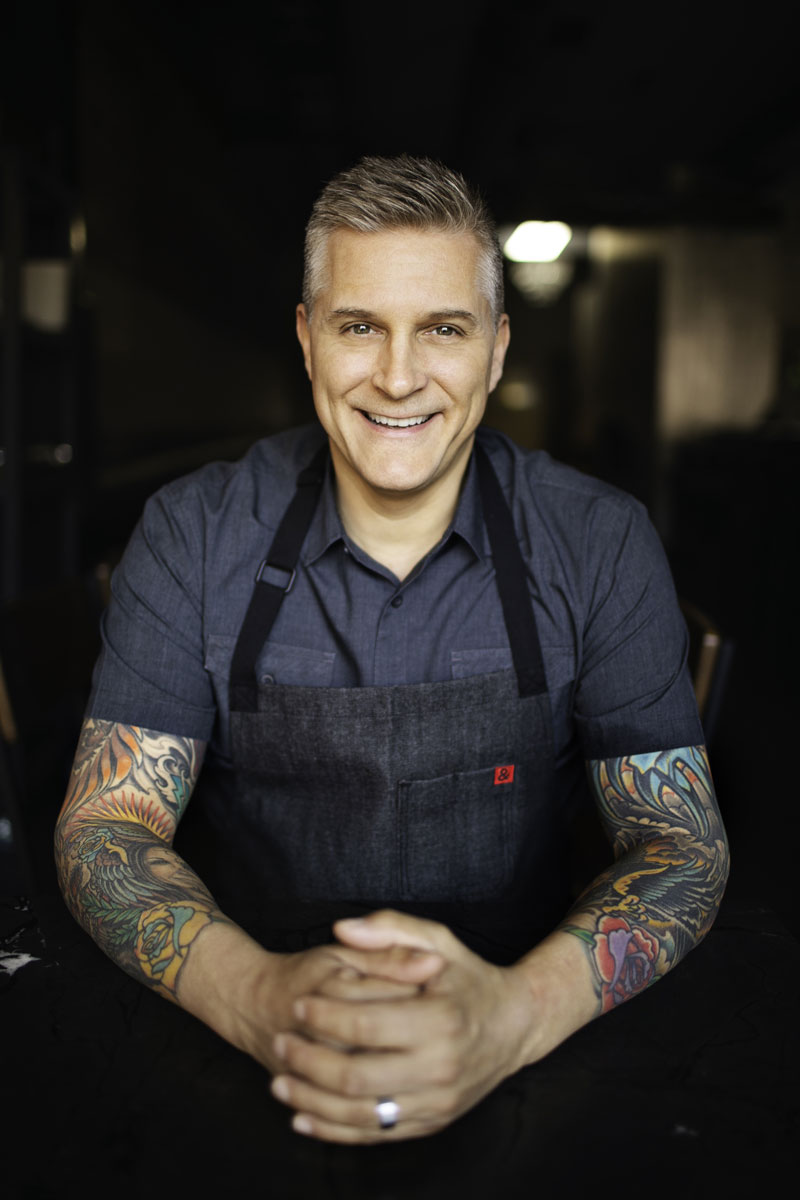
Abortion bans violate human rights, Amnesty International says in new report

For nearly 50 years in the United States, the U.S. Supreme Court asserted that the U.S. Constitution protected the right to access abortion under Roe v. Wade. But on June 24, 2022, the Dobbs decision changed that and allowed states to make their own laws about who can have access to abortion care, and under what circumstances. 

Since then, 14 states have banned abortion, and six states have introduced a gestational limit between six to 12 weeks, according to KFF. As Salon has reported, the consequences are harrowing. Medical school graduates are avoiding states with abortion bans exacerbating the maternal healthcare crisis. Pregnant women are being forced to cross state lines to terminate nonviable pregnancies. This week, Amnesty International USA released a report detailing how the aftermath of Dobbs is a “human rights crisis.”

“These types of bans and policies can impact a variety of human rights,” Jasmeet Sidhu, a senior researcher with Amnesty International USA, told Salon in a phone interview. “Including the right to life, the right to access healthcare, the right to privacy in some situations where abortion is being criminalized, and the right to be free from torture and other degrading treatment,” 

The report centered on the stories of patients and medical providers. From interviewing people in states with the strictest laws to researching court cases and media reports, Amnesty researchers found that abortion restrictions have led to a terrifying landscape for pregnant people in America. 

"These types of bans and policies can impact a variety of human rights."

“It was incredibly horrifying as a woman and a mother as well of two girls to learn about some of the circumstances in which people have been placed because of these restrictions,” Sidhu told Salon, adding that it was hard to hear from doctors about how they’re being forced to turn away patients and provide evidence-based care. “As we detailed in the report, there are less and less doctors that want to go to states where they're going to be criminalized for providing abortion care.”

In the report, Amnesty says that by failing to ensure that abortion care is accessible and affordable, the United States is “failing to comply with international human rights laws and standards to ensure pregnant individuals have equal access to abortion information services.” 


Want more health and science stories in your inbox? Subscribe to Salon's weekly newsletter Lab Notes.


Specifically, forcing a pregnant person to carry an unwanted pregnancy is a human rights violation. 

In one story in the report, a Black 12-year-old named Kim (whose name had been changed for privacy purposes), was raped in Mississippi. Once her mother found out she was pregnant, she filed a complaint with the police department. While there is technically an exception to Mississippi’s abortion ban — which restricts all abortions, except in cases of rape or incest or the save the life of the pregnant person — Kim became a mother.

“Abortion remains difficult to access in these circumstances because even if someone files a police report, there are no clear guidelines on how to qualify for legal abortion in cases of sexual violence,” the report explained. “Kim’s mother did not even know that an exception for rape existed under the criminal abortion law.”

Exceptions typically have a “multitude of very specific requirements,” Sidhu told Salon.

"Kim’s mother did not even know that an exception for rape existed under the criminal abortion law."

“These laws are pretty hard to navigate, even for someone like myself, who's a lawyer, to be able to understand what the guidelines are,” Sidhu said. “In that particular circumstance, the mother did not realize that there was an exception for rape, but even if she had, to be able to kind of navigate that, and take a child to law enforcement and get a physical exam, it is very complicated.”

Sheila, another woman whose name was changed for privacy, became pregnant in Mississippi when her hormonal birth control implant expired and she couldn’t afford a new one. Since the Jackson Women’s Health Organization in Mississippi the month after the Dobbs decision, she couldn’t afford to travel out of state to obtain care, either. She was forced to have the child without being able to work and pay for childcare. 

“The idea behind human rights are that they should be available, equally and universally, to everyone,” Sidhu said. “If I live in rural Oklahoma and I can't access an abortion unless I travel hundreds of miles, then I'm facing an undue burden compared to somebody who maybe, for example, lives in Washington, D.C.”

We need your help to stay independent

The report emphasized that there is a disparate impact of abortion restrictions, highlighting how systemic and structural racism prohibit people from equal access to health insurance. That results in a lack of access to contraception, prenatal care and abortion care. 

“For Black women, these bans represent a denial of abortion care to a constituency who, due to longstanding discrimination and ongoing challenges accessing comprehensive reproductive healthcare, seek abortions at a higher rate than any other group, and are already suffering far higher rates of maternal mortality,” the report states. “For Indigenous women, Dobbs adds even more restrictions to what many had long experienced as effective bans on abortion due to pre-existing federal government restrictions on the Indian Health Service, on which many of them depend for their health care.”

The report urged the U.S. to create a federal protection for abortion, among other suggestions. 

“I think that's pretty clear, that's the number one thing that needs to happen,” Sidhu said. “So that everyone, everywhere, has the same right to be able to access abortion care.”

Here’s why the wolf turn is so difficult, even though everyone thinks they can do it

If you’ve been watching the Paris Olympics (if you aren’t, what are you doing?) you’ve likely been keeping up with some of Team USA’s biggest stars, the women’s gymnastics team. Though the squad — comprised of Simone Biles, Sunisa Lee, Jordan Chiles, Jade Carey and Hezly River — closed out their competitive stint at the Games on Monday, their moves and medals have generated enough internet fodder for weeks to come. 

The final day of competition saw Biles, who by this point had already earned three gold medals in Paris, falter and ultimately fall during the beam finals. She wasn’t alone either. Lee took sixth place to Biles’ fifth, also falling as she attempted to complete her routine. A number of their competitors took a tumble as well. 

The difficult nature of the beam apparatus has led the internet to speculate how they might fare in a similar situation while trying to maintain balance before a global audience. The move they’ve honed in on? A wolf turn, a seemingly accessible turn style in which a gymnast, while seated in a squat position atop the beam (or even on the expanse of the floor exercise mat), will extend one leg outward and begin to spin on one foot with their arms stretched out. The turn's name derives from the athlete's leg positioning, and the skill has been around since at least 1966, according to Slate.

https://www.instagram.com/reel/C-R6nAQIONr/?hl=en

The turn’s low-impact appeal is something that’s led Olympic fans across social media to give it their best go. 

But watching the move as a spectator doesn’t necessarily give credence to its intensity — despite the wolf turn’s seeming ease, however, it’s anything but. A key reason gymnasts perform the move is for its difficulty level, meaning that judges are likely to give them a higher score value if they execute it correctly.

Last week, the U.S. Olympic Freeski team tried their hand (and feet) at completing a wolf turn, and the results showed just how skilled one must be to complete one. A montage of skiers tumbling and toe-gripping a barely raised beam for dear life lent a comical eye to the intricacy of nailing a wolf turn. “Turns out wolf turns are pretty hard, we fear,” the post's caption reads. 

“After Rio I tried doing this on my floor and I cramped my calf to hell,” one comment under the post read. “I'm pretty sure I would struggle even doing that on a solid ground,” another stated.

https://www.instagram.com/p/C9-vjcFxhAT/?hl=en

Comments of a similar ilk have flooded X/Twitter in recent days as well. 

“My husband knows the name of exactly one gymnastics move and he yells "WOLF TURN!" every time he sees it performed on tv,” one user wrote. 

“The wolf turn is so funny because they all struggle with it but it looks like the kind of thing your preschooler would be like HEY WATCH ME DO THIS and you’d be like wooooow honey great job. And yet I’m sure it’s like the hardest move you can do in gymnastics,” argued another.

Another person playfully quipped that the wolf turn, along with the similarly delicate aerial flip, was the reason they cited to their therapist for their general stress and anxiety.

This same reasoning led a number of Olympic fans ever to advocate for the removal of the wolf turn from Olympic routines altogether, citing its fundamentally nerve-wracking nature. 

“We need to retire the wolf turn GOD PLEASE,” one X/Twitter user wrote. 

“We have max. 1 wolf turn per routine now, but hear me out: max. 1 wolf turn per country,” suggested another.

So, what makes it so difficult? Vox noted in 2021 that the move partly requires a precarious balance of mass and inertia, which basically means you have to find your balance, put yourself in motion without any run-up and then stop it — elegantly and all from a low, squat position. When was the last time you were in a squat position, much less flexing your muscles while doing so? The extended leg acts as a lever, further throwing off your center of gravity. Putting all your weight on one foot while executing the move, also complicates matters. To execute this well requires an incredible amount of strength – both in the full body, but also in the feet and toes. 

Even Olympians find this difficult (see the evolution of Lee's skills). Respect the wolf turn.


Some Republicans say Kamala Harris is a better option than a “malignant narcissist” like Trump

Pennsylvania is the epicenter of the political world, and a group of GOP politicians and activists supporting Kamala Harris say the vice president's campaign will be boosted there by support from other Republicans disillusioned by Donald Trump, who former Rep. Jim Greenwood, R-Pa., described Monday as a "malignant narcissist" and "pathological liar."

Greenwood was one of three co-hosts of a "Republicans for Harris" Zoom call that marked the beginning of the group's efforts to deliver the commonwealth for the Democratic nominee. He was joined by former Lancaster County GOP chair Anne Womble and Andrea Kesack, a pathologist and self-described "moderate Republican." All of them agreed that Trump's effect on American politics and democracy far outweighed any policy disagreements they had with Harris.

"This is a campaign in which policy is important, but it's secondary to character, and the contrast between Donald Trump and Kamala Harris could not be more stark," Greenwood said. "She is a thoughtful woman, she is a public servant, she is honest, she has integrity and I believe the ability to reach across the aisle and get things done that are in the best interest of the country."

Womble, who like Greenwood is a lifelong Republican and supported every GOP presidential candidate before Trump, said that many Pennsylvanians she knows are outraged to see Trump's "atrocious behavior" and how he "flagrantly flaunts the law and finds all kinds of ways to manipulate it in his favor." Many of her fellow Republicans voted for Nikki Haley over Trump in the GOP primary, she said, making it imperative that pro-Harris forces ramp up efforts to get those voters to back the Democratic ticket in November. Staying home, writing-in a different candidate or voting third party would not do any good, the meeting's hosts emphasized.

"I know this election will be won at the margins by Republicans and independents like like us in Pennsylvania — it's going to be won by convincing many of the 158,000 voters who voted for Nikki Haley in the Republican primary to cast their votes for Kamala Harris," Womble said. "This time, Donald Trump doesn't want those voters, and he said so he's further alienated them by doubling down on his extremism and picking a cruel and phony running mate in JD Vance. They want to cast a vote for a president that behaves like a normal human being and works across the aisle for the betterment of the country."

Kesack, the third co-host of the meeting, cited Trump's racist comments and policies against women's reproductive freedom as a key reason for why she is choosing Harris over Trump.

"I know I am not alone among millions of women across the political spectrum, including independents and Republicans like myself, who are outraged by Donald Trump's push to control our bodies and taking away women's hard-won rights to choose for themselves," Kesack said. "Trump's policies were not driven by rationality or empathy. They never were, but now, over a third of women of reproductive age live in a state with an abortion ban, many that leave no exceptions for rape or incest."

We need your help to stay independent

The group plans to expand its outreach in the coming weeks, all three hosts saying that they were aware of the challenges of persuading Republicans to support a candidate who they may disagree with on a range of issues. While some Democrats are disappointed in Harris for changing her position on issues like fracking, arguing that the policy is harmful and not actually that popular even among Pennsylvanians, pro-Harris Republicans suggest that a willingness to "evolve" and support "energy independence" will help her appeal to voters in the center.

"The first thing is to listen to them," Womble said. "You know, listen to what people are saying, what their hesitations may be, what their perceptions may be of Vice President Harris, and then kind of go from there … We're seeing that the vice president is coming out these days with new positions on some issues that she did not hold or did not articulate in her brief run for president in 2020 and I think that's a sign — I think it's a very positive sign — for some of these Nikki Haley voters who want to hear that she understands the pragmatic nature of governing an entire country as opposed to being, you know, a senator, a representative from only the state of California."

The Republicans' support for Harris doesn't necessarily mean they're voting for Democrats down-ballot, however. Greenwood said he still plans to back Rep. Brian Fitzpatrick, a Philadelphia-area Republican, for re-election over his Democratic opponent, saying the lawmaker can "work across the aisle." Fitzpatrick, for his part, has demurred on whether he would endorse Trump for a second term or not, and Democrats have criticized him for hedging. Haley, meanwhile, has sought to distance herself from any Republicans opposing Trump, having already thrown her support behind the former president.

4 practical tips for eating more sustainably

The systems that bring food from production to the plate are responsible for nearly one-third of global greenhouse gas emissions, significant biodiversity losses and global land and water degradation — with clear impacts upon human health. Waste is a key stage in global food systems and one that also has a significant ecological impact.

To be clear, achieving true sustainability in food systems is a challenge for producers, distributors and all those involved in the global food system. Systemic change is needed through policy and program interventions to support the production and availability of plant-based foods alongside greater emphasis on providing sustainable choices for the consumer.

That being said, while systems-level change is critical, individuals can be powerful agents in the mitigation of ecological damage. The four steps in this article can help you live more healthily while also having a positive impact on the health of the planet.

A report on the global food waste problem produced by Vox.


Sustainable eating?

Sustainable eating considers all stages of the food system/cycle, from production to waste.

An estimated 20 to 50 per cent of annual food waste in Canada comes from the consumer or household level. This roughly translates to around 79 kilograms (167 pounds) of food waste per year for each Canadian household.

Perhaps most shockingly, over 60 per cent of this waste is avoidable food waste or food that could have been eaten but was thrown away for various reasons, including spoilage.

Research from 2022 showed that, on average, a Canadian household's food waste equates to around $1,300 a year — a number that may now be much higher. Worse yet, most food waste is in the form of fruits and vegetables that contain important nutrients, like fibre and some vitamins, that most Canadians are not eating enough of as is.

Strong and consistent evidence shows that a high percentage of plant-based foods in our diet is both healthier for our bodies and more environmentally sustainable. Despite all this evidence, however, changing our diets can be difficult.

There are several factors that make eating sustainably more difficult, including the cost of ingredients, issues in food availability and accessibility, lack of knowledge as to how to prepare plant-based foods and a lack of time.

With rising food prices and the growth of ultra-processed junk foods across the food sector these challenges to eating sustainably are becoming greater.

It is also worth remembering that sustainable plant-based meals can be considerably cheaper than takeout and expensive animal products and, with a little practice, can be much quicker to prepare. While preparing meals takes time, there are ways to streamline the process and make it more enjoyable. These four tips can help.


Simple steps

So how can you fit eating sustainably into your life? To help guide you, we've drawn on our expertise as researchers in food systems, behavioral nutrition, sustainable eating and food literacy to help you on the path to eating more sustainably.

  1. Plan your shopping and meals:

  2. Swap meat with plant-based proteins by testing out new recipes. Below we list some of our favourite websites and recipes:

  3. Embrace leftovers and reduce food waste:

  4. Let go of guilt:

    • We often put a lot of pressure on ourselves. However, changing our habits takes time. Practice mindfulness and enjoy the flavors and smells of the new foods you try.
    • While some of these resources and recipes are vegan, we, the authors, are not advocating that everyone adopt a fully vegan diet (none of us are vegan). Instead, we hope these resources will help you develop a habit of incorporating more plant-based meals, such as implementing meatless Mondays, and adopt a more flexitarian or vegetarian lifestyle.

In addition to systemic changes in our food systems, small, consistent individual changes — like those we've outlined above — can have big systemic impacts. That said, one size doesn't fit all. Knowing where to start in trying to eat more sustainably can be challenging and anxiety-inducing. However, at its core sustainable eating is all about reducing our meat consumption and the food waste in our homes.

While we all can take positive steps, no one is perfect. Consider what changes fit your lifestyle and commit to contributing wherever and whenever you can. We hope some of the recommendations and resources that we have provided here will help you enjoy eating more sustainably.

Amar Laila, Post-doctoral Fellow, EAT-Lancet 2.0 Commission, Stockholm Resilience Centre, University of Guelph; Alicia Martin, PhD Candidate, Geography, University of Guelph; Cristina Gago, Assistant Professor of Community Health Sciences, Boston University School of Public Health, Boston University, and Katherine Eckert, PhD Candidate & Registered Dietitian, Applied Human Nutrition, University of Guelph

This article is republished from The Conversation under a Creative Commons license. Read the original article.

Clarence Thomas failed to disclose another trip on a GOP megadonor’s private jet, senator says

Supreme Court Justice Clarence Thomas failed to disclose yet another private travel gift from Republican billionaire Harlan Crow, according Sen. Ron Wyden, D-Ore., chairman of the Senate Finance Committee.

In a letter addressed to an attorney for Crow, Wyden cited records from Customs and Border Protection that show Thomas and his wife, Ginni, took a round-trip flight from New Zealand to Hawaii on Crow’s private jet in 2010, The New York Times reported

Thomas has a long history with Crow, who has treated the Supreme Court justice to vacations for over 20 years, according to an investigation by ProPublica. The investigation also revealed that Thomas had also sailed on Crow’s yacht, the Michaela Rose, in New Zealand.

“Neither Mr. Crow nor Justice Thomas have disclosed the full scale of Thomas's use of the Michaela Rose and private jets courtesy of Mr. Crow,” Wyden’s letter reads.

“I am deeply concerned that Mr. Crow may have been showering a public official with extravagant gifts, then writing off those gifts to lower his tax bill,” Wyden wrote.

The accusation comes after Rep. Alexandria Ocasio-Cortez D-N.Y., introduced articles of impeachment against Thomas last month. The articles accuse Thomas and Justice Samuel Alito failing to disclose income and gifts from Republican megadonors, among other accusations. 

Supreme Court justices are required to fill out a financial disclosure form and must report any outside gifts or financial sources. Thomas has repeatedly failed to do so.

Amid the controversy surrounding Thomas and Alito, President Joe Biden recently called for three reforms to “restore trust and accountability” in the Supreme Court: overturning the recent ruling that grants a president immunity from criminal prosecution for official acts, term limits for justices and a binding code of conduct that would require justices to disclose gifts.

House Speaker Mike Johnson, a Republican who has dismissed criticism of Thomas and other right-wing justices, said Biden’s proposal would be “dead on arrival” in the House.

“He happened to turn Christian”: John Oliver mocks Trump’s recent comments on Kamala Harris’ race

John Oliver blasted Donald Trump's performance at the National Association for Black Journalists, calling his interview with three Black journalists "disastrous" after the former president's controversial comments on Vice President Kamala Harris' race last week.

The comedian opened Sunday evening's episode of "Last Week Tonight" with his critique on Trump's appearance at NABJ. The show played the now-viral clip of the Republican nominee being asked, "Do you believe that Vice President Kamala Harris is only on the ticket because she is a Black woman?"

Trump responded, "I can say no, I think it’s maybe a little bit different. She was always of Indian heritage and she was only promoting Indian heritage. I didn’t know she was Black until a number of years ago when she happened to turn Black."

He continued, "Now she wants to be known as Black. So I don’t know. Is she Indian, or is she Black? She was Indian all the way, then all of a sudden she made a turn and became a Black person."

However, Oliver had one positive observation about the interaction: "I mean this in the most disparaging way possible: that went about as well as could be expected. . . . Putting Trump in front of a Black audience and asking him to speak on race was never going to get more elevated than, 'The lady said she was both Indian and Black; that’s cheating.'  Also, not that this needs saying, Harris didn’t 'make a turn' into being Black like it’s an interstate offramp. Her father’s Black and her mother was Indian."

Also, Oliver could not help but bring in Trump's vice president pick, JD Vance into the conversation, stating, "I can’t imagine what JD Vance, a man with three biracial children, was thinking while watching Trump there."

The comedian joked, "Although, you know what? He was probably thinking, 'Mmm look at that luscious upholstery. Do those cushions come all the way off?'" Oliver alluded to the rumor that took the internet by storm that Vance, in his memoir "Hillbilly Elegy," wrote that he had sex with his couch. 

Outside of Trump's appearance at NABJ, Oliver highlighted the commencement of the 2024 Paris Olympics. However, the comedian also brought to light the rampant culture war surrounding the opening ceremony that was deemed "satanic" by Christian conservatives.

We need your help to stay independent

Oliver explained, "One element of the ceremony got some extra blowback — this scene, in which drag queens and other performers were gathered at a table. It was meant to evoke pagan feasts, but some saw something else in it, and were furious."

"Last Week Tonight" played a clip of Trump's response to the opening ceremony which was an homage to the Greek mythology and Feast of Dionysus. "I thought that the opening ceremony was a disgrace, actually. I thought it was a disgrace. The mocking of the Last Supper? Catholics and Christians across, I thought, across the globe are outraged. I mean, they can do certain things, I thought it was . . . terrible."

Oliver stated, "You know, it’s always strange to watch Trump act like he cares about religion because, to echo something I heard someone say recently, 'I didn’t know he was Christian until a number of years ago when he happened to turn Christian . . . All of a sudden he made a turn and became a Christian person.'"

Last Week Tonight with John Oliver airs on Sundays at 11 p.m. ET on Max.

“It’s hard, but we did it”: Simone Biles and Jordan Chiles wrap Olympics with more medals

The women of Team USA's gymnastics team capped off an incredibly strong showing at the Paris Olympics on Monay, set to return home with an assortment of medals from various apparatuses. 

Seasoned veteran and standout athlete Simone Biles struggled somewhat on her last day of competition, earning a fifth-place spot in the balance beam final after sustaining a fall. Biles and her teammate Jordan Chiles finished out strong in the floor competition, however, earning the silver and bronze medals respectively after Brazil's Rebeca Andrade finished first. While standing atop the podium, Biles and Chiles bowed to Andrade in a show of respect. “It was just the right thing to do,” Biles said, according to the Associated Press. “She’s queen.”

Paris was nothing if not a redemption tour for Biles, who chose to drop out of her last Olympic Games in Tokyo after she was plagued by the "twisties," a disorienting dissonance between the mind and the body. "I've accomplished way more than my wildest dreams, not just at this Olympics, but in this sport,” Biles said at a press conference on Monday, per PEOPLE. “So I can’t be mad at my performances. A couple of years ago I didn’t think I’d be back here at an Olympic game. So competing and then walking away with four medals, I’m not mad about it. I’m pretty proud of myself and it’s always so exciting to compete.”

“Obviously it wasn’t my best performances, but at the end of the day, whoever medaled, medaled, and that’s what’s so exciting, because you just never know with gymnastics,” she said. “I’m not very upset or anything about my performance at the Olympics. I’m actually very happy, proud and even more excited that it’s over, the stress of it.”

Biles added three gold medals — the team all-around, the individual all-around and the vault final — to her collection while in Paris, cementing her place as the most decorated American Olympics gymnast of all time. 

“We did our job, you know what I’m saying? It’s hard, but we did it,” Biles said. “It means the world that I could come back out here and compete on an international stage again, representing my country. I couldn’t have asked for a better Olympic Games, better support system, better teammates. So yeah, thank you. Thank you, Paris.”

As a lobbyist, Republican Dave Reichert pushed DNA technology that could enable mass surveillance

Gubernatorial hopeful and former Rep. Dave Reichert, R-Wash., really wants people to know that Rapid DNA, a technology which creates DNA profiles of individuals based on a mouth swab, is the future of law enforcement. A former sheriff who spent some of his post-Congress years lobbying for a company that dominates the Rapid DNA industry, Reichert is still advocating for its use in police departments in Washington and across the country, despite criticism that the technology enables government mass surveillance and that its apparent flaws could lead to innocent people being arrested for crimes they did not commit.

"So good for crime solving, and tracking suspects," he said in an interview last year, referring to Rapid DNA. "And we've also been using this technology on the border a lot more during the Trump era than we do now, obviously.”

Law enforcement has touted DNA-storing technology as a tool that helps generate investigative leads, track down suspects and solve a variety of crimes. But there are also imperfections that have led to wrongful arrests and convictions. In 2017, the Swedish National Forensic Center conducted an evaluation of a Rapid DNA machine and found that 36% of the tests had errors affecting two or more samples, with only 77% of the samples correctly matching their DNA profiles in full.

Another study, by the National Institute of Standards and Technology, showed that Rapid DNA machines were successful 85% of the time without human supervision, a rate that climbed to 90% when experts oversaw the process. While the FBI and other well-funded organizations enforce education and training requirements for their forensics staff, local department standards are more inconsistent, with handlers sometimes making terrible mistakes or committing outright fraud.

"We should all be concerned when we hear about unproven technologies like Rapid DNA being promoted for criminal justice purposes, especially given how few protections currently exist around DNA collection in the U.S. People have been falsely implicated for crimes they did not commit due to traditional DNA testing," Hudson Hongo, a spokesperson for the Electronic Frontier Foundation, told Salon.

Furthermore, some critics of Rapid DNA have warned that by probing into a unique identifier that reveals sensitive medical information, the technology is a violation of privacy and civil liberties.

"Rapid DNA machines enable this information to be stored in expansive government DNA databases, raising concerns about privacy, security, and misuse," said Tee Sannon, technology policy program director for the ACLU-WA. "This technology is also likely to exacerbate existing racial disparities in the criminal justice system, given that people of color are disproportionately more likely to be subject to DNA collection and arrests.”

The Reichert campaign did not respond to requests for comment. But the candidate's support for Rapid DNA aligns with the broader message of his "tough on crime" campaign, which also calls for more cops on the streets. He is also uniquely positioned among tough-on-crime candidates due to his history of lobbying for the technology on behalf of a firm that he worked for. 

After leaving the House in 2019, Reichert joined the lobbying firm Gordon Thomas Honeywell Governmental Affairs as vice president, where his only client was Thermo Fisher Scientific, a science and clinical research company that along with ANDE has exclusive control over the multi-billion-dollar Rapid DNA industry in the U.S. and lobbied extensively for legislation to integrate the technology into FBI operating procedures. Reichert, an advocate of Rapid DNA on both sides of the revolving door between politics and lobbying, would represent a direct link between that industry and the office he seeks to hold.

According to public records, Thermo Fisher Scientific shelled out $360,000 to Reichert's employer from 2021 to 2023; he was one of three lobbyists who worked on behalf of the Rapid DNA maker.

We need your help to stay independent

The Seattle Times reported that Reichert's role was to collaborate with government officials and draw on his 33-year experience in law enforcement to create a legal framework and legislation to enable the DNA collection of missing children in Central America. Reichert has touted his efforts to utilize Rapid DNA machines for this project.

"I took a job right after the day after I left Congress, I was working in Central America on human trafficking. And then my other part of my job was working on a new technology called Rapid DNA with sheriffs and police chiefs across the country, and it's a machine that's about the size of a microwave, and you can get a DNA profile in 90 minutes," he said.

Reichert said in interviews across Washington state that he acted as the firm's representative in a federally-funded project at the University of North Texas Center for Human Identification, which uses DNA technology to curb human trafficking in Central America. The project seeks to help Central American countries set up DNA databases of family members of known missing children, which could be shared with each other and with U.S. authorities to verify the identities of children who show up at the border.

After being paid to advocate its use in Central America, Reichert continued to promote the technology at home. "I'm back to work, helping local law enforcement across the country acquire" Rapid DNA, he told the E for Explicit podcast in 2022.

Reichert is adamant that Rapid DNA is the tool that law enforcement needs turn things around in a state that is, according to his campaign website, “a haven for crime, drugs, homelessness, human trafficking, and other serious problems.” While Reichert often cites his work in Central America as an eye-opening experience that led him to this belief, he has not mentioned the fact that he was paid to lobby for its use in the first place.

Despite Trump’s tipping promises, the hospitality workers union endorses Kamala Harris for president

According to the Associated Press, the country's largest hospitality worker union UNITE HERE has just endorsed Vice President Kamala Harris for president.

Gwen Mills, the president of the union who discussed the endorsement with the AP before making the official announcement, believed that "Harris has credibility from having supported unions," while Trump's recent comments about excluding tips from federal income taxes for hospitality workers weren't genuine — and that he was simply "making a play" for votes. 

At a June 9 rally in Nevada, Trump said: "To those hotel workers and people who get tips, you are going to be very happy, because when I get to office, we are going to not charge taxes on tips, people making tips." Conversely, as AP's Josh Boak reported, the Biden Administration has "countered that tipped workers would be better off with a higher minimum wage." It's thought that Harris will embrace many of Biden's existing economic proposals and, since announcing her plans to run for president, "swiftly consolidated what can be a fractious Democratic coalition, including lining up support from labor unions" such as the AFL-Cio, United Auto Workers and of course, UNITE HERE.

Reportedly, the endorsement includes a commitment by the union to have its members knock on more than 3.3 million doors for Harris in swing states. Harris also spoke at UNITE HERE's Constitutional Convention back in June. 

“Never go out of style”: Taylor Swift on Olympians Katie Ledecky, Simone Biles, Sha’Carri Richardson

Pop star Taylor Swift has collaborated with NBC to create a promo honoring some of the most prominent female athletic talents representing the U.S. at the Olympic Games in Paris — gymnast Simone Biles, sprinter Sha'Carri Richardson and swimmer Katie Ledecky. 

The video posted on NBC Olympics' social media on Sunday is set to Swift's 2014 hit song, "Style" and opens with a quote from the famous French designer, Coco Chanel: "Every day is a fashion show, and the world is your runway."

“Never be afraid to show them who you are,” Swift narrates. “Especially when the whole world is watching. Because there’s no one way to be the best. No one way to inspire everyone else who will someday follow. You do what you love. You love what you do. You believe in your style, whatever it is.”

“Katie, Sha’Carri and Simone,” Swift continues. “Three American stars, three different visions of greatness, tonight in Paris.” The post's caption echoes a similar sentiment, stating, "Katie. Sha’Carri. Simone. They’ll never go out of style."

Each Olympian has collected at least one medal in their respective sports since the Games kicked off late last month. Ledecky's 14 medals make her the most decorated U.S. woman athlete to compete in the Olympics, Biles recently became the most-decorated American Olympics gymnast of all time, and Richardson — who was barred from the Tokyo Olympics in 2021 — continued her redemption tour when she earned the silver medal in the women's 100m dash.