Spring Offer: Get 1 Year, Save 58%

Drake Bell calls out “Boy Meets World” stars for writing letters supporting child abuser

Drake Bell is attempting to set the record straight regarding the involvement of "Boy Meets World" actors Rider Strong and Will Friedle in supporting Brian Peck, Bell's former dialogue and acting coach who sexually assaulted him as a minor. The former Nickelodeon star revealed the abuse in Investigation Discovery's new docuseries, "Quiet on Set: The Dark Side of Kids TV," and has since engaged in open discourse on social media.

Strong and Friedle were among a sizeable group of individuals who wrote letters of support for Peck in 2003 after Bell accused him. In a February episode of their podcast with fellow "Boy Meets World" alum, Danielle Fishel, Strong and Friedle reportedly preemptively addressed their connection to Peck after once they learned that their letters would be aired to the public. 

In a series of since-deleted comments on an Instagram post by "Zoey 101" actor Alexa Nikolas, in which she singled out Strong and Friedle and their podcast, Bell spoke out about his understanding of the "Boy Meets World" stars' involvement. 

“Rider was 24 years old when he wrote the letter and was told by Brian what he did,” Bell wrote. "He wrote the letter anyway." Later, Bell stated that Friedle was 27 years old at the time and that Peck "told him what he did,” adding that “Many people turned away and said no I won’t write a letter, but [Strong and Friedle] did.” Bell continued, alleging that Friedle wasn't manipulated into writing the letter.

“Everyone thought the letters would be sealed forever and no one would ever see them," Bell said. "This is their publicist telling them how to get ahead of the story.” 

"We weren't told the whole story, but it doesn't change the fact that we did it."

In the episode of "Pod Meets World" last month, Strong noted how he spent a significant amount of time with Peck, asserting, "The person he presented was this great, funny guy who was really good at his job, and you wanted to hang out with. I saw him every day, hung out with him every day, talked to him every day." When Peck notified Friedle of his arrest in August 2003, he couched in such a way “where it wasn’t his fault” and that “it was clearly the fault of his victim."

"My initial instinct because of the years I've been with him was like 'Well, yeah, of course, it can't be you. Can't be. Right, you're innocent. It can't possibly be that,'" Friedle continued. "So you sidle up to the guy who now you look back on as an adult and you go, 'He's horrible.' And my instinct initially was, 'Well, my friend can't be [this person], this can't be. So it's got to be the other person's fault,' has to be the story.

"Of course, it makes complete sense," Friedle went on. "The way that he's saying it, and 'You're damn right, it's that kid's fault. How dare he?' And I look back at that now as an adult, and it makes me want to cry that I ever was that naive." 

Strong observed that while Peck “didn’t say nothing had happened," he instead implied that he was merely "a victim of jailbait." 

“Back then, you couldn't Google to find out what people were being charged with," Strong said, noting how it seemed as though Peck was “making a plea deal and admitting one thing — which is all he admitted to us — but it looks like he was being charged with a series of crimes, which we did not know.”

Friedle ultimately concluded that he and Strong were “sitting in that courtroom on the wrong side of everything.”

"The victim's mother turned and said, 'Look at all the famous people you brought with you. And it doesn’t change what you did to my kid,'" he stated. "I just sat there wanting to die. It was like, 'What the hell am I doing here?' It was horrifying all the way around."

"We weren't told the whole story, but it doesn't change the fact that we did it," Friedle added. "I still can't get the words out to describe all of the things that I'm feeling inside of myself."

Leprosy cases are rising in the US – what is the ancient disease and why is it spreading now?

The word “leprosy” conjures images of biblical plagues, but the disease is still with us today. Caused by infectious bacteria, some 200,000 new cases are reported each year, according to the World Health Organization. In the United States, leprosy has been entrenched for more than a century in parts of the South where people came into contact with armadillos, the principle proven linkage from animal to humans. However, the more recent outbreaks in the Southeast, especially Florida, have not been associated with animal exposure.

The Conversation talked with Robert A. Schwartz, professor and head of dermatology at Rutgers New Jersey Medical School, to explain what researchers know about the disease.

What is leprosy and why is it resurfacing in the US?

Leprosy is caused by two different but similar bacteria — Mycobacterium leprae and Mycobacterium lepromatosis — the latter having just been identified in 2008. Leprosy, also known as Hansen’s disease, is avoidable. Transmission among the most vulnerable in society, including migrant and impoverished populations, remains a pressing issue.

This age-old neglected tropical disease, which is still present in more than 120 countries, is now a growing challenge in parts of North America.

Leprosy is beginning to occur regularly within parts of the southeastern United States. Most recently, Florida has seen a heightened incidence of leprosy, accounting for many of the newly diagnosed cases in the U.S.

The surge in new cases in central Florida highlights the urgent need for health care providers to report them immediately. Contact tracing is critical to identifying sources and reducing transmission.

Traditional risk factors include zoonotic exposure and having recently lived in leprosy-endemic countries. Brazil, India and Indonesia have each noted more than 10,000 new cases since 2019, according to the World Health Organization data, and more than a dozen countries have reported between 1,000 to 10,000 new cases over the same time period.

Why was leprosy stigmatized in biblical times?

Evidence suggests that leprosy has plagued civilization since at least the second millennium B.C.

From that time until the mid-20th century, limited treatments were available, so the bacteria could infiltrate the body and cause prominent physical deformities such as disfigured hands and feet. Advanced cases of leprosy cause facial features resembling that of a lion in humans.

Many mutilating and distressing skin disorders such as skin cancers and deep fungal infections were also confused with leprosy by the general public.

Fear of contagion has led to tremendous stigmatization and social exclusion. It was such a serious concern that the Kingdom of Jerusalem had a specialized hospital to care for those suffering from leprosy.

How infectious is leprosy?

Research shows that prolonged in-person contact via respiratory droplets is the primary mode of transmission, rather than through normal, everyday contact such as embracing, shaking hands or sitting near a person with leprosy. People with leprosy generally do not transmit the disease once they begin treatment.

Armadillos represent the only known zoonotic reservoir of leprosy-causing bacteria that threaten humans. These small mammals are common in Central and South America and in parts of Texas, Louisiana, Missouri and other states, where they are sometimes kept as pets or farmed as meat. Eating armadillo meat is not a clear cause of leprosy, but capturing and raising armadillos, along with preparing its meat, are risk factors.

The transmission mechanism between zoonotic reservoirs and susceptible individuals is unknown, but it is strongly suspected that direct contact with an infected armadillo poses a significant risk of developing leprosy. However, many cases reported in the U.S. have demonstrated an absence of either zoonotic exposure or person-to-person transmission outside of North America, suggesting that transmission may be happening where the infected person lives. But in many cases, the source remains an enigma.

Some people’s genetics might make them more susceptible to leprosy infections, or their immune systems are less capable of resisting the disease.

Stigma and discrimination have prevented people from seeking treatment, and as a result, “concealed” cases contribute to transmission.

The number of leprosy cases in the U.S. has more than doubled over the past decade, and Florida has become a hot spot for it.

How do you recognize it?

Leprosy primarily affects the skin and peripheral nervous system, causing physical deformity and desensitizing one’s ability to feel pain on affected skin.

It may begin with loss of sensation on whitish patches of skin or reddened skin. As the bacteria spread in the skin, they can cause the skin to thicken with or without nodules. If this occurs on a person’s face, it may rarely produce a smooth, attractive-appearing facial contour known as lepra bonita, or “pretty leprosy.” The disease can progress to causing eyebrow loss, enlarged nerves in the neck, nasal deformities and nerve damage.

The onset of symptoms can sometimes take as long as 20 years because the infectious bacteria have a lengthy incubation period and proliferate slowly in the human body. So presumably many people are infected long before they know that they are.

Fortunately, worldwide efforts to screen for leprosy are being enhanced thanks to organizations like the Order of Saint Lazarus, which was originally founded in the 11th century to combat leprosy, and the Armauer Hansen Research Institute, which conducts immunologic, epidemiological and translational research in Ethiopia. The nongovernmental organization Bombay Leprosy Project in India does the same.

How treatable is it?

Leprosy is not only preventable but treatable. Defying stigma and advancing early diagnosis via proactive measures are critical to the mission of controlling and eradicating it worldwide.

Notably, the World Health Organization and other agencies provide multi-drug therapy at no cost to patients.

In addition, vaccine technology to combat leprosy is in the clinical trials stage and could become available in coming years. In studies involving nine-banded armadillos, this protein-based vaccine delayed or diminished leprous nerve damage and kept bacteria at bay. Researchers believe that the vaccine can be produced in a low-cost, highly efficient manner, with the long-term prospect of eradicating leprosy.

If health care professionals, biomedical researchers and lawmakers do not markedly enhance their efforts to eliminate leprosy worldwide, the disease will continue to spread and could become a far more serious problem in areas that have been largely free of leprosy for decades.

The World Health Organization launched a plan in 2021 for achieving zero leprosy.The Conversation

Robert A. Schwartz, Professor and Head of Dermatology, Rutgers New Jersey Medical School, Rutgers University

This article is republished from The Conversation under a Creative Commons license. Read the original article.

Supreme Court grants Gov. Greg Abbott’s wish to turn Texas into a far-right dictatorship

In his 2022 majority opinion for Dobbs v. Jackson Women's Health, Justice Samuel Alito took great pains to argue that allowing states to ban abortion was no slippery slope to gutting other human rights. Claiming abortion is a "unique act" because of the "potential life," thus making it different from other court-established rights like birth control or same-sex marriage, Alito argued that Dobbs "does not undermine" other rights "in any way." 

Roughly no one believed him at the time, in part because Republican protestations that they are "pro-life" are a thin pretext for what is an authoritarian obsession with controlling people's sex lives. It also didn't help that Justice Clarence Thomas used his concurrence in Dobbs to call for Republican lawmakers to go after other rights. He argued that "in future cases, we should reconsider all of this Court’s" previous decisions legalizing contraception and homosexual sex, as welll as the decision to permit same-sex marriage. 

Even Alito's biggest skeptics underestimated how much Dobbs would be treated as an open invitation by the Supreme Court to red states: Strip away any human right you like. Just this past week, for instance, the Supreme Court refused to block two actions by the Texas government that should, by any measure, be serious violations of basic constitutional protections

Late last week, the Supreme Court allowed West Texas A&M University to proceed with its ban of drag shows hosted by on-campus groups, even though the school's censorship violate decades of First Amendment precedence. This week, the Supreme Court did it again, allowing Texas to temporarily go forward with a clearly unconstitutional claim that state law supersedes federal jurisdiction when it comes to immigration. Neither decision constitutes the final word on whether Texas can flout the constitutional order so openly, to be clear. But even letting it get this far represents the Supreme Court's eagerness to bless Gov. Greg Abbott, R-Tex., in his quest to turn his state into a far-right dictatorship.

Even if the drag ban and immigration law are eventually overturned, all this legal maneuvering sends a signal to Texas and red states: The Supreme Court is sympathetic to their white nationalist and theocratic impulses.

The drag show case is the simpler of the two, in terms of how obvious the violation of the First Amendment is. A student group at West Texas A&M wished to hold what the lawyers describe as "a PG-13 performance" of mostly-LGBTQ performers doing drag. The school's far-right president, Walter Wendler, canceled all drag shows on campus, regardless of content. Abbott's close ally, the infamously corrupt state attorney general Ken Paxton, has put the state government behind defending Wendler's blatant rejection of the free speech rights of students. 

Both Wendler and Paxton are arguing in extreme bad faith. Wendler falsely accuses drag performers of being "misogynist" and "portraying women as objects." He has not, however, banned beauty pageants featuring cis women, despite near-identical content. Paxton claims drag must be banned to "protect children." College students, as a reminder, are adults. Even if children do attend with their parents, however, Paxton's argument is a stretch. Paxton is not backing a ban on beauty pageants or dance contests, which are the equivalent level of sexual display to a drag show. 

No, this is about discrimination against LGBTQ people. Wendel was previously fired from a job after denying same-sex couples the employee benefits available to straight couples. He's also argued sex should only happen between heterosexual married people who do not use contraception. Paxton, meanwhile, has previously objected to same-sex marriage and has declared that Pride Week is "immoral" and should be "illegal." 

We need your help to stay independent

The Supreme Court has not issued a final ruling on banning drag, but they did allow the current campus ban to take effect while the case proceeds. This, as legal reporter Ian Millhiser at Vox wrote, is outrageous because it is such a clear-cut case of free speech. By upholding the ban, even temporarily, Millhiser writes, "college students in North Texas are not allowed to exercise their First Amendment rights for an indefinite period of time." 

The immigration decision is far more complex, but it amounts to the same thing. The Supreme Court refused to block, even temporarily, a Texas law that flagrantly violates the Constitution and court precedent. Abbott recently signed a law that gives state law enforcement the right to detain and even deport immigrants, even though all of U.S. legal history puts the enforcement of immigration law solely in the hands of the federal government. Abbott's law is so extreme that even the most jaundiced observers of this far-right Supreme Court doubt they'll allow Texas to keep it. That is why it was a shock on Tuesday when the Supreme Court allowed the law to take effect while it's being argued in court. 

Legal expert Mark Joseph Stern combs through the dense legal maneuvers, and what it boils down to is this: Republican-appointed justices on both the Supreme Court and the Fifth Circuit Appeals Court know that the Texas law cannot pass constitutional muster. But they are partisan hacks who don't want to stop a Republican-run state from driving child migrants to drown to death. So they've been playing procedural games, as Stern explains, "to shield Texas’ law from Supreme Court review indefinitely." 

To compound the horrors of the situation, the Texas law doesn't just target undocumented migrants, but anyone cops wish to harass. "The Texas measure also allows state law enforcement officers to stop and detain anyone they 'suspect' of having entered Texas unlawfully," Stern notes. Do you have a Spanish last name? Darker skin? Are the cops just bored and want to bully someone? All these can now be reasons they "suspect" a person is undocumented, creating an excuse to hold them.


Want more Amanda Marcotte on politics? Subscribe to her newsletter Standing Room Only.


"Could I be detained because I’m Brown, speak Spanish fluently and look like someone who crossed into Texas illegally?" Jorge Dominguez, a U.S. citizen who works as an immigration attorney in El Paso, Texas, said to the Washington Post. 

Not to get too into the legal weeds, but there was enough wiggle room for an entirely different — and apparently less radical — group of Fifth Circuit judges to step in and injunct the law again. That's a relief, but doesn't change the basic outlines of the situation: The Supreme Court was willing to let Texas start implementing a law they know full well can't be defended, and were using "shameless gamesmanship" as a legal tool to do that. Worse, Republicans in other states are starting to feel confident that the court will eventually rule against the constitution to grant states the right to do this. As the New York Times reports, Iowa passed a similar bill and at least 6 red states are considering following suit. 

Even if the drag ban and immigration law are eventually overturned, all this legal maneuvering sends a signal to Texas and red states: The Supreme Court is sympathetic to their white nationalist and theocratic impulses. Even when they can't, by law, uphold the authoritarian yearnings of Republican state leaders, they will do everything they can to help those politicians grasp as much power as possible. This also suggests, as with Dobbs, that the court will stretch the definition of "constitutional" to its breaking point to allow Republicans to attack basic human rights. Which means we may be seeing states take up Thomas's invitation to revisit whether birth control or same-sex relations are human rights sooner rather than later. 

Our “fingerprints” are all over climate change, research on warming ocean temperatures finds

Our oceans are getting hotter, a trend that is alarming experts, and human activity is clearly to blame. In particular sea surface temperatures (SST) are rising at an alarming rate, and scientists have spent months puzzling as to why. They have a good reason to worry: If sea surface temperatures continue rising, humans will endure worsened storms, rising sea levels and major changes to the Earth's ecology.

"This research rebuts claims that recent temperature changes are natural."

Now a recent study in the journal Nature Climate Change has discovered a "robust human ‘fingerprint’" behind increasing sea surface temperatures, one that the authors say is "likely to have wide-ranging impacts on marine ecosystems." Perhaps unsurprisingly, it all comes down to global heating.

Researchers from the Woods Hole Oceanographic Institution (WHOI) learned this by studying the SST seasonal cycle amplitude (SSTAC) — that is, the difference between the annual maximum and minimum sea surface temperatures — based on four sets of observational data. This included information gathered from satellite records, measurements from WHOI ships and floats that have been active since 1950 and various other types of monitoring systems.

The decades of research all pointed in the same direction: There is a human-caused signal in the SSTAC that stands out amidst the noise of other factors contributing to that increase. More specifically, the WHOI scientists found climate change-linked alterations to surface winds occurring in some regions, as well as similarly climate change-linked thinning of the ocean water's mixed-layer depths. The latter warming is significant because summer temperatures are amplified when that layer of water is less dense.

“This research rebuts claims that recent temperature changes are natural, whether due to the Sun or due to internal cycles in the climate system," said co-author Benjamin Santer, an adjunct scientist and distinguished scholar in WHOI's Physical Oceanography Department, in a statement. "A natural explanation is virtually impossible in terms of what we are looking at here: changes in the seasonal temperatures of the ocean. This research further rules out the claim that we don’t need to treat climate change seriously because it is natural.”

In addition to fueling more intense storms and exacerbating flooding through sea level rise, the rising sea surface temperatures will also have a major effect on the economy. The fishing industry depends on populations behaving according to known weather and ocean current patterns, all of which are being disrupted by climate change.

“This robust human fingerprint in the seasonal cycle of ocean surface temperature is expected to have wide-ranging impacts on marine ecosystems," co-lead author Dr. Jia-Rui Shi added in a statement. "This can dramatically influence fisheries and the distribution of nutrients. Gaining insight into the anthropogenic influence on seasonality is of scientific, economic and societal importance.”


Want more health and science stories in your inbox? Subscribe to Salon's weekly newsletter Lab Notes.


"Gaining insight into anthropogenic influence on seasonality is of scientific, economic and societal importance."

The warming oceans are part of many other trends as the planet heats from burning fossil fuels. The winter of 2023-2024 is already being dubbed the "lost winter" because of the unusually sparse amounts of snow, ice and cold. Indeed, it proved to be the hottest winter on record, and as one expert told Salon earlier this month, rising sea surface temperatures significantly fueled this trend.

"The subsurface ocean temperature in the equatorial Pacific Ocean" is notable, Dr. James Hansen, a professor of climatology at Columbia University wrote to Salon, in part because other natural factors that could have explained it simply do not do so. Hansen observed that the excess heat this year was much less than would normally be present prior to a Super El Niño (an unusually strong El Niño), and this was no Super El Niño.

Hansen says that the National Oceanic and Atmospheric Administration (NOAA) "simply looked at the [sea surface temperatures] in the Niño region, saw that it almost reached +2º C, and declared it 'Super.' Yet even NOAA scientists acknowledge that the driving force was not the traditional weather pattern, but the unusual injection of greenhouse gases caused by human activity. "The excess heat in the equatorial Pacific that is belched out during the El Niño was not super at all, yet we got record temperatures."

Hansen said, "the El Niño was half-baked and yet it easily drove record global temperature."

We need your help to stay independent

Perhaps the most notable problem associated with rising sea surface temperatures is that the ocean traps heat, causing a ripple effect that impacts the entire planet. This isn't surprising as the ocean covers roughly 71 percent of the planet's surface. This is why Dr. Michael E. Mann, a professor of Earth and Environmental Science at the University of Pennsylvania, told Salon last year that he was especially alarmed at how 2023 set a new record in ocean heat content. Mann argued this development "is equal in significance" to factors like rising overall global surface temperatures "as the warming of the oceans is helping destabilize ice shelves and fuel more powerful hurricanes and tropical cyclones."

In August NASA proclaimed that "the ocean has a fever," with NASA oceanographer Josh Willis saying that (in addition to El Niño) the trend is being driven by "long-term global warming that has been pushing ocean temperatures steadily upward almost everywhere for a century.”

In short, as it becomes increasingly clear that human activity is driving major changes in our environment, it will be essential to focus on the ocean as well as the land-based surfaces where most humans spend the majority of their lives.

"Gaining insight into anthropogenic influence on seasonality is of scientific, economic and societal importance," the authors of the study concluded in their abstract.

Amazon says its plastic packaging can be recycled. An investigation finds it usually isn’t

Feeling guilty about all those blue-and-white plastic Amazon bags piling up around the house? Fear not — they can be recycled! At least, that’s what the packaging says.

For years now, Amazon’s plastic bags, bubble-lined mailers, and air pillows have featured the ubiquitous “chasing arrows” recycling symbol along with the words “store drop-off.” The idea is simple: Since most curbside recycling programs don’t accept this type of plastic — it’s too expensive to process and can clog machines — consumers can instead leave it at retail stores across the country. From there, this plastic, known as “film,” will go to a specialized facility and be turned into new products.

The problem, however, is that the system doesn’t seem to be working.

An investigation published Tuesday by the nonprofits Environment America and U.S. Public Interest Research Group, or U.S. PIRG, suggests that only a small fraction of Amazon’s plastic packaging makes it to a material recovery facility, the term for operations that sort glass, metal, plastic, and other items for recycling. The packaging is much more likely to end up in a landfill, incinerator, export terminal, or in the hands of a company that downcycles plastic film into things like benches.

The report adds to a growing body of evidence suggesting that store drop-off programs are an ineffective solution to the escalating plastic pollution crisis. According to environmental groups, these programs help justify the ongoing production of single-use plastic, helping manufacturers and retailers evade accountability while alleviating consumer guilt.

“The store drop-off system is really not working, and plastic film is not recyclable,” said Jenn Engstrom, state director of U.S. PIRG’s California chapter and a co-author of the report.

To find out what happens to Amazon’s plastic packaging, U.S. PIRG and Environment America attached small tracking devices — mostly Apple AirTags — to 93 bundles of Amazon plastic packaging marked for store drop-off and deposited them at retailers in 10 states. These stores, which were listed in an online directory, included mostly supermarkets like Safeway, Sprouts, Publix, Fred Meyer, QFC, and Whole Foods, although some bundles were placed at outlets like Kohl’s or Home Depot.

“All the claims the companies are making are just greenwashing. Recycling’s failed.”

The report authors were able to determine the fate of about half the bundles, since, as expected, many of the trackers likely died before reaching a final destination. Of those that survived, 13 went to a landfill, two went to a waste incinerator, and three went to the Port of Los Angeles, suggesting that the bundles were destined for processing or disposal overseas.

Only four trackers eventually made their way to a material recovery facility that sorts plastics for recycling. U.S. PIRG and Environment America said they were able to contact three of those facilities: Two specifically said they do not accept Amazon packaging, and the third said it accepts only paper and cardboard.

Two dozen trackers ended up in the hands of Trex, a company that makes benches and decking out of discarded plastic. But U.S. PIRG and Environment America question whether Trex is using Amazon packaging in its products; the contents of store drop-off bins are often littered with food and beverages, likely rendering this plastic too contaminated to use in manufacturing.

Trex did not respond to Grist’s request for comment, but a similar company reports getting 70 to 80 percent of its plastic from “back-of-the-house shrink wrap,” referring to the material wrapped around shipping pallets, which tends to be cleaner than postconsumer plastic. Meanwhile, a Trex executive told Bloomberg News last year that there is not enough demand for recycled material to make store drop-off successful. 

“All the claims the companies are making are just greenwashing,” he told Bloomberg. “Recycling’s failed.”

While USPIRG and Environment America’s investigation may be the largest of its kind, it isn’t the first to find flaws in the store drop-off system. Last year, Bloomberg tracked 30 bundles of packaging and wrappers marked with the store drop-off icon and found that 13 of them — more than 40 percent — ended up at U.S. landfills. Just four made it to locations that can recycle plastic. A similar effort from ABC News found that about half of 46 bundles of plastic bags went to landfills and incinerators, while only four went to facilities “that say they are involved with recycling plastic bags.”

In 2023, Dell dropped off Amazon plastic packaging (left) at an Albertsons in San Clemente, California. It turned up months later at a warehouse dump pile in Malaysia (right). Photos courtesy of The Last Beach Cleanup.

“They’re absolutely lying with these labels.”

Jan Dell, an independent chemical engineer and founder of the environmental nonprofit The Least Beach Cleanup, has been deploying her own trackers too. Since December 2022, she hasn’t traced a single bundle of film labeled for store drop-off to U.S. facilities that can turn the material into new bags. Twelve bundles have been sent to a landfill or waste station, and one to an incinerator. Four appeared to have traveled to Mexico, Vietnam, or Malaysia, countries that generally lack adequate recycling infrastructure. 

“They’re absolutely lying with these labels,” Dell said. The store drop-off system has “never worked, it was never true.” 

The labels in question are produced by an initiative called How2Recycle, which began selling them to big companies in 2012 — supposedly to clear up confusion among consumers and retailers about which products could be recycled. The initiative issues several versions of the recycling icon, with the one marked “store drop-off” reserved for products, like plastic bags and film, that aren’t accepted in curbside recycling programs.

The store drop-off labels direct consumers to How2Recycle’s website, which links to a directory of retail locations with ]collection receptacles. Until last year, that directory was found at BagandFilmDirectory.org and featured more than 18,000 locations — but the consulting firm managing it shut it down following ABC News’ investigation, citing a lack of “real commitment from the industry,” as well as insufficient funding. Many of the locations listed did not actually have a receptacle, while the Target and Walmart locations appeared to be disposing of, rather than recycling, much of the film they received.

“There’s more of an illusion of stuff getting recycled than there actually is because there is an imbalance in supply and demand,” Nina Butler, CEO of the consulting firm, told ABC News. How2Recycle now links customers to a different directory hosted at Earth911. How2Recycle did not respond to Grist’s request for comment.

As scrutiny has increased over the use of the store drop-off label, some companies have pledged to stop using it altogether. Mondelez, which owns brands including Oreo and Ritz, said in March 2023, that it plans to phase out the label by 2025. Dell said she’s also noticed the label’s disappearance from packaging sold by Target and Georgia Pacific, a company that sells toilet paper, paper towels, and other pulp products. Target and Georgia Pacific did not respond to Grist’s request for comment.

Amazon, for its part, did not respond to Grist’s questions about its use of the store drop-off label. When Dell asked the company, during a Zoom meeting in 2020 that she shared with Grist, to provide evidence that the its packaging is widely recycled through the store drop-off program — as required by California law — an Amazon spokesperson told the state recycling commission that the company has “really high confidence that store drop-off is a solution that is available in California.”

Pat Lindner, Amazon’s vice president of mechatronics and sustainable packaging, told Grist that the company has no control over how its packaging is handled “once it has been disposed of by municipalities or recycling centers.” A spokesperson said the company is investing in better recycling infrastructure while also reducing plastics use overall. As of last year, for example, Amazon has eliminated plastic from shipments delivered in Europe, likely in response to EU regulations banning several categories of single-use plastic. The company also eliminated plastic packaging in India after Prime Minister Narendra Modi pledged to ban single-use plastic nationwide by 2022.

In the U.S. last year, Amazon launched an automated fulfillment center in Euclid, Ohio, that uses paper exclusively instead of plastic packaging, and the company said it’s ramping up a program to ship items in their original packages instead of extra plastic ones. The company also said in a 2022 sustainability report that it was “phasing out padded bags containing plastics in favor of recyclable alternatives,” but the spokesperson did not address Grist’s request to clarify the timeline for this transition.

Environmental advocates agree that Amazon has made progress, but say it should be doing more to reduce the hundreds of millions of pounds of single-use plastic trash it generates every year — and that it should remove the How2Recycle symbol from its packaging. In California, where state legislation often sets a national standard, a truth-in-advertising law signed by the governor in 2021 may soon restrict the use of store drop-off labels unless companies can prove that the system is effective. A separate law will require single-use plastic packaging sold in the state to be demonstrably recycled at least 65 percent of the time by 2032, a threshold that may push manufacturers toward paper, which is far easier to recycle.

This article originally appeared in Grist at https://grist.org/accountability/amazon-says-its-plastic-packaging-can-be-recycled-an-investigation-finds-it-usually-isnt/.

Grist is a nonprofit, independent media organization dedicated to telling stories of climate solutions and a just future. Learn more at Grist.org

Lost in the malignant normality of the Trumpocene

The Trumpocene is not normal. If you accept that it is normal or otherwise become habituated to it, the neofascists and other enemies of democracy have won.

For at least the last eight years I have been writing several times a week about the rise of Trumpism and the deep cultural and societal rot that birthed the monstrosity. I view this work as a type of chronicle, an ongoing account of America’s surreal misadventure. As Hannah Arendt and other truth-tellers have shown, fascism and other forms of authoritarianism are an assault on reality, the facts, and the very idea of the truth. Chronicling and otherwise documenting these events and their meaning is a way of trying to ensure that the facts are preserved, as public memory is under assault and organized forgetting spreads rapidly.

On this, Arendt famously warned, “the ideal subject of a totalitarian state is not the convinced Nazi or Communist, but people for whom the distinction between fact and fiction (that is, the reality of experience) and the distinction between true and false (that is, the standards of thought) no longer exist.”

If Donald Trump had actually been put on trial, and properly punished for the crimes of Jan. 6 and his other violations of American democracy, civil society and the law, the Trumpocene and this state of malignant normality would be closer to dissipating.

Chronicling the Trumpocene and America’s democracy crisis and other struggles in this era is also a type of witnessing, which means not just recording the facts but testifying and feeling the pain of others. As psychohistorian Robert Jay Lifton teaches, “One bears witness by taking in the situation — in this case, its malignant nature — and then telling one’s story about it, in this case with the help of professional knowledge, so that we add perspective on what’s wrong, rather than being servants of the powers responsible for the malignant normality. We must be people with a conscience in a very fundamental way.”

It is not just those of us with a public platform who should be carefully chronicling and documenting the Trumpocene and these aberrant events. Everyone who claims to care about democracy and a free society should be doing the same thing. Moreover, this should be done not just online or in some other digital form but in print. The digital is so ephemeral and can easily be disappeared or otherwise altered. Paper is much more real and permanent — and thus dangerous. That is why fascists and other enemies of truth and democracy censor and burn books. 

When reality and truth are under siege, doing this type of intellectual and spiritual work is a way to remain sane. As I tell many of the people who reach out to me about escaping the Trumpocene nightmare and who feel exhausted and confused, “You are not crazy, the Trumpocene (and late capitalism, the culture of cruelty, pandemic politics and trauma, environmental collapse, and future shock etc. etc.) is just making you feel that way.”

During the Trumpocene there have been many days when I feel like Charleston Heston in "Planet of the Apes" screaming “It’s a Madhouse!” or Peter Finch as Howard Beale in "Network" bellowing, “I'm as mad as hell and I'm not going to take this anymore!” And there have also been moments, especially as I watch Trumpism nakedly morph into some version of American Hitlerism where I truly wonder if I am Peter Weller in David Cronenberg’s film "Naked Lunch," and if I have been exposed to that damn “bug powder."

I know I am not alone in these feelings.

But I realized some months ago that I had made a fundamental error in my assumptions and method in how I have been chronicling these very bad times. The Trumpocene, like other forms of fascism and such malign forces do not exist in a finite space or in a linear relationship to time; it and they really have no concrete beginning and/or end. Such political formations are a type of force that is like a book or story that continues to have chapters added to it in real time. The challenge then, is how to document and intervene against such a force that is dynamic and not static.

To better orient myself, I have been returning to how the Trumpocene (the Age of Trump, the MAGAverse, TrumpWorld or whatever moniker one applies to these years) as a type of malignant normality. Focusing on that constant wrongness has ironically helped me to keep perspective and reinforced how this state of affairs cannot last forever because such systems almost always collapse inward on themselves. And of course, when the collapse takes place, it will not be without great pain and that euphemism for mass death, “collateral damage.”

In a sharp essay at the Bulwark, Jonathan Last says this about the Trumpocene and malignant normality:

When insanity becomes the norm, it ceases to be insane. As a practical matter, it is impossible for a society to spend a decade listening to an unwell man say crazy, disassociated, garbled words for hours at a time, almost daily, and maintain the position that he is unhinged. At some point, society decides that the man they once regarded as unhinged, simply is. It’s like sitting in a room that stinks of sulfur. At first the smell is intolerable; but after a while you can’t even notice it if you try. This is more than human nature: It’s how our brains are wired to adapt to environmental conditions. That’s one of my big worries about the next eight months: That it will be biologically and psychologically impossible for a crucial percentage of voters to perceive what the Republican candidate for president actually is.

At the New Yorker, Susan Glasser offers this description of Trump’s recent speech in Rome, Georgia, noting how he embodies and projects malignant normality as a type of patient zero and the main character in a twisted politics reality TV show that he is making up as he goes along:

Trump’s appearance in Georgia, by contrast, reflected a man not rooted in any kind of reality, one who struggled to remember his words and who was, by any definition, incoherent, disconnected, and frequently malicious. (This video compilation, circulating on social media, nails it.) In one lengthy detour, he complained about Biden once being photographed on a beach in his bathing suit. Which led him to Cary Grant, which led him to Michael Jackson, which led him back to the point that even Cary Grant wouldn’t have looked good in a bathing suit at age eighty-one. In another aside, he bragged about how much “women love me,” citing as proof the “suburban housewives from North Carolina” who travel to his rallies around the country. He concluded that portion of his speech by saying:

“But it was an amazing phenomenon and I do protect women. Look, they talk about suburban housewives. I believe I’m doing well—you know, the polls are all rigged. Of course lately they haven’t been rigged because I’m winning by so much, so I don’t want to say it. Disregard that statement. I love the polls very much.”

Makes perfect sense, right?

Echoing Glasser’s concerns about Trump and his disconnect from reality, chief of staff at the Department of Homeland Security in the Trump administration, Miles Taylor, who I recently spoke with here at Salon, told MSNBC last Thursday: “The man that I interacted with years ago was very visibly unwell, was observably unstable, and he was the president of the United States then. I can only imagine what's happened to him since. We've witnessed it, we all see it as an American public. But I can't imagine how unstable he'll be behind that resolute desk again.”

We need your help to stay independent

In another example of how none of this is normal and America’s elites and those so-called guardians of democracy and “the system” have normalized Trump’s deviance and evil, the corrupt ex-president, traitor, Jan. 6 coup attempter, defendant who is facing hundreds of years in prison for serious felonies – which include stealing classified and other top secret documents – will soon be getting intelligence briefings. Why? Because of “tradition” as he is the Republican Party’s presidential nominee. On this perilous absurdity, Tom Nichols warns in the Atlantic:

The decision rests, as always, with the sitting president, and Joe Biden is likely to continue this practice so that he will not be accused of “politicizing” access to intelligence. Such accusations need not be taken seriously; they would only be more meaningless noise from a GOP that has already stumbled in a clumsy attempt to impeach Biden after leveling charges of corruption at both him and his son. And although denying Trump access to classified briefs would produce squawks and yowls from Republicans, it would also serve as a reminder that Trump cannot be trusted with classified information.

The risks of denying Trump these early briefings are negligible. As we learned from his presidency, Trump is fundamentally unbriefable: He doesn’t listen, and he doesn’t understand complicated national-security matters anyway. The problem with giving Trump these briefings, however, isn’t that he’s ignorant. He’s also dangerous, as his record shows.

Indeed, if Trump were a federal employee, he’d have likely already been stripped of his clearances and escorted from the building. I say this from experience: I was granted my first security clearance when I was 25 years old—Ronald Reagan was still president, which tells you how long ago that was—and I held a top-secret clearance when I advised a senior U.S. senator during the Gulf War. I then held a clearance as a Department of Defense employee for more than a quarter century.

Government employees who hold clearances have to attend annual refresher courses about a variety of issues, including some pretty obvious stuff about not writing down passwords or taking money from a friendly Chinese businessman wearing an American baseball cap. (No, really, that’s a scenario in some of the course materials.) But one area of annual training is always about “insider threats,” the people in your own organization who may pose risks to classified information. Federal workers are taken through a list of behaviors and characteristics that should trigger their concern enough to report the person involved, or at least initiate a talk with a supervisor.

Trump checks almost every box on those lists. (You can find examples of insider-threat training here and here, but every agency has particular briefs they give to their organizations.)

Continuing with this betrayal of America’s pluralistic multiracial democracy, Trump recently met with Hungary’s neofascist leader, Viktor Orban. This meeting is part of a much larger pattern where today’s Republican Party and larger “conservative” movement are forging an international alliance with malign actors and other enemies of democracy.

At the Daily Beast, David Rothkopf, sounds this alarm:

Within a 24-hour period, the 2024 presidential campaign kicked off in a way that could not present the choice before the American public more starkly.

Joe Biden stood before the Congress and, in his State of the Union address, made a powerful case that he would fight with every fiber of his being to preserve American democracy and the fundamental freedoms of all Americans.

Then, late Friday, Donald Trump hosted Hungary’s authoritarian ruler, Viktor Orbán, in the kind of pro-Putin, anti-democracy summit that perfectly captured the true nature of today’s MAGA Republican Party. The dinner reception was so important that even Melania Trump made one of her rare appearances at her husband’s side. Trump said, “There’s nobody smarter or a better leader than Viktor Orbán. He’s the boss. He’s a non-controversial figure because he says, ‘This is the way it’s going to be and that’s the end of it.’ He’s the boss. He’s a great leader.”

A day earlier, Orbán—Vladimir Putin’s man in Europe, his acolyte and champion—met behind closed doors with the leaders of the new American right at the Heritage Foundation.

There it is, America. Biden is running to preserve America’s traditional values and institutions. Trump and the GOP have openly embraced autocracy, celebrating the virtues of “strong man” government.

If Donald Trump had actually been put on trial, and properly punished for the crimes of Jan. 6 and his other violations of American democracy, civil society and the law, the Trumpocene and this state of malignant normality would be closer to dissipating. Of course, and in an anti-climax because it confirms what has long been obvious, the Washington Post is reporting that Attorney General Merrick Garland delayed investigating Trump for his obvious crimes of Jan. 6 and the larger coup plot for more than a year. The result of that choice is that Trump will likely not be tried and sentenced before the 2024 Election. If he defeats President Biden, Trump will then ignore the verdicts against him and seek revenge on all people who dared to hold him accountable for his crime spree.

Investigative reporters Carol Leonnig and Aaron Davis detail how:

Hours after he was sworn in as attorney general, Merrick Garland and his deputies gathered in a wood-paneled conference room in the Justice Department for a private briefing on the investigation he had promised to make his highest priority: bringing to justice those responsible for the attack on the U.S. Capitol on Jan. 6, 2021.

In the two months since the siege, federal agents had conducted 709 searches, charged 278 rioters and identified 885 likely suspects, said Michael R. Sherwin, then-acting U.S. attorney for the District of Columbia, ticking through a slide presentation. Garland and some of his deputies nodded approvingly at the stats, and the new attorney general called the progress “remarkable,” according to people in the room.

Congressional staffers barricade doors while taking cover during the attack on the U.S. Capitol on Jan. 6, 2021. (Amanda Voisard for The Washington Post)

Sherwin’s office, with the help of the FBI, was responsible for prosecuting all crimes stemming from the Jan. 6 attack. He had made headlines the day after by refusing to rule out the possibility that President Donald Trump himself could be culpable. “We are looking at all actors, not only the people who went into the building,” Sherwin said in response to a reporter’s question about Trump. “If the evidence fits the elements of a crime, they’re going to be charged.”

But according to a copy of the briefing document, absent from Sherwin’s 11-page presentation to Garland on March 11, 2021, was any reference to Trump or his advisers — those who did not go to the Capitol riot but orchestrated events that led to it.

A Washington Post investigation found that more than a year would pass before prosecutors and FBI agents jointly embarked on a formal probe of actions directed from the White House to try to steal the election. Even then, the FBI stopped short of identifying the former president as a focus of that investigation.

A wariness about appearing partisan, institutional caution, and clashes over how much evidence was sufficient to investigate the actions of Trump and those around him all contributed to the slow pace. Garland and the deputy attorney general, Lisa Monaco, charted a cautious course aimed at restoring public trust in the department while some prosecutors below them chafed, feeling top officials were shying away from looking at evidence of potential crimes by Trump and those close to him, The Post found.

Ultimately, malignant normality through Trumpism, neofascism, white supremac(ies) racism(s) or whatever other type of vessel it uses to inject its poison is a threat to a humane society and a real social democracy. The language and labels we use to describe this reactionary revolutionary project must not distract us from that basic and foundational truth.

As always, Henry Giroux makes an incisive intervention and offers moral clarity. In a new essay at the La Progressive which merits being quoted at length, he offers a warning and a call to action:

The cruel language and practices of human degradation and destructiveness now feed a growing fascist politics in the U.S. Fascist demagogues now boast about their racial fantasies, unchecked adoration of violence, and their aggressive lawlessness. What Ingmar Bergman once called “The Serpent’s Egg,” a metaphor for the birth of fascism, is about to hatch.

In a world shaped increasingly by emerging authoritarianism, it has become increasingly difficult to remember what a purposeful and substantive democracy looks like, or for that matter, what the idea of democracy might suggest. Democracy as an ideal, promise, and working practice is under assault, just as a number of far-right educational, market, military, and religious fundamentalisms are gaining ascendancy in American society. Increasingly, it becomes more challenging to inhabit those public spheres where politics thrives—where thinking, speaking, and acting subjects engage and critically address the major forces and problems bearing down on their lives. In this new moment in history, which too often resembles the nightmares of a fascist past with its banning of books, erasing of history, attack on trans people, and support of white nationalism and supremacy, the question of how society should imagine itself or what its future might hold has become more demanding given the eradication of social formations that place an emphasis on truth, social justice, freedom, equality, and compassion.

Historical and social amnesia have become the organizing principles of U.S. society. Lies morph into the celebration of violence, and language becomes part of the machinery of social death, relegated to the sphere of consumer culture, and devoid of an ethical grammar that is banished to zones of political and social abandonment.

Here, Giroux focuses in on how malignant normality reflects a failure of imagination:

What’s happening in this country is a failure of imagination.

Many of us take our freedoms for granted. We can’t envision a day when our rights would disappear, leaving us at the mercy of a dictatorship that’s accountable to no one.

Human beings are basically optimistic, and many of us haven’t considered the possibility that 248 years of democracy could end on a single election day. But they can, and they might.

Today I’m asking you to be alarmed – to be deeply afraid. But not crippled by that fear. I’m pleading with you to become motivated to avert a national disaster….

That’s right. The Nazi agenda was inconceivable to decent people – and that’s part of the reason it became a reality.

There was a failure of imagination.

But with today’s MAGA fascism, we don’t have to exercise our imagination very much. We just have to fight the temptation to downplay the dangers that Trump and his gang display in public, for all of us to see….

Whatever you do, don’t ignore what’s happening. Be part of the patriotic rescue of your country – something you can take pride in for the rest of your days. Consider it your gift to your children, your grandchildren, and future generations that you’ll never know.

Fight fascism now, while you can. Be a hero to your country.

I often use therapeutic language to describe the Trumpocene because fascism and other such evil forces are not “just” about politics but are an attack on our collective mental, spiritual, and physical – and intellectual – health. Applying that framework, Donald Trump is abusing the American people.

In an abusive relationship, the horrible and wrong becomes normalized and the victim often ends up celebrating those days when there is no abuse. In essence, what should be every day and a baseline becomes something special and “proof” that the relationship can somehow work or is “healthy.” Unfortunately, too many Americans have internalized the abuse, believe they deserve it, and as shown by public opinion polls want Donald Trump back in the White House to punish them (and the people they hate) some more.

Gaza’s internet “gardeners” fight Israel’s communications blockade

A pulley, a bucket, a smartphone and an e-SIM: this is how a “network tree” is built in Gaza. The goal is to provide as many people as possible with access to the internet. It’s not just for communicating with the outside world, but for keeping in touch with family and friends, coordinating relief efforts, locating the missing, and holding up a notion of community after it was torn to pieces by war.

Since the Israeli invasion began in October, Gaza has been an internet black hole, or nearly so. Traffic volume has plummeted. There are no more broadcast points because of air raids on telecommunications infrastructure, intentional blackouts enforced by the Israeli military and restricted access to electricity. According to IODA, a monitoring system run by Georgia Tech with support from the U.S. government, Gaza went from 95 percent internet connectivity on Oct. 6, 2023, to a number that varies from 1 percent to roughly 30 percent.

“Israel’s control is meticulous: Palestinian companies PalTel and Jawwal have been subjected to extensive blocks. Those inside Gaza are struggling to connect to a network,” Manolo Luppichini tells us. He is one of the driving forces behind Gazaweb, a collective project sponsored by ACS, an Italian NGO. Luppichini counts on the technical skills of ordinary people in Gaza who have made themselves available to create solutions to counteract the effects of the blackouts.

Gaza is a little strip of land, less than 140 square miles, squeezed between Egypt and Israel. Those who live in border areas of Gaza, and who have Israeli or Egyptian SIM cards, can still manage to connect, but after months of military attack and forced migration, that amounts to very few people. 

The idea of building “network trees” stems from an attempt to get around the shortage of SIM cards, electricity and connectivity to the Gaza networks: “Since Oct. 7, it has been impossible to get classic SIM cards in. However, there are e-SIMs, a virtual version of the card you put in your phone,” Luppichini explains. “They are activated through a QR code. They’re generally used by tourists and entrepreneurs: they buy data packages so they can stay connected to the internet at all times, including while moving from one country to another.”

The idea of building "network trees" stems from an attempt to get around the shortage of hardware, electricity and connectivity: "Since Oct. 7, it has been impossible" to get SIM cards in Gaza.

After a fundraising campaign in collaboration with the Italian Agency for Development Cooperation, known as AICS, Gazaweb has managed to send e-SIMs to many people via email or WhatsApp. QR codes are used to activate connections to Egyptian or Israeli repeaters, since those in Gaza have been destroyed. State-of-the-art smartphones are required, and since October, those have been flying off the shelves in Gaza. People fortunate enough to own them can put them to common use, creating a hotspot for dozens of people.

To reach a greater broadcast radius, the phone must be physically positioned as far above the ground as possible, so the signal can bypass physical obstacles. Buckets and pulleys are used for this purpose. “We are trying to create a network that is more grassroots and accessible,” Luppichini says. “With the fundraisers, we have purchased about 20 e-SIMs, concentrated in the Deir al Balah area. We are making contacts aiming to be able to send them to other areas as well. With AICS, we have a network of contacts who can support the work.”

We need your help to stay independent

There is another obstacle that needs to be tackled: the electricity needed to charge the smartphones. Luppichini shows us a power bank that fits in one hand, with several USB ports and a built-in solar panel. The goal is to get these inside Gaza, a complex operation given Israel’s meticulous control over every point of entry and every incoming item. Anything that produces power gets sent back. “Our hope is to deliver as many as possible so that these trees will flourish and go viral,” Luppichini says. “This is a political issue.”

Access to communication and information is a fundamental right recognized by the United Nations. In other settings, U.N. agencies have made efforts to take action. For instance, the World Food Program has a dedicated team, the Emergency Telecommunications Cluster, working to provide telephone and Internet connectivity to humanitarian organizations and civilian populations, making use of locally installed equipment.

Gaza is off limits to such equipment because of Israeli blockades, but connectivity could be established from inside the Egyptian border, covering large areas of Gaza. Another possibility is WiMax technology, a form of long-distance augmented WiFi that requires on-site equipment to be installed on rooftops or upper stories of buildings. With Israeli drones flying over every corner of Gaza, that may be a pipe dream: Any rooftop or house that hosts such equipment could end up in the crosshairs of the Israeli air force.


Want a daily wrap-up of all the news and commentary Salon has to offer? Subscribe to our morning newsletter, Crash Course.


“In the absence of institutional intervention,” Luppichini concludes, “the most effective solution is e-SIMs. However, this is a Band-aid. Real repeaters would be needed, as has been accomplished in other places. Similar projects have started in Chiapas [Mexico] and Rojava [Syria]: They have set up alternative networks that provide both telephone and internet connection.”

While Gazaweb seems to be a largely symbolic initiative, it is a political and popular one, channeling energy both inside and outside Gaza. It provides financial support for the “web gardeners,” the network operators who “plant” the trees and make them accessible. As Luppichini puts it, “Gazaweb is a symbiotic, collaborative, community operation."


Michael Cohen offers Peter Navarro some words of wisdom regarding prison life

Michael Cohen — the former Trump attorney who spent over a year in prison and an additional chunk of time under house arrest for criminal tax evasion and campaign finance violations — knows a thing or two about life behind bars and what it feels like to pay the price for MAGA related crimes. 

In a recent CNN interview, Cohen offered up some words of wisdom to Peter Navarro — the former Trump White House aide just beginning his four-month sentence for dodging a subpoena from the Jan. 6 select committee — warning that not only is the food in prison terrible, but that there are rules put in place there that he has no experience in following.

Weighing-in on Navarro's comment to reporters that he's not nervous about serving time, Cohen says, "It’s easy to be a television tough guy when you’re on the outside. When you’re on the inside, the rules – whether you’re in a satellite camp, a low like I was in, or you’re in maximum security – the rules are still the rules. He doesn’t live by those rules. He’s never had to live by those rules. This is an adjustment that he has no idea what he’s in store for."

In a press conference held in what Politico describes as being "a parking lot across from a Papa John’s and a pawn shop," Navarro was loyal to Trump even while giving his pre-jail last remarks, saying that he “had the greatest amount of support from Donald Trump and his team,” which Cohen commented on during his interview, saying, "And look where you’re going!"

Watch here:


NY AG Letitia James urges appeals court to be wary of Trump’s bond story

New York Attorney General Letitia James granted Donald Trump a 30-day grace period to secure a bond for the $450 million+ necessary to satisfy the civil business-fraud judgment against him. With the deadline coming up quick, she's not indulging his delay tactics. 

On Monday, Trump's lawyers filed to a New York court stating that they made “diligent efforts” to secure the bond, reaching out to 30 different companies, but received a "no" from each one. In response to this, Dennis Fan, a lawyer for James, called the filing "procedurally improper," adding that Trump's team should have made their issues known earlier, and not days before payment is due.

Questioning why potential backers aren't just accepting Trump's real estate assets as collateral, Fan found opportunity for a dig at their true value, writing, "As far as the Court can infer, sureties may have refused to accept defendants' specific holdings as collateral because using Mr. Trump's real estate will generally need 'a property appraisal' and his holdings are not nearly as valuable as defendants claim." 

If Trump doesn't cough up by Monday, James could seize those assets for whatever they truly are worth. 


Where’s Dan Schneider after “Quiet on Set” revealed inappropriate behavior at Nickelodeon?

For years strange rumblings about popular children's show producer Dan Schneider have been widely disseminated and dissected online. However, after Investigation Discovery's damning docuseries "Quiet on Set: The Dark Side of Kids TV" detailed horrific experiences from sets of some of Nickelodeon's most popular shows, the series creator has broken his silence to address and apologize for the allegations of creating a toxic atmosphere on set and hostile workplace.

The former producer of shows like "All That," "iCarly," "Drake & Josh" and "Victorious" has kept a low profile since his relationship with Nickelodeon was severed in 2018. An investigation by parent company ViacomCBS found that numerous employees under Schneider viewed him as verbally abusive. 

Schneider and a former actor on "iCarly," BooG!e also known as Bobby Bowman, sat down for an interview posted to YouTube on March 19. The producer spent 19 minutes addressing each of the concerns brought up during the docuseries. Schneider said, “Watching over the past two nights was very difficult — me facing my past behaviors, some of which are embarrassing and that I regret. I definitely owe some people a pretty strong apology.” 

He continued to share that he wished he could return to his career's early days and make amends. "I could see the hurt in some people’s eyes, and it made me feel awful and regretful and sorry," he said.

"Quiet on Set" also detailed the experiences of female writers, female costume designers and other women and girls on set highlighting that Schneider would ask for female staffers to give him massages in exchange for putting their sketches in the show. He also allegedly made lewd and inappropriate jokes toward the few, isolated women in the writers' room.

Right out of the gate, Bowman directly asked the producer about the massages he asked for during filming. Schneider said, "It was wrong that I ever put anybody in that position. It was the wrong thing to do. I'd never do it today. I'm embarrassed that I did it then."

He continued, "I apologize to anybody that I ever put in that situation and additionally I apologize to the people walking around Video Village and wherever they happened because there were lots of people there who witnessed it who might've felt uncomfortable."

Another major concern posed in the docuseries was that adult male writers would write inappropriate sexually tinged jokes for children to act out on Schneider's shows. He addressed the claims of the sexualized content by saying, “Every one of those jokes was written for a kid audience because kids thought they were funny."

He even suggested, “Now we have some adults looking back at them 20 years later through their lens. I have no problem with that. Let's cut those jokes out of the show.” Also, he reiterated that network executives approved the jokes and skits on his shows at every step of the way, and countless adults were on set and never raised concerns.

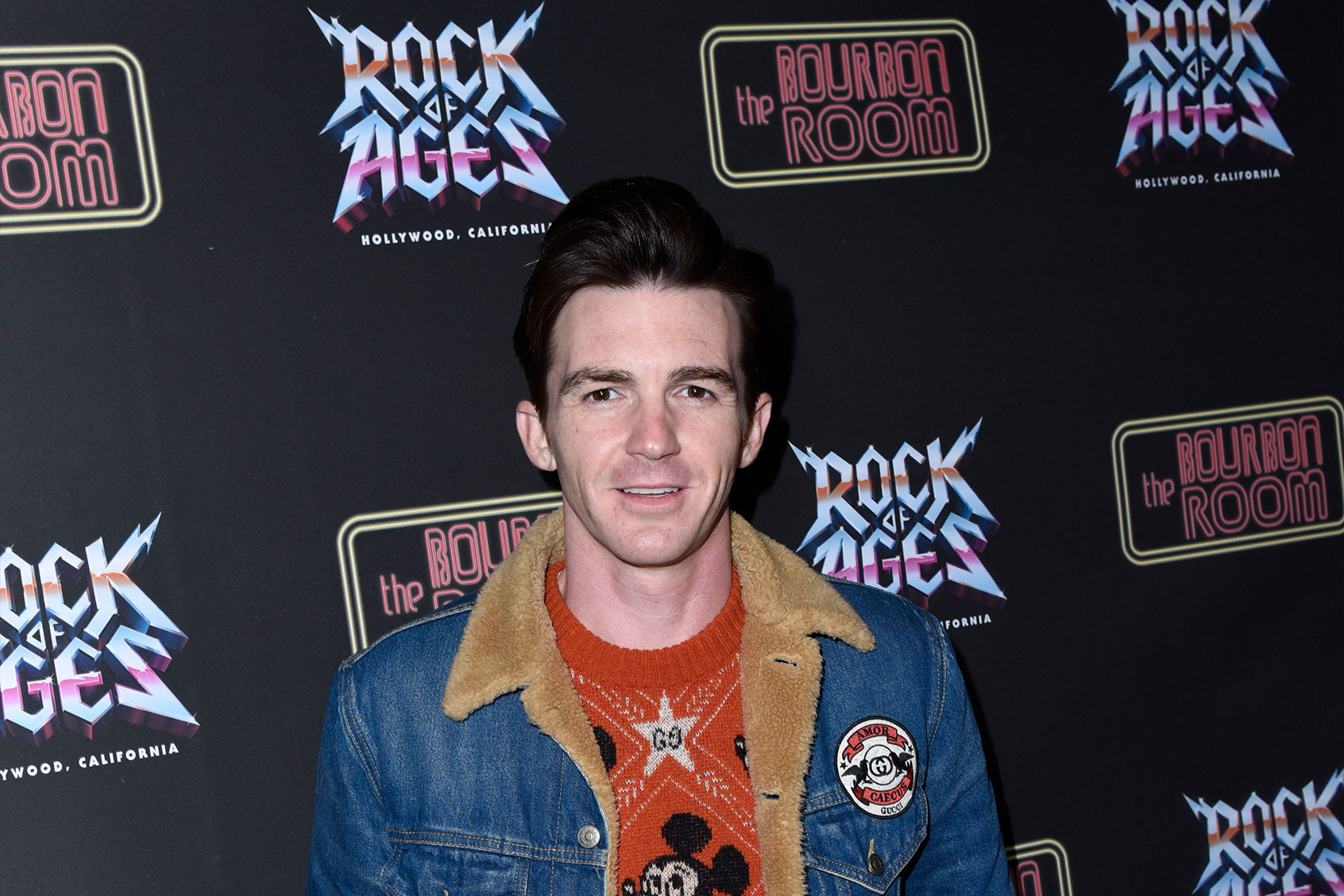
Drake BellDrake Bell attends Opening Night Of Rock Of Ages Hollywood at The Bourbon Room on January 15, 2020 in Hollywood, California. (Vivien Killilea/Getty Images for Rock of Ages Hollywood)Schneider also became emotional discussing Drake Bell, the "Drake & Josh" and "The Amanda Show" alum who came forward in the docuseries and named himself as a victim of pervasive child sexual assault in the Brian Peck case. Peck was an on-set dialogue coach who was eventually convicted of sexually assaulting a child actor in 2004, who now has been revealed to be Bell.

“That was probably the darkest part of my career,” Schneider recalled. “And here’s the kicker that I really don’t get. After [Peck] got out of prison and was a registered sex offender, he was hired on a Disney Channel show. I don’t understand that.”

He also defended his relationship with another child star Amanda Bynes who was illustrated as Schneider's muse in the docuseries. Bynes was the breakout star in "All That" and eventually received her own series, "The Amanda Show." However, her childhood fame resulted in numerous issues like a battle of emancipation from her parents.

“Amanda was between the ages of 16 and 17 and she wanted to get emancipated from her parents. . ." Schneider said. “She wanted that for herself, so she turned to her team, which included her lawyer, her agent, her manager, her publicist, me — because she included me as part of her team, thought of me that way. We supported her, she tried to get emancipated and it ended up not working out, and she didn’t.”

In response to the apology video, Alexa Nikolas, an outspoken child actor from Schneider's show "Zoey 101," also alleged she was mistreated by Schneider on set and said on her YouTube channel that Schneider is "a bully" and "impacted her life." 

"Where’s a phone call of an apology? How come you can do all of this, how can everyone do all of this but not reach out to the person that they hurt?” she said.

She continued, “When someone doesn’t personally come to you and apologize, it’s not an apology. If you hear about it through other people, it’s not really an apology, right? An apology is to the person that you hurt. That’s what an apology is for.”

"Quiet on Set: The Dark Side of Kids TV" is now streaming on Max.

Why chocolate prices are likely to skyrocket soon

You might want to stock up on chocolate for Easter pronto — because chocolate prices are likely bound to explode very soon. According to Food & Wine, cocoa prices are at a 47-year high. What caused this?

Inflation plays a part, but the bigger issue at hand is that cocoa cultivation in both Africa — specifically Ghana and the Ivory Coast — and Ecuador has reportedly become much more complicated due to climate change, as well as drier weather patterns and rainfall changes. In addition, there was a shortage of cocoa "due to that unfavorable weather coupled with crop disease and smuggling" in Ghana; the smuggling is thought to have accounted for approximately 600 million in lost revenue as per the Agence France-Presse (AFP).

Kathleen Wong writes in USA Today that "as of last month, the world price for cocoa has more than doubled over the last year," noting that the global price "shot up over 75% . . . per metric ton" from January to March of this year. Wong also writes that "cocoa trees are especially sensitive to climate change, only growing in a narrow band of approximately 20 degrees around the equator." She also notes that some candy companies have even begun "shrinking the size of their chocolates . . . [or] reducing the cocoa ingredients in their products." 

According to Food & Wine, Hershey's prices have actually already raised throughout North America by about 9% since last year. 


“From bad to disastrous”: What happens if Trump can’t get a $454 million loan?

Lawyers for Donald Trump on March 18, 2024, told a New York court that the former president has been unable to secure a US$454 million bond as he appeals a New York civil fraud ruling against him.

Their “diligent efforts” reportedly involved approaching about 30 bond companies, which all said “no.”

Time is running out for Trump, who has until March 25 to either secure the bond, known as an appeal bond, or pay that amount himself in cash.

The Conversation asked Will Thomas, a business law professor at the University of Michigan, to explain why Trump needs an appeal bond and what happens if he doesn’t get it by the deadline.

What’s an appeal bond?

An appeal bond, sometimes referred to by the Latin supersedeas, meaning “you shall desist,” is a guarantee that the party appealing a ruling against them can and will pay the judgment if their appeal is ultimately unsuccessful. The person appealing the ruling is known as the appellant.

Appeal bonds are offered by licensed providers such as insurance companies and bondsmen who specialize in offering these kinds of guarantees. It’s common in civil cases for the appellant to get an appeal bond.

In order to convince a bondsman to give you an appeal bond, you need to offer them collateral, such as real estate or other assets, in exchange. That way, in case they end up on the hook for the appellant’s judgment, they can sell the collateral to pay it.

The size of the appeal bond is larger than the actual judgment – in Trump’s case, the judgment is $355 million – because the appellant will be expected to pay interest on the original judgment should they lose their appeal. The bond is meant to cover whatever those estimated costs will be. So, for example, Trump recently appealed an $83 million judgment in a separate defamation case brought by columnist E. Jean Carroll. To do so, he secured an appeal bond worth $91.6 million.

Why do courts ask for them?

The point of an appeal bond is to protect the rights of the party who won at trial. The appeals process can be slow, taking months or even years, and a lot can happen during that period.

An appellant might suffer some unexpected financial hardship – or, more cynically, they might use the delay as an opportunity to sell, hide or otherwise get rid of assets that they otherwise would have to hand over to the trial winner. Securing a bond guarantees that, whatever happens to the appellant, there is someone standing ready to pay the trial judgment when the appeals process is over.

Of course, courts could accomplish the same protection by requiring the appellant to pay the entire judgment upfront before appealing. And, in fact, that’s allowed as well. In Trump’s case, New York law allows him to pay the $454 million to the state of New York today. But that approach can be hugely expensive: A bond will have the same effect at a fraction of the cost – all you have to do is put up collateral and make regular payments on the bond, much like someone would pay premiums on an insurance policy.

So really, the appeals bond is something of a compromise: It preserves the trial winner’s ability to collect a judgment down the road, and it allows the appellant to appeal without having to surrender all their assets up front.

Trump is reportedly very rich. Why is he struggling to secure a bond?

Trump’s problem is none of the major insurers or licensed bond providers apparently has been willing to issue a bond of this size without collateral that is liquid – think cash or investments like stocks that can be easily sold, as opposed to real estate that can be hard to dispose of.

And neither Trump nor the Trump Organization, both of whom are defendants in the case, has that much cash available. Trump testified earlier at trial that the organization had $400 million in liquid assets, while a New York Times analysis put the number closer to $350 million. Either way, that’s not enough to cover the bond, which would need to be $454 million to cover both the judgment and any interest that accrued during the appeal.

And let’s not forget that around $100 million of Trump’s liquid assets were already pledged to secure a different appeal bond in his other New York civil case involving Carroll.

So while it’s true that Trump and the Trump Organization have billions in assets, those assets mostly come in the form of commercial real estate like Trump Tower.

And it’s maybe not surprising that an insurer wouldn’t want to accept real estate as collateral. Yes, Trump Tower, in New York City’s Manhattan borough, is valuable, but owning and managing or even just trying to sell commercial real estate can be a huge, expensive hassle. For an insurance company not already in the real estate business, it may want to avoid a possibility where Trump ultimately doesn’t make good on his judgment payments and the insurer is forced instead to own – and then try to sell – an asset like Trump Tower.

Add onto this fact that companies might understandably be wary to do business with the Trump Organization. After all, the conclusion reached at trial was that the Trump Organization routinely lied to financial institutions about the value of Trump’s assets in order to secure favorable business loans. It’s a bit ironic, then, that Trump is now struggling to convince financial institutions to take seriously his representations about his ability to pay his debts.

What happens if he can’t get the bond?

Assuming Trump and the Trump Organization cannot secure a bond, there are a few possible paths forward – most of them ranging from bad to disastrous for Trump.

The best scenario for Trump is that the New York appellate court might decide on its own to grant Trump’s request to stop New York from collecting its judgment. Securing a bond would automatically prevent New York from collecting its judgment while the appeal process is ongoing, but the appellate court likely has the inherent power to grant that same temporary legal protection without a bond or, as the Trump team has suggested in this case, with a partial bond worth about $100 million.

If I had to guess, I suspect that something like this is the most likely outcome, if only because the other outcomes are so bad.

What are the other possibilities? First, Trump could sell assets to generate the cash he needs to secure a bond. This would be an especially expensive outcome from Trump and his businesses because, when it comes to real estate, the worst time to sell is when you are being forced to do so.

Second, either Trump or his businesses could declare bankruptcy. Bankruptcy, after all, is meant to protect people who can’t pay the debts they currently owe, which would be Trump in this situation.

We actually saw a version of this scenario playing out a few years ago when Gawker Media was unable to afford an appeal bond after losing its invasion of privacy trial to Hulk Hogan.

Third, the state of New York has the right to seize Trump properties in order to cover the judgment. Attorney General Letitia James has already stated that she is willing to do this if Trump doesn’t provide a bond. From there, the state could sell the properties it seized or, more likely, it would hold onto the properties until after the appeals process ends, in case the state loses or has its judgment amount reduced.


Will Thomas, Assistant Professor of Business Law, University of Michigan

This article is republished from The Conversation under a Creative Commons license. Read the original article.

Customers are suing Starbucks over a “discriminatory” surcharge for non-dairy milk alternatives

Three Starbucks customers are suing the coffee chain giant over a surcharge for non-dairy milk alternatives in Starbucks beverages. Maria Bollinger, Dawn Miller and Shunda Smith — all California residents — filed a lawsuit earlier this month in the U.S. District Court for the Eastern District of California, alleging Starbucks discriminated against people with lactose intolerance by tacking on extra fees for non-dairy substitutes.

According to the complaint obtained by CBS News, the plaintiffs are lactose-intolerant or have milk allergies and have ordered coffee-based, tea-based and other beverages at Starbucks stores in California since 2018. They are seeking $5 million in damages. 

“Starbucks charges customers with lactose intolerance and milk allergies an excessively high surcharge to substitute non-dairy alternatives in its drinks,” the lawsuit alleges. “In this way, the defendant's conduct violates the Americans with Disabilities Act, California Unruh Civil Rights Act, and constitutes common law Unjust Enrichment.”

The plaintiffs claim they were charged an additional 50 cents to 80 cents on beverages that contained non-dairy milk, including soy, almond, coconut, oat and other plant-based milks. The surcharges only exist to make a profit off of customers with lactose intolerance, the lawsuit states.

Within the US, most non-dairy milks cost more than dairy milk because the government subsidizes the dairy industry. That has only increased in recent years due to the pandemic, which hit dairy producers and regional dairy processors hard. In March 2022, the U.S. Department of Agriculture (USDA) announced an additional investment of $80 million in the Dairy Business Innovation (DBI) Initiatives. The DBI previously awarded $18.4 million to three current Initiatives at University of Tennessee, Vermont Agency for Food and Marketing and University of Wisconsin, and $1.8 million to a new initiative at California State University Fresno.

That being said, the actual price differences per ounce of non-dairy milk versus regular milk aren’t that drastic in comparison. Bon Appetit reported that as of last year, the least expensive store-bought whole milk from Walmart was two cents per ounce, while almond milk was four cents per ounce and oat was six cents per ounce. Coffee shops, however, are using those differences to their advantage, increasing their upcharges to the point where a non-dairy latte can cost anywhere between $10 to $15.

The lawsuit further argues that Starbucks, which uses 2% cow's milk in most of its coffee-based beverages, will substitute whole milk, half-and-half, or fat-free skim milk for free. Same with sugar-free sweeteners, which can be added in lieu of regular sugar for no additional cost. 


Want more great food writing and recipes? Subscribe to Salon Food's newsletter, The Bite.


“There is no expertise or additional work required of Starbucks employees that would substitute whole milk or fat-free milk in place of 2% regular milk, or who would make caffeine-free or sugar-free  beverages, to also be able to substitute non-dairy alternatives such as soy, almond, coconut, oat, or other lactose-free 'milk' in place of 2% regular milk,” per the claim.

This isn’t the first time Starbucks is being slammed for its non-dairy surcharge. In 2020, the company came under fire for its so-called “vegan tax.” Activists staged nationwide protests — including in Arlington, Virginia; San Diego, California; Portland, Oregon; and New York City, New York — inside Starbucks coffee shops with signs lambasting the company’s plant-based fees. The animal rights organization PETA, which announced in 2019 that it had purchased the minimum number of shares in the company to attend Starbucks’ annual shareholder meeting, also joined the fight.

The plaintiffs in the recent lawsuit are represented by Keith Gibson Law, the same firm representing 10 plaintiffs that filed a class-action lawsuit against Dunkin’ Donuts in December. Similar to the Starbucks case, Dunkin is being accused of discriminating against lactose-intolerant customers for having them pay up to $2 extra when requesting oat or almond milk in their beverages.

Experts: Trump gives SCOTUS an “out” so they could “decide not to decide” immunity — but delay trial

Former President Donald Trump on Tuesday offered the Supreme Court an idea for an alternative means of addressing the presidential immunity question holding up his Washington, D.C., criminal trial that would work to his benefit. 

In a new 67-page brief, the presumptive GOP nominee floated the idea that the justices, should they decide against granting him absolute presidential immunity and nullifying the criminal election subversion charges he faces, could kick the case back to lower courts to determine whether any partial immunity could come into play. 

That alternative route could provide the court's conservative majority an "off-ramp" that would further constrain the special counsel without requiring them to adopt a broad definition of immunity for former presidents, CNN reports. It would also lend itself to further delaying the trial, which was originally slated to begin earlier this month but has been placed on hold pending the Supreme Court's decision. 

“No court has yet addressed the application of immunity to the alleged facts of this case,” Trump’s lawyers wrote in the brief, adding that applying any immunity principles the Supreme Court defines may “require discovery about the specific facts and circumstances of charged conduct.”

Trump's partial immunity suggestion is not surprising "at all" because it would inherently delay the trial until after the 2024 election and raises a core question about what constitutes official presidential duties, Loyola Law School professor Laurie Levenson told Salon.

"The big issue in this case that is hanging over everything is what are considered presidential official acts, and I think that Trump's camp is going to try to muddy up that issue as much as possible so that the Supreme Court feels like it can't really decide the question of immunity when they don't know what he's getting immunity for," Levenson said. 

Trump's idea, she added, "basically planted in, perhaps, any justice, who right now is not prepared to do all or nothing, an option of sending it back, and that works to Trump's advantage."

Tuesday's brief largely saw the former president reiterating the far-flung claims of absolute immunity from prosecution for acts conducted in office that lower courts — the trial court and the D.C. Circuit Court of Appeals — have outright rejected. His arguments to the Supreme Court, according to CNN, attempted to situate the issue as one that would impact both his "legal exposure" and that of all future presidents.

“The consequences of this court’s holding on presidential immunity are not confined to President Trump,” Trump's attorneys told the court. “If immunity is not recognized, every future President will be forced to grapple with the prospect of possibly being criminally prosecuted after leaving office every time he or she makes a politically controversial decision.”

“That would be the end of the Presidency as we know it and would irreparably damage our Republic,” they wrote.

But Trump's absolute immunity argument is "pretty ridiculous," former federal prosecutor Neama Rahmani told Salon, also noting the incredulity the D.C. Circuit showed toward the argument.

The three-judge panel of the D.C. Circuit appeared skeptical in January when a Trump attorney responded, 'Yes,' to their question of whether Trump, as president, would have immunity if he were to assassinate a political opponent or sell pardons. The attorney added that a president could only be prosecuted for those crimes if he were impeached and convicted by Congress. 

We need your help to stay independent

The Supreme Court also appeared to depart from Trump's argument when the justices accepted the case, Rahmani explained. They framed the question they intend to answer in their decision not as one of absolute immunity but of whether Trump's actions leading up to January 6 "were within the scope of his official duties," which historically are the only acts "covered by immunity." 

The courts' apparent skepticism around Trump's immunity argument may be why Trump and his attorneys offered an alternative route via partial immunity proceedings in lower courts, Rahmani said. 

"I think they're seeing the writing on the wall that, even the conservative Supreme Court justices, most of them aren't going to sign off on absolute immunity," he said. "Maybe the far-right ones like Thomas and Alito [will], but I don't think they're gonna get a majority opinion."

"Throughout the brief are points where they kind of say, 'Don't think about this in terms of Donald Trump. Think about this on principle,'" Levenson added. "I think they realize that nobody's eager to help out Donald Trump here. The question is what will the overall principle be."

This approach marks a "shift in strategy" for Trump's legal team and is a "smart legal maneuver" that gives Trump a "backup" if the court rules against him, David Schultz, a professor of legal studies and political science at Hamline University, told Salon.  

Trump "basically gives the Supreme Court an out so that they can do another decide not to decide," he said, referring to the justices' opinion earlier this month overturning the Colorado Supreme Court's decision to remove the GOP frontrunner from the state's primary ballot without addressing the issue — whether Trump engaged in insurrection on Jan. 6 — that undergirded the lower court's ruling.


Want a daily wrap-up of all the news and commentary Salon has to offer? Subscribe to our morning newsletter, Crash Course.


At this point, Schultz thinks the Supreme Court may take that route — opt not to determine "exactly what type of immunity" Trump may have and leave a determination of where partial immunity may apply to the charged conduct to the lower courts, "which gives them an opportunity to potentially drag this issue out even longer."

In effect, that approach could create a number of avenues for Trump to either be absolved of responsibility or to drag the case out with more appeals, Schultz explained. Should the lower court make a decision on immunity, instead of acquitting Trump, it then "becomes an appealable issue that he can take up through the courts again."

Trump's legal team, however, still appears to be primarily arguing "absolute immunity," Rahmani noted, predicting that they'll maintain that argument, that "the only remedy is impeachment" and try to "throw in double jeopardy" given Trump was impeached but not convicted by Congress. 

"I don't think this partial immunity is where, at least, the crux of the argument will go," he added. "Although, you never know. They may end up retreating if it's clear that absolute immunity is a non-starter."

7 things we learned from Oprah Winfrey’s new special “Shame, Blame and the Weight Loss Revolution”

Back in December, Oprah Winfrey revealed that she’s been using prescription weight-loss medications as a “maintenance tool.” The entertainment mogul, who served on the board of Weight Watchers for nearly 10 years, told People that such medications felt “like relief, like redemption, like a gift, and not something to hide behind and once again be ridiculed for.”

“I now use it as I feel I need it, as a tool to manage not yo-yoing," Winfrey said, adding that she’s “absolutely done with the shaming from other people and particularly myself.”

GLP-1 drugs, like Wegovy and Ozempic, have become increasingly popular online and among celebrities in recent years. But they’ve also been met with harsh disapproval from critics, who continue to question the safety and effectiveness of using diabetes medication solely for losing weight. Many have slammed the drugs as “lazy” while others called out weight loss companies for abandoning their original mottos for a quicker solution. Such criticisms were recently mounted against Weight Watchers, which rebranded to “WW” and began embracing blockbuster weight-loss drugs as part of its new mission.

Weight-loss medications remain a contentious topic today. Amongst those who are actively using the drugs, the medications are praised as life-changing and helpful.

The power of weight-loss drugs is explored in Winfrey’s prime-time program on ABC, titled “An Oprah Special: Shame, Blame and the Weight Loss Revolution.” In it, Winfrey recounts her own weight loss journey and sits down with medical professionals who explained how anti-obesity drugs could combat the obesity epidemic. 

“In my lifetime, I never dreamed that we would be talking about medicines that are providing hope for people like me who have struggled for years with being overweight or with obesity,” Winfrey said. “So, I come to this conversation in the hope that we can start releasing the stigma and the shame and the judgment to stop shaming other people for being overweight or how they choose to lose, or not lose weight, and more importantly to stop shaming ourselves.”

Here are seven things we learned from Winfrey’s special:

01
Winfrey says she was “ridiculed on every late-night talk show for 25 years”

In the opening of her special, Winfrey said making fun of her weight was “national sport” for 25 years. That all came to a head in 1990, when Winfrey made it on the cover of TV Guide’s “Best and Worst Dressed” list in 1990. Winfrey said her excitement quickly turned into shame after she read the headline, which called her “Bumpy, lumpy and downright dumpy.”


“I was ridiculed on every late-night talk show for 25 years and tabloid covers for 25 years. Here are just a few of the thousands of headlines written about me,” Winfrey continued. “‘Oprah — Fatter Than Ever.’ ‘Oprah Hits 246 pounds.’ ‘Final Showdown With Steadman Sends Her Into Feeding Frenzy.’ ‘Oprah Warned — Diet or Die.’”

02
Winfrey “starved” herself for “nearly five months” to deal with the shame
“In an effort to combat all the shame, I starved myself for nearly five months and then wheeled out that wagon of fat that the internet will never forget,” Winfrey said, referencing the infamous moment that took place live on her talk show in 1988. “After losing 67 pounds on [a] liquid diet, the next day, the very next day, I started to gain it back. Feeling the shame of fighting a losing battle with weight, is a story all too familiar.”
03
GLP-1 agonists are helping more people lose weight at an astounding rate

GLP-1 agonists, a class of type 2 diabetes drugs that have also been embraced as weight loss medications, include Ozempic and Wegovy (semaglutide). These drugs mimic the action of a hormone called glucagon-like peptide 1, explained Dr. Amanda Velazquez, director of Obesity Medicine at Cedars-Sinai. That means managing blood sugar levels, reducing hunger and food intake and working directly on the gut to slow digestion.


In individuals living with obesity, their GLP-1 is not working the way that it should. By taking these medications, their GLP-1 is essentially “enhanced” and can bind to receptors on a cellular level.   


“We’re seeing double the amount of weight loss you can achieve with this class of medications compared to what we’ve had in our toolbox,” Velazquez said. Per Mayo Clinic, studies found people using semaglutide and making lifestyle changes lost about 33.7 pounds (15.3 kilograms) versus 5.7 pounds (2.6 kilograms) in those who didn't use the drug.

04
Those who use GLP-1 agonists have to take it for life

When asked if Ozempic, Wegovy and other GLP-1 agonist users have to continue taking it for the rest of their lives, Velazquez said yes. 


“Yeah, the data would support that. I mean, we have good trials showing that when these patients stop the medication, the disease comes back,” she explained.

05
Winfrey will leave WeightWatchers board after nearly 10 years

Although the formal announcement was made earlier this month, Winfrey announced her departure from the board of Weight Watchers once again in her special. Winfrey told the company that she wouldn’t stand for re-election at its annual shareholders meeting to be held in May 2024. Winfrey has served on the company’s board since 2015 when she acquired a 10% stake in WeightWatchers.


According to WeightWatchers’ filings with the SEC, Winfrey’s agreement with the company states that she “will not engage in any other weight loss or weight management business, program, products or services” while she’s with the company and for an additional year afterward. In the special, Winfrey said she made the decision to no longer serve on the board of  

WeightWatchers because “I wanted no perceived conflict of interest for this special.”


Winfrey said she donated all her shares in WeightWatchers to the National Museum of African American History and Culture. Despite her departure, Winfrey will still host an event on weight health with WeightWatchers in May.

06
Winfrey says obesity is a “disease” not a “character flaw”
“There is now a sense of hope, No. 1, and No. 2, you no longer blame yourself,” Winfrey said of her new mindset. “When I tell you how many times I have blamed myself because you think, 'I'm smart enough to figure this out,' and then to hear all along, it's you fighting your brain.”
07
Winfrey hopes people will release the shame of being ostracized for their weight 

The thing that’s been the biggest relief for me, and I hope that many of you watching this episode of ‘Shame and Blame,’ will release the shame for yourself,” Winfrey said. “Because I, as I said at the beginning of this, took on the same for myself and carried it for myself.”


“And now that I know that I’m just holding my breath underwater, I have been able to release that shame, and it doesn’t matter what anybody says.”

“An Oprah Special: Shame, Blame and the Weight Loss Revolution” is currently streaming on Hulu. Watch a trailer for it below, via YouTube:


Trump suggests deporting Prince Harry over past drug use

Former president Donald Trump suggested during a Tuesday interview with British outlet GB News that Prince Harry could face deportation over past illegal drug use. After Prince Harry acknowledged in his memoir "Spare" that he had used illicit substances in the past, right-leaning think tank the Heritage Foundation sued the Department of Homeland Security to gain access to his immigration records, per NBC. 

During a discussion about Harry's U.S. visa eligibility, Trump was asked if the royal would see any "special privileges" if it were determined that he had not been truthful on his visa application. "No," the ex-president replied. "We’ll have to see if they know something about the drugs, and if he lied they’ll have to take appropriate action." When asked to expound upon what he meant, and whether Harry could potentially be deported, Trump said, "Oh, I don’t know. You’ll have to tell me. You just have to tell me. You would have thought they would have known this a long time ago."

The former president has previously jabbed at Prince Harry and his wife Meghan Markle. In a 2022 interview with Piers Morgan — a notorious critic of the Duke and Duchess of Sussex — Trump claimed that Harry "is whipped like no person I think I've ever seen," adding, "I'm not a fan of Meghan, I'm not a fan, and I wasn't, right from the beginning. I think poor Harry is being led around by his nose."


‘Dirty Dozen’ guide shows 95% of these fruits and veggies tested positive for pesticides

The latest edition of an annual consumer's guide published Wednesday reveals that almost three-fourths of non-organic fruits and vegetables sampled contained traces of toxic pesticides while the "dirty dozen"—including strawberries and spinach—tested at levels closer to 95%.

Scientists with the Environmental Working Group (EWG) document in their new report, "2024 Shopper's Guide to Pesticides In Produce," that four out of five of the most frequently detected pesticides found on the twelve most-contaminated produce items were fungicides that could have serious health impacts.

"There's data to suggest that these fungicides can disrupt the hormone function in our body," EWG senior scientist Alexa Friedman told Common Dreams, adding that the chemicals had "been linked to things like worse health outcomes" and "impacts on the male reproductive system."

"We recommend using the Shopper's Guide as a way to prioritize which fruits and vegetables to buy organic to reduce your pesticide exposure."

The four fungicides detected on the Dirty Dozen produce were fludioxonil, pyraclostrobin, boscalid, and pyrimethanil. Two of these—fludioxonil and pyrimethanil—were also found in the highest concentrations of any pesticide detected.

The annual Dirty Dozen and Clean Fifteen lists are based on a review of Department of Agriculture and Food and Drug Administration data. This year, EWG looked at results from 47,510 samples of 46 fruits and vegetables.

2024's Dirty Dozen list is similar to previous years, with strawberries, spinach, and a trio of hearty greens—kale, collard greens, and mustard greens—once again taking the top three spots. The full list is as follows:

  1. Strawberries
  2. Spinach
  3. Kale, collard, and mustard greens
  4. Grapes
  5. Peaches
  6. Pears
  7. Nectarines
  8. Apples
  9. Bell and hot peppers
  10. Cherries
  11. Blueberries
  12. Green beans

The four fungicides were found on the fruits and vegetables for which new data was available this year—blueberries, green beans, peaches, and pears—for some of them at high levels.

"One reason we might see fungicides in high concentrations compared to other types of pesticides are that fungicides are often sprayed on the produce later in the process," Friedman said.

Farmers frequently apply fungicides after harvest to protect crops from mildew or mold on the way to the grocery store.

Beyond fungicides, testing also turned up the neonicotinoids acetamiprid and imidacloprid, which harm bees and other pollinators and have been associated with damage to the development of children's nervous systems.

Testing also revealed the pyrethroid insecticides cypermethrin and bifenthrin. While there are fewer studies on these pesticides, existing research suggests they may also harm children's brains. More than 1 in 10 pear samples tested positive for diphenylamine, which is currently banned in the European Union over cancer concerns.

Most of the pesticides detected on the Dirty Dozen are legal, but one exception is acephate, an organophosphate insecticide that is essentially prohibited for use on green beans but is still found on them. One sample tested positive for levels 500 times the Environmental Protection Agency's (EPA) legal limit.

In total, EWG found that nearly 75% of non-organic fruits and vegetables tested were contaminated with pesticides. However, nearly 65% of the conventional items on the Clean Fifteen list were pesticide free. This year's Clean Fifteen are:

  1. Sweet corn
  2. Avocados
  3. Pineapple
  4. Onions
  5. Papaya
  6. Sweet peas
  7. Asparagus
  8. Honeydew melon
  9. Kiwi
  10. Cabbage
  11. Watermelon
  12. Mushrooms
  13. Mango
  14. Sweet potatoes
  15. Carrots

The Shopper's Guide is primarily geared toward helping consumers make informed choices as they choose between conventional and organic items, which may be more expensive or harder to find.

"We always recommend that people consume as many fruits and veggies as possible, whether they're organic or conventional," Friedman said.

But for people concerned about consuming pesticides, she added, EWG recommends "using the Shopper's Guide as a way to prioritize which fruits and vegetables to buy organic to reduce your pesticide exposure."

EWG recommends prioritizing organic versions of Dirty Dozen items.

As a whole, the EWG advocates for policymakers and regulators to do more to understand the real risks posed by pesticides and protect people from them.

"We still feel that there needs to be more studies that really focus on the health effects of these pesticides, specifically the pesticides that we found in high detection this year, so that we can better understand how these might impact health for susceptible populations, particularly for children," Friedman said.

She added that while many of the pesticides detected in tests were at or below legal limits set by the EPA, "legal doesn't always mean that they're safe for everyone."

In a 2020 study, for example, EWG researchers found that for nearly 90% of common pesticides the EPA had failed to apply an extra margin of safety for children when setting limits, even though it is required to do so under the Food Quality Protection Act.

Currently, the EPA has a chance to improve regulations as it rewrites a ban on chlorpyrifos on food, which was overturned by a court on a technicality. It is also reviewing whether or not the pesticide dimethyl tetrachloroterephthalate (DCPA) can be used safely after it acknowledged the "significant risks" it posed to human health.

EWG is also raising the alarm about a slate of new rules that some lawmakers may try to attach to the 2023 Farm Bill or other important legislation. These proposed laws, such as the Agricultural Labeling Uniformity Act and the EATS Act, would prevent states or localities from setting additional regulations on pesticides. In September 2023, EWG joined with 184 other environmental groups in sending a letter to the House and Senate opposing such measures, which the groups argue take "decision-making out of the hands of those most impacted by pesticide use."

"States and localities are often in a much better position than the EPA to quickly assess risks, consider emerging evidence, and to make decisions to protect their unique local environments and communities including schools and childcare facilities, from toxic pesticides," the letter states. "Undermining that authority would hamstring critical local efforts to address cancer and other human health risks, threats to water resources, and harms to pollinators and other wildlife."

“We created monsters”: “Top Chef”’s Gail Simmons says the show changed how Americans dine out

Gail Simmons believes that "Top Chef" has created a generation of monster-diners — and she would know. The veteran judge of Bravo's hit culinary competition series, which is now entering its 21st season, has experienced the culinary world in its many different facets, from authoring a cookbook to now serving as the series' executive producer. She's seen the way that food media, including "Top Chef," has made everyone with a fork and a social media account think they can do her job.

“There's pros and cons I think to all of it. There is the problematic issue that now everybody's a critic. Everybody can go on social media and take down a restaurant if they don't get what they want.” she told Salon Talks in a recent interview. “It makes everyone think that they can. There's a lot of damage that they can do if they don't understand food and real food criticism.”

She continued: "When I said we created monsters, I was serious.”

The series itself is undergoing some major changes this season, namely that longtime host Padma Lakshmi departed and has been replaced by season 10 winner Kristin Kish.

The show is also featuring a city never highlighted on the series before: Milwuakee, Wisconsin.

“I think Milwaukee was actually a great location because it is something that I think will surprise our viewers,” Simmons said, “The season before our 20th season, we were in London, and everybody knows a lot about London. London is one of the great cities of the world. It's massive and it's a huge food city on the world stage. Milwaukee, less so, but there's a lot going on. It's really up and coming and I think that this will change people's views about the city.”

Watch my "Salon Talks" episode with Gail Simmons here or read a Q&A of our conversation below to hear more about returning to the Midwest, how the state of Wisconsin made her fall in love with custard, and what the new host Kristen Kish hopes to bring to the table. 

This conversation has been edited for length and clarity.

Congratulations on the 21st season of “Top Chef.” Everybody's excited and looking forward to everything you're going to have going on in Madison and Milwaukee. How does it feel to just be so successful for so long?

It definitely is unexpected that we have been on the air for so long. Television shows come and go, but to have 21 seasons under our belt feels pretty amazing. I think television has changed so much in that time. Twenty years is a generation and we've surpassed that in seasons. We, I think, have seen such a massive change in television, in food, in eating and cooking, and it's awesome to think that we had a small piece to do with it. I think at this point, “Top Chef” can take the credit for contributing to the changes in the way that America eats, in the way that we think about food, talk, cook. We've created a generation of incredible, talented chefs, so many of whom have been on our show and gone on to do the most extraordinary things and we're really proud of that.

“Top Chef” really had one of my friends who's a chef, swirling his noodles up, slicing the hot dog diagonally and making it stand up again. 

That's right. We created monsters, but we're actually really proud of it because I do think that even though sometimes we can't believe that there's a lot of silly language and food can get really crazy of course on social media and things like that, we are proud of the fact that it also made people so much more aware of what they eat, of the way that they cook, of what they eat, when they go out, where they go, and I think in a way, the show changed the economy of restaurants in America.

Absolutely. This is the first time you guys have been back in the Midwest since season four of Chicago. I recently spent some time in Milwaukee and Chicago. Culturally, the cities are very different places, night and day. How would you define each individual place by their food? 

"At this point, "Top Chef" can take the credit for contributing to the changes in the way that America eats, in the way that we think about food, talk, cook."

Well, Milwaukee was interesting. Truthfully, I had never been there before until we went to shoot there, so I sort of love that, when I go to a city with very little preconceived notion of the food scene. 

If anything, I underestimated Milwaukee. When you go to a city like Chicago, it has such a big reputation from a food standpoint. Obviously, there's so many heavyweight chefs there. Chicago is really the epicenter of a lot of incredible food and many movements about food have been started there. It has incredible, massive communities of immigrants and populations that have done so much for the food industry, and Milwaukee is like its lesser known little brother.

Colder little brother too.

It's cold, it is, but it really showed me a totally different picture of the Midwest, and I think the Midwest is a massive obviously swath of this country with a lot of people and a lot of history. When you think about Milwaukee, sure, you think of beer and you think of cheese, and when you think of Wisconsin, you think of sausages. Whatever you think, there's a reason that they're all there, and that's part of what is awesome about “Top Chef” is that we go to a place and we don't just eat hot dogs. We learn the history of the hot dog, why it's significant, who brought it? What's the story there and how do we make our chefs dig a little deeper to create something from that that we've never seen before?

So I think Milwaukee was actually a great location because it is something that will surprise our viewers. The season before our 20th season, we were in London, and everybody knows a lot about London. London is one of the great cities of the world. It's massive and it's a huge food city on the world stage. Milwaukee, less so, but there's a lot going on. It's really up and coming and I think that this will change people's views about the city.

Wisconsinites are prideful and you already mentioned the bratwurst, but I want to talk about cheese curds, frozen custard, the beer. What is your favorite Wisconsin staple?

Frozen custard without a doubt. [It’s] delicious. We were shooting in the middle of summer and our new host Kristen and I went for frozen custard several times a week. It is delicious. I would argue that it is better than soft serve. It is the richest, most decadent, delicious ice cream I've ever had. A frozen treat, let's call it.

So you can only get it there?

You can only get it in the Midwest.

This is why people need to get down there.

Mm-hmm, eat a frozen custard.

What about the cheese? What do you think about the way Midwesterners take their cheese very seriously?

They take cheese very seriously. More seriously than I'd ever really known. But there's also a reason, right? First of all, the custard and the cheese have something in common. The dairy industry is very much alive in Wisconsin, and that dates back dozens and dozens of years, really till before the Second World War. 

How I understand it, agriculturally, the dairy farming community was struggling in the Great Depression and the governor of Wisconsin mandated that every meal in a restaurant had to have dairy. It had to have butter, had to have cheese. So frozen custard was born. I might be generalizing and telling the story a little simply right now, but that's why there's so much cheese. Butter burgers were born there, and the cheese making industry in Wisconsin is incredible. 

I'm not talking about just big hunks of cheddar and cheese curds. I'm talking about beautiful, nuanced, artisanal cheese made by some of the greatest cheese makers in the world.

Yeah, hearing you talk about it, it's making me hungry, but we're going to get through this.

Yes! That's the point. That's the point.

One of our favorite chefs and “Top Chef” winners, Kristen Kish, has taken over as the host. What do you think she's going to bring to the table?

"We just loved having [Kristen] around. She's such a giant ball of sunshine."

Having Kristen come on and take over for Padma [Lakshmi] was just an opportunity for a reset for the show overall because we've been doing this a long time and when someone new comes in in that position, it caused us to question, to change, to tweak, to evolve, and I think that's what keeps “Top Chef” fresh, and Kristen will do that for sure.

She'll bring her own style. She's a professional chef, she's won the show, so having a winning contestant as the host gives an enormous amount of empathy I think for the contestants. She treats them in a completely different way. She has a different relationship with them. She really understands what they're going through. She addresses them differently, but also she inspired us to make a lot of other changes to the game and to really up the ante. To make it harder, more challenging, more exciting, to put in a few more twists and turns along the way. She also just has her own style, and I think that that'll just feel really new. We just loved having her around. She's such a giant ball of sunshine. She was awesome.

We are looking forward to it. Anything else fans should be looking forward to this season?

We made a lot of changes. There's some changes to the way we run our Quickfire Challenges, which are the quick challenges in the first part of the show. We used to give immunity to the winner of a Quickfire Challenge and we've taken that off the table for Quickfires. We're still giving away money so there's incentive to win the Quickfire, but now, immunity only comes if you win the elimination challenge, and that's a huge change. It sounds like a simple tweak, but it's a huge change to how contestants then have to play the game and strategize, so I think you're going to see how that shifts everybody's mindset.

You're now executive producer. Congratulations.

Yes, thank you.

Has taking on an executive role presented any new challenges?

I've always been involved in the show. Tom [Colicchio] and I, Padma too, from the beginning have always contributed, have always given our thoughts. It's always been a really collaborative effort. Our producers have been with us a really long time and so we all work together naturally. So I've been consulting as a producer on the show for years, but to come in as an executive producer just gave me a little more hands-on insight into some of the issues in the show, and it opens up kind of greater discussion pieces that I can get involved in, which I love. I love being behind the scenes. I love figuring out myself how I can help more, how we can make it bigger, how we can make every episode better and different because the show's been around a long time and we're only going to stay on the air if we keep it fresh.

Tom was on last year and he said that one of the things that he loved about the show so much is that the judges made decisions with the producers.

Yes, that's true.

It wasn't some producer just sitting behind a curtain saying, "Do this and do that." It was all natural. Can you talk about how important that is?

There's this evolution that we've seen in reality television over the last 20 years or so and I definitely think that “Top Chef” is a great example of it. It used to be that reality shows were performative and some shows might've made decisions about contestants being eliminated or not or sticking around longer than maybe they should have because they were good for TV, because they were charismatic or they were controversial. “Top Chef” doesn't run that way and Tom really has been our north star in leading that charge. 

"We're only going to stay on the air if we keep it fresh."

We've never made decisions, and our producers have always trusted us in this, we've never made decisions based on anything except the food that we eat from the chefs, and it has to stay that way in order to be fair. I don't care if that person is great for camera. In the early years, there was a lot more drama, but what this has done, ensuring that we make decisions only based on the food in front of us, not based on the personalities of the chef, is that it ensures that the best chef wins and it ensures that we have a fair and honest playing field and very open discussions about food where we can give our honest opinions, we can be constructive, and we can have really great conversations with the contestants because we're not looking for an answer. We just want them to break down their craft, to speak freely to us, and we want to be able to do the same instead of trying to hide or create drama or try and lead them to act a certain way. That doesn't fly on our set, and I think it's just made it a better show because of it.

I think over the years, we've all learned that you are an expert. 

I eat a lot, I eat a lot, D.

And we trust you a lot. So my question in terms of judging, if you have two dishes in front of you and they're both, whatever the top is, five star level meals and they're plated perfectly and there's a beautiful story behind each dish, how do you choose between meal A and meal B?

That's the best and worst part of the job. That's the goal. We want all the food to be amazing, but the better the food is, the harder the job gets. So that's why there's three of us and then a fourth guest judge every episode, because we're all going to have slightly different takes on every dish. It's not a dictatorship. Well, I wouldn't call it a democracy because the chefs don't get a vote, but it is a collaborative effort between the four of us on every decision that we make. We all have to agree, we all have to be comfortable with the decision, and we all have a chance to state our opinions and then convince each other about making those decisions.

When you have two amazing dishes, what it comes down to is then taking those dishes apart, looking at things like cooking technique, knife skills, doneness. It's not just does it look pretty and does it taste good? Those are the first things you're looking for, but then you have to dig a little deeper. What was the inspiration? Did they cut the onions in the proper way for the best cooking outcome? And then it becomes a little bit subjective because I'm going to think slightly differently than Tom who's going to think slightly differently than Kristen or our guest judge, and it just becomes a really great conversation. At the end of the day, we convince each other, we change each other's minds. We don't always go in thinking the same thing, but we come out believing that we've made the right choice together.

Do you ever go home one night, fall asleep and wake up and say, "Damn, maybe I should have picked this other one"?

Not often. That's a good question. I have never on the long-term regretted a decision that I've made on the show, and I think that if we did, we wouldn't leave the judges' table. I will say that we have, especially in the early years, had many, many nights at the judges' table where we spoke until the wee hours of the morning. The sun came up, the roosters started crowing, and we were there talking and talking and talking because they wouldn't let us leave until we knew we had the right decision. 

They don't let us get up from the table until we're all comfortable and we all agree and we feel confident that we've picked the right person or that we've sent the right person home because of that exact reason, our producers don't want us to wake up the next morning and realize that we did it for the wrong reasons or that we weren't comfortable with being forced into doing something a certain way. So that doesn't often happen the next day, but in the moment, sometimes those decisions are excruciating and take hours because we want to make sure that when we go to bed that night, we can sleep.

I feel like “Top Chef” is as brilliant as it is intimidating, right?

Yes, it is intimidating.

I'm a pedestrian in the kitchen, but I'm in this phase where I'm trying to learn how to cook more things at home.

That's great. That's the point of the show, to inspire you.

What advice would you give me in terms of learning to be my own little Top Chef?

"What 21-year-old wants to be told that they're just like their parents and that their destiny is out of their own hands? I thought I was being original until they pointed out that it actually wasn't very original."

Obviously, "Top Chef" is about professionals. All the people on our show, all the contestants have been cooking for 10 plus years. They are at the pinnacle of their careers. They are not amateurs. Our show is not an amateur show at all so we're not looking for amateurs who think it would be fun to be chefs, but we are looking to inspire you in the kitchen, to make you think about food, to make you try things you've never tried, go out and eat a different dish or buy a new ingredient.

I would say, people ask me a lot, "How are you a foodie? I'm not a foodie, I don't like cooking. I'm not good at it." People love to tell me how they're a bad cook. My answer, which is the same answer to your question, is you're not born a good cook the same way you're not born a pro basketball player. [It takes] hours of practice. You're not born knowing how to play the piano. That doesn't mean that some people aren't better at it than others, but I do believe no matter who you are, if you do it enough, if you practice, if you put the time into it, then you will become a great cook. Anyone can be a good cook. It just requires focus, attention, and a little bit of passion.

I would be nervous if you were sitting at my dinner table. 

It makes me so sad because all I really want is people to cook. I don't need them to cook fancy food. People think that I just eat 12 course tasting menus for breakfast, lunch, and dinner. I really don't,

Wait, you don't?

I know. I know. It's true. It's like the last thing we want. What's on “Top Chef” is obviously amazing cooking and it's an extreme and I feel really lucky that I get to eat all that food, but in day-to-day life, like when I go to a friend's house or when I'm out for dinner or when I'm coming to someone's house for the first time, I just want them to love being in the kitchen. I'm happy with a box of spaghetti and a can of tomato sauce if you've been happy making it.

It's funny because I can imagine telling my wife, "Hey, my friend Gail's coming over for dinner." "Oh, who's Gail?" "Oh, she's only been eating the best food for the past 21 years from the best chefs."

You know what? I'd make it easy. I'd help. I just want to cook together.

The pressures off.

I swear I'm fun at a dinner party.

I heard you reference your mom running a cooking school and your dad making his own wine. Can you talk about your family's influence on how you look at food and how you judge?

It's funny to think back to the influences on your life because you don't always see them when you're growing up. It's only when you become an adult and come into your own self and figure out who you are that you realize that those things were inescapable. My mother was a cooking teacher. She ran a cooking school out of our house and she wrote a food column for the national paper in Canada, the Globe and Mail, while I was young, for the first probably 10 years of my life. But it was just something your mom did and you didn't think much about it. I didn't realize what a trailblazer she was and how that would obviously very directly influence what I did with my career.

She went on to have a second career. I grew up, went to college, never thought about food until really the year that I was graduating college. Only then when I told her and my father and their friends that I really loved food and I wanted to learn how to be a cook and I wanted to go into food media did they all say, "Well, obviously. You're just like your mother." That would crush me a little bit. I didn't want to be just like my mother when I was 21. What 21-year-old wants to be told that they're just like their parents and that their destiny is out of their own hands? I thought I was being original until they pointed out that it actually wasn't very original.

But those phases are funny though, right? It's like when you're young, you're like, "I'm not my parents." Then when you get older, you're like, "Oh, okay, mom. I understand you a little better." When you have your own kids, you're like, "Okay, I'm ready to forgive you."

And you're like, "Wow." Not only are you ready to forgive them, but you are in awe of them because you're like, "How did they do this and manage the kids and raise us to be generally decent people?" It is hard work, but I'm very grateful to both my parents for that. My father, while he wasn't a cook, loved great food, loved traveling, and he liked food projects, so he made his own wine, he made his own pickles, his own applesauce, and all those things add up, and I think they really helped me to formulate what I ended up doing in my adult life.

I have a 4-year-old and she won't eat anything unless she helps. She pushes her chair next to the stove and she literally has to throw things in the pot or she won't touch it. She's my best friend, but she's a tough person to get along with at times.

As four year olds are. I've got a 5-year-old. I understand.

As a mother too, are you able to get your kids to try new and exotic things or is it still Cheerios?

I would say a little of everything. Cheerios go a long way in certain circumstances, but I would say your daughter is ahead of all of us. What I always say to people about the struggle of feeding your kids and getting them to try new things and getting them to eat other things than just the five things that every kid wants to eat all the time is exactly what your daughter's doing. My advice is always get them involved, because they will first of all, learn confidence, second of all, take pride in their food, and third, they will be way more open to eating things if they've had a hand in it.

I would actually argue that your daughter is spot on and just keep doing it. The more you do it, first of all, it's great time together, right? That's like quality time. Because otherwise, they just want the screen and then you're fighting with them to get off the screen and who knows what else is going on. So if you can get them into the kitchen and get them cooking, I would say give her the responsibility of cooking dinner. That is a great life skill. It'll bring you guys together and it will open her up to tasting new foods, and I think it's a win-win.

I'll judge her.

Yeah, judge her, but also applaud her because I think it's pretty cool that she wants to cook with you.

No, sometimes when we're in the kitchen, we're like “The Bear,” so we're calling each other chef, like, "Okay, chef. Hand me the knife, chef. Get the pepper, chef." She's like, “Okay, chef.”

That's awesome. That's awesome. I think that it's chaotic. For me, my kids want to get in the kitchen too and I really want them there, but then that's my space. So I get stressed out because they make a mess and they throw things around and they don't do it the way I want them to do it, but I need to always remind myself to let it go, because they're having fun and it doesn't matter if it comes out perfectly or not. The fact that they're involved and that they want to hang out in the kitchen with you, I think that is really the important piece of the puzzle.

With social media, TikTok, the explosion of DIY culture in general, how do you think the conversation around food has changed? Everybody's an expert. I think of that “South Park” episode when they discovered Yelp, so everyone was walking into a restaurant saying, "I'm a food critic. I have Yelp." 

"It's one thing to be a line cook. It's another thing to give women and minorities and people of color opportunities to lead, to be managers, to be owners, to be founders, to be the people at the top of the food chain."

It's true. When I said we created monsters, I was serious. There's pros and cons to all of it. There is the problematic issue that now everybody's a critic. Everybody can go on social media and take down a restaurant if they don't get what they want. There's a lot of damage that they can do if they don't understand food and real food criticism that people study years to do properly and to do justly, and to understand what actually goes into running a restaurant, how hard it is, the challenges that they're facing, so that you can understand why restaurant experiences aren't always as you want them to be and how you can improve them and make that a constructive conversation. So that's the downfall of social media and the Yelpification of the world.

But the pro that I think is actually really amazing is that it's also democratized food. Everybody has a voice now. So you as a restaurateur can't treat some people some way and other people another way because you don't know who those people are and they have the power to have a voice and to change the conversation and you can't dismiss certain people and then treat other people like VIPs just because they are food critics or because they, I don't know, are your regulars. You want to treat everybody with dignity. You want to give people great customer service, and I think it forces restaurants to up their game in service and to make themselves better and improve themselves because now they're getting feedback from 500 directions, and if they're a good restaurant and if they have a good sense of self and understand what their mission is which is to feed people and make them happy, then within reason, they'll take that feedback and they'll improve. I think that is the best part about the social media food phenomenon.

Historically, the industry has been dominated by men and you have been at the forefront of producing stories where women are at the center. Can you walk us through some of the challenges and then just give us some female chefs that we should be looking out for?

Yeah, that's a big question. We have come a long way. When I was cooking, when I was a line cook in my early twenties in New York City, I was the only woman. I was the only female in both kitchens that I cooked in and was the only female in a lot of the work that I did, let alone seeing people of color. It was really an area that was in need of vast damage control, vast reset, reorg, and it was very inaccessible to a lot of minorities. 

In the last 20, 30 years, there has been huge changes, especially in the last, really, eight years. We have seen a calling out of the kind of toxic culture that was pervasive in restaurants. Not all restaurants at all, but there was a part of restaurants that was very male dominated, and that was glamorized because it was this tough, cool space, but it was also really inaccessible and really untouchable for a lot of people and there was a lot of difficulty penetrating them, getting people access and opportunity.

So I think we've come a long way. I think now, there are a lot more women in professional kitchens and we're trying to focus a lot more on giving women not only opportunities to be in kitchens and cook in a culture that is open, accepting, honest, fair, equitable, but also the issue is having women rise to the top. Because it's one thing to be a line cook. It's another thing to give women and minorities and people of color opportunities to lead, to be managers, to be owners, to be founders, to be the people at the top of the food chain, and I do think we've come a long way, but we're not there yet.

For me, it's about finding those stories, telling those stories, and finding funding. Funding is a really big thing. Finding funding for minorities to run and own restaurants and be the face of the industry, and investing. There's still, I'm not going to get the statistic right, but there's still a big statistic of when a woman asks for funding, they get it far fewer times and at a much lower rate than when men go out for investing in the restaurant space. We've got a long way to go, but telling these stories and lifting up all the people who had traditionally been excluded from those spaces I think is the only way to do it.

Jared Kushner touts valuable “waterfront property” in Gaza while urging Israel to “clean it up”

Jared Kushner, the son-in-law of former president and presumptive 2024 Republican nominee Donald Trump, said in a recent interview that if he were in charge of Israeli policy, he would push Gaza civilians into Egypt or Israel's Negev desert—a proposal that critics denounced as ethnic cleansing.

"You want to get as many civilians out of Rafah as possible," Kushner told the faculty chair of Harvard University's Middle East Initiative, Tarek Masoud, in a March 8 interview that was first reported widely on Tuesday. "I think that you want to try to clear that out. I know that with diplomacy maybe you get them into Egypt."

"I know that that's been refused, but [with] the right diplomacy I think it would be possible," Kushner added. "But in addition to that, the thing that I would try to do if I was Israel right now is I would just bulldoze something in the Negev, I would try to move people in there. I know that won't be the popular thing to do, but I think that that's a better option to do so you can go in and finish the job."

Kushner played a central role in crafting Trump's Middle East policy during his first four years in the White House, and the former president's son-in-law's remarks provided a potential glimpse of how the U.S. would approach Gaza if Trump wins another term in November.

Earlier this month, Trump said he wants Israel to "finish the problem" in Gaza—a remark that Kushner echoed just three days later in his March 8 interview.

In addition to advocating the removal of civilians from Rafah—which is currently packed with more than 1.5 million people, including hundreds of thousands of children—Kushner said Gaza's "waterfront property could be very valuable."

"It's a little bit of an unfortunate situation there, but from Israel's perspective I would do my best to move the people out and then clean it up," Kushner said.

Kushner responded flippantly to concerns that if Gazans were forced out of their territory, the Israeli government wouldn't let them return—something that top Israeli officials have publicly advocated.

"Maybe," he said, "but I'm not sure there's much left of Gaza at this point."

Kushner also claimed that Israel has gone "way more out of its way" than other countries would to protect civilians—despite the abundance of evidence to the contrary.

“Panic mode” setting in after Trump was “counting on Chubb” to put up fraud bond: report

Former President Donald Trump is in “panic mode” as the deadline approaches for him to secure a half-billion-dollar bond to appeal his civil fraud judgment, CNN reports.

Trump’s lawyers admitted in a filing on Monday that he was unable to secure the bond necessary to appeal the ruling despite approaching 30 underwriters.

“Privately, Trump had been counting on Chubb, which underwrote his $91.6 million bond to cover the E. Jean Carroll judgment, to come through, but the insurance giant informed his attorneys in the last several days that that option was off the table,” according to CNN.

Alan Garten, a lawyer for the Trump Organization, said in the filing that Chubb was the only company willing to consider “underwriting an appeal bond secured by a blend of liquid assets and real property,” according to CNBC, while other companies “wanted only cash or other liquid assets.”

Chubb was “actively negotiating” with Trump but “within the past week” the company reversed course and “notified Defendants that it could not accept real property as collateral,” according to Garten.

“Though disappointing, this decision was not surprising given that Chubb was the only surety willing to even consider accepting real estate as collateral,” Garten said.

Trump’s team has also sought out wealthy backers to help the former president out of the jam and has considered what assets could be quickly sold in order to cover his massive bill, according to CNN.

Trump has become “increasingly concerned about the optics the March 25 deadline could present – especially the prospect that someone whose identity has long been tied to his wealth would confront financial crisis,” according to the report.

Trump on Truth Social Tuesday expressed concern that he “would be forced to mortgage or sell Great Assets, perhaps at Fire Sale prices, and if and when I win the Appeal, they would be gone.”

Trump campaign spokesman Steven Cheung told CNN that their report was “pure bulls**t.”

“President Trump has filed a motion to stay the unjust, unconstitutional, un-American judgment from New York Judge Arthur Engoron in a political Witch Hunt brought by a corrupt Attorney General. A bond of this size would be an abuse of the law, contradict bedrock principals of our Republic, and fundamentally undermine the rule of law in New York,” he said in a statement.

Chubb faced scrutiny after underwriting Trump’s bond in the Carroll case. Chubb CEO Evan Greenberg, who was previously appointed by Trump to a trade policy advisory committee and a business group that focused on the economic fallout of the COVID pandemic, sought to reassure investors and customers about the bond, according to CNBC.

“As the surety, we don’t take sides, it would be wrong for us to do so and we are in no way supporting the defendant. When Chubb issues an appeal bond, it isn’t making judgments about the claims, even when the claims involve alleged reprehensible conduct,” he wrote in a letter on Wednesday, adding that Trump’s bond in the Carroll case was “fully collateralized.”

Yes, some medication abortion patients go to the ER — but it may not be for what you think

Next Tuesday, the U.S. Supreme Court will finally hear a case about mifepristone — the first drug used in a medication abortion. 

A ruling in favor of the plaintiffs, Alliance for Hippocratic Medicine — an organization of anti-abortion activists backed by the Christian right-wing lobbying group Alliance Defending Freedom — could severely limit access to mifepristone across the country. As women’s health specialists and doctors have told Salon before, the effects of such restrictions will be "devastating,” and have far-reaching consequences beyond impacting reproductive health.

Numerous amicus briefs signed by organizations representing the country's leading researchers and physicians have emphasized there is ample scientific evidence to support widespread use and availability of mifepristone, which the FDA approved in 2000 and has a well-established safety profile. But a lawsuit filed in November 2022 called this decades-long credibility into question by alleging that its longstanding approval was based on incomplete data and put women’s health at risk.

The case is based on what many have called “junk science,” some of which has been retracted for presenting misleading data. But that hasn't stopped some from citing it anyway. Specifically, in one of the retracted studies cited in U.S. District Judge Matthew Kacsmaryk’s ruling, the authors claimed that mifepristone increased the risk of women going to the emergency room following a medication abortion compared to surgical abortions. The study claimed that ER visits after medication abortion increased between 1999 and 2015. Legal experts anticipate this study, despite being retracted, will still be a big part of oral arguments next week.

“Most of the case is based on the handful of poorly done studies that claim that abortion care is harmful, either in terms of mental health or in terms of adverse events,” Dr. Ushma Upadhyay, a public health scientist at Advancing New Standards in Reproductive Health (ANSIRH), based at the University of California-San Francisco, said at a press briefing. “We do know that a small proportion of patients do visit emergency rooms after an abortion.”

But it’s not necessarily because of an emergency situation, or because mifepristone is unsafe. Instead, Upadhyay said, it’s usually for a variety of other reasons that aren’t related to the pill’s safety profile.

Frequently medication abortion patients will actually go to the emergency department to seek clinical care and make sure that the medication worked.

“Oftentimes, the entire abortion is taking place at home, they live far from an abortion provider or a clinician who they can just walk into or visit if they have any questions about the side effects they're experiencing,” Upadhyay said, hence the emergency room is their only option. “Sometimes it's a lot of bleeding and they have questions about whether this amount of bleeding is normal.” 

Dr. Kara Cadwallader, who is a family medicine physician in Idaho, told Salon in a phone interview that bleeding is a common reason for people to go to the emergency room after taking abortion pills, in addition to pain. And the patient might be seeking out additional options for pain management as passing the fetal tissue can be quite painful. 

“We give ibuprofen and use heat and ways to manage that pain, but both bleeding and pain should decrease,” once the tissue has passed, Cadwallader said. “We tell folks if you’re soaking through a maxi pad, two, in an hour to two hours, they should seek help.” 


Want more health and science stories in your inbox? Subscribe to Salon's weekly newsletter Lab Notes.


Frequently, Upadhyay said, medication abortion patients will actually go to the emergency department to seek clinical care and make sure that the medication worked. That’s because a pregnancy test won’t be accurate for at least four to five weeks after a medication abortion, because the pregnancy hormones need time to leave the person’s system.

“There are many reasons that patients go to an emergency room,” Upadhyay said. “And the plaintiffs are relying on that to say that abortion is dangerous, but they don't actually look at the reasons for the visits whether the patient precedes any treatment.”

Cadwallader said emergency room visits aren’t a reflection of the safety of mifepristone, stating that there are risks with other outpatient procedures such as a colonoscopy, in which a person is more likely to have an unplanned hospital visit after the procedure.

“Use of the emergency room does not equate to lack of safety,” Cadwallader said. “Just because someone chooses to go to the ER for management of symptoms, medical attention doesn't equate to lack of safety.”

“Use of the emergency room does not equate to lack of safety.”

Upadhyay co-authored a paper published in BMC Medicine in 2018 on abortion-related emergency room visits in the United States. Her retrospective analysis of emergency room visits by women between the ages of 15 and 49 using data from the Nationwide Emergency Department Sample, from 2009 to 2013, which totaled more than 189 million visits. In her study, the researchers found that 0.01 percent of emergency room visits in this age group were actually related to abortions. And an estimated 51 percent of abortion-related visits received “observation care only,” meaning they didn’t result in treatment or a diagnosis. 

“What they're trying to do is obfuscate and bring a lot of attention to this need for care after an abortion,” Upadhyay said. “It's not based on science.”

It’s not the first time this has happened. In fact, this is a popular talking point among anti-abortion advocates that has infiltrated politics. Previously, South Dakota Gov. Kristi Noem, defended her state’s ban on prescriptions via telemedicine by claiming that “a woman is five times more likely to end up in an emergency room if they’re utilizing this kind of method for an abortion.” This claim stemmed from the same retracted study in the mifepristone case. As FactCheck.org found, not only did Noem’s press office fail to cite the study correctly, but researchers warned not to assume that a higher rate of emergency room visits means that there’s a concern with the safety of the medication. 

We need your help to stay independent

Statistically, medication abortions are very common in the United States. They account for a majority of all abortions in the U.S., according to the Guttmacher Institute. Medication abortions typically occur by taking the brand name drug Mifeprex, which contains mifepristone. In the two-step process, a pregnant person first takes a mifepristone pill, then 24 to 48 hours later, a second pill containing another drug known as misoprostol.

The two-step process works up to 70 days after the first day of a person's last period, which corresponds to week 10 of a pregnancy. But if the SCOTUS ruling restricts access to mifepristone, it would also shorten the timeframe that it could be used from 10 weeks to 7 weeks, among other restrictions. For instance, it would take away the ability to prescribe it by telehealth and by mail — options that many people are relying on in states where abortion access is nearly totally restricted. Mifepristone is also a key part of miscarriage management.   

Ashley Jeanlus, an OBGYN and assistant professor in the department of Obstetrics, Gynecology and Reproductive Sciences at UCSF, elaborated during the press briefing that mifepristone is safe, and that there are many reasons why someone chooses a medication abortion over a surgical abortion. For instance, it can keep potential patients from having a pelvic exam and instrument intervention, which might be a preference of younger patients who haven’t had one before or victims of sexual assault and domestic violence. It also gives people the option to manage their abortions in the privacy of their own homes, instead of going to a clinic in which there could be protesters. 

“Medication abortion is safe and effective, and having options for how to end a pregnancy in a clinic or at home really empowers a person to end a pregnancy on their own terms,” Jeanlus said. “Restrictions on medication abortion do nothing to make abortion care safer, but they do make it more costly and less available to the patients in our communities.”

Legal experts: Judge Cannon could “get herself booted” from Trump case after “bonkers” order

Some legal experts think U.S. District Judge Aileen Cannon could be replaced by an appeals court if special counsel Jack Smith seeks her removal from former President Donald Trump’s classified documents case.

“Over the last six months, a slow-moving car-crash of a case has been unfolding, with a judge who seems committed to protecting the former president at every turn of the road,” Ray Brescia, a professor at Albany Law School and former district court clerk, wrote at The Daily Beast.

Cannon in recent rulings said she would likely release the names of the special counsel’s witnesses, drawing alarm from Smith’s team, and issued a “bizarre” order regarding potential jury instructions that could tilt the scales to benefit Trump, who appointed her.

“In a perverse way, the more difficult she makes it, she might actually help Smith in the end,” Brescia wrote. “Should Smith ask an appellate court to review Judge Cannon’s rulings, not only is he likely to get those decisions reversed, her actions to delay and attempt to block the effort to bring the former president to justice may end up getting her removed from the case altogether.”

While the 11th Circuit Court of Appeals has previously overruled Cannon’s orders in the case but her “willingness to show favor for the former president may ultimately backfire and get her kicked off the case,” Brescia wrote.

“And the case could end being assigned to a new judge—who may not be as willing to bend over backward in support of dubious claims and defenses that support Trump’s ultimate goal of delaying the case until at least past the 2024 election, if at all,” he added.

Former Mueller prosecutor Andrew Weissmann wrote that Cannon’s order asking for competing jury instructions from Trump’s lawyers and Smith’s team is the “kind of legal inanity that could lead Jack Smith to seek to mandamus Judge Cannon- ie to get the 11th Circuit appeals court to hear this and reverse her for the third time- which could also be the proverbial three strikes and you're out.”

Attorney Philip Rotner wrote at The Bulwark that prior to Cannon’s recent orders, many legal experts believed the “record was still too thin to remove her from the case.”

“But with every move she makes for Trump in defiance of reason, justice, and precedent, the argument for reassigning the case grows stronger,” he wrote, while warning that “moving against Cannon based on the current record risks failure. Waiting until she makes a single ruling so bad that it virtually requires removal risks waiting until it’s too late.”

“While it’s unlikely, it seems to me Cannon’s latest order is sufficiently bonkers that Jack Smith might at least entertain the thought of a mandamus motion,” tweeted attorney Robert Kelner. “I doubt he’ll do it. But he’s got to be thinking about it.”

Norovirus cases are on the rise across America. Here’s how to protect yourself

As winter comes to an end, COVID-19 cases are waning. But that doesn’t mean that the country is in the clear in regards to illness. Another contagious virus, norovirus, is on the rise, according to data from the Centers for Disease Control and Prevention.

Local reports show that cases are especially surging in Texas, Florida, the Northeast and California. Sewage analysis data from Wastewater Scan, which can give a rough estimate of cases, also shows a steep rise over the past 180 days.

According to the CDC, there are between 19 million to 21 million cases of norovirus a year, and an estimated 900 people die from it while 109,000 are hospitalized. In fact, it’s estimated that one in every 15 people per year get infected. The COVID-19 pandemic ushered in a new era of public health in the United States where masking became both more common and politicized. Is wearing a mask something people can do as norovirus surges this spring? 

“Norovirus is highly contagious,” Dr. Linda Yancey, infectious disease specialist at Memorial Hermann Health System in Houston, told Salon via email. “It only takes a few viral particles to cause an infection.”

“The best thing to do is to wash hands and use bleach-based products to wipe down surfaces; this is a stubborn little virus and it takes a lot to kill.”

Specifically, it takes less than 100 particles to make a person sick. It’s not hard for an infected person to infect another when they shed billions of virus particles in their stool and vomit. Unwashed or less than thoroughly washed hands can easily lead to another person’s illness.

Norovirus is primarily spread through contact with an infected person. It can also be spread from infected food and water, or by touching surfaces that have the virus on them. Infected people are contagious the moment they start to feel sick and for a few days after. But infected surfaces can linger and still have the power to infect people days later. For these reasons, masking is unfortunately not going to help very much, experts say.

“No, norovirus is not spread through the air,” Yancey said when asked about masking. “It is spread by direct contact with an infected person, surface, or food and water.”

Katelyn Jetelina, an epidemiologist and author of Your Local Epidemiologist, told Salon via email a parent of a sick child who has norovirus can opt to wear a surgical mask if they have one laying around and their child is actively throwing up. 


Want more health and science stories in your inbox? Subscribe to Salon's weekly newsletter Lab Notes.


“This will help with droplets,” she said, adding that while some research has shown that norovirus can be airborne, “what is possible is not always probable.” That said, “The best thing to do is to wash hands and use bleach-based products to wipe down surfaces; this is a stubborn little virus and it takes a lot to kill.”

Public health officials recommend bleach because norovirus is known to survive some disinfectants, including hand sanitizer.

“Norovirus is not killed by hand sanitizer,” Yancey said. “It is controlled by handwashing with soap and water; you can protect yourself by paying close attention to handwashing with soap and water, by making sure that you are drinking clean water, and by paying attention to food safety regulations.”

We need your help to stay independent

Unfortunately, there is no vaccine or way to treat norovirus. When someone is infected, it can cause diarrhea and vomiting multiple times a day, leading people to become severely dehydrated. Symptoms can be managed, like drinking fluids to make up for dehydration and fluid loss, but antibiotics won’t help as those drugs target bacteria.

The good news is that norovirus cases are usually highest between November to April in the United States. While we are seeing a surge now, it will hopefully wane by early summer. Most infected people get better within one to three days.While we are hearing a lot about norovirus in the news, experts say it’s not any worse this year than previous years — at least not yet. 

“It’s about the same as previous years,” Jetelina said. “Our surveillance is pretty poor (compared to COVID-19 for example), but we can track how many people test positive [and] that rate is about the same as last year.”

A timeline of Richard Simmons and the mystery around his public disappearance

Richard Simmons' long-time success as an iconic '80s fitness guru still keeps him in the faint limelight but Simmons has been absent from the public eye since 2014. He's had a much quieter existence lately from the boisterous persona he presented in the aerobics videos he pioneered more than 40 years ago.

However, this obvious absence from the spotlight has created intrigue around the mystery of his whereabouts. For the most part, Simmons has remained private except for his sporadic posts on social media, and stopped teaching his excerise classes, to the point that people have speculated that the fitness personality had disappeared entirely. 

Not only did this drastic change in his life inspire a podcast speculating on his disappearance, but it also meant that any small post on social media could spark concern, especially is it lacked context. A recent Facebook post created more confusion about the fitness personality's health and whereabouts leading Simmons to post a statement clarifying, "I am not dying."

Why does an infamous '80s aerobic instructor have so much mystery surrounding him? Here is a timeline explaining all the strange incidents involving Simmons.

2014: Simmons quietly exits public life 

For decades, Simmons entertained people through his iconic "Sweatin' to the Oldies" workout videos. It garnered him widespread fame throughout the '80s and '90s. It even led the fitness guru to join the entertainment industry in different comedy shows like "Whose Line Is It Anyway?" "Saturday Night Live" and "The Larry Sanders Show." But Simmons quietly stepped back from his public life in February 2014.

One of Simmons' representatives explained that this was a gradual and deliberate process: "We were turning down stuff for years and just kind of quieting down, and when he decides that he wants to come back, that's when he'll come back, and when that will be, I have no idea or if he will at all."

2016: Friends reveal they haven't seen Simmons in two years, and later, he's hospitalized

The rumor mill started up after a New York Daily News story in which Simmons' friends said that they had not seen him for two years. Simmons' masseur and assistant, Mauro Oliveira, felt that Simmons was being "controlled" by his brother, manager and housekeeper, CNN reported.

“I feel that Richard is now being controlled by the very people that he controlled his whole life. Controlled in the sense that they are taking advantage of his weak mental state. Controlled in the sense that they are controlling his mail, controlling his everything," he said. 

Shortly after the speculation, Simmons took to Facebook to say, “I can’t believe I was trending on Facebook! After some questions about my health and whereabouts, I’ll be calling in to 'Today Show' tomorrow morning. If you’re wondering what I’ve been up to, I hope you’ll tune in!”

On the "Today Show" with Savannah Guthrie, Simmons explained that he wasn't being held hostage by his housekeeper during a phone interview. “No one is holding me in my house as a hostage," he said. “You know I do what I want to do as I’ve always done, so people should sort of just believe what I have to say because, like, I’m Richard Simmons!” 

Also, Entertainment Tonight reported that its executive producer, Brad Bessey, spoke with Simmons by phone. He reiterated, “No one should be worried about me. The people that surround me are wonderful people who take great care of me.”

Not long after the public speculation and media interviews, Simmons was hospitalized after reportedly exhibiting strange behavior.

In a statement to People Magazine, the fitness instructor said, “Thank you to everyone who has reached out with love and concern after hearing I was in the hospital. I was dehydrated and needed some fluids and now I am feeling great! Summer is here – drink plenty of liquids. Big hugs and kisses for caring.”

2017: Podcast "Missing Richard Simmons" comes out

The height of the conspiracies surrounding Simmons came to a head because of the podcast hit "Missing Richard Simmons." Hosted by journalist Dan Taberski the writer-director had also been a regular at Simmons' Beverly Hills studio, which closed in 2016. The podcast which was dubbed "a cultural phenomenon" by the New York Times, deeply investigated Simmons' personal life and the alleged disappearance. Simmons declined to participate in the podcast.

However, this did not stop Taberski from fully immersing himself in the theories surrounding Simmons. He said that the podcast “was coming from a place of love and coming from a place of real concern.” Taberski spent episodes staking out Simmons' house, discussing his gender identity and speculating on his mental health.

Later, the Los Angeles Police Department visited Simmon's home for a welfare check. LAPD deemed the fitness instructor of "sound mind."

Despite the podcast blowing up and the wellness check, Simmons himself was hospitalized "after a few days of battling severe indigestion," E News reported. He took to Facebook to explain the health scare and addressed the podcast in jest, "Aren’t you sick of hearing and reading about me?! LOL Well by now you know that I’m not 'missing,' just a little under the weather. I’m sure I will be feeling good and back home in a couple of days."

2022: "TMZ Investigates: What Really Happened to Richard Simmons" comes out

While Simmons' has repeatedly denied his disappearance and being in danger, another investigation about the recluse's life came out. This time it was called, "TMZ Investigates: What Really Happened to Richard Simmons."

The docuseries took a look at Simmons' life, his success and later stepping away from the public eye. It ultimately alleged that Simmons became private due to a double knee replacement, which affected his ability to exercise and sparked his retirement from the spotlight. Simmons did not address the docuseries. 

2023: Simmons turns 75

After years of silence from Simmons, he shared an update on his 75th birthday.

"This is a big milestone. I just want to see him happy, which he is," the fitness guru's representative told Entertainment Tonight.

March 2024: People think Simmons is dead after ominous post online

With the resurgence of interest in Simmons' private and public life and an unauthorized new biopic starring Pauly Shore that Simmons denounced, it was only time before people started questioning Simmons' health again.

On March 18 the former fitness mogul took to his Facebook to say, “I have some news to tell you. Please don’t be sad. I am . . . dying. Oh, I can see your faces now. The truth is we all are dying. Every day we live we are getting closer to our death.”

This led to widespread speculation about the mystery surrounding Simmons and his health. However, his spokesperson told The Hollywood Reporter, “I can confirm with 100 percent certainty that Richard is not dying. He’s, in fact, very healthy and happy. The sole purpose of the post was meant to be inspirational.”

Later, Simmons took to X to reach out to people, apologizing for the cryptic message. He said, “Sorry many of you have gotten upset about my message today. Even the press has gotten in touch with me. I am not dying. It was a message about saying how we should embrace every day that we have. Sorry for this confusion. Love, Richard.”

However, on March 19, Simmons opened up about his health after he cleared up he wasn't dying. The former fitness instructor announced that he had been diagnosed with skin cancer. It is unknown when he was diagnosed.

He wrote, "There was this strange looking bump under my right eye . . . It was time to call my dermatologist."

Soon thereafter, his doctor ran tests and told him, "You have cancer. I asked him what kind of cancer and he said. 'Basel Cell Carcinoma.'"

According to the Cleveland Clinic, basal cell carcinoma is a common type of cancer and can be treated with surgery.

Simmons also shared that he went to a specialist three times to get the cancer removed. He recounted his interactions with his doctor: "Well the third time was a charm. With a smile on his face, [his doctor] said, 'We got all the cancer cells out.'"

At the end of the post, Simmons urged people to be proactive about their health, "I know some of you reading this have had cancer or have known someone in your life who has had cancer. Promise me you will see your doctor and get a complete check-up."

July 13, 2024: Simmons dies

One day after Simmons's 76th birthday, the former fitness guru was found unresponsive in his home. His housekeeper made the 911 call after discovering him. Simmons died at 76.

July 15, 2024: Simmons' death is being investigated 

After Simmons's death, the Los Angeles Police Department reported that it was looking into his death.

Initial police statements said there was "no foul play," however, the Los Angeles Medical Examiner’s Office said that Simmons' cause of death has since been deferred. This means that an investigation and testing will be conducted to make a determination. It typically can take about three months to declare a cause of death.