Spring Sale: Get 1 Year, Save 58%

FX officially announces the renewal of “The Bear,” confirming that Carmy and the crew will be back

Smash hit FX show "The Bear" has been renewed for a third season, per a release from FX and the streaming service, Hulu. FX Entertainment President Nick Grad announced the renewal.

"The Bear, which wowed audiences in its first season only to achieve even greater heights in season two, has become a cultural phenomenon," he declared before specifically highlighting some of the cast and crew: Jeremy Allen White, who plays star chef Carmy; Ayo Edebiri, who plays Sydney, a young sous chef attempting to prove herself and her ideas; and Ebon Moss-Bachrach, playing Carmy's cousin Richie, who unexpectedly finds himself, and his self-respect, while working in a professional kitchen. 

"What they and the crew have done is truly remarkable, and we and our partners at Hulu join fans in looking forward to the next chapter in the story of The Bear," Grad said. The first season of the show was nominated for 13 Emmy awards, while Season 2 of “The Bear” premiered after the cutoff date for the 2023 Emmys. 


“Bob’s Burgers” replaces Jan. 6 rioter with new Jimmy Pesto voice actor

Jimmy Pesto Sr. has officially returned to Seymour's Bay — and he’s got a new voice actor next to his name too. The recurring character on “Bob’s Burgers” was reintroduced in “Bully-ieve It or Not,” the fifth episode of Season 14 that premiered on Nov. 5, according to ComicBook.com. In it, Bob Belcher rekindles his longstanding feud with Pesto, his business rival who owns a pizzeria across the street from Bob's burger joint, following a lengthy hiatus.

Pesto's character was initially voiced by Jay Johnston. But in June this year, the comic actor was arrested in California and charged with felony obstruction of police officers for his involvement in the riot at the Capitol on Jan. 6, 2021. The Daily Beast reported in December 2021 that Johnston had subsequently been banned from voicing Pesto, thus ending his decade-long stint as the character’s primary actor.

Taking over Johnston’s place is Eric Bauza, whose name was revealed in the end credits for the show’s latest episode. The Canadian voice actor and animator is best known as the voice behind many famous characters, including Daffy Duck, Bugs Bunny, Tweety Bird, Pepé Le Pew, Marvin the Martian, Dino and plenty more.

Bauza also voiced Robert "Big Bob" Belcher, Sr., the father of Bob Belcher, in the 16th episode of Season 12, titled "Interview with a Pop-pop-pire."

All seasons of Bob's Burgers are available to stream on Hulu, with Season 14 of the show also airing every Sunday on FOX.

Trump “just yelled at the judge” for several minutes — and has been “screaming insults” at NY AG

Donald Trump "just yelled at the judge for a several minute stretch" while testifying on the stand at his New York civil fraud trial, Politico's Erica Orden reported. Though the former president's outburst led New York Supreme Court Justice Arthur Engoron to furrow his brow, he otherwise did not react. 

Trump's fury erupted after Engoron interrupted his tangent about a disclaimer clause included in his financial statements, which the former president has previously argued were intended to advise reviewers against trusting the accuracy of the listed asset valuations. 

"No, no, no. We’re not going to hear about the disclaimer clause," Engoron interjected. "If you want to hear about the disclaimer clause, read my opinion again, or for the first time, perhaps."

In a partial summary judgment before the trial began — in which he found Trump, his two adult sons and other Trump Organization executives liable of fraud — Engoron rejected Trump's disclaimer clause defense, writing that because the financial statements did not specify which information was "misrepresented or undisclosed" and they were "unquestionably" based on information within the defendants' knowledge, "defendants may not rely on such purported disclaimers as a defense."

Thus the clause, Engoron wrote in the September filing, does not only fail to "rise to the level of an enforceable disclaimer" but does not say what the defense argued it did and can not be used to insulate fraud.

"You're wrong in your opinion," Trump told Engoron Monday following the interjection. He also called Engoron's opinion a "fraudulent decision," according to New York Daily News reporter Molly Crane-Newman.

Trump also "has been screaming insults" at New York Attorney General Letitia James in the front row. "The fraud is her," he yelled, according to Crane-Newman

We need your help to stay independent

"He called me a fraud, and he didn’t know anything about me!” Trump went on, directing his rage back toward Engoron.

"It’s a terrible thing you’ve done. You know nothing about me, you believe that political hack back there," Trump added, referring to James, "and that’s unfortunate."

National security lawyer Bradley Moss wrote on X, formerly Twitter, that the former president's behavior on the stand is a display of Trump's "privilege" in the case.


Want a daily wrap-up of all the news and commentary Salon has to offer? Subscribe to our morning newsletter, Crash Course.


"Someone's privilege is showing. No one else would be permitted to do this," Moss said. He also explained why Engoron remained relatively tight-lipped through Trump's outburst.

"For those asking why the judge is letting this slide, it's because this is not a jury trial," Moss added. "Trump lost the political motivation argument in pre-trial motions. If there was a jury the judge would intervene but the judge is the trier of fact here."

“Verging on a confession”: Legal experts say Trump “admitting to more fraud” in word-salad testimony

Former President Donald Trump's testimony in his $250 million civil fraud case is quickly heading south, legal experts said Monday.

The lawsuit, which was brought by New York Attorney General Letitia James, accuses Trump, his family, and the Trump Organization of committing massive and persistent fraud in New York by repeatedly inflating his wealth by hundreds of millions of dollars to garner more favorable terms for loans and insurance policies while amassing his real estate portfolio. "At the end of the day the only thing that matters are the facts and the numbers, and numbers, my friends, don't lie," James said outside the courtroom on Monday.

Trump took the stand Monday at a hearing that was off to a shaky start, as he repeatedly butted heads with New York Supreme Court Justice Arthur Engoron, who lectured Trump for whining and veering off track in his responses. 

"You can attack me, do whatever you want, but answer the question," the judge told Trump.

Engoron later grew frustrated with Trump's responses again. 

"Mr. Kise, can you control your client?” Engoron asked one of Trump's attorneys. “This is not a political rally.” 

Kise responded later: "You're in control of the courtroom, not me." Fellow MAGA attorney Alina Habba also defended the ex-president, adding that Engoron is here to "hear what he has to say."

"I'm not here to hear what he has to say. He's here to answer questions," Engoron replied.

MSNBC's Lisa Rubin reported from the court that Engoron was considering drawing a negative interference on any question Trump might ask if he continues to expel "word salad" from the stand. 

"This is a very unfair trial," Trump complained. "Very very unfair and I hope the public is watching it." 

"Trump’s testimony thus far is verging on a confession by virtue of his inability to control himself, according to the judge," MSNBC legal writer Josh Rubin wrote.

We need your help to stay independent

During the beginning of his testimony, Trump lashed out at Kevin Wallace, the attorney general's counsel, telling him that "you" and other "Democrat" prosecutors were "all coming after me from 15 different sides," according to The Messenger. Later in the hearing, Wallace presented Trump with a deed stating that "the Club and Trump intend to forever extinguish their right to develop or use the Property for any purpose other than club use." Trump replied: "'Intend' doesn’t mean we will do it."

"Admitting to more fraud," tweeted attorney Bradley P. Moss, while quoting the back and forth. 

Trump during his testimony reportedly conceded to the courtroom that he exaggerated the value of at least two properties in his statements of financial condition, per ABC's Katherine Faulders and Peter Charalambous. Faulders tweeted out Wallace's question regarding Trump's acknowledgment: “Did you ever think that the values were off in your Statement of Financial Condition?” state attorney Kevin Wallace reportedly asked.


Want a daily wrap-up of all the news and commentary Salon has to offer? Subscribe to our morning newsletter, Crash Course.


"Yes, on occasion. Both high and low,” Faulders noted Trump to have said. 

"Again, admitting to lies," Moss wrote.

Engoron already determined Trump and his company are liable for fraud, with multiple witnesses having testified that financial organizations would have acted differently if they knew Trump’s financial statements were bogus.

"Donald Trump’s testimony today is not moving forward a purely legal strategy," argued former federal prosecutor Renato Mariotti on X, formerly Twitter. "His legal team’s strategy was always defensive and focused on limiting liability elsewhere, which is why he took the Fifth hundreds of times in his deposition."

"His lawyers are going along with this to ingratiate themselves with Trump.  It’s unethical and imprudent, but they’ve clearly picked their path already," Mariotti warned. "None of this will impact the result of the trial, which will be disastrous for Trump.  The evidence can’t be ignored."

“Now and Then” is a beautiful Fab Four reunion. Too bad it’s not a Beatles song

For any Beatles fan, casual or die-hard, Thursday’s release of the first “new” Beatles song in almost 30 years was a bittersweet gift, offering us the last new track that will ever feature the Fab Four as a group. The song, “Now and Then,” owes its existence to three separate recording attempts spanning nearly fifty years: a demo tape from 1977 recorded by John Lennon at The Dakota apartment; a 1995 attempt by the three surviving Beatles that ended after only two days; and a revived effort by Paul McCartney and Ringo Starr to finish the song with the help of artificial intelligence. It’s truly a miracle to hear the voice of John Lennon 43 years after his assassination, and the expert guitar stylings of George Harrison 22 years after his death.

But make no mistake: this is not a Beatles song.

Sonically, the song bears much more resemblance to recent Paul McCartney works than to other pieces from the Beatles’ repertoire.

This statement is not meant to belittle the quality of the tune, nor to imply that only the most artistic tracks from their vast repertoire should be considered “true Beatles songs.” After all, one aspect of the band’s enduring charm was their uncanny ability to include bizarre and unmemorable songs alongside their most beloved. You can’t have a “Rubber Soul” without “What Goes On,” and you can’t have a “White Album” without “Wild Honey Pie.” So, then, what is it about “Now and Then” that seems off? For one thing, the song lacks the real-time collaboration that defined the Beatles’ style, despite the deliberate attempt to include all four members on the track. The drive to finish this song seems to have been spearheaded by McCartney. His has been the main voice calling for its completion since 2007, even after Harrison reportedly called it “f**king rubbish.” McCartney is credited not only on several instruments, but also as a producer of the track and one of the composers of the string arrangement.

Sonically, the song bears much more resemblance to recent Paul McCartney works than to other pieces from the Beatles’ repertoire. The song’s jaunty rhythm, guided by heavy piano and acoustic guitar, would fit much better on McCartney’s 2018 "Egypt Station" than on any Beatles album. McCartney's changes to the song are most apparent when you listen to the original demo (although Universal Music Group is now copyright striking YouTube videos of the demo, so good luck finding it). The new version is sped up, while the original feels much more like a late-period John Lennon ballad in the style of “Woman” or “Grow Old With Me.” The new release even cuts out the bridge from the demo, the most intimate section of the song and arguably the most Lennon-like with its odd key-change from A-minor to F sharp-minor. The absence of the bridge may be attributable to Lennon’s half-formed lyrics and weak singing on the demo tape, but its removal still leaves a noticeable hole in the final product. Interestingly, a brand new bridge is added in its place, with one section lifted from "Abbey Road’s" “Because” injected toward the end.

Ultimately, 2023’s “Now and Then” is not a Beatles song, but rather a Beatles tribute song. 

Compare this new release to 1995’s “Free as a Bird” and 1996’s “Real Love” from the Beatles’ "Anthology" project. Like “Now and Then,” these two songs originated from demo tapes recorded by Lennon and gifted to the three surviving Beatles as a way to bring the band back together one final time. Unlike “Now and Then,” however, the studio versions of these songs stay truer to both the original demos and the Beatles’ own sound. Neither “Free as a Bird” nor “Real Love” tamper with the structure of Lennon’s original compositions, as the only real changes to the songs themselves are finishing touches to some incomplete lyrics in the chorus of “Free as a Bird.” (Paul would later say that “Free as a Bird” was more satisfying for the three remaining Beatles to record than “Real Love” because it felt as though they were all chipping in on the song.) This distinction is important, because despite Lennon’s absence from the "Anthology" sessions, his demo tapes were his voice. The only agency he could exert on the final songs were his lyrics and melodies, and the others Beatles respected his voice by limiting their input to instrumentation of the songs and providing the few unfinished lyrics Lennon had left for later. In this way, “Free as a Bird” and “Real Love” feel much more like the Beatles in conversation than the final product of “Now and Then,” which suffers not only from Lennon’s absence but – outside of a few guitar parts and background harmonies – Harrison’s as well.

Ultimately, 2023’s “Now and Then” is not a Beatles song, but rather a Beatles tribute song. It is a beautiful effort to bring John, Paul, George and Ringo back together on one final track, paying homage to a fleeting moment when four lads transformed the music world in ways that reverberate to this day. I have no doubt that McCartney and Starr completed this song as a loving gesture to their former bandmates and lifelong friends, and watching the documentary short of the story behind the song brings a tear to my eye. But without Lennon and Harrison here to provide their own artistic input on the final product, “Now and Then” can never truly be a Beatles song, no matter how much it would please me to have one more track to attribute to my favorite band.

The song should instead be remembered as an opportunity for the remaining Beatles to say goodbye to the ones who have left. Like McCartney’s “Here Today” and Harrison’s “All Those Years Ago” in the wake of Lennon’s assassination. Or Starr’s “Never Without You” and McCartney’s “Friends to Go” after Harrison’s death. Or even “When We Was Fab,” Harrison’s nostalgic tribute to his time in the band that remains one of the greatest recreations of the Beatles’ style in music history. As the final track that will ever feature all of the Fab Four together, “Now and Then” gives McCartney and Starr – and the rest of us – a chance to say one last farewell to the band that inspired us all.

Listen to the full song below, via YouTube:

“Astonishing”: Experts say Trump meltdown shows why lawyers won’t let him testify at criminal trials

The beginning of Donald Trump's Monday testimony in his New York civil fraud trial stunned legal observers as the former president's conduct on the witness stand — taking aim at the judge and the attorney general, and dancing around the prosecution's questions  — drew the ire of presiding Judge Arthur Engoron. 

When the New York attorney general's counsel showed Trump his statement of financial condition from June 30, 2011, the former president minimized its significance, The Messenger's Adam Klasfeld reported, pointing to the disclaimer, which Trump said is called "a worthless statement clause," and claiming, "They were not really documents that the banks paid much attention to." 

"Trump trots out claim that the company financial statements contained fine print in them that essentially meant they could be inaccurate or even contain deliberate lies," Andrew Weissmann, a former assistant U.S. attorney and prosecutor in Robert Mueller's office tweeted of the exchange. "The judge already rejected this argument."

Trump then launched into a monologue: "As this crazy trial goes along," the former president began, the defense will call bankers and "they will explain what the process is."

Engoron interrupted, explaining that the attorney general's counsel has been "patient" and telling Trump to answer only the questions presented to him. But Trump continued on a tangent about the statute of limitations, taking a jab at Engoron in the process. 

"I'm sure the judge will rule against me because he always rules against me," the former president said.

In response, Engoron asked Kise if that comment was necessary before telling Trump, "You can attack me, do whatever you want, but answer the question."

The former president's testimony then turned to properties he insisted were "underestimated" and repeated false claims that the judge had estimated Mar-a-Lago's at $18 million. Engoron, who actually cited a 2011 appraisal of the property, didn't engage with the remark, instead opting to remind Trump of the question. 

As Trump's testimony went on, he continued to provide answers that went beyond the question and rail against the attorney general. At one point Trump's response prompted the attorney general's counsel to move to strike his answer, which the judge granted.

"Mr. Kise, can you control your client? This is not a political rally. This is a courtroom," Engoron said to Kise, per ABC News, adding, "maybe you should have a talk with him right now.”

"You're in control of the courtroom, not me," Kise, according to Klasfeld, eventually told the judge before choosing to not confer with Trump.

The former president went on to boast about his financial statements — another set of comments the judge struck down independently — as well as the location of the value of another property, Niketown, upon being asked about its valuation. When Engoron interjected with, "Excuse me," Trump continued his spiel, telling the judge to "hold on."

"Mr. Kise, can you control your witness because I am considering drawing a negative inference on any question he might be asked?" Engoron said. Kise urged the judge against doing so.

"I beseech you to control him, if you can," the judge said again shortly after, warning Kise that he would control the former president if the attorney did not. 

Kise and fellow Trump lawyer Alina Habba then rose to defend Trump's answers, arguing that they're responsive to the questions. Habba added that the judge is here to "hear what he has to say."

"I'm not here to hear what he has to say. He's here to answer questions," Engoron snapped in response, ordering Kise and Habba to sit down. 

We need your help to stay independent

Legal experts, though unsurprised by Trump's courtroom conduct, seemed floored by what the former president was getting away with on the stand.

"Already sparks are flying in all directions in trumps testimony – Trump surly w/ AG, Kise criticizing questioning, and judge striking Trump responses without being asked," former U.S. Attorney Harry Litman wrote on X, formerly Twitter. "Going to be a really crazy day and Trump likely to blow his cool on multiple occasions."

"Donald Trump forgetting that this is a bench trial not a jury trial," wrote MSNBC legal analyst Katie Phang.

"Yet another reminder of why Trump will never testify at his criminal trials," national security lawyer Bradley Moss tweeted, pointing to Engoron's requests for Trump's comments to be tamped down.

"If the Trump lawyers are having these many issues in a civil trial, imagine how they’re going to handle a criminal one," Moss added

"Mind you, this is Engoron extending to Trump the ability to smear the presiding judge in a way other individuals could not do without fear of being held in contempt," he said in another tweet, referring to when Engoron told Trump he could attack him. 


Want a daily wrap-up of all the news and commentary Salon has to offer? Subscribe to our morning newsletter, Crash Course.


"Engoron is giving Trump multiple chances here in light of expected appeals," Moss added. "He is showing how he is bending over backwards."

"Astonishing," Joyce Vance, a former U.S. attorney said on X. "No one else would get away with this and Trump should not be permitted to."

Climate data can save lives. Most countries can’t access it

Earth just experienced one of its hottest, and most damaging, periods on record. Heat waves in the United States, Europe, and China; catastrophic flooding in India, Brazil, Hong Kong, and Libya; and outbreaks of malaria, dengue, and other mosquito-borne illnesses across south Asia claimed tens of thousands of lives. The vast majority of these deaths could have been averted with the right safeguards in place.

The World Meteorological Organization, or WMO, published a report last week that shows just 11 percent of countries have the full arsenal of tools required to save lives as the impacts of climate change — including deadly weather events, infectious diseases, and respiratory illnesses like asthma — become more extreme. The United Nations climate agency predicts that significant natural disasters will hit the planet 560 times per year by the end of this decade. What’s more, countries that lack early warning systems, such as extreme heat alerts, will see eight times more climate-related deaths than countries that are better prepared. By mid-century, some 50 percent of these deaths will take place in Africa, a continent that is responsible for around 4 percent of the world’s greenhouse gas emissions each year.

“The interconnection between climate and health is undeniable,” WMO Secretary-General ​​Petteri Taalas wrote in an introduction to the State of Climate Services report. The assessment has been published annually since 2019. This is the first time its authors have focused exclusively on health. 

"We’re going to see more and more of these unprecedented weather events, and countries need to start preparing."

“Climate services” is an umbrella term for the varied methods governments use to alert communities to pressing climate-related hazards. Seasonal forecasts, flash flood alerts, and excessive heat warnings are all examples. Climate services can be harnessed to safeguard public health, but a small fraction of countries assessed by the report — just 23 percent — use climatological data to inform their surveillance of potential health risks, which means much of the world is at a disadvantage. The report emphasizes that investing in climate services is an effective and relatively affordable way to help the people most vulnerable to the consequences of global warming. 

“We’re going to see more and more of these unprecedented weather events, and countries need to start preparing,” said Madeleine Thomson, head of climate impacts at the global charitable foundation the Wellcome Trust, which was one of more than 30 nonprofit, governmental, and academic contributors to the report. 

The report highlights a number of examples that demonstrate how governments can successfully harness climate data to produce better health outcomes in their communities. 

Up to a million people experience food insecurity in Mauritania every year, particularly during the agricultural lean period, which lasts from May to August. These conditions force families in the northwest African country to sell their livestock at extremely low prices and marry off their minor daughters in order to reduce the number of mouths they have to feed at home. The Mauritanian government, in collaboration with the World Bank, the U.N. World Food Programme, and other groups, developed a predictive early warning system for drought conditions using remote sensing, a vegetation and biomass index, and household food security data. The system, called the Elmaouna program, sent cash to 47,000 of the nation’s most vulnerable households during the 2022 lean season. 

Other case studies presented in the report include a climate and health bulletin in Colombia aimed at reducing cases of dengue and cholera, a temperature extremes alert system in Argentina that issued 987 regional heat alerts in 2021 and 2022, a drought alert network in Kenya, and a Lyme disease surveillance system that helped raise awareness about the spread of the disease in Canada. 

International institutions, such as the WMO and the United Nations’ Intergovernmental Panel on Climate Change, are waking up to the importance of centering public health in their approach to addressing climate change and its effects. Research journals have been sounding the alarm about the climate and health overlap for years. The Lancet, a leading medical journal that has been covering the health impacts of climate change annually since 2015, published a report in 2020 that warned that the fallout from rising temperatures threatened to undo five decades of progress on public health. Nevertheless, health has never featured prominently in global climate talks — until now. 

Next month, the United Nations will hold its 28th Conference of the Parties, or COP28, in the United Arab Emirates. The international climate conference will host its first-ever “health day,” a signal that the topic is starting to become a bigger priority for climate change negotiators. At COP27 last year, a number of wealthy countries announced tens of millions in funding for climate services in underdeveloped nations. That funding helped spur some of the examples outlined in WMO’s report this year. The report and others like it that raise the alarm about the health impacts of warming could inform negotiations at this year’s conference and lead to more funding commitments from developed countries. 

“People are being affected and health services are being affected by a changing climate,” said Kristie Ebi, an epidemiologist and climate change researcher at the University of Washington who reviewed WMO’s data but was not involved in the writing of the report. “At the same time, there are insufficient resources to help make sure that we can protect people’s health. One relatively easy way to change the situation is more investments in climate services.”

This article originally appeared in Grist at https://grist.org/health/climate-data-can-save-lives-most-countries-cant-access-it/.

Grist is a nonprofit, independent media organization dedicated to telling stories of climate solutions and a just future. Learn more at Grist.org

Is salt really a new culprit in type 2 diabetes?

When people think of foods related to type 2 diabetes, they often think of sugar (even though the evidence for that is still not clear). Now, a new study from the US points the finger at salt.

The study, conducted by researchers at Tulane University in New Orleans, used data on about 400,000 adults, taken from the UK Biobank study. The researchers followed the participants for nearly twelve years. In that time, around 13,000 developed type 2 diabetes.

In a press release, the principal investigator on the study said that "taking the saltshaker off the table can help prevent type 2 diabetes". But is it really as simple as that?

For a start, this type of study, called an observational study, cannot prove that one thing causes another, only that one thing is related to another. (There could be other factors at play.) So it is not appropriate to say removing the saltshaker "can help prevent".

My colleague Dan Green and I have previously criticized university press releases such as this as they can lead to misleading news stories. The Tulane study can only suggest an association between salt use and the risk of developing type 2 diabetes — nothing more.

This is before considering the quality of the data itself.

The data used to assess salt use, was based on the simple question: "Do you add salt to your food?" (It specifically excluded salt added in cooking.)

The question the participants in the study answered only had the options: "never/rarely", "sometimes", "usually" or "always". This means it is not possible to estimate from the answers how much salt might be associated with an increased risk of developing type 2 diabetes.


Processed food is the biggest source

Normal salt intake in countries like the UK is about 8g or two teaspoons a day. But about three-quarters of this comes from processed foods. Most of the rest is added during cooking with very little added at the table.

The NHS advises that people should limit their daily salt intake to around 6g. Although people in the UK have reduced their salt intake over the last couple of decades, there is still a way to go.

Given that salt reduction is a public health goal, it is important to be able to quantify intake to see if there is potential for what is known as a "dose-response" effect. The data reported was unable to suggest if consuming 2g of salt a day added at the table increases the risk of developing type 2 diabetes more than consuming, say, 1g a day.

Dose response explained.


The researchers used other tests of salt intake, including an estimate of how much salt participants lost in their urine over 24 hours. This is the most accurate way to measure sodium or salt intake.

This approach also suggested that higher sodium in the urine was linked to a higher risk of developing type 2 diabetes. However, what participants ate was not considered at all in this analysis. So it is not clear if salt can be directly implicated in increasing a person's risk of developing type 2 diabetes.

There is some evidence that increasing salt intake, as measured by sodium in urine may be linked to increased levels of the stress hormone cortisol. This has been linked to increased blood pressure and the reduced effectiveness of the hormone insulin.

Insulin normally controls blood glucose levels and is a key part of how type 2 diabetes develops. However, evidence for this mechanism has only been shown in rats.


Reducing salt is still a good idea

What we can be more sure about is that people with type 2 diabetes, who often also have high blood pressure tend to see their blood pressure improve when they consume less salt.

So the take-home message is: Using less salt as part of a healthy diet, which is known to reduce the risk of type 2 diabetes, is a good idea.

This study did not show how much we need to reduce our salt intake by, it only suggested a weak association between adding salt to food and risk of developing type 2 diabetes. So it is better to focus on what is known to reduce the risk of developing type 2 diabetes, which is to maintain a healthy weight, be physically active and eat a healthy diet.

Duane Mellor, Lead for Evidence-Based Medicine and Nutrition, Aston Medical School, Aston University

This article is republished from The Conversation under a Creative Commons license. Read the original article.

Tyson Foods recalls a dinosaur-shaped frozen chicken nuggets due to “metal pieces”

Another day, another recall. As reported by Aliza Chasan of CBS News, "nearly 30,000 pounds of dinosaur-shaped chicken nuggets are being recalled because they may be contaminated with metal pieces," per a statement from the United States Department of Agriculture on Saturday." There has been one minor injury reported in conjunction with this issue, according to Chasan.

The Tyson recall itself notes that the item is called "Fun Nuggets," which are fully cooked and sold in 29-ounce packages. Tyson is recalling the product "out of an abundance of caution," noting that the concern at hand involves "small, pliable metal pieces."

If you have purchased frozen Tyson products or may have this product in your freezer currently, be certain to discard of them or return them. According to Chasan's report, Tyson added that consumers who have purchased the affected item should cut the UPC and date code from the packaging (sometimes known as the bar code), discard the product and contact the company. 

As transgender “refugees” flock to New Mexico, waitlists grow

ALBUQUERQUE, N.M. — This summer, Sophia Machado packed her bags and left her home in Oregon to move to Albuquerque, New Mexico, where her sister lived and where, Machado had heard, residents were friendlier to their transgender neighbors and gender-affirming health care was easier to get.

Machado, 36, is transgender and has good health insurance through her job. Within weeks, she was able to get into a small primary care clinic, where her sister was already a patient and where the doctor was willing to refill her estrogen prescription and refer her to an endocrinologist.

She felt fortunate. “I know that a lot of the larger medical institutions here are pretty slammed,” she said.

Other patients seeking gender-affirming health care in New Mexico, where access is protected by law, haven’t been as lucky.

After her primary care doctor retired in 2020, Anne Withrow, a 73-year-old trans woman who has lived in Albuquerque for over 50 years, sought care at Truman Health Services, a clinic specializing in transgender health care at the University of New Mexico. “They said, ‘We have a waiting list.’ A year later they still had a waiting list. A year later, before I managed to go back, I got a call,” she said.

But instead of the clinic, the caller was a provider from a local community-based health center who had gotten her name and was able to see her. Meanwhile, the state’s premier clinic for transgender health is still at capacity, as of October, and unable to accept new patients. Officials said they have stopped trying to maintain a waitlist and instead refer patients elsewhere.

Those new arrivals have found that trans-friendly laws don’t necessarily equate to easy access. Instead, they find themselves added to ever-growing waitlists.

Over the past two years, as nearly half of states passed legislation restricting gender-affirming health care, many transgender people began relocating to states that protect access. But not all those states have had the resources to serve everyone. Cities like San Francisco, Chicago, and Washington, D.C., have large LGBTQ+ health centers, but the high cost of living keeps many people from settling there. Instead, many have chosen to move to New Mexico, which has prohibited restrictions on gender-affirming care, alongside states like Minnesota, Colorado, Vermont, and Washington.

But those new arrivals have found that trans-friendly laws don’t necessarily equate to easy access. Instead, they find themselves added to ever-growing waitlists for care in a small state with a long-running physician shortage.

“With the influx of gender-refugees, wait times have increased to the point that my doctor and I have planned on bi-yearly exams,” Felix Wallace, a 30-year-old trans man, said in an email.

When T. Michael Trimm started working at the Transgender Resource Center of New Mexico in late 2020, he said, the center fielded two or three calls a month from people thinking about moving to the state. “Since then, it has steadily increased to a pace of one or two a week,” he said. “We’ve had folks from as far away as Florida and Kentucky and West Virginia.” That’s not to mention families in Texas “looking to commute here for care, which is a whole other can of worms, trying to access care that’s legal here, but illegal where they live.”

In its 2023 legislative session, New Mexico passed several laws protecting LGBTQ+ rights, including one that prohibits public bodies from restricting gender-affirming care.

“I feel really excited and proud to be here in New Mexico, where it’s such a strong stance and such a strong refuge state,” said Molly McClain, a family medicine physician and medical director of the Deseo clinic, which serves transgender youth at the University of New Mexico Hospital. “And I also don’t think that that translates to having a lot more care available.”

The U.S. Department of Health and Human Services has designated part or all of 32 of New Mexico’s 33 counties as health professional shortage areas. A 2022 report found the state had lost 30% of its physicians in the previous four years. The state is on track to have the second-largest physician shortage in the country by 2030, and it already has the oldest physician workforce. The majority of providers offering gender-affirming care are near Albuquerque and Santa Fe, but 60% of the state’s population live in rural regions.

Even in Albuquerque, waitlists to see any doctor are long, which can be difficult for patients desperate for care. McClain noted that the rates of self-harm and suicidal ideation can be very high for transgender people who are not yet able to fully express their identity.

That said, Trimm adds that “trans folks can be very resilient.”

Some trans people have to wait many years to receive transition-related medical care, even “when they’ve known this all their lives,” he said. Although waiting for care can be painful, he hopes a waitlist is easier to endure “than the idea that you maybe could never get the care.”

New Mexico had already become a haven for patients seeking abortion care, which was criminalized in many surrounding states over the past two years. But McClain noted that providing gender-affirming care requires more long-term considerations, because patients will need to be seen regularly the rest of their lives. We’re “working really hard to make sure that it is sustainable,” she said.

As part of that work, McClain and others at the University of New Mexico, in partnership with the Transgender Resource Center, have started a gender-affirming care workshop to train providers statewide. They especially want to reach those in rural areas. The program began in June and has had about 90 participants at each of its biweekly sessions. McClain estimates about half have been from rural areas.

“It’s long been my mantra that this is part of primary care,” McClain said. As New Mexico has protected access to care, she’s seen more primary care providers motivated to offer puberty blockers, hormone therapy, and other services to their trans patients. “The point really is to enable people to feel comfortable and confident providing gender care wherever they are.”

There are still significant logistical challenges to providing gender-affirming care in New Mexico, said Anjali Taneja, a family medicine physician and executive director of Casa de Salud, an Albuquerque primary care clinic serving uninsured and Medicaid patients.

“There are companies that are outright refusing to provide [malpractice] insurance coverage for clinics doing gender-affirming care,” she said. Casa de Salud has long offered gender-affirming care, but, Taneja said, it was only this year that the clinic found malpractice insurance that would allow it to treat trans youth.

Meanwhile, reproductive health organizations and providers are trying to open a clinic — one that will also offer gender-affirming care — in southern New Mexico, with $10 million from the state legislature. Planned Parenthood of the Rocky Mountains will be part of that effort, and, although the organization does not yet offer gender-affirming care in New Mexico, spokesperson Kayla Herring said, it plans to do so.

Machado said the vitriol and hatred directed at the trans community in recent years is frightening. But if anything good has come of it, it’s the attention the uproar has brought to trans stories and health care “so that these conversations are happening, rather than it being something where you have to explain to your doctor,” she said. “I feel very lucky that I was able to come here because I feel way safer here than I did in other places.”

This article was supported by the Journalism and Women Symposium Health Journalism Fellowship, with the support of The Commonwealth Fund.

KFF Health News is a national newsroom that produces in-depth journalism about health issues and is one of the core operating programs at KFF—an independent source of health policy research, polling, and journalism. Learn more about KFF.

Subscribe to KFF Health News' free Morning Briefing.

“Control your client”: Judge calls out Trump lawyers and threatens to shut down testimony

Former President Donald Trump was repeatedly reprimanded by New York Supreme Court Judge Arthur Engoron, who is overseeing his civil fraud trial and his Monday testimony. Trump used the beginning of his testimony to complain about his legal woes, telling attorney general's counsel Kevin Wallace that "you" and other "Democrat" prosecutors were "all coming after me from 15 different sides," according to The Messenger.

Engoron told Trump that Wallace had been "patient" with him but instructed him to answer the questions. After a tangent about the statute of limitations, Trump complained "I'm sure the judge will rule against me because he always rules against me." Engoron asked Trump attorney Chris Kise whether the former president's commentary was necessary and Kise argued that Trump should be given "latitude" as a former president. "You can attack me, do whatever you want, but answer the question," the judge told Trump. 

The judge later grew frustrated with Trump's responses again. "Mr. Kise, can you control your client?” Engoron asked him. “This is not a political rally.”  Kise responded later: "You're in control of the courtroom, not me." Engoron later told Kise again, "I beseech you to control him if you can." Fellow Trump attorney Alina Habba defended her client, adding that Engoron is hear to "hear what he has to say." Engoron ordered Habba and Kise to sit down: "I'm not here to hear what he has to say. He's here to answer questions." That prompted Trump to complain that "this is a very unfair trial. Very very unfair and I hope the public is watching it." Engoron later threatened to excuse the witness. "Mr. Kise, can you control your witness because I am considering drawing a negative inference on any question he might be asked?" he told Trump's attorneys. 

How did hunger become a hot-button partisan issue?

Since Mike Johnson’s recent ascent to House speaker, food insecurity advocates have been sounding the alarm. As Politico reported last week, Johnson is a proponent of more hard-line efforts to overhaul America’s largest anti-hunger program, the Supplemental Nutrition Assistance Program, or SNAP, which currently serves over 40 million people. 

In 2018, per the publication, he referred to SNAP as “our nation’s most broken and bloated welfare program.” 

However, this stance isn’t new among conservatives, who are in a position — heading towards the year-end expiration of the Farm Bill, which is the legislation that authorizes SNAP — from which they could further gut the already fragile program. While one could argue that the creation of SNAP, formerly known as food stamps, wasn’t an inherently partisan move, the way that it has become one in the ensuing decades paints an interesting picture of just how actively addressing hunger in this country has become such a hot-button political issue. 

The groundwork for SNAP was actually laid during the Great Depression. In 1933, crop prices were plummeting and the excess supply burdened American farms. As part of the Agricultural Adjustment Act, the Federal Surplus Relief Corporation was formed, which bought commodities at a discount and distributed them to hunger relief agencies. To streamline this continued effort, Secretary of Agriculture Henry Wallace established the Food Stamp Program in 1939 as part of the New Deal program under President Franklin D. Roosevelt. 

This initiative allowed low-income individuals to buy food stamps and receive bonus stamps for surplus foods. Orange stamps were used to purchase a range of items, excluding alcohol, tobacco and restaurant meals. For every $1 in orange stamps bought, participants received $0.50 in blue stamps, which could be used for specific surplus groceries like beans, flour and vegetables. That iteration of the program officially ended in 1943 during the economic boom that followed World War II. 

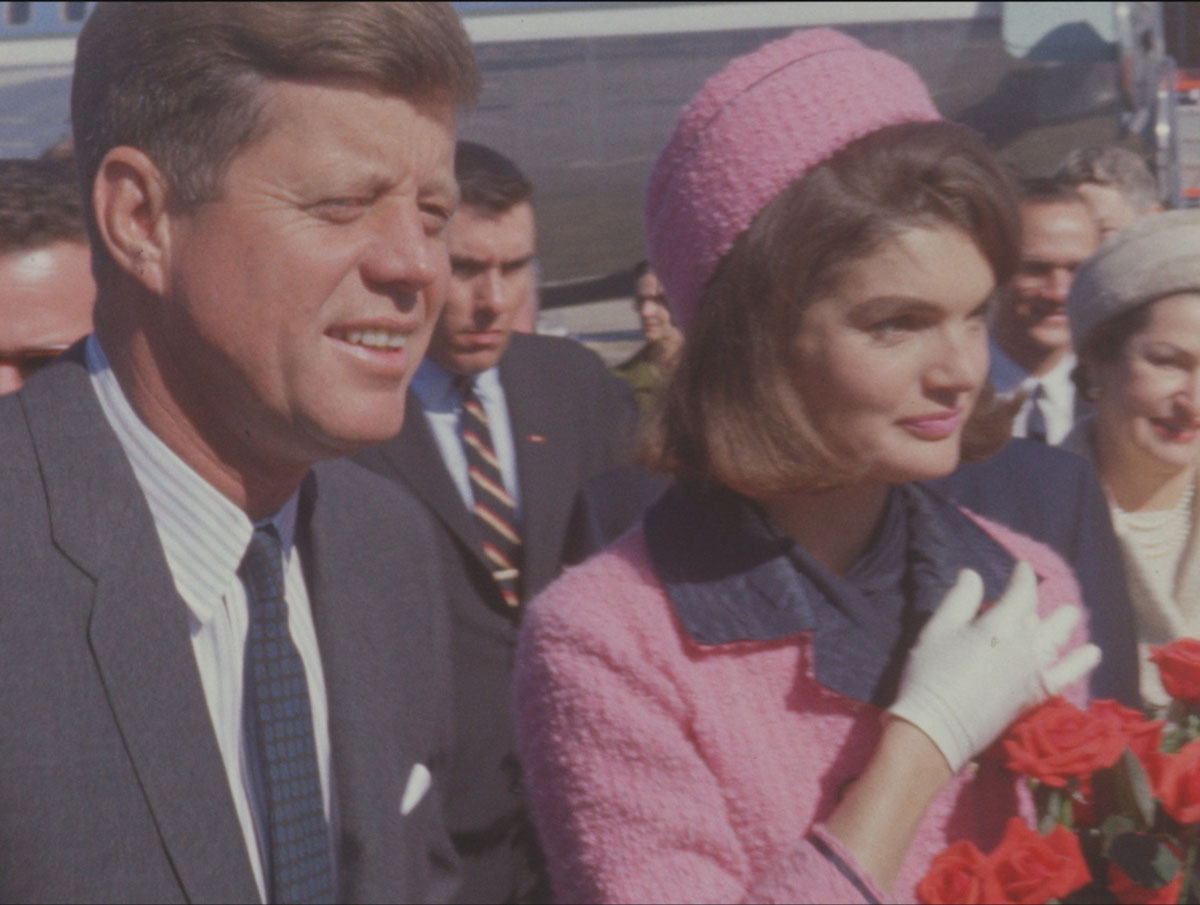
A little under two decades later, President John F. Kennedy signed the first Executive Order of his presidency in order to begin piloting the program again. Chloe and Alderson Muncy of Paynesville, West Virginia, were the first food stamp recipients in May 1961. The couple was ceremoniously driven to the county seat where they purchased $95 in food stamps for their 15-person household. In the first food stamp transaction, they bought a can of pork and beans at Henderson's Supermarket. 

“'It made all the difference,” Chloe Muncy said six years later, according to the USDA. “There wasn't any school lunch then in the one room schools that some of the kids went to. And buying lunch to send off nine of those kids to school every day — we couldn't have done it without the stamps.”

"Buying lunch to send off nine of those kids to school every day — we couldn't have done it without the stamps."

By January 1964, the pilot programs had expanded into 22 states with 380,000 participants. A few months later, on August 31, 1964, President Lyndon B. Johnson signed the Food Stamp Act of 1964. “It is one of many sensible and needed steps we have taken to apply the power of America's new abundance to the task of building a better life for every American,” Johnson said at the time. “As a permanent program, the food stamp plan will be one of our most valuable weapons for the war on poverty.”

However, it was during the controversial War on Poverty that conservatives really began to focus their attention on food stamps as a political instrument that needed to be either managed or mitigated. Many argued that the program, as well as associated welfare initiatives, would discourage self-reliance and personal responsibility and breed a generation of Americans who were always seeking a handout. This nasty stereotype about people in poverty, especially people of color, was infamously cemented into our nation’s broader consciousness during Ronald Reagan’s 1976 presidential campaign with his popularization of the phrase “welfare queen.” 

"There's a woman in Chicago,” he said during a campaign speech. “She has 80 names, 30 addresses, 12 Social Security cards. She's got Medicaid, getting food stamps, and she is collecting welfare under each of her names. Her tax-free cash income alone is over $150,000.” 

We need your help to stay independent

Since then, food insecurity advocates have been attempting to undo the tremendous amount of damage done by that rhetoric. Meanwhile, catalyzed by Reagan’s unflattering stereotype — and perhaps their already-held beliefs that most welfare recipients are fraudulent and undeserving, rather than fellow citizens genuinely in need of government assistance — generations of conservative politicians have attempted to decrease the program’s reach. 

In the 1990s, then-Speaker of the House Newt Gingrich was a vocal critic of the welfare system, including SNAP, referring to it as a “culture of poverty.” This attitude was heavily reflected in the Trump administration’s plans to tighten eligibility for SNAP (which were ultimately largely unfulfilled), as well as Republicans’ more successful efforts this year, which come at a critical time for hunger in the United States. 

As Salon Food reported in March, food insecurity experts predicted that the country was "racing toward a looming 'hunger cliff,'" as pandemic-era emergency SNAP benefits were set to expire this year — and they were right. But just as millions of Americans were yet again plunged into food insecurity, things got worse. President Joe Biden signed the debt ceiling and budget cuts package that passed the Senate in early June; to push the bill through and avoid a default crisis, one of Biden’s concessions was to make some of the most consequential changes to SNAP in decades. 

Former House Speaker Kevin McCarthy had long wanted to expand the age bracket for people who must meet work requirements to participate in the program, and thanks to the threat of the default crisis, he got his wish. Under the new guidelines, the age of recipients required to work was raised from 50 to 55 and, according to The Center for Public Integrity, makes it harder for states to waive work rules in areas with high unemployment. 

In an emailed statement at the time, Eric Mitchell, the executive director of the Alliance to End Hunger, said that the work requirements for which Republicans pushed are "punitive and ineffective." 

"They perpetuate the myth that people on economic assistance programs choose not to work when the evidence clearly shows otherwise, and by taking vital support away from SNAP participants, they actually make it harder to secure and maintain employment," he said. 

"They perpetuate the myth that people on economic assistance programs choose not to work when the evidence clearly shows otherwise."

While McCarthy may be out, his replacement isn’t any better for hungry Americans, as Johnson’s conservative allies are pushing him towards significant spending cuts and new restrictions on SNAP. Johnson has told lawmakers he wants to put the House version of the new farm bill next month, which will provide insight into what exactly those will look like.

“Breathtaking entitlement”: Mary Trump roasts Ivanka for claiming “undue hardship” to dodge trial

Ivanka Trump's failed attempt to evade testifying in her father's civil fraud trial this week didn't resonate with her cousin Mary Trump, who spoke to MSNBC's Mehdi Hasan on Sunday about the excuse Ivanka Trump gave to an appellate court.

Hasan mocked Ivanka Trump's claim of "undue hardship" due to her testimony falling "in the middle of a school week," calling it a "pretty amazing excuse." Mary Trump, who is a fierce and vocal critic of her uncle, Donald Trump, agreed.

“I think it just speaks to the breathtaking entitlement of these people that they don’t even think that other people are going to look at their past behavior to realize that they leave their kids home all the time,” she told Hasan, noting that Ivanka Trump and her husband “probably have lots of help that most people with young children don’t have.”

“And she also seems to have forgotten that she has a husband who can presumably take care of their children,” she added.

Mary Trump also took note of the "interesting" behavior of the former president's legal team in the New York civil trial, arguing that they "seem to be goading" Manhattan Supreme Court Justice Arthur Engoron. The judge is presiding over New York Attorney General Letitia James' $250 million lawsuit against Donald Trump and his business for exaggerating his assets on financial statements. In a partial summary judgment ahead of the trial's start, Engoron found the former president and the other defendants liable of fraud in inflating those figures.

Last week, the judge expanded a gag order on Donald Trump, who was already prohibited from commenting on court staff, prosecutors or witnesses, to include the the former president's lawyers.  

“I am wondering if they actually have forgotten that the judge is not Donald’s base,” Mary Trump told Hasan. “He cannot be spun. He is going to be looking at the facts and evidence.”

In a subscriber-exclusive video on her "The Mary Trump Show" podcast and newsletter, the former president's niece also told reporter Molly Jong-Fast that she believes Ivanka will throw Donald Trump "under the bus" when she testifies at the trial, The Hill reports

Brothers Eric Trump and Donald Trump Jr. testified in the trial last week and are both defendants in the lawsuit. Ivanka Trump was also once a party in the suit, but a New York appeals court dismissed her from the case in June.

Mary Trump said she believes Donald Trump Jr. is the "least equipped to do this," according to Mediaite

“They’re going to have to walk a very thin line between obfuscating in a way that’s not perjury and appeasing their father’s ego so that he doesn’t throw them under the bus when he testifies, which of course he’s going to do no matter what they do,” she said.

She and Jong-Fast also agreed in thinking that Ivanka Trump will "tell the truth and throw him under the bus," arguing that because she is "legitimately wealthy," unlike her siblings, and doesn't need to rely on her father, she does not have to hold back in court. 

Former federal prosecutor Glenn Kirschner echoed those sentiments, speculating that the reason Ivanka Trump made such an effort to ditch her testimony is because she could potentially tank her father and brothers.

“I think she has potentially damaging testimony against her brothers and her fathers, and she’s doing everything she can to not have to give that testimony,” Kirschner began during an appearance on MSNBC.

"Three important data points I think that inform the fact that Ivanka might have some perilous testimony for her family members: One, she has distanced herself from her father ever since he left the presidency," he continued. "You don't see her like you see her brothers with these unhinged rants and interviews. She's kind of gone radio silent." 

We need your help to stay independent

"Second, as you say she's been fighting mightily, trying everything from filing legal challenges to a subpoena — there were none — to claiming she has child care issues. I'm betting she can afford a nanny for the day," Kirschner told host Ayman Mohyeldin. 

"The next data point is that when she testified before the Jan. 6 committee, Ayman, she may not have wanted to throw her father under the bus, but we all saw her do when they revealed some of that public testimony where she said, 'I credit Bill Barr that there was no widespread fraud undermining the election. I do not credit my father,'" he concluded. "Maybe she's prepared to present similarly incriminating and damning evidence on the business front, and that's why she's trying so hard to avoid having to testify."

It is also likely that Donald Trump views his daughter's testimony as his "last hope" to avoid further detriment to his New York business empire after his sons' testimonies last week, former White House ethics czar Norm Eisen and former Hillsborough County State Attorney Andrew Warren argue in an opinion for The Daily Beast

In their view, however, Ivanka Trump won't be her father's "saving grace" because she has already shown that she prioritizes looking out for herself in the grand scheme. 


Want a daily wrap-up of all the news and commentary Salon has to offer? Subscribe to our morning newsletter, Crash Course.


They explained that the former president is expected to follow the same strategy that his sons displayed during their testimonies, which hinged on pushing blame for falsified property valuations on company accountants and outsiders. Donald Trump will have to hope that Ivanka Trump won't worsen his circumstances when she takes the stand, the experts asserted. 

"Of all his children, Ivanka has seemingly demonstrated the greatest willingness to speak honestly about her father," Eisen and Warren wrote, referencing her testimony before the Jan. 6 committee where she declared she didn't believe the election was stolen. 

"Still, it is probably too much to expect that Ivanka will be fully candid when she testifies on Wednesday. Even her useful Jan. 6 testimony pulled some punches, and we can expect the same here," they added.

"That will keep her out of hot water — but it will do little to help her father and the other co-defendants win the case," they continued before predicting, "We are looking at a trial outcome that may strike a blow to Trump’s core in a way few other setbacks have.

"Combined with four looming federal and state criminal trials and several of his former enablers and accomplices pleading guilty in those or other proceedings — Michael Cohen, Allen Weisselberg, Sidney Powell, Jenna Ellis, and Kenneth Chesebro — the former president may come to the same conclusion that many of us have reached: that the legal walls are finally closing in."

Trump fumes on Truth Social ahead of New York fraud trial testimony

Former President Donald Trump fumed at New York Attorney General Letitia James and Judge Arthur Engoron before he took the stand at his $250 million New York civil fraud trial on Monday.

"Getting ready to head to the Downtown Lower Manhattan Courthouse to testify in one of the many cases that were instigated and brought by my POLITICAL OPPONENT, Crooked Joe Biden, through agencies and surrogates, for purposes of ELECTION INTERFERENCE," Trump raged. "This is the first time this method of cheating in an election has been so blatantly used in the USA as a POLITICAL WEAPON! Mostly done in Third World Countries. Got a really Biased, Nasty, Club controlled, but often overturned, Judge, a Racist, Evil, and Corrupt Attorney General, BUT A CASE THAT, ACCORDING TO ALMOST ALL LEGAL SCHOLARS, HAS ZERO MERIT. A dark day for our Country. WITCH HUNT!"

Trump also lashed out before entering the courtroom on Monday. "It’s a terrible, terrible thing," he told reporters, according to Mediaite. "These are political operatives that I’m going to be dealing with right now. You have a racist attorney general who’s made some terrible statements and we see some more that came out the wires today. And it’s a very sad situation for our country. We shouldn’t have this." James also spoke to reporters prior to the testimony. “Before he takes the stand, I am certain that he will engage in name-calling and taunts and race-baiting and call this a witch hunt,” James said. “But at the end of the day, the only thing that matters are the facts and the numbers. And numbers, my friends, don’t lie.”

“I can’t imagine having a client like this”: Expert warns Trump likely to “perjure himself” at trial

Legal experts warned that former President Donald Trump faces significant risks when he takes the witness stand at his New York civil fraud trial on Monday.

Former acting Solicitor General Neal Kaytal said the ex-president will face a "Hobson's choice" to either answer questions or invoke his Fifth Amendment rights. 

“Both are a problem,” Kaytal told MSNBC, given that Trump is “known for giving meandering testimony," but legally speaking, his reticence could be understood “to be the absolute worst.”

“The case for [Trump] taking the Fifth Amendment is he’s basically going to perjure himself one way or another if he takes the stand,” Kaytal added. “I can’t imagine having a client like this."

Former federal prosecutor Andrew Weissmann agreed that it “will be extremely hard for him to come up with a consistent theory that’s not going to get him into a lot of trouble.” 

“He’ll be forced to answer strategically because if he doesn’t answer, this whole case is over,” Weissmann added.

Former federal prosecutor Jennifer Rodgers predicted "fireworks" at Trump's court appearance. 

"Trump is famously undisciplined as a speaker. He is furious about this case," she told CNN. 

"He's been talking, of course, at length about how the judge is out to get him and the AG is out to get him," she continued. "So the question is, I don't know that he'll just be smug. I mean, he may explode tomorrow."

"So one question is, if it goes poorly on direct tomorrow with the attorney general's staff questioning him, will his lawyers cross-examine him, quote-unquote, cross-examine him to try to rehabilitate him in the eyes of the judge?"

Former Nixon-era White House Counsel John Dean, in conversation with CNN anchor Jim Acosta on Sunday, argued that the amount of trouble Trump could land himself in during the hearing is "infinite." 

It's "not only what he says, but the way he says it is going to play out in this testimony. What he says is going to affect the judge and how he deals with the case. As you said, he's already found liability," Dean said, referring to how New York Supreme Court Judge Arthur Engoron has already found the Trump family and company liable for persistent fraud. "They're really looking at the other counts and potential damages that could be assessed against the Trump Organization."

"So, his testimony can influence that," Dean continued. "But also the theater of it, and the way he handles himself is going to have a political impact. People don't like witnesses who try to get nasty with judges. Maybe a few hard-right radicals might, but the general public does not. So, I think he's got to behave himself as well tomorrow."

Acosta then asked Dean to explicate what happens if Trump commits perjury, and whether he could be prosecuted for lying. 

We need your help to stay independent

"He certainly could be, and it would be a question of how far out he goes, how far he reaches, how disported he gets," Dean replied. "And Letitia James, the attorney general who brought this civil action — and it could have been brought as a criminal action, but she decided to proceed in a civil matter. She can certainly initiate a perjury charge against anybody who does perjure themselves in the civil case. These are rare, but Trump creates the rarities, if you will. And if he gets way out on a limb and fabricates beyond belief, I think she might bring him up short and let him know."

CNN legal analyst Norm Eisen told Acosta that he doesn't expect Trump to "take the Fifth."

"He'll be flushing this case down the toilet if he says the word 'self-incrimination.' Unlike in a criminal case where you don't get to argue that to a jury, Judge Engoron — no fan of Donald Trump already — can draw an adverse inference if Trump takes the Fifth. He can say, 'Well, that settles it, I'm ruling against him.' Trump & Company are playing for an appeal. They know they're going to lose in front of this judge. They don't want to mess up the appellate record with the Fifth Amendment. I don't think he's going to do that," Eisen said.


Want a daily wrap-up of all the news and commentary Salon has to offer? Subscribe to our morning newsletter, Crash Course.


Attorney Deborah Baum, in a Politico article published Monday, offered advice for how to question Trump after she in 2016 deposed the former president in a civil suit he filed against celebrity chef Geoffrey Zakarian.

"Just let him talk," Baum told Politico, adding that Trump was "totally unprepared" for her line of questioning. "I got exactly what I wanted by letting him talk."

"In that particular case, there were some legal issues we were dealing with in terms of the likelihood or the certainty of their losses as a result of the restaurant leaving, and they claimed millions and millions of dollars of lost profits," she said. "And there’s a legal principle that your damages have to be reasonably certain to recover them. And a lot of their damages were based on how well they expected the restaurant to do. But he testified to exactly what I wanted, which was, 'With a restaurant, you never know what you’re going to get. You never know.'"

"The man responds really well to flattery," Baum added. "You flatter him and he’s your best friend."

The real reason the new RSV shot is hard for some parents to find

A year ago, hospitals across the country noticed a disconcerting trend. Despite winter still being a few weeks away, many were experiencing a shortage of pediatric hospital beds due to an early surge in respiratory syncytial virus (RSV). As a result, parents who needed to take their children to the emergency room faced longer-than-usual wait times. Some children were being sent to hospitals in other states. But the brutal season ended on a somewhat hopeful note: a variety of vaccines, including a monoclonal antibody treatment called Nirsevimab, were in development and would likely be available the following year.

That time has arrived. While RSV has yet to take off in an extraordinary way like it did in 2022, those who are looking to protect their children from the virus are running into a major problem: the much-hyped shot is in short supply. As many media outlets have reported, parents are struggling to find the shot for their kids, and some pediatricians are angry. What happened?

The FDA estimates that each year about 60,000 adults over the age of 65 are hospitalized with RSV while 6,000 to 10,000 die from the virus. Infants are known to face an increased risk. According to the Centers for Disease Control and Prevention (CDC), each year nearly 80,000 kids under 5 are hospitalized with RSV, and an estimated 300 die.

In July, the Food and Drug Administration on Monday approved the new RSV treatment for children up to 24 months old. The monoclonal antibody treatment, sold under the brand name Beyfortus, protects infants and toddlers by blocking the RSV virus from infecting cells. Technically, it's not a vaccine, but a single injection that would be given to infants and neonates born during or entering their first RSV season.

“Despite an aggressive supply plan built to outperform past pediatric immunization launches, demand for this product … has been higher than anticipated.”

News of the approval gave many parents hope that this year’s season wouldn’t be as severe, as for the first time in history a treatment was available for their kids. But at the end of October, the Centers for Disease Control and Prevention (CDC)  issued a health alert, warning about limited supply of Beyfortus. Due to this limited supply, the CDC recommends prioritizing available nirsevimab 100mg doses for infants at the highest risk for severe RSV disease — those under the age of six months, and infants with underlying conditions that place them at highest risk for a severe case of RSV, such as those who are immunocompromised or have lung disease.

Weeks before the CDC issued a health alert, the drug manufacturer, Sanofi, issued an update that demand had outpaced supply. “For the first time in history, health care providers are able to help protect an extraordinary number of infants against respiratory syncytial virus (RSV) disease,” the manufacturer said. “Despite an aggressive supply plan built to outperform past pediatric immunization launches, demand for this product, especially for the 100 mg doses used primarily for babies born before the RSV season, has been higher than anticipated.”

Dr. Kelly Moore, president of Immunize.org (a nonprofit organization that works to increase vaccination rates and is funded by the CDC) told Salon in a phone interview there’s more to the story that’s missing from the mainstream narrative. It’s not only that the manufacturer didn’t anticipate such a high demand, but it’s that a part of its anticipated supply went to the Vaccines For Children (VFC) program — a move that was never guaranteed.


Want more health and science stories in your inbox? Subscribe to Salon's weekly newsletter Lab Notes.


VFC is a federal entitlement program that ensures access to all recommended vaccines for children who are uninsured on Medicaid, or whose private insurance doesn't cover immunizations. It provides vaccines for nearly half of children under the age of 19 in the United States. Up until early August, Moore said, the manufacturer didn’t know if it would be accepted in the program because technically it wasn’t a vaccine.

“If we didn’t put it in the Vaccines for Children program, then half of families with babies who need this product wouldn’t have a way to pay for it, they won't have access,” Moore said. “They either would be uninsured and have to pay out of pocket, however much it cost, or it might take a long time before Medicaid got around to covering it as a drug instead of as a vaccine for the Vaccines for Children program, which makes that access almost immediate.”

While it’s good news that the shot will be available through the program, a consequence is that there is limited availability to those with private insurance.

“If we didn’t put it in the Vaccines for Children program, then half of families with babies who need this product wouldn’t have a way to pay for it."

“Once it became available through the VFC program, it became accessible to everybody who needs it and not just those who can afford to pay for it or who have private insurance that will cover it,” Moore said. “So that's how we got into this situation, and a lot of these changes in the demand dynamics only occurred at the last minute.”

Indeed, due to the timing of all the events Moore said the shortage would have been “almost impossible” to entirely avoid.

Dr. Ian Michelow, division head of Infectious Diseases and Immunology at Connecticut Children's Hospital, told Salon anticipation and expectations were definitely amped up, which could be contributing to a collective feeling of being let down.

“The anticipation and expectations built up because — as I remember very well because I was working in the hospital — of the huge surge of RSV that started in late September and October last year,” he said. “Even though it's difficult with a shortage, I sort of see the silver lining and hopefully I think the message is going to get through that this is a really new, and really fantastic product to protect babies.”

“We still do get 100 to 300 kids dying every year from RSV in the US. If that's your kid who ends up dying and this could have been prevented, that's a tragedy.”

Dean Blumberg, chief of pediatric infectious diseases and associate professor in the Department of Pediatrics at the University of California, Davis, told Salon he sees this as a “transitional year,” adding that the time-out of the roll-out as a whole was off. Not only from the approval and adding the shot to the VFC, but it takes time from approving a vaccine to educating physicians and getting hospitals to sign off on their own policies. Blumberg said he thinks if the approval happened even six months earlier, that perhaps we’d be entering this year’s RSV season from a different place.

“Hopefully all these issues can be ironed out by the next RSV season,” Blumberg said. “And we will have some use of the RSV vaccine, some children protected [this year], but not enough to really have a meaningful impact like hospitalization rates or even deaths.”

Unfortunately, Blumberg said, he thinks this RSV season will be close to a normal one.

We need your help to stay independent

“We still do get 100 to 300 kids dying every year from RSV in the US,” he said. “In the smaller picture, if that's your kid who ends up dying and this could have been prevented, that's a tragedy.”

The good news is that there are other ways to protect children from RSV. Earlier this year, the FDA approved Pfizer's vaccine against RSV for adults over the age of 60, in addition to a vaccine for expecting mothers to pass immunity to their fetuses. There’s also palivizumab for very high-risk infants.

For frustrated parents and providers, Moore said it’s understandable.

“I understand and appreciate the frustration, it is so hard to have a new product you've been looking forward to for so long to protect the kids from disease that is scary for families of infants,” she said, “This situation is very temporary, it will pass and we have other options.”

Trump’s big payback: The plot for MAGA’s revenge should scare voters straight

Over the weekend, Democrats celebrated their biennial tradition of hand-wringing and panic about the election a year hence. Every cycle about this time, polls showing that their voters are unhappy with their candidates and wish they had someone better are floated by all the major polling outfits and everyone starts hyperventilating. It seems like only yesterday that the polling showed Democrats being swept away by a "red tsunami" in the midterms and it was inevitable that they would lose both chambers of Congress for the foreseeable future. Oops!

One of the more extreme examples of this came back in 2011 when President Barack Obama was running for re-election. With a 61% disapproval rating on the economy and 73% saying the country was heading in the wrong direction in some polls, there was growing talk of running a primary opponent or replacing Joe Biden as vice president on the ticket. Data maven Nate Silver wrote an epic analysis for the New York Times on November 3, 2011, almost exactly 12 years ago, that was headlined, "Is Obama Toast? Handicapping the 2012 Election." His conclusion? Probably. At best, Silver concluded, Obama only had a 50-50 chance of winning.

Yes, Americans are upset about the economy and the world feels unstable but I don't believe that it's so bad that a majority will put an actual criminal, vengeful, would-be dictator back in the White House.

We all know what happened. Obama went on to win 332 electoral votes to Romney's 206, and 51.1% to 47.2% in the popular vote. In today's politics that's what a landslide looks like.

The point of rehashing this ancient history is just to remind everyone that polling is not invincible by a long shot. A lot can happen in the next year. More importantly, when it comes down to voting, people have to actually make a choice. And next year they are going to choose between a man they consider to be too old to be president and a man (just three years younger) who is also under 91 felony indictments for attempting to impede the peaceful transfer of power and stealing classified documents. He has also been held liable for sexual assault and massive business fraud in New York Civil courts just in the past year. He could easily be a convicted felon by the time voters go to the polls next year.

We need your help to stay independent

This is, of course, on top of the terrible performance he gave during his four years as president, a performance which was rewarded with a decisive loss by seven million votes, 51.3% to 46.8%. As it was the most litigated presidential election in history because Donald Trump is the greatest sore loser the world has ever known, the only people who doubt the result are members of the cult who believe whatever their Dear Leader tells them.

But perhaps Americans are in a forgiving mood and figure it's best to let bygones be bygones and welcome Trump back to the White House because he can't possibly be any worse than the president who has brought the country out of the mess created by the pandemic with one of the strongest jobs booms in half a century, passed massive bipartisan legislation under the most difficult circumstances and is handling foreign policy challenges few have had to confront since the cold war. (And yes, he is old. He just doesn't trowel on piles of bronze make-up and dye his hair neon yellow to hide it as Trump does. )

So if voter think it can't get worse, they need to think again.

Anyone who enables Donald Trump to become president again is essentially enabling a military crackdown on peaceful protest.

As I wrote last week, there are dozens of MAGA Republicans working on the agenda for the next term getting ready to implement what amounts to an authoritarian takeover of the U.S. government. They aren't trying to hide it. In fact, they are explicitly running on it as a platform. I mentioned the reinstatement of Schedule F, Agenda 47, Project 2025 and their plans to install MAGA legal advisers throughout the administration to ensure that there are no Federalist Society RINOs like former Attorney General Bill Barr or White House counsel Don McGahn, who didn't robotically snap to and fulfill all of the president's wishes without question.

But that's really window dressing. Sure they want to "deconstruct the administrative state," as former adviser and podcaster Steve Bannon has been pushing for years. A patronage system makes it so much easier to profit on the backs of the taxpayers and deliver goodies to their wealthy benefactors. But it's important to remember that Donald Trump doesn't understand or care about any of that. It's all about him. And right now he has only one real agenda: revenge.

As Democrats throughout the land spent the weekend in agonized tribulation over the polls that say some Biden voters want to vote for Trump, the Washington Post published a big story about what Trump and his henchmen have planned for their next term should this come about:

Donald Trump and his allies have begun mapping out specific plans for using the federal government to punish critics and opponents should he win a second term, with the former president naming individuals he wants to investigate or prosecute and his associates drafting plans to potentially invoke the Insurrection Act on his first day in office to allow him to deploy the military against civil demonstrations.

Needless to say, he wants to prosecute Joe Biden and his family and has explicitly framed it as payback. (Last month in New Hampshire, he said, “This is third-world-country stuff, ‘arrest your opponent. And that means I can do that, too.” ) But it's not just Democrats he plans to go after. Repblicans like former White House chief of staff Gen. John Kelly, his former attorney Ty Cobb (who appears frequently on CNN) and former chairman of the Joint Chiefs of Staff Gen. Mark Milley, as well as members of the FBI and Justice Department, are all on the list.

This is part of "Project 2025," which the Post reporters describe as a "partnership of right wing think tanks" rather than just the Heritage Foundation which has previously been reported as leading the planned purge of civil service personnel. According to documents acquired by the Post, they are drafting executive orders to invoke the Insurrection Act to deploy the military for domestic law enforcement. The main purpose of this would be to quell demonstrations and protests. Jeffrey Clark, Trump's co-defendant in the Fulton Country Georgia felony trial and an unnamed co-conspirator in the Federal Jan. 6 case, is spearheading this initiative.

Anyone who enables Donald Trump to become president again is essentially enabling a military crackdown on peaceful protest. I'm sure the insurrectionists of Jan. 6 (who Trump now calls "hostages") will be free to assemble wherever they want. But those who disagree with Trump about the economy, abortion, Israel and Ukraine or any other issue about which his positions are magnitudes more odious than Joe Biden's will have to learn to keep their mouths shut. We won't be having anything other than MAGA demonstrations in the future.

Unless the country has completely lost its moorings on a level that can only be explained by LSD in the water supply, the fact that people are saying Donald Trump would be a better president is nothing more than a political primal scream. Yes, Americans are upset about the economy and the world feels unstable but I don't believe that it's so bad that a majority will put an actual criminal, vengeful, would-be dictator back in the White House. Call me an optimist. We can't be that far gone.

“Apocalypticism”: Polling expert reveals the root of “panic among conservative White Christians”

This year’s American Values Survey, conducted by the Public Religion Research Institute (PRRI) with the Brookings Institution, shows that the American people are very conflicted and increasingly do not possess a shared set of beliefs or values across a wide range of political issues. Key findings include a growingly disproportionate amount of support for political violence, a willingness to ignore the rule of law to win political power, and a belief in untrue conspiracy theories amongst Republicans as compared to Democrats. Antidemocratic beliefs are even more acute, the survey found, among white evangelical Protestants who yearn for a return to “traditional American values” in a country they believe “is moving in the wrong direction." 

How can the American people and their leaders solve the many problems facing the country if they cannot even agree on what they are – or on basic facts and the nature of reality and the truth more generally?

I asked Robert P. Jones, founder and president of PRRI, to help make sense of the survey results that show a divided American public, the enduring power and growing dangers of Trumpism and the role of White Christian nationalism in House Speaker Mike Johnson's swift ascendence. Jones is the author of the New York Times bestseller “The Hidden Roots of White Supremacy and the Path to a Shared American Future."

This interview has been lightly edited for length and clarity

America and the world are facing multiple crises and great challenges. There is a war between Israel and Hamas. Russia's war against Ukraine shows no real signs of ending. Trump is tied with or leading Biden in the early 2024 presidential polls. Mike Johnson, a Trump MAGA loyalist and White Christian Nationalist, was just elected speaker of the House. How are you feeling? How is your hope tank doing? 

It's heavy. PRRI’s new American Values Survey was released in the wake of the Hamas terrorist attack against Israel and the same day the U.S. House of Representatives voted to make Johnson speaker. The findings, my emotions, and these events are all intertwined. 

The main findings of the survey are pretty stark, troubling and worrisome. We're clearly in for a pretty rough ride in this country over the next 12 months. There is all the awful violence in Israel and that is spilling over into the US. A child was stabbed to death near Chicago by his landlord in a hate crime against Palestinians. Many Jewish students are not feeling safe on university campuses. There are threats against both synagogues and mosques around the country. These are tough times. 

But I do have hope.

This fall, as I’ve been touring the country in the wake of the publication of my new book, The Hidden Roots of White Supremacy and the Path to a Shared American Future, I’ve encountered countless people working in local contexts doing the hard work of reckoning with the injustices of our past, repairing the rifts in their communities, and protecting our democracy—not just in blue states but in places I feature in the book like Mississippi and Oklahoma.

What critical lenses are you using to make sense of these emotions? To navigate and understand these challenges?  

The American Values Survey, which PRRI has done for the last 14 years in conjunction with the Brookings Institution, reveals the tension and divides in this time of crisis. The American people feel that the stakes are high and there is deep worry about the future of the country and its democracy. Three-quarters of Americans believe that the future of democracy is at stake in the 2024 presidential election. It's one of the few things that Republicans and Democrats agree on, 84% of Democrats and 77% of Republicans. Now, of course, they mean very different things in terms of their concerns about "democracy." There is also great pessimism about the country. More Americans than not say that America's best days are now behind us, which is overwhelmingly coming from Republicans. There is widespread economic anxiety. But the deeper disagreement, coupled with deep divides about the country's identity. Who are we? Who is the country for? Who counts as a "real American”? These deeper disagreements, rather than policy differences, are driving our partisan divisions.

"Deeper disagreements, rather than policy differences, are driving our partisan divisions."

The new survey's findings about the rise in support for political violence are particularly troubling. We found that the numbers of Americans who say that "Things have gotten so far off track that true American patriots may have to resort to violence in order to save the country" has gone up over the last few years, from 15% to 23%. Those feelings are disproportionately on the right. One in three Republicans believe that as compared to only 13% of Democrats. We also found troubling links between white Christian nationalism and political violence. Among those who believe that America was intended by God to be a promised land for European Christians, nearly four in ten believe they may have to resort to violence to save the country. 

The American news media and pundits and the Church of the Savvy types are still vexed by why white Christian evangelicals and other white Christians are so loyal to Donald Trump. The answers are pretty obvious: it is an instrumental relationship about power. It is not a mystery. Why do you think their relationship is presented by so many people as something much more complicated than it really is? 

Here is what is so confusing to some people about Trump and white Christian evangelicals. He's not an evangelical; he's not one of them. Trump doesn't go to church, and he doesn't embody any of the central virtues conservative white Christians profess to value. And yet they have just gone all in for him. But this is all irrelevant to understanding Trump's real appeal to conservative white Christians. I always go back to this interview that this megachurch pastor in Dallas named Robert Jeffries gave in 2015. At the time, there was at least some debate among white evangelical leaders over whether they could or should support Donald Trump. Robert Jeffries basically said that things are so bad in the country, I want the meanest "son of a you know what” in the Oval Office, and that's Donald Trump. 

We need your help to stay independent

What does Trump mean by MAGA, "Make America Great Again"? It is nostalgia for some a mythical past "golden age." They want a return to 1950s America when White Christians were the unquestioned dominant force in the country. Conservative white Christians want that America back. There is also this incorrect narrative that evangelicals held their nose and voted for Trump. But there is really no evidence for that. White evangelicals support Trump's anti-immigrant rhetoric and his anti-black rhetoric and all those related racial grievance issues. They were breathing comfortably and freely when they pulled the lever for Trump in both 2016 and 2020.

Language is very important here. If we do not use correct and accurate language, then we will not be able to properly confront and resolve the problem. To that point, what work is being done by such language as "Christians" and "evangelicals" in these conversations about the Republican Party and "conservative" movement and American politics more generally? That language is very vague and lacks specificity. Very few of the news media and political class make that intervention. It is almost like they are afraid to do so. 

For many of these leaders, be it Tony Perkins of the Family Research Council, or Mike Johnson, when they use the word "Christian", it is racially coded.  When they say "Bible-believing Christians" they are not talking about Black folks and the AME Church. They're not talking about Latino Catholics. They are specifically talking about white evangelical Protestant Christians.

"These narrow views, especially as represented by the likes of Mike Johnson, are really in the minority. What he represents are the beliefs of about 14% of Americans."

These narrow views, especially as represented by the likes of Mike Johnson, are really in the minority. What he represents are the beliefs of about 14% of Americans. Johnson and other white Christian conservatives who claim to have some type of monopoly on Christianity most certainly do not. And to insist that they do is another manifestation of white supremacy.

When these (White) right wing Christians look at American society, what do they see? What do they want? It is very easy for people outside of that world to mock and laugh at their beliefs, but these are literal life and death matters. Laughing at these Christian fascists and other members of the White Right will not stop them.

What they see is a society adrift from where they think it ought to be. That explains the reactionary language about "taking America back" and "(Re)Awakening America." It's basically a narrative of loss and decline. Trump repeats those themes of decline and American carnage and how he is the only person who can save America.

There is a real belief in Apocalypticism among conservative white Christians, specifically, and white conservatives and the right, more broadly. That is very much tied to changing demographics: we are no longer a majority white Christian country, and we were just 20 years ago. That has set off a visceral reaction, and a kind of panic among conservative White Christians in particular. As I document in The Hidden Roots of White Supremacy, most white evangelicals sincerely believe that God designated America to be a promised land for white European Christians. That is not a joke to them. If a person sincerely believes such a thing and the country is changing and is not in agreement with that vision, it opens the door to political extremism and violence to secure that outcome. Many conservative White Christians truly believe that they have a divine mandate and entitlement to the country.


Want a daily wrap-up of all the news and commentary Salon has to offer? Subscribe to our morning newsletter, Crash Course.


The historical record clearly shows that white evangelicals have long had an instrumental, rather than principled, relationship to democracy. As long as there were super majorities of White Christian people in the country, they could pay lip service to the principles of democracy knowing that they had sheer numbers that would guarantee an outcome in their favor. But when democratic processes were unlikely to uphold white Christian power, they historically supported all manner of anti-democratic practices, including white racial terrorism, slavery, segregation, severe voter suppression, and gerrymandering. With the continuing decline of white Christians as a demographic group, these attempts by White conservatives and their allies to undermine democracy are just more obvious and unrestrained, as seen on Jan. 6 for example. 

Donald Trump repeatedly talks about death, destruction, apocalypse, conspiracies, persecution, martyrdom, a final battle, and violence and suffering more generally. That is not an accident. Trump and his propagandists are very strategic and sophisticated. When white Christian conservatives hear this language from Trump and other leaders on the right, how are they making sense of it?  

PRRI’s American Values Survey asked respondents to say which of 20 issues are the most important. The single shared concerns among Democrats and Republicans were about the rising costs of everyday expenses and housing. Among Democrats, there was a very broad range of additional critical concerns. Among Republicans, there were only four. Republicans believe that crime, immigration, what children are learning in public schools, and human trafficking are the most critical issues facing the country. All of these Republican concerns center around a racially tinged sense of fear about a loss of power in an increasingly diverse and changing country.

Who is Mike Johnson and what does he represent? What is Johnson an example of?

Mike Johnson is a white Christian nationalist in a tailored suit. He believes that America is a promised land for white European Christians and that protecting that reality and future is above everything else. Johnson is deeply steeped in that white Christian nationalist worldview, which also includes not believing in the separation of church and state. Behind Johnson's polished public persona is a fairly extreme kind of vision of a white Christian America and a willingness to make the country fit that reality. And that includes overturning an election, such as on Jan. 6, which Johnson supported.

"Many conservative White Christians truly believe that they have a divine mandate and entitlement to the country."

If you listen carefully to Johnson and others on the right, they use the word "republic" and not "democracy." That is not just something pedantic. They believe in the rule of the virtuous, not in a "we the people" democracy where everyone is equally represented. What they're actually committed to is a particular outcome where America's laws and government and society correspond to God's laws as they see it. That's the only legitimate outcome for Johnson and other white Christian nationalists. Everything else is illegitimate. They will use the language of democracy and voting if it achieves their ends and goals, but Johnson and the other white Christian nationalists and many other conservatives at present are not committed to those principles and values if they come out on the losing side of a democratic election.

One of the common claims by centrists, Democrats, and many liberals and progressives is that Mike Johnson and the other White Christian evangelicals and conservatives don't really believe the "crazy" stuff they say. That it is all a performance and some type of culture war spectacle. I always rebut, so what? They are making public policy based on these beliefs. I don't care what is in their hearts. Moreover, that type of reaction is a function of fear and denial because the truth of what these Christofascists are doing right now and intend to do in the future is so utterly terrifying that most Americans cannot accept it. Please make an intervention if you would.

In many cases, these beliefs are sincerely held. They're sincerely taught; They're sincerely preached; They're sincerely sung even in hymns and liturgy in these churches. It's also worth remembering that it wasn't just white evangelicals who strongly supported Trump in the last two elections. Trump was supported by mainline white Protestants, the non-evangelicals. They voted six in 10 for Trump in both elections. White Catholics did too by the same percentage. While these white Christian nationalist tendencies are more pronounced among white evangelicals, this is more broadly a white Christian problem. These views sound extreme and crazy for people who are not of that world. But for members of this white conservative Christian community, they really believe it.

I think the deepest vein that they're mining is a belief and feeling that America was supposed to belong to European Christians, and they're desperately afraid that it no longer does. As they understand it, they were given the responsibility by God to create this Christian country, and it's slipping away from them. That core belief explains so much of the extremism and the proclivity toward violence on the political right today. 

Michael Cohen: Trump will go broke and may face prison — “it’s going to hit him hard”

Michael Cohen, Donald Trump’s former fixer and personal attorney, has been called a lot of things over the years. Today, he is primarily known as the first person to be thrown under the Trump bus who decided to fight back.

Cohen has testified before Congress multiple times, sat through grueling court cases, testified before grand juries — all to speak the truth about former President Donald Trump.

I recently spoke to Cohen after he gave testimony in the New York civil case against Donald Trump's business empire — where Trump himself is scheduled to testify on Monday. It was the first time the two men had been in the same room in five years, but Cohen said he had no emotional reaction to their reunion. “I felt absolutely nothing," he told me. It was like "when you're walking down the street and you pass somebody who you do not know. It's not that you wish anything bad on that individual, it's just you feel nothing for them. You don't know them, you don't care. That's exactly how I felt. I wasn't there to make friends with Donald. I wasn't there to protect Donald. I wasn't there to harm Donald. I was there to tell the truth, and that's all that I did.”

Cohen has gone after Trump in two bestselling books, most recently "Revenge: How Donald Trump Weaponized the United States Department of Justice Against His Critics," but may have damaged his former boss far worse in that New York courtroom,  where Trump faces losing hundreds of millions of dollars because of his fraudulent business dealings. Cohen predicts that the ex-president faces a potential judgment of $600 million or more, and cautions, “Mind you, he does not have that in equity. So when these assets get sold — and remember, he is low basis in most if not all of these assets — take the tax implications and then subtract from that the outstanding mortgages that may exist. Technically, there's nothing left.”

Donald Trump broke? That would be something to see, but Cohen believes there is a worse fate waiting for Trump than losing his fortune. He won't win the 2024 election, Cohen says, and “that’s his 'get out of jail free' card. He’s not running for anything other than to stay out of jail.” As for the possibility of actual prison time, Cohen says, “Loss of freedom, I'm talking firsthand knowledge now — that really sucks, man. That's not on his plate right now, but when that is in front of him, I promise you, it's going to hit him as hard as this case is currently hitting.”

Watch my "Salon Talks" interview with Michael Cohen or read a transcript of our conversation below, edited for length and clarity.

Let's just start with your recent testimony in the New York case. How did you feel about that? It was the first time you were in a room with Donald Trump for about five years. What was it like?

Like I said to some of the other members of the press, it was absolutely nothing. I felt absolutely nothing. Very similar to when you're walking down the street and you pass somebody who you do not know. It's not that you wish anything bad on that individual, it's just you feel nothing for them. You don't know them, you don't care. That's exactly how I felt. I wasn't there to make friends with Donald. I wasn't there to protect Donald. I wasn't there to harm Donald. I was there to tell the truth, and that's all that I did.

How did he look to you? I've seen him since he left the White House, he doesn't seem as in good a shape as he was when I last saw him.

That's a big presumption that he was ever in good shape. The answer is, he didn't look good at all. In fact, he looked beaten up and weathered. He looked really disheveled and really just different. He looked like somebody had just sucked the life out of him. Rest assured, this New York case is really affecting him, specifically because it's about his money. His money is his id, his ego, his superego, all combined into one narcissistic sociopath who for the last, what, 70-plus years — let's just say his whole life has been predicated on his wealth and his standing. What this attorney general case threatens to do is to basically expose the emperor without his clothes and, according to Stormy Daniels, that's not a pretty picture.

This trial, at this point, is just about how much money they're going to take, right?

Correct. This case is no longer about liability. He lost that in the motion where Judge [Arthur] Engoron ruled from the bench that the Trump Organization committed fraud. As a direct result, the license to operate in the state of New York will be revoked. That's why they've now assigned a receiver in order to prevent the transfer, sale or encumbrance of any of those assets.

"[Trump] didn't look good at all. In fact, he looked beaten up and weathered. He looked really disheveled and really just different. He looked like somebody had just sucked the life out of him."

The reason they did that is because the second part of the trial is all about disgorgement. How much money is the state going to fine him as a direct result of the actions that he took with those statements of financial condition? We know that it is a baseline. The bottom number is $250 million. Mind you, that doesn't even begin to touch the additional disgorgement that they're going to be looking for, nor does it take into consideration the fines and the penalties associated with this type of a case. So, I suspect it's going to be substantially more than the $250 million. In fact, I've been so bold as to make a prediction that it'll be between $600 and $700 million. 

Mind you, he does not have that in equity. So when these assets get sold — remember, he is low-basis in most if not all of these assets — take the tax implications and then subtract from that the outstanding mortgages that may exist. Technically, there's nothing left.

You and I both know, me from covering him, and you from working with him, that this will hit him harder than anything else — being considered broke.

Let's put it this way: Right now, that's what he's confronted with. As I previously stated, it's his id, his ego and his superego. Will that hit him harder than the loss of his freedom when he ultimately sits for the Jan. 6 criminal case, or for the Mar-a-Lago documents case, or for the Manhattan district attorney's criminal case? Loss of freedom, and I'm talking firsthand knowledge now, that really sucks, man. I can tell you. While that's not on his plate right now, so he doesn't think about it, when that is in front of him, and that's the issue, I promise you, it's going to hit him as hard as this case is currently hitting.

Do you think he'll be on the ballot in 2024? If so, do you think he'll win?

I don't think he's going to win, but I do think he's going to be on the ballot, short of some intervening circumstance. I'm not even referring to if he's criminally convicted. I think he'll run from a prison cell if that's what he believes will ultimately get him off the liabilities that he's currently facing.

The presidential race is in his mind, and it should be in all of our minds. It is the "get out of jail free" card for him. It's his only option. We know that he's guilty on, if not all of them, the vast majority of the 91 counts that are currently charged against him. The only way that he ends up defeating that is if, in fact, he becomes president. So, he's not looking to become president in order to benefit America or Americans. He's once again doing it to benefit himself.

Something interesting happened at the trial when I was on the stand. Alina Habba, his lawyer, started asking me questions about some of my testimony before congressional committees, where I've appeared seven different times. She asked me, "Were you specifically asked by Donald Trump to inflate the statement of financial condition?" And I said, "No." And she goes, "No? What do you mean, no? You testified before that he told you to inflate the numbers." 

"I think he'll run from a prison cell if that's what he believes will ultimately get him off the liabilities that he's currently facing."

Thank goodness the New York AG's prosecutors, on redirect, asked me about this. What I tried to explain is, when they used the word "specifically" — and how many times, Brian, have you and I had this conversation offline? — Donald Trump speaks like a mob boss. He doesn't turn around and say to you, "Michael, Allen" — meaning Allen Weisselberg — "I want you guys to inflate my net worth, let's say, from $5.5 billion to $8 billion, $7 billion, whatever the number might be. Go into the back and figure it out and come back and show me how you're going to do it." That's not how he speaks. What he said specifically was, and this was why I had to say no, "I'm not worth $5.5 billion. In fact, I'm worth more than 6, probably 7. It could even be 8. Go into the back, go take a look, figure it out and come back and see me." That's how he speaks.

So you don't have to be a code-breaker, especially when you work for him as long as I did, to understand what he wants you to do. How you know that, which I explained, is because we brought the document back to him with the numbers altered in red pen, so he could see the new bottom-line number, approve it and give it back to Allen so it could be bound by Mazars, the accounting firm who handled the statement of financial condition.

Now, the greatest thing is, as soon as Trump comes out of the courtroom, he's declaring victory: "We just won the case." But of course he had to go and attack Judge Engoron and his law secretary. The interesting thing here is that his sycophantic, moronic MAGA followers are all sitting there saying, "Well, Cohen lied. He lied. Cohen's a liar." Right? But the only person who actually lied during my two days on the stand was Donald himself. 

When Judge Engoron wasn't having any of it, he turned around and he put Donald on the stand under oath and asked him, "Who were you talking about when you went outside these courtroom doors and spoke to the press?" And he said, "Michael Cohen." The judge said, "I don't believe that you're a credible witness." In fact, he fined him another $10,000 and warned him for the last time that this nonsense has to stop. So who's the liar here? There's more than one side to the story, but these MAGAts are really something special. They refuse to open their ears. They refuse to open their eyes. It's almost like don't listen to what others are saying and don't see what you see. 

We need your help to stay independent

When you were sent to jail — full disclosure, you and I were writing your second book, and we talked about the information you wanted to get from the Department of Justice. We filed a FOIA about your unconstitutional remand. For two years now, you've been trying to get information that would prove some of the allegations that you've made against Donald Trump. We both know the information is there. Unfold that a little bit, because MAGA members have said the DOJ has been weaponized under Biden to go after Trump. Your allegation is that weaponization of the DOJ occurred under Bill Barr, to assist Donald Trump. Bill Barr has almost redeemed himself now — he's on talk shows, talking about what a great guy he is and what a horrible person Donald Trump is. But Bill Barr made Donald Trump possible as well. So I'd like you to unpack some of that.

So we have to start with the first part, and it's in the name of the book, "Revenge: How Donald Trump Weaponized the United States Department of Justice Against His Critics." What Donald does, and he's excellent at it, he's the great deflector. Whatever he knows that he has done to others, he tries to impugn upon the next person. In this case, it would be Joe Biden. That's just who he is, and that's how he rolls.

As I started writing “Revenge,” the reason that I ended up calling you, Brian, was because I could get nowhere in terms of interviews with people. I was unable to get the information that I needed to finish this book. What “Revenge” lays out for the reader is the most disgraceful prosecution of an American citizen in at least the last 100 years, orchestrated by the president of the United States and his willing and complicit attorney general, in this case Bill Barr, all in order to silence a critic. One thing that we learned in your interviews on my behalf with so many people, from FBI agents, former and present, to judges, is that all the documents in the possession of government are being sealed. This is amazing, almost like the way that they sealed the Kennedy assassination. It's truly spectacular to see. When we first filed that FOIA, they came back with an acknowledgment that there were zero documents responsive to our request.

I'll predicate this by saying that when you file a FOIA, one thing they always tell you is that you could violate third-party privacy rights. You signed a waiver saying, "Look, I want the documents that are about me. These are my documents."

They're really America's documents. The same way the documents that Trump stole and kept at Mar-a-Lago do not belong to him. They belong to the American people. The point is to open up the country's eyes to how dangerous a human being Donald Trump is toward democracy. But going back to the section, when we put in that FOIA request, they responded that there are no documents in our possession, nothing, zero. Well, I knew that that was a lie, because somehow or another I had four or five documents that made clear that their reply to our request was inaccurate. 

"I will not allow history to remember me as the villain of Donald Trump's story."

At which point you were kind enough to reach out to Mark Zaid, a renowned attorney in this area, you returned those documents then to him, he filed the action and after three, four months they reply back, "Oops, we made a mistake. We apologize. In fact, there are documents that are responsive to your FOIA request," and it's not zero, it wasn't 100, it was 486,000 documents! We're not talking about seven or eight, where it's an obvious mistake simply because there were so few. It's 486,000 documents. 

Now, because it dealt with a constitutional issue, I was supposed to receive priority, which is a consideration in processing. They were supposed to process a minimum of 500 documents per month. Now, that would take, if you do the math, greater than 90 years to get all the documents. Now, of course all they need to do is stick it on a thumb drive, send it to us and allow me to do it on my own. But no, that's never going to happen. Now this has rolled over into the Biden administration, and it is frustrating to me as frustrating can be. After, I think, close to 20 months now, they said, "Can you do us a favor?" Get a load of this s**t! "Can you do us a favor and alter your request to take out the 302s," which are grand jury documents that even Mark said I probably wouldn't be able to get. I said, "OK, fine." That took us down to like 90,000 documents. 

This is a closed case. This is done. This is a Freedom of Information request about a case that you are involved in and should have access to. It was Bill Barr who weaponized the DOJ against you and said no. The reason why this is important for all Americans is that if this can happen to you in such a high-profile case, imagine what will happen to others who don't have the profile or the access to the media that you have. 

It's an absolute nightmare. Twenty months have now gone by and not a single document turned over. They've even turned around and claimed there are, like, 15 governmental agencies, from the FBI to the CIA to the NSA to the Bureau of Prisons, that need to see the documents before they release them. They're saying that some of the documents could risk the lives or reveal the identities of federal agents.

The whole thing is so absurd. So many members of Congress have asked for investigations to be opened, and FOIA doesn't care. They don't care who's making the request. It started out with Rep. Hakeem Jeffries and Rep. Ted Lieu. They made a request saying, "This is ridiculous. We want documentation to show it." Then it was Sen. Dick Durbin regarding the IRS attack on me, even though I have never not paid taxes. I've never asked for an extension. I've never had overseas bank accounts.

"I am the first political prisoner held by my own country because I refused to waive my First Amendment constitutional rights and not publish a book."

More members of Congress jumped in: Steve Cohen, Jamie Raskin, Dan Goldman. So far, nothing. Not a single piece of paper. Shame on the Biden administration for not pushing this thing through. I am the first political prisoner held by my own country because I refused to waive my First Amendment constitutional rights and not publish a book, not do media, not speak to anybody — that was what the former president of the United States wanted. What do they do? They jail their critics.

This is the last part I wanted to bring up, how dangerous Donald Trump is, or legitimately could be. Don't take my word for it. Tell your listeners and readers to Google this, and I want you to understand these are not my words. These are the words of the deranged former president who said that if he wins the presidency again, the first thing he's going to do is rewrite the Constitution. The fact that anybody could even make such a statement, especially somebody who barely writes or reads — he's going to rewrite the Constitution. This is not a joke. This is the danger of Donald Trump. 

He intends to strip the legislative branch and the judiciary of their powers under the tripartite system of United States government and confer all power to the executive branch. In his mind, that's the only way that things can get done. There's too much fighting, there's too much going back and forth between Congress and the Supreme Court. So he goes, "I'm going to confer all power to the executive branch." What is he really saying? He's conferring all the power of government, the entire gambit, to himself, the chief executive, so he can do whatever he wants. 


Want a daily wrap-up of all the news and commentary Salon has to offer? Subscribe to our morning newsletter, Crash Course.


Rest assured, Brian, people like yourself, certainly myself, journalists, members of the court, members of Congress, members of the Supreme Court of the United States — he can have a special group, no different than under Nazi Germany or under Stalin, show up to your home, kick your door down, bag you, tag you and put you in some sort of facility where nobody knows, a gulag. That's the power that he wants. The only other people I can think of who have that sort of power are supreme leaders like Mohammed bin Salman, Kim Jong-un, dictators like Vladimir Putin. That's the power that Donald Trump seeks for himself.

What do you predict will happen in the next few months? I know you're not done in court, but where do you see this going with Trump? 

This case with the New York attorney general is slated to end by Dec. 22. That gives like two and a half months before the March case that has to do with the attempt to overturn the election, the Jack Smith case in Washington. Then we also have — and this is going to be complicated, because you can't have two of these going on at the same time — the Manhattan district attorney's case that's slated to start, I think, around March 22. I don't know which one's going to get put off. The Jack Smith case may not be ready for trial at that time. 

There’s Colorado, too. Remember? They're trying to ban him from the ballot. That one is already ongoing in Colorado.

Yeah. I'll tell you, personally, I don't like that. I listened to Chris Christie and I agree with him on this point: That's only going to bolster his followers, these MAGA morons, into saying, "Well, this whole thing is about keeping Trump off the ballot." I say, bull. Nah, let's just kill them at the ballot box. That's what you want to do. You want to create a massive blue tidal wave. Something I talk about regularly on my two podcasts is that we all need to ensure we are registered to vote in the 2024 election. It is the single most important thing that you could do. Don't just make sure that you're registered. Make sure that your family, your friends, your co-workers, the person that walks your dog are all registered. It's easy to do. We need a blue tidal wave to drown out this red MAGA nonsense, because the only way that we end up destroying Trumpism and this MAGA ideology is to vote them all out of office, let them scurry back to whatever rock that they came out from. Democracy, America, our future — it's worth it.

How do you see the Georgia case going down? You're a former attorney and in that RICO case, Fulton County D.A. Fani Willis has cornered many people, including Mark Meadows, who are already taking plea deals. That doesn’t look good for Donald.

It clearly doesn't. You're talking about people that were in that inner circle with him, and now they will be testifying against him. Personally, I have an issue with prosecutors giving so many people sweetheart deals. They were giving so many people immunity and they're giving them these incredible breaks for attempting to overturn a free and fair election. That is the basic core of our American democracy, the peaceful transfer of power, turning around and congratulating the victor in a presidential race. Not only congratulating them, wishing them well because wishing the next president well means that you're wishing America well.

Not Donald. He's such a petulant animal, such a child, that he can't wish the next guy well. He would rather see the country burn down because he's not the leader, because he lost. Instead of acknowledging the reasons that he lost, he accomplished nothing. All he did is sow divisiveness, hatred, racism, sexism, misogyny, xenophobia, homophobia, Islamophobia, antisemitism. Every promise that he made to the American people never came to fruition. Whether it's building the wall to repealing Obamacare, whatever their reason was for voting for him, he failed them. A million Americans died as a result of COVID on his watch.

"Donald is such a petulant animal, such a child, that he can't wish the next guy well. He would rather see the country burn down because he's not the leader, because he lost."

My final question for you has to do with what MAGA members often say about you, which is that you would still be with Donald today if things hadn't gone sour for you. What endears you to me is your response to those people. It's one of the most honest things I've ever heard anybody say. I'd like to give you the opportunity to explain to people again why you are where you are in the path that you chose. 

I didn't choose. The funny thing is I didn't choose the path. The path was chosen for me.

But you've chosen since then. It's your choices after that I find compelling. That's what people should hear.

Well, I stated this publicly on ABC with George Stephanopoulos: "I will not allow history to remember me as the villain of Donald Trump's story." My first loyalty belongs to my wife, my daughter, my son and my country, and it always will. I didn't wake up one day and say, "Whoa, what happened? I'm in a cult. I'm in a cult. Now I'm out." I didn't get that choice on whether to extricate myself from the cult. I was used as a pawn by Donald and whoever the idiot was that told him it would be a good idea. I certainly hope they're not eating for free at Mar-a-Lago like everybody else was. But that's really the answer. Where would I be today? I don't have a real honest answer that I can give, other than to say that when the light was turned on and I could clearly see for myself, I knew what I had to do. It's really to ensure that Donald Trump, for the first time in his life, is held accountable for his own dirty deeds.

Amy Schumer’s misappropriation of Martin Luther King

The War in Gaza has generated impassioned commentary from all sides, including celebrities. Whether or not we care to agree, people are entitled to take a stance on this war. However, no one is entitled to misappropriate the views of others to justify state violence— especially not the words of Martin Luther King Jr.  

That is what Amy Schumer did. The comedian shared a clip this week of King expressing the thought that Israel has a right to exist and that antisemitism is wrong. Her share, without comment and amid the backdrop of the Israeli government’s deadly response to the Oct. 7 attacks, was no better than that of an AI picture shared of Dr. King and Donald Trump. Truthfully, it may be worse. 

Dr. Bernice King, daughter of the famed civil rights leader, replied to Schumer’s post: 

 Certainly, my father was against antisemitism, as am I. He also believed militarism (along with racism and poverty) to be among the interconnected Triple Evils. I am certain he would call for Israel’s bombing of Palestinians to cease, for hostages to be released…” 

Dr. Bernice King has previously called out the misuse of her father’s quotes. It was particularly necessary here because Schumer whitewashed King's words. She posted a selectively edited video, originally shared by the Jewish Journal, without regard to the nuanced nature of King’s actual position concerning the Israeli occupation of Palestine. 

Any discussion of King in the context of this current war in Gaza must be honest with the history of King’s stance. King did not blindly support Israel, although lies were told to say otherwise.

King did support Israel and he was against antisemitism, however, he chose to keep the full extent of his thoughts private. Amongst advisors and friends, King acknowledged Palestinian land theft and the war against them, believing that peace would be achieved only when those matters were resolved. 

During the Civil Rights Movement, the Jewish community stood with African Americans; some even died with African Americans. Many of the Big 6 Civil Rights organizations, Including SNCC, the NAACP, and King’s SCLC, received funding from Jewish benefactors. In addition, as a Baptist reverend, King was familiar with the hermeneutical linkage between Black enslavement and the plight of the ancient Israelites, who were enslaved in Egypt.  

So the prospect of alienating Jewish supporters—and their material contributions—was understandably concerning for King. As a result, King and Jewish organizations shared a symbiotic relationship rooted in support of each other. Still, according to Michael Fischbach’s Black Power and Palestine, “King was worried about appearing too supportive of Israel.” What drove King to a place of concern was the 1967 war:

The fact that the apostle of nonviolence had come out strongly against the American war in Vietnam in his famous speech ‘A Time to Break Silence’ speech at the Riverside Church in New York in April of 1967 was another reason why it was becoming increasingly difficult for King to be associated with Israel’s preemptive strike and subsequent military occupation of Arab territory, territory that included the holiest shrines in Christianity. King was also worried about Israel becoming “smug and unyielding” after its massive victory.”

Acknowledging that war was the enemy of the poor made it difficult for King to support a state waging war on a people that he himself acknowledged were impoverished. He was likely able to reflect on his time in East Jerusalem in 1959 hearing directly from Palestinian people. He was also sensitive “to the intersection of racial politics and the Arab-Israeli conflict” and jeopardizing his place among the Black Power Movement’s rank in file. 

The hypocrisy was not lost on him.

King was fighting public opinion; his reputation, as it was foundational to his effectiveness, was on the line. As of 1966, King had a 63% unfavorable rating. 

We need your help to stay independent

Upon consulting with his advisors, King made a political case for Israel and an economic case for Palestine. King’s approach was to affirm what an advisor called “Israel’s territorial integrity,” while simultaneously acknowledging the violence and poverty experienced by the Palestinians. He would distance himself from pro-Palestinian critiques of Israel, even admonishing Black nationalists and young militants alike who professed those critiques. However, King was aware that the question of what would be of the Palestinians had to be answered for peace to be achieved. 

However, when pressed to expand on his thinking in an interview with ABC, King went a bit further:

I think for the ultimate peace and security of the situation it will probably be necessary for Israel to give up this conquered territory because to hold on to it will only exacerbate the tensions and deepen the bitterness of the Arabs.”

Any discussion of King in the context of this current war in Gaza must be honest with the history of King’s stance. King did not blindly support Israel, although lies were told to say otherwise. Simply put, he walked a tightrope. 

Schumer is part of a tradition of white people who have not only gotten King wrong but have politically appropriated King’s words.

The Gallup Corporation asked the same question about King’s approval rating in 2011 as they did in 1966. When comparing the polls, they found a stark difference. Whereas only 33% of Americans had a favorable opinion of King in 1966, it was at 94% in 2011. What changed was white America’s approach towards King; following the course of Ronald Reagan, whose view of King was based on a crafted image of King not rooted in reality.

That explains why conservatives misquote King and call them a hero while remaining, in King’s words, either sincerely ignorant or conscientiously stupid. I am unsure what category Schumer falls in. 


Want a daily wrap-up of all the news and commentary Salon has to offer? Subscribe to our morning newsletter, Crash Course.


What is true is that Schumer is part of a tradition of white people who have not only gotten King wrong but have politically appropriated King’s words, disarming their prophetic and convicting power in an attempt to weaponize them on behalf of an agenda that promotes the very evils King was against: racism, militarism, and capitalism. 

Those evils are the foundation of (white) settler states; they define the kinship between the United States and Israel. The history of the United States as a white settler colonial project is indisputable. It’s a history rooted in the genocide of indigenous persons and the enslavement of African peoples, resulting in wealth generated from acquiring territory and its resources as well as the production of raw materials by enslaved labor. 

Although Ashkenazi (European) Jews are now the minority throughout the settler state of Israel and  Palestinian territories and the aspirations and struggle of Mizrahi (North African & Arab) Jews are known, the Zionist state that is Israel was inspired by antisemitism in Europe, sanctioned for European Jews. As such, a land promised in 1917 became a European (white) settler conquest without regard for Palestinian sovereignty or Mizrahi humanity

In the United States, two-thirds of all American Jews identify as Ashkenazi Jews and the majority of American Jews identify as white on the U.S. Census. So, while Israel is not “white” in the traditional sense, they are white adjacent and it is that white adjacency that foments a settler colonial rationale, that normalizes occupation, apartheid, and genocide in the name of “a right to exist.” Such is manifest destiny.

I suspect that Dr. Bernice King can view 2023 through the 1967 lens of her father better than most. Yet, it's likely that those of the opinion of American-Israeli scholar Martin Kramer would say of Dr. King’s daughter the same he said of Michelle Alexander and Robin D.G. Kelley, that they “haven’t a single King arrow in their quivers” to assert how King would approach the current war in Gaza. I suppose that King’s own words, words readily available to us, fail to offer us any arrow — probably because they’ve all been whitewashed.

Ohio Republicans use taxpayer funds to boost “absolutely false” anti-abortion claims ahead of vote

Reproductive rights groups are sounding the alarm over confusing ballot language and rampant anti-abortion misinformation surrounding Ohio's Issue 1 — a proposed amendment that would enshrine the right to an abortion in the Buckeye State's Constitution.

Ohio voters will flock to polling places on Tuesday to weigh in on an array of state and local issues, including mayoral and school board races and a ballot question to legalize recreational marijuana. But none of the issues Ohioans will encounter has been more contentious — and more nationally anticipated — than Issue 1.

Efforts of abortion rights advocates and abortion opponents have ramped up in the days leading up to the election. Two of the key groups behind the advertisement messaging — Protect Women Ohio, an anti-abortion group that describes itself as a "coalition of concerned family and life leaders, parents, health and medical experts, and faith leaders" and Ohioans United for Reproductive Rights, a coalition of reproductive health, rights and justice organizations — uploading a slate of new ads boosting their stance to their respective YouTube channels Thursday. 

"The thing that's new about what we're seeing here is that this is just happening very clearly on a government taxpayer-funded website."

But as Ohioans prepare for the culmination of the monumental vote, abortion rights proponents worry that the confusion constituents have around the issue, generated from widespread misinformation peddled by anti-abortion groups and Republicans about what the amendment would do as well as misleading ballot language, will hamper its success. 

"I get very worried. How do you have a democracy that is functional with so much misinformation?" Catherine Turcer, the executive director of government accountability group Common Cause Ohio, which endorsed Issue 1, told Salon. "Because we need good information to make decisions, and the misinformation doesn't just cloud the decision-making process, it doesn't just leave people with true misunderstandings. It can also completely turn off people so that they decide to opt out."

Turcer said canvassers reported that constituents have expressed confusion about the moniker "Issue 1" in the Nov. 7 election, with many mistaking it for the ballot initiative of the same name in Ohio's Aug. 8 special election. That initiative, which was backed by Republican opponents of abortion and would have raised the threshold to pass constitutional amendments, like the present Issue 1, to 60 percent from a simple majority, failed 43 percent to 57 percent.  

Ohioans' fears over false claims that the amendment allows for unmitigated access to abortion care throughout a person's pregnancy have also come to the fore, according to Jen Miller, the executive director of the League of Women Voters of Ohio, a nonpartisan election education and voting rights group that has not declared a stance on Issue 1. But prospective voters have expressed the most concern over the question of parental rights, both advocates noted, which Issue 1 opponents claim the amendment calls into question. 

Those misconceptions and questions largely echo the rhetoric coloring ads from Protect Women Ohio, which has produced a slew of clips warning that, if successful, the amendment will eliminate the requirement for a parent's consent in making decisions on whether their child can obtain an abortion, remove health and safety protections for birthing people, and open the floodgates on late-term abortions.

A mid-October ad from the organization that garnered significant pushback from abortion rights proponents featured Republican Gov. Mike DeWine and first lady Fran DeWine encouraging voters to vote against Issue 1 based on claims that it would "allow an abortion at any time during a pregnancy" and "deny parents the right to be involved when their daughter is making the most important decision of her life."

"I know Ohioans are divided on the issues of abortion, but whether you're pro-life or pro-choice, Issue 1 is just not right for Ohioans," the governor said in the clip, with his wife adding that the proposed amendment "just goes too far."

In actuality, the amendment would not have any bearing on parental consent rights if put into effect, as constitutional law experts have declared in fact-checks. And the proposed amendment would, "in practical terms, go back to how abortion worked under Roe v. Wade," allowing the state to prohibit abortion care after viability at about 22-24 weeks unless a patient's life or health is at risk, added Miller, whose organization has been combatting misinformation through public webinars with neutral legal and medical experts and disseminating Issue 1 fact cards in Ohio neighborhoods.

That is the status quo in Ohio: abortions are legal up to 22 weeks pending a decision from the state's right-wing Supreme Court on a six-week ban that was passed by Republicans in 2019 and then blocked by an appellate court following Roe's reversal last year. It's likely, however, that if Tuesday's vote fails, the state Supreme Court will reinstate the nearly exception-less ban, also known as the Heartbeat Law, Miller told Salon.

Misinformation about hot-button issues like Issue 1's potential effects on Ohio's legal doctrine — and potential implications on Ohioans' moral standings — is not all that uncommon, especially in the final days ahead of the vote, according to University of California Davis law professor Mary Ziegler. Most significant, however, is that some of the misinformation is coming directly from an official government website, she said.

The Ohio Senate launched its "On The Record" blog in September, describing the page, the only one linked under the official site's "News" tab, as the chamber's own "online newsroom" publishing "the views the news excludes," The Associated Press first reported. The blog, which promises to "deliver the real story directly to the people" by way of "editorials, statements on policies, and legislative updates," features attacks of Ohio news sources, opinion column-style articles from Republican state senators and other content largely produced by the Senate majority's communications personnel. 

In the weeks leading up to the election, "On The Record" has focused its coverage on denouncing Issue 1, publishing articles from state senators that repeat the claims of abortion access outlined in the Protect Women Ohio ad alongside others. One claims the amendment would allow for "the dismemberment of fully conscious children," referring to a procedure that the U.S. government banned in 2003, while another decontextualizes the high rates of abortion among Black women to further a narrative that the rate is fueled by an "evil" and "predatory" abortion industry.

The webpage was still the only link available under the "News" tab for the Ohio Senate as of Friday.

"This is particularly interesting because the way they're presenting information is explicitly masquerading as fact," Laura Manley, the executive director of Harvard's Shorenstein Center on Media, Politics and Public Policy, told Salon, pointing to the blog's claim that it will tell readers "the real story" that the mainstream media will not.

"The tactic or the approach of being able to completely engage in strategy of distrust of anyone but you is clearly what's happening here. And we saw politicians in previous presidential elections do this quite successfully," she continued, adding: "The thing that's new about what we're seeing here is that this is just happening very clearly on a government taxpayer-funded website."

We need your help to stay independent

The website's launch came shortly after the Ohio Ballot Board, led by Republican Secretary of State Frank LaRose, created ballot language for Issue 1 that abortion advocates have said is misleading. The certified language swaps the amendment's proposed "fetus" with the phrase "unborn child" on the ballot and says the initiative would, per the ACLU of Ohio, "'always allow' abortion care 'at any stage of pregnancy, regardless of viability,' if the treating physician finds it necessary to protect health."

"Not only is this phrasing confusing and inflammatory, but it also suggests that the physician could override the pregnant patient’s wishes," ACLU communications strategist Sheila Smith writes. "This is absolutely false."

While the Secretary of State's office provides Ohioans willing to navigate its website with a file presenting the ballot language alongside the official amendment text, only the certified language will appear on the ballot.

The League of Women Voters Ohio and Common Cause Ohio have worked to combat the misinformation given the high stakes surrounding abortion and reproductive care in the state.

"If Issue 1 does not pass, laws around abortion and reproductive health in Ohio would be continued to be made by an extremely gerrymandered legislature that is out of touch with the people of Ohio," Miller told Salon. 


Want a daily wrap-up of all the news and commentary Salon has to offer? Subscribe to our morning newsletter, Crash Course.


As it stands, in addition to codifying abortion into the Ohio Constitution, the amendment would ensure protections for access to contraception, miscarriage care and fertility treatments — provisions that the ballot language excludes and that "On The Record" articles link to false and transphobic claims

What effect the misinformation has on voters ahead of the election is "hard to tell," Ziegler told Salon. "I think to some degree voters are used to misinformation. At this point, I think one of the reasons the 2016 election was such a bellwether in some ways was because the degree of misinformation was so much more significant than what we've been used to that more voters were affected by it."

"The other irony is that a lot of voters who are susceptible to misinformation are also voters who don't trust the government," she adds. 

Learning of the misinformation from official sources like that found on the Senate's site, Manley explains, will likely cause constituents' overall trust in state institutions and their representatives to further decline and lead to a ripple effect in the future. 

But Tuesday's bellwether vote in Ohio is also a "litmus test" for the rest of the nation, marking one of the first examples of residents voting on whether to declare they want to have a right to an abortion — as opposed to striking down measures to undo existing rights or rejecting efforts to deny the right to abortion — in a staunchly Republican state, Ziegler notes. 

Ohioans aren't taking the vote lightly. According to the Secretary of State's office, more than 200,000 people already cast their votes early and around 110,000 had mailed in absentee ballots by last Monday, per The Columbus Dispatch.

Turcer is hopeful that Ohioans will be able to "suss out the misinformation and the power grab" come Tuesday as they did in voting down August's Issue 1. An Ohio Northern University poll from two weeks ago, which found majority support for the latest proposed amendment with 52 percent of voters still supporting issue 1 based on the certified ballot language and 68 percent supporting it as it was originally worded, indicates that some may be on that path. 

"One of the things that I think is gonna make a real difference is who shows up at the polls during early votes, who shows up at the polls on Election Day," Turcer told Salon. "I think at the end of the day, Issue 1 will be determined by who shows up to vote."

George Santos consulting with genealogist to prove his grandparents fled the Holocaust

During an interview with CNN’s Manu Raju on Sunday, George Santos said that he's been consulting with a genealogist for ten months to gain concrete evidence for claims he's made that his grandparents fled the Holocaust.

Hoping to obtain the documentation he's seeking before he dies, Santos said the process has been taking a lot of time because Ukraine is in the middle of a war and that's where his grandfather is from.

“I'm working on finishing getting the last pieces of it,” he said. “Specifically the piece where they go to Brazil and then have documents forged. Once I have everything ready, I will allow the same company hired to submit the report to the press with glee.”

Touching upon confusion over whether or not he himself is Jewish, Santos went on to say, "I never said I was Jewish. I would always joke for years saying I was ‘Jew-ish.’ I was raised Roman Catholic. Everybody thought it was funny.” An interview with Piers Morgan conducted earlier this year backs that, with Santos telling him, "It’s always been a party-favor joke, everybody’s always laughed, and now that everybody’s canceling me, everyone’s pounding down for a pound of flesh.” To which Morgan responded, “Because you’re not Jewish!”


Online Christian group petitions to condemn Mike Johnson as a false prophet

Newly elected Speaker of the House Mike Johnson has been extremely vocal about his strict Christian beliefs, going so far as to say that reading the Bible will teach you everything there is to know about his world view. But an online Christian group called Faithful America isn't buying it, launching a petition to condemn him as a false prophet.

According to Newsweek, the group is in the midst of their second-annual "False Prophets Don't Speak for Me" campaign, which aims to show that false prophets "will never speak for Jesus" for the Christian community. Alongside Johnson — for whom they've collected over 12,000 signatures in favor of condemnation — they've listed other Christian-nationalist leaders such as Donald Trump, Fox News host Laura Ingraham, Ohio Representative Jim Jordan and co-founder of Moms for Liberty, Bridget Ziegler.

"It's hard to overstate the threat that anti-democracy, anti-freedom Christian nationalism poses to both democracy and the church today, especially now that Rep. Mike Johnson has become the most Christian-nationalist speaker in U.S. history," Faithful America's petition states. "Christian nationalism is also a leader-driven movement. The threat is not from voters or people in the pews, but from the greedy liars and con men who spread disinformation, deploy the us-vs-them politics of fascism, and attach themselves to the fervor of faith in an attempt to build their own power and egos. These are the False Prophets that Jesus warned us about."


“JFK: One Day in America” restores the humanity to one of America’s most dramatized tragedies

John F. Kennedy’s assassination has fueled a panoramic range of documentaries, features, TV episodes, books, songs and more wild conspiracy theories than one could count. It’s been tinkered into science fiction by the likes of J.J. Abrams and Stephen King; pondered through various angles by Oliver Stone and Don DeLillo; and filtered through alternate realities where heroes like Doctor Who  confront the “what if . . . ?” of it all.

National Geographic, which is presenting “JFK: One Day in America,” met the tragedy’ 50th anniversary in 2013 with a docudrama adaptation of Bill O’Reilly’s “Killing Kennedy,” with Rob Lowe playing the iconic leader. In that film Lowe is a handsome actor playing a handsome president whose legend looms large over our politics even now (arguably in the worst way possible).

But – and meaning no offense to Lowe or any other actor who has portrayed any of the main players in the case – the sheer load of fictional interpretations of JFK's fatal shooting evinces how emotionally distanced we’ve gotten from the anguish that gripped the country on Nov. 22, 1963.

Sixty years later all the various cultural obsessions over Kennedy treat the story as inspiration, fading the simple humanity of those involved into shapes on ancient celluloid. The producers of “JFK: One Day in America” restore a share of that lost essence over its three hours.

The Kennedy focus follows the emotional architecture established in NatGeo’s expansive four-night 2021 memorial "9/11: One Day in America,” albeit much more economically; this series’ three parts debuts over one night. This is not for a lack of material; its filmmakers’ partnership with The Sixth Floor Museum at Dealey Plaza availed them of a trove of photos and film, rendered here with modern clarity and often in color.

But one resource that NatGeo's 9/11 project had was a broader wealth of perspectives from many people directly impacted by that day – first responders, survivors and loved ones mourning those lost in the Trade Towers’ collapse or the plane crashes.

Its elegiac pacing and atmosphere convey the ponderousness of the nation’s losses at that moment.

The number of witnesses closest to the story when Kennedy was fatally shot has dwindled to a number you can quickly count on your hands. And those people appear to be no less affected by this nightmare six decades after the fact that they must have been that day. The Secret Service agent assigned to protect Jackie Kennedy, 91-year-old Clint Hill, confesses, “I have this sense of guilt. I should have been able to do more than I did. I wasn’t fast enough. I guess I wasn’t faster than a speeding bullet.”

The personal focus of this second “One Day in America” installment, like the first, shortens the expanse of years between now and that calamity through perspectives such as Hill’s or Sid Davis, who was a Westinghouse White House Correspondent riding the press bus with the rest of the motorcade when it happened and soon found himself reporting one of history’s most infamous crimes.

These are intentionally not the Kennedy family’s stories or takes from their intimates, but the people who had enough of a professional closeness to be at hand when the assassination happened. This remove adds to the empathetic power of the piece, in that the affection for the couple has some remove to it and yet, their despair over what they saw so near to them that day is no less sharp and unmuddied by sentimentality.

JFK: One Day In AmericaPresident John F. Kennedy and first lady Jacqueline Kennedy are pictured after disembarking from Air Force One at Love Field in Dallas, Nov. 22, 1963 (John F. Kennedy Presidental Library and Museum, Boston)The first episode juxtaposes Davis’ memories with those of Hill and fellow Secret Service agent Paul Landis, still shaken after so many decades as he recounts his perspective of that day. Davis provides a lively counter to the agents’ dutiful stoicism, recalling his obligation on this trip to cover Jackie as exhaustively as the president since she was the rock star in that couple.
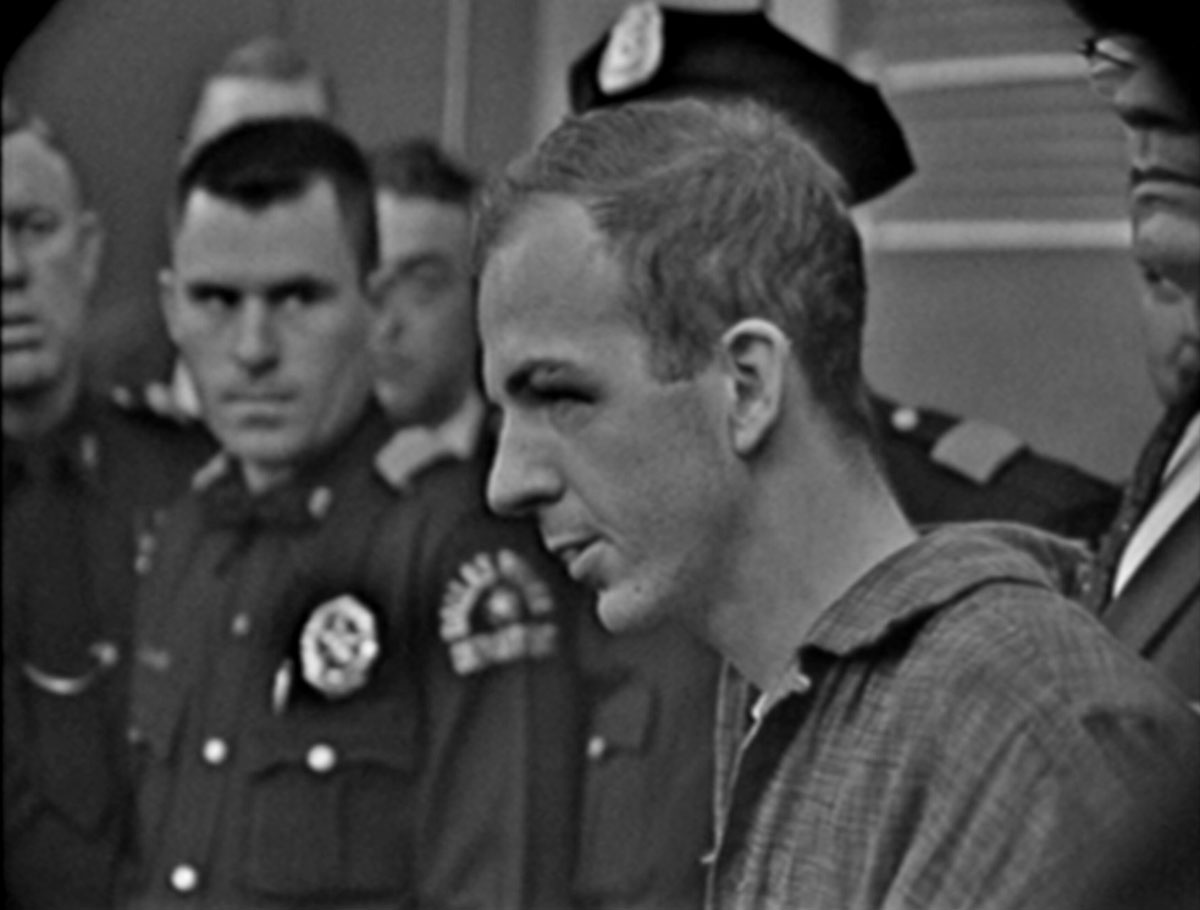
There’s a sparkle in his voice as he recalls asking a woman colleague whether the color of Jackie’s two-piece suit would be described as pink and being officiously told “Mrs. Kennedy wouldn’t be caught dead in pink.” Davis was advised to describe the color as strawberry or raspberry. He opted for raspberry.

We need your help to stay independent

So too do the editors who judiciously colorized portions of the archival footage featured in “JFK: One Day in America,” enlivening those moments in footage from before the assassination and assigning them the appropriate vividness or muted, sepia-laden solemnity in the scenes that follow.

Most of us have probably only seen snippets of these films across various documentaries, mainly from the famous Zapruder reel. Here, series director Ella Wright emphasizes the fright and sorrow of witnesses via footage taken by Dallas locals on the parade route, including a woman who remembers being one car lane-width away from the Kennedys’ car when the President was shot.

You may have heard from some these people before. But that doesn’t make this efficient treatment less necessary or relevant.

Those scenes may or may not feed the earnest speculators who to this day refuse to believe official reports, but this series is decidedly not for those people. Instead, its elegiac pacing and atmosphere convey the ponderousness of the nation’s losses at that moment – of a supposed innocence, as Davis suggests, but also on a macro level, of a trust and faith in the unspoken contract idealists assumed that we had with each other stipulating that we don't take the lives of our elected leaders.

Some of the details Hill, Landis and others share about the string of decisions that led the Kennedys to be riding in a convertible with the top down, unprotected, are known. Others, like Hill’s recollection that Jackie demanded to ride in the back of the hearse with her husband’s body, may also be known by some citizen experts. But Hill's memory is staggering in its starkness: “There we were in the back of that hearse, Mrs. Kennedy and me,” he says quietly. “It was a lonely crowd.”


Want a daily wrap-up of all the news and commentary Salon has to offer? Subscribe to our morning newsletter, Crash Course.


The second and third episodes, “Manhunt” and “Revenge,” split the focus between the hunt and arrest of Lee Harvey Oswald and, eventually, the puzzle assembly providing a fuller portrait of his life using press footage and interviews. Through this parallel road, we’re reminded that Oswald killed two people that day, gunning down Dallas policeman J.D. Tippit less than an hour after he shot Kennedy.

JFK: One Day In AmericaLee Harvey Oswald is pictured during a press conference held in the basement of the Dallas Police Headquarters, Nov. 23, 1963 (KRLD Collection/The Sixth Floor Museum at Dealey Plaza)Modern accounts come from Oswald’s co-worker Wesley Frazier, who wrote a book about his experience, along with his wife Marina's friend Ruth Hyde Paine, expressing anger at knowing she may have unwittingly assisted Oswald’s plan.  

If you’re among those who have pored over the many documentaries, news features and dramatizations that revolve around Kennedy’s slaughter, you may have heard from some these people before. But that doesn’t make this efficient treatment less necessary or relevant especially when on factors in the stylistic grace notes Wright uses to bring us nearer to these witnesses than perhaps anyone has done, at least recently.

Often frames show them still and at rest as audio of their voice plays, urging us to notice how, even in that state, they are distraught by what Hill says is “a movie running through my brain.” This is the rare production that enables us to psychologically travel into that memory and feel something that isn’t unduly manipulated, to feel genuinely present for once in this history instead of taking it in as a spectacle.

All three episodes of "JFK: One Day in America” premiere at 8 p.m. Sunday, Nov. 5 and stream on Disney+ and Hulu starting on Monday, Nov. 6.