Bono

U2′s Bono has emergency back surgery in Germany

Singer treated for an injury suffered while preparing for a tour

  • more
    • All Share Services

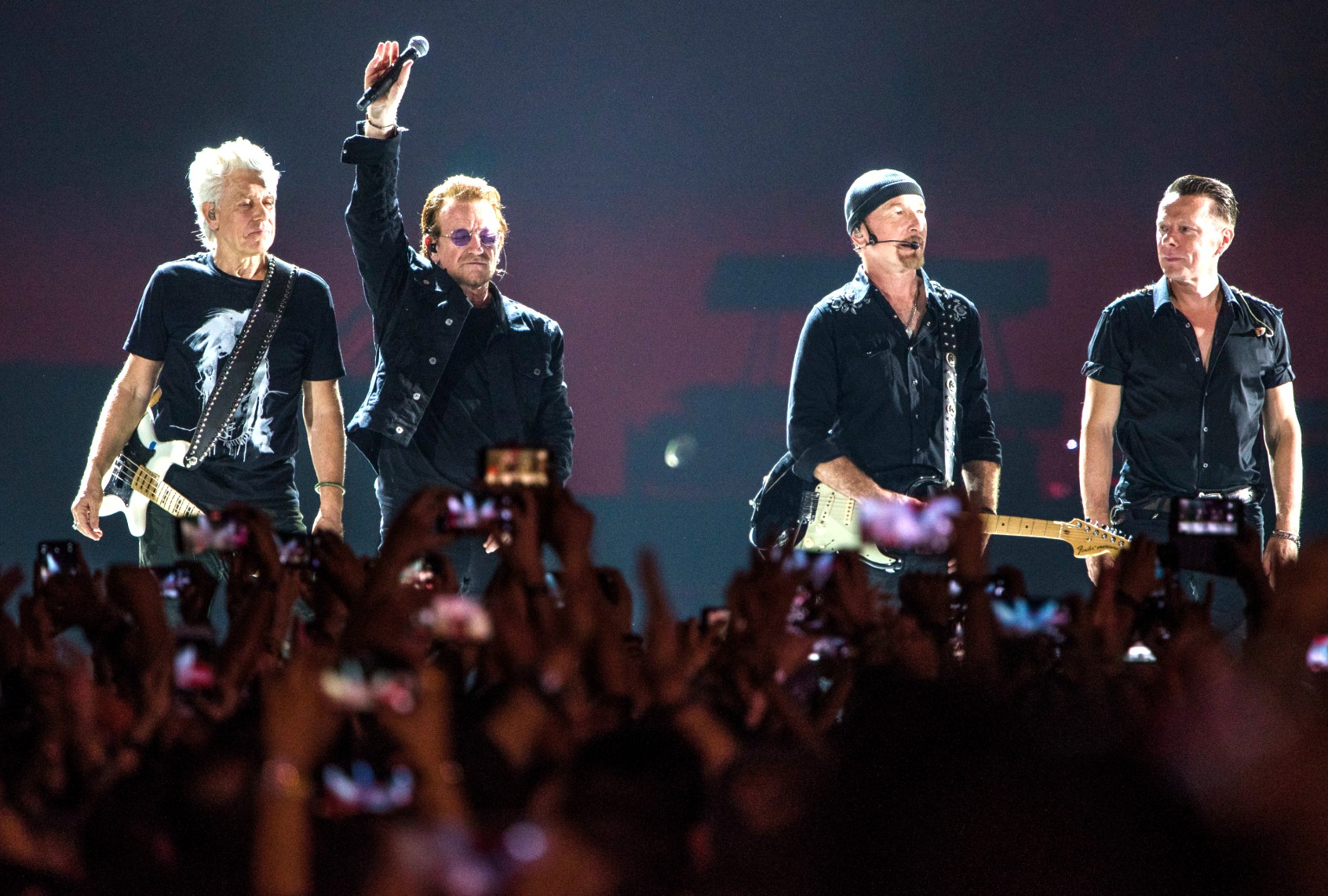
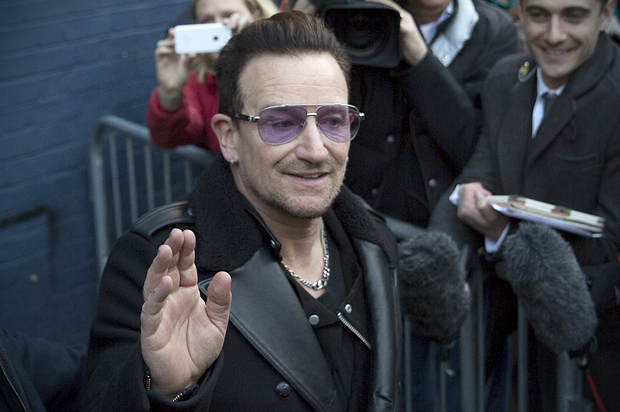
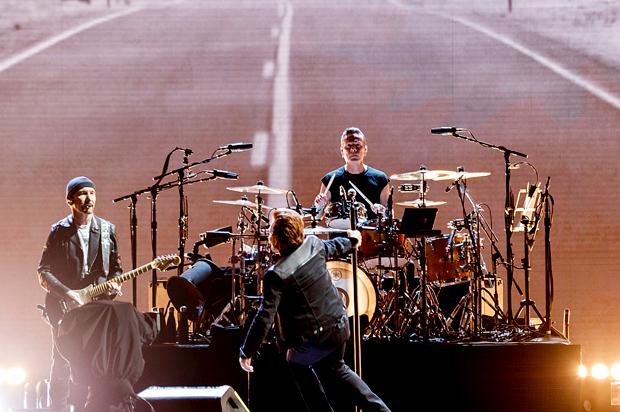
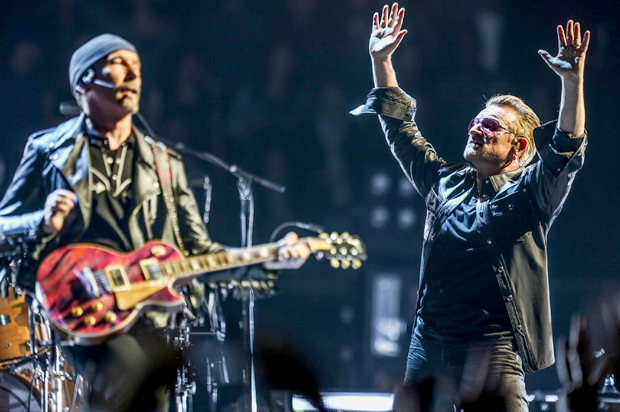
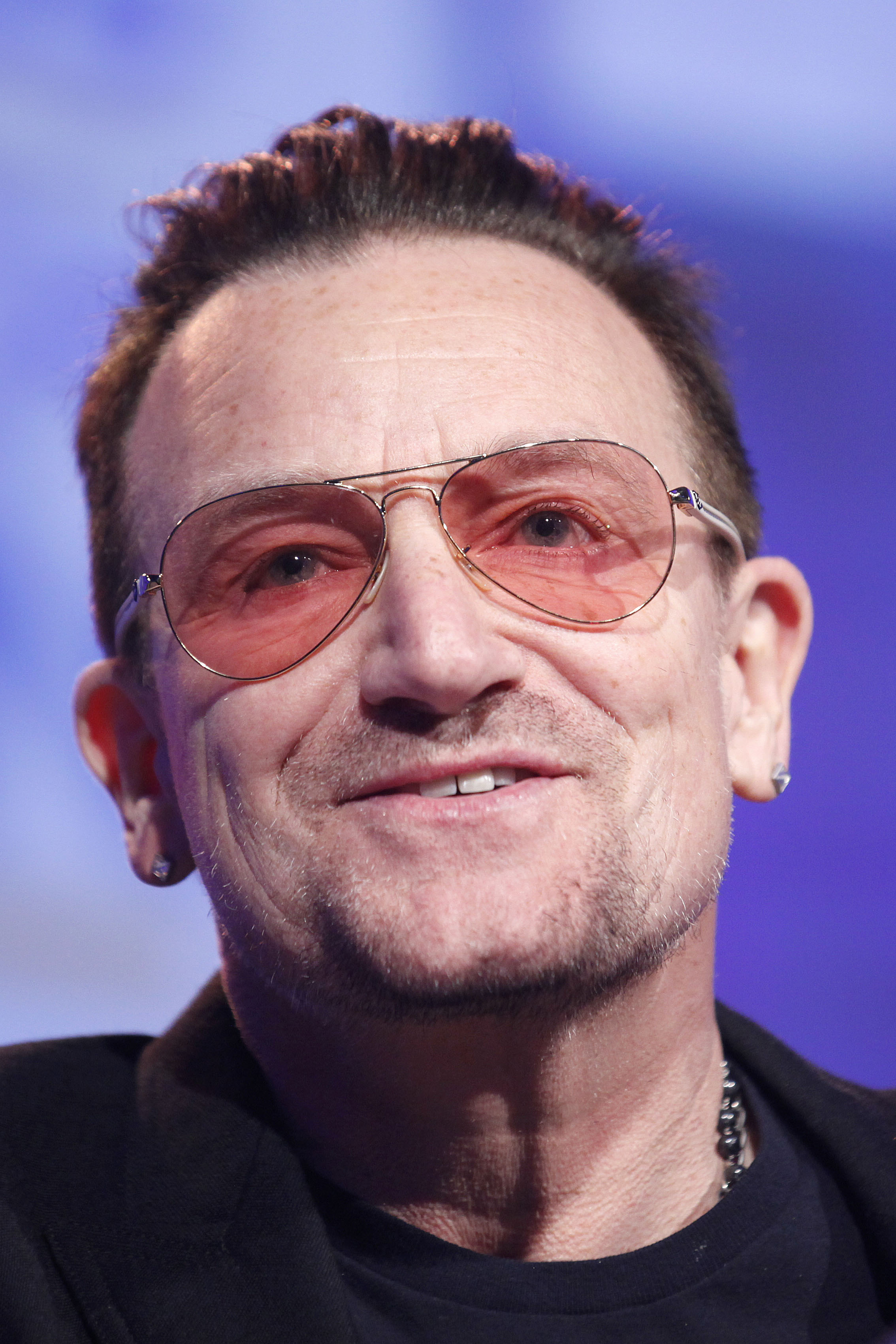
The manager of U2 says that frontman Bono has undergone emergency back surgery in a Munich hospital after he was injured while preparing for the group’s tour.

The 50 year old, whose real name is Paul Hewson, is under the care of neurosurgeon Dr. Joerg Tonn and Dr. Hans-Wilhelm Mueller-Wohlfahrt, according to a statement on U2′s website.

Mueller-Wohlfahrt could not be reached for comment.

Band manager Paul McGuinness, in an MP3 posted on the website, said Friday that because of the injury, the band’s “360-Degree” June 3 show in Salt Lake City, Utah, has been postponed. It was not immediately clear if other dates also were canceled.

McGuinness says, “We hope to get things resolved as soon as possible.”

——

Online:

http://www.u2.com

This land is our land

Beyonce, Bruce Springsteen, Bono and Pete Seeger topped the talent at the "We Are One" concert -- but Garth Brooks almost stole the show.

  • more
    • All Share Services

This land is our land

Nora Walsh-DeVries

I was supposed to be Tweeting from the Lincoln Memorial concert today, but it turns out Tweetin’ ain’t easy, in a crowd estimated at 400,000. I couldn’t get on the Internet most of the time, could rarely text, e-mail or get a cell signal. It seemed strange to be so technologically thwarted on a day celebrating the victory of the world’s most wired politician and campaign. But that meant ultimately I could stop trying to communicate and just enjoy it, and I did (once I tuned out the sight of sharpshooters lining the top of the Lincoln Memorial).

If you’re looking for snark, go elsewhere. (OK, the bald eagle thing was kind of hokey.) I am officially over my Rick Warren tantrum (at least until I see him Tuesday); between Episcopal Bishop Eugene Robinson’s moving blessing to open the concert, to the San Francisco Gay Men’s Chorus singing “My Country Tis of Thee” where Marian Anderson sang it almost 70 years ago (after the Daughters of the American Revolution kept her out of Constitution Hall because she was black), followed shortly thereafter by the Navy Men’s Glee Club. Rick Warren, you can’t take that away from me. When the openly gay Robinson called on God to “bless us with anger — at discrimination, at home and abroad, against refugees and immigrants, women, people of color, gay, lesbian, bisexual and transgender people,” I knew we’re not in Dick Cheney’s America anymore.

If you’d told me that Garth Brooks would sing more songs than any other entertainer, including Beyoncé, Bono and Bruce Springsteen, I’d have been prepared to be disappointed. But for me one high point was Brooks doing the Isley Brothers’ “Shout” — it helps if you saw the movie “Wedding Crashers’” great montage showing lame cover bands doing “Shout” at weddings of every race and culture, Jewish, Indian, Irish, African-American. Yes, I’ll admit that made me think of Obama presiding over a sappy interracial wedding, and watching that sea of arms flying up every time Brooks said “throw your hands up” was one of my favorite moments of the day.

The genius of the whole event was the culture mashup — readings presented by duos like Steve Carell and Jamie Foxx, Jack Black and Rosario Dawson, Laura Linney and Martin Luther King III, Forest Whitaker and Ashley Judd — yes, Jack Black. Likewise, Jon Bon Jovi and Bettye LaVette’s duet on Sam Cooke’s Obama anthem “A Change Is Gonna Come” was extraordinarily moving. My personal high point — I’d have braved the cold and crowds for this moment alone — was Pete Seeger and his grandson, joined by Springsteen, singing all the lyrics to “This Land Is Your Land” — and watching Obama sing along. The only remotely controversial note (beyond Robinson’s prayer for anger at discrimination) was when Bono called the values embodied in Obama’s election “an American dream, an Irish dream … a European dream, an African dream, an Israeli dream,” and then added: “And also a Palestinian dream.”

Obama himself called the celebration an expression of “just what it is that we love about America.” And where I was disappointed that Obama only slightly nodded to Dr. Martin Luther King Jr. in his Denver acceptance speech (on the 45th anniversary of King’s “I have a dream” speech), today his praise and attention to the parallels of their cause was full-throated and moving. Obama’s voice deepened and grew louder as he talked about King’s dream “that his children might be judged on the content of their character.” He also praised “the man who made this day possible,” Abraham Lincoln, and said American progress will come “if we could just recognize ourselves in one another.”

And yes, then there was Garth Brooks. The entire crowd — young, old, black, white, Latino, Asian, everyone — seemed to sing along to “American Pie,” including Obama, which could mark him, generationally and culturally, more than anything else that happened today. Who knew they knew all the words? I didn’t until today (actually, Brooks wisely shortened it). And I couldn’t help seeing Brooks, singing along with a multiracial youth choir, as another part of Obama’s outreach to red America, a real reminder that he doesn’t plan to be president of blue America, or red America, but the United States of America. I hope Republicans get the message.

I think this will go down as one of the best days of my life for a long time, except for the fact that I had to make a kind of comic “Sophie’s Choice”: I had a press credential and my college-student daughter didn’t, so she headed for steerage when I got to the press tent. I told her I’d probably just come out and join her in the crowd, how could I see it without her — until I saw that the press area had uniquely awesome views (they don’t always) and I couldn’t imagine leaving. We texted throughout, and she shared her great stories of the real event — topped by people climbing on Porta-Potties to get a better view, then being ordered down by police, then being unable to get down, then being rescued by men in camoflauge. I missed her when Pete Seeger sang “This Land Is Your Land,” because I used to sing it to her 19 years ago, when she was a baby.

It was the kind of event that made you want to share TMI personal details like that — and also the kind of event where you didn’t need to know a soul to suddenly be surrounded by friends and family. Nora and I met up afterward for the long trek home, and we felt lucky to have two sets of views of this historic day. For the first time in my adult life, to paraphrase Michelle Obama, I am crazy in love with my country, and it was fun to attend this schmaltzy sort of wedding to celebrate the change that’s gonna come. I reserve the right to update this post later, when I slap my forehead and say, “How could I not have written about that?” Or maybe I’ll just Tweet it.


Continue Reading Close
Joan Walsh

Joan Walsh is Salon's editor at large.

Joe Biden lets it all hang out

In Iowa, the long-shot candidate stuck with his blunt, freewheeling style, and warned of the dire mess in Iraq facing the next American president.

  • more
    • All Share Services

Joe Biden lets it all hang out

Dressed Iowa casual in a blue blazer and open-necked blue shirt, Joe Biden had been answering questions at the Phoenix Cafe for about 20 minutes Tuesday when his host, state Rep. Eric Palmer, broke in with an urgent message. “Sorry to interrupt,” Palmer said, “but your staff thinks that you need to leave.” Looking hungrily out at the lunchtime crowd of 75 Democrats, almost all of whom will participate in the opening-gun caucuses next January, Biden cracked, “But they don’t vote.”

The next question, about his asterisk-level standing in the polls and his anemic fundraising, may have prompted Biden to wonder why he had lingered. But rather than decry the horse-race surveys or make excuses for the paltry $2.4 million he collected in the second quarter (sixth place in the Democratic money marathon), the six-term Delaware senator made his anything-can-happen argument with the aid of a potent audience-participation experiment.

Biden simply asked, “How many of you think that the majority of the people in Iowa have firmly made up their mind about how they will vote in the caucuses?” Not a single hand was raised, demonstrating that most Iowans recognize how shallow are the sentiments reflected in the polls.

First elected to the Senate in 1972 at age 29 (three weeks before he was constitutionally eligible to serve), Biden has always seen himself as a smart, hardworking, glad-handing East Coast politician with a gift for Irish blarney and charm. When he made an abortive bid for president in 1987, Biden now admits, “I was focused on my conviction that I was a better candidate than the other people — and not that I was ready to lead the country.”

But as the chairman of the Senate Foreign Relations Committee, Biden is now in the curious position of running for president as the long-shot candidate with substance, while Barack Obama, John Edwards (some days) and Hillary Clinton (by marriage) outshine him in the megawatt, star-search spotlight. The self-made senator, who graduated from the University of Delaware with a C average, can only triumph if experience ends up mattering more than excitement. As Biden explained in his stump speech in Grinnell, simultaneously sounding boastful and aw-shucks embarrassed, “I know most every one of these world leaders by their first name. It’s not because I’m important … I was a kid coming up when they were coming up.”

From his perch at the Senate Foreign Relations Committee, or possibly as a Democratic secretary of state (his likely job had John Kerry been elected) or as president, Biden may yet play a central role as America grapples with the never-ending nightmare that is Iraq. Biden, along with his fellow Sens. Clinton, Edwards and Chris Dodd, voted for the 2002 resolution permitting Bush to launch the war. During a 2005 interview with me, Biden recanted his vote, saying, “I never figured on the absolute incompetence of the administration … If I knew Cheney and Rumsfeld so wholly possessed the president’s attention, I never would have voted for that.”

Unlike his rivals for the nomination, Biden has been championing a plan (which he proposed last year with Leslie Gelb, the former president of the Council on Foreign Relations) to subdivide Iraq along ethnic lines within a federal system. (The plan for separate Sunni, Shiite and Kurdish regions is explained in detail on Biden’s campaign Web site.)

But these days, Biden acknowledges that it may soon be too late to salvage anything from the debacle in Iraq. During an interview Tuesday along the Iowa campaign trail, Biden talked bluntly between stops about the dire alternatives facing the man he imagines will be the next president: “I may be left on Jan. 20, 2009, with no option but to withdraw and to contain [the civil war within Iraq]. To literally have inherited a fractured country … where there is no way to put Humpty-Dumpty back together.”

During one conversation in the campaign van headed into Grinnell, Biden found himself torn between holding a cup of coffee and gesturing with both hands. Confronted with a classic unwinnable situation, he carefully put the coffee cup on the floor. There is a bluntness to Biden, which stands in contrast to a candidate like Clinton, who seems to mentally convene a focus group before answering a question.

But Biden can also be impolitic in his criticisms of immediate-withdrawal-for-Iraq political grandstanding, and the bloggers who encourage it. “I don’t believe that this sort of red-meat, ‘I’ll get out quicker than the other guy’ [competition] has resonance,” he said, adding that in political terms for the Democrats, “I think it has a real danger.” Biden, who has endured 22 years of Republican presidents while in the Senate, criticized bloggers’ vow to “take back” the party. “They don’t own the Democratic Party. What are they talking about?”

No antiwar stance arouses Biden’s ire like Bill Richardson’s hyperbolic claim that he alone of the major Democratic presidential contenders would leave no residual forces in Iraq. As Biden put it, “Governor Richardson, God love him, says that he is the only one who is going to get out entirely, but he is going to leave enough forces to protect our embassy. He ought to talk to the Marines; they say that’s 10,000 troops.”

There is a free-form quality to Biden’s stump speeches as arguments appear from nowhere, presumably because something occurred to the candidate, and then disappear from the repertoire for the rest of the day. Tuesday morning in Cedar Rapids talking to 100 Democrats (a good-size crowd for Iowa in the days before Obama mania and two Clintons campaigning together) at the Blue Strawberry Coffee Co., Biden battled the roar of the espresso machine as he tried to explain a controversial recent vote in the Senate.

Alone among the Democratic presidential contenders, Biden voted for Iraq war appropriations, even though the final legislation did not contain a timetable for withdrawal. Alluding to that vote, he said, “If there is a single solitary troop left in Iraq, we must protect that troop. We have a moral obligation to protect these kids we send … We need 67 votes to overcome the president’s veto. We can cast all the symbolic votes we want. But the bottom line is that I’m not trading symbolism for lives.”

As a presidential candidate, Biden lives in a world seemingly free from fear about how his words will appear out of context. Back in January, as he was launching his presidential campaign, Biden stumbled badly in an interview in which he described Obama as “clean” and “articulate.”

But even now, Biden cannot resist flirting with rhetorical danger. In Cedar Rapids, he borrowed a catchphrase from an anti-integration 1968 third-party candidate while discussing the healthcare plans of his rivals: “As old George Wallace used to say 40 years ago, ‘There ain’t a dime’s worth of difference between our plans.’” Two minutes later, talking about an idea for African debt relief that he had suggested to Bono, Biden said humbly, “It’s not Al Gore inventing the Internet.”

That one even registered on Biden’s internal danger meter, as he realized that there are worse political dangers than appearing immodest. Walking over to me, the only national political reporter in view, Biden loudly insisted, to the delight of the crowd, “It’s real, real clear that I didn’t say that.”

Moments like this, Biden conceded in our interview, represent the downside “of my being straightforward and candid … I’m going to get myself into trouble.” Then Biden, who was already in the Senate as Obama was just getting ready for middle school, said, “I can’t start to calibrate all this stuff … The public in the primaries, as well as the general election, are going to judge me for all of who I am.”

And for Joe Biden — the candidate who never stops talking, but often has much to say — the inherent contradiction is between his still youthful irreverence and the hard-won gravity that comes with the chairmanship of the Senate Foreign Relations Committee and watching America go so tragically awry abroad.

Continue Reading Close

Walter Shapiro is Salon's Washington bureau chief. A complete listing of his articles is here.

Bono: Capitalist tool?

U2's frontman and Forbes media: Strange bedfellows for the globalization set

  • more
    • All Share Services

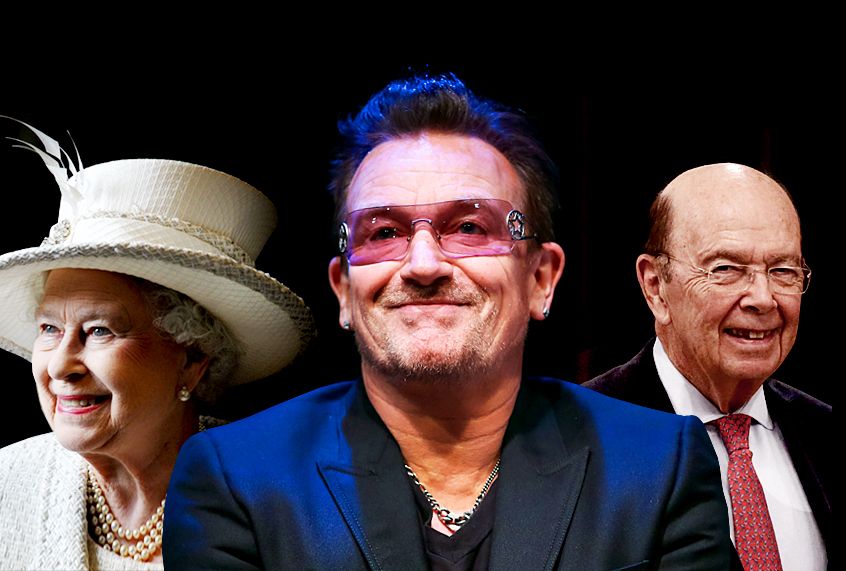
If you had told me, when I was a junior in college annoying the girls in the apartment next door by playing U2′s “War” at absurdly high volume, over and over again, until the lyrics of “Sunday Bloody Sunday” were permanently etched into my brain, that 25 years later Bono would have been rumored to be on the shortlist for both a Nobel Peace Prize and the position of World Bank president, I would have been, like, “Whoa, man.” But if you’d followed that up by telling me he would also be a member of an investment group buying a sizable stake in Forbes Media, you would have started to seriously freak me out.

It’s awfully tempting to look at this media play and start cracking jokes about how Forbes magazine is going to go all-out on a campaign for debt relief for Africa and increased foreign aid for HIV prevention. That would be something of an editorial revolution, since Steve Forbes, the publisher, is on record as critiquing Bono’s approach to helping out the world’s poor and sick. As he wrote in his column just a few months ago:

Bono’s “emphasis on giving more money to benighted countries is misbegotten. Most of it will be wasted, and despite ‘safeguards’ all too much of it will be siphoned off by corrupt politicos and bureaucrats. Africa has received more than $400 billion in aid since 1960, yet per capita income has declined. No other area of the world has suffered such a regression. Blair, Bono et al. should be focusing on measures that would allow sub-Saharan Africa’s existing entrepreneurial energies to put their countries on the path of rapid, India-China-Pacific-Rim-like economic growth. There are huge barriers blocking those who could catapult Africa’s poor nations onto an economic fast track.”

Don’t bet the house on Mr. “Capitalist Tool” Forbes changing his tune. This purchase of a stake in Forbes Media by Elevation, the investment group of which Bono is a member, doesn’t seem to be a question of editorial philosophy — Elevation seems far more enchanted by the millions of visitors that the Forbes Web site attracts every day.

But still, it’s not often that you get handed a plate of irony as tasty as this one. Bono wrote the introduction to development economist Jeffrey Sachs’ “End of Poverty,” which calls for precisely the kind of massive foreign-aid increases and direct government interventions that are so antithetical to Forbesian ideology. And while on the one hand it is puerile to think that privatization and deregulation can turn Somalia or Rwanda into China or India, it’s also quite true that past decades are littered with failed attempts to use aid money to help Africans escape their poverty trap.

Maybe the real significance of the Bono-Forbes connection is that just the fact that Bono is even tangentially involved is an excuse to revisit the challenges faced by sub-Saharan Africa once again. Underpinning the efforts of Sachs and Bono is a fundamentally optimistic mindset — yes, they concede, many previous efforts have failed. But smart people learn from their mistakes, and if we keep trying, we can figure out ways to improve public welfare in previously “benighted” countries. As Forbes magazine once reported, Bono’s efforts in recent years were instrumental in pointing out the utterly cockeyed nuttiness that African nations owed more to the developed world in annual debt repayments than they were receiving in foreign aid. That’s clearly a “huge barrier” to development, and it’s not one that further deregulation would do a darn thing to address.

Continue Reading Close
Andrew Leonard

Andrew Leonard is a staff writer at Salon. On Twitter, @koxinga21.

Wolfowitz reaches out to Bono

If the World Bank nominee was hoping for an endorsement, he still hasn't found what he's looking for.

  • more
    • All Share Services

George W. Bush’s nomination of Paul Wolfowitz to lead the World Bank has critics concerned that the neo-con architect of the Iraq war will use the World Bank as just another weapon in the war on terrorism. But Wolfowitz is showing that he knows a thing or two about diplomacy, too: In the last two days, he has checked in with numerous foreign officials, the leaders of international development agencies — and Bono.

According to a Reuters report, Wolfowitz initiated two long telephone conversations with the U2 front-man, who may have been a contender for the job Wolfowitz is getting. With Europe and much of the developing world less than enthusiastic about Wolfowitz’ nomination, the deputy secretary of defense knows that a good word from Bono might ease his way.

Wolfowitz spokesman Kevin Kellems said Wolfowitz and Bono “clicked.” “They were very enthusiastic, detailed and lengthy conversations,” Kellems said. He said that the conversations “were incredibly substantive about reducing poverty, about development, about the opportunity to help people that the World Bank presidency provides and about charitable giving and social progress around the globe.”

The word from the Bono side of the conversation was a little less effusive. The government relations director for Debt, AIDS, Trade and Africa, a lobbying group Bono helped to found, told Reuters: “Bono thought it was important that he put forward the issues that are critical to the World Bank, like debt cancellation, aid effectiveness and a real focus on poverty reduction.”

Continue Reading Close

Tim Grieve is a senior writer and the author of Salon's War Room blog.

Hollywood celebs speak out in Boston

Rob Reiner blasts Nader, while "The West Wing's" Richard Schiff says it was a mistake for the show to veer to the right.

  • more
    • All Share Services

Hollywood celebs speak out in Boston

Hollywood celebrities are everywhere in Boston this week, and nobody is more everywhere than Ben Affleck. The 31-year-old actor seems to have shown up at every party, appeared on every interview show, and taken a surprise star turn at meetings for every state delegation. Wednesday afternoon, he was firing up the faithful at a gathering for the Gay, Lesbian, Bisexual and Transgender Caucus.

“Gay and lesbian and transgender Americans are exactly that — Americans,” Affleck said as a crowd of about a thousand roared its approval. “They’re entitled to the same goddamned right as any other American, and to say otherwise is outrageous and offensive.”

The Democratic Convention has transformed Boston into Hollywood, at least for a few days. While blue-blazered pols and their fans outnumber anyone else, A-listers and B-listers from the other coast shimmer around town, stirring up excitement in the way that a chance sighting of Dick Gephardt sometimes fails to do.

Glenn Close spoke from the podium Monday night. Bono has been seen on the convention floor, and Jerry Springer never seems to leave. Members of the cast of “The O.C.” and the band Everclear have been around, and Black Eyed Peas, Los Lobos and the Neville Brothers have performed at a number of events.

Two of the more thoughtful members of the Hollywood contingent were in the halls of the Sheraton Wednesday, making their way through a series of caucuses. One, producer Rob Reiner, is a longtime Democratic activist. The other, Richard Schiff — he plays presidential speechwriter Toby Ziegler on “The West Wing” — is a relative newcomer to the world of partisan politics.

Salon talked with both of them about the coming election, the role of Ralph Nader and — yes — what advice Toby Ziegler would have for John Edwards and John Kerry.

Rob Reiner

Reiner was an early endorser of Howard Dean and helped introduce him to Hollywood and its money. Although one former Dean campaign worker grumbled Wednesday that Dean’s tepid convention speech was “the worst one he’d ever given,” Reiner said he was happy with Dean’s performance and excited to help him keep Democrats motivated — and to keep Nader from draining votes away from Kerry.

What do you do to neutralize Nader?

You just get out and remind people of what happened in 2000. Ultimately, there are a lot of people who are going to swing over to Kerry because they realize what’s at stake. There’s so much more at stake than we thought was at stake in 2000.

People may have thought they had the luxury to make a different decision in 2000. Some voters are waking up now and saying, “Who knew?”

We kind of did know.

But if we knew, why didn’t more people vote like they knew in 2000?

Because the Republicans spent a lot of money and effort, and Ralph Nader, frankly, perpetrated what is to me the worst lie in the history of American campaigns, which is that there was no difference between Bush and Gore.

Nobody thinks that anymore.

No, and I think that anybody who is going to vote for Ralph Nader now is somebody who would never vote for Kerry anyway. If Nader is on the ballot, they’ll vote for him. If not, they’ll stay home.

Richard Schiff

Richard Schiff is in Boston this week as part of the nonpartisan Creative Coalition. Although he plays a passionate and unapologetic liberal on “The West Wing,” Schiff says he has come to partisan politics slowly, reluctantly, over the last four years — and that the Bush administration has left him no choice.

Toby Ziegler is a real Howard Dean-style Democrat. What are your politics?

I’ve never been registered in any party. I like to think of myself as an independent thinker, and I don’t believe in partisan politics. Signing up for one party or another automatically makes you start rooting for a party as opposed to an issue or an individual candidate. You know, years ago Mayor Lindsey switched from being a Republican to a Democrat, and I thought he was a pretty good mayor on certain things, especially for the arts. So you know, [his party affiliation] didn’t mean anything.

Has that changed in the last four years? Does party affiliation matter for you now?

Well, the current reign in the White House has made it very much a partisan split — a schism in the country — and it is almost necessary to take sides. I hate that I’ve been forced into a corner. But now, unless a candidate proves otherwise, even on the local level, I’m going to have to vote Democratic.

What issues matter to you?

Retaining our claim to democracy is one. President Clinton gave an incredible speech the other night — you know, “forming a more perfect union.” We’ve been fighting, living and dying for 200 years to continue the tradition of forming a more perfect union. Sometimes we regress, but it’s all formulated on the dialectic and discussion. It’s not dictatorial and not based on rigid pillars of ideology.

Did you vote in 2000?

I did. You know, I play a very smart and impassioned character on television, but I was fairly stupid and placid back then. I very nearly did not vote for Al Gore. I almost voted for Ralph Nader. I would have been very upset had I done it in retrospect. I think we were a very placid and uninterested electorate back then. I think now we’re converging on one of the major turning points in my lifetime, and anyone who remains placid about this election needs to seriously reexamine where they’re at.

Are you a little more like Toby Ziegler now?

It’s a very good question. Yes, I am.

Yet as you have moved to the left, it seems that “The West Wing” has moved to the right this season.

It sure has.

Does that bother you?

It’s bothering me more and more. At first it bothered me on the level of our artistic expression being worn down. But the two things might go hand and hand.

Do you attribute the show’s swing right to the fact that its creator, Aaron Sorkin, is no longer involved with it?

I think Sorkin was a bastion against the corporate influence over art and television. He created a barrier, a buffer zone, against the corporate influence. We’re now under a regime that is more corporate. I don’t know if their politics are more to the right. I don’t think so. I think it’s that they perceive — in my opinion, incorrectly — that they’ll garner more of an audience. And it’s not accurate based on [my experience]. If I were at the Republican Convention in New York — which I would like to go to but won’t be able to because of work — I would get a very similar reaction to the one I get here: People would come up to me and say, ‘We watch you every week, we love you,’ and they might say, ‘We disagree a little bit with your politics.’ And I think the reason is that, on our show, we create a discussion. Even though our conclusions might be a little left, we create a discussion, and we enlighten, for the rest of the country, what these great public servants and politicians do. And 99 percent of them are remarkably dedicated people.

The show is one of the few places in the media where politicians are portrayed, at least usually, as noble figures.

Yeah, I think you’re right.

What would Toby Ziegler be telling John Kerry and John Edwards about their convention speeches?

He wouldn’t be verbally telling them anything. He’d be writing it for them.

Sometimes it’s nice to be the actor.

Yeah. But I would say that an honest message will always dig itself deeper into the bones, the blood and the heart of people. So as impassioned and as enraged as they might be, or as hopeful, keep the message truthful. That’s what he’d say.

Continue Reading Close

Tim Grieve is a senior writer and the author of Salon's War Room blog.

Page 1 of 5 in Bono