Thor

“Captain America”: A patriotic surprise from the comic-book past

Alive with WWII period details and Hugo Weaving's villainy, "Captain America" is a delicious adventure yarn

  • more
    • All Share Services

Maybe we’ve just reached the midpoint of a sweltering summer, when Popsicles start to seem like the apex of the culinary arts. Maybe I’ve been beaten down to bargain-basement expectations by a season of relentless superhero-action spectacles. Maybe I passed out after the air conditioning failed during the New York press screening of “Captain America: The First Avenger,” and what I’m remembering is just the collective hallucination of a bunch of movie geeks locked in a 90-degree sweat box on 42nd Street. Be that as it may, “Captain America” is exactly what the third week of July needed: a curiously fun, surprisingly imaginative and unashamedly old-fashioned yarn of skulduggery and adventure.

Let me come clean here and now as someone with severely limited interest in the Marvel Comics universe, and even less patience for the lumbering pace of the current Marvel-Paramount movie series, which has been building since at least the 2008 “Iron Man” toward next year’s big “Avengers” reunion and beyond. Somehow we must now get through the rest of summer and fall and winter and the return of spring without any more Marvel Comics movies, and when lilacs next in the dooryard bloom (not that we’ll be paying attention), those of us who survive will find out what Joss Whedon can wrangle out of Robert Downey Jr.’s Iron Man, Chris Hemsworth’s Thor, Samuel L. Jackson’s Nick Fury, et al. Let’s not even discuss the fact that the franchise is plotted out at least as far as a Fury film set for 2014, and in all likelihood much further than that.

So that was the attitude with which I approached Joe Johnston’s “Captain America,” and the character has long struck me as one of Marvel’s least interesting creations, a straitlaced and jingoistic super-soldier so lacking in dark side or human dimensions as to make Superman look like a Eugene O’Neill protagonist. But director Johnston and his screenwriters, Christopher Markus and Stephen McFeely, use the vintage squareness of the original Captain America comics to their advantage, nimbly walking the fine line between period spoof and patriotic celebration.

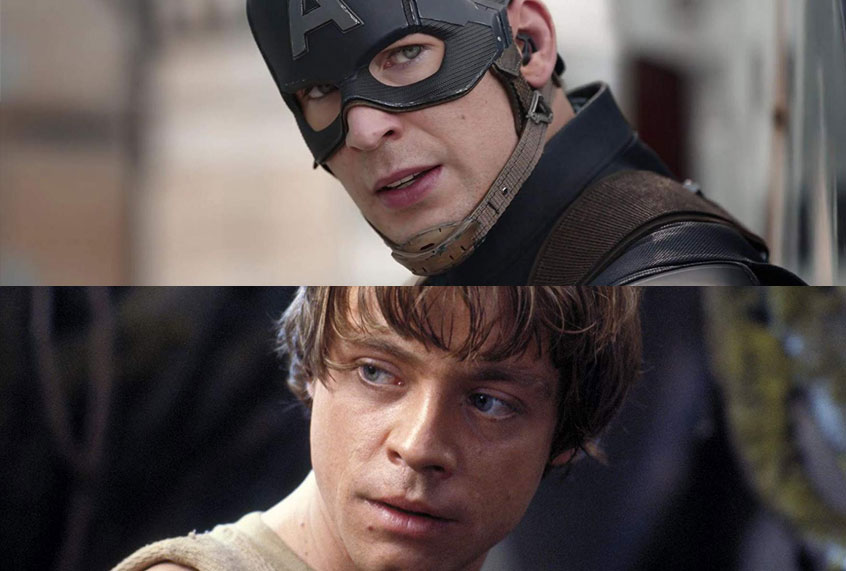
Chris Evans, a 30-year-old actor getting his first major starring role, proves irresistibly likable as weedy Brooklynite Steve Rogers, who keeps being rejected by the Army before he is re-engineered as an unstoppable human weapon, one who never loses his instinctive sympathy for puppies, children and the wretched of the earth. Evans is matched, or more than matched, by Hugo Weaving as the nefarious German mastermind Johann Schmidt, better known to comics fans as Red Skull. Schmidt has injected himself with some of the same goo that transformed Rogers, but perhaps because of his innate Germanness, has become so power-mad and evil that he views Hitler as a pantywaist lightweight who must be supplanted. Weaving should play every villain in every movie that has one, frankly. He has to deliver hopelessly shticky dialogue while wearing a ludicrous red rubber mask, and is simultaneously scary and hilarious.

If you start taking “Captain America” seriously on any level, it becomes way too troubling way too fast — let’s fight the Nazis’ experiments in eugenics with our own, all-American version! — and this movie wisely avoids any of that. This is a fast-moving, atmospheric action-adventure, with clearly delineated heroes and villains and comic supporting characters, and almost all of it is set between 1942 and 1945, when most of us can agree that historical ambiguity wasn’t much in evidence. There are also prologue and epilogue sequences set in the present, about which I should say little, except that the first evokes the eerie mood of “Alien” and “The Thing,” and the second of course involves Jackson’s Nick Fury. (There was no post-credits scene, aka “stinger,” on the print shown to the press, although rumors suggest there may be one on the public version that opens Friday. Since you’re dying to know.)

Johnston presumably got this assignment because of his success doing vintage Americana in “The Rocketeer” and “October Sky,” the two best films of his 22-year career as a Hollywood journeyman. He has a meticulous eye for period detail, and while the 1940s New York backdrops in early sequences of “Captain America” are obviously fake — a combination of old-fashioned Hollywood sets and CGI — that’s entirely consistent with the movie’s ethos. Just as important, Markus and McFeely’s screenplay views the World War II era from a wry but affectionate distance. After the experimental serum developed by Howard Stark (Dominic Cooper), the future father of Iron Man, turns Steve into Captain America, he is first employed as a propaganda weapon, not a military one. Clad in an embarrassing woolen costume, he goes on tour with a troupe of leggy chorus girls to sell war bonds, stars in short-subject adventure movies and becomes (yes!) a hero in comic books sent to actual soldiers on the front lines.

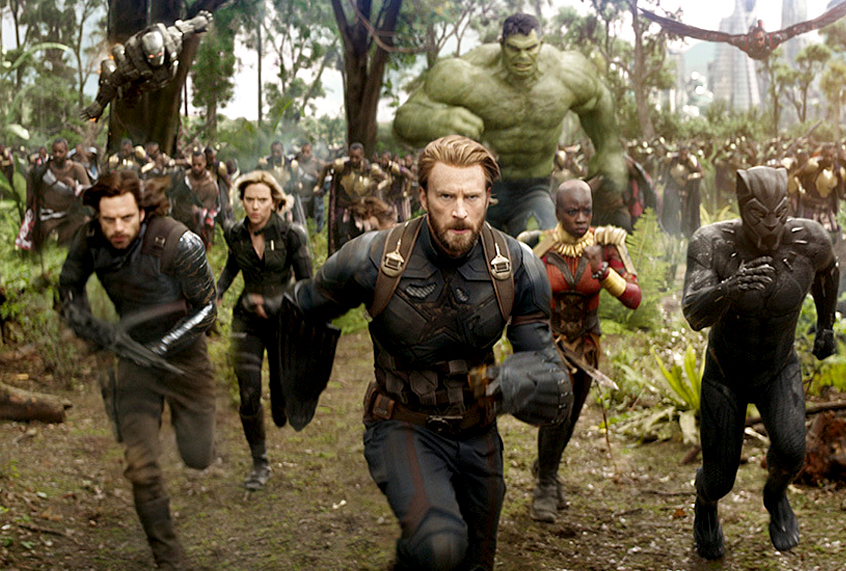
But fiery English secret-agent bombshell Peggy Carter (played by Hayley Atwell, a British TV star and Hollywood newcomer) believes in him, and so, more grudgingly, does Col. Phillips, the latest in a long line of Tommy Lee Jones irritable-grumpus authority figures. Once Captain America decides to shed the dancing girls and take the fight to Red Skull’s Hydra organization — who evidently find the Nazis insufficiently wicked, in all senses of the word — this movie turns into the kind of action-adventure you’ve seen dozens of times, in which a small, plucky and implausibly diverse band of brothers takes on a vastly superior force apparently hand-picked from Darth Vader’s Galactic Academy of Sinister Ineptitude.

That’s more than a gag, actually. For better and worse (but mostly better), Johnston draws on all kinds of pulpy adventure movies here, most obviously “Star Wars” and “Raiders of the Lost Ark.” “Captain America” has the brisk, chaste manner of a preteen-oriented action flick of yesteryear — Steve Rogers and Agent Carter barely even smooch — combined with all the cutting-edge digital effects contemporary audiences expect, and the result is oddly satisfying. Special credit goes to cinematographer Shelly Johnson and production designer Rick Heinrichs for creating the film’s witty and internally consistent visual mood. You can tell Red Skull’s über-Nazi machinery from Howard Stark’s American-century gizmos just in terms of design aesthetic: On the one hand, brooding, neo-Gothic contraptions that would look at home in Dr. Frankenstein’s lab; on the other, sleek, modernist lines and cool colors that look forward to Cadillacs and Hoover vacuum cleaners yet to come.

Is Captain America, as some have suggested, a symbol of American proto-fascism or a Tea Party hero before the fact? One answer to that question is to say that it’s a stupid question to ask about a comic-book hero and another, given the overall left-libertarian leanings of the Marvel universe, is to say no. I’m not sure either answer is adequate in the long run, but this origin story effectively ducks the question, by pointing out that Captain America was a weapon created in a moment of global emergency. He’s unquestionably an argument for American exceptionalism, in that he seems cooler, more humble, more self-sacrificing and just flat-out nicer than those who sought to enslave the world. That’s an important aspect of our national mythology, and “Captain America” is a nostalgic tribute to the time when it still felt true. 

“Thor”: All hail the ripped Aryan goofball!

Kenneth Branagh's ponderous, cheerful Thunder God flick launches the summer season of comic-book mediocrity

  • more
    • All Share Services

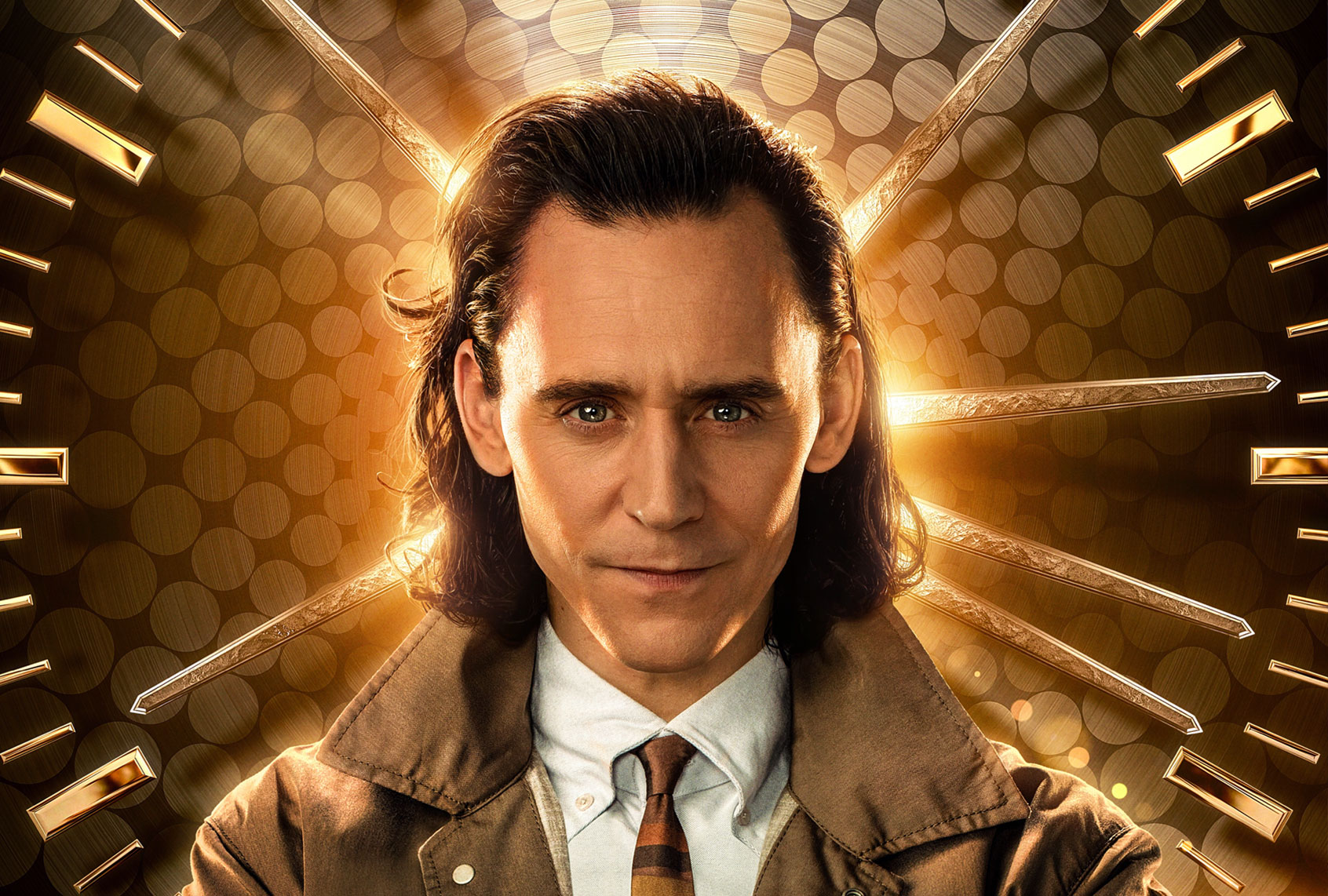
Tom Hiddleston and Chris Hemsworth in "Thor"

Do we actually want Shakespearean drama, or a simulacrum thereof, in comic-book movies? I think the only reasonable answer is “sort of,” and that’s exactly what Kenneth Branagh delivers in the massive but middling “Thor,” an edge-of-summer tentpole production that delivers the goods, albeit in laborious fashion and at enormous expense. A whole lot of “sort of,” dressed up in faintly fascistic regalia. I’ve got no problem with the continuing viability of the classic Marvel and DC Comics heroes, per se, although it’s a little surprising. But their hegemonic control over the many-branched Yggdrasil of pop entertainment is starting to bug me.

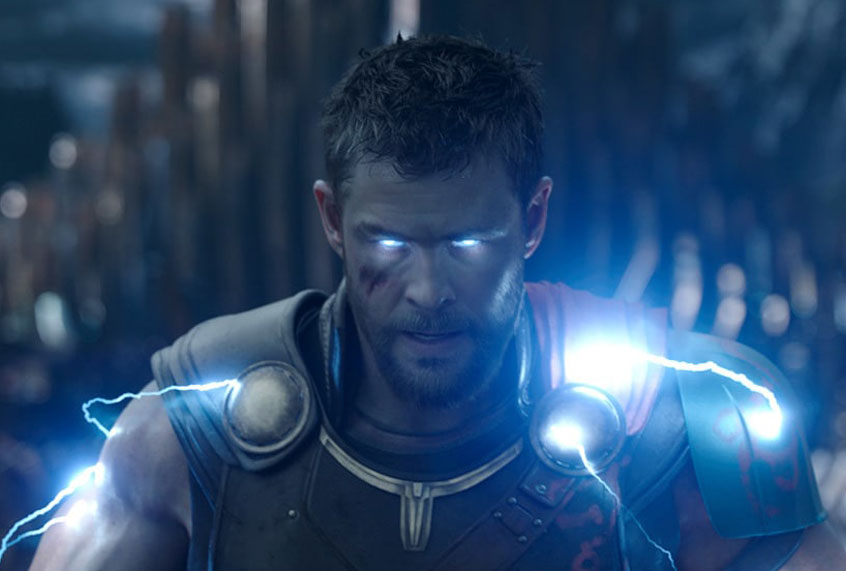
A movie like “Thor” isn’t just trying to be a popcorn flick for teenagers; in an era where “youth culture” reaches deep into middle age, that’s not good enough anymore. It has to evoke the Pop Art colors and muscle-bound iconography of 1960s comics its younger viewers have never seen, incorporate a few plausible pop-science theories and suggest a passing familiarity with both the genuine Norse legends behind the Stan Lee-Jack Kirby comics and the design history of fantasy cinema stretching back to “Metropolis.” Its cast features a plural number of Oscar winners and an elevated Anglo-drama sheen; even Aussie hunk Chris Hemsworth, whose resemblance to the ‘roid-rage Aryan Thunder God is startling, turns out to be a decent actor. It’s supposed to have mind-blowing action scenes, a heart-rending father-son story, a compelling love affair and a Cain vs. Abel fraternal standoff.

Branagh’s “Thor” does most of those things fairly well, in fact, and a few of them better than that. I’ve never felt sure that Branagh was a natural filmmaker, although he’s been doing it for quite a while now, but all his projects, on stage or on screen, have a natural bravado about them that’s endearing. It simply wouldn’t occur to him to treat a fundamentally goofy movie about a Norse god filtered through half a century’s worth of American comic books with condescension, any more than he would treat “Coriolanus” that way. But all the brio and high spirits in the world can’t conceal the fact that “Thor” is an archetypal Hollywood-franchise mishmash, an “up-converted” 3-D monstrosity with five credited screenwriters and an unbridled ambition to move us along from one episode of the Marvel-Paramount multiverse to the next, siphoning cash from our pockets along the way. (There’s still a “Captain America” movie, God help us, before we get to the grand reunion of “The Avengers.”) I never felt swept up in “Thor,” or lost sight of the fact that I was watching a prepackaged entertainment product meant to be all things to all people. “Iron Man” this ain’t.

It’ll probably work, or work well enough, despite the fact that Branagh can’t direct an action sequence to save his Shakespearean-swordfightin’ life and the fact that he begins with a great, gray, greasy lump of expository back story. (On-screen title: “Norway, 956 A.D.”) See, before Hemsworth’s Thor can arrive on earth to charm the figurative pants off scientist Jane Foster (Natalie Portman) — their relationship is entirely chaste — we have to hear all about multiple wars between the gods of Asgard and the Frost Giants of Jotunheim, big blue bruisers led by Colm Feore as the sinister Laufey. There’s a thicket of other semi-divine characters too dense to navigate, along with the brutalist CGI architecture of Asgard itself, and how the filmmakers could have spent so much time and money and care on this design and still wound up with something that looks so much like the Albert Speer sketches Hitler jerked off to at night is somewhat mysterious.

But the central dynamic of “Thor” is the relationship between the hot-headed, hot-bodied God of Thunder, his fading but imperious father, Odin (Anthony Hopkins), and second son Loki (British TV and stage actor Tom Hiddleston), the shape-shifting trickster who turns out to be — oh, that’s right, I’m not supposed to tell you. Branagh’s completely at home in this kind of inflated family drama, of course, and the three guys yell, sulk and brood in their ridiculous costumes to fine effect. Playing the dying All-Father — at least in the Marvel Comics version, the Norse gods are not exactly immortal — sparks Hopkins to his most focused performance in several years, and the slyly enjoyable Hiddleston will not remain unknown on this side of the Atlantic for long.

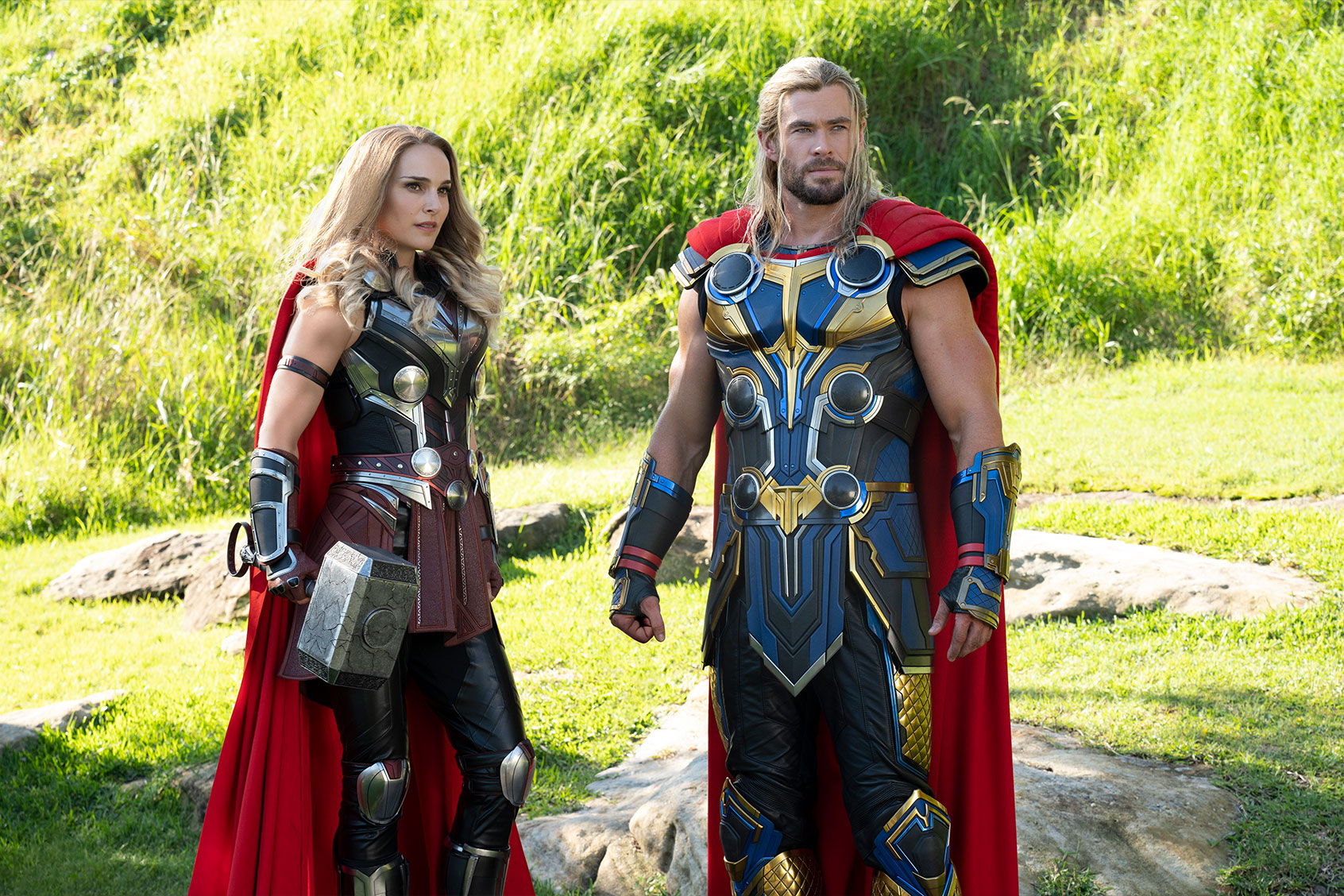
After leading an ill-fated raid on Jotunheim and breaking the precarious peace with the Frost Giants, Thor is stripped of his mighty hammer and banished to earth, and more specifically to the New Mexico desert, where Jane and her professor (ever-enjoyable Swedish actor Stellan Skarsgård, who doesn’t get quite enough to do) are investigating exactly the kind of fringe-physics anomalies that scientists in movies must specialize in. You know: “Could this be the Heisenberg-Kobler conundrum? A hypothetical doorway into another dimension?” Hemsworth is at his best playing Thor as a comic fish out of water, joyously smashing coffee cups on the floor of a diner (“I like this! Bring me another!”) or marching into a Main Street pet store and demanding a horse. For all the ass-kicking he administers (and endures), he comes off as a good-natured doofus with an amazing physique.

Audiences aren’t getting ripped off here: “Thor” has decent to fine acting, superb production values and a feeling of general bonhomie. But they may feel just slightly diminished; you get the feeling that Branagh is moving through the film cheerfully ticking off boxes: Thor kisses Natalie, check. (But no ass-grabbing!) Thor fights a big black dude and then a giant robot, check. Gag involving Thor and modern conveniences, check. Whooshy high-speed journey over the Las Vegas-looking Rainbow Bridge, check. Scene in Asgard with Loki looking duplicitous and Odin looking dead, check. Semi-sinister government men-in-black types who can do nothing with Thor’s hammer, check. Little teaser with Samuel L. Jackson, pimping the next Marvel movie, all the way at the end of the closing credits, check. Saying that “Thor” is half-assed would be too mean to everybody involved; it’s three-quarter-assed. It’ll be a big hit and it’s slightly disappointing. Welcome to summer!

Continue Reading Close