Marcy Wheeler

John Brennan’s dangerous national security advice

Under Bush he pushed domestic wiretapping. Now he's advocating expansion of abusive spying on Americans

  • more
    • All Share Services

Editor’s note: Glenn Greenwald is on vacation this week. Marcy Wheeler, who blogs at Firedoglake, is guest-blogging today.

Last year, Glenn posted some statements from now-Deputy National Security Advisor John Brennan on counterterrorism. The post contributed to pressure that led Brennan to withdraw his candidacy to be CIA Director (which is how he ended up as Deputy NSA, which doesn’t require congressional approval).

In addition to passages on rendition and torture, Glenn linked to an NPR story attributing Obama’s switch on counterterrorism issues — particularly his infamous flip-flop on retroactive immunity for the telecoms that had illegally spied on Americans — to Brennan.

What’s important in that statement is Obama’s reference to “the information I’ve received.” He’s advised on intelligence matters by John Brennan, the former director of the National Counterterrorism Center. Like many intelligence professionals, Brennan says the FISA program is essential to the fight against terrorism.

By adopting Brennan’s view, Obama improves his standing with the intelligence community; for someone looking ahead to a presidential administration, that’s important.

So it was under Brennan’s tutelage that Obama came to the following conclusion about Bush’s illegal domestic surveillance program.

“That, in my mind, met my basic concerns. And given that all the information I’ve received is that the underlying program itself actually is important and useful to American security, as long as it has these [civil liberties safeguards] on them, I felt it was more important for me to go ahead and support this compromise,” Obama said.

That’s all very, um, interesting in retrospect, given what we’ve recently learned about Brennan’s very complicit role in Bush’s illegal program. The IG Report on the surveillance program revealed that from at least May 2003 until April 2005 (and possibly until Brennan retired in late 2005) intelligence centers that Brennan headed — the Terrorist Threat Integration Center and the National Counterterrorism Center — developed the threat assessments and a list of Al Qaeda affiliated organizations used in the program’s targeting. While that section of the report is rather vague about how these threat assessments were used, it appears that John Brennan was either in charge of developing the information that substituted for “probable cause,” and/or affirmed the urgency of the Al Qaeda threat to justify the program itself (though the assessments were approved by more senior people). For a period, it appears, John Brennan decided who would get wiretapped and who wouldn’t (including organizations like Al Haramain, now suing for having been illegally wiretapped).

Spencer Ackerman asked Brennan last week about his role in the program. Brennan gave a response that Alberto Gonzales himself could have given:

I fulfilled all my responsibilities at NCTC that I was asked to fulfill. And there are a number of different programs, some of which have come out in the press, some of which have not. Some of the things that have come out in the press have been inaccurate in terms of the representations there. And when I look back in terms of my service at the NCTC and those places I believe I fulfilled those responsibilities to the best of my abilities.

These issues related to the so-called domestic surveillance programs and other things — one of the things I mentioned, there’s a lot of hyperbole and misrepresentations about what actually happened. And a lot of times people go down certain roads believing reports as facts. And that’s not the case. So I’m not going to go into sort of what my role was in that instance because a lot of those activities are still considered classified and not in the public domain, irrespective of what the press reports might be out there.

For a guy who counseled Obama that this program was “important and useful to American security,” Brennan’s response is pathetically weak, making himself out to be a guy doing no more than “fulfilling his duties,” rather than pushing the program on the presidential candidate as a big success, rather than (apparently) picking and choosing who got illegally surveilled.

There’s something fundamentally wrong about the guy who pushed Obama to flip-flop on a campaign pledge now treating the program with this much false ambivalence.

Of course, Brennan may be down-playing his role in the illegal program out of more than just a desire to hide his complicity. After all, the IG Report itself is much more ambivalent about the program’s benefit to counterterrorism.

The IGs also examined the impact of PSP information on counterterrorism efforts. Many senior IC officials believe that the PSP filled a gap in intelligence collection thought to exist under the FISA statute shortly after the al-Qa’ida terrorist attacks against the United States. Others within the IC, including FBI agents, CIA analysts and officers, and other officials had difficulty evaluating the precise contribution of the PSP to counterterrorism efforts because it was most often viewed as one source among many available analytic and intelligence-gathering tools in these efforts.

And much closer to home for Brennan, here’s a telling detail about how the NCTC developed its threat assessments.

NCTC analysts involved in preparing the threat assessments told the ODNI OIG that only a portion of the PSP information was ever used in the ODNI threat assessments because other intelligence sources were available that provided more timely or detailed information about the al-Qaida threat to the United States. [my emphasis]

That is, the analysts who worked with Brennan at NCTC found that this surveillance program wasn’t the best source of information on terrorist threats out there. Never mind, though, because Brennan was going to convince Obama to keep it anyway.

The centrality of Brennan in not just this program, but in the NCTC’s collection and dissemination of information on threats–including those threats purportedly presented by US persons–is troublesome for another reason. A few weeks ago, peace activists in the Tacoma, WA area exposed a member of Fort Lewis’ Force Protection Service who had infiltrated their groups and gained access to the list-serve they used to communicate with members via email. That information, collected by a military employee or contractor, was shared with the national network of agencies of which NCTC forms the core.

He admitted that he did pass on information to an intelligence network, which, as you mentioned earlier, was composed of dozens of law enforcement agencies, ranging from municipal to county to state to regional, and several federal agencies, including Immigration Customs Enforcement, Joint Terrorism Task Force, FBI, Homeland Security, the Army in Fort Lewis.

This is not supposed to happen. It’s not supposed to happen because Posse Comitatus should prevent the military from this kind of domestic spying (though it is, after all, what NSA is doing as well). And it’s not supposed to happen because Congress mandated that this kind of information sharing only take place after consultation with a Privacy and Civil Liberties Review Board. And this consultation (or not) with a board is an area where Obama has continued Bush’s disdain for civil liberties. Not only has President Obama, thus far, failed to nominate anyone to serve on that board. But his Administration recently removed all mention of the board from the White House website. The Obama Administration continues to push this kind of information sharing. But they have, literally, disappeared all concern for civil liberties.

Back when he persuaded candidate Obama to flip-flop on a key campaign promise, Brennan appears to have oversold the benefits of the program (according to the IG Report). More importantly, when Obama flip-flopped, he promised to build more protections for civil liberties. Right now, he’s not even fulfilling what Congress has mandated.

Glenn was right, last year, to oppose John Brennan for CIA Director. But in his current role as Deputy National Security Advisor, Brennan has not only sustained the Bush’s domestic wiretap program, but he seems to be pushing a homeland security strategy that completely ignores civil liberties protections while constructing this massive, abusive — and not terribly effective — network of spying on American citizens.

The 13 people who made torture possible

The Bush administration's Torture 13. They authorized it, they decided how to implement it, and they crafted the legal fig leaf to justify it.

  • more
    • All Share Services

The 13 people who made torture possible

On April 16, the Obama administration released four memos that were used to authorize torture in interrogations during the Bush administration. When President Obama released the memos, he said, “It is our intention to assure those who carried out their duties relying in good faith upon legal advice from the Department of Justice that they will not be subject to prosecution.”

Yet 13 key people in the Bush administration cannot claim they relied on the memos from the DOJ’s Office of Legal Counsel. Some of the 13 manipulated the federal bureaucracy and the legal process to “preauthorize” torture in the days after 9/11. Others helped implement torture, and still others helped write the memos that provided the Bush administration with a legal fig leaf after torture had already begun.

The Torture 13 exploited the federal bureaucracy to establish a torture regime in two ways. First, they based the enhanced interrogation techniques on techniques used in the U.S. military’s Survival, Evasion, Resistance and Escape (SERE) program. The program — which subjects volunteers from the armed services to simulated hostile capture situations — trains servicemen and -women to withstand coercion well enough to avoid making false confessions if captured. Two retired SERE psychologists contracted with the government to “reverse-engineer” these techniques to use in detainee interrogations.

The Torture 13 also abused the legal review process in the Department of Justice in order to provide permission for torture. The DOJ’s Office of Legal Counsel (OLC) played a crucial role. OLC provides interpretations on how laws apply to the executive branch. On issues where the law is unclear, like national security, OLC opinions can set the boundary for “legal” activity for executive branch employees. As Jack Goldsmith, OLC head from 2003 to 2004, explains it, “One consequence of [OLC's] power to interpret the law is the power to bestow on government officials what is effectively an advance pardon for actions taken at the edges of vague criminal statutes.” OLC has the power, Goldsmith continues, to dispense “get-out-of-jail-free cards.” The Torture 13 exploited this power by collaborating on a series of OLC opinions that repeatedly gave U.S. officials such a “get-out-of-jail-free card” for torturing.

Between 9/11 and the end of 2002, the Torture 13 decided to torture, then reverse-engineered the techniques, and then crafted the legal cover. Here’s who they are and what they did:

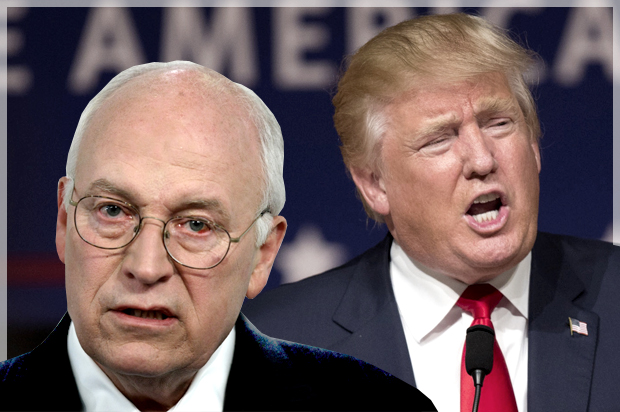
1. Dick Cheney, vice president (2001-2009)

On the morning of 9/11, after the evacuation of the White House, Dick Cheney summoned his legal counsel, David Addington, to return to work. The two had worked together for years. In the 1980s, when Cheney was a congressman from Wyoming and Addington a staff attorney to another congressman, Cheney and Addington argued that in Iran-Contra, the president could ignore congressional guidance on foreign policy matters. Between 1989 and 1992, when Dick Cheney was the elder George Bush’s secretary of defense, Addington served as his counsel. He and Cheney saved the only known copies of abusive interrogation technique manuals taught at the School of the Americas. Now, on the morning of 9/11, they worked together to plot an expansive grab of executive power that they claimed was the correct response to the terrorist threat. Within two weeks, they had gotten a memo asserting almost unlimited power for the president as “the sole organ of the Nation in its foreign relations,” to respond to the terrorist attacks. As part of that expansive view of executive power, Cheney and Addington would argue that domestic and international laws prohibiting torture and abuse could not prevent the president from authorizing harsh treatment of detainees in the war against terror.

But Cheney and Addington also fought bureaucratically to construct this torture program. Cheney led the way by controlling who got access to President Bush — and making sure his own views preempted others‘. Each time the torture program got into trouble as it spread around the globe, Cheney intervened to ward off legal threats and limits, by badgering the CIA’s inspector general when he reported many problems with the interrogation program, and by lobbying Congress to legally protect those who had tortured.

Most shockingly, Cheney is reported to have ordered torture himself, even after interrogators believed detainees were cooperative. Since the 2002 OLC memo known as “Bybee Two” that authorizes torture premises its authorization for torture on the assertion that “the interrogation team is certain that” the detainee “has additional information he refuses to divulge,” Cheney appears to have ordered torture that was illegal even under the spurious guidelines of the memo.

2. David Addington, counsel to the vice president (2001-2005), chief of staff to the vice president (2005-2009)

David Addington championed the fight to argue that the president — in his role as commander in chief — could not be bound by any law, including those prohibiting torture. He did so in two ways. He advised the lawyers drawing up the legal opinions that justified torture. In particular, he ran a “War Council” with Jim Haynes, John Yoo, John Rizzo and Alberto Gonzales (see all four below) and other trusted lawyers, which crafted and executed many of the legal approaches to the war on terror together.

In addition, Addington and Cheney wielded bureaucratic carrots and sticks — notably by giving or withholding promotions for lawyers who supported these illegal policies. When Jack Goldsmith withdrew a number of OLC memos because of the legal problems in them, Addington was the sole administration lawyer who defended them. Addington’s close bureaucratic control over the legal analysis process shows he was unwilling to let the lawyers give the administration a “good faith” assessment of the laws prohibiting torture.

3. Alberto Gonzales, White House counsel (2001-2005), and attorney general (2005-2008)

As White House counsel, Alberto Gonzales was nominally in charge of representing the president’s views on legal issues, including national security issues. In that role, Gonzales wrote and reviewed a number of the legal opinions that attempted to immunize torture. Most important, in a Jan. 25, 2002, opinion reportedly written with David Addington, Gonzales paved the way for exempting al-Qaida detainees from the Geneva Conventions. His memo claimed the “new kind of war” represented by the war against al-Qaida “renders obsolete Geneva’s strict limitations on questioning of enemy prisoners.” In a signal that Gonzales and Addington adopted that position to immunize torture, Gonzales argued that one advantage of not applying the Geneva Convention to al-Qaida would “substantially reduce the threat of domestic criminal prosecution under the War Crimes Act.” The memo even specifically foresaw the possibility of independent counsels’ prosecuting acts against detainees.

4. James Mitchell, consultant

Even while Addington, Gonzales and the lawyers were beginning to build the legal framework for torture, a couple of military psychologists were laying out the techniques the military would use. James Mitchell, a retired military psychologist, had been a leading expert in the military’s SERE program. In December 2001, with his partner, Bruce Jessen, Mitchell reverse-engineered SERE techniques to be used to interrogate detainees. Then, in the spring of 2002, before OLC gave official legal approval to torture, Mitchell oversaw Abu Zubaydah’s interrogation. An FBI agent on the scene describes Mitchell overseeing the use of “borderline torture.” And after OLC approved waterboarding, Mitchell oversaw its use in ways that exceeded the guidelines in the OLC memo. Under Mitchell’s guidance, interrogators used the waterboard with “far greater frequency than initially indicated” — a total of 183 times in a month for Khalid Sheikh Mohammed and 83 times in a month for Abu Zubaydah. 

5. George Tenet, director of Central Intelligence (1997-2004)

As director of the CIA during the early years of the war against al-Qaida, Tenet had ultimate management responsibility for the CIA’s program of capturing, detaining and interrogating suspected al-Qaida members and briefed top Cabinet members on those techniques. Published reports say Tenet approved every detail of the interrogation plans: “Any change in the plan — even if an extra day of a certain treatment was added — was signed off on by the Director.” It was under Tenet’s leadership that Mitchell and Jessen’s SERE techniques were applied to the administration’s first allegedly high-value al-Qaida prisoner, Abu Zubaydah. After approval of the harsh techniques, CIA headquarters ordered Abu Zubaydah to be waterboarded even though onsite interrogators believed Zubaydah was “compliant.” Since the Bybee Two memo authorizing torture required that interrogators believe the detainee had further information that could only be gained by using torture, this additional use of the waterboard was clearly illegal according to the memo.

6. Condoleezza Rice, national security advisor (2001-2005), secretary of state (2005-2008)

As national security advisor to President Bush, Rice coordinated much of the administration’s internal debate over interrogation policies. She approved (she now says she “conveyed the authorization”) for the first known officially sanctioned use of torture — the CIA’s interrogation of Abu Zubaydah — on July 17, 2002. This approval was given after the torture of Zubaydah had begun, and before receiving a legal OK from the OLC. The approval from the OLC was given orally in late July and in written form on Aug. 1, 2002. Rice’s approval or “convey[ance] of authorization” led directly to the intensified torture of Zubaydah.

7. John Yoo, deputy assistant attorney general, Office of Legal Counsel (2001-2003)

As deputy assistant attorney general of OLC focusing on national security for the first year and a half after 9/11, Yoo drafted many of the memos that would establish the torture regime, starting with the opinion claiming virtually unlimited power for the president in times of war. In the early months of 2002, he started working with Addington and others to draft two key memos authorizing torture: Bybee One (providing legal cover for torture) and Bybee Two (describing the techniques that could be used), both dated Aug. 1, 2002. He also helped draft a similar memo approving harsh techniques for the military completed on March 14, 2003, and even a memo eviscerating Fourth Amendment protections in the United States. The Bybee One and DOD memos argue that “necessity” or “self-defense” might be used as defenses against prosecution, even though the United Nations Convention Against Torture explicitly states that “no exceptional circumstances whatsoever, whether a state of war or a threat or war … may be invoked as a justification of torture.” Bybee Two, listing the techniques the CIA could use in interrogation, was premised on hotly debated assumptions. For example, the memo presumed that Abu Zubaydah was uncooperative, and had actionable intelligence that could only be gotten through harsh techniques. Yet Zubaydah had already cooperated with the FBI. The memo claimed Zubaydah was mentally and physically fit to be waterboarded, even though Zubaydah had had head and recent gunshot injuries. As Jack Goldsmith described Yoo’s opinions, they “could be interpreted as if they were designed to confer immunity for bad acts.” In all of his torture memos, Yoo ignored key precedents relating both specifically to waterboarding and to separation of powers.

8. Jay Bybee, assistant attorney general, Office of Legal Counsel (2001-2003)

As head of the OLC when the first torture memos were approved, Bybee signed the memos named after him that John Yoo drafted. At the time, the White House knew that Bybee wanted an appointment as a Circuit Court judge; after signing his name to memos supporting torture, he received such an appointment. Of particular concern is the timing of Bybee’s approval of the torture techniques. He first approved some techniques on July 24, 2002. The next day, Jim Haynes, the Defense Department’s general counsel, ordered the SERE unit of DOD to collect information including details on waterboarding. While the record is contradictory on whether Haynes or CIA General Counsel John Rizzo gave that information to OLC, on the day they did so, OLC approved waterboarding. One of the documents in that packet identified these actions as torture, and stated that torture often produced unreliable results.

9. William “Jim” Haynes, Defense Department general counsel (2001-2008)

As general counsel of the Defense Department, Jim Haynes oversaw the legal analysis of interrogation techniques to be used with military detainees. Very early on, he worked as a broker between SERE professionals and the CIA. His office first asked for information on “exploiting” detainees in December 2001, which is when James Mitchell is first known to have worked on interrogation plans. And later, in July 2002, when CIA was already using torture with Abu Zubaydah but needed scientific cover before OLC would approve waterboarding, Haynes ordered the SERE team to produce such information immediately.

Later Haynes played a key role in making sure some of the techniques were adopted, with little review, by the military. He was thus crucial to the migration of torture to Guantánamo and then Iraq. In September 2002, Haynes participated in a key visit to Guantánamo (along with Addington and other lawyers) that coincided with requests from DOD interrogators there for some of the same techniques used by the CIA.

Haynes ignored repeated warnings from within the armed services about the techniques, including statements that the techniques “may violate torture statute” and “cross the line of ‘humane’ treatment.” In October 2002, when the legal counsel for the military’s Joint Chiefs of Staff attempted to conduct a thorough legal review of the techniques, Haynes ordered her to stop, because “people were going to see” the objections that some in the military had raised. On Nov. 27, 2002, Haynes recommended that Secretary of Defense Donald Rumsfeld authorize many of the requested techniques, including stress positions, hooding, the removal of clothing, and the use of dogs — the same techniques that showed up later in the abuse at Abu Ghraib.

10. Donald Rumsfeld, secretary of defense (2001-2006)

As secretary of defense, Rumsfeld signed off on interrogation methods used in the military, notably for Abu Ghraib, Bagram Air Force Base and Guantánamo Bay. With this approval, the use of torture would move from the CIA to the military. A recent bipartisan Senate report concluded that “Secretary of Defense Donald Rumsfeld’s authorization of interrogation techniques at Guantánamo Bay was a direct cause of detainee abuse there.” Rumsfeld personally approved techniques including the use of phobias (dogs), forced nudity and stress positions on Dec. 2, 2002, signing a one-page memo prepared for him by Haynes. These techniques were among those deemed torture in the Charles Graner case and the case of “20th hijacker” Mohammed al-Qahtani. Rumsfeld also personally authorized an interrogation plan for Moahmedou Ould Slahi on Aug. 13, 2003; the plan used many of the same techniques as had been used with al-Qahtani, including sensory deprivation and “sleep adjustment.” And through it all, Rumsfeld maintained a disdainful view on these techniques, at one point quipping on a memo approving harsh techniques, “I stand for eight to 10 hours a day. Why is standing limited to four hours?”

11. John Rizzo, CIA deputy general counsel (2002-2004), acting general counsel of the Central Intelligence Agency (2001-2002, 2004-present)

As deputy general counsel and then acting general counsel for the CIA, John Rizzo’s name appears on all of the known OLC opinions on torture for the CIA. For the Bybee Two memo, Rizzo provided a number of factually contested pieces of information to OLC — notably, that Abu Zubaydah was uncooperative and physically and mentally fit enough to withstand waterboarding and other enhanced techniques. In addition, Rizzo provided a description of waterboarding using one standard, while the OLC opinion described a more moderate standard. Significantly, the description of waterboarding submitted to OLC came from the Defense Department, even though NSC had excluded DOD from discussions on the memo. Along with the description of waterboarding and other techniques, Rizzo also provided a document that called enhanced methods “torture” and deemed them unreliable — yet even with this warning, Rizzo still advocated for the CIA to get permission to use those techniques.

12. Steven Bradbury, principal deputy assistant attorney general, OLC (2004), acting assistant attorney general, OLC (2005-2009)

In 2004, the CIA’s inspector general wrote a report concluding that the CIA’s interrogation program might violate the Convention Against Torture. It fell to Acting Assistant Attorney General Steven Bradbury to write three memos in May 2005 that would dismiss the concerns the IG Report raised — in effect, to affirm the OLC’s 2002 memos legitimizing torture. Bradbury’s memos noted the ways in which prior torture had exceeded the Bybee Two memo: the 183 uses of the waterboard for Khalid Sheikh Mohammed in one month, the gallon and a half used in waterboarding, the 20 to 30 times a detainee is thrown agains the wall, the 11 days a detainee had been made to stay awake, the extra sessions of waterboarding ordered from CIA headquarters even after local interrogators deemed Abu Zubaydah to be fully compliant. Yet Bradbury does not consider it torture. He notes the CIA’s doctors’ cautions about the combination of using the waterboard with a physically fatigued detainee, yet in a separate memo approves the use of sleep deprivation and waterboading in tandem. He repeatedly concedes that the CIA’s interrogation techniques as actually implemented exceeded the SERE techniques, yet repeatedly points to the connection to SERE to argue the methods must be legal. And as with the Bybee One memo, Bradbury resorts to precisely the kind of appeal to exceptional circumstances — “used only as necessary to protect against grave threats” — to distinguish U.S. interrogation techniques from the torture it so closely resembles around the world.

13. George W. Bush, president (2001-2009)

While President Bush maintained some distance from the torture for years — Cheney describes him “basically” authorizing it — he served as the chief propagandist about its efficacy and necessity. Most notably, on Sept. 6, 2006, when Bush first confessed to the program, Bush repeated the claims made to support the Bybee Two memo: that Abu Zubaydah wouldn’t talk except by using torture. And in 2006, after the CIA’s own inspector general had raised problems with the program, after Steven Bradbury had admitted all the ways that the torture program exceeded guidelines, Bush still claimed it was legal.

 ”[They] were designed to be safe, to comply with our laws, our Constitution and our treaty obligations. The Department of Justice reviewed the authorized methods extensively, and determined them to be lawful.”

With this statement, the deceptions and bureaucratic games all came full circle. After all, it was Bush who, on Feb. 7, 2002, had declared the Geneva Conventions wouldn’t apply (a view the Supreme Court ultimately rejected).

Bush’s inaction in torture is as important as his actions. Bush failed to fulfill legal obligations to notify Congress of the torture program. A Senate Intelligence timeline on the torture program makes clear that Congress was not briefed on the techniques used in the torture program until after Abu Zubaydah had already been waterboarded. And in a 2003 letter, then House Intelligence ranking member Jane Harman shows that she had not yet seen evidence that Bush had signed off on this policy. This suggests President Bush did not provide the legally required notice to Congress, violating National Security Decisions Directive-286. What Bush did not say is as legally important as what he did say.

Yet, ultimately, Bush and whatever approval he gave the program is at the center of the administration’s embrace of torture. Condoleezza Rice recently said, “By definition, if it was authorized by the president, it did not violate our obligations in the Convention Against Torture.” While Rice has tried to reframe her statement, it uses the same logic used by John Yoo and David Addington to justify the program, the shocking claim that international and domestic laws cannot bind the president in times of war. Bush’s close allies still insist if he authorized it, it couldn’t be torture. 

Continue Reading Close