Thomas Schaller

Mitt’s hopes go to Florida

Forget Des Moines. To win the nomination, Romney needs senior voters in Dade County to blunt Gingrich's surge.

  • more
    • All Share Services

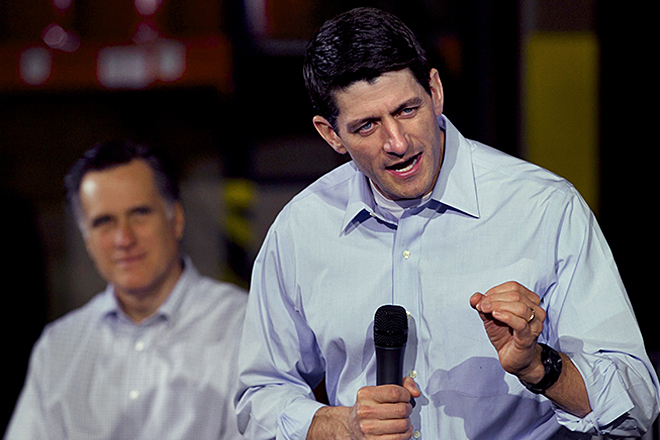
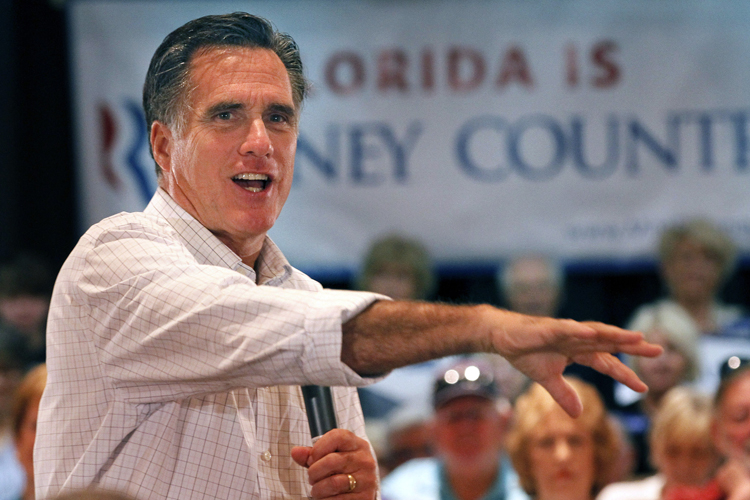
Mitt's hopes go to FloridaMitt Romney in Florida(Credit: Reinhold Matay)

With the Iowa caucuses less than three weeks away, the narrowed Republican presidential contest between Romney, Newt Gingrich, and the surging Ron Paul remains a muddle.  To lower expectations for his own performance and raise scrutiny on Gingrich, Romney this week began referring to the former speaker as the frontrunner.

National and state polls suggest Gingrich is now in the driver’s seat for the nomination, and as Talking Points Memo’s Eric Kleefeld argues, the primary calendar in January favors Gingrich. Accordingly, some are already comparing Romney to Hillary Clinton in 2008—the inevitable candidate whose candidacy became, in campaign lingo, “evitable.”

But the Romney:Gingrich/Clinton:Obama analogy may be backwards. Romney is the Republican Obama this year—or, if he isn’t, he’d better refashion himself that way, and fast. Those with strong memories know that Obama’s original strategy hinged upon surviving January’s early contests in order to have a chance to defeat Hillary Clinton over the long term, and increasingly it looks like Romney will need to survive January to do the same.

Indeed, Romney’s Monday comments to reporters in New Hampshire suggest he and his campaign are girding for—perhaps now even hoping for—a protracted fight that “could go months and months.” Said Romney: “It’s a very fluid electorate. I think I’ll get the nomination. I can’t predict when. I’ve got—what?—five or six more months to go to make that a reality.”  Romneys’ s wife even go into the act by speculating about delegate math.

To turn a short sprint into a long march, however, Romney may need to do something he came fell just short of accomplishing four years ago in his failed bid to defeat John McCain: Win Florida.

The Republican race of 2012 bears some resemblance to the Democratic race of 2008. To deny Hillary Clinton the momentum necessary for a John Kerry-like run through the 2008 Democratic primary contest, Obama campaign manager David Plouffe knew his candide needed key January wins. Obama got two: He trampled Clinton in Iowa and then, after losing New Hampshire and Nevada, stunted Clinton’s comeback by parlaying massive black support to win South Carolina. Through the first four contests, the two Democrats were tied 2-2. After split results again on Super Tuesday, Obama proceeded to overpower the then-bankrupt Clinton campaign during the three-week, 11-contest stretch in the mid-February that followed. By the time Clinton regained her balance and restocked her coffers, Obama had built his insurmountable delegate lead.

Gingrich’s bubble may burst before the primaries begin. Paul’s clever attack ads have certainly helped to deflate the former Speaker. But if not, Romney may be forced to replicate Obama’s 2008 strategy: Turn January into a split decision—Iowa and South Carolina for Newt, New Hampshire and Florida for Mitt—so the former Massachusetts governor can move the contest into February. The GOP’s 2012 February calendar is lighter than it was for Democrats four years ago, but provides Romney two crucial advantages.

The first is time itself: The longer it takes Gingrich to close the deal, the more likely it is that the former Speaker, through some combination of disorganization, petulance, presumptuousness, or lack of funding, will self-destruct. But second and perhaps more crucially, the 2008 Republican primary results suggest that the 2012 February states should be particularly favorable to Romney. Of the seven states holding caucuses or primaries, in 2008 Romney beat McCain in five of them—Colorado, Maine, Michigan, Minnesota, and Nevada. And one of the two Romney lost was McCain’s home state of Arizona. (The seventh state is Missouri.)

Regional preferences account for some of Romney’s 2008 success in the February 2012 calendar states. He performed best in the Mountain West, while Mike Huckabee fared well in the Deep South and McCain dominated the Rust Belt, Southwest and Pacific coast. But the February calendar also favors Romney because four of the month’s contests are caucuses, and in 2008 Romney excelled in caucuses. In fact, by the end of the 2008 primary season, Romney’s turnout support in caucus states was more than twice McCain’s.

“If Romney needs to make a comeback, it won’t be in South Carolina—too tough for him,” Republican strategist Alex Castellanos told me. “But if he doesn’t come back in Florida, Newt will have too much momentum going into the post-February states. If Mitt can score in Florida, he is in the race. If he doesn’t, it ends early.

But with recent polls showing Gingrich leading there, what will it take for Romney to steal the Sunshine State? The short answer is probably : start pounding the hell out of Gingrich using a sophisticated negative television and radio blitz on the issue of Medicare to win Florida’s pivotal seniors.

In 2008, Florida was Rudy Giuliani’s big-gambit, epic fail state. He banked on doing well with retired snowbirds. Giuliani’s deep and early investments kept the former New York City major atop the polls until January, but by then McCain catapulted ahead of both Romney and Giuliani. Although McCain eventually defeated Romney,  Romney didn’t lose by much statewide, garnering 31 percent to McCain’s 36 percent.

In that primary, a whopping 44 percent of Florida Republican voters were aged 60 or older, and 75 percent were aged 45 and over. (For comparative purposes, in South Carolina—itself a growing magnet for retiring snowbirds—the respective percentages were 39 percent and 67 percent.) According to exit polls, although Romney edged McCain slightly among the 50-64 year old subset, basically Romney won the under-40 vote and McCain won the over-40 vote. If Romney can pair his younger support four years ago with a better performance among Florida seniors this year, he can win Florida on January 31.

And the best way to get the attention of Republican seniors in Florida is to remind them how Gingrich, in the first major policy and political gambit of his speakership, lost the 1995 Medicare fight with Bill Clinton—lost it on policy, lost it politically, and lost it on optics. Indeed, so gleeful was the Clinton’s re-election team to have Newt as their foil, they ran not one but three different “Dole-Gingrich” attack ads against poor Bob Dole in 1996. Forget the marital problems and Tiffany receipts and even his chummy video appearance with Nancy Pelosi: Newt’s biggest electoral liability, in both the primaries and the general election if he is the nominee, is Medicare.

For their part, Florida Republican insiders and political analysts believe the nomination process will continue well past their state’s primary,  the scenario on which Romney is relying.  (President Obama is hoping for a protracted GOP battle, too, albeit for obvious, self-serving reasons.) And if Romney wants to prove that he’s a better, stronger and especially tougher Republican candidate than he was four years ago, he needs to show he can punch above his weight class by picking and winning a political fight in a big, non-Western primary state. “Florida is the test Romney hasn’t had and needs to demonstrate his presidential character,” Castellanos says. “Last cycle, he almost beat McCain in Florida, and if he had he would have won the nomination. This time, it may come down to Florida again.”

Naturally, Mitt Romney would prefer a quick, decisive conquering of the rest of the field by stringing together a non-stop run of victories during January. But given that his persistent 20-25 percent level of support in the national polls, not to mention various state polls showing him presently trailing Gingrich in Iowa, South Carolina and Florida, that’s very unlikely to happen.

Now it is Romney who needs a long, protracted fight. To change the media narrative back to Mitt the Inevitable, he also needs to post some big victories during February, when the calendar is tilted in his favor. And he needs a win to Florida to get there.


The genius of my uncluttered home

I don't practice Feng Shui, or have OCD. But after years of relocating, I finally learned the joy of minimal living

  • more
    • All Share Services

The genius of my uncluttered home

Americans are gluttonous voyeurs: We prefer to witness excess, either in sex, violence, Kardashian-level celebrity drama or just plain clutter. So I don’t kid myself to think A&E or any other network will soon announce a new reality series, to balance out the network’s popular show “Hoarders,” featuring people who live spare, minimalist lifestyles.

I am one. I live in a 700-square-foot condo in downtown Washington, DC. Divorced and childless, it’s plenty of space for me. In fact, I have extra room in my closets, drawers, cabinets and cupboards for more stuff, were I inclined to start compiling and aggregating.

But that’s the point: I don’t want more stuff. I’m no Zen Buddhist, I don’t practice Feng Shui, I have no plans to uproot and join the small house movement, nor do I suffer from obsessive compulsive disorder. I wasn’t forced to scale down to a smaller residence because of a mortgage default, nor did I hawk all my possessions in service to a meth habit. It’s just that in life, like at the airport, I like to travel light. One carry-on is fine by me, thankyouverymuch.

I realize that, for some, spare living is less a life choice than a psychological burden. I have a close friend who struggles with compulsive behaviors, including the constant need not only to straighten things but also to purge her home of the unnecessary. A firstborn child like me — I’m convinced birth order has something to do with this — as a young girl she apparently cleaned her room, every day after school, from one end to the other.

That image of her amused me until a few years ago, when my parents happened to mention that when I was 6 or 7, they were dismayed to discover me maniacally straightening the toys on my shelves. They made a big show of messing things up and telling me that some disorder was OK.

Their crude ploy worked. As I write, scattered across the coffee table in front of me are a random assortment of items; most days, some combination of outdoor gear, unread New Yorkers and clothing I’ve worn recently litter my car seats and trunk; I can fall quickly into a deep sleep with dirty dishes in the sink or unfolded laundry on the couch. My point is that minimalism does not imply compulsion or even fastidiousness. Growing up in the 1970s watching “Odd Couple” reruns on WPIX, I always felt greater kinship with Oscar Madison than Felix Unger.

So why less — is it dispositional or habitual? For me, it’s undoubtedly a bit of both, but more the latter. How did I develop these habits? If I had to identify one cause, it was the series of rapid-fire relocations during my early adulthood that gradually conditioned me to live leanly.

I had an epiphany at one point early in my courtship of my future but now ex-wife, who at the time had been living rather happily for nearly nine years in the same studio apartment. Learning how long she stayed in one place led me to mentally chronicle every place I’d been since graduating high school, starting with my first college dorm room. The totals were shocking, even to me: 18 addresses in a 15-year period during which I’d shared a room, apartment or home with 31 different people, ranging from high school and college friends to my kid brother to complete strangers I’d connected with through classified ads. Not until I sat down in my cozy, Logan Circle condo to write this essay did it dawn on me that, 40 months after buying this pad, it is already the address I’ve maintained longer than any other since I graduated high school and left my childhood home.

I’m more skilled at boxing up fragile items or loading a rental truck than anyone I know, but I still hated every one of those moves. The packing and unpacking, coupled with the demands of sharing physical space — and, by extension, psychic space — with so many other people made me acutely aware of the burdens of lugging around too much stuff. Inevitably, I noticed certain boxes had moved from city to city, state to state, without ever being opened between stops — a key, first step toward ridding oneself of unnecessary clutter. A characteristic common to people featured in “Hoarders” — one I suspect also applies, albeit counterintuitively, to many of the unseen owners of the abandoned storage units auctioned in A&E’s cousin reality program, “Storage Wars” — is their tendency to stay in one space for decades. Filling space takes time.

Spare need not mean spartan, mind you. My bookshelves and walls are decorated with dozens of souvenirs collected during my world travels. Even if I filled my condo shoulder-to-shoulder with party guests, I’ve got more stemware than I could ever use. I don’t need a chicken-wire cage in the building’s basement to stow my golf clubs, backpacks, coolers or scuba gear, all of which fit — snugly, I’ll admit — inside a patio closet. I still keep clean lines.

Nor does minimalist living preclude sentimentality. I have boxes with hundreds of printed photos from the pre-digital era, plus cards, letters and related memorabilia that include flirty notes passed to me in middle school by girls whose names I no longer can match to faces. The two unforgettable faces belonging to my cherubic nieces, Carly and Lanie, smile at me from picture frames displayed around the condo. I have room for a few large items, notably a gramophone I inherited from my grandparents, and plenty of small treasures, like the separate, black-and-white photos of my parents on the day they met. (He, drinking a National Bohemian on a buddy’s fishing boat off the Miami coast; she, at the pier where that boat eventually docked, perusing a charter schedule in her leopard-print bikini. Nice catch, Dad!)

And lest you think me incapable of empathizing with hoarders, you’re right because I can actually sympathize with them. You see, I pare to stay spare at home but my campus office looks like that of the archetypal, disheveled professor: stacks of newspaper clips, magazines, journal articles and book chapters piled atop my desk, shelves, cabinets and almost every available flat surface. I have boxes on the floor, tucked under tables and in corners. I’m paralyzed by the nagging fear that someday I may need to reference one of these documents, so I can’t let go of any of them. A year ago, I forced myself to pull from my shelves nearly 200 books I hadn’t cracked in years, box them and haul them by hand truck to the campus library for donation. I threw out a course-pak of readings from a graduate class I took more than 20 years ago.

At home I winnow, but at work I compile. Not coincidentally, in the 13 years at my current job our department has relocated on campus just once, four fewer moves than I made in my personal life during the same period.

It’s easy for a single person to preach about spare living. Having a spouse, kids or an aging parent at home muddles the situation and quickly fills the closets and garage. And moving every nine months is a big expense and bigger headache just to have the opportunity to throw out old sweaters or a box of long-forgotten holiday ornaments. But somebody out there on eBay might buy those old 8-tracks for a few bucks which, coupled with saved rents on that storage unit you closed down, could translate into a nifty cash windfall. Just be careful not to spend the found money acquiring more stuff.

Continue Reading Close

Why Republicans should run in 2012 — to lose

For some ambitious Republicans, President Obama's improving reelection prospects may not be bad news

  • more
    • All Share Services

Why Republicans should run in 2012 -- to loseTop left, clockwise: Sarah Palin, Mitt Romney, Tim Pawlenty, Mike Huckabee, Newt Gingrich, Haley Barbour

The Ides of March are almost upon us, but few potential 2012 Republican presidential candidates seem to have their eyes fixed squarely on the White House. As Salon’s Steve Kornacki argued recently, the most obvious reason for the largely vacant GOP field — sorry, Herman Cain — is that the prospects of a Republican beating a once-again formidable Barack Obama seem rather bleak. The 2012 Republican nomination may be a prize not worth winning.

Because the nomination isn’t worth winning, however, doesn’t mean it is ill-advised for Republican hopefuls to run in 2012. In fact, if three historical patterns tell us anything, the smart play for any Republican who hopes someday to sit behind the desk in the Oval Office is to run in 2012 — but to lose the nomination.

The first pattern is that the party of an incumbent president running for reelection to a second or even first full term wins about two-thirds of the time, whereas the incumbent party only wins about half the time when the presidency is an “open seat” with an ineligible incumbent. In the post-war presidential era, Gerald Ford, Jimmy Carter and George H.W. Bush lost their re-election bids, but Dwight Eisenhower, Lyndon Johnson, Richard Nixon, Ronald Reagan, Bill Clinton and George W. Bush all won. If you had to bet the house on who will be standing on the west steps of the U.S. Capitol building with his (or her) hand on the Bible on January 20, 2013, the smart money is on Obama.

Strongly related to this is another very powerful historical trend: the inability of either party to win the presidency thrice consecutively. Since 1952, that feat has been attempted six times but achieved just once, when Bush 41 won a “Reagan legacy” victory over Michael Dukakis in 1988. Presuming the first pattern holds and Obama wins a second term, history would then strongly favor the Republican nominee in 2016.

The third pattern involves capturing the Republican nomination. With the exceptions of Bush 43 and the highly unusual case of Ford, every GOP nominee in the post-Barry Goldwater era has run at least once and lost before eventually gaining the party’s nod. Reagan, Bush 41, Bob Dole and John McCain all fell short in earlier bids — two bids, in Reagan’s and Dole’s cases — but each came back for a successful subsequent run.

Put these three patterns together, and ’12 should be the ideal cycle for a Republican to run, lose, and then set himself or herself up to win the whole enchilada four years later. So who’s best positioned to employ this lose-to-win strategy?

Candidates who ran and lost in 2008 — including Rudy Giuliani, Mike Huckabee, Ron Paul and Mitt Romney — could theoretically run and lose again, then still come back for a third, successful attempt. But third tries can be problematic; there’s always the chance that after two failed runs, a candidate will be dismissed as a has-been. Indeed, if Romney wants to be president he will probably have to run, win the nomination and beat Obama right now. But because Obama’s prospects are strong, the former Massachusetts governor is, in reality, perfectly positioned to be the GOP’s sacrificial lamb in ’12.

Sarah Palin, the only woman in serious consideration for ’12, should also be set aside. Palin technically didn’t run for president in 2008, but the founding Mama Grizzly has become such a national figure that the idea of her waging an icebreaking, run-to-lose presidential campaign in ’12 to prime herself for 2016 is patently absurd. If she runs and loses the nomination in ’12 — or wins it and gets clobbered by Obama (as polls suggest she would) — Palin’s already dwindling electoral capital would take an October 1929-like nosedive. If and when she ever declares, hers has to be a one-and-done candidacy.

Thus, the subset of potential ’12 candidates who would be true first-timers is limited to Michelle Bachmann, Haley Barbour, Mitch Daniels, Tim Pawlenty, Jon Huntsman, Rick Santorum, Donald Trump and Cain. In theory, the ’12 cycle could be ideal for any or all of them to gain broader name recognition, cultivate supporters and donors, and test their messages with GOP primary voters and the national media with an eye toward ’16.

But for the sake of both brevity and sanity, I hope you’ll forgive me if I simply punt on considering Bachmann, Cain, Huntsman, Santorum and Trump as viable candidates in this or any future cycle. I’m also not including Newt Gingrich, who seems ready to convert his exploratory campaign into an officially announced one at any moment, even though ’12 would technically be his first White House bid. But like Palin, the former House speaker is an old and familiar name in national politics, so the lose-to-win logic doesn’t apply for him. Like Romney, Gingrich would have to run and win the whole thing now, or just wait until ’16.

That narrows the field of run-to-lose prospects for ’12 to two current governors and one former one: Mississippi’s Barbour, Indiana’s Daniels, and Minnesota’s Pawlenty. All three can and should announce their presidential candidacies and then proceed to spend as much time introducing themselves to the kinds of voters who would be key to their hopes in ’16: Midwestern suburban women for Barbour, southern conservatives for Daniels and Pawlenty, Mountain-state Mormons for all three. After intentionally but gracefully losing next year’s nomination, each of them could then earn party plaudits by throwing their vigorous support behind the winner (Romney, presumably) — while, of course, being smart enough not to accept any vice presidential offers.

Of the three, my sense is that Barbour has more than Daniels or Pawlenty to gain from a ’12 run-to-lose candidacy. Barbour is an institutional guy with deep party roots, but also a former lobbyist and governor with a thick southern accent. In other words, he’s the kind of pol who takes a while not merely to get to know, but to grow comfortable with. A follow-up effort after four years of doing retail work in the Republican trenches could serve Barbour very, very well in ’16.

I should also mention Jeb Bush. There are two explanations for why he won’t run in ’12. The first is that he presumes that his brother’s model — and not his father’s — applies to him; that is, he thinks he can win the nomination on his first try. The second explanation flows from the first: If Bush can win the nomination on his first try, ’12 is not the cycle to do it. So Bush might as well wait four years (during which time Bush family fatigue will presumably lessen). This also makes Bush the one person who could ruin a run-to-lose strategy for anyone who tries it in ’12.

But who knows what Bush is thinking? For now, the bottom line for Barbour, Daniels and Pawlenty is: Go for it! You’ve got nothing to lose next year. Or, rather, you have everything to lose — for now, at least.

Continue Reading Close

How will the Democrats fare in the 2010 elections?

A round table of experts predicts the pitfalls and bright spots for the majority party in the midterms

  • more
    • All Share Services

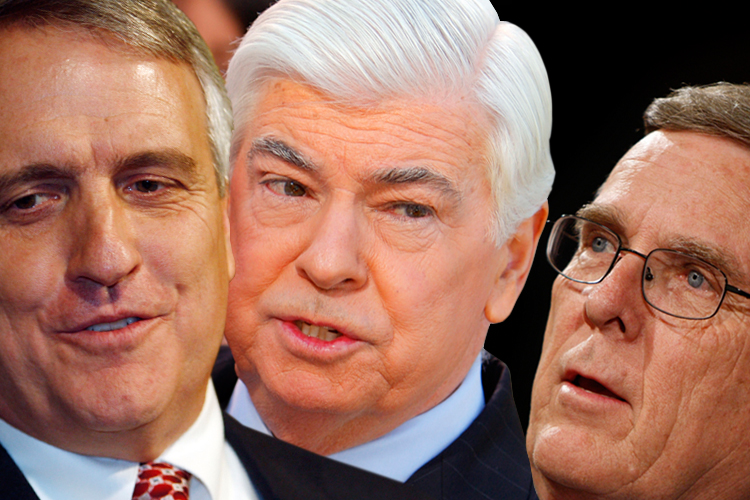
How will the Democrats fare in the 2010 elections?Colorado Gov. Bill Ritter, Sen. Chris Dodd, D-Conn., and Sen. Byron Dorgan, D-N.D.

Tom Schaller: Welcome to Salon Conversations.

In the wake of the back-to-back-to-back announced retirements of Sens. Byron Dorgan and Chris Dodd, and Gov. Bill Ritter of Colorado — all Democrats — we’ve asked some of the country’s top electoral analysts to talk about what the political environment looks like 10 months out from the 2010 midterms.

Nathan Gonzalez is political editor of the Rothenberg Political Report and a contributing writer for Roll Call. Amy Walter is with us; she’s the editor in chief of the Hotline, Washington’s premier daily briefing on American politics, and she writes her “On the Trail” column for the National Journal. And Isaac Wood is associate communications director for University of Virginia Center for American Politics, where he specializes in U.S. House race analysis. Thanks all for being here.

Let me jump right in and ask each of you to give me the answer to a three-part question, which is: How bad is the political environment right now, 10 months out; how much do you expect it to change, if at all, between now and November; and what, if anything, can the Democrats or the Republicans do to make it better or worse for the Democrats?

Let’s just go alphabetically. We’ll start with Nathan Gonzalez.

Nathan Gonzalez: Well, I think that the Democrats, after winning so many races over the last four years, over 50 seats in the House and a dozen seats in the Senate and winning the White House, were limited in their opportunities coming into 2010. I think it’s going to be a classic midterm where the in-party is going to face losses; we just don’t know how heavy the losses will be on the Democratic side.

I think the 2009 election showed that Democrats have some obstacles. They have to figure out how to keep the ’08 Obama voters engaged, and get them out to the polls to avoid some losses there. Republicans are excited even though they’re out of power. I think it’s easier sometimes for a party to be out of power and rally against something rather than for something. Independents who have been acting like Democrats over the last two election cycles are now at least open to voting for Republicans and are now up for grabs. So things will be tough for Democrats.

I don’t see things changing significantly unless there’s a breaking news event. I think things may actually end up getting worse for the Democrats. We don’t know yet, we have to wait to see how some of this legislation, like this stimulus bill, cap-and-trade, and what ends up happening with this healthcare reform bill. There are still some big question marks coming up with 2010.

Schaller: Amy?

Amy Walter: I totally agree with Nathan and the political environment is bad for Democrats. I don’t expect it to get better. I think it is very difficult to believe that over the next eight months we’re suddenly going to see a significant uptick in the economic climate or a significant downward movement in terms of the unemployment numbers. I think the election is a referendum on both of those things.

I think the frustration level of voters continues to be high and, quite frankly, the more that Congress gets in the middle of things — for example, the more voters see them doing their job — whether it’s healthcare reform or other pieces of legislation that Nathan brought up, I think it is actually worse for them because it keeps a focus on the “sausage-making process” and the insider-ness of Washington. And I think voters are just really sort of fed up with anything, everything, all major institutions right now. So, the further away that members of Congress can get from Washington the better it will be.

Isaac Wood: I think that Amy and Nathan have hit the nail on the head here. It’s going to be a tough year for Democrats especially on healthcare and the economy, the two most important issues. Both issues are almost completely out of the Democrats’ control right now. There’s going to be a lot of “wait-and-see.”

It’s not all doom and gloom for the Democrats, however. The Republican Party is still pretty disorganized. It doesn’t have one strong voice like the way that President Obama can lead the Democrats. So there could be some light at the end of the tunnel for them. But if you really want to know how things will change between now and November, I think you need a panel of economists, and not a panel of electoral analysts. So, there’s a certain limitation to how much we can predict this far out.

Schaller: Let me go back around and ask this: There are certain things that you all mention that are largely beyond the control of any party, like what the employment rate’s going to be in 10 months. Policies do matter to a certain degree, but there are some things the parties can control, and Democrats are touting big numbers in fundraising. The DNC and the Democratic Governors Association are bragging about their latest filing. The RNC didn’t have a particularly good recent filing. Recruiting is obviously something, [and] retirements, if we’re going to bring that discussion in. What things, if anything, politically in terms of fundraising, in terms of the quality of candidates or messaging, can the Democrats do to ameliorate the situation or can the Republicans do to exacerbate the expected plight of Democrats in November? Let’s go the other way around, start with Isaac.

Wood: On the House side, it’s kind of interesting because the Democratic Congressional Campaign Committee is still out-raising its Republican counterpart even though it looks like 2010 is going to be a Republican year. Right now the Democratic committee that funds House races has $15 million in cash on hand and the Republicans only have about $4 million. That’s not an insignificant gap at all, especially with House races costing more and more, and with the Republicans talking a lot about trying to “expand the playing field.”

The question with Republicans is: Are their members going to be more excited about regaining the majority or are they more depressed about not being in the majority anymore? That’s really whether they can get that enthusiasm that we saw in 2009 in the gubernatorial races in New Jersey and Virginia, for example, where you had Republicans very excited even though they were out of power. And the question definitely on the House side is whether they can continue this trend in 2009.

Schaller: Amy, can the Democrats buffer this coming defeat?

Walter: I definitely believe that candidates and campaigns do matter, but where they matter is really on the margins. If you’re talking about the environment itself, that alone is bad for Democrats. Some Democrats can survive based on running a better campaign, or getting lucky enough to have a challenger who is very flawed. Money, of course, does matter. I think Isaac is very right, but I think if you look back at where Democrats and Republicans were back in 2006, this was the same argument that Republicans were making: “We’ve got tons of money, we have people on the ground in these campaigns who are going to run smart campaigns; they’re experienced, we know how to run good campaigns.” And in the end, again, that could have saved a handful of members, but they still lost control of the House. In this case, the good news for Democrats is that they’re not just holding onto a 15-seat majority like Republicans were in 2006; they have a 40-seat majority and that is a much tougher number to overcome if you don’t have the resources and the candidates to take advantage of it.

But I still think in good/bad environments; the environment still can push a lot of people over the finish line that — quite frankly — would have no business winning when the winds were blowing in a different direction.

Schaller: Nathan, do you see the gubernatorial fundraising numbers or anything helping the Democrats?

Gonzalez: I think that money when it comes to governors’ races is a little bit different than the Senate — it’s actually quite a bit different than it is in the Senate or the House.

First of all, the RGA has more money on hand going into 2010, I believe; $25 million to $17.5 million. The RGA’s and DGA’s roles are significantly different; they have to abide by state laws. Because these governors’ races are state races and so it varies state by state as to how they can be involved, to what extent. You’d rather have more money than not. But the party committees are D.C. committees doing their best to guide and help some of these races. They have a different and I would almost say less influential role than what Senate and House committees can have. But, in general, the RGA and DGA have done a good job of looking ahead and not just going year-by-year, which both Republicans and Democrats had done in the past, and they have set themselves up to have plenty of money going into 2010.

We’ll just see. Money can’t cure all ills, but it can help sometimes.

Schaller: As to these retirements, Steve Benen over at the Atlantic Monthly’s Web site, Political Animal, points out that there are more announced Republican retirements in the House, the Senate and gubernatorial levels than there are Democratic. But there seems to be this meme that this is the opening of the floodgates with Dodd and Dorgan and Ritter. Do you guys get a sense from your intel or just your intuition or historical patterns that we’re going to see a lot of retirements in the next couple of months as primaries start to approach and candidates start to figure their ox is going to be gored this cycle? You guys take take it anywhere you want.

Walter: I think we have to look at two things. The first is the meme today seems to be, “Boy, we have these three big retirements” from Democrats — the two in the Senate and then Bill Ritter as governor — basically coming back-to-back-to-back. “Democrats are running for the doors, what a disaster.” The reality, though, is that two of those three things are actually good things for Democrats. We all know that Dodd was in a lot of trouble reelection-wise and that the Democrats now have a much better chance of holding his seat than they did with Dodd sitting in it.

Same with Bill Ritter. He was going to face a very tough reelection campaign, quite frankly. We just talked about the political environment. Being an incumbent in this kind of environment isn’t very much fun, especially as a governor. Now you can see a situation in Colorado where Democrats get a stronger gubernatorial candidate. Especially when we’re talking about names like Ken Salazar, the current interior secretary. [He's] very popular back in Colorado. Mayor [John] Hickenlooper from Denver, also mentioned. That’s actually pretty good news.

Dorgan is obviously bad news and it was also unexpected. A day ago it wasn’t considered competitive, and now you put it in the Republican column. To be fair, my sense was [Republican John] Hoeven, the governor of North Dakota, is taking a very serious look at running and most likely would decide to run, which would have made a competitive race even if Dorgan had stayed in. So, it wasn’t guaranteed that Democrats would be able to hold this seat.

As for other retirements, quite frankly, in the Senate, at least, there aren’t that many left. Again, for governors’ races — not to step on anybody’s toes here — I do think that for Democrats, David Paterson, who has very bad numbers in New York, to announce that he’s not running would actually be good news for Democrats. No retirements are created equal; the numbers don’t tell the whole story. If you look at the number of retirements in the House, there are more Republicans, but some of those are in “safer” districts. These are not apples-to-apples comparisons; you have to look district-by-district and state-by-state.

Schaller: Gentlemen?

Wood: In the House, at least, yes it’s true that there are more Republicans right now who have announced that they will not be running for reelection. What’s important is not the number of open seats; what’s important is the number of competitive seats that will be open in 2010. And right now Democrats are leaving open a few more, but you’re not going to see a situation that you’ve had in past years where there may be double-digit competitive open seats.

I just don’t see more than a handful of Democrats in the House retiring. A half-dozen, maybe 10, would be very surprising to me. Especially since there’s only 11 months left and we now have a pretty good idea of who could still be on that list of potential retirements. I think you’re not going to see what can be a big problem of a lot of competitive seats on the Democratic side, but I wouldn’t read much into the number that more Republicans have announced retirement than Democrats in the House.

Schaller: Nathan, is this Ritter retirement a blow? This is a guy in a state that the Democrats have wanted for so long. They dominated it; so much has turned around in Colorado over the last three or four cycles with Obama taking it, capturing the governorship, the state Legislature. What’s your sense of the fallout in Denver?

Gonzalez: I think Colorado remains a competitive state. Obama’s performance probably overstated the Democrats’ performance there somewhat. But it’s going to be a competitive race. Like Amy said, we need to wait and see who Democrats end up getting … to run as an outsider. At least the person won’t be the incumbent. And so I like to wait and see how the race shakes out a little bit. I think we’ll keep it as a tossup and see how things play out a little bit, and there are so many open seats in governor’s races already, largely based on term limits, that there aren’t really, as Amy said, too many opportunities for retirements.

Besides Paterson, [Republican Jim] Gibbons in Nevada could be a retirement. But if he runs I don’t expect him to win the primary anyway. And [Republican Jan] Brewer in Arizona, who ascended to office when [Democrat Janet] Napolitano took the Cabinet position, was a kind of retirement watch. But she’s announced she’s running for a full term. So there really aren’t too many other options out there. I mean, we’re looking at 20 open seats now in 37 governors’ races.

Schaller: Nathan, there’s a topic of the interview you mentioned, this question about how many of the Obama surge voters will we see. Will the Democrats be able to mobilize, get people to come out? I’m wondering if I can go around — Nathan covering the governors, Isaac the House and Amy the Senate — and ask how much you think Obama is either an asset or liability to the candidates? Obviously, it can vary from race to race, and maybe region and state to state. I mean, is President Barack Obama a yoke for Democrats or is he a coattail — how do you assess that?

Gonzalez: I think that … this probably goes for most Democratic candidates, they’d like to be known as independent, but still get the excitement from the Democratic base that comes with being a loyal Democrat. They kind of want the best of both worlds when it comes to the president’s shadow or involvement in the race. That’s going to be a line that I think Democratic candidates are going to have to toe.

I think that when it comes specifically to governors’ races, they tend to be more focused on state issues. But the water gets murky because when you’re talking about the economy, that’s both a national and a state issue. It’s more difficult this cycle, just because of the economic situation, to divide out state issues from national issues. So it’s going to be tough for the incumbent party to run. You know, Democrats may have the most optimism in governors’ races because there are so many Republicans in blue states that are term-limited. So there are a number of Democratic opportunities there. Particularly on the House side, Democratic opportunities aren’t great, and I’m sure Isaac can talk about that some.

Schaller: Well, Isaac and Amy, you can distance yourselves from Washington a little bit when you’re a gubernatorial candidate. But when you’re a federal candidate, a congressional candidate, whether an incumbent or a challenger, that’s a little harder to do, especially if [as] the incumbent you’ve got votes to defend. So I’m wondering how you guys feel about Obama: liability or asset on the balance sheet?

Wood: I mean, Obama is definitely going to be an asset to Democrats running in certain districts. The problem is, those aren’t the districts that are going to be challenging. The districts that are the potential turnovers are ones that are actually fairly Republican, and that is a symptom of the Democratic gains in 2006 and 2008, where they picked up a lot of seats that are in very unfriendly territory for them and now they’re going to be forced to defend those with Barack Obama in the White House.

So you are going to see just an unbelievable number of contrast ads that are going to say that, “You know, Incumbent X is a friend of Barack Obama, voted with him this percentage of the time … you know, send a message to Barack Obama, and kick this guy out of Congress.” And the problem for Democrats is, they have seats they’re defending in Louisiana, Alabama, Mississippi — states like this where … Obama is not going to be popular. And these incumbents are going to have to demonstrate that they’re independents and run against challengers that are going to try and tie them to Barack Obama at every opportunity.

Schaller: Amy, do you have the Senate candidates in mind who are going to be … running from Obama and may be running toward him?

Walter: Yes, well it’s very similar to what Isaac is saying, which is that it’s a state-by-state case. Obviously, in a place like Connecticut where Chris Dodd had already brought in the president and the vice-president to stump for him and to endorse or raise money for him, he’s still going to be an asset.

Now the question is, is [Obama] going to be as popular in Pennsylvania or Nevada as he was a year ago? He’s obviously looking at numbers under 50 percent nationally, and in some of those states he’s  right on that borderline between 48 and 50 percent. So you might want to decide what’s the difference between bringing in a president on the tarmac versus having him in for a fundraiser. And this is nowhere near what Republicans had to face with President Bush in 2008, when you’re looking at a president with a 30 percent approval rating, right? There was no question that that was nothing but a downer, to bring in or to be seen with the president.

The bigger issue, I think Nathan raised this as well, is the issue matrix. So I think you’re looking at a whole bunch of incumbents who are going to try and run ads as their own person, not part of Washington: “I’m there as an individual representing your interests, I’m not part of the big bad mess that’s been created there. I’m trying to clean it up or solve it.” And so in that case, you don’t want to do much to associate yourself with what Washington is. The good news for Democrats right now is that President Obama has been in some ways able to rise above some of that partisan rancor as opposed to being part of it. The one person clearly who is the most unpopular, and that I doubt we’ll see stumping for anybody in the swing areas, is Speaker [Nancy] Pelosi. And, in fact, I wouldn’t be surprised if we see her name used in more campaign ads — negative ads — against Democrats than even Obama.

Schaller: That’s interesting. All right, let me ask you guys a couple of quick questions, because we’re almost out of time. Who, if you had to pick somebody on your respective level — Senate, governor and House — will be like a surprise Democrat who people think is in jeopardy but who you think might hold on? Or a Democrat whom maybe people aren’t paying attention to — this may be more interesting — who could end up on the loser’s list in November? And I guess we’ll start back with Amy on the Senate, and then go to Isaac, then Nathan with the governors.

Walter: Well, it’s funny, is there anybody left on the Democratic side, on the Republican side? Are we now getting into [Maryland Sen.] Barbara Mikulski, and in a way these are now some of the safest seats in the country.

But the real question I’ve been wrestling with a long time is, Who do I think is more vulnerable, Chris Dodd or [Nevada Sen.] Harry Reid? And with Dodd gone, Reid wins that contest. Everything on paper says this is a guy who shouldn’t win, so I would say that would be the surprise — that he’s able to turn his money advantage, and that Republicans haven’t recruited a strong candidate, so he’s actually able to do something with that, and hold onto this thing.

Schaller: OK, Isaac?

Wood: One Democrat whom I had down as a safe member for reelection was Stephanie Herseth Sandlin in South Dakota. She represents the at-large seat there. I had her as pretty safe, but then Republicans have done a pretty good job as far as recruiting’s concerned. It’s not clear that she’s actually very popular in the state. It’s pretty hard for Democrats to win statewide, in that part of the country. But she will be facing difficult opponents; the state senator and the secretary of state actually are both running against her. So she’s going to have a very tough contest and I think that’s going to be kind of a bellwether, if South Dakota can ever be a political bellwether. If Obama is doing quite poorly in approval ratings, and if Democrats are losing across the nation, I think you see that’s someone who you thought was going to be safe, and ends up losing.

But as far as a Democrat who might just hold on, here in my own district Tom Periello, Virginia’s 5th District. It was the closest race in the country last time, and Republicans have him at the top of their target list. But he still has a lot of outs left, as they say in poker. There might be a third-party candidate in this race, and the Republicans have a race coming up with I believe seven candidates running. So it’s really still a crapshoot there for them, and he might be able to still pull this one out. And no one thought he was going to win two years ago, so maybe he’ll pull out another squeaker.

Walter: I had another question for Isaac. Do you think Herseth Sandlin runs, that she runs and loses or she’s a danger to not run at all?

Wood: Runs and loses. I don’t have any reason to believe she won’t run. And she’s still very popular there. But I still think this could be a case where the toxic environment for Democrats could poison her chances, even though she has substantial personal popularity.

Walter: Got it, thanks.

Schaller: Nathan?

Gonzalez: I always like this question because I think it’s our job as analysts to avoid surprises. And I hope by the time we get to Election Day that we won’t be caught by surprise. Even though on the House side it’s tough to get everything under control in a wave election, the other factor I think, talking about surprises, is there is so much polling going on these days. Not by just the parties, but media groups, interest groups, whether it’s blogs or outside groups. So surprises are going to be tougher and tougher by the time we get to November.

So on the governors’ side, we already have so many open seats. I guess I don’t even know who to throw under the bus. I guess if Republicans can compete in Oregon — now this is an open seat — that would be a sign of a very bad night for Democrats. I mean, this is a once-competitive state. I think the Democrats have gained in registration and hold almost every significant office. But if Republicans can — I don’t think they have a significant nominee –  but if that open seat becomes competitive, I would say that’s a surprise and I would say that wouldn’t be a good sign for Democrats.

Schaller: All right, last little quick exit question. With most of the focus here on the assumption that Democrats are going to lose, let’s flip the script: For seats at all levels, what constitutes a bad night for Republicans? We’ll go in alphabetical order with Nathan.

Gonzalez: I think a bad night for Republicans on governors’ races is the status quo. And it’s going to be tougher for Republicans to gain in governorships, because I think they’re going to lose probably five or six  — they’re defending open seats in states like Hawaii, California, Rhode Island, Connecticut, Vermont.

So they’re on defense, and they’re going to have to make up those and open seats like Oklahoma, Tennessee, Kansas. But I think Republicans, if it ends up being 25-25 in governorships, then I think that’s a disappointing effort for Republicans.

Schaller: Harry Reid. What’s a good headline for him, Amy?

Walter: Can I make two points? The good news for Democrats would be to hold onto the trifecta, holding on to Hawaii, Illinois and Nevada. It takes away the Republican argument that, “Boy, look at this referendum on the Democrats — we picked up the seats of the former president, the vice-president and, of course, the majority leader.”

Barring that, a bad night for Republicans would be that they pick up fewer than two seats. They should be not only able to keep Democrats under 60 going into 2011, but they should be able to pick up at least two to three or more seats at this point.

Schaller: And Isaac, what does [House Minority Leader] John Boehner not want to read in his paper the day after this election?

Wood: From the Republican perspective, they need to pick up more than 20 seats. They need to cut the Democratic majority in the House at least by half. And they’ve been making some noise earlier in the cycle about trying to recapture the House. That’s preposterous: It’s not going to happen unless there’s a lot of unspeakable things happening, either in the economy or on the terrorism front.

Really, their goal should be to beat the average, and the average in the House in a midterm election is a loss of about 20 to 30 seats for an incoming party. And so they need to cut it in half. 2012 could be a tough year for Republicans again if Obama runs the same strategy he did last time, concentrating on a wide variety of states, and really boosting turnout among various Democratic groups, especially minorities. So they need to really concentrate on chipping away at that majority right now, and I’d say 20 seats is probably the watermark they’re shooting for.

Schaller: Well, I really appreciate all your time and working the races through all the levels. I want to thank Nathan Gonzalez, Amy Walter and Isaac Wood. For Salon conversations, this is Tom Schaller.

Continue Reading Close

DNC pounces on GOP senators

Dems take less than 24 hours to use vote against military funding to pound GOP senators

  • more
    • All Share Services

Well, that didn’t take long.

This morning I wondered how long it would take the Democrats to use the Senate Republicans’ blockage of troop funding as a way to stall healthcare reform. Not even a full day.

It’s not great, but it’s simple and does what it’s supposed to do. Here’s the new ad already running on the cable nets calling Mitch McConnell and pals to the carpet: 

Debt merry-go-round

Fannie, Freddie, AIG and GMAC coming around again for more of our tax dollars

  • more
    • All Share Services

Here’s hoping the Americans like going around in circles when it comes to our national debt. Because the New York Times article today by Mary Williams Walsh about the situation at Fannie Mae, Freddie Mac, AIG and GMAC promises a carnival ride from hell for the U.S. taxpayer.

Describing them as institutions “in need of continuing infusions that make them look increasingly like long-term wards of the state,” Williams Walsh essentially reports that the institutions will be needing to borrow future monies to pay off their existing obligations to the government:

Like the big banks, these four companies would no doubt prefer to be free of government assistance, which comes with pay and other restrictions on their executives. But they appear at risk of getting onto a debt merry-go-round, where they have to draw new money from the government just to keep up with their existing government debts.

Fannie Mae recently warned, for example, that it could not pay the dividends it owes the Treasury, so “future dividend payments will be effectively funded with equity drawn from the Treasury.”

All told, the four have already drawn $600 billion combined and that figure could grow to $1 trillion. To put that figure into perspective, if unpaid it would be more than the 10-year cost of the healthcare plan. My word.

And how are they doing so far in honoring their obligations? Answer: mixed.

A spokeswoman for GMAC pointed out that the company had made all its scheduled dividend payments to the Treasury, as had Freddie Mac. While Fannie Mae has said it will have trouble paying its dividends, A.I.G. does not have to pay dividends.

A spokeswoman for A.I.G. said that the insurance company was committed to repaying taxpayers, but repayment would depend on market conditions. A Freddie Mac spokesman said that the company was dependent on continued support from the Treasury to stay solvent. A.I.G.’s latest request for money offers an example of why it needs more government aid to pay its debts.

Continue Reading Close

Page 2 of 68 in Thomas Schaller