Spring Offer: Get 1 Year, Save 58%

“Gut punch”: Texas Supreme Court says “life-saving exception” is clear enough. Plaintiffs disagree

Over the last week, 31-year-old Taylor Edwards has had a lot to process emotionally. 

Since becoming a plaintiff in Zurawski v. State of Texas, a landmark case that sought to clarify a confusing exception to the state’s abortion laws, she has repeatedly had to relive the worst day of her life. 

Her story began when she and her husband happily learned she was pregnant in November 2022 after two years of in vitro fertilization. But at 17 weeks of gestation, the couple found out devastating news at an anatomy scan: her fetus had a fatal condition called encephalocele and would die at or before birth. It causes a sac-like protrusion of brain tissue coming out of an opening in the skull and impacts about 1 in 10,000 babies born in the U.S.

After a confirmed diagnosis, she was told by her doctors that they couldn’t help her if she wanted to terminate the pregnancy. Edwards found a clinic in New Mexico, but three hours before her flight, the clinic canceled due to a shortage of medication needed for the procedure. Taylor was eventually able to obtain an abortion at a Colorado clinic two weeks later. But during those two weeks, she started to get sick and vomit daily. Still, Edwards was unable to access abortion care in Texas because she wasn’t imminently dying.

The experience has had lasting effects emotionally and physically.

“After the procedure, because of my delayed care, my doctor believes that my scarring of my uterus was made much worse,” Edwards told Salon in a phone interview. “And so I had to undergo a procedure to kind of repair the scarring before I could even begin IVF again.” 

"How the Supreme Court could hear our stories and our real, lived experiences and decide that no, they were OK with what was happening in Texas."

Edwards gave birth to a healthy boy in March of this year, but her postpartum has been coupled with awaiting the ruling in the lawsuit filed against the state of Texas on behalf of 20 women, including Edwards, who had pregnancy complications, and were denied abortion care as a result of the state’s near-total ban on abortion. The group of plaintiffs argued that the language of the law was ambiguous and that it results in a culture of “fear and uncertainty” among doctors as to when they can legally provide abortions in emergency, life-threatening situations. If physicians violate the law in Texas, they face up to 99 years in prison, loss of their medical license and at least $100,000 in fines.  

But last week, the Texas Supreme Court ruled that despite the horrific stories told by plaintiffs, the state’s abortion bans are clear in their exceptions. “Texas law permits a life-saving abortion,” the court wrote. “Under the Human Life Protection Act, a physician may perform an abortion if, exercising reasonable medical judgment, the physician determines that a woman has a life-threatening physical condition that places her at risk of death or serious physical impairment unless an abortion is performed.” 


Want more health and science stories in your inbox? Subscribe to Salon's weekly newsletter Lab Notes.


The Texas Supreme Court also said that as “painful as such circumstances are,” referring to fatal fetal anomalies, “the law does not authorize abortions for diagnosed fetal conditions absent a life-threatening complication to the mother does not render it unconstitutional.”

Edwards said after the ruling she is feeling “at a loss” and continually “more upset.” 

“How the Supreme Court could hear our stories and our real, lived experiences and decide that no, they were OK with what was happening in Texas,” Edwards said. “That’s been really hard to wrap your brain around because when you go through something super traumatic and you think people would make a change if they know what's happening, and that they are OK with it — it’s really difficult.”

Lead plaintiff Amanda Zurawski was denied abortion care after she experienced preterm prelabor rupture of membranes (PPROM) at 18 weeks of pregnancy. Zurawski ended up in the ICU for days with sepsis after being denied an abortion. In an Instagram video, she said the ruling was a “gut punch” and “heartbreaking.” 

“Physicians have been begging to have these statutes interpreted in medical language so that they can understand that they can apply, and that's what the trial court did,” Marc Hearron, counsel for the plaintiff, told Salon in a phone interview. “And the Texas Supreme Court's opinion wiped that away and says, we understand that these exceptions may not be super clear, but there's nothing we can or will do about it.”

The ruling by the Texas Supreme Court did provide clarity and say “an abortion is recommended to prevent a woman’s death or serious bodily injury if she develops preterm pre-labor rupture of membranes (or PPROM).” However, Hearron said, if physicians have to engage in documentation requirements that have been suggested by the Texas Medical Board, he’s skeptical PPROM will be able to be properly treated.

Hearron said he believes Texas is an “outlier” compared to other states that have had similar lawsuits asking to clarify and expand abortion-law exceptions. 

We need your help to stay independent

“Any time this issue has come up before the highest court in a state, that state has recognized a right under the state constitution to terminate a pregnancy when needed to preserve the patient's life and health, and they read the life exception very broadly,” he said. “We've seen that in Oklahoma, North Dakota and in Indiana.” 

Meanwhile, plaintiffs like Edwards have to figure out what the ruling means for their own future. Edwards told Salon she’d like another child, but she’s afraid she won’t be able to access healthcare in Texas. In her last pregnancy, she had preeclampsia at 36 weeks of pregnancy. 

“I'm afraid that I won't be able to access health care if my preeclampsia happens before viability or much earlier in the pregnancy,” she said. 

Biden baits Trump into a debate trap

If you truly appreciate professional wrestling on a deeper level, you can gain insights into the Age of Trump that leave little about our current calamity a surprise. In many ways, understanding professional wrestling makes our politics utterly predictable.

Much of the Age of Trump is a story about a fake right-wing authoritarian populist insurgency that is rooted in rage against the elites. Historically, professional wrestling has been one of the most authentic forms of so-called low culture. Similarly, the relationship between stories, emotions, and audiences explains why the other personalities in the MAGAverse have such a powerful hold on their public. Of course, there is the essential qualifier: The consequences of the Age of Trump and the larger democracy crisis and ascendant neofascism will involve the lives and futures of hundreds of millions of people in the United States (and many more around the world).

The mainstream news media and political class, with its obsessive focus on policy, polls, focus groups, “the economy," institutions, normal politics and the folk theory of democracy, instead of on emotions and imaginaries and stories, helps to explain why even after eight years they have mostly been unable to explain the neofascist MAGA movement's appeal and power over many tens of millions of Americans.

In a recent conversation with me here at Salon, political scientist Steven Fish explained the role of emotions and storytelling in contemporary American politics and the Democratic Party’s inadequacies in the following way: “If you want your message to resonate, you can’t be dull, and the Democrats have become more than a little boring. Their low-dominance risk-aversion, fear of offending, distaste for “othering” anyone, and skittishness about using provocative, transgressive language, are a big part of why so many voters, especially young ones, experience the Democrats’ policy appeals as bloodless, boring bromides.”

The recent announcement that there would be two presidential debates between President Biden and Trump further exemplifies how today's politics mirror professional wrestling. The first presidential debate will take place on June 27, and will be hosted by CNN. The second presidential debate will take place on September 10 and will be hosted by ABC News. In a cringeworthy and laughable moment – and I say that as someone who supports him – President Biden issued a challenge to Trump, invoking the classic line from Clint Eastwood's iconic Dirty Harry character, “Make my day." 

Trump, a man who is notoriously thin-skinned, an obvious narcissist and egomaniac, and generally very emotional, took President Biden’s bait. Trump, the professional wrestling heel, as he did in 2020, will likely protest that the presidential debates are rigged and that Biden should take a drug test because he is supposedly using special brain-enhancing performance drugs. Donald Trump will likely also continue to tell the ridiculous lie that President Biden gets commands and prompts through an earpiece because he is incapable of out-thinking and out-debating him without outside help.

For most of the history of modern professional wrestling (until the 1990s), in public the heroes and villains (“the faces” and “heels”), generally acted like they hated each other. In private, however, they were often friends or at the least collegial with one another. By comparison, the animosity (or in professional wrestling terms, “the heat”) between President Biden and Donald Trump is very real. Trump has repeatedly threatened Biden with death and prison, and, of course, attempted a coup on Jan. 6.

The stagecraft and professional wrestling presentation of President Biden and Donald Trump’s presidential debates would greatly benefit from having the WWE’s Samantha Irvin or boxing icon Michael “Let's get ready to rumble!” Buffer announcing the respective political combatants. 

We need your help to stay independent

Over the last eight years, there has been a wide range of essays, articles, and books about Donald Trump, the Trumpocene, and professional wrestling. Unfortunately, most of the writing in the news media on these questions reads more like a summary written by someone who was a fan of professional wrestling when they were a child. In all, so much of the writing about professional wrestling and the Age of Trump in the mainstream news media lacks real insight and understanding about the intangibles of why the art and physical storytelling of professional wrestling is so captivating and enthralling for the audience when it is presented at the highest level.

This points to the much larger failure by the American news media in the Age of Trump to understand the role of emotions and storytelling in politics and then to use those insights to highlight the stakes and not the horserace, and how a second Trump regime, with him as the country’s first dictator, would hurt the day-to-day lives of the American people in ways that most of them cannot imagine.

Kellyanne Conway says Trump “doesn’t want revenge”

On Thursday night, a clip of Kellyanne Conway began to circulate on social media, in which she uses a segment of Fox News to rewrite history, painting a picture of Donald Trump as someone who took a more graceful stance when it came to the treatment of Hillary Clinton in the prime of the "lock her up" era. 

"This is the new narrative by all the lemmings in the mainstream media this week . . . Trump wants revenge and vengeance," Conway says during the broadcast. "He's the one who's had that visited upon him. And if you need any evidence, look no further than how he just stood down in any kind of prosecution of Hillary Clinton, and retribution after he beat her fairly and squarely and racked up 304 electoral votes in 2016. Many people said 'Lock her up.'"

Trump sang this same remix himself during an interview with Fox & Friends on Sunday, in which he denied ever saying "Lock her up" while speaking to co-host Will Cain on the subject.

"Hillary Clinton — I didn’t say, ‘Lock her up,’ but the people would all say, ‘Lock her up, lock her up.’ OK. Then we won, and I said pretty openly, I’d say, ‘Alright, come on, just relax. Let’s go. We gotta make our country great.’"  

Of course, there is quite a bit of evidence to the contrary.

And to cite more recent evidence that would point to Trump very much having an interest in revenge, he posted a rant to Truth Social on this very day, calling for members of the Jan. 6 committee to be indicted.

"It is a Total and Complete American Tragedy that the Crooked Joe Biden Department of Injustice is so desperate to jail Steve Bannon, and every other Republican, for that matter, for not SUBMITTING to the Unselect Committee of Political Thugs, made up of all Democrats, and two CRAZED FORMER REPUBLICAN LUNATICS, Cryin’ Adam Kinzinger, and Liz 'Out of Her Mind,' Cheney," Trump writes. "It has been irrefutably proven that it was the Unselects who committed actual crimes when they deleted and destroyed all material evidence, in a pathetic attempt to protect Crazy Nancy Pelosi and other Democrats from the TRUTH — THAT I DID ABSOLUTELY NOTHING WRONG. The unAmerican Weaponization of our Law Enforcement has reached levels of Illegality never thought possible before. INDICT THE UNSELECT J6 COMMITTEE FOR ILLEGALLY DELETING AND DESTROYING ALL OF THEIR 'FINDINGS!' MAGA2024."

Seniors hospitalized after lining up in the heat for Trump’s Arizona rally

Donald Trump's first post-conviction rally was scheduled to start at 2 p.m on Thursday at the Dream City Church in Phoenix, Arizona, but many hopeful attendees landed in the hospital before he even took the stage.

According to MTN, many people were lined up outside of the church well before doors officially opened at 10 a.m. and the brutal heat began to take its toll. The Phoenix Fire Department was on hand to treat those affected, many of whom were seniors, transporting just under a dozen people to be treated for heat exhaustion. 

Per reporting by Forbes, "Phoenix hit 111 degrees around 3 p.m.—tying the daily heat record set in 2016, according to the National Weather Service—and marking the first day the Valley reached 110 degrees this year." Having caught wind of this, resulting coverage of the hospitalizations by several outlets, and comments made by many on social media, turned a stink eye to Trump for putting his followers at risk.

"Trump takes 6 days off from campaigning then sends 11 people to the hospital holding a rally at 2:00 PM in Arizona in June when it’s 108 degrees," writes Ron Filipkowski, Editor-in Chief of MTN, in a post to X. "He doesn’t care at all about these people. He wants their money & their votes so he can acquire power. When will the rubes wake up?"

Perhaps loopy from the heat himself, Trump's speech at the Turning Point USA sponsored event included a rather creative swipe at President Biden, accusing him of falling out of airplanes and helicopters.

Biden says he has no plans to pardon Hunter, if convicted on felony gun charges

Hunter Biden is currently facing decades in prison, if convicted on three felony gun charges relating to his 2018 purchase of a firearm and ammunition while under the influence of drugs. And while he still has his father's support, President Biden says he has no plans to attempt to wipe the slate clean for him.

This week, a number of witnesses in Hunter's trial provided testimony on what they claim to know of his drug habits, with ex-girlfriend, Zoe Kestan, stating that in the early stage of their relationship, she knew of him as being someone so deep in the throes of addiction that he was smoking crack “every 20 minutes or so.”  

But although the details of this trial are upsetting for the Biden family, and are deepening the bruise on President Biden's campaign for reelection, he claims to be prepared to let the cards fall where they may in terms of the upcoming verdict and potential sentencing.

In an interview with ABC News anchor David Muir at the Normandy American Cemetery on the 80th anniversary of D-Day, Biden says he will accept the outcome of his son's trial in Wilmington, Delaware, and has no plans to pardon him, if convicted. 

At the start of Hunter's trial on Monday, Biden issued a lengthier comment on the matter, saying, “As the president, I don’t and won’t comment on pending federal cases, but as a dad, I have boundless love for my son, confidence in him, and respect for his strength. Our family has been through a lot together, and Jill and I are going to continue to be there for Hunter and our family with our love and support.”

As AP News points out in their ongoing coverage of the trial, Jill Biden has been in court every day this week, apart from Thursday, as she was in France with President Biden attending D-Day anniversary events. It's anticipated that she will return to court on Friday, in support of her son. 

“You’ll laugh, you’ll cry, you’ll clap, you’ll stomp”: Dolly Parton is going Broadway, y’all

Dolly Parton, the queen of country, is ready to return to Broadway.

The iconic singer announced on Thursday that she's "been writing my life story as a Broadway musical for several years and I'm proud to announce we are finally developing 'Hello, I'm Dolly – An Original Musical' for the Broadway stage."

The musical's name is modeled after Parton's first album titled "Hello, I'm Dolly," which likely is a reference to the 1964 Tony-winning Broadway musical "Hello, Dolly!" 

“I lived my whole life to see this show on stage," said Parton in a statement, according to Time Out. "I’ve written many original songs for the show and included all your favorites in it as well. You’ll laugh, you’ll cry, you’ll clap, you’ll stomp, it truly is a Grand Ol’ Opera. Pun and fun intended. Don’t miss it!”

This isn't the singer's first venture into Broadway. In 2009, she wrote the score for the "9 to 5 the Musical." The London revival of the show spearheaded the journey to creating "Hello, I'm Dolly – An Original Musical." Alongside writing the original score, Parton will also co-write its book with Maria S. Schlatter.


Cream cheese sold at Aldi and Kroger recalled due to potential Salmonella contamination

Are you a big dairy fan? You might want to check the cream cheese you have on hand.

Schreiber Foods Inc., a dairy company based in Green Bay, WI, has recalled 836,721 units of cream cheese products due to potential Salmonella contamination. The affected cream cheese were distributed and sold by several major food retailers, including Hy Vee, Kroger and Aldi

According to a notice posted by the Food and Drugs Administration (FDA), the recall was initiated on May 3, 2024 and is ongoing. The recalled products were distributed in California, Florida, Iowa, Illinois, Indiana, Massachusetts, Maryland, Michigan, Minnesota, Missouri, North Carolina, New Jersey, New York, Ohio, Pennsylvania, Texas, Virginia, Washington and Wisconsin. The products were also shipped to Puerto Rico.

Shortly after the initial recall, Aldi — in cooperation with Schreiber Foods, Inc. — recalled its Happy Farm cream cheese spreads out of an abundance of caution. The specific products include Happy Farms Whipped Cream Cheese Spread, Chive & Onion Cream Cheese Spread, Cream Cheese Spread and Strawberry Cream Cheese Spread products. The products were sold at select ALDI stores in nearly thirty states. 

Other specific brands listed in the May 3 recall include Dutch Farms, Fareway, Hy Vee, Kroger, Our Family, Schnuck, Essential Everyday, Dunkin, Piggly Wiggly and Schreiber Foods cream cheeses.

Those who purchased any of the recalled products are advised to discard it immediately or return it to receive a full refund.

“Devastating news”: Experts say DA’s questionable decisions sink chance of pre-election TV trial

The Georgia Court of Appeals’ order pausing proceedings against high-profile defendants in Donald Trump’s criminal election racketeering case in Fulton County makes it all but certain that the former president won’t have a televised trial before the November election, according to legal experts.

The Wednesday order stalls proceedings against Trump and eight of his alleged co-conspirators’ efforts to overturn the will of Georgia’s voters in 2020 – as a panel of three judges decides whether District Attorney Fani Willis will be allowed to stay on the case.

“For anybody who was interested in having this case tried before the election, which I think everybody should be interested in, this, of course, is devastating news,” Clark Cunningham, professor of law at Georgia State University, told Salon.

Atlanta defense attorney Andrew Fleischman called the decision “expected."

Meanwhile – legal experts say it’s unlikely the half dozen other defendants whose trial court proceedings have not been paused will end up being tried this year. 

Those defendants – including Trump legal adviser John Eastman, attorney Ray Smith III as well as state senator and alleged fake elector Shawn Still – did not appeal Judge Scott McAfee’s order declining to disqualify Willis. 

“John Eastman and Ray Smith and Sean Still all connect to the so-called fake elector scheme, which is probably the most significant issue,” Cunningham said.

Eastman — who has said that he wants to have his trial before 2025 — is alleged to have played a central role in the scheme devised by Trump and his allies in several swing states to create and submit fraudulent election certificates and the now-infamous slates of "fake electors." 

But Fleischman said trying those defendants before a decision could put the court in a “tough position.”

“It would be weird to hold a trial for the remaining people who have not moved to disqualify,” Fleischman told Salon. “It would be unusual because what if you get a conviction, and then it turns out that Ms. Willis should have recused herself in the other cases, what happens to those cases?”

Cunningham said the chance of anybody going to trial in 2024 is “slight.”

“The district attorney might choose not to – she always wanted to try everybody together,” Cunningham said. 

Similarly, Cunningham said the potential of Willis’ disqualification would likely make McAfee reluctant to start trying anyone while that issue remains undecided.

“Then even if she did, I think it's fairly unlikely that Judge McAfee would actually start a trial on any of these people before a decision from the Court of Appeals because if the Court of Appeals reverses him, that would probably apply to all the defendants, and I think he would be reluctant to start trial and then find out that the district attorney is disqualified either during the trial or when it's over,” Cunningham said.

We need your help to stay independent

Oral arguments were initially set for Oct. 4. But the Atlanta Journal Constitution reported that because of a timing conflict, the date will be rescheduled.

The court has a constitutional requirement to rule by March 2025, though an earlier decision is possible.

“There's been some suggestion that the district attorney might ask for the court of appeals to expedite the appeal,” Cunningham said. “I would be pessimistic that's going to happen. If this panel of judges was sympathetic to the idea that the case should be allowed to move forward quickly, they wouldn't have granted the stay. So I don't think that's going to be very successful if she makes that attempt.”

A televised trial before the election would have been “incredibly important” from a public interest standpoint, according to Cunningham. 

“Everybody would be basically sitting in the jury box for probably months, hearing evidence, competent evidence, about what did, did not happen, and they could be making up their own minds about whether there was criminal interference with the election, and if there was, what was the role of Donald Trump,” Cunningham said. “And we've lost that opportunity before the election, and that's a consequence that may change world history.”

He added: “Had this case gone to a televised trial before the election, it might have had no effect on his election. If he was acquitted, it might have increased the possibility of his election, but it also might have significantly made it less likely for him to be elected. These are enormous, consequential things.”


Want a daily wrap-up of all the news and commentary Salon has to offer? Subscribe to our morning newsletter, Crash Course.


Cunningham said if Trump is elected in November, he’ll likely have his attorney general bring a lawsuit seeking a federal order to prevent the case from moving forward while he’s president. 

He said Trump would argue “the theory that a sitting president can't be prosecuted even in state court.”

“That issue would probably end up in the US Supreme Court, and I think that there could easily be five people on the current Supreme Court who would be sympathetic to that argument,” Cunningham said. 

Cunningham said proceedings against other defendants could continue, however.

Cunningham added that Willis could have avoided this scenario altogether. 

“We should look back at how slowly the district attorney moved in actually bringing this indictment,” he said. 

Cunningham noted that Willis sent out letters in early 2021 putting state officials on notice to preserve documents. But she didn’t ask for a special grand jury until January 2022, he noted. 

“She put in her request that the special Grand Jury wouldn't start work until May 2,” he said. “She never ever had a good explanation of why she wanted to wait that long.”

By the end of 2022, the grand jury issued its report and concluded its work in early 2023. 

But Cunningham notes that Willis didn't file an indictment until August 14.

“There were lots of opportunities to get this moving much sooner, which, in retrospect, certainly I think should have been done,” he said. “One can also question whether, in retrospect, it's even worth spending all the time and energy on a special Grand Jury versus simply moving quickly to indict Donald Trump, particularly based on the Raffensperger phone call.”

In Trump's infamous phone call to Georgia Secretary of State Brad Raffensperger, he beseeched him to "find" enough votes to overturn his 2020 election loss.

Willis faces possible disqualification over her personal relationship with lead prosecutor Nathan Wade.

Cunningham pointed to testimony from Wade and Willis that their romantic relationship began in February 2022 after he was hired. 

“It seems to me that they really only had two choices, both in terms of what was ethical and what was prudent,” Cunningham said. “At that moment, either they should have said: ‘Well, we are romantically attracted to each other, but we're going to have to keep our relationship professional until this case is over,’ or if they wanted to proceed with a romantic relationship, his contract for this case needed to end.”

“I don’t have chlamydia by the way”: 50 Cent shocked at reaction to photo with Lauren Boebert

50 Cent is making waves on Capitol Hill. 

The Grammy-winning rapper stopped at the nation's capital to advocate for Black entrepreneurs. The "In da Club" singer who owns his own liquor company, Sire Spirits and the lucrative Branson Cognac, wants more representation in the alcohol industry.

“My experience here has been great,” 50 Cent said on Wednesday. “I went to talk to them about economic opportunities for everybody, and it’s really exciting. The response I got makes me feel like that there’s bright days ahead of us.”

The rapper met with many different politicians on both sides of the aisle like Minority Leader Nancy Pelosi, House Speaker Mike Johnson and Rep. Lauren Boebert.

50 Cent posted a photo with Boebert, saying, “Lauren Boebert, Colorado Republican making the white house look good," adding a winking emoji to the caption.

Boebert tweeted, “I’d still love you if you flipped burgers at Burger King @50Cent, I used to do that myself! Thanks for the photo, great to meet you."

https://www.instagram.com/p/C72UC6IO7ma/?utm_source=ig_web_copy_link&igsh=MzRlODBiNWFlZA==

The photo was met with mixed reactions from 50 Cent's fanbase who poked fun at Boebert's past controversy of being kicked out of a musical last September for “causing a disturbance” for allegedly getting intimate during the show.

“Wait, wait, guys i took pictures with everyone and all you seem to care about is Lauren what did she do in a dark theater that hasn’t been done, my God,” the rapper said. “Hey I don’t have chlamydia by the way. LOL.”


This 3-minute marinated shrimp-and-onion dish is optimal summer party food

Dauphin Island is the southernmost point of Alabama. It is a tiny barrier island in the Gulf of Mexico about three miles south of Mobile Bay. Located just outside the city of Mobile, but within the limits of Mobile County, it stretches fourteen miles long and is only a mile-and-a-half at its widest point.

When I was in high school, I spent many a summer day there with my friend, Jeri, and her family at their house on the east end, and this recipe is from that time.  

Less than an hour drive from where we lived in Mobile, Dauphin Island was another world  a far simpler one  with only one main road and very few things to do other than bicycle around and hang out on the beach. Jeri and I loved it: the days were long, the sunsets spectacular, and there was no problem in either of our lives that we believed we could not solve between the two of us.  

Her parents were big participants in Mobile Mardi Gras, each in a parading organization — her mom a Polka Dot, her dad a Striper — and they brought the party to the Island most every weekend. Throughout June and July, a constant parade of Jeri’s parents’ friends and fellow merrymakers came and went, and their zeal for entertaining and having fun was on full display.

I do not recall there being other kids around, but Jeri and I could hear laughter emanating from the house most any waking hour, their hoots and hollers carrying almost to the beach, which was just shy of a seven minute walk from the property. 

By the time cereal bowls, Krispy Kreme doughnuts and coffee cups were abandoned and the sun was high in the sky, every square inch of flat surface from the kitchen to the living room would become covered with plates and bowls of nuts, fruit, chips, dips, cheeses, bite-sized quiches and various other mini-delights. Additional snacks and every conceivable ingredient and condiment for sandwich making were packed onto cabinet shelves or ready for us in the refrigerator. Jeri and I had it made.

With our basic needs well taken care of and with very little scrutiny, questions, or concern from her parents, we did as we pleased, as was common for kids in the mid-1980’s, and breezed in and out throughout the days and evenings at our leisure.

By late afternoon, the grill and makeshift downstairs kitchen were in full swing with seriously good food being brought out in shifts until well into the night. Food prep, serving, and clearing moved seamlessly through most all of the ladies present and a good number of the men too. Some performed tasks together and others solo like a beautiful ballet.

Casseroles and salads dotted the middle lane of their long picnic style table, and the party became only a whisper quieter as we all devoured what was a smorgasbord of hot and cold dishes, desserts, and drink concoctions never to be replicated again. 


Want more great food writing and recipes? Subscribe to Salon Food's newsletter, The Bite.


These marinated shrimp of Miss Cathy’s, Jeri’s mom, or what she called “Island Shrimp,” was standard fare in the summer, especially when friends visited from out-of-town (from farther away than just Mobile). Exasperated, Miss Cathy would explain that she was late getting to the Island because she had traipsed all over town for Vidalias, the uniquely flat-shaped, sweet summer onions that she believed were vital to her Island Shrimp being the standout it was. She proclaimed often and to anyone around to hear that the onions were absolutely just as good as the shrimp. Her Island Shrimp ratio was for every pound of shrimp, you needed a pound of Vidalias, sliced wafer thin in rounds or half moons, according to how large or small the onion.  

I remember my mother being equally as excited as Miss Cathy over Vidalia onion season. There was a buzz about them: Vidalia onions. You had to go find them and get them while they were available, which was only the few short months of summer.

As a youth I was not fond of any kind of onion and did not understand the fervor, but as an adult I readily admit Vidalias are special. They really are! They are sweet, because of their high sugar content, but they are also mild, which is due to the soil in Vidalia, Georgia having an unusually low amount of sulfur. (At least, that is the story I was told growing up.)

Like summer corn, peaches and tomatoes, Vidalias are in a class of their own, and they absolutely make this dish.

We need your help to stay independent

Dauphin Island Shrimp with Vidalia Onions  AKA Miss Cathy’s “Island Shrimp” 
Yields
Feeds a crowd!
Prep Time
15 minutes
Cook Time
3 minutes (plus 12 hours refrigeration time)

Ingredients:

4 pounds medium shrimp

5 to 7 Vidalia onions (about 4 pounds)


Marinade:

2 cups extra virgin olive oil

12 ounces apple cider vinegar

1 bottle capers, juice and all

3/4 cup sugar

1/3 cup Worcestershire

2 teaspoons hot sauce (like Crystal or Tabasco)

1 teaspoon salt


Directions

  1. Wash fresh shrimp, then boil in salty water for 2 to 3 minutes, max. Err on the side of caution and take them out early, as you do not want to overcook your shrimp.  

  2. If your shrimp are already peeled, the cooking time will decrease. Do a test by only boiling 2 to 3 and check doneness after 2 minutes.

  3. As soon as you cook shrimp, cool them down, and peel/devein, if not already done.

  4. While shrimp are cooling, peel onions and slice them in half. Then slice into very thin half moons.

  5. Layer onions and shrimp into a large bowl or deep pan. 

  6. Mix marinade ingredients together and pour over layered shrimp and onions.

  7. Cover and refrigerate at least 12 hours. Stir frequently to make sure marinade covers all. 

  8. To serve, lift shrimp and onions out of marinade and place on a platter or in a bowl. 


Cook's Notes

-You do not want small, “popcorn” shrimp. If your seafood shop’s “medium” shrimp look a little small, then choose “large.”

-Use plenty of onions! After marinating, you will want to set some aside for an easy dip or salad dressing.

-Set some marinated onions aside to make the following dip or salad dressing:

Dip: Add marinated onions, a hefty pinch of salt, a few capers if you can pull a few from the marinade (dried or fresh parsley is nice if you have some on hand) to half a container of sour cream and half a block of cream cheese. Pulse in a food processor just until slightly smooth. Adjust salt before serving with saltine crackers, chips or raw veggies.

Salad Dressing: Same as above, but use only sour cream for a thinner consistency.

Steve Bannon set to begin prison term next month, will be incarcerated until November

A federal judge on Thursday ordered Steve Bannon, a former adviser to Trump with close ties to far-right movements, to report to federal prison on July 1 to start his four-month sentence for disobeying a House subpoena to testify about the January 6 attack on the U.S. Capitol, The New York Times reports.

Bannon was originally sentenced in October 2022 on two contempt of Congress charges. But Bannon appealed Judge Carl J. Nichols' decision, resulting in last month's decision by a three-judge panel to uphold the conviction. In response, Nichols, agreeing with federal prosecutors, said Thursday that there was "no legal basis" to further delay Bannon's sentence..

The decision apparently caught Bannon and his legal team by surprise. According to the Times, David Schoen, Bannon's lawyer, approached the podium and started arguing with Nichols, who would not be moved.

“One thing I think you need to learn as a lawyer is that when a judge has decided, you do not get up and yell at them," Nichols told Schoen.

Bannon's lawyers said they would ask the full appeals court to overrule the panel's decision. Following the judge's ruling, Bannon told reporters outside that the case was nothing more than a political attack.

"All of this is about one thing: shutting down the MAGA movement; shutting down grassroots conservatives; shutting down President Trump," Bannon said. "There's not a prison built or jail built that will ever shut me up."

During his 2022 trial, Bannon was similarly defiant, vigorously defending himself and threatening to "go medieval" on prosecutors. This follows a pattern of Bannon, a former White House advisor under Donald Trump, suggesting violence on behalf of far-right causes.

Bannon isn't the first former Trump aide to go to prison for defying Congress; former trade advisor Peter Navarro is also serving a four-month sentence for refusing to answer a subpoena to testify before the House January 6 committee.

Bannon also has other legal troubles. Later this year, he is due to face prosecutors who accuse him of embezzling money that he ostensibly raised to fund Trump's border wall, a case that will play out in the same New York courthouse where Trump was convicted last month. Trump had previously pardoned Bannon in a separate case that raised similar charges.

NAACP urges Biden to stop sending weapons to Israel, saying they’re being used to “harm civilians”

Reuters reports that the NAACP is urging President Joe Biden to "indefinitely" stop all arms shipments to Israel and push Prime Minister Benjamin Netanyahu's government to end its fighting in Gaza, which has been all but destroyed by Israeli forces using American-made weapons. This marks a rare foray by the Black-led civil rights organization into U.S. foreign policy, underscoring the dire suffering of Palestinians and the fallout surrounding a president who has, despite sometimes being critical of its conduct, remained a staunch ally of Israel.

Though the NAACP said that Israel had a right to defend itself after the October 7 Hamas attacks, its leaders criticize an Israeli campaign that has killed thousands of civilians, including those sheltering in schools and refugee camps, and cut off food and medical aid to millions more. They are also calling on Hamas to return the hostages the group took from Israel and "stop all terrorist activity."

"The NAACP calls on President Biden to draw the red line and indefinitely end the shipment of all weapons and artillery to the state of Israel and other states that supply weapons to Hamas and other terrorist organizations. It is imperative that the violence that has claimed so many civilian lives, immediately stop," the organization said in a statement provided to Reuters.

The call comes just after 45 people were killed in an Israeli air strike on a United Nations-operated school that was housing displaced people, an attack that CNN reported Thursday was carried out with U.S. munitions.

Biden has a publicly stated red line for cutting off Israel: no major offensive in Rafah. But Biden administration officials have insisted that Israel has not yet crossed the line, though Israeli incursions have increased and Netanyahu publicly vows to defy American pressure. And U.S. attempts to implement a ceasefire have been scuppered by Netanyahu and his right-wing coalition partners, who insist on destroying Hamas and "ensuring that Gaza no longer poses a threat to Israel" before considering a deal, despite escalating protests by Israelis who say that the government's unyielding stance is endangering the lives of the remaining hostages.

Nevertheless, the Biden administration has continued sending weapons to Israel, only halting the shipment of the most destructive bombs and artillery shells over fears they would be used to invade Rafah. That is not enough, NAACP President Derrick Johnson told Reuters. Images of dead Palestinians are "raising a lot of questions around why our tax dollars are being used to harm civilians," he said.

In March, a survey by the Carnegie Endowment for International Peace found that 59 percent of Black Americans believe that U.S. military aid to Israel should be used only for self-defense and in accordance with human rights standards, while 68 percent support a permanent and immediate ceasefire.

Biden's proposed ceasefire, meanwhile, has been greeted with criticism from the Israeli right, despite receiving some support from the Israeli war cabinet, and skepticism from Hamas.

“Dancing for the Devil: The 7M TikTok Cult”: A tango between coercion and the entertainment industry

Hollywood and cults have a natural affinity for each other. So do cults and social media platforms. Enter “Dancing for the Devil: The 7M TikTok Cult,” the Netflix docuseries bridging the gap between the very online and those of us who primarily watch TV for distraction.

You may not have heard of Miranda and Melanie Wilking, sibling dancers who built a 2 million-strong online following that earned them spots in music videos and endorsement deals.

But you may have noticed Miranda and her husband James “BDash” Derrick dancing in the 2024 version of “Road House,” recognize her from red carpet photos or possibly remember her appearance with other dancers in a 2022 episode of “The Ellen DeGeneres Show.”

Miranda Derrick may be the most visibly famous among the dancers signed to 7M Films, a talent management company founded and run by Robert Shinn, a Los Angeles-based pastor and spiritual leader of Shekinah Church. Other 7M members may be familiar to viewers who watched “World of Dance” and “So You Think You Can Dance,” shows on which several competed before signing with the company.

https://www.instagram.com/p/C7rugvIPMtN/

Vik White, who is allegedly another 7M member, plays one of the heartthrobs in August Moon, the fictional boy band featured in the Nicolas Galitzine-Anne Hathaway romance “The Idea of You.”

None of these are starring roles, but once you’ve watched “Dancing for the Devil” that might change. Unless, that is, you’re already familiar with these faces from your TikTok feed, where they and other 7M dancers churn out videos, moving furiously to excepts of classic pop hits while wearing showy, exaggerated expressions.

Audiences never tire of learning about cults, especially those with entertainment industry ties. Scientology remains this subgenre’s biggest recurring star, even as we seasonally gape at and praise the high-power talent that legitimizes it.

The NXIVM cult only became famous after it was revealed that one of its top lieutenants and first marks was “Smallville” star Allison Mack, who pleaded guilty to racketeering and racketeering conspiracy charges in 2021 and served two years of a three-year prison sentence.

But few cults exist in the Venn diagram overlap between those who mourn the dearth of family-friendly viewing, their TikTok dance-fiending grandchildren and anyone suspicious of charismatic Christian pastors.  

“Dancing for the Devil,” directed by Derek Doneen, has something for all those viewers with the bonus of real-time drama.

Audiences never tire of learning about cults, especially those with entertainment industry ties.

By itself this would be considered a smart, all-ages promotional tactic that places them in front of the broadest audience, since TikTok clips are often shared on X, Twitter and elsewhere. But profiles of 7M in The Cut, Rolling Stone, and other outlets dating back to 2022 – and now, Netflix’s series – cast those dance breaks in a sinister light that defies their production polish.

As “Dancing for the Devil” explains, 7M Films began in 2021 when Shinn signed a group of dancers with sizable social media followings struggling to make a living off their craft. The deal he offered was extraordinary – he provided a place for them to live with a low monthly rent, and all they had to do was make dance-oriented social media content, mostly filmed by Shinn’s son Isaiah. That, and attend his church services.

But to Melanie Wilking, the pastor’s demand that they prioritize his word over their lives was suspicious. One of Shinn’s control tactics reportedly requires his followers to “Die to Themselves,” urging them to cut off contact with their families and other loved ones.

This is what Melanie and their parents Kelly and Dean describe in the Feb. 24, 2022, Instagram video where they revealed that Miranda had disappeared from their lives and accused 7M of being a cult.

Dancing for the Devil: The 7M TikTok CultDancing for the Devil: The 7M TikTok Cult (Netflix)
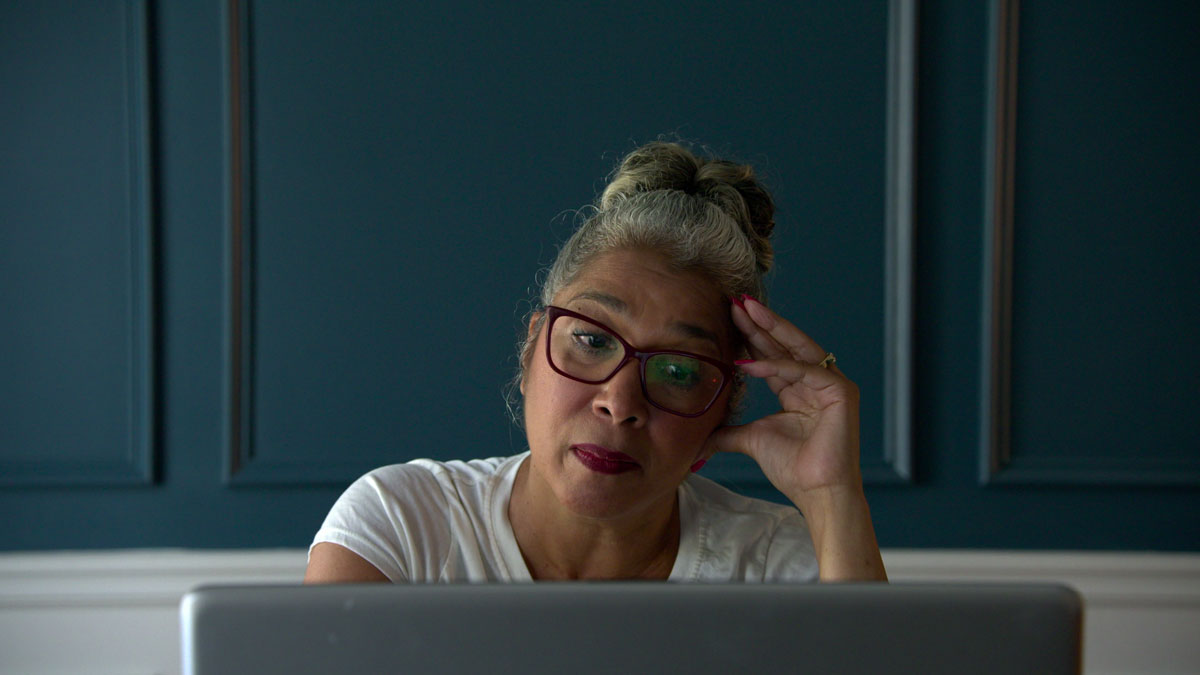
Several dancers left 7M afterward, and the Wilkings banded together with other parents whose children suddenly disappeared from every part of their lives aside from their public-facing TikTok channels. Many of the subjects featured in the docuseries are plaintiffs in a 2023 civil suit against Shekinah, claiming it is a cult operating under the guise of a religious organization.   

Shinn is by no means the first entertainment industry Svengali to profit off other people’s talent and physical labor. Some would say that pretty much describes what an agent does, save for requiring a 10% “Man of God” tip on top of the church tithing and other percentage skims that substantially reduce dancers’ earnings.

Some former 7M members tell their documentary interviewer that sometimes they handed almost everything over to Shinn, even if they didn’t realize they were. All standard operations for cults, confirmed when “Dancing for the Devil” introduces Melanie and Priscylla Lee, two other sisters whose relationship Shinn broke when Shekinah was expressly a worship community.

We need your help to stay independent

Melanie Lee left Shekinah and tried to take Priscylla with her, but Priscylla remained under Shinn’s thumb for 21 years. During that time, she alleges he sexually and financially exploited her and other church members by having them work for his various businesses, paying them next to nothing, and exerting control over their bank accounts.

For his part, Shinn’s name is still attached to a number of ventures, and he owns a multimillion-dollar Studio City home where former members say most of the dancers’ video content is shot.

Shinn has denied all wrongdoing and slapped several of those taking legal action against him with countersuits. According to a few of the documentary’s subjects, he also allegedly instructed the dancers to reestablish contact with their families after the Wilkings’ video went viral to maintain the image of normalcy for their social feeds.

People coming into this story fresh from Netflix’s gateway are joining a situation Instagram and TikTok devotees have been following for two years. But considering how microtargeted social media algorithms are, there are many more people in that group than the latter.

Dancing for the Devil: The 7M TikTok CultDancing for the Devil: The 7M TikTok Cult (Netflix)

This is one of the few cult docuseries that doesn’t require much effort to dig up information on where the main players are. Simply enter a name into any search engine and their video feeds come up.

A major contributor to the 7M cult’s perceived creepiness is the dancers' unfailing polish and flat if gleaming expressiveness. 

The unfailingly flawless choreography, with each dancer hitting their mark perfectly, is amazing in small doses, but to watch several after downloading the documentary is disconcerting. There’s a whole lot of “nothing to see here” distraction — which is the point, and which will continue to build Shinn's wealth until it collapses. As several experts point out in this and other series, cases brought against alleged cults and their leaders almost always fail unless their members can prove that actual crimes were committed under the auspices of serving the organization.

Dancers tell powerful stories without using words. Ultimately that makes “Dancing for the Devil” a fascinating awakening to the concept of media skepticism.

In the series Melanie Wilking and her parents reveal they have resumed some limited version of contact provided none of them brings up Shekinah or 7M during their visits. One scene shows Melanie weeping at the thought that Miranda, the person she’d always assumed would be at her side on her wedding day, wouldn’t be there. After all, Miranda didn’t tell her family she was marrying BDash; they found out in a TikTok post with the rest of the world.

Right around the time “Dancing for the Devil” premiered, Miranda also posted a stylized photo of herself standing by empty chairs in a courtyard. “Had such a great time at my sister’s wedding,” she posted alongside emojis of sparkles and a ring. There’s a video of Miranda, Melanie and Kelly smiling and dancing together, as if all is mended and there’s nothing to see here.

On June 4, Miranda shared another statement in an Instagram post revealing that she is the plaintiff in a defamation suit and therefore limited in what we could say. 


Want a daily wrap-up of all the news and commentary Salon has to offer? Subscribe to our morning newsletter, Crash Course.


Referencing her family, she writes, “The truth is, we just don’t see eye to eye at this time. I believe that this documentary is a one-sided story. I gave my life to Jesus Christ in 2020 and asked my family for some space in the very beginning to collect my thoughts and process my new walk I wanted to take with God . . . My family didn’t honor the space I asked for and I saw a different side to them I’ve never seen before. Honestly, it made me mad, frustrated and annoyed that they were being so overbearing and chaotic.”

Miranda prefaces this written statement with a short video in which she smiles brightly and seems upbeat, waving goodbye as if confirming a coffee date with a friend. Only the people closest to her know if these are her true feelings or if the statement was coerced or written for her.  

But fandom is the desired result of a mirage persuading millions that what they see is real and what they hear is the truth. Dancers tell powerful stories without using words. Movement is their language, their medium. Ultimately that makes “Dancing for the Devil” a fascinating awakening to the concept of media skepticism. The 7M dancers are excellent at producing short bursts that strike us with awe but say nothing of note, which we would never question if we didn’t know who is said to be pulling their strings.

"Dancing for the Devil: The 7M TikTok Cult" is streaming on Netflix.

Fani Willis helped derail Trump’s Georgia election case with an “absurd sideshow,” legal experts say

Donald Trump's election interference trial in Georgia has been postponed again, with many critics laying the blame on Fulton County District Attorney Fani Willis, who oversees the case but now faces possible disqualification over her personal relationship with lead prosecutor Nathan Wade.

Trial judge Scott McAfee ruled in March that the case could go ahead, despite the relationship, but then the Georgia Court of Appeals took up the case, issuing an order Wednesday that ground proceedings to a halt.

This is not the only Trump case where the former president might not have to endure a trial before the November election. In Florida, Judge Aileen Cannon has been accused of stalling to Trump's benefit, while in Washington, D.C., the Supreme Court is considering whether to limit when former presidents might be prosecuted, delaying his federal election interference case.

But in Georgia, "the DA has no one to blame but herself," according to George Washington University law professor Randall Eliason. "Handing Trump this conflict issue was a 100% own goal."

Anthony Michael Kreis, a constitutional law professor at Georgia State University, concurred. "There are only two people responsible for the Georgia trial not having a chance to go to trial before the November 2024, election. Neither of them wear robes," he said. "History will judge them for their poor decisions, especially if Donald Trump wins the presidency."

Kreis opined that though the appeals judges' decision should not have delayed the trial further, they had reasonable grounds to make that decision. He also suggested that, despite the "massive unforced error" of not trying the Trump case before the election, Willis could still bring some of the remaining co-defendants to trial "ASAP."

"[L]et the country see this fall exactly what Trump and his allies did in 2020-2021," Kreis wrote.

Indeed, the order from the appeals court only applies to the defendants who appealed McAfee's March decision to keep the trial going. That means Willis could still move forward against former Trump attorneys John Eastman and Ray Smith, former Coffee County elections director Misty Hampton, Republican state Sen. Shawn Still and others. At least one defendant, Eastman, has said that he wants to have his trial before 2025.

While University of Michigan law professor Barb McQuade agreed that Willis used "poor judgment in having a romantic relationship with a subordinate," she also argued that the relationship "has nothing to do with the guilt or innocence of Trump and his co-defendants."

"What an absurd sideshow," she said.

Flavor Flav is doing everything he can to save Red Lobster

Flavor Flav has made it clear that he won’t let Red Lobster perish under his watch.

On Monday, the Public Enemy rapper took to X (formerly Twitter) to share that he had visited a Red Lobster location and ordered everything on the menu in an attempt to save the failing restaurant chain. 

“Ya boy meant it when I said I was gonna do anything and everything to help @redlobster and save the cheddar bay biscuits,,, ordered the whole menu,!!!” Flavor Flav wrote alongside a photo of himself posing in front of a spread of Red Lobster menu items like shrimp scampi, popcorn shrimp and clam chowder — just to name a few.

The latest post comes after Flavor Flav made a promise last month saying he would do everything he could to “help save one of America's greatest dining dynasties.” In response, the official Red Lobster account told Flavor Flav to check his direct messages. “YOOOOOOO,!!! It’s all happening!!!!!” he said shortly after.

Flavor Flav isn't the only one concerned about Red Lobster's future. 

On May 19, the company filed for bankruptcy after closing nearly 50 restaurant locations across the U.S and liquidating restaurant equipment via auctions, which has led to a lot of speculation and misinformation about what's next, as well as what originally caused the chain's decline. A lot of fingers were initially pointed at Red Lobster's "Endless Shrimp" deal, saying the promotion — which analysts estimate factored directly into an $11 million operating loss in the third quarter of 2023 — crippled the restaurant. However, the truth is actually far more complicated. 

Per CNN, the company said it was more than $1 billion in debt and had less than $30 million available in cash. Red Lobster will sell its business to lenders as part of a Chapter 11 reorganization and receive financing to continue operations. The company said it will also continue to close more restaurants in the near future.

Red Lobster currently touts 578 restaurants across 44 states and Canada, and serves an astounding 64 million customers a year. One in five lobster tails purchased in North America is reportedly bought by Red Lobster.

In 2014, Red Lobster was sold to Golden Gate Capital, a private equity firm, for $2.1 billion. Since 2020, Thai Union Group — a Thailand-based seafood distributor — has owned 49% of the company, making them the chain's largest shareholder. And Red Lobster has struggled under their leadership. In recent years, the company has been hit hard by mismanagement, competition, inflation and other factors, analysts and former Red Lobster employees told CNN.

“This restructuring is the best path forward for Red Lobster. It allows us to address several financial and operational challenges and emerge stronger and re-focused on our growth,” the company's CEO Jonathan Tibus said in a press release. “The support we’ve received from our lenders and vendors will help ensure that we can complete the sale process quickly and efficiently while remaining focused on our employees and guests.”

Red Lobster assured customers that it's not going out of business (at least for the time being), clarifying that the filing is a “legal process that allows us to make changes to our business and our cost structure.”


Want more great food writing and recipes? Subscribe to Salon Food's newsletter, The Bite.


“The truth is, some of the world's most beloved brands like Delta and Hertz have used this same process to protect their futures and their customers stood with them and rooted them on,” the company said in a May 21 statement shared on X. “And because of that, they emerged stronger.”

Flavor Flav told fans and followers that he plans to make similar purchases at other Red Lobster locations soon. “Imma hit as many as I can,,, cuz I am EVERY WHERE MAN,” he said in another post. “[N]ow we going back tomorrow or the next day and doing it again,!!!!”

The rapper also took the opportunity to clap back at one X user who questioned how his exorbitant stunt would actually save the company: “Itz saving some of the staff with da money I gave em,,, whatchu doing to help anyone,???” 

To another skeptical user, Flavor Flav simply said, “Don't tell me what I can and can't do,,, just watch.”

Scientists discover ocean fungus that eats plastic

Scientists have discovered a possible new tool for addressing the growing problem of plastic pollution in the world's oceans. A recently published study by an international consortium of researchers details a marine fungus called Parengyodontium album which lives on plastic litter in the ocean. The fungus is capable of breaking down polyethylene particles — the most prevalent commercial plastic in the ocean — once the plastic has been exposed to ultraviolet light. The team also discovered the amount of time it takes for fungus to do its job. 

“Marine fungi can break down complex materials made of carbon. There are numerous amounts of marine fungi, so it is likely that in addition to the four species identified so far, other species also contribute to plastic degradation. There are still many questions about the dynamics of how plastic degradation takes place in deeper layers," lead study author Annika Vaksmaa, of the Royal Netherlands Institute for Sea Research, said in a Monday release. "What makes this research scientifically outstanding, is that we can quantify the (plastic) degradation process."

A plastic particle colonized by marine fungus ParengyodontiumA plastic particle (red) is colonized by the marine fungus Parengyodontium album. (Annika Vaksmaa/NIOZ)

The discovery was the product of international scientific collaboration between study authors at the Royal Netherlands Institute for Sea Research and researchers from Utrecht University, the Ocean Cleanup Foundation and research institutes in Paris, Copenhagen and St Gallen, Switzerland. A large number of bacteria types are known to be able to break down plastic. But Parengyodontium album is the latest of just four known marine fungi species able to degrade plastic. 

Researchers noted that humans annually produce more than 400 billion kilograms of plastic, an amount that is expected to triple by the year 2060. Plastic pollution, including microplastic debris, has been linked to human infertility as well as reproductive drops in several forms of marine life — and is considered to be a long-standing cause of ecological disruption more widely. The White House recently announced an initiative to address so-called "forever chemicals," a prominent byproduct of plastic pollution and waste.  

Former Pence aide says she’s “happy to discuss” Trump’s mental decline if the WSJ is interested

After the Wall Street Journal published "Behind Closed Doors, Biden Shows Signs of Slipping criticized as a "hit piece" based on claims from Republicans  a former top aide to Mike Pence suggested that she could help the News Corp. publication report on former President Donald Trump's "own mental acuity & fitness for office."

"We can start with the closed doors discussions on milkshakes during intel briefings, windmills causing cancer, what bleach does & doesn't do & and go from there," the former national security advisor, Olivia Troye, posted on X.

The Journal article, which reported that "participants in meetings said the 81-year old president performed poorly at times," was co-written by Siobhan Hughes and Annie Linskey, the latter once mocking Biden's visit to the burial site of his son Beau. They wrote that the participants cited instances of soft speaking, reading from note, and extended pauses as evidence of Biden's slippage, but also acknowledged that many of them were Republicans whose party has used Biden's age to criticize him on the campaign trail. Two generous providers of hearsay were House Speaker Mike Johnson, R-La., and his predecessor, Rep. Kevin McCarthy, R-Calif.

Though Troye provided just a brief preview of what she might reveal about Trump, the former president has himself stepped up to provide fodder for the public. In recent months, he has repeatedly gotten confused about names (often switching Biden and Barack Obama), developed a tendency to nod off in public, forgotten what year he was president and generally rambled off-topic at public events.

In March, Salon published an interview with University of British Columbia forensic psychiatrist Dr. Elizabeth Zoffman, who observed changes in speech patterns, a decline in cognitive focus, changes in movement and gait, and other indicators that led her to conclude that Trump appears to be suffering from behavioral variant frontal-temporal dementia and should be evaluated by neurologists who specialize in the condition.

Another psychologist, Dr. John Garter, told Salon what he thought about the difference between the two 2024 candidates: "Biden's brain is aging. Trump's brain is dementing."


Former Alito clerk says it’s “bonkers” that he won’t recuse himself from cases involving Trump

Amid the roiling controversy over flags associated with right-wing MAGA violence that were flown outside Samuel Alito's homes, the conservative Supreme Court justice has insisted on staying where he is and refused to step aside from cases involving Donald Trump and the January 6 insurreciton. Despite Alito's excuse that it was his wife who is "fond of flying flags," one of his former law clerks says that his explanation doesn't pass muster.

That law clerk, Susan Sullivan, wrote in a piece for The Philadelphia Inquirer that "the flag flying upside down at his home in the past unequivocally telegraphs reasonable questions about his impartiality in cases involving Trump."

"These questions, separate and apart from the crisis in confidence that such conduct may raise for the court, mandate Justice Alito’s recusal from these cases," she continued. Sullivan said that the decision to come forward was not easy, because she had clerked for Alito and knew to be "honorable" and a "man of integrity," but the issue at hand was of paramount importance. "At stake is not only the independence of the court itself, but also its constitutional credibility, and its role as a protector of our constitutional democracy," she warned in her op-ed.

Sullivan brought her argument to MSNBC, telling host Lawrence O'Donnell that the display of an "incendiary" Appeal to Heaven flag at the Alitos' New Jersey home is an "irrefutable symbol not just of people who still challenge the legitimacy of the election, but who actually violently attacked the Capitol … irrespective of why it is there, who put it there, it shouldn't have been there."

"This decision to recuse himself is misguided — its bonkers, it's not a legal term, but I think it is," she said. She and O'Donnell pointed to the Supreme Court's Code of Conduct, which states that the appearance of impropriety to a reasonable person is enough to mandate a recusal. Alito has argued that the flags would not meet that standard.

“She doesn’t belong on the bench”: Experts say Cannon’s move suggests she’s “trying to kill” case

June 10 will mark a full year since U.S. District Judge Aileen Cannon was randomly assigned Donald Trump’s classified documents case. There is no set trial date. There have hardly been any rulings. But now, at least, there will be a full day and a half of hearings later this month during which right-wing attorneys who are not even part of the case will be given the opportunity to argue that special counsel Jack Smith never should have been allowed to bring charges in the first place.

The facts of the case are this: Trump, as he left the White House in the wake of his failed insurrection, took top-secret classified documents – dealing with everything from nuclear programs to battle plans – and refused to give them back. A search of his Mar-a-Lago resort found state secrets in his office and a bathroom. An audio tape shows Trump discussed one, about a possible attack on Iran, and acknowledged he did not have the right, later asserted by his defense, to unilaterally disclose it: “See as president I could have declassified it. Now I can’t, you know, but this is still a secret.”

Cannon, who Trump appointed just months before losing the 2020 election, has made the case complicated by entertaining just about every argument the defense has made, without making a definitive ruling that would allow the Department of Justice to file an appeal and maybe have her removed. Last month, she indefinitely postponed setting a trial date, citing that self-imposed workload and all the “myriad and interconnected” issues she has yet to decide on; this, after she “effectively disrupted” the original investigation, per The New York Times, by among other things considering the argument that Trump had the right to assert executive privilege and claim highly classified documents as his own (the 11th Circuit Court of Appeals overruled and reprimanded her some six months before she was randomly given the entire case).

It is, at the very least, not a good look. But before claiming prejudice, some argue that it could be mere incompetence from a 43-year-old judge who has never before handled a case of such magnitude. Maybe that’s why, for instance, she again upended her own schedule on Wednesday, postponing a planned three days of hearings on whether Trump’s defense team should be allowed access to prosecutors’ purported conversations with national security officials.

“Some will say Cannon has shown clear bias,” MSNBC legal analyst Lisa Rubin commented Wednesday. “I won’t. Weird sleights of scheduling, delay, [and] even legally erroneous rulings don't prove bias. But her management of her docket and micromanagement of these motions are baffling, at best, and highly problematic at worst.”

Others say it’s time to stop being generous.

“This whole way she has conducted this case is wildly, totally, crazily unusual,” CNN legal analyst Jeffrey Toobin argued, pointing to the decision to allow outside attorneys not just to file amicus briefs, in which they would comment on legal questions at issue in the case, but get a half hour each to make oral arguments – even after other courts already rejected similar claims that the appointment of a special counsel is unconstitutional.

It’s “just another illustration that she is trying to kill this prosecution,” Toobin said Wednesday. “That’s the only conclusion you can draw. No other judge in the federal system that I’m aware of would treat these issues anything like what she’s trying to do.”

We need your help to stay independent

Mary McCord, a former federal prosecutor, told MSNBC she’s “never seen” a district judge allow an outside party – in this case, attorneys associated with the right-wing Federalist Society, of which Cannon was a member herself – given time to make in-real-life arguments, much less a half hour each.

“That is an extraordinary amount of argument time on a single issue,” McCord said. “Most oral arguments aren’t even 30 minutes per side or party.” And it almost never happens at the highest level, the Supreme Court, much less at a district court, she added.

Former Miami-Dade County Court Judge Jeff Swartz told CNN that it looks as if the judge is trying to delay the case “as long as she possibly can,” perhaps hoping to drag it out past the November election; if he wins in November, Trump could order the Department of Justice to drop the case altogether.

“If she is that ignorant of how to handle these matters, then she doesn’t belong on the bench,” Swartz said. “If she’s doing it because she’s lazy, then she doesn’t belong on the bench. If she’s doing it just to delay, then she doesn’t belong on the bench.”

Ty Cobb, an attorney who worked for the Trump White House before becoming a vocal critic of the former president, said he doesn’t think Cannon will ever preside over a Trump trial, suggesting she will ultimately be replaced but not before she succeeds in dragging out the case.

“Judge Cannon is kicking the can down the road as long as she can and delaying both the trial, which is clearly her purpose – and when I say purpose, it is purposeful now, it’s not mere ineptitude,” Cobb told CNN. “This is clearly palpable bias on her part.”

Cannon, Cobb said, is trying to avoid “at all costs” making any sort of ruling that could lead the special counsel to appeal to the 11th Circuit, which has already overturned her before. At this stage, he said, her actions are disappointing – the most clear-cut Trump case stalled, with no end in sight – but no longer shocking.

“I don’t find anything she does surprising, at this stage in the game,” he said, “as long as it favors the former president.”

The press is the problem

Jeff Bezos is reorganizing the Washington Post. The New York Times is a pale shadow of its former self. CNN pays known liars and reporters call them “colleagues.” Most news organizations are in a crisis of conscience amid economic ruin. 

I take no joy in saying this. The media sucks.

Not “mainstream” media. All media; corporate media, social media, local media, national media, state media, non-profit, for-profit and the tattletale kid down the street.

The biggest problem we have is that we put profit ahead of content, we have no idea what we’re doing and we shout at the top of our lungs while doing it. We try to predict the future, don’t understand the present and misinterpret the past. Sometimes at press conferences, we sound like bleating sheep. Other times we sound, even as we report on everything from natural disasters to policymaking, as if we’re calling a horse race.

The guardrails have been removed and thus we have two major political parties that fail to represent the majority of citizens. One political party consists of criminals, seditionists, rapists, con artists, liars, misogynists and authoritarians while the other party consists of weak-kneed do-gooders restrained by woke culture and too afraid to call it all out for what it is. The media, meanwhile, plays along.

Many ask, where is our Walter Cronkite or our Edward R. Murrow? The answer is there are none and there won’t be any in the foreseeable future because of the disintegration of the Fourth Estate.

We treat the convicted felon Donald Trump as if he’s a normal presidential candidate. He is not. We treat this election year as if it is normal. It is not. We have no idea how to present and report the news. And if someone calls this into question, they are often shunned. I hope that doesn’t happen to George Conway.

This week Conway appeared with Republican shill Scott Jennings on CNN. Jennings is a CNN paid contributor from Louisville who has a great deal of experience spewing out convicted felon Trump’s talking points. Conway called him out for lying and questioned why CNN was paying Jennings.

That’s actually a very good question, and I would love to know why a network would pay Jennings any amount of money considering the lack of factual cohesion with most of what he says. But the CNN anchor wasn’t concerned about facts. She admonished Conway, instead. “Scott is our colleague and we’re going to treat him with respect,” the anchor said, and then slapped Conway on the wrist again and told him to “speak to him respectfully as such.”

This causes many, like political activist Danielle Moodie, who appeared on Mary Trump’s “Nerd Avenger’s” podcast Tuesday, to conclude that “they’re all in bed together,” meaning the press and politicians – particularly the far right.

We aren’t. And I’m sorry, but I do not consider Jennings a colleague. He’s a propagandist, Conway was correct to admonish him and I’m far more worried about reporting facts than I am worried about personal insults.

If you’re going to admonish someone for being “rude” while defending someone spreading disinformation, then you’re the problem – not the guy calling out lies for being lies.

Dahlia Lithwick, a contributing editor at Newsweek and senior editor at Slate also said on Mary Trump’s podcast that, “we’re not all friends,” and she isn’t concerned about politeness. As Sam Donaldson once noted when he was called “rude” by detractors, he was far more worried about reporters who were too disinclined to ask a decent question or those who knowingly or ineptly reported falsehoods.

Me? I’ve been called worse by people who say they love me. I don’t really care what you think of me personally. It’s irrelevant. The only relevant things are the facts. 

That brings me to Jon Stewart. On his show Monday, he praised the courts with its “legions” of faults for being the last bastion of facts. Inside a court of law you have to prove what you say. In the court of public opinion – i.e. the press and social media – you can try to craft your own reality and con as many people as you want.

We need your help to stay independent

It happens every day, and there are multitudes of reporters who simply go along to get along. How often have you heard pundits say that today we are living “in two different realities,”?

Biden’s executive order on immigration is a perfect example. The GOP and the convict Trump tell us it’s a desperate act that will destabilize the border and cause national security concerns and Biden is at fault for all the trouble along the border. That not only ignores the last 40 years of problems, but we give Trump equal time while simply ignoring the fact that it is members of the GOP doing Trump’s bidding in Congress who delayed on two separate occasions a bipartisan agreement to help fix the problems along the border because Donald Trump wanted to blame Joe Biden for the problem. “Of course it’s an invalid, inaccurate criticism,” National Security spokesman John Kirby explained. “What’s destabilizing is the refusal by some in Congress to accept the hard-won compromise in the senate.”

Another example of the “two realities” is how we in the press constantly report on Joe Biden’s perceived mental state, but rarely say anything about Donald Trump’s. The Biden administration fired back Wednesday at a Wall Street Journal article in which Kevin McCarthy alleged Biden was “slipping,” and yet rarely do we see anything about Donald Trump’s rambling incoherence at his many staged events.

Jon Stewart would have you believe we in the media believe there is “no such thing as reality,” and thus we promote “multiple realities.”

“We do not live in multiple realities,” Stewart explained.

He is correct about that, but he’s wrong about the media.

Meanwhile, other pundits tell us that the media and politicians are in bed together. That’s also wrong. 

The truth is there is only one reality, most of the press has no idea what it is and are incapable of reporting on it. We’re not “in bed” with politicians unless we’re assault victims. Every President, beginning with Ronald Reagan, who oversaw the dismantling of the free press,  has contributed to the demise of the Fourth Estate and contributed to the current dilemma. The politicians have all the power and took away the public’s right to know as it promised media groups greater profit for ceding the power of the press. 

In short, what you see on the media landscape today is the result of more than 40 years of government deconstruction, an inability by media companies to understand growing technologies and a healthy desire by the government to control the press – and they know how to appeal to greedy media companies who only care about the bottom line above all else.

So, while there are more than twice the number of people on this planet as on the day I was born, there is a quarter of the number of reporters and a mere handful of companies supplying what passes for news content.

The owners may think they’re in bed with politicians, but they are not members of the club. They are kept men and women – or pets that are intimidated and manipulated by their owners – the politicians. The rest of the press – those who actually do the news gathering – are either under-educated, lack the acumen and experience to do their job or are guided by their own hubris. Of course, they could be all three. Most of the trained reporters simply do not have what it takes to do their job – but the owners don’t care as long as they make money. And they make money by hiring people too stupid to do their job. 

H.L. Mencken warned us nearly a century ago about “chain-store” methods of journalism and the “eager swallowing” of propaganda done by journalists “in the face of the plainest evidence of its falsity.”

There is nothing new to any of this, except that the internet has enabled propaganda to spread more viciously and thoroughly as the numbers of independent reporters dwindle to a mere handful on the planet. 

Our president is in France this week paying his respects to those who died trying to keep the world free from tyranny and oppression and made the ultimate sacrifice in the D-Day invasion. We had to take the fight to foreign shores 80 years ago. Today that fight is here, on our own land and led by our own people.

Convicted felon Donald Trump is a liar. The media is complicit in his dangerous grift to control and own the soul of our nation. Good Christians, atheists, poor, rich and what’s left of the middle class have given their money and time to this grifter. Their efforts are legitimized by a complacent media powerless to do anything.

Break up the media monopolies now. Diverse ownership leads to a diversity of opinions. Competition leads to better fact-finding. Education is the key. AI isn’t the problem or the solution. People are both. If we want different results we have to change the way we do business.

And I don’t care if this garners me respect from those for whom I have no respect. Facts are facts. Change the media now or there may be no tomorrow.

Israel funding covert influence campaign to push Democrats to back assault on Gaza: NY Times

Israel's Ministry of Diaspora Affairs organized and paid for a digital campaign to influence U.S. lawmakers, especially Democrats who are Black, The New York Times reported on Wednesday.

The ministry allotted $2 million to the operation in October and hired Stoic, a Tel Aviv-based political marketing firm, to carry it out. Stoic established fake news websites and hundreds of fake accounts on X, Instagram, and Facebook that posted pro-Israeli messages, trying to push lawmakers such as Rep. Hakeem Jeffries, D-N.Y., the House minority leader, Rep. Ritchie Torres, D-N.Y., and Sen. Raphael Warnock, D-Ga., to fund Israel's military and support its war efforts, the Times reported.

The influence campaign had been reported by a few news and nonprofit organizations in recent months, but the Times article, which drew from operation documents and interviews with current and former diaspora ministry officials, was the first to show that Israel's government was behind it. Haaretz, an Israeli newspaper, published a related story one hour later on Wednesday.

Critics condemned the Israeli government for its role in the disinformation campaign.

"So in addition to the pro-Israel lobby spending tens of millions to defame and defeat progressives in Congress, we now learn that Israel creates fake media to target friends and opponents by inundating with fake news supporting Israeli positions," James Zogby, co-founder of the Arab American Institute, wrote on social media.

The disinformation campaign comes amid other efforts by pro-Israel groups to influence U.S. politics during its assault on Gaza, notably the lobbying and campaign money spent by groups such as the American Israel Public Affairs Committee (AIPAC) and its affiliates.

The Israeli disinformation campaign also drew comparisons to Russia's well-known attempt to interfere in the 2016 U.S. presidential election, which was a central focus of the U.S. political commentariat in the years that followed. Ishmael Daro, an editor at Democracy Now!, made a tongue-in-cheek prediction that the reaction from the U.S. political establishment would be similar this time.

Last week, both Meta and OpenAI issued reports on Stoic's disinformation campaign and said they had blocked the company's network from further activity. Meta said it had closed more than 500 fake Facebook accounts and OpenAI called Stoic a "for-hire Israeli threat actor," NBC News reported. Stoic's users remain active on X, the Times reported.

Many of the fake social media posts were generated using ChatGPT, the AI-powered chatbot owned by OpenAI, and much of the language in the posts was "stilted" and repetitive, the Times reported.

The covert scheme has also been characterized as "sloppy" and "ineffective," and it made little penetration with the general public or government figures. "We found and removed this network early in its audience building efforts, before they were able to gain engagement among authentic communities," Meta wrote in its report.

The Times did not explain that the covert influence campaign was discovered in February by the Digital Forensic Research Lab (DFRLab) of the Atlantic Council, a Washington, D.C.-based think tank, and by Marc Owen Jones, a professor in Middle East studies and digital humanities at Hamad Bin Khalifa University in Qatar, according to social media posts.

FakeReporter, an Israeli disinformation watchdog, followed up those initial discoveries with a March report on the campaign's activities, including the fake social media accounts and creation of the online platforms—Non-Agenda, The Moral Alliance, and Unfold Magazine—that created or republished news from a pro-Israel perspective, focusing on, for example, purported links between the United Nations Relief and Works Agency (UNRWA) and Hamas. The findings were reported in Haaretz at the time.

That Israel "ran an operation that interferes in U.S. politics is extremely irresponsible," Achiya Schatz, the executive director of FakeReporter, told the Times. He characterized it to Haaretz as "amateurish" and "anti-democratic."

FakeReporter in fact issued a second report on Wednesday showing that Stoic's influence network may have gone further than the Times reporting shows. The watchdog group uncovered four additional websites, apparently Stoic-affiliated, that contain Islamophobic and anti-immigrant content. DFRLab had issued a report in March which also cited pro-Israeli disinformation and Islamophobic rhetoric, in that case targeted largely at Canadians.

The new report concluded that the influence network has "apparently developed into a large-scale effort to target various groups, some outside the U.S., using Islamophobic and anti-immigrant content."

Republicans hide their war on contraception in plain sight

Republicans know that their war on legal, accessible birth control is unpopular. But that's not stopping them because, as they learned from convicted felon Donald Trump, the way to hide what you're up to is simple: Lie. Lie a lot. Lie every time you open your mouth. Lie with a straight face, and have faith that the weak "fact checks" offered by the mainstream media don't matter. The Republican comfort levels with lying are sky-high in the era of Trump. Speaker of the House Mike Johnson, R-La., does it with a smirk, satisfied that no one can stop him. It is somehow still staggering how much they lie about birth control and their nefarious intentions toward it. The good news is that Democrats are taking action to cut through the GOP's thick forest of falsehoods.

On Wednesday, Senate Majority Leader Chuck Schumer, D-N.Y., held a vote on the Right to Contraception Act, which guarantees the right of an individual "to obtain contraceptives and to voluntarily engage in contraception." The legislation also protects the right of licensed health care providers "to provide contraceptives, contraception, and information, referrals, and services related to contraception." Despite loudly insisting they have no desire to take away birth control, all but two Republicans voted against the bill. This follows a 2022 vote on the bill in the House, in which all but 8 Republicans voted against the right to use contraception.

Republicans' excuses this week ranged from obvious lies to obfuscation tactics which ultimately amount to lies. Sen. John Cornyn, R-Tex., called the vote "phony" because "contraception, to my knowledge, is not illegal." But of course, no one is saying it's illegal — yet. The point of Wednesday's vote was preventive, to ensure the right to birth control in the face of overt calls, including from Supreme Court Justice Clarence Thomas, to "revisit" the legality of contraception now that the right to abortion is no longer federally protected. 

Sen. Katie Britt, R-Ala., whose State of the Union response introduced the nation to what a strange and dishonest character she is, went in for an appropriately weird lie. She falsely claimed the bill would "offer contraception like condoms to little kids." It does no such thing, though I have a lot more questions for Britt about how she thinks puberty works, and if it's induced by the sight of condoms instead of the natural process of growing up. 


Want more Amanda Marcotte on politics? Subscribe to her newsletter Standing Room Only.


Dishonest actors like Cornyn are being empowered by Trump, whose lies are even more hamfisted. Trump was recently asked by a reporter if he plans to restrict birth control and he simply said, "Some states are going to have different policy than others." Journalists know this is his way of avoiding a straight answer while letting the religious right know he supports any law they pass. Trump's campaign staff, clearly panicked that he'd let his anti-contraception stance slip, immediately took to Truth Social to claim he had "NEVER" and would "NEVER" support restrictions on birth control. This, however, is a blatant lie. During his time in the White House, Trump passed policies to cut off contraception coverage on health insurance, appointed health advisors who would like to see most methods banned completely, and ended federal funding for birth control at about 1,000 family planning clinics. 

The good news is that Democrats are taking action to cut through the GOP's thick forest of falsehoods.

Republicans use two big, interlocking lies to conceal an anti-contraception agenda from the public. First, they deny they intend to take birth control away, by limiting their definition of "birth control" to condoms and the rhythm method. To justify that shell game, they lie about how the most popular and effective forms of birth control work, claiming they are "abortion." They ping-pong between these two lies, so that the fact-checkers can never keep up. 

In a lengthy article trying to untangle the rat's nest of lies Republicans tell to confuse the public on this issue, the Washington Post offers a good example: The misnamed Alliance Defending Freedom (ADF), one of the groups behind the Supreme Court's 2022 decision that ended abortion rights, claims they are "not working to ban contraception and has never done so." This is untrue, as the Post reporters point out, because ADF has "labeled birth-control methods as abortifacients in various lawsuits." The reason to do that is to create a pretext to ban birth control under existing abortion laws. The pill, the injection, the implant, IUDs, and emergency contraception are all reimagined, falsely as "abortion," which would make it illegal in many states. To justify this lie, they falsely claim that these methods work by "killing" fertilized eggs. In reality, they all work by preventing sperm from meeting egg. 

That's a lot of lies, and the scary thing is they use even more lies to distract when confronted on that already exhausting list. But readers get the idea. It's a Russian nesting doll of lies, each more confusing than the last. The point is to wear people out because arguing with liars is impossible. But the takeaway is clear-cut: All these Republican lies point in the same direction: An objection to most forms of contraception. 

Sen. Joni Ernst, R-Iowa, offered a good example of how the interconnected lies work together to make it impossible for a clear fact check to break through. When asked why she won't support a bill to enshrine birth control as a right, she told CNN she objected to the bill covering Plan B emergency contraception, "which many folks on the right would consider abortive services." 

So many lies in such a short sentence! Plan B is not an abortion. As the Washington Post noted, "Emergency contraceptive pills such as Plan B and Ella work by inhibiting or delaying ovulation, thereby preventing sperm from fertilizing the egg." The second lie is her implication that if folks "consider" something to be true, that makes it the equivalent of a fact. But many people also "consider" the Earth to be flat or believe Ernst is a hobgoblin in a lady suit. Doesn't make it true! Then there's the dishonesty of focusing only on Plan B, which is a drug stigmatized because it's taken after intercourse. What Ernst fails to mention, however, is that emergency contraception and the birth control pill are the same drug, just different doses. They work identically, by suppressing ovulation. The Christian right opposition to Plan B is a stalking horse for banning all hormonal contraception. Ernst's failure to admit that is a lie by omission. 

We need your help to stay independent

One can see in Ernst's statement how this spiderweb of lies serves to distract and confuse. It's hard to know where to start on the debunking! The lie about how Plan B works? The false assertion that a lie becomes fact if someone "considers" it so? The lie of omission, where she slides past the fact that a likely ban on emergency contraception would affect birth control pills? Or the ur-lie that these other lies serve to bolster, which is her claim that she isn't opposed to contraception, even though she is voting against a bill to protect contraception? 

Democrats are betting most Americans aren't interested in going down the rabbit hole of right-wing lies about contraception and how it works. Instead, the hope is that they just see headlines about how the majority of Republicans voted against birth control access, and draw the correct conclusion, which is that Republicans are attacking basic rights that most Americans thought had been settled. All the lies and digressions Republicans spew cannot conceal this basic reality: Republicans vote against birth control because they don't believe it's a right. It's as simple as that. 

How does habitat fragmentation harm wildlife?

Imagine a vast agricultural field, endless rows of soy or corn running for acres in every direction. Now imagine that this field grows where a mighty forest once stood. The forest, long since chopped down by human hands and machines, now exists in just a handful of pockets, a few spots here and there where the original trees — and their inhabitants — still live.

It shouldn’t be a hard image to visualize. We’ve all seen it: the lonely patches of forest, grassland or other natural systems squeezed between farmland, buildings or highways.

These pockets of undeveloped land may be small, but for many wild plants or animals, they’re all that remains. Those often-endangered species depend on fragmented habitats for their continued survival.

But although the sites serve as vital refuges for wildlife, fragmented habitat comes with a cost — sometimes many costs — and species carry those burdens unevenly.

To understand how habitat fragmentation affects wildlife, I often think of a study I first covered in 2016 about three monkey species — the white-fronted capuchin (Cebus albifrons), the Venezuelan red howler (Alouatta seniculus), and the critically endangered brown spider monkey (Ateles hybridus). All three live in Colombia’s Magdalena Valley, where they’ve been forced to adapt to life in and around massive cattle ranches.

During the study researchers visited 10 forest fragments that had become isolated from each other by the cattle pastures, the San Juan River and natural savanna. They studied each area for signs of the three monkeys and the health of the forest itself.

In the process they developed three case studies about the ways species adapt — or fail to adapt — to habitat fragmentation. They also provided insight into how other animals might fare in similar situations.

Case 1: The White-Fronted Capuchin

Capuchins, gorgeous, cream-colored monkeys who weigh about 7 pounds, seemed to fare best. The researchers found about 130 groups of them living in all but the smallest forest fragment. A highly adaptable species, capuchins are omnivores — eating everything from fruits to small mammals — and forage both in trees and on the ground. They’re also capable of traveling great distances.

Those traits add up: The researchers concluded that the species is “not strongly affected by anthropogenic disturbance.” They even observed groups of capuchins traveling from one forest fragment to another, a sign that they’ve adapted to short bursts of time in the human-dominated parts of the landscape.

Capuchins have one other key advantage. They only breed every other year, and they mature slowly, but this appears to give them time to develop “individual learning and [the] ability to adjust to environmental variation,” according to the study.

Case 2: The Venezuelan Red Howler

Howler monkeys (who, despite the nation in their name, live in at least five countries) also did well, although not quite as well as capuchins. Researchers documented 87 groups of these primates. Again, they appeared in all but the smallest of the 10 forest fragments, but they displayed a tendency to stick close to the bigger trees at each site.

Those big trees provide most of what the animals need. As the researchers note, arboreal howlers are extremely slow-moving primates who are very careful about the way they exert their energy. That’s the point of their famous howl, which can be heard for miles: It warns off other howler groups and prevents fighting over food resources.

As for that food, they’re primarily leaf-eaters — the big trees provide a steady supply of food without the need to keep moving around during the day — although howlers can adapt to different food sources. But they didn’t venture out into the fields, as they aren’t adapted to life on the ground. In time this will limit each group’s success.

Case 3: The Brown Spider Monkey

Critically endangered spider monkeys fared worst. The researchers only made 33 observations for this species, all in the “best” five forest fragments, with high-quality canopy density that supported the highly arboreal primates.

These spider monkeys, a large-bodied species reaching up to 20 pounds, only eat ripe fruits, which they prefer to forage high in the tree canopy. This means their diet is extremely limited, as are the types of habitats they can inhabit.

Interestingly, spider monkeys appear to be very social, but groups in the study actively dispersed from each other to avoid individual competition for food. Which is a good thing, because there wasn’t a lot of it.

What can we learn from this?

Based on these observations, researchers concluded that forest fragment quality may be more important for some species than the size of the fragment or how isolated it is from other forests.

Size did matter, though. The smallest fragment, which was only 0.7 hectares (1.7 acres), had no monkeys of any species. That suggests that there must be a threshold beneath which a forest fragment becomes inhospitable to primates.

Although the capuchins appear to have adapted about as well as they could, the researchers did note that the forest fragmentation in the Magdalena Valley took place recently, so long-term negative effects may still be waiting in the wings.

Meanwhile, the study offered important clues to protecting critically endangered brown spider monkeys, previously considered one of the world’s most endangered primates (they only fell off that list in recent years because other species were doing so much worse). They remain threatened by habitat destruction, hunting, and the illegal pet trade. As the 2014 “Primates in Peril” report pointed out, the species at the time was restricted to less than 18% of its historic habitat in Colombia, and less than 1% percent of that habitat was protected. This study provided conservationists with some strategies to pick which of those remaining habitats (the biggest ones with the biggest trees) needed to be protected.

Tiny habitats, bigger lessons

We can also learn a lot about other species — and our broader conservation priorities — from these three monkey species.

Many other species face similar threats from habitat fragmentation. As the natural world gets squeezed into smaller and smaller refugia (last-chance habitat fragments), we’ll need to pay attention to what species and habitats remain and plan for their long-term survival.

That’s because small groups can disappear in the blink of an eye. The arrival of a disease, predator, natural disaster or other threat can wipe out an isolated species population or an entire habitat fragment. Constant monitoring will help conservationists adapt and respond to these threats before they become crises.

Most species will need some sort of connectivity between habitat fragments, allowing them to move as food supplies (and the seasons) shift. They’ll also need to find other populations of their kind, to prevent the inbreeding common in isolated groups. Many conservationists devote their careers to figuring out issues related to migration and connectivity.

Speaking of migration, understanding a fragment’s role on the greater landscape remains an essential piece of the puzzle. Think of birds, for example. As they migrate, they need places to land, feed and rest on every leg of their journey. That means preserving multiple habitats, even if they’re all fragments, across the landscape.

Specialist species will need the most help. Like the spider monkey, if a species relies on a specific food or a particular quality of tree, those needs will require conservation prioritization. If a species is a generalist, able to adapt to its circumstances — think about the racoons or deer in your suburban neighborhood, or the capuchin in this study — it may need less help. Although even then, preserving green space remains important.

Fragments also risk further degradation because they butt up against fences, roads or other forms of human development, which allow noise, pollution, introduced species, human hunters, dogs and cats, and a variety of other threats to make their way inside (a process of further degradation known as the edge effect). Any of these threats can chip away at a habitat’s unique qualities until it becomes uninhabitable. To preserve the most important fragments, we may need to establish buffer zones — think of them as the DMZ between nature and humanity — or find other ways to mitigate ongoing risks.

And of course, some species will never do well in fragments — for instance, wide-ranging creatures like grizzly bears, mountain lions and wolverines, who each require large territories without competition from others of their kind. We need to preserve large swathes of land and water for species like this to survive.

This may sound insurmountable in an ever-expanding human world, but there’s one more important lesson to consider: Fragmentation doesn’t have to be forever.

That’s why whenever I think about habitat fragmentation, I also think of the conservation group Saving Nature, which buys up farmland and other degraded lands, replants them, and recreates habitats and migration corridors. One of their most notable successes has been in Colombia (the nation where the study of the three monkeys took place), where they’ve secured nearly 4,500 acres toward a goal of creating a vital forest corridor.

Closer to home, I also look to the example of the Florida Wildlife Corridor, which since 2021 has promoted the conservation of more than 170,000 acres to help enable species such as the Florida panther to flow freely through the Sunshine State. This work, according to a new report, also protects people by reducing the threat of wildfires and increasing Florida’s climate resilience.

Then there’s the Yellowstone to Yukon Conservation Initiative, which aims to connect and preserve more than half a million square miles across western North America. They’ve already made great progress and, in the process, helped a wide range of species.

Dozens if not hundreds of other connectivity projects, both large and small, are taking place right now around the world — such as the world’s largest wildlife bridge, due to open near Los Angeles in 2026. And everywhere you look, you’ll find people working to remove dams or fences, or to make green spaces — parks, refuges, rivers or their own backyards — more hospitable to local and migrating wildlife, and to connect the green dots of fragmented habitats whenever they can.

We’re repairing the damage, one acre at a time, while we also fight a war against further attrition. We can’t do it fast enough, and many species and habitats don’t have much time to wait. But for rare plants and animals, every inch counts.

“Trump will be under house arrest in the White House”: Former DOJ prosecutor on what could come next

Donald Trump is now a convicted felon. Beyond the conviction in his New York hush-money trial last week, he still faces three other criminal trials. The punishments in those cases for the Jan. 6 coup plot and stealing classified documents are far more serious. Trump potentially faces hundreds of years in prison if convicted for these crimes.

Donald Trump’s historic felony conviction is part of a much larger unprecedented moment in American history where the country is facing an assault on its democracy from within by the Trumpists and other neofascists (which itself is part of a larger global plot against pluralistic democracy).

Those Americans who were hoping that Donald Trump’s historic felony conviction would somehow stop his attacks on democracy or force him to reconsider his antisocial behavior or to perhaps even withdraw from public life must be very disappointed. If anything, Donald Trump and his MAGA Republicans and other authoritarian cultists and followers appear to be energized by the hush-money conviction and are escalating their attacks on the country’s multiracial democracy and the rule of law and the governing institutions upon which they depend.

For example, Trump supplicant Speaker of the House Mike Johnson is now threatening to defund the Department of Justice in retaliation for its attempts to hold Trump responsible for his many obvious crimes. Other MAGAfied Republicans are threatening to convene Congressional investigations and hearings into (and by implication punish) Manhattan District Attorney Bragg and his conduct in Trump’s hush-money election interference trial. Donald Trump is continuing to incite violence by his political cultists and other followers and allies against Judge Merchan, President Biden, and his other “enemies” who were involved in a “witch hunt” against him. Of course, no such conspiracy exists.

During a Tuesday night interview on Newsmax, Trump again threatened to retaliate against President Biden and Hillary Clinton by putting them in prison. Trump has also made both direct and implied threats that President Biden and Hillary Clinton and other leading Democrats should be executed for treason. These attacks, lies, and projections by Donald Trump are the standard tactics of autocrats, dictators, and other enemies of democracy.

Donald Trump is continuing to show his disdain for Judge Merchan (who presided over the hush-money election interference trial) and the courts – and basically daring Judge Merchan to sentence him to prison – by sending out fundraising emails that mock his being found guilty, and newfound status as a felon.

On Tuesday, Trump sent out one such email which reads:

I SHOULD BE SENTENCED…

To four years of community service as your President!

But that won’t happen without the support of EVERY SINGLE True Trump Patriot! So I have just ONE question I need Friend to answer:

ARE YOU VOTING TRUMP AGAIN?

NOW is the time to HELP ME Save America

VOTE TRUMP

Everything I’ve gone through – INDICTMENTS, ARRESTS, SHAM CONVICTIONS – has been for Friend!

I would spend 1 MILLION YEARS  behind bars if it kept the Deep State from getting their filthy hands on you.

Trump and his propagandists know their target audience: Trump has reportedly raised more than 50 million dollars from his MAGA people in the twenty-four period following his felony conviction last Thursday.

In short, Donald Trump’s first felony conviction is not the end of something or a type of early climax that will inevitably lead to the end of the Age of Trump and the country’s democracy crisis. Instead, Trump’s felony conviction in the hush-money election interference case appears to be another chapter in an interminable and exhausting story where the future and outcome are still very much uncertain.

To make better sense of Trump’s conviction in the hush-money trial, what happens next with his appeals and sentencing, and the larger implications for the country’s democracy crisis and the 2024 election, I recently spoke with Kenneth McCallion. He is a former Justice Department prosecutor who also worked for the New York attorney general's office as a prosecutor on Trump-related racketeering cases. McCallion's books include the companion pieces "Profiles in Courage in the Trump Era" and "Profiles in Cowardice in the Trump Era," as well as "Treason & Betrayal: The Rise and Fall of Individual-1."

As a former Assistant U.S. Attorney with the Department of Justice you have gone up against Donald Trump in New York. Given his historic felony conviction in the hush-money election interference case, how are you feeling? 

The motions before the judge are quickly going to be disposed of. And Trump really doesn't have any credible, persuasive arguments on appeal, because Judge Merchan was so straightforward, rigorous, and meticulous in his oversight of the trial that the jury verdict is largely bullet-proof. Trump is going to appeal, obviously, but I know the judges on the Appellate Division First Department l in Manhattan fairly well. Those judges are no-nonsense, intelligent, and non-political. They will quickly see that there are just no trial errors that would require reversal and a setting aside of the jury verdict. The evidence was overwhelming. A motion to set aside the jury verdict is going nowhere because the DAs office put together such a meticulously crafted prosecution.

Trump and his lawyers did not do themselves any favors. They went very light on the cross-examination of David Pecker, for example, and then just loaded up on Michael Cohen. But the jury already knew that Cohen’s testimony had to be corroborated, and it was. Trump's team did not have an answer or a different narrative to offer the jury. The human brain is wired to require an alternative set of facts to be presented to them if they are being asked to reject the prosecution’s story. The jurors needed that alternative narrative from the defense if they were going to be convinced that Trump was not guilty as charged. But Team Trump was not able to provide the jury with any alternative theory, and thus defaulted.

Successful defendants generally do not rely upon the fact that the government has the burden to prove their charges beyond a reasonable doubt in our adversarial system. Trump's attorneys made the mistake of just relying on pointing out minor inconsistencies and small cracks in the prosecution’s case, which was not enough to avoid a conviction.

Was Trump's conviction anti-climactic?

Looking back on my years as a prosecutor, there is always a degree of nervous anticipation before a jury returns with its verdict. But if I were the prosecutor in Trump's hush-money case I would have felt that it really could not have gone much better. It would have taken something quite spectacular not to have a unanimous guilty verdict. I actually did not think that the jury would find Trump guilty on all 34 counts. A jury usually likes to cut a defendant some slack when there are so many felony counts to consider. But I think that Trump painted himself into a corner here. Trump's demeanor, the comments that he was making during the trial, and his attacks on the judge and his daughter did not win him any sympathy in the courtroom. Nor did the contemptuous attitude by Trump’s final witness- which upset Judge Merchan so much and led him to clear the courtroom – did not help Trump. New York juries are pretty sophisticated. And these jurors were not all liberal Democrats, not by a long shot. The jury carefully considered the evidence, and by all accounts they were very attentive during the trial. 

Why did Donald Trump lose?

Trump did not let his attorneys do their job. They were reasonably good attorneys. Trump was micromanaging the defense. For example, they were not very rigorous in their cross-examination of David Pecker — Trump directed them to do that. Trump wanted his attorney to go hard on Michael Cohen. But that was not the best choice given there was lots of corroborating evidence for his claims. It was clear that a deal was made between Trump and his supporters in the news media, The National Enquirer, to catch and kill stories that could potentially hurt him. Stormy Daniels also held up quite well as well. Trump's attorney rigorously cross examined her but really could not undermine her on any of the essential facts. In the end, the prosecutors put together a very effective presentation of the facts and evidence.

There is that old expression among lawyers that some clients just find a way to talk themselves into prison. Does that apply to Donald Trump?

An obvious example would be Trump announcing to the world that he was going to testify in his own defense. Then when push came to shove, Trump sat there silently in the courtroom and did not testify. He did not defend himself. Trump is like a common schoolyard bully. When they are confronted, they wilt. Trump put up a strong tough guy facade for a while, but at the end of the trial he looked like a deflated balloon, more accurately a deflated buffoon.  I do not believe that Donald Trump is going to seriously recover from the blow of being found guilty and now being a convicted felon. Trump cannot accept it psychologically. He lives in an alternative universe that is very different from the one the rest of us live in.

We need your help to stay independent

What happens now after Trump's conviction? Specifically, what of the pre-sentencing interview where Trump should show some remorse and contrition to avoid prison?

If Trump wants to avoid a jail term — this is his first offense — he will have to do something that he may be incapable of, which is showing remorse and seeking the mercy of the court. From a criminal sentencing standpoint, that would be key for Trump to avoid going to jail. But he is in the middle of a presidential campaign, so politically and psychologically, Donald Trump cannot show the required regret and humility that would keep him out of jail. Trump and the MAGA-Republican Party and their media outlets such as Truth Social are going to double and triple down on the witch hunt narrative that someone the judge and judicial system are corrupt. The probation department will also examine Trump's background, which is pretty much an open book. The only thing Trump has in his favor is that he does not have prior offenses. However, the lack of remorse or contrition is going to be a decisive factor in the probation report and at his sentencing. Trump is going to be sentenced a few days before the Republican National Convention starts. I believe that it is quite likely that Donald Trump is going to be sentenced to a prison term. Trump will have an appeal and that process will go on for a few months. But again, Trump's appeal is likely going to fail.

Donald Trump is continuing to verbally attack and incite violence against Judge Merchan, the prosecutors, district attorney Bragg and others who were involved in his trial. It almost seems like Trump is daring Judge Merchan to put him in prison.

Donald Trump's only hope is to be elected President of the United States again. That is really the only way for him to escape prison. Trump cannot commute his own state sentence, but he is going to try his best to convince the public that he is a political martyr who is being unfairly persecuted and being nailed to the cross for his political beliefs. Trump's MAGA base will rally around him. But ultimately, Donald Trump is going to have to serve some prison time either before or after his presidency. Perhaps, Trump will be under house arrest in the White House, something heretofore unimaginable.

Help me sort through the tension that exists in my mind about how to best punish Donald Trump for his many crimes. On one hand, Donald Trump is an unrepentant criminal and has basically been one for a very long time. He attempted a coup and has caused so much suffering and death in this country. Trump should be put on trial and sentenced to Leavenworth or some other high-security federal prison or military prison on those grounds alone.

On the other hand, there is all this chatter about Donald Trump being given a "creative punishment" by Judge Merchan for his impudent behavior against the court and in the hush-money election interference case. For example, some people are suggesting that Trump should be made to pick up garbage on the side of the road or clean up subway cars or perhaps work at a rest home or state hospital emptying bedpans and mopping floors. I don't want to see a former president doing those things. I'm worried about the damage that would do to the institution that is the Presidency of the United States. 

I have represented many defendants where community service is a good option instead of jail time. Most of us do not want to see an ex-president pilloried or put in the stockade, literally or metaphorically. But on the other hand, there should be a significant penalty for committing 34 felony crimes. Jail time is one of them. I don't see any other creative alternative that Donald Trump would acquiesce to or abide by. Trump has no sense of responsibility to the community. Trump is also not voluntarily going to put on an orange jumpsuit and join a crew along the side of a highway cleaning up garbage. I agree with you that such a spectacle should not take place with Donald Trump. But Michael Cohen, for example, did spend some time in what we call one of the "elite prisons" of the New York State penal system. Conditions there are certainly not very harsh, but you are still incarcerated. You are not a free man. Donald Trump should experience that too. The punishment should fit the crime.  

How will the lives of the jurors be impacted? I am very concerned about their general well-being and safety. Their lives are never going to be the same again.

There is apparently a campaign by Trump's supporters to find and humiliate the jurors. I sincerely hope that the Trump crazies do not find them. The jurors could require a certain amount of protection for life, something akin to the federal witness protection program. The jurors in the Trump hush-money case are courageous people. They knew that they would subject themselves to this potential and very real danger. This story is far from over. They will have police and other law enforcement protection, but that does not necessarily stop a fanatic from causing them harm.  Look what happened to Nancy Pelosi’s husband.

Donald Trump has shown that he is vindictive enough to reveal the jurors’ identities. In a serious organized crime case, very often the names of the jurors would not be disclosed. The jurors are just given numbers. I am also surprised that the jurors were not sequestered in a hotel room and protected overnight. Apparently, the jurors were going home during the trial. I'm surprised that the trial saw its way through to a positive conclusion. I was holding my breath for three weeks that one disaster or another would occur with regard to the jury. Trump's trial was a de facto organized crime case and should have been treated as such. I'm so glad that no harm came to the jurors during the trial.

Donald Trump and the Republicans, including Speaker of the House Mike Johnson, are going to pressure the United States Supreme Court to somehow throw out the hush-money election interference case guilty verdict. Is that viable?

Even given the current right-wing composition of the Supreme Court, I do think that's a bridge too far for even for them to put their fingers on the scales so boldly in Trump's favor. The legitimacy of the Court is imperiled right now in so many ways, most recently by Justice Alito flying that upside-down American flag outside his home. I just don't see the Supreme Court acting so recklessly.

If the Age of Trump was a fictional story or a sporting event, where are we?

The outcome is not yet decided. Applying a baseball analogy, we are in the fourth inning. The rule of law is up by one run to zero at this point. But it is going to be a long time until November, and the outcome on Election Day is not preordained. In my opinion, what is going to matter with Trump's hush-money trial, and hopefully the other ones, is the impact they have on voters who are independent and undecided. In the end, those Americans are going to decide the fate of American democracy. There's really no middle ground at this point. The United States is going to continue to be a real democracy, or it will become a fake democracy with some type of autocracy or dictatorship under Donald Trump and his MAGA Republicans.

If Donald Trump was somehow found "not guilty" in the hush-money election interference trial, what do you think that would have done to us as a nation? What would we be talking about right now?

That was the doomsday scenario. If Donald Trump was found "not guilty" it would have emboldened him in his lawbreaking and attacks on American democracy. Trump has dodged the wheels of justice almost his entire life. For him to escape again would have just been devastating. Horribly so.