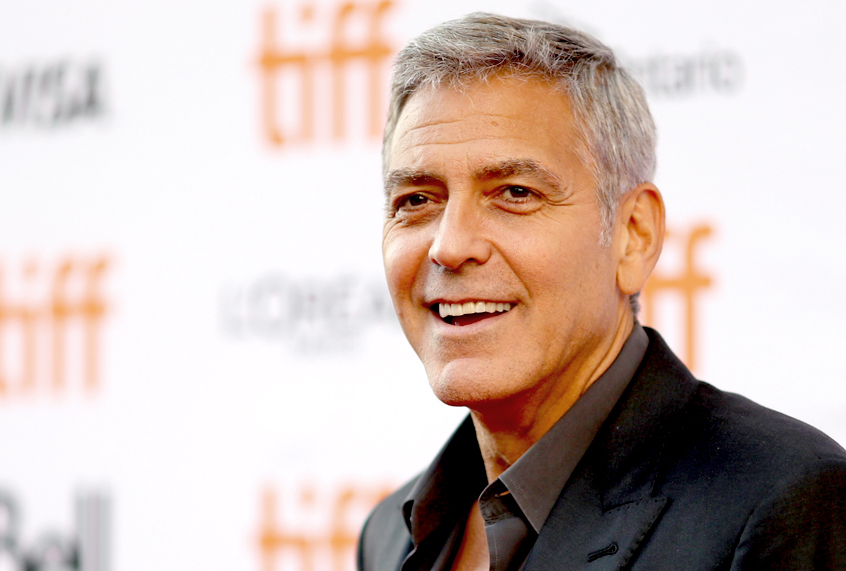
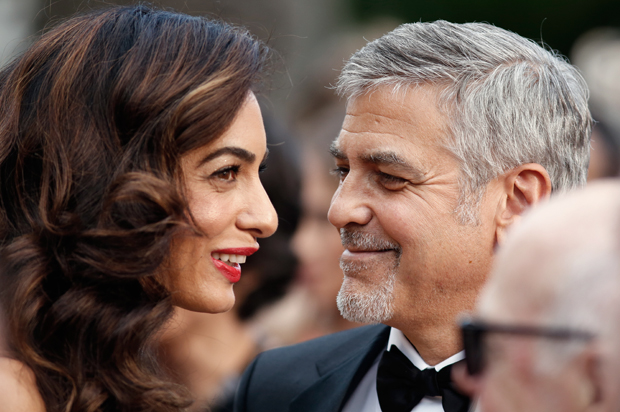
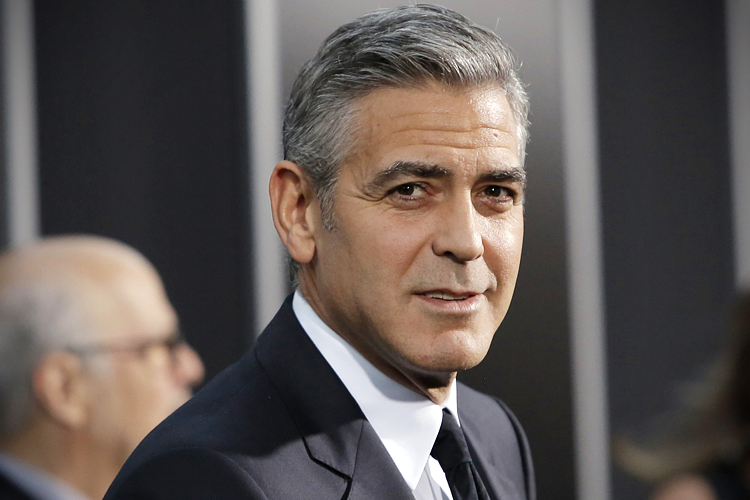
George Clooney

“The Ides of March”: George Clooney’s dark political vision

Ryan Gosling plays a hotshot strategist learning to play dirty in "The Ides of March"

  • more
    • All Share Services

Ryan Gosling in "The Ides of March."

TORONTO — It was a little disconcerting to attend the North American premiere of George Clooney’s “The Ides of March,” a theatrical and atmospheric fable of American political corruption, in an enormous theater packed with Canadians. Of course the story of idealism poisoned into cynicism, or the clash of political and philosophical ideas transformed into a game of short-term tactical advantage, is not specific to the United States or to alleged democracies. Clooney’s title makes a slightly awkward reference to the assassination of Julius Caesar in 44 B.C., which was in fact an unsuccessful effort to overthrow despotic rule and restore the Roman Republic. Clooney’s film (adapted from Beau Willimon’s play “Farragut North”) depicts a more mundane variety of political coup, but is clearly meant to show a society sliding in the same direction.

This is Clooney’s fourth feature as a director, and if he doesn’t really have what you’d call an auteur’s signature, he’s an understated craftsman with good storytelling instincts and an old-style Hollywood desire to let his actors tell the story. “The Ides of March” has been received respectfully here, but not with raves, which partly reflects the downbeat nature of its story and may also have to do with the modest role played by Clooney himself. Once again he casts himself as a supporting character, a cool and cryptic Democratic presidential candidate named Mike Morris, who presents himself as a fire-breathing populist revolutionary in public but maintains a clipped, acerbic distance from even his closest advisors. (Jennifer Ehle, otherwise known as that really terrific actress you can’t quite place, has a nice role as his wife.) At first glance, and even at second, Morris is a dream candidate, a sitting governor of Pennsylvania who has balanced the budget and advocates an ambitious program of national renewal: mandatory national service for high-school graduates, balanced with free college tuition and healthcare for all. (He’s also an agnostic or atheist who refuses to discuss religion, which may be the most improbable element of all.)

One could compare Morris to various real-life candidates who clearly informed Willimon’s play, but that risks revealing important plot points in a movie that won’t hit theaters for several weeks. (Clooney co-wrote the screenplay with Willimon and producer Grant Heslov.) Suffice it to say that Morris may not entirely be what he seems to be — what candidate ever is? — and in any case he’s just an accessory to the moral drama of Stephen Myers (Ryan Gosling), his hotshot 30-year-old media strategist, who has pushed Morris right to the edge of winning the Democratic nomination. Gosling suddenly seems to be everywhere — in every major film, at every festival, in every gossip item — and I’m tempted to call him the hottest male star in Hollywood since George Clooney. (His L.A. car thriller “Drive” opens next week, which may be a bigger potential hit than this film.) Certainly “Ides of March” is a fortuitous marriage of actor and director, with Clooney clearing out the middle of the film to let Gosling’s natural gravity and watchfulness be the focus.

Yes, he’s good-looking too, but Stephen is so devoted to the Morris campaign that he’s a distracted playboy at best. He goes to bed with a cute young intern (Evan Rachel Wood) whose name he can’t keep straight, but even while they’re in the supposed throes of passion Stephen can’t keep his eyes off the TV screen, where breaking news might send the Ohio poll numbers ticking up or down. He’s ambitious and brilliant, but thinks of himself as a man of principle, who will do anything to help Morris win, but only because the cause is a noble one. Morris is locked in a neck-and-neck contest in Ohio with his last remaining challenger, a senator named Pullman whom we never learn anything about (except that the Republicans think he’s more beatable than Morris). In this world of jargon-rich, warlike dialogue and gray, late-spring Cincinnati streets — it’s like an episode of “The West Wing,” with more cinema and more cynicism — Stephen’s big crisis blows past so fast, like a truck on the highway, that neither he nor we notice it till it’s gone.

Morris’ bulldog campaign manager, played by Philip Seymour Hoffman, doesn’t trust Stephen, who is younger, better looking and arguably more intelligent, and Pullman’s campaign manager (the always enjoyable Paul Giamatti) makes a devious play to lure Stephen to his side, hinting that things he doesn’t know about yet will sink the Morris campaign. Throw in Marisa Tomei, looking frumpy for the first time in her career and playing a ruthless New York Times reporter, and it all becomes a baffling, fast-moving game of who’s playing whom, and to what ends. Stephen, Morris, the two campaign managers and Wood’s 20-year-old intern (her name, which Stephen eventually masters, is Molly) are all plunged down the slippery slope of sleaze and tragedy.

Arguably “The Ides of March” has nothing to say about American electoral politics we don’t already know, i.e., the system is broken and those who enter it are soon stripped of their ideals and reduced to viciousness. But as in his McCarthy-era media yarn “Good Night, and Good Luck,” Clooney is trying to create stylish, audience-friendly pop entertainment that’s also thought-provoking, not to write an essay for Harper’s. As a director, Clooney is often compared to Steven Soderbergh, his acknowledged mentor, but I see him shaping into a slightly different kind of artist, part Frank Capra and part Michael Mann. This film may not be quite as distinctive as that one, and it’s certainly more pessimistic in tone. But it’s another step in the intriguing mid-career reinvention of one of Hollywood’s shrewdest stars.

“The Ides of March” will open Oct. 7 nationwide.

Five pop culture items we missed

Today's catch: Justin Bieber jumped in NYC, the worst TV shows to love, and South Africa's coolest rock band

  • more
    • All Share Services

Five pop culture items we missedJustin Bieber, pre-Macy's attack.

1. Lost roles of the day: Nicolas Cage and Gary Oldman were up to star in the film “Dumb and Dumber.” I imagine it would have been a much more disturbing movie if that had gone through.

2. Breakup of the day: George Clooney and Italian TV personality Elisabetta Canalis. Since she told the press two weeks ago she wanted to marry the movie star, I doubt it was one of those mutual separation things.

3. South African hipster band of the day: Not today, Die Antwoord! I’m really digging the Parlotones, a rock band from Johannesburg. They are currently completing the American portion of their 18-month sold-out world tour, so catch them while they are around.

Bonus track: Check out their single “Push Me to the Floor.“  It’s so weird and creepy and beautiful.

4. Justin Bieber assault of the day: A man jumped over the police barriers and knocked the teen star to the ground earlier this afternoon outside of Macy’s. What’s even more bizarre is the fact that Justin Bieber was playing two blocks from my office and I had no idea. Guess my FindBieber app is broken.

5. The worst “favorite” shows … of the day: Warmingglow has compiled a list of the 10 most head-slapping responses to people’s favorite shows. Yes, someone on the Internet actually thinks “Burn Notice” is the best piece of writing on cable. Then again, there’s probably someone on the Internet right now writing an expanded universe story where the characters on “Burn Notice” hang out with Chuck, so maybe it’s best to just shut off your computer before the urge to Google that strikes you.

Continue Reading Close

Drew Grant is a staff writer for Salon. Follow her on Twitter at @videodrew.

What’s wrong with George Clooney’s bachelorhood?

The actor says he's not getting married -- and the media speculates what could have led to this tragedy

  • more
    • All Share Services

What's wrong with George Clooney's bachelorhood?George Clooney with girlfriend Elisabetta Canalis at the 66th Venice Film Festival.

It is a truth universally acknowledged that an internationally famous movie star, in possession of an Academy Award, numerous accolades as the Sexiest Man Alive and a reputation as the handsomest humanitarian to ever contract malaria, must be in want of a wife. Unless he’s George Clooney.

Appearing on the already distinctively lively “Piers Morgan Tonight” show, the man for whom the tuxedo seems to have been invented unequivocally admitted his lack of interest in matrimony to his father, Morgan and the world. “I hate to blow your whole news story, but I was married,” he said, alluding to the four-year marriage to actress Talia Balsam that ended in 1993. The actor, who described a recent trip to the Sudan in which he contracted malaria as “good fun,” clearly harbors no similar sentiments about the institution of matrimony. “I gave it a shot,” he shrugged, adding that his track record has “proven how good I was at it.” Is that the sound of a million dreams dying?

Clooney’s commitment to non-commitment isn’t news – in 2007 his former costar Michelle Pfeiffer confessed he’s wagered her $100,000 that he’ll never wed again. And two years ago, he expressed admiration for his friend Brad Pitt’s prodigious brood by saying: “I couldn’t do what Brad and Angie are doing. I wouldn’t have the patience or dedication you need to take care of a family. I admire those qualities in other people but it’s not for me. If I need to surround myself with children and feel like I have this big extended family, I can always call Brad and Angie and ask them to stay with me, just to remind me why I’m so happy.”

But the notion that the most irresistible man in the world has marital cold feet and zero paternal instincts doesn’t sit right with everybody. How can an anguished populace make sense of this crazy news? Theories about what’s really going on here abound. First, of course, faster than you can say, “He must be gay,” Internet commenters have been chiming in that Clooney, who has dated Italian model Elisabetta Canalis for two years, must be gay. “I know agents in Hollywood who, in the strictest confidence insists that Clooney is gay,” confided one CNN poster, while another on E! quickly surmised: “He is as gay as Rock Hudson. He’s fooling no one.”

Others can’t make sense of his quitter attitude, like the commenter on Us who said, “I don’t get his negative view of marriage. He has also failed at some movies yet he tries again.” And then there are those who simply refuse to believe the man. At The Stir, writer Amy Boshnack opined, “We’ve heard so many other celebs (and regular folk) say they were never going to marry again, just to end up eating their words,” and optimistically observing that ” If [Howard] Stern can marry again, I think anyone can!” And E! blogger Bruna Nessif pep talked, “Oh, chin up Georgey! Practice makes perfect,” while musing, “Can’t help but wonder how Elisabetta is taking this news.” Here’s a kooky idea. Maybe he just doesn’t want to get married. Maybe he doesn’t want to have kids. In fact, that’s the theory I’m going with.

The conventional expectation that human beings long to pair off, make it official, and reproduce — even after previous attempts haven’t exactly panned out — certainly isn’t far-fetched. The romantic dream of the “Happy Ending” is what fuels failure-riddled TV franchises like “The Bachelor,” and makes guys like Jesse James keep walking down the aisle again and again and again.

So for Clooney to own up that the “shot” he gave marriage was sufficient for one lifetime — and the implication that such a view would be tenable for his gorgeous, 32-year-old girlfriend — flies in the face of all that makes up the often messy, complicated Vows section of the Times compelling. Love without marriage and baby carriage? Does. Not. Compute. And coming just days after that other rich, famous, so altar-shy-she’s-got-to-be-gay humanitarian Oprah Winfrey similarly told Piers Morgan that “I’m not getting married,” it would seem that asserting that one is not tying the knot is rapidly becoming the running revelatory theme of Morgan’s new show.

But as Clooney’s and Winfrey’s statements – and the experience of plenty of contentedly unwed and divorced individuals — bear out, saying that you don’t give a nuptial damn is rarely the end of the speculation. Nosy aunts will always want to know where this thing with this new girlfriend is going, catty co-workers will always conflate a lack of desire for a gold band with a serious case of suppressed homosexuality. Yet gay people do get married. Straight people have lasting, loving relationships without clergy. People form families with or without a Pottery Barn registry. And somehow the institution of marriage still thrives, even without Batman’s endorsement.

Perhaps it’s because as Oprah says, “I want to make you a meal when I want to make you a meal. I don’t want it to be my responsibility to make you a meal.” Or it’s because as a twice-divorced friend puts it: “I’ll have lovers. I’d like a partner. But husbands? I’m done.” Whatever the reason or reasons for one’s intimate life choices, surely being upfront about them beats the hell out of pretending you’re just waiting for “the right one” to come along to make it legal. Being single is not the default until one strolls down the aisle. For many, like Clooney, it’s the destination. And sometimes, even if nobody believes you, you just have to stand before the world and say, “I don’t.”

Continue Reading Close
Mary Elizabeth Williams

Mary Elizabeth Williams is a staff writer for Salon and the author of "Gimme Shelter: My Three Years Searching for the American Dream." Follow her on Twitter: @embeedub.

Oscar, you chose the wrong George Clooney

The debonair actor should have been nominated for "Fantastic Mr. Fox," not the distasteful "Up in the Air"

  • more
    • All Share Services

Oscar, you chose the wrong George ClooneyGeorge Clooney in "Up in the Air"

In Jason Reitman’s “Up in the Air,” George Clooney plays a smooth operator who fires people for a living but who must eventually recognize that it’s love, family and connection that matter. In Wes Anderson’s “Fantastic Mr. Fox” Clooney plays a fox who steals chickens for a living but who must eventually recognize that it’s love, family and connection that matter. Only one of these performances has been nominated for an Academy Award, and it’s the wrong one.

“Up in the Air” — which was adapted, loosely, from Walter Kirn’s novel of the same name — is a cannily crafted picture about the dangers of soullessness. Like the line of goods its lead character, Clooney’s Ryan Bingham, is paid to sell, it is itself a kind of glib sales campaign. Ryan is hired by big companies to do the dirty work of firing employees. His spiel involves dropping the bad news and then reassuring the newly jobless that this is really the first day of the rest of their lives: They are in fact lucky that the organization to which they’ve been so loyal is giving them the gate. Ryan doesn’t have any qualms about the ruthlessness of his job because he has so few attachments himself: He’s only marginally in touch with his family (including his sweet, about-to-be-married sister, played by Melanie Lynskey), and he wouldn’t dream of having a regular girlfriend. And so when he meets satiny-smooth fellow business traveler Alex (Vera Farmiga), who’s great in the sack and has no interest in long-term commitment, he thinks he’s struck gold — until he decides that maybe he really does want more.

I find “Up in the Air” distasteful: To me, the movie’s ending, which features nonactors providing testimonies about how losing their jobs changed their lives for the better, actually reinforces the corporate-speak bullshit Ryan Bingham is paid to sling, instead of contradicting it. Even so, I found that Clooney’s performance went down like a shot of bourbon after a hard day on the road — it’s just the slippery-smooth performance a movie this facile demands. For much of the movie, Clooney is Danny Ocean, selling a line of goods that smells a lot like charm. That’s something Clooney is extraordinarily good at, perhaps too good.

Clooney does everything right here: He’s suitably swoony as he first falls under Alex’s spell. And in his finest moment, when he realizes Alex isn’t the person she’s so aggressively advertised herself to be, the look in his eyes can only be described as a kind of bereavement. The romantic dream he’s barely had time to nurture has just been killed off in him, and the pain of letting it go seems unbearable.

But most of what Clooney does in “Up in the Air” is exactly what we’d expect him to do. There are no real surprises wrapped up in this performance, though Clooney certainly delivers the base level of actorish likability that we’ve come to expect from him: Awarding him the Oscar would be like giving him a bonus for his efficiency.

Clooney was far more soulful and complex in “Michael Clayton.” That role demanded more, and drew more, from him; it was one of the great performances of 2007. And even though we can’t see his face in “Fantastic Mr. Fox,” I find that performance far more vivid than anything Clooney does in “Up in the Air.” When he and Mrs. Fox (Meryl Streep, in another fine “invisible” performance) argue bitterly over a matter not just of love but of life and death, she corners him, and he concedes: “I’m a wild animal.”

There’s real remorse in the way Clooney offers that line: It’s not just an excuse for bad behavior, but a painful admission of self-doubt, possibly self-loathing. I recently found some blathery chatter online about how providing a voice for an animated character is inherently less significant than a live-action performance because it requires less from an actor in physical terms. But that logic demands that we grade a performance according to how much toil and suffering went into it — how much time an actor spent perfecting an accent, or how much weight he or she gained (or lost) to play a character — instead of assessing how deeply the performance affected us. Clooney may have worked hard in “Up in the Air,” but the seemingly casual savoir faire of “Fantastic Mr. Fox” burrows much deeper, and is much harder to pull off. Lending your voice to a puppet demands humility. Clooney surrenders himself to an armature of wire and fake fur, and still finds the truth of the character. That’s what you call acting; everything else is just salesmanship.

Continue Reading Close

Stephanie Zacharek is a senior writer for Salon Arts & Entertainment.

The Oscar nominations: Trying to please everyone

Oscar noms spread the love: Sandra Bullock? Check! Giant alien prawns? Check! And, oh yeah, Jim & Kathryn too

  • more
    • All Share Services

The Oscar nominations: Trying to please everyoneStills from "Precious," "Avatar" and "Up"

So what was the inflated Academy Awards best-picture category, expanded this year from five to 10 nominees, going to bring us? More populism or more existentialism? Was it going to open the door to animated films, to fantasy and science fiction, to foreign flicks and low-budget indies — or just to middle-of-the-road Hollywood sentimentality, calibrated to draw in heartland viewers who’ve increasingly tuned out the whole Oscar spectacle?

Given the Academy’s catholic desire to please all its contradictory and overlapping constituencies, it shouldn’t have surprised anyone that the answer was all of the above. And yet, somehow, it did. I think of the five extra nomination slots as the “Dark Knight” apology awards, but this year offered no exact TDK-cognate, i.e., no commercial-critical behemoth likely to be snubbed by the Academy members’ peculiar blend of middlebrow snobbery. (Just to be clear: I didn’t like “The Dark Knight” much, personally. But that’s irrelevant when it comes to the Oscars. Given its alleged seriousness, cultural impact and box-office firepower, a best-picture nom should have been automatic.)

So along with the predictable passel of nominations (nine apiece) for James Cameron’s “Avatar” and ex-wife Kathryn Bigelow’s “The Hurt Locker” — and I’m calling the divorce settlement here and now: Jim gets best picture; Kath gets best director — the Academy spread the love in all directions. Disney/Pixar’s “Up” was nominated for both best picture and animated feature. The family-football-Sandra Bullock vehicle “The Blind Side,” which has made a ton of money while leaving bicoastal critics in glycemic shock, also got multiple nominations. Lee Daniels’ “Precious: Based on the Novel ‘Push’ by Sapphire” got a best-picture nod along with two major acting nominations. The exquisite British female-coming-of-age film “An Education” was nominated for best picture, in a mild surprise, alongside a fully expected best-actress nomination for its irresistible ingénue star, Carey Mulligan.

In garnering best-picture and best-director nominations for his unspellable and borderline-unwatchable World War II pastiche, Quentin Tarantino becomes this year’s winner of the Martin Scorsese Way Too Late award, handed out annually to a director whose more worthwhile work has been largely ignored by the Academy. (Q.T. shared a screenwriting Oscar for “Pulp Fiction” in ’95.) In other news, it’s mighty peculiar that hardcore New Yorkers like Joel and Ethan Coen have become beloved figures in Hollywood, but there can no longer be any doubt. Their brilliant black-comic fable “A Serious Man” — a movie that gleefully and maliciously embraces the old cliché about being “too Jewish” for mainstream America — got a well-deserved nomination. But that surely wasn’t the big surprise among the gang of 10.

In a dinner conversation with critics last week at Sundance, we all agreed that one film among the best-picture nominees would be something nobody had expected. I remember a few possibilities mentioned: Wes Anderson’s “Fantastic Mr. Fox,” Pedro Almodóvar’s “Broken Embraces,” Steven Soderbergh’s “The Informant!” But of course once we’d mentioned them, they weren’t unexpected anymore, were they? Nobody brought up “District 9,” the sci-fi action-allegory made by South African expat Neill Blomkamp under Peter Jackson’s production aegis, which became a surprise late-summer hit. (Dept. of complicated Hollywood dis: The movie made by Jackson’s little-known protégé gets an Academy nod, while Jackson’s own prestige production, “The Lovely Bones,” pointedly does not.)

This year’s acting nominations ran remarkably true to form, leaving all the favorites in place: George Clooney and Meryl Streep in the leading roles; Stanley Tucci and Christoph Waltz fighting it out for the evil-guy supporting actor prize, and Mo’Nique all by herself, vacuuming some shelf space in the den for that statuette. Yes, I can hear the grumbling from the cinephile margins: Clooney was better in “Fantastic Mr. Fox” than he was in “Up in the Air”; Penélope Cruz was way, way better in “Broken Embraces” than she was in the musical megaflop “Nine”; the year’s best female performance, given by Tilda Swinton in French director Érick Zonca’s “Julia,” was never even on the Academy’s radar. Sure, yes, I agree on all counts. But when Zonca’s movies start showing up on the Oscar telecast, winning Oscars, it won’t be on NBC or ABC or A&E or any other TV network; it’ll be Web-streamed live from the back room of a Hollywood Boulevard liquor store in the middle of the night. Not that there’s anything wrong with that! That’ll be cool in kind of a different way.

I’ll consider the more niche-oriented nominations in due course, but my initial reaction is that the Academy has now avoided total disgrace in the foreign-language and documentary categories for two years running, which is an all-time record. “The Cove” and “Food, Inc.” were obvious documentary nominees, but it’s a wonderful surprise to see Anders Østergaard’s “Burma VJ” on the list. A thrilling and inspiring film largely shot by anonymous contributors inside Myanmar, it documents the doomed popular uprising against the Burmese military junta in 2007 — truly a one-of-a-kind viewing experience. It’s true that French New Wave foremother Agnès Varda’s delightful, autobiographical “The Beaches of Agnès” was left out, but you can’t call that a shocker.

Instead of the customary blend of cynical and/or sentimental foreign-language glop, this year’s Academy list includes at least two films, Michael Haneke’s “The White Ribbon” and Jacques Audiard’s still-unreleased “A Prophet,” that are clearly among 2009′s finest examples of world cinema. (I still haven’t seen the Israeli-Palestinian collaborative project “Ajami,” but I hear it’s terrific too.) Any lingering controversies in this category, such as the absence of Italian director Paolo Sorrentino’s explosive “Il Divo” or Korean director Bong Joon-ho’s “Mother,” predate Tuesday’s announcement by weeks or months.

Continue Reading Close

Box office report: “Avatar” hits $2 billion

History's highest grosser has made made $1 billion more than any movie not by James Cameron

  • more
    • All Share Services

Box office report: Sigourney Weaver in "Avatar"

“Avatar” won the box office derby for the seventh straight weekend, taking the record for the biggest seventh weekend gross ($30 million) from “Titanic” ($25 million). Dropping just 14 percent, the unstoppable monster has now grossed $594 million, meaning it will cross “Titanic’s” $600 million gross in the next two or three days, perhaps on Tuesday, when the Oscar nominations are announced. Early last week, James Cameron’s amazing hit surpassed “Titanic’s” worldwide box office gross to become the world’s highest-grossing movie. This weekend it crossed the seemingly unfathomable $2 billion mark worldwide. You can babble all you want about inflation, 3D and IMAX ticket prices, and what have you, but check out this little statistic: When “Avatar” reaches $2.239 billion, which it will in the next two or three weeks, it will have doubled the worldwide take of every other movie ever made except “Titanic.” It will also soon have a $1 billion lead over any movie not directed by James Cameron. There’s not much more to say at this point than “wow” and “don’t make a sequel,” so let’s move on.

Second place went to the Mel Gibson comeback vehicle “Edge of Darkness.” The Martin Campbell suspense thriller (remade from the director’s own 1985 BBC miniseries) pulled in $17 million. All eyes were focused on this one, as it was Gibson’s first starring role since 2002′s “Signs.” The opening isn’t terrific but it’s not terrible either. The film was advertised as a variation on “Taken,” but anyone paying attention to the preview could tell that it was more of a procedural investigation drama than a slam-bang thriller. The opening is right in line with Martin Campbell’s non-blockbuster debuts, just above the $16.3 million opening for 2005′s “The Legend of Zorro” and the $15.5 million debut of 2000′s “Vertical Limit.” Considering this picture cost $80 million (or about what the other two Campbell films cost), I’m sure Warner is hoping for something closer to “Vertical Limit’s” $69 million finish as opposed to “The Legend of Zorro’s” $46 million end total. Pardon the pun, but this was neither his brightest day nor his blackest night.

For Gibson, this is his lowest opening since “Braveheart” back in May 1995, and it’s actually a bit under the $17.4 million debut of “Maverick” back in May 1994. Of course, opening weekends have changed quite a bit even since Gibson semi-retired from acting back in 2002, and of course he’s had some major PR problems in the last eight years. On the plus side, the film had a solid 3x multiplier, so solid word of mouth is likely. Seventy percent of the audience came out for Gibson, meaning he still has a fan-base even when a film depends purely on him to sell it. The poster and trailer were flat at best, and, to be honest, I would have had absolutely no interest in this one if not for my love of all things Martin Campbell. We’ll see how Gibson fares with a project that has more to offer than just his star power.

Third place went to “When in Rome,” which pulled in $12 million. While the number isn’t spectacular, it’s actually a pretty solid opening for the two very untested leads, Kristen Bell and Josh Duhamel (let’s be honest, you probably never watched “Veronica Mars”). Considering how awful the marketing was for this one, Bell and Duhamel should get quite a bit of credit for this thing opening at all. After all, this apparent stinker easily topped the $9 million of “Leap Year,” which starred critical darling and “Enchanted” star Amy Adams. Kristen Bell is no Katherine Heigl, but this is a solid first step if she wants to climb higher in the rom-com genre. Fourth place went to “The Tooth Fairy,” which dipped just 28 percent for a $10 million second-weekend and a $26 million 10-day total. Not much more to say, but the film should reach its $48 million budget before home video. “The Book of Eli” dropped 44 percent, and its new total is just $6 million short of its $80 million budget. $100 million will be a struggle, but the Denzel Washington/Gary Oldman post-apocalyptic drama could still squeak in there.

“Legion” plunged 61 percent in its second weekend, but it has already exceeded its $26 million budget so no harm, no foul. Peter Jackson’s “The Lovely Bones” dropped another 43 percent, pulling in $4.7 million in its third weekend of wide release. Its new total is $38 million and Paramount can only hope for a slight uptick next weekend on account of Stanley Tucci’s likely Oscar nomination. “Sherlock Holmes” still ended up $3 million short of the $200 million mark. Warner must be pretty sure that it’ll get there, as they are advertising the film as a $200 million domestic grosser and a $400 million worldwide earner in the DVD/Blu-ray press release that went out this week. As of now, the domestic total is $197 million and the international numbers rest at $394 million. Also, for those who care, Joel Silver and Warner Bros. are fast-tracking a sequel to this one, having basically pulled director Guy Ritchie off “Lobo” in order to get him back to work in the dark alleys of Victorian London. I suppose the only question is what big star gets to play Holmes’ arch-nemesis. Oh, and pundits/critics, let’s lay off the gay panic next time around, OK?

“Alvin and the Chipmunks” is now at $209 million, which puts it in striking distance of the original’s $217 million U.S. total. “It’s Complicated” passed the $100 million mark over the last week and now sits at $104 million. “The Princess and the Frog” finally crossed $100 million just today, so a firm mazeltov to Disney. “Crazy Heart” pulled in another $2.2 million in its last weekend of limited release, and its total is now $6.5 million. Ironically, while next weekend will coincide with Jeff Bridges’ Oscar nomination, it will also put the country music/heartland drama smack dab into Super Bowl weekend, which may prove to be an issue for troubled Bad Blake’s national debut, although Fox Searchlight would certainly do well to buy a national ad spot or two during the game. “The Young Victoria” has quietly approached the $8 million mark, so its prospects should only brighten if Emily Blunt pulls of a somewhat unexpected best-actress nomination on Tuesday. Nearly surefire nominee Colin Firth’s “A Single Man” is at $5 million and fellow sure thing Carey Mulligan’s “An Education” is at $8.8 million.

“Up in the Air” lost 277 screens and 30 percent, but its total now sits at $73 million. With the expected nominations in nearly every major category, the George Clooney vehicle could very well reach $100 million, especially if it wins one or two major awards. As for best-director frontrunner Kathryn Bigelow, you can rent “The Hurt Locker” on DVD and Blu-ray. We can all blame Summit Entertainment’s non-existent marketing campaign and inability to mount a wide release for what should have been a mainstream pulse-racer over the summer. No more excuses, go rent or buy “The Hurt Locker” (and rent the equally under-seen “Whip It” while you’re at it).

That’s the major news for this weekend. Next weekend sees the wide release of the John Travolta action comedy “From Paris With Love” (directed by Pierre Morel, the helmer of “District 13″ and “Taken”), as well as the Amanda Seyfried/Channing Tatum romantic drama “Dear John.” There are 10 films opening in limited release, including the sequel to “District 13,” so expect a lot of puny totals and a few mighty per-screen averages.


Continue Reading Close

Scott Mendelson is a blogger for Open Salon.

Page 2 of 17 in George Clooney