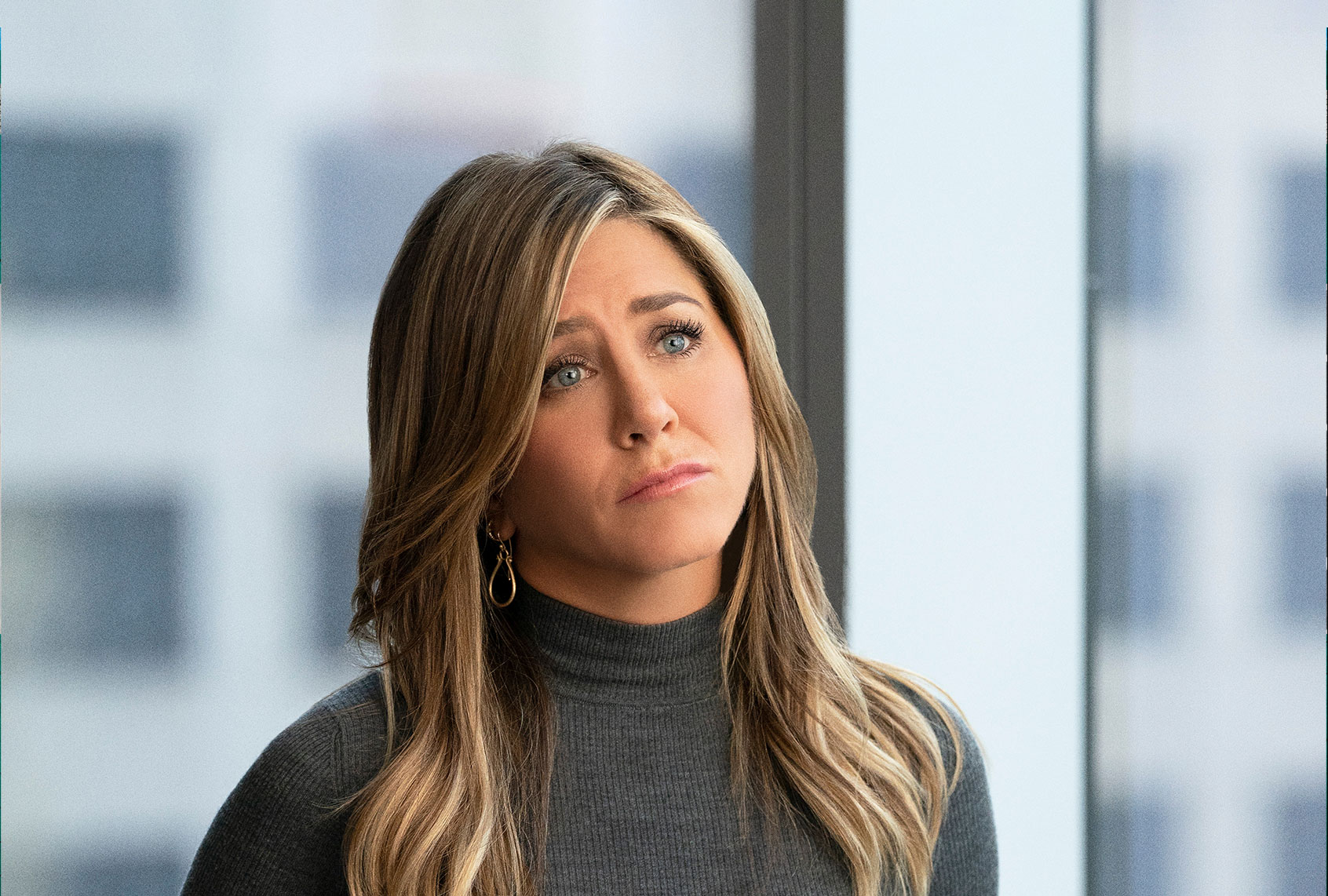
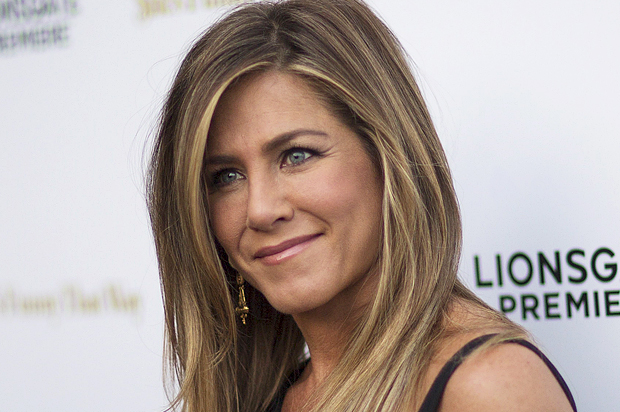
Jennifer Aniston

Get out of Jessica Simpson’s womb!

Is she or isn't she! Who cares? The tabloid obsession with celebrity baby-bumps reduces women to their uterus

Jessica Simpson(Credit: Reuters/Mario Anzuoni)

So far this week, a very not-pregnant Jennifer Aniston has had to explain that she’s merely “gained a couple of pounds” since quitting smoking, while an increasingly big-bellied Jessica Simpson remains conspicuously silent about her obvious midsection girth. We are living in strange times indeed, celebrity womb-wise.

We’ve come a long way from the days when Lucille Ball’s pregnancy was so discreetly managed, that she couldn’t even use the word “pregnant” on her own television show, and since Shirley Jones quietly plowed through her work in “The Music Man” while costume designers diligently let out her dresses. Then in August 1991, celebrity fecundity jumped the shark when Demi Moore appeared nude and ready to drop on the cover of Vanity Fair. In the 20 years since then, tabloid culture has eagerly made a mountain out of every muffin top, turning every C-lister’s bout of bloat into a possible baby bump. And when a woman does go public with her status, she’s still subject to intense — nay, crackpot — scrutiny. Witness the obsessive attention Beyonce’s abdomen area has been getting of late, and rumors that she’s faking the whole thing. Note to everybody: Real life rarely resembles a plot point on “Glee.”

Meanwhile, Simpson seems to be swelling up like a tick these days, but is keeping her lips firmly zipped. The New York Post speculated that Simpson — who has made a career of belching and flatulence on her reality show, and who on Tuesday tweeted a photo of herself on a toilet — might have discovered discretion in the hope of a six-figure payoff. Simpson, who’s engaged to former San Francisco 49er Eric Johnson, is allegedly shopping around her exclusive story – and access to the obligatory post-baby photo spread — to the cool tune of $500,000. Because why get knocked up if you can’t leverage the crap out of it? But regardless of her motives, Simpson appears to have committed the cardinal sin of waiting too long to make hay of her blessed event. When and if she finally grants that big tell-all, it’ll likely be the biggest “No duh” since Ricky Martin came out. “Is she or isn’t she?” sells magazines. But “Guess why I can’t see my feet, y’all?” is, with every passing day, considerably less of a tabloid bombshell.

Which brings us to poor Jen. Child-free and 42, Aniston is the reigning queen of baby speculation. Does a week go by without her face on the cover of some supermarket rag, the words “baby” and “drama” or “at last” or “heartbreak” blazing somewhere nearby? If I were Jennifer Aniston, I think I’d get pregnant just to shut Bonnie Fuller the hell up.

Maybe it’s because Aniston seems to have so much — she’s rich, successful and was just voted America’s “hottest body” in a new Fitness and Yahoo! poll – that the idea that she’s in fact a barren, miserable crone holds some public fascination. She can’t possibly be happy just being a beautiful movie star, right? RIGHT? I mean, Brad Pitt left her and now he’s got six kids – doesn’t that say something?

Maybe. Or maybe, crazy as this may sound to some, Jennifer Aniston is cool with not being a mother. It happens! All the time! But the frantic attention her stubbornly unpregnant body gets definitely says something about where we are as a culture that we continue to define women – powerful, attractive, wealthy women – by their ability to reproduce. That they can either parlay their fertility into a branding opportunity, or apologetically admit that the few extra ounces on the undisputed hottest body in America are not in fact an imminent bundle of joy. You’ve come a long way, babymakers.

We are all – the famous and the not, the MTV teen moms and the pampered housewives, the perfectly dressed  supermoms and the contentedly child-free – more than the contents of our uteri. That’s why I strongly believe the government needs to stay out of our wombs. And it’s high time Us magazine scrams as well.

Mary Elizabeth Williams

Mary Elizabeth Williams is a staff writer for Salon and the author of "Gimme Shelter: My Three Years Searching for the American Dream." Follow her on Twitter: @embeedub.

“Horrible Bosses”: Hostile work environment

Jennifer Aniston, Jason Bateman and Kevin Spacey star in this surprisingly likable comedy about employee revenge

Jason Bateman and Kevin Spacey in "Horrible Bosses"

As inconsequential and virtually indistinguishable sub-Judd Apatow white-boy comedies fueled by prison-rape gags and pants-pissing anxiety around black people go, “Horrible Bosses” is pretty solid entertainment. Did you notice how I adjusted the bar there? It actually took a female colleague to nudge me gently toward the glaringly obvious fact that “Horrible Bosses” recycles its plot from the 1980 hit “Nine to Five” with the feminism drained out of it, which is to say its entire reason for existing is gone. “Horrible Bosses” has no meaning or purpose whatever, but it does have Colin Farrell with a bad comb-over, Kevin Spacey acting really mean and Jennifer Aniston as a spray-tanned sex maniac, and that’s going to have to do.

I get complaints from some of you when I go off on irrelevant tangents about the Decline of Culture and the Meaninglessness of Everything that really don’t have anything to do with some very nice, very rich people from Los Angeles who are working as hard as they can to make the same movies over and over again that you may laugh. In recognition of those nice people and our shared admiration of their labor, let’s divide this review into useful and nonuseful portions. Here’s what you need to know: “Horrible Bosses” is a lot funnier in theory than in practice, but it won’t ruin your Saturday night. As the trio of put-upon nitwits who decide to rid the world of their respective employers, Jason Bateman, Charlie Day and Jason Sudeikis have an enjoyable and effortless comic chemistry. They even seem to like each other, and whether or not that’s faked it’s a key element of ensemble comedy. The cast of “The Hangover Part II” seemed massively irritated with each other’s company the entire time, and the bad vibes between Robert Downey Jr. and Zach Galifianakis in “Due Date” permeated the entire production with a funky, bad odor, like bong-water and old socks mixed with spoiled sweet-and-sour chicken.

It’s a very good thing that those three guys cutting up, mocking each other and getting into embarrassing scrapes is fun to watch, because the script they’re reading (credited to Michael Markowitz, John Francis Daley and Jonathan Goldstein) is miscellaneous nonsense, and implausible even by the standards of who-cares Hollywood absurdity. To me, Bateman is the star here as much as he was opposite Aniston in last summer’s mediocre rom-com “The Switch,” where he totally stole the show. He never overplays even the stupidest comic situation, delivers a deadpan comeback with the best of them, and never compromises his basic likability. He plays Nick, a financial professional who’s way more successful than his buddies but is being sadistically strung along by Dave Harken (Spacey), his manipulative, micro-managing boss.

If Spacey starts out deliciously, in full-on flaming-driven-asshole mode, before Dave dissolves into an unconvincingly dumb cascade of evil, Farrell and Aniston’s horrible bosses never remotely resemble real people. Maybe that’s not a bad thing in itself; it’s not like director Seth Gordon (who made “Four Christmases,” along with episodes of “The Office,” “Parks and Recreation” and “Breaking In”) is pushing toward ruthless realism in this relentlessly sitcommy picture. Farrell plays a cokehead degenerate who’s using the small-time chemical company where Kurt (Sudeikis) works as his personal ATM, and that’s a whole bunch of shtick that never goes anywhere.

Aniston, as you may have heard, plays a leggy dentist with a fetching brunette ‘do and a deep stem-to-stern studio tan who craves a little personal attention from Dale (Day), her nerdy, nervous assistant, and won’t take no for an answer. There are so many things to say about this that I don’t know where to start, but, oh yeah, we’re still supposed to be in the useful portion of the review: Aniston might not seem like an automatic choice for this kind of slutty, man-eater role, but she’s ingratiating, funny and medium-sexy, and seems to enjoy herself far more than she ever has playing an anxious, boring sweetheart in romantic comedies.

That said — and here’s where we cross into nonuseful territory — Aniston’s psycho-bitch DDS character is just one of the countless ways that “Horrible Bosses” flirts with troubling or forbidden subject matter while still reassuring its youngish male target demographic as to their masculine coolness. Of course it’s possible for a female boss to sexually harass a male employee. In fact, I’m sure it has happened — in, like, 0.1 percent of harassment cases — but the perpetrator has rarely (or more likely never) resembled Jennifer Aniston. I hardly need to point out that mainstream filmmakers aren’t going to cast a fat woman or a much older woman or a woman who isn’t conventionally attractive in that role, because it wouldn’t be titillating and it would make them look like sexist creeps. In fact, Aniston’s character in “Horrible Bosses” goes well beyond unethical or inappropriate conduct into felonious sexual assault, but it all stays within the realm of comedy because A) it’s ridiculous and B) she’s hot.

I suppose it’s true that Nick, Kurt and Dale hatch a homicidal plan, only it’s more like they have a bunch of Three Stooges misadventures on the road toward having a plan, which involve Kurt sticking a toothbrush up his butt while the other two accidentally ingest loads of cocaine. They also travel into a scary neighborhood (i.e., one where African-Americans live) and meet a guy with a shaved head, prison tattoos and a pseudo-intellectual goatee whose name is Motherfucker Jones (Jamie Foxx). It’s a throwaway role for Foxx, but he gets to play a racist caricature and subvert the white boys’ instinctive racism at the same time, while delivering life lessons drawn from Hitchcock’s “Strangers on a Train” and the 1999 Ethan Hawke vehicle “Snow Falling on Cedars.” (“I love that movie!” Sudeikis says brightly.)

This tiptoe-dance around racial attitudes is reflected in the film’s attitude about homosexuality, which is to dude comedy as that big-ass iceberg was to the Titanic — disastrous but also irresistible. (I won’t spoil a weird cameo appearance by Ioan Gruffudd, but it’s definitely on topic.) Sudeikis’ character is supposed to be an inveterate lady-killer who bags any chick he wants (which doesn’t seem likely, but never mind), but he catches himself checking out another guy’s butt in a big-box store, and becomes embroiled in a running debate with Bateman’s character about which of them will be more “rape-able” if they end up in prison. This is at least the fifth guy-comedy I’ve seen in the last year to mine the ever-hilarious topic of prison rape for laughs, and in its own screwy, accidental way maybe “Horrible Bosses” is taking on the ambivalent, narcissistic quality of post-metrosexual masculinity. No self-respecting straight guy wants to go to prison and become somebody’s bitch (except for the protagonist of David Mamet’s “Edmond”), but it would be even worse to go to prison and be ignored.


Continue Reading Close

Is Jennifer Aniston a “homewrecker”?

America turns on its favorite spinster after she becomes Justin Theroux's "other woman"

Jennifer Aniston

And in today’s b.s. celebrity news headlines, we have a winner with Us Weekly’s “How Jennifer Aniston Pulled an Angelina With Justin Theroux.” You know, because Jen “Maneater” Aniston met Theroux on the set of “Wanderlust” and, according to reports, enticed him to break up with his live-in girlfriend of 14 years, Heidi Bivens. Now Aniston is being labeled a homewrecker, the “other woman” and a bunch of other derogatory terms for women whom non-single guys leave their significant others for. Funny how we have no word for the male equivalent of a homewrecker, isn’t it? From the Us Weekly story:

“And, yes, the bitter irony — Aniston’s husband Brad Pitt infamously left her for Angelina Jolie six years ago after falling in love on set — is lost on no one. ‘It’s amazing she would go for an attached guy after what happened to her’ (says Biven insider).”

I’m sorry: I’m all for female solidarity and not stealing another lady’s man, but how is this “amazing”? Jennifer got a divorce six years ago, and her only real statement when Angelina told the media how she fell in love with Brad while filming “Mr. and Mrs. Smith” (and while Brad was still married to Jen) was that it was “not cool.” While I’m sure the divorce devastated Jennifer, it was the tabloids that have kept her in the role of the perpetual victim for over half a decade, as the poor woman who can’t settle down and have kids because her husband ran off with that harlot/humanitarian. In reality, I doubt Aniston felt half as much self-pity as the average American did for her. But Theroux wasn’t even married and the difference between “wife” and “girlfriend” is still a big commitment leap, and the term “homewrecker” is usually reserved for someone who breaks up a marriage or a family.

As someone who has been on both sides of this homewrecking scenario — who watched her parents’ marriage dissolve because of infidelity and later went on to sleep with a married man herself – I feel for both Aniston and Bivens. Yes, mainly for Bivens, because she just got dumped after a decade and a half for a much more famous woman. And unlike Aniston in 2005, no one is going to be keeping tabs on the spurned lover’s various boyfriends for the next several years, wondering if she’ll ever have a baby with John Mayer, or Vince Vaughn. If Bivens later finds herself seeing a non-single guy in any capacity, the papers won’t ask if she should “know better than to come between a man and his longtime love” like they are doing with Aniston.

In that way, Bevin is probably luckier than Aniston, who just lost the nation’s support as the hottest spinster in America. Then again, maybe after six years of being known as the “ex-Mrs Brad Pitt,” an image change is just what the doctor ordered.

Continue Reading Close

Drew Grant is a staff writer for Salon. Follow her on Twitter at @videodrew.

“Just Go With It”: Adam Sandler, Jennifer Aniston, Nicole Kidman and a sheep

The comedian's latest film, "Just Go With It," offers poop jokes, boob jokes -- and Nicole Kidman hula dancing

Jennifer Aniston (left) and Adam Sandler in "Just Go With It"

“Just Go With It” is an Adam Sandler comedy, which means it bears only a superficial relationship to the customary conventions of moviemaking, and also that there’s no use getting all worked up about that. Now, those who collect pop culture effluvia in their heads (such as me) will be interested to know that this farce about a Beverly Hills plastic surgeon who pretends to be married in order to get laid is in some sense a remake of the 1969 Walter Matthau-Ingrid Bergman-Goldie Hawn movie “Cactus Flower,” which was itself based on a play by Abe Burrows which was itself based on a French play. (There will be a quiz.) In other words, Adam Sandler, despite all the all-American gags about poop and men getting kicked in the ‘nads, is a cheese-eating surrender monkey who hates our freedom. Any further questions?

It’s tempting to suggest that Sandler makes such horrifyingly vacuous films, in which absurd gags float around in a killing void resembling outer space, because he is cynical or does not care. I think this is verifiably false. On the contrary, the marketplace has repeatedly proven that the public prefers Sandler in laid-back, recovering-doofus roles where he barely pretends to act, and where such minimal plot and characterization as exist serve only to get us from one ridiculous comic setup to the next. Occasionally Adam gets the drama-school bug and works with some director who isn’t his longtime crony Dennis Dugan, and the results, as in Paul Thomas Anderson’s “Punch-Drunk Love” or James L. Brooks’ “Spanglish,” are hotly debated by film critics and ignored by everybody else.

Whatever about its froggy-theatrical-Ingrid Bergman roots, “Just Go With It” is a Sandler-Dugan movie all the way, which means it includes a hula-dancing throwdown between Jennifer Aniston and Nicole Kidman in a Honolulu lounge (officiated by sportscaster Dan Patrick), Dave Matthews picking up a coconut with his ass cheeks, and a small boy taking a crap on an adult man, who then screams about it in a fake German accent. I will not claim that none of those things made me laugh. But I cried too, partly at the realization that Sandler’s particular brand of evil genius lies in taking a painfully stupid joke and pushing it so far that it sometimes transforms into its opposite, like some quantum-physics particle or that Hall & Oates song you hated the first 800 times and now totally love.

You want an example? Damn right you do — I inflicted this movie on myself and now someone’s got to pay. For reasons that don’t even begin to make sense, the 10-year-old that Sandler’s surgeon character pays to pretend to be his daughter in the film (played by Bailee Madison) starts to do her “role” in an atrocious Eliza Doolittle English accent. You know, “Wo’ a bloody bovver” and all. It’s terrible and not funny and a total overload of toxic fake cuteness. But then a supporting character named Eddie (Nick Swardson) shows up, wearing Coke-bottle glasses and doing the aforementioned fake German accent (he is supposedly called Dolph Lundgren, but he isn’t that Dolph Lundgren). And listening to him is so intentionally sub-”Hogan’s Heroes” bad, so inducing-death-wish-in-the-audience bad, that it’s a positive delight to get back to Bailee Madison addressing people as “guvnor” and “mumsie.”

Now, it’s not that the parts of this movie are more significant than the whole, it’s more like there is no whole (unless you take off the “w”). Sure, there’s kind of a plot: Sandler’s lizard-like Dr. Danny Macabee convinces his saucy single-mom assistant, Katherine (Aniston), to pretend to be his almost-ex-wife, so that he can explain the presence of a wedding ring in his jeans pocket to Palmer (Brooklyn Decker), his hot new pile of barely legal hotness. In a scene where people are confessing things that make them sad, Palmer bursts out: “Why did ‘N Sync have to break up?” And let’s show some love for screenwriters Allan Loeb and Timothy Dowling, because that’s pretty funny! If you’re guessing that Danny will start to have feelings for the more mature Katherine he can’t possibly have for bodacious Palmer, you’re on the right track, of course — and those shards of adult emotion, along with a winning and unassuming performance from the oft-dissed Aniston, make “Just Go With It” feel like the work of Ernst Lubitsch, at least compared to such previous Sandler-Dugan fare as “Grown Ups.” (That was my personal worst film of 2010. This one won’t even be close.)

But I can feel Sandler peering over my shoulder saying “Ernst Lu — what did you just call me?” And he’s right. “Just Go With It” is more than a nonsensical title for a haphazard romantic comedy, it’s almost a divine injunction. Watching Nicole Kidman shtick it up in full ice-bitch mode, wearing a hideous dress that seems to have been assembled from the machines that crush Charlie Chaplin in “Modern Times,” or Swardson (as not-that-Dolph Lundgren) giving mouth-to-mouth resuscitation to a sheep, is ever so much more the point of this movie than waiting for Sandler and Aniston’s characters to reach the perfunctory happy-ever-after. I’m not even going to tell you what Kidman is doing in the movie, or why her character’s first name is a euphemism for feces, or why Dave Matthews has to pick up a coconut with those rock-hard glutes. Not because I’m protecting spoilers, or because I’m claiming it’s not funny, in an awful way. More because I choose to start the long process of forgetting right now.

Continue Reading Close

“Going the Distance”: Can Drew Barrymore save the rom-com?

In "Going the Distance," the star shines as a loud, ballsy broad opposite real-life beau Justin Long

GTD-05023
DREW BARRYMORE as in New Line Cinema’s romantic comedy “GOING THE DISTANCE,” a Warner Bros. Pictures release.(Credit: Jessica Miglio)

If you want proof that the American romantic comedy is in a dismal state, trapped halfway between apology and experiment, you need look no further than “Going the Distance,” which features real-life couple Drew Barrymore and Justin Long as a likable young recession-era duo separated by a continent, a lack of funds and a cloudy future. I don’t mean that this movie is strikingly good or strikingly bad, in cosmic terms — it’s a solid but totally forgettable entertainment, redeemed somewhat by Barrymore’s loud, horsey laugh and some agreeably racy comic situations.

Here’s the thing: Simply by trying to break free of the hoariest situations and archetypes, and to create characters who talk and behave somewhat like actual young (or at least youngish) middle-class Americans, director Nanette Burstein and her cast have made the year’s best mainstream rom-com. But seriously, consider the competition: Two “comeback vehicles” for fading stars named Jennifer, both of them self-fulfilling prophecies about the difficulties faced by American actresses over 40, both of them encouraging the media to be both observers and enablers of Hollywood sexism. (Yeah, mea culpa on that one.) “Sex and the City 2,” a genuinely idiotic film that got beaten up out of all proportion. “Eat, Pray, Love,” which of course doesn’t really qualify as a rom-com, but would have been a lot better if it did. And I can’t go back to February and revisit the fact that I actually spent a little bit of my life watching “Valentine’s Day.” I just can’t.

So awarding a prize to “Going the Distance” in this context is a little like giving an A for effort to the only student in your class who isn’t dropping out to take a job at Chick-Fil-A. It’s the only romantic comedy to emerge from Hollywood this year that doesn’t feel completely defensive and cynical. It doesn’t condescend to its audience or shamelessly yank the emotional chains of middle-aged female viewers. It isn’t set in Romcom USA, that mysterious alternate universe where the clothes and cars look convincing but everyone’s apartment is three times too large and the conversations and situations all seemingly belong to the Mary Tyler Moore era.

Most impressively, Burstein and screenwriter Geoff LaTulippe do not seem to share the widespread assumption that romantic comedy is a contemptible if economically necessary phenomenon, based entirely on feeding over-35 women a steady drip of the dumbest possible clichés about guys and gals and that joyous-yet-painful thing that happens between them. (Besides home mortgages, I mean. And pubic lice.) “Going the Distance” doesn’t always click but has a distinctive, sardonic voice and vision. It at least tries to capture the social world of Erin (Barrymore) and Garrett (Long), a couple of smart but underemployed post-collegiate types who meet over the Centipede machine in a New York bar, smack dab in the middle of a shrinking economy.

Now, am I claiming that “Going the Distance” is a Zeitgeist-capturing yarn of love in our hookup culture, one that may capture the mood of an entire generation? I am not. It has a little of that ambition, which is admirable and all. In bringing together a documentary filmmaker (Burstein made the docs “American Teen” and “The Kid Stays in the Picture”) with an unknown screenwriter, this film’s producers seem to be splitting the difference between conventional rom-com and more “alt” fare, like the films of indie auteurs Joe Swanberg or Andrew Bujalski. But I strongly suspect the skeptics are right. Of course romantic comedy could come back, and it undoubtedly will. But at the moment it’s a moribund genre, with little appeal to the “Twilight” generation of girls and young women. All a pleasant, offbeat movie like “Going the Distance” can hope to do is swim halfheartedly against the ebbing tide.

I spent a little while after watching “Going the Distance” trying to puzzle out its flaws and limitations — the directing is better than the writing, the actors rise above a pedestrian plot, etc. — before arriving at the perfect summary: It’s kind of good, but not all that great! (Hear that sound? That’s the Pulitzer Prize for criticism, whooshin’ toward me.) Thing is, Barrymore is so terrific as Erin, a ballsy, physical, foulmouthed guys’ gal who’s universes away from your average neurotic rom-com heroine, that you keep thinking a movie built around her ought to be awesome. So the fact that is isn’t is continually surprising.

When Erin and Garrett go home together after their little contretemps at the Centipede machine — she was about to hit a high score before he screwed it up — neither one of them is exactly thinking about a great romance. He broke up with somebody else quite recently (OK, minutes earlier). They do bong hits and make out. She pretends to be outraged that Garrett’s hopeless roommate Dan (comedian Charlie Day) is “DJ’ing the hookup,” i.e., playing the “Top Gun” score through the flimsy apartment walls while they get it on. They actually have breakfast together the next morning, complete with sincere conversation — but when Garrett calls Erin later, she still doesn’t know his name.

This whole sequence of scenes around the couple’s first meeting is so charged with tenderness, toughness and combative, outrageous humor — and that brash, braying Barrymore laugh — that one can only wish the rest of “Going the Distance” lived up to it even halfway. But as Garrett and Erin fall in love, Burstein almost immediately resorts to a montage of, God help me, the couple frolicking on the beach or strolling Manhattan’s streets hand in hand. See, their idyll is to be short-lived: Erin’s a summer intern at a New York newspaper who’s heading back to grad school in California, while Garrett works at a record label that used to be hip and is now hoping to survive by finding the next Jonas Brothers.

Yes, the fact that they both work in crippled or dying industries is meant to be significant, but like a lot of other things in LaTulippe’s script it comes off as intriguing but a little half-baked. Why is Garrett and Dan’s other buddy, Box (Jason Sudeikis), so interested in finding a girlfriend over 45 who will, in some epistemological sense, not be a cougar? Why must we learn strange but irrelevant details about the sex life of Erin’s unhinged married sister (played by Christina Applegate, who is very funny)? I think the only reason is that screenplays in the post-Tarantino, late-Apatow era must garnish their supporting characters with all kinds of potentially symbolic eccentricities.

Inescapably, “Going the Distance” gets more flaccid and ordinary as it manages the highly predictable yuks emerging from Garrett and Erin’s efforts to keep their relationship going across 3,000 miles of low-budget separation. I never lost interest in this couple, who have a relaxed and natural chemistry together (as I guess they should). If Long’s no match for Barrymore, he’s still a genial comic performer, and even the most ordinary parts of the film deliver plenty of laughs. You never have the feeling that “Going the Distance” got made because of econometric projections; the people involved actually like it, and that counts for a lot. Can it save the rom-com? Definitely not, but I’m not sure anything can.

Continue Reading Close

“The Switch”: Jason Bateman steals Jennifer Aniston’s spotlight

This former TV star makes a compelling turn in this likable late-summer rom-com -- and we're not talking about Jen

Jason Bateman and Jennifer Aniston

Jennifer Aniston and Bill O’Reilly should definitely send each other Christmas cards this year. By getting into a ritualized kerfuffle over Aniston’s new movie, “The Switch,” which proposes the daring hypothesis that some women may decide to have children without a man in their lives, these two fading pop celebrities managed to make themselves briefly seem relevant. Unless you’re old enough to remember Dan Quayle vs. “Murphy Brown” from 18 years ago, that is, in which case the whole thing seemed like warmed-over cultural warfare from the early Pat Buchanan epoch.

If O’Reilly seems less hot than he used to because he isn’t quite crazy enough for today’s right-wingers (and who’d have thought we’d ever be saying that?), Jennifer Aniston faces a crueler but more familiar predicament. She’s a well-liked female star who’s just north of 40 but is not named Julia or Nicole and lacks a celebrity spouse. Her more serious problem is that she lacks a clear métier: Aniston is a gifted comedienne best suited for screwballish character roles, but she seems compelled by career forces — managers, money, vanity; who knows? — to play the romantic lead in a series of unremittingly mediocre love stories.

I don’t know whether the Aniston-O’Reilly cage match can pump up much consumer appetite for “The Switch,” which is not just an orphaned film from an orphaned studio (Miramax, which Disney is unloading to a private investment group) that’s being dumped in the doldrums of late August, but also the second movie of the year to star a formerly huge actress named Jennifer as a turkey-baster mom. But here comes the surprise: It’s peculiar, and pretty good! OK, compared to “The Back-up Plan” (Jennifer Lopez’s unhappy comeback vehicle), “The Switch” is the collected works of Preston Sturges and Ernst Lubitsch, but that’s not a fair standard of comparison. Taken on its own terms, it’s a light, sweet, curiously enjoyable misfit romance, whose real star is not Aniston but her magnificently awkward Lothario, Jason Bateman.

I rather suspect that Bateman’s intensely neurotic, sweater-vest-wearing finance professional, Wally, is the cause of the film’s marketing difficulties — but he’s also what makes “The Switch” more interesting than your average rom-com. This kind of movie is normally expected to focus on the female character’s traumas and travails, but Aniston’s Kassie is more like the sidekick or enabler for Wally’s long and angst-ridden voyage of self-discovery, which begins with him exiling himself to the role of her gay best friend.

No, wait. I don’t mean that Wally is really supposed to be gay or bi or closeted — that never comes up even as a possibility. But this movie’s weird gender politics are never quite resolved, and Wally sure behaves a lot like a gay best friend, or at least a gay best friend in a movie made 30 years ago. When Wally tells his other best friend and boss, Leonard (Jeff Goldblum, hilarious in every scene), that Kassie has rejected his offer to be her sperm donor, Leonard snorts, “What does she take you for, a eunuch?” As well she might. It seems as if something unexplained happened between Kassie and Wally years ago, and ever since he’s buried his true emotions under layers of bitterness, alcoholism and hypochondria. His efforts to date other women are total disasters. He’s deeply in the closet, you could say, about the fact that Kassie is the love of his life, and he lacks the courage and confidence and self-knowledge to man up and tell her so.

As you can see, Wally isn’t exactly the rugged manly-man demanded by conventional romantic comedy, nor is he the lovable doofus from the more boy-friendly Judd Apatow version. Instead, he’s a decent, nice-looking fellow whose self-loathing and emotional paralysis are externalized in his gruesome wardrobe choices. Bateman, a longtime TV actor best known for his lengthy run on “Arrested Development,” captures this guy with startling and delicate precision, but Wally is not a character likely to fill women’s hearts with desire and men’s with admiration. Indeed, it’s never exactly clear what bland, pleasant TV producer Kassie gets out of their friendship, especially since Wally turns out to be the kind of guy who would swap his own spoodge for that of her handsome rock-climber sperm donor (Patrick Wilson), partway through a hitting-bottom alcoholic blackout.

Given the title of the movie, I don’t think that qualifies as a spoiler. Anyway, most of “The Switch” takes place years after that event, when Kassie returns to New York with a precocious and maddeningly compulsive 6-year-old named Sebastian (the delightful Thomas Robinson) who is self-evidently Wally’s son, although nobody involved wants to face that fact. “The Switch,” which is directed by “Blades of Glory” duo Josh Gordon and Will Speck, and adapted by Allan Loeb from a Jeffrey Eugenides short story, mostly isn’t the zany farce its premise suggests. It’s funny in bits and pieces, and around the edges, and the chemistry between its stars is sweet but very slow getting out of the bottle, like maple syrup from the freezer.

Gordon and Speck pour a little too much of that icy syrup over this movie’s resolution, as if trying to cover up the acrid, strange, eunuch-y aftertaste that Bateman lends to the whole affair. All love stories have to have a scene now where the main character is all alone and introspective while some emo-indie-guitar-type person drones dolefully on the soundtrack, and I really hate those scenes. Who doesn’t hate those scenes? If you like those scenes I don’t want to be your friend. But “The Switch” comes back strong, with not one but two of the better marriage-proposal scenes in rom-com history. Can this odd but likable little movie turn Jennifer Aniston’s career around? Not that likely, but at least it isn’t doing Bill O’Reilly any favors either. 

Continue Reading Close

Page 1 of 13 in Jennifer Aniston