Kate Harding

Her mouth says no, but her lip gloss says yes

Who needs enthusiastic consent when cosmetics can tell you if she's in the mood?

  • more
    • All Share Services

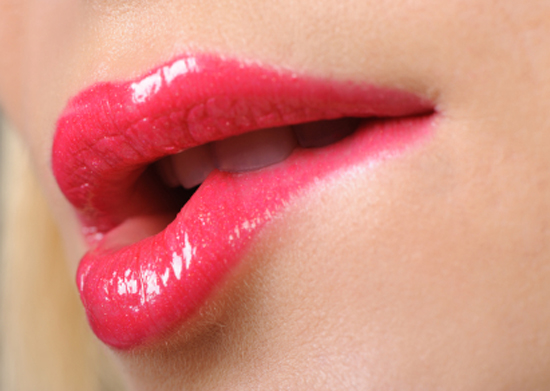
Her mouth says no, but her lip gloss says yesFemale lips. A photo close up(Credit: Sergey Galushko)

So, here’s the worst idea I’ve heard all week: Lip gloss that lets everyone around you know you’re horny. “The saucy slap changes from clear to deep crimson as the wearer feels frisky,” reports The Sun. “It works by reacting with a girl’s body chemistry. And each £12 tube comes with a colour chart so men can work out how randy their partner is feeling.” Well, that all sounds reassuringly scientific.

Mood lipstick, like its notoriously inaccurate cousin the mood ring, is hardly new; I recall it being all the rage when I was still in elementary school, and I doubt that was the first time. But as far as I know, this is the first iteration that’s been marketed as a translator of female desire for befuddled men who would otherwise have no idea if they stood to get lucky. Which is just a terrific idea, except for a few things. 1) If “reacting with a girl’s body chemistry” means the changes are heat-activated, as they are with mood rings and similar products, a “frisky” reading could mean a whole lot of other things. There’s still a shocking number of grown men out there who haven’t fully grasped that erect nipples aren’t always the result of being turned on — do we really want to give them one more thing to misinterpret? 2) Even if one’s lipgloss accurately reflects arousal, feeling aroused does not necessarily mean one wants to have sex right this minute. 3) Even if one wants to have sex right this minute, one doesn’t necessarily want to have it with whoever happens to be around when her lip gloss goes scarlet.

All of which means that the words coming from a woman’s lips remain the most reliable indicator of her desire or lack thereof. Go figure.

I don’t really worry that “Her lip gloss turned red!” will one day be a successful defense in a rape case — though I wouldn’t put it past some lawyers to try — but I do worry that a marketing strategy like this (tongue-in-cheek though it may be) reinforces the pernicious myth that figuring out whether a woman wants to have sex is some daunting puzzle far beyond the intellectual and emotional capabilities of the average Joe. (It’s actually pretty simple. If you have any doubt, ask. If you think asking will ruin the moment, boo hoo; it’s no excuse for refusing to put on a condom, and it’s no excuse for going forward without clear, enthusiastic consent.) And it’s even more troubling that this strategy is being used on a primarily female market. Sure, I can see it working as a bachelorette gift or a gag between already partnered people (“Did you notice what color my lip gloss is, honey?”), but beyond that, it’s playing on a bunch of creepy retro ideas about femininity. That women who want sex are supposed to be coy about it, that we’re supposed to send plausibly deniable signals instead of admitting what we want, that we must make ourselves approachable but never do the approaching ourselves, lest we be written off as aggressive sluts. All of which, guess what, reinforces the belief that women never give a straight answer about whether they’re in the mood, which means men can’t be expected to figure it out — and women can’t be trusted when they report that they did not consent.

I know, whatever, it’s just lip gloss. But the fact that someone thought women would love a product that says “I want sex” to anyone standing nearby — because using our words is just too hard, apparently — is a serious turn off.


Fashion’s bad boy perv goes too far

Models accuse photographer Terry Richardson of sexual harassment, but the industry still loves him

  • more
    • All Share Services

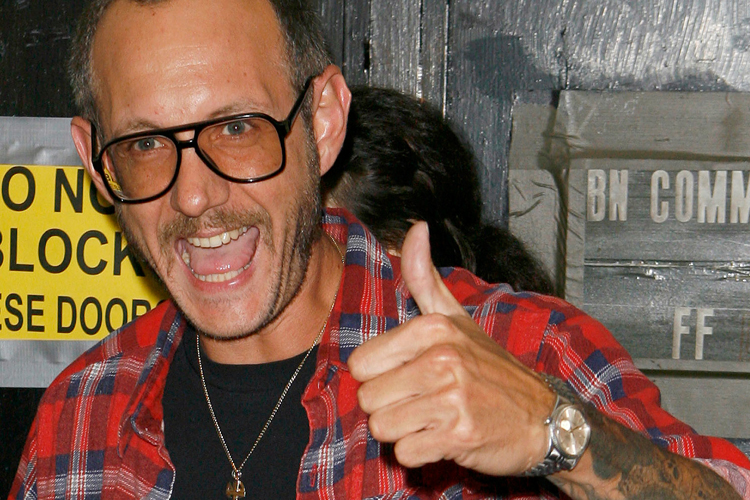
Fashion's bad boy perv goes too farPhotographer Terry Richardson at the Marc Jacobs 2008 spring collection show during New York Fashion Week.

Not much is truly made clear by the recent spate of articles about photographer Terry Richardson — either a misunderstood genius or a tampon tea-loving predator, depending on whom you ask — but I’ve come to a couple of firm conclusions after reading several of them. 1) Terry Richardson has a lot of powerful friends. 2) The fact that so many people seem to like him is quite the faith-in-humanity killer.

According to some models who have worked with him, Richardson is a creep who coerces young women into posing naked and performing sexual favors — on and off camera — during photo shoots. Rie Rasmussen, who recently upbraided him at a Paris fashion event, told Page Six,

He takes girls who are young, manipulates them to take their clothes off and takes pictures of them they will be ashamed of. They are too afraid to say no because their agency booked them on the job and are too young to stand up for themselves.

His ‘look’ is girls who appear underage, abused, look like heroin addicts … I don’t understand how anyone works with him.

So that got people’s attention — but it didn’t necessarily change anyone’s positive opinion of Richardson. Jennifer Wright at the Gloss noted that other models sing his praises and said, “it’s fairly hard to make a call unless you have a model actually saying ‘I felt bad about it.’” But then Jennifer Peck — who consented to give Richardson a hand job during a shoot (after rejecting his offer of tea made from her own used tampon) because she “didn’t want to be the killjoy in the room” — stepped up to say just that. “I modeled for Terry Richardson when I was 19,” she writes. “And guess what? I felt bad about it. Of all the fine folks I’ve frolicked au naturel for, he’s the only one who’s left me feeling like I needed to take two showers. This man has built his business/pleasure empire on breaking the cardinal rule of asking a young girl you don’t know to come over to your house and hang out naked: don’t be a fucking creep.”

In the Daily Beast today, Jacob Bernstein argues that young women like Peck should have seen it coming; Richardson’s work — which often features graphic sexual imagery, not infrequently involving the photographer himself — is so well known, it’s hard to believe that anyone could show up at his studio without expecting at least to get naked and be propositioned. Bernstein quotes anonymous “fashion insiders” who say things like, “It’s just impossible for me to see him as a sexual predator. What he does is completely out in the open,” and, “This is an industry filled with crazy people and big personalities. The boundaries are different than they are in a purely corporate enterprise. It’s not IBM, it’s a business with beautiful girls, sex, and malfeasance. To single out one person as some sort of ringleader is absurd. We traffic in women’s bodies.”

Oh, well as long as everybody knows it’s happening, who could complain?

The women whose bodies are being trafficked, for starters. Model and Jezebel contributor Jenna Sauers offers a few thoughts:

To those who would argue that any nude shoot carries an implied risk of lewd behavior on the part of the photographer, or that models should be aware of Richardson’s oeuvre and avoid him if they don’t like working in a sexualized environment, I say: Bullshit. Nudity is common in fashion, and when the clothes come off, it doesn’t denote a holiday from the responsibilities of maintaining a safe working environment. When I modeled, I shot both topless and implied nude with a variety of photographers — in fact, my first editorial shoot, for Italian Glamour, was topless — and never was I sexually harassed on a set. Nor did I expect, or feel that I deserved, to be simply because of the kind of work I was there to do. Instead, I expected those around me to not violate my dignity at work.

The anonymous insider might be right to say Richardson shouldn’t be singled out, but I’m pretty sure the argument that there are many unethical fashion professionals doing sketchy things with girls and very young women doesn’t actually justify that behavior. A reasonable person might even think that makes it worse — because it means that those who run the business (hint: not the models) are creating unsafe work environments for people whose careers depend on pleasing them. Which means that even if models do indeed “feel bad about it,” they’re motivated to keep quiet. As Jenna puts it,

Richardson’s immense power within the industry, his long-standing relationships with both influential magazines like Vogue, Harper’s Bazaar, and Vogue Paris, and commercial clients like Miu Miu, Gucci, and Sisley, makes it difficult for most working models to openly criticize him. Pointing out the wrongfulness of his behavior risks hurting you more than it will him.

And so agencies continue sending their young charges to castings with him, in the hopes of him giving one a big break. And so magazine editors who would never for a moment consider leaving their teenage daughters alone with someone like Terry Richardson continue booking him for shoots with other people’s teenage daughters.

And so people in the industry continue to condone flagrant sexual harassment — framing it as the expected behavior of “crazy people and big personalities” and the natural consequence of having “beautiful girls” in the workplace — and claiming the fact that everybody knows it’s happening somehow makes it OK. And so people pretend the real issue here is art vs. prudishness, that any objection to Richardson’s alleged behavior is about his taking nudie pictures at all, instead of about his getting naked himself and asking the models to get him off while they’re on the job. And so Richardson — for reasons that only become more unfathomable when you read this 2004 profile of him, which reveals a tragic past but also a stunning narcissistic streak (“If he wanted to jerk off, he could always use the mirror, he said”) — continues to have lots of powerful friends.

That’s the part I really can’t get my head around. I get why he would pull this stuff — because he can. And I get why young women would keep taking their clothes off for him — because it could make their careers. What I don’t get is why anyone finds this man worth defending. But then, I do have a history of failing to appreciate artistic geniuses, so maybe I’m just the wrong person to ask. 

Continue Reading Close

Female athletes can’t win for winning

The University of Connecticut's women's basketball team is kicking butt, which somehow means girls can't play?

  • more
    • All Share Services

This season, the University of Connecticut women’s basketball team has won 72 games in a row — breaking its own record, garnering excited new Huskies fans and national media attention. Van Chancellor, a former WNBA coach and current coach of Louisiana State’s women’s team told the New York Times it’s “one of the greatest things ever to happen to women’s basketball.” Frank Deford recently said the team “may well be the most overwhelming power ever to dominate any major sport.” This sounds like a happy story, right?

It depends on who you ask. Jeré Longman at The Times writes that the team’s success has inspired a backlash: Instead of being praised for their talent and hard work,  “the UConn women are criticized for winning too often, by too many points.” As I understand it, people are arguing that the Huskies’ accomplishment is not, in fact, good news for the sport, because if one team is winning that much, others ostensibly at the same level must be terrible — and once you believe that, you can circle back around and conclude that the UConn team isn’t really as good as it seems. Ergo, the Huskies’ terrific run actually proves that women are bad at basketball — just like we’ve been telling you silly ladies all along!

Longman’s having none of it. “At best, that growing suggestion is ignorant of college basketball history; at worst, it is a wearying, sexist attempt to diminish the achievement of women, who were too long excluded from sports and are still too often forced to apologize for sweating.” Right on, dude. He goes on to point out that women’s college basketball has only been around since 1982 — which means it’s had as much time to develop as the men’s version had had in 1967, “as the U.C.L.A. dynasty kicked into full swing with Lew Alcindor, now Kareem Abdul-Jabbar, consummating a 30-0 season and winning the first of what would become seven consecutive titles for the Bruins.”

So let me get this straight. You’re saying that when men’s college basketball was starting up, at first there were some killer teams and breakout stars — which built excitement and attracted more people to the sport — before things balanced out? Kind of like…?  Yeah. “Essentially, there is zero difference in the trajectory of men’s and women’s college basketball,” writes Longman. So why are women “held to a different standard, derided as somehow lesser or undeserving”? Take a wild guess.

As Phil Taylor wrote recently in Sports Illustrated “Sexism isn’t confined to any sport or country. It’s a universal language, spoken not so much with words as with action, or the lack of it.” He was talking about female ski jumpers being shut out of Olympic competition and “lopsided spending” that gives male athletes an advantage, among other things, but the common denominator is a general attitude that women’s sports not only aren’t but will never be as intense, thrilling or important as men’s. And as the uproar over the Canadian women’s hockey team’s celebration of their gold medal illustrated, a lot of people don’t want their lady athletes acting more like men — whether that means chugging beer, smoking cigars or, you know, winning a lot.

How can we begin to turn these attitudes around? (I mean, besides dismantling the patriarchy.) One small effort even the non-athletically inclined can participate in has sprung up on Facebook: You can take a pledge to attend at least one women’s sports event in 2010. Writes Deford,

There are a lot of reasons why girls from all over the country decide to go play their college basketball in a chilly little backwater called Storrs, Conn. — but a prime one is simply that UConn women’s basketball is popular.

The home games bang out. The glass grandstand has been smashed there. The players are celebrities. They are treated, well, like men.

If people were turning out like that to support women’s teams all over the country, maybe the Huskies would soon have some real competition.


Continue Reading Close

Hey, Gabourey Sidibe: Hate yourself yet?

Diet endorsement deals and career advice keep pouring in for the actress. She's not the one who needs help

  • more
    • All Share Services

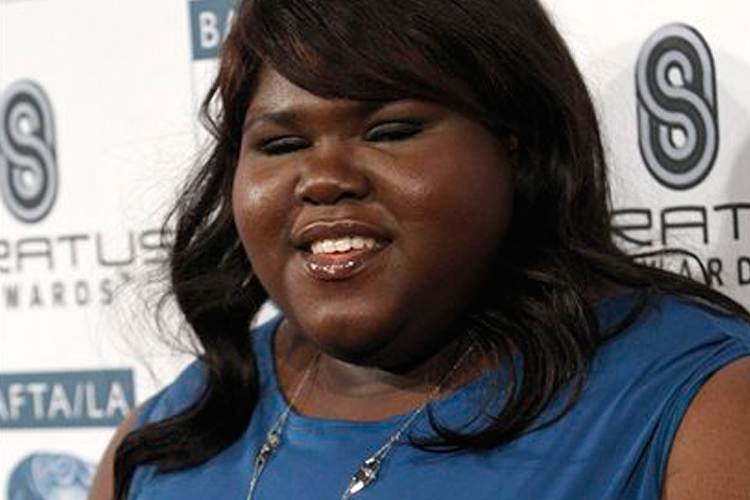
Hey, Gabourey Sidibe: Hate yourself yet?Gabourey Sidibe in January.

Gabourey Sidibe is obviously unhealthy and needs to lose weight if she wants to have a successful career. There, I said it!

No, I don’t really believe a word of that. But apparently, anyone who says it this week automatically becomes newsworthy, and what the hell, I could use some buzz to help sell my next book. Sorry, Gabs, you know I love you — let’s just keep that between us for the moment, though, OK?

The latest person to successfully garner attention for concern-trolling the Oscar-nominated actress is the CEO of AcaiSupply.com, who made TMZ, among other outlets, by offering Ms. Gabby a one-year supply of weight-loss pills “in return for her glowing testimonial after she sheds her unwanted pounds.” (I’m not sure if this company is one of the ones Better Business Bureau spokesperson Steve Cox was referring to when he said, “they lure customers in with celebrity endorsements and free trial offers, and then lock them in by making it extremely difficult to cancel the automatic delivery of more acai products every month.” But if you like, I’ll wait while you go to the Acai Supply site and see how long it takes you to find a working link to the news that after paying shipping and handling for your free trial, “You will be charged $119.93 in 14 days for our Free Refill Program unless cancelled.”)

“After viewing recent pictures of you strolling around Santa Monica earlier this week,” begins the CEO’s letter to Sidibe, “we at AcaiSupply.com have decided we can no longer sit back and keep our mouth’s [sic] shut! … the only way you can reach your goal of someday winning that Oscar is by being active, fit and most of all healthy!”

And clearly, the way to become “active, fit and most of all healthy” is by taking pills you bought off the Internet. Snark aside, though, the guy does have a point. I mean, Gabby — can we talk? — let’s be real here.  Posthumous Oscars notwithstanding, we all know how hard it is to win major awards unless you’re clearly in the pink of health. As concerned people have no doubt pointed out to you, obesity is correlated with Type 2 diabetes, and do you know who has that disease and has also never won an Oscar? George Lucas. Are you going to tell me that’s a coincidence?

Or think of Jane Fonda, who struggled with anorexia and bulimia throughout a large portion of her career — and only won two of the seven Oscars she was nominated for. While at his “lowest point in terms of addictions,” Robert Downey Jr. only won Golden Globe and SAG Awards for some stupid, girly TV show — that’s a big step down after an Oscar nomination for work he did while less high, am I right? Speaking of “Ally McBeal,” that show barely won anything important while at least three of the actresses on it were suffering from eating disorders — just a single Outstanding Comedy Series Emmy and Golden Globes for the show and Calista Flockhart, stuff like that. Before her untimely drug-related death, Judy Garland merely landed a juvenile Oscar, though she was nominated twice more. Similarly, Marilyn Monroe’s most noteworthy win was a Golden Globe, John Belushi earned but a single Emmy, and Chris Farley got practically nothing but a gazillion dollars and an MTV Movie Award. Patty Duke only won one Oscar at 16 — years after her allegedly abusive managers started providing her with alcohol and drugs — and later, just three Emmys before her bipolar disorder (which may have been related to her anorexia, ongoing substance abuse issues and suicide attempts) was finally diagnosed.

I could go on, but I trust you get the picture, Gabby: History shows that when the Hollywood establishment spots someone who’s obviously in ill health and/or engaging in self-destructive behavior, they’re loath to ignore it and hand that person more jobs and awards anyway. Actresses suspected of having dangerous relationships with food, in particular, have a notoriously difficult time finding work; as you surely know, the only extremely thin women really thriving in the industry are those who maintain their weight by eating sensibly and chasing around after their kids, not those who resort to starvation, surgery or drugs. (And when an already thin young woman loses a substantial amount of weight, it’s truly heartwarming to see how folks express their sincere concern instead of judging and turning away.) This is because Hollywood cares, Gabby — just like anonymous Internet commenters and serious journalists and Acai berry diet pushers care, deeply, about your health.

Me, I don’t care so much about your health, if I’m being honest. I mean, I wish you comfort, happiness, longevity and other good things — but since I’ve never seen you look anything but radiant, you never appear high or drunk in public, you’ve spoken about how you’ve never been skinny and regular exercise doesn’t change your size much, you apparently aren’t struggling anymore with debilitating body-related shame and anxiety, and when the word “infectious” is used to describe you, it invariably relates to your charm and good humor, I assume you’re feeling OK. And if there comes a time when you don’t, I can’t imagine why you and your doctor would be interested in my opinion on the matter, so I’ve gone ahead and filed the whole issue under “Not My Business; Don’t Care.” Please forgive me, Gabby, if that makes you feel that I, as a serious lady journalist, am not taking a sufficient interest in your career.

What I am interested in is the lack of good roles out there for women in general, and for fat women and African-American women in particular. I’m interested in the fact that most of these people expressing such deep concern for your health and your prospects as an actress are completely uncritical of the forces that usually keep women who look like you from landing big roles, because it’s so much simpler to criticize you instead. I’m interested in the fact that even if you somehow starved yourself down to a size 0, you still couldn’t do a damned thing about the fact that in 82 years, no woman with your skin tone has ever won best actress — only one has even been in the ballpark — and how that data point gets ignored while everyone’s saying only your weight will prevent you from being the next Meryl Streep. I’m interested in how you’ve already, on your first frickin’ try, scored a leading role in an award-winning film and been nominated for a best actress Oscar (not to mention practically every other possible award) and how even articles fretting about your future are full of casting directors singing your praises and news about your upcoming projects — while the “She has no future” side is represented only by Howard Stern and an entertainment columnist. (I also love how said entertainment columnist sniffs, “the only roles she’ll have a shot at playing will be down-market moms and hard-luck girls working at Wal-Mart”; Mo’Nique and Jennifer Aniston might disagree that such roles are the sign of a dead career.) I’m interested in why, as that same columnist says, “no one in the executive world looks like [you],” much more than I’m interested in whether a hypothetical thinner you would be easier to cast, in fact.

But still, I have my own career to think about here, and I’m not about to let this opportunity to grab an easy 15 minutes pass me by. I’m sure you understand the importance of striking while the iron is hot, Gabby.

So I’m saying it: Gabourey Sidibe is obviously unhealthy and needs to lose weight if she wants to have a successful career! Do you hear me, people? She’ll never work again, much less win an Oscar, if she doesn’t learn to hate herself like a normal fat person and get rid of all that weight that’s making her look like she’s at death’s door every time she appears in public. I know nobody likes hearing it — and certainly, nobody likes saying it — but sometimes, a serious journalist has to go out on a limb and express an unpopular opinion like “Fat is bad.” And now that I’ve bravely done so, I expect this post to go viral by morning, folks. My agent and I are counting on you.

Continue Reading Close

“Jihad Jane”: One more argument against profiling

The story of Colleen LaRose reminds us that we can't know what a terrorist looks like

  • more
    • All Share Services

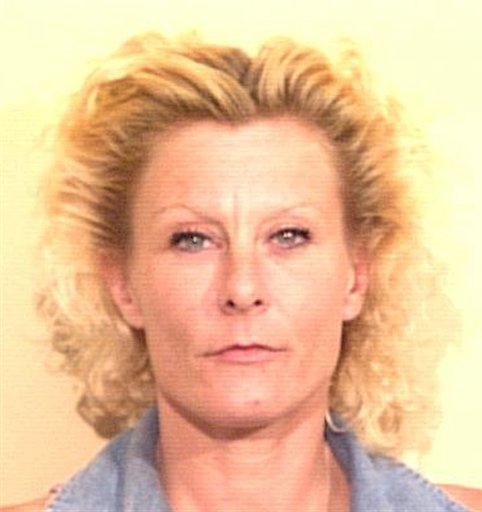
In this June 26, 1997 booking photo released by the Tom Green County Jail in San Angelo, Texas, is shown Colleen R. LaRose. LaRose, the self-described "Jihad Jane" who thought her blond hair and blue eyes would let her blend in as she sought to kill an artist in Sweden, is a rare case of an American woman aiding foreign terrorists and shows the evolution of the global threat, authorities say. LaRose is accused in an indictment filed Tuesday, March 9, 2010, of actively recruiting fighters, as well as agreeing to murder the artist, marry a terrorism suspect so he could move to Europe and martyr herself if necessary. (AP Photo/Tom Green County Jail)(Credit: AP)

Anyone who’s paid attention to analysis of racial profiling from sources other than right-wing radio talk show hosts has probably gathered by now that it does not work so well. Kim Zetter and Patrick Smith have written about it for Salon, and Malcolm Gladwell famously compared it to (also misguided) legislation banning particular dog breeds. It unfairly targets innocent people, it’s been shown to produce fewer accurate identifications of criminals than not profiling, it wastes resources and of course, it leaves out every baddie who doesn’t fit the profile.

This last point is inevitably brushed away by proponents of racial profiling, who think it should be obvious that Arab men are far more likely to be terrorists than, say, middle-aged white ladies, and that justifies far more scrutiny of the former group. Stories about men of color being killed by police who presumed too much, or white English men boarding planes with explosives, or white Texan men flying planes into federal buildings never seem to make a dent in such opinions. But the indictment this week of American Colleen “Jihad Jane” LaRose, who along with foreign terrorists was involved in a plot to kill a Swedish artist, has produced an unusually large onslaught of commentary on the limits and dangers of the practice. Are people finally getting the picture?

They should be, since even LaRose herself pointed out the obvious. “On the Internet, she allegedly boasted that her appearance and nationality would allow her to travel freely and without scrutiny as she went about her mission,” writes The Washington Post’s Eugene Robinson. As Patrick Smith has written in his “Ask the Pilot” column something like five billion times since September 11, 2001, the greatest weapon those 19 al-Qaeda members had going for them was not box-cutters but the element of surprise. That was also what made pregnant Irish woman Anne-Marie Murphy seem like a good choice to (unwittingly) carry a bomb onto an El-Al plane for her boyfriend in 1986. Obviously, it’s not that hard for terrorist organizations to recruit someone who looks nothing like the men Newt Gingrich thinks should be “actively discriminated against” — so what do you suppose their next strategy would be if racial profiling became official policy? (Or probably already is, given the unofficial discrimination happening at airports all over the place.)

And the idea that we all know what a terrorist looks like is dangerous not only because it means people like LaRose might teach us the hard way that we don’t, or because it puts innocent people at risk of tragic overreactions by authority figures, but because it reinforces the idea that “terrorism” is only committed by one kind of person. Colleen LaRose is nothing but the latest in a long line of white American terrorists: Timothy McVeigh, Ted Kaczynski, Shelley Shannon, Eric Rudolph, Bruce Ivins, Scott Roeder, James von Brunn, Andrew Stack III — the list goes on. This country is crawling with hate groups and disturbed loners with axes to grind, many of whom share a race and at least loosely a religion, but somehow, you never hear calls for increased scrutiny of white people or Christians. You never hear anyone suggest those groups should be expected to give up their rights, privacy and dignity for the good of us all.

Nor should anyone suggest that, since it would undoubtedly lead to — get this — wasted law enforcement resources, harassment of innocent people and missed opportunities to catch criminals who don’t fit the profile. If all “looking like a terrorist” means is that you share a race with someone who’s committed an act of terrorism, then guess what, every single American qualifies. So even if you believe racial profiling is appropriate, the only logical move is to treat us all as equally suspicious.


Continue Reading Close

A boob gag that actually works

Marion Cotillard stars in this spoof ad, which offers a new solution for guys staring at your chest

  • more
    • All Share Services

A boob gag that actually works

It takes a lot, in 2010, to come up with a “My eyes are up here, dude” joke that actually feels fresh. But this spoof ad for “Forehead Tittaes,” starring Academy Award winner Marion Cotillard, actually pulls it off. The “scientific” claims are spot on (“Lab tests prove that Forehead Tittaes actually redirect the male gaze from the chest to the general area of the brain”), William Fichtner’s silent turn as a lecherous boss is delightful, and Lesley Ann Warren’s total commitment to the gag she got stuck with is a sight to behold. Enjoy.

Continue Reading Close

Page 2 of 71 in Kate Harding