Ned Resnikoff

The real reason we rushed into (another) war

The influence of the rich extends far beyond economic and fiscal policy

  • more
    • All Share Services

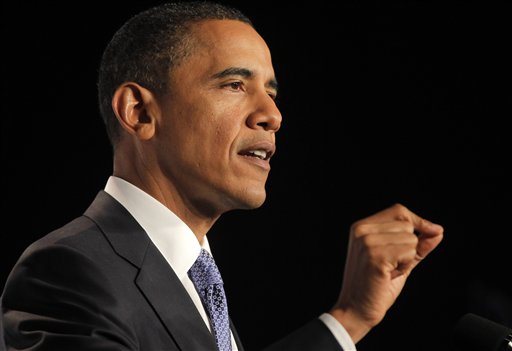
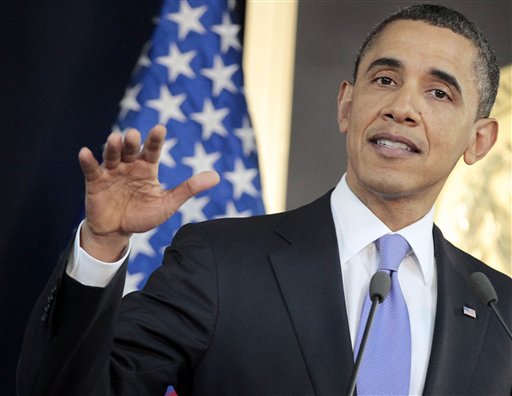
The real reason we rushed into (another) warPresident Barack Obama answers a question on the ongoing situation in Libya during his joint news conference with President of El Salvador Mauricio Funes at the National Palace in San Salvador, El Salvador, Tuesday, March 22, 2011. (AP Photo/Pablo Martinez Monsivais)(Credit: AP)

Forget the State Department-approved euphemisms: We all know that America is now at war in yet another corner of the Arab world. Granted, our newest and shiniest military entanglement differs in its particulars from Iraq and Afghanistan, but it’s still jarring to watch American leadership leap once more unto the breach with such alacrity. Foreign policy commentator Steve Clemons, in a post titled “Obama Moved at Warp Speed on Libya,” put the breakneck pace of events in perspective: Coalition forces, he writes, moved to impose a no-fly zone as little as 31 days after the initial outbreak of violence. In Yugoslavia, it took over a year.

Taking 31 days to formulate a response isn’t exactly “dithering,” as some of Obama’s critics initially characterized his response. In fact, even supporters of intervention should be struck by how quickly we dove in to such an open-ended (though, for now, ostensibly limited) commitment. With our military already overextended and our economy still far from healed, how is it that we committed to such a large gamble with so little hesitation or public debate?

Maybe it’s because those in charge are gambling with other people’s money. In the past month, both Ezra Klein and Kevin Drum have written solid pieces noting that the policy preferences of the poor and middle class have ceased to matter at all to either major American party. But whereas Drum and Klein addressed only how the outsize political influence of the rich affects economic and fiscal policy, Nobel Prize-winning economist Joseph Stiglitz noted that it also distorts how we go to war. In a recent piece for Vanity Fair, he wrote:

Inequality massively distorts our foreign policy. The top 1 percent rarely serve in the military — the reality is that the “all-volunteer” army does not pay enough to attract their sons and daughters, and patriotism goes only so far. Plus, the wealthiest class feels no pinch from higher taxes when the nation goes to war: borrowed money will pay for all that. Foreign policy, by definition, is about the balancing of national interests and national resources. With the top 1 percent in charge, and paying no price, the notion of balance and restraint goes out the window. There is no limit to the adventures we can undertake; corporations and contractors stand only to gain.

In other words: The more powerful the rich have become, the more they’ve shifted the cost of war downward. And because the interests of the rich are effectively the only interests now being represented in government, politicians have no incentive to avoid policies that exert pressure on the middle and lower classes. For the people in charge, war has gotten cheaper than ever.

That makes the Obama administration’s promises of a “limited engagement” hard to swallow. The official policy of the United States in Libya is regime change, and the Obama administration faces no formal or material constraint on its ability to escalate the conflict. Even if they were to deploy a significant ground force to Libya, the reaction from Congress would be feeble at best — perhaps some symbolic outrage and an impotent, inconclusive Senate hearing.

That’s why the White House has scarcely bothered to consult with the legislative branch while pursuing military intervention. Congress has spent the past few decades gradually ceding its capacity to conduct meaningful oversight on matters of war. After all, if it doesn’t affect their constituency, why should it affect them? Better to have no say on the issue, so they won’t have a record their opponents can run against.

For these reasons, even supporters of intervention in Libya should be alarmed by the manner in which the United States now goes to war. Even if the rebels were to seize Tripoli with only modest American assistance, and even if they were to install a functioning liberal democracy in Gadhafi’s place, that would not change how America entered this conflict in the first place. Nor would it have any bearing on how we enter future conflicts.

Because no matter how the conflict in Libya ends, the rich will still be the only meaningful political constituency in this country. War costs them little. And until that changes, we can look forward to a continual state of war at the expense of everyone else.

A president whose actions scream for oversight

It's one area where the Democratic Congress utterly failed. But is there any hope a GOP House will do better?

  • more
    • All Share Services

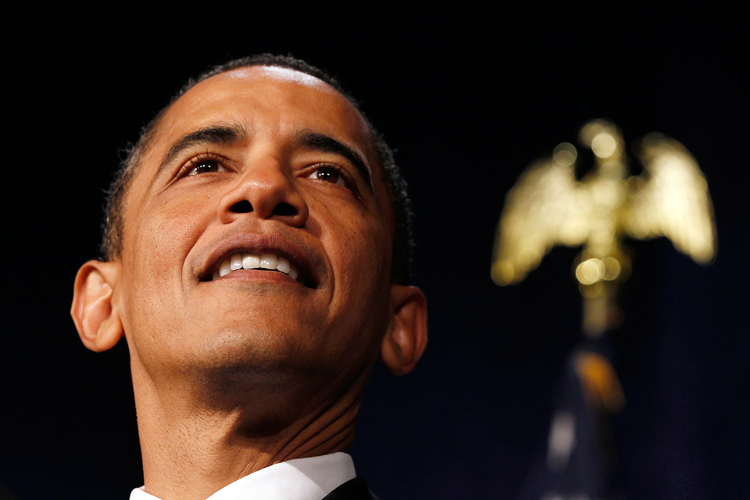
A president whose actions scream for oversightU.S. President Barack Obama speaks at the U.S.-India Business Council and Entrepreneurship Summit in Mumbai, India, Saturday, Nov. 6, 2010. (AP Photo/Charles Dharapak)(Credit: AP)

Congress won’t be passing much big legislation over the next couple of years. Various factions within either party might try, but most of these efforts will likely collapse either under the throat-clearing embarrassment of the party leadership or the larger institutional barriers created by a divided government. Much of the activity on the legislative branch, therefore, will focus on other Constitutionally-mandated duties — chief among them, oversight.

Now that the House Committee on Oversight and Government Reform is under the control of a party besides the president’s, it figures to come out of hibernation and get back to major, widely publicized interrogations of the executive branch’s activities. The big question is whether incoming committee chairman, Republican Darrell Issa of California, is more interested in muckraking or witch-hunting.

He’s stressed the former in the press, telling reporters: “My job is to make the president a success.” I’m skeptical that he’s truly serious about that; but if he is, then one would imagine he might be interested in shining a light on some of the more insidious examples of the federal government’s abuse of power, even when doing so yields no immediate advantage for the Republican Party. If that’s the case, I have a few humble suggestions on where he could start.

For example, it might be nice if Issa asked the Obama administration why they think they have the legal authority to assassinate American citizens. Or maybe he could ask why the administration’s definition of what constitutes a state secret is so expansive that a torture victim can’t sue his torturers in federal court. And while we’re on the topic of the CIA, I wouldn’t mind seeing Issa hold a couple of hearings on the agency’s broad mandate to wage undeclared secret wars and order drone strikes with virtually no oversight.

Of course, I don’t have much reason to be optimistic regarding my committee hearing wish list. Issa, recall, is from the party of George W. Bush — the guy who recently admitted to authorizing torture. The Republican Party has spent much of the past decade scrambling to either defend or obfuscate their president’s wrongdoings; and when they’ve criticized Obama on national security, it’s been for giving too much deference to civil liberties. Evidently they’re willing to let huge overreaches of executive power slide as long as he doesn’t attempt to close Guantanamo Bay or try Khalid Sheikh Mohammed in a civilian court.

Nor does the newly minted minority party in the House seem particularly interested in pursuing these cases. If they had wanted to, they could have done it sometime in the past two years. But the modern president dictates his party’s agenda, even in the legislative branch; no way in hell would the Democratic caucus ever jeopardize his agenda by demanding that his administration answer for their wrongdoing. Nor would they see much reason to relitigate the past; not when exposing the Bush administration’s abuses of power would not only distract from Obama’s legislative agenda but also limit his freedom to engage in those same abuses. Besides, the Democratic caucus can’t even reach unanimous consent that these betrayals of the public trust are a bad thing.

But as naïve as it may be, I’ve got to ask. After all, this time around there’s no ambitious legislative agenda to derail by putting congressional oversight front and center. Since the Democrats will have plenty of other matters on their hands when they retake the House in 2012 — which I’m fairly confident they will — this legislative session may be the last best chance to reverse the precedent of the past few years, in which American presidents discovered they could aggressively warp the rule of law and face no consequences.

Continue Reading Close

So, you think you know what a “person” is?

The definition may seem simple now, but new technologies are poised to make it a whole lot tougher

  • more
    • All Share Services

So, you think you know what a

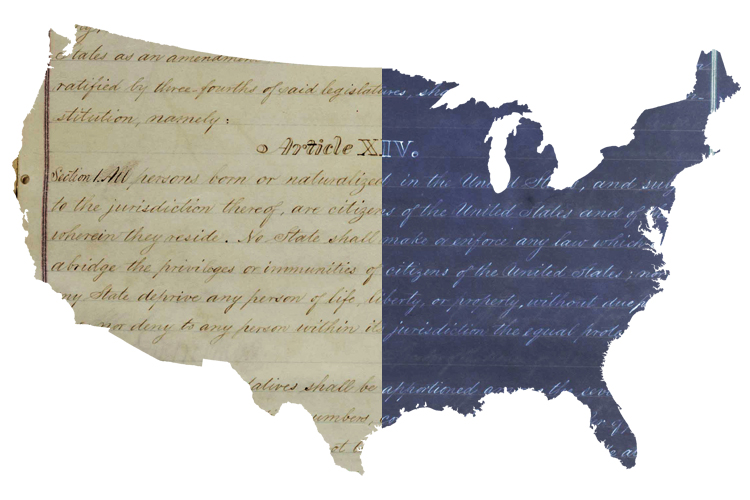
Last week, I defined a right as a certain advantage or form of protection that all persons are entitled to by virtue of their personhood. Of course, all that definition does for us is open up two ancient arguments: What do persons deserve? And what is a person?

The first question might seem a lot more difficult than the latter. Presumably, we should be able to use the Justice Stewart argument for defining personhood: You know it when you see it. Most of us encounter many persons every day, and nearly all of us are well practiced at distinguishing the persons in our lives — our family, for example — from other physical entities, such as chairs.

But as Adam Serwer points out in his fascinating article from this month’s issue of the American Prospect, emerging technologies might make separating the persons from the non-persons a lot more difficult than we’re used to. It may just be a matter of decades, maybe even years, before we’re forced to examine cyborgs, genetically modified clones, and even sentient computers, and ask ourselves: Are these persons? Do they have the same rights I do?

In fact, our modern understanding of personhood is already more muddled than we usually like to admit, even when you remove science fiction overtones from the debate. Where you fall on whether a woman has a right to terminate her own pregnancy likely has a lot to do with whether you believe the fetus in her womb is already a person. And recently, some animal rights proponents have argued that non-human animals are nonetheless partial or full persons; a growing segment of the scientific community believes that dolphins are non-human persons, and two years ago Spain’s Parliament voted to grant great apes civil liberties.

At this point, maybe about half of you are vigorously nodding your heads in agreement, while the other half are snorting derisively. But even if a permanent consensus on this problem is beyond our reach, we should be able to agree on the problem itself: the lack of a universal, coherent legal framework for defining personhood and assessing the rights of all persons, be they human, animal or other.

If there is an answer, I suspect that it lies not in existing law, but in philosophy. So I sent an e-mail to Neil Sinhababu, a professor of philosophy at the National University of Singapore, known to the liberal blogosphere as one half of the political blog Donkeylicious. Sinhababu is a hedonic utilitarian, meaning that he believes moral goodness lies in whatever maximizes the aggregate amount of pleasure being experienced by all conscious beings. In 2006, he wrote an article — also for the Prospect — in which he argued that human fetuses are not persons, and that non-human persons — and even some non-human non-persons, like kittens — should be accorded higher moral status than the human unborn.

Via e-mail, Sinhababu told me that, “what makes something a person is that it can experience happiness and suffering, and that we can promote its welfare and ours by giving it a certain set of legal protections and permissions.” That’s a broad view of personhood, which, while it might not include human fetuses, nonetheless extends to nearly any feeling entity that can be said to have welfare.

It’s also not a view shared by many people (or human people, anyway), according to Yale professor Joshua Knobe. Knobe is among the leading figures in an expanding field called experimental philosophy, which combines neuroscience and philosophy to examine how we form our philosophical intuitions. In a phone interview, he told me that people tend to use two different criteria to define a person: a capacity for complex reasoning skills, and what he called “phenomenological traits” — the ability to experience strong emotions. Sinhababu’s definition only examines the latter category.

“[Throughout history] a lot of philosophers thought that there was one notion that makes up a person,” said Knobe. But his work shows that most people disagree. When asked to imagine “a robot exactly like a human,” they will argue that it is not a person because it can’t possibly have genuine phenomenological experiences like pleasure and pain. Animals, on the other hand, “have phenomenological traits but not complex reasoning,” so they can’t be persons either. The consensus: Only humans have both, and therefore only humans can be persons.

However, even entities that aren’t full persons can have varying degrees of moral or legal status. “A newborn baby can never be guilty or innocent,” he said, because they don’t yet have the ability to reason. “But you can be guilty of doing wrong to it,” because they can nonetheless feel pain. Even those who don’t think animals are persons tend to object to senseless animal cruelty. Could an artificial intelligence with no phenomenological traits nonetheless be considered guilty of doing harm to a person?

In terms of inclusiveness, my own view lies somewhere between Sinhababu’s and the consensus articulated by Knobe. It is closest to the existential-phenomenological view of Jean-Paul Sartre, with some caveats that I won’t go into here. For Sartre, the meaningful distinction was between “être-en-soi” (being-in-itself) — inanimate objects and other entities that are incapable of self-reflection — and “être-pour-soi” (being-for-itself) — that which can step outside itself, observe itself, and, in Sartre’s terminology, negate itself. To put it another way: the être-pour-soi is, in the language of countless science fiction stories about evil thinking machines, that which is self-aware.

All of these definitions share a problem: They are based in metaphysical, and therefore unverifiable, criteria. Even if we achieve consensus over a single definition of personhood, it seems there is no way to prove that any entity meets that definition; not a robot, not a clone, not even you or I. In philosophy, this is known as the philosophical zombie problem: If we can conceive of an entity that exhibits all the behavior of a person but is not one, how can we say that anyone is a person with any certainty? For the courts — no strangers to uncertainty, them — the only way out of that dilemma might be by way of something similar to “reasonable doubt”: that is, unless we can establish with any certainty that something is not a person, it should be considered to have the legal protections and obligations of one.

Continue Reading Close

The non-existent moral case for tax cuts

In the debate over who should pay how much, we put far too much emphasis on the word "deserve"

  • more
    • All Share Services

The non-existent moral case for tax cuts

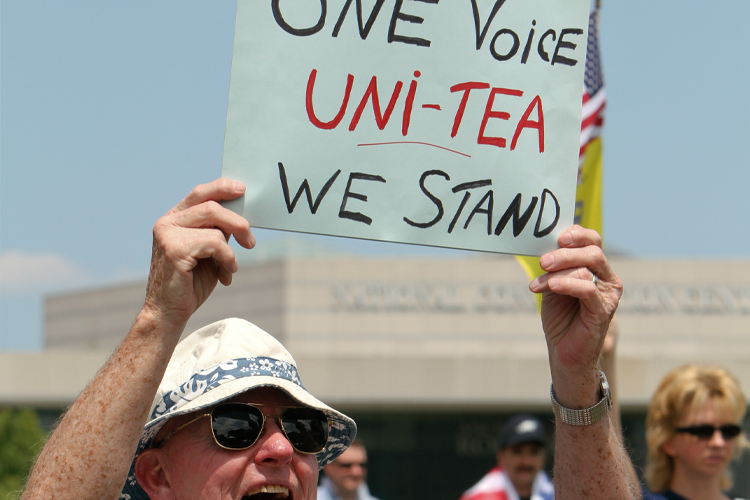
Although conservatives generally make the case for specific tax cuts in economic terms, mainstream American conservatism very clearly has a strong moral commitment to keeping taxes as low as they can. You can see this in the Tea Party’s equating of progressive income taxes with “socialism” and “tyranny,” and you can see it in Fox News’ Stuart Varney’s on-air tantrum from earlier this week. Sure, the right will rend their garments over the Laffer curve and supply-side economics, but there’s a much simpler argument hiding behind the line graphs.

It goes like this: We earned this money. We deserve it. It is therefore immoral to take it from us.

The standard liberal response is to quibble over who deserves what. Does a single mother who works three jobs just to make the rent and keep her kids clothed deserve more or less material wealth than the overworked corporate lawyer who’s barely seen his downtown Manhattan studio in the past week? What about the linebacker who is paid millions of dollars to be in peak physical condition all the time and perform under immense emotional and physical pressure? Does he deserve all of his income more than the recently laid off factory worker deserves his unemployment benefits?

The problem with questions like this is that they put far more moral weight on the word “deserve” than its shaky frame can support. This becomes clear once you ask why a billionaire does or does not deserve a tax cut. He does deserve it because he’s a diligent, hard worker. He doesn’t deserve it because his money came to him in large part thanks to a combination of luck and privilege.

So the question of “deserves” comes down to whether the money came to the billionaire by way of arbitrary factors or as a result of his own efforts and character. And implicit in the argument is the understanding that the difference between these two categories is somehow intelligible, even quantifiable.

But that’s silly. As the political philosopher John Rawls famously pointed out, factors that we associate with character — such as intelligence and a diligent work ethic — are no less morally arbitrary than factors like inherited wealth or membership in a privileged identity group. If Jane deserves more money than her co-worker Bob because she is naturally smarter and harder working than him, what did she do to deserve her greater intelligence? What about the solid work ethic her parents instilled in her? Did she, at the exact moment of her birth, already deserve better parents than Bob?

The only thing this debate about who deserves what really tells us is that very few people are willing to admit just how insubstantial and malleable our innate character really is. When you control for environmental, genetic, social, historical, and biological factors, what differentiates my own distinguishing features from Charles Manson’s — or, for that matter, Obama’s, Palin’s, Lincoln’s or yours — is either imperceptible or completely nonexistent. And if that’s the case, I don’t see how you can argue that either of us deserve more or less than any of those people.

What this suggests to me is that the only way you can coherently argue that a person inherently deserves a certain level of privilege or material comfort is to also argue that all persons deserve it, by virtue of their personhood. We already have language to describe these things that all persons innately deserve: we call them rights.

Beyond rights is where the language of “deserving” falls apart as a morally relevant factor. There are, of course, other morally relevant factors: ownership comes to mind, but nearly everyone, when pressed, will admit that ownership doesn’t carry a great deal of moral weight. (Example: If I need to steal your expensive racing kayak to row out to sea and rescue a drowning child, are you really going to argue that I was behaving badly?) Mostly it falls back to a question of economics: how to balance the state’s ability to provide needed services for all citizens, including its most needy, while preserving a capitalist system which rewards achievement, and therefore (one would hope) innovation, productivity and excellence.

Continue Reading Close

Quran-burning saga boosts Palin-style Islamophobia

From Palin to Sean Hannity, the right's leading Muslim-baiters owe Terry Jones a giant thank you

  • more
    • All Share Services

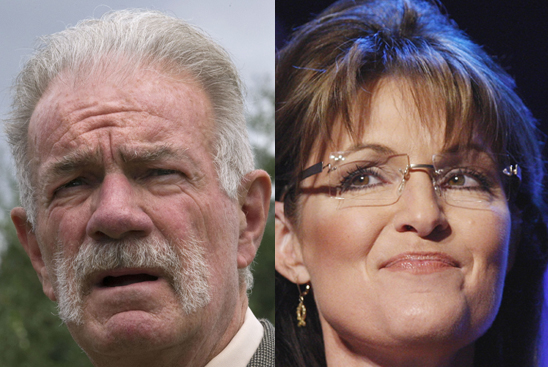
Quran-burning saga boosts Palin-style IslamophobiaDove World Outreach Center church pastor Terry Jones announces the burning of the Korans will continue as planned during a news conference in Gainesville, Florida September 8, 2010. Jones, leader of a tiny, little-known Protestant church in Gainesville, Florida, which openly campaigns against what it calls "radical Islam," is facing a barrage of calls from U.S. government, military and religious leaders, and from abroad, to cancel his plans to publicly burn Islam's holy book. REUTERS/Scott Audette (UNITED STATES - Tags: POLITICS RELIGION HEADSHOT IMAGES OF THE DAY)(Credit: © Scott Audette / Reuters)

Pastor Terry Jones might not be an expert in theology, politics or basic human decency, but he more than compensates with media savvy. He can wring every last drop of press attention out of even a retreat, as he demonstrated last night when he announced the cancellation of Burn a Quran Day and then, not four hours later, issued a semi-retraction, claiming that he’d been misled (those sneaky Muslims!) and suggesting he might still burn some Qurans after all.

As I write this, the fate of Burn a Quran Day is still up in the air, but my guess is it probably won’t happen. Instead, Jones will soak up another news cycle or so of sweet, sweet infamy, before publicly declaring that he’s holding off “out of respect for the troops,” whom his actions could endanger. The career Muslim-haters who previously called him out for going just a teensy bit too far will thank him profusely, leaving open the door to future friendship, interviews and well-paying speaking engagements.

But even if my prediction turns out to be completely wrong, the leaders of the right-wing’s anti-Muslim brigade nonetheless owe this man a fruit basket. He may not have sparked the recent explosion of Islamophobia, but he’s done as much as just about anyone to drag it into the mainstream.

Don’t get me wrong: When even Alan Keyes thinks you’ve crossed the line, that means that the actual line is about two or three time zones behind you. But that’s rather the point. Jones is so extreme — so outlandishly, cartoonishly vile — that Keyes, Sarah Palin, Sean Hannity, Pamela Geller and the rest of the armchair holy warriors can condemn his intolerance in the same breath that they echo thinly veiled versions of his sentiments.

This is what they wanted all along: to be able to say startlingly bigoted things without being perceived as bigoted per se. Which is why Geller, for example, gets so worked up when you take her rabid hatred of Muslims out of context and call her “anti-Muslim.” Now she has a new line: she is on the record against burning a big pile of Qurans, which conclusively proves that she has nothing against Muslims and is merely a concerned citizen.

That defense should be taken about as seriously as perennial Holocaust denier Mahmoud Ahmadinejad’s protestations that he’s not an anti-Semite. Sadly, it will probably play better than that in the United States, where 49 percent of of the country have “generally unfavorable views of Islam.” I’m guessing that plurality is in no mood to examine their own biases in a harsh light.

Plus, this sort of cheap evasion has worked before. The prevailing attitude toward prejudice in this country is so stunningly simplistic and superficial that the chairman of a major political party can get away with pretending that the only racists in America wear Klan hoods.

It’s time for us to grow up and realize that you don’t have to commit a hate crime to be considered a bigot. Publicly declaring that “Muslim life is cheap” — as Marty Peretz, editor in chief of the New Republic did recently — should be more than enough to earn you the label. Furthermore, when someone actually acts on the vile portrait of Muslims you’ve been painting, offering up a little tepid criticism doesn’t exonerate you of complicity. That’s what makes the right wing’s Two Minutes’ Hate (or, rather, Two Minutes’ Feeble Equivocation, since Palin and others have taken to comparing Quran-burning to the Park 51 project) such a sick joke: if they hadn’t worked so hard to foment anti-Muslim fervor across the country, then none of us would have heard of Terry Jones in the first place. Hell, the Westboro Baptist Church — those are the cretins with the “God Hates Fags” signs — were burning Qurans before it was cool, and don’t have even a fraction of the coverage to show for it.

Only with the recent spike in Islamophobia has this sort of behavior morphed into a genuine sensation. And you can trace that spike all the way back to the right-wing media personalities who are now using it to make themselves seem moderate by comparison.

Continue Reading Close

The ever-expanding tentacles of the Glenn Beck brand

He's constructing a world that allows his fans to avoid the pitfalls of introspection and critical thought

  • more
    • All Share Services

The ever-expanding tentacles of the Glenn Beck brand

It’s been obvious for quite some time that Glenn Beck is not your typical conservative pundit. In the early days of Beckmania, style distinguished him from his Fox News colleagues more than content. He disseminated the same talking points as Hannity, O’Reilly and Cavuto, but he did it in the appealingly histrionic style of a true paranoiac. It was somewhat like listening to Alex Jones, talk radio’s greatest conspiracy monger, if someone convinced Jones to vote Republican, gave him a radio show, and then got him very drunk.

That was then.

But Beck has put a lot of work into expanding his brand since then, to the point that it’s no longer sufficient to describe him as a mere right-wing pundit. Nor is he, as Reihan Salam suggests, some kind of pasty conservative Malcolm X. There is no analogy that can explain the totality of the Beck phenomenon, but there are dozens that can capture a single facet: a dash of Father Coughlin, a smidgen of Oprah, and even a little L. Ron Hubbard sprinkled on top.

It was more Oprah than Coughlin at last weekend’s big jamboree on the national mall. Those expecting a macro-scale outburst of the usual Tea Party frothing were disappointed to discover that the rally was, in David Weigel’s words, “about as angry as a Teletubbies episode.” About as angry, and only slightly more political. The keynote speaker was the cuddly, pious, group hug version of Glenn Beck. He wasn’t there to talk to you about the New Black Panther Party, but about your own spiritual health.

It was a canny move on Beck’s part, and not just because it made liberals predicting a white riot on the steps of the Lincoln Memorial look like fools. It was also the final step in his transformation from a political commentator who does some other shticks on the side to arbiter of all that matters in life. Want to get mad about politics? Watch the TV show! Need an education? Go to Beck University! Looking to be titillated? He has the beach read for you! And for those who want a good, cathartic cry, there’s his Christmas special.  With the “Restore Honor” rally, he came out as an amateur theologian as well. If you have a single emotional or intellectual need, Beck promises to fill it.

As if to underscore the point, this week saw the launch of the Blaze, a Huffington Post-style news and opinion aggregator. Now Beck’s fans can get their window into the political world exclusively from a Beck-approved outfit, and then tune in at night to hear Glenn Beck’s thoughts on what Glenn Beck said earlier that day. This is epistemic closure taken to new, dizzying extremes: It offers people the opportunity to voluntarily enter into an arrangement in which their political views, religious attitude, and even fundamental life philosophy are constructed and mediated by a single pseudo-messianic figure.

Viewed in that context, Beck’s fevered rants about “liberation theology” and Park51 head Imam Feisel Abdul Rauf’s alleged extremist ties take on a new meaning. That is because Rauf, the Rev. James Cone (the founder of black liberation theology), and most of the other suspiciously dark-skinned boogeymen in Beck’s rogues’ gallery are his opposites. These are men who explicitly advocate for minority representation and ideological pluralism. They directly confront and challenge homogeneity — both ideological homogeneity and other kinds. Whether you agree with their views or not, you conquer new intellectual territory and expand your own wisdom simply by giving them a fair hearing.

But doing so requires hard work, deep concentration and a willingness to question even your most deeply held values. Actively, voluntarily undermining your own beliefs and assumptions is a scary, lonely, even painful thing, especially when there are no easy ways out once the process has started, and potentially no end in sight. Our ability to do this is what makes us human, but so is our ability to be terrified by it.

Beck understands this terror. It is what he makes his livelihood off of. What he offers to his customers is a way to avoid that terror and the other pitfalls of introspection and critical thought. He already has all the answers. No need to look for any of them yourself.

That basic pitch is of a species offered up by hucksters of all kinds: political parties, radical religious sects, self-help books and so on. What makes Beck so remarkable — and the influence he wields so unsettling — is how he combines all of these things into a single all-encompassing product.

Continue Reading Close

Page 1 of 3 in Ned Resnikoff