Spring Sale: Get 1 Year, Save 58%

A “disasterologist” talks climate change

2020 was so bad that even disasters outdid themselves. Last year the United States alone experienced at least 16 weather and climate disasters with losses topping $1 billion each. That’s more than twice the long-term average.

What’s worse: Expensive disasters are on the rise. 2020 was the sixth year in a row that the United States saw 10 or more billion-dollar weather and climate disasters. And as climate change supercharges storms, wildfires and droughts, this trend will continue to climb.

To stave off the worst outcomes, scientists say we need to reduce greenhouse gas emissions, which will require steadfast effort from elected officials, policymakers and businesses.

But since there are no quick fixes for the climate changes already underway, there’s one group of experts we’ll also need to call on: emergency managers. Unfortunately, although they’re tasked with making sure communities are prepared to respond to disasters, they’re often left out of conversations about climate change.

Samantha Montano, an assistant professor of emergency management at Massachusetts Maritime Academy, and a “disasterlogist,” has been working to change that. She’s also been calling for emergency management professionals, including government agencies like FEMA, to put the climate crisis and environmental justice at the forefront of their work.

We spoke to Montano about why we need emergency managers involved in climate conversations, whether disasters are on the rise, and how we prepare for a future with climate-supercharged storms.

We often think of emergency management as responding to “natural disasters,” but as you wrote in an op-ed for The Washington Post, that term is a bit fraught.

Disaster experts don’t really use the term “natural disaster” because it’s a bit of a misnomer. When we’re talking about disasters, we’re talking about the actual human toll that they take. Is it the fact that a river, which naturally overflows its banks, has caused the disaster? Or is it that we have built homes right next to the river; that we have not maintained the levees that are meant to protect those homes from flooding; that the people who live in that neighborhood and don’t have a lot of money aren’t able to evacuate; that there aren’t government programs there to help people recover quickly?

All of those things are not natural, right? Those are the human decisions that have ended up making a situation into a disaster. So while a river overflowing its banks may be natural, the fact that it has led to a disaster isn’t. So that term “natural disaster” helps to obscure the role of human responsibility in disasters. If everything that happens are just these natural events that we have no control over, then some people may think we can’t do anything about it.

This thinking isn’t new in disaster research, but it has gotten a bit more attention in recent years as folks try to understand how climate change fits into all of this. The new term that we hear people using is “climate disaster,” which runs into a similar problem.

Climate change may be a factor that is contributing to a disaster that happened, but it’s certainly, again, not the only factor. But if we understand the root causes better, then we can make different decisions and prevent disasters from happening.

There’s ample evidence that climate change is supercharging a lot of weather events. Are emergency managers included in conversations about how to fight climate change?  

Within the broader climate change conversation, most of the focus is on carbon emissions and that’s very important. And more recently we’ve seen an uptick in conversations about climate adaptation, which is also important as we begin to experience the consequences of climate change.

But we hear much less about the pretty significant overlap between climate adaptation and what we in emergency management call “hazard mitigation.” It feels sometimes from an emergency management perspective like we’re reinventing the wheel a little bit.

Flooding and wildfires aren’t new. We in the emergency management community have been dealing with these hazards for a very long time and we have a lot of knowledge about them. We want to make sure that, especially because of the urgency of the climate crisis, we are pulling from this base of knowledge and experience that we have.

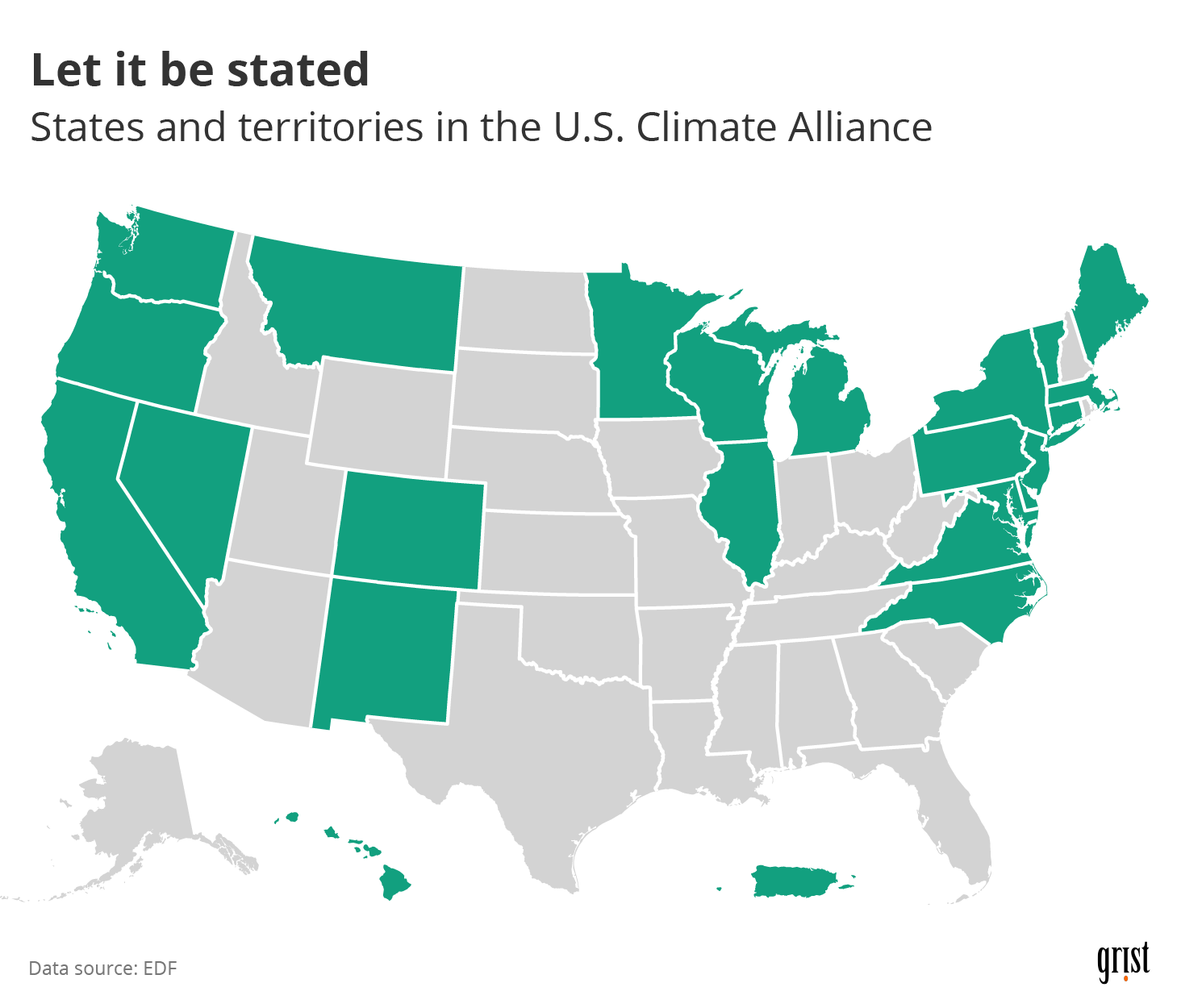
How much emergency management is integrated into conversations about climate change varies greatly across the country. Maine, for example, just released their plan for a statewide climate council and emergency managers were all on that committee and helped to produce the plan.

This is a great example of trying to bridge emergency management and adaptation work. But there are other places in the country where you have a part-time emergency manager working in a rural community and they don’t have the resources or they’re not a part of those climate conversations. There’s definitely more work that needs to be done to help bring emergency management and climate adaptation work together.

Climate change can help fuel short-term hazards, like a hurricane, or lead to slow-moving threats such as sea-level rise. How do you differentiate between these from a management perspective?

We think about hurricanes, wildfires — these more acute events — as ones that emergency management is very obviously on the front line of managing. But issues like sea-level rise, and even longer-term chronic issues like droughts, are areas emergency management is still involved in because it still has an impact on our overall risk.

Something like an earthquake, which seems pretty far removed from climate change itself, is actually impacted by climate change. Because when we think about the vulnerabilities in our communities that climate change exacerbates, that has an effect on how people are, or aren’t, able to respond to an earthquake or the resources that can go toward preparing for an earthquake or mitigating damages.

So even these events that seem more chronic, or don’t seem like they have this direct link to climate change, are actually pretty significantly affected from an emergency management perspective.

It seems there’s a new disaster almost every day. Are there really more now? And is climate change to blame?

It’s pretty difficult to find any part of the country that has been untouched by disaster in the past few years. I also think that the way we consume media now also makes them feel more present.

We watch these disasters unfold live on television in front of us. We get alerts sent to our pockets when a disaster happens. So it’s everywhere.

Climate change, though, I think is a huge part of that. I heard people joke around about not being able to wait until 2020 ends. And I get that. It was a really bad year. But these disasters aren’t just going to go away. We’re not making the changes we need to be to lessen those disasters or prevent those disasters from happening. We’re in this for the long haul until we start making some different choices.

The coronavirus pandemic is a different kind of disaster than a weather-related event. What were the biggest lessons you’ll take away from our response to it?

The way that we normally approach emergency management in these acute disasters is with help converging from neighboring communities, the state and the federal government. This March, however, was the first time that every single emergency agency in the country at all levels of government was activated simultaneously. So we didn’t have the mutual aid, expertise and funding that we can usually send to places in a crisis because everyone was in the middle of their own crisis.

That has never happened before in the United States. It was a unique situation to see the strain on our systems and to start doing research and analyzing the effect that it has had on the response.

I draw the parallel there to climate change. Not that there is going to be a flood happening in every single state at one time, but as we see our risk increase, we’ll see these disasters increase. In 2017 we saw hurricanes Harvey, Irma and Maria all happening nearly at once.

When that happens, what is our ability to meet all of those needs? How does the capacity of the emergency management system handle that? I think COVID has given us a little bit of a window into the future.

As a researcher I’m really hopeful that by studying how emergency management agencies specifically have responded to COVID we’ll be able to take that data and take those findings and use it to inform policy changes for emergency management as we go into the climate crisis.

You have a book coming out this summer about climate change and emergency management. Who do you hope it reaches?

The book I’m writing is a combination of my experience going to different disasters and pulls from the disaster research to help the public understand what emergency management is and all that is involved in disasters. But it’s also a pretty stark warning about the problem that we are barreling headfirst into in terms of how the emergency management system is unprepared to address the consequences of the climate crisis.

It’s a book that will hopefully inspire people to some kind of action, whether locally or nationally, to make sure that disaster survivors across the country, who are the ones on the front lines of the climate crisis, are getting the help that they need. And that we’re doing everything we can to prevent those disasters from happening. I’m hoping that it’s really an empowering book that gives people the language and the education that they need to play a more active role in their community.


A rare fossil indeed: Scientists find ancient cephalopod with soft tissue still preserved

The word “fossil” tends to evokes calcified bones or shells — the “hard” body parts of an animal that died long ago. That’s partially because it is very rare for soft tissue — literal flesh making up organs — to be preserved for millions of years. Soft tissue tends to decompose, be eaten by predators or scavengers, or get destroyed through forces of geology and/or nature over time. 

Yet every so often, some soft tissue does get preserved in fossil form. And when it does, it’s an exciting opening for biologists in that it helps them understand how ancient lifeforms functioned.

Such was the case with an ancient cephalopod analyzed in the Swiss Journal of Paleontology. The term “cephalopod” refers to a type of mollusc that has a prominent head, a collection of arms and tentacles and a symmetrical body structure. They also tend to be very intelligent, regardless of whether we’re talking about famous cephalopods like octopuses and squids or their more obscure relatives, the cuttlefish and the nautilus.

This means that one unlucky ammonite, an ancient cephalopod that lived during the Late Jurassic period about 150 million years ago, was probably smart enough to be all too aware of its horrifying predicament. The little critter, which depended on its shell to survive, somehow was ripped away from its protection and left to die on the ocean floor.

What was bad news for the ammonite, however, turned out to be good news for human scientists in the far future.

As reported in the aforementioned study, the fossil of an ammonite that had been removed from its shell roughly 150 million years ago was discovered in southern Germany. What is remarkable about this ammonite, however, is that the ammonite’s fleshy remains were never picked apart by predators or bacteria, allowing it to be preserved for future scientists’ delighted edification. Because this particular ammonite died at the bottom of an oxygen-deprived lagoon, its soft tissue was preserved. 

“Like Nautilus, they had an outer conch with many chambers inside, which enabled them to be neutrally buoyant and thus to swim with little effort,” Dr. Christian Klug, a paleontologist at the University of Zurich in Switzerland and the first author of the paper, wrote to Salon. He went into further detail about what they learned about the animal’s anatomy:

“The soft parts like the digestive organs, reproductive organs, heart, gills, muscles etc. were situated in the last part of the coiled conch, the so-called body chamber,” Klug explained. He noted that “most ammonoid conchs were coiled and had chambers. The chamber walls were vaulted,” meaning they had arches, starting “a little in the middle and increasingly vaulted outward.”

Klug described how these walls, or septa, “were attached to the inside of the coiled shell tube. The line of attachment becomes visible, when the shell is weathered away. These lines are called suture lines.”

He noted that this is a much more complex anatomical structure than existed in earlier periods in Earth’s history, such as in the Early Devonian (400 million years ago) when these lines were much simpler. “They evolved towards ever more complex structures with hundreds of fine folds in the Mesozoic until they became extinct 66 million years ago together with the dinosaurs,” he said.

He speculated that, in the case of this unhappy animal, a predator may have ripped this creature apart before it died. 

The fossil does not provide a complete portrait of an ammonite, though. Klug said that scientists have yet to observe what the female reproductive organs look like, or its limbs, or why this kind of preserved fossil is so rare. 

This is the second recent instance of a fossil discovery with ancient soft tissue well-preserved. Last month a team of scientists from the University of Bristol and the University of Massachusetts revealed that they had discovered a well-preserved dinosaur cloaca. A cloaca is a vent-like opening in an animal’s posterior that serves as its equivalent of an anus, urethra and genitalia. Paleontologists discovered this cloaca in the skin patterns of a Psittacosaurus, a dog-sized dinosaur related to the Triceratops.

Donald Trump’s campaign owes almost half its debt to its own company, new filings show

The Trump campaign can continue to raise money after claiming more than $2.7 million in debt in its last federal finance report of the year, with nearly half that deficit owed to a shell company that was created and run by top campaign officials.

The filing, submitted Sunday to the Federal Election Commission, also said that the campaign refunded more than $11 million in illegal donations to nearly 4,300 contributors after the November election, even though, as a senior campaign official told Salon, the Republican National Committee automatically redirected excessive repeat donations from the Trump campaign to the RNC.

In broad terms, perhaps the most notable information from the latest report is the steep drop in revenue. In the first 19 days after Trump’s electoral defeat, his campaign and the RNC together pulled in more than $207 million with a fundraising rampage tied to the false allegation that Democrats had stolen the election, suggesting the money would go toward bankrolling a multi-state legal challenge that would reverse the outcome. Targeted donors were told in fine print that a chunk of their contributions would go towards paying down campaign debt, but that stream went dry when Trump began diverting money to his new leadership PAC.

But the new filing shows that in the weeks between Nov. 24 and Dec. 31, the campaign saw its cash stockpile drop, closing the year with $10.7 million on hand — less than one percent of the more than $1 billion raised over the course of Trump’s four years in office. In the same time frame, Trump’s new PAC, Save America, raised about $31 million, according to its year-end filing, hardly the runaway haul that some observers had anticipated.

However, the debt means that the campaign can legally continue to raise money until it makes good on what it owes, including through efforts like the post-election blitz, which split funds between the campaign and other entities, such as Save America — which could double as Trump’s personal account. In this fashion, the campaign can potentially serve as a kind of pass-through revenue stream for the former president. If the Senate’s impeachment verdict does not bar him from seeking elected office in the future, Trump may also reserve the right to keep the campaign running for 2024.

Notably, more than $1 million of that debt is owed to an entity called American Made Media Consultants (AMMC), a shell company created and run by top officials, including former campaign manager Brad Parscale and former White House political adviser Jared Kushner, Trump’s son-in-law. AMMC was structured so the campaign paid the company directly, and then AMMC paid vendors for digital and media services. It quickly became far and away the campaign’s largest vendor, receiving more than $700 million in about 18 months, FEC filings show. Campaign finance experts say the shell system is illegal, because it hides and misrepresents the true destinations and use of donor funds.

But this shell system not only hides the campaign’s true vendors, it also obscures AMMC’s own debts. This means that the campaign either owes money to unknown companies through AMMC, or owes money to its own officials. Campaign finance expert Brett Kappel told Salon that such a system would appeal to a campaign that needs or wants to prioritize who it pays and when.

“In the days leading up to the election, the Trump campaign was running out of cash, and it looks like they chose to defer payments to vendors who they knew wouldn’t complain — like the U.S. Treasury, which the campaign still owes $600,000,” Kappel said, referencing the second-largest debt listed in the campaign’s latest filing. “Some of those vendors happen to have close ties to the campaign, and some, like American Made Media, happen to employ campaign officials themselves. These companies likely wouldn’t mind waiting on their payments, at least not as much.”

The finance report also shows that the campaign refunded more than $11 million in illegal donations. All those refunds came after the election, meaning that the campaign could effectively have treated these illegal donations as interest-free loans, spending the money before the election and refunding it through contributions collected afterwards.

It’s also significant that the Trump campaign’s refund lists appear to have grown shorter. In the weeks leading up to the election, the FEC notified the campaign multiple times that it would have to refund or otherwise re-designate money from thousands of donors who had exceeded the legal limit ($5,600 combined for the primary and general elections; $2,800 for each election individually). While these notices are fairly common, some of the lists of maxed-out donors were extraordinarily long, several hundred pages longer than notices sent to the Biden campaign.

This is likely a result of a fairly new fundraising option, where donors can choose automatically repeating contributions. Over time those add up, and since Trump’s campaign began raising money almost immediately after he took office in 2017, chances that repeat donors would max out were high. But something counterintuitive happened: It would seem logical that more repeat donors would hit their limits as more time passes, but the FEC’s notices to the Trump campaign grew significantly shorter as the election neared.

A top campaign official told Salon that the campaign captured and rerouted overages to the Republican National Committee: “We move people off the list and to RNC donations once over,” the official said, adding that the RNC built the automated process — not the campaign. The official did not reply when asked whether donors were notified that their money had been redirected, or whether they were given the chance to reclaim or reassign their contributions on their own.

In an email to Salon, an RNC spokesperson pushed back on the characterization, explaining that committees participating in joint fundraising agreements typically transfer overages, and that in this case the arrangement was “part of the disclaimer,” and that donors had the option to change where their money goes before making the contribution.

“To be clear: If a donor had already maxed out to the Trump campaign, and went to make another contribution to the Trump campaign, there is no mechanism in place that would automatically send that donation to the RNC,” the spokesperson said. “It would be the Trump campaign’s responsibility to refund it.”

This article has been updated with comment from the RNC.

Why arch-conservative Liz Cheney is now considered too liberal for some GOP extremists

When Rep. Liz Cheney of Wyoming was first elected to the U.S. House of Representatives in 2016, no one was going to mistake her for a Rockefeller Republican. Cheney, the daughter of former Vice President Dick Cheney, is an arch-conservative known for her decidedly hawkish and pro-neocon views on foreign policy. But in 2021, the 54-year-old congresswoman finds herself being slammed as too left-wing by far-right extremists in the Republican Party — and her cardinal sin, as they see it, is believing that inciting violent insurrection is an impeachable offense.

On January 6, violent insurrection came to Washington, D.C. when a mob of extremists — including QAnon supporters, members of the Proud Boys, White nationalists and members of various militia groups — stormed the U.S. Capitol Building in the hope of preventing the certification of former Vice President Joe Biden’s Electoral College victory. Then-President Donald Trump had spent two months promoting the debunked conspiracy theory that the 2020 presidential election was stolen from him because of widespread voter fraud, and the mob that stormed the Capitol Building obviously believed him. Some of the insurrectionists were calling for the lynching of House Speaker Nancy Pelosi and then-Vice President Mike Pence, who the insurrectionists believed had betrayed Trump.

Pelosi, stressing that Trump incited the violence, called for his impeachment — and Cheney was among the ten House Republicans who voted to impeach Trump for incitement to insurrection. Cheney, acknowledging Biden as president-elect, called Trump out in no uncertain terms.

In an official statement on January 12, Cheney announced that she would be voting to impeach Trump and declared, “This insurrection caused injury, death and destruction in the most sacred space in our republic…. None of this would have happened without the president. The president could have immediately and forcefully intervened to stop the violence. He did not. There has never been a greater betrayal by a president of the United States of his office and his oath to the Constitution.”

The backlash against Cheney by pro-Trump Republicans has been intense. In Wyoming, State Sen. Anthony Bouchard — a far-right wingnut, Trump supporter and the founder of the group Wyoming Gun Owners — has announced that he will be challenging Cheney in a GOP congressional primary in 2022. Bouchard, an outspoken supporter of pro-QAnon extremists like Rep. Marjorie Taylor Greene of Georgia and Rep. Lauren Boebert of Colorado, considers Cheney a “turncoat” for voting to impeach Trump.

Rep. Matt Gaetz of Florida is among the far-right Republicans who is hoping to see Cheney voted out of the House and replaced by someone who is even further to the right. On January 27, Gaetz spoke at an anti-Cheney rally in Wyoming and told the crowd, “Defeat Liz Cheney in this upcoming election, and Wyoming will bring Washington to its knees.” Gaetz described Cheney as a “beltway bureaucrat turned fake cowgirl that supported an impeachment that is deeply unpopular in the state of Wyoming.”

GOP activist Donald Trump, Jr. called into the rally, voicing his desire to see Cheney voted out of office in 2022. And on Twitter, the former president’s son tweeted, “It’s time to get this RINO out of GOP leadership.”

Former Trump aide Corey Lewandowski, journalist Lachlan Markay reports in Axios, has been fundraising against Cheney via his political action committee Fight Back Now America. In a text, Lewandowski stressed that Cheney “must be removed from GOP leadership and primaried” and wrote, “I launched Fight Back Now America for reasons like this. We must hold spineless Republicans in Washington — like Liz — accountable! Donate to defeat her.”

Former President Trump himself, according to CNN, wants Cheney to pay a price politically for voting to impeach him. On January 29, CNN’s Michael Warren reported, “Trump has repeatedly questioned his Republican allies about efforts to remove Cheney from her leadership position and run a primary candidate against her. He has also been showing those allies a poll commissioned by his Save America PAC that purports to show that Cheney’s impeachment vote has damaged her standing in Wyoming, even urging them to talk about the poll on television.”

The anti-Cheney movement speaks volumes about the state of the Republican Party in 2021. Even someone as arch-conservative as Dick Cheney’s daughter is now considered too liberal by many Republicans. Considering incitement of violent insurrection an impeachable offense is now problematic in some GOP circles. And the more that Trump, Jr., Gaetz, Lewandowski and others rail against Cheney, the more they show how dangerously extreme their party has become.

Sulfur dioxide on Venus may have tricked scientists into thinking the planet had life

Back in September, astronomers and other scientists were abuzz over a paper in the journal Nature Astronomy that hinted that there might be life on Venus. Specifically, the paper claimed that scientists had perhaps discovered phosphine — a gas associated with emanations from a microscopic life form known as anaerobic bacteria — in the Venusian atmosphere, a finding that, if true, would have strongly suggested that we are not alone in the universe.

Then subsequent studies failed to reproduce the original’s conclusions. Now one group of scientists believe they may know why the mistake was made in the first place.

In a paper accepted for publication at The Astrophysical Journal that has not yet been peer reviewed (meaning it is only available as a pre-print), a group of scientists argue that the gas detected in the original article was sulfur dioxide instead of phosphine. Sulfur dioxide is quite common on Venus — and, unfortunately, is not associated with the presence of life.

“Instead of phosphine in the clouds of Venus, the data are consistent with an alternative hypothesis: They were detecting sulfur dioxide,” Dr. Victoria Meadows, a University of Washington professor of astronomy who co-authored the new paper, explained in a press release. “Sulfur dioxide is the third-most-common chemical compound in Venus’ atmosphere, and it is not considered a sign of life.”

To understand the controversy requires digging into the science — meaning, the reasons that scientists speculated that phosphine existed on Venus in the first place. Because humans don’t have any active probes taking measurements of the air on Venus’s ultra-hot surface, we can only analyze the composition of Venusian clouds by looking at the atmosphere’s spectra. Spectra, the plural of spectrum, refer to the pattern of light emitted by a given chemical or element. Because chemicals and elements have distinctive and individual wavelengths when light is shined through them or by them, scientists can analyze the spectra and try to deduce the chemicals present in any given substance — in this case, the atmosphere of a neighboring planet.

The challenge, however, is that there are so many variables (known as “noise”) which can interfere with the spectral data that one can accidentally misread the results. Indeed, if an atmosphere has many different chemicals in it, separating them in one’s readings can be a tricky affair. 

In the case of Venus, the scientists believe that the authors of the original phosphine paper underestimated the amount of sulfur dioxide in the Venusian atmosphere and mistakenly believed that their data came from the Venusian clouds when in fact it could have come from the mesosphere, which is roughly 50 miles above.

It must be emphasized that, if the new paper is correct and there is no phosphine on Venus, this doesn’t mean that the original scientists did anything “wrong.” The scientific method requires that hypotheses be duplicated, and the scientists behind that initial paper were transparent about their research and their reservations, allowing other scientists to attempt to recreate their findings. When several groups of scientists could not do so, it strengthened the scientific process: As Paul Byrne, a planetary scientist at North Carolina State University in Raleigh, told Science News at the time, “It’s exactly how science should work.”

Trump still has access to classified intelligence briefings. Biden’s White House could cut him off

President Joe Biden is currently deliberating with his national security team on whether he should revoke President Trump’s access to White House intelligence briefings, said press secretary Jen Psaki in a press briefing on Monday. 

“It’s something, obviously, that’s under review,” she told reporters, “but there was not a conclusion last I asked them about it, but I’m happy to follow up on it and see if there’s more to share.”

Psaki’s statement comes amid concerns that Trump, who has a history of colluding with foreign actors and inciting domestic violence, might compromise the nation’s security by using sensitive information provided in White House briefings. 

On Jan 15, Sue Gordon, Trump’s principal deputy director of national intelligence, expressed in The Washington Post that Trump cannot be entrusted with the nation’s secrets, noting that no outgoing President in the modern era has ever expressly stated their interest in re-entering the political arena immediately after leaving office –– a move that should sound alarms for national security officials. 

“My recommendation, as a 30-plus-year veteran of the intelligence community,” Gordon stated, “is not to provide him any briefings after Jan. 20 With this simple act — which is solely the new president’s prerogative — Joe Biden can mitigate one aspect of the potential national security risk posed by Donald Trump, private citizen.

Gordon added, “It is not clear that he understands the tradecraft to which he has been exposed, the reasons the knowledge he has acquired must be protected from disclosure, or the intentions and capabilities of adversaries and competitors who will use any means to advance their interests at the expense of ours.”

Occasionally, it is customary that White House briefings are extended to former Presidents as a courtesy, especially if the White House identifies something might be a threat to them. However, under the existing legal statutes, the President would have no legal recourse to fight Biden’s revocation of access. “The powers of the president depart completely from former presidents when they leave office,” said Dakota Rudesill, associate professor at Ohio State University’s College of Law. “Access to classified information is a privilege, not a right.”

Other officials past and present joined Gordon’s calls to rescind Trump’s access. “There is no circumstance in which this president should get another intelligence briefing — not now, not in the future,” Rep. Adam Schiff, D-CA, said in an interview with “Face the Nation,” adding, “I don’t think he can be trusted with it now, and in the future he certainly can’t be trusted.”

Sen. Angus King, I-ME, a member of the Senate Intelligence Committee, warned the days before the transition that the President should not have access. “There’s a grave danger of him inadvertently or willfully revealing classified information that would compromise sources and methods,” King told CNN. “And there is no upside. There is no reason that he needs to have this information.”

When asked about whether Trump is liable to compromise national security, Former FBI Director James Comey –– who Trump fired in 2017 after Comey led an inquiry to uncover potential collusion between the Trump campaign and Russia –– told ABC, “The guy’s a lying demagogue who you can’t trust […] You want to be very, very careful about what you give him.”

According to Comey, the national director of intelligence will ultimately decide whether to bar Trump from receiving the briefings. Whoever fills that role, Comey said, should “take a very hard look at whether Donald Trump should be given information…that might be sensitive to the security of the United States.”

Is it safe to use public restrooms during the pandemic?

The coronavirus pandemic has heightened our collective awareness around germs, especially in public spaces. But not all public spaces, like public bathrooms, can be avoided. Sometimes, when you have to go, there’s no option except a public bathroom.

To a germaphobe, a public bathroom might seem like a high-risk place of getting infected with the coronavirus, given the prevalence of bacteria. However, our scientific understanding of coronavirus SARS-CoV-2 is often changing, and experts say that using a public bathroom isn’t as dangerous as one would think for a myriad of reasons, albeit with a few stipulations.

“I’ve used public bathrooms throughout the entire pandemic and I think they’re relatively safe — there’s not really transmission that you’re getting from toilets or transmission that you’re getting some from anything specific to a public bathroom,” said Amesh Adalja, a senior scholar at Johns Hopkins Center for Health Security.

Adalja added that “simple hygiene” measures, particularly washing one’s hands, were a “mainstay” for being safe when moving about any public space, including restrooms.

This, of course, assumes that you are already wearing a mask. “The primary way [coronavirus] gets around is from people being close to other people,” Adalja emphasized.

At the start of the pandemic, public health experts expressed concern around the safety of public bathrooms after a group of researchers in China illustrated how a toilet flushing can send a plume of aerosolized droplets in the air. The phenomenon is referred to as a “toilet plume,” which is when bits of fecal matter swirl around the toilet with so much force that they’re propelled in the air and settle on their surroundings.

Scientists have debated whether or not toilet plumes are vectors of infectious diseases for decades. There’s evidence that toilet plumes can contribute to the spreading of the norovirus, but not much is known about its role in spreading respiratory viruses like COVID-19. However, in 2003, fecal waste is believed to have contributed to the spread of Severe acute respiratory syndrome (SARS) in an apartment complex in Hong Kong.

Toilet plumes from infected COVID-19 patients have been found in bathrooms. A separate study of air samples in two hospitals in Wuhan, China, found that the aerosols were “higher in the toilet areas used by the patients” than in ventilated patient rooms. While it is well-documented that viral RNA from SARS-CoV-2 is found in feces, there are no documented cases clearly indicating infection via fecal matter or a toilet plume. As Science magazine previously explained, a key point that’s often overlooked is that it’s unclear if the viral RNA in the fecal matter has infectious viral particles in it. One group of researchers previously suggested that intestinal fluid deactivates the virus.

Adalja told Salon that getting infected from the aerosols from the toilet plumes is “a theoretical risk,” but not an active risk.

Dr. George Rutherford, a professor of epidemiology at the University of California, San Francisco, agreed.

“I think we’re dealing with things that are totally theoretical at this point in time,” Rutherford said. “I don’t think public restrooms are particularly dangerous.”

Rutherford said that what happened with SARS in 2003 was a “real Swiss cheese model” example of how multiple things can go wrong at the same time — including broken plumbing.

There is one way a person could potentially get infected with the coronavirus in a public bathroom: if there are multiple people inside the bathroom, not everyone is wearing masks, you are in there for more than 15 minutes, and the space has no ventilation. Scientists know that the infectious SARS-CoV-2 particles come out of a person’s mouth via coughing, sneezing or talking. The aerosols produced in these forms are active even when a person leaves that space.

“A person could be in a bathroom, coughing, without a mask on and you can walk into that space a few minutes later and inhale those particles,” said Dr. John Volckens, a professor of Mechanical Engineering at Colorado State University. “They don’t fall to the ground, they don’t get removed from air very quickly.”

The good news is that masks block those big, infectious, particles.

“You can protect yourself, just wear a mask,” Rutherford said. That’s what we’re talking about. “This is all respiratory stuff; there’s little evidence of surface transmission, there’s no evidence of fecal respiratory transmission, and there’s tons of evidence of respiratory transmission, so it’s really all about respiratory transmission.”

Stuck inside your home this Groundhog Day? Be like Phil the weatherman, and try some mindfulness

Many of us will recall the American comedy film “Groundhog Day.”

Originally released in 1993, it stars the incomparable Bill Murray as Phil Conners, an insufferable Pittsburgh weatherman. A minor local celebrity who believes himself destined for much better things, he resents his piddling assignment to report on the Groundhog Day celebration in Punxsutawney, Pennsylvania.

The plan is to return to Pittsburgh after the festivities. But when a blizzard shuts down the highway, Phil finds himself trapped in Punxsutawney. He wakes up the next day, only to discover that it’s not the next day at all. It’s Groundhog Day all over again.

For some reason he’s trapped in Feb. 2, forced to relive the same day over and over again.

“What if there is no tomorrow?” he asks at one point, adding: “There wasn’t one today.”

It is a question that will resonate with millions living in quarantine today – as people wake up every morning wondering if the day ahead will be any different from the 24 hours they have just endured.

But I have a more positive spin. As a scholar of communication and ethics, I argue that the lesson at the heart of the movie is that because we can never count on tomorrow, life must be lived fully in the present, not just for oneself, but also for others. Ultimately, “Groundhog Day” gives us a lesson in mindfulness.

Metaphor for mindlessness?

Phil was trapped in Groundhog Day, perhaps for hundreds of years. The original script said 10,000 years, though the director reportedly said it was 10. Either way, that’s a long time to wake up to the same song every morning.

Finally, Phil awakens, and it’s Feb. 3, that is, the next day.

I believe what brings about tomorrow for Phil is that he learns to practice mindfulness.

Phil’s repetitive existence can stand for a metaphor for mindlessness, for how we all get stuck in cycles of reactivity, addiction and habit. Locked in our routines, life can lose its luster.

It can quickly seem like nothing we do matters all that much. “What would you do if you were stuck in one place, and every day was exactly the same, and nothing that you did mattered?” Phil asks two local guys at the bowling alley. “That about sums it up for me,” one of them responds.

Contemporary practices of mindfulness can trace their roots back to Buddhism. For Buddhists, the concept of reincarnation or rebirth is important. Many Buddhists believe that all living beings go through many births until they achieve salvation.

As a scholar, I believe the idea of rebirth is more complex than is often understood in popular culture.

Pali is the ancient sacred language of Theravada Buddhism. Scholar of Buddhism Stephen Batchelor notes that the ancient Pali language word “punabbhava,” often translated as “rebirth,” literally means “again-becoming,” or what we might think of as “repetitive existence.”

That’s Phil’s life, stuck in Groundhog Day. That’s what Phil is trying to escape, and what we are all trying to escape in COVID times – repetitive existence, a life stuck in one gear, frozen by habits and patterns that make every day feel the same, as though nothing matters.

Taking a moment – to respond

If Phil’s stuckness is a metaphor for mindlessness, Phil’s awakening, I argue, is a metaphor for mindfulness. Mindfulness is the practice of experiencing life as it is happening, squarely in the now, without immediately reacting to it or being carried away by it.

Mindfulness is a practice of getting to know ourselves and our conditioning a little better. Conditioning is an automatic pattern of reacting to the world. By stepping out of autopilot, pausing, and noticing, many of us can find that we are no longer captive to our conditioning. Consequently, we gain the space to make choices about how we want to respond to life.

That is what Phil does in the movie – he escapes repetitive existence by overcoming his initial conditioned, obnoxious, egotistical reactions to the world. At the beginning of the film, he calls himself the “talent” and berates the “hicks” who live in the small town. He is too good for Groundhog Day. He wants to escape Punxsutawney as fast as possible.

As the film continues, Phil accepts his situation and turns repetition into an opportunity for growth. He begins to find meaning in the place where he is trapped. He embraces life, fully, which also means that he notices his own suffering and the suffering of those around him.

Phil addresses his own suffering by pursuing his passions and developing his skills. He learns to play the piano and becomes an accomplished ice sculptor.

Initially, Phil felt nothing for those around him. People were objects to him, if he noticed them at all. By the end of the film, he feels compassion, which, according to the mindfulness teacher Rhonda Magee, means “the will to act to alleviate the suffering of others.” Mindfulness is a practice that draws us into the world, into service. Compassion is at the heart of a mindfulness practice.

Mindfulness in pandemic times

Mindfulness does not mean turning away from difficulty. It is a practice of meeting difficulty with compassion. Though Phil finally accepts that there might not be a tomorrow, nevertheless he acts to ensure that if tomorrow comes for himself and those around him, it will be better than today.

For example, Phil saves the lives of at least two people: a young boy who, before Phil’s intervention, falls out of a tree onto a hard sidewalk, and the town’s mayor, who, before Phil bursts in to give him the Heimlich, chokes on his lunch.

Phil’s mindful awareness of what is happening in the moment allows him to act for tomorrow without losing track of today. Phil’s mindfulness, and his compassion, drive the film’s central love story between Phil and Rita. At the beginning of the film, he was capable of loving only himself. By the end of the film, Phil has learned to love mindfully.

According to Thich Nhat Hanh, loving mindfully means that “you must love in such a way that the person you love feels free.” Phil has learned that love is not about manipulation or possession but about collaboration in making a shared life together.

To the best of his ability, Phil dedicates himself to alleviating the suffering of others in a present that is real and for a future that might not come. He does this in small acts of compassion like fixing a flat tire and more momentous acts like saving a life. This mindful dedication to the future in the face of uncertainty is, I argue, what allows him to wake up to a new day.

This is a good lesson for us all, stuck, as we are, in a perpetual pandemic Groundhog Day, and dreaming, as we are, of tomorrow.

Jeremy David Engels, Professor of Communication Arts and Sciences, Penn State

This article is republished from The Conversation under a Creative Commons license.

Lindsey Graham warns he’ll “call in the FBI” if one witness is questioned in Trump impeachment trial

In a Fox News interview on Monday, Sen. Lindsey Graham, R-SC, the outgoing chairman of the Senate Judiciary Committee, cautioned Democrats against calling witnesses to the stand in Donald Trump’s upcoming impeachment trial, warning that the GOP will retaliate by calling in the FBI for further testimony. 

Graham said in an interview, “If you open that can of worms, we’ll want the FBI to come in and tell us about how people pre-planned this attack and what happened with the security footprint at the Capitol,” adding, “You open up Pandora’s Box if you call one witness.”

Graham, who called for the prosecution of rioters to “the fullest extent of the law,” still has yet to assign any blame to the former President for January’s violent insurgency at the Capitol. He is just one of the forty-five Republican senators to object to the trial on constitutional grounds, since there is no precise legal precedent for convicting a former President. As Amanda Marcotte noted in Salon on Monday, the move allows Republicans to acquit Trump, leaving his voting bloc undisturbed, without having to address the mountain of evidence suggesting Trump’s culpability head-on. 

President Trump –– who has come into a new legal team after his attorneys abruptly quit because they refused to lie on Trump’s behalf –– is now being represented by attorneys David Schoen, longtime advisor of Roger Stone, and Bruce Castor, a former Pennsylvania district attorney who refused to prosecute Bill Cosby. 

Rather than honing in on the legal validity of the House’s indictment, Trump’s legal team has said that it plans to challenge the constitutionality of the impeachment trial itself. Schoen told Fox News’ Sean Hannity on Monday, “This process is completely unconstitutional and it is a very, very dangerous road to take with respect to the First Amendment, putting at risk any passionate political speaker which is really against everything we believe and in this country.”

Sen. Graham, who has called the trial frivolous, expressed that, if Democrats call any witnesses –– even just one –– Republicans will happily open the floodgates for what is effectively more frivolity by interviewing the FBI, which would likely lengthen the trial. “We’ll want the FBI to come in and tell us how people actually pre-planned these attacks and what happened with the security footprint at the Capitol,” said Graham. 

To make their case, Democratic senators –– all fifty of whom voted against Kentucky Republican Sen. Rand Paul’s point order against holding the trial –– have said they plan to use security footage of rioters storming the Capitol. While many members of Congress have said they now fear for their life following the insurrection, Graham and many of his Republican colleagues have expressed that they, quite simply, need to “move on.”

“Saturday Night Live” writer Michael Che under fire for telling yet another transphobic joke

Weekend Update” host Michael Che has come under fire for a joke that is being criticized as transphobic in the latest episode of “Saturday Night Live.”  

During the segment, host Michael Che said, “President Biden signed an executive order repealing Trump’s ban on transgender people from serving in the military. It’s good news, except Biden is calling the policy, ‘Don’t ask, don’t tuck.'”

The remark referred to the military’s “don’t ask, don’t tell” policy, which prohibited military personnel from discriminating against or harassing closeted homosexual or bisexual service members or applicants, while barring openly gay, lesbian, or bisexual persons from military service. It was repealed during the Obama administration in 2011, meaning that gay, lebsian and bisexual individuals could openly serve in the military. 

Meanwhile, while there was a blanket ban on all transgender people from serving and enlisting in the United States Military until 2016, from June 2016 to January 2018, transgender individuals in the United States military were allowed to serve in their identified or assigned gender upon completing transition. Former president Donald Trump reinstated the blanket ban in 2018. 

Many Twitter users responded to Che’s joke, saying that it was insensitive and transphobic. “‘I’m so tired of our bodies literally being a joke to them,” one user wrote. “Our genitals aren’t your f**king business or punchline.”

Another Twitter user characterized the segment as Che “vomiting out another transphobic ‘joke.'” 

“What is funny about derogatory jokes on marginalized groups?” they asked. “I can’t say it’s a lazy attempt at comedy. It is just a toxic display of cis privilege.” 

Writer Charlotte Clymer, who was the former press secretary for rapid response at the Human Rights Campaign, wrote: “What is Saturday Night Live’s weird obsession with transphobic nonsense? I honestly don’t get it. It’s so lazy and sad.”

Che has faced criticism before for transphobic content in his comedy. In 2019, Che made a joke in which he referred to Caitlyn Jenner by her birth name rather than her chosen one — a practice sometimes referred to as “deadnaming” – in addition to misgendering her.

As IndieWire’s Jude Dry wrote at the time, the joke completely bombed. The audience was almost silent and Che just kind of awkwardly laughed at the lack of reaction. However, in the video clip posted by NBC, the second part of the joke was edited out, as well as the audience’s silence; it instead immediately cut to laughter. 

“It’s unclear if NBC edited the video to make it look like the joke played well, or if this is their misguided response to the backlash,” Dry wrote. “(Many trans advocates and allies voiced their concerns on social media after the show aired.) But if amending the mistake was the aim, why not simply cut the whole joke altogether? This response actually has the reverse effect of faking a positive response to the joke.” 

Che has also been criticized for using a transphobic slur in his 2016 stand-up special “Michael Che Matters.” 

Neither Che nor “Saturday Night Live” have released a comment regarding the joke. 

Marilyn Manson says Evan Rachel Wood’s abuse allegations are “horrible distortions of reality”

Marilyn Manson has responded to allegations of abuse, which actor and singer Evan Rachel Wood detailed in a Monday Instagram post. “He started grooming me when I was a teenager and horrifically abused me for years,” she posted. At least four other women shared their own allegations of abuse in response. 

Manson denied these claims. 

“Obviously, my art and my life have long been magnets for controversy, but these recent claims about me are horrible distortions of reality,” Manson wrote in a statement shared on his Instagram. “My intimate relationships have always been entirely consensual with like-minded partners. Regardless of how — and why — others are now choosing to misrepresent the past, that is the truth.”

Rumors of abusive behavior have followed Manson, born Brian Warner, for years. In May 2018, Manson had a police report filed against him for unspecified sex crimes dating back to 2011. As The Hollywood Reporter wrote at the time, the district attorney declined the case, citing that the statute of limitations had expired and an “absence of corroboration,” according to the court filing. 

Manson’s attorney, Howard E. King, denied the claims in a statement also, saying: “The allegations made to the police were and are categorically denied by Mr. Warner and are either completely delusional or part of a calculated attempt to generate publicity . . . Any claim of sexual impropriety or imprisonment at that, or any other, time is false.”

Earlier that year, “House” actress Charlyne Yi wrote in a series of since-deleted tweets that Manson harassed several of the show’s actresses during a set visit. 

“Ugh don’t even get me started on Marilyn Manson,” she tweeted. “Yes this happened a long time ago – on the last season of House he came on set to visit because he was a huge fan of the show & he harassed just about every woman asking us if we were going to scissor, rhino & called me a China man.” 

In September 2020, Dan Cleary, who previously worked for Manson as his personal assistant, wrote on Twitter that he’d witnessed Manson act abusively to a girlfriend identified as Lindsay. 

“He would threaten to kill her, cut her up, bury her, embarrass her to the world,” he tweeted. “Making her cry & fear him made him feel good. He would remind her that she’d be homeless without him and make fun of her learning disabled family member.”

In 2018, Wood testified in a 2018 House Judiciary Subcommittee as part of an effort to get the Sexual Assault Survivors’ Bill of Rights passed in all 50 states. While she did not name a perpetrator at the time, she said that her experience with domestic assault included “threats against my life, severe gaslighting and brainwashing, waking up to the man that claimed to love me raping what he believed to be my unconscious body.” 

Manson and Wood were briefly engaged after the couple had dated for three years; she was 19 and he was 38 when their relationship became public in 2007. 

In response to the allegations, Manson was dropped from his record label, Loma Vista Records, who told The Hollywood Reporter that they would no longer promote Manson’s past work or collaborate with him in the future. 

Manson’s short recurring role on Starz’s “American Gods” has been cut and the remaining upcoming episode that includes Manson will not air until his character has been edited out. Finally, a segment of the Shudder series Creepshow that was set to star Manson in the upcoming season will be replaced and not air, a spokesperson for AMC Networks confirmed on Monday.

45-plus ways to use leftover cabbage, an incredibly versatile vegetable

Have you ever purchased a head of cabbage, even a small one, chopped it up, and realized you had way more than you needed? This vegetable really does keep on giving — not only does it seem to go on and on as you chop away, but as the mother of all Brassicas, cabbage has gifted us her children in the form of much-loved broccolicauliflowerkalekohlrabicollards and Brussels sprouts. While kale, Brussels sprouts and even cauliflower get more of the love, cabbage is a vegetable truly worth our attention: packed with nutrients, a head of cabbage stores well and can be used in many ways.

But, as we know, when you pick up a head of Napa cabbage to make cabbage rolls, or some red cabbage for a salad, you might find yourself with half a head of leftover cabbage and not know what to do. Luckily, there are so many options! From a salad or stir-fry that can be made in minutes to sauerkraut or kimchi that can be saved for months, cabbage is a versatile vegetable that you should be thankful to have around. Since ancient Roman times, writers like Cato have appreciated the value of cabbage: “It is the cabbage which surpasses all other vegetables.” Today, there are farmers and home gardeners growing heirloom cabbage varietiescookbooks devoted solely to the vegetable; and an entire market for tote bags, t-shirts and other cabbage merchandise. Here, 45-plus ways to fall in love with the cruciferous vegetable and use up every leaf you’ve got.

How to Shop for Cabbage

Although there are many varieties of cabbage, U.S. grocery stores typically carry European red and green cabbages, Savoy, and Napa cabbage varieties. Green and red cabbage are similar, with round heads made up of wide, fan-like leaves that are slightly rubbery in texture when raw. When shopping, look for red and green cabbages that have firm, tight heads that feel heavy for their size. They shouldn’t have any black spots, although wilted or bruised outer leaves are fine; they can be trimmed before using.

Savoy cabbage is similar in shape to green cabbage, with slightly looser, less dense leaves. The leaves are deep green and crinkled, somewhat similar to kale in texture and taste. Again, look for heads that are compact and tight, although this cabbage will be lighter and looser thanks to their textured leaves.

Napa cabbage is the most commonly found Asian cabbage variety, sometimes called Chinese cabbage. It is used for kimchi, salads, and stir-fry, among others. Napa cabbage has a long, elongated head with compact leaves, crisp stems, and frilly green leaves. When shopping, avoid limp stems or wilted leaves.

Farmers’ markets, Asian markets and specialty shops may have other varieties, including a Taiwanese flat cabbage, with a flattened spherical shape, loosely packed leaves and a sweet, mild flavor; red Napa cabbage; and Conehead cabbage, shaped as the name suggests, with a color and texture similar to green cabbage, but a sweet, light flavor.

How to Store and Prep Cabbage 

The hearty cabbage is a great vegetable to have around — store it properly in a cool environment like the refrigerator, basement, garage or cellar, and it will long outlast tender leafy greens. To prepare, first remove any wilted or scraggly leaves. If leaves are primarily intact and clean, wash the outer leaves, then trim off any bruised areas, so as to waste as little as possible. Cut the cabbage in half, then cut out the triangle shaped core on either side with a sharp paring knife. Rinse to remove any dirt and use it as the recipe instructs.

Ways to Use Cabbage Raw

Want to use up extra leftover cabbage? The easiest way to do it is easy: eat it raw. Here are four different techniques to prepare leftover cabbage raw.

Coleslaw

A classic summer cookout side dish, coleslaw is typically made with a combination of chopped red and green cabbage and carrots and tossed dressing, either a creamy one made with mayonnaise, or a vinegar-based dressing. Use any type of leftover cabbage, and add other vegetables or fruits, including sliced apple, green onionsfennel, celery root, radishes, beets and more. You can also substitute yogurt or kefir in the dressing for the mayonnaise.

Cabbage Salad

While slaws tend to be thinly shredded cabbage and other vegetables, cabbage salads will toss in other ingredients, such as meat, nuts and cheese, and use the cabbage in different ways, cutting it larger or heating it up. Because a small cabbages can be shred into a huge amount of greens, they make for big salads — good for parties or potlucks. The refreshing Lebanese cabbage salad includes a bright lemony marinade and fresh herbs. The Vietnamese chicken and cabbage salad (Goi Ga Bap Cai) includes a similar combination of ingredients to coleslaw, tossed in a sweet-and-savory marinade made with fish sauce, and topped with roasted peanuts. You can use whatever vegetables you like for a cabbage salad, but try green cabbage with other raw green veg, such as peas, cucumbers and the like, for a crisp salad. And for a warm salad, you can roast or grill cabbage and serve with vinaigrette.

Tuna Cabbage Salad

Take your typical sandwich salad — tuna, chicken, or even the vegetarian chickpea version — and add chopped cabbage for a crunchy bite.

Topping for Sandwiches, Tacos & More 

That crunchy cabbage bite is also delicious on top of tacos, used on crispy chicken sandwiches and more. Red cabbage in particular finds its way on top of many meals, but you can use thinly sliced cabbage of any sort as a crunchy garnish.

Ways to Cook with Cabbage

There are many ways to turn an extra half a head of cabbage into your next meal — toss it into a frittata; add it into the soup pot; saute it with sausage for a one-pan dinnerbraise it with bacon; or slow cook it into a gratin. Thanks to it’s crisp inner core and tender leaves, it’s an easy ingredient to substitute in recipes calling for cauliflower, broccoli or chard. But there are also many recipes from around the world that put the spotlight on cabbage. Here are a few to try out when you find yourself with too much cabbage on hand.

Cabbage Story-Fry

You can find cabbage stir-fry in many regions of the globe. In India, a stir-fried cabbage dish with fennel seeds and garam masala makes a flavorful side dish. In Chinese cabbage stir-fry, the cabbage leaves are often hand torn in irregular size pieces, which is said to make the finished dish tastier, and dried chilies, szechuan peppercorn and Chinese sausage are all common ingredients. In a Thai cabbage stir-fry, fish sauce black pepper and garlic are more common. And in Japanese stir-fry, classic Japanese ingredients, soy sauce, sake, and oyster sauce, are used for seasoning, alongside whatever vegetables you have on hand.

Cabbage Pancakes

The Japanese pancake okonomiyaki, a popular street food in Osaka, is made from a batter of shredded cabbage, flour, water and a myriad of mix-ins, including scallions, fish, vegetables and more. In the Korean version, the cabbage pancake is made by coating the cabbage leaves in a batter, similarly to fried fish, creating a crispy exterior.

Colcannon

The classic Irish mashed potato dish Colcannon is most commonly made with cabbage (occasionally kale), milk and butter, for a creamy, rich side dish. It’s especially popular on St. Patrick’s Day, often eaten with ham, beef or sausages. Next time you have some leftover cabbage on hand, add it to a batch of mashed potatoes or other veggies.

Dumplings, Gyoza and More

In many Asian cuisines, cabbage is used as a filling for dumplings, including Japanese gyozaChinese potstickersShanghai-style spring rollsVietnamese spring rolls and more. Indian dumplings, including kofta and muthias, can also be made using cabbage. And sauerkraut, which can be made from green or red varieties, are used as a filling for perogies and other dumplings in Eastern Europe (see below for more).

Italian Cabbage and Rice

This simple Italian meal combines tomato puree, rice and cabbage for a rustic, risotto-like dish. Marcella Hazan adds additional stock to turn the dish into a soup.

Pizzoccheri

This classic Lombardy pasta recipe dates back to the 18th Century, and the Italians are so serious about it, they gave the original recipe DOP (Denominazione d’ Origine Protetta) status. It also happens to be quite easy to put together, combining buckwheat pasta, potatoes, wilted cabbage and cheese.

Stuffed Cabbage Rolls

The cabbage roll — a dish in which cabbage leaves are wrapped around a variety of fillings, then steamed, baked or simmered — is eaten in a number of countries throughout Europe, Western and Northern China and parts of North Africa. They may feature meat fillings, with beef, lamb or pork seasoned with garlic, onion and spices, as well as rice, barley, mushrooms and vegetables. While similar in construction, they vary greatly from region to region. In Hungary, fermented sauerkraut leaves are often used as the wrapper. In Sweden and Finland, a sweet-tart lingonberry jam is served with cabbage rolls. In Asia, the filling includes seafoods, tofu and shiitake mushrooms, and Chinese cabbage is usually used as the wrapping.

Taiwanese Braised Cabbage 

This recipe from FoodPrint contributor and author of “Taiwan Eats” Cathy Erway, is for a classic Taiwanese side dish. Using dried shiitake and dried shrimp allows you to make the dish whenever you want, and reconstituting the dried ingredients creates a liquid that is used for the braising. As Erway writes, the cabbage is soupier than the typical sauteed veggie side, making it great to spoon on top of rice to flavor the entire bowl.

How to Preserve Cabbage 

The lowly cabbage can be found in pickled, fermented recipes all over the world, from Germany’s sauerkraut to Haiti’s pikliz. Although the ingredients can differ greatly, the general process includes salting, seasoning and fermenting cabbage.

Sauerkraut 

The classic Eastern European cabbage dish, sauerkraut, is served in Germany, Poland, Alsace and throughout the Slavic nations alongside hearty winter meals and big cuts of rich meats as an acidic accompaniment. While regional variations differ, it’s common to find sauerkraut made with caraway seeds, apple and juniper berries. In Polsih, Russian and Ukrainian cuisine, it is often used as a filling for pierogies and other dumplings. The traditional recipe will take about three weeks to properly ferment; if you don’t want to wait that long, make krautsalat, a mix between sauerkraut and slaw, which combines just five ingredients and can be ready to serve in an hour. Preparing a small batch of krautsalat is a great way of using up leftover cabbage.

Kimchi

Although the Korean fermented kimchi can be made with many vegetables, Napa cabbage is a classic ingredient to make it with. Beyond Korean red chili paste (Gochujang), which gives it the bright red color, the seasonings in kimchi vary regionally, and can include garlic, ginger, and some sort of salted or dried fish. A similar Japanese recipe, the fermented cabbage dish hakusai no tsukemono, is a more simple fermentation, made with salt, cabbage and chili flake.

Relish

Several Latin American cuisines have a pickled or fermented cabbage dish. The Salvadoran relish curtido is made with cabbage and carrot and is characterized by an addition of oregano, preferable Mexican. The Haitian pikliz gets an intense kick of heat from an addition of Scotch bonnet peppers.

Mocking Alexandria Ocasio-Cortez’s trauma is really about covering for Trump’s violent coup

Today wouldn’t be Groundhog Day if we weren’t all experiencing a collective sense of déjà vu. 

The House impeachment managers delivered an 80-page memo to the Senate on Tuesday ahead of next week’s impeachment trial, which comes a little more than one year after Donald Trump’s first impeachment trial. And right-wing pundits are again dismissing the bid to hold political bad actors accountable — this time piling on Democratic Rep. Alexandria Ocasio-Cortez’s recounting of her fearful experience as a violent mob ransacked the Capitol on Jan. 6 to absolve Trump, and the larger right-wing media ecosphere, of responsibility for inciting the mob. 

Ocasio-Cortez took to Instagram Live on Monday evening to give her harrowing account of cowering in her congressional office in D.C., revealing for the first time that she is a survivor of sexual abuse, to explain why she believes her colleagues who egged on the Jan. 6 crowd with baseless accusations of election fraud — like Sen. Ted Cruz of Texas and Sen. Marsha Blackburn of Tennessee — should be held accountable. 

“The reason I’m getting emotional in this moment is because these folks who tell us to move on, that it’s not a big deal, that we should forget what’s happened, or even telling us to apologize — these are the same tactics of abusers. And I’m a survivor of sexual assault and I haven’t told many people that in my life, but when we go through trauma, trauma compounds on each other,” the congresswoman explained. 

Ocasio-Cortez’s colleagues have corroborated her fears. 

In an interview with MSNBC, Ocasio-Cortez’s colleague, California Democratic Rep. Katie Porter confirmed her account as she recounted just how terrified Ocasio-Cortez was as they hid together. “‘I’m a mom. I’m calm. I have everything we need. We can live for like a month in this office,'” Porter said she told Ocasio-Cortez. “I hope I get to be a mom, I hope I don’t die today,” Ocasio-Cortez replied. Republican Rep. Thomas Massie of Kentucky said he felt he needed to be armed when faced with the mob chanting “Hang Mike Pence!”

Yet Ocasio-Cortez’s vulnerability has been met with the familiar chorus of mockery and dismissal from right-wing pundits like Fox News star Tucker Carlson and former Fox News star Megyn Kelly

“Narrowly escaped death,” Carlson sarcastically declared when Ocasio-Cortez first publicly recounted her fears two weeks ago. “When the most harrowing thing you’ve done in life is pass freshman sociology at Boston University, every day is a brand new drama! Sandy’s heart is still beating fast!”

“It’s not an exaggeration to say that many many members of the House were nearly assassinated,” Ocasio-Cortez said during her livestream. Right-wing websites, however, have mocked the congresswoman, calling her account a “gross manipulation” that “uses a sexual assault claim as a political cudgel.”

Assuming a right to define the impact of another person’s trauma is a tired shtick that is often trotted out by right-wing pundits who attempt to deflect negative attention like after a school shooting or publicized event of police violence, for instance. It’s meant to deflect from Ocasio-Cortez’s revelation that she saw the eventual rioters in the parking lot of the Capitol on the Monday before the attack. It’s meant to deflect from the fact that Missouri Sen. Josh Hawley, the Republican who gave life to Trump’s coup by becoming the first member of the upper chamber to sign on to the GOP’s challenge of Biden’s Electoral College win, says he raised the most money since taking office after he raised his fist before the mob laid siege to the Capitol last month. It’s meant to deflect from the fact that, as Salon’s Amanda Marcotte noted, “three-quarters of Republican voters insist that Trump got more votes than Joe Biden, even though he received 7 million fewer.”

The anti-democratic nature of the right-wing movement in America is deeper than even the anti-democracy moves made by Republicans in the establishment. The anti-democratic nature of the right-wing media actively works against the full participation of every member of our society. They work hard to discredit “lived experiences” because the world of credentialism has thus far blocked competition for them. Trauma is mocked because they have no understanding of what it feels like to be on the receiving end of any of these things so they think “rapist” and “racist” are just insults that you call somebody you don’t like. Ocasio-Cortez herself laid this all out in a 2019 thread detailing the barrage of online harassment and threats she received: 

“Anyone who tells you that we couldn’t have seen this coming is lying to you, anyone who’s gone on the record and said that there was no indication of violence has lied,” she told over 300,000 viewers of her livestream on Monday. “I probably started getting text messages about me having plans for my safety or me trying to figure something out, about Thursday. And those text messages came from other members of Congress.” 

By continuing to tell her story, Ocasio-Cortez makes clear that ridicule and mockery are not enough to deflect from or defend the sedition acts of baselessly suggesting a presidential election was stolen. It’s not an attempt to silence opposition by speaking the truth. But beyond holding her Republican colleagues to account, Ocasio-Cortez continues to give voice to survivors of systemic violence — like the sexual assault victims paid off by a taxpayer funder congressional slush fund until recently.

Trump’s lawyers quit after he refused to pay $3M in legal fees despite raising $170M: report

Former President Donald Trump’s legal team for his upcoming impeachment trial quit following a dispute about the cost of his defense, according to Axios.

Five of Trump’s impeachment attorneys abruptly quit just over a week before his Senate trial is set to kick off on Feb. 8. CNN and other outlets have reported that lead attorney Butch Bowers and four other lawyers he assembled for the team walked out over a disagreement about the ex-president’s defense strategy but Axios reports that the team split following a blow-up with the “notoriously stingy” onetime reality TV host over legal fees. Trump, who is charged with inciting the deadly Jan. 6 Capitol riot, was “livid” after Bowers told him that the legal effort would cost $3 million, according to the report, even though Trump has raised over $170 million from supporters, ostensibly to fund his post-election legal efforts.

Trump and Bowers initially agreed that the latter would be paid $250,000, which “delighted” the billionaire, according to the report. But that fee did not include additional costs for other lawyers, researchers and legal fees. Trump was “infuriated” after Bowers told him the total budget would be $3 million, though he ultimately haggled the attorney down to $1 million while planning to use his political action committee to pay for “audiovisuals, a rapid-response team and legislative liaison.”

The episode highlighted the Trump team’s dishonest fundraising campaign that has bombarded his supporters with messages asking for money to support his post-election legal battles, which came to nothing. Though Trump raised about $175 million in a joint venture with the Republican National Committee, he spent just $10 million on legal costs while spending nearly $50 million on ads and fundraising, according to The New York Times. The RNC likewise spent little of its portion of the funds on legal efforts. Most of the funds were raised from small-dollar donations as many of Trump’s top donors avoided contributing to his effort.

The disagreement over the cost of the defense contributed to existing “frustrations” among Bowers and the other attorneys after Trump pushed them to argue without evidence that there was widespread election fraud, according to CNN. The attorneys intended to argue that trying a former president was unconstitutional. Trump adviser Jason Miller denied the report and said the departure was “mutual.”

“I think there was some problems getting money for it, but it wasn’t [just] that,” Sen. Lindsey Graham R-S.C., who connected Trump with Bowers and other attorneys, told Axios. “Just too many cooks in the kitchen.”

Trump adviser Jason Miller told the outlet that “these guys are no longer relevant,” referring to the lawyers that quit.

“We have our lawyers in place, we have a solid team, and we’re looking ahead,” he said.

The attorneys signed on after Trump struggled to find top-level attorneys to represent him at the trial.  Some lawyers who turned him down told The Washington Post that Trump is an “unappealing client” because he “has trouble” following legal advice, is overly concerned with how his lawyers perform on TV, and “is known for not paying his bills.”

Trump announced on Sunday that attorneys David Schoen and Bruce Castor would represent him at the trial.

Castor is a former district attorney in Montgomery County, Pennsylvania, where he declined to charge actor Bill Cosby with sexual assault and later sued Andrea Constand, one of Cosby’s victims, accusing her of having damaged his re-election campaign. The suit was ultimately dismissed and the new DA who defeated Castor successfully prosecuted Cosby. Castor is the cousin of Steve Castor, who served as House Republican counsel during Trump’s first impeachment proceedings.

Castor’s hiring raised eyebrows among Pennsylvania attorneys.

“Many of us were curious how Bruce was selected,” a Philadelphia Republican attorney told the Post.

“That’s honestly one of the first things that came to mind for me: Who the hell vouched for Bruce Castor?” added Democratic attorney Adam Bonin.

Schoen is an Atlanta-based lawyer who represented longtime Trump adviser Roger Stone, who was convicted of witness tampering and lying to congressional investigators about his role in chasing down hacked emails stolen from Democrats during the 2016 campaign. Trump initially commuted Stone’s sentence before granting him a full pardon in his last week as president. Schoen later met with Jeffrey Epstein, who was charged with child sex trafficking, nine days before Epstein was found hanged in his jail cell. Schoen has said Epstein asked him to lead his legal team and has said that he thinks the former financier was “murdered” after a medical examiner determined that he died by suicide.

“I represented all sorts of reputed mobster figures: alleged head of Russian mafia in this country, Israeli mafia and two Italian bosses, as well a guy the government claimed was the biggest mafioso in the world,” Schoen told the Atlanta Jewish Times last year.

Trump’s team denied that the former president wants his attorneys to focus on unfounded claims of election fraud. Schoen told The Washington Post that the team will focus on whether it is constitutional to try a former president.

“I’ve done constitutional litigation my entire career, and I think this case raised important constitutional questions,” he said. “I do feel honored to represent the [former] president of the United States and the Constitution.”

Last month, 45 Senate Republicans, including Minority Leader Mitch McConnell, R-Ky., voted to support dismissing the case on constitutional grounds, making it unlikely that 17 Republicans will join the 50 Democrats to convict Trump.

Democrats say the Constitution does not allow former presidents to escape trial simply due to the timing of an impeachable offense.

“It makes no sense whatsoever that a president, or any official, could commit a heinous crime against our country and then defeat Congress’ impeachment powers — and avoid a vote on disqualification — by simply resigning, or by waiting to commit that offense until their last few weeks in office,” Senate Majority Leader Chuck Schumer, D-N.Y., said last week.

House impeachment managers echoed that sentiment in a brief filed on Tuesday, arguing that Trump was “singularly responsible” for fomenting the assault on the Capitol after he “summoned a mob to Washington, exhorted them into a frenzy, and aimed them like a loaded cannon down Pennsylvania Avenue.”

“If provoking an insurrectionary riot against a Joint Session of Congress after losing an election is not an impeachable offense,” the brief said, “it is hard to imagine what would be.”

My favorite weeknight staple takes less than one minute to cook

Let’s face it: Some nights are harder than others. I can’t tell you the number of times I’ve saddled up, ready to work at my kitchen counter ― sleeves pushed up, hair pulled back ― and had a stare down with the cutting board, willing a dinner idea to reveal itself.

And especially these days, that’s fine. I don’t have to tell anyone about the importance of keeping a well-stocked pantry, but there are a few specific ingredients that have proven their worth, time and time again. In my kitchen, udon noodles enjoy that MVP status.

I keep blocks of sanuki udon (like these or these) in the freezer. “Sanuki” refers to the product’s origins in Japan’s Kagawa Prefecture, an area famous for its udon. They look like the pleasantly thick, square-edged noodles we’re familiar with here in the States; but unlike vacuum-sealed refrigerated or shelf-stable udon, frozen sanuki udon are a bit less doughy and white after cooking. When sanuki udon are cooked, they take on a beautiful translucence. (Separately, there is a flat variety of dried udon, like these, which tend to be the thinnest of store-bought udon, and are also nice to keep on hand.)

The beauty of the sanuki udon blocks — in addition to their unmatched texture, of course — is that they’re ready in a flash. They’re pre-cooked, so all they need is a gentle zhush-ing in hot water, straight from frozen, to release them from their caked state. This “cooking,” or more like blanching, step will usually take less than a minute, so you’ll want to be on guard. As always, give the package instructions a good read before you start.

Of course, these quick-to-enjoy noodles will be great in a familiar udon soup, but I just love them cold and in stir-fries. If you’re using them in a cold preparation (like in zaru udon or a cold udon salad), rinse them with cold water before adding to your final dish. This step is helpful for halting the cooking process and removing excess starch. In stir-fry noodle dishes, I’ve found it is enough to simply drain the noodles well before introducing them to the skillet. (You can also toss them with a bit of oil to prevent them from sticking, if not using right away.)

Since udon’s primary ingredients are flour, water, and salt, try subbing them where you would normally reach for a wheat noodle or even dried pasta. They’re fantastic in everything from vegetable-loaded yaki udon to ground pork and scallion stir-fried noodles, and especially my spicy, smoky riff with gochujang. If you love a pleasantly chewy fresh noodle (and who doesn’t?), I promise you won’t be able to resist frozen udon’s slippery ways.

***

Recipe: Stir-Fried Udon With Bacon, Parmesan and Gochujang

Prep time: 10 minutes

Cook time: 10 minutes

Serves: 2

Ingredients:

  • 1 tablespoon neutral oil
  • 2 slices of thick-cut bacon, sliced into 1/4-inch strips or lardons
  • 3 to 4 scallions, thinly sliced (reserve 1 tablespoon scallion greens for garnish)
  • 2 to 3 garlic cloves, minced or crushed
  • 2 egg yolks, at room temperature
  • 1/2 cup grated Parmesan cheese
  • 1 teaspoon soy sauce
  • 1 tablespoon gochujang
  • 2 blocks frozen udon noodles
  • 1/2 cup reserved udon cooking water (you will not be using this all)
  • 1/4 teaspoon toasted sesame oil
  • 1 pinch kosher salt and coarsely ground black pepper, plus more to taste

Directions:

  1. Bring a medium pot filled with water to boil for the udon. 
  2. In a skillet, heat oil over medium-low heat. Add the bacon, scallions, garlic, and a pinch of salt. Let the bacon fat render slowly and saute all until golden brown, about 5 to 6 minutes. Monitor the heat and lower it if it browns too quickly. 
  3. In the meantime, in a medium or large mixing bowl, add the egg yolks. Add the cheese, pinch of salt and coarsely ground pepper (at least 8 to 10 turns). It will look like a paste at this point, but the udon cooking water will loosen it up shortly. Set aside.
  4. Lower the skillet’s heat to low. Add the soy sauce and gochujang and “fry” in the bacon’s oil. Coat the bacon mixture with the gochujang. 
  5. Cook udon noodles according to package instructions (usually 45 to 60 seconds). They are already cooked, so you are just warming them through and gently releasing them from their caked state with tongs or chopsticks. It’s important not to overcook them. Reserve about ½ cup of udon cooking water. Drain in a colander and add the udon noodles to the pan (alternately, you can also use a spider strainer to lift up and drain the udon noodles from the pot and into the skillet — it’s OK to have a bit of the residual water clinging on). Toss until well-combined and udon noodles are coated in the gochujang-bacon sauce. Turn off the heat. 
  6. To the mixing bowl with the egg-cheese mixture, add 2 to 3 tablespoons of the reserved udon cooking water and mix to form a slightly looser paste. Add the udon noodles and toss until well- combined (you can also add the egg-cheese mixture to the pan that’s off the heat, being careful not to curdle or scramble the eggs). Drizzle in a bit of sesame oil. Season with salt and pepper, to your taste. Give it another toss before plating. Top with reserved scallion greens and more coarsely ground pepper, if you’d like. Serve immediately.

“Treason Caucus” campaign targets Cruz, Hawley, and others for role in Capitol insurrection

Demands for accountability ramped up on Friday as the progressive organization MoveOn Civic Action launched a “Treason Caucus” campaign calling on Republican Sen. Ted Cruz of Texas to resign or be expelled from office for his role in helping to incite the deadly insurrection at the U.S. Capitol on January 6.

The state-specific and national campaign is also targeting Sen. Josh Hawley (R-Mo.), Ron Johnson (R-Wis.), and the 147 House Republicans who voted to overturn the November 2020 presidential election, which former President Donald Trump decisively lost to President Joe Biden.

Even before the right-wing siege of the Capitol that left five people dead, Cruz, Hawley, Johnson, and other GOP lawmakers came under fire for elevating unsubstantiated allegations of voter fraud that Trump and his allies spouted to anyone who would listen in the months after the election.

“When the country watched as a violent Trump mob stormed the Capitol, we saw the impact of months of delusional election fraud lies and incendiary rhetoric from Donald Trump come to a deadly fruition,” said Rahna Epting, executive director of MoveOn Civic Action. “But Trump did not act alone.”

“He had help from elected officials like Ted Cruz who, just like Trump, now has blood on his hands,” Epting added. “Those who led this insurrection—from Donald Trump on down—must be held accountable. Nothing less than our democracy is at stake. If we don’t take action now, Cruz and his band of conspiracy theorists will still maintain power in an office they dishonored and don’t deserve to hold.”

The campaign includes a pair of petitions calling for Cruz’s resignation or expulsion—now signed by over 105,000 people total—which MoveOn and Voto Latino intend to deliver to his office in the Senate. MoveOn also purchased an advertisement to run at the top of the Houston Chronicle‘s homepage on Friday.

Cruz ad

The Chronicle‘s editorial board, as the ad notes, argued on January 8 that “Cruz knew exactly what he was doing, what he was risking and who he was inciting as he stood on the Senate floor Wednesday [January 6] and passionately fed the farce of election fraud even as a seething crowd of believers was being whipped up by President Donald Trump a short distance away.”

“We’re done with the drama. Done with the opportunism. Done with the cynical scheming that has now cost American lives,” the newspaper’s editorial board concluded. “Resign, Mr. Cruz, and deliver Texas from the shame of calling you our senator.”

MoveOn also joined with more than 30 other progressive organizations on Friday for a letter (pdf) urging media outlets to refuse to interview elected officials who continue to dispute the presidential election results.

“The overthrow of American democracy cannot be treated as just another political debate, and there is no ‘both sides’ to an insurrectionist movement that law enforcement officials and the military are bracing for as a prolonged threat—to our security and our democracy,” the letter says.

“Every American is entitled to freedom of speech,” the letter adds, “but they are not entitled to appear on prestigious television programs or news outlets to spread demonstrable falsehoods that have already incited a murderous insurrection, and remain at the heart of an ongoing national security threat.”

The new campaign comes after MoveOn on Monday urged Senate Majority Leader Chuck Schumer (D-N.Y.) and Minority Leader Mitch McConnell (R-Ky.) to bar 13 “seditious” GOP senators who helped incite the insurrection from Trump’s upcoming impeachment trial.

The demand came as the House impeachment managers delivered to the Senate the single article of impeachment which all Democrats and just 10 Republicans passed earlier this month—making Trump the only president to ever be impeached twice.

McConnell—who refused to hold a trial before Biden’s inauguration—joined with all but five Senate Republicans on Tuesday in voting for Sen. Rand Paul’s (R-Ky.) point of order claiming that a trial was unconstitutional because Trump is no longer in office.

Last week, a group of Democratic senators filed a complaint requesting that the Senate Ethics Committee “carry out a thorough and fair investigation” into Cruz and Hawley’s behavior related to the insurrection, and “consider any appropriate consequences based on the committee’s findings.”

While some critics such as political analyst Anand Giridharadas have accused Democratic Party leaders of lacking the “sense of fight” necessary to take on the GOP, the government watchdog group Citizens for Responsibility and Ethics in Washington (CREW) said that “an ethics investigation is a good first step.”

Joe Biden’s first weeks offer encouraging signs — but don’t grade him on a curve

Unless consciously resisted, one of Donald Trump’s lasting triumphs will be the establishment of such a low bar that mediocre standards will prevail for his successor. Of course providing a clear contrast to the atrocious Trump presidency is irrefutably necessary — but it’s hardly sufficient. 

To give high marks merely for excelling in comparison to right-wing Republicans is to cheer high jumps over very low standards. And the opening months of President Biden’s term are an especially bad time to grade him on a curve, as top appointees take charge and policy directions are set.

With corporate forces fully mobilized and armies of their lobbyists deployed to constantly push the new administration, the need for activating grassroots counter-pressure from the left should be obvious. Yet an all-too-common progressive refrain now is along the lines of “Step back and give Biden a chance!”

That refrain is understandable. And mistaken. It’s essential to vigorously advance progressive agendas that are morally compelling and tactically effective — to deliver notable improvements in people’s lives and prevent the Republicans from recapturing Congress, as happened in 1994 and 2010 with big GOP victories, in each case just two years after corporate-friendly Democratic presidents (Bill Clinton and Barack Obama, respectively) took office.

One of Trump’s overarching “achievements” was to move the frame of feasible political options rightward. Now the achievable options must be moved in a decidedly progressive direction — not simply back to the future with a “third Obama term” aiming to reinstate the gist of a pre-Trump status quo.

Encouraging as some of Biden’s first executive orders may be, they’re not transformative. Last week, under the headline “Biden’s Executive Actions Just Scratch the Surface,” the editor of The American Prospect offered a sober assessment. “What Biden is doing, even if it extends only to reversing Trump-era rules and actions, will help a lot of people,” David Dayen wrote. But, “in a lot of ways on these executive actions, the style is doing a fair bit more than the substance.”

On Jan. 28, when Biden signed an executive order on Obamacare, he emphasized his self-imposed restraint. “There’s nothing new that we’re doing here other than restoring the Affordable Care Act and restoring Medicaid to the way it was before Trump became president,” Biden said. “I’m not initiating any new law, any new aspect of the law. This is going back to what the situation was prior to Trump’s executive order.” 

Prior to Trump, tens of millions of people in the United States were already uninsured or underinsured — and that was before COVID struck.

Some reporting indicates Biden might now realize that chasing after Republican partners in Congress would be a fool’s errand. Yet Biden has a bad history of reaching across the aisle to make harmful deals. “Mr. Biden finds himself managing the outsize aspirations of the progressive wing of his party while exploring the possibilities of working with a restive opposition that has resisted him from the start,” the New York Times reported in a front-page story on Sunday.

Whatever the phrase “outsize aspirations” means, a key reality is that progressives must keep building pressure during this time of extreme crises — with several thousand Americans dying from the coronavirus every day, economic catastrophes deepening for many, racial injustice continuing to fester, and the climate emergency still worsening.

Much of what Biden can do would require no congressional action. Dayen points out that, under the Constitution, presidents “are implementers” — and argues that “they should implement to the maximum potential allowed by law.”

When gauging the Biden presidency, we should throw away yardsticks that are designed to measure its distance from the Trump presidency. 

So many people are dying from lack of health care, and Biden has yet to take, or even call for, the magnitude of steps that are urgently needed to save lives. One proposal, initiated by Rep. Ilhan Omar, D-Minn., and gaining support in the House, would provide recurring stimulus payments. A comprehensive plan, put forward by Sen. Bernie Sanders, I-Vt., would establish free health care as a human right for everyone in the United States — in effect establishing Medicare for All, at least for the duration of the pandemic. 

How to pay for such momentous programs? One bill, introduced by Rep. Peter DeFazio, D-Ore., provides for a transaction tax on Wall Street that would raise vast amounts of revenue from people most able to afford it. One bill after another has sought to substantially cut the military budget and make the funds available to meet crying human needs.

Only continuous and intense pressure from grassroots activism can induce Biden to support such vital measures.

“We should have learned a lesson from the Obama-Biden years, where many progressive forces gave a honeymoon to the administration, believing that they needed space and believing that they were gonna be under a lot of pressure so we should back off. It was the worst possible thing that we could have ever done,” said Bill Fletcher Jr., a former senior AFL-CIO staffer who is now executive editor of GlobalAfricanWorker.com. “We need to stand behind Biden-Harris at nose length so that they cannot retreat without running smack into us.” 

Progressive journalist Sonali Kolhatkar said: “Biden has already faced relentless calls for so-called unity from pro-Wall-Street and pro-war corporate Democrats and media pundits, which is of course code for capitulating to centrism and even conservatism. He needs to hear even stronger calls from his constituency, calls that are loud enough to drown out the Wall Streeters and warmongers.”

In the words of progressive populist Jim Hightower, “The question is not whether Biden will produce the transformative change that America urgently needs. He won’t. Rather the question is how hard, far and persistently we progressives will push him.” 

If President Biden is pushed hard and far and persistently enough, some truly great changes are possible.

Following Donald Trump’s trail of dirty money: No “smoking gun,” but plenty of sleaze

Donald Trump is the leader of a political crime family. As president, he abused the power and influence of the office to personally enrich himself, his family and his inner circle. Much of Trump’s apparent extortion, self-dealing, influence-peddling, and outright blackmail was done in plain sight. One such scheme, in which Trump attempted to extort the president of Ukraine into launching a phony investigation of Joe Biden, resulted in his impeachment (that is, for the first time).

Trump’s blatant disregard for the law is part of his brand as a billionaire reality-TV star turned president and (until last month) the most powerful person on the planet. Although investigative journalist David Cay Johnston, New York Times reporters and others have poked holes in Trump’s claims to be a billionaire — he is likely not nearly as wealthy as he claims — he still maintains a reputation as a financial titan and business mastermind among his followers and fans both in the United States and around the world.

But now that Trump is longer president, he is vulnerable to the consequences of his apparent lawlessness. The Southern District of New York continues its investigation of Donald Trump for various crimes, which may include tax evasion or other types of fraud. It’s even possible that the district attorney in Fulton County, Georgia, may prosecute Trump for the crime of election fraud, related to his efforts to manipulate and manufacture fake votes as part of his coup plot.

If the Biden administration and the Democratic majority in Congress conduct a thorough investigation of the crimes and other misdeeds of the Trump presidency, it’s conceivable that the former president may face criminal and civil prosecution. Trump also faces the practical challenge that hundreds of millions in bank loans to his business are now apparently coming due — loans he personally guaranteed and can no longer use the presidency to shield himself from.

Although he was voted out of office and eventually, begrudgingly left the White House, Trump’s authoritarian and kleptocratic plotting continues. He raised at least $30 million from his political cult members in the weeks after Election Day, money that was ostensibly intended to finance his effort to nullify the 2020 presidential election and overturn Joe Biden’s victory. Much of that money has not yet been spent, and Trump can use it for a wide range of purposes, such as financing his shadow presidency and insurgency against American democracy. Trump may also find a way to combine those millions with the hundreds of millions more raised by the Republican National Committee in recent months to start his own TV network or engage in other political ventures, such as playing kingmaker by financing the campaigns of Republican candidates who display total subservience to him.

For all Trump’s greed, avarice and evident moral deficits, there is no clear “smoking gun” that definitively accounts for his corruption, or explains why he consistently betrayed his presidential oath of office and made choices that damaged America’s interests and helped the nation’s enemies.

Thus, the still lingering question: If we follow Donald Trump’s money, where does it lead? Dan Alexander’s recent book “White House, Inc.: How Donald Trump Turned the Presidency into a Business,” attempts to answer that question. Alexander is a senior editor at Forbes, where he directs the magazine’s coverage of money and politics.

In this conversation with Salon, Alexander argues that, contrary to much of the conventional wisdom, Donald Trump is in fact extremely wealthy. He also suggests it is unlikely that Trump ran for president in 2016 as a money-making venture or as part of a long con, given that Trump has lost considerable sums of money by going into politics.

Alexander cautions that we may never see substantive evidence that directly connects Trump to Russian bankers and oligarchs, as so many observers in the news media and among Trump’s critics have repeatedly suggested. But that doesn’t mean there’s no evidence of apparent corruption: Both in his book and in this conversation, Alexander offers compelling evidence that Trump’s otherwise inexplicable foreign policy decisions may often have been shaped by venal interests, He even shares a provocative anecdote about an empty San Francisco office suite rented by the Qatari government that may have changed Trump’s relationship to that Gulf emirate.

This transcript has been edited for clarity and length.

How are you feeling? There has been a torrent of information about Trump and his finances in the latter part of his term, from the New York Times and other sources. Your book “White House, Inc.” was released in the midst of all that. Yet there are still many unanswered questions about Trump and his finances.

My responsibility is just to keep my narrow focus on Trump’s businesses. The story is never done. Those businesses never stop operating and never stop moving. So the stories and the conflicts and intrigue do not stop either. And you just get to keep watching it as it unfolds.

Trump never seemed to be held accountable. There was all the anticipation that some new “revelation” would have brought him down. It never happened.

Silvio Berlusconi, the former Italian prime minister, was also discussed as being a type of “Teflon guy,” where nothing ever really stuck to him but there’s all this controversy. Eventually it did stick, and he was convicted and sentenced to prison. So the legal system moves slowly. We’ll see down the line what the legal effects are of all of the financial information about Donald Trump being made public.

Trump’s following — let’s remember that he received more votes in 2020 than in 2016 — was largely drawn to him by his brand. As a politician and businessman he is, on the most basic level, selling an image and a lifestyle and all the emotions that go along with it. For many millions of Americans (and others around the world), Trump the brand remains very compelling.

Trump has two brands. There is the business brand and the political brand. The business brand was fading but still in good shape in 2015, when Trump announced that he was going to run for president. He was still making some money from “The Apprentice,” but not as much as before. Trump was still throwing his name up on licensing deals and hotels and buildings around the world. He was still licensing lots of products. But if one looks at what’s happened to Trump’s branding business, it’s all fallen apart. Federal rules prohibited him from having his own TV show. He immediately couldn’t be on “The Apprentice.” That was gone because he decided to run for president.

Then on the first day that he announces his campaign, Trump says, “Mexicans are coming over the border. They’re rapists. And some of them I assume, are good people.” Corporate America finds it so offensive that Trump loses a lot of his partnership deals right at the start of the 2016 campaign.

Shortly before Trump takes office in 2016, he makes a promise that he’s not going to do any new foreign deals. But of course, he ends up doing them. But Trump is not doing the large, “put his name on top of a skyscraper” deals. There were all these discussions of new branding deals in the United States after he took office, but nothing ever came of them. The hotel and building licensing part of his brand fell apart too.

Trump lost many opportunities. From that perspective, Trump’s business brand is in really rough shape. Trump’s political brand was doing just fine in 2016, because he won the election just as the business brand was failing.

You have extensively researched Trump’s finances and businesses. One of the dominant narratives about Trump is that he used the presidency as a type of con job to make money, and that ultimately, he never really wanted the job. What do we know about this?

That is certainly conjecture. There has been no reporting beyond the speculative that examines the state of the business and seeing what Trump did and when. If that was his plan, to make money on the presidential run in 2016, it was a bad plan and it did not work. Donald Trump ended up spending $66 million of his own money on his initial run. We estimate that his cash pile at present is about $160 million, out of a $2.5 billion fortune. $66 million is a large percentage of that money. We know this from the federal records. It is real. It’s not good for his business. Trump certainly became more famous, but his businesses did not do any better. There are huge cash streams that just have withered away to practically nothing.

In terms of Trump’s hard assets, the Trump National Doral being the clearest example — in 2015, the revenues at that golf resort are in the area of $92 million, and the profits were $13 million or so. The next year, in 2016 when he wins the presidential election, as his popularity in politics is increasing, Trump National Doral revenues dropped to $87 million. Because it is a nice place, it’s hard to cut costs. The profits fall faster than the revenues as a percentage. Trump’s profits drop to $12 million and change.

Then the next year, in 2017, his first year in office, the revenues fall to $75 million, and profits fall to $4.3 million. That is a huge, huge plunge. The reason for such a decline was that his brand had become so radioactive and polarizing. I was directly told that Doral lost 100,000 booked rooms after Trump won the election. That is five months of business just gone.

What of the revelations that, like most very rich people, Trump basically pays no taxes?

The New York Times story shows Trump paying $750 in taxes and yet living his luxurious lifestyle. One of the first misunderstandings about the Times story is that some people declared Trump to be poor. He’s not. Look at his massive and very valuable building in the middle of Manhattan.

Would you trade the money in your bank account to own all of that building? Of course you would. These are real assets, and they generate real money. The income is documented with the Securities and Exchange Commission. That is not Trump just claiming that his building makes a lot of money. It is documented to be true. If that, information is not correct, then there is fraud. Looking at Trump’s portfolio his 40 Wall Street building makes $18 million in net operating income a year. Trump Tower makes $13 million in net operating income a year.

The question that remains is: How can Trump’s profits be so large and his taxable income look so small? That is where the Times’ reporting was so revelatory.  

Some of the ways that Trump did this are pretty standard. Trump admitted as much. He takes a lot of depreciation. Trump also takes a lot of interest deductions, because he holds over a billion dollars in debt against his assets. That is totally legal.

There are also the aggressive accounting tricks that it appears Trump is using. That is a bit of a hazier zone. What does one file on their taxes when they have a large business? In those gray areas, some people will always play it safe because they do not want the embarrassment of the IRS coming after them. Others will be super-aggressive. Trump and his accountants are in the latter category. There are things described in the New York Times story that certainly will raise the eyebrows of investigators.

There has been this long-running narrative — and hope, for many — that some “smoking gun” would show that Trump is in debt to bankers or oligarchs in Russia or some other foreign country, thus explaining some of his strange behavior as president. What did you find?

People sometimes forget what is already known about his connections to Russia. For example, Trump was actively pursuing a business deal in secret in Russia, that required approval from Russian government officials, while he was running for president of the United States. Trump did not tell the American people this while he was running for office. The Russian government knew that he did that while the American people did not — it is the definition of compromising material.

The Saudis, sometime between the end of 2016 and the start of 2017, spent $270,000 at Trump International Hotel in Washington. Trump’s first trip overseas was to Saudi Arabia. I do not know that is why he took his first trip overseas to Saudi Arabia.

Part of the problem here is that normally the public would not have to speculate. Normally one would not have to think about a president’s financial interests impacting government policy. Here is another example: The UAE, the Abu Dhabi Tourism and Culture Authority, was leasing space inside Trump Tower. That deal ended early in Trump’s presidency. But nonetheless, it existed.

The Chinese government, or rather the Industrial and Commercial Bank of China, which is at least 70% owned by the Chinese government still rents space inside Trump Tower. It looks like they renegotiated it in the middle of Trump’s term. But if we just take those first two years, they were paying about $1.9 million of rent per year.

Trump said that he was going to donate all of his profits from foreign governments. If you do the math on that $1.9 million per year, and then you multiply it by the margins in Trump Tower, which are about 42%, and then you multiply it by the 70%, at least, that the Chinese government controls, you get to three times as much money as the Trump Organization donated which it said were all its profits from foreign governments. That is just one deal. None of this even includes Trump’s D.C. hotel or other properties.

Something that I uncovered, and which I found shocking, was this deal involving the Qatar Investment Authority. It’s a small deal. They rent office space in 555 California Street in San Francisco, a building where Trump owns a 30% stake. It’s his most valuable holding. You don’t hear about it much, but it’s the most valuable thing Trump owns. They had this secret deal for space on the 43rd floor of the building.

I went to the building to check it out. I had found a document, but I didn’t know whether to trust it because they didn’t list anything on the website. There was no indication that this had happened. Nobody had reported it. So I went to the building, and the directory did not list the Qatar Investment Authority as a tenant. But when you go upstairs, there it is. This beautiful office space, which says Qatar Investment Authority on the back wall. And the strangest thing is that there’s nobody there, no one working in the office. There’s a plant on the reception desk, and it was totally brown. It doesn’t look like anybody’s watered the thing for a year. I went back the next day at a different time to see if perhaps they were not in the office when I first went there. Same thing, nobody was there. This was in December 2019 before the coronavirus. I ended up talking to somebody in the building, and he told me that after construction he never once saw anybody go in or out of that office space.

Connecting the dots: We’ve got Donald Trump’s most valuable property. We’ve got the Qatar Investment Authority, which is a sovereign wealth fund that acts as an arm of the Qatar government, renting space. There doesn’t seem to be any business purpose for this rental. Nobody knows that this rental exists. So then your next natural question is, what is actually going on between the United States and Qatar?

So now we see that at the start of the administration the first trip that Trump takes is to Saudi Arabia. The Saudis are feuding with the Qataris. Both of them are U.S. allies. The Saudis tell Trump that the Qataris are funding terrorists. Trump comes back to the United States and echoes the Saudi line, saying that the Qataris are funding terrorists.

Then if you fast forward a few months, sometime after February of 2018, the Qataris started renting that office space in San Francisco. After that, Trump invites back the emir of Qatar to the White House. Trump’s sitting there with him and he says the exact opposite of the thing that he had said before. Now he commends the Qatari leader for all the work he’s doing to fight terrorism. Trump did a total 180. And again, it’s one of these cases where you can’t get inside somebody’s head. We can’t say for sure that U.S. policy towards Qatar was changed because of a leasing deal. But you can’t rule it out either. And that’s not a position that the American people are used to being in.

What do we know about the loans that are coming due and Trump’s supposed connections to Russian banks and oligarchs?

There is no documentation that anyone has shown proving that Russians are lending money to Donald Trump. There is a lot of speculation about it, and there are legitimate questions to be asked about after those initial loans [to Trump] were made, regarding whether somebody else came in and purchased the debt. Those are important questions to ask. But no one has documented for sure that the Russians are lending Donald Trump money. We know that the initial lenders are not Vladimir Putin.

What specific areas of Donald Trump and his family’s finances do you see as being most vulnerable to criminal exposure and investigation? 

At the federal level, Trump is no longer protected by the Office of Legal Counsel’s opinion saying presidents cannot be indicted while in office. That could be problematic for him, especially given the material already uncovered in the hush-money case and the Mueller report. But I would not be surprised if the Biden administration elects not to reopen those wounds. Regardless, the investigations by the Manhattan DA and the New York State attorney general will remain serious threats. Presidential pardons will not impede those matters, and the officials overseeing them are responsive to left-leaning constituencies.

How does Trump’s attempted coup on Jan. 6 and the attack on the Capitol complicate his future finances and business opportunities?

The riot on Jan. 6 certainly complicated the picture for Trump’s business. Most of the fallout so far has been to small income streams. The bigger question is whether large tenants will decide they want to get out of their leases or leave them when they expire. Of course, Trump will still have opportunities to make money in new ways because of the election loss. But it may turn out that his reaction to that loss, which prompted the riot, will end up canceling out the benefits of those new opportunities. At this point, it’s still too early to tell whether the benefits will outweigh the costs of the riot, or whether the effects of the riot will outweigh the benefits. 

In 2019, Marjorie Taylor Greene told protesters to “flood the Capitol,” feel free to use violence

In a video posted to social media months before announcing her congressional candidacy, Georgia Republican Marjorie Taylor Greene called on supporters to “flood the Capitol Building” in a protest against “tyrannical” leaders, telling them that Democratic lawmakers “should fear us” and that “we should feel like we will” use violence “if we have to.”

“All of us together, when we rise up, we can end all of this. We can end it,” Greene said in the 90-minute rant, which was posted in February 2019 and unearthed on Sunday by Twitter user @zedster. “We can do it peacefully. We can. I hope we don’t have to do it the other way. I hope not. But we should feel like we will if we have to. Because we are the American people.”

Greene, an adherent of the QAnon fantasy movement whose internet posts about conspiracy theories had by that time already attracted a following, posted the video to recruit attendees for a Feb. 23, 2019, “Fund the Wall” march in Washington. At the time, the Southern Poverty Law Center described the event as Greene’s “brainchild,” citing national support from right-wing militia group American Defence Force. (It also featured members of Cowboys for Trump, including group leader Couy Griffin, who was recently arrested for his role in the Jan. 6 riots.)

In the video, Greene invoked a sprawling battle that pit “Americans” against an “out-of-control, tyrannical, insane” federal government, declaring that the latter’s leaders should be “cowering in fear.”

“They are nothing, and they should fear us. … They should be cowering in fear,” she said. “And you know what, if you show up in big numbers on Feb. 23, oh I promise you, I promise you, they’ll be struck with fear on the inside.” The enemy, she said, was not limited to Democratic leaders — “communist traitors and Islamist lovers” — but extended to a larger apparatus that the future congresswoman described as “all these different agencies and the courts, and all these different offices.”

Greene also emphasized the importance of getting inside the Capitol Building: “If we have a sea of people, if we shut down the streets, if we shut down everything. If we flood the Capitol Building. Go inside. These are public buildings. We own them. We own these buildings. Do you understand that? We own the buildings and we pay all the people that work in the buildings.”

Greene continued: “Feb. 23 — may be kind of cold. We’re gonna go inside. We’re gonna be warm. And we’re gonna demand that our federal government serve we the people, because we’re sick and tired of their ways.”

Some protesters did indeed find their way into the Capitol, including Greene, who can be seen among a group haranguing Rep. Maxine Waters, D-Calif., in her office, according to a video posted to Instagram by conservative internet personality and since-convicted criminal Omar Navarro. (At another event that day, Greene referred to Waters, a perennial target of death threats, as a “piece of taxidermy.”)

Greene, like fellow freshman Rep. Lauren Boebert, R-Colo., has longstanding connections to the QAnon universe and militia groups, both of whom played leading roles in the Jan. 6 attack. Those links have given rise to a deep unease among Democratic colleagues who were targeted in the attack, many of whom have called for Greene’s censure or expulsion from Congress. Those calls escalated last week when news broke that in 2019, Greene endorsed executing top Democrats on social media, including “liking” a Facebook post that suggested removing House Speaker Nancy Pelosi with “a bullet to the head.”

At a press conference convened in response to that story, Pelosi said that Congress will likely need to increase its security budget because “the enemy is within the House of Representatives.”

“We have members of Congress who want to bring guns on the floor and have threatened violence on other members of Congress,” she said.

A Greene spokesperson did not reply to Salon’s request for comment.

Watch the full video here.

Papering over the rot: Joe Biden’s window dressing can’t end oligarchy

The death spiral of the American empire will not be halted with civility. It will not be halted with the 42 executive orders signed by Joe Biden, however welcome many are, especially since they can, with a new chief executive, be immediately revoked. It will not be halted by removing Donald Trump, and the crackpot conspiracy theorists, Christian fascists and racists who support him, from social media. It will not be halted by locking up the Proud Boys and the clueless protestors who stormed the Congress on Jan. 6 and took selfies in Mike Pence’s Senate chair. It will not be halted by restoring the frayed alliances with our European allies or rejoining the World Health Organization or the Paris Climate Agreement. All of these measures are window dressing, masking the root cause of the demise of America — unchecked oligarchic power and greed. The longer wealth is funneled upwards into the hands of a tiny, oligarchic cabal, who put Biden into office and whose interests he assiduously serves, we are doomed. 

Once an oligarchy seizes power, deforming governing institutions to exclusively serve their narrow interests and turning the citizenry into serfs, there are only two options, as Aristotle pointed out — tyranny or revolution. The staggering concentration of wealth and obscene avarice of the very rich now dwarfs the hedonism and excesses of the world’s most heinous despots and wealthiest capitalists of the past. In 2015, shortly before he died, Forbes estimated David Rockefeller’s net worth was $3 billion. The Shah of Iran looted an estimated $1 billion from his country. Ferdinand and Imelda Marcos amassed between $5 and $10 billion. And the former Zimbabwean President Robert Mugabe was worth about a billion. Jeff Bezos and Elon Musk are each at $180 billion.  

The new wealth comes from a cartel capitalism far more concentrated and far more criminal than any of the cartels built by the old robber barons of the 19th century. It was made possible by Ronald Reagan and Bill Clinton, who, in exchange for corporate money to fund their campaigns and later Clinton’s foundation and post-presidency opulent lifestyle, abolished the regulations that once protected the citizenry from the worst forms of monopoly exploitation. The demolishing of regulations made possible the largest upward transference of wealth in American history. Whatever you say about Trump, he at least initiated moves to break up Facebook, Google, Amazon and the other Silicon Valley monopolists, none of which will happen under Biden, whose campaign these corporations bankrolled. And that has to be one of the reasons these digital platforms disappeared Trump from social media. 

The new robber barons peddle the classless identity politics of the Democratic Party to deflect attention from their stranglehold on wealth and power, as well as their exploitation of workers, especially those that make their products overseas. Corporations such as Walmart have 80 percent of their suppliers in China. These corporations are full partners in China’s state-controlled capitalism and suppression of basic labor rights and wages, where most Chinese workers make less than $350 a month and toil in Dickensian conditions. 

There is no political will among the ruling elites to defend the rights of Amazon workers who are aggressively blocked by the company, the country’s second largest employer, from forming unions, work all night in drafty, COVID-19-infested warehouses or deliver packages for $15 an hour, which leaves thousands of Amazon workers dependent on food stamps. Likewise, there is no political will among the elites to defend the rights of workers in China, often forced to work 100 hours of overtime a month in sweatshops for as little as $2 or $3 an hour. 

History has repeatedly illustrated the dire consequences of extreme social inequality. It foments revolutionary ferment, which can come from the left or the right. Either a left-wing populism that smashes oligarchic power takes control or its counterfeit, a right-wing populism, built on the poisoned solidarity of hate, racism, vengeance and violence — and bankrolled by the hated oligarchs that use it as a front to solidify tyranny. We are barreling towards the latter. 

The soaring levels of social inequality are laid out in stark statistics that are reflected back to us in the pain, despair and suffering afflicting perhaps 70 percent of the U.S. public. The wealth of U.S. billionaires has increased to over $1.1 trillion since mid-March 2020, when the pandemic began to ravage the country, a nearly 40 percent leap during the past 10 months. The total wealth of America’s 660 billionaires, $4.1 trillion, is two-thirds higher than the $2.4 trillion in total wealth held by the bottom half of the population, 165 million Americans. An additional 8 million Americans were recently classified as “newly poor” as the poverty rate increased 2.4 percentage points from June to December 2020. It is now at 11.8 percent, although many economists argue that the official poverty rate of $26,500 for a family of four masks the fact that perhaps half the country lives in real poverty. 

The official poverty rate for Black Americans has climbed 5.4 percent to 23.6 percent just between June and December, but again is probably at least twice that number. Black people, along with Hispanic and Native American people, are also dying from COVID-19 at almost three times the rate of white people, according to the Centers for Disease Control and Prevention. But despite the fact that many Blacks work in the health care industry, they are being inoculated at percentages far below those of whites. In Maryland, for example, Black people make up 30 percent of the population and 40 percent of the health care industry yet account for just 16 percent of those who have been vaccinated. Since the beginning of the pandemic, landlords have filed more than 227,000 evictions in just the 27 cities in five states that the Princeton Eviction Lab tracks — and that is with a national eviction moratorium. Twelve million renters, who owe an average of $5,600 in back rent and utilities, now face being thrown out of their homes. By the end of 2020 there were an estimated 50 million food-insecure Americans, up from 35 million in 2019. One in four households with children, according to a report from Feeding America, experienced food insecurity in 2020.

The response by the ruling oligarchs is the equivalent of tossing coins from their gilded carriages to the despised masses. The Democrats have proposed raising the federal minimum wage from $7.25 to $15, but not until 2025. Biden has actually called for reducing the proposed third stimulus check — a $1,200 check for eligible adults was issued last spring and a $600-per-person check was issued last month — from $2,000 to $1,400. The oligarchs have bristled at even these meager responses. Larry Summers, Clinton’s treasury secretary who orchestrated the Wall Street bailout in 2008, called the $2,000 checks — crumbs compared to the trillions handed to Wall Street speculators —- a “serious mistake.” Elon Musk, now one of the two richest humans, said that a second “government stimulus package is not in the best interests of the people.” 

The response by a morally bankrupt ruling class are symbolic, given that we are enduring the worst economic crisis since the Great Depression and an estimated one-third of all Americans are struggling to pay their bills. It illustrates how woefully disconnected the elites are from the lives of those they dominate. 

Unless families receive regular monthly payments of at least $2,000 until the pandemic ends; unless the country has access to universal health care, especially during a national health crisis; unless the nation radically pivots from fossil fuels to halt the looming ecocide; unless the crippling debts that are draining the bank accounts of American families are reduced or forgiven; unless there is an unassailable moratorium on evictions and foreclosures; and unless manufacturers at home and overseas are forced through stringent trade agreements and labor laws to pay decent wages, abide by strict labor regulations and permit independent unions, the oligarchs will only accelerate their pillage. 

The class warfare is global. Not until workers in sweatshops in China, Mexico, Cambodia, Vietnam, India and Bangladesh are lifted out of poverty will the American working class be lifted out of poverty. This class war is the real fight, which corporate-owned media platforms and bankrupt liberals refuse to discuss. 

“In a real sense all life is interrelated,” Martin Luther King Jr. wrote in his Letter from Birmingham Jail. “All men are caught in an inescapable network of mutuality, tied in a single garment of destiny. Whatever affects one directly, affects all indirectly. I can never be what I ought to be until you are what you ought to be, and you can never be what you ought to be until I am what I ought to be.” 

Liberalism, which Rosa Luxemburg called by its more appropriate name — “opportunism” — is an integral component of capitalism. When the citizens grow restive, or when capitalism goes into crisis as it did in the 1930s, liberals ameliorate capitalism’s cruel excesses. Franklin Delano Roosevelt correctly said his greatest achievement was that he saved capitalism. 

But capitalism, Luxemburg argued, is an enemy that can never be appeased. Liberal reforms, such as the New Deal legislation, are used to temporarily stymie organized resistance and then later, when things grow quiet, dismantled to reinstitute capitalist slavery. The history of capitalism illustrates this constant seesaw between liberal reforms and unregulated capitalist exploitation. The last century of labor struggles in the United States, which has seen unions largely obliterated, and the advent of neoliberalism, austerity, rampant militarism and deindustrialization amply prove Luxemburg’s thesis.

Fascism is the result of a failed liberalism. With liberalism corrupted, as it has been in the hands of the Democratic Party since Bill Clinton, all self-identified liberals have left to peddle is cloying appeals for tolerance and civility, shorn of economic justice. This politesse, which epitomizes the Biden White House, fuels an animus towards the ruling elites, along with the feckless liberals and the liberal values they purport to defend. 

The elevation of women, people of color and those with different sexual orientations to managerial positions in the oligarchic state is not an advance. It is a species of corporate colonialism. It is branding. It is the substitution of cultural politics for real politics.  

When the Belgian colonizers could no longer openly exploit the Congo, they installed the corrupt and compliant puppet Joseph-Désiré Mobutu, after, of course, assassinating the courageous independence leader and first prime minister Patrice Lumumba. Mobutu, who embezzled between $4 and $15 billion during his bloody dictatorial reign, served his colonial masters until the end. Expect the same prostrations before corporate power from the diverse appointments in Biden’s Cabinet and, should it be required, the same state repression. 

The political, cultural and judicial systems in any capitalist state are centered around the sanctity of private property. Laws and legislation are instituted for the defense of the rich against the poor, or, as Luxemburg writes, “those who have some property against those who have none at all.” This inherent bias in capitalist societies, however, becomes criminal once monopolies, from Wall Street Banks to Silicon Valley, seize the organs of power. These monopolists create, by abolishing regulation and oversight, as political economist Karl Polanyi writes, first a mafia economy and then, inevitably, a mafia state. 

The Democrats and Republicans have legalized a level of greed and fraud that even heirs of the robber barons thought unsustainable. David Rockefeller’s “enlightened capitalism,” however self-serving, along with his call for a nation of stakeholders and his formation of the Trilateral Commission, have been pushed aside to license unchecked corporate pillage. 

Bill Clinton and his two treasury secretary enablers, Robert Rubin and Larry Summers, instituted a system of unregulated capitalism that has resulted in financial anarchy. This anarchic form of capitalism, where everything, including human beings and the natural world, is a commodity to exploit until exhaustion or collapse, is justified by identity politics. It is sold as “enlightened liberalism” as opposed to the old pro-union class politics that saw the Democrats heed the voices of the working class. Financial anarchy and short-term plunder have destroyed long-term financial and political stability. It has also pushed the human species, along with most other species, closer and closer towards extinction. 

The more workers are dehumanized, as Polanyi notes, the more the ruling elites are morally degraded. Unheard-of wealth creates unheard-of poverty. “Scholars proclaimed in unison that a science had been discovered which put the laws governing man’s world beyond any doubt,” Polanyi writes of laissez-faire capitalists. “It was at the behest of these laws that compassion was removed from the hearts, and a stoic determination to renounce human solidarity in the name of the greatest happiness of the greatest number gained the dignity of a secular religion.” Workers, abandoned by the state, reach a point where they resemble more “spectators that might haunt a nightmare than human beings.”

The shipping of jobs overseas, where workers toil in conditions that replicate the worst abuses of the early Industrial Revolution, leaves those in the industrialized world unable to compete. A living wage, job security and benefits are replaced by the insecurity of the “gig” economy. This global market forces workers, whether in the Rust Belt or in China, to surrender before the dictates of their corporate masters. The bondage of the working class, at home and abroad, cannot be corrected by legal or legislative reform when the political system is hostage to corporate money and political office is defined by legalized bribery. 

Global capitalism relentlessly searches the globe to exploit cheap, unorganized labor and plunder natural resources. This is its nature, as Karl Marx understood. It buys off or overthrows local elites. It blocks the ability of the developing world to become self-sufficient. At the same time, it strips workers in the industrialized world of good-paying jobs, benefits and legal protections, pushing them into crippling debt peonage, which further swells the bank accounts of these global speculators. Its two unrelenting goals are the maximization of profit and the reduction of the cost of production, which demands that workers be disempowered and treated like prisoners. This global assault on the working class is fueling a global rage. And its visage, as we see among the white, dispossessed working class in America, can often be very ugly.

Apple, one of the most profitable companies in the world, is the epitome of “enlightened” global capitalism. WIRED reported that “employees at Alphabet, Amazon, Apple, Facebook, Microsoft, and Oracle have contributed nearly 20 times as much money to Biden as to Trump since the beginning of 2019. According to data released by the Federal Election Commission, which requires individuals who contribute $200 or more to a presidential campaign to report their employer, employees at these six companies have contributed $4,787,752 to Biden and just $239,527 to Trump.”

Employees at Alphabet, Google’s parent company, WIRED reported, are Biden’s biggest financial backers in Silicon Valley. They donated nearly $1.8 million, more than one-third of the money raised from employees of the six companies. Open Secrets, a campaign finance watchdog, found that contributions from Alphabet’s employees and political action committee to the Biden campaign collectively exceed those from any other company. Alphabet, Microsoft, Amazon, Facebook and Apple, Open Secrets found, account for five of the seven largest donors to the Biden campaign on that basis.

Apple in China, however, treats its workers little better than 19th-century serfs. Jenny Chan, Mark Selden and Pun Ngai in “Dying for an iPhone” chronicle the endemic labor abuses, including substandard wages and wage theft, long hours, union busting, a refusal to pay sick leave, unsafe labor conditions, a harsh work environment and pressure to meet quotas, that contribute to a high rate of worker suicides in factories that make Apple products. Workers are crammed into overcrowded dormitories next to factories “to facilitate high-speed, round-the-clock production” and are forced to put in as much as 130 overtime hours a month.

The disenfranchised white working class embraced Trump because he taunted and belittled the globalists and monopoly capitalists who destroyed their communities and their lives. For them, Trump’s vulgarity was a welcome respite from the cloying language of inclusivity and political correctness used by the oligarchs to mask the crimes of monopoly capitalism. The connecting tissue, in the United States, between these disparate, disenfranchised groups of white workers is Christian fascism.

Biden, a tool of global oligarchy, who naively intends to resurrect the ancien régime, is paving the way for a frightening despotism, one where voices of dissent, from the left and the right, are censored and all who refuse to accept the new global order are labeled as domestic terrorists and pounded into submission. Societal breakdown, which is looming, brings with it grotesque political distortions. Trump was a symptom of this breakdown. He was not the disease. This dystopian future, one that will probably end in the United States in a form of Christian fascism, has been bequeathed to us by the ruling global elites, who in another era would have been found promenading through the halls of Versailles or the Forbidden City. 

How not to end terror wars

“This is a different kind of war, which we will wage aggressively and methodically to disrupt and destroy terrorist activity,” President George W. Bush announced a little more than two weeks after the 9/11 attacks.  “Some victories will be won outside of public view, in tragedies avoided and threats eliminated. Other victories will be clear to all.” 

This year will mark the 20th anniversary of the war on terror, including America’s undeclared conflict in Afghanistan.  After that war’s original moniker, Operation Infinite Justice, was nixed for offending Muslim sensibilities, the Pentagon rebranded it Operation Enduring Freedom.  Despite neither a clear victory, nor the slightest evidence that enduring freedom had ever been imposed on that country, “U.S. combat operations in Afghanistan ended,” according to the Defense Department, in 2014.  In reality, that combat simply continued under a new name, Operation Freedom’s Sentinel, and grinds on to this very day.

Like the 2003 invasion of Iraq, known as Operation Iraqi Freedom, Enduring Freedom and Freedom’s Sentinel failed to live up to their names. Nor did any of the monikers slapped on America’s post-9/11 wars ever catch the public imagination; the battlefields spread from Afghanistan and Iraq to YemenSomaliathe PhilippinesLibyaSyriaNigerBurkina Fasoand beyond — at a price tag north of $6.4 trillionand a human toll that includes at least 335,000 civilians killed and at least 37 milliondisplaced from their homes.  Meanwhile, those long promised clear victories never materialized even as the number of terrorist groups around the world proliferated. 

Last month, America’s top general offered an assessment of the Afghan War that was as apt as it was bleak. “We believe that after two decades of consistent effort, we’ve achieved a modicum of success,” said Chairman of the Joint Chiefs of Staff General Mark Milley.  “I would also argue over the last five to seven years at a minimum, we have been in a condition of strategic stalemate.”  Milley’s soundbites provided appellations far more apt than those the Pentagon dreamt up over the years.  Had the Defense Department opened the post-9/11 wars with names like Operation Modicum of Success or Operation Strategic Stalemate, Americans would at least have had a realistic idea of what to expect in the ensuing decades as three presidents waged undeclared wars without achieving victories anywhere across the Greater Middle East or Africa.

What the future will bring in terms of this country’s many armed conflicts is murkier than ever as the Trump administration pursues an array of 11th-hour efforts interpreted as last-minute attempts to make good on pledges to end this country’s “endless wars” or simply as sour-grapes shots at upending, undermining, and sabotaging the “deep state” (the CIA in particular), while handcuffing or kneecapping the incoming Biden administration’s future foreign policy.  As it happens, however, President Trump’s flailing final gambits, while by no means ending America’s wars, provide the Biden administration with a unique opportunity to put those conflicts in the history books, should the president-elect choose to take advantage of the inadvertent gift his predecessor provided.

The Third President Not to End the War on Terror

For four years, the Trump administration has waged a multifront war, not only in Afghanistan, Iraq, Somalia, Syria, and elsewhere around the globe, but with the Pentagon as well.  Donald Trump entered the White House vowing to stop America’s ceaseless foreign interventions and repeatedly teased ending those “endless wars.”  He didn’t.  Instead, he and his administration continued to wage America’s many conflicts, surged troops into Afghanistan and Syria, and threatened nuclear strikes against enemies and allies alike.

When the president finally began making halting gestures toward curtailing the country’s endless conflicts and attempted to draw down troops in various war zones, the Pentagon and State Department slow walked, slow rolled, and stymied their commander-in-chief, deceiving him, for example, when it came to something as basic as the actual number of U.S. troops in Syria.   Even after striking a 2020 deal with the Taliban to settle the Afghan War and ordering significant troop withdrawals from that country and others as he became a lame-duck president, he failed to halt a single armed intervention that he had inherited.

Far from ending endless wars, President Trump escalated the most endless of them: the conflicts in Afghanistan and Somalia where America has been intermittently involved since the 1970s and 1990s, respectively.  Air strikes in Somalia have, for instance, skyrocketed under the Trump administration.  From 2007 to 2017, the U.S. military conducted 42 declared air attacks in that country.  Under President Trump, 37 strikes were conducted in 2017, 48 in 2018, and 63 in 2019.  Last year, U.S. Africa Command (AFRICOM) acknowledged 53 air strikes in Somalia, more than during the 16 years of the administrations of George W. Bush and Barack Obama.

The reasons for that increase remain shrouded in secrecy. In March 2017, however, President Trump reportedly designated parts of Somalia as “areas of active hostilities,” while removing Obama-era rules requiring that there be near certainty that airstrikes will not injure or kill noncombatants. Although the White House refuses to explicitly confirm or deny that this ever happened, retired Brigadier General Donald Bolduc, who headed Special Operations Command Africa at the time, told the Intercept that the “burden of proof as to who could be targeted and for what reason changed dramatically.” That change, he noted, led AFRICOM to conduct strikes that previously would not have been carried out.

The uptick in airstrikes has been disastrous for civilians.  While Africa Command recently acknowledged five deaths of noncombatants in Somalia from all such airstrikes, an investigation by Amnesty International found that, in just nine of them, 21 civilians were killed and 11 others injured. According to the U.K.-based monitoring group Airwars, evidence suggests that as many as 13 Somali civilians have been killed by U.S. strikes in 2020 alone, and Trump’s recent decision to withdraw U.S. forces from there will not end those air attacks, much less America’s war, according to the Pentagon.  “While a change in force posture, this action is not a change in U.S. policy,” reads a Defense Department statement that followed Trump’s withdrawal order.  “The U.S. will retain the capability to conduct targeted counterterrorism operations in Somalia and collect early warnings and indicators regarding threats to the homeland.”

Buy the Book

The war in Afghanistan has followed a similar trajectory under President Trump.  Far from deescalating the conflict as it negotiated a peace deal with the Taliban and pursued troop drawdowns, the administration ramped up the war on multiple fronts, initially deploying more troops and increasing its use of U.S. air power.  As in Somalia, civilians suffered mightily, according to a recent report by Neta Crawford of Brown University’s Costs of War project. 

During its first year in office, the Trump administration relaxed the rules of engagement and escalated the air war in an effort to gain leverage at the bargaining table.  “From 2017 through 2019, civilian deaths due to U.S. and allied forces’ air strikes in Afghanistan dramatically increased,” wrote Crawford.  “In 2019, airstrikes killed 700 civilians — more civilians than in any other year since the beginning of the war in 2001 and 2002.”  After the U.S. and the Taliban reached a tentative peace agreement last February, U.S. air strikes declined, but never completely ceased.  As recently as last month, the U.S. reportedly conducted one in Afghanistan that resulted in civilian casualties.

As those civilian deaths from air power were spiking, an elite CIA-trained Afghan paramilitary unit known as 01, in partnership with U.S. Special Operations forces, was involved in what Andrew Quilty, writing at the Intercept, termed “a campaign of terror against civilians,” including a “string of massacres, executions, mutilation, forced disappearances, attacks on medical facilities, and air strikes targeting structures known to house civilians.”  In all, the unit killed at least 51 civilians in Afghanistan’s Wardak province between December 2018 and December 2019.  As Akhtar Mohammad Tahiri, the head of Wardak’s provincial council, told Quilty, the Americans “step on all the rules of war, human rights, all the things they said they’d bring to Afghanistan.”  They are, he said, “conducting themselves as terrorists. They show terror and violence and think they’ll bring control this way.”

President Biden’s Choice

“We are not a people of perpetual war — it is the antithesis of everything for which we stand and for which our ancestors fought,” Acting Secretary of Defense Christopher Miller wrote as part of a two-page memo to Defense Department employees last November, adding, “All wars must end.”  His predecessor, Mark Esper, was reportedly fired, at least in part, for resisting President Trump’s efforts to remove troops from Afghanistan.  Yet neither Miller nor Trump turned out to be committed to actually ending America’s wars.

After losing his bid for reelection in November, the president did issue a series of orders drawing down some troops from Afghanistan, Iraq, and Syria. Virtually all military personnel are to be withdrawn from Somalia.  There, however, according tothe Pentagon, some or all of those forces will simply be “repositioned from Somalia into neighboring countries in order to allow cross-border operations,” not to speak of continuing “targeted counterterrorism operations” in that country.  This suggests that the long-running U.S. air war will continue uninterrupted.

The same goes for the other war zones where American troops are slated to remain and no cessation of air strikes has been announced.  “You’re still going to have the ability to do the missions that we’ve been doing,” a senior Pentagon official said last month regarding Afghanistan.  Miller echoed this during a recent trip to that country when he said: “I especially want to see and hear the plan for our continued air support role.” Ironically enough, Miller’s all-wars-must-end November memo actually championed a forever-war mindset by insisting on the necessity of “finishing the war that al-Qaida brought to our shores in 2001.” 

In classic the-U.S.-has-finally-turned-the-corner fashion, Miller asserted that America is “on the verge of defeating al-Qaida and its associates” and “must avoid our past strategic error of failing to see the fight through to the finish.”  To anyone who might have thought he was signaling that the war on terror was coming to a close, Miller offered a message that couldn’t have been more succinct: “This war isn’t over.”

At the same time, Miller and several other post-election Trump political appointees, including his chief of staff Kash Patel and Acting Under Secretary of Defense for Intelligence Ezra Cohen-Watnick, have sought to make significant last-minute policy changes at the Pentagon, rankling members of the national security establishment.  Last month, for example, Trump administration officials delivered to the Joint Chiefs of Staff a proposal to decouple the leadership of the National Security Agency and U.S. Cyber Command.  Miller also sent a letter to CIA Director Gina Haspelinforming her that a longstanding arrangement in which the Pentagon offered support to the Agency is in jeopardy.

News reports indicated that the Department of Defense is reviewing its support for the CIA. The reason, former and current administration and military officials told Defense One, was to determine whether Special Operations forces should be diverted from the Agency’s counterterrorism operations to missions “related to competition with Russia and China.” The New York Times suggested, however, that the true purpose could be to “make it difficult” for the CIA to conduct operations in Afghanistan.

The troop drawdowns and eleventh-hour policy changes have been cast by pundits and national security establishment boosters as the spiteful final acts of a lame-duck president. Whatever they may be, they also represent a genuine opportunity for a president-elect who has voiced support for a shift in national security policy.  “Biden will end the forever wars in Afghanistan and the Middle East, which have cost us untold blood and treasure” reads the plan for “Leading the Democratic World” at JoeBiden.com.  There, too, in the fine print, however, lurk a set of Miller-esque fight-to-the-finish loopholes, as the italicized words in this sentence suggest: “Biden will bring the vast majority of our troops home from Afghanistan and narrowly focus our mission on al-Qaeda and ISIS.” 

Under an agreement the Trump administration struck with Taliban negotiators last year, the United States promised to remove all remaining troops from Afghanistan by May 1, 2021, if that group upholds its commitments.  Were the Biden team to take advantage of both the Trump administration’s withdrawal pact and its last-ditch effort to handcuff the CIA, a significant part of the American war there would simply expire later this spring.  While this would undoubtedly elicit anguished howls from supporters of that failed war, President Biden could defer to Congress’s constitutionally assigned war powers, leaving it to the legislative branch to either declare war in that country after all these years or simply allow the conflict to end. 

He could also use the bully pulpit of the presidency to call for sunsetting the 2001 Authorization for Use of Military Force, or AUMF, a 60-word resolution passed by Congress three days after the September 11th attacks, which has been used to justify 20 years of war against groups like the Islamic State that didn’t even exist on 9/11. He could do the same with the 2002 Iraq Authorization for Use of Military Force, which authorized the war against Saddam Hussein’s regime in Iraq, but was nonetheless cited last year in the Trump administration’s justification for the drone assassination of Iranian Major General Qasem Suleimani.

Almost two decades after President George W. Bush launched “a different kind of war”; more than a decade after President Barack Obama entered the White House promising to avoid “stupid wars” (while promising to win the “right war” in Afghanistan); six months after President Trump committed to “ending the era of endless wars,” President-elect Biden enters the White House with an opportunity to begin to make good on his own pledge to “end the forever wars in Afghanistan and the Middle East.” 

As President Bush put it in 2001: “Some victories will be won outside of public view, in tragedies avoided and threats eliminated.” America’s twenty-first-century wars have, instead, been tragedies for millions and have led to a proliferation of threats that damaged the United States in fundamental ways.  President-elect Biden has recognized this, noting that “staying entrenched in unwinnable conflicts only drains our capacity to lead on other issues that require our attention, and it prevents us from rebuilding the other instruments of American power.”

Failed forever wars are, however, also a Joe Biden legacy.  As a senator, he voted for that 2001 AUMF, the 2002 AUMF, and then seconded a president who expanded America’s overseas interventions — and nothing in his personal history suggests that he will take the bold actions necessary to follow through on putting an end to America’s overseas conflicts.  “It’s long past time we end the forever wars,” he announced in 2019.  As it happens, on entering the Oval Office he will be faced with a monumental choice: to be either the first U.S. president of this century not to double down on doomed overseas conflicts or the fourth to find failure in wars that can never be won.

Copyright 2020 Nick Turse

To stay on top of important articles like these, sign up to receive the latest updates from TomDispatch.com here.

Matt Gaetz staffer cheered on rioters from Capitol rooftop: report

More information continues to come out about the fatal January 6th insurrection at the U.S. Capitol — one week before the start of Donald Trump’s second impeachment trial.

“As police struggled futilely to fend off a wave of rioters outside the U.S. Capitol building on January 6, Joel Valdez, an aide to Congressman Matt Gaetz, made his way to the rooftop of his boss’s office building across the street on Independence Ave. Surveying the mob as it surrounded the complex, he captured a five-second video with his phone and posted it to Parler—the now-defunct social network where some supporters of President Trump are reported to have openly planned an insurrection for weeks,” Gizmodo reportedMonday.

In his post, Valdez used the hashtag #StopTheSteal to refer to the conspiracy theory that Trump actually won the election. Trump was impeached for inciting insurrection by pushing the same lie.

“From the top of the Capitol office buildings, WE HEAR YOU LOUD AND CLEAR!” Valdez posted on Parler.

Gizmodo reported on where the video fit in the timeline of events.

“Metadata from Valdez’s video, which Pro Publica published last week but did not connect to Gaetz’s press assistant, reveals it was taken at roughly 1:14 p.m. ET that day,” Gizmodo reported. “The rioters had by that time already breached at least three police barricades and forced officers back onto the Capitol steps where they violently engaged, according to a timeline of events reported by the New York Times.”

Read the full report.

“The Investigation” eschews salaciousness for a bleak yet poignant Scandi noir take on true crime

An almost unspeakable feeling of heaviness pervades “The Investigation,” the Danish crime series that is now airing stateside on HBO. This is despite the fact that it’s based on the real-life investigation of the 2017 murder of 30-year-old Swedish journalist Kim Wall, a case that captivated international audiences and, at the time, seemed ripe for tabloid treatments. 

Wall was set to start a new life in Beijing, but after receiving a call from Peter Masden, an inventor whom she’d been trying to reach for an interview for a year, she agreed to meet him for a discussion aboard his miniature submarine in the Danish bay Køge Bugt. Wall was reported missing after she didn’t return home that night, and the submarine was found sunken the next morning with Madsen alive and floating close by. 

“The Investigation” (originally titled “Efterforskningen”) strips back the usual salaciousness of American dramatized true crime stories and police procedurals – such as the revealing interrogation scenes, the troubled but intuitive detective, a courtroom climax, even the name of suspected murderer — as a way to subvert “the perfect crime” trope. This wasn’t a perfect crime executed by a genius, a concept that has long been fetishized in the genre. 

Instead, as detective Maibritt Porse (Laura Christensen) tells her boss when the investigation is at a standstill, “It’s a clumsy, disgusting crime, so we must have overlooked something.” 

This is where that heaviness comes from. Writer and director Tobias Lindholm resists portraying the murder and its perpetrator as masterful and instead turns the lens on the grinding policework and overwhelming sense of familial loss left in Wall’s wake. This makes “The Investigation” feel laborious in its pacing at times, deliberately so, rendering it authentically poignant in a way that’s unique for crime dramas. 

The central thrust of “The Investigation” is found in trying to build a case that Wall was actually murdered, which is difficult to do until a body is actually found. Then pieces of Wall’s body begin to wash up on shore. Madsen (who, again, is never seen, and is referred to throughout the series simply as “the accused”) maintains that Wall’s death was an accident — that she’d been killed instantly after being knocked on the head by the latched door of the submarine — and that he panicked about the optics and subsequently disposed of the body at sea. 

Grizzled homicide chief Jens Miller (Soren Malling) embarks on a painstaking journey to recover the rest of Walls’ remains, flanked by his detectives (Christensen and Dulfi Al-Jabouri) and diver Nikolaj Storm (Hans Henrik Clemensen), in hopes that they will serve as pieces of a puzzle that, once examined, can confirm or invalidate the accused’s story; the big question is whether Wall’s skull will show evidence of blunt trauma to the head.

All the while, Jens has to contend with a growing media circus surrounding the case, the gnawing awareness of the sorrow of Wall’s parents (Pernilla August and Rolf Lassgård), troubles at home and constant reminders from prosecutor Jakob Buch-Jepseon (Pilou Asbaek of “Game of Thrones” fame) that unless the detectives can provide him with enough evidence to show that the accused is undeniably guilty, he’ll likely walk on murder charges. 

The six episodes cover an expanse of four months, and the pacing of “The Investigation” is such that viewers will begin to wonder if justice is actually within reach. Blue-grey water, which serves as a steady, bleak backdrop in the series, is an apt metaphor for the show’s progression. It’s vast and unwieldy — much like grief and the magnitude of this crime — and the keys to moving the case forward can easily get lost below the surface. 

Viewers can tell that Lindholm went into “The Investigation” asking the question of what kind of dramatization should be made about the murder of a real person, especially since it’s one that is still fresh in the minds of so many people. He treats it as as a real tragedy should be, with seriousness and rigorous dignity. “The Investigation” eschews any vulgar trappings typical of the genre, choosing to methodically shine a light on the worst parts of humanity rather than letting them linger unchecked in the spotlight.

“The Investigation” premieres Monday, Feb. 1 at 10 p.m. on HBO. New episodes will be released weekly and will be available on HBO Max. 

25 states promised to stay in the Paris Agreement. Did they follow through?

Four years ago, just hours after former President Donald Trump promised to pull the United States out of the Paris Agreement, the governors of California, Washington, and New York announced the formation of the “U.S. Climate Alliance” — a group of states committed to following through on the country’s broken promises. “If the president is going to be AWOL in this profoundly important human endeavor,” Governor Jerry Brown of California said at the time, “then California and other states will step up.”

Today, the alliance boasts 24 states and one territory: Puerto Rico. All have vowed to collectively cut emissions 26 to 28 percent by 2025, compared to 2005 levels. Many have set ambitious goals to cover their states in wind turbines, electrify cars and trucks, and slash the amount of dangerous pollutants in the air. With President Joe Biden in the White House, and with the U.S. back in the Paris Agreement, hopes are high for action on the climate crisis. But the states’ struggles over the past four years demonstrate that it may be a long road ahead.

Most of the states that have promised sweeping emissions cuts by 2025 — which include the U.S. Climate Alliance members and the state of Louisiana — are still off-track to meet the U.S. commitment under the Paris Agreement, according to an analysis by the Environmental Defense Fund released last month. The study, based on data from the research firm Rhodium Group, found that if the country recovers fairly quickly from COVID-19, U.S. emissions in those states would only fall 18 percent by 2025, missing the goal of cutting emissions by 26 percent.

That’s not really the states’ fault. Over the past four years, governors and state legislators have been swimming against the tide, trying to pass legislation and issuing executive orders even as the Environmental Protection Agency and the president openly worked to block their efforts.

“I would say that states are doing as well as they can, given the difficult circumstances,” said Jeff Mauk, executive director of the National Caucus of Environmental Legislators. “They had a federal government that was hostile to their efforts to act on climate.”


A map showing the states and territories in the U.S. Climate Alliance. Members include many states in the Northeast and on the West Coast, as well as Puerto Rico and Hawaii.

The 25 states and territories in the U.S. Climate Alliance. Louisiana also has pledged to slash emissions in line with the agreement, but is not a member of the Alliance. (Clayton Aldern / Grist)

In California, for example, Trump’s EPA revoked the state’s authority to set its own emissions standards for cars — throwing the car industry into disarray and also endangering fuel-economy standards in 12 other states. And in late 2019, the Federal Energy Regulatory Commission, which oversees the transmission of electricity and the transport of oil, released a controversial rule that made new renewables more expensive and boosted coal production in 13 states.

“It really just felt like they were doing everything they could to block the transition to renewable energy,” Mauk said.

But the Environmental Defense Fund’s analysis also shows the limits of current state policies, according to Pam Kiely, the organization’s senior director of regulatory strategy. States have put a lot of effort into cutting emissions from power generation — getting renewables onto the grid, for example, or phasing out the burning of coal. But electricity only accounts for around 28 percent of the country’s CO2 emissions; that leaves a lot for states to work on outside the grid — the emissions that come from cars, steelmaking, or central heating. “Broadly speaking, climate action at the state level has sort of equated to action in the electric power sector,” Kiely said. “But we’ve got a lot to do in the transportation sector, in the built environment, in the industrial sector, and beyond.”

Kiely also points out that while states have big goals to cut carbon emissions, they haven’t always been able to set strict limits on carbon dioxide pollution that ratchet down over time — which she sees as the key to cutting emissions. Some of that is the result of prolonged pushback from conservatives. In Oregon, Republican state senators fled the Capitol in 2019 rather than vote on a landmark bill to cap carbon emissions across the economy. And just a few weeks ago in Massachusetts, Republican Governor Charlie Baker vetoed a massive climate change bill over concern that some of its interim goals — like a requirement to cut emissions in half by 2030, compared to 1990 levels — would be too costly to achieve.

The U.S. Climate Alliance, meanwhile, has disputed some of the Environmental Defense Fund’s findings, arguing that the inclusion of Louisiana (which has committed to the Paris Agreement’s goals, but is not an official member of the alliance) lowers overall projections for how much emissions can be cut by 2025. The alliance’s own analysis, released at the end of 2019, projected that member states would slash emissions 20 to 27 percent by 2025 — potentially meeting that Paris target of 26 percent.

The group opted not to make a similar projection at the end of last year, because of uncertainty around the coronavirus pandemic. While a quicker recovery could lead emissions to rebound, a slower economic recovery could get states much closer to their target, since recessions and pandemic-induced disasters tend to cut carbon emissions quickly.

Julie Cerqueira, the alliance’s executive director, said that without the group of states, the future of climate policy in the U.S. would look much darker. “If it wasn’t for these 25 states doing everything possible within their authority,” she said, “I think that we’d be starting from zero again.”

The alliance also notes that its member states have performed well in comparison to the states that didn’t commit to staying in the Paris Agreement. Between 2005 and 2018, states in the alliance cut their CO2 emissions by 14 percent; the other 26 states saw emissions fall by roughly 8 percent. These non-member states — which include oil-rich Texas, West Virginia, and Idaho — account for 60 percent of the country’s CO2 emissions. If they stay on their current course, their emissions could end up increasing over the next five to 10 years, according to a U.S. Climate Alliance report.

With the U.S. back in the Paris Agreement, Cerqueira says that alliance members are planning to continue their work during the Biden administration, partnering with the federal government instead of working against it. Representatives from member states have already met with Gina McCarthy, Biden’s new “climate czar,”to discuss future policies and plans.

Mauk, of the National Caucus of Environmental Legislators, expects states to expand their efforts to cut emissions during the Biden years. During the Obama administration, he argued, most policymakers hoped that Congress would pass sweeping legislation to take on climate change. Now, however, with only a slim Democratic majority in the Senate, governors and state legislators are unlikely to count on the federal government to solve all their climate problems. “People have learned the lessons from the last decade,” he said.