Spring Offer: Get 1 Year, Save 58%

Case dismissed against Alec Baldwin in “Rust” shooting

A judge dismissed a case against Alec Baldwin, ruling that prosecutors had made crucial missteps amid their prosecution of the actor for involuntary manslaughter after a 2021 accident left cinematographer Halyna Hutchins dead.

A motion to dismiss claimed that prosecutors had withheld key evidence in the case against the "30 Rock" actor, highlighting bullets that had been dropped off to Santa Fe police by a supposed family friend of armorer Hannah Guttierez-Reed.

“The state has repeatedly made representations to defense and to the court that they were compliant with all their discovery obligations,” New Mexico Judge Mary Marlowe Sommer said in her ruling, per Deadline. “Despite their repeated representations, they have continued to fail to disclose critical evidence to the defendant.” 

Charges were previously dropped against Baldwin but re-filed in January of this year. Criticism has flooded a special prosecutor for the case, Kari Morrissey, who defense attorneys accused of calling Baldwin “an arrogant prick” and a “c***sucker,” according to Deadline.

The dismissal with prejudice, which prevents future prosecution of Baldwin over the incident, came as prosecutors dropped a last-minute manila envelope containing previously withheld evidence in a dramatic moment.

The move came weeks after investigators claimed that they accidentally destroyed the gun that killed Hutchins, amid Baldwin’s team’s claim that the gun had malfunctioned.

“There is no way for the court to right this wrong,” Judge Sommer said.

The film’s armorer, Guttierez-Reed, was found guilty of involuntary manslaughter and sentenced to 18 months in jail back in March.

Gutierrez-Reed’s legal team reportedly plans to file a motion for release based on the mishandling of evidence

Susan Collins won’t vote for either guy, opting for Nikki Haley instead

Republican senator and long-time Donald Trump critic Susan Collins of Maine doesn’t plan to vote for her party’s nominee for president, and will instead write primary runner-up Nikki Haley’s name on her ballot.

Collins, who voted to convict Trump on impeachment for his role in the January 6 riots in 2021, reaffirmed her stance that she couldn’t vote for him again.  

“I will not be voting for either candidate. I am going to write in Nikki Haley’s name," she said on Friday, speaking to a Maine photojournalist. "She’s my choice, and that’s how I’m going to express it."

The senator’s more moderate stance than her conservative colleagues on issues like abortion and environmental regulations has earned her criticism from the ultra-right wing of her own party, including from Trump. Still, Collins voted with the GOP 89% of the time in 2020.

Collins, who said she wouldn’t vote for Trump back in January, said she wasn’t surprised that he clinched the nomination a third time.

“I don’t think it should surprise anyone,” she said on his nomination, per the Hill.

The senator resides in Maine’s second congressional district, one of only two states which split their electoral votes. The second congressional district went for Trump in 2020 by a seven-point margin, a slimmer breadth of support than Collins’s re-election in the same race.

Collins has declined to share her 2020 choice with multiple outlets, but said ahead of the 2016 race that she wouldn’t vote for Trump in that election.

Though Haley herself has vowed to vote for former Trump, despite her snub from the party’s convention, she stopped short of endorsing him, saying back during the primary that she felt “no need to kiss the ring.”

After making the yuletide gay, Hallmark is bringing tidings of comfort and joy to reality TV

More than 24 years after “Survivor” revolutionized unscripted competition television; some 22 years after “The Bachelor” handed out its first rose; and many, many moons after TLC traded informational programming for “90-Day Fiancé,” Hallmark Media is entering the reality TV Hunger Games.

Crazy, right? How could TV’s non-stop Christmas choo-choo possibly compete with armies of “Real Housewives,” “Traitors” and other telegenic people misbehaving? By selling the same thing it always has: relentless niceness.

Don’t laugh. It’s probably going to be huge.

Hallmark’s nascent reality slate is part of its revamped streaming service, Hallmark+, which will replace Hallmark Movies Now starting mid-September. If you are among the millions who set their calendar by the first October sighting of candy canes you may recognize that shift is set to coincide with Hallmark’s annual takeover, which pretty much begins around Halloween.

The rebrand also happens around the same time that regular seasons of network reality juggernauts resume — and when most of the American population will be losing their minds over the proximity of a uniquely dire election.

“There really isn't anywhere to go for really, like, nice unscripted TV,” Hallmark’s head of unscripted programming David Stefanou told the  journalists covering its presentation at the Television Critics Association’s summer press tour in Pasadena, Calif., on Thursday. “You know, we're really trained to watch cutthroat competition, people sort of bringing out the worst in each other. And these shows really do the opposite.”

He has a point. Collegiality is the main draw for the annual relief that is "The Great British Baking Show," which more or less has the feel-good field to itself. But there are very few competition series that trade in heartfelt camaraderie.   

Do not be surprised, then, if you suddenly start hearing your co-workers gush about their new “guilty” pleasure “Finding Mr. Christmas.” The show follows 10 promising contenders as they live together and compete for the designation of the next “Hallmark Hunk.”  Said winner will play the lead an upcoming holiday movie to premiere during Hallmark channel’s Countdown to Christmas.

It's hosted by “Cake Wars” emcee Jonathan Bennett, who starred in 2022’s “The Holiday Sitter,” Hallmark’s first movie featuring two men in its main romance.  

Despite whatever stress boils over during each episode’s "festive physical challenges" (with baby oil and breakaway pants, maybe?) Bennett assured us that the show’s tinsel trials forged the would-be hunks into a brotherhood.

When one critic asked whether the winner might be queer, Bennett answered, "Well, we're looking for the next Hallmark holiday hunk, and I'm a Hallmark holiday hunk, and I'm pretty friggin' gay, so I would say yes. Yes he can.”

Stefanou said “Finding Mr. Christmas” is a prime example of what the company’s reality slate will look like.  “We really want to reflect . . . America as it is, and we're seeing people from all walks of life, all ages, all economic levels coming out to play with us," he said. "It's really been inspiring.”

Hallmark has long been a fixture at the TCA's biannual gatherings of critics and industry reporters covering upcoming and existing programming. Over the years its “presentations” amounted to lavish dinners where the journalists were basically there to watch Hallmark executives praise the channel’s stars.

We need your help to stay independent

Most of these were hosted while Bill Abbott headed Hallmark and Crown Media, overseeing a generation’s-worth of holiday content starring white actors starring in heteronormative tales. Under Abbott, Hallmark became synonymous with fantasies about harried white women finally finding love by fleeing their high-pressure jobs and urban hellscapes for a wholesome small town with good lighting. 

This reputation held firm until 2020 when Abbott was replaced as the CEO of Hallmark Media by Wonya Lucas, who remained until 2023. Abbott, meanwhile, left Hallmark to head up Great American Family (GAF) in 2022. 

"We really want to reflect America as it is."

Lucas helped usher in initiatives that saw Hallmark present more holiday movies featuring non-white people and films starring queer couples, like 2023's “Friends & Family,” the first Hallmark holiday movie featuring two women in the hero romance.

On Thursday Hallmark Media’s current executive vice president of programming Lisa Hamilton Daly told reporters that the younger and “slightly more diverse” streaming audience informed their plans for their upcoming Hallmark+ content.

That includes the usual infusion of new Hallmark movies, including "The Groomsmen," a trilogy or romances presented from the male perspective featuring a handsome Black lead (B.J. Britt), a gay lead (Bennett) and white lead (Tyler Hynes).

What's noteworthy about the company’s reality push is that it isn’t designed to supplant scripted programming, as many of their competitors are doing, but to complement it.

Celebrations with Lacey ChabertCelebrations with Lacey Chabert (Hallmark Media/Kim Nunneley)While titles like “Celebrations with Lacey Chabert” and its holiday lights showcase “Ready, Set, Glow!” are no-brainers (if only because, as "Mr. Christmas" lead judge Melissa Peterman claimed, “Every time Lacey Chabert sneezes, a kitten is born”), the eight-episode “Finding Mr. Christmas” impertinently acknowledges Hallmark’s well-earned reputation for stodginess and leans into all the related jokes. (The show’s elimination catchphrase ?"Unfortunately, you will be going home for the holidays.") 


Want a daily wrap-up of all the news and commentary Salon has to offer? Subscribe to our morning newsletter, Crash Course.


Hallmark knows its target audience primarily consists of women over 50, bringing us to “Home is Where the Heart Is,” a throwback to the days when celebrity carpenter Ty Pennington became a sex symbol by capably building stuff for families. His next-gen version, Luke Macfarlane, will head up room renovations for a family while crafting a meaningful handmade piece for them in the bargain.

Macfarlane is also a gay man and a popular Hallmark lead, further cementing the brand’s drive to represent constituencies they know are watching but whose experiences they’ve only begun to center. 

A braver and more broadly appealing concept is offered in “Small Town Setup,” which takes a central Hallmark plot trope and makes it real: parents get to play matchmaker for their adult kids who have, yes, moved away to the “big city.” Oh, but it's get better/worse, because mom and dad also gather their neighbors and ask them to help find a match for their "city single" children, to quote the press release, "in the hopes that they will fall in love, move back home and live happily ever after." 

Is this your nightmare? It’s mine, and the possibility of A+ cringe makes me want to watch it. Granted, I am but one person. But if I’m intrigued as a non-Hallmark viewer (and according to Bennett, saying that makes me a liar) I’d wager many others may be too . . .  although they may never admit it.

"No one's really doing this, and I see that as an opportunity," Stefanou said. "And I think that these producers and actors are really evidence of the fact that, we can do it, we can do it well, and I think that people will come for it. Because it's something that I think we need right now in the culture."


“They didn’t think I was pretty enough”: Winona Ryder on almost missing out on an iconic role

Winona Ryder’s iconic performance in 1989’s “Heathers” almost never came to be.

In an interview with Harper's Bazaar, the Generation X actor opened up about the casting process, and how she was nearly passed up for one of her most beloved roles in the dark comedy classic.  

“I went in and I met, and they didn’t think I was pretty enough,” Ryder, who played Veronica Sawyer in the film, recalled. “I was, sort of, the weird girl from 'Beetlejuice.' It was very fair because on-screen, I had only played very weird characters.”

The actress, who starred just months earlier in “Beetlejuice,” said she went to a Macy’s across the street for a makeover.

“I went back and I was like, ‘You don’t have to pay me, I just want to say these words,’” Ryder said, sharing that she was, indeed, not paid very much.

Ryder, who praised "Heathers" writer Daniel Waters, said she still has love for the film today, not just because of its impact on her career.

“It was sort of revolutionary . . . groundbreaking, in a way,” Ryder said of the film, which subverted the typical teenaged tropes seen in movies before it. “To this day, if it comes on TV, I have to sit through it. It feels wrong to change the channel.”

Ryder also told Harper’s Baazar about the protests she and Christian Slater encountered on their press tour for the film, which became a cult classic.

Ryder, whose 2002 conviction for shoplifting put hurdles in front of her career, has spent nearly 10 years playing Joyce Byers in Netflix’s “Stranger Things,” and is set to reprise her role in the fifth season of the show next year.

The FDA upgrades the recent chia seed recall to a “class 1 risk classification”

If you happen to throw lots of chia seeds into your smoothies or overnight puddings, be sure to double-check the brand you're using.

According to Stacey Leasca with Food & Wine, "in May, the Food and Drug Administration (FDA) put out a voluntary recall notice for Great Value Organic Black Chia Seeds 32 oz. due to the potential presence of Salmonella. However, on June 28, the FDA gave it a Class 1 risk classification, which means it's a 'situation in which there is a reasonable probability that the use of, or exposure to, a violative product will cause serious adverse health consequences or death.'"

That should signal some concern, rightfully so. The product was reportedly sold at Walmarts across the country. 

The original FDA announcement, dated May 2024, reads: "Natural Sourcing International is initiating a voluntary recall of one lot of Great Value Organic Black Chia Seeds 32 oz. due to the potential presence of Salmonella that may be in some of the finished products." 

Leasca does note that "no adverse events have been reported with this product to date and that the recall notice was issued "out of an abundance of caution and because consumer safety is the company's highest priority." Per the release, "consumers are directed to throw away products subject to the recall. Natural Sourcing International will provide replacement product upon proof of purchase."

A survey of economists found most believe inflation would get worse under Trump

Despite Republican attacks on President Joe Biden and his handling of the economy, a survey of economists finds that most believe inflation will be worse if Donald Trump returns to the White House, the Wall Street Journal reported

That's not all: According to the quarterly survey of economic forecasters, most also belief Trump would be worse for government budget deficits and interest rates, a blow to the presumptive GOP nominee's claims to be better for business than his Democratic opponent.

According to he Journal’s survey of 50 economists, 56% agreed that the inflation rate would be worse if Trump wins. Only 16% said inflation would be worse under Biden, while the remainder thought the difference would be negligible. 

Most economists believe that inflation and interest rate fluctuations would be more turbulent thanks to Trump’s policy preferences, especially on trade and immigration. The presumptive GOP nominee has already proposed a 10% blanket increase in the tariff on imports, plus a higher tariff at 60% on imports from China, costs that would be passed on to consumers.

“I think there is a real risk that inflation will reaccelerate under a Trump presidency,” the chief global economist at the Economic Outlook Group, Bernard Baumohl, told the Journal. This would mean that the Federal Reserve would have to set higher interest rates to keep inflation on its downward trajectory, Baumohl added. 

Consumer prices have indeed increased 19% since Biden took office at the start of 2021, in large part due to supply bottlenecks carrying over from the pandemic, as well as a flood of government spending, including huge sums spent in Trump's final year. Consumer prices increased by 7.8% under Trump's administration.

But last month, the Consumer Price Index — a measure of inflation in the costs of goods and services — declined 0.1% from May, according to the latest report from the Bureau of Labor Statistics. That puts the 12-month inflation rate at just 3%.

Trump, meanwhile, has also vowed to undertake the largest deportation of unauthorized immigrants in the country’s history, which in addition to upending lives would reduce the supply of labor in some key industries.


Giuliani’s bankruptcy tossed by New York judge

Rudy Giuliani's bankruptcy filing has been tossed by a New York judge, allowing his creditors to start the liquidation process of his assets.

The former Trump advisor and New York City mayor entered Chapter 11 bankruptcy in December of last year to protect himself from collection on upwards of $500 million in debts, including $148 million which he was ordered to pay two Georgia election workers who he defamed.

But Judge Sean Lane, a bankruptcy judge in New York’s Southern District Court, tossed the filing on Friday afternoon, making Giuliani open to liquidation, and allowing pending suits from Dominion Voting Systems and others to move forward, potentially spelling out even more financial woes.

The ruling, which prevents Giuliani from re-filing for bankruptcy for at least one year, may be a long-awaited relief for those to whom he owes money.

Judge Lane, who said on Wednesday in court that Giuliani’s lack of transparency continued to drag his case down, sided with a group of creditors who argued that the former mayor was attempting to hide his full assets to avoid paying out his debts.

Giuliani, whose attorneys said previously that vacating the bankruptcy would allow them to appeal the massive defamation judgment, has faced a string of legal and financial woes, losing a radio hosting job and his license to practice law in recent months as he repeats debunked election misinformation.

Creditors will now have to fight for a share of Giuliani’s time in court if they seek to liquidate his assets to pay his debts, amidst the former lawyer’s criminal indictment for his fake elector scheme in Arizona and other pending actions.

Sabrina Carpenter powers through the heat while discussing songwriting and her fans on “Hot Ones”

Following the release of her chart-topping singles “Espresso” and “Please Please Please,” Sabrina Carpenter made her debut appearance on this week’s episode of “Hot Ones.” In addition to trying her luck with the infamously spicy wings of death, Carpenter sat down with host Sean Evans to discuss the craft of songwriting and her most memorable fan interaction.

It’s Carpenter’s “Espresso” — which currently sits at number four on the Billboard Top 100 — that inspired several memes poking fun at the song’s main hook. In it, Carpenter sings, “That’s that me espresso,” a catchphrase many of her fans found catchy yet utterly ridiculous. Carpenter explained that she intentionally kept the syntax tacky in her song.

“So much of what I like is the punchline. If people don’t know the punchline, it’s like, waste,” she explained. “That’s how I feel about ‘me espresso.’ I’ve heard a lot of people that were like, ‘She should’ve said, That’s that blonde espresso, duh.’ And I’m like, ‘Well, yes. That is another song as well that deserves its spot in the world, but this one for me … ‘me espresso’ just felt like the right thing to say, and it rhymes with the line before it.’”

“I just think it’s so funny,” she added. “Maybe everyone’s right.”

Elsewhere in her interview, the pop star spoke more about interacting with her fans live during her shows. Several of those interactions have gone viral across social media, notably on TikTok. Carpenter explained that she likes “to take people out of the show for a second, it just makes it feel a little bit more like a slumber party or something.” Although, there was one particular interaction that she said left her stunned.

“Someone told me their dad left,” Carpenter said. “This is not funny, by the way, this is how I felt! … You know, you have people recording, being like, ‘Oh, so she makes light of people’s dad’s leaving —’ it’s like, ‘No! Oh my gosh!’”

She continued, saying, “Usually the person has a good sense of humor if they’re telling me that their dad left in front of a crowd of a couple thousand people. So I was taken aback, and then somehow it turned into a really beautiful conversation, and I was able to segue into my next song.”


Want more great food writing and recipes? Subscribe to Salon Food's newsletter, The Bite.


As the wings got increasingly spicy, Carpenter slowly lost her composure, asking Evans in one instance if a guest had ever projectile vomited in front of him. “Never in front of me, believe it or not,” he said before asking the singer, “Why, do you think you might?”

“No no, I just want to make sure that I’m setting a standard,” Carpenter joked.

“I do remember one time, when I ate something so hot I started clawing at the ground,” she later told Evans. “I don’t think I’m going to do that [now].”

Although she didn’t do exactly that, Carpenter was in disbelief after eating a chicken wing smothered in “Da Bomb” hot sauce. “Do you do this to yourself willingly? Has anyone ever sued you?” she asked Evans.

Watch the full "Hot Ones" episode below, courtesy of YouTube:


VP Harris shakes off protestor during event at historically Black high school

Kamala Harris, amidst campaign turmoil, as President Joe Biden faces calls to drop out of the race, stumped before Black voters at a North Carolina rally.

The event, held at James B. Dudley High School in Greensboro, North Carolina, was a chance for the vice president to champion the administration’s record in front of a key demographic in an emerging swing state.

But the event didn’t go without a hitch. Harris was interrupted at one point by a protest, disrupting her remarks.

The masked demonstrator, who can be made out mentioning Israel before crowds drowned her out with chants of “four more years,” was quickly removed from the event by security.

Harris brushed the protest off, riffing on the crowd’s cheers with “Four more years, that’s what we’re looking forward to.”

Harris and Biden have faced extensive criticism from pro-Palestinian activists, who say their administration has done too little to combat Israel’s killing of over 40,000 Palestinians in its military campaign against Hamas.

Biden, who has angled for a ceasefire between the parties unsuccessfully, has stopped short of pausing many weapons shipments to Israel amidst charges that Israel is perpetrating genocide in the International Criminal Court.

Harris, who spoke at length about the pair’s record on medical care and gun control, boosted her running mate, pushing back on chatter that he may not be able to handle a second term after his lackluster debate performance.

“He is a fighter,” Harris said about Biden. “He is the first to say, ‘When you get knocked down, you get back up.’”

John Lennon’s new “Mind Games” deluxe edition is a spectacular, unqualified masterpiece

As we notch one bravura anniversary after another in Beatles and solo-Beatles world, music lovers have been treated to a succession of box sets and deluxe repackagings. For the most part, the results have been fairly mixed, with some editions arriving chockful of outtakes and new mixes, while others feature a paucity of supplementary materials.

With "Mind Games: The Ultimate Collection," the Lennon estate has demonstrated once again that they have a keen eye (and ear) for providing fans with a truly deluxe experience. Indeed, they have far outclassed the field in terms of not only commemorating John Lennon’s original LPs, but creating a richly curated selection of outtakes, elemental mixes and other assorted rarities in the process.

As with "Plastic Ono Band" and "Imagine," the special edition of "Mind Games" augments the original release in numerous and profound ways. Originally released in October 1973, "Mind Games" proved to be Lennon’s spectacular return to form after 1972’s "Some Time in New York City." And for listeners who enjoyed "Mind Games" during its heyday, the deluxe edition will be a revelation. 

Simply put, "Mind Games" has never sounded better. During the original sessions, Lennon was expertly supported by Ken Ascher on keyboards, David Spinozza on lead guitar, Gordon Edwards on bass and Jim Keltner behind the drum kit. Produced by Sean Ono Lennon with Paul Hicks, Sam Gannon, and Rob Stevens, the new edition, from top to bottom, is an unqualified masterpiece. 

The new mixes are crisp and spacious, particularly in the case of the title track, with its delicate chamber pop cadences. Meanwhile, the unbridled energy in songs like “Bring on the Lucie (Freda Peeple)” crackles as Lennon and his top-flight band threaten to go off the rails. For my money, “Aisumasen (I’m Sorry)” has never sounded more poignant, more moving than in this latest production. 

And then there’s “You Are Here,” Lennon’s paean to his transcontinental connection with wife Yoko Ono. The new mix is, by turns, buoyant and tender, a precursor to the songwriter’s Lost Weekend and, at the time, the couple’s uncertain future. The track oozes with 1970s-era philosophizing — “wherever you are, you are here” — but as with Lennon’s finest work, the vocals hint at a larger, enduring sadness that has rendered songs such as “You Are Here” even more affecting with each passing year. 

To the producers’ great credit, "Mind Games" absolutely bristles with supplementary material. With “You Are Here,” for example, listeners can trace the song’s evolution from ideation to studio realization through a succession of outtakes. Featuring some 72 tracks, "Mind Games" is nothing short of a bonanza. With deluxe versions of albums like "Walls and Bridges" and "Double Fantasy" still in the offing, music lovers can only ponder and dream about what might come next. But with the Lennon estate’s track record of excellence, we can just imagine the possibilities that await us.

Climate change could return us to the pre-antibiotic era

The extreme heat that recently blanketed the United States is a clear sign of climate change. But rising temperatures are fueling more than just hotter summers. Climate change is contributing to the spread of drug-resistant infections. And alarmingly, the medicines we use to fight those pathogens are losing their effectiveness.

Antimicrobial resistance, or AMR, occurs when bacteria, viruses, and other pathogens evolve to resist the effects of medications, making common infections harder to treat and increasing the risk of disease spread, severe illness, and death. Recent figures link AMR to nearly 5 million deaths annually — far more than the combined death toll of AIDS and malaria. By 2050, more people will die of drug-resistant infections than currently die of cancer.

Climate change is accelerating the spread of these superbugs, providing favorable conditions for pathogens to grow and spread. Warmer temperatures can increase the reproduction rates of bacteria and viruses, extend the range of habitats suitable for pathogens, and even heighten the chances of gene transfer among bacteria, leading to more robust strains of drug-resistant microbes. Floods, hurricanes, and other climate-induced natural disasters can disrupt sanitation systems and clean water supplies. And as populations move to escape extreme weather, they often end up in over-crowded, unsanitary conditions, which become hotbeds for disease.

Warmer temperatures can increase the reproduction rates of bacteria and viruses, extend the range of habitats suitable for pathogens, and even heighten the chances of gene transfer among bacteria.

AMR disproportionately affects developing countries, but even in the United States, drug-resistant germs sicken nearly 3 million people and kill more than 35,000 annually. Warmer weather has led to the reemergence of diseases long absent from the United States — like dengue and West Nile virus. In my home state of Vermont, tick-borne illnesses like Lyme disease are rising as earlier springs and longer falls increase tick survival rates.

Higher temperatures also correlate strongly with greater antibiotic resistance. One study of more than 1.6 million bacterial strains collected from 41 states found that common pathogens, like E. coli, became more resistant to treatment as temperatures increased.


Want more health and science stories in your inbox? Subscribe to Salon's weekly newsletter Lab Notes.


The pressure cooker of climate change is moving us closer to the pre-antibiotic era. Patients I once treated as a family physician could have very different outcomes without the backstop of antibiotics. Ordinary infections could become life-threatening, and routine, minor surgeries could become high-risk procedures.

Investment in research and innovation is crucial to stay ahead of evolving pathogens. But our current efforts to develop new antibiotics are not keeping pace. There are fewer than 100 antibacterial therapies now in the pipeline, according to the World Health Organization. Just 32 of the new antibiotic candidates target priority pathogens, with only six active against high- and medium-priority pathogens.

By contrast, there are over 6,500 active clinical trials for cancer treatments.

We are in a race with ever-evolving bacteria — and we are losing. The main hurdle is financial. It costs nearly $1 billion to shepherd a new antibiotic through clinical trials.

But successfully developing an antibiotic is often financially ruinous. Most new antibiotics target small patient populations with specific drug-resistant infections, and the new medicines to treat those infections are rightly used sparingly, only as a last resort — since the more you use antibiotics, the more likely bacteria will eventually become resistant. A new antibiotic can be desperately needed, yet suffer low sales that fail to recoup extensive R&D costs. It is no wonder that just five pharmaceutical companies are currently working on new antibiotics, and many biotech firms that have developed such medicines in the past decade have gone belly up.

We need your help to stay independent

Combating climate change requires new technologies and new economic models. The same is true of AMR. We must rethink how we incentivize antibiotic research. Subsidies, tax credits, or direct funding for early-stage R&D can provide relief to companies developing new antibiotics. Other countries, like the United Kingdom, have experimented with subscription models, where drugmakers receive a flat fee for bringing a successful new antibiotic to market. Faster FDA approval pathways can help reduce the time and cost of clinical trials.

Ultimately, the fight against antimicrobial resistance requires a multifaceted approach, integrating scientific innovation, policy reform, and global collaboration. By addressing both climate change and AMR with the urgency and resources they demand, we can protect public health and secure a safer, healthier future for all.

Costco hikes up its membership fees, predicts 52 million memberships will be impacted

In addition to kicking non-members out of its food court, Costco is officially increasing its membership prices for the first time since 2017. The big-box wholesale retailer announced Wednesday that it is raising membership fees by $5 to $65 a year in the United States and Canada. 

Costco’s premium “Executive Membership” is going up by $10 to $130 a year. The retailer clarified that Executive members will be able to earn a maximum of $1,250 in rewards annually, which is more than the current $1,000 in rewards on qualified Costco purchases.

Costco said it predicts that 52 million memberships will be impacted by the upcoming hikes. A little over half of those memberships belong to Executive members, the retailer added.

Membership fees continue to be one of the biggest sources of profit for Costco. Last year, the retailer made almost $4.6 billion in fees, an 8% increase from 2022. Costco also boasted increases in sales. Costco reported net sales of $24.48 billion for the retail month of June, the five weeks ended July 7, which is an increase of 7.4% from $22.78 billion last year.

Costco is slated to raise its membership fees on September 1. The increases come more than two years after rivals Sam’s Club and Amazon raised their respective membership fees.

“We don’t need you”: Serena Williams roasts Harrison Butker to his face at the ESPY awards

Tennis legend Serena Williams took Kansas City Chiefs kicker Harrison Butker to task at the 2024 ESPY Awards on Thursday about remarks the football player made during a commencement speech at Benedictine College in May.

During an onstage moment at the award show — which Serena shared with her sister Venus Williams and "Abbott Elementary" star Quinta Brunson — Venus encouraged listeners to "enjoy women's sports as you would any other sport because they are sports." 

"Except you, Harrison Butker. We don't need you," Serena added, speaking directly to Butker, who was present at the Dolby Theater in Hollywood where the ceremony was being held. A surge in cheers and applause from the crowd met her comment. 

"At all. Like ever," Brunson followed.

Butker — an openly conservative Catholic — drew criticism for his speech, in which he called Pride Month a "deadly sin" and embraced misogynistic views. “Some of you may go on to lead successful careers in the world," Butker said, speaking directly to Benedictine's female students, "but I would venture to guess that the majority of you are most excited about your marriage and the children you will bring into this world." 

“It’s hard to look away from how damning it is”: Louis C.K. doc on why his wrongdoing still matters

Sorry/Not Sorry” co-director Caroline Suh entered her examination of Louis C.K. as a fan. When the documentary filmmaker first read the 2017 New York Times story detailing his years-long pattern of sexual misconduct, she said her initial feeling was one of loss, “that kind of pain of like, ‘Oh, this is a shame that he's no longer going to be able to perform.’ Obviously, that didn't end up being the case.”

Equally as obvious, or it should be, is that Suh’s feelings about the comedian have changed. The same can be said about many who once considered themselves part of the comic’s fanbase and others who still do. His supporters seem more entrenched in their allegiance to C.K. than ever out of a respect for comedy itself, free speech or taking a stand against the #MeToo movement or whatever concept of political correctness exists. 

Then there’s the camp in which Suh’s co-director Cara Mones was when she came to “Sorry/Not Sorry,” which is that of someone who didn’t know much about C.K.  

“But it wasn't until I worked on the project that I really started to get how people felt so personally connected to him and . . . how honest he seemed about human behavior and his personal life,” Mones said.  “I think that it's hard to believe bad things about the people we love, whether it be artists or even people in our personal lives. So I think I was surprised to kind of learn how much the story lived in a gray area for people.”

Of course he was going to make a comeback; it was only a matter of how soon and easy it would be to pull off.

That ambiguous space to which Mones and Suh referred in our recent Zoom conversation has ensured that C.K.'s case continues to have a starring role in rants about supposed cancel culture nearly seven years after the Times, which produces the documentary, broke the story.

In 2017 times reporters Melena Ryzik, Cara Buckley, and Jodi Kantor spoke with five women about their separate and unrelated encounters with C.K. during which he either asked if he could masturbate in front of them or simply did so in their presence. 

Their report followed years of rumors circulating through the comedy community and a blind item printed by Gawker. Tig Notaro, whose comedy career got a boost from C.K. selling her remarkable stand-up set where she grapples with a cancer diagnosis on her site, portrays an incident akin to what C.K.’s accusers describe in a second season episode of her show “One Mississippi.” (It was one of many shows produced by C.K.'s production company Pig Newton.)

The Times article was published on Nov. 9. C.K.’s response with the headline “These Stories Are True” ran on the 10th.  He immediately lost his deals with FX, his management company 3Arts, and Netflix, costing him $35 million.

We know that number because nine months after C.K. assured readers in his confession that he would “step back and take a long time to listen,” he casually dropped it during one of his stand-up routines he started doing again much to the surprise of the naive. Of course he was going to make a comeback; it was only a matter of how soon and easy it would be to pull off.

What few if any have done is make an informed calculation of what it cost C.K.’s accusers to come forward. “Sorry/Not Sorry” doesn’t offer a solid number either, although frankly, that may be an impossible undertaking. The comedy world's compensation structure remains massively skewed toward favoring men. 

Instead it does something equally as important, which is to show us the psychological and emotional cost of C.K.’s transgressions to the women forced to carry that secret and perhaps to comedy in general. Suh and Mones both raise the point the comic’s boosters bring up each time they petition for industry absolution, which is that he was never charged with a crime.   

Mones recalls that in 2017, “It was very easy for people to say, you know, what [Harvey] Weinstein did was bad. And you know, Bill Cosby: bad.” What Louis C.K. did has a question mark hanging on it, she says,  opening space for some people to search for a rationale as to why what he did isn't the same as other powerful men accused or convicted of sex crimes.

“I don't think people miss consuming Harvey Weinstein films,” Suh points out, whereas the personal connection C.K. fostered with his audience through his work made them more open to giving him a pass. 

To her, that raises a lot of questions. “A lot of people kind of, in the conversations that followed, forget that he actually admitted to doing all of these things,” she said, “. . . and nevertheless, these women who just simply told their stories just gotten a tremendous amount of hate for it, even though he acknowledged it was true.”

The comedy world's compensation structure remains massively skewed toward favoring men.

Featured among the many archival clips of his rise to mainstream stardom as excerpts of interviews he did with Matt Lauer on “Today” and Charlie Rose, figures found to have committed sexual misconduct themselves. But more sobering is the juxtaposition of a clip from May 2016 when University of Chicago undergraduate Dan Ackerman asked then-former “Daily Show” host Jon Stewart about what were then rumors about his friend Louis. C.K. 

Stewart laughs off Ackerman for taking a series of tweets seriously only to express shock after the Times story ran. 
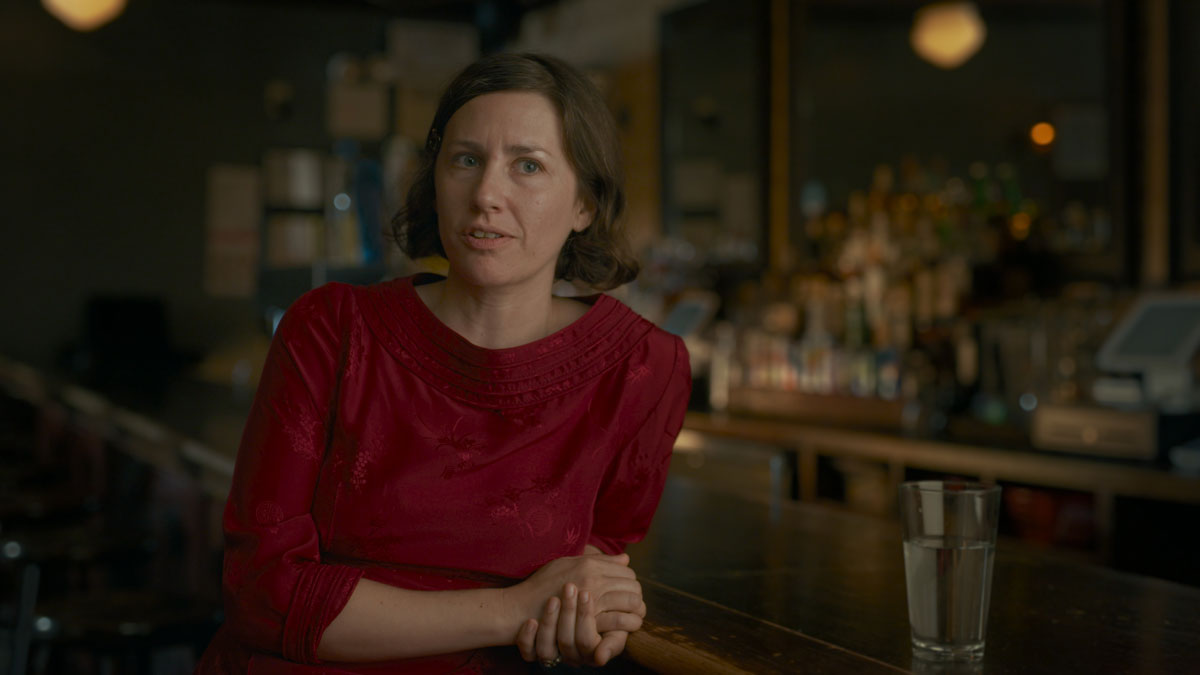
Sorry/Not SorryMegan Koester in "Sorry/Not Sorry" (Greenwich Entertainment)Meanwhile, comics like Dave Chappelle reduced C.K.’s defenestration from the rarified circle of comedy’s top earners to a casualty of histrionics. In a 2018 Netflix special Chappelle paints C.K.'s accusers as weak or as having a “brittle-ass spirit.”

That refers to artist and comedian Abby Schachner, who described a phone call she had with C.K. to the Times during which it was clear that he was masturbating. Schachner’s encounter happened in 2003, a year after C.K. invited Chicago comedy duo Dana Min Goodman and Julia Wolov to his room at the Aspen Comedy Festival for what they assumed was a friendly nightcap to celebrate killing their late-night set. 

Once they were there, he asked if he could take out his penis, then got naked and began masturbating in front of them. In these incidents and others, the women against whom C.K. committed his offenses were either disbelieved or encouraged to keep their stories to themselves. 

We need your help to stay independent

Comedian and writer Megan Koester was not one of the named women in in the Times article but covered the rumors for online outlets before the Times landed interviews with the women C.K. targeted, denying for years that he had done so. She describes being aggressively silenced by one of the founders of the powerful Just For Laughs festival when she tried to bring up the murmurings about C.K. while reporting from the red carpet.

Wolov and Goodman declined to be featured in “Sorry/Not Sorry,” which the filmmakers understand. They and others already said their piece in 2017 and weren’t interested in doing it again all these years later.

But Schachner and Jen Kirkman, who alluded to her version of an uninvited solicitation from C.K. in a 2015 episode of her podcast but without mentioning his name, give their perspective on what it was like to endure something so horrendous, and what it’s like to watch C.K. enjoy a lucrative comeback. 

C.K. may not have resumed appearing in TV series or movies. But his ability to circumvent the traditional entertainment structure and its politics has made him a hero among mainstream comics, nearly all of whom are happy to feature C.K. on their podcasts.

Since the Times broke its story, C.K. has enjoyed sold-out tours and venues as large as Madison Square Garden, along with scoring two Grammy nominations and a best comedy album win in 2022 for “Sincerely Louis C.K.,” his first recorded stand-up performance since admitting to sexual misconduct. 

Sorry/Not SorryMichael Ian Black in "Sorry/Not Sorry" (Greenwich Entertainment)Suh and Mones get a few prominent industry gatekeepers to speak openly in “Sorry/Not Sorry,” including Michael Ian Black and Michael Schur, who featured C.K. twice on “Parks and Recreation” despite being aware of the rumors about the comic. 

Comedy Cellar owner Noam Dworman explains why he allowed C.K. to return to his stage, effectively smoothing the way for his return. The filmmakers don’t assign any feeling to his observations one way or another, choosing instead to present them from the cold perspective of the business and the way it coddles men – white men, mainly – while leaving others to scrape for drink vouchers.


Want a daily wrap-up of all the news and commentary Salon has to offer? Subscribe to our morning newsletter, Crash Course.


But the most galling aspect of C.K.’s career rebirth is that he never meaningfully atoned or actually apologized for his egregious abuse of power that derailed these women's livelihoods. The word “sorry” doesn’t appear in his published admission, nor does “apology” or “apologize.”  The closest he comes is to say, “The hardest regret to live with is what you’ve done to hurt someone else,” which is entirely about the effects his actions have had on him. 

Suh said she never realized C.K. never said sorry until she and Mones began making the film, but that speaks to the process of the film as a realization.

“As you put the story together, and just lay out the facts in a very kind of straightforward way, it’s hard to look away from how damning it is really,” she said. “And in a banal, mundane way, it's very dramatic to see just what happened, laid out very simply.”

One lingering question I put to Mones and Suh related to how wide a reach “Sorry/Not Sorry” may get in its wide release. Part of any movie’s press tour involves making the rounds on late-night talk shows, and a few daytime destinations like “The View,” the biggest of which are hosted by comics. That crowd includes Stewart, who made his own comeback to “The Daily Show” earlier this year. 

Asked if any had extended an invitation to have them on, the filmmakers said no while pointing out that documentaries occupy a specialized niche that tends to be outside the promotional purview of platforms like "The Tonight Show." Even so, a few hosts like Stewart have featured projects by filmmakers and authors who otherwise wouldn’t receive exposure on major TV platformers. It is not outside the realm of possibility.

Citing the archival footage of C.K. with Rose and Lauer, Suh pointed out the number of gatekeepers and tastemakers who are part of the problem. “There is a whole system at play,” she said, “And whether it affects this film, I don't know. But you can kind of see how hard it would be if you are going up against that system like the women in the article did.”

"Sorry/Not Sorry" opens theatrically in New York and Los Angeles Friday, July 12 and is available on video on demand.

Donors withhold $90 million that had been slated for pro-Biden Super PAC

The debate was startling, compounded by President Joe Biden’s missteps in the weeks since. At the NATO Summit in Washington, he called Ukrainian President Volodymyr Zelenskyy “President Putin,” and later at a solo press conference referred to Kamala Harris as “Vice President Trump.” 

Now major Democratic donors are telling the pro-Biden super PAC, Future Forward, to withhold about $90 million in pledges so long as Biden is still on the ticket, The New York Times reported.

Biden anointed Future Forward as his campaign's leading super PAC during the early stages of the 2024 race. Future forward announced that it has $250 million in television and digital advertising reservations that it plans to commence right after the Democratic National Convention next month.

Multiple of the frozen contributions include eight-figure commitments, according to two anonymous sources. An advisor at Future Forward added that they expected the contributors who had paused their donations to change their mind after the uncertainty about the ticket was resolved, according to the Times.

Throughout July, the Biden campaign has had to brace itself for a rough fundraising period, as major donors question Biden’s ability to win the 2024 election. At Thursday’s news conference, Biden remained adamant about his viability, telling reporters: “I believe I’m the best qualified to govern. And I think I’m the best qualified to win.”


Marist poll gives Biden slight lead over Trump in national race

Amidst calls for Joe Biden to step down from the 2024 presidential election, the latest Marist College poll shows that the Democrat has held his own against Donald Trump, despite worries about his cognitive health. 

The margin is within the margin of error, but it is Biden’s favor: 50% of registered voters said they would support the president, while 48% said they would vote for Trump. Still, 59% think Trump will win the election, PBS reported.

The last Marist poll, in June, found the two candidates tied at 49% a piece.

“We have a race that didn’t change much,” political analyst Amy Walter told PBS. “If you’re Biden, this poll suggests you’re in fine shape to continue.”

According to the survey, about two-thirds of Americans don’t think Biden is mentally fit. At the same time, a majority of Americans also don’t think Trump has the right character to serve as president — while Biden does.

“Based on this survey, what’s most important is the actual vote hasn’t changed since the debate, but there’s a crisis of confidence among Democrats that the president needs to address,” Navin Nayak, president of the Center for American Progress Action Fund, told PBS News.

However, other polls do provide reason for concern. Trump leads Biden 47% to 45% in an average of recent national polls, according to The New York Times, and trails in each battleground state. If those numbers hold in November, Democrats would be looking at a landslide defeat in the Electoral College.

Finland is offering farmworkers bird flu shots. Some experts say the US should, too

As bird flu spreads among dairy cattle in the U.S., veterinarians and researchers have taken note of Finland’s move to vaccinate farmworkers at risk of infection. They wonder why their government doesn’t do the same.

“Farmworkers, veterinarians, and producers are handling large volumes of milk that can contain high levels of bird flu virus,” said Kay Russo, a livestock and poultry veterinarian in Fort Collins, Colorado. “If a vaccine seems to provide some immunity, I think it should be offered to them.”

Among a dozen virology and outbreak experts interviewed by KFF Health News, most agree with Russo. They said people who work with dairy cows should be offered vaccination for a disease that has killed roughly half of the people known to have gotten it globally over the past two decades, has killed cats in the U.S. this year, and has pandemic potential.

However, some researchers sided with the Centers for Disease Control and Prevention in recommending against vaccination for now. There’s no evidence that this year’s bird flu virus spreads between people or causes serious disease in humans. And it’s unclear how well the available vaccine would prevent either scenario.

But the wait-and-see approach “is a gamble,” said Jennifer Nuzzo, director of the Pandemic Center at Brown University. “By the time we see severe outcomes, it means a lot of people have been infected.”

"By the time we see severe outcomes, it means a lot of people have been infected."

“Now is the time to offer the vaccines to farmworkers in the United States,” said Nahid Bhadelia, director of the Boston University Center on Emerging Infectious Diseases. Even more urgent measures are lagging in the U.S., she added. Testing of farmworkers and cows is sorely needed to detect the H5N1 bird flu virus, study it, and extinguish it before it becomes a fixture on farms — posing an ever-present pandemic threat.

Demetre Daskalakis, director of the CDC’s National Center for Immunization and Respiratory Diseases, said the agency takes bird flu seriously, and the U.S. is stockpiling 4.8 million doses of the vaccine. But, he said, “there’s no recommendation to launch a vaccine campaign.”

“It’s all about risk-benefit ratios,” Daskalakis said. The benefits are blurry because there hasn’t been enough testing to understand how easily the virus jumps from cows into people, and how sick they become. Just four people in the United States have tested positive this year, with mild cases — too few to draw conclusions.

Other farmworkers and veterinarians working on dairy farms with outbreaks have reported being sick, Russo said, but they haven’t been tested. Public health labs have tested only about 50 people for the bird flu since the outbreak was detected in March.

Still, Daskalakis said the CDC is not concerned that the agency is missing worrisome bird flu infections because of its influenza surveillance system. Hospitals report patients with severe cases of flu, and numbers are normal this year.

Another signal that puts the agency at ease is that the virus doesn’t yet have mutations that allow it to spread rapidly between people as they sneeze and breathe. “If we start to see changes in the virus, that’s another factor that would be part of the decision to move from a planning phase into an operational one,” Daskalakis said.

On July 8, researchers reported that the virus may be closer to spreading between people than previously thought. It still doesn’t appear to do so, but experiments suggest it has the ability to infect human airways. It also spread between two laboratory ferrets through the air.

In considering vaccines, the agency takes a cue from a 1976 outbreak of the swine flu. Officials initially feared a repeat of the 1918 swine flu pandemic that killed roughly half a million people in the United States. So they rapidly vaccinated nearly 43 million people in the country within a year.

But swine flu cases turned out to be mild that year. This made the vaccine seem unnecessarily risky as several reports of a potentially deadly disorder, Guillain-Barré Syndrome, emerged. Roughly one of every million people who get influenza vaccines may acquire the disorder, according to the CDC. That risk is outweighed by the benefits of prevention. Since Oct. 1, as many as 830,000 people have been hospitalized for the seasonal flu and 25,000 to 75,000 people have died.

An after-action report on the 1976 swine flu situation called it a “sobering, cautionary tale” about responding prematurely to an uncertain public health threat. “It’s a story about what happens when you launch a vaccine program where you are accepting risk without any benefit,” Daskalakis said.

Paul Offit, a virologist at the Children’s Hospital of Philadelphia, sides with the CDC. “I’d wait for more data,” he said.

The slow pace of educational outreach is a reminder that everything takes time, including vaccine decisions.

However, other researchers say this isn’t comparable to 1976 because they aren’t suggesting that the U.S. vaccinate tens of millions of people. Rather they’re talking about a voluntary vaccine for thousands of people in close contact with livestock. This lessens the chance of rare adverse effects.

The bird flu vaccine on hand, made by the flu vaccine company CSL Seqirus, was authorized last year by the European equivalent of the FDA. An older variety has FDA approval, but the newer variety hasn’t gotten the green light yet.

Although the vaccine targets a different bird flu strain than the H5N1 virus now circulating in cows, studies show it triggers an immune response against both varieties. It’s considered safe because it uses the same egg-based vaccine technology deployed every year in seasonal flu vaccines.

For these reasons, the United States, the United Kingdom, the Netherlands, and about a dozen other countries are stockpiling millions of doses. Finland expects to offer them to people who work on fur farms this month as a precaution because its mink and fox farms were hit by the bird flu last year.

In contrast, mRNA vaccines being developed against the bird flu would be a first for influenza. On July 2, the U.S. government announced that it would pay Moderna $176 million for their development, and that the vaccines may enter clinical trials next year. Used widely against covid-19, this newer technology uses mRNA to teach the immune system how to recognize particular viruses.

In the meantime, Florian Krammer, a flu virologist at Mount Sinai’s Icahn School of Medicine, said people who work on dairy farms should have the option to get the egg-based vaccine. It elicits an immune response against a primary component of the H5N1 bird flu virus that should confer a degree of protection against infection and serious sickness, he said.

Still, its protection wouldn’t be 100%. And no one knows how many cases and hospitalizations it would prevent since it hasn’t been used to combat this year’s virus. Such data should be collected in studies that track the outcomes of people who opt to get one, he said.

Krammer isn’t assuaged by the lack of severe bird flu cases spotted in clinics. “If you see a signal in hospitals, the cat is out of the bag. Game over, we have a pandemic,” he said. “That’s what we want to avoid.”

He and others stressed that the United States should be doing everything it can to curb infections before flu season starts in October. The vaccine could provide an additional layer of protection on top of testing, wearing gloves, and goggles, and disinfecting milking equipment. Scientists worry that if people get the bird flu and the seasonal flu simultaneously, bird flu viruses could snag adaptations from seasonal viruses that allow them to spread swiftly among humans.

They also note it could take months to distribute the vaccines after they’re recommended since it requires outreach. People who work beside dairy cows still lack information on the virus, four months into this outbreak, said Bethany Boggess Alcauter, director of research at the National Center for Farmworker Health.

Health officials have talked with dairy farm owners, but Boggess’ interviews with farmworkers suggest those conversations haven’t trickled down to their staff. One farmworker in the Texas Panhandle told her he was directed to disinfect his hands and boots to protect cows from diseases that workers may carry. “They never told us if the cow could infect us with some illness,” the farmworker said in Spanish.

The slow pace of educational outreach is a reminder that everything takes time, including vaccine decisions. When deciding whether to recommend vaccines, the CDC typically seeks guidance from its Advisory Committee on Immunization Practices, or the ACIP. A consultant to the group, infectious disease researcher William Schaffner, has repeatedly asked the agency to present its thinking on Seqirus’ bird flu vaccine.

Rather than fret about the 1976 swine flu situation, Schaffner suggested the CDC consider the 2009-10 swine flu pandemic. It caused more than 274,000 hospitalizations and 12,000 deaths in the U.S. within a year. By the time vaccines were rolled out, he said, much of the damage had been done.

“The time to discuss this with ACIP is now,” said Schaffner, before the bird flu becomes a public health emergency. “We don’t want to discuss this until the cows come home in the middle of a crisis.”

Subscribe to KFF Health News' free Morning Briefing.

“Reckless” and “unsafe”: The misinformation around “late-term abortion” is harmful, experts say

Despite not being a real thing, the phrase “late-term abortion” has made its way into public discourse once again. Not only did the presidential debate between President Joe Biden and former President Donald Trump include a very misinformed discussion about “late-term abortions” before Roe v. Wade was overturned. But more recently, the Republican Party adopted a “Make America Great Again” policy platform ahead of its national convention that stated in a 16-page document the party will oppose "late-term abortion, while supporting mothers and policies that advance prenatal care, access to birth control, and IVF (fertility treatments).” 

This isn’t the first time anti-abortion advocates have made it seem as if abortions were happening well into the third trimester of pregnancy or after an infant has been born. But the fact remains that “late-term abortion” is nothing more than a made-up phrase that has no basis in medicine. And when politicians perpetuate this term and the made-up idea it only further harms pregnant people in America who choose to terminate their pregnancies at later gestational ages.

Claims of abortions occurring “moments before birth” or even “after birth” are completely false.

“First and foremost, just the term ‘late-term’ abortion is not a medically sound term, there's no consensus about what that means,” Dr. Michael Belmonte, an OBGYN in Washington D.C. and Darney-Landy Fellow with The American College of Obstetricians and Gynecologists (ACOG) told Salon. “A lot of people misleadingly define that as anything at or around 13 weeks of pregnancy or later, when we use the term ‘late-term’ in a medically sound way that refers to a pregnancy at around 41 weeks.”

Indeed, as explained by the American College of Obstetricians and Gynecologists (ACOG) the word “term” in pregnancy refers to the two to three-week period before and after a due date. To be even more clinically accurate, ACOG refers to “early term” 37 weeks through 38 weeks and six days of gestation, “full term” 39 weeks through 40 weeks and six days of gestation, and late-term 41 weeks through 41 weeks and six days of gestation. 

“Abortion does not happen during this period,” ACOG emphasizes. 


Want more health and science stories in your inbox? Subscribe to Salon's weekly newsletter Lab Notes.


When anti-abortion advocates say “late-term abortion,” an intentionally vague term, they are typically talking about abortions that occur in the second trimester — at or after 13 weeks of gestation. But according to the Centers for Disease Control and Prevention (CDC), in 2021 about 81 percent of abortions in the U.S. occurred at nine weeks of pregnancy or earlier; 94 percent happened in the first 13 weeks, 3 percent occurred between 16 and 20 weeks of gestation and less than 1 percent occurred after 21 weeks of gestation. Unlike what many anti-abortion advocates try to portray, claims of abortions occurring “moments before birth” or even “after birth” are completely false.

Reasons pregnant people might seek abortion care after 21 weeks of gestation are usually to terminate for medical reasons — such as the fetus having a fatal anomaly — or maternal life endangerment. In fact, as noted by the health policy organization KFF, abortions occurring at or after 21 weeks of gestation have historically been hard to obtain and prohibitive. The post-Dobbs landscape has only worsened this situation. As Salon previously reported, the stories of two women who had to leave Idaho to terminate their nonviable pregnancies in their second trimesters were full of trauma and barriers. 

The landmark Supreme Court ruling on abortion access known as Roe v. Wade, which was overturned in June 2022, had two key parts. One was that at the time, in 1973, the Supreme Court ruled that before viability it is a pregnant person’s decision whether to continue a pregnancy — not the government’s decision. Viability is usually defined by gestational age, but many doctors disagree with this. In fact, many physicians would prefer that abortion laws don’t include gestational-age limits. 

“Viability is an amorphous concept,” David Hackney, a Cleveland-based maternal-fetal medicine specialist, told Salon. “If you were to go with Roe, [it] had a viability limit, a lot of the ballot initiatives that have been passed have viability as a limit. It's not generally preferred that viability be listed as an exact week because it depends on context — if a fetus has a life-limiting birth defect, then it may never be viable, even at a later gestational age.” 

The better definition of viability is the potential to survive outside the uterus, Hackney said.

“Even with high-tech pediatric intervention,” he said. “And that's a medical judgment usually made between the obstetrician, pediatrics, and the patient, and that's the preferred definition.” 

Hackney said not restricting “viability” to a specific age is also important because as medicine progresses, viability may change. 

“Viability was very different in the 1970s than it is now,” he said. “Viability was very different when I started training than it is now. And viability will change as we project further down the road.”

Dr Stacy Seyb, an Idaho-based maternal-fetal medicine specialist, told Salon over the last few years “viability” is roughly to be accepted after 24 weeks of pregnancy. 

"I think it's primarily a scare tactic,” Seyb said. “And I think I think it’s an insult to the medical profession."

“Most places in the United States are going to promote resuscitation and full support of a baby,”  Seyb said, referring to an infant being born after 24 weeks. “But there are conditions, some lethal anomalies or very severe birth defects, that are very extreme, with potentially very poor outcomes, like holoprosencephaly, which has a horrible neurological outcome.”

In these cases, the question becomes how much does someone want to put an infant through with such a potential outcome and for what purposes. 

In these cases where life is unlikely to be sustained, Seyb said, doctors will provide “comfort care,” including keeping the patient warm, allowing them to be with their parents, and keeping them comfortable. The idea that infants are being born in the third trimester of pregnancy and being aborted after birth, which Trump promoted during the presidential campaign, is not true. 

“I think it's primarily a scare tactic,” Seyb said. “And I think I think it’s an insult to the medical profession.” 

Hackney said to talk about “abortion after birth” doesn’t make sense. 

“You define abortion as prior to birth. I think an analogy would be if you were talking about a stillbirth — a stillbirth is defined as a fetal loss prior to birth,” Hackney said. “If someone delivered, and the baby was born alive with a heartbeat, and the baby lived for 24 hours and then passed away, that would be tragic, but that wouldn't be a stillbirth.” 

We need your help to stay independent

Hackney emphasized that some people conflate neonatal hospice and pediatric comfort care with abortion.

“It's important that those are two separate things,” he said. “We will sometimes induce labor without the intent for either the fetus to pass away during the labor process, but not intervening in a life-prolonging way, and allowing the neonate, after being born, to pass away in the context of comfort care.” 

But such language circling around “late-term abortions” is “reckless” and “unsafe.” 

“You don't know who's going to believe this,” he said. “You don't know who's going to want to take justice into their own hands.”

“Categorically inadmissible”: Trump argues felony convictions are negated by SCOTUS immunity ruling

Donald Trump’s sentencing for his hush money conviction was supposed to be Thursday. Instead, the former president asked a New York judge to dismiss his criminal conviction on 34 felony counts.

In a 52-page filing, lawyers for the presumptive GOP nominee argued that the trail was “tainted” by evidence and testimony that's inadmissible after the recent Supreme Court ruling that grants presidential immunity for official acts, ABC News reported.

"No President of the United States has ever been treated as unfairly and unlawfully as District Attorney Bragg has acted towards President Trump in connection with the biased investigation, extraordinarily delayed charging decision, and baseless prosecution that give rise to this motion," Trump's attorneys wrote, Axios reported.

The defense lawyers argued that the prosecutors in the hush money trial violated the Supreme Court’s immunity ruling by using evidence related to official acts, specifically hinging their argument on the testimonies of White House aides like Hope Hicks, the former White House Communication Director.

Trump’s lawyers argued that Hick’s testimony was “categorically inadmissible,” since she was advising Trump on official communications.

“Because of the implications for the institution of the Presidency, the use of official-acts evidence was a structural error under the federal Constitution that tainted [the District Attorney's] grand jury proceedings as well as the trial," Trump’s lawyers Todd Blanche and Emil Bove wrote.

The former president’s attorneys initially previewed their plans to ask the verdict be tossed in a page-long letter to Judge Juan Merchan last week. In their filing, made public Thursday, they detailed why the Supreme Court’s immunity ruling applies to the New York case — which concerns Trump’s conduct as a presidential candidate before the 2016 elections. 

Judge Merchan decided to delay Trump’s sentencing until September 18, to consider the defense’s arguments. 

We need your help to stay independent

Lisa Rubin, a legal analyst who often appears on MSNBC, suggested Thursday that the impact of the Supreme Court’s decision on the hush money trial shouldn’t be taken lightly. She explained that this “gift to Trump” could let him escape his conviction and escape scot-free, RawStory reported.

"There are places their rubber band of official conduct is stretched too far. But they have another argument that strikes me as more faithful to the majority opinion — and could knock out the verdict entirely, regardless of whether certain evidence should not have come in," she wrote on X. "And it's this: The majority says that immunity decisions must be made at the 'outset' of the case; otherwise, a president entitled to immunity would have to bear the burdens of pre-trial discovery and litigation, which is no immunity at all."

“This is over”: Biden’s Democratic critics say press conference not enough to stop growing revolt

In 2024 terms, this was the good Joe Biden: Discussing the minutiae of foreign policy at his Thursday night press conference, the president sounded confident and in command of the facts, delivering answers about U.S. policy toward Russia and China that his Republican rival would not be able to give even after a heroic dose of stimulants and gray-market brain pills. He noted the contrast himself.

“Where’s Trump been?” he asked at one point, pushing back on criticism over his limited unscripted appearances. “Riding around on his golf cart? Filling out his scorecard before he hits the ball?"

There were flubs — referring to Kamala Harris as “Vice President Trump” (after earlier calling Volodymyr Zelenskyy “President Putin”) — but these were more Vintage Joe/Old Guy gaffes than “25th Amendment” territory. If one were already a supporter of Biden staying in the race, the performance was likely enough to rebut fears that the president’s excruciating debate performance reflected a “condition,” as former House Speaker Nancy Pelosi put it, rather than a one-off “bad night.”

But if this was the presumptive Democratic nominee at his best, after what his campaign chair described as some “very, very, very hard weeks,” is that good enough? He performed admirably for an 81-year-old man named Joe Biden, but if he were able to do so regularly — meet his own contemporary standard of “good enough” — this likely would not have been his first solo press conference since last year.

Since the debate — worth rewatching, for masochists or others doubting, with the passage of time, that it was not just bad but extremely concerning — he took part in an interview with ABC News that led the host of the program to conclude he was not fit to serve until January 2029. Two scripted interviews with friendly radio programs resulted in controversy: One interviewer admitted to editing Biden’s remarks at the request of his campaign while the other was fired after admitting that the president’s PR team fed them all the questions.

Biden was cogent when talking foreign policy, but that’s not to say there weren’t also moments of dubious coherence at the press conference, coupled with the wounded pride of a man who rightly believes he should receive more credit for presiding over the strongest economy in the developed world.

Asked why he had decided not to pass the baton to a younger generation, Biden told reporters that it was a product of his realizing “the gravity of the situation I inherited”: an economy still recovering from a pandemic-induced recession and a democracy threatened by a MAGAfied GOP. He had still managed to pass major legislation, Biden said, thanks to the decades of experience he had in the Senate, arguing he was uniquely equipped — perhaps the only one equipped — to do the job of being president.

We need your help to stay independent

There are other Democrats who could beat Trump, Biden conceded, but he wouldn’t drop out if shown data that they would have a better chance than him; he’d only quit if his team ran the numbers and “came back and said there’s no way you can win,” he said.

“I want to finish it, and get that finished,” he said. “Tomorrow, if we had a circumstance where we had a lineup, and I didn’t have to inherit what I did, we just moved things along — anyway, it’s going to change.”

To be frank, that does not make sense and, when parsed for meaning, it does not reflect well on the president’s judgment. Democratic insiders believe Biden is dragging down Democrats everywhere, a fact he acknowledged when he said he understands why lawmakers in tough races are distancing themselves from his campaign. Democrats are currently on track to lose the presidency, the Senate and the House — this after months of reassurances that the Biden campaign, which is under-performing Democratic congressional candidates, would turn things around at the June 27 debate — meaning that, on the current trajectory, there will be no President Biden in 2025 or a Democratic majority he can work with in Congress.

For critics of Biden’s decision to stay in the race, it’s not about any one performance, but that overall trajectory — not just in terms of polling and the November election, but the president’s mental acuity. Biden may grind out a win now and then, capable of delivering a performance that is acceptable every couple weeks, but “one bad night” is simply not true: His awful, alarming and genuinely heart-breaking debate persona has repeatedly turned up elsewhere, his own campaign staff and a senior White House official telling reporters he should not be in the race.

His staying in the race forces Democrats to tell voters what they believe to be a lie, based on the available evidence: That Biden can keep doing this for another 4 ½ years.


Want a daily wrap-up of all the news and commentary Salon has to offer? Subscribe to our morning newsletter, Crash Course.


“The fact is we can’t have a situation where every day we are holding our breath, whether it’s a press conference or a rally,” Rep. Brad Schneider, D-Ill., told The New York Times on Thursday, joining more than a dozen other elected Democrats in explicitly calling for Biden to step aside.

That’s a sentiment widely shared among Democrats: Which version of the president is going to show up and can we really tell voters to ignore the version that looks lost and sounds confused?

“One of the really kind of sick aspects of this moment is that we are watching every speech, every rally, every debate, and saying: How did he do today? And that’s just not the way to think about the presidency of the United States,” Rep. Jim Himes, D-Ct., said on MSNBC following Biden’s press conference. The ranking member on the House intelligence committee, Himes praised Biden’s Thursday night performance — “foreign policy is his strength” — but argued that nothing would be good enough to assuage concerns that have already been raised about the president’s visible decline.

No one doubts that Biden can still have a good night; the problem is he has already shown himself capable of also having the worst night of any president who has ever been on television. That affirmed voters’ gravest concern about Biden’s candidacy. Himes said it’s also why the president needs to step aside and trust that the job of defending democracy is not his alone.

“If you don’t look at this in a cold, hard way,” Himes argued, “you will be complicit in Donald Trump’s second presidency.”

Behind the scenes, that’s an argument reportedly shared by Pelosi and former President Barack Obama, both of whom have spent the past two weeks noticeably refraining from full-throated endorsements of the incumbent and his desire to keep going. CBS News reports that potentially dozens of House Democrats are also prepared to go public with a call for Biden to step down; watching the president refer to Harris by the name of his Republican opponent was, for one House Democrat, a moment that had his colleagues declaring “this is over.”

It’s not over, though, until one man decides it is.

Speaking Thursday, the president said delegates at next month’s Democratic convention should feel free to “do whatever they want.” If they take that to mean listening to the polls showing most of the party’s voters now want a different candidate, then that could make for the last thing any elected Democrat wants: weeks more uncertainty and a messy four days in Chicago.

Biden’s performance has been exceptional where it matters: It’s the economy

President Joe Biden held an hour-long press conference Thursday night and answered a range of questions about his age, his competence, his stamina, his health and his future. He also delivered several incisive disquisitions on foreign policy that Donald Trump's staff would have to use a very large coloring book and possibly a puppet show to explain to him. Not that it would work. He'd probably storm out of the meeting long before they got to the part about China and Russia, yelling about love letters and being a boss. 

The media didn't seem all that impressed, judging the president's performance to only be fair to middling and virtually ignoring the substance of what he had to say. Biden offered a serious overview of the nation's relationship with its allies and adversaries and made some news about Israel, calling for its war in Gaza to end. But everyone was more interested in Biden's aesthetic performance and how he answered questions about prospective plans to quit the presidential race so any talk of his actual policies is evidently irrelevant. 

Biden's criticized a lot for failing to effectively communicate his administration's accomplishments, and there's something in that. He's not good at it the way someone like Bill Clinton was, with his ability to rattle off facts and figures while simultaneously explaining how it's good for average Americans. It's a special skill. (Donald Trump touts his economic record but it's all lies, which isn't the same thing. Just saying "we had the greatest economy the world has ever known" takes no skill — just chutzpah.) 

At the press conference, however, Biden did make some comments about his economic accomplishments — although nobody seemed to care:

With all the concern about inflation, you'd think this week's news that the Consumer Price Index declined again in June, beating economist's expectations, would be worth a question or two, but it's long been clear that the press isn't particularly interested in good economic news. If they were, they'd be reporting on the Biden administration's exceptional economic recovery policies which dealt with a bizarre and unprecedented economic crisis caused by the pandemic. June was the first time since May 2020 that monthly headline CPI came in negative, and the slowest annual gain in prices since March 2021. 

The markets have noticed all this and rewarded investors and owners of 401ks and IRAs with a banner year. Trump, who predicted a stock market crash if Biden became president, says that the bull run on Wall Street is because traders are anticipating his return to the White House. And, yes, once again he's predicting a crash if he isn't. A new Wall Street Journal survey of economists, however, found that nearly 60% said inflation would be higher under another Trump term than a Biden term. 

Yesterday, the government also reported that the number of Americans filing for unemployment benefits fell again last week and remains at healthy levels. The jobs story is incredible. As someone who has heard politicians screaming "jobs, jobs, jobs!" in every election I can remember, it's unfathomable to me that this issue appears to have absolutely no salience in this one. It is the best job market since the 1960s, largely due to the Biden administration policies, which we know because the U.S. economic performance is the best in the world. In fact, it's so good that the World Bank announced last month upgraded estimates that the global economy will expand 2.6% this year on the strength of sustained growth in the United States: 

Stronger-than-expected growth in the United States — the world’s biggest economy — accounted for 80% of the World Bank’s upgraded outlook. The agency now expects the U.S. economy to expand 2.5% in 2024, the same as in 2023 but up sharply from the 1.6% the bank had predicted in January. “U.S. growth is exceptional,’’ Ayhan Kose, the bank’s deputy chief economist, told The Associated Press ahead of the release of its latest Global Economic Prospects report.

There was a time when such news would have been heralded as "morning in America" but according to polling, a majority of voters believe Trump would be a better steward of the economy than Joe Biden, which is — as the president would say — malarkey. By virtually all measures, Biden's economic performance has surpassed Trump's even before the pandemic.

We need your help to stay independent

Biden has supported and strengthened unions who've seen big wins in the last couple of years. And astonishingly, this economy has benefited lower-wage workers more than the 1%. Axios recently reported this amazing statistic:

Just 13% of workers in the U.S. are now earning less than $15 an hour; two years ago, that number was 31.9%, per new data from Oxfam.

As for the GOP's most sacred shibboleth, the budget deficit, Trump added $4.8 trillion in non-Covid related debt while with a similar adjustment, Biden has added $2.2 trillion. Extending Trump's tax cuts as he plans to do will add another $3.9 trillion. Not that they care. The deficit is just a weapon that Republicans use to try to cut Social Security and Medicare, which Trump insists he will protect but whose budgets attempted to cut every year he was in office. 

Biden's economic performance has been exceptional, as MSNBC's Chris Hayes and The Atlantic's James Fallows both posted yesterday on the unemployment and inflation numbers:

If we were living in a normal world this would be more important than any other issue in this election. Joe Biden's administration has been incredibly successful at steering the economy away from recession, and into prosperity the likes of which we haven't seen in half a century. And Trump is planning to destroy it, as USA Today reports:

“Biden’s policies are better for the economy,” says Mark Zandi, chief economist of Moody’s Analytics. “They lead to more growth and less inflation.” According to a Moody’s study, Trump’s plan would trigger a recession by mid-2025 and an economy that grows an average 1.3% annually during his four-year term vs. 2.1% under Biden. (The latter is in line with average growth in the decade before the pandemic.)

Next year, under a Trump administration, inflation would rise from the current 3.3% to 3.6%, well above the 2.4% forecast under Biden, the Moody’s analysis shows. Compared with Biden, the U.S. would have 3.2 million fewer jobs and a 4.5% unemployment rate, a half percentage point higher, at the end of a Trump tenure […]

The consequences of allowing Trump to take over with his daft tariffs and Project 2025 wrecking ball will be the dumbest thing this country has ever done. 

I sincerely doubt that the American people want this. But as of now, they don't really know about it. Regardless of whether Biden remains at the top of the ticket, the Democratic Party needs to calm down and start delivering the message that Trump is planning to kill the golden goose and serve it for dinner at Mar-a-Lago.  

Elon Musk, father of 12, wants his sperm used in Mars settlement: report

Elon Musk is offering up his sperm to future Mars colonists, an overture that nobody seemed to ask for from the world’s most prominent natalist.

According to the New York Times, the billionaire made the offer to “seed a colony” as part of a SpaceX effort to design a Martian colony from scratch.

“There’s high urgency to making life multi-planetary,” he said, per the Times. “We’ve got to do it while civilization is so strong.”

Though Musk’s plans to launch a manned mission to the red planet by this year were dashed, he now expects to settle a million colonists in the next 20 years, including numerous of his own offspring.

Musk is already a father to at least 12, including three children he shares with NeuraLink executive Shivon Zilis and another three with musician Grimes. 

The Tesla CEO, a proud “pro-natalist,” has previously warned of decreasing birth rates.

“Population collapse due to low birth rates is a much bigger risk to civilization than global warming,” Musk proclaimed in a 2022 post on Twitter.

The natalism movement, which has become closely entangled with other far-right, often conspiracy-driven or race-science-connected, ideologies,

Other prominent pro-natalists, including Simone and Malcolm Collins, have warned that falling birth rates in Western Europe and North America pose a specific threat to the cultures of those countries, a sentiment shared by New Zealand’s 2019 Christchurch shooter in his manifesto, who wrote that it was about the "birthrates."

Musk, whose family built their wealth in Apartheid South Africa, previously claimed that “civilization is going to crumble” in a speech encouraging Tesla employees to have more children.

“Unlawful”: Nevada GOP officials set “dangerous precedent” by refusing to certify election results

Republican Nevada county officials are joining the election disinformation crusade a few months early. On Tuesday, the Washoe County Commissioner Board voted 3-2 against certifying the results of an official recount of contests from Nevada’s June 9 primary, in a move slammed by the state’s attorney general as undemocratic.

The two races, a county commissioner district and a school board trustee spot, saw the same results as the initial tally in the recount.

“The Board’s decision is unlawful, and besieges core tenets of fair elections in our State,” the state’s Attorney General Aaron Ford wrote in a court filing on behalf of the Secretary of State. “Nevada law makes canvassing election results – including recount results – by a certain date a mandatory legal duty for the Board.”

The vote went down along party lines, with Republican commissioners citing unfounded irregularities that, despite the recount, “warrant further investigations,” emphasizing the spread of right-wing attacks on election legitimacy since Donald Trump’s efforts to deny and subvert the results of the 2020 race.

“This vote has the potential to set a dangerous precedent for elections in Nevada. It is unacceptable that any public officer would undermine the confidence of their voters,” Secretary of State Francisco Aguilar said in a statement.

Per the Nevada Current, a similar stunt in Arizona resulted in Cochise County supervisors being forced to certify their county’s election results in 2022. It landed two of the supervisors in felony investigations.

Nevada, which has stalled its case against Trump supporters who sent a slate of fake electors to Congress as part of a national scheme to overturn the election, is considered a crucial swing state, awarding its electoral votes to Joe Biden in 2020 after a contentious battle against the state’s counting efforts from the Trump campaign.

AOC understands the stakes: The “high crimes” of Clarence Thomas and Sam Alito must be prosecuted

Corruption is one of those issues that tends to rile up political professionals and journalists, but not so much ordinary voters. Sure, everyday people don't like it when politicians and other public officials have their hands in the cookie jar, but it can be hard to see how bribe-taking and favor-trading have a meaningful impact on the much-ballyhooed "kitchen table" issues. During focus groups, such as those shared on Sarah Longwell's often-infuriating-but-always-illuminating podcast, voters often assume "everyone" in politics is corrupt. It doesn't shape partisan preferences as much as one would hope. (Though there is evidence that corruption can suppress voter turnout over time.)  

The loss of abortion rights, which directly affects the lives of countless Americans, has always been a parallel story to the Supreme Court's corruption, without much effort by politicians or journalists to link the two stories together. 

In the past couple of years, there have been two dominant stories driving down the public's respect for the Supreme Court: bad rulings and outright corruption. The latter has been a big deal in the press, because it provides all the aspects that make for exciting journalism: uncovering secrets, cataloging damning facts and, of course, exposing colorful details that make a story "pop." Even if the dollar amount of gifts granted to Justices Clarence Thomas and Samuel Alito are hard to remember, no one can forget those photos of Alito gloating over the fish he caught on his free luxury Alaska vacation or the original painting that was commissioned of Thomas hanging out with Harlan Crow, his billionaire benefactor

However, polling data suggests the soaring disapproval ratings of the Supreme Court owe more to their bad decisions, though stories about corruption are not helping. The public's trust in the court started to tank especially hard after Dobbs v. Jackson Women's Health, the case that overturned five decades of abortion rights. That was a full year before the public learned that Leonard Leo of the Federalist Society had been introducing the justices to far-right billionaires, who would lavish them with gifts. But the loss of abortion rights, which directly affects the lives of countless Americans, has always been a parallel story to the Supreme Court's corruption, without much effort by politicians or journalists to link the two stories together. 


Want more Amanda Marcotte on politics? Subscribe to her newsletter Standing Room Only.


In fact, the court's corruption is deeply intertwined with the bad decisions that are inflicting harm on millions of people. This is why I was pleased to see Rep. Alexandria Ocasio-Cortez, D-N.Y. file articles of impeachment against Thomas and Alito this week, accusing them of "high crimes and misdemeanors" for hiding the millions of dollars of gifts received from billionaires. She's also charged them for not recusing from election-related cases, despite substantial evidence that they and their wives have insurrectionist sympathies. Despite her strong social media presence and lefty credentials, Ocasio-Cortez has earned a reputation as a serious leader and not one prone to cheap political stunts. She wouldn't be doing this if she weren't serious, even though she fully admits it will go nowhere in a GOP-dominated House. 

It's also a big deal, because Ocasio-Cortez is known for being a nuts-and-bolts politician. While she is conversant in more abstract topics, she's celebrated for her skill at explaining, in an accessible way, how economic and health care policy impacts people's lives. She has been one of the most effective elected officials speaking out against Dobbs, for instance. This is precisely why she's the perfect person to take the lead in keeping the corruption story alive. She's well-positioned to explain how elite corruption is a big reason why the Supreme Court keeps issuing dangerous opinions that hurt ordinary people.

In her speech introducing the articles, Ocasio-Cortez drew a direct line between the corruption of Thomas and Alito and "the suffering of the American people." She argued that we cannot "pretend that this corruption is wholly unrelated to the pregnant Americans now suffering and bleeding out in emergency rooms" because of the Dobbs decision penned by Alito. After all, Ocasio-Cortez noted, banning abortion was a "key political priority of these undisclosed benefactors and shadow organizations surrounding Alito and Thomas's misconduct." 

It's likely easier for journalists and voters to see the direct link between the bribery-shaped behavior of Thomas and Alito and decisions that benefit businesses at the public expense. This term had many such decisions, most notably Loper Bright Enterprises v. Raimondo, in which the six conservative justices hamstrung the ability of bureaucracies like the Environmental Protection Agency to pass regulations. With so-called "social" issues like abortion rights, however, mainstream journalists still tend to act as if the justices aren't being influenced by money and power to rule against human rights. For instance, Michel Martin of NPR recently asked Ocasio-Cortez if it's possible billionaires are "giving them these gifts because they know [how] they're going to vote on" issues like abortion rights, not as a way to influence their vote.  As if a thank-you gift is somehow functionally different from a bribe. 

Ocasio-Cortez has a talent, however, for framing these issues in terms of class warfare that cuts through this kind of noise. In 2022, she had a memorable response to complaints that Justice Brett Kavanaugh had a fancy dinner at a steakhouse interrupted by protesters. She mocked him on Twitter with, "let him eat cake."

She has an intuitive grasp on the theme that ties all these various Supreme Court stories together: the right's desire to replace equality under the law with an authoritarian two-tiered system. People like them get all the privileges and goodies, while the rest of us are left choking on air pollution and dying of lack of medical care. Members of the Republican elite, especially Donald Trump, are allowed to commit whatever crime they wish and get "immunity," while the rest of us are criminalized for basic body functions like pregnancy or needing to sleep. The rest of us risk death from mass shootings because selling bump stocks makes Thomas's rich buddies a little richer. 

We need your help to stay independent

Stated plainly, these links seem obvious, but it's generally true that the material impacts of court corruption often fall by the wayside in these discussions. Earlier this month, Senators Sheldon Whitehouse, D-R.I., and Ron Wyden, D-Ore. requested that the Justice Department open a criminal investigation into Thomas, out of concerns he's committed tax fraud by taking millions in undisclosed gifts. A serious crime, but one that tends to read as "victimless" to most Americans. Both Whitehouse and Wyden are outspoken critics of the Dobbs decision, but they rarely link their concerns about corruption directly to abortion bans. 

The connection, however, is right there, if anyone wishes to look into it. Leo, the former Federalist Society head who has spent so much time setting up benefactor relationships between billionaires and the justices, also happens to be motivated by a frankly unhinged obsession with banning abortion. Reporting after the Dobbs decision shows that some of the conservative justices had been skittish about ending Roe v. Wade, but caved to pressure from Alito and Thomas to go as radical as possible. That level of conviction to strip basic rights from millions of women is a lot easier to maintain if your rich friends are telling you to stick it out, in between rounds of free caviar and another glass of outrageously expensive wine. Perhaps more than anyone else in Congress, Ocasio-Cortez gets that connection.