Spring Offer: Get 1 Year, Save 58%

“A ton of aggravating factors”: Experts say Trump not helping himself ahead of sentencing hearing

With just over a month to go until Donald Trump’s scheduled July 11 sentencing hearing, a legal expert told Salon the former president’s lack of remorse and findings of contempt could be grounds for a jail sentence.

“When I first started thinking about this case, I thought that the judge sentencing him to incarceration was very unlikely,” said Adam Shlahet, director of the Brendan Moore Trial Advocacy Center at Fordham Law. “I'm thinking it's more likely now.”

Former Manhattan prosecutor Arthur Middlemiss said he thinks Trump will “probably” not see prison time. 

“The mitigating factors in favor of a lesser sentence and probably a non-jail sentence are Trump's advanced age, the fact that he's a first time offender, and whether you like it or appreciate it or not, he's got a history of public service,” Middlemiss said. 

Still, Shlahet said Trump’s put himself in an uncommonly vulnerable position ahead of sentencing because he hasn’t expressed remorse and because Judge Juan Merchan found him in contempt of court 10 times for violating a gag order.

“He can take into account all of his civil fraud, can take into account all of his contempt, and so even though this is a guy with no record and he's an older gentleman, there are a ton of factors, aggravating factors that would lead a judge to give him some jail time,” Shlahet said.

Shlahet also pointed to Trump's conduct toward the judge.

“When the person who's going to be deciding your sentence is the judge, it's also a really good idea to not antagonize the judge at every opportunity," Shlahet said. "Every time he gets a microphone, he insults the judge and calls the judge crooked and calls the judge conflicted and shows no respect for the jury's verdict. And that is not the way a defendant who wants probation should be acting.”

Trump was found guilty of 34 counts of felony falsification of business records in a scheme that prosecutors said aimed to preserve his 2016 presidential bid through disguised hush-money payments to cover up alleged extramarital affairs.

Trump faces sentencing by Merchan – who also presided over the 2023 and 2024 sentencing of Trump’s former chief financial officer Allen Weisselberg.

In 2023, Merchan sentenced Weisselberg to five months behind bars and five years of probation after he pleaded guilty to charges that he participated in a tax fraud scheme cooked up by Trump Organization executives. Weisselberg ended up serving 100 days at Rikers Island last year.

And in April, Merchan sentenced Weisselberg to five months behind bars after he was convicted of two counts of perjury in the first degree.

Bennett Gershman, law professor at Pace University, pointed out that Weisselberg got sentenced to jail time despite his own mitigating factors.

Weisselberg, 76, had no criminal record, like his former boss. 

Trump, Gershman said, has “probably more aggravating circumstances than any white collar criminal in history.”

But Trump’s case does differ from Weisselberg’s in several key ways, said Middlemiss.

“Probably the most important mitigating factor is that the crimes that he was convicted of were the lowest level felonies in New York,” Middlemiss said. “Unlike a violent crime or a crime where you steal money from an individual, there's no real identifiable victim.”

We need your help to stay independent

Felony falsification of business records is a Class E felony – the lowest level of felony – in New York state.

Meanwhile, Weisselberg was charged and convicted of falsifying business records along with “more serious felonies,” Middlemiss said. 

Weisselberg pleaded guilty to 15 felonies in all, including grand larceny in the second degree – a Class C felony. 

Weisselberg agreed to pay $1.9 million in back taxes and penalties and to testify at the Trump Organization’s trial.

“Which makes it a big tax case,” Middlemiss said. “You would consider that to be a definable victim in that the city and the state didn't get the taxes that it was owed because he didn't pay them, which is a more easily definable victim than the entire electorate writ large.”

Prosecutors had said Trump’s scheme defrauded the voting public.

This spring, Weisselberg pleaded guilty to two counts of perjury in the first degree concerning his 2020 deposition to the attorney general’s office. 

Felony perjury in the first degree is a class D felony and has a maximum sentence of seven years in prison in New York. The Associated Press reported that prosecutors “cited Weisselberg’s age and willingness to admit wrongdoing” in agreeing to the five month sentence.

Middlemiss said Trump does face factors that “would weigh in favor of a more serious sentence.”

“Trump, on the other hand, was completely unrepentant, didn't admit guilt, never acknowledged that he was sorry, that he did these things, and was completely contentious of the court and the process by which he was convicted,” Middlemiss said.

Trump could face a fine of up to $170,000 – if the judge fines him a maximum of $5,000 per offense for each of the 34 counts. 

He could also receive probation, community service, or what’s known as a conditional discharge.

Any sentence for Trump would pose logistical complications: community service would be tricky for a high-profile presidential candidate, probation raises questions about how Trump could campaign across the country, while the Secret Service would join him at jail. 

The judge could impose a sentence of conditional discharge if he decides “neither the public interest nor the ends of justice would be served by a prison of imprisonment and that probation supervision is not appropriate.”

Conditional discharge would mean that instead of a jail sentence, the judge could impose restrictions on Trump – including barring him from breaking the law for a period of time.

The period of conditional discharge “shall be” three years for felonies, according to state law. 

Each of the 34 counts has a maximum four-year prison sentence, and he’s expected to serve any sentence concurrently. 

Trump would serve time at a jail such as Rikers Island if he gets a sentence of less than a year – while he could serve in a state prison if he gets more than a year behind bars.


Want a daily wrap-up of all the news and commentary Salon has to offer? Subscribe to our morning newsletter, Crash Course.


In a Fox News interview Wednesday, Trump called the legal system corrupt and said: “I did nothing wrong in any of these things. I did nothing wrong. We did nothing wrong at all.”

Trump also said: “They are doing it for the purposes of hurting a political opponent of Biden and trying to get him to win. Everybody said this is such a minor thing, you don’t go to jail for this.”

Once Trump gets sentenced, an appeal would put any jail, probation, fine or community service sentence on hold for a potentially years-long appeals battle.

Middlemiss said he’d likely successfully request bail pending appeal if he is sentenced to jail time.

“He’ll probably get it, and he probably should get it because he has no criminal history,” Middlemiss said. “It’s not like he’s going anywhere. It’s not like he’s going to flee the United States to avoid incarceration… The risk of flight would be minimal for anyone in these particular circumstances based on the severity of the crime and the likelihood of incarceration, but it's particularly low when you got a guy who's running for president of the United States, we know where he's going to be every day.”

Ahead of the July 11 sentencing, Trump is expected to meet with the probation office, according to Shlahet.

“Either a probation officer or a social worker, someone who works for probation, and they're going to interview him and then make a sentencing recommendation,” he said. “Normally, this is to get kind of some vital information about the defendant: what their history is, what their criminal history is, what their community ties are, are they working, all that kind of stuff.”

Shlahet said he’s interested in one question Trump will face: about his case, and whether he accepts responsibility. 

“That's a really big thing that the judge looks at,” he said.

Shlahet said that “a lot of the restrictions that are placed on people with a felony conviction are just not going to apply to him.”

“He’s going to get waivers to any country he wants to visit if he’s the president of the United States,” he said. “If he loses the election, then I think these collateral consequences may become inconvenient.”

Over the past week, Trump has complained that the July 11 sentencing data is unfair because it’s just days before he is expected to be named the GOP presidential nominee at the Republican National Convention in Milwaukee, which begins July 15.

Trump said on his social media platform that the July 11 date was set “conveniently for the fascists."

On May 30, Trump sat in the courtroom as his defense attorney asked for a date in mid-to-late July. 

“The reason for that is, as the Court is aware, President Trump faces other charges in other jurisdictions,” defense lawyer Todd Blanche said. “In the case in Florida, there is a three-day hearing scheduled for late July.”

Blanche did not object when Merchan set sentencing for July 11.

“That is definitely a date that his attorneys agreed to in front of him,” Shlahet said. “Donald Trump didn’t voice any protest at that time, but now he is.”

Shlahet said the quicker the sentence – the sooner Trump can begin the appeals process. 

Beyond a reasonable doubt: Trump’s criminal conviction matters politically

Donald Trump’s recent conviction on 34 felony counts hands the master of branding with short vignettes a very heavy dose of his own medicine.  

“Convicted felon” packs a mighty punch in our society – at least equal, one would think, to Trump’s all-time winners like “Crooked Hillary,” and “fake news.”  And its impact is all the more powerful, one might hope, since it is based here on real facts and not made-up nonsense. 

Short memorable labels recalled or repeated can often have an impact because they are “sticky.” They break through the noise and are memorable. Such sound bites reach Americans busy with our lives, our economic survival, our children, careers and leisure time. 

As Amy Walters wrote recently, much of the news received by low-attention voters “will be organic: the kind of information that is floating around in the atmosphere and that you can’t ignore. The first-time criminal conviction of a former president is one of those events.” 

For a very long time, American voters have, understandably, been more than hesitant to cast their ballots for convicted criminals. Polling data indicates that such Americans include the young and the nonwhite voters who have been drifting away from President Biden. As the New York Times’ election analyst Nate Cohn has written, the pre-verdict polls “suggest that [those groups] might be especially prone to revert to their traditional [Democratic] leanings in the event of a conviction.” Indeed, a Gallup Poll taken in late January 2024 reported that 71% of Americans said they would not vote for an otherwise well-qualified candidate who was charged with a felony, and 77% gave the same response as to one with such a conviction.  Even among Republicans, 65% said they would not vote for a person with a felony conviction.  

It is telling that Trump and his shameless allies are working overtime to try to negate the verdict in voters’ minds with dangerous and untenable assertions. As Stuart Stevens has observed, these efforts “to spin that there is some non-MAGA pool of voters who can’t wait to vote for a convicted felon” is “transparently desperate.”

No one thinks that MAGA Republicans – Trump’s core base of support – will be much affected by the verdict, or that anything else is likely to shake their support for Donald Trump.  


Want a daily wrap-up of all the news and commentary Salon has to offer? Subscribe to our morning newsletter, Crash Course.


But whatever their exact numbers – whether they are 20% or 30% of all voters, or even more – no one also argues that Trump can win without attracting others who do not view him in the same rosy light. It is the decisions of that group of people, facing choices more complicated than unquestioning personal loyalty, that are likely to be impacted by the conviction.   

The people who mainly matter are the 20% or more of voters who haven’t decided which candidate they like least, along with those who have completely tuned out politics. And in an ABC/IPSOS poll taken the day after the verdict, of the voters who say they dislike both candidates, 67% say that Trump should now withdraw. 

Even more salient is the post-verdict focus group of two-time Trump voters initiated by Sarah Longwell, the former Republican political marketing expert and consultant. All nine members had twice voted for Trump; none said they would be voting for him now. Longwell reported these types of comments”

“I thought the trial was highly politicized, but in the hands of the jury, both sides had the chance to present their case,” Ryan from Colorado said. “And that’s ultimately how it should have been done.”

Michele [from Florida] agreed: “I’m tired of the nonsense, and I believed the testimony. And that is why I am happy that the jury found him guilty. And I think now that he is a convicted felon, he’s completely unfit.”

Trump’s all-purpose argument for ignoring any assertions that he is responsible for anything – that it is all a huge plot with Joe Biden at its apex – also offers no coherent basis on which to discount the impact of Trump’s “convicted felon” moniker. That is because Trump’s theory of a monster conspiracy driving everything cannot be squared with the widely known and totally transparent events of the trial of the case.  

We need your help to stay independent

From jury selection to closing argument, the trial was a model of fairness and decorum. Trump had every imaginable opportunity to select a fair and impartial jury and to make his case as he saw fit, including to testify in his own defense. He chose not to do so. And the due process that our system of justice afforded him contrasted strikingly with Trump’s personal efforts to flaunt the court’s authority and to show his personal disrespect for the justice system.  

Further, it was surely the most heavily reported non-televised trial in the country’s history, with some 140 reporters sitting in the courtroom or the overflow room live-blogging the proceedings. Fairness and Trump‘s expensive lawyers and vigorous defense were watchwords of the reporting.

Any rational person who buys Trump’s pitch that he was singled out and charged with violating an obscure statute, or that his corruption of the 2016 election was not vital to the verdict, should read this rebuttal by former Manhattan DA Karen Friedman Agnifilo.  

As for MAGAworld’s attempts to undermine Trump’s guilty verdict, have you noticed how few times Trump’s acolytes have attacked the jury? You don’t hear them say the jurors just missed the boat. You don’t hear them allege the jury was corrupted.

It’s hard to argue with 12 ordinary citizens agreeing unanimously to guilt beyond a reasonable doubt on 34 counts. Jurors are everyday people who have been randomly selected, with the defendant and his lawyers fully able to remove for no stated reason 10 whom they don’t like.

None of this is offered to suggest that the indelible stain on Trump as a “convicted felon” means the election is over and Biden has won. As MSNBC editor Zesham Aleem recently wrote, there’s only one way to ensure that we don’t have a convicted criminal in the Oval Office come January: “crafting a better message, out-fundraising, out-organizing and out-mobilizing.” That’s as true today as it was before the conviction.  

But Trump now has a serious blot on his name that is not going away. Being the “convicted felon” in the race is no small liability. We can all remind friends and neighbors of that, or speak out on social media, so that come November, the sensible majority of Americans keep us from having as president a man who was adjudged a criminal by a jury of his peers.

The neoliberal university faces a crisis: This generation could change everything

There can be little doubt that neoliberalism has undermined, if not crippled, the notion of higher education as a democratic public sphere — a protective and courageous space where students can speak, write and act from a position of agency and informed judgment. This should be a space where education does the bridging work of connecting schools to the wider society, connects the self to others, and addresses important social and political issues. It should also provide conditions for students to develop a heightened sense of social responsibility, coupled with a passion for equality, justice and freedom. Instead, as Chris Hedges notes, universities increasingly have become “a playground for corporate administrators [who] demand, like all who manage corporate systems of power, total obedience. Dissent. Freedom of expression. Critical thought. Moral outrage. These have no place in our corporate-indentured universities.” 

In the spirit of ruthless equity firms and asset-stripping hedge fund managers that dominates the financial realm, pedagogies of conformity, silencing and ethical abandonment now proliferate, either under the guise of budget cuts or as overt attempts to transform higher education into white nationalist indoctrination centers. Universities are now viewed as businesses, students as clients and faculty as a serf-like, casual labor force. Furthermore, administrative leadership has regressed, embracing a market-driven ideology that clings to the irrational belief that the market can solve all problems and should control not only the economy but all aspects of social life.

Central to this hedge-fund neoliberal ideology is a moral vacuity that separates economic activity from social costs. Fundamental to this educational/ideological mantra is the notion that  historical consciousness, critical thinking, informed faculty, social responsibility and critical pedagogy are at odds with the market. Consequently, it posits that government and institutions such as higher education only exist to further market interests and avoid holding the power of markets and the financial elite accountable. At its worse, it embraces a larger principle of authoritarian societies — what Evan Osnos in The New Yorker (writing about China) calls “governance by repression.”  

Pedagogies of repression now take place in the name of financial cuts, a politics of precarity and hollow appeals to efficiency or, as in the politics of Florida Gov. Ron DeSantis, outright calls for turning higher education into indoctrination centers. Moreover, this approach to administrative leadership embodies and legitimizes a reactionary ideological stance that mirrors the practices of hedge fund managers and the ruthless values of gangster capitalism. This model of leadership prioritizes the accumulation of capital over ethics, human needs and basic human rights. By shutting down freedom of speech on campuses and using the police to enforce such restrictions, it fuels a culture of unaccountability that  enables the Republican Party to prioritize threats of revenge and violence as part of its ruthless drive to amass political power. This is leadership in the service of authoritarianism.

University leaders now follow policies that resemble the suffocating profit-driven values of Jamie Dimon, CEO of JPMorgan Chase, rather than the democratic values of John Dewey. At the same time, billionaires such as Bill Ackman, Leslie Wexner, Jon Huntsman and Robert Kraft now exercise extraordinary influence over higher education policy, particularly at the elite universities. They wield accusations of antisemitism and leverage the power of their wealth to silence criticism of the right-wing Israeli government, call for the firing of professors deemed too critical and outspoken regarding genocidal crimes, and dox and punish students for their criticism of scorched-earth Israeli attacks on Palestinians in Gaza.

Furthermore, they advocate for silencing protests on campuses by calling in the police, effectively transforming higher education into a precinct of the police state. Certainly, Donald Trump echoes this authoritarian view, indicating his willingness to use military force to suppress student dissent if he is elected in 2024. He has referred to the protesters setting up encampments on college campuses as "radical-left lunatics" who must be vanquished, adding that "they've got to be stopped now." 

For a criminal defendant recently convicted of felonies, Trump's hardline stance on "law and order" is decidedly ironic, especially since he described the large-scale arrests of Columbia University students by New York police as "a beautiful thing to watch." In essence, what Trump and his followers are endorsing in these attacks on students is a broader view of policing as a vanguard of suppression and white supremacy. What we are witnessing here is the weaponization of authoritarianism: The punishing state has become the organizing force shaping a range of institutions, extending from university campuses to the Supreme Court and the House of Representatives. 

We need your help to stay independent

Refusing to acknowledge any moral responsibility for their investments in weapons of war and death, university administrators align with far-right political figures and the mainstream media. They divert the narrative away from the immense suffering and death inflicted on Palestinians in Gaza, focusing instead on the weaponization of antisemitism and alleged widespread threats against Jewish students, marginalizing those Jewish protesters advocating for Palestinian freedom.

What has become clear is that elite universities value big-money donors over students and are more than willing to clamp down on free speech and academic freedom, and to summon police to do the bidding of the billionaire class.

At the same time, when democracy is scorned and some political leaders call for illiberal alternatives — a society in which difference is feared and equality is disparaged — it is often forgotten that without informed and knowledgeable citizens, democracies die. Even more crucial is the recognition that democracy demands more than informed citizens; it also needs institutions fostering a “richly textured democratic culture," in the words of Eddie S. Glaude Jr., and that cultivates the “habits and dispositions necessary for its flourishing.” Amid mass conformity, standardization and repression, the conditions necessary to combat white supremacy, patriarchy and staggering levels of inequality are dwindling, and by suppressing dissent and freedom of expression, many powerful university administrators are contributing to the rise of authoritarianism.   

Hedge-fund politics and pedagogy exemplify gangster capitalism's destruction of institutions that champion free speech, social responsibility and strong democracy. This influence is pernicious, echoing fascist politics of the past, and undermines free speech and the critical role of higher education. What we are witnessing is a new form of McCarthyism, cloaked in the alleged wisdom of a ruthless billionaire elite. This ideology has been normalized, perceived by the public as a permanent social formation for which there is no alternative. The education promoted by the hedge-fund crowd aims to dismantle the university as a democratic public sphere and convert democracy itself into what one of their heroes, Viktor Orbán, calls "illiberal democracy" — one that, as he puts it, is free of mixed races and any vestige of liberal values.

What has become clear is that elite universities value big-money donors over students and are more than willing to clamp down on free speech and academic freedom, and to summon the police to do the bidding of the billionaire class. This display of cowardice is breathtaking. It symbolizes the death of the university as a democratic public sphere, as well as the willingness of its hedge-fund administrators to clamp down on student protesters in order to stay employed. Will Bunch observes that we are witnessing history repeat itself as tragedy:

The moral insanity of America's long war in Vietnam — protested by 1960s kids who were on the right side of history, even if the grown-ups didn't see it in real time. History doesn't repeat but it rhymes, gratingly. As a new generation of young people speaks out against attacks on women and children halfway around the world — this time in Gaza — college administrators from Boston to L.A. are racing to call in heavily armored riot cops to shut down protest encampments at campuses they'd sold to applicants as bastions of academic freedom, open expression, and historic demonstrations that had changed the world. They are destroying the American university in order to keep it "safe." In a week when decades happened, the lowest moments in what became a nationwide assault on college free speech by militarized police veered from shock to tragicomical irony.

We get a glimpse of what Trump’s not-entirely-accidental call for a “unified Reich” portends in his call “to crush pro-Palestinian protests on college campuses [and] expel student demonstrators from the United States.” Let me be clear in stating that the current war on campus protesters makes this fascist project all the easier to legitimize. In this self-cloning hedge-fund ideology, budget cuts become a cover for a discourse that reveals an astonishing vacancy of vision regarding the public and democratic purpose of education. Cuts are routinely made to valuable and critical educational programs in the name of economic expediency and fear of deficits, echoing the language of accountants in pencil factories. Under such circumstances, the liberal arts and humanities are disparaged either because they are labeled “woke”— an idiotic, self-serving label used to undermine the critical role of education — or because they do not serve the immediate interest  of creating depoliticized workers for a global economy marked by staggering inequities, increasing deregulation and exploitative working conditions. 

It is worth noting here that "punishment creep" has a long legacy in the U.S. and can be seen in the modeling of schools after prisons, the gradual hollowing-out of the welfare state, matched by an expansion of the state’s policing functions, and the increasing criminalization of social issues ranging from homelessness and truancy to poverty. The reach of the carceral state has now been expanded to include higher education.


Want a daily wrap-up of all the news and commentary Salon has to offer? Subscribe to our morning newsletter, Crash Course.


More is at risk in the current right-wing attacks on higher education, and potentially on dissent in general. While there has been considerable reporting on students' calls for a free Palestine, financial transparency and the severing of ties with industries that profit from and fuel Israel’s war and occupation, there has been little coverage of the plight of dissenting academics. As Natasha Lennard points out in The Intercept, professors and researchers in fields such as “politics, sociology, Japanese literature, public health, Latin American and Caribbean studies, Middle East and African studies, mathematics, education, and more have been fired, suspended, or removed from the classroom” for[expressing pro-Palestine speech. It would be wise to heed the words of Anita Levy, senior program officer with the American Association of University Professors, who states that “we are at the dawn of a new McCarthyism. This may be the tip of the iceberg.”

Today’s student protesters recognize that the military-industrial-academic complex, aligned with gangster capitalism, is writing them out of the script of democracy.

In an age when the landscape of tyranny casts a dark shadow across the globe, the weight of conscience carries both a burden and the potential for a profound moral and political awakening. This courageous generation of students exemplifies that when social responsibility is guided by the demands of moral witnessing, politics can effectively challenge the pervasive influence and grasp of an emerging authoritarianism. In such times, conscience emerges as an unwavering force, compelling individuals to stand firm and resist the rising tides of ultranationalism, racism, state violence and militarism. It urges them to resist the encroachment of oppression upon those individuals and groups who, in their struggle for freedom, are too often deemed disposable.   

Students across the country and indeed the globe are making it clear that if we wish to talk about democracy in the United States and other countries, we must confront the rise of authoritarianism. Only by awakening the stirrings of morality and embracing an emancipatory notion of politics can we envision a strong democracy that ignites, inspires and energizes the public imagination, galvanizing the burden of conscience to action. Today’s student protesters recognize that the military-industrial-academic complex, aligned with gangster capitalism, is writing them out of the script of democracy, while engaging in the slow cancelation of the future. Instead of vilifying campus protesters, as so many liberals and conservatives have done, we need to acknowledge that they represent the moral conscience of a new generation — one that is on the right side of history.  

The campus protesters exemplify the courage and moral conscience needed in times of crisis. By doing so, they direct their politics toward an imagined future where democracy is truly in the hands of the people. Their resistance to the genocide taking place in Gaza showcases the power of critical thought and analysis, as well as a commitment not only to think critically but also to transform consciousness and existing power structures. This protest represents both a courageous call to resistance and a crucial claim for justice.

Apollo 8 astronaut, who captured “Earthrise” photo, dies in plane crash

Maj. William Anders, a member of the Apollo 8 “Genesis Flight” crew, which successfully completed the first manned space mission to orbit the moon in 1968, died on Friday at the age of 90 in an airplane crash northwest of Seattle.

According to CBS News, Anders was solo piloting a Beech A45 airplane when an incident occurred that caused it to plunge into the water near Roche Harbor, Washington. The National Transportation Safety Board and FAA are investigating what led to the crash, and as of 9:22 PM EDT, San Juan County Sheriff Eric Peter told CBS News that crews were searching the area but had not yet recovered a body.

During the “Genesis Flight,” Anders captured a now famous photo referred to as the "Earthrise" photo, which he had often spoke of as his most significant contribution to the space program.

In a 2023 discussion with Dr. Katherine Calvin, NASA's Chief Scientist and Senior Climate Advisor, Anders detailed his emotional attachment to the iconic photo, with the Earth rising over the lunar surface as they orbited the Moon, saying, "It was Christmas time, and it was like a fragile Christmas tree ornament. And I thought to myself that it's too bad that we don't treat it more like a Christmas tree ornament . . . it's really too bad we're shooting missiles, rockets and whatnot at each other on this tiny little place we call home. It's the only home in the universe." 

Anders' son, retired Air Force Lt. Col. Greg Anders, confirmed his death to AP News saying, “The family is devastated. He was a great pilot and we will miss him terribly.”

Sleuths hunt down intel on possible Facebook troll claiming early knowledge of Trump conviction

On Friday afternoon, Judge Juan Merchan issued a letter to Todd Blanche and Joshua Steinglass — opposing heads of representation in Donald Trump's hush money trial — alerting them to a Facebook post written by a mysterious individual claiming knowledge of the verdict in the case prior to it being handed down.

In the letter, Merchan writes:

Dear Counsel:
Today, the Court became aware of a comment that was posted on the Unified Court System's public
Facebook page and which I now bring to your attention. In the comment, the user, "Michael Anderson," states:
"My cousin is a juror and says Trump is getting convicted. Thank you folks for all your hard work!!!!"

Naturally, this called into question who this "Michael Anderson" is, but after a bit of digging, the post may be the work of a jokester. 

According to Politico, the post left on an unrelated May 29 argument notice has since vanished, and may have been have been the result of a prank by a "regular troll" of the New York court system’s social media pages. But that isn't stopping Trumpers from grasping to use the post as a possible way to upend Trump's upcoming sentencing on July 11.

"That provides grounds for throwing out any conviction," one man said in response to Anderson's post.

"Take it easy, I'm a professional s**tposter," the troll stated on their Facebook account later in the day.


Mark Fuhrman ceremonially barred from policing due to false testimony in O.J. Simpson trial

In 1996, Mark Fuhrman — one of the investigating LAPD officers responding to the scene after the murder of Nicole Brown Simpson — was charged with perjury for false testimony delivered during the trial of O.J. Simpson. Decades later, California has barred him from ever carrying a badge in the state again, though at 72, the move is being viewed as ceremonial and "was likely meant to make clear that California will not tolerate such officers," as AP News describes it.

Having been exposed for racial-bias and accused by Simpson's defense team of planting evidence at the scene of the crime, Fuhrman retired from the LAPD and went on to write a book called “Murder in Brentwood" and, as The Los Angeles Times points out, Fox News’ website lists him as “a forensic and crime scene expert for Fox News Channel. In response to the news of his decertification, he gave brief quotes to both The San Francisco Chronicle and AP News, saying, “Good for them, have a nice day,” and, “That was 30 years ago. You guys are really up to speed.”

The California decertification law that stripped Fuhrman of his policing capabilities was put into practice in response to the 2020 police killing of George Floyd in Minneapolis. Per AP News' reporting, roughly 100 officers have been decertified since 2023.


“If you’re late, your life could be totally different”: Recalling “Run Lola Run” 25 years later

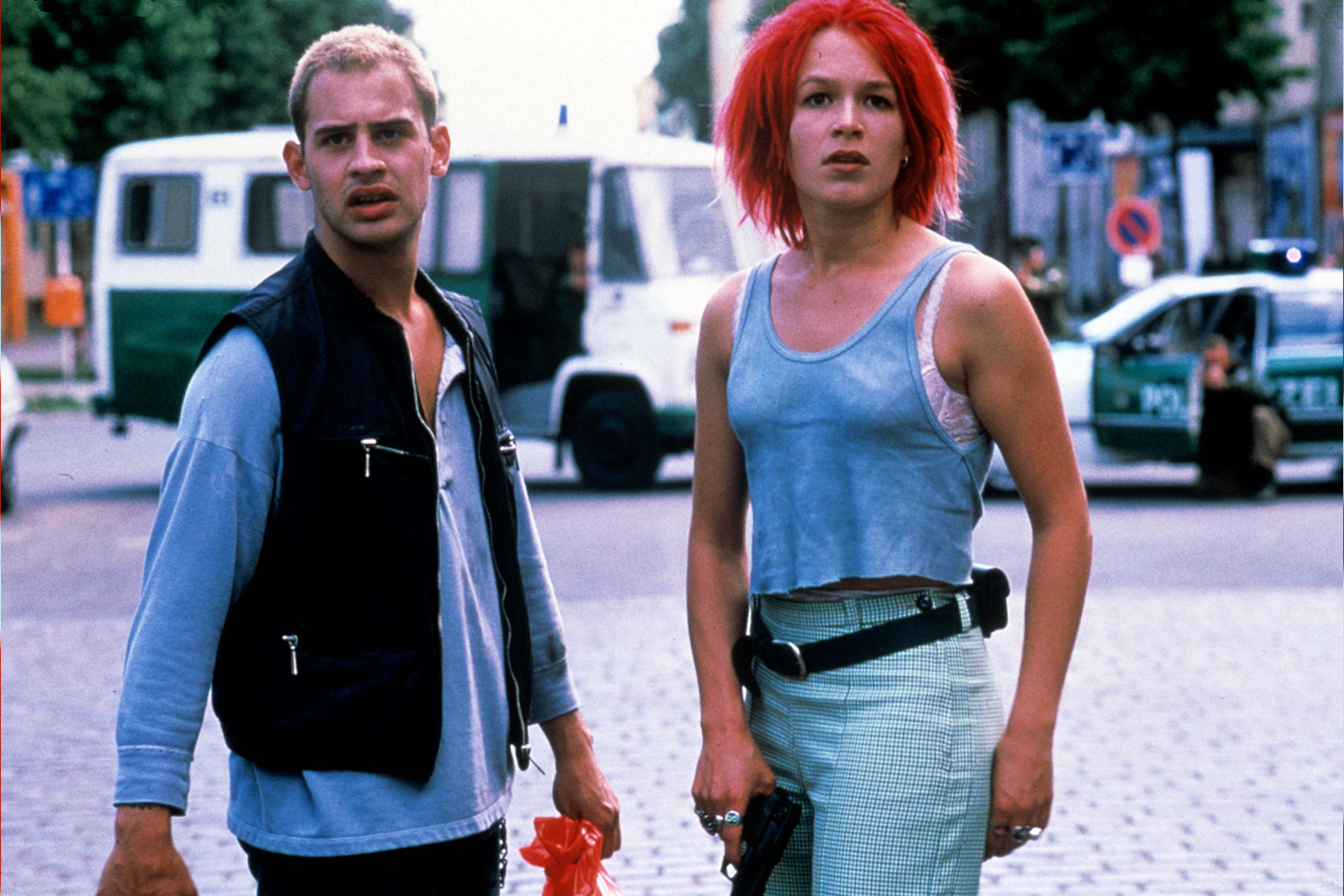
Franka Potente had a breakout role as the title character in “Run Lola Run” back in 1999 when this energetic film first screened in American theaters. Now, for its 25th anniversary, the cult classic written and directed by Tom Tykwer is being re-released in theaters in a stunning 4K restoration edition.

"When you come out of a run and run into a raw and emotional situation it is different than if you walk up to it."

The simple story holds up despite the fact that cell phones and Ubers were not around at the time it was made. Lola (Potente) gets a call from her boyfriend Manni (Moritz Bleibtrau) saying he lost 100,000 Deutsche Marks he owes a gangster because Lola did not meet him in time. Now he implores her to get the money and meet him — in 20 minutes! — or Manni will be killed. “Run Lola Run” shows three different versions of how things might play out as Lola races to find the cash and meet Manni before it is too late. 

Watching Potente with her fiery red hair and Doc Martens rush through the streets of Berlin to a fabulous techno soundtrack remains as intense and as exciting as it was back in the day. It is easy to root for Lola because she is so determined; just watch her facial expressions as she tears through the streets of Berlin. Potente’s performance, however, involves more than just her fleet feet. Lola has a scream that can break glass, and she has a strained relationship with her father, which gets more complicated in each iteration of the story. In addition, Lola asks big questions, especially when she wonders if Manni truly loves her.

After the film became a hit, Potente worked with Tykwer (her off-screen partner at the time) on “The Princess and the Warrior” in 2000. She soon took roles in Hollywood films like “Blow” and “The Bourne Identity” and its sequel, as well as in films by idiosyncratic directors like Todd Solondz (“Storytelling”) and Peter Greenaway (The Tulse Luper Suitcases). In addition, Potente worked in various TV series, including “Copper,” “The Bridge” and most notably, “Claws” before directing her first feature, “Home” in 2020.

Potente spoke with Salon about the enduring legacy of “Lola.” 

Are you generally someone who is on time, or did Tom Tykwer create this film to show you why you shouldn’t be late for things?

[Laughs.] I don’t know if that’s what the film says. I think the film says, “If you’re late, your life could be totally different” — which we might embrace. Why not?! I’m early most of the time. I have kids. I’m pretty organized. If I wasn’t, I wouldn’t have any time to myself. I will not ring the doorbell early at your house, but I am on time. And as Germans, if someone is 5 minutes late, we notice. Terrible! Tom was always late. We would go see late-night movies and he would come from the editing room, and I can’t tell you how many times I’ve seen a film sitting in the first row. In Germany, we call it the “Academic 15.” Do you have that? If you are 15 minutes late, it’s OK — but no, it’s not. 

Run Lola RunMoritz Bleibtrau and Franka Potente in "Run Lola Run" (Sony Pictures Classics)
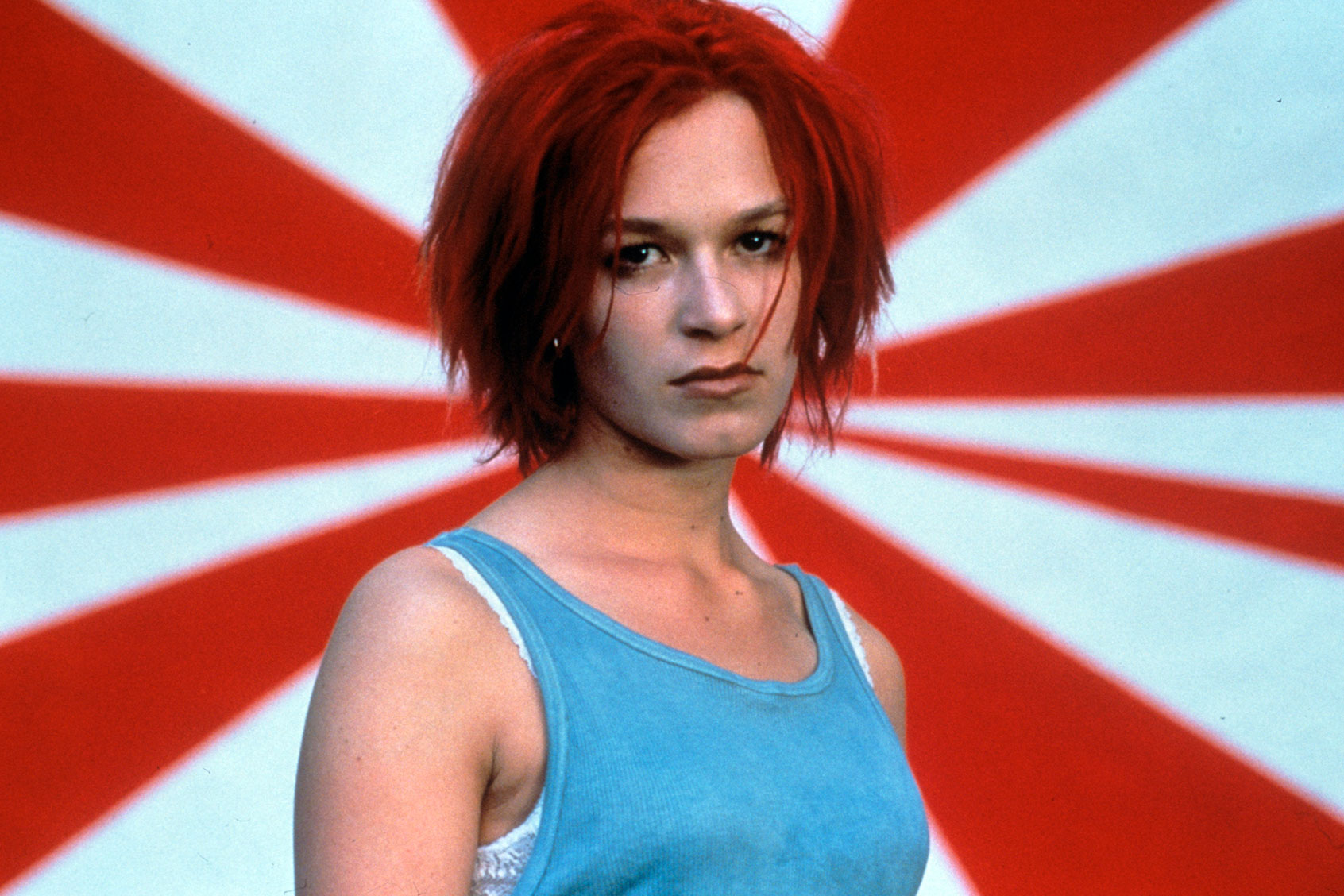
Why do we root for Lola? She is helping Manni, but she does at one point question his love for her. How do you see her character, and what did you think of her having to save her man from death?

There’s no time to think, “Should I do this?” It’s very immediate; the enticing thing is the immediacy of the decision. She would do that for a lot of people. Her mom is f***ed up, but she’d do the same for her. The film claims this is an initial human response. Humans want to impulsively help. I’m not sure that’s true for everybody all these years later. But this initial jolt of — of course! — before you think about it. There’s no stopping. It is as if, on an abstract level, a thought goes out there, and you follow it without questioning. There’s something to be said about that. We tend to overthink or put all these stops in our actions instead of committing to something and following it through. Enjoy that energy of commitment or impulse. Do we trust our impulses? I’m a very impulsive person. We don’t know that much about her, and she is young . . .

Lola has a “bad day” in the first episode, and not such a great one in the second. Can you talk about calibrating Lola’s emotions in each sequence? We feel for her each time, but she’s different in each episode, impulsive, thoughtful, reckless.

I have to hand that over to Tom. I wasn’t so involved as an actor. When you look back as a seasoned actor — a terrible word — what happens when you have been acting over 26 years is you have honed your craft. But over time you lose the freshness, the rawness that comes with a certain naivete. I definitely had that for Lola. You’re more malleable. With the right director, it is magical. The simple act of running all the time and the breathlessness of that, and that, paired with my youth, made me open to surrendering to the process. Tom really guided me. He gave me mantras or parts of poetry, or he would just whisper something in my ear to guide me. We didn’t have structural conversations. He would just give me stuff to think about. With the running, I was so breathless. When you come out of a run and run into a raw and emotional situation it is different than if you walk up to it. You are sweaty and out of breath you are wide open. He knew that; I didn’t. I was 22. He knew to take the energy and harness it and calibrate me. I followed his lead I had a feeling of excitement. I felt safe and guided and connected.

What input, if any, did you have in creating Lola’s look? Her red hair, her Doc Martens? She’s become iconic. Were you involved in that process at all? How did you become her?

I think they made me believe I was involved. [Laughs] If someone came to me now and said we’re going to bleach your hair eight times — eight times! because my hair was really dark — and it’s going to be bright red, I would say, “No, you’re not!” But I was young, and I dyed my hair every two weeks anyway. Yeah! Free hair color! The way Tom conducted himself, he was an actor-whisperer. You believe that he has your best interest in mind, and he makes you part of it. I was like, “Yeah, let’s do it!” They gave me a thong, and I was like, “I’m not wearing that” and they said, “Yes. You are!” The look was something we created together. I'm a team player, and I have opinions, but making movies, I appreciate what the other people do. I don’t want the costume designer to tell me how to act. I like to lean on everyone’s talent, but I provide an opinion if asked. 

How much running did you do in the film? Meaning how many takes of filming “Run Lola Run” were required given the film’s repetitive structure? 

I’m way more of a runner now than I was then. I ran [during] rehearsals. In the beginning, I was told I could keep my sneakers on for rehearsals, but then I was told there was no time so I had to keep the frigging Doc Martens on. I ran during rehearsal, during all the takes and then I had to run for sound! I ran everything. I was young, but I was smoking two packs a day. When you are in your 20s, you do all that and you’re OK, and you sleep four hours and you do it again.

You sing on the film’s soundtrack, and Lola’s scream breaks glass. Can you talk about sound and your vocal performance in the film?

That’s Tom’s style also. He loves for his main characters to become the film on every level. With the singing, part of it was because they didn’t have anyone to sing the layout, and I was dating him, at the time, so I would go to the post-production studio and hang out, and they were like, “Can you sing this?” I was like “Yes, of course!” We got an MTV award, a Platinum record, and I got nothing. They didn’t have any money to pay anyone to sing it for real. I had to do a duet with a German rapper, we had to shoot an embarrassing music video, and they wanted us to perform after the film blew up. I could have had a second career as singer! It could have some fun renaissance. I went to a rave in downtown L.A. recently, and it was so Berlin 1994. Very retro! 

The film is very retro. If we had cell phones and Ubers back then, the film would be a short!

There is something about self-reliance. [Today] when the Uber doesn’t come, you might talk to neighbor. We still have moments where we don’t have wiggle room. F**k this s**t, I gotta do it myself. Even at the time when Lola runs, there are trains and trams that she could have taken, but that’s not so much fun.

Run Lola RunFranka Potente in "Run Lola Run" (Sony Pictures Classics)
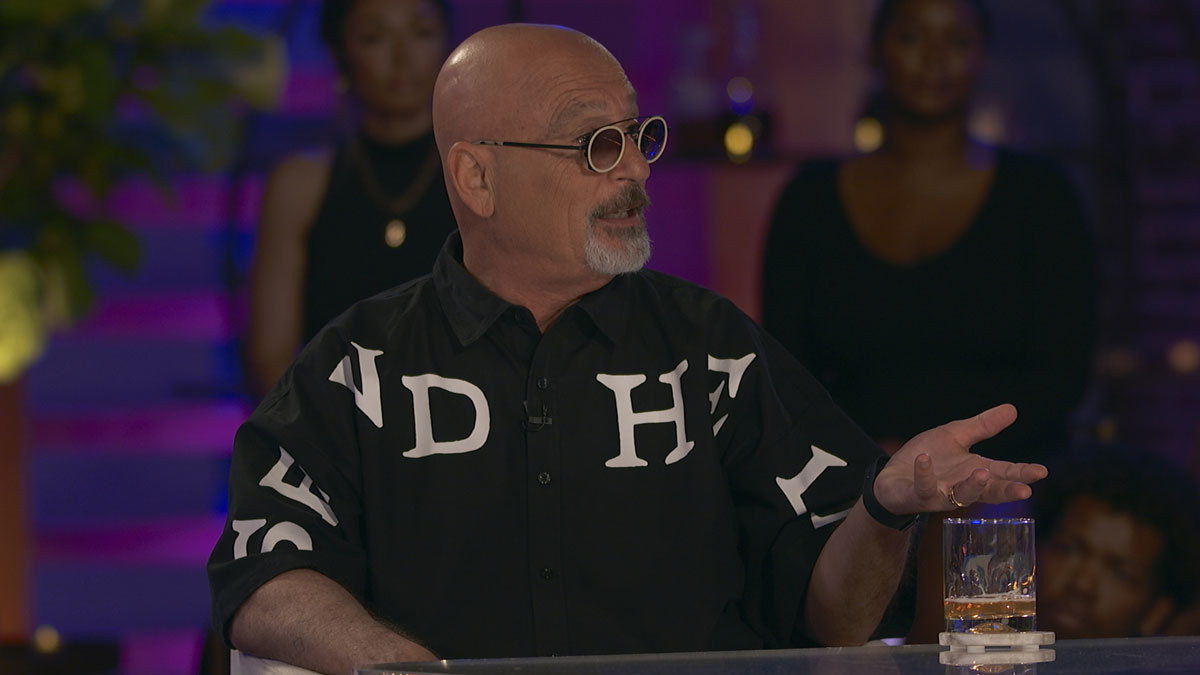
What do you recall about the responses you received regarding the film? Anything particularly strange or memorable. 

It was really a journey. At first it was in Europe, then it kept happening. New Directors/New Films [festival] in New York and then Sundance. Is this going to stop anytime soon? It was crazy. I remember meeting Natalie Portman, and she told me she went as Run Lola Run for Halloween. You did? Cool. I remember we met Gregory Peck’s widow, and she told us he loved “Run Lola Run.” Dustin Hoffman called us in the middle of the night while we were shooting “The Princess and Warrior” because he wanted to work with Tom {Tykwer] and wanted to meet us. We hung out with him, and I was driving Hoffman around in my Saab with cigarette butts in it. Those tidbits I remember because they were bizarre at the time, but they are good memories. 

Did you leverage the success of “Lola” to your career — working in Hollywood and TV, and even getting an opportunity to direct? 

"When Lola runs, there are trains and trams that she could have taken, but that’s not so much fun."

At the time, they were plugging me and Penélope Cruz because we came up at the same time. They tried to plug actors that were hot and brought energy. There were a lot of parts I didn’t get because I was too specific — I had a strong accent, and the way I looked in my 20s — you had to be blonde then. I wasn’t working out. I was smoking cigarettes and doing other things. I wasn’t fitting into the categories. After “Bourne” I shaved my head – just 'cause, I don’t know why. I had a meeting with John Woo. It was a big deal at the time, and my agent almost threw up when she saw me. She said, "You have to get a wig." And the coolest wig I could find was a Morticia Adams wig, jet black. And I was hungover, and I was sweating because of this wig. I was young! The agent called me with feedback and said he thought there was something strange about my hair. I was like a little punk ass kid from Berlin, and I acted like one and that wasn’t always appreciated. It may have cost me a job here and there. I was being authentic! 

But you worked with Peter Greenaway and other arthouse directors.

That came out of Tom. He was my guide. In the five years we were together, I’d watch the films he watched, and I learned how to talk about it and art and how you can actually see it. I was seeking out the stuff we grew up with in Berlin. We’d go see arthouse films and were friends with Wim Wenders. You could say, “I want to work with Greenaway and Todd Solondz and they would make it happen! 

The film asks a question about fate, “What if you never met me?” What do you think your career might have been like if you had not made “Run Lola Run”?

Maybe I would have had a career in Germany. I was a working actor at the time I made “Lola.” I came from a small town. There was not even a movie theater. It was unlikely I would even become an actor. Before “Run Lola Run,” I had already hit the ceiling of what my dreams could have been. I didn’t think about making movies. I thought maybe I could be a theater actress, and that would have been super dope in my world. It’s different in hindsight. I think I would have been totally fine. I might not live in America, but I was an exchange student in Texas at 16. That kind of calibrated me. I was obsessed with speaking English. I understood that meant freedom. I could make friends and experience countries that other people who didn’t speak the language couldn’t. I wanted to be a stewardess at the time because I had a boyfriend in Texas. I was being practical. That would have been cool. I could have been a Lufthansa girl, flying to Texas. This is one path I ended up on. Great! But I could imagine other paths that I was open to or was thinking about that would have made me super happy also.


Want a daily wrap-up of all the news and commentary Salon has to offer? Subscribe to our morning newsletter, Crash Course.


What about directing and doing television? You’ve diversified your career since “Lola.” What are your aspirations now, having been in the industry for almost three decades?

I love directing. I have so many scripts I wrote over the pandemic. Unfortunately, with COVID and the strike, the landscape is reconfiguring. It is not a great landscape for independent film right now. It is very difficult. If I could pick and choose, I would love to live off being a director. It was the best time of my life. I love acting, too. After a year of the strike, that’s what I’m doing right now. We will see in the near future how everything is recalibrating. It is interesting times, to say the least. 

Are you an optimist or a realist? 

I think I’m both. I always look forward. I am not a nostalgic person. I am not sentimental, but here we are talking about a movie from 25 years ago! I appreciate that. 

“Run Lola Run” is being re-released in theaters nationwide June 7.

Pelosi says Netanyahu shouldn’t address Congress: “I feel very sad that he has been invited”

Israeli Prime Minister Benjamin Netanyahu, who has been accused of violating international law and prolonging the war in Gaza for political gain, will address Congress during a joint session next month. But former House Speaker Nancy Pelosi, D-Calif., says it was a mistake to invite him in the first place.

In an interview with CNN anchor Dana Bash on Friday, Former House Speaker Nancy Pelosi said she would “absolutely not” have invited him to talk at the U.S. Capitol if she were still speaker. 

Speaker Mike Johnson and Senate Minority Leader Mitch McConnell, two Republicans responsible for extending the invitation, released a statement Thursday announcing that the “bipartisan, bicameral meeting symbolizes the U.S. and Israel’s enduring relationship.” 

“I think this is wrong,” Pelosi told Bash. “ Frankly, I didn’t approve of him being invited last time,” she added when the prime minister criticized President Obama’s “masterful” work on a nuclear agreement with Iran.

“I feel very sad that he has been invited,” she told Bash but with a dash of optimism added, “But who knows by then, will he still be prime minister?” Pelosi's comments reflect widespread frustration with Netanyahu among Democrats, including President Joe Biden, over this stated determination to continue the war no matter the humanitarian cost.

“I wish he’d be a statesman and do what is right for Israel,” Pelosi said. She expressed her overall support for Israel after the Hamas attack on Oct. 7 and conveyed her sympathies for the hostages and the people of Gaza, adding that Netanyahu has been standing in the way of help for the people of Gaza for far too long. 

In an April interview with an Irish public broadcaster Raidió Teilifís Éireann, during a visit to Ireland, Pelosi expressed a similar sentiment. She said then that while Israel has a right to protect itself, "We reject the policy and the practice of Netanyahu. Terrible. What could be worse than what he has done in response?”

She urged him to accept responsibility for the security failures that led to the Oct. 7 Hamas attack, which killed hundreds of Israeli civilians.

"His intelligence person resigned — he should resign," Pelosi said. :He's ultimately responsible."

Celine Dion said performing with stiff-person syndrome is “like somebody’s strangling you”

Celine Dion continues to share her experience with stiff-person syndrome. After canceling all her tour dates last year and opening up about her diagnosis and recovery from stiff-person syndrome, the Canadian singer is speaking publicly and on camera about the challenges she has faced.

In a clip of an upcoming interview with Hoda Kotb, Dion said that singing with the disease is "like somebody’s strangling you.” She further demonstrated to Kotb how stiff-person syndrome affects a person's ability to talk or sing, Variety reported. Dion pressed on her throat and said, “It’s like somebody’s pushing your larynx, pharynx, this way.”

The singer continued in a restrained voice, “It’s like you’re talking like that, and you cannot go higher or lower.”

Dion also shared how the disease largely has affected her motor skills. “It feels like if I point my feet, it will stay in [that position],” Dion said. “Or, if I cook — because I love to cook — my fingers, my hands will get in position. It’s cramping, but it’s like in a position of like, you cannot unlock them.”

She has even “broken ribs at one point.”

The "My Heart Will Go On" singer was diagnosed with the rare neurological disease in 2022, leading to the cancellation of her upcoming tour dates and halting live performances as the disorder affected her ability to walk and sing. Her journey and recovery with stiff-person syndrome are documented in her new film, “I Am: Celine Dion." It premieres on Prime Video on June 25.

“Beyond belief”: Clarence Thomas reveals that a GOP megadonor paid for his $500,000 Bali vacation

Supreme Court Justice Clarence Thomas has been accepting luxury vacations — cruises on yachts, private jet flights and accommodations at five-star resorts — from billionaire Harlan Crow for over 20 years, as ProPublica has reported. Now the justice is coming clean, in part, disclosing Friday that a  2019 trip to Indonesia was indeed paid for by in late June was paid for by the Republican megadonor.

As ProPublica noted when it first reported on the trip to Bali, Thomas boarded a private jet for Indonesia, where he and his wife proceeded to island hop for nine days on a 162-foot superyacht with a private chef — a trip that would have cost him over $500,000 had he tried to pay for it himself.

In his annual financial disclosure, which usually notes gifts, travel and outside income from the previous year, Thomas admitted that Harlan and Kathy Crow paid for “food and lodging” for his Bali trip, CNN reported. The same month, Crow also paid for a four-day stay at a private club in Monte Rio, California — the home of Bohemian Grove, an exclusive, all-male retreat.

The annual disclosures are required from all justices, though Thomas’ reports have garnered considerably more attention given the sheer scale of the gifts, dwarfing those received by all other members of the court combined.

Thomas, who did not previously disclose such trips, had attempted to explain his selective reporting by stating that ethics officials had advised him not to report “personal hospitality” from friends. The fact that the justice decided to disclose Crow’s generosity indicates that it should have been included earlier, according to Politico.

George Conway, a conservative lawyer and critic of the modern Republican Party, said the disclosure points to the need for “a comprehensive criminal investigation, and congressional investigation, of Justice Thomas and his finances and his taxes.”

“What he has taken," Conway posted on Threads, "and what he has failed to disclose, is beyond belief, and has been so for quite some time."

“Counsel Culture” makes us wonder, is Nick Cannon really the best advocate for growth and healing?

Not taking Nick Cannon seriously is an involuntary reflex for some of us. We have our reasons. Maybe it's because he’s a professional talent competition emcee, hosting shows like “America’s Got Talent” and “The Masked Singer” – a job that requires charisma but not necessarily intellectual agility or depth.  

He’s also fathered 12 children with six different women over the last 15 years, ensuring regular tabloid exposure and mentions in stand-up routines. And the host and creator of MTV’s “Wild ‘N Out” has said his share of, um, wild things over the years.  

One almost cost him that show in 2020, when he made antisemitic remarks on his podcast  “Cannon’s Class.” The series’ then-parent company ViacomCBS temporarily severed ties with him in the direct wake of that incident, only to plug him back in once Cannon “did the work,” as they call it in self-help circles.

So you can’t blame people for looking at his new series “Counsel Culture” with all the side-eye in the known universe. Where to begin? There’s the title and motto Cannon repeats in each episode – that “it’s not about cancel culture, it’s about counsel culture.” This invokes a concept that Cannon has proven several times doesn’t really exist along with establishing the show’s connection to the medium’s fraught melding of psychotherapy and entertainment.

Cannon referenced supposed cultural cancellation during a 2020 Variety virtual roundtable with editor-at-large Kate Aurthur in response to the firing of “Vanderpump Rules” cast members Stassi Schroeder and Kristen Doute.

“I think we should shift the idea of cancel culture to counsel culture because we all have a past,” he said. “Clearly we’re living in a very systemic infrastructure where everyone's guilty .  . . So in that, let's figure out how to fix that one individual at a time, and use these times when people may say something incorrectly or out of ignorance and educate.”

If only he hadn’t promoted an antisemitic trope accusing Jewish people of controlling centralized banking, among other statements, on an episode of his podcast “Cannon’s Class” that surfaced a month after saying that.

Once his TV studio overlords threatened to send Cannon down the road of unemployment, he negotiated a detour through what he refers to as a journey of atonement in an interview featured in a 2021 episode of ABC’s “Soul of a Nation.”

I realize how sardonic this reads about a man who, by all accounts, did much more than simply pay the standard forgiveness tax to a Jewish organization on top of issuing a perfunctory apology along with assurances about listening, meditation and other typical means of public mea culpa-ing to get it over with.  

That comes with the territory of dealing with multihyphenates with a massive platform and the influence that comes with it Cannon has been a fixture among Millennials since his Nickelodeon debut on “All That” led to him fronting a self-titled spinoff, “The Nick Cannon Show.”

He’s also a hip-hop performer and movie actor. The remarks that got him in hot water threatened his ability to continue with his most lasting success, the MTV show he also created and produced that’s been on since 2005, save for a six-year hiatus between 2007 and 2013.  

For many viewers, watching shows centered on mental health is, in its way, their version of therapy.

All of which is to say, he has a financial stake in representing himself as someone who made a huge mistake, held himself accountable and demonstrated growth. From what he’s said in the podcast that inspired his TV show, he tried to do that — at least on some fronts.

In a recent podcast conversation with inspirational speaker and life coach Iyanla Vanzant, who hosted “Iyanla: Fix My Life” from 2012 to 2021 on OWN, Cannon said he’s in counseling three or four times a week on top of managing his career — and somehow making time to keep up with his expansive family.

What he’s taken from that experience informs the tone and approach of his Amazon series, where a roundtable of “counsel men” delves into conversations ranging from discussions about anxiety, depression, body image, modern dating and (of course!) fatherhood.

Joining Cannon’s regular presence is Dr. Ish Major – who is a board-certified psychiatrist on top of being a TV personality, which is more than Dr. Phil McGraw can claim – and bestselling author and psychotherapist and bestselling author Dr. Mike Dow.

Counsel CultureHowie Mandel in "Counsel Culture" (Prime Video)Otherwise, Cannon fills the rest of the seats at the table with his fellow comedians like Howie Mandel and Tim Chantarangsu and other public figures known for their mental health expertise, including Yolo Akili Robinson and John Kim.
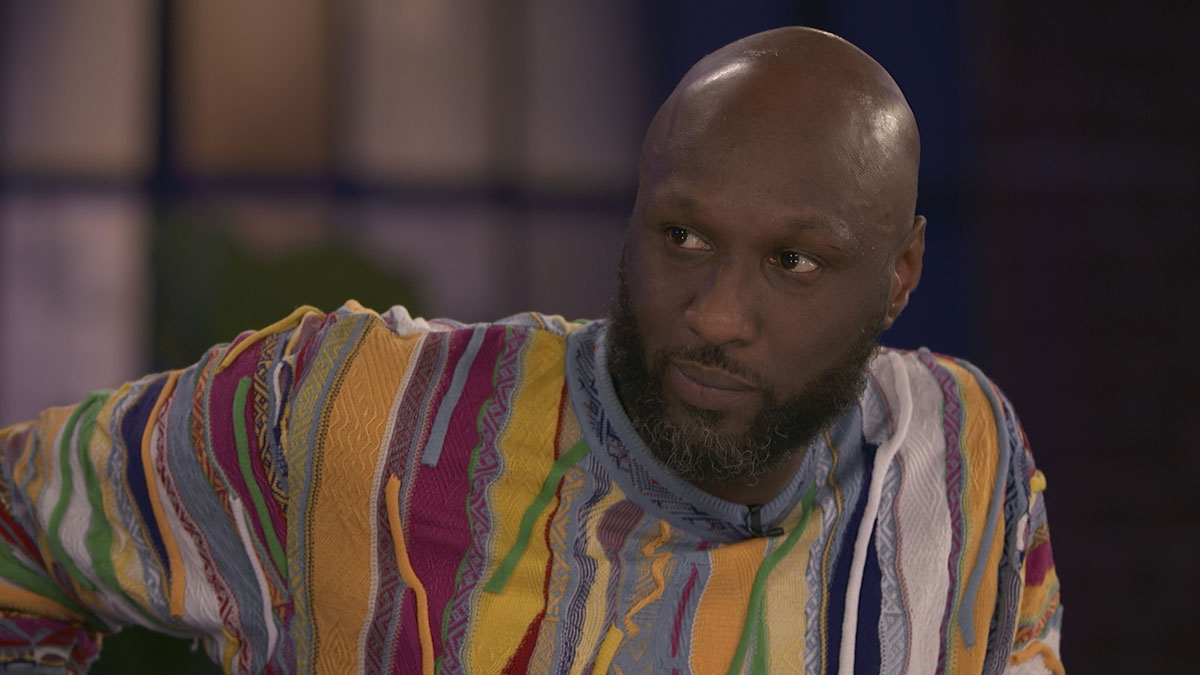
He’s also joined stars whose struggles were also chronicled in tabloid pages, including former NBA star Lamar Odom and Ray J (both of whom also happen to be Kardashian-adjacent) and other TV personalities in the advice-dispensing business.

The show is billed as a safe space to explore issues of men’s vulnerability, although many of the audience members happen to be young, attractive women. That also makes it an extension of Cannon’s mindscape, including his moments of self-examination and his frailties.

That’s not necessarily to its detriment. Since “Counsel Culture” devotes itself to showing its creator’s serious side, he doesn’t shy away from taking its medicine in front of the cameras.  

Cannon’s son Zen died from brain cancer at 5 months old in 2021, one of the inspirations for his  “Understanding Grief” episode. But when he quietly begins to cry while the panel discusses loss, you can tell it’s unplanned. Not many celebrities grieve openly unless the space is orchestrated for it, even on shows like this.  

And the producers could have kept his expression out of the final cut, allowing the host to regain his composure. Instead, a fellow panelist calls attention to his tears and invites Cannon to share what he’s going through. He does, until he says, “I’m not going to sit here and cry my eyes out.”

“But if you did,” Major tells him, “it would be OK.”

We need your help to stay independent

When considering its place in the larger TV therapy landscape, “Counsel Culture” leaves me conflicted. Cannon has that baggage we’ve mentioned and others he hasn’t had to answer for, like his characterization of Planned Parenthood’s mission as “population control” and “modern-day eugenics” on a 2016 broadcast of "The Breakfast Club" radio series.

His newest series is grounded in the notion that people can change, which he considers solemnly.

If the goal is to destigmatize psychological health concerns among young men, mimicking a casual sports show isn’t the worst approach.

Even so, in May, a podcast episode of “Counsel Culture” featured a conversation with Dr. Umar Johnson, a pan-Africanist who is against interracial marriage and homosexuality, sharing his views on polygamy.

For many viewers, watching shows centered on mental health is, in its way, their version of therapy. And some mental health professionals featured on such series operate with care, considering that knowledge. But it’s always a slippery proposition to make entertainers like Cannon the face of growth and psychological wellness.

The examples provided by Dr. Drew Pinsky and McGraw let us know how perilous it can be to mix psychological wellness and celebrity culture.  The legacy of the syndicated “Dr. Phil” is one of cheapening the process for shock value.

When he ended his show last year after 21 seasons it still averaged around 2 million viewers per episode. Along the way he also collected a trail of lawsuits, a publicized beef with Britney Spears’ family, and a flirtation with COVID denial, to name a few reasons to be glad he’s disappeared from major broadcast platforms.

(But not entirely; this week he announced an interview with Donald Trump on a nascent Internet streaming service, preaching, among other nonsense, the necessity to forgive the convicted fraudster who has promised to use his office to take vengeance on his enemies if he’s re-elected president.)


Want a daily wrap-up of all the news and commentary Salon has to offer? Subscribe to our morning newsletter, Crash Course.


Cannon wisely doesn’t position himself as an expert, although he’s said that he’s pursuing his master’s degree in psychology. Instead, he acts as a facilitator, leaving the bulk of the analysis and advice to his (TV-branded) experts.

Counsel CultureLamar Odom in "Counsel Culture" (Prime Video)And his approach is relatively responsible. This isn’t just my observation – I watched a few episodes with my husband, a practicing psychologist with more than two decades of experience as a mental health professional.
He likened the “Counsel Culture” setup to the broadly recognizable format of ESPN’s “SportsCenter,” which is a compliment, not a critique. If the goal is to destigmatize psychological health concerns among young men, mimicking a casual sports show without the hype and minimizing applause during sensitive insights, isn’t the worst approach.

In fact, the “Fox NFL Sunday” panel thrives on its openness concerning the co-hosts' mental health struggles. An episode of the late great HBO series “Real Sports with Bryant Gumbel” explored that side of the show as a public service asset.

“Counsel Culture” has a long distance to travel before we can begin to consider it as a peer in that space. It might not make it beyond the few episodes streaming this week or substantially change how or what we think of Cannon. But at the very least it gives us something new and perhaps even valuable to talk about the next time his name enters the chat for whatever reason, and for whatever that’s worth.

"Counsel Culture" is streaming on Prime Video.

Some psychedelic medicine developers want to ditch the therapy aspect. What could go wrong?

Back in 2016, Rosalind Watts volunteered to work on one of Imperial College London’s early trials investigating psilocybin for depression. She had previously spent several years as a clinical psychologist with the UK’s National Health Service and quickly saw the incredible potential for psychedelics to help people with mental health problems. By the following year, Watts had abandoned her conventional healthcare work, joining the Imperial team and evangelizing the benefits of these miraculous medicines.

Psilocybin is one of several psychedelic drugs currently being explored as treatments for a variety of mental health issues. These drugs, which also include LSD, DMT and adjacent compounds like MDMA and ketamine, can give users profound shifts in perception, both during a dose session and in the weeks or months following. This particular consciousness-altering aspect to the drugs means patients can require more therapeutic support than they would if they were receiving conventional psychiatric medications.

As time passed, Watts grew concerned that these drugs were not being administered with enough broad support for patients. She was finding many clinical trial participants, months later, struggling with the return of their previous sense of disconnectedness and depression, alongside big questions that had been raised in the psychedelic session, with no one to talk to about them. Even with bespoke and careful therapeutic containers created for the trial, the support ended very quickly afterwards.

So Watts and a colleague set up the UK's first community-based psychedelic integration group to provide a safety net to catch any participants in their next trial who might find they needed help afterwards.

"The greatest threat to a healthy psychedelic future is the fetishizing of just the drug alone."

“We went and sat in a community center,” Watts recalls in an interview with Salon. “We gave our time for free, month after month, because many people were having psychedelic experiences without enough support, after trials and retreats, and most months we witnessed people really struggling to cope alone with the aftermath of intense and confusing experiences."

Disillusioned with corporate impacts on the psychedelic space, Watts changed path to develop a long term community integration framework for building connectedness to self, community and nature after a psychedelic experience. This was designed to catch people who might struggle to integrate experiences with the drugs after consuming the psychedelic renaissance hype.

In a frank Medium post published two years ago, Watts expressed remorse at contributing to a “simplistic and dangerous” narrative around psychedelic medicine. She still believes psychedelics are incredible agents for catalyzing healing but is also concerned there’s a growing narrative suggesting we need to just take the drug and everything will be fine.

Watts wrote, “the greatest threat to a healthy psychedelic future is the fetishizing of just the drug alone,” adding, “Whether plant, or synthesized compound of one, there is a narrative that all you need to do to change your mind is eat something. I unknowingly contributed to that narrative.”

Don’t call it therapy

For the past 70 years, most Western medical uses of psychedelics have centered on the way these drugs can serve as an adjunct to psychological therapy, or psychotherapy. From treating alcoholism to alleviating depression and anxiety, the general idea has been that psychedelics can amplify suggestibility, increase neuroplasticity and accelerate the clinical process of psychotherapy.

In fact, for much of the current so-called “psychedelic renaissance,” the treatment has been explicitly referred to as psychedelic-assisted psychotherapy. While there may be more and more research illustrating exactly what psychedelics do pharmacologically to our brain, for the most part it was never particularly controversial to suggest the drugs should always be delivered in tandem with a broad program of psychological preparation and integration.


Want more health and science stories in your inbox? Subscribe to Salon's weekly newsletter Lab Notes.


It’s pretty unusual in psychiatry for a drug’s efficacy to be fundamentally influenced by counseling or psychotherapy. Certainly medicines such as antidepressants or drugs like buprenorphine for opioid use disorder are known to be more effective when accompanied by clinical support — but they are often administered solely as pharmacological treatments.  

Psychedelics, on the other hand, are considered to be so life-altering, emotional and sometimes distressing that having a licensed practitioner nearby to walk one through the experience has been one approach to reducing harm or side effects.

Over the last few years, however, the word “therapy” has been appearing less and less in psychedelic clinical trials as the research moves closer to real-world applications and approval by agencies like the U.S. Food and Drug Administration (FDA). Setting aside the somewhat atypical example of MDMA-assisted therapy for PTSD — a treatment modality that intrinsically intertwines psychological interventions into its process — recent clinical research with classical psychedelics (psilocybin, LSD and DMT) has quietly dropped the psychotherapy and replaced it with a variety of more ambiguous terms such as psychosocial support.

Compass Pathways has led the way in this semantic shift. Currently deep in Phase 3 trials testing psilocybin for depression, the company has been forceful in its reframing of psychedelic medicine away from the classic psychedelic psychotherapy model. Compass studiously avoids any reference to psychotherapy in its trial work, instead calling its research “psilocybin treatment with psychological support”.

A provocative 2022 commentary published in the American Journal of Psychiatry and co-authored by Guy Goodwin (Compass’ Chief Medical Officer) and Ekaterina Malievskaia (Compass’ co-founder) made the case for psilocybin treatment being a drug therapy first and foremost. They argued support to ensure psychological and physical safety was of course necessary with psilocybin treatment, but their dose-response data purportedly indicated efficacy was primarily a pharmacological effect and more expansive psychotherapy programs were not necessary.  In other words, the drug does most of the work.

Are these drugs still safe and effective in the absence of psychotherapy?

Part of this subtle shift in nomenclature has been informed by the FDA’s first guidance for psychedelic clinical studies, released in mid-2023. The guidance established an assortment of clinical issues the drug regulator will be considering when looking at applications to bring psychedelic medicines to market.

One crucial question the FDA raised in the document was what it saw as a problematic conflation of drug effect and psychotherapy when exploring the therapeutic efficacy of psychedelics. It suggested clinical research should attempt to separately quantify the contribution of psychotherapy from the drug’s effects when evaluating a patient’s response to the treatment.

Essentially the question being asked was are these drugs still safe and effective in the absence of psychotherapy?

A recent advisory committee to the FDA was particularly focused on this question when trying to evaluate the safety and efficacy of MDMA for PTSD. This problem with psychotherapy ultimately played a part in the committee’s near unanimous recommendation against the approval of MDMA therapy, which could dampen hopes that the drug will be legally prescribed in the near future.

The drug does all the work?

In early March of this year, psychedelic startup MindMed made a pair of striking announcements. It revealed the FDA had granted breakthrough status designation to its investigational drug MM120, a patented formulation of LSD. It also revealed data from its Phase 2b study testing MM120 for generalized anxiety disorder. According to the company, a single dose of the psychedelic drug led to significant and sustained clinical improvements for up to 12 weeks.

Less prominent in MindMed’s announcement, but perhaps most significant, were details surrounding the treatment protocol being tested. MindMed was claiming to have completely eliminated all traces of psychotherapy from its treatment model.

In an investor presentation the company proudly declared its MM120 trial contained no “preparation,” no “integration,” and no “ongoing therapeutic engagement.” This was psychedelic medicine pared back to the absolute minimum. Spend a day taking the drug in a safe clinical environment and then go back to your life.

Speaking to Salon, MindMed’s chief medical officer Dan Karlin said the primary goal of the trial was to home in on the sole pharmacological effect of the drug, as suggested by the FDA. Every step of the trial design looked to remove conventional traces of psychotherapy while maintaining basic levels of support necessary for patient safety.

“There are elements of the history of these drugs, like the need for psychotherapy, that we were doing our best to try and test if that is a real need,” Karlin explained to Salon. “Not because we don't think people would benefit from it, because psychotherapy helps. But because we wanted to see if the drug worked without it.”

So instead of a series of preparatory therapy or support sessions before a drug dose, MindMed simply engaged with the patient in an expanded informed consent process. According to Karlin, informed consent for psychedelics looks a lot like it would for any other psychotropic medication except it is maybe, “a little more robust.”

“The conversation there is about what people may or may not experience, from a perceptual standpoint, from a cognitive standpoint, from a physical sensation standpoint, and from an emotional standpoint. Then there's a putative conversation about mechanism,” Karlin said, describing MindMed’s informed consent process.

"In essence, it’s supervising, not therapy."

In the room for a dosing session there are two “monitors.” One of those monitors is either a medical doctor or a nurse practitioner, while the other need only have a bachelor’s degree with some working experience in anything “adjacent to psychiatry.” Some of the session monitors used in the MindMed trials did have experience with psychotherapy. However, that was not a requirement when selecting personnel. In fact, Karlin explains some of those monitors in the trial were even medical doctors from non-psychiatric fields such as oncologists and gastroenterologists.

“In the room, these folks are instructed explicitly not to provide psychotherapy,” Karlin notes. “What they do provide is monitoring obviously for safety, though that has not really been much of an issue. They do things like vital signs, checks and then they assist the participant if they need anything.”

Of course, sitting in a room with someone going through a high dose psychedelic experience is rarely a completely passive experience. Karlin admits there were moments where participants were in distress or looked for some kind of engagement with the monitors. In those instances, the monitors were instructed to reorient the participants to what’s happening in the room and remind them the drug’s effects will pass.

“In essence, it’s supervising, not therapy,” he stresses. “Most patients on very high doses are not looking for dyadic engagement. They're not looking to be psychotherapized. Occasionally, someone would say something or ask a question that might be sort of leading towards something that could be a more therapeutic intervention. And then the instruction that the DSM [dose session monitor] had been given was to redirect back to the patient, they have to do their thing while they're here.”

We need your help to stay independent

Once the dose day was over the participants went home and were followed for several months to track the effectiveness of the treatment. Two in-person assessments were conducted in the week after the dose. Here, the participant met up with one of the monitors present during their dose. Karlin stresses no “systematic psychotherapy” took place at these follow-up appointments. The participants simply completed assessments to measure their symptoms and occasionally asked the monitors about events that may or may not have occurred during their dose session.

So, has MindMed demonstrated a psychedelic drug can be clinically effective in the absence of psychotherapy or a broad psychological support protocol when treating certain psychiatric conditions? Does this mean the future of psychedelic medicine is a clinic where patients drop in, spend a day experiencing a drug while under supervision, and then simply leave with no follow-up support or management necessary? Maybe.

But what if this therapy versus drug binary is the wrong way to think about the impact of psychedelics? Is this dynamic a red herring that could be diverting our attention away from other, more deeply metaphysical issues that can emerge with psychedelic use? If researchers are only measuring a drug’s efficacy using anxiety or depression scales and tracking adverse effects from the perspective of things like suicidality could they be missing other kinds of long-term adverse impacts?

Ontological shock

“My sense of self was gone. It was like it had been obliterated into a million pieces,” Theo said. “And I couldn't really work out who I was. I just had this, like, routine of going to work. And I just stuck to that as a means of like, keeping some sense of inner structure by having some outer structure. And, like, if I'm honest, if I'd sat and thought about that for a while, for the first few weeks, I think I would have just cried because like, it didn't seem very clear who I was anymore.”

Theo participated in an ayahuasca ceremony in his mid-20s. His experiences in the weeks and months following the psychedelic brew led him to profoundly question his identity. Theo is one of 26 people interviewed in a new preprint study exploring the varieties of existential distress that can follow a psychedelic experience.

This profound break in a person’s belief system can be frightening for many, leaving one feeling unmoored, disconnected and groundless.

There’s Adriene, a woman in her 30s who, after a magic mushroom experience alone in her apartment during the pandemic, changed her life path from being an atheist dominatrix to taking vows and becoming a Buddhist nun. There’s Cal, whose experience with DMT and cannabis at a party moved them away from a journey to become a rabbi and into a world of Wicca and paganism.

Western science has a name for these radical transformations, coined in the early 1970s by philosopher Paul Tillich:ontological shock. Tillich’s work was focused on how we as humans conceive of God and what happens to us if we are confronted with God’s non-existence. One of his definitive works concluded with the iconic line, “The courage to be is rooted in the God who appears when God has disappeared in the anxiety of doubt.”

Tillich suggested certain experiences in life can trigger a kind of spiritual destabilization where people are confronted with existential realizations. This ontological shock is precipitated by challenges to one’s worldview or beliefs. For Tillich, an ontological shock was primarily contained within a theistic frame. So something like a near-death experience, for example, could bring a person face-to-face with a feeling of there being no God in the universe. This profound break in a person’s belief system can be frightening for many, leaving one feeling unmoored, disconnected and groundless.

Over the last few decades, the term ontological shock has been more broadly used to describe experiences where someone’s fundamental metaphysical beliefs are deeply challenged beyond theism. Members of alien abduction communities, for example, often speak of the ontological shock they experience after an abduction encounter.

Psychedelic experiences are also deep mediators of ontological shock. From a clinical perspective these kinds of psychedelic-induced ontological shocks are not merely a bothersome side effect of the drug, but instead could be crucial to the kinds of healing being seen in medical contexts.

“The therapeutic benefits of psychedelics are theorized to be driven by increases in entropy — a measure of uncertainty — that shift individuals' reliance on their prior beliefs,” the researchers write in the study. “This destabilizing mechanism allows for a recalibration of cognitive structures, enabling the re-evaluation of previously rigid mental models. However, when individuals lack adequate psychological or social resources, this increase in uncertainty can lead to distress manifesting as confusion and difficulty accommodating the ungrounding of established worldviews.”

Psychedelics in a disconnected world

Most of the work Ros Watts does nowadays is in establishing systems of support for people after psychedelic experiences. She co-runs an online integration community called ACER Integration that offers peer support and a 12 step process for building connectedness. The big problem, from Watts’ perspective, is that 21st century Western culture is disconnected and isolating, lacking any kind of context or container to help people safely integrate psychedelic experiences.

“If you put psychedelics into a disconnected culture, then people go back to disconnectedness, and they're left with these big huge questions with no one to talk to,” Watts says.

A reigning aphorism of the psychedelic renaissance is that these drugs have been safely used by innumerable Indigenous cultures for thousands of years. And while that may be true, Watts is keen to stress a big difference between every psychedelic-using community in the past and people in the world today.

“Indigenous groups have [used psychedelics] as part of a community,” Watts explains. “You have loads of support, you're doing it in a group of people, you have your shaman, you have your community care. There's no 'psychedelic integration', because you're living in a community of people who are integrating all the time. After a psychedelic session people need a community of ongoing support from people who understand. Not just to mitigate risks, but to maintain benefits. We can't extract the medicine from its context of doing it that way.”

From MindMed’s perspective, Karlin doesn’t deny some people can have challenging experiences with psychedelics, but he stresses drug developers do not control the practice of medicine. And neither does the FDA, he adds. By establishing a potential baseline of safety and efficacy in their clinical trials, Karlin argues MindMed is helping broaden access to these medicines if they were to be eventually approved.

“The goal is that in the real world this is just another tool in the toolbox … to bring this toward regulatory approval in such a way that a label and REMS [Risk Evaluation and Mitigation Strategy], if one is required, are as much as is needed for true safety, but broad enough that this can be incorporated into a lot of different types of practice patterns.”

Karlin agrees psychedelic drugs can lead to patients making large life changes due to the nature of the experience. But he doesn’t see this as something wholly novel to psychedelics. He argues patients undergoing psychotherapy, for example, can often come to similar major life-changing realizations.

“People getting good psychotherapy sometimes leave their families,” he says. “That's the nature of exploring one's own mind. These drugs can accelerate that process in many cases, but they don't change someone. They just open people to the idea that maybe they're not on the path that's right for them now.”

Watts is a little more concerned about the shockwaves likely to ripple through communities if these drugs are simply slotted into a Western medical model without broader support systems in place. Her experiences with people who have been deeply unsettled by psychedelic trips led her to believe small, grassroots organizations are going to have to pick up the pieces when big pharmaceutical companies start rolling these medicines out. And she feels pharmaceutical companies making profits off these drugs have a larger responsibility to at the very least offer financial support to these organizations.

“The list of deep, powerful experiences where you need a hand to hold and need someone to work with you afterwards is very long,” Watts says. “So what [these companies] could do if they had compassion is support people through those processes. And not gaslight them by saying, ‘yeah, this [single drug dose] is going to fix you.’ What they would also do is they would provide a proportion of their profits, to support grassroots organizations who have been set up to catch the people who are damaged by psychedelic therapy.”

Wages are growing faster than inflation, according to the latest “eye popping” jobs report

The latest economic statistics out Friday show that wages are rising faster than prices, meaning the average worker has more purchasing power today than before Joe Biden became president.

"Hourly wages rose 4.1 from a year ago," the Associated Press reported, citing the numbers from the Department of Labor, "faster than the rate of inflation and more quickly than in April."

The annual inflation rate, by comparison, is 3.4%, noted economist Steven Rattner.

According to the St. Louis Federal Reserve, the average U.S. worker now makes $34.91 an hour, compared to $28.77 in March 2020.

In addition to wage growth, the latest data show the U.S. added 272,000 nonfarm jobs in May, exceeding the 185,000 that economists predicted, according to Reuters.

"So much for slowing," economist Brian Jacobsen told the news service. "The headline payrolls number is eye popping," he said, arguing it would encourage the Federal Reserve to take on inflation without "worrying much about growth."

The U.S. unemployment rate ticked up from 3.9% to 4%, marking 30 straight months of near-record low unemployment, noted the center-left Economic Policy Institute.

"This labor market just keeps cranking out huge numbers of jobs. We've added almost a million jobs in the last 4 months alone, and the unemployment rate has been at 4% or less for TWO AND A HALF YEARS," Heidi Shierholz, president of the center-left Economic Policy Institute, posted on X. "It really is incredible."

Byron Donalds walks back remarks on segregation, says he doesn’t think “Jim Crow was great”

Trump surrogate and vice presidential hopeful Rep. Byron Donalds, R-Fla., is trying to walk back his claim that Black Americans had it better when segregation was still being imposed, falsely claiming his words are being twisted.

In an interview with MSNBC host Joy Reid, Donalds, who is Black, denied making the remarks in question. I never said that it was better for Black people in Jim Crow,” he insisted. ″[They’re] saying I was being nostalgic or saying that Jim Crow was good for Black people, that’s all political spin, it’s a lie, it’s gaslighting and that’s truly unfortunate."

Donalds maintained that his comments were only meant to refer to marriage rates, which have declined over the decades. 

But at an event earlier this week in Philadelphia, aimed at promoting the Trump campaign to Black voters, Donalds said the era of segregation was also better politically.

"You see, during Jim Crow, during Jim Crow, the Black family was together," he told an audience, cigar in hand, at the event. "During Jim Crow more Black people were not just conservative, Black people have always been conservative-minded, but more Black people voted conservatively."

Reid challenged Donalds' original claim, noting that segregation was a time of racist violence.

“The man in the Jim Crow era had no rights," Reid said Thursday. "Could not protect his wife from rape, could not protect his son from lynching.”

She also rebutted Donalds' claim of victimhood.

“You said Jim Crow three times for emphasis," she noted. "It wasn’t the media or the Democrats or gaslighters who brought up Jim Crow. It was you. You brought up Jim Crow."

After repeated interruptions, Reid pressed on: “If a Black man, a Black father, could not protect his wife, his son, or himself from lynching and violence, how is him being in the home mean that that is an era that was better for the Black family or that we should think of as a good thing?” 

Donalds insisted he wasn't praising everything about the era of state-sanctioned discrimination.

“Don’t try to impose that the marriage rates were better — higher, higher I want to be clear— higher in the Jim Crow era to mean that I think Jim Crow was great,” Donalds said. “That is a lie, that is gaslighting. I would never say such a thing.”

Donalds’ Tuesday comments were not taken lightly and sparked criticism from Black congressional leaders, such as Rep. Steve Horsford, D-Nev., who is the chair of the Congressional Black Caucus. He called on Donalds to apologize for “misrepresenting one of the darkest chapters in our history for his own political gain."


Dr. Phil believes Trump will heed advice to not seek revenge: “That is not the right way to go”

Television counselor and personality, Dr. Phil McGraw thinks he has gotten through to Donald Trump.

Following Trumps conviction on all 34 felony charges in the New York hush money trial, the former president escalated threats against his political rivals, stating that "revenge can be justified” in an interview with McGraw. The host of "Dr. Phil," went on CNN to address his interview with Trump, saying to journalist Abby Phillip, that he is "sympathetic to what Trump has gone through in this particular trial because it was not proper due process for him."

Moreover, Phillip asked McGraw if he thought that Trump would actually seek revenge on any of his political enemies.

"Certainly that's a big issue. I lean strongly into the position — look this is not going to help this country if you get into a position of power and your agenda is one of revenge, retribution — America picks up the tab for that . . . In the meantime, what about America?"

Then Phillip highlighted that Trump said on Thursday that he would indict any Congressional Jan. 6 committee members if elected. 

“I actually don’t think he will,” McGraw responded. “This is something that I think he’s had in his mind that there’s only one way to go, and that’s to get even. And I think I really made some headway with him that that is not the way to go.”

He continued, "I am going to relentlessly try and get him to not do that."

“It all fell apart”: Hulu’s “Queenie” dismantles the myth of the strong Black woman

Nobody has had as terrible a day, month or year as Queenie Jenkins. The 25-year-old British-Jamaican protagonist of Candice Carty-Williams' novel "Queenie," has jumped off the page and onto the television screen in Hulu's series adaptation of the same name.

Queenie (Dionne Brown) is a 20-something Black woman working as a social media intern trying to make it as a writer. Meanwhile, she has a complicated breakup with her long-term white boyfriend and is dealing with painful traumatic experiences in her immigrant Jamaican family, specifically her fraught relationship with her mom. Although she has the support of her best friend, Kyazike (R&B singer Bellah), the conflicts in Queenie's life come to a head as she deals with the damaging fallout of her breakup and not feeling understood or heard at her predominantly white workplace. Queenie struggles to hold it all together like she thinks she should, but she is a gaping, bleeding wound of raw emotion.

"I think that in so many ways, we're all trying our best as Black women."

"Since I could remember I've always been told to be strong. I've always been told that I can handle everything," Carty-Williams, who is also a showrunner and executive producer on "Queenie," told me in an interview. "When I was in my 20s, it all fell apart. And that's why I was able to write this character because I know what it feels like. And I'm really bored of the idea that Black women need to be strong and handle everything because like, who is a healer to us?"

Carty-Williams also said she wanted to Queenie to emulate lead characters who narrate their journeys like Carrie Bradshaw and Fleabag. "I've seen it but not enough," she said. "And to spotlight a Black British woman, that's who I am also."

Check out the rest of my conversation with Carty-Williams and stars Dionne Brown and Bellah.

The following transcript has been lightly edited for length and clarity.

First, Candice. “Queenie” was a breakout novel for you. How was adapting your own words to the screen? Were there any difficulties with that transition?

Candice Carty-Williams: I would say the biggest difficulty is making sure that I was squeezing in everything the novel intuitively shows and making sure that every single character stays true to that character. You go from writing the novel and giving it to an editor to having 15 execs being like, "Would she say that?" and you having to be like, "Yes, she would actually say that." I'm protective in general so I was able to also protect my characters, protect my intentions and things I was saying. That was the most important thing for me in this process.

“Queenie” resembles shows like “Fleabag,” “High Fidelity,” “Sex and The City” where the main character narrates her life as she goes through some of the hardships of adulthood. What was it like creating this world where a Black 20something is at the forefront of the show and her own life?

Carty-Williams: It was important for me, is the main thing. I haven't seen it enough. I've seen it but not enough. And to spotlight a Black British woman, that's who I am also. So I'm going to do that and I'm going to enjoy doing that. Because as much as I'm not necessarily someone who wants to be front and center and seen, I believe that we still should be visible. And I think that you do have this as a Black woman, hyper-visibility/invisibility, that you're balancing all the time and you're in the middle of being like, "Who am I?" And so Queenie is someone who is like, "I'm here and I'm not perfect, but I exist and I'm trying my best." Doing that was easy because I think that in so many ways, we're all trying our best as Black women.

Dionne, how did this role come to you? And had you read the book before landing the role? Or is this something that just kind of perfectly fell into your lap? 

Dionne Brown: I think it's a little bit of both. The book was on my list when I was in second year at drama school. I hadn't managed to get to it because at that time; my reading list was massive. And then I finished school and I still hadn't gotten around to it and I met Candice when I was auditioning for her last TV show which was "Champion." I didn't get it. Obviously, Déja [J. Bowens] got it.

Carty-Williams: Which is good! There's always a plan!

Brown: Yeah. I got it and yes, when the casting call opened for "Queenie." The team reached out to my agent and asked if I would tape, which I was obviously happy to do. I did and then went through, went through, went through and then we got it. So that's how it ended up coming to me. It was kind of an outlier of meeting Candice already for another project.

QueenieBellah and Dionne Brown in "Queenie" (Latoya Okuneye/Lionsgate)
Bellah, as an R&B artist, how did you make the transition to acting? Kyazike felt so lived-in to me – I felt like I saw so many of my friends in her: What was it like playing this best friend who is a pillar of strength and support?

Bellah: It was really fun. I like to believe that I am a pillar of strength and support for my friends, and if they say otherwise, they're lying! It was really nice to step in and be that for a Black woman. I feel like when we have our stuff, it's very important for us to recognize that if this is hurting you, if this upsets you, then it upsets me, and I'm going to be here with you in it. And it is as important as you think it is in your head and I'm not going to gaslight you like everybody else wants to do so. I really enjoyed just being a ride or die. I'm a support Black women's rights and wrongs type of woman!

Candice, as a Black female writer and journalist, what about that experience did you want viewers to see and feel?

"Who are you when you don't have the things that you thought would make you happy?"

Carty-Williams: I wanted to show someone who was trying to make a change. And Queenie is 25. She's gone into the newspaper [business]. . . and has a job as a social media assistant. And actually she wants to be talking about what's happening in the world. And like me, it's just always trying to get your voice heard and wanting to say like, "This is happening to us. Can we all notice it? Can we all care?" Queenie is doing that. We're the same in that way. Just being like, this is the voice that I have. I don't present anything that will be the front and center of it or we are stuck being the star. I just wanted to say look around, things are happening to us and they're important. I guess one of the biggest commonalities that me and Queenie have is using our voice for like it's a good enough way.

Dionne, as Queenie is dealing with some of the most difficult moments of her life like a miscarriage and a breakup, what were some of the challenges in playing such a dynamic character?

Brown: I think definitely having to self-regulate again after dipping back into the hard parts of my own life journey. Which is normal; we all go through hardship in our early 20s. But I think having to take the time to regain the time for myself again, just to come back to myself after going back to the hard time that I needed to go to empathize and sympathize with Queenie and try to portray that as best as I could for screen.

Queenie’s mental health is slowly unraveling on the show, and yet these struggles are so easily dismissed by people because she seems like such a strong character/person. What about the Strong Black Female character trope did you want to pick apart, Candice? And for you both, Dionne and Bellah, how did that feel getting to rework what that trope meant?

Carty-Williams: For me, this is something that I've been sick of. Since I could remember I've always been told to be strong. I've always been told that I can handle everything. And it got to a point where in 20s, and I was like, "What is everyone talking about? Is this actually real?" I was presenting as I was growing up because that's what I was told. I would always be the strongest person. I would always be first. I could carry everything. And then when I was in my 20s, it all fell apart. And that's why I was able to write this character because I know what it feels like. And I'm really bored of the idea that Black women need to be strong and handle everything because like who is a healer to us? Everyone is loved by someone.

Bellah: For Kyazike's character, I think there's something to be said that she's looking for a man who will take care of her financially. She's like, "I'm a pretty, pretty princess. And what are you going to tell me about that?" The only time I need to show off as strong is for my friend. Actually, no, lift me up from the cart and carry me to the destination. There's like a hyper-femininity about Kyazike. When she goes out she's got her heels, she got her nails, she got her hair done. And she's looking for something very specific, which is to be taken care of. And I love it because we all deserve it.

Brown: For me, it was quite exciting to gauge the trope of what it means to be a strong Black woman because we can see that Queenie is struggling with what she perceives that to be and how she's feeling which is the complete polar opposite. She doesn't feel strong when we start the book or the show. And we start to see her feel less and less so as it goes on. So I think it was rejiggering just the whole perception of being a strong Black woman. I leant into it really well because it's the duality of things of like being sensitive and being strong and being smart and not being super loud. What are the stereotypes of being a Black woman and what does it look like when you're not any of those things and how you're fitting into certain places that you've ascertained may not have necessarily been built for you or may not be super receptive to the way you naturally carry yourself or think or feel?

QueenieJoseph Marcell and Llewella Gideon in "Queenie" (Latoya Okuneye/Lionsgate)

The Black British experience is very singular and it is different with each ethnic background but I found some common ground with Queenie. What about her familial and Black experience did you all find was important to share with viewers who aren’t Black and British or one or the other?

Carty-Williams: I think her existence is politicized, but it shouldn't be because she's just going through it like everyone else and she's doing her best. And I guess where she's come from: she is a child of immigrants effectively. It is about what happens when you're just dropped into this place, and you're all just doing your best. So I think for me, it's always, yes, we're coming from different places, but we are still all just doing our best in an environment in a world that we've increasingly realized was not made for us and still doesn't support us and some doesn't love us the way it should. But, again, it's about putting one foot in front of the other sometimes.

Queenie’s mom, Sylvie (Ayesha Antoine) says a line that really stuck out to me: “Being brave isn't the same thing as being alright.” Why is it crucial to highlight Black women’s mental health struggles?

"Freedom is when you're able to be like, I am who I am."

Carty-Williams: Because I think that every person has mental health struggles, but I think that whether being strong you just end up putting those to the side and you can push all of that stuff out as much as you want, but it's always coming up. And this is about showing that you can push it down in any way, that you can drink, you can have sex . . . But it's all coming. It's all coming back. And you will need at some point to face up to it. And you know, as we all do, I think it's very real.

Ultimately, we see Queenie make peace within herself through therapy, healing her relationship with her mom and letting go of toxic behaviors in romantic relationships. What about her journey can inspire others? 

Brown: Probably that it's just acceptance, accepting the things that could have been that weren't accepting the things that are as well and then move within it. It just comes back to like who are you when you don't have the things that you thought would make you happy? And now how do you find your happiness? I think that's just the journey that she's on now. It's like she's just trying to find happiness. She's not trying to draw it from too many places outside of herself. She's trying to see what she can give to herself now. That's what I hope people take from it like what can you give to yourself?

Bellah: I hope people see that hindsight is 20/20. The realization of, "Oh, maybe we should have communicated or maybe I shouldn't have done that this way." You can learn from that and also simultaneously, take the journey for yourself and learn on the way, and it's OK to be in a crazy situation and not be like I knew exactly how to get myself out of this situation. I hope they realize that a lot of people have more community than they think they do. And they reach out to more people after watching the show. Yeah, that they're not alone. 

Carty-Williams: There was a line that Diana (Cristale De'Abreu) says in the final episode, she says to Queenie, "You've got to let go to be free." And that is something that I've for years just been like, we hold on to stuff so often. And I think that we just kind of need to be able to understand that freedom is when you're able to be like, I am who I am, and I can only be who I am rather than holding on to these ideals of who we should be that are put onto us. So I remember that all the time. I think about that all the time and myself.

"Queenie" is available for streaming on Hulu, premiering on Friday, June 7.


Embrace nuts and seeds: They’re delicious, add tons of texture and can also be incredibly healthful

If you have any type of nut allergy, they click out of this article because it is not for you. If you can have nuts, but aren't especially fond of them, then pay close attention — because I may be able to help. 

For starters, nuts and seeds are full of essential vitamins, in additions to minerals that have the power to lower cholesterol and promote a healthy heart. Nuts and seeds are also chalk full of protein: Just a handful of almonds can be equivalent to an entire egg!

Many of us — including me — take time to prepare eggs every day in search of the protein, so imagine how much time you can save on a busy day by snatching some raw almonds and heading out the door? 

However, there's no roasting them, dipping them in something sweet and sticky–– and eating the ones that come with salt is a hard no, as it defeats the purpose of what we're trying to do.

Don't get me wrong: You can certainly have salted or roasted seeds and nuts, but in some cases, you might have to file that under dessert. I have cacao-covered almonds sometimes and try to get used to enjoying them as a snack, but we're not talking about snacking here, we are talking about living.

Back in the day, I lived off of barbecue sunflower seeds, or the Cool Ranch version, which I would not mind having now. There was always a running joke between my friends about how I could never hide from anyone, as it would always be so easy to catch me, because you could follow a trail of sunflower seed shells from the front of my house to the basketball court and back. I also loved salty honey nut almonds or cashews drenched with the same combination of sugar and salt that is so strong, you can hardly taste the nut. 

"As we get older and become more health conscious, I think it's important for us to take all of these hacks, tips and suggestions with an open mind and a positive attitude. "

As we get older and become more health-conscious, I think it's important for us to take all of these hacks, tips and suggestions with an open mind and a positive attitude. After all, we are not trying to take the fun out of food, we are trying to be healthy. We are trying to live.

Once you become used to making sure you're getting the appropriate amount of fiber in all of your meals, it starts to feel normal and your body will thank you.

Full disclaimer, I am not a dietician, I'm just a man in his 40s who dreams of keeping up with his four-year-old and making changes to my diet has definitely helped. 

Before the diet changes, she would take off running and I would catch her, but be so tired by the time I wrapped my arms around her tiny body, that I would just have to subdue her so that she wouldn't take off again. Now we run around together and tire each other out to the point where she says, “Okay, daddy, I'm ready to lay down. I’m sleepy.”

I'm willing to share this simple win with all of the older parents who know exactly what I'm talking about. I also have some easy ways to mix combinations of seeds and or nuts with every meal and I promise that if done right, you'll forget about the dryness, and it won't bother you at all. And even if you hate seeds and nuts, you'll get all the benefits without having to eat them straight up. 

"Nuts and seeds blend into delicious sauces then you can put on chicken, fish on vegetarian dishes. There is countless recopies for cashew, peanut, and almond sauces all over the internet."

For breakfast, seeds and nuts go great with your oatmeal. I like to add enough raw almonds, and sunflower seeds to my oatmeal in addition to agave nectar and raisins (You can also mix all of these ingredients in a homemade granola, snack on that granola throughout the day and use it for your oatmeal in the mornings). The crunchy consistency is normally what I'm going for, as I hate runny oatmeal as much as I hate oatmeal that is too dry. Obviously I understand everybody has different preferences, but it's the easiest way to start your day with those healthy fats. If oatmeal isn't your thing and you just can't do it, you can always slip the seeds and nuts into your smoothie, which is always great as well. 

Smoothies work for lunch too; however, no one expects you to get your job done with nothing on your stomach but blended fruits and nuts. So, I recommend a salad, loaded up with protein. There is also a collection of recipes available online that offer great recommendations for making your own nut-based salad dressings. And the same goes for dinner.

Nuts and seeds blend into delicious sauces then you can put on chicken, fish on vegetarian dishes. There is countless recipes for cashew, peanut, and almond sauces all over the internet. My favorite only requires cashews, garlic cloves, salt and water and only takes a few minutes to make.  

Healthful eating is easy when we are intentional, and it feels great once our body becomes used to it. 

The promise and peril of ChatGPT diet plans

In 2003, The Human Genome Project, a groundbreaking international scientific endeavor that decoded the 3 billion DNA base pairs that make up the human genome, was officially completed. The project had started 13 years prior and promised to provide valuable insights into human biology, disease and evolution, though enterprising corporations saw another realm in which the findings would be potentially useful (and lucrative): dieting. 

At the time, American culture was definitely saturated in diet talk. Former Surgeon General David Satcher had declared obesity an epidemic in the United States in 2001, which led to an onslaught of fitness and nutrition-focused news segments, documentaries and television programs, ranging from “The Biggest Loser” and “You Are What You Eat” to “Super Size Me” and MTV’s “Fat Camp.” Not all of these pieces of media have aged well in the ensuing two decades, but their existence speaks to the relentless societal interest at the time in how we should be feeding our bodies. 

When companies like Nutrigenomix, DNAfit and Habit began offering pricy nutrition plans based on genetic testing and biomarkers, it was just one example of how the advent of new scientific technology and knowledge tends to be floated as a personal health solution. For instance, digital watches quickly started to double as heart monitors, while our smartphones now count our steps, sleep and menstrual cycles.

Now, there are questions as to whether language-based artificial intelligence models, like the popular ChatGPT, could serve as a tool for creating specialized nutrition plans that are potentially both cheaper and quicker than visiting a nutritionist. 

Last year, researchers published a paper in the “Journal of Nutrition and Metabolism” that compared the answers between ChatGPT and human dieticians to common nutrition questions. 

“Dieticians were asked to provide their most commonly asked nutrition questions and their own answers to them. We then asked the same questions to ChatGPT and sent both sets of answers to other dieticians or nutritionists and experts in the domain of each question to be graded based on scientific correctness, actionability and comprehensibility,” the study authors wrote. “The grades were also averaged to give an overall score, and group means of the answers to each question were compared using permutation tests.” 

 Surprisingly, ChatGPT's responses often outperformed those of the dieticians across various criteria. 

“The overall grades for ChatGPT were higher than those from the dieticians for the overall scores in five of the eight questions we received,” they continued. “ChatGPT also had higher grades on five occasions for scientific correctness, four for actionability, and five for comprehensibility. In contrast, none of the answers from the dieticians had a higher average score than ChatGPT for any of the questions, both overall and for each of the grading components.” 

These findings were underscored by a more recent paper in “Frontiers of Nutrition.” This study aimed to assess the feasibility of personalized AI-generated weight-loss diet plans for clinical use through a survey-based evaluation by experts in obesity medicine and clinical nutrition. Similarly, the researchers used ChatGPT and graded the plans on effectiveness, balance, comprehensiveness, flexibility and applicability. 

We need your help to stay independent

Results from 67 participants showed no significant differences among the plans, with AI-generated plans often indistinguishable from human-created ones. While some experts identified the AI plan, scores for AI-generated personalized plans were generally positive. 

“Distinguishing AI-generated outputs from human writing, particularly those created by ChatGPT, presents a significant challenge,” the study authors wrote. “Our study reinforced this observation as only 5 out of 67 experts were able to accurately identify and select the AI-generated diet plan. These experts highlighted characteristics such as the broad comprehensiveness of the diet plan and the inclusion of atypical recommendations.” 

They continued: “Moreover, an intriguing finding emerged in which 24 experts who initially reported that they could not identify the AI-generated plan correctly selected the AI plan. Their reasoning revolved around nonspecific characteristics, such as the absence of brand names and meal preparations perceived as unrealistic. Therefore, although the task of identifying AI-generated diet plans is complex, some experts were able to pinpoint them, typically because of factors not directly related to the quality of the diet plan.” 

"Distinguishing AI-generated outputs from human writing, particularly those created by ChatGPT, presents a significant challenge."

For all the promise of AI-generated diet plans, there are some definite drawbacks to the technology currently that would need to be addressed in order to really level-up the safety and efficacy of the plans outside of concerns about lack of specificity and unrealistic preparation suggestions

For instance, when assessing the plans ChatGPT created, they noticed tomatoes were frequently recommended; while tomatoes are a key part of a Spanish diet — which the prompt specified the test subject desired — they may conflict with dietary restrictions for conditions like gastroesophageal reflux disease (GERD) and chronic kidney disease (CKD). Similarly, the plans ChatGPT created often emphasized protein consumption for weight loss, despite the fact excessive amounts of protein can negatively impact CKD patients. 

This underscores the challenge AI faces in balancing diverse considerations for patients with multiple, potentially conflicting chronic health issues. ChatGPT also seemed to struggle with providing specific portion sizes, macro and micronutrient breakdowns and serving suggestions (though as dietician Eliza Savage astutely pointed out, “It’s not very good at math or science. It’s a language model, after all”). 

Researchers remain optimistic, however, while suggesting there’s a need for an extra layer of expertise before suggesting or implementing these plans. 

“Current AI models, like ChatGPT, lack the capability to fact-check their outputs,” they wrote. “Therefore, it remains the responsibility of human experts to validate these outputs.”

Trump tells Dr. Phil that “revenge can be justified,” again claims not to know E. Jean Carroll

Former President Donald Trump escalated his threats to prosecute political rivals if elected in November in a new interview aired Thursday, claiming “revenge can be justified” following his conviction on all 34 felony charges in his New York hush money trial. 

During his interview with Dr. Phil McGraw, host of "Dr. Phil," Trump spoke at length about his criminal indictments. McGraw, for his part, said that Trump would have “so much to do” upon returning to the White House that he wouldn’t “have time to get even,” HuffPost reported.

To this, Trump replied: “Well, revenge does take time. And sometimes revenge can be justified, Phil. I have to be honest. Sometimes it can.”

McGraw has used his platform in recent years to provide a "safe space for right-wing media personalities to spread hate and misinformation," in the words of the liberal monitoring group Media Matters, so it is not surprising that he would extend his sympathies to the former president and presumptive Republican nominee. He told Trump he was glad that he chose not to testify in his Manhattan trial, despite his claimed eagerness to do so. “I would throw myself in front of your car to keep you from testifying,” McGraw told him.

“I would have loved to have testified about those things, but he wouldn’t have allowed me to answer the questions properly,” Trump replied. “I’m telling you, they had to hold me back.”

The two also discussed writer E.Jean Carroll’s $83.8 million defamation verdict against Trump. Clearly undeterred by the whole fiasco, the former president, struggling to coherently express his thoughts, proceeded to attack her again during the interview.

“How about I get prosecuted from a person [sic], I have no idea who she is, I have to pay $91 million,” Trump told McGraw. “And that judge was just as bad, just as corrupt. I have to pay $91 million to a woman I have no idea who she is.”

“That case is a disaster, but I have no idea who she is,” he claimed.

A quarter of the world’s children live in severe food poverty, according to a new UNICEF report

A new report released Thursday by the United Nations Children's Fund (UNICEF) found that 181 million children worldwide under the age of five — or one in four — live in severe food poverty.

Food poverty, the report defines, is the state of consuming either nothing or up to two out of eight food groups recognized by the agency. The report itself spotlights approximately 100 low- and middle-income countries. Of the 181 million affected children, 64 million reside in South Asia and 59 million reside in Sub-Saharan Africa.

Child food poverty is driven by several factors including conflict, soaring food prices and the climate crisis. In Somalia — which continues to be marred by drought, conflict and rampant inflation — 63% of children currently live in extreme food poverty. Over 80% of caregivers living in the nation’s most vulnerable communities reported that their child had gone hungry for an entire day. Within the Gaza Strip, 9 out of 10 children are experiencing severe food poverty, surviving on two or fewer food groups per day, as the ongoing Israel–Palestine conflict obliterates Gaza’s food and health systems.

“Children living in severe food poverty are children living on the brink. Right now, that is the reality for millions of young children, and this can have an irreversible negative impact on their survival, growth and brain development,” said UNICEF Executive Director Catherine Russell. “Children who consume just two food groups per day, for example rice and some milk, are up to 50 per cent more likely to experience severe forms of malnutrition.”

Despite the dire statistics, the report noted a few successes in key countries. Burkina Faso, for example, reduced its severe child food poverty rate by half, from 67% in 2010 to 32% in 2021. Nepal reduced its rate from 20% in 2011 to 8% in 2022. Same with Rwanda, which lowered the rate from 20% in 2010 to 12% in 2020. And Peru, which has kept its rate below 5% since 2014.

Alex Jones can’t avoid his debt to Sandy Hook families — forced to liquidate his Infowars empire

Right-wing conspiracy theorist Alex Jones agreed Thursday to liquidate his personal assets to pay off some of the $1.5 billion in damages he owes to families of Sandy Hook victims for lies he told about the 2012 school massacre, NBC News reported

In light of the move, Jones will no longer own Infowars, a powerful conspiracy-spewing empire he founded in the 1990s. Jones had used his media company to spread vile conspiracy theories, about everything from 9/11 to school shootings, that made him a very rich man. He had earlier declared Chapter 11 bankruptcy.

“Converting the case to Chapter 7 will hasten the end of these bankruptcies and facilitate the liquidation of Jones’s assets, which is the same reason we have moved to convert his company’s case to Chapter 7,” Chris Mattei, anattorney representing Sandy Hook families, told CNN.

Unlike Chapter 11 bankruptcy, under Chapter 7 "the bankruptcy trustee gathers and sells the debtor's nonexempt assets and uses the proceeds of such assets to pay holders of claims," according to an explainer from the Administrative Office of the U.S. Courts.

Usually bankruptcy can be used to excuse debts and legal judgments. However, the judge overseeing Jones’ case ruled in October that defamation verdicts cannot legally be dispensed since they were the result of Jones’ “willful and malicious injury.” 

For years Jones had claimed that the Sandy Hook killings were staged by government actors in a ploy to confiscate Americans’ guns. He has since admitted that the shooting had occurred while nonetheless claiming he is a victim. On Tuesday, Jones complained that the Sandy Hook families were attempting to shut down his broadcasts with “a made-up kangaroo court debt,” NBC reported. 

In 2022, Texas and Connecticut courts ordered Jones to pay the families of 20 students and six staff members killed in the mass shooting at Sandy Hook Elementary School in Newton, Connecticut — but the families have yet to see a penny from Jones, per CNN.

The fate of Jones' company, Free Speech Systems, will be decided at a bankruptcy hearing scheduled June 14.

Worse than inflation: Let’s remember Trump’s real record in office

Public opinion polls about the current presidential race are mystifying in a lot of ways. How can it be that the twice impeached, convicted felon Donald Trump is the presumptive nominee for the Republican Party again? As inexplicable as it is to many of us, I think after eight years we have to accept that almost half the country is beguiled by the man while the other half looks on in abject horror and carry on from there. But as much as we may be dismayed by this adoration and fealty to Trump the man, it's still maddening that so many voters — including even Democrats — insist that everything was so much better when Donald Trump was president. I can't believe that people have forgotten what it was really like. By almost any measure it was an epic sh**show. 

One obvious explanation is that Trump lies relentlessly about his record. So after a while people start to believe him. According to Trump, we had unprecedented prosperity, the greatest foreign policy, the safest, the cleanest, the most peaceful world in human history and it immediately turned into a toxic dystopia upon his departure from the White House. 

What people think they miss about the Trump years was the allegedly great pre-pandemic economy and the world peace that he brought through the sheer force of his magnetic personality.

The reality, of course, was far different.

From the day after the election, Trump's presidential tenure was a non-stop scandal. Even in the early days of the transition, there were substantial and well-founded charges of corruption, nepotism and collusion with foreign adversaries. There was the early firing of Trump's national security advisor, the subsequent firing of the FBI director and eventually the appointment of a special counsel. He did manage to set a record while in the White House: the highest number of staff and cabinet turnovers in history, 85%. Some were forced out due to their unscrupulous behavior, others quit or were fired after they refused to carry out unethical or illegal orders ordered by the president. This continued throughout the term until the very last days of his presidency when a handful of Cabinet members, including the attorney general, resigned over Trump's Big Lie and refusal to accept his loss. 

Yes, those were really good times. Let's sign on for another four years of chaos, corruption and criminality.

But, let's face facts. What people think they miss about the Trump years was the allegedly great pre-pandemic economy and the world peace that he brought through the sheer force of his magnetic personality. None of that is remotely true. The Trump economy was the tail end of the longest expansion in history begun under President Barack Obama and the low interest rates that went with it. Nothing Trump did added to it and he never lived up to even his own hype:

Trump assured the public in 2017 that the U.S. economy with his tax cuts would grow at “3%,” but he added, “I think it could go to 4, 5, and maybe even 6%, ultimately.”If the 2020 pandemic is excluded, growth after inflation averaged 2.67% under Trump, according to figures from the Bureau of Economic Analysis. Include the pandemic-induced recession and that average drops to an anemic 1.45%. By contrast, growth during the second term of then-President Barack Obama averaged 2.33%. So far under Biden, annual growth is averaging 3.4%.

Inflation started its rise at the beginning of the pandemic (Trump's last year) and continued to rise sharply in the first year of the Biden administration before it started to come back down. The reasons are complex but the fact that it was lower under Trump is simply a matter of timing. Trump's economy was good but it wasn't great even before the pandemic. He had higher unemployment than we have now, he blew out the deficit with his tax cuts and his tariffs accomplished zilch. Sure, the stock market was roaring but it's even higher now.

Unlike Trump, who simply rode an already good economy, Biden started out with the massive crisis Trump left him and managed to dig out from under it in record time. No other country in the world has recovered as quickly and had Trump won re-election there's little evidence in his record that he could have done the same. All he knows is tariffs and and tax cuts and he's promising more of the same. 

We need your help to stay independent

On the world stage, he was a disaster. From his ill-treatment of allies to his sucking up to dictators from Kim Jong Un to Vladimir Putin, everything Trump did internationally was wrong. He was impeached for blackmailing the leader of Ukraine to get him dirt on Joe Biden, for goodness sakes! Does that sound like a sound foreign policy decision? The reverberations of his ignorant posturing will be felt for a generation even if he doesn't win another term.

And despite the alleged peacenik's boast that he never had a war while he was president, it's actually a lie. The US had troops in Afghanistan fighting throughout his entire term despite his promise to withdraw and there was a very ugly drone war carried out throughout his term. Trump bombed Syria and assassinated Iranian leaders and did all the things American presidents had been doing ever since 9/11. His only answer today to the vexing problems that are confronting Biden in Ukraine and Israel is to fatuously declare "it never would have happened" if he were president. On Gaza, Trump's solution is "finish the problem" and I don't think there's any question about what he means by that. 

Trump's labor record was abominable, his assaults on civil rights and civil liberties were horrific and he did nothing positive on health care. There was the Muslim ban, family separations, the grotesque response to the George Floyd protests and the rollback of hundreds of environmental regulations. And then there was January 6.


Want a daily wrap-up of all the news and commentary Salon has to offer? Subscribe to our morning newsletter, Crash Course.


Trump, who called himself the greatest jobs president in history, was the first president since Herbert Hoover during the Great Depression to depart office with fewer jobs in the country than when he entered. He can say that doesn't count because of the pandemic but so much of that was his fault that it actually is. It was his crucible and he failed miserably.

His administration had disbanded the pandemic office and failed to replenish the stockpiles of medical supplies so we already started out ill-prepared. He denied the crisis at first, and we learned from Bob Woodward's interview that he knew very well how deadly it was, he lied, he put his son-in-law and some college buddies in charge of logistics. He pushed snake oil cures and disparaged common sense public health measures because they threatened his desire for a quick economic revival despite the fact that Americans were dropping dead by the thousands every single day. And, as always, he blamed everyone else for his problems. COVID killed far more Americans than other peer nations and it was due to Trump's failed leadership. 

For all these reasons, anyone who looks back on the Trump years as a golden time when everything was so much better isn't remembering the reality of those four awful years. There are worse things in life than inflation. 

“One of these justices is not like the others”: Experts say report exposes Clarence Thomas “grift”

Chatting with a Republican lawmaker after attending a conservative conference at a five-star resort, Supreme Court Justice Clarence Thomas was far from relaxed and rejuvenated.

“One or more justices will leave soon,” he warned the member of Congress, according to a June 2000 memo drafted for then-Chief Justice William Rehnquist in June 2000, as previously reported by ProPublica. Thomas’ gripe: His salary of just under $174,000, or more than $306,000 in today’s dollars, was not enough, and justices like him – at the time composing a narrow 5-4 conservative majority – might just quit “unless the compensation for Supreme Court justices is increased,” according to the memo’s draft, a staffer with the Administrative Office of the U.S. Courts.

Today Thomas’ salary, adjusting for inflation, has the same buying power as it did 24 years ago. But Thomas has nonetheless been able to level up, doubling his taxpayer-provided income while enjoying time on yachts and private jets provided by wealthy benefactors, including GOP mega-donor Harlan Crow.

Since 2004, Thomas has accepted more than $4 million in donations, much of it undisclosed and only revealed thanks to dogged reporting by ProPublica and others. That is more than every other justice who has served on the court over those same years – combined. As MSNBC economic analyst Steve Rattner commented: “One of these justices is not like the others.”

According to data compiled by Fix the Courts, a nonprofit that advocates stricter ethical rules for the nation’s highest judicial body, the justice who accepted the second most gifts, the deceased Antonin Scalia, came it at just over $210,000; Samuel Alito, coming in third, took $170,000.

“Public servants who make four times the median local salary, and who can make millions writing books on any topic they like, can afford to pay for their own vacations, vehicles, hunting excursions and club memberships — to say nothing of the influence the gift-givers are buying with their ‘generosity,’” Fix the Court founder Gabe Roth said in a statement. “The ethics crisis at the Court won’t begin to abate until justices adopt stricter gift acceptance rules.”

Melissa Murray, a legal expert at New York University School of Law, told MSNBC that Thomas’ gift haul was impressive, if problematic.

“We have seen this sort of trickle out piecemeal, but having it displayed out in the aggregate really does make clear the expanse of the grift – I think that’s the right term for it, it is a grift,” Murray said Thursday. “He’s managed to amass two distinct income streams,” she noted (Thomas’ $4 million in gifts compares to $4.6 million in salary over the same years), the second one coming after he complained about the first. “Suddenly you see the money start rolling in.”

We need your help to stay independent

The gifts are not the only ethical issue with Thomas, who was accused of sexual harassment some 30 years ago by a former assistant, Anita Hill. His wife, Ginni Thomas, is a prominent right-wing activist who spent the winter of 2020 trying to overturn a democratic election on behalf of Donald Trump, whose campaign legal team referred to Thomas as their “only chance” to block President Joe Biden’s victory before January 6, 2021.

Instead of recusing himself, Thomas would go on to chide his colleagues, in a February 2021 decision, for not taking up a case brought by Trump and his allies challenging Pennsylvania’s election rules, writing in his dissent that, among other things, “fraud is more prevalent with mail-in ballots.”

Eric Segall, a constitutional law expert at George State University, claimed vindication Thursday, saying the revelations about Thomas’ finances only bolster his argument that the justice has a major ethics problem.

“He is what he was in 1991, corrupt,” Segall wrote on social media. “He is a bad man and a bad judge.”

Republicans want Hunter Biden’s trial to distract from Trump’s crimes — but, so far, it’s backfiring

For a study in contrasts, it doesn't get more stark than the partisan reactions to the 34 felony convictions of Donald Trump versus the ongoing trial of Hunter Biden, the son of the sitting president. Even though Trump was convicted in a New York state court by a jury of 12 ordinary people, Republicans rushed forward to defend Trump with a series of lies and conspiracy theories. Although President Joe Biden had no hand in the prosecution, Speaker of the House Mike Johnson, R-La. blamed the "Biden administration" for an imaginary "weaponization of our justice system." Attorney General Merrick Garland was hauled before Congress and sat through hours of Republicans blaming him for the verdict. While few Republicans are stupid enough to pretend Trump is innocent, they refuse to accept that the only man responsible for the convictions is the man who committed the 34 felonies: Donald J. Trump. 

What treatment of Biden's trial illustrates is the vast gulf between the two parties when it comes not just to respect for the rule of law, but whether they have a basic grasp on reality.

In contrast, Democrats just aren't defending Hunter Biden on charges that he lied on a gun application about his drug addiction. President Biden released a statement affirming that he has "boundless love" for his son, but that he "won't comment" further. He has since affirmed he will not pardon his son if he's convicted. When asked about it, Democratic politicians and progressive pundits mostly reaffirm faith in the justice system and leave it at that. The only politician defending the younger Biden appears to be Sen. Lindsey Graham, R-S.C., who said (accurately enough), "I don’t think the average American would have been charged with the gun thing." Outside of the rabid conspiracy theory MAGA circles, the social media response has mostly been variations of, to quote one Redditor, "Dear weirdos. no one cares about Hunter Biden. Signed, normal America."

This was not how things were supposed to go. The sad saga of Joe Biden's only living son — the president lost a small child in a car accident in 1972 and his other son died of cancer in 2015 — was supposed to be the bright, shiny electoral gambit for the GOP. Republicans were going to use it to distract voters from the fact that their own presidential nominee is a career criminal who incited a fascist insurrection. As Roger Sollenberger of the Daily Beast wrote, every time someone points out Trump is a big-time criminal, Republicans "invoked a ‘whatabout’ defense to counter the charges with accusations about the sitting president’s son."


Want more Amanda Marcotte on politics? Subscribe to her newsletter Standing Room Only.


But what about Hunter Biden? He isn't running for office. His misdeeds, as sordid as they may be, appear to have no victims outside of his friends and family members who have endured the fallout from his addictions. Trump, in contrast, has repeatedly conspired against the American people, from the election interference he was convicted for late last month to attempted coup at the center of two of his three still-pending trials. Even the much-discussed "low information" voters aren't so dumb as to confuse these two situations. 

No doubt the mainstream media, forever addicted to bothsiderism, has been lavishly covering Hunter Biden's trial, almost as if to make up for the heavy coverage of Trump's objectively more important criminal trial. I have no doubt, either, that there's a huge amount of audience interest. Heaven knows I found myself reading more than one article recounting the trial testimony about crack pipes and Cadillacs. Even on that level, Google Trends shows that it's hard for the gossipy aspects of the Biden trial to compete with the tabloidy aspects of the Trump trial.     

More importantly, the political relevance of these two stories can't really be measured by prurient interest. The case for why Trump's felony convictions should impact vote choice is clear-cut: His abiding interest in defrauding the public makes him untrustworthy as a public servant. No one can explain, however, why Joe Biden would be a bad president because his son struggles with severe mental health and addiction issues. 

What treatment of Biden's trial illustrates is the vast gulf between the two parties when it comes not just to respect for rule of law, but whether they have a basic grasp on reality. The Republican obsession with Hunter Biden speaks more about them than it does about either President Biden or the larger Democratic Party. In the grifting economy of right-wing media, there's plenty of money to be had with lazy propaganda films meant to titillate elderly MAGA viewers with scenes depicting Hunter Biden smoking crack and nuzzling the breasts of sex workers. But it's not at all clear that anyone outside of the already MAGA-pilled is worked into a froth over this. 

Hunter Biden's trial tells a story that all too many Americans, across the political spectrum, are familiar with: The pain of loving a drug addict. Prosecutors shared text messages between Hunter Biden and Hallie Biden, the widow of his brother Beau Biden. The two had an ill-advised affair amid their shared grief and at the time of Hunter Biden's application for a gun license. "I don’t want to live like this anymore. This is too much for me to handle," Hallie Biden wrote. It's a sad thing. It's a common thing. But it's hard to imagine this will get anyone so angry that they feel they have to vote for Trump to punish the Bidens. Even if you don't feel much about President Biden one way or another, it's hard not to pity him and his family at this moment. 

Readers can be forgiven if they forgot that, technically speaking, President Biden has been subject to an "impeachment inquiry" by House Republicans for nearly a year now. It's barely rated as a media event. Republicans even struggled to get much interest from the making-it-all-up-anyway right-wing press. "Those months of effort produced nothing of substance by the end of 2023, leading Comer and his colleagues to repeatedly attempt to exaggerate the importance of demonstrably nonsignificant findings," Philip Bump of the Washington Post wrote Wednesday.

We need your help to stay independent

Unable to find even a shadow of a thread of evidence to demonize President Biden, the committee instead lamely requested criminal referrals of Hunter Biden and President Biden's brother. And even MAGA diehards don't really care about the brother, because of the lack of cocaine and strippers. These referrals will almost certainly go nowhere. After all, Biden's DOJ is already prosecuting Biden's son, a reality that cuts directly against Republican claims that Biden has politicized the department against his political enemies. 

In the end, it may be that the right's need for self-titillation was what doomed these efforts to make Hunter Biden their latest faux-scandal. Previous hoax scandals — such as "Benghazi" — worked because the false allegations towards Democrats involved a lot of complex inner workings of government that most people aren't going to take the time to understand. The obtuse nature of the conspiracy theory allowed people to assume whatever it is, it must be bad.

But a story of a man self-medicating his grief by acting out and abusing drugs? That's a story most of us understand perfectly well, and plenty of us have direct personal experience with. Such understanding makes it very hard to argue that Hunter Biden's troubles have some larger political meaning that should bother voters at all. Even if he gets convicted, which the evidence suggests is likely, it's hard to see how it makes much impact beyond reminding people that the Bidens, in their all-too-common tragedy, are much more relatable than the Trumps.