Spring Offer: Get 1 Year, Save 58%

Trump allies are planning a “purge” of the Justice Department, hoping to eliminate checks on power

A group of former president Donald Trump’s allies is formulating proposals to curb the Justice Department’s independence and turn the FBI into a political tool of the MAGA movement, Reuters reported.

This group, operating under the auspices of the right-wing Heritage Foundation's “Project 2025,” presents an extreme example of how a second Trump presidency could gut institutional checks and balances. It comes as Trump is facing 88 charges in four criminal cases, of which two were brought by special counsel Jack Smith and the Justice Department.

The MAGA plan begins by filling the Justice Department with conservatives who are likely to support any controversial orders from the White House; second, "restructure the department so key decisions are concentrated in the hands of administration loyalists rather than career bureaucrats," according to Reuters.

Trump's allies also want to go after the FBI, which they accuse of a liberal bias even as it is led by a Trump appointee, Christopher Wray. Under their plan, much of the bureau's authority would be transferred to other law enforcement arms of the federal government.

Two major Trump allies told Reuters that they supported eliminating the FBI’s general counsel, which angered Republicans during Trump’s first term when it approved an inquiry into contacts between his 2016 campaign and Russian officials.

Biden campaign spokesperson Ammar Mousa told Reuters that the former president and his allies “were putting Trump’s own revenge and retribution ahead of what is best for America."

“Trump feels that the DoJ has institutional problems,” Steve Bannon who was recently prosecuted by the Justice Department and convicted for contempt of Congress, told Reuters. “It’s not just personnel: you do need to purge the DoJ, but you also need to reform it.”

If Trump’s allies overhaul the Justice Department, they would have free reign to pursue conservative policy initiatives such as hiring programs focused on a diverse workplace and stopping federal inspection of police departments accused of racist practices. 


“Bridgerton” examines the perks and perils of its wallflower’s power

Pity the poor Featheringtons, the garish “Bridgerton” family struggling to socially match their graceful, connected and wealthy namesake neighbors across the street. Season 3 finds their matriarch Portia (Polly Walker) secretly fretting over money problems having to do with inheritance law, placing her at the mercy of her ne’er-do-well male cousin.

Specifically, a document specifies that one of her married idiot daughters must produce a male heir with haste lest they lose their generous home and the allowances that come with it, including their social standing. 

Mother Featherington turns her focus on those two, never dreaming that her bookish youngest, Penelope (Nicola Coughlan), has untold wealth at her fingertips. This doesn’t refer to the coins hidden under a floorboard in her bedroom, clandestine gains from publishing a gossip periodical under the pseudonym Lady Whistledown (voiced by Julie Andrews), but Penelope’s talent.

Granted, the Featheringtons’ dire straits and the threat of sudden social death barely rate the level of the B- or C-plot in this third go-round with Julia Quinn's sensual Regency-inspired novels. “Bridgerton” is all dessert, happy endings and wish fulfillment. Placing the focus on Coughlan’s shrewdly observant and charming Penelope doesn’t change that.

Penelope is a shrinking violet, but she’s also a romantic tired of being underestimated and cast as unmarriageable. Years of channeling her irritation into her alterego and sparing no one provided her with an outlet and some amount of money.

But depending on your read of this series up to this point that simmering conundrum lends a little fortitude to her turn at the matchmaking wheel. 

Penelope lacks the silver tongue and easy charm of other young debutantes. But as Lady Whistledown she can say anything and, if you’ll notice all the coins pressed into delivery boys’ hands in exchange for each new publication, presumably do anything. Including wriggling out from under her mother’s thumb. 

The wealthy members of the “ton” hang on her every word, making her the most feared and influential woman in high society besides Queen Charlotte (Golda Rosheuvel) and her matchmaking confidante Lady Danbury (Adjoa Andoh).

“Bridgerton” remains very much what it always was . . . and yet. Taking on Coughlan’s turn as the spotlighted romantic heroine, if not the diamond, of this courtship season, means grappling with the implications of her secret life in more ways than the inconveniences it has caused. 

In the first four episodes currently streaming, Lord Debling (Sam Phillips), a naturalist whose vegetarianism is viewed as repulsive, comes onto the scene.  

Hand-wringing mothers wouldn’t mind matching their single daughters with him since he also possesses a vast fortune, but when Penelope draws his attention the match seems perfect. She can carry on conversations about books and ideas. He travels for years at a time, which would leave her free to run her business.

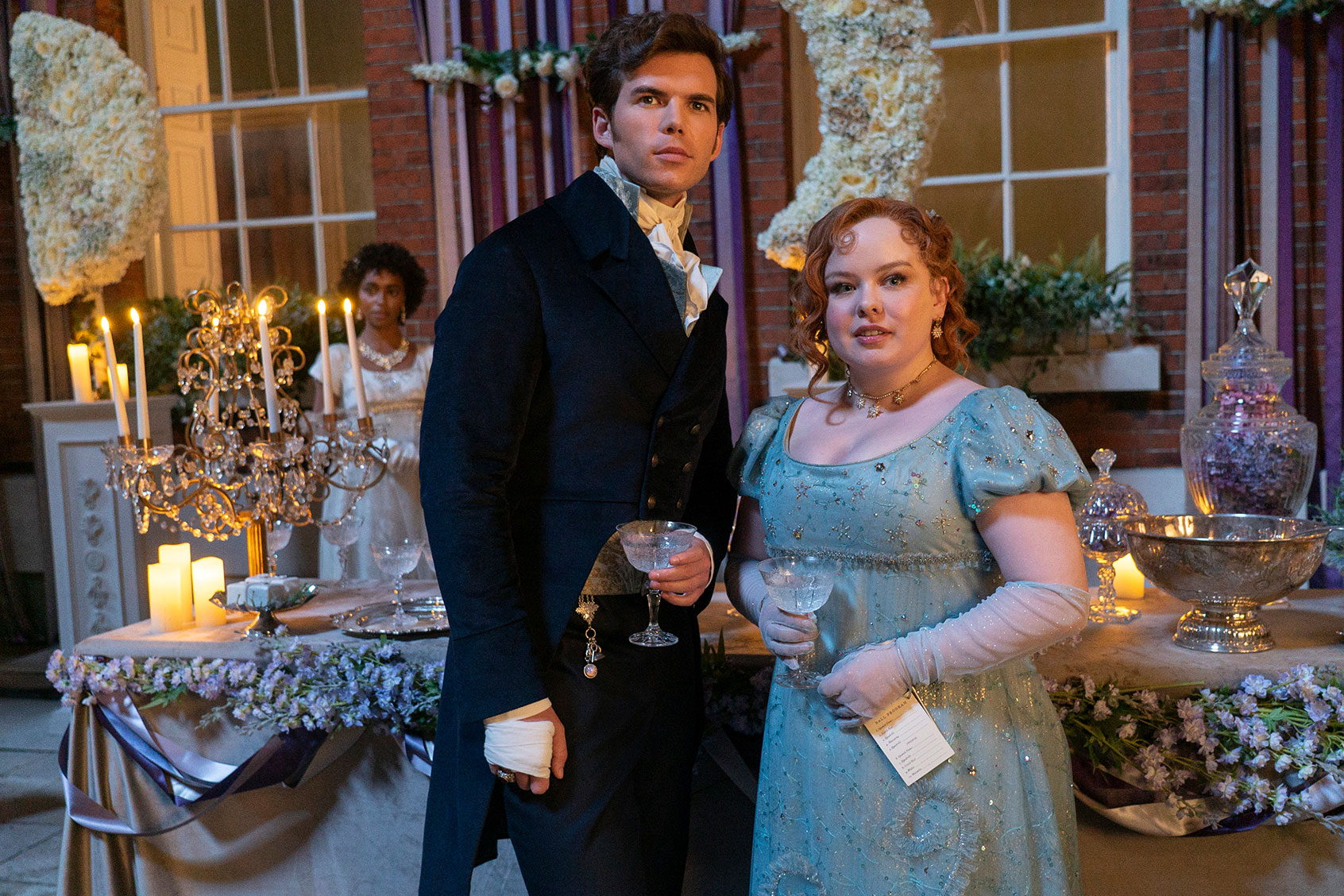
BridgertonLuke Newton as Colin Bridgerton and Nicola Coughlan as Penelope Featherington in "Bridgerton" (Liam Daniel/Netflix)

“Bridgerton” is all dessert, happy endings, and wish fulfillment. Placing the focus on Coughlan’s Penelope doesn’t change that.

Despite being the smartest woman in the ballroom, Penelope also wants love . . . which is where Colin Bridgerton (Luke Newton) fits in. The formerly geeky Colin is freshly returned from a trip around the continent with six-pack abs and a journal full of lusty adventures. Having been friend-zoned, Penelope doesn’t try to include herself in the pool of excited maids throwing themselves at him, enlisting him to play Pygmalion and provide her charm lessons instead. 

The first two seasons present success in this world within the framework of securing a marriage. The Bridgerton children have the extra benefit of finding love in their matches. But now we have Penelope. At a time when upper-class women could not aspire to snagging a husband and running a great house, she secretly plays a role in affecting social behavior. Doing so has earned her a clandestine nest egg which, in this world, means freedom. To a point.

We need your help to stay independent

Anyone demanding substance in their TV viewing probably isn’t watching this show. But those who do may be pleasantly impressed by the way the show that ignores the truth of racial stratification in early 1800s Britain is offering a few thoughts about the pride and benefit of work.

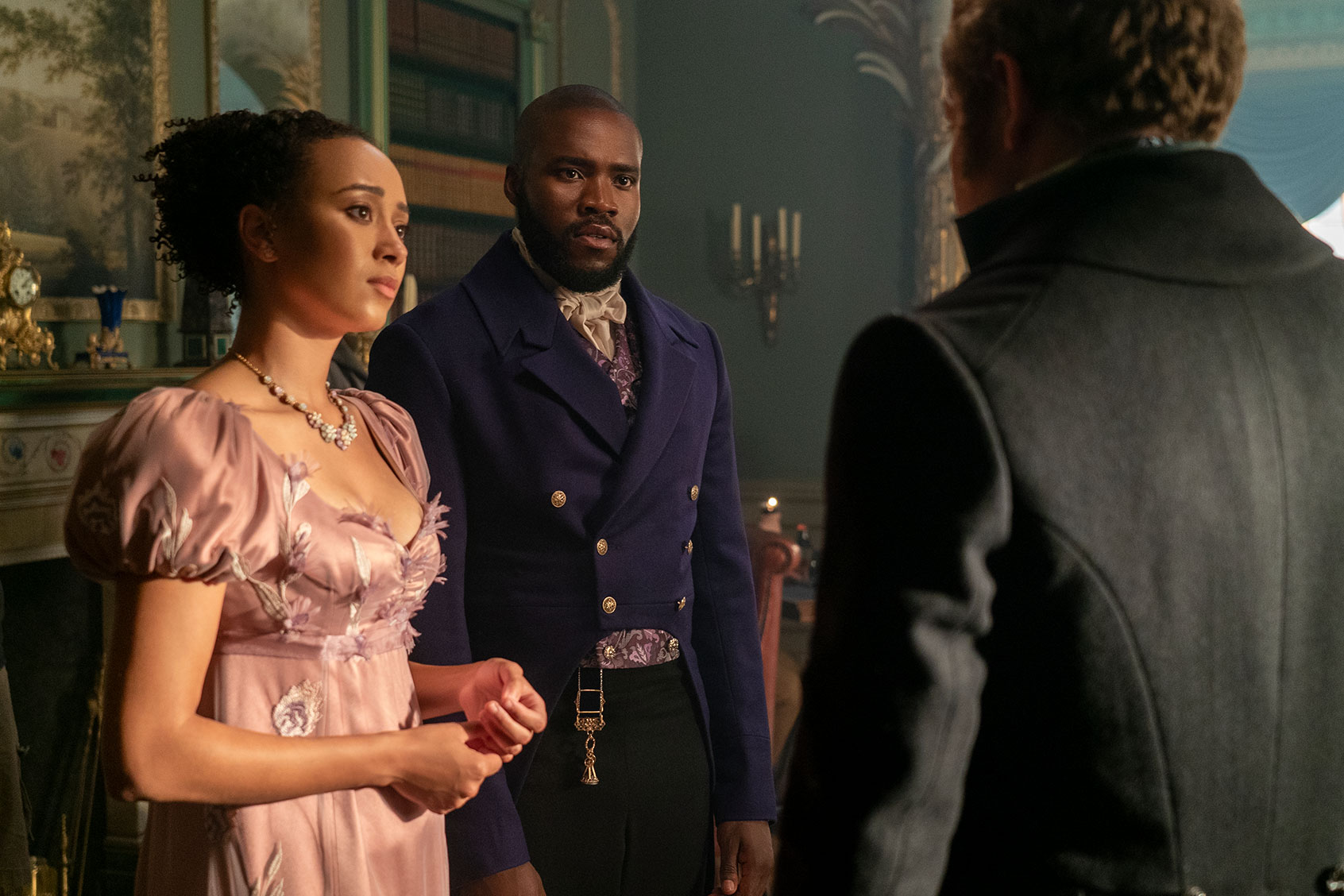
BridgertonEmma Naomi as Alice Mondrich and Martins Imhangbe as Will Mondrich in "Bridgerton" (Liam Daniel/Netflix)Quinn’s aristocracy is proudly idle, mainly devoted to managing inheritances and, among its women, dressing to impress – the working person’s dream. Season 3 approaches this from a new angle when boxer-turned-business owner Will Mondrich (Martins Imhangbe) and his wife Alice (Emma Naomi) are given a peerage, becoming Lord and Lady Kent. 

As they’re quickly educated on the privileges that come with nobility, they’re also coldly informed that people of their station do not hold jobs. Imhangbe’s bar owner has a problem with that, similar to the reason Penelope can’t bring herself to put away her pen. Still, her industry costs her the bosom friendship of Eloise Bridgerton (Claudia Jessie), who figured out Penelope’s secret identity in the second season and dropped her in favor of Cressida Cowper (Jessica Madsen).

Cressida lacks the currency Eloise and Penelope have in common, which is wit and talent. Penelope simply uses hers to make a profit and savor the stir each new issue creates among the ton’s well-heeled aristocracy. 

But power and independence aren’t necessarily the stuff of romance, which is why new showrunner Jess Brownell continues creator Chris Van Dusen’s tradition of spinning romantic complications into inevitable outcomes. 


Want a daily wrap-up of all the news and commentary Salon has to offer? Subscribe to our morning newsletter, Crash Course.


At this point in its lifespan the sameness of “Bridgerton” must be a comfort. The gorgeous costumes, the vivid interiors and lush floral arrangements, the towers of sweets and symphonic renditions of pop songs, all melt into the ultimate in unchallenging small-screen escapism.

Oh, did we mention the sex?  The latest episodes compensate for the relative chasteness of the second season with artful PG-13 sex scenes wherein the married Bridgertons (as in Jonathan Bailey’s Anthony and Simone Ashley’s Kate) are draped in bed sheets to leave the naughty bits to the imagination. The same is true of middle brother Benedict (Luke Thompson), who gets hot and randy with a merry widow. Instead, the raciest bits are assigned to Colin, who gets to writhe about with topless sex workers in a make-out session implying a threesome. 

But within that emotional focus Brownell dances, ever so gently, with conversations about a woman’s power, linking it to her ability to work and be self-sufficient. That Coughlan’s Penelope provides the muse for that rumination is especially satisfying owing to both the actor’s charisma and the character’s spirit.

The fourth episode ends in a cliffhanger that would seem to resolve in the type of soft landing this series excels at, except for the part about Penelope’s secret success. Previews of the season’s back half tease this as the main tension threatening her bliss, which was always in the cards. But knowing what we know about Lady Whistledown and a woman’s ability to find a path wherever she’s placed, regardless of her circumstances, one has to wonder whether love is more expensive than self-sufficiency . . . and the satisfaction of a job well and widely read.

The first half of "Bridgerton" Season 3 is streaming on Netflix. Part 2 debuts on Thursday, June 13.


“Fun mom” no more: Republican “parental rights” activist gets probation for giving vodka to teens

A former Pennsylvania GOP lieutenant governor candidate and leader in the state’s conservative school board movement, Clarice Schillinger, was sentenced to 12 months probation for a misdemeanor alcohol charge this week. That came after she pleaded no contest Wednesday to supplying alcohol to minors at her daughter’s 17th birthday party last fall, an event that police say ended with drunk adults assaulting intoxicated minors.

Schillinger, a self-styled advocate of "parental rights," spearheaded the right-wing Back to School PA political committee that spent over $500,000 on "flipping woke school boards." In the 2022 GOP primary, she ran for the lieutenant governor and lost.

 Bucks County Court of Common Pleas Jude Stephan Corr accused Schillinger, 37, that he found her behavior "offensive" because "you hold yourself out to be one thing in public and another behind closed doors, the Bucks County Courier Times reported.

“Mrs. Schillinger I hope you have learned a lesson from this," Corr added. "You are no longer going to be the fun mom.”

In October, Schillinger was charged in connection with the September 2023 party at her home. Police said that Schillinger, her boyfriend, Shan Wilson, and her mother each physically assaulted some of the teenagers as the night winded down, according to the affidavit outlining the charges.

Wilson and Danette Bert, Schillinger’s mother, were initially charged with simple assault and harassment but those charges were withdrawn. In December, they both pleaded guilty to disorderly conduct. 

At a January court hearing, three teenagers in attendance at the party described a wild evening that included Schillinger taking shots of vodka in the basement of her home and sitting on a boy’s lap. The teenagers said there was a fully stocked bar with New Amsterdam vodka and Malibu rum, with the games of beer pong using hard liquor instead. 

While one boy mentioned falling asleep in the bathroom after 15 shots, another described getting slammed into a wall by Wilson when he tried to intervene in a fight between Schillinger and her boyfriend. The third teen, who testified that Schillinger sat in his lap, claimed that the formerly "fun mom" punched him in the face when he tried to leave the party.

In February, Schillinger pleaded guilty to a separate charge of public drunkenness. But she insists her legal problems will not stop her from working "to help educate and protect other Pennsylvania moms and continue her support of Pennsylvania youth and schools,” according to a statement issued on her behalf by a public relations firm.

US aid is now entering Gaza through a temporary pier as the Biden administration warns of “famine”

Humanitarian aid began moving into Gaza on Friday using a temporary U.S.-built pier. Trucks delivered vital supplies to the besieged Palestinian enclave via the floating dock to avoid a possible famine as a result of significantly reduced aid coming from Israel-controlled points of entry

Aid trucks arrived in Gaza at about 9 a.m. local time (2 a.m. ET), U.S Central Command said on X, a day after the military completed construction on the pier.

In the next few days about 500 metric tons of aid will enter Gaza, the BBC reported. Hundreds of tons of aid arrived in Cyprus where it was screened and loaded onto commercial ships that will deliver it to the pier. U.S. vessels will also carry aid to the several hundred-meter-long pier, which is fixed to the beach in Gaza.

A State Department spokesperson said the U.S. was "deeply concerned about the reports indicating worsening conditions and imminent famine in Gaza."

Until two weeks ago, the main entry point for aid into Gaza was the Rafah crossing with Egypt, but Israeli forces have seized the Palestinian side as part of their ground assault into eastern Rafah. Hundreds of thousands of Palestinians have had to evacuate the city, which had previously been declared a “safe zone,” NBC News reported.

Although the Biden administration has extended its support to Israel, its frustrations over the humanitarian conditions in Gaza have grown. In particular, U.S. officials have said they oppose any full-scale invasion of Rafah and recently suspended a shipment of bombs that could be used in such an attack.

Israel has defended its operations in Rafah, saying they are currently “limited."

According to local health officials, over 35,000 people have been killed in Gaza since the Israeli assault launched following Hamas’ Oct. 7 attacks that had killed 1,200 people and resulted in some 250 people taken hostage.

“Needed a knockout”: The defense team damaged Michael Cohen, but legal experts say that’s not enough

Here's some of what we knew about Michael Cohen before Thursday's cross-examination: He used to work for Donald Trump, he's been caught lying, repeatedly, and he paid $130,000 to adult film star Stormy Daniels just before the 2016 election, back when he was still working for the former president.

Trump attorney Todd Blanche spent his first couple hours with Cohen establishing that he now hates his old boss. Blanche would read a mean and usually profane post on social media and Cohen would respond that yeah, it "sounds like" something he would have said. It was, by most observers' accounts, a dubious approach that didn't even touch the specific claims Cohen made on the stand that are relevant to the case: that he made that six-figure payment on Trump's behalf, with Trump's knowledge and with the understanding that he would be paid back in such a way that the hush money would not have to be disclosed on a campaign finance report.

That was the setup, at least. Then Blanche got to Cohen's record of lying, including in court. Trump's former personal attorney admitted to a federal judge that he engaged in tax evasion, a crime he was charged with alongside a campaign finance violation for the Daniels payment. But he later denied that he ever intended to evade taxes, a line he committed to on Thursday, claiming he only pleaded guilty to avoid his wife getting dragged in to his legal problems.

Then Blanche brought up another time Cohen lied: before Congress. From the defense perspective, this case of dishonesty  which Cohen admitted to in 2018  further undermines his credibility before jurors. Can you trust a man who swore an oath to tell the truth, but then didn't, to tell the truth today?

The problem for the defense in bringing up that episode is that Cohen was lying on Trump's behalf. According to court documents, he had sought to "minimize links" between a proposed Trump Tower project in Moscow and his boss, seeking "to give the false impression that the Moscow Project ended before 'the Iowa caucus … the very first primary,' in hopes of limiting the ongoing Russia investigations."

On the stand Thursday, Cohen said his statement to Congress, which minimized Trump's business dealings with Russia, was drafted with input from the president's own legal counsel.

"I worked with a joint defense agreement and we crafted the two-page document in order to stay on message — the message we all knew Mr. Trump wanted, including Mr. Trump’s attorney at the time," Cohen said.

We need your help to stay independent

Andrew Weissmann, a former prosecutor who worked on special counsel Robert Mueller's Russia investigation, argued that the exchange backfired. Cohen "had zero interest, personally," in lying about a Trump Tower, Weissmann told MSNBC, and effectively turned the tables on Blanche by revealing  or, at least, claiming to reveal  that his statement was drafted by a "joint defense committee that included the president of the United States' lawyer."

As with the Daniels pay off, Cohen "just directly implicated Donald Trump in that scheme," Weissmann said.

Again, though: Can you believe him? Charles Coleman, a former Brooklyn prosecutor, said that's not necessarily an issue. Before the cross examination, prosecutors themselves established that Cohen has made false statements; that he would do so for Trump, a man who employed him for a decade, may not be a reach for jurors.


Want a daily wrap-up of all the news and commentary Salon has to offer? Subscribe to our morning newsletter, Crash Course.


"I think that the prosecution has ample space to make this case not about Michael Cohen's testimony, given everything else that they've presented," Coleman said on MSNBC. For example, other witnesses, such as David Pecker and a pair of Trump Organization accountants, can help prosecutors show that there was a catch-and-kill scheme for negative stories about Trump, that Cohen was involved, and that he was indeed reimbursed for his troubles under the guise of legal retainer for which no corroborating document exists.

"You don't have to take it firsthand from him if you think that he's a scumbag or unbelievable," Coleman said.

Still, Thursday's cross-examination was probably the best day of the trial for Trump so far. For several hours, it was the prosecution's star witness on the defensive. At its most dramatic, Blanche was yelling at Cohen ("That's a lie!") about an October 2016 phone call. Cohen said he "believed" the call to Trump's bodyguard, Keith Schiller, was one where Trump himself explicitly signed off on the Daniels payment; Blanche asserted that it was actually about a series of harassing phone calls Cohen was complaining about earlier in the day.

Norm Eisen, a legal analyst with CNN, wrote in a commentary that the defense's cross examination started out rocky, exchanges such as that were both "powerful and effective." But he doubted it was enough at this point.

"The defense needed a knockout punch," Eisen wrote. They "didn't get one," he continued. "But it is a closer case."

The Trump legal effect: MAGA means his attorneys get attorneys

It's almost quaint now to look back at the shock we all felt at presidential candidate Donald Trump attacking the judge presiding in the Trump University fraud lawsuit as biased because he was Latino and Trump was talking about building a wall on the U.S.-Mexico border. Most Americans assumed that it would be impossible for such a disrespectful and, frankly, racist person to be elected in the 21st century but as it turned out that was just a preview of many such attacks to come. (Trump eventually settled that lawsuit for $25 million.) 

The running joke is that MAGA actually stands for Make Attorneys Get Attorneys.

Because Trump is such an inveterate lawbreaker, he has been the subject of many legal cases over the years and biographers and armchair psychologists have speculated that his strategy has always been to denigrate the judges and the prosecutors in those cases publicly. It is due to his father's advice to always fight with everything they have. But it's just as likely that he's following the advice of his mentor, the odious attorney Roy Cohn, who has been called "one of the most reviled men in American history." If anything, it was Cohn who pulled Trump out from under his father's shadow.

Trump's current troubles, and many in his past, stem from his weird relationship with Cohn, who taught him that there are no rules and no limits to what he can get away with if he has the chutzpah to challenge the very concept of reality itself, daring people to disbelieve his lies or risk destruction. It's the ethos of the bully and the gangster and despite all the drama in his life, Trump's gotten away with all of it, eventually becoming the most powerful man in the world with a full-fledged cult following of tens of millions of people. Cohn's students learned his lessons well.

The case unfolding in New York these past few weeks centers on another of Trump's lawyers, Michael Cohen, who Trump saw as a low rent Roy Cohn who would carry out the dirty business Trump feels entitled to engage in without accountability. Cohen eagerly took on the job of Trump's legal henchman, never questioning the ethics or morals of what he was asked to do and when asked how he could have done that he testified this week that he was "knee deep in the cult of Donald Trump." The trial has shown how much Cohen yearned for Trump's approval and how little Trump respected him in return. 

Cohen is a broken man today, loathed by the press with which he had a hostile relationship as Trump's hatchet man and humiliated before the entire country as a liar and a loser on the witness stand, even as he provides the testimony that corroborates evidence that his former boss broke the law. Michael Cohen paid a high price for his loyalty to Donald Trump.

We've also been reminded in this trial of another of Trump's lawyers, the former U.S. attorney and mayor of New York City, Rudy Giuliani. Once a front runner himself for the Republican presidential nomination, and esteemed by many as a hero for his leadership of the city after 9/11, Giuliani is now one of Trump's co-defendants in the Georgia election interference trial, has been held liable for $148 million for his defamation of two election workers, is facing disbarment and was recently fired from his radio show. This week he left the judge overseeing his bankruptcy aghast as he's completely non-compliant and has not followed any of the court's instructions. 

Rudy Giuliani has been completely destroyed by his loyalty to Donald Trump, which he maintains until this day despite the fact that Trump has not helped him financially and would have no power to pardon him if he were to become president again. All of this is a result of the dirty work he did on behalf of Trump's Big Lie.

We need your help to stay independent

Two other lawyers, Jeffrey Clark (who appeared at the courthouse in support of Trump on Thursday) and John Eastman have had their reputations shredded and their lives upended for willingly plotting with Donald Trump to overturn the election in 2020. Both men are co-defendants with Trump in the Georgia case. Eastman has since been disbarred and was fired from jobs at Chapman University and the University of Colorado over his involvement in the Jan. 6 plot. Loyal legal soldiers and Trump co-defendants Kenneth Chesebro and Sidney Powell have also been destroyed by their involvement with Trump's schemes. Like the others, they were thrilled to be part of Trump's nefarious plans but are paying the price for it today. 

Loyalty only goes one way with Trump. 

Giuliani, Eastman, Clark, Powell and Chesebro are all unindicted co-conspirators in the federal case against Donald Trump brought by special counsel Jack Smith. What an ignominious end to their legal careers. And it's all in service of Donald Trump.

Trump has more lawyers, of course, although it's not as easy to find them as it once was. Many can obviously see the writing on the wall. (The running joke is that MAGA actually stands for Make Attorneys Get Attorneys.) Luckily for the newer hires, the campaign is paying the bills these days so they don't have the same worries as Trump's previous attorneys about getting paid — yet. 


Want a daily wrap-up of all the news and commentary Salon has to offer? Subscribe to our morning newsletter, Crash Course.


Trump seems to be very attached to his attorney, Alina Habba, who defended him in the New York civil fraud trial and the E. Jean Carroll defamation cases, all of which Trump lost. They frequently travel together and she has attended the Manhattan hush money trial as moral support. Another of his favorites is Christina Bobb, recently indicted in the Arizona fake electors case and hired by the Republican National Committee to head their election integrity unit. 

His top lawyer in both the Mar-a-Lago and hush-money case, Todd Blanche, is a former prosecutor with a good reputation who has thrown his lot in with Trump entirely, moving his practice and his family down to Florida and is reportedly very "broey" with Trump. So far he hasn't broken any laws in his defense of Trump so his reputation and standing as a lawyer remain intact. 

Just as all those Republican officeholders who are making the ritual pilgrimage to that Manhattan Courthouse to demonstrate their fealty to Donald Trump as Michael Cohen once did, so too should his current lawyers. 

His first lawyer Roy Cohn taught Trump everything he knows about being a ruthless, belligerent, con man who could get away with murder with a take-no-prisoners, win at all costs attitude. And Trump loved him for it. But when Cohn got AIDS (and lied about it claiming it was liver cancer) the legal walls started closing in on him and he was finally disbarred, Trump abandoned his mentor without a second thought. Cohn's secretary Susan Bell told Michael Kruse of Politico that he "dropped him like a hot potato, he really did.”

If Trump would do that to his mentor and muse, he would do it to anyone. Just look at the broken human wreck named Rudy Giuliani. Loyalty only goes one way with Donald Trump. 

Viruses are doing mysterious things everywhere

Viruses are a mysterious and poorly understood force in microbial ecosystems. Researchers know they can infect, kill and manipulate human and bacterial cells in nearly every environment, from the oceans to your gut. But scientists don’t yet have a full picture of how viruses affect their surrounding environments in large part because of their extraordinary diversity and ability to rapidly evolve.

Communities of microbes are difficult to study in a laboratory setting. Many microbes are challenging to cultivate, and their natural environment has many more features influencing their success or failure than scientists can replicate in a lab.

So systems biologists like me often sequence all the DNA present in a sample – for example, a fecal sample from a patient – separate out the viral DNA sequences, then annotate the sections of the viral genome that code for proteins. These notes on the location, structure and other features of genes help researchers understand the functions viruses might carry out in the environment and help identify different kinds of viruses. Researchers annotate viruses by matching viral sequences in a sample to previously annotated sequences available in public databases of viral genetic sequences.

However, scientists are identifying viral sequences in DNA collected from the environment at a rate that far outpaces our ability to annotate those genes. This means researchers are publishing findings about viruses in microbial ecosystems using unacceptably small fractions of available data.

To improve researchers’ ability to study viruses around the globe, my team and I have developed a novel approach to annotate viral sequences using artificial intelligence. Through protein language models akin to large language models like ChatGPT but specific to proteins, we were able to classify previously unseen viral sequences. This opens the door for researchers to not only learn more about viruses, but also to address biological questions that are difficult to answer with current techniques.

Annotating viruses with AI

Large language models use relationships between words in large datasets of text to provide potential answers to questions they are not explicitly “taught” the answer to. When you ask a chatbot “What is the capital of France?” for example, the model is not looking up the answer in a table of capital cities. Rather, it is using its training on huge datasets of documents and information to infer the answer: “The capital of France is Paris.”

Similarly, protein language models are AI algorithms that are trained to recognize relationships between billions of protein sequences from environments around the world. Through this training, they may be able to infer something about the essence of viral proteins and their functions.

We wondered whether protein language models could answer this question: “Given all annotated viral genetic sequences, what is this new sequence’s function?”

In our proof of concept, we trained neural networks on previously annotated viral protein sequences in pre-trained protein language models and then used them to predict the annotation of new viral protein sequences. Our approach allows us to probe what the model is “seeing” in a particular viral sequence that leads to a particular annotation. This helps identify candidate proteins of interest either based on their specific functions or how their genome is arranged, winnowing down the search space of vast datasets.

Microscopy image of spherical bacteria colored bright green

Prochlorococcus is one of the many species of marine bacteria with proteins that researchers haven’t seen before. Anne Thompson/Chisholm Lab, MIT via Flickr

By identifying more distantly related viral gene functions, protein language models can complement current methods to provide new insights into microbiology. For example, my team and I were able to use our model to discover a previously unrecognized integrase – a type of protein that can move genetic information in and out of cells – in the globally abundant marine picocyanobacteria Prochlorococcus and Synechococcus. Notably, this integrase may be able to move genes in and out of these populations of bacteria in the oceans and enable these microbes to better adapt to changing environments.

Our language model also identified a novel viral capsid protein that is widespread in the global oceans. We produced the first picture of how its genes are arranged, showing it can contain different sets of genes that we believe indicates this virus serves different functions in its environment.

These preliminary findings represent only two of thousands of annotations our approach has provided.

Analyzing the unknown

Most of the hundreds of thousands of newly discovered viruses remain unclassified. Many viral genetic sequences match protein families with no known function or have never been seen before. Our work shows that similar protein language models could help study the threat and promise of our planet’s many uncharacterized viruses.

While our study focused on viruses in the global oceans, improved annotation of viral proteins is critical for better understanding the role viruses play in health and disease in the human body. We and other researchers have hypothesized that viral activity in the human gut microbiome might be altered when you’re sick. This means that viruses may help identify stress in microbial communities.

However, our approach is also limited because it requires high-quality annotations. Researchers are developing newer protein language models that incorporate other “tasks” as part of their training, particularly predicting protein structures to detect similar proteins, to make them more powerful.

Making all AI tools available via FAIR Data Principles – data that is findable, accessible, interoperable and reusable – can help researchers at large realize the potential of these new ways of annotating protein sequences leading to discoveries that benefit human health.The Conversation

Libusha Kelly, Associate Professor of Systems and Computational Biology, Microbiology and Immunology, Albert Einstein College of Medicine

This article is republished from The Conversation under a Creative Commons license. Read the original article.

No wonder Republicans are afraid of a debate — Donald Trump is barely holding it together at trial

Donald Trump has tried to taunt President Joe Biden by claiming he's ready for a presidential debate "anytime, anywhere." The gambit left him little choice but to immediately accept when the Biden campaign offered debate dates in June and September, and terms like not having an audience and allowing real journalists to moderate. But within mere hours it became clear that Trump and the rest of the GOP already regretted the decision.

Pretty quickly, Trump tried to change the terms of the debate, pretending that it will be held on Oct. 2 on Fox News. The Biden campaign swiftly rejected this lie, accusing Trump of "playing games," and pointing out that Trump frequently talks big but then ends up "pulling out at the last minute, or not showing up at all." 

It's not surprising that the Biden camp thinks there's a very high chance Trump freaks out in a memorable way that could cut through all the voter inattention that's helping Trump in the polls right now.  

It's true, of course. Trump has a habit of promising that he'll do bold things and then backing out, whether it's his empty promises to testify at his various trials or his false claims he'll release policy proposals in a week or two. (It's been over a month of silence, for instance, since he promised he would release an abortion platform in "14 days.") In 2020, still burned by his terrible first debate with Biden, Trump refused to show up at the second and held an ego-flattering rally instead. 

What is already clear is that it's not just Trump who is worried, but the larger Republican party and right-wing media ecosystem. They're already spinning Trump's faceplant even before it happens.

Within hours of Trump agreeing to debate, Republican National Committee co-chair Lara Trump was raving on Fox News that it's "rigged so heavily in Joe Biden’s favor, but everything always is." Sen. Mike Lee, R-Utah, Trump acolyte Vivek Ramaswamy, and other MAGA pundits denounced the debate as a trap. Peter Doocy of Fox News tried to frame the debate request as an effort to "change the subject after some really bad polling." On Fox News, a host made a pretzel logic claim that Biden's request to debate Trump was "a ploy by Biden and company to avoid actually debating." 


Want more Amanda Marcotte on politics? Subscribe to her newsletter Standing Room Only.


But it's Trump who is casting around for excuses to back out, such as objecting to Robert Kennedy Jr. being included or excluded, to cover all bases. 

What Republicans are worried about isn't mysterious. To quote David Rothkopf in the Daily Beast, Trump "is clearly addled and losing his ability to speak in public." He regularly slurs his words or praises fictional serial killers. When asked about Gov. Kristi Noem, R-S.D., shooting a dog in the head, he shrugged it off: "We all have bad weeks." 

Trump's criminal trial in Manhattan right now really shows how much Republicans suspect their presidential nominee is barely holding it together. Trump continues to sleep through much of the trial, which seems like an odd choice since he gets so mocked by the press for it. His defense team may be taking my advice that a sleeping Trump is better than a tantrum-throwing Trump. As Maggie Haberman of the New York Times reports, closing his eyes and ignoring the trial is "how he tries to just basically stay calm," which often appears to lead to him falling asleep. 

The steady stream of Republican politicians showing up at the trial also appears to be a strategy for keeping Trump from flying off the handle in court. Many of them come prepared with statements echoing the threatening rhetoric Trump wishes he could aim at the jurors, witnesses, court staff and their families, but can't because he's under a gag order. As legal analyst George Conway suggested to MSNBC, this is likely the defense team "trying to maintain his psychological composure" by "bringing the people up there to show a fealty to him, to quench his narcissistic thirst." 

Being human pacifiers for the volatile defendant is swiftly becoming a major Republican priority. Even the ongoing House Republican effort to smear Biden with phony "oversight" hearings got postponed so members of Congress could go smear witnesses and court staff into microphones in New York City instead. Rep. Lauren Boebert, R-Colo., couldn't be bothered to help her teenage son at his court hearing, yet rushed to Trump's side this week.

They aren't doing this out of any sincere love for Trump the person, who can't even get most of his actual family to show up. But it tracks with what Conway said: Republicans are afraid of Trump blowing his top in court, as he frequently did in the E. Jean Carroll trial. Due to the higher profile nature of this trial, that could damage their party's chances of winning the White House in November. So they are offering themselves up to be teddy bears he can cling to, telling himself that the people support him, even as barely any regular people have shown up to demonstrate in his favor at the courthouse. 

These are the herculean efforts Republicans have to go to in order to keep Trump from lashing out in a situation where he's required to sit down and shut up. In a debate, he'll be expected to speak and respond to what is likely going to be cutting criticism from Biden, all without a crowd of his mindless supporters cheering at every turn. It's not surprising that the Biden camp thinks there's a very high chance Trump freaks out in a memorable way that could cut through all the voter inattention that's helping Trump in the polls right now.  

It's worth remembering how badly Trump did in the first 2020 debate. Biden, knowing Trump can't turn down praise from anyone, baited Trump about his support from white nationalists and other hate groups, which caused Trump to petulantly call on the Proud Boys to "stand back and stand by." (Infamously, they did, treating his later call to be "wild" on January 6 as what is almost certainly was, an order to attack the Capitol.) Trump also defended kidnapping children from immigrant families, repeatedly insisted the thousands of people dying weekly from COVID-19 was no big deal, and started the process of the coup with both his orders to the Proud Boys and lying about election interference. It was such a devastating failure that it's not a surprise that Trump canceled the next debate.

We need your help to stay independent

Trump is far worse now, even to the point where he forgets what he's talking about halfway through sentences and literally babbles to fill the time. 

The problem is the only people who know this are the kinds of people who already follow the news. Such people, as any political scientist will tell you, are stalwart partisans who already know who they are going to vote for. Either they're Democrats who just see this as confirming evidence Trump is unfit or Republicans who, like the politicians who are rallying at the courthouse to support Trump, have decided they don't care so long as they win power. The people who most need a reminder of how unfit Trump is for office are low-information swing voters who barely know Trump is a criminal defendant. 

The hope is that a debate, being one of the few high-profile events low-information voters actually might pay some attention to, can break through this wall of ignorance. Trump making a fool of himself, throwing a tantrum, or forgetting how to speak would all be fodder for ads and videos to distribute on social media. Trump's campaign and defenders know this, which is why they're worried. Trump himself probably knows it on some level, which is why he's already tossing out a bunch of irrelevant objections to the debate, looking for a pretext to cancel. 

Trump’s testing out a new campaign strategy: horror politics

Donald Trump and his propagandists are masters of the politics of pain and horror. They intimately know the MAGA people and their pain points, anxieties, wants, and insecurities. In that way, Trump and his agents are like a real-life version of horror movie monsters. 

Contrary to what too many centrists and liberal progressives and orthodox leftist types fail to understand, politics and political decision-making are fundamentally about emotions. Rationality and purely material concerns are often secondary. Trump and his agents understand this dynamic as they use powerful emotional appeals to great effect to advance their reactionary and fascist movement to end multiracial pluralistic democracy. 

In my chronicling of Donald Trump’s fundraising emails and his larger media and communications strategy, I recently highlighted a series of emails from the aspiring dictator that used ghoulish and horrific language. In that essay, I observed that Trump and his propagandists had hit a new low. That new low has quickly gone even lower. In a series of fundraising emails sent last week, Trump wallowed further in the politics of pain, paranoia, and horror.

In a fundraising email about his hush-money trial in New York that was sent out last Wednesday, Trump announced: “THAT FILTHY JUDGE WANTS ME RIPPED TO SHREDS!”

Trump then continued with his conspiracism about liberal megadonor George Soros funding some vast plot against him, fantasies which are drawn from the antisemitic and white supremacist "Protocols of the Elders of Zion" and the so-called great replacement theory:

The corrupt Soros-backed prosecutors just set our country on fire with their vicious lies!

The rest of Trump’s horrifically violent fundraising email reads:

Democrats will BURN AMERICA TO THE GROUND just to SEE ME BEHIND BARS.

If we don’t make a MASSIVE stand – right here, right now – America as we know it will CEASE TO EXIST.

So before I’m forced back into court tomorrow, I’m calling on EVERY TRUMP-LOVING PATRIOT to chip in and join me in calling for a MISTRIAL!

These depraved savages won't stop until my family is DESTROYED and the MAGA movement is RIPPED TO SHREDS.

But as long as I have YOU by my side, not even their weaponized courts can take me down!

No matter what they do to me, I would proudly sacrifice myself to Save America anyday.

I’LL NEVER SURRENDER OUR COUNTRY TO CROOKED JOE AND THE RADICAL LEFT.

In a fundraising email sent the next day, Trump invoked Patrick Henry and announced that he is facing death and has been robbed of his rights because he is finally being held somewhat accountable for his decades-long crime spree:

GIVE ME LIBERTY OR

GIVE ME DEATH!

TRUMP NEEDS YOU

Friend, I’m fighting for my life in Biden’s corrupt court.

I’ve been stripped of my constitutional rights.

I’ve been forced to sit fully gagged while Biden’s cronies spread vicious lies.

I’ve even been threatened with JAIL if I don’t bow down to the AMERICA-HATING leftists.

ENOUGH IS ENOUGH, Friend.

STAND WITH TRUMP

I’m making my FINAL STAND right here, right now, and I need to know you’re with me.

Before the day ends, I need 1 MILLION PATRIOTS to take my Official Survey and send the radical left Democrats a powerful message that WE WILL NEVER SURRENDER!

MAKE AMERICA GREAT AGAIN!

Of course, these and other statements by Trump and his agents are lies and gross distortions of fact and reality.

The purpose of Trump’s emails and other incendiary language is to further radicalize his MAGA people into committing violence because they have been told that they are supposedly facing an existential threat from their imagined “enemies” in the Democratic Party. Moreover, Trump’s lies that he is being “ripped to shreds” and basically held hostage as he is “gagged” and that the “left” and “The Democrats” are “depraved savages” is a type of projection and promise of what he and his forces will do to his and their perceived enemies if he wins the 2024 election. His use of “depraved savages” is thinly veiled code for the Black prosecutors, like Fulton County DA Fani Willis and Manhattan DA Alvin Bragg,  who are trying to hold Trump accountable.

Donald Trump’s horror politics strategy is not erratic, random, or a sign of desperation. Trump and his agents would not be deploying such rhetoric if they did not possess data that suggests it is effective. In 2016, for example, Trump’s son-in-law, Jared Kushner, successfully used viewership data about the hit TV show “The Walking Dead” to target political ads for maximum efficacy: 

Kushner's crew was able to tap into the Republican National Committee's data machine, and it hired targeting partners like Cambridge Analytica to map voter universes and identify which parts of the Trump platform mattered most: trade, immigration or change. Tools like Deep Root drove the scaled-back TV ad spending by identifying shows popular with specific voter blocks in specific regions—say, NCIS for anti-ObamaCare voters or The Walking Dead for people worried about immigration. Kushner built a custom geo-location tool that plotted the location density of about 20 voter types over a live Google Maps interface.

Soon the data operation dictated every campaign decision: travel, fundraising, advertising, rally locations—even the topics of the speeches. "He put all the different pieces together," Parscale says. "And what's funny is the outside world was so obsessed about this little piece or that, they didn't pick up that it was all being orchestrated so well."

We need your help to stay independent

The consultants and strategists who are using fear and horror to mobilize and engage Donald Trump’s followers (and to demobilize and exhaust those Americans who oppose the corrupt ex-president and the fascist MAGA movement) appear to possess an expert understanding of human psychology. In a 2023 interview with the American Psychological Association, behavioral scientist Coltan Scrivner shared these insights about the psychology of fear and morbid curiosity:

[I]n some of the studies I’ve done, we found that people will actually suppress their fear if they get too scared. So they’ll cover their eyes, they’ll imagine that it’s not real, they’ll sort of avert their attention to something else or cover their ears. They’ll do things to kind of dull the sensations. And if they’re not scared enough, they’ll do things to actually heighten the sensations. They’ll immerse themselves a bit more. They’ll look at the scare actors in a haunted house, or they will let themselves scream when they’re feeling afraid. And so people do kind of regulate their arousal and regulate their immersion to hit this kind of sweet spot when they’re watching horror movies and going through haunted houses and even listening to true crime podcasts.

The challenge for the 2024 Trump presidential campaign will 1) be how to sustain and calibrate an optimal amount of discomfort, fear, and horror among their MAGA base and then 2) how to use that strategy and energy to win over more voters in what early polls show will be a very tight election.

In a preview of the horribleness that is to come in the 2024 election, at a rally last Saturday in New Jersey, Donald Trump demonstrated his horror politics by comparing non-white immigrants, migrants, and refugees and the “border crisis” to the fictional serial killer Hannibal Lecter.

 USA Today reports:

“Has anyone ever seen ‘The Silence of the Lambs?’” Trump asked the crowd of supporters at the rally. “The late, great Hannibal Lecter. He’s a wonderful man.”

The psychotic serial killer is known for eating his victims in the Oscar-winning film.

Trump continued, “He often times would have a friend for dinner. Remember the last scene? ‘Excuse me, I’m about to have a friend for dinner,’ as this poor doctor walks by. ‘I’m about to have a friend for dinner.’ But Hannibal Lecter. Congratulations, the late, great Hannibal Lecter…”

In the same breath, Trump went on to make familiar attacks on migrants, saying, “We have people that are being released into our country that we don’t want in our country….”

It’s unclear what line of thinking made Trump invoke the fictional mass murderer – or whether he was encouraging his followers to act like Hannibal Lecter or referencing some flesh-eating bogeyman from south of the border. 

Donald Trump has repeatedly referenced Hannibal Lecter and used other language and imagery of depraved and inhuman savagery to describe non-white migrants, immigrants, and refugees. In combination with his repeated channeling of Adolf Hitler and the Nazis with his threats and promises to purify the blood of the nation by purging the human “vermin," Donald Trump is encouraging eliminationism and genocide against those human beings he and the American neofascists and the broader right-wing have targeted.

In a new essay here at Salon, Bob Hennelly offered the following warning about Trump’s rally in New Jersey and the horror politics and bacchanal of hatred the dictator in waiting is offering to his MAGA faithful and other followers:

Some Democrats and the corporate news media continue to underestimate the power of former President Donald Trump’s racist and anti-immigrant messaging. Tens of thousands of his supporters showed up at his rally in Wildwood, New Jersey over the weekend, the Associated Press reported. During Trump’s criminal trial in Manhattan, MSNBC hosts have repeatedly used the lack of the physical presence of pro-Trump demonstrators as evidence that our MAGA fever has broken. Wildwood indicates it’s still very much with us.

The Democrats, members of the news media who practice pro-democracy journalism, responsible members of the political class, and other opinion leaders who believe in the country’s democratic culture and institutions must directly confront Donald Trump and his agent’s sadism and horror politics strategy if they are to defeat Trumpism and neofascism not just in the 2024 election but in the years beyond. Ignoring Trump and his agents' increasingly violent and fascist threats and promises or mocking their horror politics as something just “weird” and “creepy” is to normalize and therefore empower such a strategy.

Human monsters are very real. Donald Trump and his propagandists and other agents know that frightened and terrified people are capable of doing very horrible things – and they are willing to do everything in their power to encourage such an outcome here.  

Republicans want a database of pregnant people. In many ways, abortion surveillance is already here

Last week, leading up to Mother’s Day, Sen. Katie Britt (R-Ala.) introduced the More Opportunities for Moms to Succeed (MOMS Act), a bill that would create a federal database for pregnant people nationwide.

Specifically, the database would be called “pregnancy.gov,” and provide resources related to pregnancy — including adoption agencies and pregnancy care providers — but it excludes abortion-related services. In fact, the proposed legislation forbids anyone who “performs, induces, refers for or counsels in favor of abortions” to be included.

In addition to excluding abortion providers, users could “take an assessment through the website” and provide consent to have the user’s information shared with the government who might conduct outreach via phone or email to provide additional support. The bill would also provide grants to crisis pregnancy centers and apply child support obligations during pregnancy, signaling support and further acceptance of fetal personhood. 

The news sparked public outrage as concerns were raised about how it could be used to collect data on and monitor abortion seekers. A spokesperson for Britt has publicly denounced these concerns, stating that the website wouldn't require users to log in to the site and that it wouldn’t ask for a person’s pregnancy status.

This news comes a couple weeks after a report surfaced that a man in Texas submitted a petition to investigate his ex-partner’s out-of-state abortion. In 2023, another Texas man attempted to sue three women for wrongful death, claiming they allegedly helped his now ex-wife end her pregnancy by undergoing a medication abortion via the abortion pill.

As Dr. Carole Joffe, a professor in Advancing New Standards in Reproductive Health (ANSIRH) at the University of California–San Francisco, told Salon in 2022, a post-Roe landscape would likely have “less injuries,” as self-managed abortions are safer than ever thanks to abortion medication  — but it will come with "more surveillance.” The culmination of recent events show in many ways abortion surveillance is already here. 

Digital communications with friends and family, internet searches, data shared with mobile apps and locations can become evidence used in prosecutions against women obtaining abortions.

“In a world in which abortion is legal everywhere, there were still dangers because we saw various prosecutions before Dobbs,” David S. Cohen, a professor of law at Drexel Kline's School of Law, told Salon, mentioning the 2022 case in Nebraska when Meta turned over chats between a mother and her daughter in an investigation of an abortion. “But now in a world where abortion is illegal in 14 states, highly restricted and another six or seven states, there's just that more of a possibility for legal consequence if the information becomes public.”

As explained by If/When/How’s 2023 report, pro-abortion advocates have been long concerned about digital surveillance. Digital communications with friends and family, internet searches, data shared with mobile apps and locations can become evidence used in prosecutions against women obtaining abortions and those helping people obtain abortions. 


Want more health and science stories in your inbox? Subscribe to Salon's weekly newsletter Lab Notes.


“With people increasingly relying on technology in day-to-day life and the proliferation of artificial intelligence (AI), digital traces left on websites and personal devices such as cell phones and computers expand private parties and state actors’ ability to gather, track and share information about users,” the report stated. “Whether abortion laws target providers, aiders and abettors, or women themselves, the criminalization of abortion necessarily involves the surveillance of women.”

Cohen said digital data is available for people who seek it out, but that he doesn’t think it’s being “sought out a lot.”

“We have a few lawsuits in Texas, like I mentioned, even though I think it seems like it's too easily attainable, the information, it does not seem like it's being used right now, in any kind of high-volume way to harm people,” he said. “But that could change and it’s scary to think of possibilities.” 

"Whether abortion laws target providers, aiders and abettors, or women themselves, the criminalization of abortion necessarily involves the surveillance of women."

As Axios previously reported, period tracking apps have been of high concern. “There really aren't any real safeguards against the ways police can weaponize this data against users, when they're actively investigating a crime in a world where abortion increasingly is criminalized," Albert Fox Cahn, founder of the Surveillance Technology Oversight Project, told Axios.

Both California and Washington have data shield laws that include provisions to prevent companies from turning over data requested by law enforcement from abortion ban states for cases related to abortions. As researchers at Brookings noted in a recent report, such shield laws could provide one significant hurdle if law enforcement attempts to investigate and prosecute women who have abortions. 

Dr. Josie Urbina, an OBGYN and complex family planning specialist at the University of California-San Francisco, told Salon if she had patients in a state with abortion bans or restrictions, she wouldn’t advise that they use period apps. 

“We only know about the cases that have been highlighted in the news,” Urbina said, adding that surveillance is happening in marginalized communities and these stories might not be making news headlines. “We know that there's criminalization of pregnant people occurring that nobody knows about — that is definitely happening — and it's happening to people in marginalized communities, who often get forgotten about and that's why we haven't been seeing them in the news.”

When asked about Britt’s proposed MOMS Act, Cohen said any kind of identifiable information about someone during pregnancy that's stored by the government could be weaponized against them. And there are already plenty of examples when the government knows people are pregnant or starts monitoring anything related to that, and then using that data to police people.

"We've seen states like South Carolina and Alabama and Tennessee take action against pregnant people in large numbers because they are doing things that they think will damage a pregnancy.” he said. “That kind of information could be weaponized against someone who's pregnant.”

Urbina agreed. 

We need your help to stay independent

“Anything that mentions pregnancy without mentioning abortion is completely not supportive of the paradigm of full spectrum sexual and reproductive health care, and that's what people like me, like OBGYNs get trained to offer,” Urbina said. “We would be doing a disservice to the American people if abortion isn’t included as an option and in the conversation. And the fact that these grants would be given to so-called crisis pregnancy centers, it's abhorrent.”

Urbina said crisis pregnancy centers are known for preying on pregnant people and providing them with misinformation. 

If people want to protect themselves from surveillance, Urbina recommended using one of the encrypted period tracking apps like Euki, which is available in English and Spanish.

Samuel Alito displayed “stop the steal” symbol at home, days after Jan. 6

A bombshell report from the New York Times revealing that Justice Samuel Alito displayed a “stop the steal” symbol outside of his home, just days after January 6th, is reigniting fears that the conservative majority of the court could cast democratic norms aside in future Trump legal battles.

An upside-down flag, a symbol of a movement to reject the 2020 election, hung outside Alito’s Virginia home on Jan. 17, 2021, per the Times report, weeks before Alito dissented in a 6-3 ruling to uphold Pennsylvania’s election of Joe Biden.

In a statement to the Times, Alito didn’t disavow or reject the message that the symbol sent, instead blaming his wife, Martha-Ann Alito, for placing the flag “in response to a neighbor's use of objectionable and personally insulting language on yard signs."

Experts say that Alito having the display at all constitutes an ethics violation, including Amanda Frost, a law professor at the University of Virginia, who said the appearance of partiality was problematic for a Supreme Court justice.

“He shouldn’t have it in his yard as his message to the world,” Frost told the Times. “[It’s] the equivalent of putting a ‘stop the steal’ sign in your yard, which is a problem if you’re deciding election-related cases.”

Alito’s wife isn’t the first to publicly subvert the results of Joe Biden’s election: Ginni Thomas, Justice Clarence Thomas’s wife, engaged in efforts to pressure Republican state lawmakers to replace state electors for Biden.

Justices Alito and Thomas each have wives who have challenged the results of the 2020 election. Alito and Thomas, along with three Trump-appointed justices, could form a majority on any number of cases involving Trump.

This isn’t the first potential conflict of interest Martha-Ann has created for Alito, previously leasing land to an oil company while the Justice mulled major rollbacks to environmental protections, according to The Intercept.

A code of conduct on the nine justices, who serve lifetime terms, faced scrutiny for its lack of enforcement mechanisms. Alito argued last year that Supreme Court justices aren’t able to be held to an ethics standard at all, calling the stance a “controversial view.”

RFK Jr. running mate, Nicole Shanahan, throws an $8 million lifeline to campaign

Nicole Shanahan, Robert F. Kennedy Jr.’s running mate in his long-shot independent bid for president, gave a boost to the campaign via an $8 million donation.

“This isn’t just about funding our own campaign,” Shanahan said in a Thursday statement. “We want to liberate presidential elections from the grip of the existing two-party duopoly, and revitalize American democracy.” 

The donation will go towards getting the Kennedy name on the ballot, with the campaign only officially in the running in six states. The campaign is far below the threshold of eligibility in states totaling at least half of the electoral college vote needed to participate in the upcoming presidential debates between Joe Biden and Donald Trump, much to Kennedy’s chagrin.

Shanahan, the ex-wife of Google cofounder Sergey Brin, sparked controversy this year, parroting anti-vaccine talking points on X. Kennedy doubled down on his vice presidential nominee’s comments when pressed in a recent interview with Bill Maher, himself an avowed vaccine skeptic.

The vice presidential candidate has spouted conspiracy theories, including that cell phones release poisonous “electromagnetic pollution,” which could hurt the Kennedy campaign, but her deep pockets may have been a factor in Kennedy’s pick.

Shanahan and Kennedy, who lag far behind Biden and Trump in the polls, had around $5.1 million in cash on hand per an April filing. The figure represents a fraction of the Biden campaign’s $192 million and the Trump campaign’s $93.1 million in cash on hand, per Axios and Reuters.

Shanahan, who purchased a $4 million dollar Super Bowl ad for Kennedy before she joined the ticket, announced the donation at a Wednesday event featuring several comedians, with Kennedy’s wife, Cheryl Hines, notably absent as she reportedly doesn’t want to get too involved in the campaign.

Murderer who called BLM protestors “monkeys” pardoned by Abbott

Governor Greg Abbott on Thursday pardoned convicted killer Daniel Perry, who shot a protestor during a Black Lives Matter demonstration.

Perry, who in 2020 murdered 28-year-old Black Lives Matter protester and Air Force veteran Garrett Foster, was released shortly following the order, which came after a parole board recommendation and significant far-right support for the convicted killer. 

Perry killed Foster — who walked up to Perry’s car with a permitted firearm to warn him, as he allegedly attempted to drive his car into a crowd of protestors — after sending scores of racist text messages, including one noting that he “might have to kill a few” demonstrators, and another calling Black Lives Matter demonstrators “monkeys.”

Yet, Abbott instructed his state’s parole board to justify a commutation of Perry’s sentence over a year ago, as Texas law requires a recommendation from the body. Per the three-member parole board appointed by the Texas governor, the 25-year sentence and a ban on gun ownership were overturned unanimously.

“Texas has one of the strongest 'Stand Your Ground' laws of self-defense that cannot be nullified by a jury or a progressive District Attorney,” Abbott said in a statement announcing the release of Perry. “I thank the Board for its thorough investigation, and I approve their pardon recommendation."

Perry’s self-defense argument, which failed to convince jurors after eyewitness testimony that Foster didn’t draw a weapon before being killed, and evidence that Foster had the safety on and no ammunition in the gun was presented by prosecutors, was the crux of the parole board's findings. 

Perry isn’t the first extremist to walk free after killing demonstrators. In 2021, Kyle Rittenhouse was found not guilty of homicide after killing two people in Kenosha, Wisconsin, claiming self defense. Rittenhouse, 17 at the time of the killings, rode the national attention from the killings into a de-facto position as a defender of right-wing violence, calling for Perry’s pardon.

“Political stunt”: House Judiciary moves to hold AG Garland in contempt

In yet another political attack on Biden cabinet officials, House Republicans are advancing a motion to hold Attorney General Merrick Garland in contempt of Congress

The 18-14 House Judiciary Committee vote along party lines comes as the Biden Administration moved to keep audio recordings from Special Counsel Robert Hur’s conversation with the president under executive privilege. Per the GOP, Garland, a one-time nominee for the Supreme Court, should have handed over the audio despite executive privilege. 

House Democrats, and some Republicans, call the move a nakedly partisan attempt to make recordings available for campaign ads, as a transcript and final report from Hur were already made available.

“I think it’s a political stunt,” former Republican Rep. Ken Buck told CNN, adding that Garland turned over the transcript of Hur’s interview despite pressure from the left. “They released the transcript. They have the information. They’re just looking for something for political purposes.” 

House Republicans, led by Chair Jim Jordan, R-Oh., say the audio is necessary to assess President Biden’s role in storing classified documents to further an impeachment inquiry into Biden.

“Transcripts are often imperfect, especially to convey the timing of question and answer and disfluencies of a witness, or hesitations, among other things. All of that is demeanor evidence,” Republican Representative Dan Bishop of North Carolina said in a Judiciary hearing, per The Hill.

The 44-seat body was a dozen members short in today’s vote, in part because Congressmen Matt Gaetz, R-Fla., and Andy Biggs, R-Ariz. were absent, supporting Donald Trump in his criminal trial.

Before the vote can be brought to the floor, it needs to be passed by the House Oversight Committee, which pushed its own consideration of the motion back due to the absence of several Republican members, a move which some Democratic lawmakers bashed.

“I don't think that anything could animate the phrase “do nothing Congress” more than missing votes and canceling hearings to go up and be a spectator at your cult leader's trial,” Rep. Eric Swalwell (D-Calif.) said in the hearing.

Ultimately, the Garland-led Department of Justice would oversee the charges if passed, meaning the move would ultimately have little consequence.

8 shocking “Ashley Madison: Sex, Lies & Scandal” facts from Netflix’s cheating website doc

For years, the tagline "Life is short. Have an affair," was a tempting way to lure people in already committed relationships to use the extramarital affair dating website Ashley Madison. For others devoted to their committed relationships, it was their worst nightmare.

At the beginning of the dot com boom in 2001, Ashley Madison became a space where married people or people in relationships could indulge in their secret fantasies outside of their monogamous relationships. Well, that is until the site itself, which reportedly currently has 80 million users worldwide, experienced a targeted hack that resulted in a catastrophic data leak in 2015. The safety and anonymity promised to Ashley Madison users were compromised when their data was exposed to the world. In turn, people gathered and compiled lists of who used the website, publicly shaming users for their infidelities.  

The latest Netflix docuseries, "Ashley Madison: Sex, Lies & Scandal" highlights how the website transformed from a low-budget infidelity dating website to a certified cultural pariah and controversial household name that revolutionized the way people in the modern dating world had affairs. The docuseries also details the experiences of former Ashley Madison employees, people who had used the dating service and the fallout from the data leak.

Here are some of the most revealing details from "Ashley Madison: Sex, Lies and Scandal":

1
Christian influencers Sam and Nia's part in the scandal
Ashley Madison: Sex, Lies & ScandalAshley Madison: Sex, Lies & Scandal (Netflix)
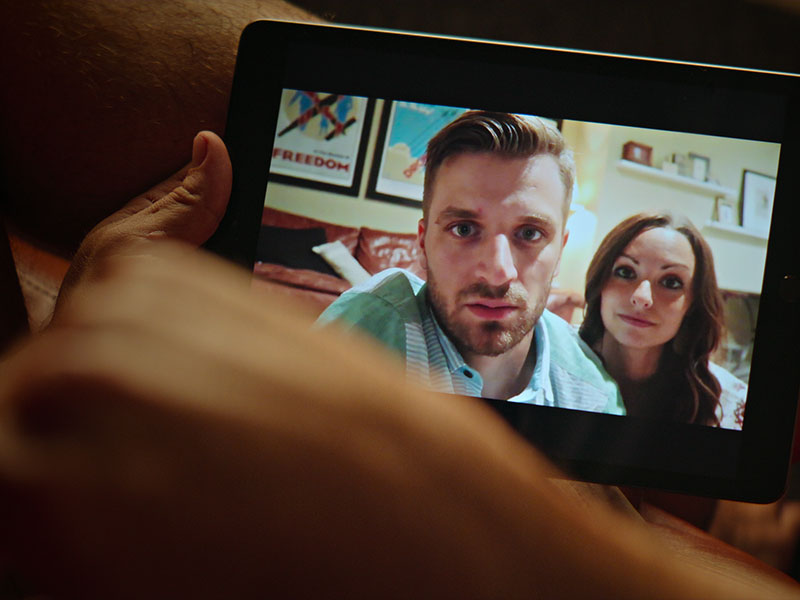
Two of the main characters in the series are Christian YouTubers Sam and Nia Rader. Their story begins as every relationship does — in love and with plans for the future. The young Texan couple found their footing when they went viral for a video of them performing "Love Is an Open Door" from the Disney movie "Frozen" while driving. The couple hit the jackpot: family vlogging. However, before and during their online fame, Sam used Ashley Madison to have numerous affairs with women who weren't his wife, Nia.
 
For years, Sam kept up the charade that he was the devoted, loving Christian husband to Nia and father to their two children. However, this changed when Ashley Madison was hacked. In the data leak, Sam's affairs and use of the dating service were exposed.
 
At first he only told part of the truth. In a YouTube apology video posted to the couple's channel, Sam said at the time, “As you may have seen, my name has been associated with an Ashley Madison account. I’m here to clarify some of this with you guys, ‘cause I owe it to you: I did make the account. I made the account two years ago. This is an issue that is in our past. This was before I got onto YouTube.”
 

He denied ever having an affair on the website and said, “The account was opened out of pure fleshly desires and out of simple curiosity.” Even Nia bought into that story.


But in the docuseries, Sam admits, “What I said in the video was mostly, pretty much, just all lies. It was just, ‘Protect yourself, man.’”


Ultimately, it's revealed that Sam had been cheating throughout his relationship with Nia through Ashley Madison, at “massage parlors and strip clubs” and “two emotional relationships” with Nia's own friends. 


The couple is still together and have reconciled despite Sam's infidelities. “Nia, she decided she would give me a second chance,” Sam said. “I’ve learned continuing to deeply be in love takes work. There’s a lot of things that I really do regret, but I don’t regret, you know, the hack.”


Nia told Netflix, "I believe that marriages can be healed. It's worth fighting to fix your marriage."

2
Noel Biderman puts Ashley Madison on the map: For better or worse
Ashley Madison: Sex, Lies & ScandalAshley Madison: Sex, Lies & Scandal (Netflix)
The person responsible for the creation of Ashley Madison's transformation was its founder and CEO Noel Biderman. Part of his contribution was the website's name, picked from a list of popular girls' names. Thus Ashley Madison was born, meaning to appeal to upper middle-class suburbanites. However, the website itself wasn't pulling in subscribers so Biderman had to change gears. As a former sports lawyer, he reportedly was able to make the site successful because he knew the market due to knowing his many athlete clients who had affairs.
 
Biderman's version of Ashley Madison drove home that this was a dating site that only worked because of the secrecy of the affairs (i.e. it's not just about cheating but also not getting caught.) He also implemented that men on the site would have to buy credits to message people, essentially paying to play.
 
However, marketing the site proved to be difficult because of its messaging. The steamy commercials were banned on major television channels. However, that did not stop Biderman from advertising his product. Biderman and his wife paraded around on talk shows talking about Ashley Madison and their own monogamous relationship. Biderman even said, "Marriage is preserved by infidelity." Surprisingly, the backlash from the moral conservative Christian outrage helped to increase membership. In 2015, the site had hit 35 million global subscribers.
 
Moreover, the site's popularity also put a target on its back when it was hacked by a group that threatened to shut it down. The data leak also exposed something nefarious: Biderman had numerous affairs himself and had solicited legal teenagers to engage in sex with him. He was eventually ousted as CEO in 2015.
3
An anonymous group called the Impact Team hacked Ashley Madison in 2015
Ashley Madison: Sex, Lies & ScandalAshley Madison: Sex, Lies & Scandal (Netflix)
The hack heard around the world was implemented by a group called the Impact Team. The hackers had demanded that the website be shut down or else they would leak the information of more than 30 million users in 30 days, seemingly also targeting Biderman for undisclosed reasons. The docuseries stated that it could have been an ideologically motivated attack, emphasizing that the company's mission was immoral. Swiftly after the Impact Team's demands were not met, they leaked the private information of users. 
 
A private cybersecurity team brought in by the company's board had suspicions that Biderman was behind the attacks but none of their leads had amounted to anything concrete. Ashley Madison had even offered a $500,000 reward to find the hackers responsible. But that didn't work, and in a second data leak, Biderman was exposed for having an interest in girls as young as 18 and 19 years old. However, cybersecurity journalist Joseph Cox had been investigating the Impact Team's presence and found them through the dark web. He exchanged conversations with them, alluding to their vendetta against Biderman and the CEO defrauding the company. The Impact Team's identity was never brought to light.
4
Damaged marriages and mental health at risk
Ashley Madison: Sex, Lies & ScandalAshley Madison: Sex, Lies & Scandal (Netflix)
The docuseries highlighted that the fallout of the leak fractured marriages but also led to a mental health crisis with its users many of whom were exposed on lists made public, for people to easily target users. This led to an increased public fascination and shaming of those same users. 
 
One of the interviewees, Christi Gibson, shared that her husband John, a minister and professor at the New Orleans Baptist theological seminary, killed himself because he had been fired for his usage of Ashley Madison. He left a note that Gibson said expressed remorsefulness and shame attached to his use of the website and the eventual data leak.
 
Regardless of the pain people had being connected to the scandal, others piled onto the frenzy around the data leak. An Australian radio show would even expose people's partners on air.
5
The discretion Ashley Madison promised was a lie
Ashley Madison: Sex, Lies & ScandalAshley Madison: Sex, Lies & Scandal (Netflix)

The site's entire premise was that people could have affairs that would remain secret through the website. So, Ashley Madison told its users that it would wipe their data and digital footprint for a price. According to the docuseries and former Ashley Madison employees, many users used this feature thinking it would protect them . . . but it was all false.


They paid for data protection and discretion and none of their data was ever deleted or wiped. It was not as advertised. The fallout of the leak was even more devastating to users because they were promised a false sense of security by people like Biderman.

6
Mostly men used the site, while some of the women were bots
Ashley Madison: Sex, Lies & ScandalAshley Madison: Sex, Lies & Scandal (Netflix)

For years, Biderman and Ashley Madison had stated that the site was a progressive place for men and women to equally engage in affairs. However, the docuseries revealed that there were actually fewer women in Ashley Madison than reported by the site. 


Also, another bombshell revelation was that there were actually numerous fake profiles of women. The profiles were traced back to an IP address from Ashley Madison's headquarters. Yes, in order to lure in more men, bots were created to inflate the ranks.

7
During the leak, celebrity marriages were put on blast
Ashley Madison: Sex, Lies & ScandalAshley Madison: Sex, Lies & Scandal (Netflix)

There were many celebrities and well-connected people exposed in the leak. In the docuseries, "Jersey Shore" star Snooki's (aka Nicole Polizzi) husband Jionni LaValle was one of the named people. At the time of the leak, the reality television star denied the allegations surrounding her husband. She said, "I'm lucky if he knows how to even use a computer, yet go on Ashley Madison to cheat on me." In the docuseries, Snooki also "denied that her husband, Jionni LaValle, had an Ashley Madison account."


The series also highlighted former "Real Housewives of New York" cast member Kristen Taekman's husband Josh was also accused of having an account. Josh said, “I signed up for the site foolishly and ignorantly with a group of friends and I deeply apologize for any embarrassment or pain I have brought to my wife and family. We both look forward to moving past this and getting on with our lives.” 


Alongside, convicted sex offender Josh Duggar from the reality television show "19 Kids and Counting." Duggar is currently serving a 12-year prison sentence for child pornography charges. Duggar said in a statement after the leak, "I have been the biggest hypocrite ever. While espousing faith and family values, I have secretly over the last several years been viewing pornography on the internet and this became a secret addiction and I became unfaithful to my wife."


Even President Joe Biden's son, Hunter Biden was supposedly exposed although he denied having an account on the website. “I am certain that the account in question is not mine,” Biden said to CNN. “This account was clearly set up by someone else without my knowledge, and I first learned about the account in question from the media.”


The docuseries stated that in the leak about 15,000 military and government emails were connected to the dating service.

8
Ashley Madison is still successfully running
Ashley Madison: Sex, Lies & ScandalAshley Madison: Sex, Lies & Scandal (Netflix)
While Ashley Madison has gone through a cultural reckoning because of the data breach and the ousting of its long-time CEO, Biderman, the site still exists. However, it has undergone a rebrand. The company was able to bounce back from the leak and continues to market itself as “the No. 1 married dating app.” Now, the brand markets itself to people looking for a "discreet" side relationship. In spring 2024, Ashley Madison claims to have more than 80 million global subscribers.

"Ashley Madison: Sex, Lies & Scandal" is streaming on Netflix.

Biden announces cannabis rescheduling proposal, downgrading criminal penalties for marijuana

In a historic announcement Thursday, President Joe Biden said that his administration would move to formally reschedule cannabis under federal law. The Justice Department has moved to reclassify cannabis from Schedule I to Schedule III under the Controlled Substances Act, beginning with a proposed rule posted today on the department's site.

"This is monumental," Biden said in a video Tweet Thursday. "Look folks, no one should be in jail for merely using or possessing marijuana. Period. Far too many lives have been upended because of our failed approach to marijuana. I'm committed to righting those wrongs. You have my word on it."

The White House's move comes less than three weeks after the Justice Department confirmed that the Drug Enforcement Agency would also reclassify cannabis

"At my request, and guided by science and evidence, HHS (Health and Human Services) and DOJ have studied the drug's medical use and abuse and dependency potential and are recommending rescheduling – concluding reclassification would remove barriers to critical research," the president tweeted

In a briefing following Biden's announcement, White House Press Secretary Karine Jean-Pierre called the reclassification a "major step" that "will remove burdensome, long standing barriers to critical research" and aims to address racial injustices in cannabis-related persecutions. 

"The reality is while white, Black and brown people use marijuana at similar rates, Black and brown people have been arrested, prosecuted and convicted at disproportionately higher rates,” Jean-Pierre said. “The president’s actions today further his commitment to reverse longstanding injustices and to right historic wrongs.”

In another video tweet Thursday, Vice President Kamala Harris echoed Biden, and thanked the work of advocates for moving the issue forward.

"Currently, marijuana is classified on the same level as heroin, and more dangerous than fentanyl. We are finally changing that," Harris said.  

The vice president's Thursday remarks echo those she made in March, urging the Drug Enforcement Agency to move quickly to reschedule the substance. As previously reported by Marijuana Moment, Harris also called for full legalization of cannabis during the round-table meeting which was attended by cannabis pardon recipients and Democratic Kentucky Gov. Andy Beshear. 

“Nobody should have to go to jail for smoking weed. And what we need to do is recognize that far too many people have been sent to jail for simple marijuana possession,” Harris said. 

Until the DOJ's formal rulemaking process has been completed, including a 60-day comment period, cannabis will legally remain a Schedule I substance. Additional information about the potential legislative impact of the newly proposed rule can also be found on the department's website. Already, the DEA has "signaled resistance," according to reporting by Marijuana Moment, highlighting sections of the proposed rule indicating the agency "believes 'additional information' could be collected via public comment or a possible administrative hearing could influence the final scheduling decision."

Regardless, cannabis stocks surged on Thursday according to Barron's while Forbes reported numerous major marijuana corporations are already benefiting from the announcement.

Harrison Butker trolled with “Sims”-style animated version of himself as a homemaker

Harrison Butker has been feeling the heat – specifically in the kitchen of a cheeky Sims animation that the Los Angeles Chargers posted Wednesday.  

Following his controversial commencement speech on May 11 at Benedictine College – which organizations like GLAAD have called “a clear miss” and “woefully out of step with Americans about Pride, LGBTQ people and women” – the Kansas City Chiefs kicker has been met with public fury.

During his speech, Butker called Pride month a “deadly sin,” and equated diversity, equity and inclusion to "tyranny" while also stating he believes that more women would find personal fulfillment if they married and had families instead of pursuing careers. He said this after quoting "Bejeweled" by Taylor Swift, his teammate Travis Kelce's girlfriend. 

Beyond the expected backlash, the LA Chargers went into full troll mode with a three-minute video for the NFL schedule release using animation in the style of "The Sims." In a quick credits scene at the 2.55 mark, an animated Butker with his Chiefs No. 7 jersey is seen baking a pie and putting it into an oven while cleaning and arranging flowers just like a homemaker would.

The NFL's senior Vice President Jonathan Beane, the league’s chief diversity and inclusion officer, has responded to Butker's speech, stating that “Harrison Butker gave a speech in his personal capacity. His views are not those of the NFL as an organization. The NFL is steadfast in our commitment to inclusion, which only makes our league stronger,” Beane said.

Phallic balloons and GOP allies: MAGA mobilizes as Cohen testimony comes to a close

Donald Trump seems to have called in a team of his top allies to attack the legal system on his behalf, garnering a crowd of anti-judicial supporters, as Michael Cohen’s damning testimony in his criminal trial comes to a close. 

Outside the courthouse Thursday afternoon, the former president — who faces charges for falsifying records for hush money payments made to sway the election — drew allegiance from a few of the usual suspects, as well as a Staten Island artist, Scott LoBaido, who released dozens of phallic balloons decorated with stickers depicting the likeness of special counsel Jack Smith, Manhattan District Attorney Alvin Bragg, trial Judge Juan Merchan, and other MAGA legal enemies.

“I’m an artist, so what do I do? Return the humiliation favor by humiliating these d***s,” LoBaido told FOX 5 NY outside the courthouse. 

LoBaido wasn’t the only Trump supporter speaking against prosecutors and the judge in the case. Far-right members of congress, many of whom are top Trump allies, flooded the courtroom on Thursday, reportedly to the frustration of Judge Merchan.

In addition to Eric Trump — the former president’s only family member to attend any of his recent legal proceedings — Representatives Matt Gaetz, R-Fla., and Lauren Boebert, R-Colo. joined Trump's entourage.

Earlier in the week, Trump was joined by House Speaker Mike Johnson and Senators Tommy Tuberville and J.D. Vance, who took to New York to attempt to get around the gag order and attack trial witnesses. But, if reports that Trump edited statements made by those coming to his defense are true, the gag order may in fact have been broken anyway.

Sneaking away from official business in Washington D.C., GOP Congress members coming to the embattled 2024 candidate’s side may be putting their relationship with Trump above their own party’s control of the House of Representatives. Without at least four key GOP votes in court, the House majority may be temporarily slimmed.

Cohen is winding down his testimony, expected to be the last witness in the state’s case against Trump, paving a path for jury deliberation.

How supermarkets are changing their branding to make you think they’re cheaper

UK shoppers have specific preferences when it comes to their favorite supermarkets. M&S was voted as the best in a recent survey, followed closely by German discounter Aldi (Waitrose, Tesco and Sainsbury's were next). Aldi's position is evidence of how discount retailers are reshaping consumer perceptions and the sector as a whole.

Consumers probably expect a budget supermarket to copy from more upmarket counterparts to signal quality to shoppers. We just need to look to the case of Aldi's copycat caterpillar Cuthbert – a cheaper version of M&S's Colin, to see that.

But now we're seeing a reversal of this trend. Tesco's Clubcard design was recently found by the High Court to be copying the Lidl logo. So why would a giant like Tesco copy this big yellow label? UK consumers perceive Lidl as a lower-end supermarket. Tesco is not.

The success of the Clubcard logo lies in the brand image that consumers associate with Tesco. The store makes use of the perception that it's not cheap, unlike Lidl. Tesco allows Clubcard owners to access branded products at discounted prices, through Clubcard membership. It still maintains its brand image as one of the "big four" supermarkets, as well as a retailer that provides benefits with a membership.

Tesco is not the only retailer to adopt this approach. Sainsbury's is shifting from allowing consumers to collect loyalty points on a Nectar card to focusing on Nectar Prices, where they also provide discounts via membership. This approach enables Tesco and Sainsbury's to communicate a clear message to their consumers: stay loyal to us and we'll treat you differently with lower prices for the premium products.

In addition to membership benefits, these retailers also emphasize their new lower pricing strategies – with explicit reference to discount rival Aldi – on certain products. Tesco asks consumers to look out for the red Aldi Price Match bubble, and Sainsbury's adopts a similar approach for products, again explicitly communicated as an Aldi Price Match.

Unsurprisingly, other retailers like Morrisons and Asda recently introduced similar schemes, leading this pricing approach almost to be a sector norm. In acknowledging that their offer faces stiff competition from discounters, they're trying to keep up with Aldi and Lidl. And with consumers now expecting price matches, the supermarkets are also attempting to keep pace with each other.

So why are we seeing this shift towards loyalty cards and explicit comparisons to lower-end rivals? One answer could be because loyalty cards are a good way to collect consumer data. However, the best answer would be that the supermarkets are adapting to meet the changing demands of consumers in an increasingly price-conscious market.

Consumer behavior is developing a more frugal focus due to the effect of inflation and pressure of the UK's rising cost of living on consumers. Food price inflation had been especially high, rising sharply in the last few years, with a record peak of 19.2% in March 2023, now around 4% from March 2024.

In the ten years after the 2008-2009 financial crisis, average earnings stayed relatively low, and disposable income hasn't seen much growth either. These factors have affected confidence in the retail sector. Although there has been a slight growth since late 2022, consumer confidence remains well below pre-pandemic levels.


Color coding

These economic pressures are driving supermarkets to rethink their pricing strategies and product offerings, leading to the "copying down" approaches. On average, consumers take only 13 seconds to make a purchase decision in-store, and some studies show this to be as little as five seconds. That's why these messaging strategies like colour and name-checking rivals are so important.

Most often the first thing consumers see when entering a supermarket is the fruits and vegetables. There is a very simple reason for seeing the "greens" first – consumers associate the colour with freshness and health, and it has a calming effect on the brain, reducing stress and anxiety.

Consumer research shows us that colours have a clear effect on our feelings and purchasing behavior. Yellow has been associated with happiness, and in general warm colors make us think the temperature is warmer than it actually is. Yellow and red also appeal to impulse buyers.

So when we see a yellow sticker in Tesco, we get a special deal, and this leads to a temporary feeling of pleasure or excitement – that sudden rush of dopamine often referred as "shopper's high". And Lidl was already there with the big yellow circle branding that was to become so contested. It's not a coincidence that other grocery retailers have long been using yellow stickers for cut-price items as well. Tesco's red price-match bubble signifies urgency and excitement.

As food prices continue to rise across almost all product types, the cost of the weekly shop is becoming an issue for more UK households. It's probably not surprising therefore that supermarkets now see their most potent weapon as price rather than the perception of luxury.


Melisa Mete, Lecturer in Marketing, Henley Business School, University of Reading


This article is republished from The Conversation under a Creative Commons license. Read the original article.

“I wonder whether the jury is getting bored”: Expert blasts Trump lawyer’s “meaningless” questions

Legal experts say the Trump team’s cross-examination of former Trump fixer Michael Cohen has focused little on the central focus of the Manhattan criminal trial: whether Trump caused the falsification of checks, invoices and ledger entries in a scheme to disguise hush money as legal fees.

Trump lawyer Todd Blanche on Thursday instead continued to press Cohen about his long history of telling lies to help Trump, as well as boost Cohen’s own interests. 

“The defense is engaged in a theatrical play that has little bearing on the facts,” Bennett Gershman, a former New York prosecutor and law professor at Pace University, told Salon.

Manhattan District Attorney Alvin Bragg and his legal team have argued that the Trump campaign was thrown into turmoil by the "Access Hollywood" recording, prompting increased interest in silencing others with potentially damning stories to tell. Trump faces 34 counts of falsifying business records to, prosecutors say, cover up a $130,000 payment to Daniels ahead of the 2016 election.

Blanche questioned Cohen at length about his desire for a job at the White House, his lies to authorities in official proceedings and his efforts to reduce his prison time by cooperating with authorities.

Gershman said he questions how the repeated recitation of Cohen’s lies in particular were landing with jurors.

“The defense is going over and over that Cohen has a history of lying,” Gershman said. “But everybody knows that, including the jury. I wonder whether the jury is getting bored by the repetition. It may be that Blanche is doing what his client wants, not necessarily what’s best for an effective defense.”

Gershman said jurors have already seen ample evidence of Cohen evolving from establishing himself as a Trump devotee, to feeling cast aside after the election, to shifting to a new career as one of Trump’s most gleeful detractors.

“The heavy-throttled attack by the defense on Cohen’s credibility, his motives for testifying against Trump, and his despising Trump, is really meaningless, as the prosecutors will argue in summation to the jury,” Gershman told Salon. “Everything Cohen says about adulating, and then despising Trump, is bolstered and corroborated by massive other evidence.”

And Gershman said jurors have already seen evidence presented about “the ‘catch and kill’ scheme to bury the Stormy Daniels story by buying her off; the payment to Daniels; the voluminous records showing the way the payment was falsely disguised as a legitimate business expense; the fact that the payments were legally required to be documented as political campaign expenses.”

“Cohen was an extra,” Gershman said. “Sure, his testimony was the glue that connected the dots more clearly, more comprehensively. But Cohen added few new facts.”

David Schultz, professor of political science and legal studies at Hamline University, said Cohen did help connect Trump to the plan to reimburse Cohen for $130,000 in hush money payments to Daniels.

“Cohen did an excellent job connecting Trump to the payment scheme by showing it was  his idea,” Schultz told Salon. “He also did a good job – following up on Hope Hicks – establishing Trump's motive for the cover up and that it was campaign related.”

We need your help to stay independent

Trump has said he was worried how salacious stories of extramarital affairs he denies would impact his wife’s feelings – but legal experts say prosecutors could argue that Trump simply had multiple motivations.

Schultz said Cohen’s testimony could put “more pressure on Trump to testify and refute his testimony.”

Whether Trump will testify, and whether his defense will call its own witnesses, remains unclear.

Though Cohen’s baggage is well-established, Schultz said Cohen’s credibility could come into play when jurors weigh the evidence specifically tying Trump to the plan to disguise hush money reimbursements. 

Prosecutors have provided crucial financial records: including checks from Trump's bank account to Cohen's LLC with Trump's signature on it, a handwritten plan by his employees to reimburse Cohen through monthly $35,000 payments in 2017 and ledger entries that described the payments as legal fees.

In Cohen's testimony, he said he provided "very minimal" legal services to Trump in 2017.

He described Trump as orchestrating the plan: telling him to "just take care of it" and wait to pay Daniels until after the election. Cohen said at a Trump Tower meeting before the former president's inauguration, Trump "approved" the plan to reimburse him at a meeting with Cohen and former Trump Organization chief financial officer Allen Weisselberg, who showed Trump a bank statement he brought along with the handwritten reimbursement plan. Cohen also said Trump assured him he'd be reimbursed for the payments to Daniels in an early 2017 Oval Office meeting.


Want a daily wrap-up of all the news and commentary Salon has to offer? Subscribe to our morning newsletter, Crash Course.


Trump's lawyers have repeatedly said there is no link between Trump and the reimbursement to Cohen — and alleged that Cohen paid off Daniels all on his own. 

Cohen testified how Trump avoided email as a way to avoid a paper trail.

“Normally this would be devastating testimony except that Cohen is flawed,” Schultz said. “He is a convicted felon with a motive to get even with Trump. Defense is doing its best to challenge his credibility and argue Cohen and not Trump was the mastermind of this coverup.”

Schultz said Cohen was “cool and collected” on the witness stand.

Schultz added: “The question will be whether a jury finds him credible.”

Blanche has warned jurors that Cohen is not to be trusted, and his cross-examination has appeared aimed at urging jurors not to trust a word he says — which would include his descriptions of meetings where he said Trump asked him to pay off Daniels and approved the reimbursements to Cohen.

Also on Thursday, Blanche grilled Cohen on the substance of an October 2016 call he had with Trump.

Cohen said he told Trump on the call that he had paid off adult film star and director Stormy Daniels. Blanche asked him whether he was being truthful about the brief call, or whether he just spoke to Trump's bodyguard to complain about a 14-year-old prankster leaving him annoying phone calls. 

The New York Times reported that Cohen wasn't definitive in his response to Blanche: “I believe I spoke to Mr. Trump.”

Blanche pressed Cohen on his track record of lying or fudging the truth to authorities: including his testimony at Trump’s civil fraud trial, where Cohen testified that he lied when he pleaded guilty in 2018 to tax evasion and making false statements to a bank.

“You started saying that you had not committed the tax crimes?” Blanche asked Cohen, according to MSNBC host Katie Phang.

Cohen replied: “I have stated I don’t dispute the facts of the case, but I should not have been prosecuted. First time tax evader…”  

A trillion cicadas will emerge in the next few weeks. This hasn’t happened since 1803

If you live in the Midwest or the Southeast, you know the cicadas are coming. 

And if you live in Chicago, you know the Cicadalypse is coming. 

Cicadas, winged buggy noisemakers whose relatives include leaf-hoppers and spittle bugs, come in two varieties: the annual cicadas who, sure enough, appear every year and the periodical cicadas, who appear in 13-year and 17-year cycles.

This year, however, those two periodical broods — known officially as Brood XIX, the Great Southern Brood and Brood XIII, the Northern Illinois Brood — will emerge at the same time, and in some parts of central Illinois, side-by-side.

The double-emergence hasn’t happened since 1803. For a little perspective, consider that in 1803 Chicago was not yet a city, just a fort built at the intersection of what is now Michigan Avenue and Wacker Drive.

The cicada emergence will span 16 states that range from Oklahoma to Virginia, and some cicadas have already started emerging in the South. It will probably start in the Midwest in a day or two. In certain parts of Illinois, scientists say the two broods will be close enough to hear each other singing, a noise level that can boom louder than a jet engine.

While much has been made of the noise level of all those chirping cicadas, some scientists are taking a closer look at the timing of their visit. Thanks to climate change, the cicadas are ahead of schedule.

Emergence depends on a key variable: soil temperature. Cicadas are touchy, and will only burst out of the ground once the soil temperatures about 6 inches deep reach around 64 degrees Fahrenheit.

“That’s the magic number,” said Floyd Shockley, an entomologist and collections manager at the Smithsonian National Museum of Natural History. 

"We’re on a gradually warming planet,” and the periodical cicadas know it.

Brood XIX, the largest brood, and Brood XIII, among the densest of the broods, have spent the past 13 and 17 years respectively burrowing through the soils and feeding on the nutritious fluids from tree roots. Now they’re waiting for a deeply ingrained, instinctual clock to tell them to burrow out of the ground all at once.  

But that clock could be ticking faster these days. 

“We’re on a gradually warming planet,” and the periodical cicadas know it, according to Shockley. He said the first cicadas to emerge this year crawled out back in February — which isn’t totally out of the norm. There are early birds every year, but this year he said there was an “extraordinarily high number” to come out prematurely. 

“It’s happening earlier and earlier,” said Shockley. “And we think that it is totally related to the conditions locally being just right earlier and earlier because of climate change.”

The soil temperatures when cicadas will begin to emerge typically occur sometime in mid- to late-May, according to Scott Lincoln with the National Weather Service’s Chicago office. But, the average date when soil temperature would prompt the cicada emergence has been trending earlier over the last 30 years: approximately six days earlier in one Chicago suburb, and approximately 10 days earlier further northwest in DeKalb, Illinois.

According to scientists at the Morton Arboretum in suburban Chicago, it’s not just the cicada getting ahead of themselves. All kinds of species of trees, shrubs, and perennials bloomed unseasonably early this year. Maples, elms, and magnolia trees bloomed almost a month prematurely in the Chicago region. 

There are close to 200 species of cicada in North America, only seven of which exhibit synchronized 13- and 17-year life cycles — otherwise known as periodical cicadas. These cicadas, the longest living of the species, have historically emerged in late spring or early summer, compared to the annual cicadas which come out every year near the end of the summer. The two never overlap. By the time the annual cicadas come out, the periodicals are long dead.

There are currently 15 periodic broods spaced across the eastern United States, 12 of which are synchronized to a 17-year life cycle and three that are synchronized to a 13-year cycle. Every brood contains a minimum of three or a maximum of four of cicada species — each species with its own signature tune.

For a brief several weeks, some residents of central Illinois will be able to hear all seven species of cicada in a single day, according to Shockley. 

Some scientists, according to Stephanie Adams with the Morton Arboretum, believe that rare proximity between the two broods could allow species from the neighboring broods to court, mate, and potentially reproduce. “There is curiosity on whether they’re gonna hybridize and maybe produce a whole new species, so that is genuinely unknown,” she said. 

A recent study found that the sheer number of cicadas droning around the many forests of the eastern United States will be a can’t-miss feeding frenzy for some 80 bird species. The short-lived bump in cicada calories isn’t just good for birds, it’s also a major boon for the caterpillars that will get a rare break from their predators.

All told: billions upon billions of cicadas will drone on for four to six weeks, but no one is getting hurt — just potentially irritated.

Cicadas don’t have stingers, they don’t bite, and they pose no real threat to humans. But the insects can damage small trees and shrubs as part of their life cycle. The damage is caused when the female starts laying her eggs: she will cut into the branches of small trees and shrubs to lay up to 600 eggs inside the bark. 

The best way to protect vulnerable trees? Run to a fabric store and pick up the nearest bolt of tulle. The idea is to wrap the material typically used for ballet tutus around the tree like a lollipop. The hope is that the fine, lightweight mesh keeps the cicadas off and the sunlight in. 

But if the tulle doesn’t make it in time, then it’ll take the eggs six to eight weeks to mature after being deposited into the small branches of young trees, during which time the tips of affected branches will turn brown: “It’s a natural pruning event,” said Shockley. If they survive, those same trees will be bushier and healthier the following year.

Eventually, the cicada nymphs will hatch, fall into the ground, burrow down, and start their 13- and 17-year cycles all over again.  

“They’re a great barometer for the impact of humans on a species that was here before humans got here,” said Shockley. “And so watching those patterns tells us a lot about what impact we’re having on the environment.”

Grist is a nonprofit, independent media organization dedicated to telling stories of climate solutions and a just future. Learn more at Grist.org

This coverage is made possible through a partnership between WBEZ and Grist, a nonprofit, environmental media organization.

Lauren Boebert and other Republican lawmakers skip votes to help Trump get around his gag order

Congress is in session, but a slew of GOP politicians are snubbing their legislative duties to show up at Donald Trump's ongoing hush money trial in New York.

Whether auditioning to be his running mate pick or simply currying favor with the Republican presidential nominee and his supporters, the attendant Republicans have all followed a similar pattern of sitting behind Trump during the trial, wishing him good luck, and railing against the prosecution, judge, witnesses, and jurors to the press and anyone else who will listen.

According to CNN's Kate Sullivan, the latest group of Republicans to accompany Trump to court on Thursday includes Reps. Matt Gaetz, Lauren Boebert and nine of their colleagues. Jeffrey Clark, a former Justice Department lawyer involved in Trump's efforts to overturn the 2020 election results, also made an appearance.

Gaetz proudly announced his loyalty to the president in a post on X, saying that he was "standing back and standing by," a reference to Trump's comment in a 2020 debate that was interpreted by the white supremacist Proud Boys as a call to remain vigilant and even engage in violence on his behalf.

But the continual stream of absences is causing headaches in Congress, where Republicans hold a narrow 217-213 majority in the House. Four absences are enough to erase that tiny margin and sink any legislation brought forward, potentially to the benefit of the Democratic minority.

The difficulty was laid bare later on Thursday, when a House Oversight Committee vote to hold Attorney General Merrick Garland in contempt was delayed to 8 p.m. in order to accommodate the New York field trip. On the House floor, a GOP bill to rebuke Biden for pausing an arms shipment to Israel may be defeated if Democrats stay united in opposition.

To Trump, this is Congress' problem, not his. The presence of loyal "surrogates," as he termed them, allows the former president to avoid threatening jurors, court staff, and witnesses himself, as these MAGA loyalists are not themselves subject to a gag order. Alabama Sen. Tommy Tuberville, who paid homage earlier this week, admitted to Newsmax that the reason why he and other GOP politicians went to New York was so they could "represent" Trump and "overcome this gag order."


“There’s this sorrow”: How the “Baby Reindeer” plaid suit evokes pain

"Baby Reindeer” isn’t merely well told. It’s well-made, too.

That’s all owing to Mekel Bailey, the costume designer behind the looks featured in Netflix’s hugely popular limited series that explores dark themes: stalking, sexual abuse and depression. In the series, comedian Richard Gadd plays a fictionalized version of himself, Donny Dunn, a struggling comedian with a traumatic past who is stalked by Martha (Jessica Gunning), a woman he meets at the pub he works at in London.

"There's this anger. There's this love. There's this sorrow."

Gadd’s comedic prowess assists in cutting through some of the weightier content, while Bailey’s assemblage of carefully curated costumes brings the show to life, visually speaking. In a show that’s so incredibly steeped in its characters’ inner worlds, Bailey’s thoughtful costuming choices serve to reflect just that. From the emotional resonance of color palettes to the drawn-out process of sourcing clothes — some of which came from the closets of Bailey’s family and friends — his expertise lent not only a critical and creative eye to the show but a sensitive one as well.

Bailey spoke to Salon about his creative process and vision for "Baby Reindeer's" looks, and why Gunning enjoyed wearing his grandmother’s sweaters. 

This interview has been edited for clarity and length.

What were the conversations about costuming when you were first brought on to "Baby Reindeer"? Did you speak to Richard Gadd? How familiar were you with the subject matter of the show?

Once I got confirmed for the job after initially getting the pilot episode I then made a mood board and sent that over. It was a back-and-forth for a few interviews, and then once I was confirmed and got the job, the first step was to meet Richard. So I went to Richard's flat, and we actually sat down for a few hours. We spoke about the story. We spoke about him. We spoke about me. I went through his wardrobe just to get really an understanding of, "Who was Richard?" and "Who was Donny?" and how we separate the two.

He even showed me some of his old costumes, like his props. He showed me his day-to-day wardrobe just to get the real essence and the vibe of, "Who is Richard"? And alongside that, I also went to Camden and I immersed myself in this feeling. That area is where I was born. Feeling the tone, feeling the environment of trying to also grasp again the identity of what that area would be and trying to take myself back to that space. 

You just touched on the colors briefly which I'm really excited to dig into. I would say that Donny's most recognizable and memorable outfit from the show is his plaid stage suit, which is partly owing to its colors. It's kind of this amalgamation of burnt orange and yellow and brown. Why were these specific colors chosen?

So these colors have to do with the warmth, the pain. There's all of those undertones in it with those colors like the red, the burnt oranges, and what that somewhat provokes. There's this anger. There's this love. There's this sorrow. All of those kind of things come out through these colors and the tone of the show. Playing with the greens — that was the counterpart. There's no blue, as it adds that kind of coldness.

And then again visually the production design as well — working and going so cohesively with the production design. When Donny's on stage at the comedy club, the backdrop has that kind of deep browns as well, and there are burnt oranges and reds in the walls.

We see those colors come up a lot in those scenes at [Donny's mentor] Darrien's apartment, too. Those deep reds and orange colors that I think sort of contribute to that hazy, drug-addled atmosphere.

I had read on your Instagram page about the decision to not use blue in Donny's wardrobe, and I was going to say that I assumed it had to do with the emotions that color is associated with or provokes. Do you have anything else you want to say about that?

Yeah, and I'm also gonna say, having to do the oranges and stuff like that, there's also the flip side because it's also a comedy suit, so the stage is quite fun. There is this element of fun-ness to it, so it's not always the low points, it's also the high points. I think it's just that easy balance of color especially visually on screen.

"He's also hiding himself behind this suit — it's like some alter ego somewhat."

There was no blue — that was purposely done again, as you mentioned from what I've shared already. You do see it was in one of his day shirts and in his tie at one point. And then if there was any blue it would be in his jacket — the green jacket was like a deep, deep navy stripe. It's not a bright blue or royal blue in that sense. Again, it was just to do with the emotions and the colors — taking away that coldness and what that does to the audience when there's psychology behind colors, right?

We need your help to stay independent

Regarding the plaid suit blazer's cut and fit, I also read on your Instagram that you really wanted to show and emphasize the shoulders. Why was that?

Well, initially it was meant to be loads of pockets. That's how it was read in the first script. It was going to have loads of pockets and be very voluminous. Then it changed to the shoulders once me and Weronika [Tofilska] the director really went back and forth and out on of the shape — and Richard as well.

It was again just to create this stage presence, this big bravado on stage. But being not a creepy man — he's in good shape, but he's not a big masculine muscle guy in that way. Yeah, and that's really where that inspiration came from.

He's also hiding himself behind this suit — it's like some alter ego somewhat. It's his safe place on stage. He feels he can be his true self and really sometimes when he takes off it reveals who he is, right?
Baby ReindeerBaby Reindeer (Ed Miller/Netflix)When Donny is younger in his 20s we see him in sparkly unitards and big curly wigs at his comedy shows. Was that accurate to what Richard wore?

Yeah, it was close. I think we took that element of that fun-ness, that youth. There was that element of Richard there, the true Richard there.

What was the process like of trying to find the right sparkly unitard, for example?

It was a big prep day. It was like I think two days we did with Richard — the back-and-forth of finding uni sizes. The main thing for that was finding the right colors and finding the right fit. So it was just ordering those different things online, finding them in the charity stores, trying to find the right texture, breaking it down. When we found this one, straightaway was like, "This is it. This is the color." And I think it's because it's got the iridescence to it as well. It plays on the different colors and different ways light shines upon it.

I was gonna say it almost looks like fish scales. I don't know if you've ever read the book "Rainbow Fish"?  It was a big children's book in America when I was growing up. Basically, it's those same iridescent fish scales. That's exactly what it made me think of when I saw Donny's costume.

It's also meant to be like, Donny never had money yet. He wasn't this rich person, so all of his costumes or his outfits he would have had in his wardrobe would have just been things that he would have found at the cheapest store or anywhere just like in the market. So again, it had to say true to that character, true to that British-ness as well, and true to that culture.

When the audience meets Donny again in the present day at the bar, he's kind of dressed pretty drably and kind of plain. What were the conversations there? Was that deliberate?

Yes, all the like the pub scenes. So you see kind of two stages with Donny: You see first the crewneck t-shirts and that's quite younger or when it's underneath the shirts or checked shirts. But when he's in the pub, the polo with the collar — that's supposed to represent that boy who's trying to be that man. He's trying to be with the other guys. He's trying to live up to that. So it's just that very British lads attire, you know, "Feel like you're the man especially when you're a young man." You want to feel like the rest of the boys what most do and what fit in you don't want to stand out or feel left out

Again, and it's funny because most of those polos were either from charity shops. One of my best mates, he had a bag of these old t-shirts that he just had sitting in his wardrobe for years and I'm like, "Perfect!" Everything had to look as worn in as used as possible because again, Donny doesn't have money to buy things every day. But again the colors were so right as well — the burgundy is deep red, these greens are saturated greens.
Baby ReindeerBaby Reindeer (Ed Miller/Netflix)You spoke a bit about sourcing the costumes and I know that you source the majority of them other than Donny's suit, which obviously had to be made from secondhand shops across London. How long did that take and how difficult was it to find what you wanted?

So I thankfully had four months of prep initially. It wasn't meant to be four months. It was meant to be six weeks. So due to other reasons to do like this things getting delayed. That's what gave me all that time, and it was a process . . . Jessica — she's a UK size 24, and when you go to a charity store, you're not going to find a whole rail of everything available. You might find one or two and then, "Oh, it's blue or oh, it's yellow." So I work into a color palette as well. So it was then also like, having to eliminate. And it just took patience. I think by having that extra prep that time it took me time again just to go through different areas and understand the different demographic areas of London. When it's a more affluent area, you're gonna get certain body shapes.

"Martha, for me, was the best character I've ever created."

Yeah, it was just amazing just to go to charity shops and just to appreciate the secondhandedness of it, the sustainability, and what that does for the world — the impact it also had on the budget. It all had just a domino effect.

Was the decision to source from secondhand shops a directive or is that something you did on your own? Secondly, how much if at all was sustainability sort of factored into that decision?

I made the decision straight away to the team that it had to be done by secondhand charity shops. Some of the stuff was even from my gran's wardrobe, from friends. I was going around different friends saying, "Any old clothes you have let's just give them to me."

 Did you say your granddad's wardrobe?

My grandma. Yeah. Cardigans and some of Martha's nighties are actually my gran's old stuff.

Wow, that's so cool. How did she feel about seeing her clothes on screen?

Well, sadly my gran's in a home with dementia, but we still had the family home where some of our stuff is. And I asked my mom and my aunts if it was OK if they gave me some stuff. And yeah, Jess [Gunning] really loved the depth of what I did there as well with that. Yeah, that was really special to Jess.
Baby ReindeerBaby Reindeer (Ed Miller/Netflix)I think about that a lot when I go thrifting in New York, for example. Secondhand clothes do carry the essence of whoever wore them before you in a way. So that's really interesting to hear that Jessica got to wear some of your grandmother's clothes.

Regarding sustainability, it wasn't done with the idea of me trying to be so green or trying to think of saving the planet. I just wanted to get the job done and that was the only way. So with that in tow, it then did become us being green and making a huge offset in that way. And I think that also showed production a different way to work, It inspired the team in a different way. And again, it was just an extra challenge — more patience. 

You've mentioned on your social media that those sorts of slight imperfections in pre-worn clothes added a certain depth, especially to characters like Martha. How important was it to you to have Martha's inner world and struggles reflected in her attire? 

Martha, for me, was the best character I've ever created. Just in trying to understand where her mind was at. It had to be chaotic; but still, there is this somewhat put-togetherness: She still makes the effort, she puts her makeup on, she does her hair. But it still doesn't quite work. It doesn't quite flow. And with that it was all about making sure there was this feeling that's quite sad. I feel actually when you think about Martha, it really is sad because it's never trying to make a mockery of the real person. It's never trying to body shame, although by all those things sometimes come out in those outfits. The tightness of it, the awkwardness of it, the print clashing . . . it doesn't make sense.

You see the predator side of Martha come up when we play with animal prints. And then when she's all dolled up or she thinks that things are going good, you see these pinks and the lilac and the greens more when she's happy. And then when she's very sad, you see her at the bus stop in a gray purple. And then you see the polka dot dress when she fights — she's angry now, so there's these spots of anger. We also played with her bags — you see flowers on them a lot which brings her back to her youth and her childhood. So there are a lot of deeper connotations of Martha.
Baby ReindeerBaby Reindeer (Ed Miller/Netflix)You've kind of touched on this already, but how would you describe her clothing vibes?

There isn't a word to describe it. It doesn't go together, it's not cohesive. It's like she holds on to her past life and doesn't quite know how to move on from that. It's everything that is old that she's had for years. There's nothing too new. She tries her best to reinvent each time differently but it's just still the same stuff. So it's kind of like a time warp. She realized that her body has changed but she's still stuck in the same clothes that she used to wear when she was part of another time.

I'd love to talk about Teri – Donny's on-and-off girlfriend – as well, who is one of my favorite characters from the show. We see her in colorful dresses and fun prints. Correct me if I'm wrong, but perhaps this symbolizes the sort of fun and levity she brings to Donny during an especially dark time in his life.

Yeah, indeed. So especially when you first meet her in the flashback, she's wearing that very green lime green crop top. So straight away you're like, "Whoa, who's this? Where's this color coming from? Who is this energy of life that's sparked up his life and gives him joy?" So in all of those moments, she's this energy for him, but a good energy. She's someone who excites his life and that is purposely done through the outfits chosen.

Finding Nava's [Mau] costumes was sort of the same process.
Baby ReindeerNava Mau as Teri in Baby Reindeer (Courtesy of Netflix)What were the conversations there in crafting her look?

Nava is an amazing person in general. I really connected with Nava on so many levels, especially because she's a trans person — I'm a gay man myself. So we connect at that level as well; we both are part of the LGBTQI+ community.

Making her feel comfortable was one key thing for me. And with that she then becomes even more confident. Being aware of her body, being aware of her shape, being aware of all of her insecurities that we all have as human beings. It was about, "How can we empower that instead of play into that or make that an insecurity and less empowered?" 

"it actually brought a tear to my eyes."

So from the beginning process with Nava was, "Let's try this on. Let's go through all the different shapes: crop-tops, high necks, low necks, halter necks. All the different shapes of what works for you, what works for your body, what you don't like, what you do like." And then once we found that, we started to play on the colors again. This time we were more fun, with more young and vibrant tones. There was this kind of baby girl, baby doll, sexy kind of cheeky essence little skirts and showing a bit of leg. So there was still that fun-ness with Nava and Teri that we got to play around with.

You've been working as a costume designer for some time now. How would you say "Baby Reindeer" differed from past projects that you've worked on, both in content and the technical aspects of getting ready for it?

This is probably my biggest job in every way. The length, the crew, the cost, in every plot in every medium I feel of working as a costume designer. This definitely has pushed my skills, pushed my learning, pushed my creativity. In every way it's challenged me, but in a great way. Do you know I mean? Working in such a raw way with a story – I've been able to tell someone's story through this narrative and through the costume. Working alongside Clerkenwell [Films] and on Netflix with the producer Matthew Mulot and Richard himself. Working with the color palettes – it was so intense. It wasn't a very surface thing. There’s such depth to it, and, I think, one of the most amazing things about working on “Baby Reindeer.”

We're all working together cohesively on this project, which I think, as you said, made it a well-made show. 

I want to turn back to Donny for my last question. Obviously, this show is hugely emotionally complex and I think one of its biggest successes is the way that it shows the sort of nonlinear effects of trauma. What was it like when you finally watched the show as a viewer and saw Donny on stage in that plaid suit during that absolutely heart-rending scene where he confesses the abuse he endures as well as Martha's stalking with his audience? Did it have the impact that you expected?

If I'm entirely honest the first that I watched it, it actually brought a tear to my eyes. It definitely welled me up a bit. I found it very emotional —  but in such a beautiful way. I mean I'm all about sincerity and honesty and I commend Richard so much. I think he's just amazing. To bare your truth to the world on such a huge platform is outstanding.

Seeing it [the scene] now, once it was edited and put together — it's still that raw emotion every time. Then I guess even just adding the costume to it only amplifies it as well. Just the tone of it and seeing someone in that suit and that state and just seeing that spotlight. It was a very powerful, emotive scene.

"Baby Reindeer" is streaming now on Netflix.

“An unmistakeable sign”: Prosecutors appear confident having Michael Cohen as their last witness

Michael Cohen, the former Trump fixer now testifying for the prosecution at his former boss' hush money trial, might have turned in such a strong performance earlier this week that Manhattan District Attorney Alvin Bragg is not bringing in any more witnesses afterwards.

Former U.S. Army prosecutor and MSNBC legal analyst Gregg Kirschner said in a video that this is "an unmistakable sign that the prosecutors in Donald Trump's criminal case up in New York believe that Michael Cohen is doing extremely well on the witness stand."

At the beginning of the trial, Bragg suggested that his team had lined up other witnesses to follow Cohen. But he appeared to reverse that position at the end of Tuesday, announcing instead that Cohen would be the last witness before prosecutors' rest their case. Cohen's past proximity to Trump means that his testimony is critical component of the prosecution's case, linking the former president directly to the hush money payments that he stands accused of illegally covering up.

Cohen's testimony may have benefited both from low expectations for his performance and a series of unforced errors by Trump's lawyer, Todd Blanche, who sought to tar Cohen as motivated by money and pettiness in his cross-examination, drawing rebukes from Judge Juan Merchan.

And the prosecution's case, in turn, may benefit immensely from Cohen's testimony, which alleged that Trump was actively participating in meetings where the scheme was cooked up. "Prosecutors will take full advantage of their rebuttal argument by urging the jury that the evidence overwhelmingly shows that Donald Trump was absolutely part of this criminal scheme," Kirschner said.