Spring Sale: Get 1 Year, Save 58%

How baked spaghetti became American, one casserole at a time

In a church basement in Illinois, someone cracks four eggs into a bowl of spaghetti, then folds the mixture into a battered casserole dish. In a family kitchen in Ohio, another skips the eggs entirely but slides the whole mess — pasta, sauce, meat, cheese — into the oven, no recipe in sight. Neither dish exists in Italy. And yet, both feel like home.

Baked spaghetti was a fixture of my childhood, quietly omnipresent across the Midwest and South — never flashy, never fancy, just always there. It showed up at church potlucks under domed foil lids, in school lunch trays beside pools of canned peaches, and on our weeknight table with unfussy regularity.

The version I remember best comes from West Virginia, where my grandmother — daughter of a coal miner, master of the frugal feast — made hers with snapped spaghetti, ground chuck and a generous pour of Ragu. She’d top it with a blizzard of shredded mozzarella from the Food Lion and slide the whole thing into the oven until it emerged bubbling and bronzed. We always ate it the same way: thick slabs scooped onto Corelle plates, with Texas Toast garlic bread and a side salad of crisp iceberg, cherry tomatoes and thick carrot coins — cold and sweet against the warm starch of the spaghetti.

I never thought much about it. It was just dinner.

But when I started digging into its backstory, I realized this humble casserole might be more than the sum of its supermarket parts. It’s part Italian-American red sauce tradition, part Southern comfort food, part mid-century casserole canon. Baked spaghetti is a case study in how food becomes American—not through dramatic fusions, but quiet adaptations. Immigrant traditions meeting industrial convenience. Holiday fare becoming Tuesday night dinner. Humble pantry ingredients shaping something new.

It’s what happens when you mix Neapolitan ritual with a JCPenney casserole dish—and somehow, it works.

What does it mean when a dish rooted in one culture feels most at home in another? That’s the question baked spaghetti makes you ask—just before you go back for seconds.

“It’s not something I grew up with,” said Ian MacAllen, author of “Red Sauce: How Italian Food Became American,” when I called him at his Brooklyn apartment. Growing up in New Jersey, baked ziti was his family’s oven-baked pasta of choice. “But prompted by your call, I went back to some of my sources to look up a little more about baked spaghetti. I made some connections in my head about where it came from—and I think it’s actually a really interesting element of Italian American cooking.”

“If you go to West Virginia, Ohio — these are places that had a lot of Italians immigrating at various points,” MacAllen continued. “They brought food traditions with them. You get these unique regional dishes, like pepperoni rolls. And baked spaghetti starts to look like part of that same pattern.”

We need your help to stay independent

He’s right: while coastal cities like New York and Boston are often the focus of Italian-American food histories, large numbers of Italian immigrants also settled in the Appalachian and Rust Belt regions in the late 19th and early 20th centuries, drawn by work in coal mines, steel mills, and railroads. In these tight-knit communities, traditional recipes adapted to new geographies and available ingredients. Tomato sauce might come from a jar. Pasta got snapped in half to fit into smaller pots. What emerged wasn’t quite Italian, and wasn’t entirely American either — but it stuck.

Before diving into how baked spaghetti evolved, it helps to understand how spaghetti itself became central to American cuisine. “In the 19th and early 20th century, spaghetti was the dried macaroni in the U.S.,” MacAllen explained. “There were probably 30 or 40 shapes in Italy, but in the U.S., spaghetti became dominant. There was even a trade group with its own magazine: ‘The New Macaroni Journal.’They created whole mythologies to sell spaghetti — like the Marco Polo story.”

With spaghetti becoming central to American kitchens, it was bound to take on new forms, evolving alongside immigrant experiences and local tastes, though its connection to Italian baked pasta dishes is apparent.

MacAllen points to dishes like timpano — the dome-shaped, cheese-stuffed showstopper from “Big Night” — which, like lasagna, shares roots with American casseroles in its layers of pasta, meat and cheese. These Italian traditions didn’t disappear after immigration; they adapted. The real connection, he says, is seen in dishes like baked ziti, often served at Italian weddings and in the Neapolitan tradition of preparing grand Easter and Carnival meals with meatballs, sausages, and hard-boiled eggs layered into pasta dishes.

Italian-American immigrants often had more money than they had back home, and they began to make these celebratory dishes more regularly — turning once-rare treats into weekend, and eventually weeknight, staples.

In the case of baked spaghetti, what came out of that transformation was a dish that felt both familiar and distinctly American: rich, comforting, made from simple ingredients and rooted in Italian tradition.

Ask a roomful of nonnas for their take on the perfect Sunday gravy — each with her own self-assured, no-nonsense stance — and you’ll get just as many takes on baked spaghetti. In poring over a handful of church and community cookbooks, those quiet cornerstones of real home cooking, the variations feel endless. Some kitchens swear by beef, others insist on pork sausage, or sometimes a compromise of both. The cheese debates could fuel a whole other conversation: mozzarella’s soft melt or the sharp, salty bite of parm or pecorino? And then there’s the egg — some fold it in gently to bind the layers, others skip it altogether. Each version is its own tradition, a little bit of its maker’s story woven into the dish.

This winter, I started working on my own version. I kept the bones of my grandmother’s — spaghetti, ground beef, a generous layer of mozzarella — but let myself tinker. I swapped the jarred sauce for a quick stovetop version laced with fennel seed and torn basil. I picked up fresh pork sausage from the good butcher shop in my neighborhood and folded in a couple of eggs, whisked with a splash of cream, to help it all set. On top, a handful of nutty parmesan, just enough to catch in golden spots as it baked.

It’s not quite hers, and not quite anything else either. But it’s baked spaghetti. And it feels like mine.


Baked spaghetti
Yields
6-8 servings
Prep Time
30 minutes
Cook Time
1 hour

Ingredients

For the sauce:

1 tablespoon olive oil

½ yellow onion, finely chopped

2 garlic cloves, minced

½ teaspoon fennel seeds

¼ teaspoon red pepper flakes (optional)

1 (28-ounce) can crushed tomatoes

1 teaspoon kosher salt, plus more to taste

1 teaspoon sugar (optional, depending on the acidity of your tomatoes)

Fresh basil leaves (about 5–6 torn), or 1 teaspoon dried basil

For the spaghetti:
12 ounces dried spaghetti

½ pound ground beef

½ pound Italian pork sausage (bulk or removed from casings)

2 large eggs

¼ cup heavy cream or whole milk

2 cups shredded mozzarella cheese

½ cup grated Parmesan cheese

Cooking spray or butter, for greasing


Directions

  1. Preheat the oven to 375°F. Lightly grease a 9×13-inch baking dish.
  2. Heat the olive oil in a saucepan over medium heat. Add the chopped onion and cook until soft, 4–5 minutes. Stir in the garlic, fennel seeds, and red pepper flakes (if using). Cook another 30 seconds, then pour in the crushed tomatoes. Add salt and sugar, bring to a simmer, and cook for 15–20 minutes until slightly thickened. Stir in the basil at the end and taste for seasoning.
  3. Bring a large pot of salted water to a boil. Cook the spaghetti until just shy of al dente (about 1 minute less than the package says). Drain and set aside.
  4. In a large skillet over medium heat, cook the ground beef and pork sausage together, breaking them up with a wooden spoon. Cook until browned and no longer pink, 8–10 minutes. Drain off any excess fat.
  5. In a small bowl, whisk together the eggs and cream with a pinch of salt and black pepper.
  6. In a large bowl (or in the pasta pot), combine the drained pasta, cooked meat, most of the sauce (reserve about ½ cup for topping), the egg mixture, and 1½ cups of mozzarella. Toss until everything is well coated.
  7. Spread the mixture evenly in the prepared dish. Spoon the reserved sauce over the top, then scatter with the remaining mozzarella and all the Parmesan.
  8. Bake uncovered for 25–30 minutes, or until bubbling and golden brown on top. Let it rest for 5–10 minutes before serving so it holds together nicely.


Saving for retirement takes more than the government telling us to

April 7-11 marks the annual event known as America Saves Week, which began in 2007 as a “an annual opportunity to encourage all Americans to save and a chance for individuals and families to take stock of their financial health and preparedness.”

This reflects an entrenched cultural, moral and political belief that it is possible to retire with abundant savings — you just have to learn how to be strategic, budget wisely, save diligently and invest prudently. The reality, however, is that retirement savings are an insurmountable aspiration for many Americans, particularly low-wage workers. Indeed, almost one in four Americans has less than $400 in savings. One-third of Black households have zero or negative net worth. But the government’s response to this overall lack of savings has been to emphasize the need for individuals to save, and the United States’ retirement policy initiatives have largely focused primarily on consumer financial education and nudging people to save more.  

At the same time, we are in the midst of a profound demographic shift, as increased lifespans see more and more Americans reaching the age of 100. In this era defined by an increased longevity, the narrative of personal responsibility is no longer enough. The government does not provide a solid financial foundation for older Americans who were making poverty- and near-poverty-level wages during their pre-retirement years, yet the government also does not allow those making low wages to build a nest egg for retirement.  

Despite the emphasis on saving for retirement, older Americans whose incomes are at the low end of the income distribution are increasingly worse off than their higher-income counterparts. They enter old age with little or no savings, medical problems without adequate coverage, a necessity to work in order to eat and have a place to live, and, unsurprisingly, increasing rates of bankruptcy filings. One study found that roughly one in three older Americans is economically insecure, living at or below 200% of the Federal Poverty Level. The data for older Black and Latinx Americans is even worse, with half living at or below 200% of the poverty line. Another study found that 49% of older workers and their spouses will experience downward mobility in retirement. 

We need your help to stay independent

Without a drastic reimagining of our systems, a poverty crisis looms.  

The history of responsibility for older Americans is an evolving one. Life was short in the mid-1800s, with the life expectancy of most white Americans only 39 years. Older adults were generally considered a “burden on the local taxes,” and many were either sent to poorhouses or auctioned off as farm labor. 

After the Great Depression, life expectancies increased alongside the percentage of older Americans living in poverty — by 1935, 50% of older adults were poor, and by 1940, almost two-thirds were poor. These staggering numbers, along with the realities of the Great Depression, led to President Franklin D. Roosevelt signing the Social Security Act of 1935 into law. This was the beginning of a significant shift — government began investing in the economic security of older adults. 

In 1965, Lyndon B. Johnson’s administration built on the achievements of the Roosevelt era by enacting Medicare and Medicaid. At the same time, following World War II, employers began to expand retirement benefits for their full-time employees, providing them with defined-benefit pensions and other important benefits for old age.  

In the late 1970s and early 1980s, however, the concepts of individualism and self-sufficiency began to pervade U.S. culture and politics. A weakening of the safety net for Americans, including older Americans, followed. Employers began to replace mandatory pension plans with optional higher-risk 401(k) plans that do not guarantee a certain income during retirement. Social security payments were reduced, and many more jobs did not provide any avenue for retirement savings. 

In response to increased longevity, government emphasized with increasing urgency the expectation that Americans must save for their own retirements. In 2000, then-Treasury Secretary Lawrence Summers gave remarks focusing on the need for Americans to save more. He said that it was critical not only “to our economic health” but also for families, “because it influences their capacity to manage what is new in the New Economy: not least, the fact that people are living much longer than before.” 

In 2015, the Treasury Department released a treasury note entitled “Helping More Americans Save,” in part to mark America Saves Week. The notice, released by J. Mark Iwry, then senior adviser to the Secretary of Treasury for Retirement and Health Policy and the Deputy Assistant Secretary for Tax Policy, noted that the Treasury Department was “ensuring that more Americans have the knowledge and tools to manage money and credit responsibility because educated and financially capable consumers can better attain their own financial goals and contribute to the strength of our overall country.” 

In response to increased longevity, government emphasized with increasing urgency the expectation that Americans must save for their own retirements

The idea is fairly simple: Some Americans are not financially educated and need help “learning” how to save, so the government will do the work to improve “habits,” as Secretary Summers put it. There was little discussion of the structural conditions that make it difficult for Americans to save.  

Existing research shows that low-income Americans have adopted this ethic and in fact desperately want to save — they even work the existing savings-unfriendly systems to try to force themselves to save. However, their efforts are often in vain, in part because of the underappreciated aspects of our laws and policies that make it almost impossible for the working poor to save.  

Wage stagnation and rising expenses are significant factors. A 2019 study found that 53 million Americans, accounting for 44% of American workers between the ages of 18 and 64, qualify as “low-wage” earners. The median hourly wage of those low-wage workers was $10.22, with median annual earnings of about $18,000. Further, over half of low-wage earners were either the only workers in their family or live in families where all workers were low wage. While wages went up a bit in the midst of the pandemic, a recent study found that in 2024 more than 39 million workers, or almost a quarter of the labor force, made less than $17 per hour. Numerous studies and reports confirm that large companies pay their workers such low wages that these workers need public assistance, even when working full time. 

Even at times when low-wage workers have the opportunity to save — when perhaps they receive an unexpectedly large tax return, when they are given extra hours at work, when they receive a stimulus payment/credit or when they sell a prized possession for cash — our poverty laws often prevent them from accumulating any meaningful savings. This happens through asset limitation laws that control many of the major public assistance/antipoverty program (outside of the tax system) that provide money or money-like relief to low-income Americans such as the Supplemental Nutrition Assistance Program, Temporary Assistance for Needy Families and Social Security Disability Insurance.

These limitations impose rigid restrictions on the amount of cash and assets aid recipients can accumulate. Thus, recipients are in a bind. If they attempt to put away meaningful savings when they receive a lump sum in the form of, for instance, a stimulus check or tax credit, they cannot continue to access the programs they need to survive month to month.  

Before Ronald Reagan was elected, states set welfare programs’ eligibility requirements. Reagan, however, campaigned in the early 1980s on a promise to reform welfare, and he was able to push through asset restrictions on major welfare programs which largely remain in place today (though states have regained some control).

Reagan did this via the Omnibus Reconciliation Act of 1981, which set asset limits at $1,000 for most welfare programs, a large decrease compared to then-existing state limits. A study conducted 10 years after Reagan left office showed that low-income single mothers reduced their personal savings by an average of $1,250 after this federal asset limitation was imposed. 

Even at times when low-wage workers have the opportunity to save, our poverty laws often prevent them from accumulating any meaningful savings

In the mid-1990s, Bill Clinton ran for president on a campaign promise to reform cash welfare (then Aid to Families with Dependent Children) into a program that would promote “personal responsibility” and “economic self-sufficiency.” Welfare reform was passed following Clinton’s election, transforming AFDC into TANF, stripping away the existing safety net for families and turning welfare into a bare-bones program with much state control. Further restrictions for eligibility were put on cash welfare, such as more work requirements and a 5-year lifetime limit. States regained control over setting asset limits as part of these changes, but only some exercised this authority. 

Asset limitations help ensure that the poor remain poor. Indeed, studies have shown that asset limits create disincentives for low-income families to save. Multiple studies have confirmed that families save more when asset limitations are lower or nonexistent, and save less when asset limits are instituted.  

So where does this leave us? Fortunately, there are several promising ideas moving forward: For one, the government could establish government-sponsored universal retirement accounts and implement automatic enrollment paired with matching contributions, particularly tailored for low-income earners. We could also work on strengthening public benefit programs by eliminating or restructuring asset limitations so that low-income workers can save without the constant fear of losing essential benefits, and by expanding Social Security for the lowest-income workers so they would no longer have to rely on a patchwork of inadequate private savings options. 

To achieve some of these much-needed reforms, we must shift the cultural narrative — peeling back the moralistic and judgment-laced rhetoric around poverty, savings and retirement — and acknowledge existing structural barriers to savings. As a poverty epidemic looms, we cannot afford failure. 

Adapted from "Law and the 100-Year Life: Transforming Our Institutions for a Longer Lifespan" by Anne L. Alstott, Abbe R. Gluck and Eugene Rusyn. Copyright Cambridge University Press © 2025. All rights reserved. 

Trump’s tariffs are the ultimate MAGA loyalty test

On Friday, I wrote about President Trump's motivation for this daft tariff scheme. It has almost nothing to do with trade, which he doesn't understand. He's running a protection racket, shaking down other countries (as well as universities, law firms and corporations) to force them to do his bidding. If you want more proof of that, listen to him on Sunday night talking about holding up Europe for "a lot of money on a yearly basis but also for past."

Trump's overwhelming resentment toward Europe comes through strongly in his tone. As Salon's Andrew O'Hehir deftly illustrates in this piece, it's not business, it's personal.

He was inappropriately buoyant during that impromptu press conference aboard Air Force One, apparently because he just "won" the championship at his golf course as he does every year (he's one of the best golfers the world has ever known, of course) and evidentely didn't care that at that very moment the futures markets were in freefall in anticipation of a very bad Monday on Wall Street. He is unconcerned about that or any other negative consequence of his senseless tariff policy. He explained to the assembled press pool that everyone will have to "take our medicine," but insisted that his tariffs won't be inflationary because his tariffs on China didn't cause inflation when he was president the first time.

His belief that other nations have been "ripping off" America for decades and that global leaders are laughing at us is sincere. He's been pounding that drum for 40 years. But he's wrong. Of course, the world has not been ripping "us" off or laughing at "us." America is the wealthiest, most powerful nation on earth and has been since at least the turn of the 20th century. We created the rules under which the global economy operates, the U.S. dollar is the world's reserve currency and we are the world's only military superpower.

We have problems, naturally, not the least of which is the massive wealth inequality that distorts our economy, our culture and our politics so much that we are now perilously close to full-on oligarchy. But to characterize America as a poor, downtrodden nation exploited by the rest of the world is fantasy.

Trump clearly isn't bothered at all by the massive backlash his policy has caused, even among many of his strongest supporters on Wall Street and in the business community.

But then his bubble has become almost impermeable, with people around him terrified that he's going to go off half cocked and do something crazy, so he probably isn't hearing half of what people are saying. If what his Cabinet members are telling the press is an accurate reflection of his views, it's pretty clear that he's deeply deluded.

On Sunday, his economic and trade team hit the morning shows and were hardly reassuring. Treasury Secretary Scott Bessent did his best Baghdad Bob impression, saying on NBC's "Meet the Press" that people can take comfort that things are running smoothly despite record volume in the markets and then claimed that people nearing or in retirement who've saved money don't check their accounts "day to day." (Billionaires don't sweat a market drop of 10%, so why should anyone else?) This was reminiscent of Commerce Secretary Howard Lutnick saying a couple of weeks ago that only a fraudster would complain if they didn't get their Social Security check. They can't be more out of touch if they tried.

We need your help to stay independent

Lutnick showed up on CBS' "Face the Nation" and babbled so incoherently about robots and manufacturing and "tiny screws" that you had to wonder if someone put something in his morning coffee. Trade Representative Peter Navarro, meanwhile, told Fox News that you can't lose money unless you sell and that we are going to have the greatest boom in the stock market in history. And Agriculture Sec. Brooke Rollins appeared on CNN to reassure Americans that these are the smartest people she's ever worked with.

No doubt Trump was very pleased with all their performances. They told him exactly what he wanted to hear. Unfortunately for him, these people sounded to the rest of America like they had just flown in on a spaceship and virtually no one but the most die-hard MAGA cultist or a member of the Trump administration is buying any of that. Anyone with eyes to see knows that the world economy is in a serious crisis precipitated by Trump and Trump alone.

The Financial Times published a very sharp editorial that featured this observation that should send chills down the spines of Republicans who will be facing the voters next year:

Those hoping for prosperity under Trump have had an unpleasant shock. Wednesday’s so-called liberation day was the culmination of a 10-week long bonfire of conservative economic convention in America. The standard fare of growth-seeking deregulation and tax cuts gave way to an act of amateurish economic vandalism that betrays both the “us vs them” ideology at the heart of everything Trump does, and the lack of any clear framework to his actions.

They note that the public is rejecting Trump's economic agenda: "[T]his week, just before the tariff chaos, 63 per cent of Americans had a negative view of the government’s economic policy, comfortably the highest figure since records began almost 50 years ago." Only 25% said they think they'll be better off in five years, a lower number than at the low point of the financial crisis.

Witness as America discovers the nature of leopards.

[image or embed]

— David Roberts (@volts.wtf) April 5, 2025 at 3:24 PM

The Economist was even more scathing:

IF YOU failed to spot America being “looted, pillaged, raped and plundered by nations near and far” or it being cruelly denied a “turn to prosper”, then congratulations: you have a firmer grip on reality than the president of the United States. It’s hard to know which is more unsettling: that the leader of the free world could spout complete drivel about its most successful and admired economy. Or the fact that on April 2nd, spurred on by his delusions, Donald Trump announced the biggest break in America’s trade policy in over a century—and committed the most profound, harmful and unnecessary economic error in the modern era.

It's not just the financial press in high dudgeon over his policies. Over the weekend millions of Americans and people around the world hit the streets in mass demonstrations in everything from big cities to small rural towns in deep red states. The Trump resistance has been gathering steam for some time but this tariff debacle is taking it to the next level.

Nate Cohn of the New York Times speculates that people were already upset about the DOGE debacle and the lawless deportations and the reckless foreign policy team, but purposefully wrecking the economy may just penetrate into the GOP:

If the economic fallout is bad enough, the dissatisfaction with the Trump administration could combine with the longstanding Democratic turnout advantage to make seemingly safe Republican states in 2026 — think Kansas, Iowa and Texas — look plausibly competitive, perhaps even along with control of the Senate. Congressional Republicans’ continued support of (or acquiescence to) Mr. Trump — whether on tariffs or his other excesses — could be in jeopardy.

In a normal world, there would be no question that tanking the economy would be political suicide. But Donald Trump believes he is impervious to the political laws of gravity, and in some ways you can't blame him. He has survived more scandals than any politician in American history. But at some point, you have to wonder if self-preservation may start to look a little different to the other Republicans if the country is mired in recession and the federal government has been so devastated that it can't respond. If not, they may be in for a very big surprise in 2026. 

Senate Republicans’ magic math could jeopardize Trump’s “one big, beautiful bill”

No one likes doing chores, but they don’t magically go away by ignoring them. If you don’t mow your lawn, the grass doesn’t stop growing. It becomes jungle-like; a much bigger headache if you don’t take care of it when you were supposed to. And, worst of all, even when you do your chores, you’ll have to do them again soon, over and over again. Death, taxes and chores. Wouldn’t it be nice to instead live in a world where if you just did them once, you’d be set forever? Republicans in Congress are pretending they live in that world. But instead of skipping household chores, they want to skip the part of governing where they have to pay for their plans. 

Republicans are pushing tax cuts that would balloon America’s debt by $4.6 trillion over the next decade in order to funnel money back to the wealthy. When you combine their proposed tax cuts with their cuts to social programs and the poorest 20% of Americans would lose $1,125 per year while the top 0.1% would gain $180,910. They, of course, know this proposal that President Trump has branded “one big, beautiful bill” is unpopular for many reasons, so they’re trying to fudge the numbers. 

There are two pieces to this. Let’s start with the first: the way Senate Republicans are trying to pass this law, a process known as “budget reconciliation.” 

For legislation to get through the Senate, it normally needs 60 votes, otherwise, a single senator can block it with a filibuster. In 1974, though, Congress conjured up the budget reconciliation process, which allows the Senate to pass legislation that meets certain rules with only 51 votes—a simple majority. Today’s congressional gridlock and partisanship make it rare for a bipartisan group of 60 senators to agree to anything, let alone a spending bill. That’s why senators from both parties rely on budget reconciliation to pass major legislation, like the American Rescue Plan, the Inflation Reduction Act and tax cuts. 

There are three key rules a bill needs to qualify for budget reconciliation. First, Congress can only use the budget reconciliation process once per fiscal year—you get one bite at the apple. 

Second, under the “Byrd Rule” (named after former Senator Robert Byrd), legislation cannot increase the deficit after ten years. That’s why Congress designs many of its policies to “sunset,” or phase out over ten years. 

And, third, any policy passed through budget reconciliation must directly affect federal spending, revenue, or the debt limit. Historically, the nonpartisan Senate “parliamentarian” has played a role in determining whether budget reconciliation bills stay within the rules. For example, much to the chagrin of many Democrats, the parliamentarian ruled during the Biden administration that raising the minimum wage and implementing certain immigration reforms did not qualify. 

This brings us to the next part: an accounting gimmick. 

A bit of background: President Trump’s 2017 Tax Cuts and Jobs Act—passed via reconciliation—cut individuals’ income tax rates, slashed the corporate tax rate from 35% to 21% and doubled the standard deduction taxpayers can claim on their refunds. But to follow the strict rules of budget reconciliation, Congress had to let key provisions expire, most notably the reduction of individual income tax rates. 

Now, Republicans want to extend the Trump tax cuts, but they don’t want to be held accountable for an expensive bill nor do they want to just pass another set of cuts that will sunset again. To bypass these challenges, they’re trying to game how the bill is “scored”—or how Congress estimates the cost of policies. The nonpartisan Congressional Budget Office scores bills using a “current law baseline.” Essentially, it calculates what would happen to the country’s deficit and debt if a law passes, compared to a world in which the law does not pass. It’s a simple, intuitive and fair method.

We need your help to stay independent

The problem facing Republicans is that the nonpartisan Joint Committee on Taxation concluded that their bill would add $4.6 trillion to the debt. Fearing Americans will get a sticker shock, Republicans decided to change the scoring rules and use a “current policy baseline” instead. Under this method, they could score their bill by pretending that none of today’s laws—like the Trump tax cuts—will ever expire. By doing so, extending any of today’s laws will appear free.

What they’re arguing is simple enough: they mowed their lawn once already, why do they have to do it again? It’s a question many a child asks. Unfortunately, the stakes of this are far greater than a petulant child refusing to do their chores. That growing grass is our country’s debt; if they don’t deal with it now, it’ll be left a mess for future generations to clean up.

What’s more, by pulling this accounting trick, Republicans think they can also make the tax cuts permanent. You’ll remember that the rules of budget reconciliation demand that legislation does not increase the deficit after ten years. By pretending that the 2017 tax cuts are already permanent, Republicans can further pretend that passing this new law won’t change the deficit.  Senator Lindsay Graham, the chairman of the Budget Committee, states it openly: “I have determined that current policy will be the budget base line regarding taxation. This will allow the tax cuts to be permanent.” 

You might be asking, “Didn’t you say the parliamentarian makes those calls?” Historically, that has been the case. But over the weekend, Senate Republicans sidestepped the parliamentarian to jam through their budget blueprint, the first procedural step in passing the tax plan. They’re threatening to keep her sidelined throughout the legislative process so that Senate Republicans can interpret Senate rules in whichever way they see fit. Now when you strip away the procedures and the calculations, it’s clear what’s happening: Senate Republicans are pushing through a tax cut for the wealthy that will blow up the country’s debt. It’s not too hard to see because it’s part of a pattern. Since the turn of the century, tax cuts are responsible for 57% of the increase in the country’s debt-to-GDP ratio, a measure economists rely upon to see if our debt burden is becoming unmanageable. What’s more, if you strip out the one-time emergency spending Congress did to respond to the Great Recession and COVID-19, tax cuts are responsible for 90% of the increase in the debt-to-GDP ratio. 

The difference this time is that to pass these tax cuts, Senate Republicans took unprecedented steps to violate the Senate’s own procedures. They think they have the political cover to do so because today’s newscycle is dominated by President Trump’s tariffs and their cataclysmic effects on markets rather than arcane topics like legislative processes and budget scoring.

And they feel they have do it this way because they know how things are starting to look. They claim to be the party of fiscal conservatism and their leaders bemoan the national debt, but this plan blows up the debt. They ran on lowering costs, but the Trump tariffs reignite inflation. They have adopted the mantle of working class champions, but they’ve designed a plan to benefit the wealthy and hurt the poor. It’s no surprise why they are trying to hide from their responsibilities.

“Set up to fail”: Incarcerated pregnant women lack access to life-saving addiction treatment

Leslie spent her time in jail on a mattress on the floor in the day room because there were no cells available. Four months pregnant, she spent one agonizing day there withdrawing from opioids before she had a seizure and had to be rushed to the emergency room.

“They knew I was pregnant when I was being arrested because the officer threatened to throw me on the ground, and I told him, ‘Please, I’m 16 weeks pregnant — don’t,’” Leslie, who is using her first name only for privacy reasons, told Salon in a phone interview. “I told the officers … that I would be going through withdrawals, and I was already going through withdrawals when I was arrested.”

Withdrawing “cold turkey” from opioids while pregnant increases the risk of preterm birth, low birth weight, and stillbirth. Opioid withdrawal causes severe pain, nausea, vomiting and in rare cases, seizures. Withdrawing from some substances, including alcohol, can be fatal.

Medication-assisted treatment with medicines like methadone or buprenorphine is the standard of care for pregnant people with substance use disorders who are withdrawing because it can drastically reduce these health risks. Yet medicines like buprenorphine and methadone are not always available to pregnant people who are incarcerated.

Shanya, also in North Carolina, withdrew from opioids while pregnant in jail without access to medication-assisted treatment as well.

“It was not a good living situation,” Shanya, who is also using her first name only for privacy reasons, told Salon in a phone interview. “It was dirty. And I had a shower that never cut off, so the floor would be drowning and there was mold all in there.”

Anecdotes from pregnant people paint a grim picture of the state of maternal health care in the carceral system. Women have been reported living in degrading conditions and giving birth shackled to their bedposts. In 2023, a woman in Tennessee gave birth by herself on the jail floor. Dr. Hendrée E. Jones, director of the Horizons Program for pregnant women with substance use at the University of North Carolina, said she had one patient who had a miscarriage by herself on a jail floor.

“Jail is not the place that creates a context for healthy pregnancies,” Jones told Salon in a phone interview.

"Jail is not the place that creates a context for healthy pregnancies."

Still, there is not a clear picture of what maternal health care looks like in this system because there is no national database tracking the health of pregnant people who are incarcerated, said Dr. Carolyn Sufrin, an associate professor of gynecology and obstetrics at the Johns Hopkins University School of Medicine who started a research center dedicated to studying reproductive wellness and incarceration to better understand how pregnant women in prisons and jails are being treated. Sufrin estimates that roughly 8,000 pregnant people with substance use disorders are admitted to prisons and jails each year based on data collected through this project. 

Her research has demonstrated how variable the experience of a pregnant person with substance use while incarcerated can be. Some jails might not have a doctor or nurse on staff that can provide prescriptions, having to transport people with medical needs to a local hospital for care. Others may have them on staff, but with limited hours. And some have managed to find a way to administer medicines like methadone effectively, she said.

But many do not. In one study of 22 prisons and six county jails, one-third of pregnant people with opioid use disorder were not given medication-assisted treatment, and of those who were, very few initiated it in custody. In another study where Sufrin’s research team conducted interviews with opioid treatment providers with pregnant patients in custody, many reported that their local jail did not offer medication-assisted treatment to incarcerated pregnant people. 

“In many cases, there is a lot of negative stigma toward not only patients but also the medications, where people assume it’s just substituting one drug for another,” Sufrin told Salon in a phone interview. “Sometimes people who work in jails just don’t believe this is an appropriate treatment and they don’t want any opioids in their jail — even if it is methadone or buprenorphine treatment.”

Abortion access while incarcerated is also limited. One study Sufrin conducted found half of states allowed women who were incarcerated to have abortions in the first and second trimesters, but 14% did not allow them at all. Two-thirds of the prisons that did allow abortions also required the woman to pay. 

Prisons are the only place in the U.S. where people are guaranteed health care due to a 1976 decision handed down in the court case Estelle v. Gamble. For Shanya and Leslie, prenatal care and addiction treatment were provided once they were transferred from jail to prison, they said.

Some states, like California and Maryland, do specifically have legislation in place requiring screening and treatment for substance use disorder in jails and prisons. But they are the minority: According to a 2023 study, 43 states had at least one statute related to pregnant and postpartum people who were incarcerated, while seven had statutes related to substance use disorder screening and treatment.

In February, U.S. Senator Jon Ossoff introduced a bill that would require states to report information about pregnancy care and outcomes for people who are incarcerated after an investigation from his office last year found women in Georgia had given birth on their own, been shackled around their stomachs, and were forced to undergo C-sections against their will, according to a statement from his office.

The U.S. Department of Justice is also expected to release results from a survey of pregnant people who are incarcerated this year after a 2024 report from the U.S. Government Accountability Office found that "comprehensive national data on pregnant women incarcerated in state prisons and local jails do not exist.”

As it stands, the U.S. Department of Corrections and the Federal Bureau of Prisons both have dedicated medical branches to oversee health care in the carceral system, but there are no external agencies or committees to ensure standards are met, Sufrin said. 


Want more health and science stories in your inbox? Subscribe to Salon's weekly newsletter Lab Notes.


“That constitutional requirement never came with any required set of health care services or standards or systems of oversight, and so what you get is total variability,” Sufrin said. “Some facilities do provide a reasonable measure of comprehensive pregnancy care, including access to treatment for opioid use disorder, but many do not, and there is no systematic established oversight of prisons and jails in the United States when it comes to health care, including pregnancy care.”

"Once there is no more fetus and the woman is no longer pregnant, their interest evaporates."

In some states, like Tennessee and North Carolina, pregnant people can be sent to prison legally through “safekeeper” laws before they are convicted if it is deemed that there is not adequate medical care in their jails. Although these laws were designed to provide care to inmates who need it, they effectively take away a person’s freedom, Jones said.

“The other way to think about it is, doesn't that jail that has now taken away a person's liberty have an obligation to uphold the human right to provide adequate medical care?” Jones said. “Basically, you are in prison because of your pregnancy.”

Often, pregnant people are incarcerated because of charges related to their substance use. In a report by Pregnancy Justice released last year, nearly all of 210 cases in which a pregnant woman was prosecuted involved substance use. Ninety percent of charges were for some form of child abuse, neglect or endangerment wile 86% of cases did not require prosecutors to find evidence of harm to the fetus — meaning it was up to the judge to decide if an embryo was being put at risk due to substance use.

This particularly impacts women of color, who are prosecuted at higher rates for drug use despite using the same amount of drugs as white women. The Pregnancy Justice report showed that low-income women were particularly targeted by pregnancy criminalization as well. And in 16 cases, women were charged in connection with using medication-assisted treatment to treat addiction, said Dana Sussman, senior vice president of Pregnancy Justice. 

“There have been reports about people who are following their physician’s guidance… and still facing family policing investigations or child welfare investigations,” Sussman told Salon in a video call. “The systems are stacked against you if you need to continue on medication-assisted treatment.” 

While pregnant women can sometimes be prosecuted more strictly because of their pregnancy, the level of care they receive also seems to be tied in many cases to their pregnancy, Sussman said. For example, access to medication-assisted treatment is often removed once pregnant people give birth, even though this is a particularly vulnerable time for relapse, overdose and death.

In Sufrin’s study, two-thirds of prisons and three-quarters of jails that did provide medication-assisted treatment to pregnant people discontinued it after mothers gave birth. This was something that providers reported as well.

“They recognize that [medications for opioid use disorder] support the health of the fetus, but once there is no more fetus and the woman is no longer pregnant, their interest evaporates,” Sussman said. “They don’t actually care about the woman’s survival or the woman’s health.”

Overdose has been identified as one of the leading causes of death in the postpartum period, with mortality rates increasing by more than 80% between 2017 and 2020. Although medication-assisted treatment can reduce the risk of overdose by up to 60%, only about one-third of women with substance use disorders receive this care postpartum. This is especially important for new mothers who are being released from jail or prison, which is also a time that has been associated with an increased risk of overdose.

“[Pregnancy] is a real opportunity for intervention,” Sussman said. “But if they can't find [medication-assisted treatment] or they're cut off immediately after pregnancy, then they are set up to fail.”

It can be difficult for women to get this care postpartum due to bureaucratic barriers, said Sara Brown, director of the Pregnant and Parenting Women with Children program at the Nexus Family Recovery Center in Texas, which provides services to pregnant and postpartum women with substance use.

Brown said one of her clients, for example, doesn’t have transportation but has to travel to another city just to receive medication-assisted treatment. New mothers also have to juggle finding and paying for childcare during this time, as well as making it to probation or parole appointments and meeting requirements from Child Protective Services — all while experiencing the typical roller coaster of an experience it is to become a new mother.

“It’s hard for them because they have court dates and they're talking to their attorneys while trying to stay sober, be a mom, and focus on their pregnancy,” said Lindsay Malhotra, director of outpatient services at Nexus. 

Although CPS is a social service agency, it has a lot of overlap with the criminal justice system. Because many women fear having their children taken away due to substance use, they may not disclose their use to their providers, who are mandated to report them. This serves as another barrier separating them from treatment.

“I’ve had patients tell me they tried to hide their pregnancy so that their methadone provider didn’t know because they were worried they were going to be turned away,” Jones said. “We have certainly had patients come to our OB clinic saying they were ‘fired’ by their addiction treatment provider because they were scared that they were pregnant."

While CPS can protect children from harmful situations, children who experienced interactions with CPS have an increased risk of incarceration, substance use and having CPS involved with their own children later in life. Having a parent who is incarcerated is itself an “adverse childhood experience,” (ACE) a label used by researchers to define a traumatic experience that has lasting health consequences, including an increased risk for substance use. 

All of this together creates a system in which trauma related to substance use and incarceration perpetuates in future generations, said Dr. Mishka Terplan, an OB-GYN and addiction medicine doctor at the Friends Research Institute.

“Children are being raised, either through [the criminal justice system] or child welfare, separate from their parents, and accumulate ACEs,” Terplan told Salon in a phone interview. “These lead to addiction which leads to people being incarcerated, and it’s like a feedback loop.”

Sources say this system is likely playing a role in the maternal and infant mortality crisis, although getting a complete picture of the role that incarceration and substance use plays in this crisis is once again challenging because it relies on states, which do not always report. For example, Texas skipped reviewing the first two years of maternal mortality data after implementing its near-total abortion ban. In November, Georgia dismissed all 32 members of its committee that reviews maternal deaths after investigative reporters linked two maternal deaths to the state’s six-week abortion ban.

Jessica, a new mother that was released from jail after spending seven months of her pregnancy there waiting for a court date, is currently staying at Nexus Family Recovery Center, where she is connected to addiction treatment services including medication-assisted treatment. Yet of more than 11,000 centers across the country designed to care for pregnant and postpartum women, fewer than half administer medication-assisted treatment. Those that do are not enough to meet the demand; Nexus has a waitlist of about 10 women, Brown said.

“We are already seeing programs shut down this year,” Brown told Salon in a phone interview. “[These are programs] that helped people prepare for career opportunities, prepping them for interviews, and all of those things.”

Although Jessica will spend the next several months at Nexus, where her treatment is covered by her insurance, she worries about how she will afford and manage all of the requirements the courts and her treatment demand when she finishes her time there. She has already had to pay thousands of dollars in restitution fees.

“I felt like this was kind of setting me up for failure,” Jessica, who is using her first name only for privacy reasons, told Salon in a phone interview. “One of my concerns is how this is all going to play out, but I am just taking it one day at a time.”

Like Shanya and Leslie, in North Carolina, Jessica was connected to the pregnancy and postpartum program at Nexus that provides addiction treatment while she was incarcerated. 

“I was ready to get my life together,” Jessica said. “I needed help, and I knew Nexus had great resources, so I decided to give it a try.”

Now, all three women have had their babies and remain in treatment. Jessica’s son is doing well, and at nine-weeks old, Leslie’s daughter is hitting all of the growth milestones she should. Shanya’s son just started daycare at the center this week.

“If I hadn't come here, I don't think that I would be sober, and I would probably still be on the streets,” Shanya said. “Being in this program has done wonders for me and my son.”

Silicon Valley’s hottest femtech apps

Women represent half of the planet’s population. … Tapping into that spending power, a multitude of apps and tech companies have sprung up to address women’s needs.” The New York Times

Given the ballooning interest in mobile apps geared toward the unique needs of women — a fascinating subgroup representing 58% of the population — Silicon Valley’s best and brightest engineers have assembled a comprehensive presentation of the valley’s most promising app pitches that we're confident will meet the needs of you mysterious, divergent beings.

But before we get into our pitches — and trust me, I wasn’t even a little tempted to say “bitches” just then — Silicon Valley wants to emphasize just how we feel about women. So let us be emphatic: We acknowledge women. We see women, with our eyes, every single day. Heck, some of us even talk to women. So let us assure you: when virtually every major tech executive attended President Donald Trump’s inauguration, that did not represent the values of Silicon Valley. Also, Silicon Valley is, ultimately, a piece of land, and we’d encourage you not to get hysterical and start demanding that even the ground soil agree with your politics. That’s no way to make a friend.

Let us demonstrate our genuine commitment to women’s health and well-being with this first pitch: PINKLEAF. It’s like DoorDash, but an uncomplicated version of DoorDash that only delivers salads, beef tallow and compound GLP-1s — all without needing a credit card! We'll just need your name, home address, and the date of your last period. That way, we can send over a complimentary kale Caesar at the start of your monthly cycle! Right? Isn't that great? Ugh, we're so glad you get it, and that you're not one of those women who makes everything complicated. Because obviously, the name PINKLEAF is nothing more than a playful, feminine nod to leafy greens. And while Peter Thiel does own a minority stake in the business, with a minority of shareholders vibing with Theil's stake, Thiel has assured us that he's only interested in two things: delivering low-cal meals to sleepy women, and having full access to our raw data sets, purely for a personal project he’s jazzed to talk about in a different regulatory landscape.

Oh, wow. We're losing some of you. But trust me, this next one is really exciting. It's called PROFITTE, and it’s a financial planning and investing app, explicitly for women, offering a suite of personal finance calculators and investment tools for the common girlbosses: retirement and tax deduction calculators, automated investing tools, rigorous spreadsheets demonstrating how much more you'd truly be earning for your time by leaning into your innate homemaker within, leaving behind the frankly oppressive expectation that you participating in society and the flow of commerce. Think about it: you’ve got a roof over your head, three square meals a day, you’re working zero hours a week, and aside from your constant caretaking of several humans with barely-developed brains, you're in total isolation? And your husband only goes out with his work buddies four nights a week? Seriously. Think about it. (If that isn’t too strenuous!)

All right. Let’s shift to rapid-fire mode — I’m sensitive to the fact that you ladies likely have one of those fun little MLM mixers to run off to.

  • TREVOR: He’s like Clippy, the animated paper clip assistant from Microsoft Word, only TREVOR lives in women’s phones and corrects any spelling errors, followed by what TREVOR thinks would be a better way to phrase that.
     
  • WINMO: It’s Venmo, only, each woman’s spending power is unfortunately correlated to their wage gap: a sobering reminder for every woman to never, ever stop leaning the heck in — because eventually, they’ll WIN-MO.
     
  • NAILED: An app that reminds women to treat themselves to a manicure — and, yeah, splurge for the cuticle treatments! (Consultants have advised us that NAILED could represent an invaluable data asset for Russian government hackers, making it a “Level 2” threat to American democracy. Equity funds said they’ll pour billions into the idea.)
     
  • LUVSTOCK: Finally, a dating app with only the essential filters! That’s right: just a place for the ladies to enter their measurements, egg count, and tolerance for emotional abuse. From there, let the queries roll in.
     
  • OUREOLA: An app that reminds women to give themselves weekly breast self-exams, film it, and upload the video to our database, where OUREOLA’s citizen scientists can investigate the documents for anything medically or sexually significant that they feel compelled to follow-up with you on. After all, it’s not your areola – it’s ours.
     
  • PEACHES: The same thing as the breast cancer app, but for butts.  

All right, ladies — have we gained your trust? Or, at least a small portion of your trust? You've proven your collective spending power with phenomena like the Barbie movie, the Eras and Renaissance tours, and a company I can't say enough good things about, Shein. Women represent nearly $32 trillion in global spending power. Even if we captured a single percent of that, we'd be looking at a $320 billion market. So to anyone who doesn't think these femtech apps represent the future, I say: Great. Be that way. FaceMash certainly had its fair share of haters back at Harvard, but look at Mark Zuckerberg now. How many of you are planning to unfollow me on your Instagram accounts? Exactly. 

“Own this”: Walz tells CNN he doesn’t appreciate Harris’ “I told you so”

Tim Walz isn't laughing.

The former vice presidential candidate and current governor of Minnesota stopped by CNN's "State of the Union" on Sunday, taking a moment to criticize former running mate Kamala Harris over comments she made last week. 

Speaking at the Leading Women Defined Summit in California on Thursday, Harris played the role of an in-the-know adviser whose advice wasn't heeded.

“There were many things that we knew would happen. I’m not here to say ‘I told you so,‘” the former vice president said. “I swore I wasn’t going to say that!”

Speaking to Jake Tapper, Walz let loose on the former vice president. He noted that she was the face of the Democratic Party's massive loss, saying she should own up to the result. 

“When I criticize, I’m criticizing myself,” Walz said. “I own this. I’m part of the ticket, and somebody has to come up with a strategy.”

Tapper said that Harris' warnings were not "compelling enough to win," a sentiment that earned agreement from Walz.

Walz said that Democrats shouldn't be in the business of barbs and snark for the next four years. He called on the party to do some soul-searching and figure out why their message wasn't resonating with voters.

“I do think the challenge for Democrats—and this is, I think, a structural problem that’s going to take a lot more thinking—why, with all of that out there, did they not think we were any better than that?" Walz said. “And I’m very concerned with the folks who stayed home, and these are folks that I’ll say once again—Donald Trump has identified their angst."

Walz said that the president has captured a group of voters whose "economic future is so precarious it could slip out from under them" and charged the party with crafting a message that grabs those people.

"It should have been a slam dunk," Walz shared. "We're the party that's going to protect Social Security and Medicare…We didn't do that. So, I'm concerned."

Walz's solution seems to be a digestible message and a defined identity for Democrats

"When I was young, it was easy to know what a Democrat was. They stood with the working class and labor. Republicans were…for the rich," he said. "Today, you ask people, they don't [know]."

“Was this the plan?”: Trump admin officials lambasted over tariff chaos, market crash

Days after the president's announcement of tariffs kicked off stock market chaos, Trump administration officials faced a barrage of adversarial interviews on Sunday morning talk shows.

Commerce Secretary Howard Lutnick, Treasury Secretary Scott Bessent and Agriculture Secretary Brooke Rollins were grilled across networks, at times looking as uncomfortable as any American with eyes on their 401K. 

On NBC's "Meet the Press," host Kristen Welker wondered if the Trump administration had put any forethought into their global raft of tariffs. Noting that the stock market had lost an astonishing $6 trillion in value over the course of the last week, Welker cornered Bessent. 

"The markets lost more than $6 trillion in value. Was this disruption always part of the plan, Mr. Secretary?” she asked.

Bessent responded that "markets are organic animals" and accused Welker of pushing a "false narrative" in spite of the actual losses. He defended Trump's decision, saying the United States unequal footing in trade deals needed to be corrected in spite of pain in the market.

"This has been years in the making," he said. "This is a national security issue. President Trump has decided we cannot be at risk like that."

Over on CNN, "State of the Union" host Jake Tapper accused the Trump administration of acting like a bunch of Pollyannas. 

"There seems to be a lack of acknowledgment of the real pain and panic people are feeling right now," he told Rollins. "There seems to be a disconnect between what you’re saying and the reaction of the world."

The agriculture secretary, for her part, did not deny the reality of the stock market. Unlike Bessent, she said the administration knew that "uncertainty" would follow the tariff announcement. 

 "We knew there would be uncertainty," she said. "The markets are adjusting."

Tapper and CBS' "Face The Nation" host Margaret Brennan both pinned their guests on the much-discussed tariffs on uninhabited islands. Rollins waved it off with a "whatever," but Lutnick pushed back. Brennan asked the commerce secretary if the tariff list was "made with AI, " prompting Lutnick to envision a scenario where corporations route their trade through the Southern Ocean to avoid duties. 

"Because the idea — what happens is if you leave anything off the list, the countries that tried to basically arbitrage America go through those countries to us," Lutnick said. "And so the president knows that. He's tired of it, and he's going to fix that."

Mushrooms, murder and messed-up emotions: Welcome back to “The Last of Us”

When Sartre said that “hell is other people,” he surely wasn’t accounting for rogue fungi. Still, though, in "The Last of Us," a world in which the majority of the population has been turned into killer monsters by a Cordyceps brain infection, people are still the main threat. In a world where violent skills ensure endurance, only the strong survive. 

It’s been over two years since we last journeyed through the apocalyptic wastelands of America with Joel (Pedro Pascal) and Ellie (Bella Ramsey), so let’s take a beat for a refresher. Based upon the Naughty Dog video game of the same name, "The Last of Us" follows a man named Joel who reluctantly agrees to guide a 14-year-old girl named Ellie to safety. The goalposts for this journey keep moving as every group they encounter is either in severe distress or dead. Like most narratives of societal collapse in the face of a worldwide pandemic, there doesn’t seem to be much hope. But a wise man once said, “No matter what, you keep finding something to fight for.” (Joel. It was Joel who said that.) 

The first season of "The Last of Us" was divided into succinct episodes that were mostly defined by heartbreak, tragedy and loss. If the primary interactive component of the video game was point-and-shoot survival, then the TV series offered up an emotional rollercoaster, allowing viewers to truly feel like they were part of the world of the show. In Season 1, showrunners Craig Mazin and Neil Druckmann did an excellent job of introducing complex and sympathetic new characters, just to rip them away from us. 

One thing we know about this show is that it will get us to care deeply about characters before throwing them to the fungus-controlled wolves. So, grab the nearest can of Chef Boyardee and a book of dad jokes and settle in as we review the first season of "The Last of Us" by honoring both the dead and the survivors. And, for fun, we’ll also get to know some of the newbies joining the cast in Season 2 . . . right before they’re probably ripped away from us, too. 

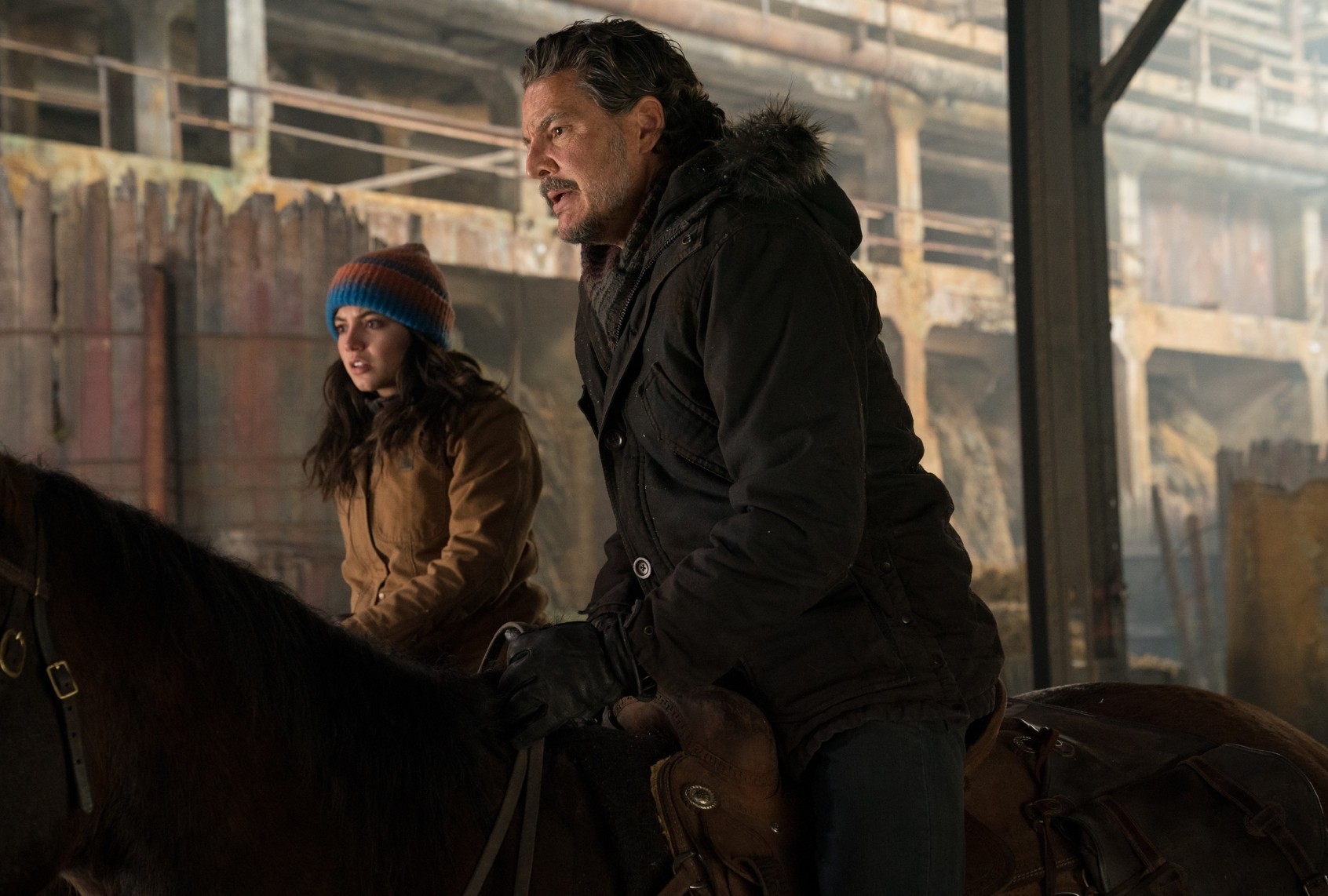
Isabela Merced and Pedro Pascal in "The Last of Us" (Liane Hentscher/HBO)Character: Joel Miller (Pedro Pascal)

Status: Alive

Let’s start with Joel. Pre-apocalypse, Joel was a contractor working in Texas. He was raising a teenage daughter named Sarah and he worked alongside his brother, Tommy. But when the Cordyceps infection hit, Sarah was shot and killed by a soldier. Joel never forgave himself for failing to protect Sarah, but he kept going. After Sarah’s death, the show flashes forward two decades, and we see that Joel has made a life out of scrapping and conning the system within the walls of the Boston Quarantine Zone (QZ). He has a companion named Tess, and we’re meant to understand that the two of them have been an unstoppable pair for a long time. 

Y’all know that Joel Miller is going to fight every time.

When Joel and Tess look for a car battery so that Joel can go find his missing brother Tommy, they run into trouble. A resistance group called the Fireflies has everything that Joel might need, but they want a favor in return: Joel and Tess must bring Ellie to a drop point in exchange for their goods. Joel pushes back, but ultimately relents. However, since this is the unpredictable world of mushroom mania, the Firefly base just outside of the Boston QZ has been overrun. Tess, having been bitten by an Infected, stays behind in order to give Joel and Ellie time to escape. Along the way, they’ve discovered that Ellie is immune to the Cordyceps infection, and Tess believes that if they successfully deliver her to the Fireflies, they might be able to create a vaccine. 


Want a daily wrap-up of all the news and commentary Salon has to offer? Subscribe to our morning newsletter, Crash Course.


As the two make their way through dangerous and compromising situations — we’ll get to all that in the “dead” portion, RIP to so many people — Joel begins to soften toward Ellie. Instead of being cargo to him, she becomes a person, and then a person he loves dearly. By the end of their journey together, Ellie is basically a daughter to Joel. His emotional walls come down, but he still hasn’t done anything to resolve his trauma from failing to protect Sarah all those years ago. So, when Ellie and Joel finally reach their destination and Joel finds out that the Fireflies are planning to kill Ellie in the quest for a cure, he goes berserk. His fight-or-flight is activated, and y’all know that Joel Miller is going to fight every time. 

After Joel murders dozens of Fireflies, he reaches the operating suite. The surgeon tries to take a stand, but Joel quickly kills him, too. The nurses unhook Ellie and Joel lets them live, but he spirits Ellie away in a car before she can wake up and see the truth. Later, he covers up for his massacre by telling Ellie that the Fireflies couldn’t come up with a cure and that they released her. Ellie is obviously suspicious of this. The season ends on an auspicious note as Ellie asks Joel once again if he’s telling the truth, and her response is a very delayed, “OK.” 

Bella Ramsey in "The Last of Us" (Courtesy of HBO)Character: Ellie (Bella Ramsey)
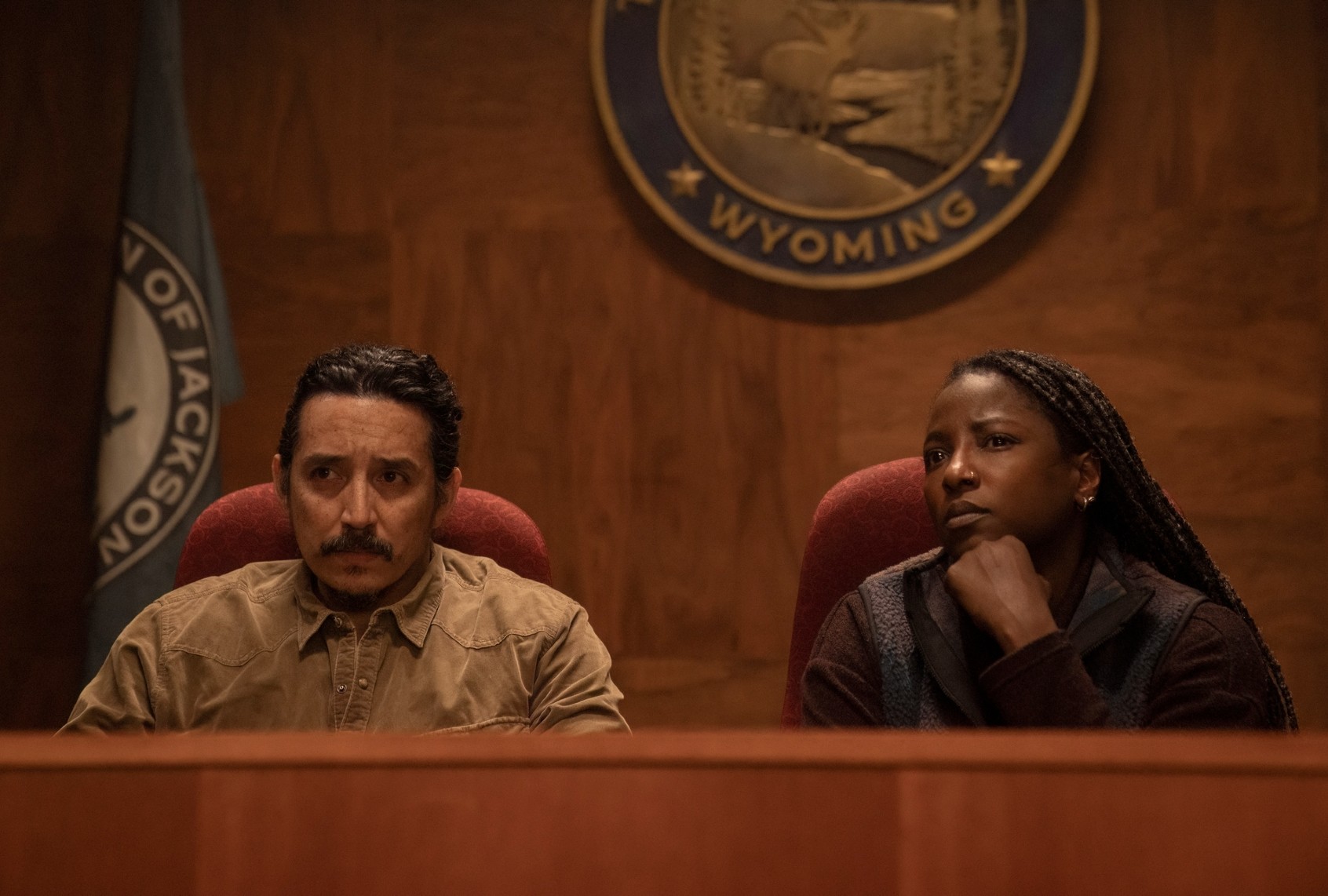
Status: Alive

Ellie, for her part, is a shrewd and intelligent kid. Throughout the season, we get glimpses of her entire backstory, going all the way back to her birth. You see, Ellie is immune to Cordyceps because her mother Anna was bitten by an Infected right as she was delivering her. Anna (played by the original Ellie from the games, Ashley Johnson) was a true warrior, killing the monster right at the same time Ellie came into the world. Seconds after getting bitten, she cut the umbilical cord. Ellie’s brief introduction to Cordyceps at the very beginning of her life made her immune somehow, but the circumstances surrounding her birth also indicate a genetic talent for tactical aggression and rebellion. 

Anna was a member of the Fireflies, along with her friend Marlene. As she’s dying, Anna hands Ellie off to Marlene, who places her in the hands of the government. Throughout the season, we learn about the Federal Disaster Response Agency (FEDRA), and how they control everything within the designated QZs of the country. From birth, Ellie has been raised within the system, and as a teen, she’s forced to attend FEDRA boot camp with the option to either become a grunt worker if she chooses to resist drinking the authoritarian Kool-Aid, or an officer if she chooses to assimilate. She’s struggling when her friend Riley (Storm Reid) comes to take her on a wondrous journey to the center of an abandoned mall. During this outing, both Riley and Ellie get bitten and they decide to “be all poetic and lose our minds together,” but then Riley turns and Ellie doesn’t. 

Ellie, like her father figure Joel, is a survivor.

The Fireflies find Ellie, pair her up with Joel, and their journey begins. Recently traumatized by having to kill her infected friend, Ellie is hungry for any human connection. She gamely tries to endear herself to Joel, and slowly, he finds himself caring about this rebellious kid. As they travel, Ellie begins to respect Joel for his survival prowess, but she also learns a lot along the way. 

By the time Joel is incapacitated by a group of raiders, Ellie finds herself able to work off of her instincts to survive. She encounters two men in the woods, one of whom is the leader of a cannibalistic cult. Eventually, she gets them to give her medicine for Joel, and later, when they capture her, she’s able to escape on her own, brutally stabbing the leader to death with his own knife. Ellie, like her father figure Joel, is a survivor. 

However, just as Joel begins to realize how important Ellie has become to him, the situation flips. After Joel massacres the Fireflies to save Ellie, we see that Joel is the one desperately trying to endear himself to his young charge, and that Ellie’s pushing back because she doesn’t fully trust what he’s saying. The conflict between the two is sure to loom heavily over the second season. 

Gabriel Luna and Rutina Wesley in "The Last of Us" (Courtesy of Liane Hentscher/HBO)Characters: Tommy (Gabriel Luna) and Maria (Rutina Wesley)
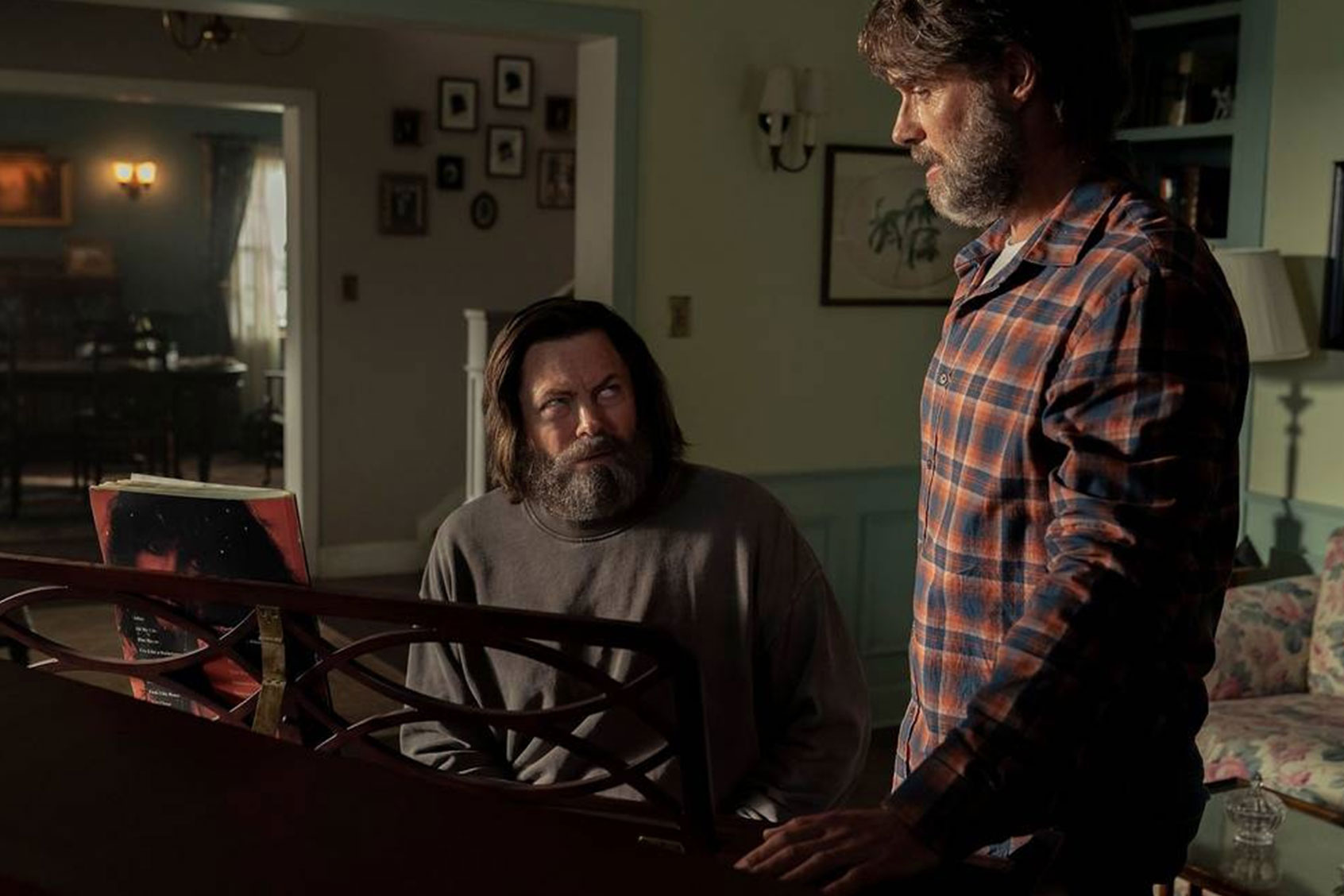
Status: Alive

As Ellie and Joel first embarked on their journey, they had two goals: Get Ellie to the Fireflies, and find Joel’s brother, Tommy. And in the sixth episode of the first season, they finally locate him. Tommy had been living in a commune in Jackson, Wyoming. Joel finds out that his brother is in a relationship with one of the leaders, Maria, and that they’re expecting a child. Jackson seems like an idyllic place to live, with running water, electricity, and the community gathering together to do adorable things like watch old movies. There are zero sinister vibes here, just love and light. It’s almost too good to be true. 

Joel and Ellie choose to leave so that Joel can fulfill his mission, but the pair was on their way back to the commune in the final moments of the Season 1 finale. Tommy, Maria, and Jackson are sure to play a role as the next season begins to unspool. But if we’ve learned anything from other post-apocalyptic stories like "The Walking Dead," we know that nothing good can stay. 

The Last of UsNick Offerman and Murray Bartlett in "The Last of Us" (Liane Hentscher/HBO)Characters: Bill (Nick Offerman) and Frank (Murray Bartlett)

Status: Dead

Bill and Frank know all too well how nothing good can stay, but their story is a bit different than almost anyone else’s on "The Last of Us." They’re worth mentioning because their story packed such an emotional impact within the world of the show and also on the world at large. 

Bill was a survivalist; Frank was a man who got stuck in one of his traps. The two of them fell in love and led a beautiful life together in the gated community that Bill created for them. They even connected with Tess and Joel as trading partners and, eventually, friends. However, after years of struggling with a neurodegenerative disease, Frank asks Bill to spend one last day with him. At the end of that day, the two men drink a bottle of wine laced with a gigantic dose of sleeping pills, peacefully ending their own lives. When Ellie and Joel arrive at their house, Bill has written a letter to Joel, reminding him to protect the people he loves. Bill’s sentiment proves to be the overarching theme of the entirety of "The Last of Us": In a world where nothing can stay, protect the things you love.  

The Last of UsBella Ramsey and Keivonn Woodard in "The Last of Us" (Liane Hentscher/HBO). Characters: Henry (Lamar Johnson) and Sam (Keivonn Woodard)

Status: Dead

Joel and Ellie’s journey is also echoed in a pair they meet on the road to Wyoming. When passing through the Kansas QZ, Ellie and Joel get derailed by some scavengers, kill the scavengers, and then find themselves the subject of a city-wide manhunt. Coincidentally, Henry and Sam — a pair of brothers — are also being hunted for giving up the leader of the Kansas resistance. The much-older Henry fed FEDRA information in exchange for medicine to treat his younger brother Sam’s leukemia. As the group teams up in an attempt to flee, we see that the terrorizing reign of FEDRA is over, and the people are now in charge. However, as led by a revenge-filled mercenary named Kathleen (a terrifically terrifying Melanie Lynskey), the resistors don’t prove themselves to be any better than FEDRA. 

We need your help to stay independent

Kathleen and her crew catch up with Henry, Sam, Joel and Ellie just as they’re about to escape the city. However, a huge sinkhole opens up in the ground and a swarm of Infected descends upon everyone. Kathleen is killed, and Sam is bitten. Sam doesn’t tell anyone that he’s been bitten until they’re safe, and even then he only tells Ellie. Ellie tries to stay up with him, much like she did with her friend Riley, but she falls asleep and he turns, attacking her as the dawn breaks. Henry and Joel are shocked when the two kids come rolling into the living room, and Henry impulsively shoots his little brother. In full shock over what he’s done, Henry turns the gun on himself, yet again underscoring the thesis of "The Last of Us." Is life worth living if we can’t protect the ones we love? 

Merle Dandridge in "The Last of Us" (Liane Hentscher/HBO)Character: Marlene (Merle Dandridge)
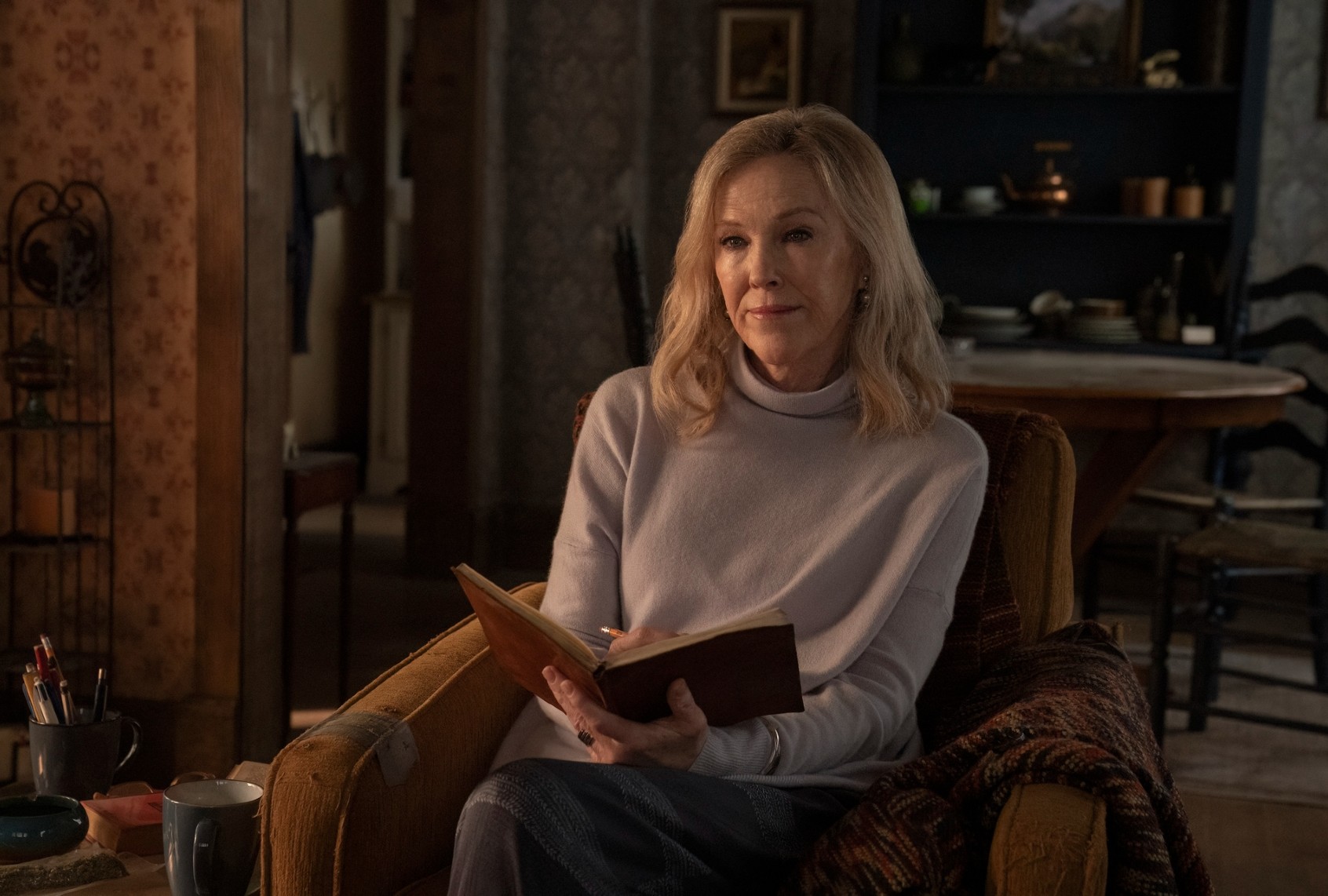
Status: Dead

The leader of the Fireflies has a different mission than almost everyone else we meet on the show because she’s thinking bigger. Her mission is to provide a cure or vaccine for the Cordyceps infection. However, in the Season 1 finale, as Joel mows his way through the entire Firefly compound in order to save Ellie, Marlene proves to be the final boss. Instead of fire power, she has reason on her side. She tries to explain why Ellie’s sacrifice is so important to humanity, and then, when that doesn’t work, she pleads for her own life. Joel isn’t buying it. So he kills her. Seeing as how Marlene was the leader of the country-wide resistance effort, it feels like Joel’s decision to murder her in cold blood will surely have consequences. 

Catherine O’Hara in "The Last of Us" (Liane Hentscher/HBO)Character: Gail (Catherine O’Hara)

Status: Season 2 newbie

Joel clearly has some stuff to work out, and Gail might just be the person to help him. In the trailer for Season 2, we see her engage in what looks like a therapy session with the gruff guy. He seems to have met his match because she doesn’t flinch at all. We don’t know much else about O’Hara’s character, but for those of you worrying that she won’t be bringing her flair for the comedic to the otherwise bleak world of the show, don’t fret. In a recent interview with Entertainment Weekly, O’Hara said, "You don't quite know why she's got . . . well, she's got this edge to her, but it makes for some weird, good dark comedy, I think. So, it's there. I never want to deny the gift of humor."

Young Mazino in "The Last of Us" (Courtesy of Liane Hentscher/HBO)Character: Jesse (Young Mazino)

Status: Season 2 newbie

We don’t know much about Jesse, beyond that he’s very cute. Okay, fine, there’s more. From the Deadline casting announcement, we also know that “he’s a pillar of his community who puts everyone else’s needs before his own, sometimes at terrible cost.” Oh man, should we all start the pre-grieving process now? 

Isabela Merced and Bella Ramsey in "The Last of Us" (Liane Hentscher/HBO)Character: Dina (Isabella Merced)

Status: Season 2 newbie

Since Ellie can literally never get a break, Dina seems to be a character to worry about in Season 2. According to Entertainment Weekly, Dina is Ellie’s love interest this season. Druckmann and Mazin state that she’s, “. . . warm, brilliant, wild, funny, moral, dangerous and instantly lovable.” Like Ellie, we’re all sure to get very attached to her . . . but maybe we shouldn’t get too close. 

Kaitlyn Dever in "The Last of Us" (Liane Hentscher/HBO)Character: Abby (Kaitlyn Dever)

Status: Season 2 newbie

Casting Kaitlyn Dever in the upcoming season of "The Last of Us" proved to be controversial for many fans of the game. According to Deadline, Abby is one of three “playable characters” in "The Last of Us Part II," and will play a big role in the upcoming season. Fans of the games are irked that Dever doesn’t look like Abby from the games, seeing as she’s not as muscular or large. However, Neil Druckmann dispels these concerns, stating to Variety that “Kaitlyn Dever wanted to work with us; we wanted to work with her. It’s not worth passing it up to continue a search that might never bear fruit to find someone that matches the physicality.”

If you know about Abby, you know, but if not, the table seems to have been set for her to bring chaos to the show at large. In Season 1, "The Last of Us" proved that they won’t pull any punches — in fact, we know that every punch is going to hurt — so let’s all get ready for some devastation on April 13th. 

“Hot Ones”: What happens to your body when you eat spicy food?

Eight years after his first appearance on “Hot Ones,” Kevin Hart reprised his seat at the table to eat spicy wings a second time around. The actor and comedian said he’s nervous from the get-go. “This is a good time for me to check the exits just so I know…If I do need to go, understand that I’m not playing,” Hart warned host Sean Evans. And yet, he willingly subjected himself to 25 minutes of pain and torture. After eating his seventh chicken wing, which is coated in Butterfly Bakery Hot House Hot Sauce, Hart is struggling. “That’s the toughest one so far…That one right there, f**k man!” he exclaimed while coughing, gagging and sniffling.

Since its inception in 2015, First We Feast’s “Hot Ones” — “the show with hot questions and even hotter wings” — has featured over 300 celebrities, including actors, comedians, musicians and athletes. The premise of the YouTube talk show is simple: guests must eat a platter of 10 increasingly spicy chicken wings alongside Evans while answering his questions. But making it until the very end is not an easy feat. DJ Khaled infamously tapped out after eating just three wings. Taraji P. Henson brought in her bodyguard Dave to finish her remaining wings. And Bobby Lee quite literally pooped his pants on camera.

Why do celebrities put themselves through such humiliation? And why do the show’s guests — like Hart — keep coming back for more?

Sure, there’s the promise of good, buzzy press. Celebrities are offered an opportunity to promote their upcoming projects in a sensationalistic yet humanistic and, oftentimes, meme-worthy manner. But there’s also a more scientific reasoning. Spicy foods blur the lines between pleasure and pain, which makes them catalysts for great onscreen drama. Such foods contain a chemical compound called capsaicin that binds to pain receptors in our body once consumed.

“That’s what produces that heat or burning sensation,” explained Dr. Alexa Mieses Malchuk, a family physician based in Chapel Hill, North Carolina. “Your body perceives that as overheating and that, in turn, is what causes us to sweat.”

She continued, “Spicy foods — and that sort of pain perception — also make the body produce endorphins, which is the same chemical that runners get when they're running a marathon. They get that runner's high. I wouldn't say it's full-blown euphoria, but that is why, despite being painful, people still seek out spicy food.”

Dr. Malchuk added that endorphins can promote a sense of well-being, even happiness and comfort.

Certain individuals are more drawn to the thrill of eating spicy foods than others. Take for example the self-described chiliheads, a tight-knit community of spicy pepper enthusiasts. Their choice of peppers isn’t your run-of-the-mill jalapeños or habaneros. Instead, they include harrowing names like the Ghost pepper, the Carolina Reaper and other hybrid peppers that boast high Scoville units.      

Hulu’s 2024 docuseries “Superhot: The Spicy World of Pepper People" spotlighted the chili subculture and several pepper personalities, like Johnny Scoville. Scoville, a popular chili pepper reviewer who has been described as the Elvis Presley of chiliheads, described his pursuit of spice as an addiction.

We need your help to stay independent

“It’s just a beautiful thing,” Scoville said in the documentary. “I love pepper pain. I love pain, and this is my favorite kind of pain.”

“From the time I got to college, I sort of felt like an addict who hadn’t found his drug yet,” he said. “And I basically looked for it, and I tried them all. Over a decade ago, I quit all of them. The only buzz I get is from peppers. There’s always gonna be something hotter, and I’m gonna find it.”

Outside of “Hot Ones” and chiliheads, spicy foods have been enjoying a global moment. Food manufacturer Kalsec noted in its 2024 Beyond the Burn report that an increasing number of consumers were seeking out spicier flavors and hot foods. A survey conducted online with approximately 6,000 consumers found that 65 percent of consumers said they were eating spicier foods today than they were a year ago.

“We are seeing a continued global increase in demand for heat as well as an increasingly diverse flavor palate, with consumers seeking new flavor profiles from different regions and cultures,” said Mark Staples, vice president of global marketing at Kalsec. “The growing popularity of spicy flavors presents a significant opportunity for food ingredient manufacturers to develop innovative and flavorful products that cater to the discerning tastes of their consumers.”


Want more great food writing and recipes? Subscribe to Salon Food's newsletter, The Bite.


According to market research firm Circana, sales for food and beverages with “spicy” in the description have increased nine percent year-over-year. Additionally, 11 percent of 25 to 34-year-olds enjoy “bold and unexpected flavors,” which is a seven percent increase from 2019.

Brands have also hopped on the spicy and “swicy” — a portmanteau of “sweet” and “spicy” — trends. Last February, Coca-Cola released a spicy version of its OG soda, aptly called Coca-Cola Spiced. And in April, Starbucks released a new, limited-time spicy line of lemonade drinks in three flavors: Spicy Dragonfruit, Spicy Pineapple and Spicy Strawberry.

Indeed, the increased preference for spicy foods is a significant cultural phenomenon. People worldwide can’t stop craving spicy, whether that’s indulging in fiery foods or watching celebrities attempt to conquer the infamous Wings of Death.

“Make America Great Depression Again”: “Saturday Night Live” mocks Trump tariffs

With the stock market spiraling and fears of a recession growing, there was almost no question about where "Saturday Night Live" would focus its cold open. 

The typical slot for the sketch show's political comedy tore into Donald Trump's widespread tariffs, with James Austin Johnson's take on the president predicting that his plan would "Make America Great Depression Again."

The sketch served as a showcase for Johnson's discursive and oddly inflected take on Trump, ranging from bits about Cheesecake Factory to the uninhabited islands that the Trump admin subjected to a 10% import tariff.

"It's called Heard and McDonald Island," he said. "Can you imagine that? A Big Mac in a hula skirt. Ooh-la-la." 

After being handed a mock-up of McDonald's Island, featuring chicken nuggets dancing around a skirted Big Mac under french fry palm trees, Johnson rattled off a rapid-fire series of self-referential jokes about the show's history.

"I want to go to there. Tina!" he said. "Get me to God's country, right? Remember that?"

Johnson's Trump ran through the best ways to eat cat meat (braised) and reassured the country that "everything is going to be fine and/or bad" before handing the microphone over to Mike Myers' Elon Musk

SNL's Musk and Trump played up the reported rift between the president and his adviser, with Trump saying, "It's time to never see you again."

Myers as Musk responded to the wave of Tesla dealership protests and vandalism with a new Tesla model that will vandalize itself, giving users a choice between graffiti of a swastika or a penis. 

"Swastikas or penises," Johnson's Trump said. "We're truly the party of Lincoln."

Watch the sketch below:

The right’s 60-year war on higher education

"How far do we go in tolerating these people & this trash under the excuse of academic freedom & freedom of expression? . . . Hasn't the time come to take on those neurotics in our faculty group and lay down some rules of conduct for the students comparable to what we'd expect in our own families?"

No, this is not a threat from President Donald Trump in 2025.

It is an excerpt from an August 1967 letter from Ronald Reagan, who had been elected the governor of California six months prior, to Glenn Dumke, the chancellor of the California State University system.

Trump's ongoing attacks on higher education echo the right-wing playbook that Reagan created nearly six decades ago. In a 2024 campaign video, Trump declared that "We are going to get this anti-American insanity out of our institutions once and for all. We are going to have real education in America." The goal, he said, would be to take back "our once-great educational institutions from the radical left."

In recent weeks, Trump has threatened to withhold $9 billion in federal money from Harvard and another $575 million from Columbia University and the University of Pennsylvania.

Both Reagan and Trump knew they were tapping into popular discontent with elite universities. For Reagan, it was the mass protests and arrests resulting from the Free Speech Movement at the University of California, Berkeley. For Trump, the source of public anger came from the pro-Palestinian demonstrations and encampments held at dozens of universities in early 2024.

A dissatisfied American public

Trump, like Reagan, sees political dividends in his attacks. In 2012, 26% of Americans said in a survey by the Pew Research Center that colleges had a negative effect on the way things were going in the country. Last year, Pew revealed those negative views had climbed to 45%.

In 1966, Reagan won an upset election against incumbent Gov. Pat Brown by vowing to "clean up the mess at Berkeley." Once in office, he acted on his verbal threats by firing Clark Kerr, the president of the multi-campus University of California system. Kerr was widely admired in academic circles, but to Reagan, he was "soft" and had "appeased" campus protesters. The next year, when the Black Students Union lead a campus-wide strike that shut down San Francisco State College, Reagan called for police intervention and said the campus should be kept open "at the point of a bayonet if necessary."

"Reagan created a blueprint for the long-term success of the Republican Party as the voice of conservative 'middle America' and 'the silent majority,'" one historian writes.

In February 1970, five days of noisy anti-war protests erupted when local police arrested a student carrying a wine bottle. A full-scale riot ensued, with buildings and police cars set on fire. The police confronted the rioters with guns and shot and killed a university student (ironically, not one of the protesters). Reagan later defended the police response, saying anti-war campus protests had to be stopped. "If it takes a bloodbath, let's get it over with," he said. "No more appeasement."

Steve Brint, a historian at the University of California, Riverside, observed that by repeatedly cracking down on university protests, "Reagan created a blueprint for the long-term success of the Republican Party as the voice of conservative 'middle America' and 'the silent majority.'"

While Reagan was the first Republican candidate to score a major political win by assailing higher education, the party's animosity to the liberal atmosphere on many college campuses can be traced back to the 1951 publication of William F. Buckley's "God and Man at Yale: The Superstitions of Academic Freedom."

Caste rule at Yale

Buckley, a devout Catholic from a wealthy Connecticut family, graduated from Yale in 1950. Buckley's book became a surprise best-seller. He would go on to publish the National Review and host the PBS interview program, "Firing Line."

In an introduction to the book, John Chamberlain, a conservative editorial writer for Life magazine, endorsed Buckley's accusation that Yale had set-up "an elite of professional untouchables . . . The elite would perpetuate itself as it chose. Departments would select their staffs without reference to alumni or parental or undergraduate opinion . . . This is caste rule as applied to education, it might be unkind to call it 'Fascism,' but it certainly is not democracy."

Chamberlain said he endorsed Buckley's criticism that Yale faculty was "skeptical of any religion and interventionist and Keynesian as to economics and collectivist as applied to the relation of the individual and government."

While many conservative Republicans agreed with this condemnation, they found little traction with the public in the 1950s. Universities were filled with veterans on the G.I. Bill. President Eisenhower, who had briefly served as the president of Columbia University before the election, believed American colleges were important to a rising middle class and endorsed generous funding for them.

While running for president in 1980, Reagan vowed to eliminate the Department of Education, decades before Trump. Reagan could not get a Democratic-led Congress to accept that pitch. During his two terms, however, he cut the federal budget for education, both primary and higher, by 25%. He ended a number of federal grants for college students and pushed for private loans.

Since then, every Republican presidential candidate has vowed to reform higher education, with numerous attacking "Marxist" or "radical left" university faculty.

So far, the Trump administration has not deployed law enforcement to tamp down on student protests, but it has detained nearly a dozen students and faculty members on college campuses, individuals with student or work visas, who are alleged to have participated in pro-Palestinian demonstrations.

The State Department has revoked at least 300 student visas, according to Secretary of State Marco Rubio. "It might be more than 300 at this point. We do it every day," he said at a recent press conference in Guyana. "Every time I find one of these lunatics, I take away their visas."

Universities on the defense

Trump's attacks on "radical left" universities have taken a toll on their leadership. Since the spring 2024 pro-Palestinian protests, six college presidents have resigned, including two at Columbia.

Universities are not without resources, however, and many have begun to fight back. University leaders have started meeting directly with members of Congress, as well as hiring lobbyists. Some 50 institutions, including Harvard, Columbia, Yale and Stanford, have hired lobbying firms since the election.

A February poll of some 100 college and university presidents by the Yale School of Management found that 100% of respondents agreed that their schools needed "to do a much better job of conveying their value proposition."

Perhaps they will invoke the advice of one founding father, Benjamin Franklin, who wrote that "An investment in knowledge pays the best interest."

Donald Trump v. Europe: A thin line between love and hate

We have all encountered the mildly irritating American friend who returns from a few weeks in Europe — maybe as much as an entire semester! — with a “global perspective.” Maybe they’ve come back with a new pair of shoes, a jacket from Galeries Lafayette or Van Graaf, some bits of useful foreign-language slang, a renewed commitment to grilled fresh fish and the perfect summer white wine. If you’re reading this now, in fact, there’s about a 50/50 chance you have been that American at some point in your life. (I certainly have.)

But the thing about this syndrome — which, in its more cringeworthy try-hard versions, comes with protestations that “I really don’t think of myself as American” — is its obvious and painful effort to separate the protagonist from those other Americans, the ones we eagerly join the rest of the world in deprecating, deriding and lamenting. 

A fair amount of this is about invidious class distinctions: We certainly don’t wish to be conflated with the tour-bus hordes of bewildered Midwestern seniors in lamentable fashions, stock characters of European sitcoms a generation ago. These days we may dread a more contemporary version: Think Kimberly and Justin from the outer metropolitan suburbs, with their NCAA-branded leisure wear and mirrored shades, their Instagram “discoveries” of well-known Amsterdam or Ibiza nightspots and their exaggerated comic dismay at the unfamiliar food, volatile prices, small beds and tepid showers. 

But beneath those time-honored stereotypes of the “ugly American” lies another one, more dimly apprehended and shadowed by fear, next to which the loud, innocent ignorance of Kimberly and Justin — who have ventured forth from Applebee-land to Venice or Edinburgh or the castles of the Rhineland largely to say they have done so — seems positively benevolent. Those mockable tour-bus and/or social-media tourists are the puzzling public face of the greatest military and economic superpower in world history, whose ability to dominate global affairs and, especially over the last half-century or so, to screw them up beyond repair, is without parallel. 

The truly dangerous Americans, the ones from the corporate suites, the Wall Street banks and the national security agencies, wouldn’t be caught dead at the mall where Kimberly and Justin spend their Saturday afternoons. They have acceptable manners (or at least they did until recently), designer suits, top-shelf golf and tennis gear. They rarely need to speak to anyone who doesn’t speak English. They are well acquainted with the five-star hotels, gourmet restaurants and exclusive boutiques of several world cities. They have a favorite Italian red and, indeed, have dined with the winemaker and his family — an unforgettable experience! 

You know who I’m going to bring up next, don’t you? In Donald J. Trump, the various species of ugly American have reached their conjoined apotheosis. His peculiar love-hate relationship with Europe — embodied this week in the launch of a ruinous trade war, a policy that comes with multiple “Do not use” labels affixed in the 1890s and 1930s — may seem inexplicable or anomalous, but arises from a long history of mutual incomprehension. As is so often the case with Trump’s “policies,” it’s no good pretending that his demolition of the transatlantic alliance came out of nowhere: The Euro-American marriage has been heading toward Ben and J-Lo territory for some time. The new world order that Trump and his Elon-flavored pals hope to create by blowing things up will not come into being; that doesn’t mean the old one was working.

As is often the case with Trump’s "policies," it’s no good pretending that his demolition of the transatlantic alliance came out of nowhere: The Euro-American marriage has been heading toward Ben and J-Lo territory for some time.

For Trump, the supposedly political is always personal, and it’s more than reasonable to connect his well-known loathing for the European Union to a narrative of petty private grievance. (How many of those can exist within one individual’s psyche? It’s no wonder there isn’t room for anything else.) As Fintan O’Toole notes in an extended analysis for the New York Review, Trump appears to believe that malicious EU bureaucrats thwarted his plans for a “massive, beautiful expansion” of his “magnificent” golf resort in Ireland. That happened (or rather did not happen) more than a decade ago, but Trump felt impelled to spin the tale all over again last month, during Irish Taoiseach Micheál Martin’s White House visit.

If you don’t find it credible that the president of the United States might make dreadful and highly consequential policy decisions because of a long-concluded regulatory dispute over a golf course, you haven’t been paying attention. As O’Toole also observes, Trump’s anti-European animus has a potent psychosexual subtext, simultaneously rooted in right-wing American macho posturing and his own infantile sense of narcissistic injury. 

At least since the U.S.-EU split over the 2003 invasion of Iraq — in retrospect, the most obvious early symptoms of the impending transatlantic divorce — “antagonism toward Europe has been shaped by a highly sexualized binary opposition of American masculine potency to European feminine feebleness.” As Salon contributor and former congressional staffer Mike Lofgren observes in a memorable column this weekend, that was also when Rep. Bob Ney, a soon-to-be-disgraced Ohio Republican, decreed that French fries would henceforward be called “freedom fries” in the House cafeteria. In fact, I think those gendered stereotypes — Americans as virile and manly; Europeans as emasculated or effeminate — go back much further than that, and were inhaled by nearly all American men of Trump’s generation. 

This extends beyond schoolyard misogyny into full-on homophobic terror with Trump’s claims that “the European Union was formed in order to screw the United States,” as he said to Bob Woodward during a first-term interview and repeated verbatim this February. (He has a mynah-bird propensity for saying exactly the same thing, in exactly the same cadence, over and over again.) What could possibly be worse than the frustrating failure to defeat a bureaucratic organization run by “nasty” women like European Commission president Ursula von der Leyen and European Central Bank president Christine Lagarde? Only the prospect of being “screwed” by them or, shall we say, turned into their b**ch. 

All of this is unquestionably relevant, but I think it’s important to perceive another layer of the semi-conscious Trumpian mind, below or alongside his seething, uncomprehending rage toward the supposedly female-centric order of contemporary Europe and its mystifying refusal to bend the knee. JD Vance, Elon Musk and other factotums of the Trump regime may have “developed a malevolent interest in destroying the EU,” in O’Toole’s words, by trying to empower its various whackadoodle far-right parties (which are definitely not pro-American, whatever else they may be). Those dudes are trying to play the sinister “ugly American” roles, although with a singular lack of suavity and not much success. (For the most part, their schemes are backfiring almost as badly as Musk’s Wisconsin meddling.)

But Trump almost never thinks in larger strategic terms, or at least not about anything beyond his own whims and desires. I said earlier that Trump had a love-hate relationship with Europe, and I meant it: He’s a lot closer to the befuddled accidental-tourist character in plaid shorts and flip-up sunglasses, gazing open-mouthed at the Changing of the Guard or wondering why there aren’t tours of the Bastille, than the smooth assassin out of a jewelry commercial. Like so many Americans of a certain class and character, he’s besotted with the British royal family and insisted, in defiance of all available evidence, that he was good friends with the late Queen Elizabeth. He was delighted when Emmanuel Macron, to the latter’s indelible shame, played host for a Bastille Day military parade (and became obsessed with staging his own).


Want a daily wrap-up of all the news and commentary Salon has to offer? Subscribe to our morning newsletter, Crash Course.


I’m virtually certain Trump would tell us that he loves Europe — that is, he loves the idea of Europe as he thinks it used to be: picturesque, charming and distinctly second-rate. He preferred it, of course, when its most visible residents were overwhelmingly white, relatively poor and obsequiously grateful for American tourism and American investment. It was a lot more fun — not to mention easier to exploit in commercial terms — when all those countries had their own currencies, and you could bring a wad of colorful but nearly valueless banknotes home for the kids. The fact that Europe’s uncharismatic currency union (and the “nasty” regulatory regime that came with it) is clearly correlated with rising living standards, including better health care and longer average life expectancy than the U.S., must be especially indigestible.

Trump may have half-listened while Musk or Vance or some other genius underling laid out a crackbrained scheme for weaponizing Europe’s social and political divisions in order to carve up the continent. But probably not.

Of course Trump isn’t much interested in facts, let alone other people’s theories. He may have halfway listened while Musk or Vance or some other genius underling laid out a crackbrained scheme for weaponizing Europe’s (very real and undoubtedly hazardous) social and political divisions in order to carve up the continent, Yalta Conference-style, between Russian-dominated and American-dominated zones of captive authoritarian regimes. (That’s O’Toole’s approximate theory of the case.) But probably not. His view of the world, as you may have noticed, lacks any strategic coherence: Withdrawing from NATO and ditching foreign aid don’t mesh well with his neo-feudal or neo-imperial fantasies, nor does a trade war that’s likely to send the global economy into recession and torpedo his own party’s political fortunes.

This brings us back around to the fundamental problem that underlies all versions of ugly-American roleplaying, both historically and in the rebooted Trump regime: It’s rooted in weakness, not in strength. That’s clearly true of fascist-flavored politics in general, which is often based on projecting forbidden attitudes and desires onto a despised opponent, but in this case it also reflects the longstanding American inferiority complex regarding the culture and history of the “Old World.” 

That anxiety never entirely evaporated, even as the U.S. rose to dominant superpower status over the course of the 20th century. A quarter of the way through this century, the arrogant swagger associated with American cultural, economic and military hegemony — which was, without a doubt, highly seductive to much of the world for quite a while — now looks both clownish and dangerous. Europeans began to perceive the danger long before Americans did, and now the transatlantic rupture has become unavoidable, even for those wearing reality-distorting Yank-goggles. In this as in so many other ways, Donald Trump serves as history’s alarm clock.

But what Trump and his minions cannot do, as they blunder around breaking things and congratulating each other by emoji, is to force Europe backward into picture-postcard fantasyland, or build a new American empire. They are too weak for that, and much too stupid. They can certainly extort a painful price from the world while trying to, and the full reckoning may be more than we can bear.

One small part of Pete Hegseth’s wardrobe is a big tell

It’s anybody’s guess how long Pete Hegseth will be Secretary of Defense, given the wont-go-away controversy over his use of Signal to share details of an impending attack on Houthi forces in Yemen. Maybe he’ll weather that storm. On the chance that he does, I have a bone to pick with him – less cosmic, but something that speaks volumes about his probity and fitness for office.

It's about the flag, “Old Glory.”

Americans, most of us anyway, cherish the flag and are proud to display it (preferably the right way rather than inverted, as the U.S. Code permits, “as a signal of dire distress in instances of extreme danger to life or property”). President Nixon seems to have been the first holder of that office to make a practice of wearing the flag as a lapel pin. Indeed, he required White House staffers to do so as well. The practice caught on, and now it’s nearly de rigueur for politicians to wear it on their attire. In fact, it’s grown so ubiquitous that it has become an empty gesture, the sartorial equivalent of saying “thank you for your service” to anyone who now serves or ever did. Overused, it tends to lose meaning.

Enter Pete Hegseth, who has mastered the “full MAGA look,” according to New York Times fashion and style reporter Jacob Gallagher. Mr. Hegseth is clearly into displays, as witness his attention-grabbing tattoos. But his tattoos are his problem – notable now mostly for the fact that they would very likely prevent him from entering the armed forces if he today sought to enlist. In any case, they are hidden from view, except when he or others circulate photos of them.

More disquieting, given his role as top civilian official in the Defense Department, is the poor example he sets when displaying the flag. Video taken during his round of pre-confirmation Senate interviews shows him ostentatiously opening his suit jacket to display a garish American-flag lining. Who does this man’s wardrobe? Geez.

But at least a suit lining is not on perpetual display. So let’s talk about his American-flag pocket square. It seems to be a permanent part of his day-to-day dress-for-political-success attire. Who even knew there was such a thing? A quick internet search reveals that flag-motif pocket squares are readily available from a variety of sources.

So what’s wrong? What’s wrong is not merely that section 8(d) of the flag code forbids use of the flag as wearing apparel, as a letter to the editor of the Washington Times pointed out, but, more specifically, that a pocket square is a handerkerchief. And a handkerchief’s purpose, other than as a fashion statement, is to keep things tidy when blowing one’s nose. As a result, Mr. Hegseth’s pocket square is nothing to sneeze at. Indeed, using the flag as a handkerchief has at least twice led to courts-martial. A hospitalman at the former Naval Hospital in Chelsea, Mass., was charged with, among other things, desecrating the flag by blowing his nose on one. His intrepid Yale-educated defense counsel – having precious little to work with — got the flag charge dismissed, arguing that “but for the accident of physiognomy, the accused’s deed would have been protected free speech” (or – as we say in courts-martial – “words to that effect”). 

We need your help to stay independent

Years later, in United States v. Wilson, the Army Court of Military Review wrote:

The appellant, a military policeman (MP), while preparing for a flag-raising detail, complained to his fellow MPs that the Army and the United States “sucked.” Another MP told him that he should move to a communist country if he didn’t like it. The appellant replied, “[t]his is what I think,” and blew his nose on the American flag, leaving on the flag “a small wet circle.” After another brief exchange of words, the appellant participated without further incident in the flag-raising detail. For his action the appellant was charged with dereliction of duty in that he “willfully failed to ensure that the United States flag was treated with proper respect by blowing his nose on the flag when it was his duty as a military policeman on flag call to safeguard and protect the flag.”

Rejecting a First Amendment challenge, the court upheld Private Wilson’s conviction and sentence to four months in the stockade, a bad-conduct discharge, and other penalties.

If Pete Hegseth wants to show how patriotic he is, he might consider displaying a different pocket square. If he wants to set a proper example, he must do so.

“Bigorexia” can make a gym obsession harmful but often goes unrecognized

When Kenan was 16, he started going to the gym to get bigger. He had been bullied his entire life about his size, and once he started to see his body change in the mirror he couldn’t get enough.

“I got some results and then just ran with it,” Kenan, who is using his first name only for privacy reasons, told Salon in a phone interview. “It was like a dopamine loop from hell for the next 10 years.”

Kenan’s time at the gym began to eat up the rest of his life. He would skip hanging out with friends or going on trips if it meant that he couldn’t work out. He started counting every “macro” — or macronutrient of proteins, carbohydrates and fats — that went into his body, adding thousands of calories of canola oil to his smoothies so he could put on weight. He even brought his own prepackaged meals to his cousin’s wedding so he could be sure the food served there was not interfering with his regimen.

“Basically, if I did not have a great gym session where I got stronger or felt like I was improving, it ruined my entire day,” Kenan said. “It would feel like I was a failure, like I couldn’t do anything right.”

At one point, Kenan came across the term muscle dysmorphia in a bodybuilding forum and recognized his own experience. Also known as “reverse anorexia” or “bigorexia,” muscle dysmorphia is a pathologic preoccupation with muscularity. In the most recent version of the psychiatric manual used to classify mental illness, it is listed as a specific type of body dysmorphia rather than its own diagnosis, although it also shares some characteristics found in eating disorders.

“The goal of exercise and physical activity is to improve your life and make you feel happier and healthier,” said Dr. Jason Nagata, an adolescent medicine specialist at the University of California, San Francisco who has studied muscle dysmorphia. “But for these individuals, it becomes a burden and an obsession that they cannot stop thinking about.”

"For these individuals, it becomes a burden and an obsession that they cannot stop thinking about."

Muscle dysmorphia was first classified in 1997 as an "underrecognized" condition that likely afflicted “substantial numbers of Americans.” Although it has recently grown in awareness and some bodybuilders have spoken out about it, relatively little research has been conducted to better understand it since it was first introduced, said Dr. Kyle T. Ganson, a social work professor at the University of Toronto who also studies muscle dysmorphia.

That’s in part because there are no questions specific to muscle dysmorphia on national surveys that are typically used to estimate a condition’s prevalence in the population. And most of the studies examining muscle dysmorphia are small and limited.

Yet muscle dysmorphia has been shown to increase a person’s risk for depression, anxiety, and suicidality. People with muscle dysmorphia are more likely to have experienced a traumatic event than the general population. And people with muscle dysmorphia are also more likely to use supplements and steroids, which carry their own health risks.

Kenan experienced overuse injuries in his elbows, knees and back. One time, he nearly broke a rib on his lifting belt, but he kept going back to the gym, even though it hurt to breathe.


Want more health and science stories in your inbox? Subscribe to Salon's weekly newsletter Lab Notes.


“There was a running calendar my friends would keep about how long it would take me to get injured because I was pushing it too hard,” Kenan said. 

In one study Ganson published earlier this year, he estimated that 2.8% of boys and men in the U.S. and Canada could meet criteria for muscle dysmorphia. It is more common in people identifying as men and in certain populations, like bodybuilders. However, these numbers are likely underestimated. For example, in another 2019 study Ganson conducted, 22% of males and 5% of females reported disordered eating behaviors related to muscularity. 

“We need more research on clinical samples, how to treat these individuals, and what barriers there are to treatment,” Ganson told Salon in a phone interview. “I think a lot of that is still somewhat in its infancy.” 

Eating disorders are themselves understudied within the mental health field, where conditions like anorexia have incorrectly been stereotyped as only affecting teenage girls. Efforts to understand how social media perpetuates unrealistic body standards that affect mental health have also largely been focused largely on girls. Yet the increasing prevalence of muscle dysmorphia suggests it is having an effect on everyone.

In our consumerist society, “more” is often conflated with better.

“Both muscle dysmorphia and anorexia can be viewed as disorders where an individual has internalized these messages about idealized masculinity or femininity in such an extreme way that it is causing distress and dysfunction to the other parts of their lives,” said Linda Lin, a psychologist at Emmanuel College who has studied muscle dysmorphia.

More recent research has demonstrated that one in three eating disorders occurs among boys, and gender diverse people experience them at even higher rates. Yet muscle dysmorphia falls in a unique position where exercise and strength training are considered healthy habits in society, and as such may not be seen as problematic — even when they are pushed to the extreme.

“In general, people with eating disorders like other mental health conditions face stigma, and people don’t want to out themselves for having a disorder,” Nagata told Salon in a phone interview. “I think for boys, there is sort of a double stigma.”

Society supports the idea that muscularity equals masculinity, and the media portrays certain standards for what the male body “should” look like. In addition to male bodies getting larger and larger in superhero movies, one 1999 study found that even the size and muscularity of toy action figures children play with growing up have been expanding over time. In our consumerist society, “more” is often conflated with better. 

“When I went to the gym, my trainer used to ‘boo’ thin people,” said Giuseppe Magistrale, a psychologist who founded an online treatment program for eating disorders called Lilac. “In the gym, it is super normalized. There is a culture.”

With the proliferation of social media, these unrealistic expectations of body image have become even more prolific, adding to the pressures men face to conform to them. In one 2020 study, Instagram posts that represented bigger muscles got more likes. Another published in September in the journal Body Image found the use of filters was associated with muscle dysmorphia symptoms.

“Previous generations didn’t really have that, versus now if you look at movies and TV and all of these things, all of a sudden guys have this intense pressure to look a certain way,” Kenan said. “That pressure was really mounting.”

All of this ultimately delays the time that it takes people with muscle dysmorphia to seek treatment. Like with eating disorders, many people with muscle dysmorphia may end up originally seeking help for something else before the topic of dysmorphia arises. Kenan, for example, ultimately decided to seek help from a therapist after his relationship fell apart. 

Treatments for people with muscle dysmorphia will vary based on the individual and provider, in part because there have been no randomized control trials to test which therapies work best. (One clinical trial testing cognitive behavioral therapy is currently underway in Turkey.) Some are pushing for muscle dysmorphia to be classified as its own disorder, so that it can be better measured and studied.

“The creation of a diagnosis is very important because it validates the problem,” Magistrale said. “In male culture and gym culture, it is still [seen as] a non-existent disorder, so at the cultural level, we have a lot of work to do.”

We need your help to stay independent

Sometimes, treating muscle dysmorphia may involve an interdisciplinary team including a mental health, medical, and nutrition provider, Nagata said. Ultimately, treatment for muscle dysmorphia is about healing the relationship patients have with their body, exercise, and food, said Dr. Lindsey Landgrebe, a licensed sport psychologist who specializes in working with athletes in her private practice

“I think it’s about first understanding their drive for being bigger and more muscular … and then working to build other ways of coping with whatever the underlying distress is,” Landgrebe told Salon in a phone call. “It’s also a matter of expanding how they see themselves so they can understand their value is more than just their appearance.”

Kenan was able to trace the origins of his muscle dysmorphia back to getting bullied as a child for his size. 

“I figured there were two ways to deal with it: either own it, or change it,” he said. “I think that is what started it for me.”

These days, he is going to the gym less and doesn’t restrict his meals. He has been able to redirect the energy he was putting toward the gym into personal development, relationships and his career, he said. 

“I took that tenacity I had at the gym and put it toward reading books and self-educating myself based on what my therapists have suggested,” Kenan said. “I kind of just replaced the hyperobsession I had at the gym with [other parts of] life and found balance.”

Millennials are wealthier than ever — but they don’t feel it

Millennials’ collective net worth has skyrocketed in recent years. According to Federal Reserve data, the generation now holds about $15.95 trillion in wealth, a big leap from just $3.94 trillion five years ago.

By many measures, millennials are doing great — but they don’t seem to feel that way. This disconnect between being wealthy on paper and feeling financially free has been referred to as “phantom wealth," and it could be due to the following factors.

Wealth that’s locked away

While the data shows that millennials have experienced a pretty massive growth in net worth, much of this increase comes from two main sources: rising home values and stock market gains. These are not cash in hand. So millennials might technically be wealthier, but that doesn’t mean they have more disposable income. 

“Both of these assets aren't really liquid, which means millennials don’t have instantaneous access to either of them,” said Kevin Leibowitz, president and CEO of Grayton Mortgage. With this wealth locked away, millennials can’t spend it unless they sell, and even then they’d have to buy in the same inflated market. 

We need your help to stay independent

A deep-rooted sense of insecurity 

Every generation is shaped by defining events in their formative years that influence how they see the world — and how they see money. Bobby Mascia, CEO and founder of Green Ridge Wealth Planning, believes that 9/11, which occurred during millennials’ formative years, is one of the first major disruptions that instilled a sense of uncertainty. 

Then came the Great Recession in the late 2000s. “Unlike previous generations who may have experienced financial hardships more distantly, millennials were deeply affected because they had a front-row seat to the economic turmoil,” Mascia said. During this time, millennials saw their parents struggle with job losses and home foreclosures. The constant news coverage reinforced the fragility of financial security and the banking system.

“Fast forward to the post-COVID era. Millennials have endured not just one economic disruption, but multiple,” Mascia added. “They’ve faced recessions, skyrocketing housing prices, overwhelming student debt and job instability. These compounding factors have made financial security feel like an ever-moving target.”

As a result, millennials have developed a deep-rooted sense of insecurity about money and the world at large. And even once they achieve financial success, they seem to have an underlying fear that stability could disappear at any moment. The world has repeatedly pulled the rug out from under them, so many are struggling with financial insecurity regardless of their actual net worth. 

Social media comparison 

According to a Credit Karma survey, around 33% of Americans experience a distorted view of their financial situation. Younger generations, including millennials, struggle with it the most. And despite having above-average savings, 41% of millennials feel behind financially. 

The culprit for this could be social comparison. Many millennials have grown up using social media and are constantly bombarded by their peers’ curated highlight reels. This endless comparison breeds financial anxiety and a sense of inadequacy, even among those who are actually doing well financially. 

The rising cost of living 

The illiquidity of their assets, coupled with the rising cost of living — due in part to inflation and high interest rates — is another reason millennials feel less wealthy than they appear on paper. According to a Bank of America survey in May 2024, 76% of workers say the cost of living is outpacing growth in their wages, compared to 67% in June 2023.

"Even if millennials' retirement accounts have increased, the day-to-day cost of living has also gone up, which may still make them feel like they’re just getting by"

“So, even if millennials' retirement accounts have increased, the day-to-day cost of living has also gone up, which may still make them feel like they’re just getting by,” said Jordan Mangaliman, wealth preservation specialist and CEO at Goldline Financial Services. 

How to achieve real financial security?

If you’re still constantly stressed about your finances and suffer from money dysmorphia despite a growing net worth, try these steps to develop a genuine sense of financial security. 

Build liquid savings. If most of your net worth is tied up in retirement savings and real estate, consider putting a portion of your wealth in more liquid assets like a high-yield savings account. This way, you can easily access it for short-term needs or emergencies. 

Avoid lifestyle inflation. If your spending increases just as fast as your income, you may never feel financially secure, no matter how much money you make. If you haven’t already, create a budget to keep your expenses under control and maintain a gap between what you earn and what you spend. 

Work on your money mindset. Jay Zigmont, founder and CEO of Childfree Wealth, believes that feeling financially secure comes from shifting your money mindset more than hitting an artificial goal like becoming a millionaire. “Many millennials saw their parents struggle with their finances. These tough times can create trauma around money,” he explained. “Until this trauma is addressed, they may not ever feel real financial freedom.”

Zigmont suggests working with a financial professional for at least six months to help shift this limiting mindset. “And though your finances may not change drastically in those six months, your comfort level will, and that is what matters,” he said.

With “Lazarus,” the creative force behind “Cowboy Bebop” soothes our present vibe with his own

Cowboy Bebop” debuted on Adult Swim on an unsuspecting Sunday in September 2001, nine days before one Tuesday would shatter our sense of security forever: 9/11.

The rest of the shows on the mature animation block were comedies while “Cowboy Bebop” was anime, although unlike nearly anything else the genre’s American aficionados were accustomed to. Shinichirō Watanabe's vision marries futuristic visuals with realism, with the series' jazz score treated as something to be felt and then absorbed, like dry skin lathered in shea butter. Thus, the auteur shaped the Adult Swim brand’s lasting association with a vibe – that indescribable impression that made “Cowboy” character Spike Spiegel as much of a blue romantic as an ace bounty hunter.

Watanabe's latest, “Lazarus,” calls on familiar hints while transporting us to a future near enough to feel like the present, anxieties included. In his version of 2052, the cause of the world’s problems is its presumed cure: a drug called Hapna designed by a celebrated neuroscientist named Dr. Skinner and promoted as a panacea for suffering — as in, all somatic and psychic ills.

Hapna’s affordability and touted lack of side effects led to its global usage, followed by Skinner’s sudden disappearance. Three years after its launch, however, he resurfaces to announce that the drug was designed to be fatal three years after its ingestion, even if someone only took it once. And, surprise, only he has the antidote, giving the public 30 days to find him before the first Hapna users start dropping.

“Lazarus” is named for the underground team assembled to find Skinner, and “Cowboy Bebop” fans may not be able to ignore surface parallels between this and Watanabe’s late ‘90s jam session.

There’s a kid hacker, a former agent who shoots straight and loves starring in honey traps, and in the fore is Axel Gilberto, an acrobatic parkour nut and escape artist recruited straight out of the clink where he’s serving an 888-year sentence. (Which, he explains, isn’t due to a horrific crime but legal math; each failed escape doubles a person’s sentence.)

Watanabe's latest calls on familiar hints while transporting us to a future near enough to feel like the present, anxieties included.

Axel even resembles Spike, although he fights like John Wick, whose creator, Chad Stahelski,​ designs the action sequences. But those intersperse a plot that takes the team through wild cityscapes where we witness firsthand how people respond to knowing a countdown clock to their end is already in motion.

Some keep living as they were. Others, including a hedonistic club owner fond of abusing women, receive their just desserts, late though the hour may be. As with “Cowboy Bebop," the action in "Lazarus" matches a sonic quilt connecting Kamasi Washington’s jazz sensibilities with electronic landscapes by Bonobo and Floating Point. Familiarity with these names or their musical styles isn't essential. What matters is that the whole melds into an undeniable vibe.

Vibes, as a concept, have been maligned recently in the popular imagination. Pundits use the term disparagingly as a catch-all to describe a mode of thinking that’s entirely detached from hard data. The doom and gloom about an economy that was, until recently, described by The Economist as “the envy of the world” was dubbed a “vibe-cession.”

The frenzied excitement generated by Vice President Kamala Harris’ 11th-hour entry into the 2024 presidential race was questioned, if not dismissed, as a “campaign powered by vibes” by a “vibes candidate.”

We need your help to stay independent

Most of us consider vibes to be positive or neutral, a way of giving form to gut sensations or the buzz in your skin. Vibes, good ones, dominate Watanabe’s oeuvre via the curated playlists that bounce or glide behind his imagery. Whether the music adds extra flavor to his raging action scenes or amplifies an episode’s lazy backstroke through existential loneliness, you feel his work’s best moments in your bones.

That specialness makes “Cowboy Bebop” the prescription for sleepless nights, whether it’s because you can’t or don’t want to. The same is true of 2004's “Samurai Champloo” and its throbbing hip-hop heartbeat. The soundtrack to Watanabe’s 2014 fantasy “Space Dandy” is more upbeat compared to the music coloring “Lazarus.”

"Lazarus" (Courtesy of Adult Swim )Out of all those cited shows, “Lazarus” most directly plugs into current anxieties, beginning with its voiceover narrations opening each episode. “I wonder why is it that life always requires us to overcome so much grief, suffering and all that other cr*p?” a woman’s voice asks.

She goes on to say she jumped at the chance to take Hapna because it cured the pain of heartbreak. “I thought, ‘That's weird. How can a broken heart ever be painless? Isn't this too good to be true? What if I'm just being duped?’ Those thoughts did cross my mind.”

This evenly delivered sobriety amid massive uncertainty is its own kind of narcotic.

The last five years have given us a fresh appreciation for calm, and Calm. But long before the pandemic moved us to take up meditation or practice our breathing techniques, there was Adult Swim’s late-night block, a loopy feast for the head merging absurdist comedy and art and mainstreaming anime.

While celebrity-voiced ASMR videos trended during the pandemic, Adult Swim quietly added Ambient Swim to Max, the streaming service owned by its parent company, Warner Bros. Discovery. Nearly every episode of Ambient Swim is a continuous loop of animated images growing and dissolving into each other, separated by style and theme. (One episode features pixelated “Rick & Morty” scenescapes; another is a long, mostly live-action sequence montage of aquarium outdoor shots goofily narrated by the star of “Joe Pera Talks with You.”)

These are meant to be the anesthetizing accompaniment to playlists featuring purveyors of sonic wallpaper made to help your whole body chill out — a vibe-fest, on demand.


Want a daily wrap-up of all the news and commentary Salon has to offer? Subscribe to our morning newsletter, Crash Course.


“Lazarus” arrives in the wake of “Common Side Effects,” another series casting the pharmaceutical industry as its own plague on the human condition. At the heart of both stories are questions asking whether pain is a necessary part of being human and, more pointedly, whether our carelessly destructive species deserves to exist. “Some folks are happy to hear the world is ending,” a woman in “Lazarus” admits.

She says this in a tone lacking emotional spikiness, accepting that truth as it is. This evenly delivered sobriety amid massive uncertainty is its own kind of narcotic, much in the same way that the trippy sequences in “Common Side Effects” wouldn’t be out of place on a hash bar’s video screen.

Like the space cowboys and ronin searching for purpose in his past series, the personalities populating “Lazarus” are anguished people navigating a broken world, refusing to resign themselves to the long dark but not beyond relaxing into the reality in front of it. Sometimes vibes are all we’ve got, and it's OK to be good with that feeling.

"Lazarus" premieres at midnight on Saturday, April 5, on Adult Swim. 

Think before bailing out of the stock market, experts say

global trade war sparked by President Trump's tariffs has plunged the U.S. stock market into a spiral that hasn't been seen since the beginning of the coronavirus pandemic. And while losing money never feels good, financial experts say investors should pause before bailing out.

The S&P 500 ended the week with a loss of 9.1% after it fell again on Friday. It was the sharpest weekly drop since March 2020, The New York Times reported.

Investors had already pulled $25 billion out of the market in the two weeks before Trump announced the tariffs on Wednesday, according to The Times.

Financial experts typically advise patience amid the turbulence. The S&P 500 has recovered from previous downturns, including after the Great Depression, the dot-com bust and COVID, The Associated Press reported. 

No one knows how long it could take the market to recover this time, but experts recommend investors begin thinking about how to reduce risk by diversifying their portfolios.

"It's hard to roll with the punches when some days you feel like your portfolio is getting pummeled," Brian Jacobson, chief economist at Annex Wealth Management, told The Associated Press. "But those moments should pass. A diversified strategy that is thoughtfully adapting to changing circumstances can't prevent the punches, but it can soften the blows."

Older investors or retirees often can't afford to wait on a long recovery. They may need to consider reducing their spending or moving cash into more stable investments like money market funds and short-term Treasury securities, The New York Times reported. 

But a strategy of bailing out now and jumping back in when things improve isn't wise, experts said. And this sudden drop may be the worst time for investors to follow their impulses, they said.

“It is dangerous for you — unless you can read what is going to happen next in the political world, in the economic world — to make a decision,” Meir Statman, a professor of finance at Santa Clara University, told CNBC. 


Think you’re not a mayonnaise fan? Make it from scratch and you’ll become one

If you’ve got a stockpile of eggs and you’re sick of endless omelets, why not make something that uses several eggs and lasts longer than one meal? I’m talking, of course, about mayonnaise.

For much of my life, mayonnaise had a fixed role. It was a key ingredient in my dad’s iconic tuna, in my aunt’s (his twin sister’s) exquisite potato and macaroni salad, and it often gilded the top half of nearly every sandwich I ate — from turkey and roast beef to a classic Italian sub.

In college, I once overheard a friend order a sandwich in the dining hall that would soon become my go-to for months: chicken cutlets, Muenster, pesto and mayonnaise on a hard roll. Toasted, open-faced. Once it was out of the oven, she’d add shredded lettuce and sliced tomatoes. I haven’t had that sandwich in more than a decade, but just writing about it now, I’m absolutely fantasizing. It was mind-boggling. I remain indebted to that friend for the discovery.

It was the first time I realized mayonnaise could combine with other ingredients to become something greater — something nuanced and deeply flavorful.

Still, I didn’t think about it much after that. I wasn’t into pimento cheese. I never baked mayonnaise into cakes or slathered it on chicken before roasting. For a while, mayo was back to being background noise in my cooking.

Then came culinary school.

In those early lessons, I sometimes scoffed, thinking I knew the basics already. (“This herb is obviously rosemary!” I’d huff.) But on mayonnaise day, standing with a balloon whisk and silver bowl, I assumed I knew what was coming.

I was wrong.

We made mayonnaise with nothing more than egg yolk, oil, garlic, lemon and salt—and the result was astonishing. I’d grown up with Hellmann’s, but this was the first time I tasted what mayonnaise could be: rich, fatty, thick and creamy. Almost like a savory frosting. I had to actively stop myself from eating it straight from the bowl.

The egg and oil gave it structure, the garlic brought heat, the lemon lent brightness, and salt tied it all together. It was legitimately perfect. That first taste was a revelation. Suddenly, mayonnaise had range.

From then on, I started seeking out dishes that used mayonnaise. I bought cold cuts just to have an excuse to make sandwiches with homemade mayo. I experimented: sundried tomato, a hit of Sriracha, chopped herbs—each variation fed the obsession.

We need your help to stay independent

Eventually, culinary school got more challenging (and more delicious), and my mayo fixation cooled. But years later, I was working with a cookbook author who was developing a range of aioli recipes. We used a solid base, then blended in herbs, spices, purees—you name it. We used an immersion blender, which was fun, but I still loved the fundamental simplicity of the bowl-and-whisk approach. I’d bring those mayos home and do the same thing I did back in school: build meals around them.

These days, I often have southern classic Duke’s Mayo in the fridge (it’s become easier to find near me and I’ve become a huge fan). But homemade mayonnaise certainly hasn’t disappeared from my repertoire.

Quick note on the mayo-aioli debate: Traditionally, aioli was made with just garlic and oil (think toum), while mayonnaise included egg. These days, the terms are used interchangeably—or, let’s be real, some people just call mayo aioli because they like how it sounds. Fun fact: my favorite culinary school instructor pronounced it “eye-oh-LEE,” with emphasis on the last syllable. I always loved that.

Some people swear by store-bought for convenience — and fair enough. I have no desire to make Pop-Tarts or a 3 Musketeers bar from scratch, either. But when it comes to mayo? I really think you should try making it at least once. It might change how you think about condiments altogether. It did for me.

Mayonnaise is a reminder that something deeply flavorful, rich and airy can come from the most basic ingredients: egg, garlic, lemon, oil, salt. There’s a kind of alchemy there. One you have to taste to believe.

Homemade, from-scratch mayonnaise
Yields
4 to 6 servings
Prep Time
5 minutes

Ingredients

2 egg yolks

2 lemons, juiced

1 clove garlic

1 1/4 cup neutral oil

Kosher salt


Directions

  1. In your largest bowl, begin whisking yolks and lemon juice until some air has been introduced and the mixture is totally homogenous.
  2. Add the garlic and continue to whisk.
  3. Add the oil in a very slow stream, continually whisking, until you've poured all of the oil in and the mixture has become fluffy, light and emulsified.
  4. Season with salt, give one big stir and taste. You might need more. 

Cook's Notes

-Some use a blender or food processor, some use an immersion blender, but I love the bowl-and-whisk method, as stated. It can also be helpful to anchor your bowl in a kitchen towel, especially if your whisking often tends to get especially vigorous.

-Be sure to use a neutral oil, like canola, vegetable or avocado. 

-Steer clear of olive oil or extra virgin olive oil here, which will change the flavor and color considerably. 

-I'm not a Dijon person and I find that it muddies the flavor, but you can throw some in, if you'd like — some also add a vinegar to help round out the flavors, but I don't think it's necessary.

-Use a microplane to grate the garlic, or mince it incredibly finely — you really don't want to bite into an errant, acrid chunk of raw garlic here. Or, if you rather, opt for simply garlic salt, garlic powder or even a garlic puree to avid any sort of texture whatsoever. 

Trump tariffs derail TikTok deal with China

A deal that would keep TikTok in the U.S. indefinitely is on hold because of President Trump's tariffs.

Trump's administration had been close to an agreement that would allow the China-based social media platform to be owned by U.S. investors, but China paused it after Trump announced global tariffs this week, The Associated Press reported.

Trump said Friday he will sign an executive order to keep TikTok in the U.S. for another 75 days and suggested a deal can still be made.

"My Administration has been working very hard on a Deal to SAVE TIKTOK, and we have made tremendous progress," he posted. "The Deal requires more work to ensure all necessary approvals are signed, which is why I am signing an executive order to keep TikTok up and running for an additional 75 days. We look forward to working with TikTok and China to close the Deal."

The deal would have several American venture capital firms, private equity funds and tech firms invest in a company that would control the app's U.S. operations, CNN reported. TikTok's current owner, ByteDance, would keep a 20% stake in the new company, per CNN. 

A federal law mandated that TikTok be sold to a non-Chinese company or leave the U.S. by Jan. 19. Trump signed an executive order shortly after taking office to delay the ban until this weekend.

But legal experts say the law only allows for one 90-day extension of the deadline if a deal has been made and Congress has been notified. 

"All he's doing is saying that he will not enforce the law for 75 more days," Alan Rozenshtein, an associate law professor at the University of Minnesota, told The Associated Press. "The law is still in effect. The companies are still violating it by providing services to TikTok."


Goose-steppers in the name of freedom: The nonsensical cult that now rules America

Credo quia absurdum: "I believe because it is absurd." This is the common paraphrase of an argument by Tertullian, an early church father. It has been repeated through the centuries in various forms by religious apologists, and exemplifies a thought-terminating cliché: an idea that is ridiculous on its face, but stated in such a boldly counterintuitive and in-your-face manner that arguing against the proposition is futile. 

It may be an exaggeration, but hardly an extreme one, to say that virtually all religions, ideologies, worldviews and self-help philosophies are by definition absurd, containing every kind of unprovable axiom, self-contradictory tenet, illogicality and appeal to blind faith. They only gain a semblance of self-evident truth through age and familiarity, as the legend of John Frum illustrates.

About a century ago on the Pacific island of Vanuatu, a messiah cult centered on a mythical figure named John Frum, who would bring riches and happiness, rooted itself among the local population. It gained strength in World War II, when Allied air forces established landing fields on the island. The air crews brought desirable goods or “cargo,” much of which was exchanged to the islanders for their labor in building the airfields. In 1945, the seemingly heaven-sent outsiders departed, along with their novel goods.

After the war, the cargo cult became a tradition, with adherents even building mock airstrips to induce John Frum to return from the skies with cargo. According to one anecdote, an anthropologist questioned a local chief on the implausibility of Frum’s return. He replied that he and his people had been waiting only 50 years; you Christians, on the other hand, had been waiting in vain for thousands. 

And why, indeed, is the idea of a miraculous arrival of World War II-era C-47 transport aircraft loaded with military rations, Spam and cartons of Lucky Strike Greens any less believable than virgin births or resurrections from the dead? Or, for that matter, Karl Marx’s utopian communism or Friedrich Hayek’s perfectly self-equilibrating free market?

A belief system that may have the highest proportion of logical inconsistencies, irrational dogma, failed prophecies and broken promises of all major worldviews is one now on the upswing in the Western world. Why it should do so now, in a manner similar to the witch delusions that periodically swept medieval Europe or the Dutch tulip mania, has been much debated. Why it should infect nations that are prosperous, ostensibly well educated, and with civil societies that have supposedly developed beyond tribal superstition is a mystery that has never been explained.

I am referring to extreme right-wing or fascist ideology, which for all its local varieties has a common core of beliefs or, more accurately, attitudes and poses. In the multiparty systems of Europe, it is usually represented by recently created parties to the right of traditional conservative parties. In the U.S. two-party system, it has swallowed one of the two existing parties, usurping the role of conservatism and exploiting traditional party loyalties.

Thus it is, in the United States at least, whether through merger or hostile takeover, that there is now no meaningful distinction between conservative, far-right and fascist; they are also identified with the Republican Party. I shall use all these terms interchangeably, because they have become synonymous. 

American conservatism would not have become what it is now — authoritarianism or fascism or Trumpism — unless it already contained the seed of its present form in its ideological DNA.

Some former followers of the movement (often in organizations like the Lincoln Project) claim that that the current dogmas of the GOP are a betrayal of “true” conservatism. This is a fundamental error: Ideologies are not platonic essences, existing unchanged beyond time and space. Like the biological process of life, they evolve according to need, opportunity and contingency. Conservatism coevolved with the opportunism of its leaders and the character of the American people who voted for its politicians. 

Nevertheless, American conservatism would not have become what it is now (authoritarianism or fascism or Trumpism, or however political scientists choose to describe it) unless it was capable of developing in that direction, unless it already contained the seed of its present form in its ideological DNA. And unless it had a receptive audience.

What are the properties of conservative ideology under Trump, and how is it that their logical inconsistencies and self-contradictions make them not less, but more attractive to American conservatism’s followers? The following are a few of the movement’s more prominent ideological features:

Exaggerated but brittle nationalism

If there is one thing Republicans want you to know, it’s how much they bleed red, white and blue for America. None of their gatherings is complete without dozens if not hundreds of American flags, attendees sporting kitschy flag-themed costumes (some veering close to flag desecration), Uncle Sam suits or Lady Liberty getups. It has been thus since the McCarthy era of the 1950s and even before; the Republican business coalition opposing Franklin D. Roosevelt’s New Deal wrapped itself in the flag. 

Republicans have for some time claimed an exclusive franchise on love of country; those not in their club they consider as not “real” Americans, or as un-American. Constructive critiques of major disasters like Vietnam and Iraq they will excoriate as “aid and comfort to the enemy.” Media exposés of incompetent and dishonest military commanders like Gen. William Westmoreland became, for conservatives, a kind of Dreyfus affair: a patriotic officer persecuted by the liberal establishment intent on glorifying the communists while dragging an honorable soldier’s reputation through the mud.

How does this history of hyper-patriotism coexist with the Republicans’ revered, practically deified leader, Donald Trump, calling America "a garbage can for the world," a global "laughing stock" or a "third world country"? How does it square with a Republican president playing the sycophantic beta-sidekick to Vladimir Putin, whose hostility to the United States requires no underlining? If a Democratic president talked or acted like that, the cries of “treason” and relentless media and congressional scrutiny would sweep him out of office.

The relationship to their country that right-wing extremists claim to love so fervently is analogous to the "love" an abusive spouse has for his partner: a jealous and insecure sense of exclusive ownership rather than real affection.

The answer is that Republicans’ endless harping on patriotism has been a performative camouflage and effective inoculation against un-American acts. Richard Nixon’s presidency was the first I recall in which wearing an enameled American flag lapel pin became the way to demonstrate you were a real American; yet candidate Nixon, by colluding with foreign interests to torpedo the 1968 Paris peace talks, almost certainly committed treason. 

The America First Movement of 1939-41, largely (though not exclusively) a conservative movement ostensibly designed to keep America out of World War II, was to a considerable extent steered by Nazi interests, using prominent conservative figures like Charles Lindbergh as stalking horses.

The most “national” political elements being the first to scuttle their own country’s interests on behalf of foreign powers has numerous foreign analogs. Once the German Army broke through the French defenses in 1940, much of the officer corps, business elite and conservative political class became more interested in seeking a quick armistice with the Germans, and making common cause to suppress an (imagined) uprising by the left in Paris, than in resisting the Wehrmacht invaders. One sees similar behavior in Trump, JD Vance and congressional Republicans: They perceive themselves as having more in common with Putin and other anti-woke caudillos like Viktor Orbán than with the majority of their own citizens.

We need your help to stay independent

This behavior is almost endemic in ultra-nationalist groups. Norwegian right-extremist Vidkun Quisling’s own name became a synonym for traitor during the Nazi occupation of his country; Anton Mussert held the same position in the Netherlands during World War II, as did Léon Degrelle in Belgium. Even today, several of the current far-right parties in Europe receive covert or overt assistance from Moscow

The peculiar relationship to their country that right-wing extremists claim to love so fervently is analogous to the “love” an abusive spouse has for his partner: a jealous and insecure sense of exclusive ownership rather than real affection. Should the partner entertain ideas other than what the abusive spouse mandates, the latter will seek to hurt or destroy what he claims to love. 

Surprisingly, the commentariat has seldom acknowledged, let alone analyzed, the neurosis of showy patriotism concealing hidden hostility to one’s country, despite a popular film, “The Manchurian Candidate,” that described its essentials more than 60 years ago.

Populism: Instrument of rule by billionaires

Populism is one of the most misunderstood, misused and question-begging political descriptors in use today. Nominally left-of-center commentators like Thomas Frank see it as a progressive phenomenon of the common people rebelling against elite, oligarchic rule, a grassroots movement that only through the greed and moral blindness of the liberal establishment is hijacked by demagogues like Donald Trump. Ralph Nader has even claimed populism as the vehicle for the right and the left to transcend partisan politics and throw the moneychangers from the temple.

At its beginnings in the 1880s and ‘90s, populism was a movement by farmers, mainly in the Great Plains and the South, to overturn the virtual debt peonage they were kept in by the banks, railroads and grain wholesalers. Progressives have celebrated what they see as the beginnings of an alliance between white and Black farmers and sharecroppers to transcend the barriers of race and work for a common goal.

This did happen on occasion, but most populist organizations in Southern states remained strictly segregated. The case of Tom Watson of Georgia, perhaps the most famous populist of the era, is instructive in foreshadowing the movement’s later course. Originally, his views on forging a biracial political organization were liberal for a Southern politician. But after losing several elections, he changed course, becoming an arch-segregationist and, eventually, anti-Catholic and antisemitic. Even his economic stand became more conservative, jettisoning prime populist issues like government grain storage and currency reform while warning against socialist infiltration of the populist movement.

From its beginnings, populism demonstrated a fatal tendency to degenerate from progressive and inclusive positions to reactionary and exclusionary ones. Even setting aside the bigotry, its worldview embraced a futile, nostalgic Jeffersonian agrarian myth that was long obsolete even by the late 19th century. Industrialism was an established fact; it could potentially be reformed by progressive legislation such as that championed by contemporary figures like Robert La Follette, but it could not be shouted out of existence by populist demagoguery.

Perhaps the last great American populist movement with left-of-center policy content was that of Huey Long and his “share our wealth” crusade in the early 1930s. His positions on education, infrastructure and taxation were clearly progressive and redistributive, but his dictatorial style, contempt for the rule of law and cult of personality were of a piece with the European fascist movements of that decade. 

Populism has been a stratagem of the wealthy, using cultural dog whistles to keep large numbers of non-wealthy people from thinking about who makes the big money, and who pays. 

Possibly because the New Deal and the early post-World War II economic consensus mitigated the worst economic disparities, left-wing populism has ceased to be a political force in the last 75 years. Instead, populism has become a movement driven by the extreme right, whereby social division and scapegoating are camouflaged as something else. 

In the early 1950s, Joseph McCarthy dressed up demagogic witch hunts against literally anyone he chose (even Gen. George C. Marshall) as legitimate national security. Later, George Wallace’s common-man routine was thinly disguised race-baiting. Ross Perot’s and Pat Buchanan’s presidential bids in the 1990s centered on the foreign trade imbalance, but what they offered was more xenophobia than a rational plan to fix the trade deficit. 

By the 2010s, with the rise of the Tea Party (a “grassroots” movement astroturfed by Koch brothers money), populism as a campaign strategy had captured the Republican Party. With or without Trump, the GOP will always showcase populist themes, because it is the perfect vehicle to put a regressive, pro-billionaire agenda over on the chumps. 

Every historical trait of American populism — its anti-intellectualism, xenophobia, distrust of expertise, hatred of so-called elites, rural and small-town mythologizing, suspicion of institutions, paranoid-conspiratorial world view, unfocused anger and faith in panaceas — fits the psychology of the current Republican base like a glove, at least when its characteristics are adapted to the schizophrenic quality of contemporary American culture.

“Elites” remains a snarl word in America, but it no longer means a wealthy oligarch exploiting the common people. It can now represent a librarian, adjunct professor or social worker, all of whom make little more than McDonald’s wages, but are the cultural villains of the great Republican morality play. Conversely, a manager making well into six figures and living in a wealthy suburb can demonstrate his credentials as a real American by growing a JD Vance-style beard and tooling around in a $70,000 pickup.

Whatever the wishful thinking of the Franks and Naders about a left-right people’s coalition, in living memory populism has been a stratagem of the wealthy, using cultural dog whistles to keep large numbers of non-wealthy people from thinking about who makes the big money, and who pays, while distracting them with chimeras like the existential threat of the dozen or so transgender athletes in the country.

It had to be thus, because populism is liberal democracy’s sinister cousin, bearing just enough resemblance to legitimate self-government to be deceptively dangerous. It proclaims that the confused desires of a supposed majority constitute Rousseau’s “general will,” and must not be weakened by intermediary institutions like legislatures or independent courts. But given the logistical difficulty of direct rule by millions of citizens, it is nearly inevitable that some charismatic demagogue will claim to embody the crowd’s general will. 

And so, in places like Turkey, Hungary and the United States, an ambitious demagogue can establish and strengthen dictatorial rule by deceiving the people that he, as their champion, is exercising their will, not his own.

Competence and the reality principle 

In the 1960s, the waning days of America’s liberal reform movement, Republicans presented themselves as the flinty-eyed bearers of realism. Medicare, then a brand-new program, was simply unaffordable. Urban violence was presented as proof that antipoverty programs didn’t work. Erstwhile liberals like Daniel Patrick Moynihan began flirting with conservatism, in his case proclaiming that the best antipoverty project for Black urban residents would be the government’s “benign neglect.”

And on it went. Irving Kristol, the newly-converted conservative, defined a neoconservative as “a liberal who has been mugged by reality.” Republicans duly fashioned themselves as the Daddy Party, in contrast to the Democrats’ unrealistic and emotional sentimentalism. When the Gary Hart and Paul Tsongas presidential campaigns road-tested Democratic Leadership Council thematics, it was said that their supporters believed in “heart left, wallet right,” one of those clever-sounding but nonsensical memes that pollute American discourse.


Want a daily wrap-up of all the news and commentary Salon has to offer? Subscribe to our morning newsletter, Crash Course.


Over time, the constant repetition of these themes (embraced even by Democrats like Hart, Tsongas and Bill Clinton) achieved a kind of cultural hegemony affecting popular thinking. For decades, Americans have consistently believed that Republicans are better on the economy than Democrats

Republican performance in office is a different matter. Multiple sources make clear that economic growth has been substantially better under Democratic presidents than their Republican counterparts. The New York Times estimated in 2021 that since 1933, average yearly GDP growth was 4.6 percent under Democratic administrations and 2.4 percent under Republicans. Are the American people blind to these facts? Apparently so. 

Far from operating according to the reality principle, Republican economics, like so many of their positions, is based on magical thinking. Their stridently held belief that tax cuts produce more revenue, a notion dating from the late 1970s, should have been a tipoff: By that reasoning, reducing taxes to zero should produce infinite revenue. But teaching math never was the strong suit of the American educational system. Nor, apparently, was elementary logic: How many people voted for Trump believing that foreign companies, rather than they themselves, would pay the tariffs on imports?

Perhaps it’s because the public so readily gives a pass to Republicans that we have endured scandals like Iran/Contra and the invasion of Iraq, affairs in which dishonesty and illegality have been conjoined with epic incompetence. These episodes can cause brief public discomfiture with the GOP, but never lasting damage. Americans will forgive criminal incompetence as long as you virtue-signal your “values.”

The Republican belief that tax cuts produce more revenue should have been a tipoff: By that reasoning, reducing taxes to zero should produce infinite revenue.

With the advent of Donald Trump, the reality principle, along with competent officials capable of apprehending reality, are in such short supply that one could swear appointees are selected for being the worst possible choices. What better person to put in charge of the armed forces and its 4,000 nuclear weapons than a loutish drunk? Who better to supervise public health services than a paranoid, conspiracy-mongering anti-vaxxer who is, by his own admission, brain-damaged by a parasitic worm? Every single Cabinet officer appears fanatically dedicated to crippling the function of the agency he or she oversees.

The tragicomic hallucination that you see unfolding every day, wherein ostensible adults discuss secret war plans in hackable social media texts replete with emojis, exclamation points and lols, is what the American people freely chose. Decades of anti-Washington bombast, denunciations of expertise in favor of “common-sense solutions,” anti-intellectualism and faith in tough-guy bromides, à la “Dirty Harry,” have brought us to a disaster that causes intelligent foreigners to blink with astonishment. 

This sad spectacle is the culmination of inexorable logic: Dictatorship thrives on incompetence. Hannah Arendt outlined this logic 75 years ago:

Total domination does not allow for free initiative in any field of life, for any activity that is not entirely predictable. Totalitarianism in power invariably replaces all first-rate talents, regardless of their sympathies, with those crackpots and fools whose lack of intelligence and creativity is still the best guarantee of their loyalty.

Freedom and the Führerprinzip

The other thing Republicans want you to know, besides their überpatriotism, is how much they would crawl over broken glass for freedom. Republican politicians work assiduously to shoehorn the word “freedom” into the titles of their legislative proposals, such as the Religious Freedom Restoration Act, which, as interpreted by the Supreme Court, means the freedom of employers to impose religious tests on employees.

As a former House of Representatives staff member, I recall with some bemusement the 2003 edict by the chairman of the House Administration Committee, Bob Ney, that in the House cafeterias, French fries would henceforth be labeled “freedom fries” in light of French President Jacques Chirac bailing on George W. Bush’s Middle East crusade. I did feel some sense of cosmic justice after Ney’s resignation in 2006, when he pleaded guilty to charges of conspiracy and making false statements in relation to the Jack Abramoff lobbying scandal.

For Republicans, freedom does not mean, as Epictetus said, that “No man is free who is not master of himself” — in other words, that true freedom comes from within, through self-control and a sense of limits and propriety. Rather, it denotes licentiousness and lack of control, the actions of a toddler gorging himself on chocolate until he is sick. 

In the Republican world, freedom means going unvaccinated in a pandemic in order to give the finger to the nanny state. Who cares if you infect some physically vulnerable person who might die? It means contesting every conceivable issue, such as energy-efficient lightbulbs, in the name of freedom — freedom to squander energy, apparently.

For Republicans, freedom does not mean, as Epictetus said, that "No man is free who is not master of himself." It denotes licentiousness and lack of control, the actions of a toddler gorging himself on chocolate until he is sick.

This frenzied devotion to freedom in its most perverted form, a kind of Promethean exultation in unbridled will and desire, sits in weird juxtaposition with a cultish, masochistic worship of leader figures. What has arisen in the GOP is an uncanny analog to the Führerprinzip in Nazi Germany, the principle that all authority flows from a single leader, and that absolute obedience is owed to him alone rather than to the state itself or a constitution.

The humiliating self-abasement before Donald Trump of everyone in the Republican cosmos, from the souvenir-bedecked MAGA supporter at a Trump rally to Megyn Kelly thanking Trump for insulting her to pathetic sycophants like Lindsey Graham groveling in the Senate chamber — in comparison to whom Caligula’s horse would be a senatorial improvement — is often remarked upon but too little understood.

This strange dichotomy between licentious freedom and slavish obedience is an implicit bargain between Trump and his followers. In surrendering their dignity and self-respect by kowtowing to Trump, he gives them something in return: a permission slip to break the moral code of civilized society. 

Formerly, if one behaved monstrously, one was judged accordingly. Now, one can act as crassly as one likes without feeling shame and social opprobrium, because everything is done in a higher political cause. It is a pantomime of the unpleasant behavior of religious fanatics who believe their boorishness is sanctified by an all-powerful deity, and one more example of the strange combination of psychological opposites roiling within today’s conservative follower. 

They are goose-steppers in the name of their own absolute freedom.

The "culture of life" — and the death instinct

Since the 1970s, obsessive opposition to abortion has been a catechism among conservatives. This, they insist you should know, is integral to the conservative culture of life, and their ideological justification for the claim that everything they do is good for families.

Beneath the surface, all is not as it seems. The Republican Party has fought tooth-and-nail against neonatal care, subsidized child care and guaranteed maternity leave, policies embedded in law in most developed countries. The results are indisputable: The U.S. has one of the highest infant mortality rates in the developed world, and it is worse in states with entrenched Republican majorities.

This applies at the other end of the demographic scale as well: Americans have a pathetically low life expectancy for a developed country. Partly this is a result of atrocious elder care policies (you must divest your assets and become a pauper before receiving Medicaid assistance in a nursing home), but also from “deaths of despair,” the early deaths, mainly of middle-aged white men, from suicide, drug overdose and risky behavior, a phenomenon more prevalent in red states. Some culture of life. 

One cannot demonstrate this like a mathematical proof, but this carelessness, or callousness, about human life seems linked to fatalistic, even nihilistic attitudes. Take as an example the Trump voter in 2016 who told an interviewer he chose that candidate not out of any expectation of improvement; he voted with his middle finger. Pollsters have noted the frequency with which respondents claim they just want to "burn it all down," not troubling themselves with what will happen to the social infrastructure that supports their very existence.

More convincing evidence of this mindset came with the COVID pandemic, which saw countless people endangering their own lives and those of others by engaging in deliberately risky behavior. One pathetic example whom I knew (if only slightly) spent all his energies decrying COVID as a hoax while refusing vaccination; even breathing his last, on a ventilator, he denied the reality of the virus.

We are barely into the third month of Trump’s gangster regime. Where will we be after four years of this destructive revolution of nihilism?

This kind of self-destructive lunacy received theological sanction in the pages of First Things, a right-wing religious publication that fancies itself a bearer of the thought of Thomas Aquinas, but comes off more like Torquemada. In 2020, its editor, R.R. Reno, wrote "Say No to Death's Dominion"; contrary to the title, he argues that death should be embraced, and that those who save lives through medical science are in league with Satan. He never quite gets around to addressing the grief that people might feel if a family member dies to prove some asinine theological point; he considers that to be "disastrous sentimentalism." 

Reno is a moral nihilist, as are the millions of religious fundamentalists (a large part of Trump’s base) who believe in the Apocalypse. If the end is at hand, why worry too scrupulously over a life or two, or, for that matter, over the functioning of society?

While the mainstream media coyly continues to describe the Trump regime’s actions in traditionally anodyne terms (a CNN headline misleadingly states that the administration is “overhauling” an agency, not dismantling it), intelligent Americans should take its behavior at face value and apply the simplest explanation, consistent with the nihilism of conservative philosophy.

Thus, gutting the Department of Health and Human Services’ infectious disease research and forcing out the FDA’s chief vaccine expert is exactly what it looks like: an effort to see that more Americans die. A similar result will certainly come from cutting $12 billion from state health service grants

Why did the regime eliminate the terrorist database at the Department of Homeland Security? Given that most domestic terrorism cases have a right-wing motivation, they must want to see more terrorism: It is useful in cowing the rest of the population. As for any other terrorist incident, it can serve as an excuse for martial law. We can similarly conclude that wiped-out towns and lives ruined by natural disasters are the intended results of slashing FEMA.

We are barely into the third month of Trump’s gangster regime. Where we will be after four years of this destructive revolution of nihilism I will leave to the reader’s imagination. 

The sleep of reason breeds monsters

Diehard patriots who betray their country; anti-elitists who worship billionaires; cold-eyed realists living in a fantasy world; rugged individualists fawning over their divine emperor; affirmers of life who embrace death. American conservatism is such a muddle of contradictions that one barely knows where to begin. How did it become so popular?

Umberto Eco, in his essay “Ur-Fascism,” said that fascism (now basically synonymous with current American conservatism) was syncretic: It incorporated disparate and even contradictory themes, and that was part of its appeal. It offered something to everyone, and a person attracted to one position would simply ignore the position that he didn’t care for.

There is much truth in that; people are notoriously sloppy and unsystematic thinkers. But there is a deeper reason. Humans are not just inattentive; they are irrational in a profoundly emotional sense. They desire contradictory things at different times — and even simultaneously. Furthermore, seemingly opposed values may not be opposites at all, but merely two sides of the same coin.

Foreign journalists remarked that the German people would greet Hitler’s motorcade with wild, almost hysterical enthusiasm; their beaming faces showed something like real love for their leader. That love, though, was the obverse side of their hatred for Jews; one could not be without the other, because one enabled the other. A conservative’s professed adoration of the unborn is precisely what compensates for and excuses his fetish for automatic weapons and advocacy of vigilante violence.

Very well, people are irrational. But what will happen when Trump’s policies really begin to bite? I have discussed this with several political pundits who say that when Grandma’s Social Security check fails to arrive, or when the Iraq vet finds the VA clinic closed, or when Bubba in Pascagoula is sitting in the wreckage of his house with no FEMA on site, a time of reckoning will arrive.

Possibly, but I wouldn’t bet on it. A Trump voter whose newly-married wife was detained as an undocumented immigrant says he still doesn’t regret his vote. Farmers were hammered by retaliatory tariffs during Trump’s first term as badly as the rest of us will be damaged in his second; farm bankruptcies soared, as did Farm Belt suicides. That did not prevent farmers from voting overwhelmingly for Trump in 2020 and 2024.

Facts are stubborn things, but so are faith and illusion. By the end of World War II, Germany had lost 5 million to 6 million military and civilian dead, 20 percent of its housing stock was destroyed, and many large cities were almost completely wiped out. The population subsisted on an average of 1,200 calories a day. But in 11 surveys between November 1945 and December 1946, an average of 47 percent agreed with the statement that “National Socialism was a good idea badly carried out.” In an August 1946 “German attitude scale” survey, 37 percent agreed that “the extermination of the Jews and Poles and other non-Aryan races was necessary for the security of Germany.”

People, or too many of them, will still believe in the very illusions that caused their world to collapse in ruins about them. They believe because it is absurd.

Russell Brand’s rape charges expose the devil’s bargain between MAGA and “Christian” celebrities

On Friday, just shy of a year since Russell Brand was showily baptized in the River Thames, the UK's Metropolitian Police charged the British comedian-turned-MAGA-influencer with one count of rape, one count of oral rape, two counts of sexual assault and one count of indecent exposure.

At the time of his 2024 conversion, Brand declared that he had repented of his past and that he would "acknowledge that I am in a battle against myself." A few days before this week's charges, he told Sean Hannity of Fox News that he had "surrendered to a higher purpose." So, for people outside the MAGA bubble, it's a little strange to hear Brand react to the charges by rejecting accountability, instead denying the charges with conspiracy theories so outlandish it's hard to buy that he believes any of it.

"We are very fortunate, in a way, to live in a time when there's so little trust in the British government," Brand asserted in a response video on X. "We know the law has become a kind of weapon to be used against people, institutions and sometimes entire nations that will not accept and tolerate levels of corruption that are unprecedented." Even while he insisted that he now lives in "the light of the Lord," Brand insinuated that he's the victim of a corrupt conspiracy to frame him.

Christianity emphasizes redemption, making it an attractive framework for a celebrity needing to rehab a bad image.

The likelier explanation for the charges is that there's just a lot of evidence against Brand. A collaboration between The Times, The Sunday Times, and Channel 4, conducted over years, produced exhaustively documented allegations of rape and other sexual abuses. They spoke with hundreds of sources, including four accusers. They collected medical records, texts, emails, and internal documents from employers, all showing a pattern of alleged sexual abuse that is often frightening in its violence. The report came out in September 2023. Shortly thereafter, Brand was kicked off YouTube. He then swiftly joined the MAGA-affiliated Rumble network. In the next few months, he moved to the U.S. and got baptized, fully rebranding himself as a right-wing Christian influencer. 


Want more Amanda Marcotte on politics? Subscribe to her newsletter Standing Room Only.


This timeline doesn't seem to have given Brand's new MAGA audience a single moment's doubt that he might have ulterior motives. On the contrary, his fans encouraged the conspiracy theory that paints him as a political prisoner and the charges as "a political prosecution," as Charlie Kirk complained. 

"We know you’re innocent, Russell and this is clearly all politically motivated," insisted one fan. "They're willing to sacrifice Russell though because it will make others stay silent," said another. My favorite, though, might be the guy who replied, " It wasn't until you decided to clean up your life and find faith and peace that they decided you must be removed."

This, of course, gets the timeline backwards. The accusations have been surfacing since 2006, when Australian singer Dannii Minogue first spoke out about Brand being a "vile predator." The big Times exposé came out in late 2023, but Brand didn't "find faith" until the spring of 2024. Not like any of the other excuses for Brand make sense. The MAGA followers talk a lot about how "they" are doing this to Brand, but it's forever unclear who "they" are. The journalists? Police? Four alleged victims? Hundreds of witnesses? Crown prosecutors? But MAGA would rather believe that hundreds of "they" are conspiring to take down a has-been comedian than accept the likelier explanation: Brand found Jesus just in time to get a new income stream and source of attention and validation, one he would have never settled for when he still had access to mainstream audiences. 

Religion professor Bradley Onishi, host of the "Spirit and Power" podcast, pointed out to Salon that there is "a long history of the evangelical subculture and the conservative Christian subcultures wanting to find mainstream legitimacy" by grabbing onto any celebrities they can claim are one of them. In the 90s and early 2000s, Onishi noted, evangelicals hyped everyone from U2 and Creed to Jessica Simpson and Katy Perry as "crossover Christian figures" who could sell the larger world on the idea that Christianity is hip and cool. 

Brand, however, represents a disturbing twist to this saga: the willingness, in the era of Donald Trump, of right-wing Christians to scrape the absolute bottom of the barrel to get this validation.

Not that many of them will engage with the actual allegations against Brand, lest their view of him as a godly man get disturbed, but frankly, the details are shocking even in the #MeToo era. One alleged victim said she was 16 when she first had a sexual relationship with the 31-year-old Brand. She says he orally raped her so violently that she started to choke, only escaping by punching him the stomach. Others report that Brand threatened them if they spoke out, a likelier explanation for the delayed reporting than a shadowy conspiracy by the all-powerful "they" against Brand.

Brand belongs to a long line of celebrities who, because of scandal or simply falling out of fashion, have discovered the cash and ego-fluffing benefits of converting to the Church of MAGA. Roseanne Barr's TV comeback got derailed because of racist online ranting, so nowadays she spends her time on Tucker Carlson's show talking about her "conversation going with God." Carlson himself was a MAGA figurehead in good standing, but since losing his Fox News gig, he's taken to talking about demon possession and other topics that perform well in the social media feeds of the Christian right. Tattoo superstar Kat Von D got her Sephora makeup line canceled after anti-vaccination statements and marrying a dude with a swastika tattoo. Now she gets glowing write-ups in right-wing media about her conversion to Christianity. Mark Wahlberg got a whole lot louder about being a devout Catholic shortly after stories about his arrests for hate crimes resurfaced

Christianity emphasizes redemption, making it an attractive framework for a celebrity needing to rehab a bad image. In theory, however, there is supposed to be repentance before redemption. But this is the era of Trumpian Christianity, so skipping the part where you say you're sorry is optional. After all, Trump is treated not just as a fellow Christian, but something closer to a savior figure by the religious right. He has never said he's sorry to the victims of his fraud, or to the people he's lied about, or to E. Jean Carroll, who a civil jury found him liable for sexually assaulting. On the contrary, Trump's response to people he's harmed is to escalate the abuse if they speak out against him, which is why Carroll won a second defamation suit against him. Being a bully is admired in the MAGA movement. In MAGA Christianity, actual repentance would be dismissed as "woke." No wonder it was the perfect landing spot for Russell Brand. 

When big business rolled over for fascism — and cashed in: A lesson, or a warning?

At the beginning of 1933, the National Socialist German Workers Party, better known as the Nazis, found themselves on the brink of financial ruin. The party had spent down its reserves on a now-historic election campaign earlier that year in which it won a plurality, though not a majority, of seats in the Reichstag, Germany's parliament. Adolf Hitler, who now held executive power as chancellor — with the backing of mainstream conservatives who hoped to control him — parlayed his gains to call for new elections that spring, in hopes of riding his momentum, along with a heavy dose of political thuggery, to an absolute majority.

This was a major gamble. To feed its propaganda apparatus and pay for the "brownshirts," Nazi militias who stalked Germany's streets "discouraging" opposition, the party needed money it didn't have.

"We are all very discouraged, particularly in the face of the present danger that the entire party may collapse," complained Joseph Goebbels, a party leader who later led the Reich's propaganda ministry and "total war" economy. "The financial situation of the Berlin organization is hopeless. Nothing but debts and obligations.”

The aid that Goebbels and other Nazi leaders needed soon arrived, along with 20 or so bankers and industrialists who arrived in chauffeured cars at the official residence of Reichstag president Hermann Göring on the night of Feb. 20. The agenda for the meeting was set: Hitler would assure this group of Germany's richest men that their fortunes would be preserved, or more likely multiplied, under Nazi rule. In return, they would offer Hitler the money he needed to destroy the political opposition — forever.

After more than a decade of Nazi ascendance, the party and the barons who would bail them out still distrusted one another. One can debate how seriously the Nazis took themselves as a "socialist" party, but it was right there in the name — they were aggressively nationalistic and racist but also, at least rhetorically, a working man's party. In addition to demanding land and territory to "settle our surplus population," barring Jews from German citizenship and deporting any non-Germans who had entered the country after 1914, the 25-point NSDAP program published in 1920, before Hitler took control of the party, also called for "the nationalization of all businesses which have been formed into corporations." 

The key word in that clause is "all," because it was entirely deceptive. In his own words, and as manifested later in actual Reich policy, Hitler believed in nationalizing only some businesses, or some parts of businesses — those owned by people he deemed undesirable and/or subhuman — and dividing their assets between the Nazi state and loyal businessmen. Empowering the workers? Not so much.

"We have to bring a process of selection into the matter in some way, if we want to come to a natural, healthy and also satisfying solution of the problem, a process of selection for those who should be entitled — and be at all permitted — to have a claim and the right to property and the ownership of companies," he told Otto Wagener, his economic policy advisor, in 1930.

At his core, Hitler despised Marxism, viewing it as an insidious Jewish conspiracy. The international class struggle predicted by Karl Marx directly contradicted the Nazis' racial-nationalist and decidedly anti-egalitarian weltanschauung, which championed welfare only for healthy, virtuous and "useful" members of the master race. The feeling was mutual; in 1932, Leon Trotsky rebuked the NSDAP as a socialist party in name only that "conducts terrorism against all socialist organizations … in its ranks one finds all classes except the proletariat." 

Throughout the 1920s, most of Germany's wealthy industrialists preferred to support explicitly business-friendly conservative parties, who offered a less overtly destabilizing vision for the nation's future.

Hitler's avowed opposition to left-wing politics would later endear him to Germany's capitalists, though that moment had to wait for many years after he explained his beliefs in "Mein Kampf." Throughout the 1920s, most of Germany's wealthy industrialists preferred to support explicitly business-friendly conservative parties, who offered a less overtly destabilizing vision for the nation's future. At first, most wealthy Nazi supporters were a mixed bag of aimless socialites, heirs and heiresses who wanted to feel special (in this case, racially and culturally special; see Nordic Circle) and those who held antisemitic beliefs or were attracted to Hitler's call for national revanchism and perhaps to Hitler himself. But as the Weimar Republic's economy collapsed, so did the ruling coalition led by the center-left Social Democratic Party. Popular discontent emboldened both the Nazis and the Communists, and increasingly, industrial and banking leaders came to see Hitler as the weapon they could wield to crush the radical left.

"Not all capitalists were particularly enthusiastic about the Nazis, but their skepticism was relative and ended as soon as it became clear that Hitler was the only person capable of destroying the labor movement," recalled Albert Krebs, a Nazi Party official. That, of course, was not universally true; Gustav Krupp von Bohlen und Halbach, a heavy industry magnate whose famous firm produced the bulk of German war materiél during World War I, was an enthusiastic Hitler backer well before the 1933 breakthrough, making large financial contributions to the party and distributing copies of "Mein Kampf" among his workers.

We need your help to stay independent

After the Nazis won a plurality of Reichstag seats in July 1932, a group of conservative elder statesmen from the Weimar government, largely representing business and aristocratic interests, collaborated to have Hitler appointed as chancellor the following January. In elevating Hitler as nominal government leader, while retaining 85-year-old military hero Paul von Hindenburg as president and Franz von Papen as vice chancellor (and presumed puppetmaster), the group hoped that Hitler would crush their opponents on the left and cede effective authority to them. He did the first, but not the second. 

A month later, Göring convened another group of leaders from Germany's capitalist class for an election fundraiser of sorts in his official residence. Among those who accepted the invitation were banker Hjalmar Schacht, who would later become the Third Reich's chief finance minister; Georg von Schnitzler, head of the chemical and pharmaceutical giant I.G. Farben; and industrialist Günther Quandt, who was also, oddly enough, the former husband of Goebbels' wife Magda. Krupp, the arms king, was also present.

Despite holding political power, the Nazis badly needed those men. The party's financial situation remained perilous, and they needed to assure the invited audience that their alliance would remain useful even after the Communists had been defeated or destroyed. Clad in a civilian suit and tie rather than his Nazi stormtrooper's uniform, Hitler outlined plans to purge the government of leftists and eliminate trade unions, arguing that the moneyed assemblage's economic interests were best served by assertive militarism and the outright destruction of Germany's parliamentary system. "Private enterprise cannot be maintained in the age of democracy," he declared.

Hitler argued that the economic interests of capitalism were best served by the destruction of Germany's parliamentary system: "Private enterprise cannot be maintained in the age of democracy."

After Hitler departed, Schacht asked the other attendees to deposit as much money as they could into his private trust, which the Nazis could use however they liked heading into the March 5 election. Göring added that the election "will surely be the last one for the next 10 years, probably even for the next 100 years," a situation that would ease the "financial sacrifices" asked of them. In the end, the fundraiser generated 3 million reichsmarks, about $30 million in today's money.

Even if Göring was technically incorrect — the Nazis continued to stage elections, for a while — effective political opposition ceased to exist, and by July of 1933, all non-Nazi parties were banned. Two years later, the Nuremberg Race Laws, which designated Jews, Roma and Black people as "enemies of the race-based state," allowed the government to officially expropriate Jewish property and businesses and distribute the spoils to non-Jewish Germans. Adolf Rosenberger, the Jewish co-founder of Porsche, was convicted of "racial crimes" because of his relationship with a Gentile and stripped of his stake in the company. (Rosenberger was luckier than most other German Jews; he fled to the U.S. and spent the rest of his life in California under the name Alan Robert.) 


Want a daily wrap-up of all the news and commentary Salon has to offer? Subscribe to our morning newsletter, Crash Course.


Hitler, honoring the promises made at this "Secret Meeting," disbanded and outlawed all independent trade unions, then imposed a centralized, party-governed "union" called the German Labour Front, which was effectively an instrument for the Nazis to exert control over workers' lives. Strikes and collective bargaining were not permitted, and the union's primary purpose was to fuel the Nazi war economy, which was largely contracted out to private industry.

Indeed, it was these major capitalists who reaped the greatest rewards from Germany's early wartime victories. The conquest of Poland and several other territories in Eastern Europe brought to Germany an influx of slave laborers — drafted civilians, prisoners of war and concentration camp inmates — who were forced to work dangerous machinery without protective clothing, denied medical attention and adequate food, and summarily executed for minor infractions. The life expectancy of slave laborers at the I.G. Farben facility at Auschwitz was less than four months; more than 25,000 died at the construction site alone. That, of course, was the point — if someone was useful enough to work but not worthy of normal life, they were worked to death. Replacements were almost endlessly available; an estimated 12 to 20 million people were deported to Germany as laborers during the war, and at least 2.5 million died.

Hermann Göring assured business leaders that the next election "will surely be the last one for the next 10 years, probably even for the next 100 years," a situation that would ease the "financial sacrifices" asked of them.

Under Nazi patronage, German corporations offered generous, bloody tribute, and were well compensated. Krupp supplied heavy armaments, including tanks, artillery and U-boats; Allianz provided insurance for the concentration camps; Hugo Boss furnished (but did not always design) the uniforms of the SS, SA, Wehrmacht and Hitler Youth; and Degussa, a subsidiary of I.G. Farben, produced and delivered more than 56 tons of the pesticide known as Zyklon B to Nazi extermination facilities from 1942 to 1944. Its only use was to fulfill the "Final Solution" as far as possible — that being the extermination of Europe's Jewish population — as well as to murder millions of other camp inmates.  

After the war, 24 I.G. Farben executives were put on trial for their role in the Holocaust. In his opening statement, prosecutor Telford Taylor declared that "they were the magicians who made the fantasies of 'Mein Kampf' come true … They were the guardians of the military and state secrets.” In this case, the stereotypical German penchant for record-keeping doomed the defendants; 6,384 documents submitted as evidence — purchase orders, meeting notes, inventories, internal letters and memos — indicated beyond doubt that they knew exactly how many Zyklon B canisters were sent to Auschwitz and what they were being used for. The defense argument that they were just bureaucrats punching the clock didn't fly, and 13 of them were convicted of war crimes and crimes against humanity.

Some of them got off lightly. Schnitzler, one of the convicted I.G. Farben executives, was released after four years and returned to the business world. Quandt, the ex-husband of Goebbels' wife, was judged to be a Mitläufer, meaning someone who accepted Nazi ideology but did not directly partake in its crimes. Schacht, tried with other leading Nazis like Göring, Albert Speer and Joachim von Ribbentrop, was acquitted on charges of conspiracy and crimes against peace, largely because he'd been imprisoned by the Nazis after the July 1944 assassination attempt against Hitler (although Schacht was not involved).

The 75-year old Krupp was supposed to be tried alongside Schacht, but had become senile and was deemed medically unfit. His son Alfried and 11 other corporate directors faced charges in a later trial for participating in “the murder, extermination, enslavement, deportation, imprisonment, torture, and use for slave labor of civilians.” The younger Krupp was sentenced to 12 years in prison, but reportedly never expressed remorse during or after his detainment. When a Daily Mail journalist asked him in 1959 if he felt any guilt for his role, he responded: "What guilt? For what happened under Hitler? No. But it is regrettable that the German people themselves allowed themselves to be so deceived by him."

It was unclear from that phrasing whether Krupp considered himself to be among the deceived.

An icy new map of Antarctica could help direct the search for alien life

Where does life lurk under the ice of Antarctica? The answers keep surprising us. In January, for example, researchers found corals, sponges and even giant sea spiders some 750 feet under the waves — all suddenly unearthed when a glacier broke free during a Schmidt Ocean Institute voyage.

The find is hardly unusual; in 2021, another team uncovered sponges and other species underneath nearly 3,000 feet of ice in the Filchner-Ronne Ice Shelf — the first time any living creatures had been found there. But with global heating and climate change wreaking havoc on the ice caps of Antarctica, researchers are looking to a new map of the south polar region to better map global warming changes and their effects on subglacial life. These efforts won’t just inform how to protect these fragile ecosystems — they could act as a sort of road map for finding alien life on other worlds.

Sharper satellite images helped form the backbone of Bedmap3, which updates maps of icy Antarctica — particularly among the high mountains and isolated interior of the eastern part of the continent. As the name Bedmap3 implies, this is the third map of Antarctica produced by a group led by the British Antarctica Survey (BAS); the first was done in the early 2000s.

Bedmap3 reveals new insights into the topography of Antarctica. From Bedmap3 updated ice bed, surface and thickness gridded datasets for Antarctica (by Pritchard, H., et al. )

As we better map isolated and icy areas on Earth, these findings also help inform where life not only can form, but thrive. Glacial-crusted moons dot our solar system near the giant planets, most famously watery Europa near Jupiter and the fountain-spouting Enceladus near Saturn. In October, NASA launched Europa Clipper, a probe that will travel 1.8 billion miles (2.9 billion kilometers) and survey the Jupiterian moon. In a release, NASA said Europa Clipper would fly-by just 16 miles from the surface, equipped with “ice-penetrating radar, cameras, and a thermal instrument to look for areas of warmer ice and any recent eruptions of water.”

"The more we know about Earth's icy environments, the better we will be able to understand the other environments."

But it won’t arrive until 2031 and that’s only one icy world that could be home to life — most recently, it was reported that Miranda, a moon of Uranus, might be another candidate for extremophile life that can flourish under intense cold. We'll need far more spacecraft to figure out if anything living lies under the crust of these worlds, but in the meantime, Antarctica serves as a handy analog to figure out the limits of life.

"The more we know about Earth's icy environments, the better we will be able to understand the other environments," said Robin E. Bell, referring to icy moons. Bell is a research professor at Columbia University who has led 10 expeditions to Antarctica and Greenland in part to study deep subglacial lakes. 

While not involved in Bedmap3, Bell said the study holds potential: its higher resolution will show how "the water clearly pulses between the smaller lakes, and flows uphill in the Gamburtsev Mountains, until it is refrozen to the ice sheet base," she said. 


Want more health and science stories in your inbox? Subscribe to Salon's weekly newsletter Lab Notes.


That's because Bedmap3 bumps up the resolution of imaging from space – after all, satellites have much improved over the decades – as well as better defining the edge of where the ice meets the sea, Peter T. Fretwell, a BAS geographic information officer, told Salon. 

Fretwell was second author on a scientific paper published last month in Scientific Data describing Bedmap3's results. Each grid square on the map has a resolution of a third of a mile in length, which is a substantial improvement from Bedmap2, he noted. On that map, some of the more isolated areas had a resolution of just three miles by three miles.

The community is already working on lake databases and hydrological models based on the Bedmap3 results, and anticipates using this information for ice sheet modeling, geology and better simulations of how the environment used to behave in the ancient past, Fretwell said. "We hope that these new datasets will be out shortly," he added.

Removing the 27 million cubic km of ice that covers Antarctica, the hidden locations of the tallest mountains are revealed. From Bedmap3 updated ice bed, surface and thickness gridded datasets for Antarctica (by Pritchard, H., et al. )

While Fretwell cautioned he is not an expert in lacustrine habitats, meaning large bodies of water where life may be possible, he said Bedmap3 will help inform new studies of subglacial lakes. The community will be meeting soon to go over the results, he added: "One thing that is planned is a meeting in May to look at how we go forward with future glaciological survey following on from Bedmap3."

Bell is already excited for the potential, after having led teams that found a volcano underneath the west Antarctic ice sheet and that spotted several lakes embedded in ice roughly two miles thick. She said the satellites and aerial surveys that created Bedmap3 will allow researchers to better estimate how thick the ice is, particularly in transient zones where the grounded ice changes to a floating ice shelf.

We need your help to stay independent

"Our knowledge of subglacial lacustrine environments has hinged largely on satellite measurements and radar mapping," Bell said, noting that the under-ice Lake Vostok – first suggested by Soviet sounding studies in the 1950s and 1960s – was at last confirmed in 1993 using laser altimetry from the European Remote Sensing-1 satellite.

Lake Vostok is roughly 34 million years old, but Bell is among the researchers who have suggested water circulated through the microbe-filled lake roughly every 50,000 years. When Bell's study was published in 2002, the researchers noted the ice sheet and the lake depend on one another; the circulation of the lake is controlled by the ice sheet thickness, and the cycle of freezing and melting at the base of the ice controls changes in water, sediment and life.

Large and small lakes alike are therefore largely affected in the zone "where the base of the ice sheet melts and where that meltwater flows," Bell said. She expects Bedmap3 will help improve the existing ice sheet models and help researchers better understanding how water flows under the thick ice of Antarctica. And perhaps, even faraway moons.