Spring Offer: Get 1 Year, Save 58%

What Jonathan Majors misses when invoking Coretta Scott King as a mere “prop” for men

Bernice King has some pointed words for Jonathan Majors after a clip of the actor's GMA interview went viral in which he says his current partner actress Meagan Good supports him like "a Coretta."

Bernice, the youngest daughter of Martin Luther King Jr. and Coretta Scott King, took to X to address the outrage surrounding Majors namechecking Coretta. Bernice said, "My mother wasn’t a prop. She was a peace advocate before she met my father and was instrumental in him speaking out against the Vietnam War. Please understand . . . my mama was a force."

Her tweet was in response to Majors' first-ever television interview after his guilty assault conviction. An ABC News journalist, Linsey Davis asked the actor how to describe his relationship with Good, he said, “Everything has kinda gone away. And it’s just me now, you know, and my lovely, you know, partner, Meagan, and my dogs. She’s an angel. She’s held me down like a Coretta.” 

This isn't the first time that Majors has invoked the name Coretta Scott King. In December, during the trial against Majors for assaulting his ex-partner Grace Jabbari, it was revealed in an audio recording that Majors told Jabbari to behave more like Coretta and former First Lady Michelle Obama

Majors said, "Grace has to be of a certain mindset to support — Coretta Scott King, do you know who that is? That’s Martin Luther King’s wife. Michelle Obama, Barack Obama’s wife," Variety reported.

In the ABC News interview, Majors said that the Coretta Scott King and Michelle Obama comparisons were the actor "trying to give an analogy of what it is I'm aspiring to be, you know, these great men — Martin, President Obama — and trying to give a reference point to that.

"I was attempting, and I did a terrible job at it apparently, I was attempting to motivate, to enlighten, to give perspective as in to what it is I was hoping to get out of the relationship," he added.

However, the internet seems ambivalent about Majors' intent. The comments he has made about Coretta have sparked backlash online about "how men like Majors view Coretta as merely supplementary to MLK Jr.'s legacy. She was there only to 'hold him down,'" writer Gloria Alamrew posted on X. "Reduced to nothing more than a smiling, doting prop. Meanwhile, she was an accomplished musician, author, and a civil rights leader."

We need your help to stay independent

In Bernice King's post, she also shared a piece she wrote for the Huffington Post in 2017 about her mother's legacy. Starting each paragraph with "Before she was a King," to emphasize the significance of Coretta's personal experiences and advocacy before her marriage and relationship to MLK, Jr. 

"Before she was a King, my mother was a civil rights activist, a member of the NAACP and the Race Relations and Civil Liberties Committees at Antioch College," she said. "Coretta Scott was determined that her life would serve to lift others. She was already a woman of great character."


Meghan McCain uses Kamala Harris as an example of why women maybe don’t make good VPs

During a recent episode of her podcast, "Meghan McCain Has Entered the Chat," the former co-host of "The View" went in hard on Vice President Kamala Harris, using her as an example of why, in her opinion, a woman is perhaps not the best choice to be second in command.

Referring to Harris as "really unserious" and describing her as sounding like "a 19-year-old stoner in college who's high at 3 a.m." in her 2022 speech about the passage of time, McCain continued her rant against the VP saying, "If anything, Vice President Harris has proven to me that maybe a woman can't be Vice President. I actually think she's setting feminism back 10 years."

Questioning why certain demographics may feel similarly, she furthered, "Why is it that Black voters and people like me have such a strong adverse reaction to her? I have a very strong adverse reaction to her. It's not because of sexism. There are so many female politicians I love and respect that I'd be happy with being President."

As many are calling out on social media in the wake of these comments, McCain was singing a different tune not too long ago. During an appearance on "Watch What Happens Live with Andy Cohen" four years ago, she spoke favorably of Harris, saying she was blown away by her intellect when she visited "The View."

Watch a clip from that appearance here:

Experts: Trump’s closing argument rejected because he made it clear he “would abuse the privilege”

Former President Trump, who planned to present his own closing argument this week in the extensive New York fraud trial that poses a threat to his business empire, had his permission rescinded this afternoon, The Associated Press reported. 

The decision came after Trump’s legal team objected to the judge’s requirement that the former president stick to “relevant” matters. Earlier this week, a lawyer for Trump notified Judge Arthur Engoron about the former president's desire to address the court during closing arguments, a plan that the judge initially approved.

The lawsuit filed by New York Attorney General Letitia James accuses Trump, his two children and the Trump Organization of "grossly" inflating his net worth by billions of dollars on financial statements to secure better business loans and insurance. 

Legal experts had described Trump’s request to present the closing argument as "highly unusual" and potentially even a strategy to deliver a political speech rather than an opportunity to defend himself.

The judge became concerned that Trump would use the courtroom as “political theater” to stoke all of his anger and resentment against the prosecutor and the judge for “orchestrating a sham prosecution against him,” Bennett Gershman, a former New York prosecutor and law professor at Pace University, told Salon. His move would have likely had “zero impact” on the verdict and penalties anyway, but instead would have been perceived as “gospel” by his followers and “blather” by his critics.

“It became clear that he would engage in the kind of inflammatory rhetoric, irrelevant rants, and false insinuations that no lawyer would be allowed to make,” Gershman said. 

If his permission to present closing arguments hadn’t been rescinded, Trump would have spent his time making extraordinary claims about how the banks and insurance companies “loved to do business” with his “‘beautiful’ company” regardless of the technical accuracy of his applications, Gershman said. Some of his arguments would have included claiming that “nobody was cheated financially,” and that he was “a victim of a vendetta by an ambitious prosecutor in tandem with a biased judge.” 

Even a lawyer would not be allowed to make the kinds of arguments that Trump would have attempted to make, Gershman explained, pointing to the rules of trial procedure. A lawyer in a closing argument cannot make inflammatory statements, refer to evidence that has not been presented at the trial or vouch for his own personal credibility like calling witnesses “liars” or saying “I know what’s true and what isn’t true,” but Trump would likely have made such statements.   

Throughout the trial, Trump has frequently used the spotlight to denounce the case as politically motivated and even extended this rhetoric to social media, where Engoron and his court staff have all been subjected to attacks. 

In the courtroom, his testimony also went off the rails with the former president evading questions, veering off into unrelated topics and even labeling the attorney general's office as "haters." That led Engoron to direct Trump’s lawyer to "control him" and emphasize that "this isn't a political rally."

While speaking with reporters, Trump has described the case as a “scam" that "should never have been brought” and be “dismissed immediately." He has called the court a “fraudster in this case."

The judge's recent decision affirms that, despite the former president's plans to deliver his closing argument alongside his legal team's summations, Trump won't have the opportunity to present his own arguments tomorrow.

“Not having heard from you by the third extended deadline (noon today), I assume that Mr. Trump will not agree to the reasonable, lawful limits I have imposed as a precondition to giving a closing statement above and beyond those given by his attorneys, and that, therefore, he will not be speaking in court tomorrow,“ Engoron told Trump’s attorneys, CNN anchor Kaitlan Collins reported.

It never happens that a defendant gives a closing unless they represent themselves, David Schultz, professor of political science at Hamline University, told Salon. Trump would be “using the closing as a political speech and not a legal defense.”

“More often, you see a defendant speak at his own sentencing, asking for mercy,” former U.S. Attorney Barb McQuade, a University of Michigan law professor, told Salon. This move would have been “very risky.”

If Trump had said something “ill-advised” due to his lack of legal training, it could bring “negative repercussions” for his case, McQuade explained. If he said something that is “knowingly false,” it could even result in perjury charges. 

We need your help to stay independent

The former president’s plans in the trial have shifted before. In December, he was slated to provide testimony for the second time but canceled the day before, stating he had "nothing more to say." But this time, the changes happened as a result of a decision the judge made. 

Trump's move to personally address the court during the closing arguments could have been strategic since he knows he “cannot prevail” in this case and may see some possibilities of winning on appeal, Gershman pointed out. 

His personal plea and reference to his “victimhood” would not have been made to Judge Engoron, but to his supporters and maybe the New York appellate courts, Gershman said. 

“Although it’s a distortion of courtroom procedure and extremely unusual for a judge to allow a party to make a closing argument, the judge apparently wanted to demonstrate he was fair and impartial and therefore give Trump the opportunity of presenting closing remarks,” Gershman explained. “But when it became clear that Trump would abuse the privilege, and make statements that had nothing to do with the facts in the case, the judge decided to rescind his permission.”

After Engoron initially approved Trump’s request, he said the former president would have to limit his remarks to “commentary on the relevant, material facts that are in evidence, and application of the relevant law to those facts.”

"He may not seek to introduce new evidence," Engoron wrote. "He may not 'testify.' He may not comment on irrelevant matters. In particular, and without limitation, he may not deliver a campaign speech, and he may not impugn myself, my staff, plaintiff, plaintiff's staff, or the New York State Court System, none of which is relevant to this case, and all of which, except commenting on my staff, can be done, and is being done, in other forums.”


Want a daily wrap-up of all the news and commentary Salon has to offer? Subscribe to our morning newsletter, Crash Course.


If Trump “violates” any of these rules, the judge warned he would “not hesitate to cut him off in mid-sentence and admonish him."

But the former president “refused” to accept the conditions that the judge imposed on him, namely, “to stick to the facts” and avoid making “irrelevant or inflammatory arguments, the same kinds of courtroom rules that apply to all lawyers,” Gershman said.

Trump is not a lawyer and lacks training, therefore his arguments would have been nothing more that “an advancement or dis-advancement of his attempt to become president of the United States,” Jamie White, an attorney who handles criminal defense and civil rights cases, told Salon. The judge sees that for what it is and is not going to allow the court to be a “platform for things that are outside of the parameters of what’s appropriate in a courtroom.” 

The civil fraud trial has lasted more than two months, with testimony finishing up at the end of last year. The former president and the judge frequently clashed during the trial, mainly due to a gag order imposed by Engoron, barring Trump and his legal team from making comments about his principal law clerk.

The former president has largely defended his actions claiming he "never felt that these statements would be taken very seriously," and that some of the values listed were based on "guesstimates." 

James disputes the value of some of Trump's most well-known properties, including his triplex apartment at Trump Tower in Manhattan, his Mar-a-Lago resort in Palm Beach, Florida, and his golf course in Aberdeen, Scotland.

The New York attorney general’s office is seeking more than $370 million from Trump and his co-defendants in the case and also issuing a permanent ban on the ex-president and two top executives from doing real estate business in New York in addition to issuing a five-year ban on Donald Trump Jr. and Eric Trump.

Prior to the trial, Engoron ruled that Trump and his co-defendants were responsible for fraud, shifting the focus of the trial towards other allegations, including conspiracy, insurance fraud, and falsification of business records.

A defendant speaking during closing arguments is usually in the context of “someone going off the deep end and trying to interrupt the attorney,” which is common in criminal cases, White said. This also occurs in civil cases when a defendant believes their attorney is not addressing the necessary points, leading them to stand up and make additional statements.

Looking at the judge’s decision and the context, “this was clearly an attempt to keep some semblance of control in the courtroom and not allow it to be a podium for Mr. Trump’s shenanigans and political endeavors,” White said.

“She’s displayed pornography”: MTG called out for tantrum as Hunter Biden walks out on her remarks

President Joe Biden's son Hunter Biden and his legal team on Wednesday unexpectedly showed up for his contempt of Congress hearing in Washington, D.C. Biden's appearance was short-lived, however, and he departed approximately ten minutes into the hearing once conservative firebrand Rep. Marjorie Taylor-Greene, R-Ga., began speaking. "Excuse me Hunter! Apparently you're afraid of my words," Greene said to Biden as he left the room. "Wow, that's too bad." The hearing, conducted by the House Oversight Committee, surrounded Biden's refusal to submit to a subpoena answering the committee's questions. As AlterNet noted, however, Biden held a press conference on the day he was supposed to testify, stating that he was willing to answer the committee's questions as long as the hearing was made open to the public. 

Biden's departure could be connected to Greene's decision to display nude photos of Biden participating in sex acts during a separate hearing last year. Rep. Jamie Raskin, D-Md., during the Wednesday hearing opposed Greene entering information to the record, observing that Democrats had not yet seen what she was attempting to enter. "In the past she’s displayed pornography. Are pornographic photos allowed to be displayed in this committee room?” Raskin said. “It’s not pornography,” Greene replied. “OK, you’re the expert,” Raskin responded, to which Greene said, “I’m not an expert. Someone on this committee accused me of revenge porn, and I have a right to respond to that, and I’d like to enter … This is this is important evidence for the record. It pertains to our investigation into Joe Biden and Hunter Biden, and this comes from."

Rep. Robert Garcia, D-Fla., also hit out at Greene for her criticism of Biden during the hearing. “It’s really interesting to hear the gentlelady from Georgia speak about Hunter Biden leaving the room,” he said. “She is the person that showed nude photos of Hunter Biden in this very committee room showing, showing d**k pics in this committee room of Hunter Biden.” Garcia continued by noting, “I think it’s really ironic. Hypocritical and quite shameful that the person who’s complaining about somebody leaving when she is showing nude photos of him to this committee in this very room.” Garcia then took aim at Greene's seeming support of Jan. 6 insurrectionists who participated in the Capitol attacks. "And also, you take about decorum. You’re talking about January 6th, Miss Greene,” he said. “I was there with you when we went to the January 6th jail and when you were hugging, high-fiving, talking to, and providing so much comfort and joy to the insurrectionists that attacked our Capitol and you in insurrectionists at the Capitol. You were. You were hugging and giving them all the support.”

Jesse Watters shares ludicrous right-wing conspiracy theory about Taylor Swift’s “girlboss psyop”

On Tuesday’s episode of Fox News' “Jesse Watters Tonight,” Watters broadcasted a conspiracy theory — much to the amusement of many right-wingers — suggesting that pop star Taylor Swift is part of a government “psyop.”  

Watters’ theory was concocted in an effort to answer growing concerns from conservatives who speculated that Swift was more than just a pop musician because of her outsized influence on fans. Some critics called Swift a “Trojan horse” while others agreed that Swift’s “girlboss psyop has been fully activated.”

“She’s all right. But, I mean, have you ever wondered why or how she blew up like this?” Watters questioned.

“Well, around four years ago, the Pentagon psychological operations unit floated turning Taylor Swift into an asset during a NATO meeting. What kind of asset? A PSYOP for combating online misinformation,” he continued, referring to a video that Jeffrey Clark — who was indicted alongside Trump in the Georgia election case — had re-shared on X. In it, research engineer Alicia Marie Bargar casually mentions Swift while speaking at the 2019 International Conference on Cyber Conflict: “I include Taylor Swift in here because she’s a fairly influential online person,” she said. “I don’t know if you’ve heard of her.”

“Yeah, that’s real: the Pentagon psyop unit pitched NATO on turning Taylor Swift into an asset for combating misinformation online,” Watters erroneously declared, before admitting that he “obviously has no evidence” that Swift is “a front for a covert political agenda.”

“If we did, we’d share it. But we’re curious because the pop star who endorsed [now-President Joe] Biden is urging millions of her followers to vote,” he said.

In response to new medication, a nutritionist warns that weight loss shouldn’t be the only goal

If the buzz surrounding a medication could elevate it to celebrity status, then Zepbound is reaching Taylor Swift rank.

Zepbound is the newest addition to the weight loss drug arena. In November 2023, it joined the list of obesity-fighting drugs – administered as an injection – to be approved by the U.S. Food and Drug Administration.

The key to Zepbound's weight loss potential is its active ingredient, tirzepatide. This is the same active ingredient found in the drug Mounjaro, which is approved to treat Type 2 diabetes.  

The relationship between Zepbound and Mounjaro is similar to two other popular drugs making headlines, Wegovy and Ozempic. Both Wegovy and Ozempic contain the active ingredient semaglutide, with Wegovy approved for the treatment of Type 2 diabetes and Ozempic approved for the treatment of obesity.

Tirzepatide and semaglutide both mimic the digestive hormone GLP-1, which is released by the intestines when we eat to stimulate insulin production and help regulate blood sugar. GLP-1 also suppresses appetite while promoting a sensation of fullness.

Weight loss medications are intended to be used in conjunction with lifestyle changes, such as exercise and a healthy diet. But too often, people view them as a silver bullet for weight loss. And the high price tag and variable insurance coverage for these popular weight loss drugs create a barrier for many people.

I am a registered dietitian and dietetics educator. Whether I am counseling patients, teaching students or working in my community to address food access challenges and healthy eating, I focus on overall well-being. I am passionate about helping people make informed and realistic health decisions based on their circumstances and helping them see opportunities to overcome the barriers they may encounter.


A doctor outlines the differences between Zepbound and other weight loss drugs.

Health risks of obesity

The potential impact of these drugs is staggering, since more than 2 in 5 American adults are obese, according to the National Institutes of Health.

Obesity is not just an American issue, nor is it going away. The World Obesity Federation estimates that by 2030, 1 in 5 women and 1 in 7 men will be living with obesity worldwide.

Many serious health conditions are associated with obesity, including heart disease, diabetes, high blood pressure, stroke, certain cancers and osteoarthritis. By treating obesity, a person can reduce or reverse obesity-related disease and improve both their health and quality of life.

However, long-term weight management depends on a number of complex factors. Meal timing and types of foods eaten can affect energy levels, satisfaction and hunger levels. A person's typical schedule, culture and preferences, activity level and health history must be taken into consideration as well. No single "best strategy" for weight management has been identified and research indicates that strategies for weight loss and maintenance need to be individualized.

In addition, it is critical to note that research on the long-term effects of these newer weight loss drugs is limited. The available research has focused specifically on weight loss, heart health and metabolism and has found that ongoing use of these new medications is necessary to maintain improvements in weight and related health benefits.  

Common side effects and the emotional toll experienced by those who regain weight once they stop taking the drugs are trade-offs that need to be considered. More research is needed to better understand the long-term impact of both direct and indirect health consequences of taking drugs for weight loss.

It's not just what you see on the scale

Throughout my years working as a registered dietitian, I have counseled numerous people about their weight loss goals. I often see a hyperfocus on weight loss, with much less attention being placed on the right nutrients to eat.

Societal standards and weight stigma in the health care setting can negatively affect patients' health and can lead them to obsess about the number on a scale rather than on the health outcome.

Weight loss may be necessary to reduce risks and promote health. But weight loss alone should not be the end goal: Rather, the focus should be on overall health. Tactics to reduce intake and suppress appetite require intention to ensure that the body receives the nutrients it needs to support health.

Additionally, I remind people that long-term results require attention to diet and lifestyle. When a person stops taking a medication, the condition it's meant to treat can often return. If you stop taking your high blood pressure pills without altering your diet and lifestyle, your blood pressure goes back up. The same effects can happen with medications used to treat cholesterol and obesity. 

Nourish your body with nutrients

Despite the prevalence of obesity and the emergence of newer drugs to treat it, 95% of the world's population doesn't get enough of at least one nutrient. According to one study, nearly one-third of Americans have been found to be at risk of at least one nutrient deficiency. Additional research indicates that those actively trying to lose weight are more prone to nutrient deficiencies and inadequate intake.

For instance, a decline in iron intake can lead to iron deficiency anemia, which can cause fatigue as well as an increased risk of many conditions. Adequate intake of calcium and Vitamin D reduce the risk of bone fractures, yet many people get less than the recommended amounts of these nutrients.

It is true that a healthy body weight is associated with reduced health risks and conditions. But if a person loses weight in a manner that does not provide their body with adequate nourishment, then they may develop new health concerns. For example, when a person follows a diet that severely restricts carbohydrates, such as the ketogenic diet, intake of many vitamins, minerals, phytochemicals – or biologically active compounds found in plants – and fiber are reduced. This can increase risk of nutrient deficiencies and impair the health of bacteria in our gut that are important for nutrient absorption and immune function.

Nutrition recommendations set by the Food and Nutrition Board of the National Academies of Sciences, Engineering, and Medicine and the Dietary Guidelines for Americans provide guidance and resources to help meet nutrient needs to promote health and prevent disease, regardless of the strategy used to lose weight.


His transformation began with a wake-up call from the doctor.

Optimizing health

There is no doubt that striving for a healthy body weight can reduce certain health risks and prevent chronic disease. Whether a person strives to maintain a healthy body weight through diet alone or with medications to treat obesity, the following tips can help optimize health while attempting to lose weight.

  1. Adopt an individualized approach to healthy behaviors that promote weight loss while considering personal preferences, environmental challenges, health conditions and nutrient needs.

  2. Focus on nutrient-dense foods to ensure the body is getting required nutrients for disease prevention and optimal function. If medications reduce your appetite, it is crucial to maximize the amount of nutrients in the foods you do consume.

  3. Include exercise in your program. Weight loss as a result of reduced calorie intake can decrease both fat and lean body mass or muscle. An exercise routine that includes strength training will help improve muscle strength and preserve muscle during weight loss.

  4. Seek professional help. If you are uncertain about how to adopt an individualized approach while ensuring adequate intake of essential nutrients, talk to a registered dietitian. They can learn about your individual needs based on preferences, health conditions and goals to make dietary recommendations that support health.

Mandy Conrad, Assistant Clinical Professor in Nutrition and Dietetics, Mississippi State University

This article is republished from The Conversation under a Creative Commons license. Read the original article.

Danielle Brooks on leaving a legacy with “The Color Purple” and being ready for a “weird” role next

Back in 1982, Alice Walker published her genius novel "The Color Purple." That book would make her the first African American woman to win a Pulitzer Prize for fiction. The same work would go on to change the nation by enlightening the minds and opening the hearts of millions of people who had no understanding of the beauty and horrors that came with Black life in Georgia during the 1900s, while simultaneously allowing those who knew that life very well, and what it took to survive during those times, to be seen. Steven Spielberg's acclaimed 1985 film adaptation starring Whoopi Goldberg, Oprah Winfrey and Danny Glover — a box office hit that garnered 11 Academy Award nominations — has become an American classic.

And now the story has been brought to stage and screen by a new generation of performers. Danielle Brooks, who plays Sofia in the new musical film adaptation, opened up about her personal connection to Walker's creation — and about the power of community, representation and telling the complete American story — on a recent episode of "Salon Talks."

Most people know Brooks, a Grammy Award-winning, Tony-nominated actor from her days of playing Tasha "Taystee" Jefferson on Netflix’s "Orange Is the New Black" and Leota Adebayo on the HBO superhero series "Peacemaker." Brooks made her Broadway debut in 2015 as Sofia in the revival of the 2005 musical adaptation of "The Color Purple," and she reprises her role in the star-studded 2023 film adaptation directed by Blitz Bazawule, for which she has already been honored with nominations for Golden Globe and Screen Actors Guild Awards. 

You can watch my "Salon Talks" episode with Danielle Brooks here or read a Q&A of our conversation below, which we filmed before the Golden Globes were awarded and SAG nominations were announced, to learn more about the day Oprah Winfrey delivered the role of Sofia to her, how her days at Juilliard prepared her for this moment and to see if her daughter is bit by the acting bug like her mother. 

The following conversation has been lightly edited for length and clarity.

Congratulations on your [Golden Globe] nomination and all of the excitement around the film. How do you feel right now?

Oh my gosh, I am on cloud nine. I can't stop smiling. My cheeks hurt too much. Just from smiling. 

That’s a good problem to have.

Good problems. It's been an exciting few months — years, really, even from getting to start this project of “Color Purple” and film it, to now. It's been quite an extraordinary moment for me.

I saw that beautiful video of your daughter and her reaction to seeing you in the trailer of the film. So my question is — because I have a three-year-old — how did you get her to pay attention in the movies?

Well, she didn't quite pay attention. Luckily, trailers come early in movie theaters. To be honest, if that trailer would've came in an hour and a half, she would not have probably caught me because little baby girl would not stop talking during “The Little Mermaid.” 

"I was not going to let any fear creep into this moment because I knew this moment was bigger than myself, and I had a responsibility to everyone, my family, myself, the ancestors, my child, Oprah."

But it was amazing to see her reaction of seeing her mommy on a big screen, and her saying, "Mommy, look. It's you. It's you." My heart was so full because representation truly does matter, and that's what it was for me. When I first saw “The Color Purple” on Broadway when I was 15, my dad took me, and seeing people that looked like me, I was able to find my purpose. Even though she's four, I'm just excited for her and her journey to discovering what she wants to do by seeing people that look like her doing that thing. 

Would she be acting like mom? You started out pretty young.

Yeah. I started out young, doing church plays here and there when I was six years old, and then my mom found a lot of arts programs for me to be a part of. It's funny because I was lucky enough to do a screening for my hometown in Simpsonville, South Carolina, of the movie “The Color Purple,” and my daughter was there, and I told her, I whispered in her ear while we were having the mic and saying hey to everyone, and I said, "Say, 'Welcome to “The Color Purple.”” And she, to this day, will not stop walking around the house saying, "Welcome to 'The Color Purple.'" So I've been working on her, trying to get her to memorize things. It is not quite working though.

So your dad took you to see the play on Broadway when you were 15?

Yes.

How many times have you seen “The Color Purple” over the years?

Trillions. I mean, the movie, the 1985 version by Steven Spielberg, is a staple for the African American community. Anytime it's on TV, you're going to see that movie. You're going to watch at least a good 45 minutes of it. So I've seen the movie a trillion times. But the Broadway show, I saw once, fell in love with the story, soaked up the book after that, devoured the book. Then after that, 10 years later, my first Broadway show that I starred in was “The Color Purple” revival in 2015. 

I played Sofia for a year of my life, eight shows a week, playing her and immersing myself in this story, so I know this story pretty well, and I really know Sofia in and out.

I had read the book — I've been an Alice Walker stan since I started my career as a writer — but I never sat down and watched the movie until the pandemic. [My wife and I] watched “The Color Purple” three times over the pandemic. I don't know if it affects you in the same way it affects me, but there are certain emotions and feelings that I get when I read the book. There's a different way I feel when I actually watch the film.

Yes.

I saw it on Broadway too. Being Sofia for so long and engaging in the work so much, you are an expert — do you get different feelings when you experience the work in different ways?

We have built this multiverse, I haven't built it, but Oprah, Steven Spielberg to Quincy Jones and Scott Sanders, our producers, have built this multiverse with, of course, the one and only mother of “Color Purple,” Alice Walker. So when I read her work, to me, it's so personal. The story starts with, "Dear God," and for myself, I grew up in the church. My mother's a minister, my father's a deacon, and as a 14-, 15-year-old girl, which Celie was in our book, I too felt unseen, unheard, ugly, being a dark-skinned plus-sized girl, curly hair, which was not attractive to society at the time. I felt so small. The only way for me to express myself was through journaling, just like Celie, and talking to God. So that's how I connected to the book, in a very personal way.

"There's a reason that this story has continued on so long and has not died."

Then when I watched the movie, it was so incredible because now I'm seeing people that look like me embodying these parts. Oprah Winfrey, Whoopi Goldberg, embodying this part, but also, now people are getting to understand the trauma and hurt that Black women go through on a daily basis, our ancestors were going through. That alone hits another chord in me.

Then, seeing the play in 2005 … now, I'm like, "Oh my gosh. Yes, once again, representation." I'm seeing people come together. Even when I saw the play and [then later] was in the play, seeing people that did not know each other holding hands and bonding over this, because they are so moved. This music that now is a part of this story too is hitting parts of them that are opening up chakras and allowing them to forgive, to love, to become the heroes of their own story, all of those things.

Now, with this new version of “Color Purple,” the Blitz Bazawule version, it's so much more joyous. We still get all of those things that I described — the healing, we get the connection with people that we normally wouldn't connect with, we get the personal story. But now we get the joy, because of this reimagining that he's doing with Celie's story and bringing us into what she hopes for her life by all of these fantasy moments that are happening. 

It's so layered, it's so beautiful. There's a reason that this story has continued on so long and has not died. It is something that will live forever, and it's something that will stick with us because it's dealing with human stuff. 

One thing I didn't think about when we talk about experiencing it in different ways is, how you felt at 15 is not how you're going to feel at 30 years old. This is probably why it's the perfect time to reimagine the story because we have access to more technology. We've uncovered more narratives.

We evolved, we changed. People as a society change. We're now tapping into moments like the MeToo movement, and you have songs like “Hell No,” which is now becoming a women's empowerment song that's saying, "Say hell no to whatever abuse you're dealing with, whatever boss that you might need to say hell no to," or whatever, even if it's your internal voices that you need to say "hell no" to. We have that now, and we have evolved so much that women are really starting to tap into it through things like the MeToo movement. Then you have moments like Celia and Shug's love story. We really have evolved when it comes to same-sex couples loving each other — and we still got a long ways to go in a lot of these moments, too. Like you said, you are going to be different or experience this story differently for the growth that you're experiencing in your own personal life.

Now, you said your dad was a deacon?

Yes.

What do deacons do?

Deacons are men in the church that keep the church flowing and running a certain way.

That's what everybody tells me. Everybody tells me they keep it flowing. When I go to church, I see them sitting there, and they always have a nice suit, but nobody ever talks about how you get appointed to the role. Is it compensated? How do you get removed from the role? Is there a deacon union? 

No, no. It's not compensated. At least from my understanding, it's not compensated. But yeah, you do have to get appointed. People in the church have to view you as a leader. They have to see you as that.

My dad is that. He's really quiet-spirited, a good, good man. He's responsible, and he cares about the community. That's really what it's about. It's like the church is about community, and having these men care about the people that are coming in and wanting to worship and stuff like that. 

Alice Walker's Sofia was bold, resilient, a force, and then Oprah took the role, and she lifted Sofia right off of the page in a perfect way, bringing her to life in a way that many of us couldn't imagine. Now, the word is out. You have elevated the role to a different level and did an amazing job. Obviously, you're nominated [for a Golden Globe]. I feel like you're going to win a lot of things for this, for your performance. Can you just spend a little bit of time talking about the pressure? Because you took a perfect piece of art, and then you put your own, you inserted yourself and created another perfect piece of art.

To be honest, I feel like when Ms. Oprah specifically got on a Zoom, like we are on, popped up on that screen, surprising me to say, "You've gotten the role, and I'm passing the baton," those words came out of her mouth, to me, that was affirming and saying, "I'm giving this to you. Make it your own." 

I have a responsibility to myself, because, first, I'm a craftswoman. I've been doing this for a while. I studied at Julliard. I have a toolbox of actor tools that I use that I'm now given the opportunity to share in this story and share with the world what I know this character can be. I'm going to do it. I'm going to put 103,000% into that, because this story is serving such a huge purpose. People's lives are really changing off of this stuff, so I had a responsibility. 

But also, when I watched it on Broadway, it changed my life, watching professionals, watching people lay it out on the line, give everything they had into the role. So now I know I got a responsibility to serve some other young woman the same way LaChanze did in the Broadway show, the same way Ms. Oprah did for me watching her play Sofia. It's my turn to lay it down so the next young woman coming under me can follow the line and lean into the purpose that they have for their lives. 

"It's my turn to lay it down so the next young woman coming under me can follow the line and lean into the purpose that they have for their lives."

And then also, my brother, it's about the ancestors. Those that came before us, and honoring them and all of the hard work and dedication and sweat, tears, abuse that they've had to endure. And honor their stories. People like Fannie Lou Hamer who was, to me, a real-life Sofia, it's honoring them. That's why I'm so happy I've been given this opportunity. But there was no way that I was going to give anything less, I was not going to let any fear creep into this moment because I knew this moment was bigger than myself, and I had a responsibility to everyone, my family, myself, the ancestors, my child, Oprah, everybody, to lay it in and do what I needed to do. And also, our community might come for me if I didn't.

As an artist, sometimes I think about how sometimes it's like we have to win awards and things like that, but when you do something that's so impactful, do you think that the industry, or do you think that you personally, need certain awards to validate that?

I feel like I do not need awards to validate myself. I've done a lot of work on myself. There was a time that I felt that was a necessity to my growth. There are benefits, amazing benefits, to having the accolades and all of the things because I do think they do help elevate you, but also what you're building. If we want to tell more stories, those things help. If you want to do something in your community, those things help. So I do see the benefit of them, and I ain't going to say, "I don't want to be up on that stage." Now, let's get that correct. Because the girl's been dreaming for a very long time, and that is one of my dreams that I would love to be a reality.

But at the same time, the only validation I have to worry about and is necessary is my own and the Father above. That is what validates me. At the end of the day, what is so beautiful about this is no amount of money, no amount of accolades could give me the gift that I am receiving now. That is my purpose in this world, really spreading and changing lives. I'm leaving legacy. I'm leaving an imprint. When I am gone, people going to remember the Sofia that I played, and that to me means everything to me, because, like Denzel Washington has said, "You'll never see a U-Haul behind a hearse." I can't take this stuff with me, but what I can leave is legacy. What I can leave is a bit of hope for somebody to find their purpose. So that's what I am excited about being able to play Sofia.

That's beautiful. If you were sitting down with a writer or a team of writers and you had to imagine the perfect dream role for Danielle Brooks because you already knocked Sofia out of the park, so we're talking about something next, what is the perfect role for Danielle Brooks?

Oh my God, that's such a hard question. Danielle does not have an answer, and I'm so mad about it. Just someone with such complexity. We did the Palm Springs Awards last night, and I was looking at the body of work of my counterparts, and Emma Stone's career came up, and they were doing a reel. I was like, oh my gosh, the stuff that she's been able to do, I would love to get chances to do things like "Birdman" or do things like what she's doing, “Poor Things,” right now. Can I get a chance to step into some weird sh**?

That's the thing: I have studied so I can do it, but it's getting the opportunity as a Black woman to do it is what is hard. If you got any weird, wacky, psychological stuff that I could play, or you know anybody out there, that's what I'm really looking forward to, really diversifying my body of work. I feel like I've been able to do that, like you said earlier, playing things like “Peacemaker,” and about to do “Minecraft.” These are amazing things that really do get to show the range of what I can do, [like] playing Mahalia [Jackson], but there's some more stuff in there that I would love to explore. And I think sometimes I don't have the words, because I personally haven't been even handed scripts to read that make me feel that way.

Le Creuset fans beware: That’s not really Taylor Swift in those Facebook ads

Over the last several weeks, a series of ads have appeared on Facebook featuring Taylor Swift’s voice encouraging “Swifties” to sign up to receive free Le Creuset cookware sets, all they had to do was click a link and provide some information about themselves. 

While, as the New York Times reports, Swift is a fan of the brand — her collection has appeared in the background of the several Tumblr and Instagram accounts dedicated to her home decor — the advertisement was actually a scam. It was created using artificial intelligence technology that mimicked the singer’s voice, which was then laid over slips of Le Creuset Dutch ovens. 

Swift is not the only celebrity whose AI-generated likeness has been used to sell products; as Salon reported in October, AI versions of Tom Hanks and the late Robin Williams have also been used without their consent. 

Per the New York Times, “Le Creuset said it was not involved with the singer for any consumer giveaway” while representatives for Taylor Swift did not offer comment.

Trump ripped for playing “race card” with false new “birther” attack on Nikki Haley

Former President Donald Trump has once again turned to nativism and fraudulent "birther" claims as a method of undermining his political rivals. Trump on Monday posted a phony report from far-right outlet The Gateway Pundit to his Truth Social account claiming that Nikki Haley's parents were not U.S. citizens at the time of her birth, thereby disqualifying her "from presidential or vice-presidential candidacy under the 12th amendment."

Trump's pushing of the false birther claim comes as Haley, one of his top GOP opponents for the 2024 presidential election, closes in on his lead in New Hampshire. A new CNN poll conducted by the University of New Hampshire showed that Haley has garnered 32 percent of likely votes from GOP primary voters compared to Trump's 39 percent. As noted by NBC, Haley has been a U.S. citizen her entire life — though her Indian immigrant parents were not yet American citizens at the time of her birth in South Carolina in 1972, the 14th Amendment stipulates that “all persons born or naturalized in the United States” are citizens.

Haley is not the first political adversary that Trump has targeted regarding citizenship. He previously peddled an inaccurate and racist narrative that former President Barack Obama was born in Kenya rather than Hawaii, and in 2011, stated that Obama's birth certificate was fake.

As noted by HuffPost, Trump had purported the claim so frequently that in 2016, when Haley was acting as governor of South Carolina, she jested that he might do the same to her.

"Even though I gave the [State of the Union] response, I won’t really feel like I made it until Donald Trump demands to see my birth certificate," she said at the Gridiron Dinner in Washington, D.C.

In September of 2016, Trump flipped on a dime, conceding that Obama was U.S.-born.

Trump in 2020 advanced similar claims about Vice President Kamala Harris, who was born in Oakland, Calif., to Indian and Jamaican immigrants. The ex-president launched a similar attack on Sen. Ted Cruz, R-Texas, who was born in Canada (Cruz's mother was a U.S. citizen at the time of his birth.)

We need your help to stay independent

“The birther claims against Nikki Haley are totally baseless as a legal and constitutional matter,”  longtime Harvard legal scholar Laurence Tribe wrote in an email. “I can’t imagine what Trump hopes to gain by those claims unless it’s to play the race card against the former governor and UN ambassador as a woman of color — and to draw on the wellsprings of anti-immigrant prejudice by reminding everyone that Haley’s parents weren’t citizens when she was born in the USA.”

MSNBC columnist and former U.S. attorney Joyce Vance called Trump’s scrutinizing of Haley's citizenship "an offensive question that’s contrary to American values." 

“The Founding Fathers imposed a restriction, but it’s hard to believe that it was meant to burden a second generation of American citizens born on American soil like Nikki Haley," Vance added. "But nonetheless, the question of the term ‘natural born citizen’ has not been fully fleshed out in the courts, and it may be that Trump is relegating us to more meaningless discourse in this area just like he did with the birther lies about Obama.”

“You have no balls”: GOP blasted over complaints after Hunter Biden crashes House hearing

Rep. Nancy Mace, R-S.C., raged at Hunter Biden during a House Oversight Committee hearing after the president's son made a surprise appearance at the proceeding Wednesday morning. House Republicans' apparent shock over Biden's pop-up comes after GOP lawmakers accused him last month of refusing to comply with a subpoena for a close-door deposition connected to their impeachment inquiry against his father, The Daily Beast reports. Biden ultimately walked out of the hearing when it was Rep. Marjorie Taylor Greene's, R-Ga., turn to speak.

“Who bribed Hunter Biden to be here today?” Mace asked after noticing Biden's presence. She then directed her ire toward Biden himself. “You are the epitome of white privilege coming into the Oversight Committee, spitting in our face, ignoring a congressional subpoena to be deposed. What are you afraid of? You have no balls to come up here,” she said, adding "I think that Hunter Biden should be arrested right here, right now and go straight to jail.” Her verbal attack sparked objections from Democrats in the chamber, with Rep. Jared Moskowitz, D-N.Y., eventually suggesting the committee vote on whether to have Biden testify publicly at that moment.

"So I'm listening to the gentle lady from South Carolina about the witness being afraid to come in front of the committee. That's interesting. He's here. He doesn't seem to be too afraid," Moskowitz said, arguing that the “only folks that are afraid to hear from the witness with the American people watching are my friends on the other side of the aisle.” He continued, "Let's vote. Let's take a vote. Who wants to hear from Hunter right now today? Anyone?" Moskowitz raised his arm to encourage a show of hands. "Come on. Who wants to hear from Hunter? No one," he said. "So I'm a visual learner. And the visual is clear, nobody over there wants to hear from the witness."

Jimmy Kimmel explains why Aaron Rodgers’ reflexive pedophile smear is no joke for any of us

Picture this. You’re on vacation when suddenly your phone blows up with an unwelcome interruption: a coworker has forwarded a statement from somebody he knows implying that you might be a pedophile. But it doesn’t stay between you and him. It goes viral online. Soon you and your spouse get phone calls and threatening mail from strangers.

The next day your coworker releases a subsequent statement apologizing for “being a part” of a situation that may have imperiled your family, explaining that it was all just jokes, talking s**t, and “[making] light of everything.” This doesn’t stop garden variety lunatics from continuing to menace you and your loved ones.  

People tend to reason that dealing with insults or scurrilous gossip comes with the territory of being famous. But maybe placing the potential harm NFL star Aaron Rodgers visited on ABC late night host Jimmy Kimmel during an appearance last week on ESPN’s “The Pat McAfee Show” in a relatable context helps skeptics understand why this is bigger than two famous men exchanging insults.

On the Jan. 2 episode of "The Pat McAfee Show” Rodgers, a frequent guest, casually connected Kimmel’s name to the impending release of the so-called Jeffrey Epstein list.

“There’s a lot of people, including Jimmy Kimmel, are really hoping that doesn’t come out,” Rodgers said, referring to the expected exposure of more than 150 people's identities and links to the convicted sex trafficker. “I'll tell you what. If that list comes out, I definitely will be popping some sort of bottle.”

“Jimmy Kimmel Live!” was on break last week, leaving X as Kimmel’s immediate avenue to respond, “Your reckless words put my family in danger. Keep it up and we will debate the facts further in court.”

Cut to Monday, when the host’s seven-minute rebuke opened the first 2024 episode of “Jimmy Kimmel Live!,” elucidating the larger implication of Rodgers’ remark.  

After stating the obvious – that he was not on the list, never met Epstein and that Rodgers’ statements were false and damaging – Kimmel said, “You know, when you hear a guy who won a Super Bowl and did all those State Farm commercials say something like this, a lot of people believe it. A lot of delusional people honestly believe I am meeting up with Tom Hanks and Oprah at Shakey’s once a week to eat pizza and drink the blood of children.”

The audience chuckled at that, but Kimmel wasn’t joking. “I know this because I hear from these people often,” he continued. “My wife hears from them. My kids hear from them. My poor mailman hears from these people. And now we're hearing from lots more of them thanks to Aaron Rodgers, who I guess believes one of two things. Either he actually believes my name was going to be on Epstein's list, which is insane. Or the more likely scenario is he doesn't actually believe that. He just said it because he's mad at me for making fun of his topknot and his lies about being vaccinated.”

ESPN senior vice president of digital and studio production Mike Foss offered this statement to Front Office Sports after Rodgers’ insinuation. “Aaron made a dumb and factually inaccurate joke about Jimmy Kimmel,” he told the site on Friday. “The show will continue to evolve. It wouldn’t surprise me if Aaron’s role evolves with it.”

Not as of Tuesday, when Rodgers returned as a guest on McAfee’s show. “I’m glad that Jimmy is not on the list. I really am,” Rodgers said Tuesday, likely following the advice of his lawyer. “I don’t think he’s the P-word," he added, meaning pedophile. "I think it’s impressive that a man who went to Arizona State and has 10 joke writers can read off a prompter.”

"A lot of delusional people honestly believe I am meeting up with Tom Hanks and Oprah at Shakey’s once a week to eat pizza and drink the blood of children,” Kimmel told his audience.

Rodgers, a famous COVID-19 denier, conspiracy theorist and former Green Bay Packer who now plays for the New York Jets, has been a regular guest and veritable font of lunacy on McAfee’s program since 2020, when YouTube was the show’s main platform. McAfee’s producers additionally describe Rodgers as a “Super Bowl Champion, 4X NFL MVP, [and] Ayahuasca enthusiast.”

Rodgers has provided Kimmel with plenty of material over the years, mainly related to his demonstrated lack of intelligence. He’s treated no differently from the other celebrities Kimmel is paid to riff about when they engage in stupid and/or harmful conduct.

As Kimmel explained to his audience, Rodgers was probably most upset at Kimmel for mocking Rodgers’ “wacko idea that the UFO sightings that were in the news in February, were being reported to distract us from the Epstein list.” Kimmel surmises those jokes bruised “Aaron's Thanksgiving Day Parade-sized ego.”

And “The Pat McAfee” show has capitalized on what the host and producers describe as “jousting.”

The day after Rodgers hurled his allegedly jokey version of an incomplete pass, McAfee opened his show with a standard CYA non-apology. “I can see exactly why Jimmy Kimmel felt the way he felt, especially with his position. But I think Aaron was just trying to talk s**t. Now, did it go too far . . . ? Jimmy Kimmel certainly said that was the case.

“We obviously don’t like the fact that we are associated with anything negative, ever," continued McAfee. "We like our show to be an uplifting one, a happy one, a fun one. But it’s because we talk s**t and try to make light of everything. Some things, obviously people get very pissed off about especially when they’re that serious [of] allegations.

“So we apologize for being a part of it,” he concluded, adding, “Can’t wait to hear what Aaron has to say about it. Hopefully those two will just be able to settle this – not court-wise, but be able to chit-chat and move along. Because remember, you’re allowed to disagree with people’s opinions.” 

Here is where I hope someone at Disney steps in to clarify the difference between opinion and slander by way of consequences. They may also want to have McAfee sit through an employee seminar explaining the difference between what Kimmel does and what Rodgers tried, although the host delivered a fine explanation during that monologue.

“We say a lot of things on this show. We don’t make up lies,” Kimmel said, explaining that he has an entire team dedicated to fact-checking his jokes before he says them on national television. “And that’s an important distinction. A joke about someone — even when that someone is Donald Trump, a person who lies from the minute he wakes up until the minute he’s smearing orange makeup on his MyPillow at night — even he deserves that consideration, and we give it to him. Because the truth still matters.”

That means it should also matter to Disney, which owns both ABC and ESPN. Possible legal ramifications aside, we’re looking at one of the media conglomerate’s stars having to deal with threats from unhinged members of the public, brought on by something that was said by a recurring guest on another of its shows.

McAfee’s attempt to write off this conflict as a difference of opinion is especially galling. Insinuating Kimmel may be a pedophile is not an opinion. In the minds of some people, accusing anyone of being a child molester makes that person a worthy target for harassment and violence, with the understanding that people who target children for harm are somehow less than human.

“All these nuts do it now,” Kimmel said. “You don't like Trump? You're a pedophile. It's their go-to move. And it shows you how much they actually care about pedophilia.”

We need your help to stay independent

I’m wagering the company is affording Kimmel and his family (including his wife Molly McNearney, co-head writer for "Jimmy Kimmel Live!" and fellow Disney employee) more protection than, say, "Percy Jackson" star Leah Jeffries or “Little Mermaid” lead Halle Bailey received when racists trolls came for them online.

Another takeaway from this is that if a man whom millions welcome into their daily routine is contending with this level of harassment, imagine the level of fear and anxiety government workers and politicians are facing from MAGA fanatics.

On Tuesday the Washington Post published an article listing the surge of violent threats against elected officials as we barrel toward the 2024 presidential contest.

“Bomb threats last week caused evacuations at state capitol buildings across the country,” it says. “Federal authorities arrested and charged a man with threatening to kill a congressman and his children, while other members of Congress dealt with swatting incidents.”

“We say a lot of things on this show. We don’t make up lies,” said Kimmel.

Most of these people aren’t folks who appear on cable news shows or other high-profile platforms. They’re federal judges and state officials. The Maine secretary of state and the Colorado Supreme Court drew death threats after Trump excoriated them at rallies and in social media posts for deeming him ineligible to run for the presidency.

In another recent story by Vox, the reporter spoke with Maricopa County recorder Stephen Richer, a lifelong Republican, who was physically threatened by “Stop the Steal” zealots in 2021 when the Big Lie started taking hold. He describes being physically dragged back into a Republican meeting he tried to leave, as well as facing people angrily banging on his car windshield.

This comports with the findings of a new poll conducted by Democratic research firm Navigator, citing that 83 percent of participants are concerned about the escalating threat of political violence in the U.S. 

On Tuesday Rodgers blamed the media for making more of this situation than it merits. ("This is what they do. They try and cancel, you know? And it is not just me,” he said.) But Kimmel’s immediate response to his swipe illustrates why what Rodgers said isn’t some harmless gag.

Never forget that the Big Lie began with “talking s**t.” Trump’s incendiary calls to violence during his 2016 political rallies were written off by his followers as jokes, like when he ordered the crowd to remove a protester at a Kentucky rally by saying, “Get him out. Try not to hurt him. If you do I’ll defend you in court.” Or, remember when he earned whoops and cheers by reacting to a Las Vegas demonstrator with “I’d like to punch him in the face.”

“Are Trump rallies the most fun?” he told the Kentucky crowd. “We’re having a good time.”


Want a daily wrap-up of all the news and commentary Salon has to offer? Subscribe to our morning newsletter, Crash Course.


JK! Only joking! He doesn’t mean what he’s saying! That excuse has calcified into cover for despicable people to make detrimental claims against others. That applies to your Garden Variety X antagonist and Elon Musk. It also applies to Rodgers and his enabler McAfee.

When ESPN signed McAfee last year to a five-year, $85 million contract, the former NFL Colts punter had already earned many millions of dollars in sponsorships for his YouTube series. It now runs on ESPN, the network’s YouTube channel and ESPN+. 

ESPN hopes McAfee will pull in younger fans who have been abandoning linear broadcasts. I don’t cover sports or sportscasting, but those who do are questioning whether that investment is getting enough of a return to deal with the trouble that McAfee and his friend Rodgers are causing.

On Monday Kimmel’s takeaway was more straightforward. “My real hope, the reason I even bring this up, is because I hope the many, many decent people out there who vote conservative . . . I want to say this, and I hope you'll listen to give it a little bit of consideration. If you are a member of a group that thinks it's OK to randomly call someone a child molester because you don't like what that person has to say, maybe you should rethink being a part of that group.”

“And by the way,” he concluded, “if you're looking for someone who actually was a friend of Jeffrey Epstein, who called him a terrific guy and bragged about his affinity for younger women, I have very good news, Epstein hunters. I found one for you.” Then he rolled the widely circulated clip of Trump in his younger days laughing with Epstein at a party while ogling a group of women.

It’s not funny. Because it’s true.

“Succession” dominates SAG TV nominations, while “Barbie” and “Oppenheimer” duke it out for film

The nominations for the 2024 Screen Actors Guild Awards have officially been revealed.

The complete list of nominees was announced on Instagram by Issa Rae and Kumail Nanjiani.  The 30th annual ceremony will stream live globally on Netflix on Saturday, Feb. 24 as part of their new multi-year partnership

Leading this year's nominations is “Succession,” which earned five total nods, besting all other nominees in both television and film. HBO’s hit comedy-drama series earned nominations in the categories of best actor in a drama series (Brian Cox, Kieran Culkin and Matthew Macfadyen), actress in a drama series (Sarah Snook) and performance by an ensemble in a drama series. Trailing behind are “Ted Lasso” and “The Bear,” which each earned four nods.

As for film, Greta Gerwig’s “Barbie” and Christopher Nolan’s “Oppenheimer” each earned four nods, including nods in the SAG Awards‘ top category of best cast. Both “Barbie” and “Oppenheimer” secured nominations in the outstanding performance by a cast category. “Barbie” was also nominated in the categories of best stunt performance, best actress (Margot Robbie) and supporting actor (Ryan Gosling). “Oppenheimer” also earned nominations in the categories of best actor (Cillian Murphy), supporting actor (Robert Downey, Jr.) and supporting actress (Emily Blunt).

Following closely behind are Martin Scorsese’s “Killers of the Flower Moon” and Cord Jefferson’s “American Fiction,” which each earned three nods.

“This trial will not be a do-over”: Judge bans Trump from denying he sexually abused E. Jean Carroll

A federal judge on Tuesday delivered a scathing order effectively blocking former President Donald Trump from employing the go-to moves of his litigation playbook ahead of his second, E. Jean Carroll defamation trial in New York, which is set to begin next week. 

Trump's lawyers had initially prepped for the upcoming trial as if the first case brought by the ex-columnist hadn't happened, according to The Daily Beast's Jose Pagliery, viewing it as a redo and a chance at vindication for the former president after a jury concluded last year that he sexually abused Carroll in the mid-1990s. 

But U.S. District Judge Lewis Kaplan intercepted that plan Tuesday, establishing that this proceeding would not be rehashing whether he assaulted Carroll.

“In other words, the material facts concerning the alleged sexual assault already have been determined, and this trial will not be a ‘do over’ of the previous trial,” Kaplan said in the 27-page order.

The federal judge outlined that the jury in the upcoming trial will only be deciding on how much in damages Trump will fork over for defaming Carroll while serving as president in 2019, when he denied the sexual assault — saying he couldn't have raped her because she was not his "type" and accusing her of fabricating the assault to promote her upcoming memoir — that last year's jury ruled did happen. That jury awarded Carroll a total of $5 million in damages.

The new jury will traverse Trump's decades of misogyny as they review the most damning evidence against him, including the "Access Hollywood" tape where he brags about being able to "grab them by the pussy" and his recorded deposition where he says celebrities get away with sexual assault “unfortunately—or fortunately.”

Kaplan's Tuesday order barred Trump from making further denials about the facts of the lawsuit, snatching out the crux of the former president's litigation plan. 

“Mr. Trump and his counsel are precluded, in the presence of the jury, from claiming that Mr. Trump did not sexually abuse (“rape”) Ms. Carroll, that he did not make his… 2019 statements concerning Ms. Carroll with actual malice… or that Ms. Carroll fabricated her account,” the judge wrote, adding further that Trump can't claim he didn't believe Carroll was telling the truth about the 1990s encounter.

Kaplan also barred discussions of DNA, a major point of contention for the Trump team in last year's case that Kaplan dubbed "the long saga."

We need your help to stay independent

Upon first revealing her claims against Trump in a New York Magazine column, Carroll made clear that she had kept the black coat dress she wore the evening Trump assaulted her in the dressing room of a Manhattan Bergdorf Goodman department store. Her lawyers had it tested for human DNA samples, with the California laboratory finding several, but the former president refused to take a test that held the potential of matching his genetic material to what remained on the coat.

As a result, the trial proceeded based on both parties' recollection of the incident and the swath of first-hand accounts that Trump had also attacked other women over the years. 

Trump offered at the eleventh hour to finally get tested ahead of the first trial's start, but the judge seemed to interpret the move as a bad-faith maneuver to sway the public eye after the evidence exchange had completed. 

In the upcoming trial, Kaplan forbade Trump from even alluding to the subject in front of the jury, citing “his own unjustified refusal to provide a sample of his own DNA on a timely basis.”

Trump putting forth the argument that there is no "conclusive scientific proof" that he committed the assault would "obscure the fact that Mr. Trump himself is the primary reason why there is no DNA comparison evidence in this case," Kaplan wrote, determining that bringing up the lack of DNA evidence would be “fundamentally unfair and substantially prejudicial” to Carroll.


Want a daily wrap-up of all the news and commentary Salon has to offer? Subscribe to our morning newsletter, Crash Course.


Unlike their client, who has repeatedly flung insults at Carroll and recently went on a social media tirade against the writer, Trump's attorneys are also barred from discussing her past romantic relationships, implying that she's pursuing a political aim in suing Trump, or mentioning how she chose her lawyer.

In the order, the judge rejected Trump's argument that Carroll hiring attorney Roberta Kaplan, a high-profile lawyer who once argued before the Supreme Court in favor of same-sex marriage, contributed to the negative attention she received when the former president defamed her. That claim, the judge found, was "unpersuasive" and lacked "any merit."

Kaplan further banned the lawyers from informing the jurors in any capacity about how Carroll was funding her lawsuit. Court filings last year showed that Democrat megadonor and LinkedIn billionaire Reid Hoffman had been financially supporting Carroll's case.

"Mr. Trump's position on this issue is no stronger now than it was in Carroll II," Kaplan wrote of Trump's counsel leveling an argument about Carroll's litigation funding, adding, "The prejudice inherent in such an exercise would outweigh substantially any probative value."

The judge's prohibitions shield the jurors from the rage-filled commentary prevalent on Trump's Truth Social account, while essentially derailing much of Trump's plans to finally testify at this trial after skipping the first one, raising the risks of what the former president stands to lose. 

“Suicide for the GOP”: Republicans freak out after “f**king idiots” push to oust House speaker again

Some Republicans are already grumbling about ousting House Speaker Mike Johnson, R-La., just months after he was elected.

Rep. Chip Roy, R-Texas, during a Monday interview with CNN's Kaitlan Collins, floated the possibility of pushing Johnson out of the role, observing that colleagues "are really frustrated” with the House Speaker.

Roy, who is also the chair of the ultra-conservative House Freedom Caucus that partly drove out former Speaker Rep. Kevin McCarthy, R-Calif., also mentioned “real conversations this week about what [House Republicans] need to do going forward,” saying that the situation was “[not] good.”

Roy is seemingly not the only member of the GOP who is discontented with how Johnson is faring — The New Republic cited reports that indicated some conservatives are growing increasingly uneasy. 

“Significant concerns growing about Mike’s ability to jump to this level and deliver conservative wins, a "well connected" House Republican told PunchBowl News. "Growing feeling that he’s in way, way over his head. As much as there was valid criticism and frustration with Kevin, Mike is struggling to grow into the job and is just getting rolled even more than McCarthy did.”

As The New Republic noted, GOP dissatisfaction with Johnson seems to be emanating from his perceived cooperation with President Joe Biden and House Democrats on spending bills and related legislation. Johnson faced sharp resistance after striking a $1.66 trillion deal with Democratic Majority leader Chuck Schumer, N.Y., over the weekend.

"The agreement essentially hews to the bargain that Congress passed last year to suspend the debt ceiling, which the hard right opposed at the time and had hoped to scale back," The New York Times reported. "It also includes $69 billion in spending that was added as a side deal, money that conservatives sought to block altogether."

Following news of Johnson's potential ousting, far-right GOP Rep. Marjorie Taylor-Greene, Ga., came to his defense. Greene referred to Roy's suggestion of booting Johnson as "the dumbest thing that could happen," and went on to cite the political mayhem that ensued after Rep. Matt Gaetz, R-Fla., led a coup and introduced the same motion against McCarthy. 

We need your help to stay independent

“I mean, look at the results we have now. We haven’t passed any more appropriation bills since they threw out Kevin McCarthy," Greene said. "We have expelled a Republican member of Congress, we’re reducing our numbers. I’m kind of sick of the chaos. I came here to be serious about solving problems, not to produce clickbait."

Moderate Republicans have also warned against the plan.

“If they try it, they are fucking idiots,” Rep. Mike Lawler, R-N.Y., told Semafor

“I kind of doubt anyone wants to go through that three-ring circus again,” another unnamed House Republican told the outlet. 


Want a daily wrap-up of all the news and commentary Salon has to offer? Subscribe to our morning newsletter, Crash Course.


“It would be the dumbest move ever and the counter-reaction from the 95% of our conference who want to govern and who know the realities of our Constitutional system and divided government would be fierce,” added Rep. Don Bacon, R-Neb. “We just have a few people who think they’re the only people who count and ignore that we have divided government. They’d be threatening Moses taking them to the Promised Land.”

Political strategists warned that moving to oust Johnson would blow back on the party. 

"I would think that even they realize vacating the speakership this soon would be a major mistake. The more likely path is the rabble-rousers will b**ch, moan, feign outrage, and fundraise off it. It's all so tiresome and becoming trite," Republican strategist Alex Patton told Newsweek.

"There is little [the House GOP] can do to stop it other than threatening the career of a member who runs with it,"  added political consultant Jay Townsend, adding that it would be "suicide for the GOP" and serve as "proof" that the party is a "grievance-driven creature incapable of governing."

Ex-Mueller prosecutor warns Trump’s plan to deliver closing argument himself could badly backfire

Former President Donald Trump plans to deliver part of the closing defense arguments at his New York fraud trial, sources told ABC News. Though Trump has a legal team and is not the only defendant on trial — his sons Don Jr. and Eric and two former Trump Organization executives are also facing prosecution — sources told ABC that the former president is resolved to say his piece. The sources also noted that the plans for team MAGA’s closing arguments remain subject to change. 

Former federal prosecutor Andrew Weissmann, who served on special counsel Bob Mueller's team, predicted that Trump would regret the plan if he actually follows through. "I think one of the best things for prosecutor in this case will be if he takes the stand," Weissmann told MSNBC. "It's not allowed. Even if you are there and you decide you're going to do it, if you start testifying you either are cut off or you’re subject to cross-examination. So you just can't start talking at closing and say this is Trump may be saying this now what happened. If you do that, you hop on the stand and the other side gets to cross-examine you."

“I still have a lot of triggers”: Gypsy Rose Blanchard reinvents herself despite “learning curve”

Gypsy Rose Blanchard said she doesn't consider herself a celebrity, in fact, she doesn't even like being called one.

The recently paroled 32-year-old most known for her involvement in the death of her mother Clauddine "Dee Dee" Blanchard, has become our country's latest fascination. Blanchard is at the center of countless memes online, amassing 8 million Instagram followers and 9.4 million TikTok followers since her release from prison in late December. During a Tuesday press conference to promote her new Lifetime documentary series "The Prison Confessions of Gypsy Rose Blanchard" she said, "I feel like I'm a baby bird on the internet." After being in prison for eight and a half years, Blanchard is catching up with the rest of the world which is why she thinks Gen Z can relate to her sense of eternal youth.

"No one has the right but me to share my story."

Additional layers of Blanchard's personal story and her experience as a survivor of Munchausen syndrome by proxy continue to be revealed in the docuseries and a new eBook. Blanchard's story is one of deep trauma and resilience, and she shares her experiences like when she was randomly put into solidarity confinement because of a fan's online threat before her parole announcement or when she was pulled out of school in the second grade because of her controlling mother. In the new docuseries, Blanchard tells her story in her own words after years of being at the center of fictionalized narratives about her life.

For the "Prison Confessions" press conference, Gypsy Rose Blanchard, her husband Ryan Anderson and docuseries executive producer Melissa Moore were asked questions by journalists from different outlets, including Salon. You can read the panel hosted by Lifetime below:

The following transcript has been lightly edited for length and clarity.

You mentioned in the documentary that there are still some questions you have about your story that you need closure on. Are you able to share what those questions are?

Gypsy Rose Blanchard: Quite honestly, there are questions that I just have about the surgeries that I've had. I haven't had a chance to look at my medical records in full detail. And so I think I just have a lot of questions as far as what I had done to me medically— also just questions from my family about things that happened before I was even born.

Melissa, how did you meet Gypsy and become involved in telling her story?

Melissa Moore: Well . . . in 2017, "Mommy Dead and Dearest" had just premiered. And when I saw that documentary, I realized this is the beginning of Gypsy's story that there's so much more to learn. You know Gypsy just spoke about the medical questions that she has. And so one of the things while doing this documentary was actually getting access to her medical records. So I've probably seen more of the medical records than even Gypsy has on her case, which I'm wanting to share with Gypsy now.

But basically, since 2017, I stayed in contact with Gypsy and she started to feel comfortable with me and to the point where she started to reveal secrets and more abuse, and I realized this is maybe the time for her to tell her story. And she agreed. Plus, all the documentaries in all of the dramatization — the pen was being held by another author than Gypsy, and so I'm really proud that she had the courage to just tell it her story in her own way.

Ryan, what has life been like for you and your wife within her prison released as you've all been receiving an outpour of support and love from the documentary?

Ryan Anderson: My life after her release has been a whirlwind. It's been great. Everything's moved so fast, but it's been amazing. I've waited for this girl to come out for so long. And now she's home. It feels great to have her here. The support and everything we've written for people has been tremendous. I can't thank people enough for everything. They love this wife. They love my wife just as much as I do. So it's really great. And my life since release has been tremendous.

Gypsy, how do you see yourself today and how has your understanding of your own identity evolved over time?

Blanchard: I see myself today as someone that is basically trying to come out of prison start her new life. I know that I have been branded something. And I'm just trying to remake myself, reinvent myself into something that my family could be proud of my husband can be proud of. So I think I'm getting there. I don't think I'm not quite there yet. But I'm liking this new version of myself.

The Prison Confessions of Gypsy Rose BlanchardThe Prison Confessions of Gypsy Rose Blanchard (Courtesy of the Blanchard family/Lifetime)There's an incredible amount of times when family or professionals could have stepped in and removed you from your mother's care. In your opinion, do you have any insight as to why that never happened?
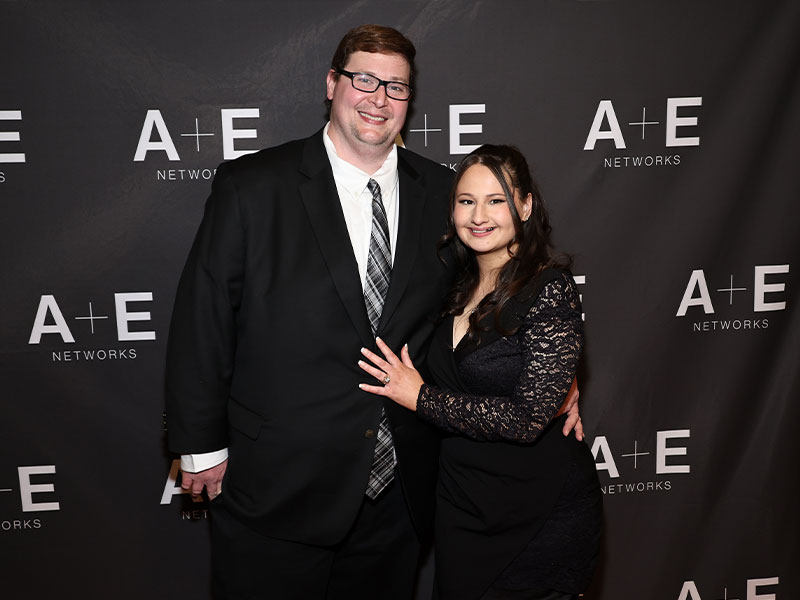
Blanchard: I think a big part of it was there was people that had suspicions, family included, but nobody just wants to rock the boat you know? So it wasn't brought up to other people, it wasn't talked about. So people kind of kept their suspicions to themselves just for fear of upsetting my mom and her ultimately pushing them away as friends or whatnot. So I think that on the professional standpoint, I think that for those doctors that did have suspicions, I think it all has to do with money honestly. And that's just my that's my opinion about it. They were making money off of me and so I think that in their profession, I think that that came first.

Moore: I remember, Gypsy, we had discussed that CPS came to your house at one point. Remind me about that.

Blanchard: They did come to my house. And basically, they're asking me the wrong questions. So they're like, show me your arm, your legs. And they were checking for bruises. And at that point, my mom never hit me. They wasn't asking the right questions to me.

Moore: So nothing was ever done.

Blanchard: Nothing – there was no follow-up report or anything. They came to one time and then they closed the file. 

Moore: If I recall from our conversation, this happened in the Habitat for Humanity house on Volunteer Way. One thing that if I recall, this is just my memory, I think after that incident when CPS came, I believe you were telling me your mom became more paranoid about strangers and [put] garbage bags over the windows. 

Blanchard: She became like increasingly more paranoid after that visit from CPS and she actually went as far as to remove the doorbell on the door because she was just so paranoid about them coming back.

Gypsy, your story has blanketed the media and everyone from true crime bloggers to court TV anchors have dissected your case. Why was it important for you to sit down and do these confessionals for the Lifetime series?

"I'm a glass-half-full type of person."

Blanchard: I've wanted to put out something [out] that was very accurate. I wanted to put out something that was the truth. So much of what has already been put out there was either by people that honestly they just didn't know the ins and outs of my case, or my life. And ultimately, I think that I'm the source — it happened to me. And so no one has the right but me to share my story. And that's why it was important for me to do this docuseries because I can finally be like, "OK, I'm ready. I'm emotionally stable at this point. I don't want to keep being haunted by the past." So this, this series is me letting go of my past.

Moore: Gypsy, there were also fictionalized accounts of your life and I think that added a lot of confusion and misconceptions about you. What was the biggest misconception from the fictionalized version of your story?

Blanchard: Honestly, it didn't even have to do with me. I haven't watched many, but I have watched at least two, and for me, it was how they portrayed my mom. I think people tend to forget that my mom or at least maybe they don't even know that the reason why she was able to snowblind the doctor so much and the community is because she was so friendly. So in these shows, they're portraying her as like mean all the time, and that's not how she was. She was very charming, very relatable. She would give a hug to anyone. She would like to cook for people. Her personality was bubbly and friendly to the outside world. And then what you see behind closed doors is her hitting me, calling me names and the abuse.

Anderson: She'd get their guard down by just being nice.

Ryan, now that you and Gypsy are finally together in person, what are you most looking forward to about your new life?

Anderson: There's many things I'm looking forward to in our new life. Just being a normal married couple – like yesterday we went shopping and it was great. We just walked the store. We had two buggies that was amazing. We just want Gypsy to feel free. To get whatever she wanted. And she got some stuff but I was like it's kind of funny. She actually bought like — I'm gonna tell them — she bought like a baby clothes for a future baby.

Blanchard: Oh my god!

Anderson: We're not there yet. Like slow down.

Blanchard: It was so cute I had to get the outfit for just in case later down the road. 

Anderson: I was walking through that section like, "Keep walking." But you know, it's just little things like that I'm enjoying. Tonight we plan on cooking again together and we like doing that together. Just little things like that is what I find most enjoyable.

Gypsy, how do you take care of your mental health these days? Is there a wellness routine that you follow?

Blanchard: I just kind of keep to the same thing that I've always done. If I feel overwhelmed at any point, I will listen to music.  Sort of how I release the anxiety is I will close myself off in like a room or I close space, put on my headphones. And I'll journal for a little bit or I'll just lay back in my bed and just decompress while listening to any song that I feel like is relatable in that moment. And that's how I relaxed and I stay mentally sane. And also being married – I can lean on Ryan for a lot of things that maybe if I need to talk and vent, this is my go-to right here.

Ryan Anderson; Gypsy Rose BlanchardRyan Anderson and Gypsy Rose Blanchard attend "The Prison Confessions Of Gypsy Rose Blanchard" Red Carpet Event on January 05, 2024 in New York City. (Jamie McCarthy/Getty Images)Gypsy, were there any of your other family members involved in your life and do you hold a grudge towards any of them for not removing you from the situation?
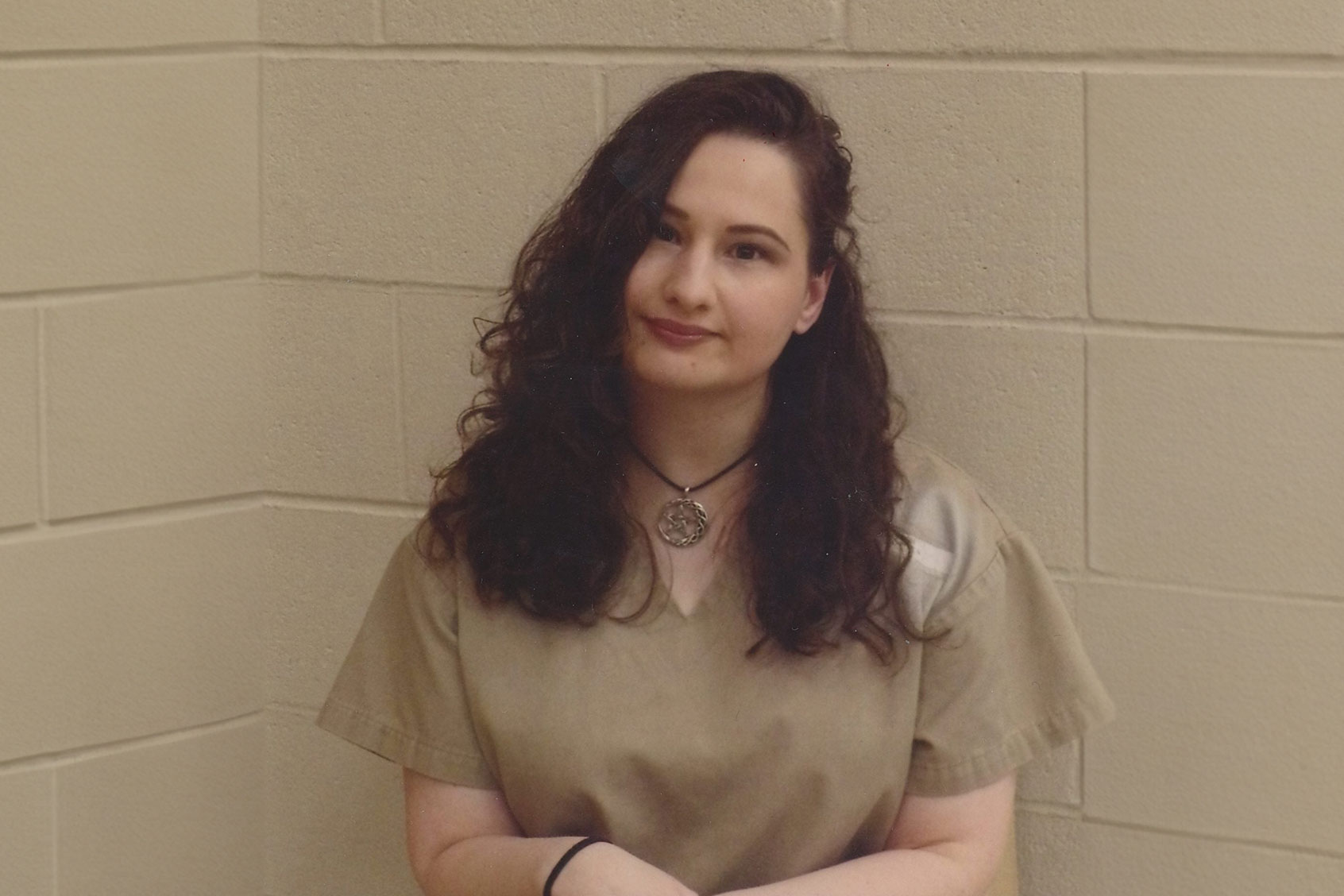
Blanchard: My mother isolated me and her from her side of the family and also on my dad's side of the family at a pretty young age for me. I was probably about six years old when she started removing us a little more and moving away from our hometown that we grew up in. I don't hold anything against anyone. I don't hold a grudge. And I've actually told them all that I'm like, "I don't put blame on you guys because I was six years old when she took me from you guys. And I understand that you guys were just as much in the dark as everybody else is." So I constantly drive that home that I do not hold a grudge against anyone. My mother was good at manipulating and lies. And that's all there is. There's no blame to be put on anybody else.

Melissa, was it difficult to navigate conveying such personal traumas, especially assault from family members? How does a producer working on a docuseries get parties to speak on this sensitively?

Moore: Well, something that we haven't really been talking about is my backstory and the trauma of — my father's in prison for life. And that's one of the connecting factors that Gypsy and I had in common is we both experienced an unimaginable amount of trauma in our lives. And that's what bonded us. So my father is serving multiple life sentences in prison for murder. And there was also the fictionalized versions of my dad's story and so I can relate to Gypsy feeling like everybody is tying their narrative of something deeply personal about yourself. So we can connect with that, but there was no judgment. Gypsy knew that I would not hold any judgment towards her because I know what it feels like to be judged. So we just had an open rapport, open book kind of thing with each other. I think we just connected because we both understand what it's like to live a unique and dark past.

Gypsy and Ryan, what has it been like with this sudden onset of fame? What is the most challenging and also the most rewarding part?

Anderson: The most challenging is when they take comments out of context and they run with it, and people make TikTok videos about something that I might have said and took it the wrong way. That's the most challenging; everything you say is under a microscope. And it's one of those where I'm not used to that. I'm just a southern boy from Louisiana. So that's challenging to me. I just happened to fall into marrying the most beautiful woman in the world. So it's just one of those things where I feel overwhelmed sometimes with everything they say. The most rewarding is just being with her.

Blanchard: And for me, like I'm just coming out of prison for eight-and-a-half years and everyone is well aware of my story before that. I'm very new to social media. I'm on a learning curve right now. So when I comment or even like someone's posts, I have to realize that it will be seen by millions of people  . . .  I have this huge platform which I can use for good. It's kind of like a superpower. On the downside, there's people making fake accounts in my name scamming people. There's a rumor going around that I'm pregnant, which is not true. At all. It's so much — so many eyes on us right now that it is a little overwhelming. And so like Ryan said, we are taking the time at night to just vent because we need to have those those releases of stress.

The Prison Confessions of Gypsy Rose BlanchardThe Prison Confessions of Gypsy Rose Blanchard (Courtesy of the Blanchard family/Lifetime)Gypsy, given everything that happened to you, how were you able to handle being in prison? Were you always optimistic you will be paroled? And how difficult was it to keep the faith?

"Shout-out to prison for giving me my education."

Blanchard: I think that I've always been fairly optimistic. I think the only time that I was ever not optimistic about my fate was while I was in county jail, and I talked about that in both my ebook and the documentary. I lost faith at one point, and it was really grim. But then as soon as I knew that, I was going to be spending 10 years in prison and getting out of prison fairly young. I started having faith again, and my personality is pretty bubbly. I'm a glass-half-full type of person. So I always just had the faith that it was going to be OK at some point.

Moore: I remember Gypsy one of the interviews that I did with you in prison, you had just had a nightmare that you weren't going to get paroled . . .

Blanchard: Two of my friends in prison had had their parole hearings before me. And they had gotten bad news like they had both didn't get paroled, which it wasn't a good setup for my confidence and to me getting parole.

Anderson: I remember that I had to keep lifting you – just keep lifting her up and keeping that positivity.

Gypsy, there are lots of convention photos of you dressed as "Star Wars" and "Harry Potter" characters. Did your experience and what you were going through impact your love of those franchises in any way, and is cosplay something you hope to get back into?

Blanchard: I'm not gonna lie – a little bit. I think that looking at old pictures of me wearing different costumes and stuff, even though the interest is there, I can't help but have a small part of me that still feels like when I put on a costume I'm put back in that time. And that's just something that I'm gonna have to work through with a therapist. I still have a lot of triggers that they might be extremely subtle, so that's actually could potentially be one of them. That's definitely not on the extreme side, but on the subtle side of the trauma that happened.

What do you want people to get out of this series and hearing your side of the story?

Blanchard: I really want people to just watch the series and feel like they have a better understanding of who I am as a person. What I've gone through who I am now and how I had to get to where I am now by going through some really hard things that were even after the crime and getting arrested and everything because I spent eight-and-a-half years in prison. So that was a long time for me to at least make some mistakes, learn from them. And I think people just need to see me as, OK I'm just a person. I'm not a character from a TV show. So how there's evolution within me, there's evolution even going on right now. I hope they get that from the series. I hope they also look at my story and also take from it that this could happen to anyone, and Munchausen by proxy syndrome is far greater than what people might think. There's no way to calculate the number [of victims affected]. But it's not talked about enough. So go talk about it, talk about my story and realize that, hey, if you see something that just seems a little bit off, whenever you see a child and they might be in a situation where you're like, "Huh, that just doesn't seem right to me." Say something. What's the worst that can happen?

Did you ever suspect that your mother was lying to you about your health issues?

Blanchard: Of course, I had my suspicions because obviously there were things that I knew that I didn't have wrong with me. And then there was other things that I didn't know before. So there was times that I would question I'm like, I really need this medication. Do I really need this? I would think to myself, so yeah, I did have my little doubts.

Moore: Something that people ask me all the time is why people go to like, "Why didn't you ask your dad how old you were or something like that?" And I don't think people realize, they didn't understand that you didn't have a relationship with your dad at that point. But I remember asking you how did you not know your age? How did your mom hide your age from you? And I remember you telling me that she never put the right number of candles on your cake. Remind me of that. She hid your age from you.

Blanchard: It probably started happening when I was about eight years old. And so I didn't ask questions as an eight-year-old, but it continued on until the crime happened. And so I get that question a lot actually. "How did how did you not know your age?'" Growing up for birthday parties and for gatherings, my mom never put number panels on my cake.

Anderson: She also changed your birthday on all the forms.

Blanchard: Things that was going on, I never asked for clarification because my mom handled all kinds of medical paperwork there was never a need for me to know the exact date. And so finding out that I was older than that I thought was a little bit of a shock to me after everything. And now I feel like, "Oh, I went from 19 to 32. Jeez, God I got old so quick. How did that happen?"

Anderson: You didn't go to school.

Moore: That's true. You didn't go to school. So there wasn't, you know, this lineage of school pictures. That I still can't wrap my head around that you only went to school until second grade. And that you are so intelligent and articulate. And that you can write and read that the level that you do is phenomenal. 

Blanchard: It was a lot of work for me; getting my education was something that I prioritized. There was times that I wanted to give up I'm like, "I'm never gonna get this." And then I finally started picking it up. Shout-out to prison for giving me my education. Who would've thought?

Moore: People talk about how the medical community failed you — I see that the school system failed too because there should have been checks and balances from you being homeschooled all these years to see if you would pass state tests, so pass certain tests or that there is a board that are like members that come to your house to make sure that you truly are getting a homeschool education.

Blanchard: I'm really shocked that that never happened. I remember the doctor saying, "Only homeschool?" And my mom would say, "Oh, she's homeschool. We're registered." And there was no questions more about it. So I'm actually just finding out that it's illegal to not put your kids in school. Why didn't anybody say anything? Because I didn't know that.

What are your hopes for the future both personally and in terms of the message or impact your story can have on others in difficult situations?

Blanchard: Personal goals right now are just having a lot of family time, making amends with those that were really hurt by not only in the crime, but also learning that the people that they knew, meaning my mom and me, before I got arrested and my crime, were not real. They weren't real people. It was a fraud. We weren't those people. So now coming out, I just want to make amends with those people and tell them who I am and how I reintroduced myself to these people that I knew from before. They're having to learn me now . . . I think professional-wise aside from that nine to five – I think that I will always be Gypsy Blanchard to the media. But I think that I am putting the Gypsy Blanchard that people knew from several years ago in the past, and I think going forward. I am married so I'm now going forward as Gypsy Rose Blanchard-Anderson. What that means for me is OK, reinventing myself as a new person. Prison Gypsy is over. Now this is the new Gypsy, and let's form this new identity for me and see what I can do. See the power of my voice. I've already used the power to share my story for myself. Let's see if I can share maybe other people's stories and give them a voice.

“Excruciating”: Hunger worsens in Gaza as aid trucks are unable to deliver resources

According to the United States Secretary of State Antony Blinken, the food supply for hundreds of thousands of people in the Gaza Strip has deteriorated. In a press statement given on Tuesday night while in Tel Aviv, Blinken noted: “For the mother or father trying to find something to feed a hungry child, the passage of another day without food is excruciating.”

His statement comes after a weekend visit to the World Food Program’s regional coordination warehouse in Amman. Matthew Lee of the Associated Press wrote that is “where trucks are being packed with aid to be delivered to Gaza," while also noting that not nearly enough food, water and fuel is reaching the people who need it. 

“Almost the entire population of 2.3 million depends on the trucks coming across the border for their survival,” Lee reports. “One in four Palestinians in Gaza is starving, and the rest face crisis levels of hunger, according to the U.N.” 

Aid groups estimate that Gaza needs about 500 daily truck deliveries of medicine and supplies to adequately address the crisis, however this past week, only 120 trucks entered daily through the two open entry points into Gaza, the Rafah and Kerem Shalom crossings.

Why Trump is making his lawyers look like fools in court

The idea that former President Donald Trump was performing his official duties when he told his supporters to march to the Capitol and "fight like hell" and then sat in his dining room as they stormed the building and he refused to do anything to quell the riot has always seemed to be a stretch. After he lost 60 of 61 court cases in which he tried to overturn the results of the election and continued to exhort the top officials in the Justice Department to lie and say they had evidence of fraud hardly seems like a presidential duty either. And all the calls to local officials asking them to "find" enough votes to change the outcome of their election wouldn't normally be considered the job of a president. American elections, for better or worse, are processed by state and local authorities.

Nonetheless, Donald Trump's lawyers filed an appeal in a U.S. District court arguing that everything he did in the post-election period was part of Trump's official duties as president and therefore he should be given immunity for all of it, which is ridiculous. But even more ridiculous: His lawyers didn't really end up addressing that claim in oral arguments before the court on Tuesday, instead focusing on a truly fatuous assertion that unless a president has been impeached and convicted by Congress, he cannot be prosecuted for anything that happened during his term in office. This naturally led to some very unusual questioning by the judges:

I think even smart elementary school kids could see the holes in that argument. What if a president just resigned before the impeachment so that he would be immune from prosecution for his heinous acts? What if he decided to have enough members of the Senate killed as well so they couldn't get to the two-thirds majority required for conviction? Once you start handing out immunity from crimes unless they follow the very weak political process of impeachment you've pretty much said all bets are off and the president of the United States has a license to kill.

He doesn't care if his lawyers make fools of themselves in court just as long as he can push off the trial date as long as possible.

Trump's lawyer seemed to get backed into this ridiculous argument and couldn't figure out how to get out of it. All he had to do was say that ordering a hit on a political opponent could never be part of a president's official duties so such an act would not qualify for immunity. But then that would have brought the argument back to the also terrible but not completely embarrassing grounds on which they had originally wanted to make it — the absurd notion that Trump's attempts to overturn the election were part of his official duties.

That original argument didn't hold much water anyway. Judge Karen L. Henderson, appointed by George H.W. Bush, wasn't impressed with the argument that Trump attempted to overturn the fully adjudicated, legal election because it is his constitutional duty to ensure that election laws are upheld. As she said, “I think it’s paradoxical to say that his constitutional duty to take care that the laws be faithfully executed allows him to violate the criminal law."

The original standard they are sort of basing this on was developed by the Justice Department's Office of Legal Counsel to ensure that a president could not be criminally prosecuted while he was in office. And over and over again, as this has come up in various investigations and earlier impeachments, parties on all sides made it clear that any president who breaks the law could be prosecuted after his term was over. Why else would Gerald Ford have pardoned Richard Nixon or would Bill Clinton have entered into a plea agreement with the Office of Special Counsel when he left office? Did none of the lawyers involved have the Trump team's sophisticated understanding of the US Constitution? Unlikely in the extreme.

We need your help to stay independent

Trump attended the arguments in person even though he didn't need to. I suspect it's partly because he thinks that glowering at the judges in his cases intimidates them. According to news reports he sat emotionless most of the time but scribbled what were likely instructions when the prosecution was speaking. He seemed very pleased when his lawyer made the irrelevant, political arguments that Trump is winning in all the polls, which is also a lie.

Trump also just likes to be a part of the story so he can pound home to his followers that he is being persecuted for their crimes. But it didn't work out so well for him this time. The courthouse required him to enter in the back and there were no cameras in the hallways or out front so he had to retreat to the Waldorf Astoria Hotel to hold his little post-hearing press briefing. He expressed his firm conviction that "as president you have to have immunity, very simple" and said that there would be “bedlam” if the courts didn't buy his argument, obviously signaling his flock to stand back and stand by. He concluded with this:


Want a daily wrap-up of all the news and commentary Salon has to offer? Subscribe to our morning newsletter, Crash Course.


We'll probably get the District Court opinion quite soon and then it will be on to the Supreme Court for Trump's appeal, should they decide to accept it. In the meantime, there will be plenty of Trump Trial action in the next few days. The second E. Jean Carroll defamation case begins next week (in which, incidentally, the U.S. Appeals Court from the 2nd Circuit refused to rehear Trump's earlier "immunity" argument on Monday.) And closing arguments in his fraud trial are scheduled for Thursday. Trump announced that he will be giving the closing arguments himself in that case, ostensibly because he knows the case better than anyone. I assume he got his law degree from Trump University.

As we watch these legal cases start to take off, it's both reassuring that it seems as though rational people are in charge of the proceedings and nerve-wracking considering that Trump's main strategy — to delay the process as long as possible — may end up working simply because the judicial system is not built for speed. He'll try to wrap up the primaries as early as possible and officially become the presumptive nominee and then claim that the political process must supersede the legal process until the election is over.

He doesn't care if his lawyers make fools of themselves in court just as long as he can push off the trial date as long as possible. Justice and democracy may be winning the legal battles at every turn but Trump could end up winning the war.

“Dead man walking”: Experts say Trump immunity lawyer lost judges after he “set a trap for himself”

Legal experts criticized former President Donald Trump’s legal team for arguing on Tuesday that presidential immunity covers political assassinations.

Judge Florence Pan grilled Trump lawyer John Sauer on the presidential immunity claim during a D.C. Circuit Court of Appeals hearing.

“Could a president who ordered Seal Team Six to assassinate a political rival, who was not impeached, would he be subject to criminal prosecution?” Pan asked the attorney.

“If he were impeached and convicted first,” Sauer replied.

Fox News legal analyst Jonathan Turley, a George Washington University law professor, said in an appearance on the network that Trump’s argument “is a dead letter with the panel.”

“I don’t believe that the judges agree that you needed a conviction to ever prosecute a president,” he said. "I did not come away thinking the panel was likely to rule with the former president," he added. "At some points, they seem to be debating more as to whether I'm going to use a sledgehammer or a stiletto."

Pan during the hearing noted the contradiction in Trump’s immunity claim.

“Given that you’re conceding that presidents can be criminally prosecuted under certain circumstances, doesn’t that narrow the issues before us to ‘Can a president be prosecuted without first being impeached and convicted?" she said. “Your separation of powers argument falls away, your policy arguments fall away if you concede that a president can be criminally prosecuted under some circumstances,” she added.

Conservative attorney George Conway told CNN that the judge trapped Trump’s lawyer in his argument.

"It was an intellectual tour de force by Judge Pan," Conway said, praising her for highlighting the “extreme nature of their position.”

Trump’s team was "taking a bad argument, their immunity argument, and conflating it with another bad argument, which is something based upon the impeachment judgment clause, and mixing them all together in the hope of getting a stronger together," he said. "And what happened was the Trump attorney, Sauer, set a trap for himself that judge Pan just completely, completely closed off."

MSNBC legal analyst Chuck Rosenberg, a former U.S. attorney, said Wednesday that Trump’s team “painted themselves into a corner by taking this absolutist position that was simple, silly and wrong.”

“It was a ridiculous answer and it exposes to fallacy, I think, of their argument,” he said.

We need your help to stay independent

“I’ve been a lawyer for a while, lost a lot of appeals and that was the moment when you watch and say, ‘Wow, you have lost these judges.’ And I don’t think Trump’s team is getting them back,” CNN legal analyst Elliot Williams, a former federal prosecutor, said after the hearing. “This whole idea that there is the sphere of conduct, that somehow presidents are immune from, is just ludicrous,” he added.

Former U.S. Attorney Harry Litman predicted on MSNBC that all three judges would “reject” Trump’s argument.

"Basically after Judge Pan asked that hypo about Seal Team Six, Sauer … was a dead man walking. He will lose. He should lose. Legally, historically, logically” he said.

But it’s unclear whether the panel will outright reject Trump’s claim, noting that Judge Karen Henderson, the lone Republican on the panel, questioned whether the court should “remand” the case back to U.S. District Judge Tanya Chutkan, who issued the initial ruling rejecting Trump’s claim.


Want a daily wrap-up of all the news and commentary Salon has to offer? Subscribe to our morning newsletter, Crash Course.


“There are two reasons it matters. Depending on how they decide, even if they were unanimous, and you could see it concurring with Judge Henderson, if they were unanimous it could affect the prospects for a remand, and remand might entail a subsequent round of appeals under the remanded standard by Trump and a little bit more delay. And also could affect whether the Supreme Court takes review. So that lower level, there was some drama,” Litman explained.

"I think people were basically not confident about the way in which the panel — the panel will reject his claim, they'll do it quickly," he added. "The exact rationale is a little bit uncertain, I would say."

Both Biden and Trump speeches make the stakes clear: 2024 is a battle over white supremacy

Speaking from the pulpit of Mother Emanuel AME Church in Charleston, South Carolina, on Monday, President Joe Biden did not hold back from using the phrase "white supremacy" or emphasizing its impact on American history. 

"It’s a poison," Biden declared of white supremacy. "Throughout our history, it’s ripped this nation apart. This has no place in America. Not today, tomorrow, or ever." 

The church is famously the site of a horrific hate crime, the massacre of nine parshioners at the hands of Dylann Roof, a neo-Nazi who was radicalized online. But Biden expanded the scope, connecting Roof's violent assault to Donald Trump, the MAGA war on democracy, and the efforts to rewrite history to be more flattering to far-right views. 

"They tried to steal an election. Now they’re trying to steal history, telling us that violent mob was, and I quote, 'a peaceful protest,'” Biden said. He linked this to the long history of racists trying to rewrite the history of the Civil War with "a self-serving lie that the Civil War was not about slavery but about states’ rights." 

A couple of years ago, perhaps, Republicans would have taken umbrage at the suggestion that their leadership shares views with a murderous neo-Nazi. But when I looked around at the conservative response, there appeared to be little interest in denying it. There were some weak efforts at deflection by yelling their conspiracy theories about Biden, but even such chronically dishonest people couldn't muster the energy to pretend Trump and his minions aren't racist. 


Want more Amanda Marcotte on politics? Subscribe to her newsletter Standing Room Only.


After all, Trump and other Republican leaders are increasingly brazen about echoing racist rhetoric, as well as defending white supremacists and their lies. It's not just that Trump has taken to using Hitler-esque rhetoric accusing immigrants of "poisoning the blood of our country." He also went out of his way to regurgitate the Lost Cause myth that the Confederates were innocent victims of the North's aggression. 

His campaign believes there's a political opportunity in relitigating whether that whole "ending slavery" thing was a good idea. 

Claiming, no doubt falsely, that he was "reading something" about the Civil War, Trump said, "See, there was something I think could have been negotiated, to be honest with you. I think you could have negotiated that." He went on to suggest Abraham Lincoln allowed the war to happen so that he would be famous. "Abraham Lincoln, of course, if he negotiated it, you probably wouldn’t even know who Abraham Lincoln was."

The press dutifully reached out to historians, who debunked this lie, pointing out the many efforts over the years to compromise in order to avoid war, all of which failed. (If Trump was as "fascinated" by the Civil War as he claims, for instance, he would know that there was something called the "Missouri Compromise" that preceded it.) No news that Trump is a liar. But what caught my attention about this clip was how obvious it is that Trump was finding any excuse he could to bring the Civil War up. This feels less like his usual incoherent rambling and more a direct attempt to turn the topic to demonizing Lincoln and the entire abolitionist movement. It suggests his campaign believes there's a political opportunity in relitigating whether that whole "ending slavery" thing was a good idea. 

Trump's comments follow an incident where former Gov. Nikki Haley of South Carolina didn't say the word "slavery" when she was asked at a New Hampshire campaign event about the cause of the Civil War. Her answer was much uglier than reported, echoing the deeply racist arguments of slaveholders: "Government doesn’t need to tell you how to live your life. They don’t need to tell you what you can and can’t do. They don’t need to be a part of your life. They need to make sure that you have freedom."

As Heather "Digby" Parton pointed out at Salon, this argument assumes "freedom" means the right to own other people. The press falsely portrayed Haley's later comments, when she said it was "a given that everybody associates the civil war with slavery," as a "backtrack." But it really wasn't. She didn't recant her insinuation that banning slavery was an affront to white people's "freedom." 

The whole thing got a lot of negative press for Haley from the mainstream media, but there's no reason to think it hurt her with the GOP base. If anything, it probably boosted her a little with a crowd that otherwise views her (incorrectly) as a moderate squish. Certainly, Gov. Ron DeSantis, R-Fla., pushing Lost Cause myths on Florida public school students didn't hurt him with the MAGA base. (His poll collapse is due more to his inability to convince them he's more exciting than Trump.)

So it's unsurprising Trump decided to get in on this Lost Cause action. It's crucial to understand that, as Holocaust denialism is always cover for anti-semitism, the Lost Cause is always about defense of white supremacy. Otherwise, there's no need to lie about the cause of the Civil War. 

This is happening alongside more aggressive apologetics for white supremacists on the right. For instance, the "great replacement" conspiracy theory that comes directly out of neo-Nazi rhetoric is being rapidly mainstreamed by leading GOP figures. Donald Trump Jr. called it the "great replacement reality." Popular podcast host Charlie Kirk recently went on a rant about how "they're trying to replace us demographically," and "trying to make the country less white." Fox News host Greg Gutfeld argued that military programs to root out white supremacists "marginalize the efficiency, the deadliness, and readiness and the confidence of our military." (Needless to say, the opposite is true: It is bad for the morale of most soldiers, and not just non-white soldiers, to have to work with neo-Nazis.) 

We need your help to stay independent

There will be a lot of hand-waving and gaslighting over this, but Biden is right: The presidential race this year will be a referendum on white supremacy. Democrats stand against it and Trump-supporting Republicans are getting increasingly bold about how they're fine with it. That's why Biden was right to draw a direct line between the Lost Cause and the rising trend of Republicans spreading conspiracy theories about January 6. It's not just that both are historical revisionism through outright lying. It's that the lies serve the cause of white supremacy. 

The media doesn't talk about this aspect of January 6 much, preferring to focus on Trump's ego and the cult-like hold he has over his followers. But the racism on display that day — from rioters using the N-word to waving the Confederate flag — wasn't incidental. As political scientist Anthony DiMaggio has argued, "white supremacist politics were a significant factor in the Jan. 6 insurrection." Research backs this up, showing major overlap between people who support the January 6 insurrectionists and people who espouse white supremacist ideas. 

Which, frankly, is a more rational explanation than that Trump has some Svengali-style hold on his followers. They worship Trump for the same reason they worship Robert E. Lee: Not because of any intrinsically appealing qualities to either man, but because both are avatars for white supremacy. It's why Trump supporters were willing to risk arrest in order to overturn an election, but have mostly ignored his unsubtle pleas to riot to prevent criminal indictments. They are in this to maintain a racialized hierarchy in the U.S., and not because they just really like a man who smells like a butt.

Of course, as anyone who — unlike Trump — has actually read a history book can tell you, white supremacy and violence have always gone hand-in-hand. From the Civil War to lynchings to hate crimes like Roof's, white supremacy breeds paranoia that is used to justify violent lashing out. Sure enough, as the racist rhetoric on the right heats up, so does the violence. As the Washington Post documented Tuesday, there's been a surge of violent incidents and threats aimed at lawmakers and judges viewed as obstacles to Trump regaining power. Some, such as a fake call to sent the SWAT team to the home of Judge Tanya Chutkan, who is overseeing Trump's trial for his crimes of January 6, should be viewed as attempted murder. 

This all suggests another reason Trump and his toadies are turning up the volume on racist raging: To get their followers in a more violent mindset. Trump is already starting to sow conspiracy theories, claiming the election will be stolen from him. The point of all this, of course, is to make another January 6 happen, in case he loses, and hope this time it works. But it's not enough to tell lies and rely on the loyalty of his supporters to get it done. He needs to underscore what they're getting out of it. And what they're getting is Trump's promise of white supremacy. 

Religion scholar on how Donald Trump has activated “the Christian enemies of democracy”

The 2024 presidential election is much more than “just” a political struggle to save American democracy and freedom. It's a struggle between the forces of good and evil. 

In a powerful speech on Monday at Mother Emanuel AME Church, where a white supremacist terrorist murdered nine Black people in 2015, President Joe Biden framed the 2024 election as a great moral struggle to save democracy, which he described as “America’s sacred cause," from white supremacy and other evils.

“A poison, throughout our history, that’s ripped this nation apart," Biden said,"has no place in America. Not today, tomorrow or ever.”

In a new essay at Baptist News Global, leading Christian ethicist and scholar David Gushee, who is the author of the new book “Defending Democracy from Its Christian Enemies,” echoes Biden’s warnings. "We are facing a national cultural, moral and even spiritual crisis that goes beyond the political."

"Quite an achievement, really – for a godless reality TV star and grifter to overcome the central teachings of a 2000-year-old religion in the hearts of millions."

I recently spoke with Gushee. He reflects on the still under-appreciated role that militant Christianity and the Christian right played in the Jan. 6 coup attempt and the attack on the Capitol by Trump’s MAGA followers. Gushee outlines how the Christian right and the neofascist MAGA movement came to be allied with one another in a mutual quest to end multiracial pluralistic democracy as part of an apocalyptic battle. Toward the end of this conversation, Gushee explains how a true Christian ethic is pro-democracy and can be mobilized against the neofascist authoritarian MAGA movement and the Christian right.  

This is the second installment of a two-part conversation. It has been edited for clarity and length.

What did you "see" on Jan. 6? What was the role of Christofascism/White Christian supremacy on that day and in the coup more broadly?

I saw lots of different things. We know from the Jan. 6 trials that there were paramilitary/militia extremists present who had planned for and were ready for an assault on the Capitol even before the infamous rally at which Trump egged on the mob. Mixed in with them were hyper-Trumpists who went to the rally and then when "sent" to the Capitol by Trump, and told by Trump that he would be there with them, they surged that way without a prior plan to do so. Some of them stopped short of entering the Capitol, others kept on going. This was more like riot behavior, a crowd of people losing their moral judgment together.

Extremist Christians were quite visibly present in both the paramilitary type groups (like Proud Boys) and the garden-variety members of the mob. The evidence is that some of them believed they were witnessing or about to participate in a divinely-orchestrated series of events. Many decades of living in an apocalyptic mental universe prepared them to believe that God is doing something special here today and I want to be a part of it. The paradigm of the walls of Jericho tumbling down was explicitly cited by some of these. "God, who does miracles, is doing a miracle today. God, who is more powerful than any human ruler; God, who is all the time battling the cosmic powers of evil, is about to defeat the evil, demonic, illegitimate Democrats, cheating Biden campaign, etc."

I would say that there were different and in many ways mutually incongruous fragments of Christian theology, scriptural sourcing, and spiritual intuitions that brought self-identified Christian people to the Capitol that day. One key piece was a translation of ambiguous language of spiritual warfare to actual hand-to-hand physical violence. If you talk about warfare long enough, some people might eventually become activated to believe they are in a real war.

Are MAGA and American fascism a “Christian” movement? How did Trump and the larger neofascist movement “capture” the Christian right as some have tried to suggest?

I see three stages in conservative Christian engagement with US culture since the convulsive social changes and divisions of the 1960s. 

First stage: 1962-1978. American culture has lost its way. We need to redouble our evangelistic efforts (think Billy Graham) to get people saved and bring them back to traditional Christian morality. We must tell all our neighbors about Jesus. It was not a culture wars strategy, but an evangelism and church missions strategy. This was the faith into which I was converted in 1978.

Second stage: 1979-2008. We need to mobilize for democratic politics in a big way. Let’s build a partnership with the Republican Party, giving them our support in return for their investment in our “traditional values” agenda. This was the Falwell-era Christian right. Ronald Reagan was the first partner on the GOP side, and it brought fabulous results for the GOP (the Solid South in their pocket), great political access and other benefits to the most visible preacher-politicians, but no real change in the direction of liberalizing social change – for example, abortion. It was easy to be disappointed in the results of the relationship and of the direction of democratic politics. 

Third stage: 2008-2020. Barack Obama has now been elected president, twice. Gay marriage has now been legalized nationally by a supposedly conservative Supreme Court. Abortion is still legal. We need a warrior to fight this. No more politeness. Donald Trump comes along as the avatar of white, quasi-Christian cultural resentment, the symbolic and actual anti-Obama, the beginning of a radicalized new stage for the right which includes the (post)Christian right. He’s still a politician elected within a democratic system but has authoritarian tendencies from the beginning.

Fourth stage: 2020-21. When Trump frankly threatens democracy after November 2020, his followers are so welded to him that they go right over the cliff with him. For some, that means vague talk of violence turned actual on January 6. But the paramilitaries were preparing long before January 6. My reading would be you had a spectrum from armed Christian warriors readying for combat well before November 2020, then lots of wannabe “girding for war” Christian preachers/activists speaking an ambiguous language that could be construed as spiritual warfare only or divine interventionist actual violence or actual planned human violence. I think “Christians” with all of these relations to violence converged on the Capitol on January 6. It is important not to miss the apocalyptic supernaturalism that led many forward that day. They didn’t know what was going to happen, but they thought God was about to do something big, 

Trump is now basically proclaiming that he is the Chosen One, a martyr prophet empowered by Jesus and God. Trump is selling pieces of clothes like he is a saint. His followers and propagandists circulate images of him as being some type of Christ-like figure, being anointed and blessed. Several days ago, he released a video proclaiming that “God Made Trump.” Why is this message resonating with his “Christian” followers? To outsiders it looks ridiculous – but they are not the audience.

Trump is not well-educated or well-read, but he is cunning, and he knows how to find rubes and make money off them. He is at PT Barnum levels in that skill. So that is one dimension. Remember that he needs a constant flow of millions of dollars to finance his lifestyle and pay his legal fees.  

I am persuaded by the diagnosis that Trump is a sociopathic narcissist, and he has faced many narcissistic wounds in his life – recently, none more lacerating than losing in 2020. He has only the most superficial knowledge of the Christian faith, but he has a variety of preachers around him. It was probably through them that he got the atrocious, appalling, indefensible idea of identifying his sufferings with those of Jesus. It also sells, so that works. 

We need your help to stay independent

An interesting question for us who watch politics is how this kind of thing happens. The level of irrationality here is something to see. Isn’t it an interesting weakness long-identified in democracies – our political leaders are constantly knocked down, and it is hard for them to retain mythic dimensions for very long. Yet something in many of us yearns, even in democracies, for mythic figures, people whom we cannot just respect but admire and not just admire but feel just a touch beyond that when we think of them or encounter them.

Consider the figures of George Washington, Abraham Lincoln, FDR, JFK, and more recently, Obama. For some of us, Obama – the first Black president! – created a frisson that went beyond normal democratic politics. Something transcendent, we thought, was happening with him and through him. Who feels that way about Joe Biden? One wonders with trepidation about a second contest between one figure who inspires in some that sense of the transcendent against another candidate who does not. How is that going to go this time around?

When you look at Donald Trump, how do you make sense of him? He is much more than a man; Donald Trump is a powerful symbol.

In 2015 I saw in Donald Trump a lonely narcissist hungry for attention. Then once he opened his mouth, I saw the state of his heart and mind – angry, prejudiced, resentful, ready to dehumanize and demean at a moment's notice, in my view the worst possible type of person to be a major national politician. As he grew in popularity during the 2016 campaign I saw an increasingly skillful demagogue, trying out lines to see which ones worked, building a large and loyal following. I saw him "discipling" his listeners – as he crossed longstanding moral, political, and rhetorical boundary lines, they were free to do so as well.  He was making disciples out of them. Since many of these listeners were Christians, active churchgoing people – I saw (and still see) a tempter, a seducer, discipling supposed followers of Jesus to follow him instead. Quite an achievement, really – for a godless reality TV star and grifter to overcome the central teachings of a 2000-year-old religion in the hearts of millions.


Want a daily wrap-up of all the news and commentary Salon has to offer? Subscribe to our morning newsletter, Crash Course.


Consistent with what the Bible says about the descent into evil, I now see in Trump someone with fewer and fewer moral constraints, at the head of an online (and mobilizable) army of supporters who can be deployed for his purposes when he calls upon them. His most ardent Christian fans see him as their champion; I see him as the most dangerous and unChristian politician at least in my lifetime. But in the end, the fact that someone like this is a serious candidate for president once again, even after every bad thing he has done, probably says more about us than it does about him.

The title of your new book is “Defending Democracy from Its Christian Enemies.” What was the origin of the project? What has the reaction to the book been like?

I first used this title for my inaugural address at Vrije Universiteit (Free University) Amsterdam in May 2022, in which I did kind of a pilot version of the book's ideas. While I was never fully comfortable with using "enemies" in the title of one of my books, and some have criticized that choice, the more I thought about it in terms of both the historical and comparative studies of the book, as well as the current situation, the term fits. There is a long history of traditionalist Christians explicitly positioning themselves as enemies of democracy. Today it tends to be somewhat more veiled, at least in some quarters.

What is the role of those Americans who believe in multiracial pluralistic democracy and the separation of church and state and the rule of law in defending the country against these Christian “enemies” as you have described them and their forces?

The Christian enemies of democracy are those whose reactionary response to unwanted cultural changes and loss of cultural power has now metastasized into support for authoritarian politics, for insurrectionism, for Trump in his latest and most noxious incarnation – with parallels in other countries that I describe in the book. I define democracy in the book in a mainstream way as a tradition that rejects authoritarian rule for popular sovereignty and rejects arbitrary rule for the rule of law. Democracy is the rule of the people under the rule of law. I support the normal understanding of constitutionalism, the rule of law, checks and balances, and so on that are understood as best practices by democratic activists, NGOs, and in well-functioning democracies. This is what must be defended by making a fresh Christian case for why it is the best political system yet developed and why authoritarian government was rejected once on this continent and must be again today. 

The U.S. tradition going back to 1789 made the very wise choice to separate church and state and disestablish religion. This 235-year-old tradition is eroding in some of the states and being explicitly rejected by some major national politicians. I am pretty sure it would not win in a referendum in many of our states. It must be defended. Meanwhile, simmering racism, xenophobia, and tribalism indicate that the 400-year-old struggle over whether this is a nation for all people, or really only for people defined as white, is extremely intense at this moment. 

What will America be like if the Christofascists such as Speaker Mike Johnson were to get their way?

It is not hard to imagine “progress” toward a reality like this: a right-wing version of Christianity is officially or unofficially the law of the land and the mandated curriculum in schools from kindergarten through college. I would not be surprised to see heightened pressure for gay marriage to be overturned by SCOTUS; undocumented immigrants facing even greater cruelty, perhaps even mass deportations; even more pressure and violence against LGBTQ+ people; threats to the independent judiciary, the NGO sector and the media; harassment against political dissidents; a constant environment of rhetorical incitement against, for example, Muslims, key Democratic politicians, liberal activists, civil rights organization leaders, and others. 

What gives you the most hope right now – if anything? What is causing you the greatest fear?

Everywhere authoritarianism rears its ugly head or establishes itself in power, dissidents rise up to say no. Some of them are Christians. They are my heroes – people like Dietrich Bonhoeffer in Nazi Germany, Vaclav Havel in former Czechoslovakia, Nelson Mandela in apartheid South Africa, Frederick Douglass, Ida B. Wells-Barnett, WEB Du Bois here, Alexei Navalny in today’s Russia. Here, right now: General Mark Milley, Rep. Jamie Raskin, ex-Rep. Liz Cheney. I am given hope by how clearly so many people see what is at stake right now; by how many of the worst candidates were defeated in 2022; how I really don’t think there is a majority for authoritarian reactionary Christianity in the U.S. But my fear is that our democracy really does hang by a thread anyway. 


“It doesn’t make sense”: What happens when life-saving abortion isn’t protected, despite federal law

Last week, a ruling in Texas stated that hospitals and emergency rooms in the state are exempt from having to perform life-saving abortions. 

"It’s also going to have a chilling effect on providers as their judgment is going to be questioned."

Specifically, a federal appeals court ruled that hospitals that receive federal funding in Texas aren’t required to provide life-saving abortions under a federal law known as the Emergency Medical Treatment and Labor Act (EMTALA). The debate on whether or not EMTALA covers abortions dates back to shortly after Roe v. Wade was overturned, when the U.S. Department of Health and Human Services stated EMTALA took priority over state laws. Under EMTALA, hospitals and emergency rooms are required to provide life-saving abortions even where there are strict abortions laws, the Biden administration stated. However, states like Texas and Idaho are challenging this and claiming that EMTALA doesn’t take priority.

Importantly, protections offered by EMTALA remain in other states where abortion access is limited. It’s only in states that are challenging it where EMTALA protections aren’t guaranteed. This can change as there is likely to be a long legal battle around this moving forward. But what’s at stake when life-saving abortions are no longer an option in some states under the protection of EMTALA?

“It’s not giving any kind of comfort to either pregnant women or people that might consider becoming pregnant in Texas,” Seema Mohapatra, a law professor at the SMU Dedman School of Law, told Salon. “It’s also going to have a chilling effect on providers as their judgment is going to be questioned as we saw with Kate Cox.” 

Last year, Cox was pregnant with a fetus who had the fatal condition Trisomy 18. Her doctors recommended terminating the pregnancy as the fetus likely wouldn’t survive after birth. Cox also had elevated vital signs, a high risk of a uterine rupture. She even went to the emergency room four times. Despite this, the Texas Supreme Court ruled that she didn’t qualify for an abortion under the medical exception to the state's near-total abortion ban. As Mohapatra pointed out, the Texas Supreme Court undermined the judgment of her providers. Without EMTALA taking clear precedent, doctors will be forced into even more frightening situations where the stakes are high, and their hands could be tied once again when it comes to providing a life-saving abortion. 

Notably, EMTALA first came to light as a response to hospitals turning away uninsured pregnant folks in active labor, Mohapatra explained. Congress passed the law in 1986 and specifically included provisions mandating federally funded hospitals to accept a patient in active labor even if she doesn’t have insurance. Despite this, various news outlets have reported numerous violations. Still, aside from active labor, abortion care is normally protected under EMTALA if it’s needed to save a pregnant person’s life. 

“If in the opinion of the doctor, an abortion is what is necessary in order to stabilize her then any state law that conflicts with that, EMTALA would preempt, and that would be a normal reading of the way federal preemption works,” Mohapatra told Salon, adding that what the Texas appeals court is now arguing that EMTALA doesn’t regulate hospitals — but state laws regulate hospitals. “It doesn't logically make sense for the opinion to say that EMTALA does not regulate hospitals because that's exactly what EMTALA does, EMTALA tells hospitals that if you receive Medicaid or Medicare funding, you have to comply with the requirements of EMTALA.”

Most striking, Mohapatra said, is that the opinion basically sets up the fetus to have a right to life-saving treatment as well via EMTALA. 

“It sets a kind of dual patient situation where the pregnant woman and what they call the ‘unborn child’ are in both the considerations of the hospitals and the physicians,” she said. “And basically using the protective language of EMTALA for the unborn patient.”

"It just overtly endangers women’s lives.”

But in the example of an ectopic pregnancy, which is when a fertilized egg implants and grows outside of the uterus in the abdomen and is not a viable pregnancy, this situation could clearly make the situation even more dangerous for the pregnant person. Typically, an abortion — either surgical or medication — would be needed as “stabilizing treatment.” But without EMTALA, physicians in Texas can’t say “I have this obligation under EMTALA” to perform an abortion. Instead, a decision has to be made based on the interpretation of the state law. 

Dr. David Hackney, a Cleveland-based maternal fetal medicine specialist and former chair of the American College of Obstetrics and Gynecologists Ohio chapter, told Salon it’s “surreal” that debates around life and health are even taking place right now. Hackney said one of the biggest challenges for physicians in this situation, one he is familiar with when he worked under SB23 in Ohio, is that they’re forced to balance a personal “unknown risk” with one of the patient’s lives. 

“So the default is you're going to wait until they're so sick that no one would ever doubt it in a court of law,” Hackney said. “But it’s way too far to get to that line, and then not cross that line, so it just overtly endangers women’s lives.”

Mohapatra said similar life-of-pregnant-person exceptions don’t work, and aren’t an effective safety net. Technically, Texas makes an exception for abortions when a pregnancy or the life of the pregnant person is seriously threatened, but experts have long doubted such exceptions would work as intended. Now with EMTALA not covering life-saving abortions, Mohapatra said, “Any kind of safety net that there was in this area seems to be taken away.”

The U.S. Supreme Court recently ruled that it will allow Idaho's abortion ban to go into effect and hear an appeal in April. Notably, the law conflicts with EMTALA. Dr. Caitlin Gustafson, a Family Physician who provides OB Care (FMOB), based in McCall, Idaho, told Salon via email that this raises questions about "how healthcare providers should navigate their obligations under both laws, leading to confusion and uncertainty." She even advised people in Idaho who are pregnant or considering getting pregnant to check with their insurance provider if flight transport such as Life Flight is covered or seek out "supplemental life flight insurance."

"We hope they never need it, but our ability to provide on-the-spot care has deteriorated now that Idaho legislators have made this important medical decision for you," she said. "Providers in Idaho now face ethical and legal dilemmas when it comes to providing emergency abortion care, torn between their obligations under EMTALA to provide necessary stabilizing treatment and the potential legal consequences of violating Idaho's abortion ban."

The U.S. Supreme Court is now going to have to consider whether or not EMTALA takes precedence in hospitals or if state laws do. If the U.S. Supreme Court rules that state laws take priority over EMTALA, it would "throw EMTALA into flux,” Mohapatra said. “Then also maybe repercussions of any other kinds of federal regulations.”

Trump back on Maine ballot for now, but GOP fails to impeach secretary of state

Although Maine Secretary of State Shenna Bellows has branded Donald Trump an insurrectionist and officially barred him from Maine’s presidential primary ballot, Trump’s name will in fact appear on the state’s ballot for the March 5 Republican primary. Court rulings over the next month or so, however, will determine whether votes for Trump in the Maine GOP contest will actually be counted.

Meanwhile, Bellows easily survived a vote to start impeachment proceedings against her on a party-line vote in the Democratic-controlled Maine House of Representatives. Only 60 of the chamber’s 150 current members, all Republicans, voted for the resolution on Tuesday, while 80 members — 77 Democrats, two Independents and one Republican — voted against it, with 10 members absent from the roll call vote.

Trump will appear on the March ballot because Bellows suspended the effects of her decision pending court reviews, and because Maine law requires that ballots be available for active military and overseas voters 45 days before an election, or by Jan. 20.

Trump’s legal team is now aiming to torpedo the Maine court review now underway, asking a Maine Superior Court judge to postpone ruling on their appeal of his disqualification “in the interest of judicial economy.”

The request filed Monday asks Kennebec County Superior Court Judge Michaela Murphy to stay her proceedings in light of the U.S. Supreme Court scheduling oral arguments on Feb. 8 for Trump’s appeal of a separate but parallel case from Colorado, where the state Supreme Court ruled last month that he was disqualified from that state’s primary ballot.

The reasoning in both states is similar, although the specifics are different. Like the Colorado court, Bellows decided after a public hearing last month that Trump is ineligible for Maine’s ballot under Section 3 of the 14th Amendment, concluding that his incitement of the Jan. 6, 2021, Capitol riot amounted to an act of insurrection. 

The 14th Amendment, enacted after the Civil War, barred former Confederates from holding public office. It prohibits anyone who took an oath to the Constitution but “engaged in insurrection or rebellion” against it from holding elective office again, even if the qualifications of age, citizenship and residency are met.

“The matter before the U.S. Supreme Court involves the exact same federal legal issues in the current matter,” Trump’s attorneys wrote in their new motion to the Maine court.

Like the Colorado Supreme Court, the Maine secretary of state decided that Trump is ineligible for the ballot, concluding that his incitement of the Jan. 6 Capitol riot amounted to an act of insurrection. 

Judge Murphy had announced she would rule on the Trump Maine appeal on Jan. 17, or 20 days after Bellows disqualified Trump, in accordance with the statutory deadline for adjudicating ballot petitionsMurphy ordered Trump’s lawyers, the voters who want him off the ballot, and Bellows to file briefs by Jan. 11, leaving either Jan. 12 or 16 for possible oral arguments. (Jan. 15 is Martin Luther King Jr. Day, a national holiday.)

Trump’s attorneys wrote in their new motion to Judge Murphy that “the current litigation is wholly unnecessary, unless President Trump is unsuccessful on all issues raised in the U.S. Supreme Court,” adding that a favorable decision from the Supreme Court would also render Bellows’ decision moot.  

The Trump motion argues the judge has discretion to extend the deadline by issuing a stay. But Bellows and the Maine voters who challenged Trump’s ballot petition disagree. Trump “makes no mention of any hardship or inequity he will suffer if this case is allowed to proceed,” attorneys for the voters wrote in their response. “Every extra day of delay in resolving a challenge risks additional confusion, because voters will be unsure of which candidates’ votes will be counted and which will not.”

The Maine attorney general, representing Bellows, urged the judge not to deviate from the “expedited, mandatory time frame” and argued that would be “unwise and potentially harmful,” particularly to Mainers voting early by absentee ballots that become available 30 days before an election.

A Maine Superior Court ruling could be appealed to the Maine Supreme Judicial Court, which would have only 14 days under state law, or until Jan. 31, to review the case and issue a ruling. That would become highly significant should the U.S. Supreme Court uphold the Colorado decision.

We need your help to stay independent

On Jan. 2, attorneys representing Trump filed their promised appeal of the Bellows decision, calling it “arbitrary, capricious, and characterized by abuse of discretion.” Their complaint accused Bellows, a Democrat, of being a “biased decision-maker who should have recused herself and otherwise failed to provide due process” and asserts she “had no legal authority” under state law to dump Trump.

The Trump attorneys asked Judge Murphy to vacate the Bellows decision and declare that no secretary of state has jurisdiction to disqualify any presidential candidate under the 14th Amendment. They also wanted Bellows ordered to put Trump on the primary ballot.

As the Maine State Legislature reconvened for its 2024 session last week, Republicans harshly criticized Bellows and sought her removal from office.

In a House floor speech, Republican Rep. Shelley Rudnicki called on Bellows to resign for having effectively “disenfranchised” hundreds of thousands of voters.

Of Maine’s 929,017 active registered voters in November 2022, the latest figures available, 345,422 were Democrats, 280,150 were Republicans, 265,692 were independent and the rest were Green or Libertarian.

Rudnicki faulted Bellows for not disclosing prior to the Trump ballot hearing that she had been one of the three Maine electors supporting Joe Biden in December 2020, although that is public information and was widely reported at the time. (Trump won one electoral vote in Maine in 2020, because the state is one of only two that assigns electors by congressional district.)

Maine House Republican Minority Leader Billy Bob Faulkingham called Bellows “unfit for office.”

Republicans faulted Bellows for not disclosing prior to the Trump ballot hearing that she had been one of the three Maine electors supporting Joe Biden — although that is public information.

“She has made a decision that threatens to throw our country into chaos. It’s a decision you would see in banana republics,” Faulkingham told reporters. “This is a terrifying, terrifying and disastrous decision that you could see copied by other secretaries of state in other states that would throw our nation into absolute pandemonium.”

Maine’s two U.S. senators, Republican Susan Collins and independent Angus King, both disagreed with the Bellows decision, as did Rep. Jared Golden, a Democrat. Rep. Chellie Pingree, a Democrat who represents a relatively liberal district in southern Maine, is the only member of the congressional delegation to support it.

Faulkingham said, “The fact that this decision was opposed by Susan Collins, Senator King and Congressman Golden, all three of which voted to impeach Donald Trump, speaks volumes, and the secretary of state has jumped in way over her boots on this one.”

Maine Senate Minority Leader Trey Stewart, an attorney and son of a Superior Court Justice, said the Bellows decision finding Trump had engaged in insurrection lacked due process.

Stewart told reporters, “I think the biggest thing, Donald Trump, whether you like the guy or don’t like the guy, hasn’t been convicted or even charged with insurrection.”

I later asked Stewart how he would describe the Jan. 6 Capitol riot, if it was not an insurrection.

“If that was in fact an insurrection that was in fact led by Donald Trump, why has no prosecutor charged him with that crime?” Stewart answered. 

Stewart said that Bellows, who is neither a lawyer nor a judge, was not qualified to issue her decision. “Her taking on this role, unilaterally, of judge, jury and executioner, literally, is not the system that we live under.”

As a Maine co-chair of the Ron DeSantis presidential campaign, Stewart added, “If you don’t like Trump, I think there’s a way to beat him, but it’s not by cheating him out of being on the ballot.”

“If you don’t like Trump, I think there’s a way to beat him," said the State Senate GOP leader. "But it’s not by cheating him out of being on the ballot.”

Faulkingham and Stewart are reiterating their call to change the way the Maine secretary of state is chosen, moving to a direct popular election. Maine is one of only four states whose chief election official is elected by the state legislature, according to the National Conference of State Legislatures. In 33 states, voters chose that official, usually but not always a secretary of state; in 13 other states and Washington, D.C., the governor or a state board of elections appoint the chief election official.

Tuesday’s Republican resolution to start impeachment proceedings against Bellows had virtually no chance of passing. Democrats have held majorities in the state House and Senate since 2019, when Democratic Gov. Janet Mills began her first term.

Mills, House Speaker Rachel Talbott Ross and Senate President Troy Jackson have not expressed public support for Bellows’ decision, only for her legal obligation to make it. They condemned the violent threats Bellows faced after her decision.

Mills’ press secretary, Ben Goodman, said, “While the secretary was required by law to rule on the petition, the governor believes that the question of whether former President Trump violated the 14th Amendment is a question that must be answered by the courts — and she believes it should be done so nationally rather than in a piecemeal fashion state by state. Without a judicial determination on that question, she believes that the decision of whether the former president should be considered for the presidency belongs in the hands of the people.”

Bellows previously served as a state senator alongside Senate President Jackson, who called the threats against her “vile” but did not embrace her decision.

“President Jackson knows Secretary Bellows did not make this difficult decision lightly. However, that does not mean he would have reached the same conclusion,” said Christine Kirby, the Senate president’s communications director. 

Republican representatives in favor of impeachment proceedings said on the House floor that Bellows had “overstepped her duties,” was “guilty of voter suppression” and had committed “election interference of the highest order.”

State Rep. Adam Lee, a Democrat, defended Bellows and the ballot petition review process prescribed by the legislature in 1985. “I’ve heard persistent cries that this case, this issue, belongs in front of a court,” he said. “Guess what? It is!”

Bellows told me, “I had a job to do, to follow the law and the Constitution. I did my job.”

Astronomers discover “hot Jupiter” has a 350,000-mile-long tail

When you think of tails, cats, dogs and mammals come to mind — not exoplanets.

However, according to a new study published in The Astrophysical Journal, astronomers have discovered that a massive, gaseous, exoplanet in space has a giant tail. Known as WASP-69b — an exoplanet that is nearly the same size as Jupiter and located approximately 160 light years from Earth — it has a comet-like tail that trails the planet for at least 350,000 miles. Notably, the tail is essentially the planet’s atmosphere, which it appears to be losing.

“Work by previous groups showed that this planet was losing some of its atmosphere and suggested a subtle tail or perhaps none at all,” Dakotah Tyler, the first author of the research, said in a statement. “However, we have now definitively detected this tail and shown it to be at least seven times longer than the planet itself.”

The massive exoplanet was first discovered about 10 years ago. Astronomers famously nicknamed it “hot Jupiter,” in part because the exoplanet is so close to its host star that it makes a complete orbit in less than four Earth days. For comparison, in Earth’s solar system, Mercury has an 88-day orbit. Not only does the exoplanet’s close proximity to its host star affect its temperature, but also it’s essentially stripping away the planet’s atmosphere, leaving behind this massive tail.

Fortunately, the discovery of the tail is a win for science, as it may lead to further findings in astronomy.

“These comet-like tails are really valuable because they form when the escaping atmosphere of the planet rams into the stellar wind, which causes the gas to be swept back,” co-author Erik Petigura added. “Observing such an extended tail allows us to study these interactions in great detail.”