Steven Spielberg

“War Horse”: Spielberg’s almost-great World War I epic

John Ford meets Kubrick -- with a side of "Black Beauty" -- in the gorgeous, overwrought "War Horse"

  • more
    • All Share Services

Jeremy Irvine in "War Horse"

It’s difficult to say who Steven Spielberg’s “War Horse” was made for — I suppose the most plausible and most honorable answer is that he made it for himself. This two-and-a-half-hour Great War saga with an equine hero is partly John Ford-style British Isles claptrap and partly a grueling tale of man’s inhumanity to man (and also horse). It’s likely to seem too dark for family audiences — I certainly would not suggest bringing children younger than 10 or 11 — and too treacly for many grown-ups. “War Horse” is certainly a movie for Spielberg’s fans, for those who are enraptured by the blend of childhood yearning and adult grief that characterizes his mature work, and also by his film-school-on-steroids effort to re-create the look, mood and feeling of bygone cinematic eras.

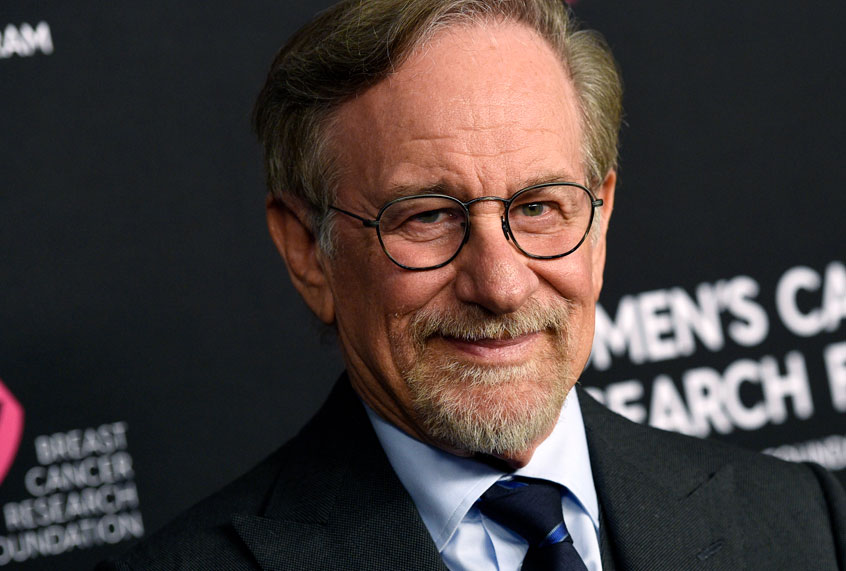
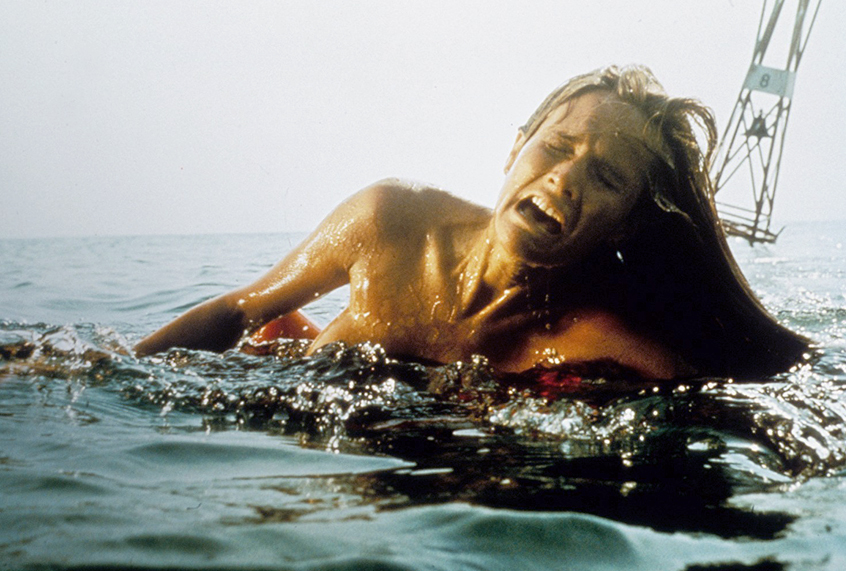
Of course, one could also offer a more cynical interpretation, and read this boy-meets-horse allegory as middle-of-the-road Oscar bait of the highest order, a picturesque period weeper designed to reduce 70-something, Beverly Hills-dwelling Academy voters to tears. Listen, I have gravely mixed feelings about Spielberg, but I’m not going there. I’m sure he still welcomes awards and good reviews and all that, but at this point in his career Spielberg is pursuing personal goals, and everything that’s terrific and overly flat and tooth-rottingly sweet about “War Horse” reflects that. It’s almost a great war movie in one direction, and almost a piece of irredeemable cheese in the other, and there you have it. Steven Spielberg, ladies and gentlemen — the director of “Jaws” and “The Color Purple” and “Saving Private Ryan” and “Munich” and “The Adventures of Tintin” (which is competing with “War Horse” right now for the Christmas weekend box office) and a forthcoming biopic starring Daniel Day-Lewis as Abraham Lincoln. We aren’t gonna change the guy now.

“War Horse” officially begins in the early 20th century in Devon, a rural county in southwestern England, where a drunken and obstinate tenant farmer named Ted Narracott (the terrific Scottish actor Peter Mullan) buys a beautiful thoroughbred at auction, largely to spite his flinty landlord (David Thewlis). But any resemblance to the real Britain circa 1910 is accidental; this part of “War Horse” is really set in the imaginary version of places like Devon as mythologized by Hollywood, notably in John Ford classics like “How Green Was My Valley” and “The Quiet Man.” (I am aware that those movies are set in Wales and Ireland, respectively; those distinctions are lost on most American viewers, and in the cinematic context they don’t much matter.)

Janusz Kaminski’s photography of the storybook settings — “War Horse” was shot entirely in England, both on location and in two different studios — is predictably gorgeous, and depending on your taste the archetypal characters will either charm you to pieces or make your fillings pop out. In addition to Mullan’s boozy dad, a Boer War veteran who refuses to talk about his past, and Thewlis’ mustachioed, frock-coated Mr. Moneybags, we have Emily Watson as the nagging, loving Mum, perennially on her knees scrubbing things, and young Jeremy Irvine as Albert, their ambitious only son, who sees the handsome horse as a symbol of the family’s brighter future. (Officially, the screenplay by Lee Hall and Richard Curtis is based on Michael Morpurgo’s original 1982 novel, although it clearly borrows its narrative approach from Nick Stafford’s Broadway show.)

It’s Albert who temporarily saves the Narracott family from eviction by harnessing Joey — that’s the noble thoroughbred’s name — and training him to be a plow horse during a drenching rainstorm, and if that seems like an utterly ridiculous notion to anybody who knows anything about farming and horses, well, it’s just that kind of story. It’s not like the other stuff that happens in this section of “War Horse” is less comic and picturesque and improbable, not to mention (to my taste) vastly irritating. But war is coming in faraway Europe, and while everyone keeps insisting that the Hun will soon be driven out of Belgium and it’ll all be over in no time, we know better. Despite Albert’s heartfelt pleas, Joey is sold to Capt. Nicholls (Tom Hiddleston, who played Scott Fitzgerald in “Midnight in Paris” and Loki in “Thor”), a handsome cavalry officer who assures Albert, “man to man,” that he’ll take good care of Joey and bring him home if he possibly can.

This is the moment when “War Horse” makes an abrupt shift from one kind of old-fashioned movie to another, leaving behind “How Green Was My Quiet Darby O’Gill” and turning into “All Quiet on the Western Front” or even “Paths of Glory.” It’s also the moment when I should warn you that talking about the rest of the movie involves giving away certain plot developments — and it’s the moment when unprepared families who haven’t read reviews like this one will find out that “War Horse” definitely isn’t suitable for most young children. Nicholls is an admirable and likable character, an old-school English officer who believes in honor and duty and has no idea that the world order he represents is about to come crashing down. He won’t be able to keep his promise to Albert because he isn’t coming home himself, with or without Joey. When Nicholls and his cavalrymen realize that they’re riding toward a line of German machine-gunners, it’s one of the most terrifying sequences in all of Spielberg’s oeuvre, and even more so because the director avoids any explicit bloodshed.

I suppose the sudden shift in mode and mood is precisely the point of “War Horse.” Rural characters like Albert and Joey, seemingly locked into their lives in an unchanging Britain, are suddenly uprooted and thrown into a broiling chaos where survival is largely a matter of good luck. Joey goes from Nicholls to a pair of young German soldiers who try to desert, and then to a French farm where an ailing grandpa (Niels Arestrup) is trying to keep his treasured granddaughter (Celine Buckens) safe at a place and time when lovely teenage girls were at terrible risk. He is confiscated once again and thrust into service hauling artillery, a task few horses could stand for more than a month or two.

In a vivid, nightmarish sequence that unfortunately isn’t a dream, Joey careens among the trenches, exploding shells and corpses (human and equine alike) of the German front lines, at one point coming face to face with a primitive tank, the animal power of old Europe facing a mechanized monster of the new one. In the film’s moral and visual centerpiece, Joey gets entangled in barbed wire smack in the middle of No Man’s Land, between the German and British front lines, and a couple of soldiers — distracted from their task of murdering each other by the plight of an injured animal — emerge from the trenches to see if they can rescue him. It’s magnificently staged and powerfully affecting, and in true Spielberg fashion, it’s all rather too much. Too much allegorical and symbolic weight, too much emotion projected onto a handsome animal who cannot in fact express it, and too much prefiguring of the miraculous reunion we all know is coming, but which (for better and for worse) cannot undo everything that has happened.

“War Horse” opens Dec. 25 nationwide.

“The Adventures of Tintin”: Spielberg’s weird action cartoon

A exciting animated adventure tries to update the classic tale of the Belgian boy reporter. Should Americans care?

  • more
    • All Share Services

A still from "The Adventures of Tintin"

Frankly, the life and work of Belgian comics artist and writer Georges Remi, better known to the world as Hergé, is much more interesting than Steven Spielberg’s “The Adventures of Tintin,” an expensive, ambitious and relentless animated film that struggles to drag Hergé’s aesthetics and worldview into the 21st century. (It’s also, bizarrely, the first of two Spielberg films to open this Christmas, just before “War Horse.”) I’m not saying the movie isn’t worth seeing for Tintin fans, animation buffs and other interested parties; far from it. A collaboration between Spielberg and Peter Jackson (who serves as producer) with a reported $130 million budget, this first installment of a proposed Tintin trilogy breaks new ground in 3-D performance capture animation, in an effort to split the difference between live-action filmmaking and Hergé’s clean and colorful “ligne claire” cartooning. Although I personally still find the rubber-faced, pseudo-human figures produced by this technique unsettling, the work done by Spielberg and Jackson’s animation teams here is exquisite.

As you’d expect, Spielberg’s characterization is lively, with Jamie Bell voicing the intrepid, if almost personality-free boy reporter Tintin (who never actually seems to write anything) and Andy Serkis, aka The Man With No Face, as his alcoholic sidekick Captain Haddock. Simon Pegg and Nick Frost are perfectly cast as the comic-relief duo of Thomson and Thompson, a pair of inept but indistinguishable bowler-hatted detectives. (Sadly, Prof. Cuthbert Calculus, along with his hearing impediment and his ludicrous inventions, do not appear in this chapter.) Some of the numerous action set-pieces are absolutely spectacular, such as a memorable chase through the streets of a Middle Eastern port city (pre-modern Dubai or Bahrain, perhaps) involving a motorcycle, a grenade launcher, a jeep, a rushing canal, a falcon, a tank, a moving hotel and a clothesline.

That scene, mind you, does not appear in any of the three Tintin graphic novels from the 1940s — “The Crab With the Golden Claws,” “The Secret of the Unicorn” and “Red Rackham’s Treasure” — from which screenwriters Steven Moffat, Edgar Wright and Joe Cornish (along with uncredited collaborators, one suspects) have cobbled together this film’s story. Perhaps understandably, Spielberg has sought to translate the naïve, idealistic and distinctively European colonial-era worldview of Hergé’s hero into a more familiar idiom — pretty much that of Indiana Jones. How well that works for viewers around the world is very much an open question, but it’s certainly no accident that “The Adventures of Tintin” opened more than a month ago in Europe, and is only now reaching American theaters. Hergé’s books are enormous cultural landmarks both on the Continent and in Britain, but have never been more than a marginal, Europhile eccentricity in the United States. If the movie succeeds here, it’ll be in spite of its source material, not because of it.

Charles de Gaulle supposedly once said that Tintin was his only rival for supremacy in the French-speaking world, and the more you know about the history of those two, the funnier that is. There’s considerable debate over how to interpret the Tintin books in social and political terms, but let’s start with the fact that Hergé began as an illustrator for Belgian Boy Scout manuals and a right-wing Catholic magazine, and those origins are clearly encoded in the fearless boy reporter and his globetrotting adventures. If Hergé wasn’t quite a Nazi collaborator during the occupation of Belgium, he certainly wasn’t a resister either. All three of the books incorporated into Spielberg’s film were deliberately apolitical works originally published in a pro-German newspaper. Early Tintin books contain both grotesque racist stereotypes and disturbing anti-Semitic caricatures, which Hergé later disavowed and/or redrew. In the original version of “Tintin in the Congo,” we see our hero at the blackboard, delivering a lecture to a class of benighted natives: “My dear friends, today I’m going to talk to you about your country: Belgium!” (I’ve never read Hergé’s overtly propagandistic “Tintin in the Land of the Soviets,” in which the boy reporter discovers Lenin and Trotsky’s secret cave of stolen treasure, but that one turned out to be ahead of its time.)

What point am I making about Spielberg’s movie? I don’t know, maybe none, except that I think the original Tintin adventures, in all their Hardy Boys Go to Fascist Europe sinister innocence, strongly resist contemporary translation. For good or ill, they remain defiantly themselves. Furthermore, as impressive as the Spielberg-Jackson motion-capture technology is, it’s only a vague approximation of the blinding color palette and richly detailed cartoon panels of Hergé, who pioneered the graphic novel before the term was invented and became a major influence on Roy Lichtenstein and Andy Warhol. (Warhol said he thought Hergé was as important as Walt Disney.)

“The Adventures of Tintin” takes us from an unnamed European capital — it isn’t quite Brussels and isn’t quite London — to rip-roaring shootouts on the high seas and a small-plane crash in the sands of the Arabian peninsula, as Tintin and Captain Haddock strive to beat a sinister collector named Sakharine (voiced by Daniel Craig) to a treasure hidden by Haddock’s 17th-century ancestor after his defeat of the legendary pirate Red Rackham. Taken on its own terms, the movie offers plenty of excitement — but the thing is, I’m not quite sure about those terms. Serkis gives a terrific performance, but do we really need a disturbing, quasi-naturalistic portrait of Haddock as a sweaty, red-faced loser battling a lifelong addiction? (In the books, his drinking is strictly played for laughs, “Thin Man” style, and I recognize that you can’t and shouldn’t get away with that today.)

I’m a lifelong fan of Hergé’s work (within certain obvious limits) and I’ve now seen the movie twice, the second time in the company of a seven-year-old who’s inherited my Tintin collection. We found it alternately thrilling, baffling and eventually exhausting; it’s as if Spielberg gets frustrated with his inability to capture Tintin’s true spirit, or worried that viewers are getting bored. He keeps ramping up the violence, speed and pace of the action sequences, which are plenty of fun at first but conclude with a chaotic dockland duel between Haddock and Sakharine, using giant cranes, which my son found terrifying and incomprehensible. (Again, it’s an invention not found in Hergé.) I recognize that “The Adventures of Tintin” is a labor of love, a work by two important filmmakers in tribute to a unique and peculiar artist. That doesn’t mean it was worth doing, in the end, or that it rises above the level of intriguing technical curiosity.

Continue Reading Close

The frustrating sci-fi drama “Terra Nova” finally shows signs of life

A dark episode hints at promising future developments. If only the series weren't so bland and safe VIDEO

  • more
    • All Share Services

The frustrating sci-fi drama (Credit: Fox)

Stephen Lang and the dinosaurs: Those are the only two reasons to watch “Terra Nova.” And that’s depressing when you consider that the Steven Spielberg-produced science fiction series is the most expensive show on TV right now, and that it’s still considered a long shot for renewal even though more worthy network shows — including NBC’s “Community” and ABC’s “Pan Am” — have effectively been canceled.

Last night’s episode was solid and surprising, but arriving eight episodes into the series’ run, it’s meager compensation for viewer loyalty. Lang’s character, Commander Taylor — the first explorer to step through the time rift that let inhabitants of a polluted Earth to colonize an unspoiled, alternate, prehistoric version of their planet — finally confirmed what viewers suspected and hoped: that he’s not such a great guy after all. (Of course he isn’t! Why cast the frequently chilling Lang in an unambiguous nice-guy role?) We learned that, like so many colonies throughout real Earth history, Terra Nova is founded on a lie and a crime. That it’s a well-meaning lie and a desperate crime doesn’t mitigate the feeling that Taylor is one dark hombre, and that the Terra Novans’ enemies, a splinter group known as The Sixers, are less an evil force than principled opposition. (I love how they communicate with a spy within the Terra Nova camp via a big dragonfly outfitted with a data chip; here and elsewhere, the series displays a knack for showing you things you’ve never seen before, anywhere.)

It seems that a few years after Taylor stepped through the portal, a legendary general who’s now listed as “disappeared” showed up aiming to relieve Taylor of his command. The general told Taylor that a team of scientists headed by Taylor’s brilliant son Lucas were trying to make the time portal work both ways — an innovation that would allow the inhabitants of polluted Earth strip Terra Nova-Earth of its resources. The general drew his gun, but Taylor drew faster and killed him and buried his body then wrote his son Lucas off as a traitor and banished him to wander the prehistoric jungle. Said jungle is currently festooned with chalk-scrawled scientific blueprints of the two-way time tunnel that Lucas’ dad prevented him from finishing.

This twist echoed concerns that I raised in my review of the pilot episode: “Isn’t the Terra Nova project a futuristic version of the American myth of Manifest Destiny, which prizes settlers’ desires over the integrity of a ‘new’ land and its indigenous inhabitants? According to Spielberg and company, it is morally wrong for humans to treat one version of Earth as a toilet, but OK to slip through a time-space rift, insert themselves into the other Earth’s Cretaceous period, and alter whatever evolutionary process would have occurred if they’d never built cute little cottages there?” Last night’s installment, “Vs.,” suggested that “Terra Nova” is going to address some version of those questions. Taylor’s bloody back story implied that the title colony isn’t a 22nd-century Jamestown — which, if you know history, would have been problematic anyway — but a beachhead in what was supposed to be the most spectacular rape of natural resources in all of human history. The general’s bosses essentially said, “We have shortsightedly destroyed our own planet, now let’s try to save it by pillaging an alternate version.” Taylor is standing in the way of that scheme. But his murderous stubbornness is hard to defend if you recall images from the pilot that showed a denuded, toxic Earth inhabited by people who couldn’t even leave their homes without donning respirator masks. The character has unilaterally declared himself the patriarch of a new civilization — a guy who’s going to do it all over again and do it right, keeping the forces of imperialistic capitalism at bay however he can. Meanwhile, the Terra Nova settlers’ loved ones back home are stuck in putrid trash-heap where oranges are considered rare delicacies.

There are no easy answers to this conundrum, and I like that. Good science fiction should leave you with no safe place to stand as you watch the characters navigate their world. The last few episodes of “Terra Nova” have been somewhat darker than the first five, and much less morally clear-cut and comfortable. One episode exposed a legendary and beloved founding explorer-scientist as a research-faking liar, and gave us reasons to sympathize with the former assistant who murdered and impersonated him. Another episode got the the main family’s eldest son, Josh (Landon Liboiron), involved in a scheme to steal drugs from Terra Nova and sell them to the renegade Sixers in exchange for importing his girlfriend from dying Old Earth to Terra Nova-Earth. If, indeed, “Terra Nova” is evolving, and becoming a bit less like the original, brain-dead “Battlestar Galactica” and more like the SyFy Channel remake, that’s great news for viewers. It’s also great news for Lang, whose skill at playing tortured men of conscience, screwed-up visionaries and oddly enjoyable monsters makes him the ideal anchor for such a show.

But even if this recent change in tone sticks, I doubt it’ll amount to more than a dash of pepper in otherwise bland stew. With its mostly placid and untroubled nuclear family, “Brady Bunch”-level relationship dialogue, and improbably clean sets and costumes (which say “Hawaiian resort” more than “prehistoric colony”), “Terra Nova” feels as if it was time-warped in from a network schedule circa 1985 or so, when people still sat down in front of their TVs at the same time each night and watched whatever happened to be on.

The very worst episodes of “Lost” were more compelling than the best that “Terra Nova” has shown us to date, and their melancholy undertow, puzzle-box construction and dedication to mystery always gave viewers a lot more to chew on. Supposedly the show isn’t going to do more than 13 episodes this season, and those are already in the can. If it does get renewed, maybe series creators Kelly Marcel and Craig Silverstein can light a fire under their writing staff and turn “Terra Nova” into the thought-provoking adventure it should have been in the first place. While they’re at it, maybe they can give us an extended flashback to Taylor’s Terra Nova origin story and show us how he survived alone in the jungle for months, fending off ravenous prehistoric creatures until reinforcements arrived. That tale, which we first heard in the pilot, is more thrilling to imagine than “Terra Nova” is to watch.

Continue Reading Close

New trailer for Spielberg’s “Tintin” hits Web

"The Secret of the Unicorn" will be the director's first venture into 3-D computer-generated animation

  • more
    • All Share Services

New trailer for Spielberg's

Two highly anticipated Steven Spielberg films — “The Adventures of Tintin: The Secret of the Unicorn” and “War Horse” — will hit theaters within days of each other this December.

Today, a new trailer for “Tintin” was released. The upcoming motion-capture film is based on the late Belgian artist Hergé’s popular narrative comic books about the escapades of a youthful reporter and will be shown in 3-D starting Dec. 23. Stars include Jamie Bell, Simon Pegg and Daniel Craig.

And here’s the original teaser trailer, released in May:

Emma Mustich is a Salon contributor. Follow her on Twitter: @emustich.

Trailer for Spielberg’s “War Horse” hits Web

Film adaptation of the beloved children's novel will come to cinemas this December

  • more
    • All Share Services

Trailer for Spielberg's

British author Michael Morpurgo’s beloved 1982 children’s novel, “War Horse,” has already been adapted for the theater on both sides of the Atlantic, to great acclaim (the Broadway version recently won the Tony Award for best play). A new film adaptation, directed by Steven Spielberg, will be in cinemas late this December (only five days after another Spielberg film — his Tintin adaptation — is released).

The movie follows Joey (a horse) and his young English master, Albert; separated at the beginning of the First World War, they navigate England and Europe alone, each experiencing a wide range of wartime realities as Albert remains devoted to the recovery of his friend.

Here’s the trailer:

Emma Mustich is a Salon contributor. Follow her on Twitter: @emustich.

Peter Falk 1927-2011

From Cassavetes to "Wings of Desire," the growly, one-eyed actor was much more than Lt. Columbo

  • more
    • All Share Services

Peter Falk 1927-2011Actor Peter Falk poses as he arrives for the premiere of his new film "Lakeboat" September 24, 2001 in Los Angeles. [The film is an adaptation of David Mamet's Pulitzer Prize winning comic play about a grad student who takes a summer job on a Great Lakes freighter and sees life through the eyes of his low-brow crew members.The film opens in limited release in Los Angeles September 28. ](Credit: © Rose Prouser / Reuters)

I met Peter Falk only once, more than 20 years and dozens of performances ago, when he was barely 60 but struck the juvenile version of me as an immensely battered ship’s figurehead, a wise and soulful spirit who had weathered the wild storms of artistic greatness and the flat tides of showbiz mediocrity. It was not long after he had played a version of himself as a former angel (called in the credits “Der Filmstar”) in Wim Wenders’ gorgeous “Wings of Desire,” and at almost the same time had shaped a different generation’s sensibility as the grandfather/narrator of “The Princess Bride.”

He talked about how much he missed his friend and collaborator, indie-film pioneer John Cassavetes, who had recently died. But when I asked Falk whether he’d rather be remembered for his performances in Cassavetes’ “Husbands” or “A Woman Under the Influence” than as the professionally befuddled Lt. Columbo of TV fame, he gave me a tolerant smile. I’ve long since lost any transcript of this interview, but as I recall it now, he said that Columbo had been very good to him, and he was very grateful. If the public wanted him to play that guy for the rest of his life, he was fine with it.

Falk, who died on Thursday at age 83 in Beverly Hills, Calif., after apparently suffering from dementia for several years, didn’t literally play Columbo for the rest of his life, but pretty darn close. (The last “Columbo” movie aired in 2003.) Appearing as the rumpled detective in 69 inverted-structure TV episodes and movies over a 35-year period — the “Columbo” formula has been described as a “howcatchem” rather than a whodunit — the sandpaper-voiced, one-eyed New York native permanently imprinted himself on pop-culture history and thoroughly overshadowed the rest of his career. You can argue that that’s too bad, if you must, but mostly it’s amazing. Falk’s TV role as a deceptively disheveled L.A. cop lasted much longer than Heath Ledger’s or Kurt Cobain’s (or Mozart’s) lives.

It’s certainly true that Columbo wasn’t Falk’s most emotionally challenging or dramatically audacious role, but like most actors of his generation he was delighted to keep working, and had no illusions that he could control the quality of the finished product. This was a guy who spent years during the middle of his career playing bit parts in now-forgotten TV series — “87th Precinct,” “Wagon Train,” “The Dick Powell Theatre” — and only gradually worked his way back into movies. Getting cast in the first Columbo TV movie (“Prescription: Murder” in 1968) when he was already over 40 was a huge break, and one Falk apparently never forgot.

Before his Columbo comeback, in fact, Falk’s career as a star appeared to be over. He had tasted sudden success in his early 20s, getting cast from a Manhattan cattle call for the role of coldblooded killer Abe Reles in the 1960 film “Murder, Inc.,” and then garnering an unexpected Oscar nomination. New York Times critic Bosley Crowther described Falk in the film as “moving as if weary, looking at people out of the corners of his eyes and talking as if he had borrowed Marlon Brando’s chewing gum.” Falk was nominated for best supporting actor again the next year for his role in Frank Capra’s final film, “Pocketful of Miracles.” But that movie was a flop, and while Falk went on to win five Emmys he had trouble getting film roles, and would never get near an Oscar again.

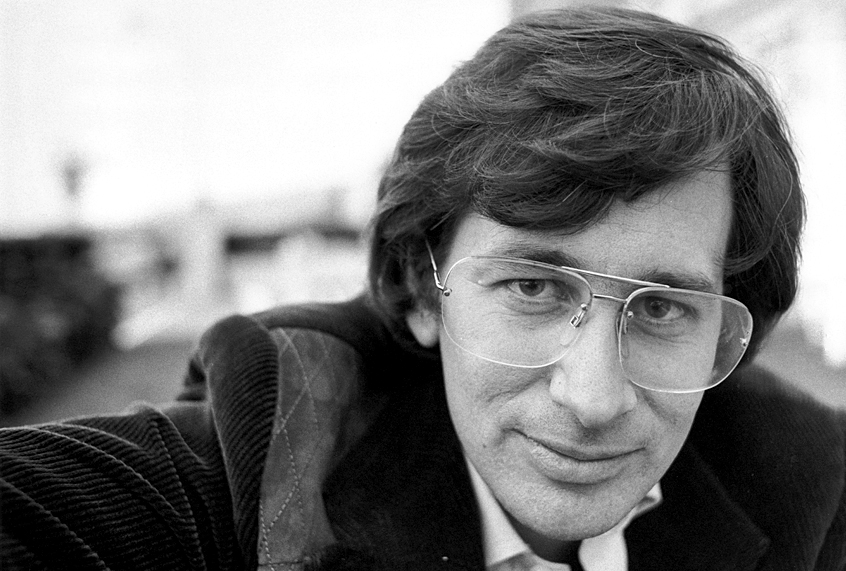
When “Columbo” became a regular television series in 1971, its first episode was directed by a 25-year-old unknown named Steven Spielberg, whom Falk identified immediately as a remarkable talent. He told a Spielberg biographer two decades years later, “This guy [was] too good for ‘Columbo’ … Steven was shooting me with a long lens from across the street. That wasn’t common 20 years ago. The comfort level it gave me as an actor, besides its great look artistically — well, it told you that this wasn’t any ordinary director.”

By that time, Falk was already working in two worlds at the same time, playing a television detective on the West Coast while working with the New York-based Cassavetes on wrenching roles in the semi-improvised works “Husbands” and “A Woman Under the Influence.” Those films sharply divided critics at the time (neither Pauline Kael nor Roger Ebert could stand “Husbands”), and still don’t have anything like a popular following, but are widely viewed in critical and academic circles as seminal works of American independent cinema. But while Falk and Cassavetes remained friendly — and the latter even guest-starred on a “Columbo” episode — their collaboration seemed to burn out after those two movies, and most of Falk’s later films were more conventional Hollywood material.

Other than his iconic near-cameo in “Wings of Desire” and the narrator role in “Princess Bride,” in fact, Falk’s post-Cassavetes and non-Columbo career wasn’t especially memorable. He starred in Elaine May’s “Mikey and Nicky,” which is something of a cult comedy classic, and was completely hilarious as an unhinged ex-CIA agent in Arthur Hiller’s “The In-Laws.” But whether or not his movies are any good (and a lot of them aren’t), you never get the feeling Falk is coasting on his gruff and growly manner. Take a total throwaway like 2005′s “The Thing About My Folks,” where he was almost the only thing that made it watchable. (Do not, however, watch Falk in “Three Days to Vegas” from 2007; it’s not fair to remember him that way.) Like Lt. Columbo, Falk was a consummate professional, responsive to every moment. He could turn a scene to comedy or tragedy (or both) while apparently doing nothing. We are poorer without the man, of course, but in another sense he’ll be with us a long time: Turning to leave, then hesitating and turning back to ask one more question, a mischievous certainty in his eye.

Here’s a clip of Falk from “Wings of Desire,” for your viewing pleasure.

Continue Reading Close

Page 1 of 12 in Steven Spielberg